CONCERNED by epileptic power supply in Nigeria, energy stakeholders are intensifying calls for the review of the privatisation of the power sector.
The stakeholders say that the privatisation has failed to bolster the power sector and light up Nigeria.
“Privatisation exercise in 2013 is ordinarily envisaged to take care of the power chain of generation, transmission and distribution. The entire privatisation is due for review. Most importantly, there is a need for the decentralization of the grid since there are lots of technical aggregate and commercial losses for the grid power,” President of Nigeria Consumer Protection Network Kunle Olubiyo told The ICIR.
Olubiyo further noted that there was a need to encourage eligible customer status that would allow direct transmission of power to cities and industrial clusters paying for power costs, rather than having everyone in centralised grid power.
“Nigeria has several industrial clusters, there is a need to enable grid decentralisation since the grid is currently overstretched with several technical, aggregate and commercial losses which affect what the Discos get for distribution. The Transmission Company of Nigeria also needs to be unbundled.”
Nigeria’s power sector was privatised in 2013. It was described by most energy analysts as ‘a bold step’ in opening up the nation’s electricity market for private sector-led participation while allowing investments into the generation, transmission and distribution value chains.
However, eight years down the line, the Nigerian government still pays subsidy to the tune of N120 billion monthly to sustain liquidity flow for the privatised sector, having engineered a ‘political rather than economical’ halting of appropriate tariff pricing and efficient cost recovery mechanism for the sector.
Also, although Nigeria has attracted several funding and technical support from the World Bank and the African Development Bank (AfDB), available data show that energy poverty is still on the rise in the country.
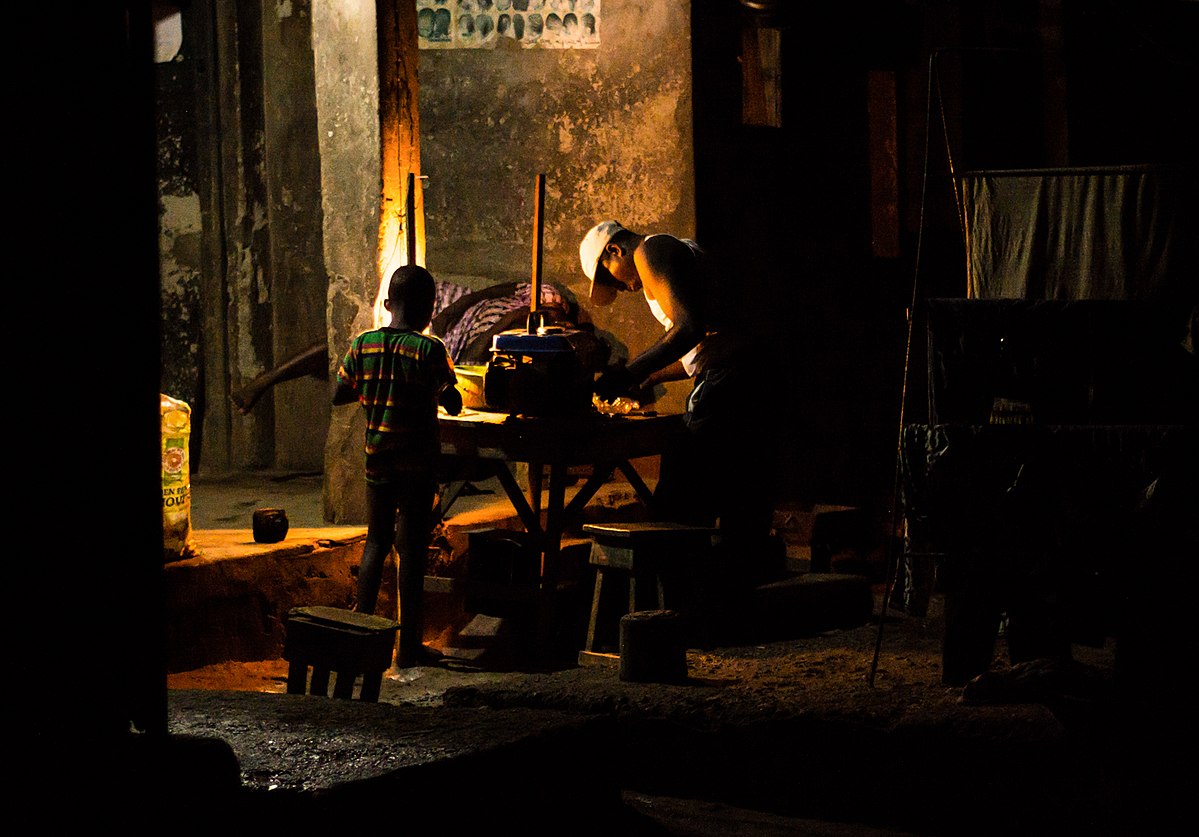
A man and a young boy work on a “Better pass My Neighbour” power generator set late in the night in Lagos, Nigeria. Image credit: Ajibola Fasola/Wikimedia Commons
Vice President Yemi Osinbajo had once explained that the Nigerian government had, through the Central Bank of Nigeria (CBN), pumped about N1.5 trillion into power sector intervention funds in the last two years.
However, these interventions have failed to lift Nigeria from energy poverty as World Bank, in its recent report on Nigeria’s power sector, indicated that over 78 per cent of electricity consumers in Nigeria received less than 12 hours of electricity supply daily.
The bank, a key financial and technical supporter of Nigeria’s power sector, also noted in a recent meeting with newsmen that a total of 74 per cent of power users in Nigeria were dissatisfied with the supply of electricity across the country.
Nigeria’s power generation has continued to hover around 4,000 megawatts for years, rising to 5,000 megawatts at few peak periods, despite the government’s target to grow it to 7,000 megawatts.
“The power sector has not improved. It is not improving because the process that led us to the privatisation is faulty, very faulty. There is no proper trackable performance agreement that helps us know the level of progress such that if they are not met, the government could take up its infrastructure. This has been challenging to the sector,” Associate Consultant to the British Department of International Development (DFID) Celestine Okeke told The ICIR.
SOLDIERS attached to the 72 Special Forces Brigade of the Nigerian Army, Makurdi, Benue State, have intercepted and arrested 73 young men who were travelling from Nasarawa State to Imo State.
According to a report in Punch newspaper, 47 motorcycles were recovered from the young men who were travelling in five trucks.
It was reported that the trucks were conveying some minerals from Plateau State to a Port Harcourt-based company.
Commander of the 72 Special Forces Brigade A. D. Alhassan said the arrest was based on intelligence and security reports.
Alhassan said his men, who intercepted the trucks in Markurdi, had spent some hours waiting for the travellers before they were arrested at night.
He said a thorough search was conducted on the men. All the goods in the trucks were offloaded and the 47 motorcycles were dismantled for a proper search, according to Alhassan.
He disclosed that no arms were found during the search.
But the young men’s mission in Imo State was not clear.
Imo State has been rocked by violence in recent times, alongside other states in the South East.
Several coordinated attacks on security personnel and facilities in the state have been blamed on members of the Indigenous People of Biafra (IPOB).
However Imo State Governor Hope Uzodinma had suggested that the attacks were perpetrated by his political enemies.
Also, Ebonyi State Governor Dave Umahi had, during an appearance on Channels Television’s ‘Sunrise Daily’ programme in April, said those behind the attacks were hired bandits.
Although he did not exonerate IPOB and its security outfit – the Eastern Security Networks (ESN)- Umahi said some people who wanted to “get to the top by all means” were hiring bandits to destabilise the peace of the region.
The governor lamented that the country was descending into what he described as ‘extreme politics.’
THE ‘husband’ of Gosiame Thamara Sithole, a South African woman who reportedly gave birth to 10 children last week in Pretoria, has expressed doubts over the children’s existence.
Reports of birth of decuplets made headlines globally last week when it was reported that Sithole broke the Guinness World Record for the most children delivered at a single birth to survive.
Sithole, a Gauteng woman, was reportedto have delivered her decuplets in Pretoria on June 7, and supposedly broke the record previously held by Malian Halima Cissé, who gave birth to nine children in Morocco in May.
Sithole, 37 and a retail store manager, had six-year-old twins before winning global attention after her latest ‘birth.’
The South African government had said it could not confirm the authenticity of the birth hours after the media reported it.
Sithole’s ‘husband’ Tebogo Tsotetsi and his relations said they could not find the mother and her babies after her reported birth.
The Gauteng Provincial Government also said it combed all local health facilities and found no record showing decuplets were born.
According to Eyewitness News, officials of the Gauteng Provincial Government later found Sithole but could not confirm how many children she had.
We are not sure decuplets were born – ‘Husband’s’ family
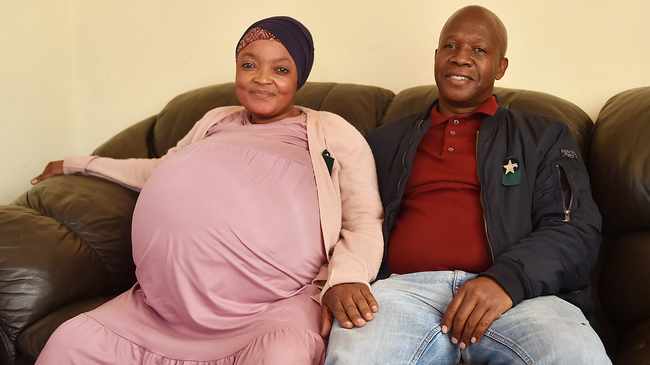
Sithole. Credit: DW Africa
In a statement on Monday, the Tsotetsi family alleged they had not seen the decuplets and their mother since her reported delivery.
The family claimed in the statement titled, ‘Family Statement On The Non-existent Of The Tembisa Decuplets’ that Tsotetsi had relied on Sithole’s call notifying him of the birth.
Tsotetsi had made several attempts to visit Sithole and the babies, but she had failed to disclose her whereabouts and the condition of their babies, said the family.
The family instructed donors and other well-meaning individuals who might want to support the children to withhold their aid.
“The current uncertainties and public discourse about the decuplets is of major concern to the family, especially in the absence of any proof of the decuplets existence other than telephonic and WhatsApp messages from the mother.
“The family has resolved and concluded that there are no decuplets born between Tebogo Tsotetsi and Gosiame Sithole until proven otherwise and wishes to apologise for any inconvenience and embarrassment…
“We appreciate the public interests and support for the decuplets, and with no proof of their existence, we firmly believe it’s in the interests of everyone to conclude that they do not exist until proven otherwise. We will now shift.”
There is more to Tsotsetsi’s claim than meets the eye
Available facts show there are issues between Tsotsetsi and Sithole.
Tsotsetsi was not the only person in his family who rejoiced at the birth of his ‘decuplets’ last Monday. His entire family did.
His family had issued a statement Wednesday night thanking South Africans for their support over the birth.
Totsetsi, who led his family to issue the latest statement, had told IOL: “There are not many words I have to express how I feel, but in reality, I am still shocked, excited and I feel blessed and I feel overwhelmed by the support that I am getting.”
Though the Pretoria authority claimed they could not find any decuplets in any public or private facility in the region, Gauteng’s Social and Welfare Department said Sithole was found with her babies. The department, however, refused to disclose the number of babies born by Sithole.
Totsetsi is a cheat, not Sithole’s real husband, alleges another woman
South African President Cyril Ramaphosa. Credit: REUTERS/Sumaya Hisham
In a twist of events, Sibongile Gxekwa, who claimed to be real Totsetsi’s wife, accused him of being a cheatafter the birth.
She claimed Totsetsi impregnated Sithole out of wedlock.
“When he started his escapades of going out at night, I confronted him about the cheating…. At the time, I didn’t know who she was.
“He has not told me anything about his new 10 children. He has ordered me to not speak to the media about this matter,” Gxekwa said.
Totsetsi and Sithole urged Pretoria News to keep report until after birth
It is not clear when Pretoria News conducted the exclusive interview with Sithole and Totsetsi, but there was an agreement: the report must be delayed till after the babies were born.
The duo cited cultural and religious reasons for their plea.
Gxekwa, who claimed to be Totsetsi’s wife, also said her husband warned her not to reveal the details of the pregnancy to anyone. The warning came after it had taken a long time for him to inform his wife about the outcome of his sexual escapade.
What Sithole, her boyfriend said during her pregnancy
The ICIR reports that Sithole and her boyfriend had exclusively spoken with Pretoria News, an online news medium, but urged that the platform delay the report for a cultural reason until she put to bed.
Sithole had more babies than doctors detected during scans. She was expecting eight; she had seven boys and three girls.
She had the babies 29 weeks into her pregnancy.
South African National Police Commissioner, General Khehla John Sitole
“I am shocked by my pregnancy. It was tough at the beginning. I was sick. It was hard for me. It’s still tough, but I am used to it now. I don’t feel the pain anymore, but it’s still a bit tough. I pray for God to help me deliver all my children in a healthy condition and for me and my children to come out alive. I would be pleased about it,” she had said.
“I didn’t believe it. I doubted it. I was convinced that if it was more, it would be twins or triplets, not more than that. When the doctor told me, I took the time to believe it. Even when I saw the scans, I didn’t believe it. But, as time went by, I realised it was indeed true. I battled to sleep at night, though.
“How would they fit in the womb? Would they survive? What if they came out conjoined at the head, in the stomachs or hands? Like, what would happen? I asked myself all these questions until the doctor assured me that my womb was starting to expand inside. God made a miracle and my children stayed in the womb without any complications,” she had added.
Her boyfriend said he was shocked when she learnt of the pregnancy.
“I could not believe it. I felt like one of God’s chosen children. I felt blessed to be given these kinds of blessings when many people out there need children. It’s a miracle which I appreciate. I had to do my research on whether a person could conceive eight children. It was a new thing. I knew about twins, triplets and even quadruplets.
“But after I found out that these things do happen and saw my wife’s medical records, I got even more excited. I can’t wait to have them in my arms,” Tsotetsi had said.
Previous records of most babies born to survive
Totsetsi wishes he could see his babies like these children.
A US woman Nadya Suleman had, in 200,9 given birth to eight children (two boys and two girls) at the Kaiser Permanente Medical Center, Bellflower, California, making her a world recorder holder before Cisse.
She conceived her babies with the aid of In Vitro Fertilization (IVF).
The babies were nine weeks premature when she delivered them.
An Australian woman and another from Malaysia had given birth to nine children (nonuplets) in 1971 and 1999. None of the children survived after few days.
Guinness World Record on births
The Guinness World Record details the most significant births globally to include the most prolific mother ever (1782); heaviest birth and longest baby (1846); most consecutive girl/boy births in a family (1975); first test-tube baby (1978); most premature baby (1987); shortest female to give birth (2006); the oldest person to give birth (2006); heaviest woman to give birth (2007); most children delivered at a single birth to survive (2009) among others.
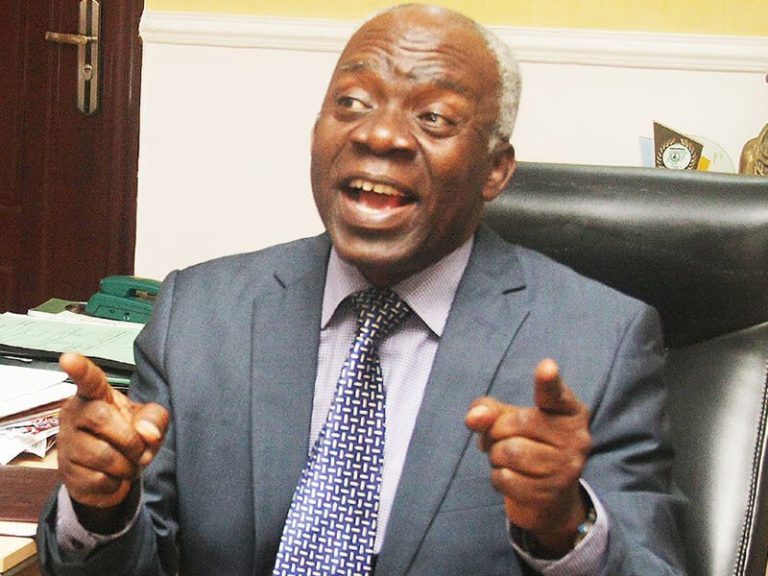
HUMAN rights lawyer Femi Falana has said President Muhammadu Buhari was misled by Attorney-General of the Federation (AGF) Abubakar Malami regarding the alleged grazing routes in southern part of Nigeria.
In response to open grazing ban by governors of the Southern region, which Malami had vehemently opposed, Buhari had, during an interview on ARISE TV, revealed that he had directed the AGF to dig up a gazette that delineated cattle grazing routes in all parts of the country during the First Republic.
“What I did was to ask him to go and dig the gazette of the First Republic when people were obeying laws. There were cattle routes and grazing areas. Cattle routes were for when they (herdsmen) were moving upcountry, north to south or east to west. They had to go through there,” Buhari said.
However, reacting to the development while featuring on an ARISE TV programme’s ‘The Morning Show,’ Falana noted the president’s action was based on a wrong counsel given to him by Malami.
Falana observed that Buhari made it abundantly clear that he was advised by the AGF.
But he stressed that there was never a time grazing routes existed in the southern part of the country.
The human rights lawyer suggested that Malami should be sanctioned for offering a wrong counsel to the president.
Falana said, “You cannot blame the president. He is not a lawyer. So if he was informed by lawyers that there is a gazette, what do you expect him to say? And the president made it abundantly clear during the interview, ‘I am not going to oppose my attorney general.”
“What I am saying here is that there was no time in the history of Nigeria that grazing routes existed in the southern part of the country. So, whoever has misinformed the president should be questioned and sanctioned.”
Falana wondered why the president was talking about old grazing routes even after the 36 states had adopted the National Livestock Plan which recommended ranching as the solution to open grazing in the country.
REDUCED rainfall and herders’ invasion of farms, both directly or indirectly linked to climate change, are forcing women farmers to adopt changes in Nasarawa.
One night in 2014, Victoria Alkali’s husband was killed and their house set on fire following a clash between herders and farmers in Obi Local Government Area of Nasarawa State, North-Central Nigeria.
The widow and her four children immediately took shelter with a group of women who were also survivors of the crisis.
Alkali’s guinea corn farm was her family’s only asset but frequent cattle grazing on the farm meant she struggled to provide food for the children, and could barely pay their school fees. Unknown to her, an even bigger challenge was looming — the effect of climate change on farming communities in her area was becoming more rampant.
In May 2020, with the onset of rain, Alkali planted guinea corn, hoping to harvest before the herders arrived. But the rains stopped in August instead of November in what was becoming a norm, a deviation from the past. The poor harvest forced her to stop the construction of the new house she had started.
Victoria Alkali’s razed house
To improve the yields, she started using poultry droppings as fertiliser. She had bought 10 bags of the droppings from a neighbouring community at N5,000 per bag. To her delight, it increased the yields from 10 to 15 bags of guinea corn.
Smallholder women farmers in Nasarawa State like Alkali are using such means to protect their farms from the effect of desertification.
In 2017, a maize farmer in Toto Local Government Area of the state Murna Bitrus had also suffered declining yields from her farm due to the shortage of rainfall. Unfortunately, this was at a time a section of her house collapsed and frequent herders’ invasion stopped her from working her five-hectare farm located an hour from her home.
She eventually found two hectares close to the local government area which she rented at N230,000 per annum.
Murna Bitrus, farmer in Toto LGA
Cow dung fertiliser
Being her only source of revenue, Bitrus sought several means to increase the farm’s yields. Later in the year, one of her friends residing in Oyo State in South-West Nigeria introduced her to the dung of a cow specie for use on her newly secured land.
The friend connected her to an abattoir in Ibadan, the Oyo State capital, and they arranged frequent transportation of cow dung across over 600 kilometres to Nasarawa in the North-Central region of the country.
She paid about N27,000 for a 50-kilogramme bag of cow dung and used two bags on the farm every month.
Before she adopted cow dung as fertiliser, since the reduction in rainfall, she had harvested about 30 bags of maize. But in 2020, her harvest was 85 bags, almost triple her old yield from the same farm.
However, she lamented spending so much on the cow dung, citing it as the reason she could not renovate the collapsed section of her house, as she strove to keep up with other rising expenses in the house.
“Cow dung increased my farm output, but the cost of the dung strained my finances. For example in 2020, I didn’t make any profit. I put all the proceeds back into the business,” she said.
Irrigation
In Awe Local Government Area, many farmers channel water from a dam in the area to irrigate their farms, particularly during the dry season and sometimes to supplement reduced rainfall.
For instance, Sarah Albert, a rice farmer in Awe, considered going into irrigation in 2019 after successive failed harvests. She said rainfall usually started in March and ended in November but in recent years it had been between April and October.
She paid up to N20,000 to local transporters for about 35 jerry cans of water every month to irrigate her farm.
While this is an alternative means to solve the problem of reduced rainfall that affected the growth of her crops, she realised fewer proceeds using this method than during the rainy season. She harvested about 60 bags of rice when rainfall was adequate but with irrigation, she hardly got 10 bags, causing her revenue to drop from N300,000 to N30,000.
Climate Change
Nigerian women farmers are adopting ingenious methods to address the effects of climate change, although they lament that they may not be not economically sustainable.
Female farmers make up 75 per cent of the farming population in Nigeria, according to the Federal Ministry of Agriculture and Rural Development. However, many of them find farming increasingly stressful, frustrating and unrewarding due to the innumerable challenges they face, particularly from the effect of climate change.
How Climate change births food scarcity
Climate change makes agricultural development in Africa more challenging. Weather patterns in recent times have become less favourable and increase the volatility of crop yields. Climate change has caused rising temperatures, more extreme weather, flooding, changing rainfall patterns etc.
According to the State of the Climate in Africa 2019 Report, these changes are threatening human health and safety, food and water security, and socio-economic development in Africa.
For instance, the report said that under the worst climate change scenario, there would be a 13 per cent reduction in crop yield in West and Central Africa, 11 per cent in North Africa and eight per cent in East and Southern Africa.
It also projected that rice, one of the staple foods in Nigeria and many African countries, would be part of the most affected crops with a yield loss of 12 per cent by 2050.
In March 2021, the Nigerian Meteorological Agency (NiMet), the agency that documents climate and weather data, warned farmers in the North, especially the North-Central zone where Nasarawa falls, to avoid planting early with the false onset of rains or they risked losing their seedlings and crops to drought.
A climate change expert Olarenwaju Akintobi explained that climate change was caused by the industrial age through the emission of carbon dioxide into the atmosphere.
He said that while some crops depended on the gas to grow, increase in emissions reduced the quality of yields, particularly protein and nitrogen content, and as a result, caused food insecurity and a continuous cycle of poverty.
The 2019 Global Focal point for the youth constituency to the United Nations Framework Convention on Climate Change (UNFCCC) Chiagozie Udeh said that heat and drought peculiar in the northern region of Nigeria upset crop yield and also increased the prevalence of pests and vectors affecting humans and crops, citing the locust invasion that started in East Africa in 2020.
“It is a reality that we know in Nigeria. Now, we are already on a direct line to food insecurity in Nigeria if something urgent is not done to really adapt to change in climate,” he said.
For a Nigerian Youth Representative to United Nations General Assembly and international climate conventions Seyifunmi Adebote, climate change could manifest in post-harvest losses, adding that stored crops no longer lasted the usual shelf life due to extreme heat.
“You can preserve a yam for four months, keeping it perfect, but because of extreme heat that makes the temperature so hot now, in two months, it begins to rotten because it is so hot.”
He said flooding, another effect of climate change, prevented easy transportation of farm produce to the markets.
Local women farmers groan
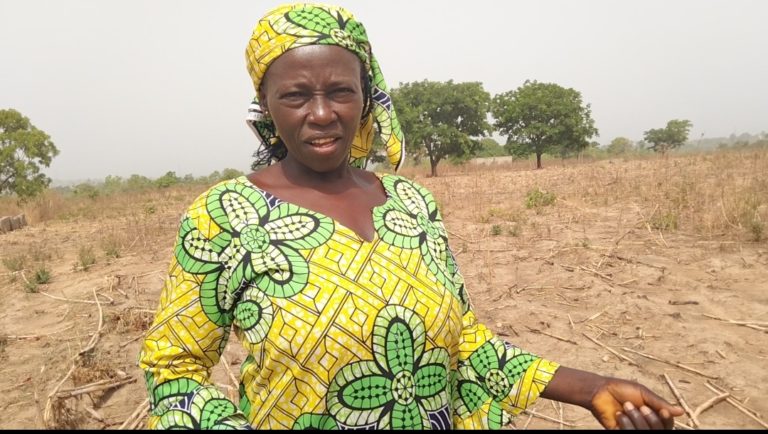
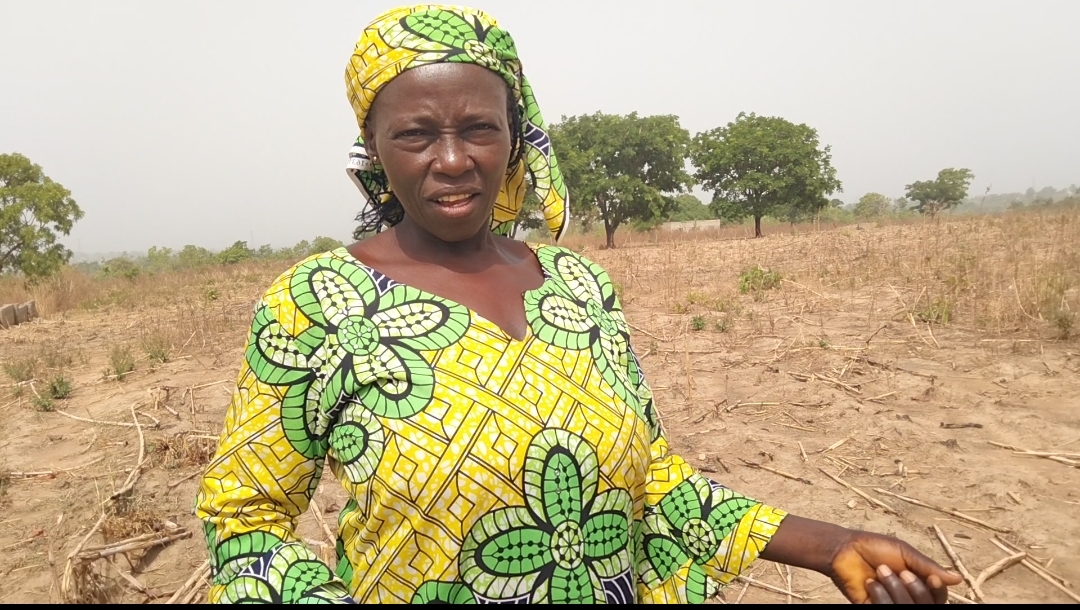
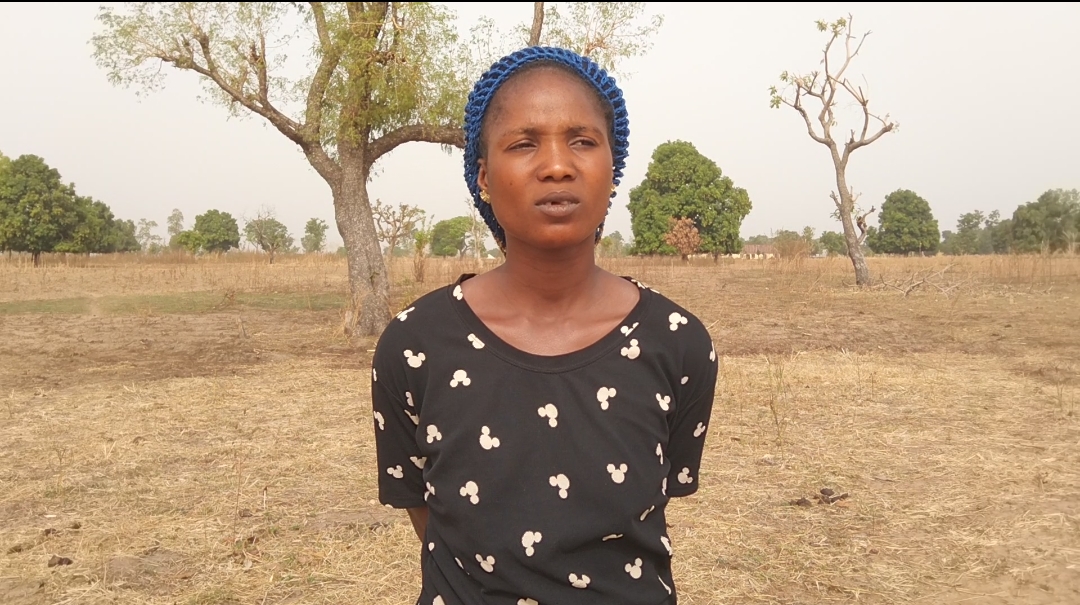
Interviews with seven smallholder women farmers across five local government areas in Nasarawa State showed that their experiences with climate change and herdsmen invasion were similar. Although at the time of the visit, farmers were not on their farms because it was the dry season.
Sarah Shambuwa recalled that farming used to be a lucrative business for her as proceeds from the farm paid her university fees up until 2012 when she graduated. With no white-collar job in sight, she continued farming and got married.
After relocating to Wamba Local Government Area in Nasarawa State, she cultivated guinea corn, maize, rice, cassava, and groundnut on her farm and the returns helped her in training her five children.
Things were good, she recalled, until 2020 when her husband retired from the civil service. His income fell to his N10,000 monthly pension, which was also inconsistent as the last payment was in November 2020.
With the new development, coupled with the hardship of the COVID-19 pandemic, Shambuwa hoped earnings from the farm would support the rising bills. However, 2020 came with an unprecedented change.
After she had prepared for another planting season, the rain started in April and ended in August against the usual end of November.
Sarah Shambuwa, farmer in Wamba LGA on her farm
Devastated by the drop in output, she visited her farm to harvest what she could get while wondering how she would cover her other expenses for the rest of the year. On getting to the farm, she met her worst nightmare. She saw that almost all her crops were gone after cows grazed on them overnight.
Climate experts say that weather changes are some of the baseline causes of the clashes between herders and farmers because desert encroachment reduces the availability and quality of pasture for the animals and the amount of cultivated lands available for farmers.
The farmer-herder crisis in northern Nigeria is age-old. An attempt to solve it in Benue State with the enactment of the Open Grazing Prohibition and Ranches Establishment Law, 2017, triggered more conflicts in Nasarawa as pastoralists migrated there from Benue and caused a series of clashes. Many local farmers were displaced and many people killed in the calamity.
Due to the low yield from the effect of climate change, Shambuwa harvested less than a bag of rice, two bags of guinea corn, and three bags of maize in 2020, unlike in 2019 when she got four, seven, and four bags of the crops respectively.
“Even for cassava, we have the problem of herders. I get nothing from cassava. I cannot even go alone to my farm. The herders will either injure or kill you. The government has not helped farmers to solve the herders situation in Wamba,” she said.
In the midst of her troubles, for the first time, her children were sent home from school over unpaid fees.
Trying to solve her financial predicament, she took a teaching job in a primary school and only now goes to her farm in the afternoon.
In Obi Local Government Area of the state, farmers’ experience with desertification and herdsmen attack is worse.
A groundnut farmer Grace Christopher and her husband had to leave their first home after it was razed in 2017 during a farmer-herder clash.
Grace Christopher’s destroyed house
She narrated that in Iposoge, where she lives, residents lived in fear as cows continually grazed on their farms. This is apart from the drop in her yields in recent times from 15 to 10 bags of groundnut caused by the shortage of rainfall.
She said most times, farmers in Obi would harvest their crops before they were ripe to avert cattle grazing their farms.
Grace Christopher, farmer in Obi LGA
“Herders are the problem we are facing in our community. During the rainy season, their cows destroy our crops on our farms. If you challenge them, they will follow you to your house or even right there on your farm they will kill you,” Christopher said.
These female farmers say they have never considered relocation due to the security challenges because they worry about how to restart their lives in a strange land.
In places like Awe and Toto, when such cases arise, the local authorities ask the herders to pay the farmers for their cows feeding on crops. Even though they oblige, they return to the farms, making the farmers more helpless.
To alleviate the sufferings, Governor of the state Abdullahi Sule deployed security officials to Toto in 2019. But the attacks continued because the security operatives could not cover everywhere.
Incomplete data on rainfall pattern from NiMet
To verify the claims of reduced rainfall in Nasarawa by the female farmers, our reporter, on May 4, requested from NiMet data on rainfall pattern in the North Central region between 2015 and 2020.
But the Director of Applied Meteorological Services of NiMet Yusuf Mailadi said the agency did not give out data because it was its ‘only source of revenue,’ but it would release it to the reporter because she was “working for public interest.”
“You can get that (data) but it will not tell you much. We will give you the patterns. Can you just write in follow-up to this letter.”
On May 26, an official of the agency’s legal department Nwogo Udeozo sent infographics of the data but not the raw data of rainfall pattern requested, in breach of Section 1 (1) of the FOI Act 2011 under which the request was made.
Mr Udeozo said: “You are not in meteorology, you can’t handle raw data and we don’t give raw data free of charge. It is that processed data you should be given. We don’t give that to outsiders. Those are data we store in our archives. My advice is for you is to see the Director Applied Metrological Services so they can interpret the processed data for you.”
The letter requesting an interview with the director-general of NiMet was not replied to.
However, PREMIUM TIMES’ data desk interpreted the processed data and it showed changing rainfall patterns over the years.
Nasarawa State Rainfall pattern (2015 to 2020) from NiMet
“Between 2015 and 2020, rainfall peaked at about 700mm in August 2017. This is followed by the same month of 2019 with about 600mm. The lowest amount of rainfall was recorded in November and December 2020 as well as April 2018.
“On average, overall, rainfall was relatively lowest in 2015. Relatively, too, 2017 had the highest rainfall.
“In all the years, there was a consistent increased pattern of rainfall from May to September before they fall in October and continue to dip till the end of the year,” Yusuf Akinpelu, Head of Data Desk explained.
Alleged Diversion of government’s allocation to farmers
The female farmers in the state accused local government officials of diverting agriculture supplements meant for them.
For instance, in Wamba, Shambuwal confirmed bags of fertiliser were sent to the local government for distribution. However, she alleged that most were given to ‘big men’ who sold them at an expensive price to local farmers who ought to be the beneficiaries.
“Even when they send fertilizer, they sell it to those that have money but we poor farmers, we go and buy at a higher amount in the market,” she said.
“They give maybe a bag or five bags of fertiliser to the ward but if you look at the number of people in that ward, if they share it, it is only one kilogramme a person will get and if you have a big farm, it won’t be enough”, she said.
Bitrus also attested to similar incident in Toto saying, “When the government brings fertiliser, they will say they are sharing it from ward to ward but before you know it, the fertilizer has been given to politicians who will sell it to us at a higher price.
“This year, we bought fertiliser at N13,000 per bag, and the government’s price is between N5,000 and N6,000. We complained severally at a series of workshops but it has not yielded any result.”
Call for more government intervention
The farmers want access to loans, increased security on their farms, adequate provision of fertiliser and improved seeds and herbicides.
They also urged the government to tackle diversion of farm supplements meant for them, provide gender-friendly mechanized equipment, and establish irrigation system for them to farm during the dry season.
How Nasarawa govt is responding to climate change crisis, herdsmen invasion
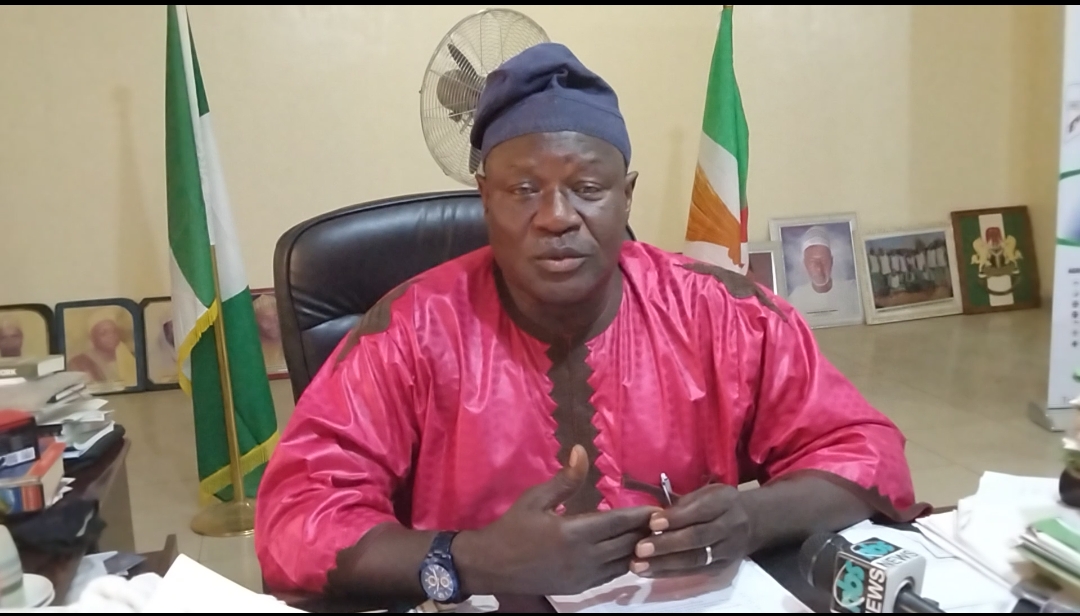
On its efforts to reduce the impact of climate change on farmers, Commissioner of Agriculture and Water Resources Otaki Alanana, in an interview with our reporter, said the state government often engaged NiMET to get information on weather changes and the body passed same to farmers for preparation.
Nasarawa Commissioner of agriculture and water resources, Otaki Alanan
Also, he said the state government flagged off a dry season programme where it provided supplements and inputs to farmers alongside encouraging those living close to river banks or own boreholes to make use of irrigation system.
“We are partnering with NiMet in Abuja. Before a cropping season, we have a conference on what to expect in the rainy season, areas that are susceptible or at risk. When we get this information, we pass it to the farmers in the rural areas. This is the best we can do to make sure we have a better season.
“We encourage our farmers who are living by the river bank to go into irrigation. For places that don’t have this opportunity but they have borehole, we encourage them to irrigate their farm using their borehole. Climate change definitely is a reality we have come to live with.”
The chairman of the Nasarawa State House of Assembly Committee on Agriculture Ibrahim Akwe told our reporter that the legislature would collaborate with the executive to make more materials available for farmers during dry season.
Ibrahim Akwe, Chairman House of assembly committee on Agriculture
“The last time they launched the dry season fertiliser, they also gave some pumping machines that will supply water for irrigation. We will bring out laws and collaborate with the state government in order to ensure these materials are made available for the farmers to be involved in dry season farming.”
With respect to insecurity, the commissioner said the state government “is on top of it.”
He said the government held security meetings to ensure operatives were deployed when a disturbing signal wqs received. This was meant to restore normalcy through collaborative efforts with the farmers and security agents.
“To surmount (insecurity) is not a day’s job. We are praying to God everything will be brought to normalcy,” he added.
The lawmaker said they were also proposing bills to regulate the activities of farmers and herders and to control the movement of livestock within the state.
Alanana said he was unaware of the diversion of fertiliser, but promised to investigate and deal with the perpetrators.
“Where people will collect and go and sell it (fertiliser), I am not aware. When His Excellency flagged off the distribution of fertiliser, he sounded a tough warning into everyone’s ears that no one should sell the fertiliser at a higher rate. But I want to assure you that if anybody is caught, he will definitely be brought to book,” he said.
Responding to this, Akwe said his committee would start monitoring areas where the fertiliser had been distributed to ensure people did not “shortchange the government” and the input reach the real beneficiaries.
He also said the state lawmakers would encourage more female participation in agriculture.
“With this discussion, we have to start up writing something that will enable our women full participation in agriculture because of their creativity which will help in terms of the food insecurity we are facing in the country,” the lawmaker said.
Way forward for climate change, insecurity
To mitigate the effect of the climate crisis, Akintobi, who is also a farmer, advised other farmers to form farm estates, which he likened to a cooperative, to pool funds to get irrigation services on their farms.
He said that farmers should make efforts to get information around weather patterns and in places affected by flooding, noting that they needed to plant on ridges instead of plain land.
“They themselves need to understand that there is something that is called climate change. They need to understand the challenges and how to overcome them.”
Adebote urged farmers to explore value chains such that harvested crops could be reproduced in other forms so they could benefit from the main crop while protecting it and its variants.
“Cocoa for instance, has over 20 derivatives. Farmers who have these products in Africa can come together to say they do not want to sell the cocoa in the pods but process it and add to the value chain and then sell it. That way, the crops will not get spoilt with the high temperature and they can sell at better prices and make more gain,” he explained.
Chief Executive Officer of International Climate Change Development Initiative Olumide Idowu tasked the government to provide capacity building for small income farmers to support their production and access to finance.
Idowu urged them to look into farm prices, invest in transportation of crops from farm to market and create friendly policies for farmers that wanted to export their products.
“The bigger farmers should be able to partner with the small-scale farmers so that they will be able to produce more and get more food to the market,” he added.
To tackle herders’ invasion on farms, Udeh endorsed cattle ranching, although he indicated that it would cause deforestation.
“Studies have shown that cattle ranching across the world release approximately 340 million tonnes of carbon into the atmosphere and that will give you around 3.4 per cent of global greenhouse decimation.
“That does not mean you will not graze cattle so you need to find a sustainable way. Know where you are sourcing your cattle feed from. In growing the grasses, you make sure you are not depleting the biodiversity of the area. There has to be a sustainable way where the forest and the cattle feed must coexist but not be done recklessly.”
He also called on the government to re-green the northern part of Nigeria to limit the movement of cows on farmlands.
This Report was made possible with support from the International Budget Partnership (IBP)
REPRESENTATIVE of the World Health Organisation (WHO) in Nigeria Walter Kazadi has said that the threat of a third wave of the COVID-19 pandemic Is real and imminent in most African countries, including Nigeria.
Speaking at a press briefing in Abuja on Tuesday, Kazadi stated that adherence to COVID-19 preventive measures such as social distancing, regular washing of hands and coughing into bent elbows should be intensified.
He stressed the need for rapid distribution of COVID-19 vaccines and adherence to the non-pharmaceutical interventions recommended by the Nigerian Centre for Disease Control (NCDC).
Also speaking at the press briefing, Executive Director of the National Primary Health Care Development Agency (NPHCDA) Faisal Shuaib said Nigeria was set to receive 3.92 million additional doses of Oxford-AstraZeneca vaccines from COVAX.
“We now have information that Nigeria will get 3.92 million doses of Oxford-AstraZeneca by the end of July or early August, 2021.
“As we receive additional information on the exact dates, we will provide an update regarding timelines and details,” Shuaib said.
Shuaib also urged Nigerians who had received the first dose of the COVID-19 vaccine to get the second dose on or before the close of its administration by June 25.
“Recall that we officially closed the vaccination for the first dose on May 24, 2021. Since then, we have been inundated with requests by Nigerians to be vaccinated. In response, we have decided to reopen vaccination for the first dose from today.
“This means anyone 18 years and above who has not been vaccinated should visit the nearest vaccination site for the first dose of the AstraZeneca vaccine.
“For such persons, their second dose will be due in 12 weeks and by then we would have received the next consignment of vaccines.”
GOVERNOR of Rivers State Nyesom Wike has asked Nigeria’s President Muhammadu Buhari to take responsibility for insecurity in the country.
The governor spoke in an address on Tuesday at the commissioning of the 21-kilometre Odufor-Akpoku-Umuoye road in Etche Local Government Area of the state.
Buhari had said he turned back two South-West governors who came to meet him over the killing of farmers by herders in their states.
“I told them you campaigned to be elected and you are elected. I told them go (to) back and sort out themselves,” Buhari said during an interview with Arise TV last week.
However, Wike said it was unconstitutional for the president to tell governors that security issues were left for the states to handle.
“The constitution did not say that. Who is the commander-in-chief? I am not the commander-in-chief; Mr President, you are the commander-in-chief of the armed forces of Nigeria,” Wike said.
He noted that heads of security agencies would not act without getting clearance from the president, adding that governors could not give directives to commissioners of police without the approval of the Inspector-General of Police who was appointed by the president.
Wike asked the president to allow governors to appoint commissioners of police and heads of State Security Service (SSS) by themselves and see if the security situation would not change.
“Allow us to pick who will be in charge; then you will see whether it will be the same thing because they (the security chiefs) cannot act until they take powers from you. We cannot tell them what to do,” the governor said.
Article 6 of the Police Act 2020, as amended, says that the Inspector-General of Police has the mandate to appoint a police commissioner for states.
“The Force shall be under the command of the Inspector-General, and contingents of the Force stationed in a State shall, subject to the authority of the Inspector-General, be under the command of the Commissioner of that State,” the Police Act says.
TERRORISTS are demanding N150 million from parents of 136 students kidnapped from Tanko Salihu Islamiyya School, Tegina, Niger State.
According to a report published by The Nation, the terrorists, who had earlier demanded N200 million, told the Headmaster of the School Alhassan Garba Abubakar that they would consider the release of the pupils provided that they were paid N150 million.
The headmaster also said the terrorists disclosed that the children were falling sick in captivity.
Abubakar noted that the parents of the children were going to churches and mosques to solicit funds for the release of their children but they had been unable to raise a substantial amount of the ransom.
“I am not part of the committee of the parents going to churches and mosques to solicit for donations for the ransom money to be paid; so I cannot tell you the exact amount of money raised so far,” Abubakar noted.
The ICIR had reported that the 200 students were kidnapped from the school on Sunday, May 30, around 4pm by the terrorists.
The Niger State Government has insisted that it will not pay ransom to the bandits but negotiate on how to bring them back.
However, 15 days after, the pupils are still in custody of the kidnappers.
When The ICIR contacted the Spokesperson for the Niger Police Command Wasiu Abiodun over the new ransom demanded by the terrorists, he promised to verify and inform our reporter on developments, but he failed to do so as of press time.
The United Nations Children’s Fund (UNICEF) has expressed ‘deep concerns’ over the kidnapping, noting that it was horrifying that schools and schoolchildren had been targets of attacks.
“It is horrifying that schools and schoolchildren continue to be targets of attack – and in this particular incident, even children as young as three years old.
“We can only begin to imagine how frightened they are, and the impact this will have on their mental health and well-being,” said Officer in Charge and Representative of UNICEF Nigeria Rushnan Murtaza.
A video has been circulating on multiple WhatsApp groups in Nigeria, which claims that eating “a banana a day keeps the coronavirus away.” The video has been found to be doctored with false claims.
The video, which was produced in the form of a news broadcast clip, recommends that eating a banana a day could help prevent humans from being infected with the novel coronavirus (COVID-19).
For over 15 months, the video has been in circulation on various social media platforms, including TikTok, YouTube, Facebook and until recently Twitter and WhatsApp platforms in Nigeria.
The video, which has been forwarded several times on WhatsApp between March 2021 and June 2021, was traced to a March 15, 2020 post on Facebook here using Google Reverse Image Search. It has been viewed over 2,700 times on the Facebook page and now circulates widely on WhatsApp.
It is one of the several videos spreading misinformation about the COVID-19 pandemic, which has claimed over 3.8million deaths with about 176million confirmed cases globally as of June 15, 2021, according to the World Health Organization (WHO). These numbers continue to rise daily.
The World Health Organization (COVID-19) Dashboard as of 15th June, 2021. PHOTO CREDITS: www.who.int
Since the outbreak of the disease in December 2019, many social media platforms, especially WhatsApp chat groups and Facebook, have become vehicles for spreading misinformation, disinformation and conspiracy theories about the COVID-19.
Users are often asked to forward such messages to as many people as possible.
Some of such viral WhatsApp videos or texts include those claiming that drinking palm oil or hot water, tea several times daily can cure COVID-19, or that mRNA COVID-19 vaccines can reduce lifespan, or that the Nigerian government is giving out COVID-19 survival funds. These, among others, have been debunked by the ICIR’s FactCheckHub.
THE BANANA CLAIM
The claim reads: “Bananas are one of the most popular fruits worldwide. such as Vitamin C. All of these support health. people who follow a high fibre diet have a lower risk of cardiovascular disease. Bananas contain water and fibre, both of which promote regularity and encourage digestive health.
“Research made by scientists from the University of Queensland in Australia have proven that bananas improve your immune system due to the super source of Vitamins B-6 and helps prevent coronavirus. Having a banana a day keeps the coronavirus away.”
A screenshot of the viral WhatsApp video showing the false claim.
The claim has been attributed to researchers from the Australia’s University of Queensland, adding that they have discovered that bananas can help prevent COVID-19 infection.
Same video, same claim but many edited versions
The 58-second video, which shows a news report by the Australian Broadcasting Commission (ABC), with the same banana claim, has been edited severally especially by a TikTok user, @dil_ka_raja2020 and YouTuber to include these texts inscriptions: “Bananas can beat this virus, Must Watch”; “Banana a day keeps the Coronavirus away.” He has over 12,000 followers with over 167,000 likes on his TikTok page.
Also, an edited 27-second version of the video posted from Pakistan on YouTube on 14th March, 2020 has also been viewed 318 times.
A screenshot of the fake video when analysed using an OSINT tool – InVid.
OSINT to the rescue?
In verifying this video, this reporter utilised the Open Source Intelligence (OSINT) tools to unravel the spread of this misinformation and authenticate the sources of the visuals put together in making the video.
Using keywords such as banana, COVID-19, this reporter used Hoaxy® to visualise the spread of the information on Twitter, as shown below:
The data show that texts containing the keywords have appeared in 465 tweets between 12th November, 2020 and 26th May, 2021, majorly from a Twitter user, @mb4hope. But the Twitter handle has been suspended and it is unclear why the social media platform has done that.
Similarly, this reporter used the Fake news debunker (image/video verification plugin) by InVID & WeVerify to analyse the visuals’ keyframes and contexts as well as its reverse image search tool to identify the sources of the various clips/images merged together in making the video.
The InVid tool helps journalists to verify contents posted on social media, especially when verifying videos and images.
Findings show that the video contains several footages from at least four different sources.
Keyframes analyses of the video using the Fake news debunker plugin by InVid.
The first footage in the video was truly from an ABC news clip that reported that researchers from Australia’s Queensland University were about to create a vaccine for the COVID-19. It was aired in January 2020.
Following a Google Reverse Image Search of this footage after extracting the keyframes using InVid – one of the OSINT tools – this reporter found the ABC news clip titled: “Race is on as Australian researchers rush to make coronavirus vaccine” on its official YouTube channel.
This reporter also discovered that the opening keyframes of the ABC News’ YouTube video (as shown on the LEFT screenshot) was similar to the first keyframe of the viral WhatsApp video (as shown on the RIGHT image). See the comparison of the two videos below as circled in red lines:
Screenshot of both video clips.
However, there was nowhere in the three-minute, 39-second ABC News (Australia) video where reference was made to bananas beating or preventing the COVID-19.
The Associated Press (AP) had earlier reached out via email to a University of Queensland spokesperson who confirmed that “the video is fake and said they strongly recommend people do not share it.”
Similarly, a Queensland University scientist Keith Chappell, who discussed the university’s efforts to develop a vaccine against the novel coronavirus in the ABC News video, had also told the AFP that the banana claim video “is definitely NOT true.”
In addition, video footage from the eight- to ten-second of the misleading WhatsApp video was seen on the Shutterstock videos website, using Reverse Image Search – another OSINT tool.
Further findings showed that the footages from the 12- to 23-second of the viral video were extracted from a YouTube clip made by Herbs Cures titled: “Health Benefits of Banana” and uploaded online on March 1, 2020.
Also, the ‘Herbs cures’ logo could be seen in the viral video. The ‘Herbs Cures’ video only listed the benefits of bananas and did not claim that bananas could prevent COVID-19 in the four -minute, thirty-eight second video.
Additional analysis also showed that the footages from the 24- to 31-second of the viral video were extracted from a news video published by the Wall Street Journal (WSJ) in February 2020 titled: “How Scientists Are Trying to Develop a Coronavirus Vaccine.”
The four-minute, seven-second WSJ video did not claim that bananas could beat or prevent COVID-19.
Can any food or fruit prevent one from being infected with COVID-19?
According to WHO, “there is no single food that will prevent you from catching COVID-19,” but bananas have nutritional values.
A screenshot from the WHO website.
Although the global health body has a nutrition fact-sheet for healthy diets that protect against malnutrition and non-communicable diseases (NCDs) such as diabetes, heart disease, stroke and cancer, it said there was none that could protect anyone against COVID-19.
5/10: Does garlic cure COVID-19? Bananas? Vitamin-C?
Bananas are a fine fruit and garlic is a fine vegetable. But no. There are no clinical trials to suggest they have anti-coronavirus activity. Vitamin-C Is not even a fruit or a vegetable!
Scientists also advised that maintaining good nutritional status could help boost one’s immune system against COVID-19, adding that there was no evidence that any food or supplement would prevent infection or spread of the disease.
“Bananas are a fine fruit and garlic is a fine vegetable. But no. There are no clinical trials to suggest they have anti-coronavirus activity. Vitamin-C Is not even a fruit or a vegetable,” says an infectious diseases expert from the University of Maryland in the United States, Faheem Younus.
However, here are WHO-recommended steps to prevent the spread of the COVID-19.
CONCLUSION
The claim is FALSE! There is no credible evidence that eating bananas can beat or prevent COVID-19 infection.
The viral WhatsApp video was doctored from two news reports by the ABC News and WSJ respectively, as well as other video footages, to include references to bananas.
THERE are mixed reactions over the endorsement of Kogi State Governor Yahaya Bello by former Super Eagles Captain Mikel Obi.
Obi had paid a courtesy visit to the governor on Sunday and stressed the need for the involvement of Nigerian youths in leadership activities within the country.
He applauded Bello’s achievements in Kogi State regarding security, healthcare and agriculture while pledging his support for the political aspirations of the governor.
“My main aim is to come here to show my appreciation and to thank him for all the things he has been doing for the people and also to support him in whatever future political positions he wants to go into,” Obi said.
Bello has declared his interest to contest the 2019 presidential election on the platform of the All Progressives Congress (APC).
Several Nigerians, however, have expressed displeasure over Obi’s statements.
Facebook user Oshk Fela Castro advised the footballer to stay focused on his career and avoid interfering in political affairs.
“Politics in Nigeria is not Premier League so Mikel should face his career,” he said.
Another Facebook user Ilemona Abraham warned against losing the goodwill of the people presently being enjoyed by the footballer.
“John Mikel Obi, we the Nigerian youths love and admire you. Don’t loose this by endorsing Loose-cannons for a political office in Nigeria. I want to presume you’re not after money from Yahaya Bello, because you’re well made in life,” he said.
Reacting to Obi’s statements, a Twitter user @paulo4gud described Obi’s statements as heartbreaking, adding that people were dying at the governor’s hands due to bad governance.
“Outsiders think Bello is doing well in Kogi state not knowing my people are dying in the hands of Bello because of his bad government. Obi fall my hand big time. Seeing this breaks my heart,” he said.
Despite general displeasure, some social media users have stated that the footballer was entitled to his choice of a presidential candidate.
Replying to the post by Fela Castro, a Facebook user Gideon Ogunniye urged Nigerians to be more tolerant of dissenting opinions.
“Let’s learn to tolerate dissent. In a democracy, people should be free to make their choices without any form of intimidation or harassmrnt. Mikel hasn’t broken any law by associating with Yahaya Bello,” he said.
On Twitter, @cedonation expressed his delight at Obi’s support for Bello’s ambitions.
“John Mikel Obi has seen the light and has decided to associate with it. Without mincing words, Yahaya Bello is fit and capable. 2023 should be a Youth for Youth thing, and watch how Nigeria will be great again,” he said.
The Kogi State governor is alleged to have been involved in fraud.
The ICIR reported allegations of money laundering against the governor by a group in Kogi State, Anti-Corruption Network.
According to the report, the People’s Democratic Party (PDP) had urged the EFCC to investigate the allegations and called on Bello to speak to the allegations.
The ICIR also reported Bello’s refusal to take the COVID-19, stating that he did not need the vaccine as he was 100 per cent healthy.
Nigerians wonder how the country would look like if another pandemic breaks out under Bello’s watch as president.