THE police in Akwa Ibom State say they have been waiting for judicial workers to call off strike and advice from the Department of Public Prosecution (DPP) to prosecute suspects involved in the murder of Iniobong Umoren.
Earlier in May, the lifeless body of Umoren, a young graduate of the University of Uyo, was discovered after she left home for a job interview at Airport Road in Uyo upon invitation by a man via Twitter.
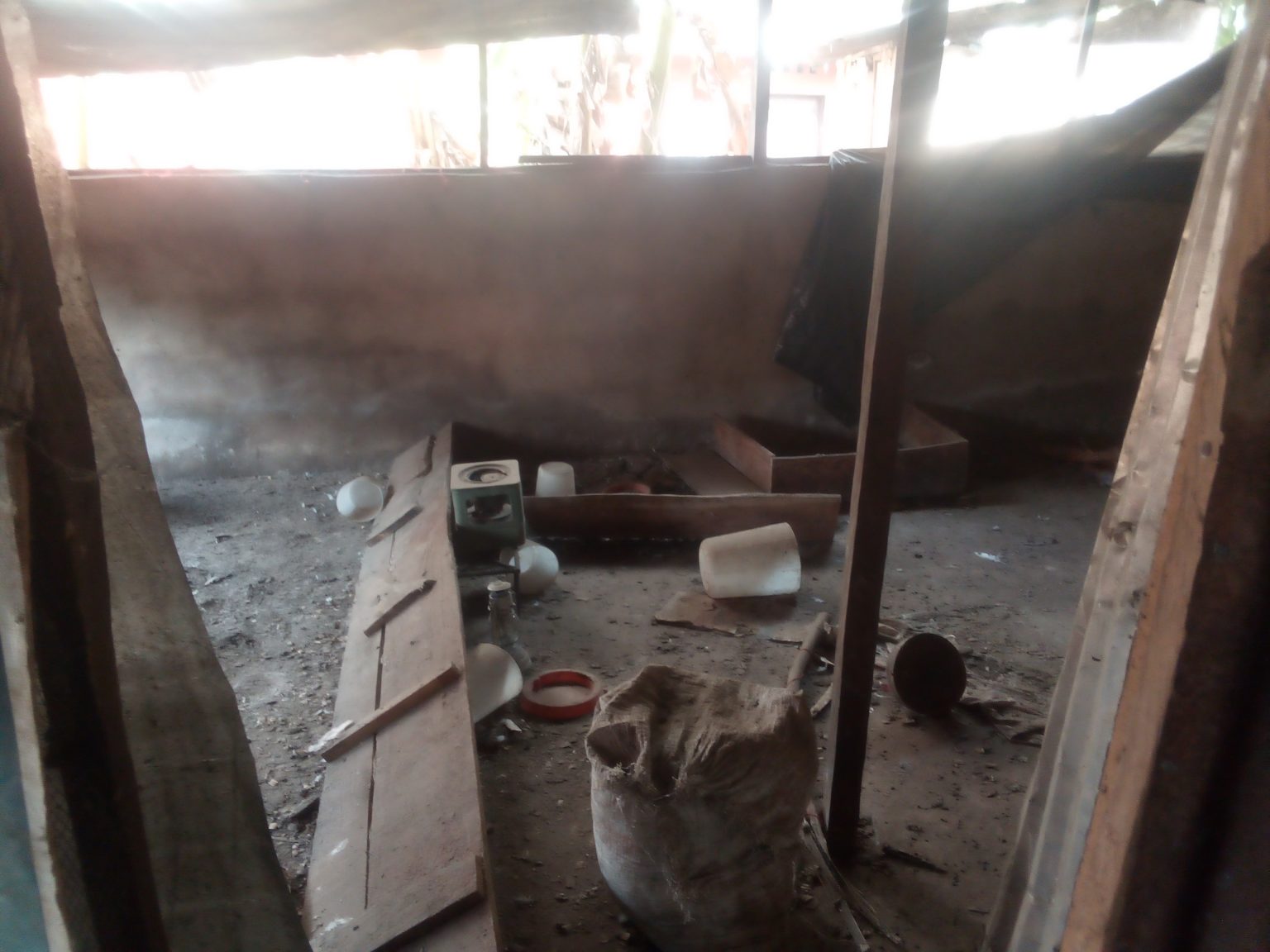
According to the police, she was kidnapped, raped and murdered by an imposter who was later identified as Frank Uduak Akpan.
After Akpan’s arrest, the police said he confessed to have lured the victim to his house, sexually assaulted her, burrying her in a shallow grave in his father’s compound after killing her.
The Akwa Ibom State Police Command also said the suspect was a serial rapist and would be charged to court after investigations.
However, after more than one month, Akpan and other suspects involved in the murder are yet to be prosecuted or arraigned in court.
When contacted by The ICIR over the case, the spokesperson for Akwa Ibom Police Command Okido Macdon said the case file had been sent to the DPP.
Macdon noted that Akpan, his father and one Ememobong Emmanuel Edem had been remanded at the Nigeria Correctional Service (NCS) pending arraignment.
Judicial workers in Nigeria had, on April 6, embarked on an indefinite nationwide strike over financial autonomy.
However, the strike was suspended in a communique signed by the Judicial Staff Union of Nigeria (JUSUN) Deputy President Emmanuel Abioye and the General Secretary Isaiah Adetola, on June 9.
The courts, which had not been sitting since the strike commenced, were expected to resume on June 14 but the day was declared a public holiday as a result of the June 12 Democracy Day celebration.
There were reports that some courts resumed on Tuesday but full activities are yet to commence.
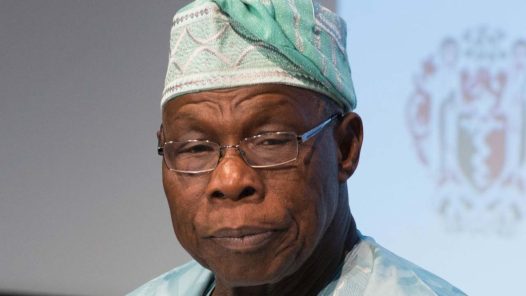
Special Assistant on Media to former President Olusegun Obasanjo,, Kehinde Akinyemi, has distanced the ex-president from a viral open letter allegedly written to President Muhammadu Buhari on some issues of national interest.
The letter was dated June 12, 2021.
It has been shared repeatedly on social media. The content of the letter also revealed some of the current challenges confronting the country such as insecurity and unemployment, among others.
Checks on each of the paragraphs show similar content, except for the closing captions. The four nuggets highlighted by Obasanjo in the old letter were also captured in the circulating letter.
“To be explicit and without equivocation, Mr. President and General, I am deeply worried about four avoidable calamities:
Abandoning Nigeria into the hands of criminals who are all being suspected, rightly or wrongly, as Fulanis and terrorists of Boko Haram type;
Spontaneous or planned reprisal attacks against Fulanis which may inadvertently or advertently mushroom into pogrom or Rwanda-type genocide that we did not believe could happen and yet it happened.
Similar attacks against any other tribe or ethnic group anywhere in the country initiated by rumours, fears, intimidation, and revenge capable of leading to pogrom;
Violent uprising beginning from one section of the country and spreading quickly to other areas and leading to the dismemberment of the country.”
As a former president, Obasanjo would often write to the nation’s presidents when necessary, especially on issues bordering on unemployment, insecurity, rule of law, and ethnic division, among others.
During Goodluck Jonathan’s administration, similar letters were written to him on the nation’s state of affairs. One of such letters was dated December 2, 2013. It was titled “Before it is too late.”
However, findings show that the controversial letter has almost the same content as that which was written by Obasanjo in 2019, except for the June 12, 2021 date appended at the top.
Nevertheless, The ICIR found that the letter was written on July 15, 2019, as published in some national dailies and released by Obasanjo’s media aide.
“Ok. My verdict is that it was an old letter dated July 15, 2019. Thanks,” Akinyemi disclosed when this reporter reached out to him.
He debunked the letter, after the reporter had shared the piece with him via WhatsApp.
The former president led the nation twice, first as a military administrator from 1976 to 1979, and as a democratically elected president between 1999 and 2007. He was in office for eight years and left the presidential seat in 2007.
On April 4, he met with some elders from northern Nigeria on rising insecurity in the country. “Federal government must be proactive, secure necessary and updated intelligence to deal with organised crimes and have common policy for the nation. It is not solving the problem when one state goes for negotiation and molly-cuddling of criminals, and another one goes for shooting them. Nor should one state go for ransom payment and another one going against it.
“Education is one main key to solve the problem in the long-run but it must start now. The 14 million children that should be in school and are out of school must be put in school with local authorities, state governments, and federal government working together,” he stated.
The former president also held a meeting last Thursday with other notable Nigerians in Abuja, still on the state of affairs in the country. Some of the participants included: former Head of State, General Abdulsalami Abubakar (retd.); the Sultan of Sokoto, Muhammad Sa’ad Abubakar; and former Catholic Archbishop of Abuja Diocese, Emeritus John Cardinal Onaiyekan.
Others were: President of Nigeria Labour Congress, Ayuba Wabba; former Attorney General of the Federation and Minister of Justice, Kanu Agabi (SAN); General Secretary of Christian Association of Nigeria, Joseph Daramola; Etsu Nupe, Alhaji Yahaya, and former Minister of Agriculture, Audu Ogbe.
The ICIR was told that the meeting was sanctioned by Buhari.
Obasanjo, who addressed journalists at the Transcorp Hilton, Abuja, on Friday, noted that a communiqué was not issued at the end of the meeting because the statesmen would be long on action and short on statement.
THE Economic and Financial Crimes Commission (EFCC) said that it had recovered about $20 million worth of cryptocurrency from Internet fraudsters.
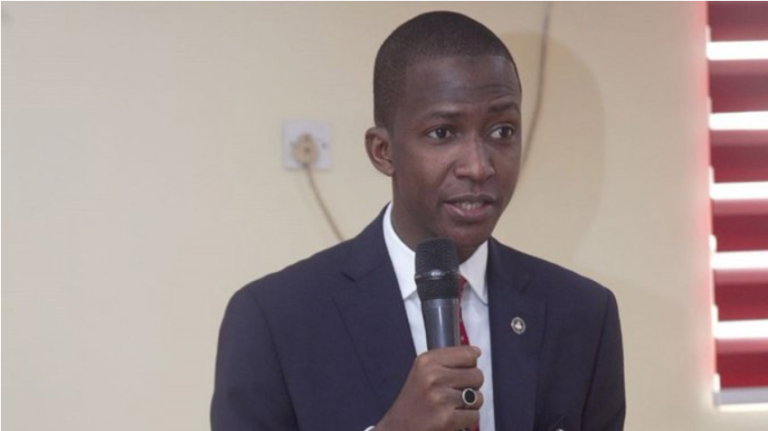
EFCC Chairman Abdulrasheed Bawa stated this when he appeared on Channels Television’s Sunrise Daily programme on Tuesday.
Bawa said that the recovered digital currency had been saved in the crypto-wallet operated by the commission.
He lamented that cybercriminals were taking advantage of the non-regulation of the cryptocurrency space to perpetuate criminal acts.
“As it is today, there is nowhere in the world where cryptocurrency is being regulated. The EFCC is looking at an avenue in which people are laundering and receiving proceeds of crime and that is our worry,” he said.
“We have seen time and time again where cybercriminals are using this avenue to get their proceeds of crime. Before it used to be through money transfer agencies like Money Gram and of cause Western Union. Now they have gone E. They will defraud somebody. They will get gift cards, exchange them on the dark web, and they will use the proceeds to buy crypto, and they can get it to their e-wallet, and then, of course, they can sell and get their money.
“As it is today, we have about 20 million dollars worth of cryptocurrency as of last statistics that I have because we also created our own e-wallet to recover cryptocurrency, you know it has never happened before but we created it and we are now recovering these proceeds of crime from that means as well.”
In February, the Central Bank of Nigeria (CBN) directed commercial banks across the country to discontinue cryptocurrency-related services. The apex bank also warned Nigerians against trading and investing in cryptocurrency because of its volatile nature.
The bank noted that cryptocurrency had become an avenue for fraud and money laundering due to its decentralised nature.
Speaking further on Sunrise Daily, Bawa commended the CBN for limiting avenues through which criminals laundered proceeds of crime in the country.
“We are in support of what the CBN has done because it has limited the ways in which some of these criminals can exchange their crypto and get naira for it,” the EFCC boss added.
Farming in Anambra State has come under the heavy blows of climate change, herdsmen attacks, government negligence and others, writes EMMA ELEKWA
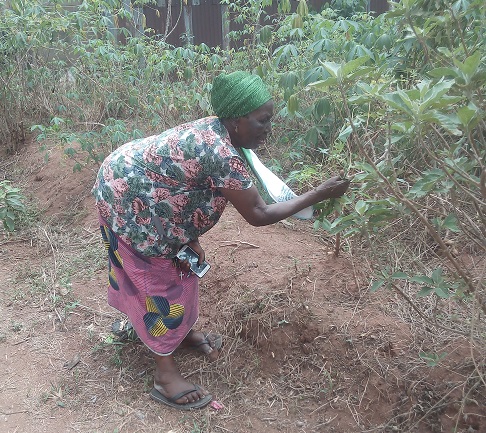
For Monica Igbokwe, farming has never been as frustrating as it has been in recent times. As one with over thirty years’ experience, farming has always been more of a passion than business as a result of the apparent benefits derivable from it.
Apart from taking care of her family’s responsibilities, including paying children’s school fees, house rents and other bills, there is this fun and fulfilment associated with farming, not only at harvest time but even amidst the inherent labour and stress.
But all the euphoria has suddenly evaporated and is being replaced with frustrations, agony and misery, no thanks to Nigeria’s choking economy and its attendant consequences on the business of farming.
“To worsen the matter is the total neglect and abandonment farmers suffer in the hands of government and its officials. Before now, we hardly begged for farm inputs like seedlings, fertilisers and others. All these were more or less our entitlements.
“As if the neglect by government was not enough, incessant clashes between farmers and herders have further aggravated the situation, making farming a nightmare,” Igbokwe observed.
Igbokwe is a member of the Small Scale Women Farmers Organisation of Nigeria (SWOFON) and Coordinator of Nnewi South in Anambra State. She farms cassava, yam, cocoyam and other crops.
She said she would have long called it quits with the farm business, like several of her colleagues, if not for the love and passion she had for the profession.
Igbokwe, in the same vein, alleged that the assistance from the government was being diverted to those she described as political farmers.
Agriculture has remained the main source of livelihood for many Nigerians. Approximately 70 per cent of the people directly rely on agriculture as a means of livelihood. According to Gender Policy in Agriculture, women, who constitute 49 per cent of the nation’s population, carry out about 80 per cent of agricultural production, 60 per cent of agricultural processing and 50 per cent of animal husbandry and related activities.
Despite the enormous benefits derivable from agriculture, those engaged in it in Nigeria, particularly the farmers, have continued to suffer untold neglect and abandonment by the government at all levels.
The worst hit are the women farmers who are said to constitute over 70 per cent of the entire agricultural workforce.
These categories of farmers have not only been starved of essential materials for their businesses but also have become endangered species as a result of their vulnerability.
Among these disadvantaged women are the smallholder farmers who constitute about 60 per cent of the agricultural labour force.
This set of women farmers, under the SWOFON, have continued to decry total abandonment despite coming up with a charter of demands that were expected to address their numerous challenges.
In Anambra State, total capital expenditure in 2015 was N110.979 billion. It declined to N52.696 billion in 2016. In 2017, the total capital expenditure rose to N63.282 billion and saw a further rise in 2018 to N106.432 billion. It, however, suffered a downward trend in 2019 to N91.835 billion.
However, the state budgeted N1.384 billion for smallholder farmers in 2015; N706 million in 2016; N546.06 million in 2017; N3.17 billion in 2018; and N1.58 billion in 2019. These figures cover provisions made by eight Ministries, Department and Agencies (MDAs) to assist smallholder farmers in the area.
The MDAs are Ministry of Agriculture, Ministry of Economic Planning, Budget and Development Partners, Ministry of Environment, Ministry of Social Welfare, Children and Women Affairs, Ministry of Trade, Commerce, Markets and Wealth Creation, Agricultural Development Project, Fisheries and Aquaculture Development Commission, and the Office of the Governor.
Under the Ministry of Agriculture, provisions were made for Produce Storage and Fumigation Scheme, Credit Facilitated Comprehensive Irrigation, Drainage and Swamp Development, Seed Multiplication and Horticultural Development Project, Anambra State Rice Project, Agricultural Extension Information Services and Fertiliser Procurement and Distribution, procurement of agro-inputs, as well as Veterinary Field Services.
The Agricultural Development Programme (ADP) made provisions such as IDA support to National FADAMA Development Project (NFDP –III), Cassava Mosaic Distribution (CMD), Sustainability of Multi-St. Agricultural Development Programme (MSADP-I) and IFAD/FGN Support for Value Chain Development Programme (VCDP).
The provisions under the Ministry of Social Welfare, Children and Women Affairs were for the purchase of equipment for Women Cooperative Societies (WCS), Poverty Eradication Programme, Loan Grant to Women Co-operatives as well as Micro-credit Loan for Women Co-operatives.
From the Office of the Governor, provisions were for Special Mandate Projects (Faith-based Micro Credit Scheme) and Sustainable Development Goals (SDGs) Project, while the Ministry of Economic Planning, Budget and Development Partners budgeted for State Programme on Food and Nutrition.
The provision by the Ministry of Trade, Commerce, Markets and Wealth Creation was only for Cooperative Credit Scheme.
Meanwhile, the Central Bank of Nigeria (CBN) disclosed that the state government accessed N2 billion and N1.5 billion under its Commercial Agriculture Credit Scheme (CACS) and Accelerated Agricultural Development Scheme (AADS), respectively, in 2020.
The funds, according to the Branch Controller of the CBN in Awka Benedict Maduagwu, would stimulate the agricultural value chain, which incidentally remains one of the core pillars of the governor Willie Obiano-led administration.
Despite all these provisions, the women farmers in the state have continued to experience difficulties.
Those who spoke to The ICIR located at various communities across the state virtually had similar sorry tales, particularly with regard to accessing loans, financial aid or grants, either from the federal or state governments, including the Anchor Borrowers’ Programme (ABP).
They lamented the lack of necessary inputs such as fertiliser, agrochemicals, improved seeds and seedlings, among others. Those who said they were privileged to get some quantities complained about delays in accessing such incentives. They said most of the incentives got to them long after they were done with planting. The absence of machines and equipment, including tractors, tillers, planters, harvesters and other gender-friendly equipment, according to them, also constituted hindrances to their work.
Aside from these obvious lapses largely occasioned by government negligence, the farmers also decried incessant cases of herdsmen attacks, which had greatly affected food production in the area.
While some complained of destruction of their crops by the cattle which regularly grazed on their farms, others alleged cases of attack by the herdsmen while farming.
As regards infrastructure, the women said most of the roads leading to their farms were in deplorable conditions, thereby making it difficult for them to move their produce to the market. While some acknowledged construction of new markets by the government in their locations, others regretted that most of the existing ones had remained dilapidated.
Perhaps, one major thing the majority of the farmers acknowledged receiving as assistance from the government is training. But they noted that the assistance was an exercise in futility, especially when not backed up with necessary equipment for implementation.
A farmer, Ngozi Obiajulu, whose farm is located in Ekwusigo, said farmers were yet to receive any intervention from the government despite several promises.
She said: “We have finished clearing the bush and waiting for the rain to fall so we can commence cultivation. We started ending of last year. Presently, we’ve cultivated some areas at the back of Okija.
“We’ve not got any assistance from the government. They promised us some inputs and money but we do not know what is keeping it. They should help us with fertiliser, cassava, okro and other inputs.”
She, however, said they would not fold their hands and keep waiting for the government considering the importance of their business to the society.
At Atani in Ogbaru Local Government Area of the state, Eunice Nduka said farming was greatly affected by climate change, which she said compelled them to engage the services of water tankers for irrigation.
She said: “In the past, we commenced clearing of farms for planting as early as February/March. But because of the delay in rainfall, we are not doing anything tangible because we started very late. This has compelled us to engage the services of water tankers to irrigate our farms. Otherwise, our crops could have dried up and died. The ugly situation has led to a hike in the price of foodstuffs. For example, a cup of garri now is N200, while 12 cups go for as high as N1,000.”
At Achina-Onneh in Aguata Local Government Area, another farmer, Eucharia Chinwendu, identified incessant attacks by herdsmen, including the destruction of their farms by cows, as their major predicament.
“As you see this road, which was initially a pathway, you will think that vehicles created it. Not at all, no car enters here. It is the cows of these Fulani that widened the road. Sometimes they enter our farms, damage and uproot our crops. Some of us who have been attacked by the herdsmen no longer go to the farm for fear of being attacked the second time,” she said.
She also lamented the effect of the COVID-19 pandemic on their business, especially in the area of finance, as it hindered the engagement of manpower. She, however, expressed hope for a brighter future.
Obiageli Onuma in Nnewi North Local Government Area of the state alleged diversion of inputs belonging to them to pensioners, an allegation the Programme Manager of Agricultural Development Programme (ADP), Ministry of Agriculture, Jude Nwankwo, dismissed as untrue, saying they might have bought the inputs from the farmers who got them free from the ministry.
Onuma urged those responsible for the distribution of the input to reach them at the hinterlands where the genuine farmers could be located.
“We are not less than 50 in our group who are into cassava, tomatoes, melon and ‘akidi.’ We have 25 hectares of land. If you look at this site, you will notice that it did not yield much because of the rain that stopped suddenly. Besides, we are compelled to turn the burnt weeds to manure owing to a lack of fertilisers. All these will affect our harvest greatly.
“We need tractors and manpower to clear the bushes and cultivate. We can engage the women to help us in weeding. We also need chemicals to spray in the farm so weeds will not grow,” she added.
A male farmer, Emma Okeke, attributed the food scarcity challenges in the South-East to herdsmen attacks.
He said: “Everyone cultivated enough farmlands. So many cooperatives have their various farms. But these herdsmen will carry their cows and enter the farms, uproot the cassava, and use it to feed their cows. If you dare come near them, they will harass you.”
He alleged that some of the traditional rulers had been compromised by the herdsmen.
Reacting to the alleged negligence of women farmers in the state, the ADP boss refuted the claims, insisting that women remained the most beneficiaries of government inputs and other facilities.
He revealed that the Ministry was among those with the largest chunk of the budget despite the dwindling economy, but regretted what he described as scepticism among farmers over certain government programmes which, he said, contributed largely to their inability to access the government’s assistance.
“I am aware of the SWOFON, but I believe all the women in the state, whether members of SWOFON or not, are our farmers as long as they are into agriculture. We do not discriminate. Ask them if they know about ADP, extension services and the officers in charge of their areas. You do not sit at home waiting for manna to fall. Gone were the days manna fell from heaven. Most of these things are free and some subsidised.
“Mind you, you do not expect everyone to be singing praises of the government. But it will be foolhardy to see the good things the government is doing and still be criticising.”
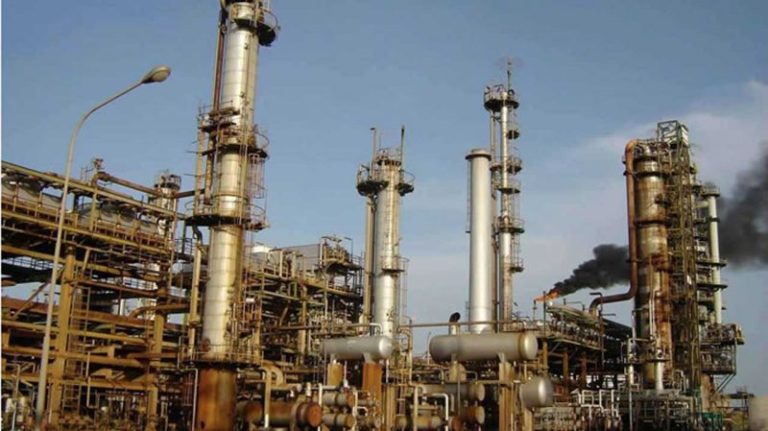
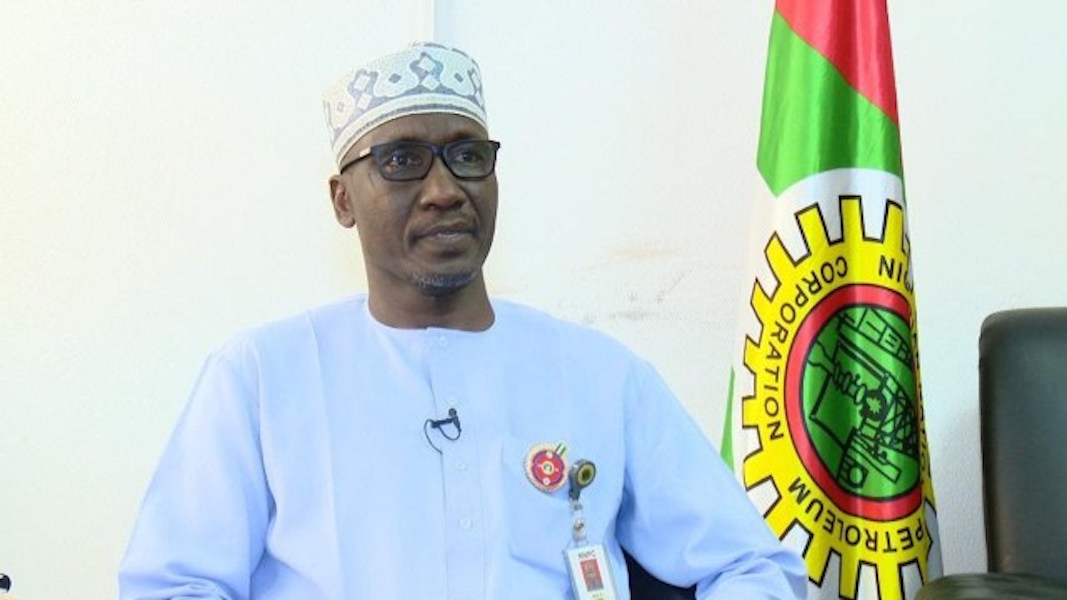
THE Nigerian National Petroleum Corporation (NNPC) has mismanaged Kaduna Refining and Petrochemical Company Limited over the years and is reluctant to hand over the company to a competent private firm that can run it as an efficient business.
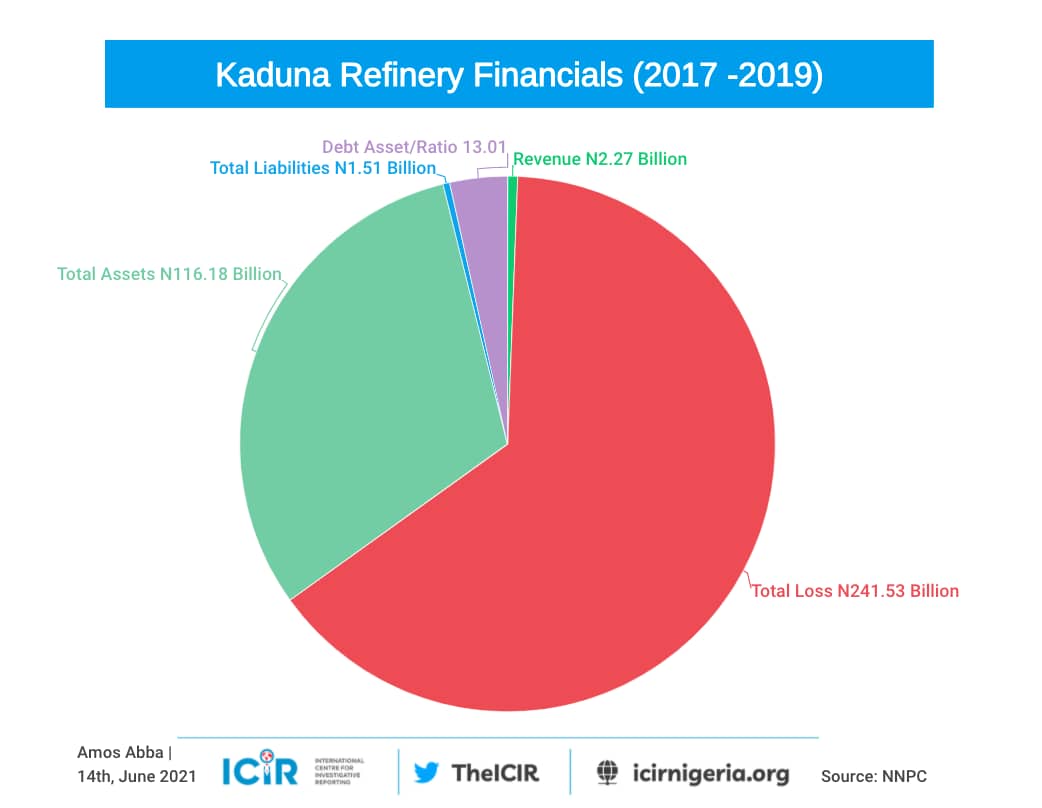
Businesses exist to make profit, but Kaduna refinery seems to have been set up for other reasons. Based on the financial statements released by the NNPC, Kaduna refinery made a revenue of N2.278 billion between 2017 and 2019 but incurred a loss of N241.527 billion.
Analysts wonder how the financials of the refinery would look like if the NNPC releases the statements of the company for the last 10 years.
By implication, the refinery lost N239.249 billion in three years. Total assets of the company in the three years under review stood at N116.189 billion, while liabilities were estimated at N1.511 trillion. An investment dictionary, Investopedia, classifies Kaduna refinery as an asset deficient company which might not be able to meet obligations due to asset-liabilities negative gap.
“Asset deficiency is a sign of financial distress and indicates that a company may default on its obligations to creditors and may be headed for bankruptcy,” Investopedia says. The debt-asset ratio examines the percentage of assets funded by borrowing compared with the percentage funded by the investors.
A debt- asset ratio less than one means that a significant portion of a company’s assets is funded by equity or investors’ money. But when it is above one, then a significant proportion of company’s assets is funded by debt and the firm could be at a risk of default.
In the case of Kaduna refinery, the debt ratio for the three years was 13.006 – a red flag to lenders who wanted their money back, said Innocent Unah, an investment banker and accountant.
In simple accounting, when liabilities stand above assets, it is a sign that a company like Kaduna refinery is headed for bankruptcy.
The NNPC has been borrowing to fund activities at the refinery, even when its operations do not show any capacity to pay back.
Net income is negative, meaning that other metrics of assessing profitability of the company turned out negative.
Kaduna refinery inforgraphics
NNPC failed to stop wastes
In 2018, Kaduna refinery made no profit, but it did not stop the management of the company led by Ladenegan Adewale Solomon (CEO in 2018) and Tsavnande Thaddeaus Atighir (Executive Director in charge of operations) from spending N317.50 billion on transport and travels.
In 2019, the refinery was managed by Ezekiel Osarolube (CEO). Usman Umar was his executive director in charge of operations.
In three years under review, the refinery incurred N443.421 billion cost as transport and travels expenses.
Maintenance of the inefficient refinery gulped N2.461 trillion in the three years under review. In the 2018 when the refinery made no revenue, the management of the refinery spent N1.687 trillion for its maintenance. In that same year, salaries and welfare of workers gulped N2.853 trillion. In three years, salaries and welfare of workers cost N4.268 trillion – as against revenue of N2.278 billion.
“Why did refineries become moribund despite all the talks about turn-aroud maintenance?” an oil sector governance expert Henry Ademola Adigun asked, in an interview with The ICIR.
“These questions have to be answered. Is it for lack of maintenance? Is it for administrative purposes? Or is it because they could not find people who were competent enough to support them? Now the question we ask is: Why don’t you allow the private sector to do that if you think they are viable?” Adigun further asked.
Mele Kyari, NNPC Boss. Photo credit: thecapital.com
Turnaround Maintenance
The Kaduna refinery was built and commissioned in 1980. It was made up of 50,000 bpsd fuels plant with a CRU and an FCCU, and a 50,000 bpsd lubes plant for production of lubricating oil blendstocks, waxes and bitumen, a 2018 article by Anthony Ogbuigwe said.
A report said the corporation had spent up to $25 billion on turnaround maintenance since inception. After several years of wastes, the NNPC announced that it would carry out a fresh turnaround maintenance on Kaduna refinery in 2005. It also embarked upon the same project in 2008, but admitted that the technologies at the company were obsolete.
“The control room is three decades behind in technology and Nigeria should be proud of the NNPC team for keeping the refinery working with obsolete technology,” the then Group General Manager of Public Affairs Division of NNPC late Levi Ajuomuna said.
In 2013, the Andrew Yakubu-led NNPC said it would embark on another turnaround maintenance, claiming it would boost the refinery’s revenue by N1 trillion. Despite all these, maintenance of the inefficient refinery gulped N2.461 trillion between 2017 and 2019 years.
Analysts say all the managing directors of refineries in Nigeria, including Kaduna refinery, should be called to question, considering that they supervised enterprises that incurred humongous debts and wasted the nation’s scarce resources.
What N239.249 billion loss can do for Nigeria
The N239.249 billion loss incurred by Kaduna refinery in three years can pay minimum wages(N30,000) of 221,527 Nigerians for three years. This would be a boost in a country where 105 million people are extremely poor and earn less than $1.90 per day, according to World Poverty Clock. Alternatively, it can build Lagos-Ibadan Road re-awarded to Julius Berger Nigeria and Reynolds Construction Company Limited at a sum of N167 billion in 2013.
At the cost of N100 million each, the amount can build 2,392 primary healthcare centres across Nigeria, thereby reducing incidences of death and emergencies. These could have reduced the needed 9,855 primary healthcare centres by 24 per cent.
“We have barely one-thirds of the required 9,855 PHCs, which define Universal Health Care, to bring health closer to the people and begin to address Nigeria’s horrendous health indices,” Nigeria’s health minister Osagie Ehanire said in December 2020.
Hand over to private sector now
As associate consultant for the British Department of the International Development (DFID) Celestine Okeke noted that Kaduna refinery was not a good business for the government.
“Why is the government so interested in rehabilitation of the refineries that they told us they have been doing turnaround maintenance on overtime?” he asked.
“For me, if they cannot leave it for the private sector to handle, I wonder the interest in Kaduna refinery rehabilitation when we have all kinds of challenges in our economy,” he said.
Former President of the Nigerian Society of Petroleum Engineers Joe Nwakwue told The ICIR that the issue was not so much about the cost as much as it was about policy clarity.
“The question then is, could we not give majority stake to private sector players and save ourselves the inconvenience of the additional loan burden?” he asked.
“What strategic purpose does retaining full ownership of the refineries serve?”
“Having an Operate and Manage contractor with no skin in the game by way of equity can be challenging and we have no successful story of such arrangements,” he observed, stressing that the country should have gone through sale of majority stake to a core investor and let them worry about rehabilitation and operation.
The ICIR had earlier reported the losses at Warri refinery and Port Harcourt refinery, critically analysing the $1.5 billion budgeted for the latter as waste.
The NNPC has admitted the humongous losses at the refineries -Warri, Port Hacourt and Kaduna.
A press release by the NNPC’s Spokesperson Kennie Obateru in April 2020 quoted Group Managing Director Mele Kyari as saying that the corporation would not run refineries again. But the corporation is rebuilding Port Harcourt refinery with $1.5 billion – which is considered a total waste by industry players.
In November 2020, Kyari said the corporation deliberately shut down the nation’s refineries because it no longer made sense to operate them.
“For instance, to run Kaduna and Warri refinery, you need to deliver 170,000 barrel of oil per day so that both will operate at 70 per cent capacity,” Kyari said in a report published by The Guardian.
Kyari assured that he would run the corporation with transparency and accountability, noting that the NNPC had published its audited report of 2018 and 2019.
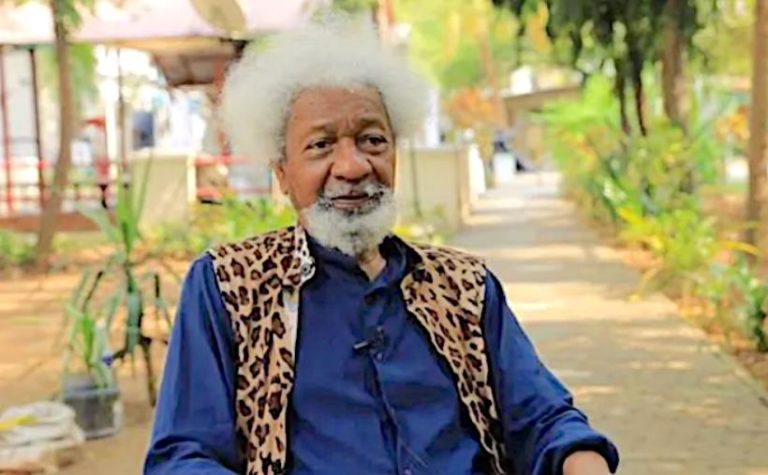
NOBEL Laureate and elder statesman Wole Soyinka has said Nigeria may not celebrate another Democracy Day if President Muhammadu Buhari fails to listen to the people.
Soyinka said this on Monday during an interview on Arise TV. The interview focused on the recent June 12 Democracy Day celebration in Nigeria.
The Nobel laureate noted that the upsurge in secessionist agitation in the country in recent times stemmed from Buhari’s refusal to listen to Nigerians.
“I am saying this whole nation is about to self-destruct and I am not the only one saying it, and except Buhari and his government listen and take action, otherwise we would not celebrate another Democracy Day come next year,” Soyinka said.
He noted that kidnapping had become a business in the western corridors of Lagos, Ogun, Kwara and other states but the president often came on air to act like nothing had happened.
Soyinka argued that the creation of a regional security outfit, Western Nigeria Security Network codenamed Operation Amotekun, was as a result of the frustration and desperation felt by the people.
According to him, Buhari was still asleep and unaware that the nation had changed dramatically over the last few years.
He noted that the situation in Nigeria had changed drastically, adding that Buhari must understand that whoever was in charge of the country should listen.
Soyinka said that Buhari must also understand that the threat of disintegration in the country had accelerated in the last couple of years beyond what was obtainable since the civil war.
Commenting on the recent ban on Twitter in Nigeria, Soyinka observed that truncating the various channels of self-expression open to any polity amounted to absolutely abrogating the very essence of democracy.
Soyinka noted that although the president had shown a symbolic gesture of restitution by recognising June 12 as Democracy Day, such an act must be consistently manifested.
“Democracy is not a sequence or spasm of symbolic gesture such as restoring June 12 as the Democracy Day, it is an act of restitution.
“That restoration was obviously a symbolic gesture, very calculative, but it has to be manifested consistently without exception in the act and when you truncate any channel of self-expression of the people, you are literally becoming an enemy of democracy,” he said.
THE Police in Plateau State have confirmed the killing of 10 residents of Kashe community in Jos South Local Government Area (LGA) by unknown gunmen on Sunday.
In a statement released on Monday, the spokesperson for the command Ubah Ogaba disclosed that the gunmen opened fire on villagers after invading the community in a Hilux van on Sunday night.
“Personnel of the command and the military have been deployed to the affected area. The commissioner of police has ordered an immediate investigation to unravel the circumstances surrounding the killing and to bring the perpetrators of the dastardly act to book,” the police spokesperson said in the statement.
The News Agency of Nigeria (NAN), however, reported that 12 people were killed while five were injured during the attack.
Those who sustained injury were currently receiving treatment, according to NAN.
The level of insecurity in Jos has escalated in recent years.
In June, about seven people, including children, were killed in Dong, a community in Jos South LGA of Plateau State.
The unidentified gunmen who carried out the attack had invaded Dong through the surrounding bushes and fled before the arrival of the police.
In April, The ICIRreported attacks on a mining site by gunmen. Eight miners were killed in the incident, while several others were injured.
Reacting to the killing of the miners, Governor of Plateau State Simon Lalong said in a statement that the narrative of unknown gunmen would no longer be accepted from security agencies in the state.
He directed security personnel to identify perpetrators of the attacks.
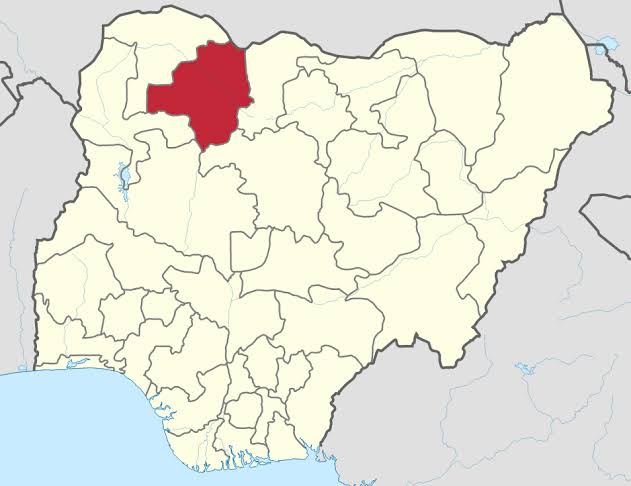
THE Zamfara State Police Command has repelled a robbery attack along Gusau-Sokoto Road in Bakura Local Government Area (LGA) on Sunday, killing several armed robbers in the process.
In a statement, Spokesperson for the Command Mohammed Shehu said a large number of suspected bandits had attempted to rob commuters of their valuables but got caught in a gun battle with security operatives.
“At the end of the gun battle that lasted for hours, many bandits were fatally injured, with some of them believed to have escaped with gun injuries. They, however, managed to evacuate the corpses due to their large number that was believed to be around 200.
“The road is now cleared for motorists and other road users with rigorous confidence building patrol being intensified to avert further road blockage elsewhere. However, bush combing of the surrounding forest is being conducted by combined Police Tactical operatives including Police Special Forces,” it read.
The command reiterated its unwavering commitment to protecting the lives and properties of citizens of Zamfara State.
Security in the north-western part of Nigeria has remained fragile, particularly in Zamfara State.
Less than a week ago, The ICIR reported the kidnap of 60 women and the death of four others in the Maru LGA of the state.
The spate of violence has presented a new challenge for security forces who have been stuck in a war with terrorists in the region for several years.
THE Nigerian Army have denied reports that they were on a vengeance mission in some communities in Ohafia Local Government Area, Abia State.
This was contained in a statement signed by Director of Army Public Relations Mohammed Yerima on Monday in Abuja.
Yerima said contrary to the reports, eight soldiers were not killed in a clash with the Indigenous People of Biafra (IPOB) / Eastern Security Network (ESN).
“The NA wishes to debunk the allegation as baseless fabrication aimed at not only tarnishing the good image of the NA but to create distrust between the public and security agents in the state,” the statement read in part.
However, the Army said soldiere carried out ‘routine clearance operations’ in line with rules of engagement and respect for fundamental human rights of the citizens. The operations were aimed at restoring socio-economic activities, the Army said, but did not explain if any member of the troop was killed or injured.
When contacted by The ICIR for explanations, Yerima said the Army did not injure or kill any of the ESN/IPOB members during the clash.
“If there was any such case of causality or injury on other sides, I would have stated that in the statement issued earlier,” Yerima said.
He noted that the Army in collaboration with the Nigerian Police were working ‘tirelessly’ to restore peace in the region.
Against the Army’s position, an online medium (not The ICIR) had reported that seven soldiers were killed in Ohafia Local Government. on Sunday.
The report read that the killing of the two officers triggered a violent attack from other soldiers of the 14 Brigade, Army Headquarters, Goodluck Ebele Jonathan Barracks, in the state.
According to the report, the soldiers shot at people and burnt down houses in Elu, Amangwu and Ebem communities in the state.
Chairman of Ohafia Local Council Okorafor Ukiwe had also confirmed the clash, saying that there were complaints of alleged intimidation, harassment and stifling of the constitutional freedom of movement and right of the people to do legitimate business following the clash.
December 2020 remains unforgettable for Ngozi Ubah, a small-scale farmer in Awku-Ukwu, Idemili South Local Government Area of Anambra State. Like the previous years, Ubah, who had been into livestock farming, had months earlier started rearing broilers ahead of the year’s festive sale , without any premonition that huge losses awaited her.
But when the festive period came, she eventually sold the birds cheaper than the cost of production as customers refused to buy at her own prices.
The devastating impact of such loss was not just for the small-scale farmer, but also for her 15 dependents, including nine biological children and a husband.
Mrs Ngozi Ubahs desolate poultry
She was unable to control her heartbreak as she narrated her experience in tearful sobs:
“When we sold the last ones last December, despite all the sufferings, I could not even make the money I spent in rearing the chickens. It was after that ugly experience I decided to quit poultry farming.”
She made good her decision to quit as the poultry, located at the back of her residence, was empty and appeared abandoned. She was, however, burning with passion for the business she had done profitably for many years.
“If God remembers me and blesses me with money, I will start this poultry again. I enjoyed it when it was going on well.”
During the interaction with her, it was obvious that Ubah’s decision to quit was not just informed by the loss, but also an unfriendly business climate, worsened by a lack of assistance from the governments.
Without any respite in sight from the poultry venture, her survival became the cassava, yam, cocoyam and vegetable garden she planted around her house.
Part of the farms had been cleared in readiness for this year’s rainy season, but sourcing for funds to achieve all her plans occupied her mind as she conducted the reporter round the farms.
She lamented: “I am not finding things easy again. We went for training in Awka and they asked us to open an account. Up till now, nothing has happened. For this year, we are still waiting if the government will give us input. Last year, I bought a bundle of cassava sticks N3,000 or N4,000. For this farm, I will buy no fewer than N20,000 worth of cassava stems. Now, I have spent about N12,000 clearing the land. I will pay up to N20,000 to make the ridges and then buy cassava stems and drugs to keep them healthy until harvest. If you calculate all these expenses, you see why food is costly.”
Ngozi Ubah is not alone in her predicament as funding is identified as the greatest challenge, dealing a big blow to small-scale women farmers in Anambra State.
SWOFON Co-ordinator Anambra Georgina Akunyiba in her poultry farm at Nnewi
Georgina Akunyiba is the coordinator of the Small Scale Women Farmers Organization of Nigeria (SWOFON) in the state. Her business is thriving against all odds as the two-room shop, where she sells feeds, drugs and other items, is an attraction to other livestock farmers within and around Nnewi, the manufacturing hub of the state.
Apart from selling livestock feed, Akunyiba is also into poultry farming. She had sold her birds a day before the visit, leaving only a few broilers on the farm. Despite appearing to be doing better than most of her contemporaries, she argued she would have done even better, but for financial handicap.
“As small-scale farmers, we start with little money expecting that government would help us to do better. But, that has not happened. We survive by our efforts. We do contribution during our meetings and give members to help them.”
She continued: “A truck of feed is now over N3 million as against N1.7 or N1.8 million before. So, the money that would buy two trucks before will now manage to get one. To rear 50 broilers to maturity, 20 bags of feed is needed. We bought that quantity at N32,000. But now, N100,000 cannot buy it.”
Akunyiba’s situation is better appreciated, knowing that she lost her husband in 2014. For seven years, she has solely carried the responsibility of raising her five children with the proceeds of her agriculture business. Today, she has one university graduate, two undergraduates and two still in secondary school.
How is she coping? Akunyiba attributed her success to divine intervention. “It is God that is helping me to train them. We have been neglected by the government and some of us are already quitting agriculture out of frustration.”
Perhaps, these women’s testimonies would have been different if the government had demonstrated appreciable commitment to various policies designed to promote agriculture, considering the critical position they occupy in the food production chain.
According to the National Gender Policy in Agriculture, women carry out about 80 per cent of agricultural production, 60 per cent of processing activities as well 50 per cent of animal husbandry. While smallholder farmers are said to constitute about 70 per cent of the nation’s total farming population, the majority of them are women and are involved in the entire agriculture value chain.
Unfortunately, these hardworking women have access to less than 20 per cent of agricultural assets, including land, capital and other factors of production.
In dissecting the situation, agriculture value chain expert Abraham Ogwu regretted that the access problem had undermined the productive capacity of the smallholder women farmers, who had been unable to take good advantage of various innovations in the sector.
“There are innovations coming up every day all through the value chain, production, processing, marketing and others. But because smallholder women farmers lack support and empowerment, some of the innovations have not been able to improve their lots.”
Interactions with small-scale women farmers in Idemili North and South, Orumba North and South as well as Nnewi North and Anambra East local government areas revealed long neglect by the federal and Anambra State governments.
“We have not got anything from them, whether the CBN Anchor Borrowers, the Bank of Agriculture, NIRSAL and other institutions,” Akunyiba lamented.
Feed shop of Georgina Akunyiba SWOFON Co-ordinator Anambra-State
How effective are the agric policies and programmes?
The neglect of small-scale women farmers in Anambra State does not emanate from a lack of policies and interventions within the sector, but from what experts termed ‘poor and un-commitment of the government to those interventions’ – and these exist at both state and federal levels. The long list of existing policies include: the Anchor Borrowers Programme (ABP), the Commercial Agriculture Credit Scheme (CACS), Nigeria Incentive-Based Risk Sharing System for Agricultural Lending (NIRSAL), the Agricultural Credit Support Scheme, (ACSS) and Grow and Earn More Program (GEM), among others.
The ABP was initiated by the Central Bank of Nigeria in 2015 to link anchor companies with smallholder farmers of key agricultural commodities such as rice, maize, wheat, cassava, yam and potato etc as well as livestock farmers, through the provision of loans, agricultural equipment and blueprints on how to tackle the farming challenge.
The CACS was jointly established by the CBN and the Federal Ministry of Agriculture and Rural Development to promote commercial agricultural enterprises in Nigeria. The main thrust of NIRSAL is to fix the agricultural value chain and boost the confidence of the banks to lend to the value chain by offering them strong incentives and technical assistance.
On its part, the Bank of Agriculture offers numerous products and services to farmers. Its GEM is targeted at encouraging Nigerian women to embrace agriculture as a business. With a maximum loan limit of N1 million per individual, the beneficiaries must be smallholders who do not need collateral, but acceptable guarantors with verifiable income as well as NIRSAL Credit Risk Guarantee to cover 75 per centof loan delinquency.
Apart from these programmes, Nigeria is a signatory to many international instruments and conventions, with several policies including the Agriculture Promotion Policy 2016-2020, which, among other things, identifies the need to maximise the contributions of women to agricultural production and the elimination of discriminatory practices, while the Nigerian Gender Policy seeks to remove all gender-based barriers facing women in agricultural production by giving them access to critical resources such as land, capital, credit, farm inputs, technology, water and extension services, preservation and storage, markets, among others.
The 12-month, N2.3 trillion Nigerian Economic Sustainability Plan (NESP) was initiated to help different categories of Nigerians, including smallholder farmers with key interventions like the Mass Agricultural Programme (MAP), aimed at achieving cultivation of between 20,000 and 100,000 hectares of new farmlands in every state and supporting off-take and agro-processing with low-interest credit.
The Convention on the Elimination of all Forms of Discrimination Against Women (CEDAW), adopted in 1979 by the United Nations General Assembly, mandates state parties to mainstream gender considerations in all policies, plans, laws and their implementation.
Similarly, the Malabo Declaration, which Nigeria committed itself to in 2014, recommends a minimum of 10 per cent yearly budget investment in agriculture. It also specifically tasks the governments of member-states to support and facilitate preferential entry and participation of women and youths in gainful and attractive agri-business opportunities.
The Goal 2 of the Sustainable Development Goals (SDGs) targets doubling by 2030, the agricultural productivity and incomes of small-scale food producers, particularly women, indigenous peoples, family farmers, pastoralists and fishers, through secure and equal access to land, other productive resources and inputs, knowledge, financial services, markets and opportunities for value addition and non-farm employment.
Although these programmes, policies and international instruments have been of immense help to many farmers, investigations revealed that a greater per cent of smallholder farmers in Anambra State had not reaped their benefits.
Felicia Ileka, based in Nnewi, Nnewi North Local Government Area, is 86 years old and has obvious difficulty moving about. But her passion for agriculture is not hidden, as she proudly owns a number of farms, a little distance away from her residence.
Fortunately, the octogenarian farmer with experience spanning over 50 years has unfettered access to land resource, which is one of the biggest challenges confronting average women farmers. She narrated her voyage into farming.
“My father and mother were great farmers and since I was not fortunate to go to school, due to low premium placed on female education then, I inherited farming from them. I have been a farmer for several decades.”
Assistance from the government would have made a lot of difference but Ileka has never been so lucky all these years. That is why despite all her efforts to cultivate as many as she can, several hectares of land still lie fallow and uncultivated.
“It’s only my children helping me as God blesses them. At my age now, I need modern farming implement and equipment. I can no longer cope with the ancient method of farming.”
Two small scale women farmers on their farm at Ufuma Orumba North-LGA
Driving from the centre of Ufuma, in Orumba North Local Government Area, to Stellamaris Egbuonu’s farm took about 40 minutes. And from the point where driving became impossible to the farm is a trekking distance of another 10 minutes. It is a cassava farm fast growing into maturity. Asked how they were getting prepared for this year’s farming season, Egbuonu responded with the challenges confronting them.
“In this area, we produce garri. But, the government is not helping us. I can do more than I am doing now. There are virgin pieces of lands everywhere but we do not have the money to cultivate them. Getting labourers now is very costly, the prices of various inputs are also on the high side. Government should remember us,” she pleaded.
Close to Egbuonu’s farms is that of Theresa Okolo, who lives in a small house, which portrays her status as a smallholder farmer who is barely surviving. She is desirous of expanding the size of her farm, but she cannot raise the money to acquire extra land. The only assistance she gets is from her son, who often sends money to advance her agricultural ‘vocation’.
The soft-spoken woman hopes that things get better in the coming days, particularly with financial and other forms of assistance from the federal and state governments, which she anticipates would enable her to increase productivity from the current two to three plots.
“As you see me, I have not known any government as a farmer. They never give me anything. I am only struggling to survive.”
Budgets not working for us
Apart from policies and international instruments not achieving their intended purposes, the women have not felt the benefits of the annual budgets of the state and federal governments.
A study by the Centre for Social Justice, a non-governmental organisation, reveals a disconnect between the policies and annual budgets. For instance, while the Malabo Declaration mandates member-states to earmark 10 per cent of their total annual budget to agriculture, the reality from the state and the federal budget is less than three per cent.
The total capital expenditure of the Anambra State Government was N110.979 billion in 2015 but only N1.384 billion was provided for projects and programmes that would benefit smallholder farmers. When the total capital expenditure declined to N52.696 billion in 2016, the provision for smallholder farmers was reduced to N706 million. The provision for the farmers went further down to N546 million in 2017, notwithstanding the upward review of the total capital expenditure to N63.282 billion.
Smallholder Farmer Stella Okoro
When there was a further rise in the total capital expenditure in 2018 to N106.432 billion, the provision for the small-scale farmers also rose to N3.17 billion. The total capital expenditure suffered a downward trend in 2019 to N91.835 billion, just as the allocation to smallholder farmers got reduced to N1.58 billion.
In percentage, only 1.25 per cent of the state total capital expenditure was for capital projects targeted at smallholder farmers in 2015. It increased to 1.34 per cent in 2016 and declined further to .86 per cent in 2017. It increased to 2.98 per cent in 2018 before seeing a decrease to 1.72 per cent in 2019.
The budget lines were for various projects such as seed multiplication and horticultural development project, fertilizer procurement and distribution, agricultural extension information services, procurement of agro-inputs, IDA support to National FADAMA Development Project (NFDP–III), IFAD/FGN Support for Value Chain Development Programme (VCDP) and Produce Storage and Fumigation Scheme.
Others were: co-operative credit scheme, state programme on food and nutrition, Sustainable Development Goals (SDGs) project, poverty eradication programme and loan grant, micro-credit loan for women cooperatives as well as purchase of equipment for women co-operative societies (WCS).
The above statistics are considered poor given that eight ministries, departments and agencies (MDAs) in the state made provisions for smallholder farmers in their annual budgets within the period.
The MDAs were: Agricultural Development Project (ADP), Fisheries and Aquaculture Development Commission, Office of the Governor as well as Ministries of Agriculture, Economic Planning, Budget and Development Partners, Environment, Social Welfare, Children and Women Affairs and Ministry of Trade, Commerce, Markets and Wealth Creation.
At the federal level, only 1.2 per cent of the nation’s total budget was allocated to agriculture in 2016. It was 1.82 per cent in 2017 and rose to 2.23 per cent in 2018. It declined to 1.85 per cent in 2019.
Despite receiving an average of 1.6 per cent of the total budget over the five years, with an average of 59.52 per cent committed to capital expenditure, the actual release averaged 56 per cent for the four years.
Out of over N415 billion total capital budget for agriculture for the period 2015 to 2019, only about 19.4 billion naira, representing about 4.6 per cent, was allocated to women farmers. The study by the Centre for Social Justice equally found that most allocations to women farmers during the period were lumped together with youths, making it difficult for them to enjoy the funds.
Also, of concern is the fact that most of the projects and programmes budgeted for, over the years, did not enjoy the actual release of funds. So, they were either abandoned or put on hold, all to the detriment of the farmers, the target beneficiaries.
Lamentations about climate change, herdsmen and poor road network
In Anambra State, competition for land has become fiercer as a result of climate change, where erosion and flooding are adverse consequences. Despite being one of the smallest in the country in terms of landmass, the state is threatened on every side with almost 1,000 active gullies, which have naturally reduced the size of arable and cultivable land.
During a tour of various communities, hectares of rice fields, yam and cassava farms, submerged by flood last year, were still in their devastated state, as they were yet to be re-cultivated. Gullies have rendered arable lands in various parts of the state useless for agricultural purposes, while thousands of residents have been sacked from their homes.
The year 2020 was one some farmers in the state do not pray to experience again, due to losses incurred as a result of the harsh impacts of climate change such as drought, pests and diseases.
Rosemary Onwuegbuka has six children and three other dependents. She lives in Ayamelum Local Government Area but has her rice farm at Eziaguluotu-Aguleri, in Anambra East Local Government Area, a distance of more than one hour. The farm spanning hectares of land was among those submerged during the 2020 flooding – a situation that plunged her into unprecedented hardship. She barely meets up with family obligations, including the payment of tuition for her school-age children.
“Since flood carried everything, we cannot pay back the money we borrowed. I cannot even pay school fees. Just last week, somebody training my son in a vocation in Aguleri stopped him from coming because I have not paid the balance of N14,000.”
Since the whole community is naturally prone to flooding, Onwuegbuka has replanted her rice on the same piece of land, hoping that she will be able to harvest before the next flood episode. She also believes that prompt assistance from the government can help them to recover from what has become a perennial loss.
While reacting to why she re-cultivated rice in the flood-prone area, she said: “The land is our inheritance and we have no other one. We went back there. Had it been they give us support, we would have started early so that by the end of June, July, we will harvest.”
“Now, we need cash, inputs and machine to clear virgin lands we want to cultivate. We also need fertilizer, herbicide. If they give us cash, we can use it to buy whatever we need.”
Investigations revealed that livestock farmers were not spared as some had their poultry, piggery and fish ponds washed away. The experience of Stellamaris Egbuonu was different. A part of her farm was affected by drought in 2020 and the impact was still obvious at the time of visit. That part of the farm had suffered stunted growth and was not as healthy as the part enjoying adequate rainfall. This, again, means a loss of revenue.
Recounting her experience, Stellamaris Egbuonu said: “You can see this one is not looking good like the other one. When it started growing last year, the rain stopped for some weeks and the heat almost killed the cassava. This farm is almost a year old. But, if we harvest it now, the yield will be very low.”
An environmental expert with the Agricultural Transformation Agenda Support Programme (ATASP-1) in Adani-Omor Zone, Jane Nwabachili, agreed that the changing climate was dealing a big blow to the world.
“Most agricultural activities depend on steady weather, water and soil. So, farmers suffer more when these conditions become unpredictable. The consequences of continued temperature rise such as stronger storms, dangerous heat waves, rise in sea levels, translate to crop failures, income loss and food insecurity for farmers and the society.”
“Climate change affects the availability of surface water and as a result, rural women, whose duty it is to fetch water for their families, have to go long distances. This increases their already substantial work load. Again, women often have more limited rights than men in this part of the world, limited mobility and access to resources, information and decision-making authorities. As a result, any slight change significantly impacts them, climate change iinclusive.”
Perhaps, the greatest challenge confronting food production today is open grazing with its increasingly destructive impacts. It accounts for incessant clashes between farmers and herders, particularly in remote agrarian communities, leading to the destruction of lives, farm produce and property worth millions of naira.
People of Ufuma in Orumba North Local Government Area are yet to recover from the losses they incurred when their farms were destroyed by suspected herders months ago. The development has gravely slowed down activities at one of the active garri processing mills located at Umuagu village.
The leader of the women co-operatives, which owns the mill, Stella Onuchukwu, shed more light on the development.
“Herdsmen carried cows and went into all the farms around here, uprooted the cassava and used them to feed their cows. Now, you don’t see cassava to buy even in the market. We are now waiting for all these new ones to mature so that our business will start again,” she lamented.
Eucharia Okeke, the only woman at the mill during the visit, bemoaned the situation, which had denied them the reward of their hard labour.
“If you come here during Easter or Christmas, you will not find a place to sit down. Now, there is no cassava again. If you see them on your farm, you dare not challenge them or they do whatever they like to you.”
The South-East Governors Forum recently pronounced a ban on open grazing in all the five states of Abia, Anambra, Ebonyi, Enugu and Imo. However, women farmers believe such pronouncement will not make any difference without legal backing.
Allegation of corruption
Many of the women blame their woes on corrupt public officials, who they accuse of often diverting what is meant for them to ‘political farmers.’
Rosemary Onwuegbuka, a rice farmer struggling to get back on her feet after last year’s flood, is frustrated with the many unfulfilled promises from the state and federal governments.
During a phone conversation, she was resolute not to grant any interview on the issue because of the anger she felt, but relented after much persuasion
“Let me just tell you the truth, I am sick of all these pranks since 2007. They keep calling us for seminars and workshops and, in the end, they will release whatever to politicians who have no farm. All the palliatives that government claimed to have released to cushion the impacts of COVID-19 on Nigerians, we did not receive any.”
A Professor of Economics and current Dean of Faculty of Social Sciences at Nnamdi Azikiwe University Awka Uche Collins Nwogwugwu, who also agreed that corruption stood in-between smallholder women farmers and government interventions, stressed the need for a genuine and urgent solution to the problem.
“There is no playing the ostrich. Those who divert incentives and interventions meant for the poor farmers are in the government. If they want to stop corruption today, they have the capability, power and authority to do so. What they probably lack is the political willpower to end corruption.”
We are undeterred by challenges
Limiting the challenges confronting small scale women farmers in Anambra State to lack of access to agricultural incentives does not do justice to them. Their problems have been worsened by the deplorable condition of most roads leading to farms or linking them to markets, a reality which questions the commitment of authorities to make agriculture an interesting business.
Transporting farm produce to urban centres is with great difficulty and at an exorbitant rate. This expectedly results in a post-harvest losses on an annual basis as recounted by the women farmers, including Stellamaris Egbuonu, who also bemoaned the lack of storage facilities.
“You see where we drove from and the distance we have trekked. If I harvest, you can imagine the difficulty in taking the products to town. If you will get a bike or motor… you are ready to pay whatever price the driver or rider calls. We have no standard storage facilities. So, we are forced to sell our products at give-away prices, which never justified the drudgery and pains of planting them.”
However, the women are resolute in their determination to continue producing food for an ever-growing population. In their quest for a reversal of fate, they have come up with a Charter of Demands, which among other things are: access to an interest-free loan from the government, provision of gender-friendly types of machinery such as tillers, ploughs, harvesters, etc at subsidised rates, provision of extension services, hatchery machine and access to quality feeds for livestock, water.
Of topmost importance to them is linkage to off-takers and increased markets information systems, construction of good roads, the establishment of local security bodies and mechanisms to reduce farmer-herder crisis as well as provision of climate-resilient farming training to improve soil infertility.
Stella Onuchukwu aptly captured their resolve: “We are not discouraged at all. If not for any other thing, we can fend for our families. We will continue helping ourselves and if we have anything from the government, we will consider it as a boost. Let them try us and we will surprise them.”
Value Chain Expert, Mr Ogwu, recommended women-focused interventions from government and NGOs, which could help in breaking the vicious cycle of poverty in many households, a situation he argued, also adversely affected the nation’s economy in the long run.
“Also, women need to occupy positions of authority so that they can influence certain policies and decisions in favour of fellow women. If the CBN, Bank of Agriculture or NIRSAL is headed by a woman, I’m sure she will make policies that will affect the women folks positively. We need NGOs that will build the capacity of the women assert themselves.”
We have not abandoned any farmer – Anambra Govt
Commenting on various issues raised by the farmers, the Programme Manage for Agricultural Development Programme (ADP) in the state Jude Nwankwo explained that the administration of Governor Willie Obiano, which made agriculture its number one pillar, would not discriminate on the basis of gender.
“Whether they are SWOFON or whatever, we have the data of all farmers. We have a unit called WIA, (Women in Agriculture), which deals specifically with women. And when any project comes in, the women are not neglected.
“But, you know, some prefer to stay away and be passing funny comments. They want to see someone that has benefitted before they come in. There is a nationwide collation of data of all farmers and Anambra is in it. When our enumerators met some of them, they were very sceptical. That is part of the problems.”
The ADP programme manager, who acknowledged appropriating amounts lower than recommended to the agriculture sector, attributed it to the economic realities over the years as well as other sectors contending for attention.
“Also, the pandemic has dealt seriously with the global economy. Besides, there are several other sectors that need budgetary allocations. So, getting to the 10 per cent is a gradual process. I believe over time, we’ll be there.”
While calling on the small-scale farmers to seek useful information from genuine sources, Nwankwo equally stressed the need for them to be persistent with their demands.
“Probably, they were hurt by the previous regime, but we are serious. We are not corrupt. Our business is nothing but agriculture and we know that these small-scale women farmers are the ones making things happen in agriculture.”
“As I am talking to you now, a lot of things are happening. I am telling them now – come out, go to the agric department in your local government and ask the extension agents what you want to know about the Ministry of Agriculture. That’s why they are paid.”.\
“On the issue of diversion of cassava stems, we have been distributing various species for several years. Many farmers have cultivated it…How can you call it diversion just because you know that what was distributed was of the same species?” Nwankwo inquired.
Mitigating climate change
Research in climate change has shown the imperative of developing climate adaptation technologies, which will advance agricultural activities, while investment in smart agriculture is capable of helping to curb flood, drought, pests and diseases.
On the part of the state government, Nwankwo explained that the Ministry of Agriculture and Rural Development had always provided the farmers with useful information that would help them to cope better with the impacts of climate change.
“We have best practices officers on the field who advise the farmers, especially those in flood-prone areas, on what to do so that they can harvest before the flood comes. And for victims of the flood, we have always shared inputs as soon as the flood recedes, so that they will have what to plant in the new farming season.”
Nwankwo assured that the future held greater promises for all categories of farmers as the ministry had procured additional tractors to boost mechanised agriculture. “So, let them come out and access all that we are doing. We cannot do without the small-scale farmers. And they must know that we are here for them.”
This report was produced with the support of the International Budget Partnership, IBP and the International Centre for Investigative Reporting, ICIR