Home Blog Page 1771

Why agric business is no longer attractive to women farmers in Anambra

By Alfred AJAYI


December 2020 remains unforgettable for Ngozi Ubah, a small-scale farmer in Awku-Ukwu, Idemili South Local Government Area of Anambra State. Like the previous years, Ubah, who had been into livestock farming, had months earlier started rearing broilers ahead of the year’s festive sale , without any premonition that huge losses awaited her.

But when the festive period came, she eventually sold the birds cheaper than the cost of production as customers refused to buy at her own prices.

The devastating impact of such loss was not just for the small-scale farmer, but also for her 15 dependents, including nine biological children and a husband.
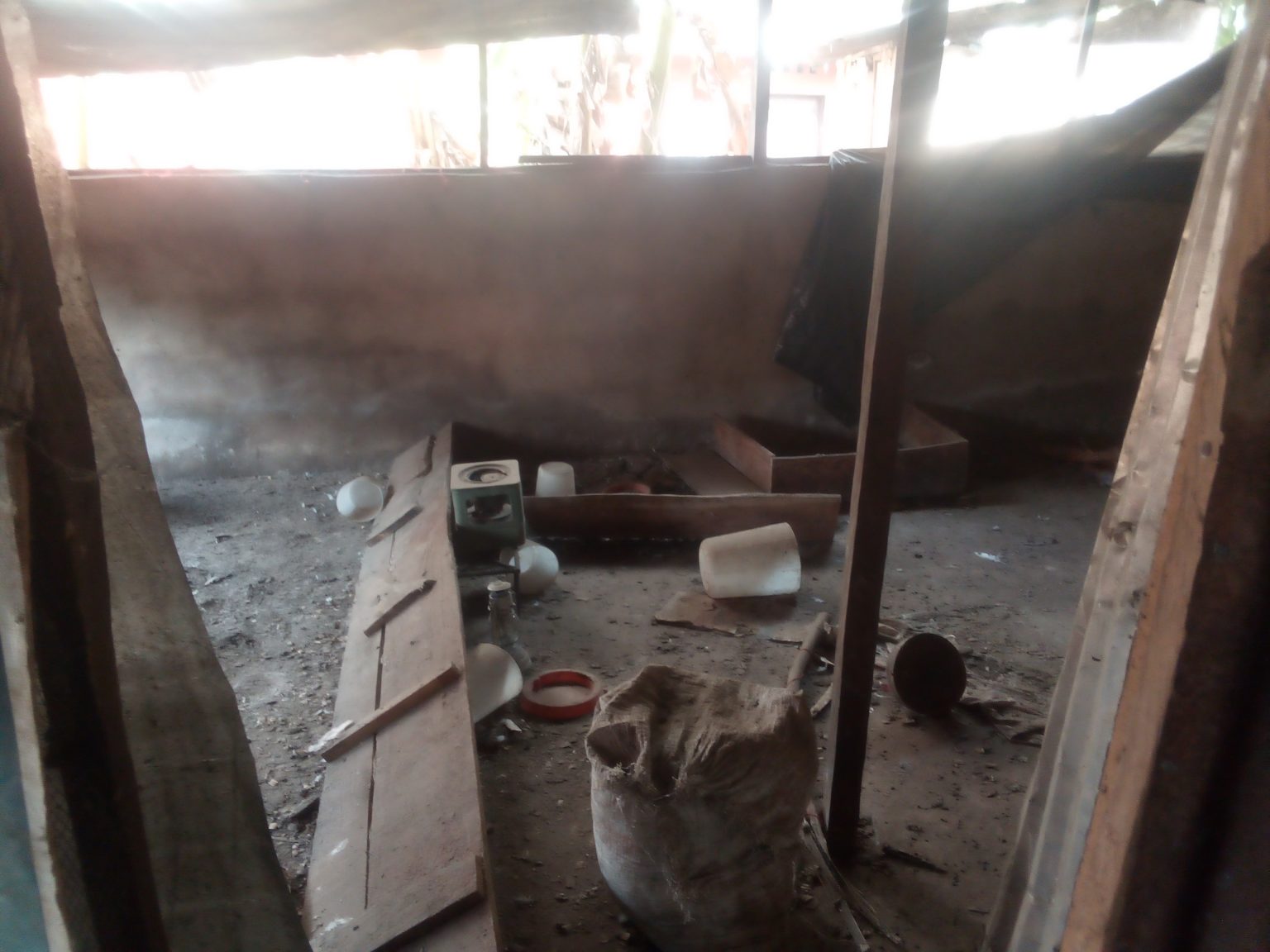
Mrs Ngozi Ubahs desolate poultry

She was unable to control her heartbreak as she narrated her experience in tearful sobs:

“When we sold the last ones last December, despite all the sufferings, I could not even make the money I spent in rearing the chickens. It was after that ugly experience I decided to quit poultry farming.”

She made good her decision to quit as the poultry, located at the back of her residence, was empty and appeared abandoned. She was, however, burning with passion for the business she had done profitably for many years.

“If God remembers me and blesses me with money, I will start this poultry again. I enjoyed it when it was going on well.”

During the interaction with her, it was obvious that Ubah’s decision to quit was not just informed by the loss, but also an unfriendly business climate, worsened by a lack of assistance from the governments.

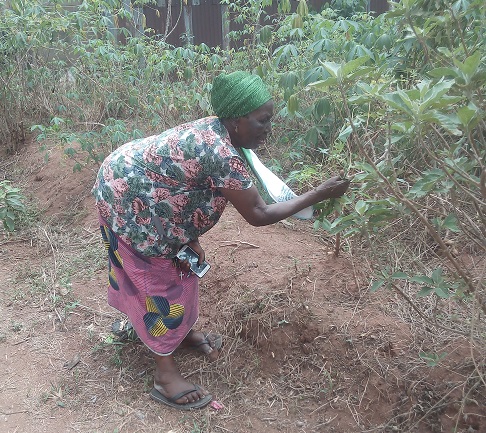
Without any respite in sight from the poultry venture, her survival became the cassava, yam, cocoyam and vegetable garden she planted around her house.

Part of the farms had been cleared in readiness for this year’s rainy season, but sourcing for funds to achieve all her plans occupied her mind as she conducted the reporter round the farms.

She lamented: “I am not finding things easy again. We went for training in Awka and they asked us to open an account. Up till now, nothing has happened. For this year, we are still waiting if the government will give us input. Last year, I bought a bundle of cassava sticks N3,000 or N4,000. For this farm, I will buy no fewer than N20,000 worth of cassava stems. Now, I have spent about N12,000 clearing the land. I will pay up to N20,000 to make the ridges and then buy cassava stems and drugs to keep them healthy until harvest. If you calculate all these expenses, you see why food is costly.”

Ngozi Ubah is not alone in her predicament as funding is identified as the greatest challenge, dealing a big blow to small-scale women farmers in Anambra State.

SWOFON Co-ordinator Anambra Mrs Georgina Akunyiba in her poultry farm at Nnewi
SWOFON Co-ordinator Anambra Georgina Akunyiba in her poultry farm at Nnewi

Georgina Akunyiba is the coordinator of the Small Scale Women Farmers Organization of Nigeria (SWOFON) in the state. Her business is thriving against all odds as the two-room shop, where she sells feeds, drugs and other items, is an attraction to other livestock farmers within and around Nnewi, the manufacturing hub of the state.

Apart from selling livestock feed, Akunyiba is also into poultry farming. She had sold her birds a day before the visit, leaving only a few broilers on the farm. Despite appearing to be doing better than most of her contemporaries, she argued she would have done even better, but for financial handicap.

“As small-scale farmers, we start with little money expecting that government would help us to do better. But, that has not happened. We survive by our efforts. We do contribution during our meetings and give members to help them.”

She continued: “A truck of feed is now over N3 million as against N1.7 or N1.8 million before. So, the money that would buy two trucks before will now manage to get one. To rear 50 broilers to maturity, 20 bags of feed is needed. We bought that quantity at N32,000. But now, N100,000 cannot buy it.”

Akunyiba’s situation is better appreciated, knowing that she lost her husband in 2014. For seven years, she has solely carried the responsibility of raising her five children with the proceeds of her agriculture business. Today, she has one university graduate, two undergraduates and two still in secondary school.

How is she coping? Akunyiba attributed her success to divine intervention. “It is God that is helping me to train them. We have been neglected by the government and some of us are already quitting agriculture out of frustration.”

Perhaps, these women’s testimonies would have been different if the government had demonstrated appreciable commitment to various policies designed to promote agriculture, considering the critical position they occupy in the food production chain.

According to the National Gender Policy in Agriculture, women carry out about 80 per cent of agricultural production, 60 per cent of processing activities as well 50 per cent of animal husbandry. While smallholder farmers are said to constitute about 70 per cent of the nation’s total farming population, the majority of them are women and are involved in the entire agriculture value chain.

Unfortunately, these hardworking women have access to less than 20 per cent of agricultural assets, including land, capital and other factors of production.

In dissecting the situation, agriculture value chain expert Abraham Ogwu regretted that the access problem had undermined the productive capacity of the smallholder women farmers, who had been unable to take good advantage of various innovations in the sector.

“There are innovations coming up every day all through the value chain, production, processing, marketing and others. But because smallholder women farmers lack support and empowerment, some of the innovations have not been able to improve their lots.”

Interactions with small-scale women farmers in Idemili North and South, Orumba North and South as well as Nnewi North and Anambra East local government areas revealed long neglect by the federal and Anambra State governments.

“We have not got anything from them, whether the CBN Anchor Borrowers, the Bank of Agriculture, NIRSAL and other institutions,” Akunyiba lamented.

Feed shop of Mrs-Georgina Akunyiba SWOFON Co-ordinator Anambra-State
Feed shop of Georgina Akunyiba SWOFON Co-ordinator Anambra-State

How effective are the agric policies and programmes?

The neglect of small-scale women farmers in Anambra State does not emanate from a lack of policies and interventions within the sector, but from what experts termed ‘poor and un-commitment of the government to those interventions’ – and these exist at both state and federal levels. The long list of existing policies include: the Anchor Borrowers Programme (ABP), the Commercial Agriculture Credit Scheme (CACS), Nigeria Incentive-Based Risk Sharing System for Agricultural Lending (NIRSAL), the Agricultural Credit Support Scheme, (ACSS) and Grow and Earn More Program (GEM), among others.

The ABP was initiated by the Central Bank of Nigeria in 2015 to link anchor companies with smallholder farmers of key agricultural commodities such as rice, maize, wheat, cassava, yam and potato etc as well as livestock farmers, through the provision of loans, agricultural equipment and blueprints on how to tackle the farming challenge.

The CACS was jointly established by the CBN and the Federal Ministry of Agriculture and Rural Development to promote commercial agricultural enterprises in Nigeria. The main thrust of NIRSAL is to fix the agricultural value chain and boost the confidence of the banks to lend to the value chain by offering them strong incentives and technical assistance.

On its part, the Bank of Agriculture offers numerous products and services to farmers. Its GEM is targeted at encouraging Nigerian women to embrace agriculture as a business. With a maximum loan limit of N1 million per individual, the beneficiaries must be smallholders who do not need collateral, but acceptable guarantors with verifiable income as well as NIRSAL Credit Risk Guarantee to cover 75 per centof loan delinquency.

Apart from these programmes, Nigeria is a signatory to many international instruments and conventions, with several policies including the Agriculture Promotion Policy 2016-2020, which, among other things, identifies the need to maximise the contributions of women to agricultural production and the elimination of discriminatory practices, while the Nigerian Gender Policy seeks to remove all gender-based barriers facing women in agricultural production by giving them access to critical resources such as land, capital, credit, farm inputs, technology, water and extension services, preservation and storage, markets, among others.

The 12-month, N2.3 trillion Nigerian Economic Sustainability Plan (NESP) was initiated to help different categories of Nigerians, including smallholder farmers with key interventions like the Mass Agricultural Programme (MAP), aimed at achieving cultivation of between 20,000 and 100,000 hectares of new farmlands in every state and supporting off-take and agro-processing with low-interest credit.

The Convention on the Elimination of all Forms of Discrimination Against Women (CEDAW), adopted in 1979 by the United Nations General Assembly, mandates state parties to mainstream gender considerations in all policies, plans, laws and their implementation.

Similarly, the Malabo Declaration, which Nigeria committed itself to in 2014, recommends a minimum of 10 per cent yearly budget investment in agriculture. It also specifically tasks the governments of member-states to support and facilitate preferential entry and participation of women and youths in gainful and attractive agri-business opportunities.

The Goal 2 of the Sustainable Development Goals (SDGs) targets doubling by 2030, the agricultural productivity and incomes of small-scale food producers, particularly women, indigenous peoples, family farmers, pastoralists and fishers, through secure and equal access to land, other productive resources and inputs, knowledge, financial services, markets and opportunities for value addition and non-farm employment.

Although these programmes, policies and international instruments have been of immense help to many farmers, investigations revealed that a greater per cent of smallholder farmers in Anambra State had not reaped their benefits.

Felicia Ileka, based in Nnewi, Nnewi North Local Government Area, is 86 years old and has obvious difficulty moving about. But her passion for agriculture is not hidden, as she proudly owns a number of farms, a little distance away from her residence.

Fortunately, the octogenarian farmer with experience spanning over 50 years has unfettered access to land resource, which is one of the biggest challenges confronting average women farmers. She narrated her voyage into farming.

“My father and mother were great farmers and since I was not fortunate to go to school, due to low premium placed on female education then, I inherited farming from them. I have been a farmer for several decades.”

Assistance from the government would have made a lot of difference but Ileka has never been so lucky all these years. That is why despite all her efforts to cultivate as many as she can, several hectares of land still lie fallow and uncultivated.

“It’s only my children helping me as God blesses them. At my age now, I need modern farming implement and equipment. I can no longer cope with the ancient method of farming.”

Two small scale women farmers on their farm at Ufuma Orumba North-LGA

Driving from the centre of Ufuma, in Orumba North Local Government Area, to Stellamaris Egbuonu’s farm took about 40 minutes. And from the point where driving became impossible to the farm is a trekking distance of another 10 minutes. It is a cassava farm fast growing into maturity. Asked how they were getting prepared for this year’s farming season, Egbuonu responded with the challenges confronting them.

“In this area, we produce garri. But, the government is not helping us. I can do more than I am doing now. There are virgin pieces of lands everywhere but we do not have the money to cultivate them. Getting labourers now is very costly, the prices of various inputs are also on the high side. Government should remember us,” she pleaded.

Close to Egbuonu’s farms is that of Theresa Okolo, who lives in a small house, which portrays her status as a smallholder farmer who is barely surviving. She is desirous of expanding the size of her farm, but she cannot raise the money to acquire extra land. The only assistance she gets is from her son, who often sends money to advance her agricultural ‘vocation’.

The soft-spoken woman hopes that things get better in the coming days, particularly with financial and other forms of assistance from the federal and state governments, which she anticipates would enable her to increase productivity from the current two to three plots.

“As you see me, I have not known any government as a farmer. They never give me anything. I am only struggling to survive.”

Budgets not working for us

Apart from policies and international instruments not achieving their intended purposes, the women have not felt the benefits of the annual budgets of the state and federal governments.

A study by the Centre for Social Justice, a non-governmental organisation, reveals a disconnect between the policies and annual budgets. For instance, while the Malabo Declaration mandates member-states to earmark 10 per cent of their total annual budget to agriculture, the reality from the state and the federal budget is less than three per cent.

The total capital expenditure of the Anambra State Government was N110.979 billion in 2015 but only N1.384 billion was provided for projects and programmes that would benefit smallholder farmers. When the total capital expenditure declined to N52.696 billion in 2016, the provision for smallholder farmers was reduced to N706 million. The provision for the farmers went further down to N546 million in 2017, notwithstanding the upward review of the total capital expenditure to N63.282 billion.

Smallholder Farmer Stella Okoro

When there was a further rise in the total capital expenditure in 2018 to N106.432 billion, the provision for the small-scale farmers also rose to N3.17 billion. The total capital expenditure suffered a downward trend in 2019 to N91.835 billion, just as the allocation to smallholder farmers got reduced to N1.58 billion.

In percentage, only 1.25 per cent of the state total capital expenditure was for capital projects targeted at smallholder farmers in 2015. It increased to 1.34 per cent in 2016 and declined further to .86 per cent in 2017. It increased to 2.98 per cent in 2018 before seeing a decrease to 1.72 per cent in 2019.

The budget lines were for various projects such as seed multiplication and horticultural development project, fertilizer procurement and distribution, agricultural extension information services, procurement of agro-inputs, IDA support to National FADAMA Development Project (NFDP–III), IFAD/FGN Support for Value Chain Development Programme (VCDP) and Produce Storage and Fumigation Scheme.

Others were: co-operative credit scheme, state programme on food and nutrition, Sustainable Development Goals (SDGs) project, poverty eradication programme and loan grant, micro-credit loan for women cooperatives as well as purchase of equipment for women co-operative societies (WCS).

The above statistics are considered poor given that eight ministries, departments and agencies (MDAs) in the state made provisions for smallholder farmers in their annual budgets within the period.

The MDAs were: Agricultural Development Project (ADP), Fisheries and Aquaculture Development Commission, Office of the Governor as well as Ministries of Agriculture, Economic Planning, Budget and Development Partners, Environment, Social Welfare, Children and Women Affairs and Ministry of Trade, Commerce, Markets and Wealth Creation.

At the federal level, only 1.2 per cent of the nation’s total budget was allocated to agriculture in 2016. It was 1.82 per cent in 2017 and rose to 2.23 per cent in 2018. It declined to 1.85 per cent in 2019.

Despite receiving an average of 1.6 per cent of the total budget over the five years, with an average of 59.52 per cent committed to capital expenditure, the actual release averaged 56 per cent for the four years.

Out of over N415 billion total capital budget for agriculture for the period 2015 to 2019, only about 19.4 billion naira, representing about 4.6 per cent, was allocated to women farmers. The study by the Centre for Social Justice equally found that most allocations to women farmers during the period were lumped together with youths, making it difficult for them to enjoy the funds.

Also, of concern is the fact that most of the projects and programmes budgeted for, over the years, did not enjoy the actual release of funds. So, they were either abandoned or put on hold, all to the detriment of the farmers, the target beneficiaries.

Lamentations about climate change, herdsmen and poor road network

In Anambra State, competition for land has become fiercer as a result of climate change, where erosion and flooding are adverse consequences. Despite being one of the smallest in the country in terms of landmass, the state is threatened on every side with almost 1,000 active gullies, which have naturally reduced the size of arable and cultivable land.

During a tour of various communities, hectares of rice fields, yam and cassava farms, submerged by flood last year, were still in their devastated state, as they were yet to be re-cultivated. Gullies have rendered arable lands in various parts of the state useless for agricultural purposes, while thousands of residents have been sacked from their homes.

The year 2020 was one some farmers in the state do not pray to experience again, due to losses incurred as a result of the harsh impacts of climate change such as drought, pests and diseases.

Rosemary Onwuegbuka has six children and three other dependents. She lives in Ayamelum Local Government Area but has her rice farm at Eziaguluotu-Aguleri, in Anambra East Local Government Area, a distance of more than one hour. The farm spanning hectares of land was among those submerged during the 2020 flooding – a situation that plunged her into unprecedented hardship. She barely meets up with family obligations, including the payment of tuition for her school-age children.

“Since flood carried everything, we cannot pay back the money we borrowed. I cannot even pay school fees. Just last week, somebody training my son in a vocation in Aguleri stopped him from coming because I have not paid the balance of N14,000.”

Since the whole community is naturally prone to flooding, Onwuegbuka has replanted her rice on the same piece of land, hoping that she will be able to harvest before the next flood episode. She also believes that prompt assistance from the government can help them to recover from what has become a perennial loss.

While reacting to why she re-cultivated rice in the flood-prone area, she said: “The land is our inheritance and we have no other one. We went back there. Had it been they give us support, we would have started early so that by the end of June, July, we will harvest.”

“Now, we need cash, inputs and machine to clear virgin lands we want to cultivate. We also need fertilizer, herbicide. If they give us cash, we can use it to buy whatever we need.”

Investigations revealed that livestock farmers were not spared as some had their poultry, piggery and fish ponds washed away. The experience of Stellamaris Egbuonu was different. A part of her farm was affected by drought in 2020 and the impact was still obvious at the time of visit. That part of the farm had suffered stunted growth and was not as healthy as the part enjoying adequate rainfall. This, again, means a loss of revenue.

Recounting her experience, Stellamaris Egbuonu said: “You can see this one is not looking good like the other one. When it started growing last year, the rain stopped for some weeks and the heat almost killed the cassava. This farm is almost a year old. But, if we harvest it now, the yield will be very low.”

An environmental expert with the Agricultural Transformation Agenda Support Programme (ATASP-1) in Adani-Omor Zone, Jane Nwabachili, agreed that the changing climate was dealing a big blow to the world.

“Most agricultural activities depend on steady weather, water and soil. So, farmers suffer more when these conditions become unpredictable. The consequences of continued temperature rise such as stronger storms, dangerous heat waves, rise in sea levels, translate to crop failures, income loss and food insecurity for farmers and the society.”

“Climate change affects the availability of surface water and as a result, rural women, whose duty it is to fetch water for their families, have to go long distances. This increases their already substantial work load. Again, women often have more limited rights than men in this part of the world, limited mobility and access to resources, information and decision-making authorities. As a result, any slight change significantly impacts them, climate change iinclusive.”

Perhaps, the greatest challenge confronting food production today is open grazing with its increasingly destructive impacts. It accounts for incessant clashes between farmers and herders, particularly in remote agrarian communities, leading to the destruction of lives, farm produce and property worth millions of naira.

People of Ufuma in Orumba North Local Government Area are yet to recover from the losses they incurred when their farms were destroyed by suspected herders months ago. The development has gravely slowed down activities at one of the active garri processing mills located at Umuagu village.

The leader of the women co-operatives, which owns the mill, Stella Onuchukwu, shed more light on the development.

“Herdsmen carried cows and went into all the farms around here, uprooted the cassava and used them to feed their cows. Now, you don’t see cassava to buy even in the market. We are now waiting for all these new ones to mature so that our business will start again,” she lamented.

Eucharia Okeke, the only woman at the mill during the visit, bemoaned the situation, which had denied them the reward of their hard labour.

“If you come here during Easter or Christmas, you will not find a place to sit down. Now, there is no cassava again. If you see them on your farm, you dare not challenge them or they do whatever they like to you.”

The South-East Governors Forum recently pronounced a ban on open grazing in all the five states of Abia, Anambra, Ebonyi, Enugu and Imo. However, women farmers believe such pronouncement will not make any difference without legal backing.

Allegation of corruption

Many of the women blame their woes on corrupt public officials, who they accuse of often diverting what is meant for them to ‘political farmers.’

Rosemary Onwuegbuka, a rice farmer struggling to get back on her feet after last year’s flood, is frustrated with the many unfulfilled promises from the state and federal governments.

During a phone conversation, she was resolute not to grant any interview on the issue because of the anger she felt, but relented after much persuasion

“Let me just tell you the truth, I am sick of all these pranks since 2007. They keep calling us for seminars and workshops and, in the end, they will release whatever to politicians who have no farm. All the palliatives that government claimed to have released to cushion the impacts of COVID-19 on Nigerians, we did not receive any.”

A Professor of Economics and current Dean of Faculty of Social Sciences at Nnamdi Azikiwe University Awka Uche Collins Nwogwugwu, who also agreed that corruption stood in-between smallholder women farmers and government interventions, stressed the need for a genuine and urgent solution to the problem.

“There is no playing the ostrich. Those who divert incentives and interventions meant for the poor farmers are in the government. If they want to stop corruption today, they have the capability, power and authority to do so. What they probably lack is the political willpower to end corruption.”

We are undeterred by challenges

Limiting the challenges confronting small scale women farmers in Anambra State to lack of access to agricultural incentives does not do justice to them. Their problems have been worsened by the deplorable condition of most roads leading to farms or linking them to markets, a reality which questions the commitment of authorities to make agriculture an interesting business.

Transporting farm produce to urban centres is with great difficulty and at an exorbitant rate. This expectedly results in a post-harvest losses on an annual basis as recounted by the women farmers, including Stellamaris Egbuonu, who also bemoaned the lack of storage facilities.

“You see where we drove from and the distance we have trekked. If I harvest, you can imagine the difficulty in taking the products to town. If you will get a bike or motor… you are ready to pay whatever price the driver or rider calls. We have no standard storage facilities. So, we are forced to sell our products at give-away prices, which never justified the drudgery and pains of planting them.”

However, the women are resolute in their determination to continue producing food for an ever-growing population. In their quest for a reversal of fate, they have come up with a Charter of Demands, which among other things are: access to an interest-free loan from the government, provision of gender-friendly types of machinery such as tillers, ploughs, harvesters, etc at subsidised rates, provision of extension services, hatchery machine and access to quality feeds for livestock, water.

Of topmost importance to them is linkage to off-takers and increased markets information systems, construction of good roads, the establishment of local security bodies and mechanisms to reduce farmer-herder crisis as well as provision of climate-resilient farming training to improve soil infertility.

Stella Onuchukwu aptly captured their resolve: “We are not discouraged at all. If not for any other thing, we can fend for our families. We will continue helping ourselves and if we have anything from the government, we will consider it as a boost. Let them try us and we will surprise them.”

Value Chain Expert, Mr Ogwu, recommended women-focused interventions from government and NGOs, which could help in breaking the vicious cycle of poverty in many households, a situation he argued, also adversely affected the nation’s economy in the long run.

“Also, women need to occupy positions of authority so that they can influence certain policies and decisions in favour of fellow women. If the CBN, Bank of Agriculture or NIRSAL is headed by a woman, I’m sure she will make policies that will affect the women folks positively. We need NGOs that will build the capacity of the women assert themselves.”

We have not abandoned any farmer – Anambra Govt

Commenting on various issues raised by the farmers, the Programme Manage for Agricultural Development Programme (ADP) in the state Jude Nwankwo explained that the administration of Governor Willie Obiano, which made agriculture its number one pillar, would not discriminate on the basis of gender.

“Whether they are SWOFON or whatever, we have the data of all farmers. We have a unit called WIA, (Women in Agriculture), which deals specifically with women. And when any project comes in, the women are not neglected.

“But, you know, some prefer to stay away and be passing funny comments. They want to see someone that has benefitted before they come in. There is a nationwide collation of data of all farmers and Anambra is in it. When our enumerators met some of them, they were very sceptical. That is part of the problems.”

The ADP programme manager, who acknowledged appropriating amounts lower than recommended to the agriculture sector, attributed it to the economic realities over the years as well as other sectors contending for attention.

“Also, the pandemic has dealt seriously with the global economy. Besides, there are several other sectors that need budgetary allocations. So, getting to the 10 per cent is a gradual process. I believe over time, we’ll be there.”

While calling on the small-scale farmers to seek useful information from genuine sources, Nwankwo equally stressed the need for them to be persistent with their demands.

“Probably, they were hurt by the previous regime, but we are serious. We are not corrupt. Our business is nothing but agriculture and we know that these small-scale women farmers are the ones making things happen in agriculture.”

“As I am talking to you now, a lot of things are happening. I am telling them now – come out, go to the agric department in your local government and ask the extension agents what you want to know about the Ministry of Agriculture. That’s why they are paid.”.\

“On the issue of diversion of cassava stems, we have been distributing various species for several years. Many farmers have cultivated it…How can you call it diversion just because you know that what was distributed was of the same species?” Nwankwo inquired.

Mitigating climate change

Research in climate change has shown the imperative of developing climate adaptation technologies, which will advance agricultural activities, while investment in smart agriculture is capable of helping to curb flood, drought, pests and diseases.

On the part of the state government, Nwankwo explained that the Ministry of Agriculture and Rural Development had always provided the farmers with useful information that would help them to cope better with the impacts of climate change.

“We have best practices officers on the field who advise the farmers, especially those in flood-prone areas, on what to do so that they can harvest before the flood comes. And for victims of the flood, we have always shared inputs as soon as the flood recedes, so that they will have what to plant in the new farming season.”

Nwankwo assured that the future held greater promises for all categories of farmers as the ministry had procured additional tractors to boost mechanised agriculture. “So, let them come out and access all that we are doing. We cannot do without the small-scale farmers. And they must know that we are here for them.”

This report was produced with the support of the International Budget Partnership, IBP and the International Centre for Investigative Reporting, ICIR
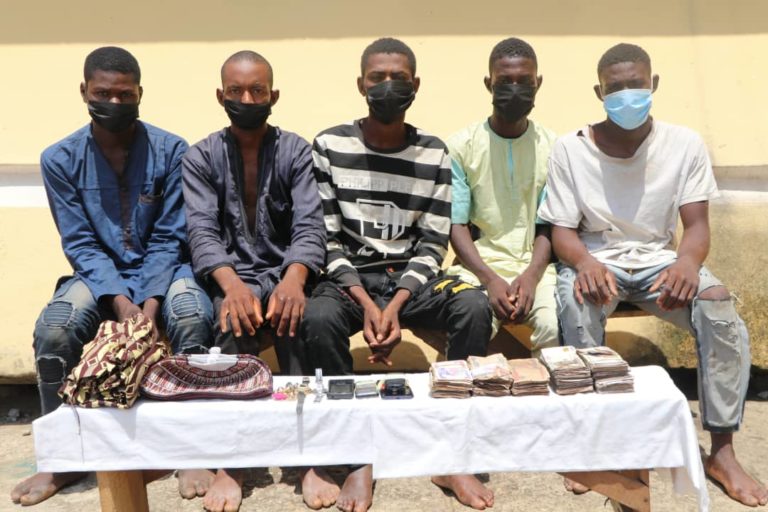
 

FCT police arrest suspected kidnappers as gunmen wreak more havoc in Kuje

THE Federal Capital Territory Police Command has apprehended five suspected kidnappers along the Tungan-Maje, Bwari and Kwali-Kuje axis of Abuja.

In a statement mailed to The ICIR on Sunday, the command’s spokesperson Mariam Yusuf, an Assistant Superintendent of Police (ASP), said the arrest followed intelligence reports.

The statement said operatives from the command’s Anti-Kidnapping Squad made the arrest.

The suspects included: Usman Musa (20), Bello Musa (21) and Haruna Alhassan( 22).

According to the police, the suspects belonged to a notorious syndicate of kidnappers.


READ ALSO:

Zamfara police repel robbery attack, kill assailants

Nigerians hold protests despite security agencies’ intimidations

Iniobong Umoren: Why we are delaying prosecution of suspects – Police

Operation Puff Adder: Police arrests suspected kidnappers with 6,000 live ammunition, 20 AK47 rifles

Labour, groups urge Lalong to discard bill seeking to privatise water sector

Gwarzo: Aggrieved SEC union protests reinstatement of DG, locks headquarters


The statement disclosed that the suspects confessed their involvement in recent abductions along the Bwari-Byzahin, Kuje-Kwali axis of the FCT and in parts of Niger State.

Exhibits recovered from the hoodlums included: N1.2 million cash paid as ransom by their victims, three mobile phones, charms, three wristwatches and two caps.

In the same vein, the command said it also arrested two suspects linked to kidnappings along the Tunga-Maje axis of the FCT.

The two suspects were identified as Lawal Abdullahi (25) and Abdul Alhassan (19).

The statement issued by the police said the suspects confessed that they threatened some residents of Tunga-Maje to pay ransom to avoid being kidnapped.

A mobile phone was recovered from the suspects.

The statement further disclosed that the suspects were to be arraigned in court upon the conclusion of investigations.

The FCT Police Command urged residents to report all suspicious movements, emergency or distress through these numbers: 08032003913, 08061581938, 07057337653 and 0802894088.

Residents were also told to report the conduct of police officers by calling the Public Complaint Bureau (PCB) number: 09022222352.

Meanwhile, more residents of the Kuje Area Council in Abuja have fallen victims to kidnappers.

An impeccable source, who did not wish to be named, told our reporter on Sunday that a public secondary school teacher was abducted in her home in the satellite community on Tuesday night.

Her abductors came in military uniform and whisked her away with her son.

“The kidnappers drove her into the bush for over an hour. They also made her trek for six hours. When she could no longer walk, they held her two legs and began to drag her on the ground.

“She later called on her relations to sell her house and all that she has to raise her ransom. Her family raised N2 million  between Wednesday and Thursday evening before she was released,” the source said.

The victim is currently receiving treatment at a medical facility in Abuja.

Another resident was also attacked in the community on Saturday night.

Men who dressed in military fatigues came to the woman’s home at midnight and butchered her, the source further disclosed.

Abuja has become a flashpoint for kidnapping in recent times.

Reports show that cases of kidnapping have been recorded in all the six area councils, with Kuje Area Council recording a higher number of incidents.

In January, gunmen kidnapped at least 10 people, including eight children, in an orphanage home at Abaji Area Council.

The ICIR reported in January the untold story of victims of kidnappings in the city.

In February, gunmen invaded Bwari Area Council and abducted the father of the council chairman John Gabaya.

The FCT police confirmed the abduction of 10 persons in Tunga-Maje, Gwagwalada Area Council, in September 2020.

In November 2020, The ICIR reported how the FCT police rescued 19 persons from a kidnappers den.

The victims were kidnapped at Pei-Leilei road along the Kwali axis of the FCT.

Also in November 2020, gunmen whisked away a Catholic priest from his residence at Yangoji in the Kwali Area Council.


Old video from #EndSARS resurfaces online amid June 12 protest


NIGERIANS, on Saturday, June 12, took to the streets to protest against governance, corruption, insecurity and other forms of maladministration.

However, an old video of a similar protest, the #EndSars,  held in October 2020, has resurfaced online.

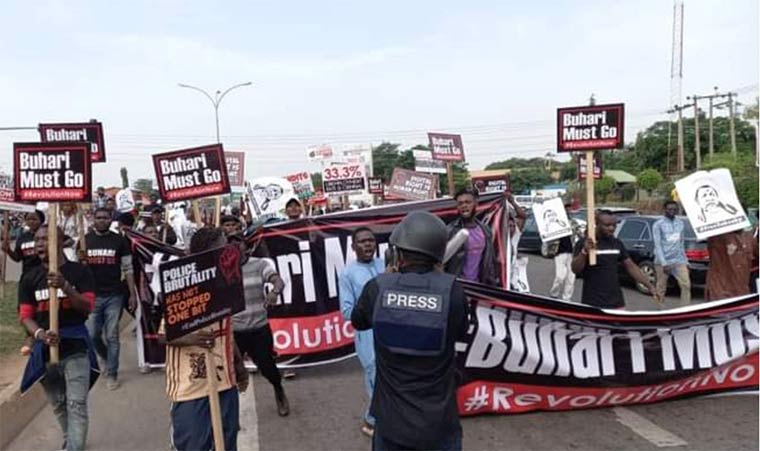
In the video, the protesters were seen marching, while a few of them were carrying a coffin and chanting “Buhari must go.”

A Twitter user, Sophia, with the username @90sSophie, claimed that the video emanated from the June 12 protest held in 2021.

“We are stronger together. Nigeria will be great. #June12thProtest.  RT this video massively,” her tweet read.

The Claim

The video of protesters with a coffin chanting “Buhari must go” emanated from June 12 protest.

A screenshot of the tweet.

The Findings 

Checks by The FactCheckHub showed that the video came from the #EndSARS protest of October 2020.

Multiple handles in the comment section noted that the video was old and from a different protest, urging her to take it down.

A_Real_One [@chi_bu_zee] wrote: “Take this video down. You’re just causing more harm. I hope you’re not intentionally sabotaging our efforts just because of clout. #June12thProtest”

Duke Of The Streets [@CallmeUyi] wrote: “We are legit outside risking our lives. This is not the time for false narratives and sharing old online videos. We can’t be our own problems, please.”

Dogefatherbsc [@Rubyking7000] wrote: “Please take down this video, it makes the post fake, we don’t need anything that will make the protest look fake.”

DealSiderz [@Dealsiderz] wrote: “Stop posting old videos there is no motivation here”

Sophia responded with, “Okay, but motivation needed.

Sophia notified that the video is not from the June 12 protest.

The FactCheckHub subjected the video to verification by using the Invid video verifier. The result showed that video had been online since 2020.

The exact video and others from the same event taken from different angles appeared here, here, here and here on Twitter on October 19.

This was also reported.

The Verdict:

The video of protesters with coffin chanting “Buhari must go” emanated from October, 2020, #EndSARS protest. Therefore, the tweet is inaccurate and MISLEADING.

Nigerians hold protests despite security agencies’ intimidations

NIGERIANS took to the streets on Saturday, June 12, to protest against bad governance, corruption and the rising spate of insecurity in the country.

The protests took place despite efforts by the police and other security agencies to stop them from happening across Nigeria.

The protests, organised by civil societies in Nigeria, took place simultaneously in several states across the country and were deliberately planned to coincide with the country’s Democracy Day.

While the exercise was relatively peaceful in most states, protesters met with security resistance, arrests and tear gas, especially within the Federal Capital Territory (FCT) and Lagos.

In the FCT, the convergence venue, Unity Fountain, was taken over by pro-Buhari groups, who held a rally at the scene without any form of harassment by the security.

Forced to pick a new venue, the protesters marched along the Gudu area of Abuja while carrying placards and banners that read, ‘Buhari must go.’ But they were soon dispersed by security officers who shot tear gas canisters at them.

Spokesperson for the FCT Police Command Mariam Yusuf said in a statement released on Saturday that officers of the command made no arrests but restored calm, claiming that the crowds were “inciting public disturbance and breaching public peace.”

“The action of the Command was necessitated by the concerns of some agitated residents. However, no arrests were made,” she said.

In Lagos, there were reports of violence in areas such as Mile 2 and Ojota, which was quelled by security officials.

While a large number of residents remained indoors, protesters gathered at the Gani Fawehimi Park protesting peacefully till attempts by the police to disperse them led to a face-off and the use of tear gas by the security officials.

The June 12 protest was organised as a reaction to the rising spate of insecurity and unemployment in the country.

The Twitter ban by Nigerian President Mohammadu Buhari over a week ago also triggered an outcry in Nigeria and heightened calls for the protest against bad governance in the country.

TCN confirms plan to export unutilised power to West African neighbours

ACTING Managing director of the Transmission Company of Nigeria (TCN) and Chairman of Executive Board of West African Power Pool (WAPP) Sule Abdulaziz has disclosed that unused electricity within the country will be taken to West African participating countries through the Northcore Power Transmission Line.

The Northcore Power Transmission line comprises West African countries of Togo, Burkina Faso and the Niger Republic.

He confirmed at the just-concluded meeting of the group in Abuja on Saturday that the governments of the aforementioned countries had had final touches on the execution of a planned $570million final transmission line running across the four countries.

He noted that the concerns raised over Nigeria selling its generated power to other countries when it did not have enough did not arise, stressing that unutilised power generated daily would be exported to avoid waste.

“The project takes approximately two years to be completed, with funding from international financial organisations in collaboration with participating countries, which will be disbursed after the contracts signing ceremony,” he said.

“The power we will be selling is the power that is not needed in Nigeria. The generators that are going to supply power to this transmission line are going to generate that power specifically for this project. So it is unutilised power.”

He explained that Nigeria was expecting new generators to participate in the energy export for the 875km 330kv transmission line from Nigeria through the three other countries, adding that jobs would be created while the country would earn foreign exchange.

In his remarks, Secretary-General of WAPP Appolinaire Ki said that when the facility became operational, there would be continuous feedstock, assuring that the funding agreements were ready as participating countries awaited the disbursement.

The secretary-general noted that the cost was approximately $570 million and part of the investment in each country was funded by respective countries who were supported by the donors.

Nigeria has a large quantity of unutilised generated power which analysts attribute to insufficient infrastructure in the power value chain.

For instance, Nigeria’s power distribution companies reject transmitted power from generation firms, mostly on the ground of insufficient infrastructure, thereby resorting mostly to load shedding. The rejection of transmitted power has been the bane of the country’s recurring grid collapse, a situation analysts say could be averted with proper unbundling of the transmission company.

Nigeria has the potential to generate 12,522 megawatts of electric power from existing plants. On most days, however, it is only able to dispatch around 4,000 megawatts which are insufficient for a country with a population size of over 200 million.

Analysts insist that it is not wrong to export unutilised power to neighbours since it will reduce tariffs to Nigeria and provide capital for investments in gas.

“Trade is not always about surplus, but benefits, especially in the short to medium term. Selling power to WAPP could help reduce tariffs to Nigeria and at the same time provide capital for more investments in gas production and power generation,” a former Managing Director of Nigeria Bulk Electricity Company  (NBET) Rumundaka Wonodi said.


Nigerians stage June 12 protests in US, UK


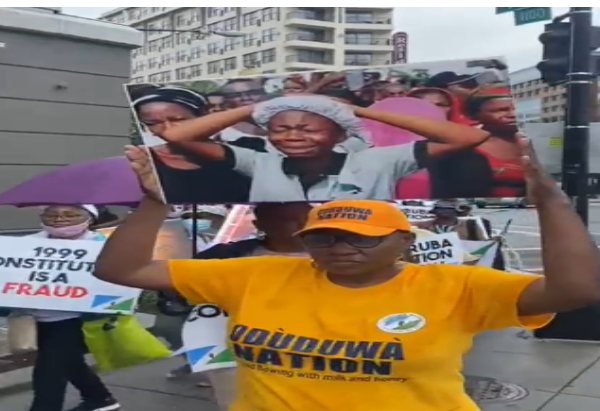
NIGERIANS, on Saturday, staged a peaceful solidarity protest in Washington D.C. to demand for an end to insecurity and bad governance in Nigeria. The protests held across many cities in the country.

The protesters who wore branded tee-shirts with the inscription “Yoruba Nation Now!” held placards showing pictures of some of the victims of recent killings by armed bandits in the country.

“We are exercising our fundamental human rights as Yoruba. We want to be self-determining,” one of the protesters was heard saying in a video circulating online.

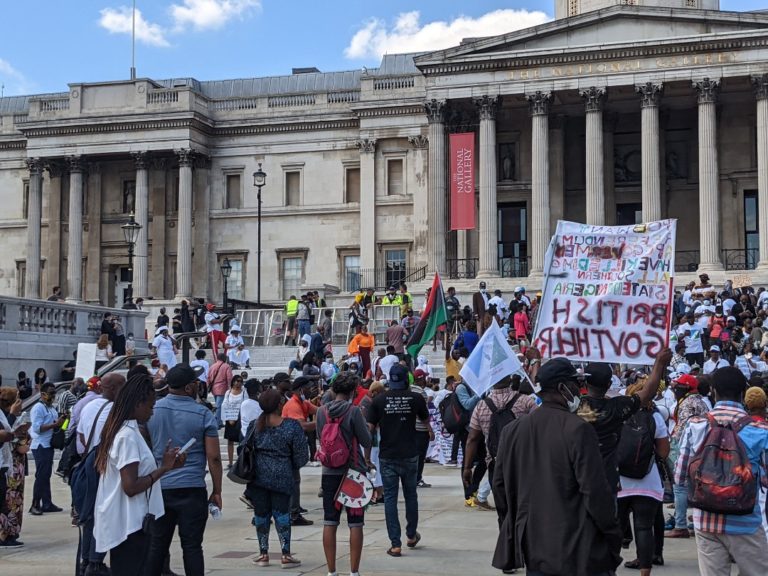
Protests were also held at the Trafalgar Square London by different groups demanding that ‘Buhari must go’ and calling for Biafra and a Yoruba nation.

“Oduduwa is our nation, Nigeria is an imposition,” one of the placards read.

President Muhammadu Buhari said he was worried and concerned about the worsening insecurity but enjoined Nigerians to celebrate the country’s democracy which was going through a process of ‘improvement.’

In a Democracy Day speech delivered earlier on Saturday, Buhari said overcoming the present challenges were a necessary process that the country must undergo to emerge as a stronger nation, noting that in response to some of the agitations, his government had recognised the need to acknowledge notions of marginalisation and agitations for constitutional amendments.

“Government is, however, willing to play a critical role in the constitutional amendment process without usurping the powers of the National Assembly in this regard,” Buhari said, adding that he remained committed to bequeathing a sustainable democratic culture.

INVESTIGATION: Ten years after, communities count losses as AfDB, Cross River govt abandon road project

Ten years after the Cross River State government and African Development Bank (AFDB) jointly awarded the Yahe-Wanokom-Wanikade-Benue border road for construction under the Cross River Rural Access and Mobility Project (CR-RAMP), the project remains abandoned, while the supposed beneficiaries continue to lament deaths, loss of livelihoods and increasing poverty due to the deplorable state of the road, SUNDAY ELOM reports.

The road cuts across North and South Ukelle in Yala Local Government Area (LGA), Cross River State. The 49-minute journey on the 30.3 km road from Yahe Junction, Yahe Township to Wanikade in North Ukelle is a hellish experience. Not just because the fare is outrageous, but due to the attendant ill health that communities along the corridor of the abandoned road are exposed to.

The potholes concealed in thick layers of dust make travelling on the road stressful and risky as vehicles fall into them unknowingly. This causes accidents and often leads to breakdown of vehicles.

Awarded in 2011 but abandoned

Details of the CR-RAMP projects awarded in 2011.Photo credit: AFDB

The contract for the Yahe-Wanokom-Wanikade-Benue border road was first advertised in December 2010 and awarded on May 18, 2011, under the Cross River Rural Access and Mobility Project (CR-RAMP) to Emamed Nigeria Limited (ENL) at the sum of N792.863 million by the African Development Bank Group. The project, pegged at 37.5km, was designed to be implemented through a special arrangement by the State Project Implementation Unit (SPIU) under the supervision of the Cross River State Ministry of Works.

Weeks after the contractor moved to site and tarred less than 5km of the 37.5km road, work ceased. Since then, the project has remained abandoned and communal efforts to get the contractor to return to site have proved abortive.

Emamed Nigeria Limited Site Office and plant along Yahe-Ebo road. Photo by Sunday Elom

Evidence from worn out tarmacs observed by this newspaper showed that Emamed Nigeria Limited (ENL) only constructed the road from Yahe to Ebo, a neighbouring community.

Francis Usili, a resident of Wanikade, noted that Emamed Nigeria Limited (ENL) did not do much work on the project.

Hon. Francis Usili
Hon. Francis Usili speaking on the state of Yahe-Wanokom-Wanikade-Benue border road. Photo by Sunday Elom N.

“They only succeeded in extending the culverts to Ebo. They didn’t even get to Wanokom. Nobody knows what happened but all of a sudden, the contractor packed and left the site,” he said.

When contacted on phone, a staff of ENL who identified himself as Adeyemi Adejo Gabriel, said the project was abandoned “because the state government refused to pay.”

Adejo declined to give additional details about the contract.

“If you want to know more about it, you should go to the ministry. There is a Ministry of Works in Cross River State and whatever story they tell you is okay,” he said.

Meanwhile, in February 2013, the Cross River State Project Coordinator Charles Okongoh, an engineer, disclosed that the state had committed N20.31 billion to the implementation of the CR-RAMP. The Yahe-Wanokom-Wanikade-Benue border road is among the roads he claimed were ongoing with the implementation deadline pegged at June 2013.

However, Okongoh did not give any breakdown of the N20.31 billion he claimed the state government had spent on the CR-RAMP, hence, it is not clear how much was committed to the Yahe-Wanokom-Wanikade-Benue border road.

Two months later, Okongoh beat a retreat, claiming that the June deadline for completion of projects under the CR-RAMP would not be feasible due to excessive rainfall and the topography of most project areas. Since then, there have been no reasons from the Cross River State government for abandoning the road.

The CR-RAMP is a pro-poor project meant to address the challenges of rural roads in the state jointly financed by the African Development Bank (AFDB) and the Cross River State government, with each accounting for 34.52 and 65.48  per cent of the total cost of civil works respectively.

Emamed Nigeria Limited was paid in full

Contrary to the claim by the staff member of Emamed Nigeria Limited, Adeyemi Gabriel, that the ENL abandoned Yahe-Wanokom-Wanikade-Benue border road project because government refused to pay, documents and details obtained from the African Development Bank Group revealed that it released the complete contract amount, N792.863 million, to the contractor.

A sum of N777.205 million was first allocated for the project. However, financial review and amendment were done and the sum of N15.657 million was added to the allocated funds, bringing the total contract funds to N792.863 million. The AFDB released the last tranche, N80 million of the contract funds, to Emamed Nigeria Limited on April 8, 2016.

“Yahe-Wanokom-Wanikade-Benue border road was part of Lot 8, CR-RAMP/lot 8/2010/PRO/CW/vol.1, which included two other roads making a total length of 63.55km (37.5 km +24.85km +1.2km),” an official of the AfDB said.

The bank also confirmed that funds were released directly to the contractor based on monthly or periodic certificates for works completed and validated by the supervision consultants before submission to the bank.

According to the AfDB, a total of 406.7km, equivalent to 85 per cent of a total planned length of 477.5 km of CR-RAMP, were completed to final pavement level before the project was closed in 2016.

However, it is contradicting how AFDB certified and paid Emamed Nigeria Limited in full for an abandoned project. Furthermore, the abandoned 37.5km Yahe-Wanokom-Wanikade-Benue border road is the evidence to disprove AfDB’s claim that 406.7km of the total 477.5km of CR-RAMP were completed.

The fact that Emamed Nigeria Limited received full payment for the project, therefore, means that AfDB included the abandoned Yahe-Wanokom-Wanikade-Benue border road project in its 85 per cent completed projects.

Emamed Nigeria Limited is a consulting organisation in civil engineering, programme & resource management, water & sanitation. It was founded and registered with the Corporate Affairs Commission (CAC) as a limited liability company on June 22, 1994, with registration No. RC-249184. Its registered address is at 33, Ada George Road, Off AGIP Road, Rumueme, Obio/Akpor, Port Harcourt, Rivers State. Its status details on CAC show that the company is currently inactive. Gabriel is its Account Manager while Olanubi Olaniyi is the Senior Project Manager.

Governor Ayade re-awards the project to another contractor in 2017

General Manager, Sydney Construction Nigeria Limited, Mr. Fady Fady signing Yahe-Wanikade-Benue border road contract papers in Governor Ayade’s office. Photo credit: CrossRiverWatch

Despite countless assurances that the road would be constructed, communities along the route are left with tales of unending groundbreaking ceremonies while they continue to experience nightmares on the road.

In 2017, residents of Ezekwe community, an agrarian settlement in Yala Local Government Area, thought a new dawn had arrived when Governor Ben Ayade re-awarded Yahe-Wanokom-Wanikade-Benue border road to Sydney Construction Nigeria Limited at the sum of N3.8 billion.

During the official signing of the contract at the Government House in Calabar, the Commissioner for Works  Dane Osim-Asu told journalists that due to limited funds, the project “was not a direct contract per se,” but “a direct labour job.” He added that the state government only contracted Sydney Construction Nigeria Limited as a service provider to ensure that the works ministry did the job with direct labour.

The commissioner added that Sydney Construction Nigeria Limited was already on ground handling some of the state’s major projects covering five local government areas (LGAs), noting that the company did not require any form of mobilisation but was to move to site.

However, unlike Emamed Nigeria Limited, which constructed a few kilometres before abandoning the project, Sydney Construction Nigeria Limited never started work on the road.

The clan head of Wanokom community Denis Ugede said that almost every year, government officials promised that the road would be constructed but they  never witnessed contractors mobilised to site.

Residents of communities along the Cross River–Benue border road said they had become weary of government’s promises on the road.

Peter Okpako lives in Wanikade. He also had high hopes for the project in 2018 during a groundbreaking ceremony which never resulted in the execution of the project.

“We have had a series of groundbreaking ceremonies on that road, yet the road is nothing to write home about.”

Legislative interventions failed

Following the abandonment of the project by Sydney Construction Nigeria Limited, affected communities continued to cry for help on the road. In response to their cries, a member representing Yala II State Constituency Cynthia Nkasi moved a motion on the deplorable state of the road and its attendant impact on the people during one of the State House of Assembly’s plenaries in July 2019.

Reacting to Nkasi’s motion, the House ordered Sydney Construction Nigeria Limited to return to site, even though the contractor had never commenced work since it signed the contract agreement in 2017. The contractor neither acknowledged nor obeyed the House order.

When  Nkasi was contacted on the phone to find out why the project still remained abandoned and why the contractor did not obey the House’s order, she had no answer..

“Well, I don’t know why the contractor abandoned the project. I can’t give any reason why the road was abandoned. My duty as a legislator is to draw the attention of the government to it, which I have done,” she said.

“The work I know is under Sydney Construction Nigeria Limited and Sydney works is supervised by the Ministry of Works. So, our resolution at the House goes to the ministry of works who should call the contractors.”

Communities count their losses

The deplorable state of Yahe-Wanokom-Wanikade-Benue border road has become a perpetual source of sorrow to residents of the affected communities, including Ebo, Okpodon, Ezekwe, Igede, Wanokom, Wanikade, and Wanehim. Smallholder farmers and traders in these communities say the road has affected their livelihoods.

They find it almost impossible to take their farm produce and goods to markets in neighbouring communities. Access to markets outside the state, including the neighbouring Benue and Ebonyi states, especially in the rainy season, has become a daydream for them.

In the rainy season, the road becomes completely non-motorable. Many parts of the road have been cut off by gully erosion, making it difficult for vehicles to ply the route even in the dry season. While trying to maneuver the road, motorists are often stuck in potholes, the majority of which have become deep like pits.

Eric Ujiji is a lorry driver who regularly plies the Yahe-Wanokom-Benue border route. Narrating his ordeal during his trips to the communities, Eric said he often spent a minimum of N20,000 repairing his truck each time it developed faults after plying the road.

“For instance, I’m changing a broken spring at N12,000; two new hangers at N2,000 per one and then workmanship N4,000, making everything N20,000, which is the lowest I often spend.”

Eric, who said he only drove through the road to markets in the communities in the rainy season with his tipper truck, lamented how miscreants blocked the road and extorted truck drivers N1,000 to N1,500 every market day.

Wanihem part of the abandoned project. Photo by Sunday Elom

Also speaking, Gabriel Obok, who owns a provision store at Wanikade market, where he sells different brands of alcoholic and non-alcoholic drinks, said his business had taken a hit.

“A trip that ought to take me 90 minutes from Wanikadeto Abakaliki often takes the whole day due to the bad state of the road.”

Obok said he would make about N10,000 profit weekly during the dry season and N4,000 during the rainy season because of the state of the road.

Similarly,  Stephenie Okike, a businesswoman who lives in Wanihem community, said she could not quantify the monetary value of yams and garri (cassava flake) she had lost on the road while moving them to markets in Yahe and Ebonyi State. Likewise when she brought in the ones she bought from those places.

“In June 2020, a tipper truck bringing in fresh corn and the pears I bought at Ikom fell on the road at Ezekwe axis. All the pears and more than half of the corn were damaged. We left Yahe at 6p.m but reached Wanihem at 12am the following day,” Okike remembered.

In the same vein, Ugede lamented that the agrarian communities along the road often grappled with food wastage due to poor road networks to the markets.

Although some transporters make brisk business, charging exorbitant fees due to the nature of the road, the consequences for them far outweighed the gain. Christian Samson, a motorcyclist in the area, said he charged about N2,500 during the dry season and as high as N5,000 for a single passenger without luggage when it was the rainy season. Samson lamented that this had led to quick wear and tear of automobiles and increase in the prices of food and other commodities in the area.

Another resident, Vincent Ikong, shared the same sentiment. He said it cost at least N30,000 to carry a 50kg or 100kg bag of cassava flakes (garri) on a commercial motorcycle from Wanihem market to Yahe during the rainy season. This, according to him, was because the journey was often haphazard.

“They carry it from here to Ibobom, then to Wanokom, from there to Okpodon, then to Ebo and from Ebo to Yahe,” he said.

Mr. Vincent Ikong speaking on the state of the road. Photo by Sunday Elom
Mr._Vincent_Ikong_speaking_on_the_state_of_the_road._Photo_by_Sunday_Elom_N[1]
Chairman of Wanikade Rice Mill Ekusu Unya also lamented the low patronage and profit margin his company was confronted with due to the state of the road. “We are suffering too much here. In the rainy season we close down and pack everything we produce inside because buyers don’t come due to the state of the road. Sometimes we spend a week trying to move the rice to the main road at Yahe.”

In the same voice, a farmer cum teacher Veronica Oben, who lives in Wanihem community, narrated the effects of the abandoned road on her farming business and the education in her community.

Oben often produced beniseed, cocoyams, yams and cassava, but she complained that most times, truck drivers carrying her farm produce to Yahe market would sleep on the road till the next day before they could reach, as their vehicles usually developed faults on the road.

“The most painful part is that I buy farm inputs, especially herbicides and seedlings at a high price, but after harvest, I do not make much gain because it is always difficult to take them to markets outside my community due to the condition of the road. When I even manage to transport them to markets outside here, the cost of transportation is always very high,” she said.

Oben, who also teaches at Seat of Wisdom School, Wanikade, further lamented that the bad state of the road had adversely affected education in Wanihem community and other communities along Yahe-Benue border route. According to her, “Children from Ibenta and other neighbouring communities who were attending schools in Wanikade and Wanihem no longer go to school during the rainy season.

“Also, no teacher transferred from other places to Wanihem or Wanikade ever accepted to stay. Most public schools in my community are empty. Some of them have only headmasters, principals and few indigenous teachers recruited within the community. As the road gets worse, life becomes more miserable for us.”

Tales of deaths, accidents and near misses

A cut part of the road at Wanihem. Photo by Sunday Elom

The poor state of the road has added to the statistics of preventable deaths in most communities along the corridor.

According to Francis Lukpata, a civil servant from the area, out of 100 recorded deaths annually, 95 could be attributed to the bad state of the road. He said it was often difficult to access healthcare in neighboring communities when emergency needs arose.

“For one to get proper healthcare services, the person has to go to Ogoja or Ojudu. It can take about three hours during the dry season and six hours when it’s the rainy season,” he said.

Ugede said three persons from Wanokom died on the road in January this year when they were being rushed to hospital at Yahe.

Cecilia Igbam is from the Wanokom community. She recounted how her closest friend, Angela Peter Okpabom, almost died in May 2020 during child delivery because of a delay on their way to a maternity hospital in Yahe.

Wanokom to Yahe is about 23 minutes by bike but Igbam said it took her three, hours to take her friend to hospital. “We experienced hell before we reached the hospital. We tried using a car, but the car got stuck on the road. We used a bike but there was a delay on the road and before we reached the hospital, the woman had fainted three times. She almost died on our way to the hospital but it is only God who knows how he saved her that day,” she recounted.

Also narrating her ugly experience on the road, Cynthia Joshua from Igede community, amidst weeping, said she lost her one and a half year old daughter on the road on July 7, 2019. Joshua told this newspaper that her daughter, “Jane suddenly fell ill in the midnight of July 6, 2019 and early in the morning of the following day we tried to take her to the hospital at Yahe but because it rained heavily that night, the road to Yahe was too bad.

“The bike that carried us fell down two times. She died before we reached the hospital,” she said.

Government shields construction company with controversial history

Unfortunately, efforts to get the contract details of the Yahe-Wanokom-Wanikade-Benue border road project from the state government proved abortive.

Emamed Nigeria Limited Site Office and plant along Yahe-Ebo road. Photo by Sunday Elom

This correspondent requested an interview in a letter dated March 2, 2021, to discuss the details of the project with the Commissioner for Works Dane Osim-asu. His office acknowledged receipt of the letter but refused to grant the interview.

A Freedom of Information (FOI) application sent to the state government was greeted with silence. The application dated 15th March, 2021, requested details of the project, specifically name and address of the contractor approved for the construction of the road; the contract sum; duration and completion date; releases so far made to the contractor, including time and amount of each release and the contract document signed with the contractor.

However, contrary to the provisions of the FOI Act, the state government did not respond to the request nor gave any reason for the denial weeks after acknowledging its receipt.

Furthermore, Osim-asu did not respond to text messages and calls to his official line. In a bid to get the needed information, the state Project Coordinator Charles Okongoh, an engineer, was contacted. While acknowledging that he had the information requested, Okongoh said that he could not speak with the reporter because he did not have the authority to do so, insisting that only the commissioner for works could provide the information needed.

A cut part of the road at Wanokom communities. Photo by Sunday Elom

Although the Freedom of Information Act (FOIA) was enacted by the National Assembly, state governments have often argued over the legal backing of enforcing the Act in their states. However, this argument was subdued in a judgement by Justice Oke-Lawal of an Ikeja High Court in 2017, where he stressed that the FOI Act would apply to the government of the federation as well as to state governments and would not need ‘domestication’ by states.

Controversy over construction company

Several searches made on the Corporate Affairs Commission (CAC) official website for the details of Sydney Construction Nigeria Limited did not return any information. Further searches on the internet and social media platforms for the company or any of its officials were unsuccessful as no information about the contractor could be found.

Meanwhile, it has been alleged in media reports that Sydney Construction Nigeria Limited is an offshoot of Lophina Construction owned by Governor Ayade but is said to have folded up three years before he became the governor. This, however,  could not be verified.

However, the construction company appears to have had a controversial history and relationship with the Cross River State government in the past.

On February 19, 2019, in a letter written and signed by the Secretary to the State Government (SSG) Tina Banku Agbor, Governor Ayade requested that the State House of Assembly approve an Irrevocable Standing Payment Order (ISPO) of the sum of N648.8 billion in favour of Messrs Sydney Construction Nigeria Limited.

The letter addressed to the Speaker of the House sought the state lawmakers to consider and pass a resolution granting an approval for the state government to issue an ISPO of N300 million monthly through the United Bank for Africa (UBA) for Sydney Construction Nigeria Limited for the construction of the 275KM Calabar-Ikom-Katsina-Ala Super Highway.

Citizens will continue to suffer until MDAs and contractors adhere to the Procurement Act.

Experts have blamed the repeated abandonment of awarded projects on the indiscriminate violation of the Public Procurement Act by Ministries, Departments and Agencies (MDAs) at the federal and state governments levels. Also, the nonchalant attitudes of the project implementing agencies have given contractors leverage to abandon projects at will.

Speaking with this reporter, Executive Director of the Public and Private Development Centre (PPDC) Nkem Ilo pointed out that the Public Procurement Act provided that every procurement must be accompanied by not just a plan but appropriate budgetary allocation.

“Before you award a contract, you should have created a budgetary procurement plan that is need-based. You must have done your need-based assessment and that will determine your procurement plan. And before you go through the procurement processes and award a contract, you are already aware that the project has the requisite cash backing,” she explained.

However, Ilo decried the fact that despite such explicit provision by the Procurement Act, oftentimes most procuring agencies would not follow the step-by-step guidelines that the Act had put in place.

This violation of the provision of the Act, according to her, was a huge problem as she noted that procurement was a vehicle to drive transparent, accountable and inclusive government. She also pointed out that the whole essence of procurement was to bring public service in a way that was competitive, fair, effective and efficient.

On the contrary, where procurement was wrongly used, public service would not be available to the people paying taxes which governments ought to use to provide resources, Ilo stressed.

She further maintained that when the implementing agencies failed to make proper budgetary plans before awarding projects, the projects would not be fully funded. Meanwhile, the implementing agencies might have mobilised contractors to the project site while they did not pay contractors. “When you do not pay contractors, they will not complete the project.”

The PPDC director further noted that MDAs were not the only the cause of abandonment of projects as there were also cases where contractors received mobilisation funds but would not execute the contract.

Ilo lamented the negative actions of government officials and contractors, saying that citizens were usually at the receiving end of such failures.

“The effects of the whole negligence and abandonment of projects often bounce back on the citizens, especially in the rural communities. It affects all aspects of our lives and that is how corrupt practices inflict undue difficulty, hardship and poverty on communities.  This eventually creates a country where there is distrust, failed infrastructure and services and chaos,” she concluded.

This investigation was supported by the John D. and Catherine T. MacArthur Foundation and the International Centre for Investigative Reporting.

Saudi Arabia restricts 2021 Hajj pilgrimage to only 60, 000 residents

THE Kingdom of Saudi Arabia has announced that the 2021 annual Hajj pilgrimage to Mecca scheduled to begin in mid-July is to be limited to only 60,000 residents.

Muslims who are not resident in the country will not participate in the pilgrimage this year.

A statement released by the Saudi Arabian Hajj Ministry on Saturday cited the COVID-19 pandemic, particularly the emergence of new variants of the disease, as the reason for the development.

“The health status of those wishing to register for Hajj 1442 must be from the following categories: a vaccinated person, a vaccinated person who has completed one dose and spent 14 days, or a vaccinated person recovering from infection,” the statement said.

Only around 1,000 pilgrims attended Hajj 1441 due to social distancing guidelines but the number of pilgrims has now been increased to 60,000 persons drawn from citizens and all nationalities resident in the Kingdom of Saudi Arabia.

The Organisation of Islamic Cooperation (OIC) and the Muslim World League (MWL) have welcomed Saudi Arabia’s decision.

Secretary-General of the MWL Mohammed bin Abdul Karim Al-​Issa said that a number of senior Mufti and scholars of the Islamic world also welcomed the decision, adding that Sharia (Islamic) Law stated that it was imperative to take all safety precautions during such pandemics.

About 1,077 new cases of the coronavirus have been confirmed in the Kingdom over the last 24 hours, bringing the total number of infected persons to 464,780.

Also, 16 COVID-19 related deaths were confirmed on Saturday, raising the total number of fatalities to 7,553, according to Saudi Arabian Ministry of Health.


End attacks on peaceful protesters – Amnesty International tells Nigerian authorities

AMNESTY International has called on the Nigerian authorities to end attacks on peaceful protesters across the country.

The human rights group said this in a statement on Saturday in reaction to reports of needless attacks and intimidations against June 12 protesters in major cities in the country.

Amnesty said it had received disturbing reports of attacks on peaceful protesters in Abuja, Lagos and Ibadan, noting “that some of them have been arrested while others were injured.”

“We again call on the Nigerian authorities to respect human rights and end attacks on peaceful protesters.”

The June 12 protest was organised to awaken the Muhammadu Buhari”s administration to myriads of problems facing Nigeria.

The organisers of the protest are demanding accountability and better governance from the president.

They are asking Buhari to resign from office if he cannot tackle insecurity and provide good governance in the country.

The ICIR had earlier reported now Nigerian police that were required by the 1999 Nigerian Constitution to provide security to peaceful protesters fired teargas to intimidate and disperse some of the June 12 protesters at the Ojota area of Lagos State. Heavy gunshots were reported in other parts of the state.

A lone protester was attacked by a hired pro-Buhari group in the Federal Capital Territory (FCT).


Nigerians stage #June 12 protest in London

SOME Nigerians residing in the United Kingdom, on Saturday, staged a protest to express their solidarity with the ongoing June 12 protest in Nigeria.

The protesters could be seen as they converged at the National Gallery in London.

Akintunde Babatunde, who shared some of the footages from the venue of the protest, commended the professionalism of the police whom he said were decent and were guiding them, unlike their Nigerian counterparts.

He said that the protesters were using the occasion to the call attention of the world to the terrible situation of governance in Nigeria.

“We are currently protesting in London and there’s no violence from police officers. They’re decent and guiding us well without shooting or tear gas. This is what I want for my country,” he said.

“We’re sending a strong message to the world of the terrible situation in our dear country.”

Other protesters carried placards that boldly read: “SAY NO GOVERNMENT FUNDED TERRORISM”; “WE DEMAND JUSTICE, GOD IS GOD ALL THE TIME.” Some were also seen waving ‘Biafran’ and ‘Oduduwa nation’ flags.

June 12 protest

Despite intimidation and harassments from the Nigerian security operatives, there are ongoing protests in Abuja, Lagos, Ibadan and other major cities in the country to awaken the Muhammadu Buhari administration to myriads of problems that the country is currently facing.

The organisers of the protest are demanding accountability and better governance from the president.

They are asking Buhari to resign from office if he cannot tackle insecurity and provide good governance in the country.