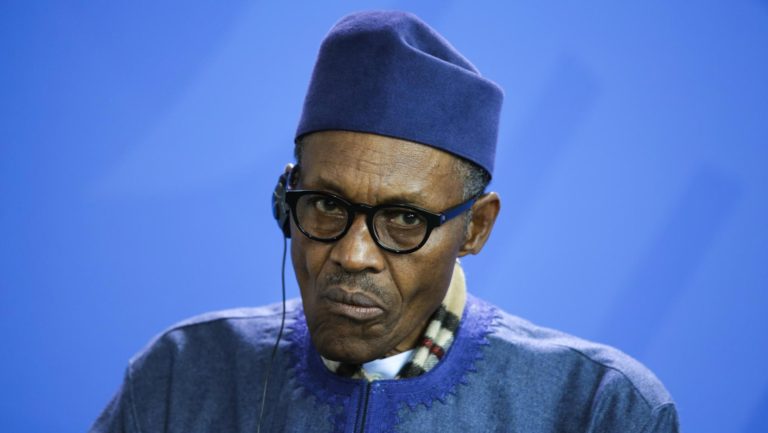
SENIOR Special Assistant to President Muhammadu Buhari on Media and Publicity, on Saturday evening, reacted to the controversy surrounding the suspension of Twitter in Nigeria, stating that Buhari’s deleted tweet on dealing with Biafra agitators ‘in a language they understand’ was a statement of fact, and not a threat.
Garba Shehu said the Indigenous People of Biafra (IPOB) posed a major threat to the safety and security of Nigerians.
In a statement, Shehu said the president’s tweet was meant to emphasise the Federal Government’s readiness to match forces with IPOB over its continued disturbances in South East, Nigeria.
“The tweet was not a threat, but a statement of fact…When the President said that they will be treated in a language they understand, he merely reiterated that their force shall be met with force. It is a basic principle of security services response the world over.
“This is not a promotion of hate, but a pledge to uphold citizens’ right to freedom from harm. The government cannot be expected to capitulate to terrorists.”
He faulted Twitter for deleting Buhari’s tweet.
Describing the action as disappointing and ridiculous, the presidential aide stated that the social media platform should be sensitive to the current security situation in the country.
He said IPOB members had murdered innocent Nigerians, killed policemen, and set government properties ablaze, alleging that the agitators had also amassed a substantial stockpile of weapons and bombs across the country.
Twitter’s temporary suspension, he stated, was not just a response to the removal of the president’s post. He said the micro-blogging platform was fuelling misinformation capable of disrupting the nation.
According to Shehu, the trend had remained despite repeated warnings from the Buhari-led administration.
“The temporary suspension of Twitter is not just a response to the removal of the President’s post. There has been a litany of problems with the social media platform in Nigeria, where misinformation and fake news spread through it have had real-world violent consequences. All the while, the company has escaped accountability.
“Nevertheless, the removal of President Buhari’s tweet was disappointing. The censoring seemed based on a misunderstanding of the challenges Nigeria faces today.
“Major tech companies must be alive to their responsibilities. They cannot be allowed to continue to facilitate the spread of religious, racist, xenophobic, and false messages capable of inciting whole communities against each other, leading to the loss of many lives. This could tear some countries apart,” the statement read in part.
“Twitter does not seem to appreciate the national trauma of our country’s civil war. This government shall not allow a recurrence of that tragedy,” Shehu added.
However, the Federal Government has been receiving backlashes from local and international actors since its decision to ban Twitter.
The United States, Swedish governments, lawyers, civil society organisations (CSOs), among others, have all kicked against the decision.
Nigerians have also resolved to use the Virtual Private Networks (VPNs) in order to maintain access to the social media platform.
But the use of VPN has also received a stiff reaction from the government as the Attorney-General of the Federation and Minister of Justice Abubakar Malami has directed the Department of Public Prosecution to partner with the Nigerian Communications Commission (NCC) to prosecute violators of Twitter ban.
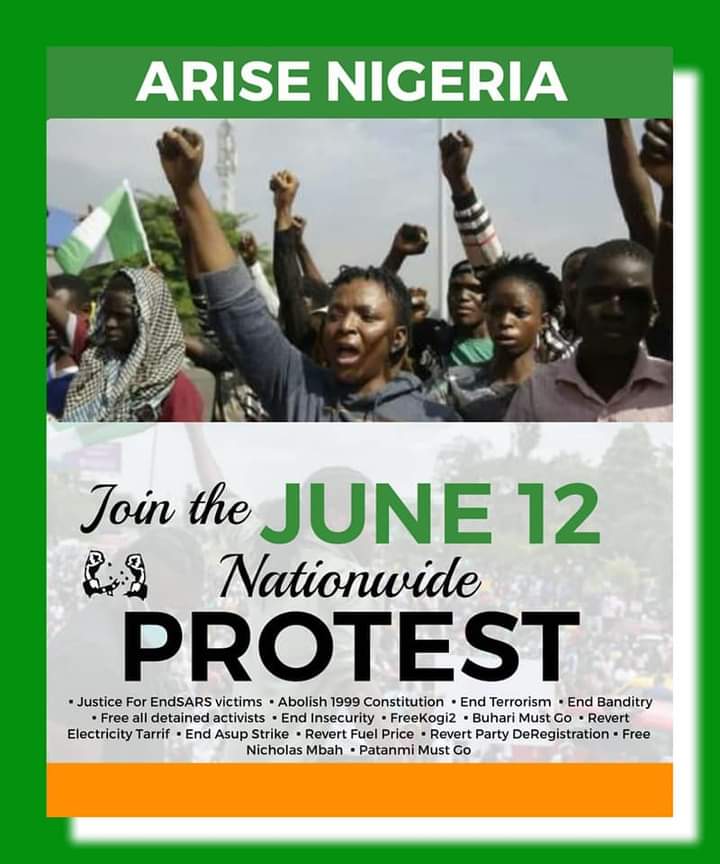
NIGERIANS are set to stage a nationwide protest on Democracy Day June 12 against ‘bad governance’ under President Muhammadu Buhari.
Majority of the citizens who took to various social media platforms, including Twitter to express their displeasure about the leadership of President Buhari, have hinted that the protest would be held to demonstrate against ‘dictatorship’ of the president.
A Twitter user, Dr Rita Onyejesi @agbomma71 called on other Nigerians to join the protest, saying the citizens lack basic amenities, yet their rights to freedom of expression were being taken away.
“Enough is Enough, woke up today & noticed that my Twitter can’t load without a VPN.We have no good Road, no job,no light everything is “No” &they want to take our freedom of expression and interaction too. They have bitten more than they can chew #June12Protest,” Onyejesi said.
A human rights activist Deji Adeyanju @adeyanjudeji also said the youths would be protesting on June 12 against insecurity, nepotism, economic woes, among others.
“To the youths planning nationwide protests tagged #june12protest over insecurity, nepotism, bigotry. Unemployment, banditry. economic woes, human rights violations, incompetence and corruption! How can we all join?,” Adeyanju tweeted.
Another Twitter user who identifies Towolawi Jamiu Endsarsnow @jharmo said the protest was necessary adding that if Nigerians did not resist the Twitter ban, someday, the president could suspend the constitution and introduce a martial law.
“When a regime has failed totally, it will result to the use of excessive force.The @MBuhari regime is testing the ground with the #TwitterBan and if not resisted, it will move to suspend the Nigeria constitution and introduce a martial law. #June12Protest is a date with history,” Jamiu posted on Twitter.
Other prominent Nigerians have also taken to social media to call on social media users to join the nationwide protest.
The publisher of Sahara Reporters Omoyele Sowore in a tweet made earlier today, enjoined Nigerians to utilise the planned protest as a means towards changing Nigerian history.
“Join the Mother of All Protests June 12 2021! Don’t miss the greatest opportunity to change the course of history in Nigeria! #June12protest #Buharimustgo #Twitterban #Revolutionnow,” he said.
Former Minister of Education Oby Ezekwesili cited the Twitter ban as a good reason for Nigerians to join the June 12 protest against the government.
“Connecting-the-dots after I read something. It does indeed sound plausible that the #TwitterBanNigeria was meant to be an early preemptive strike against the #June12Protest. Ok then. Good reason now for more citizens to join that protest.A strong answer to ‘What’s Next,” Ezekwesili posted.
A group of lawyers under the name, Lawyers for Rule of Law has also said it would offer pro bono services to persons arrested by security officials during the course of the planned protest.
“Lawyers willing to join should reach out,” human right lawyer and activist, Inibehe Effiong, tweeted at 7:05pm on Saturday.
In more calls for the support of the protest, a user on Facebook Wuese Terkuma Mr. infallible said Nigerians need to act fast and ensure immense action for the June 12 protest.
Another Facebook user who identifies as Opeyemi Ayoola said all Nigerian embassies would be shut down on June 12.
THE United States of America has condemned the suspension of Twitter operations in Nigeria by President Muhammadu Buhari.
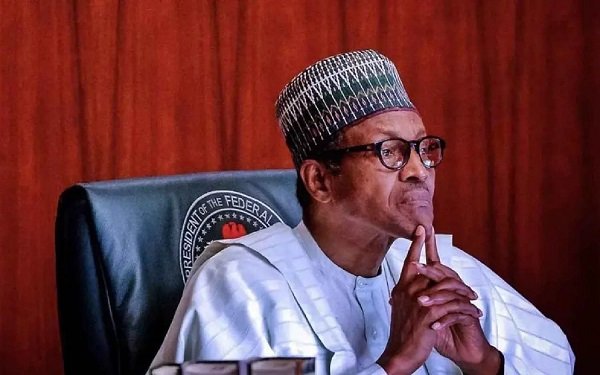
Buhari had on Friday, announced the suspension of Twitter, saying the platform was persistently used for activities that could undermine the corporate existence of Nigeria.
The U.S Mission in Nigeria in a statement released on Saturday said the Nigeria’s constitution provides for freedom of expression, adding that the ban will not only affect the citizens but also sends poor messages to investors.
“The Government’s recent #Twitterban undermines Nigerians’ ability to exercise this fundamental freedom and sends a poor message to its citizens, investors and businesses.”
The U.S also said that banning social media and curbing the citizens’ ability to seek and receive information undermines fundamental freedom.
“As President Biden has stated, our need for individual expression, open public conversation, and accountability has never been greater.”
The US government said it is more communication and concerted efforts to forge unity, peace, and prosperity that could make Nigeria more secured.
The United Kingdom and Canada had earlier expressed concerns over the suspension of Twitter operations in Nigeria.
Meanwhile, President Buhari has explained that he banned Twitter not only beacuse the tech company removed his tweet, but also for spreading fake news.
“The temporary suspension of Twitter is not just a response to the removal of the President’s post. There has been a litany of problems with the social media platform in Nigeria, where misinformation and fake news spread through it have had real world violent consequences,” Garba Shehu
Senior Special Assistant to the President on Media & Publicity said on Saturday evening.
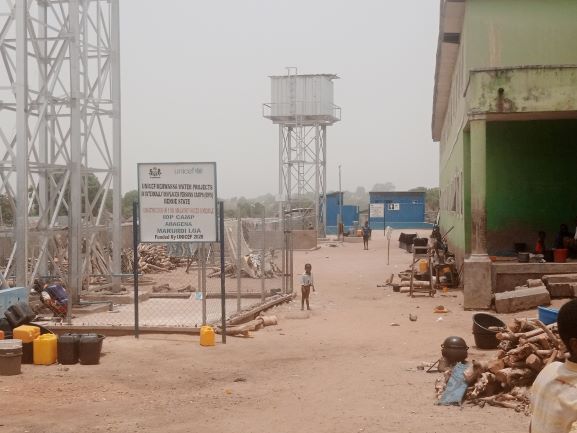
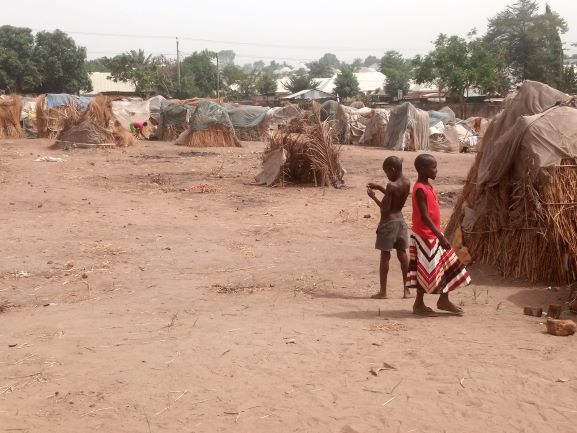
IN January 2018, Seseer Pauline, 23, fled her village in Tse-Usenda, Guma Local Government, Benue State after Fulani militant herders attacked her community. She escaped along with her mother and younger siblings to Ikpaam, an unofficial camp for internally displaced persons (IDP) that’s currently home to more than 300 households.
Despite the government’s vow to end insecurity for nearly a decade, clashes between farmers and herders have only escalated in Nigeria’s middle belt region, especially Benue State.
In April, over 70 persons have been murdered in LGA’s in Benue by insurgents for opposing herders destruction of their farmlands said Samuel Ortom, Governor of Benue states. And the situation is no different in Koshebe, Borno State where 83 rice farmers were killed by insurgents for making an effort to avoid starvation and braving the odds to go to their farms.
The conflict has displaced more than 2.5 million people in Nigeria. According to the Christian Aid Emergency Humanitarian Relief Fund, Benue alone has more than 50,000 IDPs from attacks, which have led to the loss of almost 1,000 lives. Angela’s father was killed in the siege; her other relatives are presumed either dead or missing.
In the camp, Angela and her family were helped by a man named Joseph, a man at least ten years her senior. He was able to help them get accommodation and access to food more quickly through his connections with the camp chairman.
“After that, it was as if everyone expected that I took him as my man in the camp,” Angela said.
An unofficial IDP camp in Federal Housing, Ikpamm, Markudi
Joseph solicited Angela for sex in exchange for his services, which, in addition to food and shelter, also included protection from other men in the camp who could potentially victimise her and her family as well.
At first, Joseph did not force himself on her, but over time, that changed— the abuse, Angela said, soon became a regular occurrence.
Nigerian law specifies a minimum of 12 years imprisonment for rape offenses without option of a fine. But Angela had no idea of the provisions of this law nor did she even know of the law’s existence. Even if she had, it is unlikely she would have sought redress, having no money to afford a lawyer and her mother and siblings as dependents.
Women make up more than 50 per cent of the IDP population in Nigeria. And as they are forced to survive on less than ₦780 (US $1.90), their livelihoods are largely reliant on goodwill donations from charitable and government organizations. Consequently, due to overlapping vulnerabilities related to economic security and protection, many find themselves at risk of sexual and gender-based violence in the camps.
Angela now has an 18-month-old child, for whom she acts as the sole custodial parent. At the time of this interview with the young mother, the boy’s health— which Angela says is ailing— is dependent on a father who barely acknowledges his existence and provides very little support to raise him.
“Many of us [women and girls] came to the camp without children, but if you look around, plenty got pregnant and are now mothers without partners,” said Magdalene Unogun, 19, a resident of Abagena IDP camp in Markurdi. Abagena is home to more than 8,000 IDPs, according to an official of the State Emergency Management Agency.
In 2017, Unogun witnessed her father’s death at the hands of bandits when they attacked her once-peaceful community in Torkula, Guma, in Benue State. After farmers complained about the destruction of their crops by roaming cattle encroaching on their fields, rogue herders attacked the village, killing her father, a farmer, in the process.
She can’t say how many lost their lives, and news reports vary on the figures, but she still has panic attacks as soon as the day darkens.
Having been at the camp for four years, living among friends and peers who have been victims, Unogun said the culture of silence instituted by the camp authorities has given rise to a generation of children born from non-consensual sex.
Attempts to retrieve data on reports of rape, harassment, or other forms of sexual abuse in Abagena were denied by camp staff. Rather, Unogun said, incidents are settled in hushed tones. Victims are often threatened to stay silent or risk eviction — especially if the abuser is a camp official — said Unogun, given what she’s heard of the experiences of women who had left the camp for that reason.
Ngunan Ioron Loho, founder of the Samuel Ioron Foundation (SIF) — a nonprofit organization providing educational access and inclusion for girls in Benue’s IDP camp — told me that she has heard reports of abuse from women in Abagena, but the threat of possible retaliation from compromised officials was too great to report the abuse or go public with accusations.
“In the camp, the culture of ‘Kwambe sa Kwambe’ (loosely translated to “You scratch my back, I’ll scratch yours” in the Tiv language) applies,” Loho said, especially when it comes to an IDP offering sex to officials in exchange for food or provisions.
Many women who become pregnant from rape, like Angela, are left to shoulder the risks and responsibilities of raising a child alone. Abortion is illegal in Nigeria and carries up to 14 years jail term; the only exception to terminate a pregnancy is to save a mother’s life under Section 297 of the country’s criminal code.
“That a child was conceived through rape is a moral issue, not law, as the penal code, the statute applicable in northern Nigeria, including Benue state, doesn’t legalise abortion on the ground of nature and circumstance and conception of a child” explained Abul Mahmud, lawyer and rights advocate.
“When it happens,” Unogun said, “we cannot tell anyone.”
Rights activists say the absence of support structures from the government and law enforcement agencies for victims of sexual abuse impedes justice. Sexual and Assault Referral Centers (SARCs), which provide services to survivors of sexualized and gender-based violence, are not available in most states — including Benue.
Speaking by phone, Funke Oladipo, director of the women’s development department for the Federal Ministry of Women Affairs, admitted that the absence of SARC services in most states and districts acts as a disservice to rape victims, “a situation that is worse for women in IDP camps,” she said.
Even with State Emergency Management Agency officials stationed in some camps, assistance for victims is insufficient when there are no other state structures to handle reports of abuse. The agency is mostly concerned with providing emergency intervention packages — like food and shelter — to displaced persons. Gender-specific care is more or less considered an afterthought.
And even this is often made available by NGO’s like SIF with specific focus on women and girls inclusion.
During the COVID-19 lockdown, more than 3,600 rape cases were recorded across Nigeria — and that could still be a gross undercount, given the lack of data on violence against women. Even before the pandemic hit, rape victims were less willing to report cases due to lack of faith in the country’s snail-paced legal justice system. But during the lockdown, though mobile courts were operating, cases of abuse — especially sexual and domestic abuse — were deprioritized.
“If your partner beat you, the police will not bring you before the same court,” said Dorothy Njemanze, director of the Dorothy Njemanze Foundation, a nonprofit organization also assisting victims of sexualized and gender-based violence. “We have fantastic laws, but only on paper.”
The cases that did make it to court were often pulled by victims after threats from their abusers or coercion from family members, said Bridget Edokwe, a lawyer and member of the International Federation of Women Lawyers in Nigeria (FIDA). “So you can only imagine that the situation is worse for the IDPs living with their rapists.”
With no access to justice or protection, it is hard to imagine that victims in the camps will receive any respite soon.
“Until society recognizes the human rights of women, sexualized and gender-based violence, unfortunately, may continue in closed quarters,” said Edokwe.
Indeed, until succor comes, women like Angela will remain vulnerable to the predatory desires of men, in the same place where they seek refuge.
*Names of the Internally Displaced Persons have been changed in this article for their protection.
This report was first published by the Women Media Centre as part of the Women Under Siege reporting project.
DOCTORS in Ondo State have begun to resign their appointment over salary cuts and a backlog of unpaid wages, the Nigerian Medical Association (NMA) disclosed on Friday.
The state chapter of the association said in a statement signed by its president and secretary, Stella Adegbehingbe and Olorunfemi Owa, respectively, that the state health sector was bedevilled by diverse challenges that begged for government urgent attention.
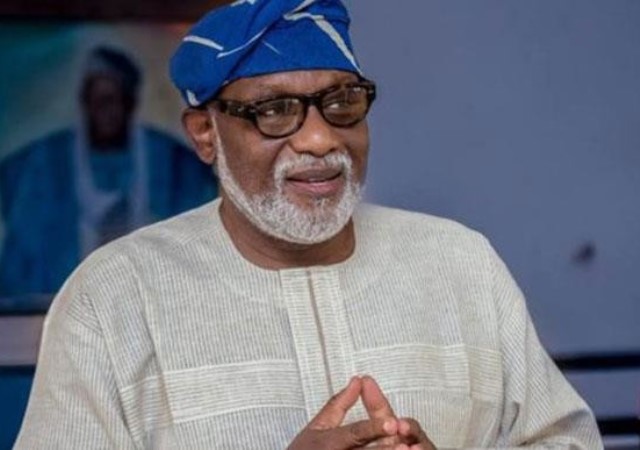
The recent comment by the Governor Rotimi Akeredolu, in a video seen by our reporter, asking ‘whether doctors have two heads’ to give them the audacity to demand payment of their full salaries was disparaging to the medical profession, NMA said.
Ondo State government pays a percentage of salaries of its workforce, as agreed with the state by the Joint Negotiating Council, comprising representatives of government and the Nigerian Labour Congress.
The policy has been on since the emergence of COVID-19 in Nigeria.
Doctors in Nigeria used to illustrate this report.
NMA said it did not agree with the decision and asked for a 100 per cent payment of salaries for its members.
“Regrettably, Mr. Governor elected to irritably disregard basic obligations of government to her citizens. He has chosen to blame victims of government’s indebtedness for the inability of the same government to perform its duties.
“His government demands that her workers should work on credit, while gratefully accepting less than their due wages, along with insults, packaged as an admonition,” the doctors said.
The association alleged that all efforts it had made to meet the governor had been futile.
It said the last salary paid to workers in the state, including its members, was for the month of February. The salary was paid this week, the NMA alleged.
According to the group, general hospitals in the state have two doctors each.
About 50 doctors resigned from the services of the Hospital Management Board in the state in the past few months without replacement.
105 doctors have resigned from the state Teaching Hospital in the last one year, the group said.
It also said only three house officers were left in the service of the state.
A ward at the State Specialist Hospital, Akure, Ondo State. Source: PM News
Besides, the association said following mass resignation among the University of Medical Science Teaching Hospital staff in the state, the institution was about to lose some of its accredited programmes.
The doctors accused the state government of refusing to pay the third tranche of COVID-19 palliative allowance, which the government promised to pay its health workers at the onset of COVID-19 pandemic in the country.
Meanwhile, the group’s secretary, Olorunfemi Owa told our reporter that his group had not decided to embark on strike, should the government fail to meet its demands.
Ondo state health sector received global commendation during the administration of Olusegun Mimiko, the immediate past governor of the state.
His Safe Motherhood programme tagged the “Abiye Initiative” attracted World Bank’s attention, making the bank to recommend the initiative for Africa health systems.
The state also became a reference point for health systems in Nigeria by the World Health Organization and other development bodies.
The ICIR reports that the Safe Motherhood initiative, which made health services free for pregnant mothers and children up to age five has not been free for people of the state since the Akeredolu government took over power.
Efforts to get the reaction from the state government to NMA’s allegations by our reporter proved abortive.
When contacted on the telephone Saturday morning, Commissioner for Information in the state, Donald Ojogo abused our reporter.
Ojogo said he was not aware of the issues raised by the doctors, and our reporter offered to explain them to him.
“Please, leave their statement the way they have issued it. We have no response yet. I have no response to give you,” the commissioner said.”
“But, are you aware of the issues, sir?, our reported asked him.
He responded: “I’m not aware of what you’re saying.”
“Can I tell you some of them?, The ICIR reporter requested.
He retorted: “I said I’m not aware. You can’t tell me.”
Ojogo then went on to tell the reporter that he “was a fraudster, a fake and financially-beholding journalist” among other names.
Permanent Secretary, Ministry of Health in the state, Aladeola Foluke told our reporter that she had not heard anything from the association.
“I have a very cordial relationship with NMA. I don’t know anything about what they are saying,” she said.
Commissioner for Finance in the state, Adewale Akinterinwa, did not pick the calls put across to him. He did not also respond to text messages sent to his phone number.
Governor Akeredolu works with only four commissioners and a few aides since his inauguration for a second term in office in February.
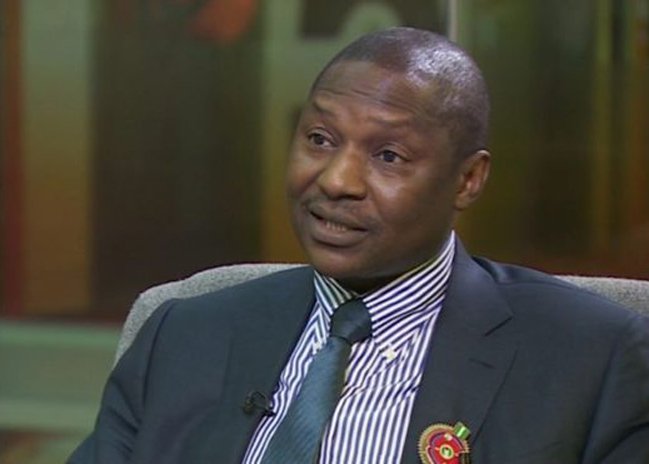
ATTORNEY-General of the Federation (AGF) Abubakar Malami, on Saturday, called to prosecute Nigerians violating the ban on Twitter by the Federal Government.
This was revealed in a press statement by the media aide to the AGF Umar Jibrilu Gwandu. The directive comes after Nigerians bypassed the ban on Twitter using Virtual Private Network (VPN).
“Attorney-General of the Federation, Abubakar Malami, has ordered the prosecution of offenders of the federal government ban on Twitter operations in Nigeria,” he said.
Twitter’s suspension by the Federal Government came two days after a post by President Muhammadu Buhari was taken down by Twitter, where he threatened to crack down on secessionists.
Gwandu said Malami directed the office of the public prosecution of the federation (DPPF) to prosecute violators of the ban.
“The AGF directed the Director of Public Prosecution of the Federation (DPPF) at his office to swing into action and commence in earnest the process of prosecution of violators of the Federal Government De-activation of operations of Twitter in Nigeria.
“The DPPF is to liaise with the Ministry of Communication and Digital Economy, National Communication Communication (NCC) and other relevant government agencies to ensure the speedy prosecution of offenders without any further delay,” the statement read.
The Judiciary Staff Union of Nigeria (JUSUN) had, on April 6, embarked on an indefinite strike to press home its demand for the implementation of full financial autonomy for the judiciary.
The 63 day-long strike action has crippled the judicial arm of government across the country as court users, and non-litigants bear the brunt.
On Friday, Lai Mohammed, minister of information, announced the indefinite suspension of Twitter.
Rights group Amnesty International has condemned Twitter’s suspension in a tweet and called on Nigerian authorities to “immediately reverse the unlawful suspension and other plans to gag the media, repress the civic space, and undermine Nigerians’ human rights”.
THE Civil Society Consortium on Civic Space has condemned the decision of the Federal Government of Nigeria to suspend the operations of social media giant, Twitter, in the country.
In a statement released on Saturday, the group described the act as lacking intellectualism, saying that it was an attempt by the Nigerian government to destroy the nation’s democracy.
“It is shameful that in its desperate bid and determination to destroy the largest democracy in Africa, the Federal Government of Nigeria is exploring undemocratic means to not just gag its citizens but to subdue them,” it read.
The statement described criticism as the bedrock of modern democracy and stressed the impropriety of a democratically-elected leader to display such lack of temperament for dissenting voices.
“He should either resign or let the citizens know that he has staged a coup against his own democratically elected government by announcing himself as a military junta, that way we can deal with the administration as such,” it read.
The group also described the Twitter ban as an attack on the rights of free speech and a hindrance to businesses in an already battered economy.
“We therefore call on General Muhammadu Buhari’s regime to immediately reverse the suspension of Twitter in Nigeria. In the interim, the Consortium is considering its options in response to the decision and consulting with other interested civic partners and entities in Nigeria in order to determine our next steps,” it read.
The Nigerian government announced the Twitter ban on Friday after a tweet by Nigeria’s president Mohammadu Buhari was deleted from the platform for breaching its rules.
Buhari had referred to the Nigerian Civil War and threatened to treat certain members of the society in ‘the language they would understand.’
Nigeria’s Minister for Information and Culture Lai Mohammed had stated in a press release that the ban was a result of “the persistent use of the platform for activities capable of undermining Nigeria’s corporate existence.”
THE US-based social media platform, Twitter, has promised to restore access to Nigerians, just as it expressed deep concern over the decision of the government to suspend its operations.
Twitter, via its public policy page on Saturday, also noted that access to free and open internet was an essential human right.
“We are deeply concerned by the blocking of Twitter in Nigeria. Access to the free and Open lnternet is an essential human right in modern society.
“We will work to restore access for all those in Nigeria who rely on Twitter to communicate and connect with the world. #KeepitOn,”
Recall that the Nigerian government had, on Friday, announced the suspension of the micro-blogging platform.
Buhari, in a statement signed by the Special Assistant to the President (Media), Office of the Minister of Information and Culture Segun Adeyemi in Abuja, said the platform was persistently used for activities that could undermine the corporate existence of Nigeria.
Meanwhile, reactions from different quarters have trailed the decision, urging the government to set the platform free for its citizens.
The Nigerian Bar Association (NBA) said Nigeria was operating a constitutional democracy, which did not conform to the suspension placed on Twitter by President Muhammadu Buhari.
The major opposition party, the People’s Democratic Party (PDP), described the decision as a draconian action and a slide towards a fascist regime.
TOP politicians have condemned the suspension of Twitter operations in Nigeria, describing it as a blight on the nation’s freedom of speech.
Minister of Information and Culture Lai Mohammed had, in a statement on Friday, said the ban was due to “the persistent use of the platform for activities that are capable of undermining Nigeria’s corporate existence.”
He also ordered the National Broadcasting Commission (NBC) to compel all over-the-top media services and social media operations in Nigeria to apply for permits to operate.
Twitter had deleted President Muhammadu Buhari’s tweet, where he threatened to treat Nigerians ‘misbehaving’ in ‘the language they would understand.’ Buhari’s statement has attracted widespread condemnation from Nigerians.
The ICIR gleaned reactions from several politicians on the ban of Twitter in the country after the Federal Government enforced the suspension on June 5.
Former senator and rights activist Shehu Sani described the ban as a stain on the Federal Government’s legacy.
Dino Melaye, who also represented Kogi West Senatorial district at the 8th Assembly in the Senate, on his Facebook page said, “President Buhari should learn from former US President Donald Trump who got suspended from Twitter but did not shut down the platform in his country.”
“Buhari should learn from Trump. Ordinary Delete na im vex you like this. Na im be say if dem suspend you you go collect our phones. Yeye dey smell,” he stated in Pidgin English.
A former president of the Senate and two-time governor of Kwara State Bukola Saraki called for the review of the ban on Twitter by President Buhari, which he said was part of the daily lives of Nigerian youths.
“No sir! This should not be the response from the President of the nation with a vibrant youthful population for whom#Twitter is part of their lives and a source of income and livelihood,” he said.
Twitter is popular with young urban Nigerians, ranking as the sixth-most used social-media platform in the country.
In April, Twitter announced it was setting up its African office in Ghana, which raised a furore among Nigerians for ditching Africa’s most populous nation.
Singer turned politician Olubankole Wellington, popularly known as Banky W, in a tweet also condemned the government’s decision to ban Twitter.
“And where are all our elected Reps and Senators that are supposed to represent us? Are they all going to continue to stay silent? The government is called ‘Public Service’ because they’re meant to ‘serve’ the public.
“They’ve turned government into a shortcut to wealth and a retirement home,” he tweeted.
Governorof Oyo State Seyi Makinde has also joined voices to call on President Muhammadu Buhari to reverse the decision to ban on the operations of Twitter in Nigeria.
“This is a fundamental point that should be kept in mind as we debate the necessity of this suspension.
“We should also remember that Twitter has gone beyond a source of communication for many of our hardworking youths in Nigeria. It has become a source of livelihood for many, irrespective of their political affiliations or religious leanings,” he said, in a statement on Saturday.
Twitter is currently banned in countries such as Iran, China, Turkey and was recently accused by the Indian Government of not complying with its rules.
However, Nigerians can still bypass the ban and access Twitter using virtual private networks (VPN).
THE United Kingdom and Canada have expressed concerns over the suspension of Twitter operations in Nigeria by President Muhammadu Buhari.
Buhari had, on Friday, suspended the operations of the social media platform after his post containing civil war threat was deleted.
UK Deputy High Commissioner to Nigeria Gill Atkinson expressed concerns over the suspension, saying that Nigerian citizens had the right to freedom of speech and the responsibility not to misuse it.
Atkinson said any action taken by the government should not suppress the basic freedoms of Nigerians, rather should be proportionate and measured.
“All Nigerians have the right to freedom of speech and the responsibility not to misuse that right. Any action taken by Government must be measured, proportionate and not supress basic freedoms,” Atkinson said.
All Nigerians have the right to freedom of speech and the responsibility not to misuse that right. Any action taken by Government must be measured, proportionate and not supress basic freedoms.
High Commissioner of Canada in Nigeria Nicolas Simard said that responsible use of freedom of speech online and offline was a fundamental human right protected in Nigeria’s constitution and a cornerstone of democratic life around the world.
He noted that the rights should be protected, and inflammatory statements and hate speech that could fuel tension and conflict should be avoided.
“Freedom of speech used responsibly online and offline, and access to reliable information are fundamental human rights protected by #Nigeria’s constitution and a cornerstone of democratic life around the world.
“These #HumanRights should be fully protected, while preventing inflammatory rhetoric and hate speech that could fuel tension and conflict,” Simard posted.
Freedom of speech, used responsibly online and off line, and access to reliable information are fundamental human rights protected by #Nigeria’s constitution and a cornerstone of democratic life around the world. (1/2) #TwitterBan
The ICIRreported that Buhari’s tweet was removed due to its violation of the Twitter rules. Twitter regarded it as containing violence and other inciting contents.
On June 2, Twitter deleted a post by Buhari where he referred to the 1967-1970 Nigerian Civil War as the way to treat ‘those misbehaving today,’ saying it was the ‘language they will understand.’
The president said that in reaction to violence in the South-East part of the country.




 Ojogo said he was not aware of the issues raised by the doctors, and our reporter offered to explain them to him.