Home Blog Page 18

Family rejects police account, accuses EFCC of killing 16-year-old in Makurdi

0

THE family of a 16-year-old boy, Sesugh Atsar, has rejected the police account of his death and accused operatives of the Economic and Financial Crimes Commission (EFCC) of killing him in Makurdi, Benue State.

The boy’s mother, Jennifer Atsar, in an interview published by Punch Newspaper on Saturday, June 6, said her son was shot by EFCC operatives on May 23, 2026, shortly after he was arrested and released by the anti-graft agency.

She alleged that Sesugh, a Junior Secondary School 3 student and apprentice furniture-maker, had told her days before his death that EFCC officials arrested him, released him on bail, but withheld his phone and demanded N100,000 for its return.

According to her, the teenager was at home when he received a call and left with a friend before the incident occurred.

She claimed that two EFCC operatives, operating in plain clothes, invited his friend to a hotel where they were staying.

On arrival at the hotel on a motorcycle, she alleged that one of the officers drew a firearm, prompting her son to flee before he was chased and shot at close range.

“I was told that two EFCC operatives, who were in mufti, called my son’s friend to come to a hotel located around the community where the EFCC men were staying.

“When they (my son and his friend) arrived at the hotel on a motorcycle, Sesugh got down, opened the gate, and they rode inside. Upon sighting them, one of the EFCC officers drew a gun. I was told that my son ran when he saw the gun. They chased him and shot him at close range,” she said

Atsar said neighbours later informed her that her son had been killed, adding that residents insisted the operatives should take responsibility for the incident.

She also alleged that EFCC officials have since withheld her son’s body and denied the family access to his remains.

The mother rejected allegations linking her son to internet fraud, cultism and drug-related activities, insisting he was a hardworking teenager who supported his family through menial jobs and apprenticeship work.

Police account

However, the Police in Benue State had in a statement by their spokesperson, Udeme Edet, stated that Sesugh alongside his friends opened fire at EFCC operatives and were killed during the gunfire.

The statement, first reported on May 25, noted the deceased was among three suspects earlier arrested by the commission on April 28, 2026, over alleged fraud and cybercrime offences.

The police said the suspects later escaped from EFCC custody on May 4 and went into hiding.

Edet stated that EFCC operatives, acting on intelligence, later stormed a hideout in Kanshio, Makurdi, on May 23, 2026, where they reportedly encountered suspected cultists who opened fire, resulting in a gunfire exchange.

According to the statement, Sesugh was later found lying in a pool of blood and was rushed to the Police Cottage Hospital, Makurdi, where he was confirmed dead.

The police added that the body had been deposited at the mortuary of the Benue State University Teaching Hospital for preservation and autopsy, while investigations into the incident were ongoing.

However, two weeks after the incident, the EFCC has yet to issue official statement addressing the allegations.

When The ICIR reached out to the commission spokesperson Dele Oyewale, he said a statement would be released on the matter ‘soon.’

Family demands justice

Speaking further, Atsar demanded justice for her son and the release of his body to the family.

She called on authorities to conduct a transparent investigation and ensure that anyone found responsible for his death is held accountable.


Terrorists attack Borno military base, kill eight

TERRORISTS have attacked a Nigerian Army Forward Operating Base in Mandaragirau, Biu Local Government Area of Borno State, killing five soldiers and three members of the Civilian Joint Task Force (CJTF).

The incident occurred in the early hours of Friday, June 5.

Confirming the incident in a statement on Friday, the Acting Media Information Officer of Operation HADIN KAI, Haruna Sani, a lieutenant colonel, said that the attack targeted the military formation under the 25 Brigade, Sector 2 of Operation HADIN KAI but troops successfully repelled the assault despite heavy rainfall and poor visibility.

“Troops of Forward Operating Base (FOB) Mandaragirau under 25 Brigade of Sector 2, Operation HADIN KAI, successfully contained a terrorist attack in the early hours of this morning despite adverse weather conditions and poor visibility occasioned by heavy rainstorms,” Sani said.

According to him, the insurgents launched the attack at about 3:00 a.m., attempting to breach parts of the Forward Operating Base under the cover of adverse weather conditions.

He added that troops mounted a fierce counteroffensive that prevented the attackers from making further advances and inflicted casualties on the insurgents.

“Determined troops responded with a fierce counter-offensive, decisively frustrating further incursions and inflicting casualties on the attackers. The counter-assault underscores the resilience of the troops at FOB Mandaragirau and reflects the courage and determination of our troops across the theatre,” he said.

“Regrettably, in the course of the battle, five gallant soldiers paid the supreme price during the intense firefight and close-quarter engagement, while some equipment was also affected by the firefight,” he added.

He said wounded personnel had been airlifted by the Air Component Command and were receiving treatment in stable condition, describing the fallen personnel as heroes whose sacrifice reflected the highest standards of service and commitment to the defence of Nigeria.

“Operation HADIN KAI honours their heroism and the bravery of all personnel who stood firm in the face of a determined but ultimately futile enemy assault. Three members of the CJTF also fell alongside troops, while those wounded have been promptly airlifted by the Air Component Command and are currently in stable condition while receiving appropriate medical care,” he said.

He further assured that troops remained in full control of the base and are conducting follow-up operations in the area.

“These failed attacks further underscore the growing desperation of terrorist elements who continue to suffer devastating losses under sustained operational pressure. All necessary measures are being taken to protect communities and sustain relentless pressure, with the deployment of additional troops and critical combat enablers throughout the North-East theatre,” he said.

The ICIR reports that the attack is part of growing assaults on military formations across Nigeria by terrorists comprising members of the Islamic State West Africa Province (ISWAP), Boko Haram, Lakurawa and other armed non-state actors in Nigeria.

The groups have also unleashed mayhems in several communities in the country, including killing and abducting unarmed civilians.

The ICIR reported that while the Nigerian security forces have been unable to contained the crisis for nearly two decades, the menace haunts them when they leave service. However, this is not to undermine the efforts of soldiers and commanders on the frontlines, many of whom have paid the supreme price in the course of securing their fatherland.

The ICIR reported that the abduction of former Director of Defence Information, Rabe Abubakar, a retired major general, and his wife while travelling along Matazu Local Government Area, Katsina State, on May 30.

The report also captures the horrible experiences of senior military officers who were victims of insecurity after leaving office. While some of them are lucky to pay ransoms and get freed after days in their captors’ dena, other failed to return home alive.

Meet ‘Trionda’, the AI-powered FIFA 2026 official football

0

AT every FIFA World Cup, one of the eagerly anticipated subjects has been the design of the official football.

From the Telstar at the FIFA 2018 in Russia to the Brazuca at the 2014 edition in Brazil, the official ball has always been a talking point.

Who will forget the famous Jabulani when South Africa hosted the tournament in 2010? It was despised by goalkeepers but loved by attackers, especially Uruguay’s Diego Forlan!

It was at the Qatar tournament in 2022 that the official ball assumed even more curiosity, with Al Rihla becoming the first World Cup ball infused with semi-AI performance functions.

If football enthusiasts think that Al Rihla (meaning the journey in Arabic) impressed with offside technology, life data sharing, etc, then, they are in for a surprise at the performance of the 2026 World Cup ball.

Designed by Adidas, Trionda is a high-tech masterpiece which stakeholders have described as more than just sporting equipment.

During its unveiling, Adidas said Trionda “is a connected piece of engineering designed to handle the unique physics of North American altitudes while celebrating a historic three-nation host union”.

The name was derived from a linguistic blend into the prefix “tri” to represent the three host nations of Canada, Mexico and the U.S. and “onda”, the Spanish word for wave.

Thus, Trionda, or Three Waves, symbolises the fluid unity of the host countries and the three coastline (Atlantic, Pacific and the Gulf) framing the tournament.

Unlike the balls used previously, Trionda has fewer and lighter panels but remains stable with its aerodynamic features.

Its four panels are the fewest ever used on a World Cup match ball. This reduces the number of seams, making the ball’s surface more consistent.

It also features intentionally deep seams that act like the dimples on a golf ball, ensuring stable air drag and a predictable flight path, with a surface embossed with subtle iconography of the three host nations.

However, Trionda’s most mind-blowing feature is that it requires a charging station! A full 90-minute-charged ball runs for up to six hours.

Its motion sensor, suspended at the centre of the ball, tracks every touch, kick and deflection in real-time, sending data 500 times per second to the VAR centre!

FIFA said the technology allows for Semi-Automated Offside Technology, identifying the exact point of kick with millisecond precision to resolve tight offside calls in seconds rather than minutes.

Trionda also has some symbolic and aesthetic features, such as each host country having its unique ball colour; Canada (red), Mexico (green) and the U.S. (blue).

It is also made entirely with water-based glues and inks for sustainability, featuring a maple leaf, golden eagle and five-pointed star.

Finished with gold embellishments that pay homage to the FIFA World Cup Trophy itself, Adidas said it is their most visually playful ball yet, designed with both infield and broadcast visual considerations. (NAN)

Court adjourns suit seeking deregistration of ADC, AA, others indefinitely

0

THE Federal High Court in Abuja on Friday adjourned indefinitely proceedings in the suit seeking the deregistration of the African Democratic Congress (ADC), Accord Party, Action Alliance (AA) and others.

The presiding judge, Peter Lifu, had fixed Friday to deliver judgment in the suit filed by the Incorporated Trustees of the National Forum of Former Legislators against some political parties.

However, hearing in the case was stalled after the Accord Party secured a stay of proceedings from the Court of Appeal on May 29.

At the commencement of sitting, the court registrar informed all parties that judgment had been postponed and that a new date would be communicated in due course.

Reacting to the development, Chairman of the Board of Trustees of the National Forum of Former Legislators, Raphael Igbokwe, expressed disappointment over the Appeal Court decision to grant a stay of proceedings.

Addressing newsmen, Igbokwe said the forum had challenged the appellate court decision by filing an appeal against the stay of proceedings at the Supreme Court.

“We are concerned that a matter which had reached the stage of judgment has now been stalled through a stay of proceedings.

“In practical terms, it amounts to an arrest of judgment. Nevertheless, we remain committed to pursuing all lawful avenues to ensure that the issues raised in this case are resolved in the interest of strengthening Nigeria’s democracy and advancing constitutional and electoral jurisprudence,” he said.

He maintained that the forum’s actions were aimed at deepening democratic governance and promoting the development of constitutional and electoral law in the country.

The suit, marked FHC/ABJ/CS/2637/2026 and instituted by the forum, named the Independent National Electoral Commission (INEC) as 1st defendants.

The plaintiff also joined several political parties, including the ADC, AA, Action Peoples Party (APP), Accord Party and Zenith Labour Party, among others, as defendants.

The plaintiff argued that the affected political parties failed to meet constitutional requirements relating to electoral spread and performance.

It contended that political parties were required to secure at least 25 per cent of votes in prescribed elections to remain relevant under the law.

It, therefore, urged the court to order the deregistration of the parties, insisting that none of the defendants had effectively countered the argument. (NAN)

DR Congo faults Spain over cancellation of Chile friendly

0

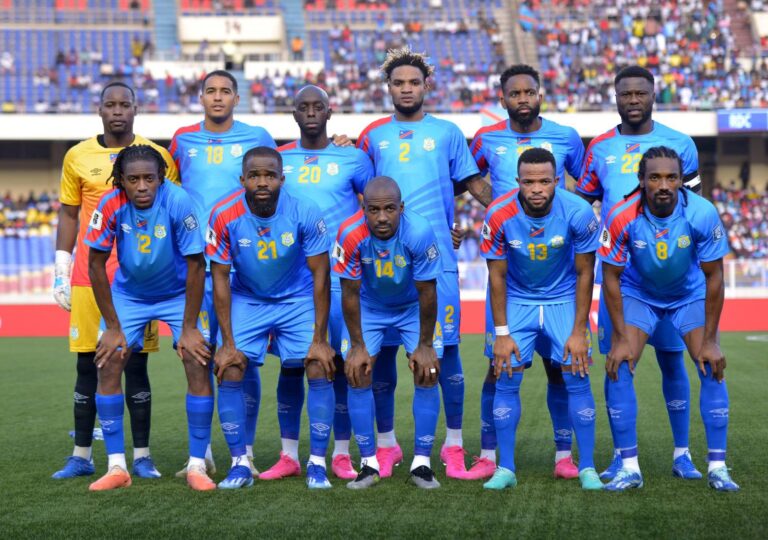
THE Democratic Republic of Congo (DR Congo) has criticised the cancellation of its scheduled friendly match against Chile in Spain over concerns linked to the Ebola outbreak in the African country.

The match was due to be played on June 9 in La Linea de la Concepcion, southern Spain, but local authorities called it off on public health grounds.

Mayor of La Linea de la Concepcion, Juan Franco, announced that he had signed a decree banning the match following a recommendation from local health officials.

According to Franco, a report from the town’s health service advised against staging the fixture because of potential health risks.

The DR Congo national team has, however, been training in Belgium ahead of its World Cup campaign.

Reports indicate that none of the 26 players is based in DR Congo or travelled directly from the country to the training camp, although some support staff and supporters may have done so.

Reacting to the development, DR Congo’s Minister of Communication, Patrick Muyaya, described the decision as unfair.

Speaking during a virtual press conference organised by the World Health Organisation (WHO), Muyaya said the cancellation had created difficulties for the national team’s preparations.

He noted that the players had been training in Belgium for about three weeks and argued that the decision could be interpreted as discriminatory.

The cancelled fixture was part of DR Congo’s preparations for forthcoming international competitions, including the World Cup.

(Xinhua/NAN)

Coroner orders LASUTH, DNA Centre to submit autopsy, test results in Pelumi Onifade’s death

0

THE Coroner Court sitting in Lagos has ordered the Lagos State University Teaching Hospital (LASUTH) and the Lagos State DNA and Forensic Centre to submit key forensic documents within 21 days in the ongoing investigation into the death of journalist Pelumi Onifade, who was killed during the #EndSARS protests in 2020.

According to a statement by Media Rights Agenda, the investigating magistrate, Temitope Oladele, gave the directive on Friday, June 5, at the resumed hearing of the inquest into the circumstances surrounding the death of the late journalist, who worked with Gboah TV.

The coroner ordered the Chief Medical Examiner of LASUTH to forward to the court the autopsy report of an unidentified body tagged 1385, believed to be that of the deceased journalist.

The statement noted that in a separate ruling, the court directed the Director of the Lagos State DNA and Forensic Centre to submit the DNA test results linked to the same body. 

The samples, according to proceedings, were collected from the remains and from the parents of the deceased and forwarded to the centre for analysis.

“The inquest was convened on the orders of a Federal High Court in Lagos following a wrongful death suit brought against the Police and the Lagos State Government by Media Rights Agenda (MRA) demanding, among others, an investigation into the late journalist’s death and the prosecution of those responsible for his killing. 

In his judgment, in the suit delivered on July 19, 2024, the judge, Ayokunle Olayinka Faji directed the Attorney-General to ensure an investigation into the circumstances of Mr. Onifade’s death and to conduct a coroner’s inquest to ascertain the cause of death as well as identify and prosecute those responsible for his death,” the statement added.

At Friday’s sitting, counsel to the family and MRA, Alimi Adamu, supported by Monday Arunsi and Somto Afulukwe, urged the court to compel LASUTH and the DNA Centre to release outstanding forensic reports.

Adamu argued that LASUTH had already confirmed in its report that an autopsy was conducted on the body tagged 1385 and that DNA samples had been collected and forwarded for analysis, while results were still being awaited.

After reviewing submissions, Oladele ruled that LASUTH must, within 21 days, submit the autopsy report relating to body tagged 1385. 

She also ordered the DNA and Forensic Centre to forward the corresponding DNA test results within the same timeframe.

The coroner referenced LASUTH’s March 24, 2026, report, which confirmed that autopsies were conducted on six bodies brought in on November 3, 2020, including the one in question, and that DNA samples had been processed for identification purposes.

The matter was subsequently adjourned to June 23, 2026, for continuation of proceedings.

Backstory

The ICIR reports that the coroner’s fresh directive is the latest development in Onifade’s case, which has stretched for over five years.

Onifade, was reportedly shot and arrested by security operatives on October 24, 2020, while covering the #EndSARS protests in Lagos. 

His body was later discovered at the Ikorodu General Hospital mortuary, sparking public outrage and calls for accountability over his death.

Since then, efforts to establish the exact circumstances of his killing have been mired in legal and bureaucratic setbacks.

In March 2026, LASUTH failed to comply with a court order directing it to produce a crucial report on an unidentified body tagged 1385, believed to be Onifade’s remains. 

The failure led to an adjournment and renewed frustration from MRA, which is supporting the family in the case.

The court had issued a “final opportunity” for LASUTH to submit its findings on the body, which was reportedly received from Ikorodu General Hospital on November 3, 2020, and later subjected to post-mortem examination. 

However, LASUTH neither produced the report nor sent a representative to the March 24, 2026 sitting.

At that hearing, MRA’s legal team urged the court to invoke contempt proceedings through a Form 48 notice, citing repeated disobedience of court orders. 

The request was, however, declined by the coroner, Temitope Oladele, a magistrate, who opted to grant the hospital another chance to comply.

How sachet, bottled water worsens Nigeria’s environmental burden

ON a busy morning in Lugbe, a suburban district in Abuja, Nigeria’s Federal Capital Territory, residents queue at a roadside kiosk to buy sachet water, a presumed sanitised pre-filled drinking water packaged in transparent sachets. This is a common ritual among millions of Nigerians across the country who depend on these water pouches, popularly referred to as “pure water.” 

Whether at home, on the road or at public events, sachet water has become the most easily accessible, affordable and reliable source of drinking water for millions of Nigerians. For the affluent, bottled water is more than just convenience but represents status and sanitary assurance.

Both packaged waters have become Nigeria’s most common form of on-the-go drinking water in a country where an estimated 110 million people lack access to safe drinking water.

As the world marks World Environment Day 2026, with the theme “Inspired by Nature. For Climate. For Our Future,” the focus is on clean water, pollution reduction, and sustainable consumption systems. Though millions of Nigerians still struggle to access safe drinking water, researchers say the bottled and sachet water sector, which emerged to address this gap, has now evolved into a multi-billion-dollar industry and an environmental challenge, measured not only in litres consumed but also by tonnes of plastic waste discarded.

Nigeria’s booming bottled and packaged water industry

Nigeria consumes an estimated 13.7 million sachets of water daily, amounting to more than 2.5 billion litres annually, according to figures cited by the National Environmental Standards and Regulations Enforcement Agency (NESREA). 

The bottled water sector is expanding rapidly, as per capita bottled water consumption reached approximately 26.54 litres in 2025. Demand is expected to rise further, as Nigeria’s estimated 223 million population is projected to approach 400 million by 2050. 

Industry forecasts suggest the country’s bottled water market could reach $8.37 billion by 2029, yet beneath those impressive growth figures lies a more troubling story. Water Policy Analysts argue that Nigeria’s sachet water boom is not a market success story, but a public infrastructure failure converted into a private business opportunity. 

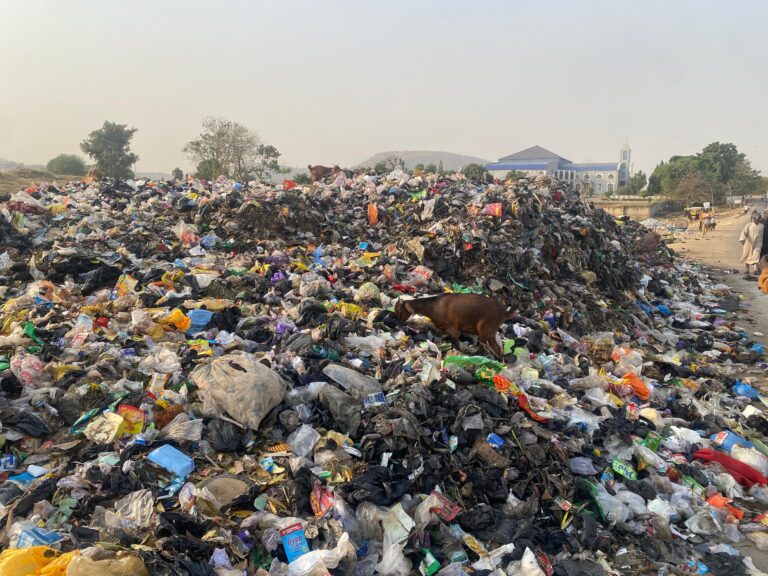
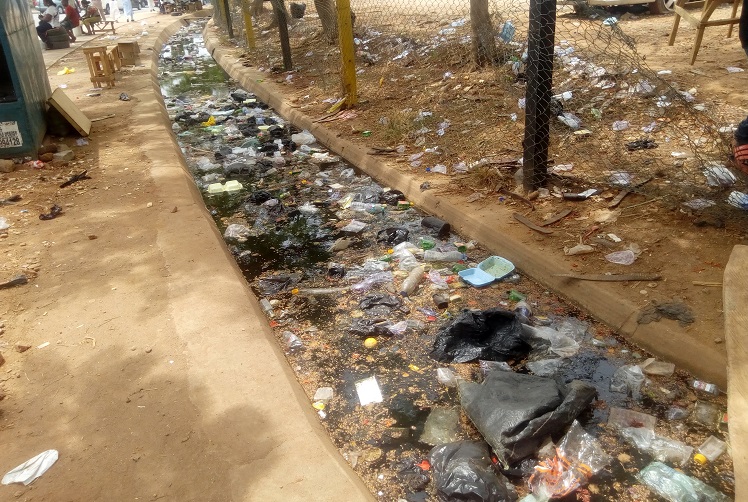
Across communities in Lagos, Port Harcourt, Kano, and Enugu, discarded sachets and plastic bottles have become defining features of the urban landscape. Environmental groups in Lagos and Abuja have repeatedly linked indiscriminate disposal of plastic waste to blocked drainage systems and worsening urban flooding during rainy seasons. 

How other countries are tackling the problem

While Nigeria grapples with rising dependence on packaged water, several African countries are adopting more structured water and waste management reforms.

In Rwanda, strict plastic regulations combined with strong enforcement have significantly reduced visible plastic pollution in urban centres, supported by a centralised waste collection system. In Kenya, investments in water kiosks and community-based water supply systems have expanded access to affordable, safe water in informal settlements, reducing reliance on single-use sachets in some regions. 

Meanwhile, in Ghana, policy discussions are increasingly focused on Extended Producer Responsibility frameworks aimed at shifting waste management responsibility to producers.

Promise Salawu, a Nigerian-based environmental and climate change specialist, describes the country’s plastic pollution crisis as a structural failure of public utilities rather than a defect in consumer behaviour. He said the near-total collapse of municipal piped-water infrastructure across many states has transformed packaged water from a luxury into an absolute survival necessity.

“Most communities, businesses, and public spaces are entirely self-governing when it comes to water procurement,” he said, adding that “even where public tap water exists, pervasive issues with treatment consistency and pipe integrity mean it is often unsafe for domestic use, let alone drinking.”

He said while consumers are frequently blamed for littering, they are acting rationally within a failed system and clarified that without sachet and bottled water, millions would have no access to clean drinking water.

Salawu, who spoke with the ICIR from Plateau State, said an estimated 50 to 60 million water sachets are discarded daily in Nigeria. He said that while completely revitalising municipal water infrastructure is the ultimate, capital-intensive long-term goal, the immediate crisis requires an economic shift. 

“We must stop viewing empty water sachets as garbage and start treating them as a financial commodity through aggressive, subsidised recycling buy-back programs,” he added.

The specialist said an outright ban on plastic packaged water without an immediate, scalable clean water alternative poses severe public health risks, noting that Nigeria can look to other developing nations that have successfully deployed market incentives and circular economy models to manage plastic waste without threatening water security. 

“In Accra, academic and market feasibility studies have shown a high consumer willingness to participate in a Deposit-Refund System, specifically for sachet water plastic waste management. Private circular economy firms in Ghana, such as Coliba and Trashy Bags, have leveraged these models by establishing buy-back loops where informal scrap dealers collect, segregate, and sell clean sachet rubbers directly to domestic recyclers.”

Salawu said Kenya implemented one of the world’s strictest single-use plastic bag bans under Gazette Notice No. 2356, enforcing heavy fines and jail sentences for non-compliance. “A key driver of the policy’s survival was the strategic inclusion of exemptions for primary industrial packaging, medical waste, and critical food packaging, allowing essential supply chains to function while eliminating secondary carrier bags.”

He suggested that governments can reduce plastic pollution without increasing costs for low-income consumers by using the existing Extended Producer Responsibility (EPR) framework to require manufacturers and distributors of sachet water packaging to contribute to waste management and recycling efforts.
The specialist also urged Nigeria to adopt a decoupled approach by banning non-essential single-use plastics first, while exempting and heavily recycling water sachets during its long-term municipal water transition, saying managing plastic waste requires a shared-responsibility model linking the private sector, consumers, and government, though producers must bear the heavy economic weight.

World Environment Day: UN advocates protection of forest, land

0

UNITED Nations (UN) Secretary General Antonio Guterres has called for protection of forests, land, and seas to  ensure the conservation and restoration of terrestrial ecosystems.

Guterres made the call in his message to mark the 2026 World Environment Day, globally marked on June 5.

The global event is marked this year with the theme, “Land Restoration, Desertification and Drought Resilience.”

He, therefore, urged countries to help communities adapt to the devastating impacts of drought and desertification, which according to him, “is already here.”

“And it means fulfilling climate finance promises to developing countries – to save lives, protect livelihoods, and strengthen economies. This is the moment to act – for our environment and for our future,’’ he said.

According to him, in this World Environment Day, warning signals are everywhere. Guterres said the past eleven years had been the eleven hottest on record.

“And the damage goes far beyond rising temperatures – from polluted air to degraded land, collapsing ecosystems, and vanishing biodiversity. Harming health, destroying homes and deepening hunger.

“The world is heading for a temporary overshoot above 1.5 degrees. Every fraction of a degree brings greater harm – especially to the most vulnerable,’’ he said.

The UN chief emphasised the need to keep the world temperature within the normal 1.5 degrees.

“Our task is to make that overshoot as small, as short, and as safe as possible, and rapidly bring temperatures back down.

“That means slashing emissions and accelerating a just transition away from fossil fuels towards renewables as the only sustainable path to lower costs and to real energy security.

“Cutting methane, one of the fastest, is also one of the cheapest ways to limit near-term warming,” he said. (NAN)

Police arrest suspect behind fake Tinubu AI audio, says Presidency

1

THE Presidency has announced the arrest of a suspect allegedly responsible for creating and circulating a fake audio clip falsely presented as the voice of President Bola Tinubu.

Special Adviser to the President on Information and Strategy, Bayo Onanuga, disclosed the development on Thursday, June 4, in a statement.

“The IGP crack team has arrested Ifechukwu Dennis who originated the fake voice that he passed on to his gullible targets as President Tinubu’s voice. Dennis was arrested in Benin,” Onanuga stated.

The arrest followed a controversy that erupted last week over a manipulated audio recording circulated on social media and falsely attributed to the president.

The suspect had allegedly created and circulated the audio clip, which featured an AI-generated voice resembling Tinubu’s and contained remarks on insecurity in the South-East, opposition parties, World Bank borrowing, and the 2027 general election.

The recording gained widespread attention after some social media users, including Onanuga, wrongly attributed it to a video posted by social media commentator Martins Otse, popularly known as VeryDarkMan (VDM).

Reacting to the viral clip on May 28, Onanuga accused VDM of disseminating fake audio and called for his prosecution.

“This VDM needs to face the weight of the law for being the conveyor and disseminator of a fake audio of President Tinubu. This is a clear case of an egregious abuse of the social media platform,” Onanuga wrote on his verified X account.

However, findings by FactCheckHub later showed that the controversial audio was not part of VDM’s original video.

The fact-checking organisation found that the manipulated clip originated from an Instagram video posted by VDM on May 26 while reacting to comments made by content creator and philanthropist Mitchell “King Mitchy” Mukoro.

In the original footage, VDM had played an old campaign video of Tinubu speaking about electricity and governance ahead of the 2023 presidential election.

According to FactCheckHub, an unidentified individual subsequently extracted portions of the video and inserted a fabricated voice recording resembling the president’s voice before circulating the edited version online.

The manipulated clip retained the opening segment of VDM’s original video before switching to the fake audio, creating the false impression that the activist had shared or endorsed the recording.

VDM subsequently dismissed any connection to the audio and criticised the Presidency for accusing him without verifying its source.

His lawyers, Deji Adeyanju & Partners, also faulted the Presidency’s verification process and urged security agencies to investigate those responsible for creating and circulating the doctored recording.

In a similar development, Onanuga on Thursday announced the arrest of another social media user accused of making what he described as an alarming post about security in Abuja.

“The police have also arrested this Nigerian who made an alarming post about Abuja’s security, spreading fear among citizens. By arresting him, the police have sent the clear message that reckless users of the social media won’t go scot free,” the presidential aide stated.

Soldiers, others block Aso Villa as protesters demand Tinubu’s resignation over insecurity

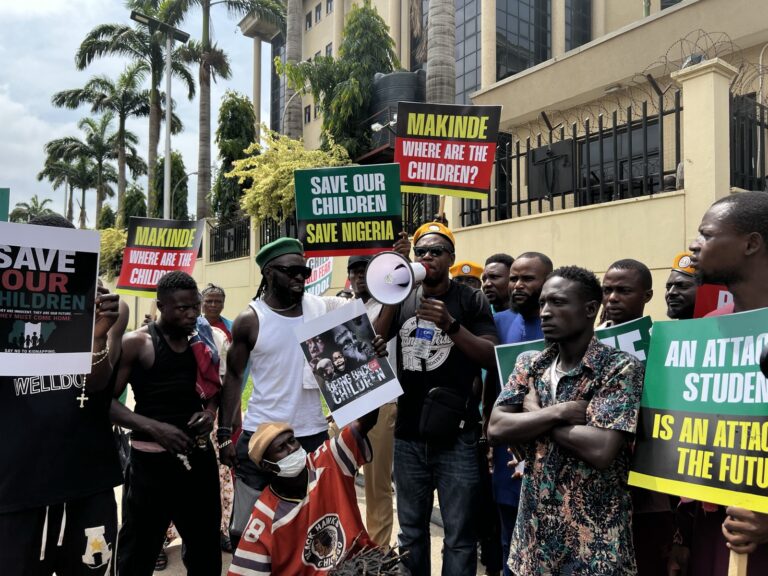
SCORES of protesters on Thursday, June 4, converged on Abuja to demand the immediate rescue of abducted schoolchildren, teachers, and other Nigerians in Oyo State and across the country.

They also called on President Bola Tinubu to resign over worsening insecurity in the nation.

The protest, organised by the Take It Back Movement and led by human rights activist Omoyele Sowore, commenced about 10am around the Federal High Court in Abuja amid a heavy deployment of security personnel.

Earlier in the day, security operatives mounted a strong presence around Eagle Square, the Federal Ministry of Justice, and adjoining roads. Armoured vehicles were stationed at strategic locations, while movement was partially restricted in parts of the city.

Protesters carrying placards bearing inscriptions such as “Protect Our Children,” “Education Not Abduction,” “Enough Is Enough,” and “Tinubu Must Go” accused the Federal Government of failing to protect citizens from escalating insecurity.

At the Federal High Court, demonstrators chanted anti-government slogans and called on the president to either secure the release of abducted pupils or step down from office.

Tensions briefly flared when police officers attempted to halt the procession. Protesters confronted the officers, arguing that the demonstration was also in defence of security personnel who had been killed due to the government’s inability to tackle insecurity.

While addressing the press, Sowore accused the government of prioritising the suppression of dissents instead of protecting citizens.

“Our governments have no interest in protecting you (Nigerians). Instead, they engage in frivolities, including arresting and charging people for things they say on Facebook,” he said.

He added that the protest was intended to compel the government to secure the release of the abducted children.

“The struggle today is to force Tinubu to free those kids or resign,” Sowore told The ICIR.

He further argued that the demonstration was also in the interest of security personnel.

“This struggle also involves the right of these soldiers and policemen to also live with dignity in this country, and that is why also fight for them. But the fact that we fight for them doesn’t mean we cannot march against them if they misbehave,” he said, referring to soldiers and police officers blocking the protesters.

As the protesters attempted to move towards the Presidential Villa, security operatives blocked them at the Federal Secretariat. Soldiers were also stationed at strategic points to prevent the demonstrators from proceeding to Aso Villa.

The protesters accused the Federal Government of deploying state resources to silence dissents rather than focusing on rescuing abducted victims and addressing insecurity.

As of the time of filing this report, security personnel maintained their positions around key government facilities, while the demonstrators continued their protest under close surveillance.

Background

The protest comes amid growing public outrage over the abduction of pupils and teachers from schools in Oyo and Borno states, and renewed concerns about insecurity in Nigerian schools.

The latest wave of anger followed the May 15, 2026, attack on three schools in Oriire Local Government Area of Oyo State — Community Grammar School, Baptist Nursery and Primary School, and L.A. Primary School — where armed men abducted dozens of pupils and teachers and killed a teacher during the operation.

Eyewitnesses said the attackers arrived on motorcycles, some dressed in military-style uniforms, before simultaneously invading the schools shortly after 9 a.m. They reportedly fired shots to disperse pupils and staff before rounding up victims and taking them away through nearby forest routes.

The Oyo State Governor Seyi Makinde later confirmed that dozens of pupils and several teachers were abducted, while one teacher was killed. A viral video also showed another teacher beheaded by the kidnappers.

The attack sparked protests by parents, residents and civil society groups in Oyo State, particularly in Ibadan and Ogbomoso, where demonstrators demanded urgent government action to secure the release of the victims and improve security around schools.

It also prompted the Nigeria Union of Teachers (NUT) to direct teachers in Oyo State to withdraw their services. The union subsequently organised a nationwide solidarity protest across the 36 states and the Federal Capital Territory (FCT) on June 2.

Speaking during the protest in Abuja, the FCT Chairman of the NUT, Abdullahi Shafa, said the action was meant to express the union’s anger over the killing of a teacher and the abduction of pupils and staff.

He described the killing of the teacher as “touching, horrifying and devastating” and warned that such attacks were creating fear among teachers and threatening the country’s education system.