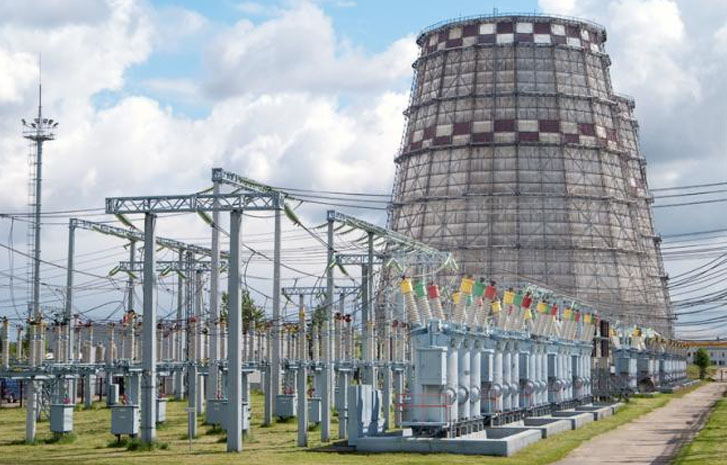
THE Nigerian Electricity Regulatory Commission (NERC)’s failure to unbundle the Transmission Company of Nigeria (TCN) has increased the risk of collapse of the electricity grid, findings by the ICIR have shown.
Presently, the TCN performs the dual role of a market and a systems operator, which does not allow for proper checks and balances. It also does not give room for appropriating sanctions on distribution companies rejecting load transmission. Findings have shown that load rejection puts intense pressure on grid capacity, causing persistent grid collapses. More so, the collapses have seen the country thrown into avoidable darkness, while jeopardising several economic activities.
“The issue of unbundling of the TCN is NERC’s responsibility as prescribed by the Act. We are currently losing a lot without unbundling the TCN. The day you open up TCN for proper unbundling, you would solve the problem of dilapidated infrastructure as people would build their own independent transmission. Investors would come in and build their own transmission,” said a Power Sector Governance Expert Chuks Nwani.
He noted that the second consequence of the failure of unbundling was that the system operator and market operator were not yet functioning independently to ensure proper monitoring. He argued that no one was sanctioning any infraction since the TCN performed both functions, albeit not independently.
“This not good for the system, as you could see the distribution companies trade blames with the TCN once there’s a grid collapse issue. I know that discussions are currently going on for the loan for the network improvement of the TCN at the CBN. I know that discussions are currently going on, but not yet concluded on that.”
The NERC unfolded plans to unbundle the TCN in 2020, a move that was described by analysts as a positive step towards improving the power sector post- privatisation through a system that defines separate roles for the market operator and the system operator independently.
The slow pace of the TCN unbundling, however, has kept energy consumers craving almost endlessly for an efficiently-run power sector market devoid of persistent grid collapse. It has also discouraged investors from the transmission arm of the power sector.
Most notably, the TCN manages the electricity transmission network in the country and is fully owned and operated by the government.
It is one of the 18 companies that was unbundled from the defunct Power Holding Company of Nigeria(PHCN). The TCN is responsible for evacuating electric power generated by the electricity generating companies(GENCOS) and wheeling it to distribution companies (DISCOS).
In 2019 alone, for instance, the national electricity grid recorded 11 collapses , causing power failures across the country with its corresponding effect on socio-economic activities. Also in 2020, the national grid recorded collapses in January and May. The national grid also recorded partial collapse in February 2021 .
“The main challenge for the Nigerian government in making TCN efficient is how it can allow the corporation to be a fully regulated entity,” a former Chairman of the Nigerian Electricity Regulatory Commission Sam Amadi told The ICIR.
“It continues to treat TCN as a parastatal or agency of the Ministry of Power. No, it is not. At a point, I had to force government to put an independent director in line with NERC’s fit and proper regulations. At the end, instead of an independent professional, government put a former governor as an independent director, thereby destroying the essence of independent directorship.”
Energy analysts are, however, optimistic that the gradual unbundling of the TCN would address key problems in the power sector, stressing that structural reform involving the separation of core functions of power utilities would drive efficiency in the privatised power sector market.
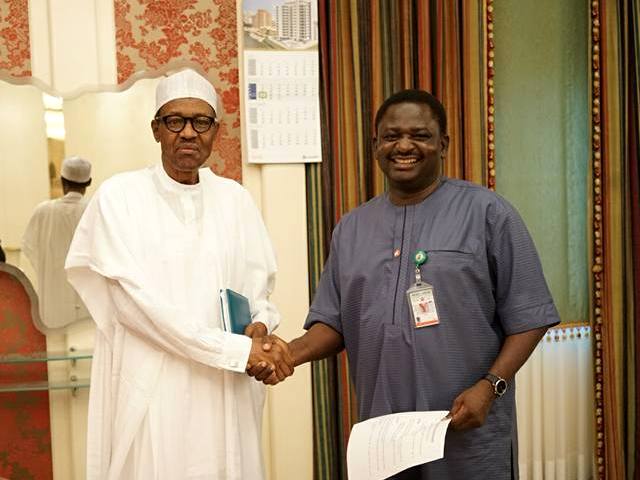
PRESIDENTIAL Spokesperson Femi Adesina has taken a swipe at religious and political leaders whom he accused of passing a vote of no confidence on President Muhammadu Buhari.
Adesina said this in an opinion article titled ‘They should let us breathe”.
“The disgruntled, caterwauling religious and political leaders are working towards a vote of no confidence in the President. After that, what next,” he wrote.
According to him, the State Security Service has indicated support for a united, indivisible Nigeria, stressing that the current government can only be changed through the electoral process.
He added that the military has equally said it is committed to the present administration and democratic institutions in the land.
“The Armed Forces in partnership with other security agencies are working assiduously to ameliorate the challenges. Nigeria will know peace again,” Adesina stated.
He urged the religious and political leaders to take the same position as the Army and the SSS instead of involving in ‘shenanigans to pass yeye votes of no confidence’.
To Adesina, the president was doing his ‘level best’ for the country.
Though he admitted the security challenges were troubling and daunting, despite president’s effort; he insisted they were not insurmountable.
Buhari was elected president in 2015 on the promise to fight corruption and insecurity.
Six years after, Nigeria still faces significant security challenges ranging from terrorism, banditry communal, ethnic clashes and others.
Also, corruption is rife in public office involving several appointees of the president.
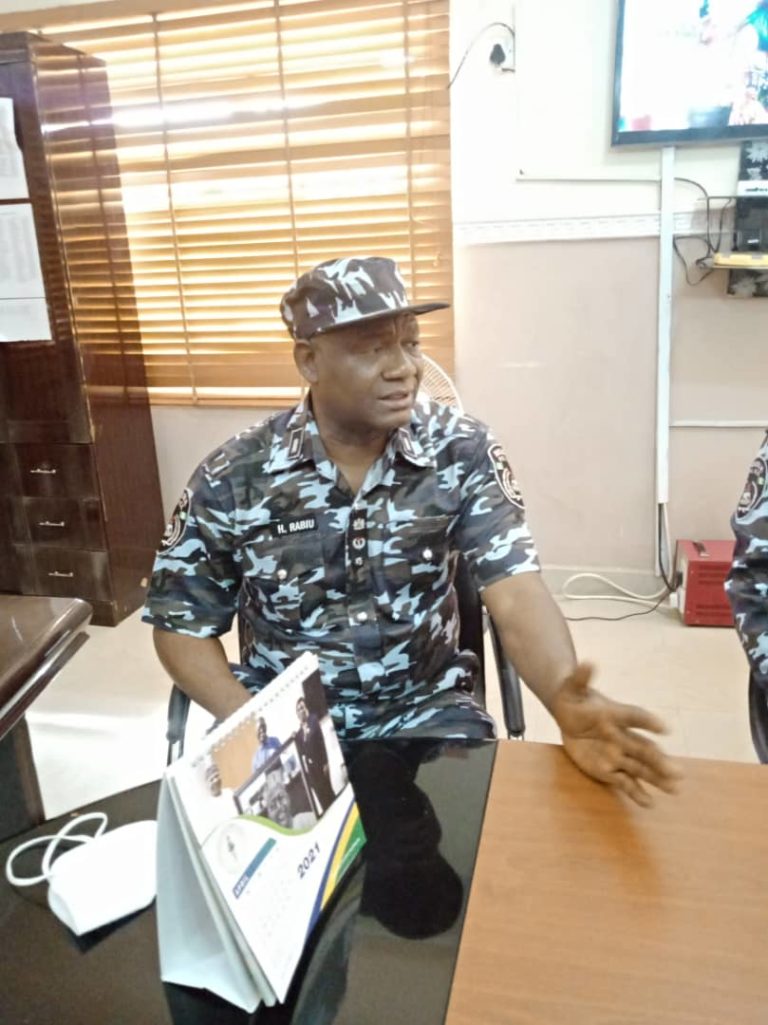
HUSSAINI Rabi’u has assumed duty as the 30th commissioner of Police in Zamfara State.
This announcement was made in a press statement released on Friday, May 7, by Zamfara Police Spokesperson Mohammed Shehu.
“The Zamfara State police command wishes to inform members of the general public that CP Hussaini Rabi’u psc, an indigene of Niger State has assumed duty on 6th May, 2021 as the 30th Commissioner of Police in Zamfara State,” it read.
According to the statement, the new Police boss was born on the 26th March, 1962, in Niger State, where he had both his primary and secondary education.
He graduated with a Bachelors degree in Education in 1987 from the University of Sokoto, and had his National Youth Service Corps (NYSC) in Oyo State the following year.
The commissioner joined the Nigerian Police Force on the 3rd of March, 1990, and has worked in several parts of the country since then.
A two-time deputy commissioner of Police, Rabi’u was promoted to the rank of commissioner of Police in the Imo State before his transfer to the Force Headquarters, Abuja.
“The new Commissioner of Police in his introductory speech to the Strategic and Tactical Commanders reiterated his determination and commitment to enhance robust policing to actualize the transformation and repositioning Agenda of the Inspector General of Police, IGP Usman Alkali Baba.
“The new CP therefore seeks cooperation, collaboration and partnership from members of the public by giving useful and timely information to enable the command rid the state of all forms of criminality,” it further read.
A ‘large’ number of prominent Nigerians and institutions alleged to be involved in financing terrorism in the country are being profiled for prosecution.
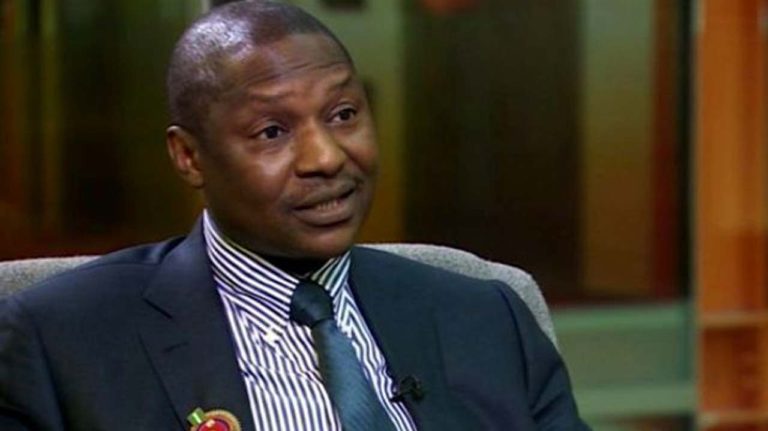
Minister of Justice and Attorney General of the Federation (AGF) Abubakar Malami disclosed this on May 7 while addressing journalists at the Presidential Villa in Abuja.
The minister did not name the concerned high profile Nigerians, although he noted that there were reasonable grounds to suspect that they were sponsoring terror activities in the country.
Also, Malami did not specify the number of individuals involved, but he stated that “a lot of Nigerians, high profile, institutional and otherwise, are involved in terrorism financing and they are being profiled for prosecution.”
Recently, a number of Nigerians were convicted for financing terrorism in the United Arab Emirates (UAE).
Also, there were reports that some bureau de change operators in Nigeria were arrested for their alleged role in financing terrorism.
Malami linked the discovery of the involvement of the unnamed ‘high profile’ Nigerians in terror financing to the UAE convictions.
“Sometimes back, there were certain convictions of Nigerians allegedly involved in terrorism financing in the United Arab Emirates (UAE). That gave rise to wider and far-reaching investigations in Nigeria and I am happy to report that arriving from the wider coverage investigation that has been conducted in Nigeria, a number of people, both institutional and otherwise, were found to be culpable,” he said.
“Reasonable grounds for suspicion of terrorism financing have been established, or perhaps have been proven to be in existence in respect of the transactions of certain higher profile individuals and businessmen across the country,” the minister added.
Investigations into the matter have reached an advanced stage, according to Malami.
The Nigerian government is initiating processes for the planned prosecutions, Malami further disclosed.
The minister was asked to state the number of people that had been arrested as part of the investigations.
He said, “As to the number, investigation is ongoing and it has to be conclusive before one can arrive at a certain number, but one thing I can tell you is, it is a large number and they are being profiled for prosecution.”
But he explained that he would not be able to provide the exact number of persons involved because the profiling and investigation had not been concluded.
The AGF vowed that “nobody would be spared, and no stone left unturned,” in the campaign against terror financiers.
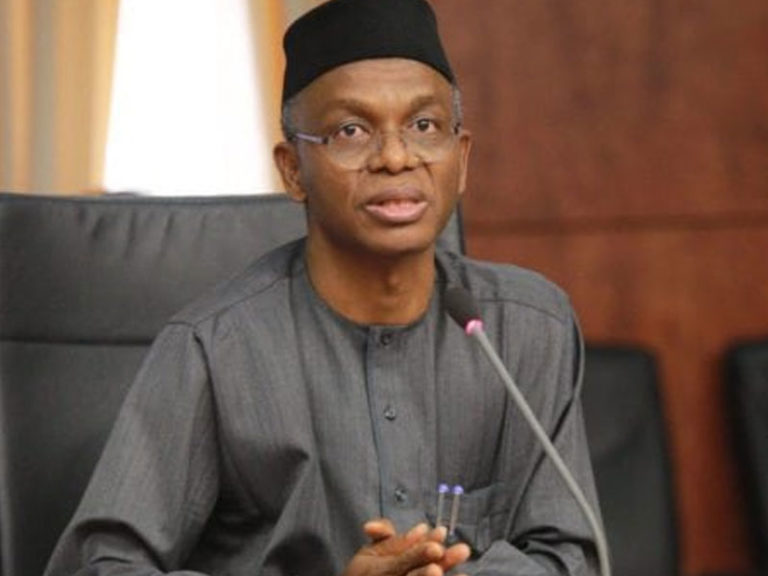
KADUNA State Governor Nasir El-Rufai has said that the Fulani man never forgets and will always take revenge whenever he suffers injustice.
El-Rufai stated this at a webinar organised by the Africa Leadership Group on Thursday.
He was asked to clarify a tweet he made in 2012 where he had said, “Anyone, soldier or not, that kills the Fulani, takes a loan repayable one day no matter how long it takes.”
El-Rufai had been asked why he made the comment and if the Igbo would be justified to take revenge on other Nigerians that killed them during the Biafran War.
Reacting to a question of whether it was right for the Igbo man to avenge the death of his kinsmen killed during the Nigerian Civil War, the governor said it would be different if a Fulani man died in the war. He added that it would also not be an issue if the Fulani man died of a crime he was convicted of.
“If a Fulani man dies in war, it is different. If a Fulani man is arrested by the authorities and convicted, it is not an issue. What the Fulani never forgets is when he is innocently targeted and killed and the authorities do nothing. He will never forget and he will come back for revenge. This is it.
“So, it is better to understand the context of what I tweeted which had to do with an issue in Plateau State in 2012. I hope you get the context. So, it is not that Fulani will never forget. Anyone that goes through pain and sorrow either forgets or doesn’t forget, but when it is extrajudicial, when it is extra-official, the attitude is completely different.
“This is the context in which Fulani never forgets. It is not in every context. As I said, I lost relations during the war. It doesn’t mean I still hold a grudge. We’ve moved past that.”
Students can stand as collateral damage
The governor said when 29 students of the Federal College of Forestry Mechanisation, Afaka, Kaduna State, were abducted, the plan was to attack and kill the bandits even if it meant some students dying in the process.
El-Rufai added that Kaduna was currently at war and such would only be considered as collateral damage, a price he would be willing to pay instead of paying ransom.
The governor, however, said before this could be done, the bandits hurriedly changed location which led to the students spending over a month in captivity.
“Two days after the abduction of the Afaka young people, I was assured by the Air Force and the Army that they knew where the kidnappers were with the students and they had encircled (them).
“We were going to attack them. We would lose a few students but we would kill all the bandits and we would recover some of the students. That was our plan. That was the plan of the Air Force and the Army… But they slipped through the cordon of the Army. That is why they were not attacked.
“We know it is risky, we know in the process we may lose some of the abductees, but it is a price we have to pay. This is war, there will always be collateral damage in war and we will rather do that than pay money because paying money has not solved the problem anywhere in the world.”
RETIRED General Olabode George has described the presidential aspiration of the All Progressives Congress (APC) leader Bola Ahmed Tinubu as an insult to Nigerians committed to national development.
George said this at an interview with Arise TV on Friday, stating that the Alpha Beta company owned by Tinubu should be investigated by the Economic and Financial Crimes Commission (EFCC) as a matter of urgency.
“To me, it’s an insult to the civilised people of this country that he wants to run this country,” he said.
He alleged that Lagos State government had set up laws prohibiting the investigation of Tinubu, a situation he described as a mess.
George called on the head of the EFCC to take on the investigation for posterity’s sake, saying that this could serve as the turning point for Nigeria.
The retired general vowed to renounce his Nigerian citizenship if Tinubu was given the opportunity to become president.
“If by whatever yardstick he becomes the head of state, I will cease to be a Nigerian and I am not joking,” he said.
Speaking on the state of the country, George stressed that the system was not working and attributed this to the centralisation of power in the presidency.
He expressed concerns that the military involvement in the security issues of the country had not improved the situation, and urged the government to explore all options regardless of political differences.
He advised the next president of the country to devolve powers to all the states, adding that the present structure was breeding hate among Nigerians.
Speculations have been on-going about Tinubu’s presidential ambition in 2023, despite the absence of an official declaration of interest.
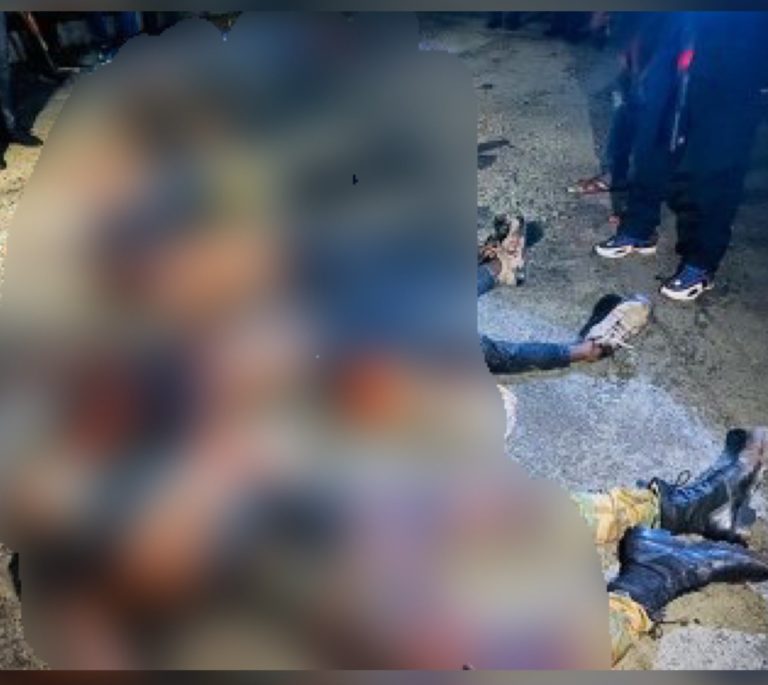
The Nigerian Army said 11 members of the Eastern Security Network (ESN) affiliated with the Indigenous People of Biafra (IPOB) were killed during a joint operation with the Nigerian Police Force and the Navy in Orlu, Imo State.
This was contained in a statement signed by Army Spokesperson Muhammed Yerima on Thursday, stating that the ESN ‘gang’ had arrived Orlu with the ‘intention to attack a Police command.’
According to Yerima, during the operation, four AK47, one G3 and one Pump Action Rifles as well as a Berretta Pistol, charms and assorted ammunition were recovered from the ESN members.
He noted that the assailants, who had been on the radar of the Joint Technical Intelligence Team, came from a forest camp in Ideato North LGA of Imo State from where they mobilised and planned the attack.
“The attackers were resisted by vigilant police personnel at the Area Command and were completely obliterated when a reinforcement team of the Nigerian Army and Nigerian Air Force arrived the scene,” the statement read.
Yerima further stated that the seven operational vehicles used for the attack were demobilised and as such the remaining ESN members escaped on foot with fatal injuries, but there were no casualties on the side of the security forces.
The Nigerian Army said they remained committed to a united Nigeria that was safe for all law-abiding citizens and would continue to support the Police in maintaining internal security.
The statement also read that members of the public were enjoined to support the security forces with useful and timely information that would help eliminate the security threats in their communities.
AT a newspaper stand at the Federal Secretariat, Abuja, on May 5, a number of civil servants huddled over copies of national dailies displayed by a vendor. The newspapers had screaming headlines on their cover pages.
Most of the headlines were about the prevailing state of insecurity in the country – kidnapping, terrorism, insurgency, herdsmen attacks, banditry, armed robbery, cultism and other violent criminal acts. But insecurity was not what made the gathered civil servants peruse the newspaper front pages with alarm and dread.
A particular news item, which appeared on the cover of most of the newspapers in different forms, was the cause for concern. According to various reports, the Nigerian government was planning to cut workers’ salaries as part of measures to reduce personnel cost, and ultimately bring down the high cost of governance in Nigeria.
Workers checking out newspaper headlines at a vendor’s stand at the Federal Secretariat in Abuja
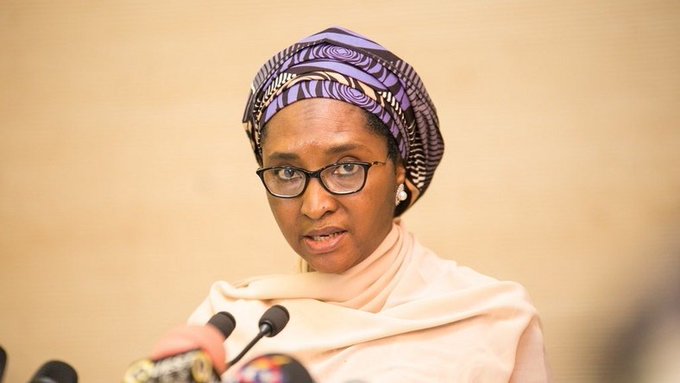
The reports emanated from a presentation by Minister of Finance Zainab Ahmed at a policy dialogue on ‘Corruption and cost of governance in Nigeria,’ organised by the Independent Corrupt Practices and other Related Offences Commission (ICPC) the previous day, May 4.
Noting that the Nigerian government had initiated a number of programmes aimed at cutting the cost of governance in the face of dwindling revenue, Ahmed disclosed that President Muhammadu Buhari had directed the Salaries and Wages Committee to review the payroll of public servants.
“Mr. President has directed that the salaries committee that I chair, work together with the head of service and other members of the committee to review the government pay rolls in terms of stepping down on cost,” the minister said.
Considering that the planned review was informed by revenue challenges, it is expected that the development will lead to slash of workers’ salaries.
A few yards away from the gathering at the newsstand, Joseph Mancha, a Level Seven officer in the Federal Ministry of Education, was reading a report on the planned salary cut in a copy of a national daily which he clutched in his hands. He had just bought the newspaper from the vendor.
Taking a break from reading the newspaper, Mancha told The ICIR‘s correspondent, who was at the Federal Secretariat, that he was worried about the government’s plan to reduce salaries.
Mancha, who said he was still waiting for his first promotion years after joining the federal civil service, said his salary was not enough to make ends meet.
Reducing the salary would amount to a death sentence, he observed.
Speaking with The ICIR, Mancha said, “The salary is very small as it is – you can’t do anything meaningful with it and now we are hearing that government wants to reduce salaries. If that is to happen, how will I survive? I am very worried.”
A civil servant on Grade Level Seven in any of the core ministries that make up the federal public service earns about N50,000 monthly. However, the package for a government worker on the same level varies in some parastatals.
Disparities in wages in the federal public service was another issue the minister of finance said the government intended to address in order to bring down personnel cost.
The minister also said there were plans to merge ministries and agencies undertaking similar functions.
Mancha expressed fears that the planned merger could lead to downsizing of the workforce.
“If the government decides to merge agencies, it could lead to downsizing and the problem is those who retired from service are finding it difficult to receive their severance benefits. So, what will now happen to people who will leave the service if the government decides to downsize?” he wondered.
Mancha’s concerns were shared by a staff member of the Federal Ministry of Communications and Digital Economy, who introduced himself to The ICIR as Sampson. Sampson said he could not give his full name because he was afraid that he could be victimised by the authorities.
In a chat with The ICIR, Sampson said he got hint of the plan by the government to slash workers’ salaries while listening to the radio earlier that morning.
“It is something every government worker should worry about,” he said, noting that he was not able to make ends meet with his current salary.
“I can’t imagine how I will survive if they reduce the little I am getting now. That will be terrible. I wonder whether the people in government are not aware of the state of things in the country,” Sampson said, a worried expression on his face.
Another civil servant, Chika Blessing, said the national minimum wage was nothing to write home about.
She wondered if the reported plan to reduce workers’ salaries would involve a reduction of the minimum wage.
“I heard over the news that the minister of finance said the Federal Government is planning to review workers’ salaries in order to cut personnel cost. I am yet to understand this properly but with the way government keeps on saying that there is no money, it only means that they want to reduce salaries. That shows that instead of making progress, we are moving backwards. It is unfortunate,” Blessing, an administrative officer in one of the ministries located at the Federal Secretariat, said.
Blessing expressed regrets that she had not been able to raise enough money to set up a private business.
“The only way to survive is to have additional income,” she added.
Bashir Usman, a staff member of the National Assembly Service Commission, could not hold back his anger when he spoke about the planned wage cut in an interview with The ICIR.
“The news of the plan by government to reduce salaries came to me as a shock. The news is everywhere – that is the only thing workers are talking about at the moment,” he said.
Usman said the Nigerian authorities were not sincere about reducing the cost of governance.
“If the government is sincere about reducing the cost of governance, then it should cut the cost of maintaining those in the executive and the legislature, especially the National Assembly,” he said.
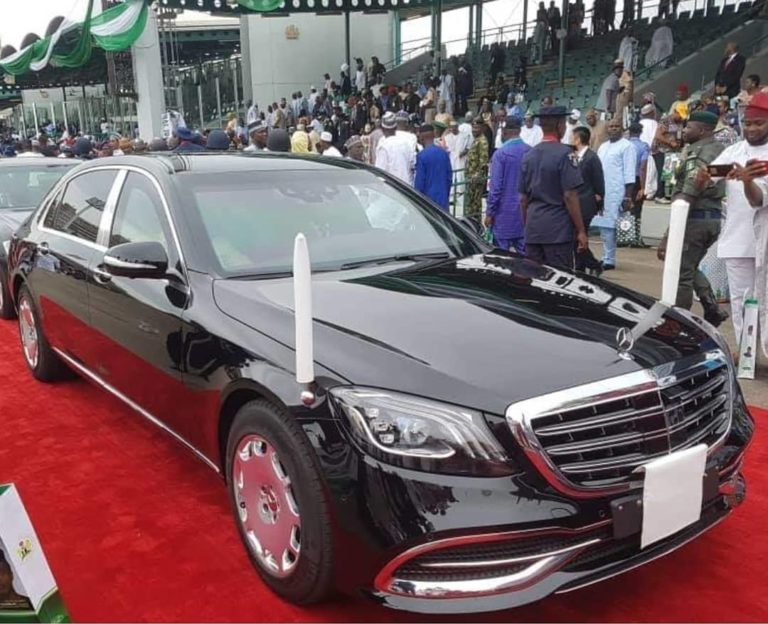
Usman pointed to ‘huge’ sums budgeted for running the Presidential Villa, as well as the allowances enjoyed by the president, vice president, ministers, senators and members of the House of Representatives. Of particular concern to Usman is the large number of expensive vehicles in the convoys of these categories of public office holders.
“So much money is going into the purchase and maintenance of these vehicles in their convoys. The government should cut off all those expenses if it is serious about cutting the cost of governance. It should block all leakages in revenue generation and manage the available resources very well,” Usman said.
Also speaking with The ICIR at the Federal Secretariat in Abuja, Godwin Nwosu said the ‘meagre’ salaries paid to civil servants in the core ministries had nothing to do with high cost of governance in Nigeria.
Godwin Nwosu
“Let them tell us the total wage bill of the government and how much of that is spent on the executive and the National Assembly. You will find out that the total package a senator collects in a month can pay the salaries of more than 100 civil servants in these ministries,” Nwosu said.
With eyes fixed on a headline that read, ‘FG plans to cut workers’ salaries,’ on the cover page of a national daily at the newspaper stand, Monday Akpan, a Level 12 officer in the Ministry of Science and Technology, told The ICIR that the Nigerian government would be condemning workers to a life of penury and destitution if it cut salaries.
“I am very worried, but I don’t want to believe that the government will be that insensitive to the plight of the citizens who are already going through severe hardship,” Akpan said as he bent over the vendor’s stand while reading the displayed newspapers without buying any copy.
Announcing plans to reduce the cost of governance, Finance minister Ahmed had stated that the measures she outlined were targeted at reducing recurrent expenditure, projected to gulp N5.6 trillion, about 41.5 per cent of the N13.5 trillion budgeted by the Nigerian government for the 2021 fiscal year.
Labour unions say no to reduction of workers salaries
The ICIR observed that the planned ‘wage cut’ suggested by the finance minister was already attracting spirited opposition from labour leaders in the public service.
General Secretary of Senior Staff Association of Statutory Corporations and Government Owned Companies (SSASCGOC) Ayo Olorunfemi, in an interview with The ICIR, said government must be ‘joking’ if it was actually thinking of cutting workers’ salaries.
General Secretary Senior Staff Association of Statutory Corporations and Government Owned Companies (SSASCGOC) Ayo Olorunfemi
“The information is just getting to us now, but we believe they (government) are joking. Even though the labour movement in Nigeria today is nothing to write home about, some of us will resist it. I believe it is just wishful thinking on the part of government,” he said.
Stressing that the wages being paid to government workers were not enough, Olorunfemi said the national minimum wage was ‘under negotiated.’
He added, “If they want to reduce salaries, they must call us for discussions and we are not going to discuss reduction of salaries when the salaries we are getting is not enough. We are not getting the salary we are getting now through Buhari’s magnanimity.”
Olorunfemi observed that should the government decide to cut salaries, personnel in institutions such as the military, the police and the State Security Service would all be affected.
“Who is going to allow it? And if you now exempt some people from the reduction, how will you justify that? Does it mean that people would be asked to show the importance of their job?”
Arguing that salaries had nothing to do with the high cost of governance in Nigeria, the labour leader asked, “How much are they giving us as salary compared to what they steal every day?”
Also speaking with The ICIR, President of the Association of Senior Civil Servants of Nigeria (ASCSN) Tommy Okon said it would be ‘insensitive’ for the government to think of reducing workers’ salaries “knowing full well that the N30,000 minimum wage was not enough.”
President Association of Senior Civil Servants of Nigeria Tommy Okon
“But should that be the case, the government should have a rethink,” Okon added, noting that rather than slash workers’ pay, the government should reduce the salaries and other allowances being paid to political officeholders.
He also suggested making members of the National Assembly and state assemblies operate on part-time basis so as to reduce the huge costs associated with maintaining that organ of government.
Noting that there was a need to pump funds into the economy for economic growth, Okon said, “Government at this time should not be thinking of cutting down personnel cost in the public service.”
Asked if the labour union would embark on strike should government went ahead with the plan, he said, “When we get to that point, we will cross it.”
Cost of governance spiralling out of control
In 2019, while unveiling the 2020-2022 Medium Term Expenditure Framework (MTEF) and Fiscal Strategy Paper (FSP), Finance minister Ahmed revealed that there would be a spike in personnel cost (including pensions cost) from N2.45 trillion in 2019 to over N3.4 trillion in 2020 due to the Nigerian government’s decision to create five new ministries. At the time, it was reported that the additional personnel cost arising from the creation of the new ministries was not factored in the implementation of the new minimum wage.
That development highlighted how lack of planning contributes to the high cost of governance in the country.
The disproportionately huge size of recurrent expenditure compared to capital expenditure in annual national budgets illustrates the high cost of governance in Nigeria.
And the need to keep up with the continuous hike in the cost of governance has seen recurrent expenditure taking prominence over capital expenditure in recent national budgets.
In the 70s, capital expenditure accounted for a larger portion of total government expenditure in Nigeria. While recurrent expenditure was put at N3.81 billion in 1977, capital expenditure was N5 billion. In 1980, recurrent expenditure rose to N4.8 billion while capital expenditure more than doubled the amount, at N10.1 billion.
But from 1980, recurrent expenditure assumed a more prominent role. From N36.2 billion in 1990, recurrent expenditure rose to N461.6 billion in 2000, N1.5 trillion in 2007 and N2.63 trillion in 2011. On the other hand, capital expenditure received N24.04 billion in 1990, N239.45 billion in 2000, N759.3 billion in 2007 and N1.9 trillion in 2011.
By 2021, the sum of N5.6 trillion earmarked for recurrent expenditure amounted to more than 40 per cent of the budget of the Nigerian government. Thirty-seven per cent of the budget, N4.8 trillion, was allocated to paying salaries and overheads in the ministries, departments and agencies (MDAs) of the government.
Minister of Finance Zainab Ahmed
On the other hand, an aggregate sum of N3.8 trillion, 29 per cent of the budget estimate, was allocated for capital expenditure.
The sum of N3.124 trillion, 24 per cent of the 2021 budget, was allocated for servicing Nigeria’s debt obligations. The amount represents an increase of N445.5 billion from N2.68 trillion earmarked for debt servicing in 2020.
High cost of governance is forcing the Nigerian government into borrowing money to finance budget deficits, and also to fund capital projects. But the cost of servicing the loans has taken a huge toll on the economy.
Corruption as major factor in high cost of governance in Nigeria
In a report released on May 3, BudgIT, a civic organisation which advocates transparency and accountability in public finance, disclosed that its investigations into the 2021 budget revealed at least 316 duplicated capital projects worth N39.5 billion. One hundred and fifteen of such capital projects occurred in the Federal Ministry of Health.
In addition, BudgIT noted that some MDAs received allocations for capital projects they could not execute. For example, the Federal College of Forestry in Ibadan in Oyo State got N50 million for the construction of street lights in Edo State.
The BudgIT publication also observed that various non-security related government agencies now requested and received funds for ‘security votes,’ which were not accounted for.
“In the 2021 budget, a total of 117 federal agencies received allocations for ‘security votes’ worth N24.3 billion, despite many of these agencies already having allocations for ‘security charges’ to cover each agency’s security needs,” the BudgIT report said.
Chief Executive Officer of BudgIT Gabriel Okeowo said loopholes in the budget often gave room for corruption and theft. According to him, the N4.69 trillion which the Nigerian government planned to borrow to meet its expenditure in 2021 could end up in private pockets if loopholes in the budget were not blocked.
Noting that the ‘staggering’ N3.31 trillion debt servicing burden would wipe out about 41.63 per cent of the N7.99 trillion projected 2021 revenue, Okeowo said the Nigerian government could maximise the ‘little public funds left’ by blocking leakages.
Nigerian public office holders among highest paid in the world
Despite Nigeria’s revenue challenges, the country’s political office holders are reputed to be among the highest paid in the world.
Nigeria is ranked as a ‘lower middle-income country’ by the World Bank.
Nigeria’s president and vice president earn N3.5 millon and N3.03 million as basic salary, per annum, respectively, according to the Revenue Mobilisation Allocation and Fiscwl Commission (RMAFC) records. The RMAFC determines the emoluments of political office holders.
The annual basic salary of political office holders are: minister, N2.02 million; minister of state, N1.95 million; special adviser, N1.94 million; governor, N2.22 million; deputy governor, N2.11 million; and commissioner, N1.33 million.
In addition to the basic salary, the president is entitled to allowances such as hardship allowance – 50 per cent of his salary, about N1.757 million, and consistency allowance – 250 per cent of his salary, which is about N8.79 million.
The president’s gratuity is 300 per cent of his salary, amounting to N10, 544,115, and he is also entitled to a leave allowance of 10 per cent of his salary, as well as a vehicle loan which amounts to 400 per cent of the salary.
The vice president, governors, members of the National Assembly and some other categories of political office holders also receive similar allowances in different amounts.
Also, other regular allowances enjoyed by the president, vice president, the governors and members of the National Assembly include: personal assistant, constituency, vehicle fuelling/maintenance, domestic staff, entertainment, recess, newspaper/periodicals and utilities.
These political office holders are also entitled to house maintenance, security, special assistant, furniture, wardrobe, duty tour, accommodation, estacode and medical allowances.
In January 2020, RMAFC said it had started preliminary work on the review of the remuneration of political office holders. But the exercise has encountered hitches due to lack of funds.
Oronsaye report proffered solutions but recommendations have not been implemented
While the Nigerian government continues to pay lip service to the clear and present need to reduce the cost of governance, a document which offered a blueprint on ways to actualise the objective is gathering dust.
The Presidential Committee on Restructuring and Rationalisation of Federal Government Parastatals, Commissions and Agencies, chaired by a former Head of the Civil Service of the Federation Steve Oronsaye was set up by former President Goodluck Jonathan to essentially reduce the cost of governance, eliminate duplication of functions in government departments and agencies and reasonably devolve governmental powers.
The 800-page report turned in by the committee, which became known as the ‘Oronsaye Report,’ contained far-reaching recommendations that, if implemented, would help to address the high cost of governance in Nigeria.
The committee identified 929 MDAs in the Nigerian government’s budgeting structure, including 541 parastatals, commissions and agencies. It identified 38 agencies to be abolished, and 14 to be reversed to departments in the federal ministry.
Also, the Oronsaye Report recommended a reduction in the number of statutory agencies from 263 to 161, as well as the merger of 52 institutions.
It is unlikely that the Muhammadu Buhari administration would take up the implementation of the Oronsaye Report, but Ahmed suggested that the government was looking in the direction of one of the key recommendations of the report when she disclosed plans to review the number of agencies in terms of their mandates.
Ahmed said the government intended to merge agencies with similar functions.
PRESIDENT Muhammadu Buhari’s former Minister of Women Affairs Aisha Alhassan, also known as Mama Taraba, is dead.
The former governorship candidate of the All Progressives Congress (APC) was said to have died of an undisclosed ailment at a foreign hospital on Friday.
She was part of President Buhari’s first-term cabinet shortly after losing her bid to become the governor of Taraba State to the People Democratic Party’s (PDP) candidate Darius Ishaku in 2015.
Alhassan, however, left the cabinet under controversial circumstances after footage showed her endorsing ex-Vice President Atiku Abubakar ahead of the 2019 general elections.
Her statement was said to have embarrassed the APC who denied her the party’s ticket to re-contest the 2019 governorship election. She later defected to the United Democratic Party (UDP).
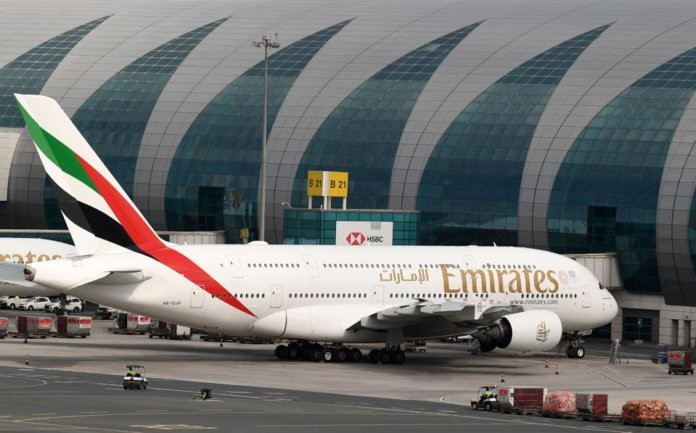
TRAVELLERS have been left stranded with little or no communication as flights between Nigeria and the United Arab Emirates (UAE) remain suspended since March 17 over dispute relating to Covid-19 testing.
The UAE had imposed antigens rapid test on travellers from 58 countries, including Nigeria, but the Minister of Aviation Hadi Sirika said there was no basis for the test as it was devoid of any scientific backing. The Nigerian government thereafter suspended flights between both countries.
On March 24, the UAE rescinded its position but stated it would only allow a maximum of 200 passengers with direct flights from Nigeria, who had negative PCR test certificates conducted 48 hours before boarding over a period of two weeks.
Expectations that the rift would soon be resolved soared after the UAE shifted grounds, but both parties have kept mum about ongoing talks, leaving travellers stranded and frustrated.
Some Nigerians living and working in the UAE came to vacation in Nigeria shortly before the flight ban and have been unable to return to their jobs. Some have also complained about their visas getting expired and called for a quick resolution to the situation.
A Twitter user with the handle @HopeisPotential wrote: “Please help… we are yet to get any update regarding the Nigeria and UAE flight suspension, jobs are at stake, funds have been lost, we need your help. Please end the suspension of flights between the two countries”.
Another user @tayo_temi, expressing her frustration, said: “Do you even realize your silence on the flight ban between the UAE and Nigeria is disastrous for Nigerians home and in UAE?”.
Director-General of Nigeria Civil Aviation Authority Musa Nuhu, while addressing the issue during a press conference on Monday April 26, said extensive deliberations had taken place and both parties had reached a compromise.
Nuhu gave the assurance that an update would be provided within 48 hours.
“The gap has been significantly closed between the position of Nigeria and the United Arab Emirates (UAE). They have met some of our requirements, we’re just waiting for one confirmation. Very shortly, announcement would be made on the outcome, hopefully within 48 hours,” Nuhu said.
However, it has been nearly two weeks since that assurance was given and there has been no additional official communication, leaving the public in the dark.