The Lagos Chamber of Commerce and Industry (LCCI) is seeking effective engagement between small and medium enterprises (SMEs) and regulatory bodies to enhance communication.
This was disclosed by Director –General of the LCCI Muda Yusuf, in a press statement released to The ICIR on Monday. The statement was released after a study was carried out by the chamber and the Centre for International Private Enterprise on business owners and agencies responsible for interfacing with regulatory agents in three cities: Aba, Lagos and Kano.
Yusuf stated that the study focused on the Federal Inland Revenue Services (FIRS) and the National Agency for Food and Drugs Administration and Control (NAFDAC) as strategic regulatory agencies.
The study revealed the need to close the gap between SMEs and officials of the regulatory agencies as this would drive efficacy and regulate all forms of revenue leakages and transparency issues.
The statement noted that the objective of The Executive Order 001, signed by the Federal Government in 2017, was to facilitate the ease of doing business in Nigeria through the promotion of transparency and efficiency in the business environment.
“The Executive Order compelled Federal MDAs to publish a full list of requirements including fees on their website and to ensure that the list is verified and always updated to guide and ease application process for both local and foreign investors/businesses,” it read.
Yusuf stated that internal service complaints structures had been put in place to address cases of service dissatisfaction, and described the use of intermediaries and consultants as pervasive. He added that the cost of procuring services and products from regulatory agencies affected the bottom-line and general performance of the SMEs.
According to the study, however, the management of NAFDAC and FIRS had made commendable efforts to increase transparency in their day regulatory activities. The NAFDAC had designed a three-pronged approach to achieving transparency in conducting regulatory activities with emphasis on understanding and avoiding transactional corruption, the report said.
“Similarly, the study noted that FIRS has put in place a seamless service procurement mechanism for the benefit of its tax payers/customers and to promote efficient service delivery performance as well as improve the ease of doing business,” it read.
Yusuf concluded that diligent implementation of the recommendations would bring about significant improvement in the operating environment for SMEs.
THE Police in Bauchi State have denied infiltration of Boko Haram terrorist group in four local government areas of the state.
This was contained in a statement signed by Bauchi State Police Public Relations Officer Ahmad Wakil on Tuesday over reports that Zaki, Dambam, Darazo, and Gamawa local government areas were under Boko Haram threat.
Wakil said the report attributed to the Bauchi State Secretary to the State Government (SSG) Sabiu Baba after an emergency Security Council meeting in the state on Monday contained an ‘erroneous narrative.’
“We therefore wish to correct that the erroneous narrative being peddled around is not a true account of what transpired at the Security Council meeting, neither is it the reality on ground as being portrayed to reflect the position of the State Government,” Wakil said.
According to the Police, the meeting was convened to forestall the influx of fleeing persons from Gaidam and Kanam, Yobe State, after Boko Haram attacks on the towns.
He added that the SSG only made reference to “a noticeable influx of some suspicious visitors including some criminal elements found to have stolen telecommunication equipment.”
The Police said that five suspected criminals and those who stole Mikano generators from Geidam and were heading for Kano State through Bauchi had been arrested through a joint operation with the military.
“Also, two Suspects Felix Chukwe ‘m’ and Chinedu Uche, all of Imo State origin, were arrested in connection to the crime. The suspects were arrested and the vehicle impounded, investigated and profiled,” the statement read in part.
He added that the Bauchi State Police Command would continue to ensure adequate security of lives and property.
During a media briefing on Monday, Baba had said there were high implications for the four local governments in Bauchi State sharing borders with Boko Haram-infiltrated Geidam community in Yobe State.
“Of course, that will put a lot of strain on our facilities and resources, and considering the kind of movement out of Boko Haram activities, the security implications there are also very high.
“ The meeting today was to discuss the implications of that, identify the security threats and how to contain them from the Bauchi side,” Baba had said.
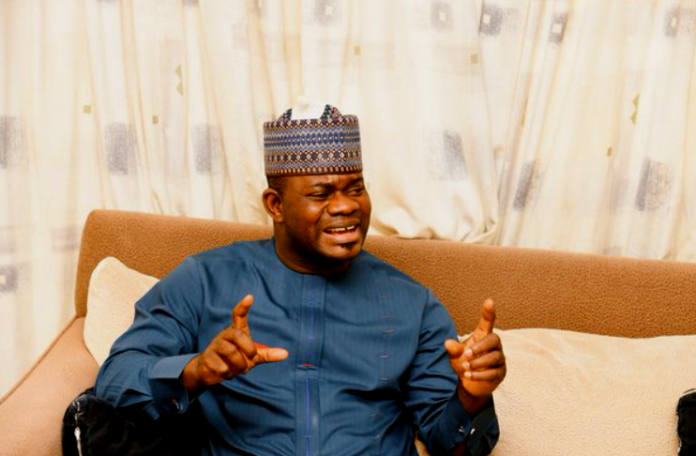
KOGI State Governor Yahaya Bello has questioned data that are not favourable to his party, the All Progressives Congress (APC).
Anchors on Channels Television’s Sunrise Daily, on Tuesday, reminded Bello of grim statistics on inflation, unemployment and poverty, asking him whether those were not an indictment on APC. The governor, who is eyeing the position of president on the platform of APC, responded by saying that he would question the numbers.
He raised integrity questions about how global institutions such as World Data Lab, the International Monetary Fund (IMF) and the World Bank got their data, querying who they interviewed and their methodologies of gathering data. He, however, did not provide better metrics on how to track Nigeria’s performance.
Local institutions like the National Bureau of Statistics (NBS) and global institutions such as the IMF and the World Bank have scientifically- and statistically-proven methodologies of gathering data, some of which include surveys, questionnaires, interviews, documents, focus groups, among others.
World Data Lab’s World Poverty Clock says 105 million Nigerians are extremely poor. The NBS says 33.3 per cent of the population in Nigeria are unemployed, with inflation reaching 18.17 per cent in March, 2021. These did not augur well with the governor.
Bello has a history of questioning proven facts. He has campaigned against COVID-19 and rejected its vaccine, making unfounded claims that it was meant to kill and introduce new diseases into the body.
Bello on the morning programme said he would know what to do to address ineffectiveness and underperformance with any of his cabinet members, especially ministers, if elected president.
He said the president had come with laudable projects that could transform the lives, but those charged with the responsibility of executing those projects had been unable to follow through.
He noted that it would only take sincere leadership at all levels to tackle unemployment, which was mostly responsible for the nation’s insecurity.
He said that the nation must look at the genesis of the problems it was currently going through and begin to fix them from there.
“Bandits and employment, what should be done? Because that is what we should all be looking forward to. What should be done is to ensure sincere leadership at all levels. A lot of problems that are ongoing today are not caused by Nigerians but leaders,” he said.
“Leadership at all levels, and when I say leadership at all levels, I do not just mean by federal government or state, but those in authorities like people in their private offices that our families look up to. We are all in leadership positions -the Imams, traditional rulers. We should all come out and be sincere with Nigerians.
“For instance, we have a steel complex here in Kogi that could take a number of able-bodied men and youths off the streets, if developed. We have the inland ports in the state that could provide jobs for many, but these have left undeveloped due to corruption. Where are the monies budgeted for the dredging of the waters right from the time of President Yaradua? Where are they?” he asked.
Bello blamed the country’s unemployment data and insecurity ravaging various parts of the country on insincerity demonstrated by both past and present political office holders.
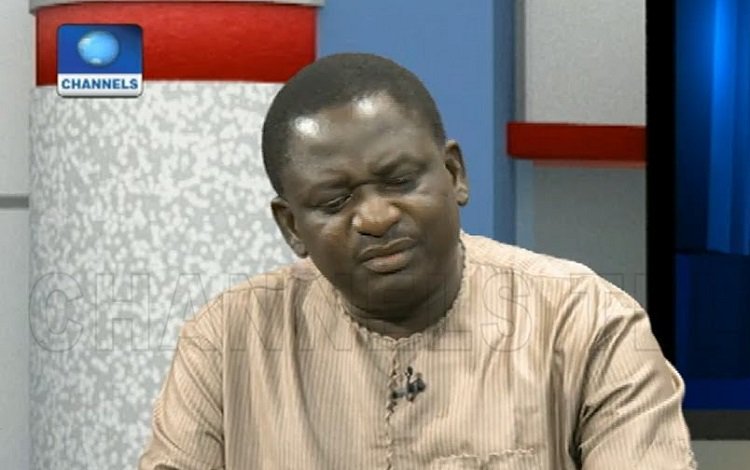
SPECIAL Adviser to the President on Media and Publicity Femi Adesina has alleged that some ‘disgruntled religious and past political leaders’ are working with ‘external forces’ to overthrow the administration of President Muhammadu Buhari.
Adesina said this in a statement issued on Tuesday. He said the Presidency had ‘unimpeachable evidence’ of a plan to recruit leaders of some ethnic groups and politicians to pass a vote of no confidence on Buhari and “throw the land into further turmoil.”
He said that ‘agent provocateurs’ were planning to cause havoc, stressing that the Presidency’s statement was a follow-up to a warning by the State Security Service (SSS) that plans were on to “throw the country into anarchy.”
“Championed by some disgruntled religious and past political leaders, the intention is to eventually throw the country into a tailspin, which would compel a forceful and undemocratic change of leadership,” the statement read.
“Further unimpeachable evidence shows that these disruptive elements are now recruiting the leadership of some ethnic groups and politicians round the country, with the intention of convening some sort of conference, where a vote of no confidence would be passed on the president, thus throwing the land into further turmoil.
“The agent provocateurs hope to achieve through artifice and sleight of hands, what they failed to do through the ballot box in the 2019 elections.
“Nigerians have opted for democratic rule, and the only accepted way to change a democratically elected government is through elections, which hold at prescribed times in the country. Any other way is patently illegal, and even treasonable. Of course, such would attract the necessary consequences.
“These discredited individuals and groups are also in cahoots with external forces to cause maximum damage in their own country. But the presidency, already vested with mandate and authority by Nigerians till 2023, pledges to keep the country together, even if some unruly feathers would be ruffled in the process.”
The SSS had, on Sunday, warned ‘misguided elements’ threatening Nigeria’s unity and peaceful co-existence to desist from doing so.
AS insecurity heightens in Niger State, families of kidnapped victims are taking out loans to pay for ransoms in the north-central state.
At the Internally Displaced Persons (IDP) camp at Central Primary School, Sarkin Pawa, Munya Local Government Area, a middle-aged woman Asabe Mathew narrated that she sold everything she owned to pay for the release of her daughter and son.
Yet, she could not raise enough money, prompting her to borrow to pay the ransom to bandits holding the state to ransom.
“They have finished me, as I am now,” she said, as her eyes glistened with tears. “I have sold all my farm produce and I have loans to pay because I had to borrow money to pay the ransom for my children abducted by bandits. Now I have absolutely nothing left.”
Bandits have captured some villages in Niger State, hoisting their flags, according to Governor Abubakar Bello. Notable among the villages held to ransom is Kaure in Shiroro Local Government of the state. The government of Niger State is helpless as bandits and criminals overrun the state, which is close to the nation’s capital, Abuja.
“My daughter was also kidnapped. But that happened before they kidnapped my son. We also had to pay a ransom to rescue her. Right now, I don’t have anything left. It has not been easy for us in Munya,” Matthew said
But she was not alone in her plight. Mohammed Isah currently has two of his sons in the den of the bandits while he currently stays at the IDP camp at the Central Primary School, Sarkin Pawa. His two sons were taken in a recent attack on his Dangunu community in Munya Local Government Area.
“Yesterday, before I ran to this camp, two of my sons were taken on motorcycles when the thieves came to our village. They have not been released because we do not have money to pay for their release. What they asked for is in millions. Where will I get it from? I cannot go back to the village to take my farm produce and sell because that will be equal to dying,” Isah said.
The Vice-Chairman of Munya Local Government Council Luka Garba is not left out of the ordeal. Two months ago, he lost his younger brother to bandits. According to him, his younger brother was a member of the local vigilantes in Kachu village and was killed during an ambush.
Garba said that the people in the communities were currently running away from their homes and they were either entering Sarkin Pawa, Gwada and Kuta or running to Minna, Niger State capital, for safety.
“At Kuchi two weeks ago, bandits killed three mobile policemen. They slaughtered one of them with a knife. That is why security has moved from Kuchi to Sarkin Pawa. Even yesterday, they killed one man called Jacob in Zazzagi, then they went to the military camp and burnt the army vehicles and properties,” Garba said.
IT was drizzling in Lagos on Monday, February the 1st, 2021. The city was, as usual, boisterous and exacting. Vehicles and tricycles battled for supremacy. Motorcycles plied the city in large numbers, narrowing the little space meant for brisk-walking pedestrians.
A city with 3,577km area, yet with over 20 million residents fighting for survival.
Pedestrians and motorists were in a hurry, and the reasons were understandable. Nearly every part of the state is densely populated, with a soaring cost of living. Residents, therefore, must earn enough money to pay rents, cater for transportation and buy food.
“If you do not have enough money here in Lagos, you will have a tough life,” a resident of Lagos, Obinna Okechukwu, told the reporter when asked why everybody seemed desperate in Africa’s most populous city.
On Monday mornings, staff in many private and public offices in Lagos are usually in marathon meetings. Visitors come in after 10 or 11 am to enjoy unreserved attention. Armed with this knowledge, the reporter waited till 12:04 pm before visiting Amuwo-Odofin Local Government Area. His mission was simple: To find out if the desperation found in the street was also conspicuous at the local government council.
“Who are you looking for?” one friendly-looking gatekeeper asked.
“I wish to see those in charge of shop permits,” the reporter replied, posing as a trader.
In 2019, the reporter had exposed how two government officials in Lagos offered their personal bank accounts to traders to pay in official taxes and charges – to the detriment of the state and its treasury.
Traders who had paid such charges into personal accounts of government officials were reluctant to present their bank tellers to the reporter for fear of being victimised. More than two years after, the reporter had been told that such sharp practices were still going on at Lagos local government councils. However, like in 2019, nobody came forward with evidence. As a result, the reporter chose to go undercover to get evidence against the officials. Hence it would be difficult to unravel these practices without the covert reporting method.
Dodgy ‘Mr Alex’ at Amuwo-Odofin
At Amuwo-Odofin Local Government Area, people stood in groups. One set of people was in a single file, registering for the compulsory National Identification Number (NIN). Another group was made up of local government officials discussing in hushed tones. Others were mostly visitors who needed one service or the other.
“Who is in charge of trade permits here?” the reporter asked a stout, dark-complexioned man, who turned out to be an official of the council.
The official moved into a small room and came out two minutes after. “The person in charge of permits is not available now,” he told the reporter. The official offered the phone number of the man in charge.
Alexander Dele Olorunfemi was identified as the man in charge of trade and other shop permits. He gave his phone number to the reporter for further discussions. The reporter had posed as a trader who recently rented a shop at 23 Road in Festac (an important area within the local government) and needed to pay all shop permits to avoid being disturbed by officials. The reporter assumed a pseudonym, Ken Sagbor.
Alexander Dele Olorunfemi
After a few minutes of phone discussions, Olorunfemi, popularly known as ‘Mr Alex,’ asked the reporter-turned-trader to pay N10,000 for Trade Permit and N1,000 for TV/Radio Permit – bringing the total sum to N11,000. However, Mr Alex made no effort to see the reporter or the shop in question.
The reporter verified from no fewer than five traders, and they confirmed that they paid for the same items when they started, though they all admitted to having paid less. Two said they paid N6,000, two others paid N7,000, and one trader recalled paying N7,500. All the payments were made between 2018 and 2020.
Bank teller (s) used in paying permits into Alexander Dele Olorunfemi’s account
The reporter requested the local government account details for onward payment, but Mr Alex offered his own personal account details. He sent in a Polaris Bank account number, 1017489485, at 4:11 pm on February the 1st, to the reporter.
After paying in the money on February the 2nd, the reporter requested a payment receipt, but Mr Alex assured him that he should not worry. The reporter then told Mr Alex that he would be out of Lagos the following week and that his brother would stand in for him should anything arise. Mr Alex asked the reporter to “give my phone number to your brother, in case if you are not around for him to call me next week.”
The reporter then put a question to Mr Alex: “Is the receipt really important?”
“Yes, but if the receipt is not out on time, if any of my colleagues come to the shop…” Mr Alex replied.
Mr Alex’s statements were not complete. It was unclear whether it was caused by a network problem or was a deliberate way of leaving the message unclear. But two interpretations were deduced from Mr Alex’s words: Ask the reporter’s brother to call him if local government officials came calling or tell his brother to call him for the receipt next week.
However, the reporter found from a senior official of the local government that receipts were always ready once payment for any charge, tax or fee was made.
“It is a story for the gods. Receipts are ready any moment you pay,” the official at Amuwo-Odofin, who did not want her name mentioned for fear of reprisal, told the reporter.
The reporter asked a local government official at Ikeja Local Government Area about receipts, and he confirmed that they were always available and issued immediately upon payment.
Mr Alex did not provide the receipt till February the 21st, when the reporter ended further discussions with him.
Local Government chairman refused to respond
Chairman of Amuwo-Odofin Local Government Area Valentine Braimoh was contacted to answer various questions bordering on transparency at the local government council. The questions bordered on the official local government bank accounts for payment of trade and TV permits, the number of charges that traders were mandated to pay, and how he would handle cases where individuals at the council allowed traders to pay official fees and charges into their personal accounts. A text message was sent to his phone number on March 15, but he did not respond. Calls were placed across to him, but he did not pick.
Valentine Braimoh, Chairman of Amuwo-Odofin Local Government
Four WhatsApp messages were sent to him between March 15 and March 17, and the freeware indicated that he read the messages, but he did not respond as of the time of filing this report -more than one month after.
Same in Surulere
Surulere is an important local government council in Lagos comprising Ojuelegba, a crowded suburb bordered by Yaba, Mushin and Ebute-Metta. Ojuelegba is a typical reflection of the hurly-burly life in Lagos as it looks lively even at 1 am. After visiting Amuwo-Odofin, the reporter headed for Surulere local government secretariat, seeking the department in charge of new shops.
He was asked to wait for the man in charge, who appeared 23 minutes later. “What do you want?” he asked. The reporter explained that he had a shop at Ojuelegba Road and wanted to pay all the necessary charges to avoid being disturbed by touts. After a few minutes of discussions, Tunde Mustapha, the man in charge of what was described as ‘Lock-Up Shop,’ told the reporter to pay N10,000.
‘Lock-Up Shop’ is a yearly charge imposed on traders by some local government councils in Lagos. It was not clear why Surulere mandated traders to pay up the charge. However, it was found that shop owners who did not pay the charge would have their shops locked up.
Before leaving his office, Mustapha had offered bank account details to the reporter – which turned out to be his. It was a Polaris Bank account with the number 1012088388. He told the reporter to pay the local government charge into the account.
The following day, the reporter paid the money into his account, asking him to confirm receipt. He replied ‘Ok’ in a text message, acknowledging receipt of the money.
Before paying the money, Mustapha had wanted to visit the shop. Unlike Mr Alex, who did not care whether the address given to him existed or not, Mustapha was keen on knowing the shop location. He demonstrated knowledge of shop locations at Surulere and wanted to confirm whether the reporter’s supposed shop was big or small. This was on February 2. However, the reporter told Mustapha that he would not be around that day – which was the day payment was made.
Between February the 2nd and 21st, however, Mustapha did not call the reporter. Nor did he demonstrate that he visited the shop to find out if it even existed. He neither provided an official receipt to the reporter nor communicated with him after February the 2nd.
Bank Teller used in paying N10,000 into Tunde Mustapha’s account
Drama by Surulere local government chairman
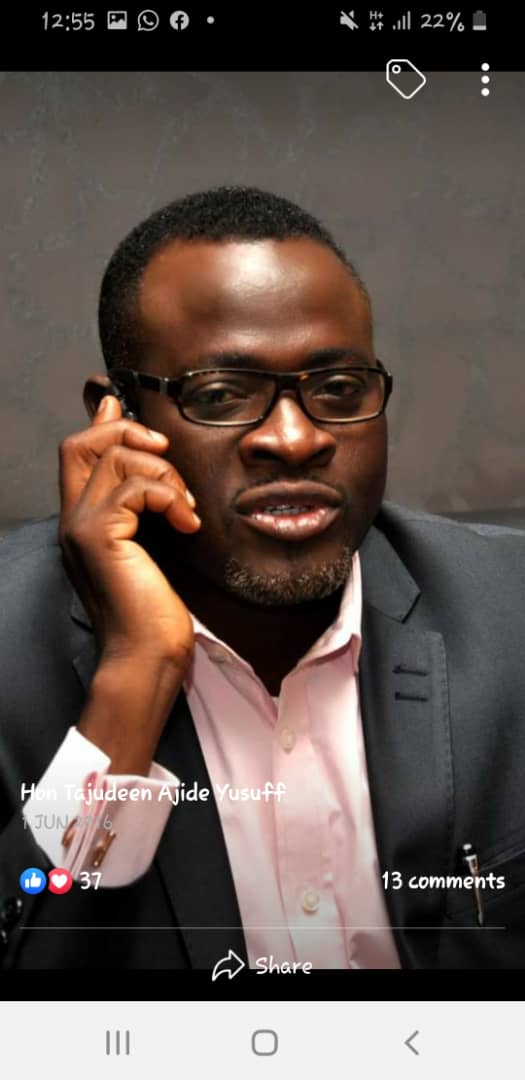
Several calls were put across to Surulere Local Government Area Chairman Tajudeen Ajide Yussuff between March 15 and 17, but he did not pick. A text message bearing similar questions sent to Amuwo-Odofin chairman was sent to him, but he did not reply. However, after the reporter had sent three WhatsApp messages, he replied on March 17, at 7.29 am, “Please, mind your conclusion and your accusations on this matter. Surulere local government is not LCDA AT ALL. Furnished (sic) me with the proof. Thanks.”
Tajudeen Ajide Yussuff, Surulere LG Chairman
The reporter replied that there were no allegations in the questions, reminding him that the essence of hearing from him was to adhere to the principle of fairness.
Two hours after his first response, he requested the reporter to “send a petition and proof of invoices, and the receipt served the person or group of people,” but the reporter reminded him that he had no obligation to present evidence to him directly. A few days later, he sent a WhatsApp message to the reporter, saying, ” I am still waiting for you.”
Yussuff did not answer any of the questions raised by the reporter. He also failed to answer whether it was lawful in his local council to pay official charges and taxes into individuals’ accounts.
“Give me cash” at Igando-Ikotun LCDA
The situation was slightly different at Igando-Ikotun Local Council Development Authority (LCDA), where the reporter also posed as a trader in one of the plazas. He was directed to ‘Mrs Omirin’, whom Truecaller identified as Omirin Abidemi. She was in charge of ‘Lock-Up Shops’ at the local council. But unlike others, Abidemi told the reporter that she was an accountant and would not want the money paid into her account.
She told the reporter to give her N12,000 in cash as payment for Lock-Up Shop, promising to send ‘her staff” to pay the money at the appropriate quarters and obtain the receipt on his behalf.
However, the reporter insisted on having the local council’s bank account details. Still, Abidemi told him that should he pay the money into the local government official bank account, “to generate the receipt will be very difficult.” She asked the reporter to give her cash any time he was free, promising to help him get the required receipt. Her conversation with the reporter was recorded.
Though she asked questions about the shop location, she made no effort to confirm whether the reporter was telling the truth or not.
Local council chairperson denies claims by tax collector
However, Abidemi’s claims were rubbished by Chairperson of Igando-Ikotun LCDA Morenike Adesina-Williams, who described paying official fees or charges in cash as ‘fraudulent.’ Adesina-Williams said her LCDA had a bank account sent to “people we send E-Billing to.” However, she did not provide the account details as requested by the reporter and did not answer the question regarding the number of charges in her LCDA.
Chairperson of Igando-Ikotun LCDA Morenike Adesina-Williams
“Good morning, have called cda’s meeting, told them dis answers, also warned them through born FM, against giving cash to our people, gave them the LCDA account numbers, I will appreciate if u can confide in me dis people so as to generate more IGR,” she sent this WhatsApp message to the reporter on March 17.
When pressed to answer other questions bordering on transparency in her local council, she replied to the reporter, ” Oga, pls I can’t talk more than what have said. If u see anyone collecting illegal money, do whatever u like with him or her. Also, those people giving them such money should be blamed after all announcements and meetings with the masses. U can see my P A or Council Treasurer for any other thing. Thanks, and take care.”
It was unclear why she referred the reporter to her personal assistant or ‘Council Treasurer’ after refusing to answer questions bordering on the number of charges paid by traders and local government’s account details.
Lagos Commissioner for local government did not respond
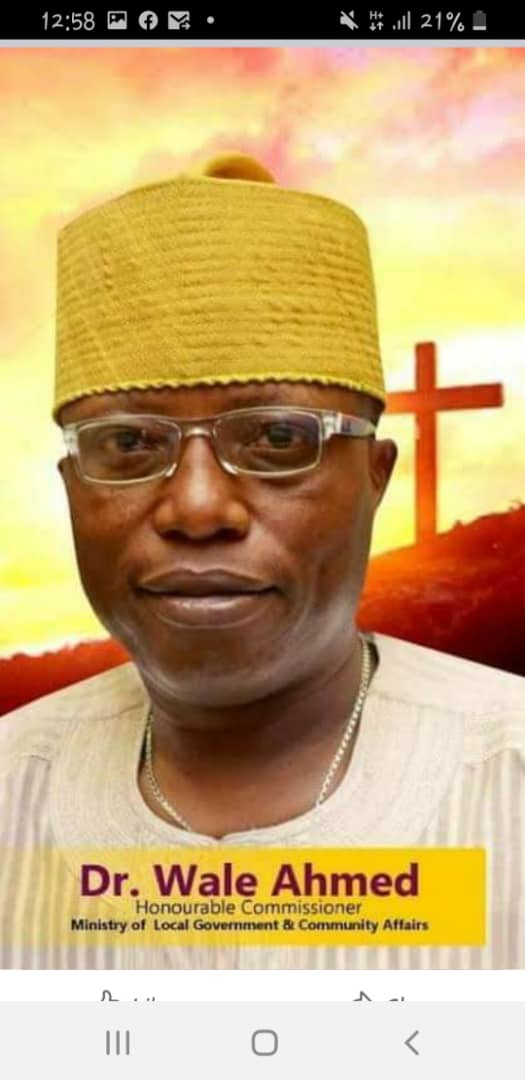
The reporter contacted Lagos State Commissioner for Local Government and Community Affairs Wale Ahmed, on March 16, but the commissioner complained that he could not hear what the journalist was saying.
Wale Ahmed, Commissioner for Local Government and Community Affairs
He then told the reporter to send a text message. Two text messages were sent to him bordering on transparency issues at local governments in Lagos, but he did not reply. He also did not reply to four WhatsApp messages sent to him.
Past linked to present
In 2019, the reporter also found two officials in Lagos using their personal accounts to receive government charges. He found an official of the Lagos State Signage & Advertisement Agency (LASAA) Assumpta Omozejele using her Zenith Bank account to receive LASAA charges at Isolo LCDA.
The reporter visited her office and told her he was constructing a three-square-foot signpost. She asked the reporter to pay N14,784 for that, including N6,000 for registration and N7,392 (50 per cent of the original rate) for advertising -N28 176 in total. She ‘prorated’ the payment and asked him to pay N15 000 for the whole of 2020. In a recorded phone call, she reduced the amount to N13 000 and read out her account number to the reporter, who later paid the agreed amount on December 10, 2019, and demanded a receipt in a text message the following day.
“Don’t worry, it does not matter am the only one in charge of Ajao, but if you still want it, you can come around,” she replied in an unedited text message. LASAA later suspended Omojezele and her team, and the agency did not collect charges from traders till April 12, 2020, when the reporter put out a report.
At Mushin LCDA, the journalist met a man, Aliu Olaoye, who claimed to work as a task force team member. The reporter told Olaoye that he had a shop at Isolo Road and needed to pay all necessary fees. Olaoye asked him to pay a parking permit of N30,000 and a shop fee of N5,500 into his Polaris Bank account. In a recorded telephone call, he promised to pay the reporter’s N20,000 into Mushin Local Government’s account, while he and ‘the leader’ would pocket N5,000 each.
“Oga, this is Mushin. As you know me, nobody will touch you except the person who wants to die,” he had told the reporter.
Bank teller used in paying part of parking permit to Aliu Olaoye of Mushin local council
The reporter finally paid N5 000 into his account, with a promise to pay the rest later.
Lawyers say culprits can go to jail
An expert in criminal law, Samuel Oyigbo, told The ICIR that the act was a serious crime that could attract seven- to a 14-year jail term.
“It is fraudulent conversion and involves different crimes. It is a criminal diversion of fund, as is found in Section 419 of the Criminal Code,” he said.
Samuel Oyigbo, a lawyer
Oyigbo said apart from being a criminal breach of trust, the suspect or culprit could be charged with stealing, which could carry seven or more years of jail term.
“In criminal prosecution, people are served based on the more severe crimes. When you allow people to pay official charges into your account, it becomes stealing, fraudulent diversion or obtaining by pretence. That you are charged for one does not mean you can’t be charged for another at the same time,” he explained.
This was re-echoed by Adepeju Jaiyeoba, a lawyer and entrepreneur, who said it was a criminal offence. She explained that as long as receivers were not authorised to collect the charges or taxes through their personal accounts, it would be serious.
“Are you an authorised revenue collector? Are there no proper channels? Why are you presenting your personal bank accounts for that? That is fraudulent conversion under the Criminal Code,” she noted.
The ICPC responds
Spokesperson for the Independent Corrupt Practices and Other Related Offences Commission (ICPC) Azuka Chinelo Ogugua said government officials might receive public funds into their personal accounts up to a limit of N200,000.
“But they may not receive taxes which are usually paid into a government account,” she said.
When asked whether the ICPC could arrest local government officials presenting their personal bank accounts for such charges, she explained that the body was authorised by law to arrest anybody at any level.
“The ICPC arrests culprits at the Federal, State and Local Government Levels because the ICPC Act applies to all Nigerians. ICPC would prosecute any culprit after thorough investigations are carried out, and a prima-facie case is established against them,” she explained.
Spokesman of the Economic and Financial Crimes Commission (EFCC) Wilson Uwajeren did not pick The ICIR‘s calls. Neither did he respond to text and WhatsApp messages sent to him regarding the issue. He hardly responds to request for information for public use.
Ikeja Local Government shows example
At Ikeja Local Government Area, the reporter met a man who introduced himself as ‘Mr Kazeem.’ Truecaller identified him as Kazeem Ashade. As usual, the reporter told Mr Kazeem that he wanted to pay for shop charges. Unlike others, Mr Kazeem provided a Zenith Bank teller to the reporter, asking him to pay for a shop permit (N7,500) and Radio/TV License (N1,000) into the local government’s official bank account.
He did not indicate any interest in collecting the money in cash, nor did he want the charges paid into his account.
Zenith Bank’s deposit Slip given to the reporter at Ikeja LG by Mr Kazeem
Little drops of water
The reporter found that it was normal for Tunde Mustapha and Mr Alex to provide their account numbers to petty traders whenever they needed to pay government levies or fees.
Though now a cliched expression, language experts believe that little drops of water make the mighty ocean. With thousands of shops at Surulere Local Government Area, should 500 traders pay N10,000 ($24) into Mustapha’s bank account, the account holder would have N 5 million ($12,195) in the tills.
On the other hand, if 500 traders pay N11,000 into Mr Alex’s account, he would have N5.5 million ($13,414) in the bank.
This explains why issues of transparency should be taken seriously, financial experts say. Economist Iraj Abedian of South Africa said such practices often robbed the poor.
Tax fraud and impact on Nigerians
Tax fraud happens at both individual and corporate levels. Apart from government officials who steal tax revenues, companies too dodge taxes in the form of avoidance or evasion.
Tax evasion occurs when a person or firm deliberately avoids paying taxes. It is often illegal. On the other hand, avoidance is “the use of legal methods to minimize the amount of income tax owed by an individual or a business,” Investopedia explains.
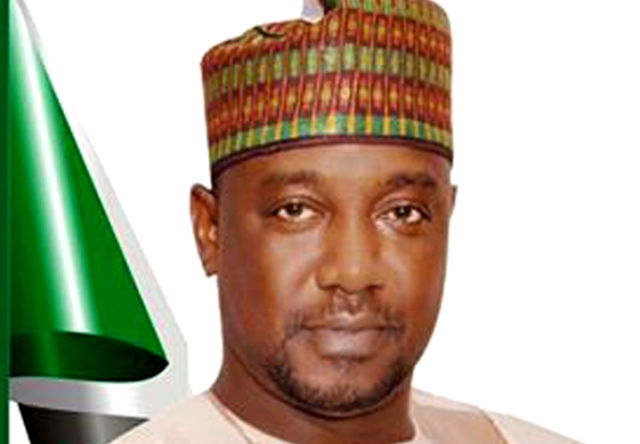
Executive Chairman of the Federal Inland Revenue Service (FIRS) Muhammad Nami said in January 2021 that Nigeria lost $178 billion to tax evasion by multi-nationals in 10 years.
A 2018 report by the Partnership for Social and Governance Research cited another research work by the High-Level Panel on Illicit Financial Flows from Africa, which showed that Nigeria accounted for 30.5 per cent of illicit financial outflows ( including taxes) from the continent.
The research by the Partnership for Social and Governance Research explained that tax fraud also manifested in the form of smuggling or diversion of oil exports, leading to huge losses in revenue.
It further said that Africa’s most populous nation lost $217.7 billion to illicit financial flows (including tax outflows) between 1970 and 2008.
“The drivers/enablers are: poor governance, weak regulatory structures, and existence of financial secrecy jurisdictions and tax havens outside Nigeria,” the report said.
An Oxfam International’s recent report on tax dodging noted that the losers of tax fraud were ordinary people and poor countries.
“Governments either have to cut back on these services, or make up the shortfall by collecting higher taxes from everyone else,” the report said.
“Both options see the poorest people lose out and the inequality gap grow. This global system of tax avoidance is sucking the life out of welfare states in the rich world.”
In Nigeria, inequality is widening. About 105 million citizens (out of 205 million) lived in extreme poverty in 2020, the World Poverty Clock said. Unemployment was 27 per cent in the second quarter (Q2) of 2020, according to the National Bureau of Statistics (NBS).
The Lagos Chamber of Commerce and Industry (LCCI) is anticipating that the unemployment figure, when released, will hang around 35 per cent by the end of 2020 due to COVID-19 impact.
“…the ability to combat crimes of fraud and corruption is a task that is largely dependent on the legal and political instruments of state, which determines the effectiveness of the anti–corruption campaign,” Uche Jack-Osimiri and Bariyima Sylvester Kokpan wrote in a 2020 paper entitled, ‘Fraud and Corruption in Nigerian Taxation: Eradication or Control.’
Solution: Digital payment
Findings by this reporter in more than 15 local councils in Lagos showed no provision for digital payment facilities. At local councils in Ikeja, Igando-Ikotun, Surulere, Amuwo-Odofin, Apapa, Bariga, and Ejigbo, the situation was the same.
This is different from what obtains in Kenya. In the East African country, Safaricom-managed M-PESA has enabled 35.6 million adults to access financial services.
Individuals are requested to register in M-PESA with national identity cards and
Safaricom SIM cards. Once registered, they deposit money with local M-PESA agents, obtaining an ‘e-float,’ which is M-PESA’s digital currency. This can then be exchanged with another M-PESA subscriber in the form of an SMS. This has enabled millions of Kenyans to pay bills at state and local government levels on a cashless basis, reducing corruption and fraud brought about by cash and bank payments.
In a paper entitled, ‘Using Electronic Payment Programs As An Anti-Corruption Strategy,’ Olayemi Abdullateef Aliyu, Samuel Ekundayo and Chris Arasanmi explained that Malaysia used the ICT, especially digital payment platforms, to reduce corruption at all levels of government.
“It has been assessed that electronic payments, when used well, have the potential to significantly
reduce the cost of cash management and transactions, and curb corruption such as bribery by 47 per cent,” they said, quoting an earlier work by P. L. dos Santos & Harvold Kvangraven.
Digital payment industry in Nigeria is growing at a faster pace. Flutterwave recently hit $1 billion valuations, proposing to list at the New York Stock Exchange in no time. Stripe recently acquired Nigeria-founded Paystack at $200 million. There has also been a steady growth by Remita, Interswitch, Amplify, among others, but local governments in the country are still reluctant to employ them, analysts say.
A Chartered Accountant, Bala Augie, advised local governments in Lagos to embrace digital payment, saying that doing so would eliminate corruption and place them on the global pedestal.
“It is easier than going to the bank to make payment. It also helps start-ups to grow,” he said.
“It is important to plug these loopholes and use the money for the people.”
Other solutions
Group Head of Tax at the United Bank for Africa (UBA) Emeka Amadi suggested the need to clarify the number of taxes paid by businesses, stressing that all taxes must be paid into designated bank accounts.
He stressed the importance of punishing erring officials to serve as deterrent to others.
In 2019, director-General of Lagos Chamber of Commerce and Industry Muda Yusuf said most of the financial inaccuracies and inconsistencies were found at local governments than the state government.
“We need to put technology in place,” he suggested.
“Urge people to pay into the bank and monitor the process,” he further said.
Managing Director of a servicing firm MD Services Limited Ike Ibeabuchi said politicians should not use public offices to compensate individuals after elections.
“People who pay these fees into private accounts should know they are taking a risk. So, they should also be bold enough to report any official who wants public funds paid into their private accounts,” he suggested.
THE Defence Headquarters have countered suggestions for a civil handover to the military, saying that soldiers are loyal to President Muhammadu Buhari.
In a statement signed by Spokesperson Onyeama Nwachukwu on Monday evening titled ‘Nigerian Military remain loyal to the Constitution and Government of Nigeria,’ the Defence Headquarters dissociated the military from a statement made by Senior Advocate of Nigeria Robert Clarke alluding that the current administration should hand over to soldiers for a proper restructuring of the country.
According to the statement, the position of Clarke was anti-democratic and the organisation dissociated the military from the idea.
“We shall continue to remain apolitical, subordinate to the Civil Authority, firmly loyal to the President, Commander-in-Chief of the Armed Forces of the Federal Republic of Nigeria, President Mohammadu Buhari and the 1999 Constitution as Amended,” the statement read in part.
Nwachukwu further said that the military would continue to discharge their constitutional responsibilities professionally, especially in protecting the country’s democracy, defence of the territorial integrity of the country as well as protection of lives and properties of citizens.
He further said the military high command wished to use the opportunity to warn ‘misguided politicians’ nursing the ambition to rule Nigeria outside the ballot box to banish such thoughts as the military under the current leadership remained resolute in the defence of Nigeria’s democracy and its growth.
“We also wish to remind all military personnel that it is treasonable to even contemplate this illegality. The full wrath of the law will be brought to bear on any personnel found to collude with people having such agenda,” the military stated.
During an interview on Channels Tv, Clarke had suggested that the military should take over Nigeria ‘temporarily’ and divide Nigeria into six states.
Clarke, who spoke on the state of security in Nigeria, said the situation was worse than it was in 1982.
” I cannot guarantee Nigeria in another six months, the situation is so overwhelming. Nigeria is on the verge of collapse, Nigeria is worse than it was in 1982,” Clarke further said. Clarke is a staunch supporter of President Muhammadu Buhari.
In this concluding part, ARINZE CHIJIOKE reports about various WASH programmes that have failed to tackle perennial water issues in the country. He also highlighted functional projects that are serving the people.
Solar-powered borehole still functional in Eziagu,
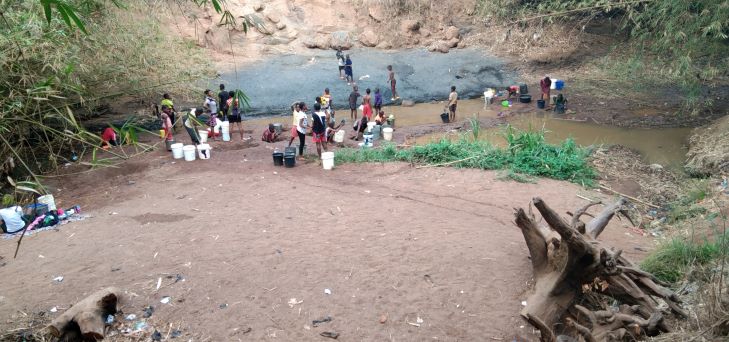
Before the government rehabilitated the solar-powered borehole in Obinofia Ndiuno, residents had to cross hills to get water. The borehole had been long abandoned after it stopped working three years ago.
Vincent Okoli, Chairman of the WASH committee in the community, said water scarcity had been a major challenge. He told this reporter that his community’s health centre, where the water project was sited, did not have water supply from any source.
“Health workers always had to buy the water they used to attend to their patients. But since the government rehabilitated the borehole, there is constant water. They no longer go to buy water. The project means a lot to us. It is what we drink and cook with,” he said.
Although the water project is still functional, the taps used, according to Okoli, are of low quality. They have had to change them several times because the ones used are plastic.
He said: “We told them when we started having challenges with the taps, and they promised to change them. But we have not heard from them. We have not even seen them. One of them is currently having issues.”
Despite the testimonies of the Obinofia Ndiuno people, the traditional ruler of Emeora Neke, where some of the water projects are located, Silas Udeogu, condemned the projects, which he called a White elephant. Udeogu said he told the WaterAid that the construction of boreholes would not work in Isi Uzo, given the prevalence of underground rocks.
He also said he drew their attention that the only solution to years of perennial water scarcity in Isi Uzo would be the filtering of its streams, including Amanyi and Eme, which are not seasonal.
“We have conducted a geological study and found out that water was a major problem. I suggested that the organisation conduct their survey. But I don’t think they did that. If our streams are filtered and a giant reservoir provided, it could supply water to communities,” he explained.
Udeogu told this reporter that one of the boreholes at Nkwo is currently being used by a mentally sick woman and only gets one bucket daily from it, which she uses to bathe. Anybody talking about boreholes only wants to waste money, he added.
Water coming out of the taps
Contractor blames poor delivery on Geology.
Abuchi Ndukwe, one of the contractors who handled the projects in Ugwuaji and owner of Morikem Global Investment, agreed that Enugu State has a major challenge of water due to the geology of some of the areas, which makes it hard to get water.
He said it was the same problem in Isi Uzo and other communities where the projects are not working as they should and that a survey was conducted, and it was discovered that there was low water discharge in the areas.
The solution, Ndukwe said, is for the state government to dig about five boreholes within the Night Mile, where there is sufficient groundwater as that, according to him, can sustain 100 horsepower pumps each and extend it to towns in Enugu.
“That was the problem in Ugwuaji. Even when you drill water, it dries up during the pick of the dry season. So, the problem was the Geology of the area.”
Ndukwe said that usually, one finds water projects that cannot last throughout the season and can dry up after some time. But if one can get to the water table, it will last longer, and the level of the water table can change over time because of changes in weather cycles and precipitation patterns, streamflow and geologic changes.
From a Geology expert’s point of view
A former Head of Geology Department, University of Nigeria, Nsukka, Professor Smart Obioara, also aligned with Udeogu and Ndukwe’s position. He confirmed that the geology of a particular area must be considered before a borehole drilling process commences. According to him, Enugu generally is a terrible place to drill for water, and you can hardly find the rocks that can store water, although people have been making efforts and drilling wells.
“If you don’t have the necessary rock, what is called an aquifer, which can contain and also be able to release water in abundance, it will be hard. If you are not on the water table, the hope of getting water is slim, and even if you do, it will dry up easily,” he explained.
Aquifer refers to when a water-bearing rock readily transmits water to wells and springs. The recharge rate is not the same for all aquifers, and that must be considered when pumping water from a well.
Projects worked at the inauguration – WaterAid
The Enugu State Programme Lead for WaterAid, Terkimbi Tom, said that at the time of commissioning, the five boreholes drilled in Ugwuaji were working well and that they had stopped working. It is because of the nature of the area. Tom also confirmed that there are places where one can hardly get water at the peak of the dry season, like in some locations where boreholes were rehabilitated.
He said: “I’m surprised to hear that places, where we drilled have stopped working. It would not have been a result of failure on our part because we are professionals. We did what we could do. But we don’t have control over the Geology of these places.”
He said the state government monitored the projects to ensure that they met the specifications, as getting locations to drill in Ugwuaji, for instance, was a problem because “we had to do a lot of geophysical surveys.”
Children frolicking at the Amanyi stream
Poor access to clean water in a COVID-19 era
The COVID 19 pandemic made it evident that investments in the provision of basic water, sanitation and hygiene services must be a key priority in the coming years.
A total of 167 million homes out of the entire Nigerian population of over 200 million are said to be without access to handwashing facilities – especially worrying in the context of the COVID-19 pandemic, with handwashing being a critical infection prevention practice.
In June 2020, the Federal Government said that N10 billion would be shared among states to construct and rehabilitate water schemes as part of efforts to end the COVID-19 pandemic in the country.
The Minister of Water Resources, Suleiman Adamu, said that the interventions would include hiring WASH volunteers to educate the populace on the importance of handwashing and personal hygiene.
Access to clean water and sanitation, a critical SDG goal
The water demand already exceeds the available supply in many regions and river basins, especially in parts of sub-Saharan Africa – where the vast majority of poor people live and where the population is growing most rapidly, according to the United Nations Department for Economic and Social Affairs (UNDESA).
Global water demand (withdrawals) is expected to increase by 40 per cent by 2030 and 55 per cent by 2050, UNDESA stated. This is part of why member States of the United Nations came together in September 2015 to adopt the Sustainable Development (SDG) goals. These goals had access to clean water and sanitation occupying 6th place. The aim is to ensure that everyone has sustainably managed safe water and sanitation.
Ensuring the sustainable provision of equitable access to sufficient good quality water for people, productivity, and the environment is necessary for ending poverty and hunger and achieving other ambitious goals being proposed for the post-2015 sustainable development agenda.
Nigeria’s poor WASH sector: The reality
A 2018 national survey found that 62 million Nigerians depend on unimproved water sources or spend more than 30 minutes travelling to fetch water. Another survey on WASH NORM shows that only about 18 million Nigerians, representing less than 10 per cent of the population, have access to pipe-borne water.
Key findings from the survey revealed that up to 171 million people are off the SDG target for access to safely managed drinking water supply services, with only 14 per cent of the population having access to safely managed drinking water supply services.
In Enugu State, data from WaterAid shows that at least 28 per cent of the population do not have access to basic water supply service and have to depend on contaminated streams and rivers, unlined and unprotected wells to meet their needs.
According to UNICEF, over 70,000 children under five die annually in Nigeria from diarrhoea due to unsafe water and poor sanitation conditions. Lack of decent WASH facilities is also linked to under-nutrition, stunting and poor educational attainment among young children.
State of emergency on WASH sector
In November 2018, President Muhammadu Buhari declared a state of emergency on Nigeria’s WASH sector. With the declaration came the launch of the National Action Plan for the revitalization of the sector.
During the declaration, Buhari said that Nigeria had taken positive efforts in the WASH sector towards improving the living standards of Nigerians both in the rural and urban areas, noting that access to adequate Water Supply, Sanitation and Hygiene is part of the indices for socio-economic development of any nation and thus cannot be ignored.
The overall goal of the plan is to ensure that all Nigerians have access to sustainable and safely managed WASH services by 2030 in compliance with the Sustainable Development Goals (SDGs) for water (Goal 6.1) and sanitation (Goal 6.2).
Emergency declaration not enough
Although the Federal Government has since declared a state of emergency on WASH, the sector has not been given the priority attention it deserves. President Buhari noted that water supply and sanitation issues are not given the right attention by various states judging from the high prevalence of waterborne diseases reported in different parts of the country.
In Enugu State, the government declared a state of emergency on the WASH sector in late January 2020. The governor, Ifeanyi Ugwuanyi, followed the declaration with the inauguration of an 18-member Inter-ministerial Committee on implementing the WASH Action Plan in the state.
The State had signed up to the national partnership for Expanded Water Supply, Sanitation and Hygiene (PEWASH) strategy as required by states to access the Federal Governments support to deal with challenges in the WASH sector.
But for Nigeria to meet the WASH targets of the Sustainable Development Goals by 2030, the World Bank said it must invest three times more than it currently does or allocates 1.7 per cent of the current Gross Domestic Product to WASH.
Women washing their clothes at the Isi stream in Uzo Uwani
A policy brief released by the Society for Water and Sanitation (NEWSAN) shows that there has been no significant increase in budgets for sanitation at either the Federal or State levels. It showed that the Federal Ministry of Environment had no budget allocation for sanitation between 2014 and 2016. While there was a budget line for sanitation in 2017, it was less than 0.5 per cent against a 1.0 per cent commitment, with only 46 per cent of the amount budgeted being released.
Several WASH programmes, little results
Nigeria has several WASH development strategies to guide its progress to provide safe and accessible WASH services for all of its citizens. But all of these have been constrained by inefficient and ineffective service delivery, failing facilities and poor maintenance, according to a report by the United States Agency for International Development (USAID).
While more than 38 per cent of all improved water points and around 46 per cent of all water schemes in Nigeria are nonfunctional, nearly 30 per cent of water points and water schemes appeared to fail in the first year of operation after construction, presumably because of poor build quality.
Specifically, the translation of policy principles into actionable plans and budgets has been weak, with some of these services including the 2000 National Rural Water Supply and Sanitation Policy, the 2003 National Water Resources Management Police, the 2004 National Water and Sanitation Policy and the 2016–2030 Partnership for Expanded Water Supply, Sanitation and Hygiene, the USAID report added.
It should be noted that several donors, including the World Bank, the African Development Bank, and the French Development Bank, have supported the Nigerian WASH sector over the years with over $638M (262,141,440,000).
Enugu State government not aware of the development
When the reporter contacted the state government for a reaction, the Special Adviser to the Governor on Water Resources, Dubem Onyia, said he was unaware that some of the projects had stopped working. He, however, said that the government would complain to the organizations that brought the projects to see if anything can be done about it.
“If they don’t do anything, we will look at it because we are the beneficiaries. The organizations only came to invest,” he said.
Meeting international standards
According to the World Health Organization, WHO, between 50 and 100 litres of safe water per person per day are needed to ensure that most basic needs are met, and few health concerns arise.
The solar-powered borehole in Ndiuno
The World Population Review estimates that the population for Enugu in 2021 stands at 795,271. This means that the state government, by international standards, is expected to provide at least fourteen billion, five hundred and thirteen million, six hundred and ninety-five thousand, seven hundred and fifty litres of water (14,513,695,750) yearly for the entire population.
It is expected to provide eighteen thousand, two hundred and fifty litres of water (18,250) yearly for every citizen. This is going by the per capita water demand and consumption rate.
Reporter denied access to contract details as Coca Cola, SSDO fail to react.
To get the full details of the N300 million WASH projects, including the cost of each project and the contractors, this reporter sent an email to the Enugu State programme lead for WaterAid, Terkimbi Tom, in March 1. He replied three days later, directing the reporter to the Coordinator, Small Town Unit of the Enugu State Ministry of Water Resources, Christopher Ogbu.
This reporter subsequently sent a Freedom of Information Act, FOIA, request to the Permanent Secretary, Enugu State Ministry of Water Resources, through the Small Town Unit coordinator on March 8. But, there has been no response to the request for over a month.
When the reporter contacted Ogbu to find out why there was a delay in the release of the information requested, the reporter was directed to the legal representative of the ministry, Ginika Iloma, who was supposed to review the request before approving.
On March 22, this reporter sent a reminder to the ministry and called Iloma, who in turn said she would have to inform the Attorney-General of the State to give his approval for the details requested to be given.
On April 20, six weeks after this reporter sent an FOI, the Ministry replied that information on the water projects was not in the Ministry.
The ministry said it only participated in the supervision of both the construction of new boreholes and rehabilitation of non-functioning boreholes through the Small Town Water Supply and Sanitation Unit of the Ministry.
This reporter also tried to reach out to the South Saharan Development Organization (SSDO) and The Coca-Cola Foundation via email on April 1, April 3, respectively. But neither of them responded.
This investigative report was supported by MacArthur Foundation and the International Centre for Investigative Reporting.
MY family and I were returning home from church when we encountered some policemen. It was night time, and the headlights of our Keke (tricycle motor) illuminated the officers, making them visible. They seemed to be discussing something.
As we drove nearer, one of them brought out a gun and tried to hit me with it. Alarmed, I parked the Keke and went over to meet them to make sure everything was okay. My wife followed. Neither I nor any family member has ever had problems with the police, so we did not have anything to fear or hide.
The policemen started to ask us questions. Then, one of them demanded a 2000 naira bribe. I told them I did not have 2000 naira on me. I was on my way home from church – not work. And I was with my family – as they could see by the presence of my wife, my children and me in the Keke.
Upon recognising that my story checked out, one of the officers asked me to go.
In the process of getting back into the Keke, however, I suddenly heard gunshots. It came from behind me, where we had met the officers.
In that split second, I discovered my jaw had burst open. I had been shot.
Confused and in severe pain, I instinctively held my jaw and mouth together to prevent the loss of my blood, which was by that time gushing out like a pipe faucet forced open.
Then, I heard shouts of ´Mummy is dying! Mummy is dying!´
My wife had been shot too, and she was bleeding even more seriously than I was, especially from her head.
She had sat back into our Keke and had been holding our baby when a bullet ripped through the back of the vehicle, ramming into her head and causing her to slump over the crying baby, who my daughter later picked up.
I later found out that the policeman who opened fire on us, unprovoked, was the same one who had earlier tried to hit me with a gun. I have still not understood why he fired so heartlessly at an unarmed family when his colleague had asked us to drive on.
With my wife in a pool of blood and my children wailing, I swallowed my own pain and tried to save my family by calling out for help. None of the cars passing by stopped to come to our aid, as they claimed they didn’t want to be involved with anything concerning the infamously brutal police.
One good and brave samaritan, however, eventually stopped and had mercy on us. He was a bus driver, and with the help of another kind lady who was around, they helped carry us to the hospital.
We were unsuccessful with getting treatment at two hospitals before finally ending up at Ikorodu General Hospital. There, we were asked to submit a police report before receiving medical attention.
We went to the Idimu Area Command to get a report, but the police told us to go back to the hospital because our case was an emergency which did not require a report.
We told the police that we had already told the hospital staff – and indeed, they (the hospital staff) themselves could see that we were an emergency case – yet they still insisted on us producing a report before they would treat us.
Godwin Udoh
We went back to Ikorodu General Hospital with the instructions the Idimu Area M Command had given us, but the hospital staff were still adamant: no police report, no treatment.
The bus driver had to go back to the Area Command to try again for a police report. Fortunately, and finally, he was able to obtain one. The staff of Ikorodu Hospital had begun first aid treatment on us by the time the driver returned with the report.
We were later referred to the Lagos University Teaching Hospital (LUTH), but just when we were about to set off, more problems arose: Our good samaritan found out that his bus had run out of fuel. We decided to go back to the Area Command to help us with a vehicle to transport us to LUTH.
When we got to the Area Command, we met some top police officials who had just arrived there. They told us that they were coming from the Isheri Police Station, where the officers who had attacked us earlier were based. The police chiefs assured us that the officers had been arrested and that the matter would be handled with the justice it deserved.
They then released a vehicle to convey us to LUTH. With the help of the officers and CSO there, we were given urgent attention, with the police paying the bills for our treatment.
While my jaw and right hand sustained damage that still gives me issues today, my wife, however, couldn’t live to tell her story.
I really wish she had sustained only injuries as I had, but it wasn’t to be. This innocent, loving woman was a mother to my children and me, and now she is no more – for reasons no one can still explain.
Losing the wife of my youth has been akin to losing my very life. I feel lost. I am not okay. I am in pain, physically and emotionally, and my children are out of school too.
My life has been turned upside down, and I have barely had help coming through for me. I call on all Nigerians, especially our President, His Excellency Muhammadu Buhari, the Governor of Lagos State, Babajide Sanwo-Olu, and the Governor of Akwa Ibom State, Udom Gabriel Emmanuel, to come to my aid.
I pray people to have compassion for my family, at least for the sake of my children, because I do not want this cruel tragedy to rob them of a good education. I do not want their future ruined because of this.
This story is part of a multimedia project by Tiger Eye Foundation and media partners across Nigeria, documenting police brutality in Nigeria and advocating for police reform.
MINISTER of Communications and Digital Economy Isa Pantami has extended the deadline for the linkage of the National Identification Number (NIN) and Subscriber Identity Module integration (SIM) until June 30, 2021.
This was contained in a statement jointly signed by Director of Public Affairs of the Nigerian Communications Commission (NCC) Ikechukwu Adinde, and Head of Corporate Communications of the National Identity Management Commission (NIMC) Kayode Adegoke on Tuesday.
The decision was said to have been taken at a virtual meeting attended by Pantami; Chairman of the NCC Adeolu Akande; Executive Vice Chairman of NCC Umar Dambatta; and Director-General of NIMC Aliyu Azeez.
The statement read that the extension was sequel to requests by ‘stakeholders’ to allow more Nigerians and ‘legal residents’ to register.
According to Pantami, significant progress had been made in the linkage of SIM cards to NIN as more than 54 million persons had been registered.
He added that the 54 million registrants translated to about 190 million phone numbers in operation across Nigeria.
The statement also read that Sections 27 and 29 of the National Identity Management Commission Act 2007 provided for the ‘mandatory’ use of a national identification number to access government services.
Pantami has been askedby many Nigerians to resign his position as a minister due to his past extremist Islamic views that recently surfaced across social media.
The minister had slated the deadline for SIM linkage for February 9, before giving an extension of eight weeks, which was to lapse this week.