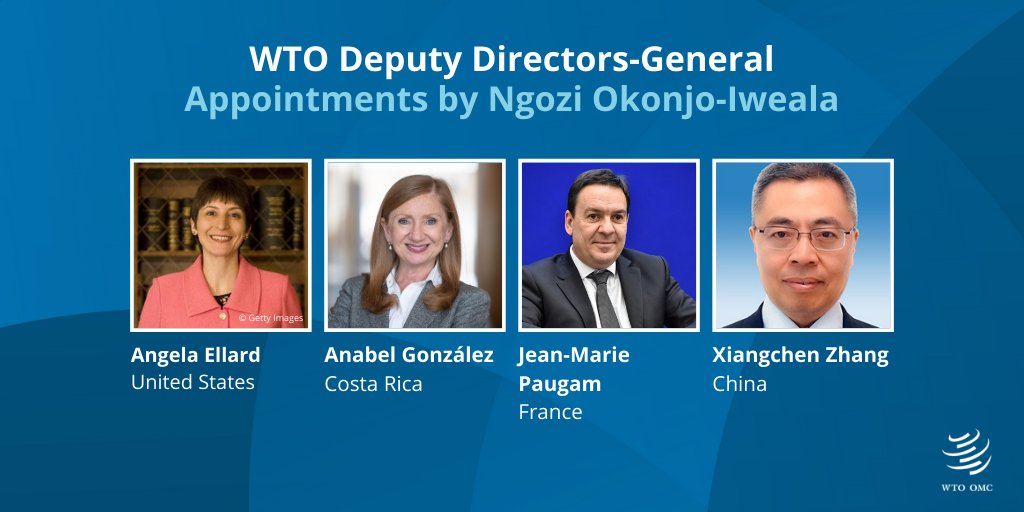
DIRECTOR-GENERAL of the World Trade Organization (WTO) Ngozi Okonjo-Iweala has announced the appointment of four deputy directors-general (DDGs), saying that she is committed to strengthening the organisation with talented leaders while achieving gender balance.
The newly-appointed DDGs include: Angela Ellard of the United States; Anabel González of Costa Rica; Jean-Marie Paugam of France, and Xiangchen Zhang of China.
According to Okonjo-Iweala, “It is the first time in the history of our Organization that half of the DDGs are women. This underscores my commitment to strengthening our Organization with talented leaders whilst at the same time achieving gender balance in senior positions.”
WTO DDGs 2021
The women DDGs in Okonjo-Iweala’s list of appointees were Angela Paolini Ellard and Anabel González.
Ellard is an American trade expert, law teacher and a lawyer specialising in trade litigation and policy. She served as the Ways & Means Committee chief trade counsel and Trade Subcommittee staff director of the US House of Representatives.
González is a Costa-Rican global trade expert and politician, a non-resident senior fellow at The Peterson Institute for International Economics (TPIIE). She was a former director at the World Bank.
She also served as minister of foreign trade of Costa Rica; director-general for International Trade Negotiations; director-general of the Costa Rican Investment Promotion Agency (CINDE); and special ambassador and chief negotiator of the US-Central America-Dominican Republic Free Trade Agreement.
Breaking the glass ceiling
The appointment of these women have been received positively, as a Twitter user Mary Lovely, with the handle @melovely_max!, expressed her excitement while referencing the gender balance.
According to Mary Lovely, “The first woman appointed deputy director-general @wto was Valentine Rugwabiza of Rwanda. That happened in 2005. Today, a woman sits as DG and 2 of 4 DDGs are women. Progress is slow but today we celebrate!”
Also reacting to the news of the appointment, a professor emerita Debra Steger, through her handle @DebraPS, said: “The glass ceiling has been shattered! Congratulations on your impressive, experienced, diverse leadership team, @NOIweala! Excited to see the amazing @_AnabelG as a DDG. About time! Great things ahead for @wto.”
The other two DDGs were Ambassador Jean-Marie Paugam of France and Ambassador Xiangchen Zhang of China. They both served as their countries’ permanent representatives to the WTO.
During the tenure of the immediate past WTO DG Roberto Azevêdo, the four DDGs were Yonov Frederick Agah of Nigeria; Karl Brauner of Germany; Alan Wolff of the United States, and Yi Xiaozhun of China. They were all of the male gender.
Ngozi Okonjo-Iweala is the 7th DG of the WTO. She took office on March 1, 2021, becoming the first woman and the first African to serve as director-general.
She emphasised the issues surrounding gender and leadership in the book, ‘Women and Leadership: Real Lives, Real Lessons’ which she co-authored with former Australian Prime Minister Julia Gillard.
A FORMER student of Abubakar Tafawa Balewa University (ATBU) has said Sunday Achi would have been alive if the embattled Minister of Communication and Digital Economics, Dr. Ali Isa Pantami, had toned down his inciteful preaching.
The former student who spoke to The ICIR on condition of anonymity said Pantami should be held responsible for the death of Achi. He said Achi would have been alive if Pantami had toned down his “hateful preaching”. According to him, the incident leading to the crisis that caused Achi’s death happened in October, but he was killed in December.
But the minister in another forum had denied this claim, saying he saved some Christian students from being attacked during a religious crisis in Bauchi. “This is what I teach and stand for. This is my fatwa,” he said.
Sunday Nache Achi was a fourth-year architectural student and President of Evangelical Church Winning All, previously known as the Evangelical Church of West Africa (ECWA) fellowship at ATBU, who was killed during the ethnoreligious crisis that took place in 2004 after a disagreement between Christian and Muslim groups on campus.
He was reportedly killed on December 8 2004, after being dragged out from his room.
The Minister was the Chief Iman of ATBU during the crisis.
An aide to Pantami, Uwa Suleiman, in a telephone conversation with The ICIR, denied reports that her boss had anything to do with the death of Achi or incited crisis during his stay at ATBU.
Pantami’s Spokesperson, Uwa Suleiman,
Police Public Relations Officer of the Bauchi Police State Command, Ahmad Wakil, ended the call when The ICIR sought information about Achi’s death.
Similarly, media spokesmen to President Muhammadu Buhari, Femi Adesina, Garba Shehu and the State Security Service’s (SSS) spokesperson, Peter Afunanya, did not respond to The ICIR inquiring about Pantami.
The messages sent to the presidential aides and the DSS spokesman were marked ‘delivered.’
A 2004 report of the incident that led to Achi’s death by Compass Direct, a news agency for persecuted Christians worldwide (now defunct) published by Worthy News, stated that Achi was killed because of a disagreement between Christian and Muslim students.
Worthy News reported that Idakwo Ako Paul, who shares a room with Achi in a student hostel on campus, told Compass that the young man (Achi) was attending a Bible study the evening of December 8 when a band of Muslim students came looking for him.
“Three Muslim students dressed in Islamic jihad style burst into the room at about 8 p.m.,” Paul said. “I was scared because, in the past two months, there has been palpable tension on the campus between Muslim and Christian students.
“They wanted to know where my roommate was. I told them I didn’t know, and they left. Sunday returned to the room about 11 p.m., and I told him what had transpired.”
The report further said Paul retired for the night while Achi worked on architectural drawings for a class presentation the following morning. However, not long after falling asleep, Paul was awakened by his roommate’s shouts.
“Wake up, Paul, wake up!’ Sunday was shouting. I jumped out of bed to be confronted again by these Muslim students. This time they were more in number and were wearing masks.
“They dragged Sunday Achi out of the room. I tried running after them, but one of them pointed a pistol at me and ordered me back into the room. They locked me in there. I kept shouting for help, but the Muslim students in the hostel deliberately kept to their rooms.”
The following morning, a Christian student came to the hostel, discovered Paul locked in the room and broke the door to let him out. The two of them were about to alert other Christian students to the danger when they received news that Sunday Achi’s body had been discovered beside a mosque near the home of the university’s vice-chancellor, Worthy News reported.
The former student interview with The ICIR read part, “A group of students, about three of them who were his members, went on a room to room evangelism in the hostel. He was the president of ESM (ECWA student ministry).
“They went on evangelism from one to the other. They do that from time to time, and on that faithful day, they went into a room and met a group of students that were Muslims. After presenting their message to them, some had contrary views to what was presented, and a debate ensued.
“Immediately after the debate started, it became more or less a religious debate. One of the three ECWA students from the ministry brought out a pamphlet. A pamphlet that is more or less has to do with a comparative analysis of religion. Comparison between Christian and Muslim Jesus Christ and Mohammed. That was the content of the pamphlet.
“So after they gave the boys the pamphlet, they left. Not knowing that the boys were not happy with some of the things they read. Those boys took the pamphlet to a boy name Abdulahi Lukman who was my classmate. Unfortunately, Lukman is late now. He was the Muslim student society leader on campus” (Because he is dead, this could not be confirmed by The ICIR).
“He forwarded it to Pantami, who took the matter to the management of the school-university. And the school decided that the students should be dismissed. Some at the Senate then tried defending them, but the then Vice-Chancellor, Professor Garba Aliyu Babaji, insisted that the students should be dismissed from the university.
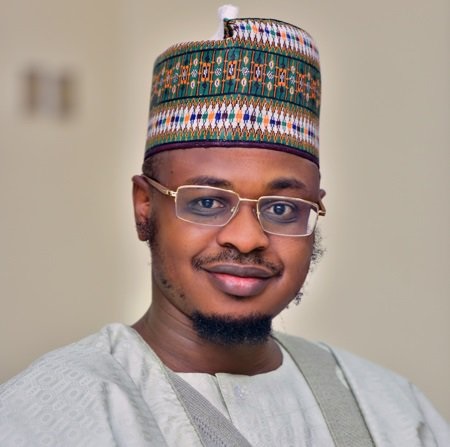
Minister of Communications and Digital Economy, Ali Isa Pantami
“If not for Pantami, who is someone I respect to be very honest, Sunday Achi probably would have been alive today.”
He also told The ICIR that he lives close to the school mosque where Pantami usually preaches as the mosque’s chief Iman.
“I understand Hausa very well, and my house was directly adjacent to the mosque. It was outside the university, but the school mosque was by the fence. Very close to the university’s fence, and the Vice-Chancellor was living very close to the school mosque. Opposite the mosque. Pantami for weeks after that thing happens, most evenings, when we are home after lectures, he will preach down to the middle of the night in Hausa language. I grew up in the north and understood Hausa better than my mother tongue”, he said.
“I just wished it was something we recorded then. But it is not thought because we did not know that someone like him would become a minister as he was an assistant lecturer and a cleric.”
“Three days before he [Achi] was killed, Pantami was always crying in the mosque saying so many inciteful things and say, “Oh our dear Prophet, someone has blasphemed against you, and there is no way that the blood of the person who blasphemed against you will be allowed to go free”. No person lived around the vicinity of that mosque that did not know of what he was saying.”
When asked why Achi didn’t relocate from the school campus despite the tension generated by the alleged blasphemy incident, the former student said Achi was told to leave, but he didn’t.
“When they first came to look for him, he wasn’t around. He was at the chapel. When he returned, his roommate told him that about three to four Muslim boys came looking for him. He told him that those who came to look for him didn’t come as those who came for peace as they were looking furious.”
“As at that time, most Christian leaders left the campus because they became a target. The President of FCS (Fellowship of Christian Students), Micheal Omale, my classmate, left the campus. We even advised him to leave as everyone became a target, particularly the leaders. So when they told him, before then, so many of them were confronting him, but there were no attacks in the weeks before his death. So probably he felt it was the normal interrogation. So when the roommate spoke to him about it, he didn’t see it as something that would be serious. He just sat down in his room and began drawing. Achi was an architect, and he had a presentation the next day.”
“So he sat down and was drawing and while he was drawing the roommate fell asleep, It was his noise that woke the roommate, and he saw that he was being dragged. Immediately the roommate woke up and tried to confront them; they threatened and locked him inside the room. Unfortunately, so many students were around, but they were sympathiser due to what they have been told that he was the leader of the students that blasphemed against the Prophet and didn’t do anything to stop them from taking him away.”
He also told The ICIR that he was among the first student that saw Achi’s dead body at the school mosque.
“Not until the following, I was part of the first set of people who saw his corpse. His body was dumped beside the mosque. There is a small stream beside the mosque and a nursery bed belonging to the students of agriculture in the same area, and that was where his body was dumped.”
“We left our hostel early. Around six in the morning because we had a test that day. Our house was just behind the fence, and the mosque was close to the mosque. When we came out, we saw someone in Jellabiya and a three-quarter pair of jean lying and facing the ground. So we couldn’t see the person face. We even laughed at the body as we thought it was someone who was drunk or had abused a drug. Not until we got to our venue, we heard that they came and dragged Achi out of the room, and nobody knew where they took him away. We rushed back to where we saw the body and noticed it was him.”
Also, another student member of the ECWA student fellowship who also craves anonymity before being interviewed by The ICIR said Achi was strangulated and not stoned as being widely reported.
He also confirmed that Achi became a target because the three students who went on the evangelism and shared the pamphlet left the school after they were expelled and couldn’t be found, and they resolved to attack the president.
“He was killed inside the school. He was staying in Block A opposite the football field. He wasn’t stoned, but I suspect strangulation. His body had grass on it and was out of shape, and then I suspected broken bones because of the shape he was in.
Pantami had nothing to do with Achi’s death – ATBU lecturer
The Head of Department Mechanical/Production Engineering at Abubakar Tafawa Balewa University (ATBU), Bawa Mohammed, an engineer who spoke with The ICIR, denied claims that the Minister had a hand in the death of Achi.
Pantami had nothing to do with Achi’s death, he said. The lecturer who spoke to The ICIR said Achi’s was probably killed due to political intrigues.
The lecturer interview with The ICIR read in part, “Isa Pantami has nothing to do with Sunday Achi story (death). For his involvement with Al-Qaeda, I have nothing to say about that one as I know nothing about it. But as far as I can say for the Achi story was, five people came for evangelism. They came for aggressive evangelism. They portrayed the Prophet of Islam in a blasphemous campaign. The Achi man did not support it, but he was the leader of the movement for fellowship.”
“He didn’t support the movement, so they move the thing to the federal polytechnic Bauchi. He was in the room around some days with his roommate, and they said around 11 pm or thereabout some people came in and took him away.”
“Now, when he disappears, the roommate couldn’t go and report. Till 6:00 am. The people that killed him made an error; they just dragged him. If you struggle with someone, there will be a sign of struggle, but this person made an error by dragging him and dumping him in front of one mosque in the morning.”
“The investigation went on in town, and they said one number they saw was from one Gombe State government car that was moving in and out, so he could have been killed for not conniving or whatever it might be.”
“It was not as a result of Pantami saying go and kill anyone or somebody. I was a living witness and was there in 2004, and I know what transpired. Except the security operatives may not want to talk, I believe they know who killed him, and it might be a fight of elephant at the top, but the grass suffers.”
“I know that there is friction between the governor of Plateau and Bauchi then. Many stories were linked to that incident, and there were a lot of pocket items to cause trouble in Bauchi, but God did not allow that to happen.”
“I am not in a good position to say this, but to say that someone said go and kill this person is not valid. He might have issued a fatwa, but many stories are surrounding the crisis and many attempts by some people to cause a problem, but the truth of the matter is that I don’t think it is the inciting that led to Sunday Achi’s death.”
But all three students who spoke with The ICIR denied that politics or alleged differences within the school Christian body was the cause of Achi’s death. The third former student who also spoke to The ICIR anonymously insisted that politics had nothing to do with Achi’s death.
Meanwhile, Achi’s father, Samuel Achi, a former lecturer at the Kaduna State University, Kaduna in an interview with Punch Newspaper, said Muslim students murdered his 24-year-old son and 400-level student of Architecture at the ATBU at the time over an allegation that he circulated a tract that contained blasphemous content.
Achi’s Father, Samuel Achi, a former lecturer at the Kaduna State University, Kaduna
According to the interview, the 67-year-old don said he was aware that the minister was the Chief Imam of the university’s mosque when the incident happened in 2004.
He further said the tracts shared by his late son did not contain any blasphemous content. Still, the Pantami-led Muslim community at the university pronounced a ‘fatwa’ on his son, stressing further that were Pantami, who was the then chief imam of the mosque a man of peace, the killing of his son would not have occurred.
Efforts by The ICIR to get Pantami’s reaction to this report proved abortive as he switched off the phone number known to be associated with him.
But the minister, during his daily Ramadan lecture on the 17th of April, rendered in Hausa and translated by The ICIR, denied supporting terrorism. Rather he said he saved some Christian students from being attacked during a religious crisis in Bauchi.
“In my position as a Muslim, I am not in support of terrorism. I don’t support Al-Qaida or the Taliban. And if anybody tries to say that my teachings support that, that’s their opinion, not mine,” he said.
“I know some people are going about with my clips of teaching that I did in the past. Most of these teachings were done in the 90s. I started preaching right before I got to the age of twelve. At such an age, it would be easy to make mistakes. Some people said I was driven from the position of an Imam. I wasn’t. I became an Imam in the university before I was appointed as a lecturer. When I started lecturing, it wasn’t long before we built a mosque inside the town of Bauchi.”
“After the mosque was built, not long, I got a job as a lecturer. As I started lecturing, Authorities from the mosque sent me a letter, saying I should choose between one of the two positions, either as an Imam or a lecturer.”
“I told them I wanted to lecture. Being an Imam is a service to Islam and that I will do for free for God. I don’t want any form of payment. Since I started coming to preach in this mosque, has anybody paid me?”
He also disclosed that he saved some Christian students from being attacked during a religious crisis.
“Me, I do part-time dawah, not full time. That makes it easy for me to fend for myself like any other working individual. So when it is time to preach the word of God, I do it for free. Apart from that, I want to add one more thing.
“There was a time someone called me over the phone and said there was a fight between Muslims and Christians in Bauchi. All in all, what I can say is I was none the wiser of the incident. I was coming out of my house when I was told of the fight. And I came to settle them.”
“Ibrahim was there with me, and he bears witness. I was even stoned for coming to stop the fight. A day after, some Muslims assaulted two Christian corps members, a male and a female. They were about to lynch them close to my house. I was the one who saved them by keeping them safe in the mosque.”
“Afterwards, I called the police to protect them. I was the one who saved them from the hands of those who wanted to kill them. For that reason, I was insulted because I kept those that were not Muslims in the mosque. I did that because life is precious.”
“This is what I teach and stand for. This is my fatwa. if anyone hears anything contrary to this about my teaching, then that is not me. One last thing I would like to add, please let no one fight with anyone. Teaching religion is difficult. And every day, I gain experience. So please, we should learn to be patient and tolerant of each other.”
The ICIR had earlier reported on how Nigerians began demanding for resignation or sack after multiple reports accused him of endorsing terrorism while expressing admiration and praise for Al-Qaeda founder Osama Bin Ladin, and founder of the Taliban Islamist group Mullah Omar.
He has also been accused of intolerance for non-Muslims.
Appointed in 2019 by President Muhammadu Buhari after spending between 2016-2019 as the Director-General and CEO of the National Information Technology Development Agency (NITDA), he has since August 2020 leading Nigeria’s National Identity Management Commission (NIMC) registration and integration after it was transferred to his ministry.
Some past controversial statement of the Minister recently had begun surfacing online where he was accused of intolerance for non-Muslims and endorsing terrorism and genocidal act. The video showed Pantami giving support to terrorist groups such as Al-Qaeda and the Taliban.
He was also reported to be a preacher with ‘dangerous views’ against the American government, non-Muslim, strong support for Jihad in Nigeria.
Pantami’s statement of admiration for the Taliban’s, Al-Qaeda and Jihad were from some of his preaching and lecture recordings translated by a professor and African expert at Naples University in Italy Andrea Brigaglia, and a Nigerian scholar Musa Ibrahim of the University of Florida in the United States, both of whom contributed to the academic paper published in March 2019 that explored the emergence of Boko Haram in Nigeria.
Andrea Brigaglia, in his contributing paper to ‘Debating Boko Haram,’ documented how some clerics in Northern Nigeria, including Pantami, and late Sheikh Ja’afar Adam, who was assassinated at his mosque in 2007 in the northern city of Kano, created mass support for Jihadism in Nigeria. It was titled ‘The ‘Popular Discourses of Salafi Counter-Radicalism in Nigeria’ Revisited: A Response to Abdullahi Lamido’s Review of Alexander Thurston, Boko Haram.’
Some of the controversial comments made by the Minister were: “We are all happy whenever unbelievers are being killed,” Pantami said. “But the Sharia does not allow us to kill them without reason. Our zeal (hamasa) should not take precedence over our obedience to the sacred law.”
In his praise of Osama Bin Laden, the late founder of Al-Qaeda and Saudi Arabia-born global terrorist, while responding to audience questions about his views on Osama’s ‘killing of innocent unbelievers’ during a lecture about the Taliban, Pantami said although he conceded that Bin Laden was liable to mistakes because he was human, “I still consider him as a better Muslim than myself.”
Also, in a lecture delivered by Pantami in 2006, the Minister offered his public condolences for the death of the leader of Al-Qaeda in Iraq, al-Zarqawi.
Apart from old recordings, a document also appeared online on Wednesday, which is purportedly from a 2010 meeting he chaired at the Jama’atu Nasril Islam (JNI), a top Islamic body, where it was agreed that Christians should be prohibited from building churches in the city centres across northern Nigeria, which has a majority Muslim population. However, millions of Christians also live there.
Pantami had also featured in a 2009 U.S. diplomatic cable leaked by WikiLeaks in 2011 about a religious crisis in Bauchi.
The US cable read, “Imam Fantami Isa, who preached at the mosque, had been previously thrown out of Abubakar Tafawa Balewa University and of a Gombe mosque for preaching inflammatory rhetoric.”
SMALLHOLDER farmers in Oke-Ogun area of Oyo State are seeking government’s timely intervention and support to ensure bumper harvests in 2021.
The farmers called for the intervention on Tuesday in separate interviews with the News Agency of Nigeria (NAN).
One of them, Alimotu Sulaiman from Iseyin Local Government Area, said for there to be sufficient produce in 2021, government needed to provide support for farmers now.
She noted that the majority of those who benefited from government’s various interventions programmes in agriculture in the past were not farmers.
“We kept getting promises from government which pledged to support farmers in 2020, but it amounted to nothing till the rains stopped and the planting season ended.
“We don’t want the same thing to happen this planting season as there is still time to help the farmers now,’’ Sulaiman said.
Another smallholder farmer in Saki East Local Government Area Tade Ogundipe said whatever help and support the government wanted to give farmers should be done now.
“After the end of April, any support given to farmers is a waste and a total failure for the planting season.
“Timely intervention is what the farmers need to ensure continuous food production.
“Giving farmers seedlings, fertilisers and so on when the rains have started is a waste, as these things are needed before the commencement of the rains.
“In the past, many people received seedlings and fertilisers after the rains had started, but could not use them as they were received at the wrong time and not useful for the planting season,’’ Ogundipe said.
Musilatu Ashiru, also from Saki East LGA said, “We know that this present administration has a lot of support to give to farmers and we are praying to be among the beneficiaries in any form it takes.” (NAN)
The Bauchi State Government had, on Monday, said four local governments in the state had witnessed the influx of refugees from Geidam, a neighbouring Yobe Community that witnessed heavy shellings from Boko Haram insurgents in recent weeks.
The Secretary to the state government, Sabiu Baba, who raised the alarm while briefing Journalists after an emergency Security Council Meeting chaired by Governor Bala Mohammed, named the LGAs to include Zaki, Dambam Darazo, and Gamawa.
Although the government has denied media reports that the insurgents have already infiltrated the four LGAs of the state, The ICIR had examined porous border communities in the four LGAs the insurgents might exploit to enter Bauchi State.
The most volatile LGA among the four, which were reported to have witnessed an influx of IDPs from Yobe, according to multiple sources who spoke with The ICIR, is Gamawa LGA. The LGA is 259km away from Bauchi, the seat of government. Gamawa LGA shares borders with two LGAs of Yobe: Jakusko and Nangere LGAs. Gamawa communities that share borders with the two LGAs include Gololo, Zindiwa, Gauya and Buduwa.
Mohammed Tukur, a resident of Gamawa, told The ICIR that elements of Boko Haram are likely to explore the porous borders in these communities to infiltrate the LGA “because the neighbouring villages are mostly agrarian communities with no heavy security surveillance.”
Nigerian map (Bauchi in red)
In Dambam LGA of Bauchi State, multiple sources have identified five porous border communities and routes the insurgents could freely navigate to Bauchi State.
Abdullah Sale, a resident, told The ICIR that the Dagauda district, which houses Jalam, Jarmai, Lamba and Janda communities, shares borders with Nangere LGA of Yobe.
The communities, The ICIR learned, could provide an easy passage to Boko Haram fighters because of the light forest and vast farmlands notorious for poor security surveillance.
“The forest is more pronounced in Jalam community because it has a lot of farmlands, so the insurgents could have a safe haven in that area if they want to operate,” Saleh said.
In Darazo LGA, Lanzai district is the major town with a relatively light forest that shares borders with Yobe, where the insurgents may have a free entry route into Bauchi State.
In Zaki LGA of the state, Lobio and Bursali communities are the possible routes the insurgents could infiltrate Bauchi state.
“They are the communities in Zaki that share borders with Jakusko LGA and are mostly porous because of the forest in the area with only a few farmlands,” a resident told The ICIR.
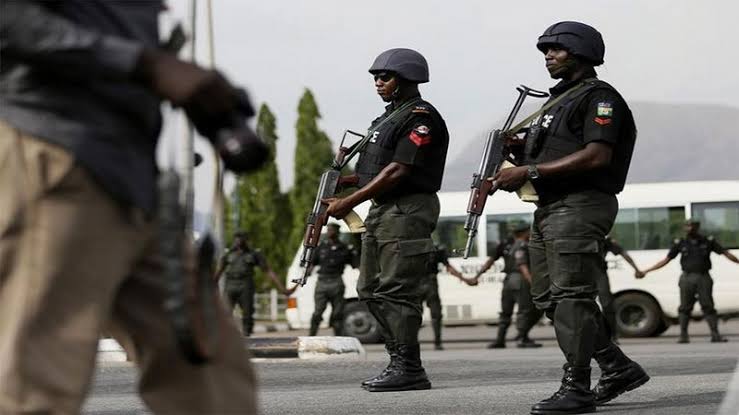
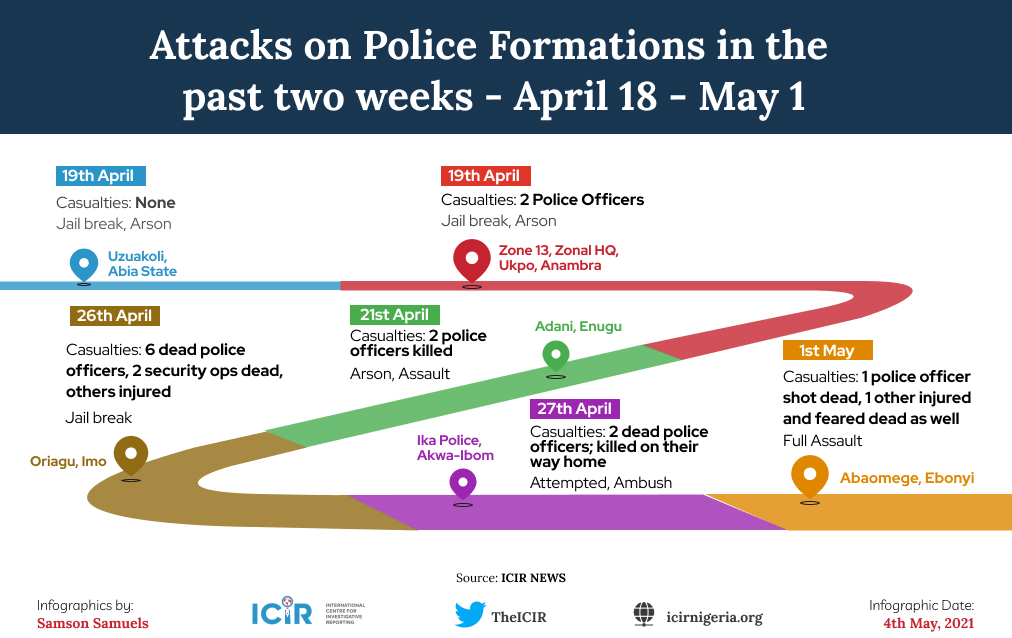
THE Nigerian Police suffered attacks on their stations, resulting in the death of nine officers in one week, The ICIR has found.
Many Police stations were attacked in the last one week, including Abaomege division in Ebonyi State, and Oriagu division in Imo State. There was also an attempted attack on Ika division, Akwa Ibom State.
Both attacks on Abaomege and Oriagu divisions claimed the lives of seven officers, with an officer reported to have been fatally wounded.
The attack on Oriagu Police Division, Imo State, happened on April 26, freeing a yet unknown number of detainees. But it also claimed the lives of six officers.
Besides the Police, it was reported that the operation also left two other security operatives dead.
Two lives of Police officers were lost in an attempted attack on Ika division, Akwa Ibom State. The deceased officers were reported to have been ambushed on their way home – after duty on April 27.
Attacks on Police Formations in the past two weeks – April 18 – May 1
The attack on Abaomege Police division, on the other hand, took place on May 1. It was a full-scale assault by suspected ‘armed hoodlums,’ who destroyed property and carted away valuables, according to a report.
Prior to the week under review, five police officers had been murdered in brazen attacks on Nigerian Police stations/ formations.
On April 19 alone, two Police divisions in the South-East states of Anambra and Abia were attacked.
At Uzuakoli Police division, Abia State, there was an attack without any recorded casualty.
However, in Zone 13 police division, zonal headquarters, Ukpo, Anambra State, two officers’ lives were lost in an assault on the station that left many of their vehicles burnt.
Two officers were also killed in Adani, Enugu State, on April 21. Others were injured and the suspected gunmen also set the station on fire.
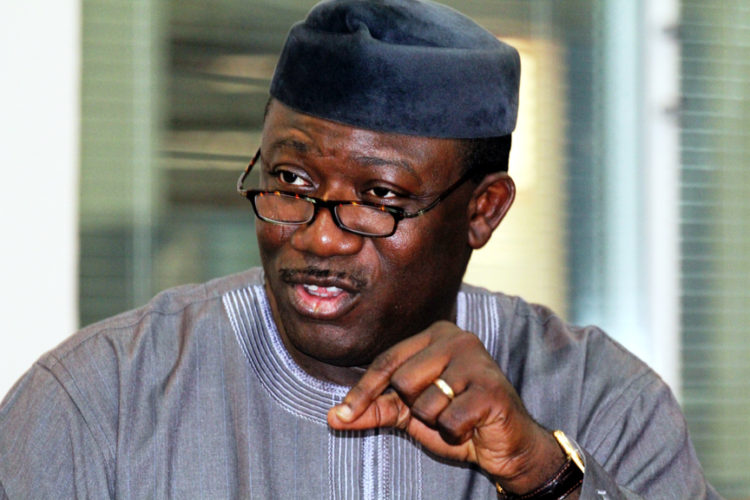
THE Federal Government’s pro poor policies could suffer a huge setback on the back of an unsustainable petrol subsidy which drains the country’s financial resources, Governor Kayode Fayemi of Ekiti State said.
Fayemi said this in an NTA-monitored programme last Tuesday, stressing that the Federal Government was in a dilemma, with rising subsidy payment in gasoline gulping N120bn monthly.
“There are issues that must enable us to have a clear-sighted and consistent economic position. If we insist that we’re going to deregulate, there are implications to that in terms of those that may want to spur us,” he said.
The governor, who doubles as the Chairman of the Nigerian Governors Forum, explained that the unsustainable subsidy had deeper implications for government’s anti-poverty strategy, noting that the expected resources would be adversely affected with upsurge in subsidy payment.
“Today, the Nigerian National Petroleum Corporation (NNPC) tells us it is subsidising N120bn monthly on the gasoline. That is the money that should have gone to the federation account for disbursement,” he said.
The governor, who confessed the government’s dilemma in the development said, ”In order to tackle that poverty that we consider a major priority for our government to deal with, it is a question of whether we’re going to keep up with the subsidy, for the people are ultimately going to be the losers.”
The Nigerian government is yet to settle rift with labour on the payment of subsidy on gasoline, a step that has kept spiraling subsidy payment in the country. More so, the government is yet to effect a cost-reflective tariff on electricity as prescribed by the Multi Year Tarrif Order (MYTO) of the Electricity Power Sector Reform Act of 2005, which has seen it sustain subsidy in the power sector over time through bridging shortfall gaps in the sector.
Is subsidy really supporting the Nigerian poor?
The Social Investment Programme is aimed to support the poor and place them on financially inclusive class. The scheme is made up of the School Feeding Programme, Conditional Cash Transfer, N-power programme, and Government Enterprise Empowerment Programme.
Some industry analysts have argued that the government needs to rethink its strategy on pro-poor policies, arguing that they have failed to lift people out of poverty. Nigeria has 105 million extremely poor people, according to 2020 World Poverty Clock report.
Chairman of Major Oil Marketers Association (MOMAN) Adetunji Oyebanji argued that the subsidy payment concerns were more about eating the future and not having enough money to plough back into infrastructural development benefiting more Nigerians, with more socio-economic impact.
“While we pay billions in subsidy, we borrow to fund infrastructure. How does this make an economic sense to our economic managers?” he asked.
The present administration has blamed the economic distress suffered in its early years on the inability of the previous administrations to save for the rainy day. However, informed analysts told The ICIR that the current administration could be making the same mistake by failing to ride on the positives of rising oil prices to shore up the economy and provide foreign exchange support for real sector operatives.
“The money we made from oil is being used to pay for subsidy. It’s affecting lots of our economic planning and savings for the future. We must be circumspect and make choices that do not leave us admitting regrets in the near future. This is the time to deregulate so that we could benefit maximally from our rich oil resources, ” oil sector governance expert Henry Ademola Adigun told The ICIR.
Government’s plan to lift 100 million out of poverty, how far ?
The Federal Government said it planned to lift 100 million people out of the poverty net, making it one of the hallmarks of the administration. However, rising unemployment rate at 33 percent, according to the National Bureau of Statistics (NBS), has stretched government’s plans, fuelling concerns
With the concerns raised by Governor Kayode Fayemi, analysts want the Federal Government to focus on the real sector to drive economic growth, rather than commercialising solution to its problems.
“We tend to commercialise our solution in most of our problems. People are poor, and you just give them money. Our power sector is not working, the Central Bank just supports with funds. You find out that throwing in funds have failed to solve our problems, ” Senior Lecturer at Baze University Sam Amadi told The ICIR.
Amadi stressed that Nigeria must ride on the rising global oil price of above $66 per barrel and restoration of global economy to reset its economy with bold reforms to create more economic opportunities for the people.
IN April 2021, following widespread killings and attacks in Nigeria, former Vice-president Atiku Abubakar shared a contentious infographic which showed the top countries on the 2020 global terrorism ranking. The image originated from a Nigerian television channel, TVC news.
Abubakar who was the presidential candidate of the main opposition party in the 2019 election, tweeted the graphic with the caption, “Yes, the challenges we face are enormous. But they are surmountable. What we need is the leadership and the will to do what is right for our country and its people.”
Misleading 2020 GTI index.
The Claim
Infographic shows the 2020 ranking for Global Terrorism Index (GTI)
The Findings
In 2020,The FactCheckHub verified the graphic which originated from TVC and found it to be misleading.
The station on one of its programmes, ‘Journalists Hangout’ had shared it, while stating that Nigeria has emerged the top African country on global terrorism list.
The image placed Nigeria as the third most terrorised country in the world according to the 2020 GTI ranking.
The problem was that, as at September, 2020 when the programme aired, the GTI ranking for 2020 had not been released.
However, when the 2020 list was released, Nigeria still ranked third and Afghanistan and Iraq ranked first and second respectively as shared in the image.
Even though the countries on the list remained the same, the ranking for five of them had changed.
The infographic has Afghanistan, Iraq, Nigeria, Syria, Pakistan, Somalia, India, Yemen, Philippines and DR Congo as the top ten, the actual ranking released differs in order; Afghanistan, Iraq, Nigeria, Syria, Somalia, Yemen, Pakistan, India, Democratic Republic of the Congo and Philippines.
Further checks showed that TVC passed an old ranking; the one for 2019 as that of 2020. The programme which started with the announcement of the ranking was uploaded on YouTube with the headline ‘Nigeria Emerges Most Terrorised Country In Africa, Ranks Worse Than Syria, Yemen, Somalia’. As at the time of this report there is nothing in the video description to notify viewers of the error.
A screenshot of the 2019 Global Terrorism Index.
The Verdict
The infographic showing 2020 ranking for Global Terrorism Index is MISLEADING, as the information is that of the 2019 ranking.
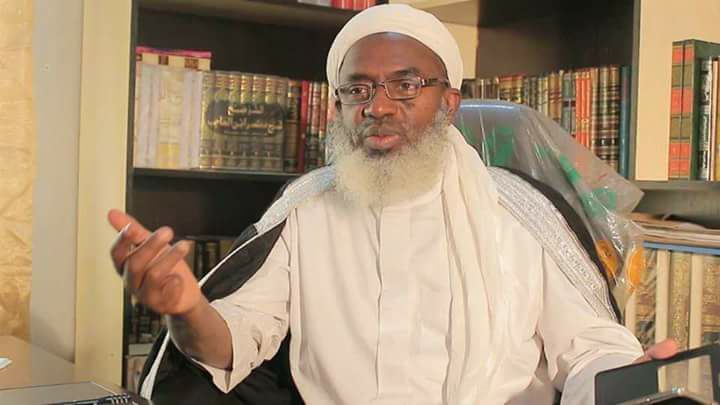
ISLAMIC cleric Ahmad Gumi has said that bandits were not responsible for the kidnapping and killing of students of Greenfield University in Kaduna.
He said this in an interview with AIT on Tuesday, while hinting that members of the Boko Haram terrorist group were responsible for the abduction of the students.
“When we tried to trace them and put some sense into them, the contact who is also a nomadic Fulani was threatened. They said if he insists on them, they were going to catch him and he will have to pay ransom before he gets out,” he said.
He stated that the leader of this terrorist group was not Fulani, but from the North-Eastern part of Nigeria, noting that government should act fast as there was no luxury of time.
Gumi urged the government to negotiate with the abductors to avoid further loss of students’ lives, stressing that no amount of money was worth the lives of the students. He said government could eventually track and recover the ransom paid.
Speaking on the issue of bandits reneging on the terms of past negotiations, Gumi said that the bandits had no belief in the seriousness of the government.
“They told us no government is serious and I can tell you, yes, no government is serious. Because after negotiating with them, leaving their weapons or given out some of their weapons, the reaction of the government is aloof. They leave them alone with nothing, no programme of rehabilitation, no programme to see into their welfare, nothing. And so they definitely have to go back there,” he said
The cleric noted that he had provided security agencies with the information he had on the whereabouts of the Greenfield students, and that their location was no more a secret.
“Everybody knows where they are. The parents know where they are. But the lives of the students are in danger. We don’t want to see 19 corpses of our students,” he said.
He said the bandits were mostly ready to cooperate with the government, but the government had refused to meet with their demands of banning vigilante groups.
He advised the government not to ban the vigilantes, but to incorporate them into the Civil Defence.
He feared that the terrorists had begun to infiltrate the bandit groups which could only spell doom for Nigeria.
Twenty-two students and a member of staff of the Greenfield University were kidnapped from the school campus a few weeks ago. Five of them have been killed, and one released on Tuesday. Payment of 100million has been demanded by the terrorists as ransom for their release.
TENSION continued on Tuesdayas Nigerians awaited the fate of 16 remaining Greenfield University kidnapped from Kaduna State.
Hours after kidnappers of Greenfield University students threatened to kill the abducted students if their demand was not met by Tuesday, Nigerians became jittery as report showed that only one out of the 17 remaining students was released.
The bandits demanded N100 million and 10 brand new Honda motorcycles, which they said must be made available by Tuesday before the students could be set free, according toSani Idris Jalingo, who identified himself as the leader of thee bandits.
Sani had earlier said that 17 students were still in their custody after his group killedfive students of the university.
Governor Nasir El-Rufai has insisted on non-negotiating with banditsto secure victims’ release.He said that had not curbed insecurity but would rather escalate it.
Some of the abductees who were reported to havespoken with VOA in an interview hadappealedto their parents and the government to pay the ransom.
Bandits said the N55 million paid by the students’ families was used for the feeding of the abductees.Some parents have also been reported to benegotiating privately with the bandits.
One of the 17 students has been released. The mother—the wife of a retired Army officer from Plateau State—was reported to have settled the bandits privately.
The remaining parents are still hopeful that positive steps can still be taken by the government to help them receive their children alive before it’s too late.
Nigerians on Twitter have expressed worry over the fate of the students.
“Please pray for the Greenfield University students. Pray very hard for divine intervention. My heart goes out to the children and their parents in this dark hour. May God help us all,” A Twitter user Kembwoy Msafi, with a handle @kenbwoyM, said.
Another Twitter user @wayas_way said, “As a father, I can’t imagine the pain the parents of the Greenfield university students are passing through. If the security operatives can’t secure them, isn’t it proper for us to mobilize, go into that Forest to rescue them? Untill we wakeup things like this will keep occurring.”
A Twitter influencer OurFavOnlineDoc, with the handle @Dr Olufunmilayo, urged Nigerians to speak up for the students.
“There are reports that if the Govt doesn’t meet the demands of the terrorists, more Greenfield University students will be slaughtered. They have already killed 5 students. Pls let’s speak up for these helpless children. Lend your voice,” he said.
Meanwhile the Presidency said it deeply shared the anguish of the parents of the abducted Greenfield University students. “The FG through the military and intelligence agencies is working to support the Kaduna State Govt to bring this tragic saga to an end with no further loss of innocent life.,” a statement on Presidency’s Twitter page said.
FORMER Vice President Atiku Abubukar, on Tuesday, advised the Nigerian government to recall the country’s ex-servicemen and women to help in the prosecution of war against worsening insecurity in the country.
Atiku said on his verified Facebook page that, as a former vice chairman of the National Security Council, the nation had a sizeable population of military veterans who were trained locally and internationally.
“It serves no purpose to allow these valuable national assets lie fallow when there is an existential threat to our nation. Call them up, immediately. Mobilise them to the field. The time has come for us to put in all our efforts and stamp out this menace from our nation,” Atiku, a fiery critic of the government and presidential candidate of Peoples’ Democratic Party in 2019 general elections, said.
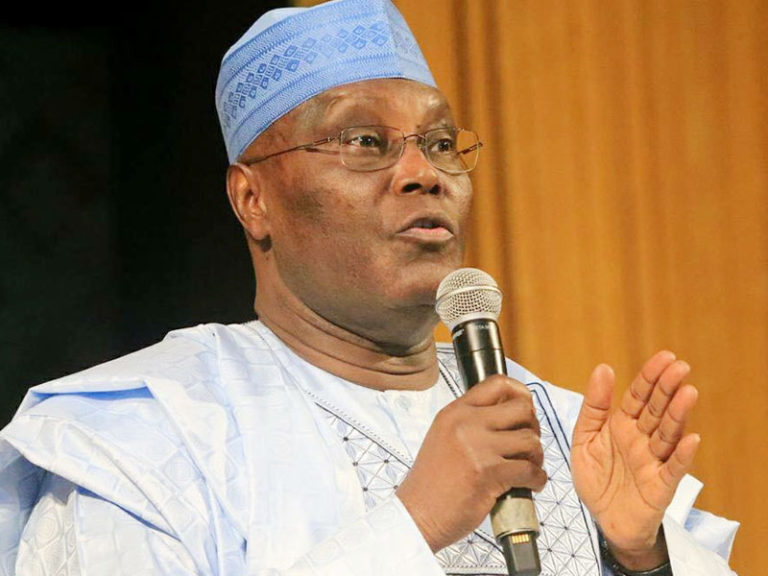
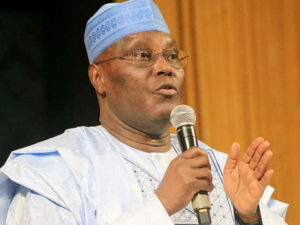
File Photo: Atiku Abubakar, Nigeria’s Former Vice-President
He noted that personnel of the nation’s armed forces, serving or retired, who restored peace to Lebanon, Liberia, Sierra Leone and São Tomé as well as Príncipe, should be used to do the same for their nation.
He, however, advised that more arms should be procured by the government, while welfare of the military officers should be enhanced as means of encouraging them.
Atiku argued that a situation where terrorists and criminals were better armed than the country’s troops on battlefront was intolerable.
He said the security situation in the country was deteriorating rapidly and no one was safe from spiralling attacks across the nation.
The septuagenarian said as further motivation for the troops, the Federal Mortgage Bank of Nigeria, in collaboration with primary mortgage institutions, ought to offer personnel of the armed forces special concessionary mortgage loans to enable them to own homes.
He further advised that private sector should be encouraged to offer discounted services to them in appreciation of their services.
“There is no sacrifice greater than to lay down your life for the motherland. When our military is properly rewarded, they will fight more valiantly and gallantly. A nation that rewards courage is one that avoids outrage.”
Retired soldiers, comprising personnel of the Nigerian Air Force, Nigerian Army and the Nigerian Navy operate under a body called ‘Nigerian Legion’ to pursue common agenda such as payment of their pension by government, supporting government with information on security, among others. Some of them work as guards at government and private establishments in the country.
Nigeria has been faced with unprecedented security challenges since the civil war that spanned July 6, 1967 to 15 January, 1970.
Nigerian President Muhammadu Buhari urged the US government to relocate AFRICOM’s headquarters to Africa
Following calls by Nigerians on the Federal Government to seek help from outside the nation, President Muhammadu Buhari had, at a meeting with the United States Government on April 27, urged the country to relocate its Military Command for Africa, known as U.S. Africa Command (AFRICOM), from Germany to Africa.
The ICIR had reported on April 27 how the National Assembly advised the president to declare state of emergency on insecurity in the country and recruit more soldiers to boost the war against insecurity, following an overwhelming insecurity threatening continued existence of the nation.
While Nigeria’s North-East battles with insurgency, its North-West and North-Central confront banditry and farmer-herder crisis. Her South-East recently joined the league with unprovoked attacks on security formations and innocent civilians by gunmen in the region.
The South-West is faced with herder-herder feud, with move for secession by aggrieved people in the region gaining traction.
There have also been threats from various youth groups in the South-South to return to era of destruction of oil assets in the region, in a move to block the nation’s earnings from oil, which is one of its major revenue sources.