Home Blog Page 1819

N300 million down the drain: Why water projects for Enugu communities don’t work (PART 2)

In this concluding part, ARINZE CHIJIOKE reports about various WASH programmes that have failed to tackle perennial water issues in the country. He also highlighted functional projects that are serving the people.


 Solar-powered borehole still functional in Eziagu,

Before the government rehabilitated the solar-powered borehole in Obinofia Ndiuno, residents had to cross hills to get water. The borehole had been long abandoned after it stopped working three years ago.

Vincent Okoli, Chairman of the WASH committee in the community, said water scarcity had been a major challenge. He told this reporter that his community’s health centre, where the water project was sited, did not have water supply from any source.

“Health workers always had to buy the water they used to attend to their patients. But since the government rehabilitated the borehole, there is constant water. They no longer go to buy water. The project means a lot to us. It is what we drink and cook with,” he said.

Although the water project is still functional, the taps used, according to Okoli, are of low quality. They have had to change them several times because the ones used are plastic.

He said: “We told them when we started having challenges with the taps, and they promised to change them. But we have not heard from them. We have not even seen them. One of them is currently having issues.”

Read AlsoN300 million water project goes to waste in Enugu, as taps run dry few months after launch

We don’t need boreholes; they won’t work

Despite the testimonies of the Obinofia Ndiuno people, the traditional ruler of Emeora Neke, where some of the water projects are located, Silas Udeogu, condemned the projects, which he called a White elephant. Udeogu said he told the WaterAid that the construction of boreholes would not work in Isi Uzo, given the prevalence of underground rocks.

He also said he drew their attention that the only solution to years of perennial water scarcity in Isi Uzo would be the filtering of its streams, including Amanyi and Eme, which are not seasonal.

“We have conducted a geological study and found out that water was a major problem. I suggested that the organisation conduct their survey. But I don’t think they did that. If our streams are filtered and a giant reservoir provided, it could supply water to communities,” he explained.

Udeogu told this reporter that one of the boreholes at Nkwo is currently being used by a mentally sick woman and only gets one bucket daily from it, which she uses to bathe.  Anybody talking about boreholes only wants to waste money, he added.

Water coming out of the taps

Contractor blames poor delivery on Geology.

Abuchi Ndukwe, one of the contractors who handled the projects in Ugwuaji and owner of Morikem Global Investment, agreed that Enugu State has a major challenge of water due to the geology of some of the areas, which makes it hard to get water.

He said it was the same problem in Isi Uzo and other communities where the projects are not working as they should and that a survey was conducted, and it was discovered that there was low water discharge in the areas.

The solution, Ndukwe said, is for the state government to dig about five boreholes within the Night Mile, where there is sufficient groundwater as that, according to him, can sustain 100 horsepower pumps each and extend it to towns in Enugu.

“That was the problem in Ugwuaji. Even when you drill water, it dries up during the pick of the dry season. So, the problem was the Geology of the area.”

Ndukwe said that usually, one finds water projects that cannot last throughout the season and can dry up after some time. But if one can get to the water table, it will last longer, and the level of the water table can change over time because of changes in weather cycles and precipitation patterns, streamflow and geologic changes.

From a Geology expert’s point of view

A former Head of Geology Department, University of Nigeria, Nsukka, Professor Smart Obioara, also aligned with Udeogu and Ndukwe’s position. He confirmed that the geology of a particular area must be considered before a borehole drilling process commences. According to him, Enugu generally is a terrible place to drill for water, and you can hardly find the rocks that can store water, although people have been making efforts and drilling wells.

“If you don’t have the necessary rock, what is called an aquifer, which can contain and also be able to release water in abundance, it will be hard. If you are not on the water table, the hope of getting water is slim, and even if you do, it will dry up easily,” he explained.

Aquifer refers to when a water-bearing rock readily transmits water to wells and springs. The recharge rate is not the same for all aquifers, and that must be considered when pumping water from a well.

Projects worked at the inauguration – WaterAid

The Enugu State Programme Lead for WaterAid, Terkimbi Tom, said that at the time of commissioning, the five boreholes drilled in Ugwuaji were working well and that they had stopped working. It is because of the nature of the area. Tom also confirmed that there are places where one can hardly get water at the peak of the dry season, like in some locations where boreholes were rehabilitated.

He said: “I’m surprised to hear that places, where we drilled have stopped working. It would not have been a result of failure on our part because we are professionals. We did what we could do. But we don’t have control over the Geology of these places.”

He said the state government monitored the projects to ensure that they met the specifications, as getting locations to drill in Ugwuaji, for instance, was a problem because “we had to do a lot of geophysical surveys.”

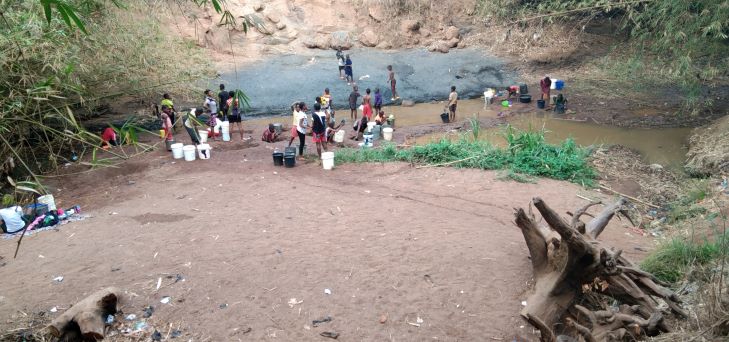
Children frolicking at the Amanyi stream

Poor access to clean water in a COVID-19 era

The COVID 19 pandemic made it evident that investments in the provision of basic water, sanitation and hygiene services must be a key priority in the coming years.

A total of 167 million homes out of the entire Nigerian population of over 200 million are said to be without access to handwashing facilities – especially worrying in the context of the COVID-19 pandemic, with handwashing being a critical infection prevention practice.

In June 2020, the Federal Government said that N10 billion would be shared among states to construct and rehabilitate water schemes as part of efforts to end the COVID-19 pandemic in the country.

The Minister of Water Resources, Suleiman Adamu, said that the interventions would include hiring WASH volunteers to educate the populace on the importance of handwashing and personal hygiene.

Access to clean water and sanitation, a critical SDG goal

The water demand already exceeds the available supply in many regions and river basins, especially in parts of sub-Saharan Africa – where the vast majority of poor people live and where the population is growing most rapidly, according to the United Nations Department for Economic and Social Affairs (UNDESA).

Global water demand (withdrawals) is expected to increase by 40 per cent by 2030 and 55 per cent by 2050, UNDESA stated. This is part of why member States of the United Nations came together in September 2015 to adopt the Sustainable Development (SDG) goals. These goals had access to clean water and sanitation occupying 6th place. The aim is to ensure that everyone has sustainably managed safe water and sanitation.

Ensuring the sustainable provision of equitable access to sufficient good quality water for people, productivity, and the environment is necessary for ending poverty and hunger and achieving other ambitious goals being proposed for the post-2015 sustainable development agenda.

Nigeria’s poor WASH sector: The reality

A 2018 national survey found that 62 million Nigerians depend on unimproved water sources or spend more than 30 minutes travelling to fetch water. Another survey on WASH NORM shows that only about 18 million Nigerians, representing less than 10 per cent of the population, have access to pipe-borne water.

Key findings from the survey revealed that up to 171 million people are off the SDG target for access to safely managed drinking water supply services, with only 14 per cent of the population having access to safely managed drinking water supply services.

In Enugu State, data from WaterAid shows that at least 28 per cent of the population do not have access to basic water supply service and have to depend on contaminated streams and rivers, unlined and unprotected wells to meet their needs.

According to UNICEF, over 70,000 children under five die annually in Nigeria from diarrhoea due to unsafe water and poor sanitation conditions. Lack of decent WASH facilities is also linked to under-nutrition, stunting and poor educational attainment among young children.

State of emergency on WASH sector

In November 2018, President Muhammadu Buhari declared a state of emergency on Nigeria’s WASH sector. With the declaration came the launch of the National Action Plan for the revitalization of the sector.

During the declaration, Buhari said that Nigeria had taken positive efforts in the WASH sector towards improving the living standards of Nigerians both in the rural and urban areas, noting that access to adequate Water Supply, Sanitation and Hygiene is part of the indices for socio-economic development of any nation and thus cannot be ignored.

The overall goal of the plan is to ensure that all Nigerians have access to sustainable and safely managed WASH services by 2030 in compliance with the Sustainable Development Goals (SDGs) for water (Goal 6.1) and sanitation (Goal 6.2).

Emergency declaration not enough

Although the Federal Government has since declared a state of emergency on WASH, the sector has not been given the priority attention it deserves. President Buhari noted that water supply and sanitation issues are not given the right attention by various states judging from the high prevalence of waterborne diseases reported in different parts of the country.

In Enugu State, the government declared a state of emergency on the WASH sector in late January 2020. The governor, Ifeanyi Ugwuanyi, followed the declaration with the inauguration of an 18-member Inter-ministerial Committee on implementing the WASH Action Plan in the state.

The State had signed up to the national partnership for Expanded Water Supply, Sanitation and Hygiene (PEWASH) strategy as required by states to access the Federal Governments support to deal with challenges in the WASH sector.

But for Nigeria to meet the WASH targets of the Sustainable Development Goals by 2030, the World Bank said it must invest three times more than it currently does or allocates 1.7 per cent of the current Gross Domestic Product to WASH.

Women washing their clothes at the Isi stream in Uzo Uwani

A policy brief released by the Society for Water and Sanitation (NEWSAN) shows that there has been no significant increase in budgets for sanitation at either the Federal or State levels. It showed that the Federal Ministry of Environment had no budget allocation for sanitation between 2014 and 2016. While there was a budget line for sanitation in 2017, it was less than 0.5 per cent against a 1.0 per cent commitment, with only 46 per cent of the amount budgeted being released.

Several WASH programmes, little results

Nigeria has several WASH development strategies to guide its progress to provide safe and accessible WASH services for all of its citizens. But all of these have been constrained by inefficient and ineffective service delivery, failing facilities and poor maintenance, according to a report by the United States Agency for International Development (USAID).

While more than 38 per cent of all improved water points and around 46 per cent of all water schemes in Nigeria are nonfunctional, nearly 30 per cent of water points and water schemes appeared to fail in the first year of operation after construction, presumably because of poor build quality.

Specifically, the translation of policy principles into actionable plans and budgets has been weak, with some of these services including the 2000 National Rural Water Supply and Sanitation Policy, the 2003 National Water Resources Management Police, the 2004 National Water and Sanitation Policy and the 2016–2030 Partnership for Expanded Water Supply, Sanitation and Hygiene, the USAID report added.

It should be noted that several donors, including the World Bank, the African Development Bank, and the French Development Bank, have supported the Nigerian WASH sector over the years with over $638M (262,141,440,000).

Enugu State government not aware of the development

When the reporter contacted the state government for a reaction, the Special Adviser to the Governor on Water Resources, Dubem Onyia, said he was unaware that some of the projects had stopped working. He, however, said that the government would complain to the organizations that brought the projects to see if anything can be done about it.

“If they don’t do anything, we will look at it because we are the beneficiaries. The organizations only came to invest,” he said.

Meeting international standards

According to the World Health Organization, WHO, between 50 and 100 litres of safe water per person per day are needed to ensure that most basic needs are met, and few health concerns arise.

The solar-powered borehole in Ndiuno

The World Population Review estimates that the population for Enugu in 2021 stands at 795,271. This means that the state government, by international standards, is expected to provide at least fourteen billion, five hundred and thirteen million, six hundred and ninety-five thousand, seven hundred and fifty litres of water (14,513,695,750) yearly for the entire population.

It is expected to provide eighteen thousand, two hundred and fifty litres of water (18,250) yearly for every citizen. This is going by the per capita water demand and consumption rate.

Reporter denied access to contract details as Coca Cola, SSDO fail to react.

To get the full details of the N300 million WASH projects, including the cost of each project and the contractors, this reporter sent an email to the Enugu State programme lead for WaterAid, Terkimbi Tom, in March 1. He replied three days later, directing the reporter to the Coordinator, Small Town Unit of the Enugu State Ministry of Water Resources, Christopher Ogbu.

This reporter subsequently sent a Freedom of Information Act, FOIA, request to the Permanent Secretary, Enugu State Ministry of Water Resources, through the Small Town Unit coordinator on March 8. But, there has been no response to the request for over a month.

When the reporter contacted Ogbu to find out why there was a delay in the release of the information requested, the reporter was directed to the legal representative of the ministry, Ginika Iloma, who was supposed to review the request before approving.

On March 22, this reporter sent a reminder to the ministry and called Iloma, who in turn said she would have to inform the Attorney-General of the State to give his approval for the details requested to be given.

On April 20, six weeks after this reporter sent an FOI, the Ministry replied that information on the water projects was not in the Ministry.
The ministry said it only participated in the supervision of both the construction of new boreholes and rehabilitation of non-functioning boreholes through the Small Town Water Supply and Sanitation Unit of the Ministry.

This reporter also tried to reach out to the South Saharan Development Organization (SSDO) and The Coca-Cola Foundation via email on April 1, April 3, respectively. But neither of them responded.

This investigative report was supported by MacArthur Foundation and the International Centre for Investigative Reporting.
Brutalised by SARS: Out of nowhere

MY family and I were returning home from church when we encountered some policemen. It was night time, and the headlights of our Keke (tricycle motor) illuminated the officers, making them visible. They seemed to be discussing something.

As we drove nearer, one of them brought out a gun and tried to hit me with it. Alarmed, I parked the Keke and went over to meet them to make sure everything was okay. My wife followed. Neither I nor any family member has ever had problems with the police, so we did not have anything to fear or hide.

The policemen started to ask us questions. Then, one of them demanded a 2000 naira bribe. I told them I did not have 2000 naira on me. I was on my way home from church – not work. And I was with my family – as they could see by the presence of my wife, my children and me in the Keke.

Upon recognising that my story checked out, one of the officers asked me to go.

In the process of getting back into the Keke, however, I suddenly heard gunshots. It came from behind me, where we had met the officers.

In that split second, I discovered my jaw had burst open. I had been shot.

Confused and in severe pain, I instinctively held my jaw and mouth together to prevent the loss of my blood, which was by that time gushing out like a pipe faucet forced open.

Then, I heard shouts of ´Mummy is dying! Mummy is dying!´


You may wish to also read

#MySARSSTORY: Caught in open fire

#MySARSStory: The Good Student

Killed by SARS: Catholic to criminal  


My wife had been shot too, and she was bleeding even more seriously than I was, especially from her head.

She had sat back into our Keke and had been holding our baby when a bullet ripped through the back of the vehicle, ramming into her head and causing her to slump over the crying baby, who my daughter later picked up.

I later found out that the policeman who opened fire on us, unprovoked, was the same one who had earlier tried to hit me with a gun. I have still not understood why he fired so heartlessly at an unarmed family when his colleague had asked us to drive on.

With my wife in a pool of blood and my children wailing, I swallowed my own pain and tried to save my family by calling out for help. None of the cars passing by stopped to come to our aid, as they claimed they didn’t want to be involved with anything concerning the infamously brutal police.

One good and brave samaritan, however, eventually stopped and had mercy on us. He was a bus driver, and with the help of another kind lady who was around, they helped carry us to the hospital.

We were unsuccessful with getting treatment at two hospitals before finally ending up at Ikorodu General Hospital. There, we were asked to submit a police report before receiving medical attention.

We went to the Idimu Area Command to get a report, but the police told us to go back to the hospital because our case was an emergency which did not require a report.

We told the police that we had already told the hospital staff – and indeed, they (the hospital staff) themselves could see that we were an emergency case – yet they still insisted on us producing a report before they would treat us.

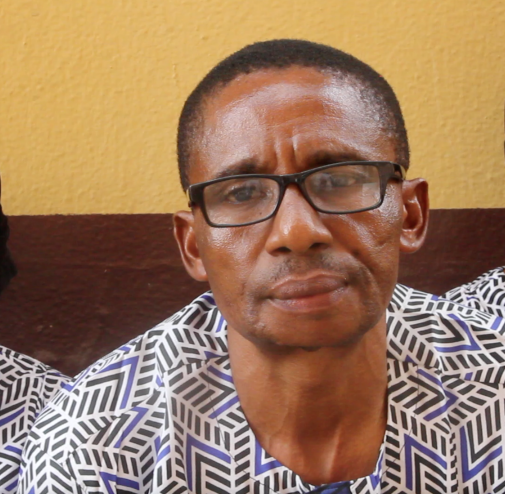
Godwin Udoh
Godwin Udoh

We went back to Ikorodu General Hospital with the instructions the Idimu Area M Command had given us, but the hospital staff were still adamant: no police report, no treatment.

The bus driver had to go back to the Area Command to try again for a police report. Fortunately, and finally, he was able to obtain one. The staff of Ikorodu Hospital had begun first aid treatment on us by the time the driver returned with the report.

We were later referred to the Lagos University Teaching Hospital (LUTH), but just when we were about to set off, more problems arose: Our good samaritan found out that his bus had run out of fuel. We decided to go back to the Area Command to help us with a vehicle to transport us to LUTH.

When we got to the Area Command, we met some top police officials who had just arrived there. They told us that they were coming from the Isheri Police Station, where the officers who had attacked us earlier were based. The police chiefs assured us that the officers had been arrested and that the matter would be handled with the justice it deserved.

They then released a vehicle to convey us to LUTH. With the help of the officers and CSO there, we were given urgent attention, with the police paying the bills for our treatment.

While my jaw and right hand sustained damage that still gives me issues today, my wife, however, couldn’t live to tell her story.

I really wish she had sustained only injuries as I had, but it wasn’t to be. This innocent, loving woman was a mother to my children and me, and now she is no more – for reasons no one can still explain.

Losing the wife of my youth has been akin to losing my very life. I feel lost. I am not okay. I am in pain, physically and emotionally, and my children are out of school too.

My life has been turned upside down, and I have barely had help coming through for me. I call on all Nigerians, especially our President, His Excellency Muhammadu Buhari, the Governor of Lagos State, Babajide Sanwo-Olu, and the Governor of Akwa Ibom State, Udom Gabriel Emmanuel, to come to my aid.

I pray people to have compassion for my family, at least for the sake of my children, because I do not want this cruel tragedy to rob them of a good education. I do not want their future ruined because of this.


This story is part of a multimedia project by Tiger Eye Foundation and media partners across Nigeria, documenting police brutality in Nigeria and advocating for police reform.

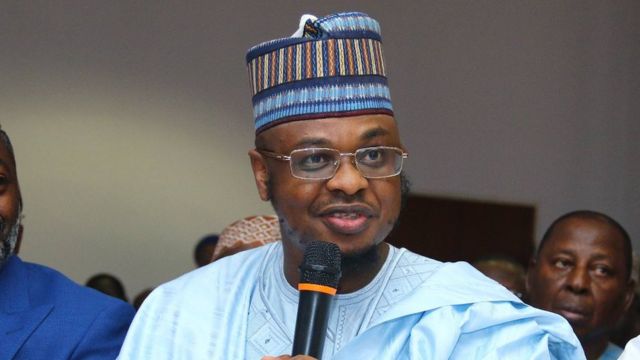
Again, Pantami extends NIN-SIM linkage till June 30

MINISTER of Communications and Digital Economy Isa Pantami has extended the deadline for the linkage of the National Identification Number (NIN) and Subscriber Identity Module integration (SIM) until June 30, 2021.

This was contained in a statement jointly signed by Director of Public Affairs of the Nigerian Communications Commission (NCC) Ikechukwu Adinde, and Head of Corporate Communications of the National Identity Management Commission (NIMC) Kayode Adegoke on Tuesday.

The decision was said to have been taken at a virtual meeting attended by Pantami; Chairman of the NCC Adeolu Akande; Executive Vice Chairman of NCC Umar Dambatta; and Director-General of NIMC Aliyu Azeez.

The statement read that the extension was sequel to requests by ‘stakeholders’ to allow more Nigerians and ‘legal residents’ to register.

According to Pantami, significant progress had been made in the linkage of SIM cards to NIN as more than 54 million persons had been registered.

He added that the 54 million registrants translated to about 190 million phone numbers in operation across Nigeria.

The statement also read that Sections 27 and 29 of the National Identity Management Commission Act 2007 provided for the ‘mandatory’ use of a national identification number to access government services.

Pantami has been asked by many Nigerians to resign his position as a minister due to his past extremist Islamic views that recently surfaced across social media.

The minister had slated the deadline for SIM linkage for February 9, before giving an extension of eight weeks, which was to lapse this week.

CBN damning verdict forces panic withdrawals at First Bank

CUSTOMERS banking with the First Bank of Nigeria (FBN) were seen engaged in panic withdrawals, following the Central Bank of Nigeria (CBN)’s last-ditch effort to save the bank from poor corporate governance.

The FBN, one of Nigeria’s tier-one banks, surprised both depositors and admirers when the Central Bank issued the board of the bank with a query for the removal of its CEO Adesola Adeduntan, citing non-approval of the change of the CEO,  emphasising that the bank was not beyond regulatory supervision.

The situation was curious because Adeduntan had eight months to the end of his tenure.

The apex bank noted that the action of the board of the FBN sent a negative signal to the market on the leadership of the board and management, stressing that it queried the board because of the developments in the bank.

For instance, Central Bank of Nigeria raised concerns that FBN had not complied with regulatory directives on divesting its interest in Honeywell Flour Mills despite several reminders.

The CBN’s Director of Banking Supervision Haruna B Mustafa said after four years, the commercial bank was “yet to perfect its line on the shares of Mr. Oba Otudeko in FBN Holdco which collateralised the restructured credit facilities for Honeywell Flour Mills contrary to the conditions precedent for the restructuring of the company’s credit facility.”

The CBN stated that for failure to perfect the pledge and satisfy the condition for regulatory approval, such restructuring had been terminated and the credit facilities now payable immediately.

Related Stories

Explainer: Why CBN ousted board of First Bank

First Bank Settles Agitated Vendors

FBN customers in panic withdrawal after CBN shake-up

In the eyes of financial experts,  the insider dealing did not go down with the CBN and could reflect that things were not going down well with the bank.

Nigeria has witnessed several banking collapses in the past. For instance in 2009,the Nigerian economy faltered and the banking system experienced a crisis.

The stock market collapsed by 70 per cent in 2008-2009 and many Nigerian banks had to be rescued. This followed a consolidation exercise by the apex bank which saw to the merging of some banks to save customers from loss of deposits.

The same fears overwhelmed depositors with the First Bank Nigeria, as some of them engaged in panic withdrawal, findings by The ICIR have shown.

A depositor with the First Bank Nigeria who pleaded anonymity confirmed to The ICIR that she withdrew her N900,000 savings from the bank, citing concerns of recent development of the regulatory intervention on the bank.

“I have been in this country long enough to read the writing on the wall. With the Central Bank’s intervention in the leadership of the bank, I have a serious concern that there could be a corporate misdeameanor from the managers of the bank. I have utmost respect for the bank with its longstanding legacy, however, I have to be cautious at this time.” the depositor noted.

Usman Mohammed, also a depositor at FBN, raised concern that the banking network had been poor since last Thursday, as he laid a complaint that he had to wait in the bank for five hours before exercising his banking services. He noted that the banking services were still having some issues, stressing that the development might not be unconnected to the Central Bank’s intervention in the management of the bank as a regulator.

In Nigeria, failed banks are handed over to the Nigeria Deposit Insurance  and  depositors were initially paid N50,000 -although it was later increased to N200,000.

Most notably, poor corporate management and weak enforcement of banking supervision have resulted in bank collapse. Bank collapses in Nigeria have pushed millions of people into poverty. It is on record that thousands of people who have kept their life savings in the banks have lost them, including children’s school fees, savings for retirement, and medical bills, among others.

On Thursday, Godwin Emefiele, the governor of the Central Bank announced the reinstatement of Sola Adeduntan, after sacking all directors of the FBN Holding PLC.

The apex bank explained that it considered itself a key stakeholder in management changes involving FBN due to the forbearance and close monitoring by the bank over the last five years aimed at stemming the slide in the going concerns status of the bank.

“The action by the board of the FBN sends a negative signal to the market on the stability of leadership on the board and management and it is in the light of foregoing that the CBN queried the board of directors on the unfortunate development in the bank,” the apex bank said in a statement.

Analysts have said that the present corporate governance concerns raised by the apex bank were the same issues that resulted in the banking distress witnessed in 2009 by the nation.

Some of the factors that resulted in banking collapse included: macroeconomic stability caused by large and sudden capital inflows, major failures of corporate governance at banks, lack of investor and consumer sophistication, inadequate disclosure and transparency.

Basil Okafor, a depositor with the First Bank,  told The ICIR that he had been watching the turn of events recently in the country and had withdrawn a large chunk of his money from the bank as a precautionary measure in protecting his hard-earned savings.

“I was at the bank early as early as 8 am on Friday morning. I am a businessman and have been watching things closely.  I lived in Spain for years and had come back home to invest,” he said.

“However, with the turn of events unravelling in the country, I’m really sceptical about what is happening. Even the governance structure baffles me. which was why I had to quickly take that step. There are lots of apprehension even from my interaction with some depositors while we were in the bank. With this development in the bank and the recent turn of events in the country, I had to take this precautionary step on behalf of my family.”

Another depositor who spoke to The ICIR said concerns of poor corporate governance concerns raised by the had forced him to trade with caution regarding his relationship with the bank.

“I can keep my account at First Bank, but I will not lodge huge amount in the bank. The CBN’s report shows the bank has poor corporate governance. The CBN is also not completely neutral,” the bank customer, who is a journalist and financial expert, noted.

A financial analyst Tope Fasua told The ICIR that the First Bank still had all the status of a big bank status in place, stressing that he could still bank with the bank unless things escalated negatively in the coming days.

“If the First Bank should go down, it will be very cataclysmic to the industry. What this also shows is that there is no big bank that cannot have issues. The bigger the bank, the bigger the headache. It used to be the biggest bank, but later lost the status to other banks.”

Michael Ani, finance expert, while reacting to the concerns raised, told The ICIR that he would still confidently bank with FirstBank despite the concerns of the apex bank, since they had taken measures to ensure proper management of the bank.

“Yes I will, because it doesn’t affect depositors’ funds. I mean a bank like FB, the CBN will never allow such to happen. We saw it in the case of Skye Bank that is not even as strong as First Bank,” he noted.

Kidnappers threaten to kill 17 Kaduna Greenfield University students if ransom isn’t paid Tuesday


KIDNAPPERS have threatened to kill the remaining 17 students of a private university, Greenfield University in Kaduna State if ransom isn’t paid by Tuesday.

Recall that they had first killed three of the students, and later another two, while demanding N800 million ransom from their parents to secure the release of the students.

The students were kidnapped from their school on April 20, with the state governor Nasir El-rufai insisting he won’t negotiate with the bandits to secure their release.

Sani Idris Jalingo who had identified himself as the leader of the bandits in a telephone conversation with the Hausa service of the Voice of America (VOA), said 17 of the students are still in their custody.

The terrorist said that the families of the students had already paid N55 million which he claims was used to feed the abductees.

He added that a ransom of N100 million and 10 motorcycles must be made available before the students would be set free.

“We heard the utterances of the Kaduna State Governor that he will not pay ransom to bandits to purchase additional arms,” Jalingo said in the interview in Hausa.

“He also said he told his family that he will not pay ransom if any of them is kidnapped. So, we want to show that the Nigerian Government has failed that is why we killed the students.”

Jalingo said the victims in their custody include 17 girls and two boys one of which is the grandson of the late Emir of Zazzau, Shehu Idris.

Two of the abducted students who spoke to the VOA during the interview appealed to the government and their parents to take pay the ransom.

“They mean what they say because they have already killed some of us,” says Idris, one of the kidnapped students.

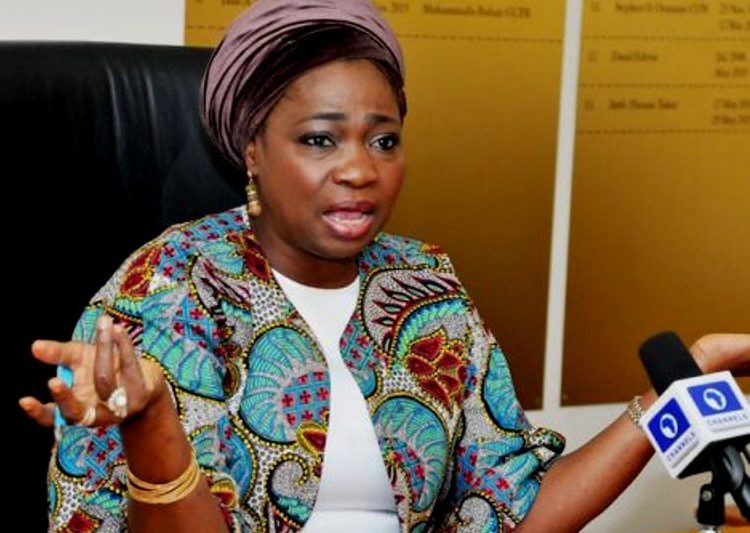
FG reacts to proposed mass deportation of Nigerians from Ghana

THE Nigerian government says it is working with its Ghanaian counterpart for the repatriation of citizens illegally residing in Ghana. 

Chairman of the Nigerians in Diaspora Commission (NIDCOM) Abike Dabiri-Erewa said on Monday that there were reports of escapees from a jail break in Nigeria allegedly found trying to cross into Ghana through illegal means.

Dabiri-Erewa said that the Nigerian mission had been engaging the Ghanaian authorities to resolve the matter, while ensuring that innocent Nigerians did not suffer unjustly. 

“Those guilty will face the law as we await updates from the mission…They should be returned to their country,” she said. 

Ghanaian authorities had announced plans to deport a total of 507 illegal immigrants residing in the country, including 494 Nigerians and 13 Burkinabes. 

Assistant Superintendent of Police and spokesperson for the Regional Police Command David Fianko-Okyere said during an interview with Ghana News Agency that a new 24-hour patrol programme launched by the region had led to the arrest of the illegal immigrants. 

He said preliminary investigations by the Ghana Police Service indicated that those arrested stayed in the country without proper documents.

Seven hundred Nigerians alleged to have been involved in criminal activities such as fraud, prostitution and armed robbery were deported in 2019.

In 2020, the Minister of Information and Culture Lai Mohammed raised the alarm over what he described as the negative reportage of issues concerning Nigerians resident in Ghana by the Ghanaian media, which he said was brewing xenophobic attitude towards Nigerians. 

Mohammed had criticised Ghana over its “harsh and openly-biased judicial trial and pronouncement of discriminately-long jail terms for convicted Nigerians,” saying such maltreatment would no longer be tolerated.

Four Bauchi LGAs under Boko Haram threat – SSG

THE Bauchi State Government, on Monday, said four local governments in the state could be attacked and occupied by Boko Haram insurgents.

Secretary to the state government Sabiu Baba raised the alarmed while briefing journalists after an emergency Security Council Meeting chaired by Governor Bala Mohammed.

He said following attack on and occupation of Geidam, Yobe State by the terrorists recently, Zaki, Dambam, Darazo, and Gamawa local government areas in Bauchi might fall into the hands of the group.

The four local council areas share borders with Geidam.

Baba said there had been exodus of people, some of who carried weapons from Yobe to Bauchi.

Consequently, the state would continue to profile whoever came into the state and  efforts would help the government to curb importation of weapons and increased movement of people into the state, he stated.

According to him, Boko Haram had launched attack on a mast belonging to a leading communication network in the country and carted away its property.

Boko Haram insurgents have been engaged in a terror campaign in parts of Nigeria

“There was an emergency Security Council Meeting of Bauchi State this afternoon and the meeting was to look into the attack by Boko Haram in Geidam and the takeover of that town and the implications for Bauchi State.Bauchi state is sharing border with Yobe State in four local government areas of Zaki, Dambam, Darazo, and Gamawa. The implication of what has happened in Geidam is that there is a lot of influx of people moving into Bauchi State from Yobe.

“Of course, that will put a lot of strain on our facilities and resources, and considering the kind of movement out of Boko Haram activities, the security implications there are also very high. The meeting today was to discuss the implications of that, identify the security threats and how to contain them from the Bauchi side.”

He added that security was a collective duty of everyone in the country and the government would not leave the work for security agencies alone, adding that all hands must be on deck to tackle it.

Bauchi State government’s alarm came a week after Niger State Governor Sani Bello revealed that insurgents had sacked many communities in his state, making people to flee from about 50 communities in the state.

The ICIR reported on May 1 how residents in Niger State were paying ransom to bandits that had taken over many parts of the state with loans and monies contributed by residents to enable them to secure the release of their captured relatiions.

Samuel Ortom

Similarly, Benue State governor had, last week, lamented the rate worsening insecurity in the state, alleging that President Muhammadu Buhari was working for the Fulanis, people of his tribe, to take over the country.

There has been overwhelming insecurity threatening continued existence of the country.

While the North-East battles with insurgency, North-West and North-Central confront banditry and farmer-herder crisis. South-East recently joined the league with unprovoked attacks on security formations and innocent civilians in the region by gunmen.

The South-West is faced with herder-herder feud, with move for secession by aggrieved people in the region gaining momentum.

There have also been threats from various youth groups in the South-South to return to era of destruction of oil assets in the region.

Nigeria partners Microsoft to drive digital economy, train five million citizens on IT

THE Nigerian government is partnering with Microsoft Corporation to upskill five million citizens over the next three years, as part of initiatives to accelerate the country’s digital economy push.

Vice President Yemi Osinbajo announced on Twitter on Monday that the partnership was the outcome of discussions held in January 2021 with Microsoft Corporation President, Brad Smith.

After extensive consultations with the government, Microsoft identified connectivity, skilling and digital transformation as three key pillars that would help to build strong foundations for a digital economy in Nigeria

“Our government is committed to leveraging innovation and technology to bring better outcomes across a wide area of governance concerns,” Osinbajo said.

The vice president explained that Microsoft’s extensive experience in the utilisation of technology as an enabler for the delivery of public and social good made them an ideal partner.

On his part, Smith said the company believed in the future of Nigeria, noting that the partnership provided an enormous opportunity to put technology to work, create jobs and foster the technology ecosystem across Nigeria,

“Research points to internet penetration in Nigeria of around 50 percent and while the pandemic has increased the pace of digitisation, much needs to be done to empower all citizens to take advantage of the opportunities of a digital economy,” the Microsoft president said.

The six regions of the country have been earmarked for the development of Microsoft’s  Airband Initiative, which is a high-speed internet infrastructure that is cheaper and faster to deploy than fibre and has the added advantage of being able to travel long distances and through forested terrain.

Microsoft’s Airband team are expected to work closely with local partners to improve broadband connectivity in these communities while also assisting with the design and implementation of hyper-scale cloud services.

Smith said to help reach the goal of upskilling five million Nigerians, 1,700 trainers would provide blended online and in-person training courses to the country’s youth as well as government workers.

“Government will also be given the tools to digitally transform skilling, education, and employment methods to match job seekers with the right employers. In doing so, we hope to create over 27,000 new digital jobs in the next three years,” he said.

The final pillar, digital transformation, would initially be made up of two initiatives. The first would address corruption, a major global challenge with economic losses totalling $3.6 trillion each year, while the second would help protect Nigeria’s rich cultural heritage, the company said.

By collaborating with local partners like the Economic and Financial Crimes Commission, Microsoft will support the design and implementation of cloud-based tools like artificial intelligence and machine learning to help identify potential risk, highlight them, and reduce corruption.

Microsoft will also support government’s efforts to preserve and revive Nigeria’s three major indigenous languages: Hausa, Yoruba, and Igbo.

“This is one of my favourite projects that we pursue around the world. It uses the most advanced technology of the 21st century to nurture and keep alive the culture that has been so important for humanity from the centuries past,” Smith added.

A joint working committee will guide these investments, and will provide regular updates on the programmes.

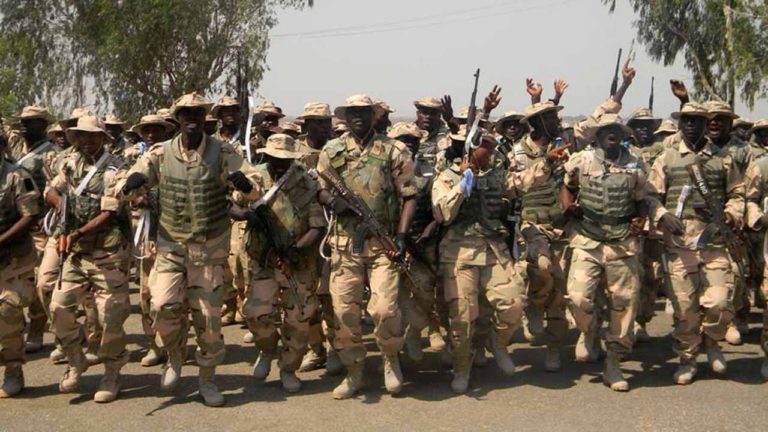
Soldiers repel Boko Haram attacks in Borno

THE Nigerian Army said attempts by members of Boko Haram terrorist group to infiltrate some villages in Borno State were repelled by troops of the Operation Hadin Kai.

The Army said this in a press statement released on Monday by Director of Public Relations Mohammed Yerima.

“Nigerian Army Troops of the newly reinvigorated Operation Hadin Kai, successfully thwarted Boko Haram Terrorists’ attempt to infiltrate into Rann Town, the capital of Kala Balge Local Government Area of Borno State on 1 May 2021,” the statement read.

The terrorists also invaded Ajiri town of Konduga Local Government Area of the state on May 2,  after initially burning down nine houses and killing villagers before being resisted by troops deployed to the area.

In both incidents, the Nigerian Army reported that the terrorists sustained fatal injuries and left behind several weapons and ammunition, including anti-air craft gun barrel, AK 47 rifle, among others.

The Army, however, said that two soldiers  lost their lives in the process, while the rest of the troops remained in pursuit of the terrorists.

“The Chief of Army Staff Lieutenant General Ibrahim Attahiru has commended the troops for their resilience and determination to keep their areas free of terrorist activities. He further charged them to sustain the renewed vigour in discharging their duties,” the statement further read.

The Boko Haram terrorist group was first established in Maiduguri, the capital of Borno in 2009, and gained widespread exposure in July of the same year when they launched attacks on Police posts and other government facilities, killing scores of policemen in the process.

Their leader Mohammed Yusuf was killed by the military after which the group became inactive.

The group was revived the following year, however, under the leadership of Abubakar Shekau and has carried out countless assassinations, attacks and bombings across Northern Nigeria till date.

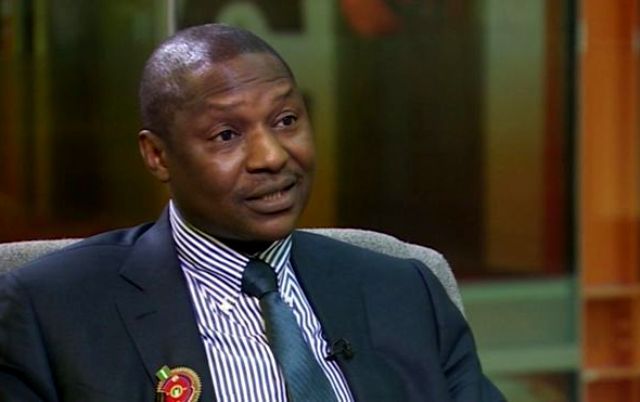
Bank documentation delaying return of £4.2m Ibori loot, says Malami

ATTORNEY-General of the Federation (AGF) Abubakar Malami says bank documentation has been the cause of the delay in transferring some of £4.2 million seized from associates of convicted former Governor of Delta State James Ibori to Nigeria.

Malami said this in a statement signed by the Special Assistant on Media and Public Relations in charge of Office of the Attorney-General of the Federation Umar Gwandu on Monday in Abuja.

The AGF said the transfer of funds between two countries (the UK and Nigeria, in this case) often took longer and the government would inform the public when the funds were received.

“Documentations with the banks in different countries often take longer than anticipated. We anticipated two weeks but we are not in control of the banks,” the statement read in part.

READ ALSOSenior lawyers divided over ownership of £4.2m Ibori loot

He said there was neither complacency nor delay on the part of the government as efforts were being made to ensure the success of the transfer.

Earlier in March, the Nigerian government had disclosed the ‘imminent return’ of part of the fund recovered from Ibori, former Delta State governor, from the United Kingdom.

While announcing the returning of the fund, Malami said about £2.2 million pounds would be spent on the Second Niger Bridge, Abuja-Kano Road, and Lagos-Ibadan Expressway, stressing that the funds would not be returned to Delta State government where the former governor stole them from.

The government’s decision raised concerns among Nigerians, including the Delta State government, who said that the fund ought to be returned to its original source where it was looted.

“We would try to take advantage of the legal system to make the Federal Government correct the injustice they are about to visit on us as a state,” said Delta State commissioner for information Ehiedu Aniagwu.

Malami insisted that the funds would not be returned to the Delta State government because the crime committed by Ibori was a national and not a sub-region one.

However, a Senior Advocate of Nigeria (SAN) and Human Rights Lawyer Femi Falana said, according to Article 35 of the United Nations Convention that is ratified by the United Kingdom and Nigeria respectively, any proceeds recovered from corruption should be expended on the victims.

Falana stated that in the Ibori loot case, the victim in the corrupt practice were the people of Delta State and the state government.