Home Blog Page 1824

Reps to Buhari: Declare state of emergency on security

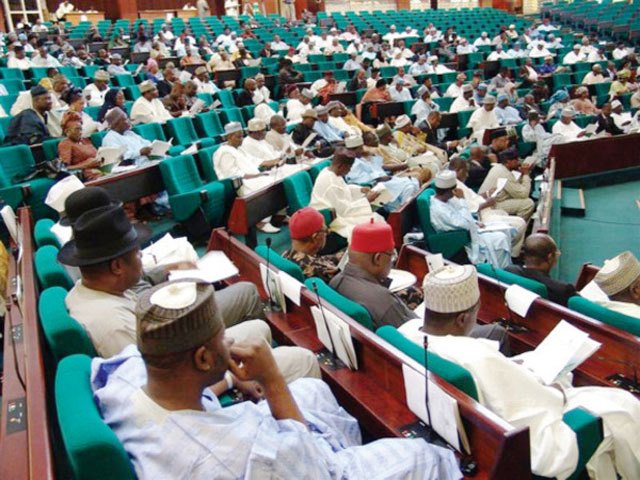
FLUSTERED by the wave of growing insecurity in Nigeria, the House of Representatives, on Tuesday, advised President Muhammadu Buhari to declare a state of emergency on the nation’s security. 

In its resolutions, the House called for more recruitments into the nation’s security agencies to enable them to have more manpower to tackle challenges posed by insecurity in the country.

The lawmakers said they would invite the National Security Adviser, service chiefs, paramilitary chiefs, controller-general of the Nigerian Customs Service as well as the managing director of Nigerian Communication Satellite Limited to brief the House on security situation in the country.

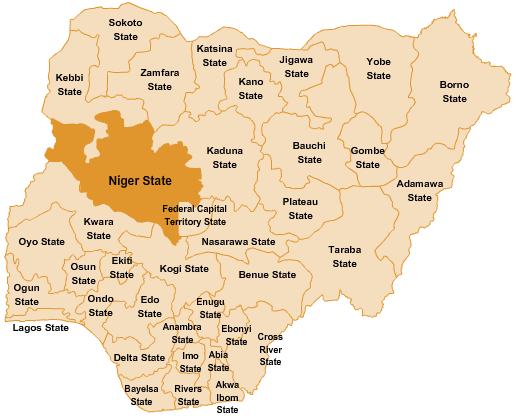
They said government should ensure the protection of national infrastructure assets, particularly the Shiroro and Kainji Dams in Niger State.
Muhammadu Buhari
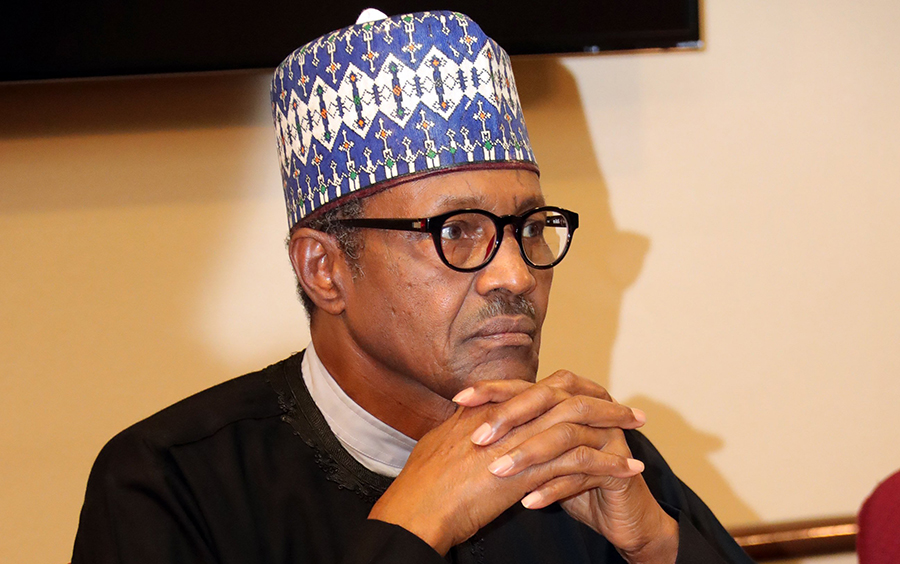
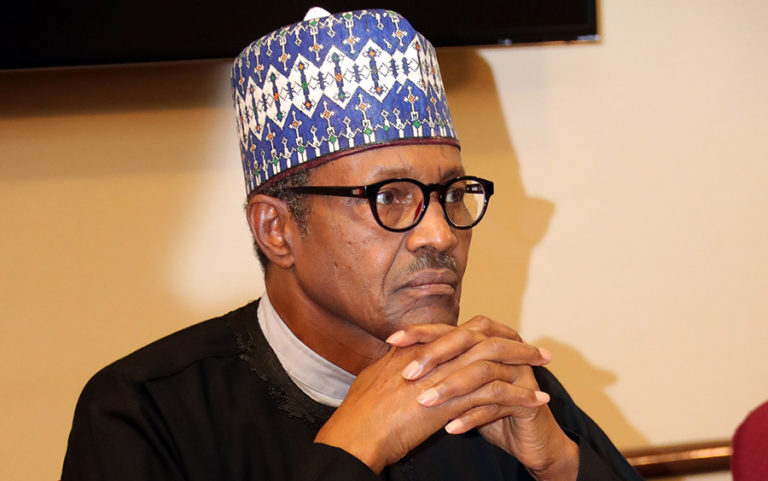
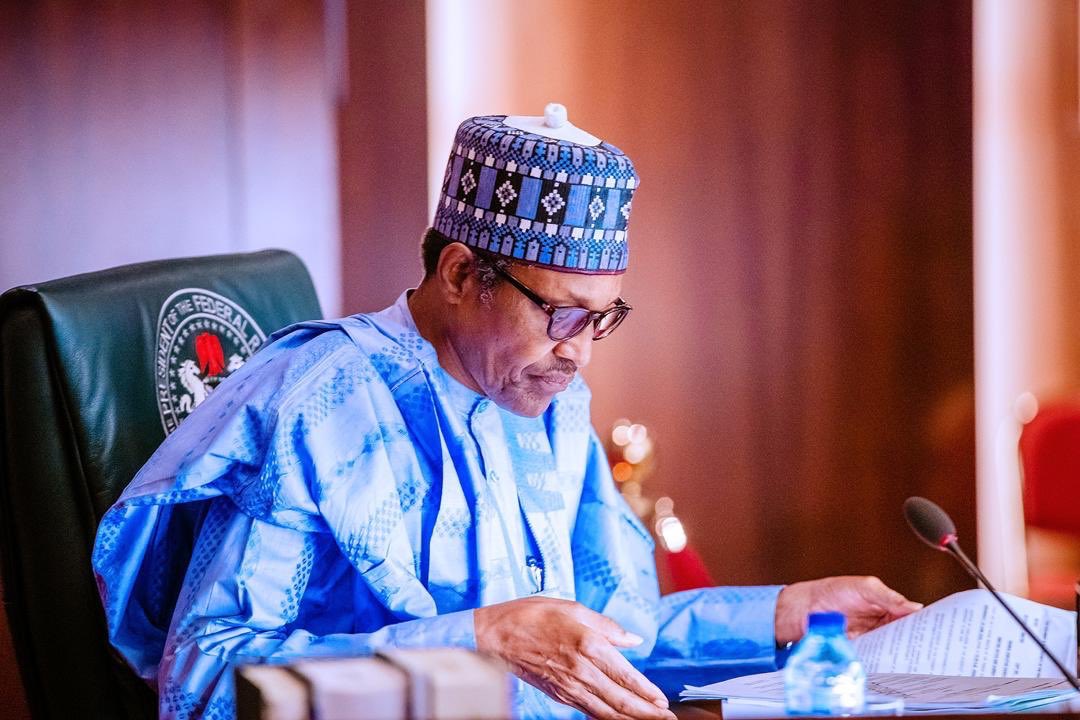
President Muhammadu Buhari

The lawmakers mandated all its security committees to immediately commence comprehensive audit of all military and paramilitary assets and arms in the Armed Services and report back to it within four weeks.

It also appealed to the judiciary to accelerate the prosecution of suspects awaiting trial due to banditry, terrorism and other criminal activities.

The Green Chamber called on the Federal Government to guarantee autonomy for local governments in the country to enable them serve people at the grassroots better.

This is even as it condemned attacks on security agents and formations across the country.

READ ALSOI won’t pay ransom to criminals, El-Rufai insists

While sympathising with families of victims of insecurity in the nation, it called on the Federal Government to support them with emergency relief.

The lawmakers listed Ukpo, Ifitedunu, Dunukofia, Abagana, all in Anambra; Geidam LGA in Yobe State; IDP Camp in Makurdi Urikpam, Jato-Aka, Police divisions in the South East, Ehime Mbano, Imo State; Uzo-Uwanj in Enugu State; Uzoakoli, Abia State; Balenga Local Government Area of Gombe State, and parts of Imo as some of the places that had been affected by insecurity in recent time.

The House reiterated its commitment to the security and corporate existence of the country and vowed to accelerate its engagement with stakeholders on a special security summit it would convene.

Many Nigerians have expressed fears that Nigeria is sliding into civil war, giving the geometric rise in insecurity in the country and the seeming government helplessness to contain the trend.

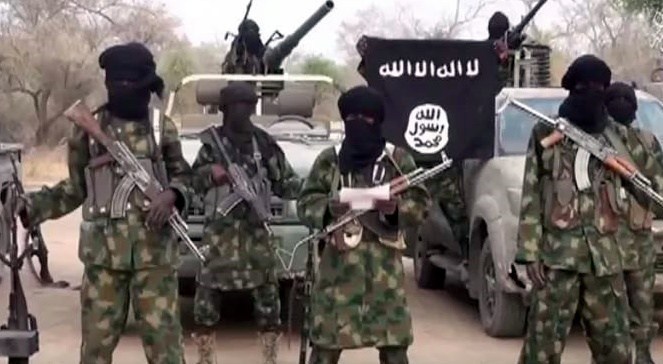
Only on Monday April 26, Niger State Governor Sani Bello raised the alarm that Boko Haram had hoisted its flag in parts of the state, while people had deserted over 50 of its communities.
Nigeria North-East
Boko Haram Insurgents

The ICIR reported how deaths from abduction of students at Greenfield University in Kaduna rose to five after their captors killed two more of the students.

On the same say, hoodlums reportedly invaded Awkuzu in Oyi Local Government Area of Anambra state and killed nine people.

Gunmen also killed about five soldiers in Omelema community, Abua/Odual Local Government Area of Rivers State on that day.

There were also reports that soldiers allegedly attacked Ibadan resident of Yoruba activist, Sunday Igboho.

On that same day, reports showed that scores were injured while properties were destroyed as commercial motorbike operators, popularly called okada, engaged the members of the National Union of Road Transport Employees in a free for all in Lagos State, resulting in at least a death.

Similarly, reports that gunmen had stormed Federal University of Agriculture, Makurdi, Benue State, Sunday night and abducted three students went viral on Monday, as the institution disclosed the incident to newsmen.

The news that personnel of the Air Force erroneously killed scores of soldiers fighting insurgents in Maiduguri, Borno State is still very fresh.

Monday’s incidents across the country only raised further fears on what have been daily occurrences in the nation.
I won’t pay ransom to criminals, El-Rufai insists

0

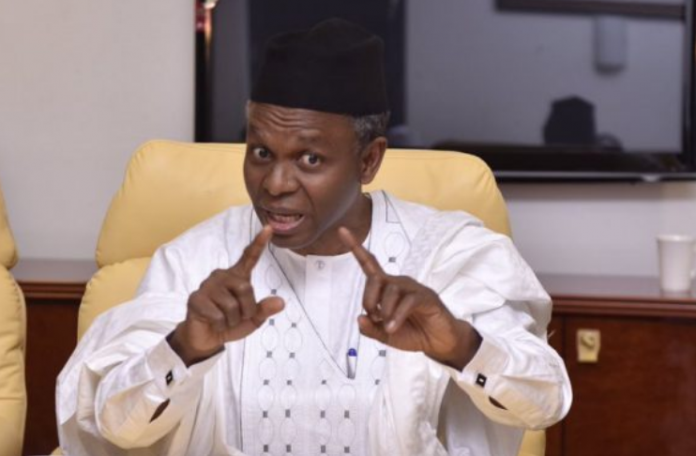
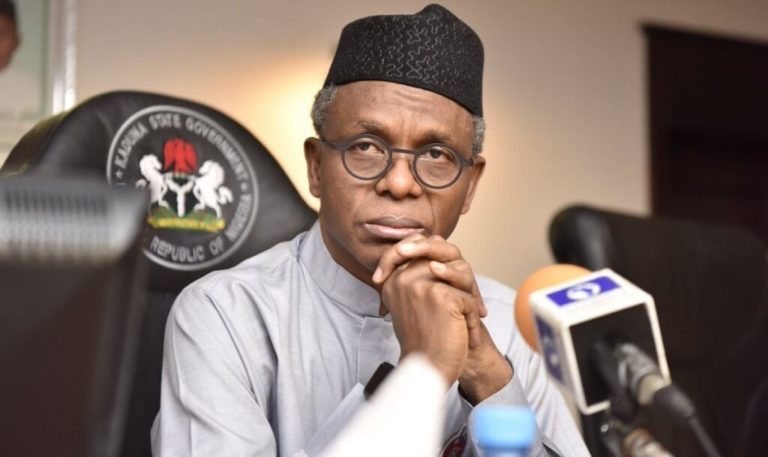
Kaduna State Governor Nasir El-Rufai, on Tuesday, insisted that his administration would not offer ransom to kidnappers, saying that doing so had not curbed criminality in the country.

This was disclosed in a statement by  Special Adviser to the governor on Media and Communication Muyiwa Adekeye, in response to a 2014 video interview  circulating on social media concerning rescuing of kidnap victims, earlier reported by The ICIR.

He added that it was prudent to review one’s position when the facts changed.

“A path proposed in 2014 cannot be taken as the immutable answer to a serious problem that has since evolved. Negotiations have not stopped the criminals, so we seek to solve today’s problem with tools fit for them,” a section of the statement read.

It had earlier been reported that bandits on Monday killed two students of a private institution Greenfield University in Kaduna, days after three other abducted students had been killed.

About 29 students of the Federal College of Forestry Mechanisation, Afaka, Kaduna State, are currently in captivity 47 days after their abduction due to the no-ransom policy of the El-Rufai government.

“Several states sought to negotiate their way out of the problems by talking to bandits, paying them money or offering them amnesty. This has not worked and has only encouraged the criminals to press ahead for a surrender of the public treasury to them. That is clearly not in the public interest,” he said.

El-Rufai said he regretted the reckless attacks and killings of students from tertiary institutions in the state.

“We sympathise with their families with whom we share the aim of the safe return of all the students. We mourn the dead students and we offer our condolences to the family and friends of the deceased,” he said.

El-Rufai, in a report, reiterated that he was under pressure from the parents of the abducted students, other concerned persons and groups to negotiate with the bandits for the release of the students.

However, the state governments of Katsina, Niger and Zamfara are believed to have negotiated with the abductors for the release of hundreds of students kidnapped from schools in their states.

“The ruthless and heartless resort of the kidnappers to murdering these young persons is part of their effort to further their blackmail and compel us to abandon our ‘no-ransom, no negotiation policy.

“The fact that criminals seek to hold us by the jugular does not mean we should surrender and create an incentive for more crime. In today’s Nigeria, it has become fashionable to treat the unlawful demands of bandits as worthy of consideration and to lampoon people who insist that outlaws should be crushed and not mollycoddled or availed the resources they can use to unleash further outrages,” he stated.

Why Nigeria ranked third worst governed country in the world

Nigeria has been ranked third-worst governed country in the world, according to a report published on Monday by the Chandler Good Governance Index (CGGI),

The ICIR takes a look at some of the reasons for the poor ranking.

The index rankings were based on seven pillars, which included: leadership and foresight, robust laws and policies, strong institutions, financial stewardship, attractive marketplace, global influence and reputation as well as helping people rise.

According to CGGI, the points ranged from zero to one, zero being the lowest and one the highest, Nigeria, which is the most populated African nation, did not score up to 0.50 in any of the indices.

Nigeria has more than 200 ministries, departments and agencies (MDAs) but it was ranked 0.19 in Strong Institutions. Lack of accountability and transparency, corruption and other negative vices have characterised government agencies.

The 2019  report of the Office of the Accountant General of the Federal (OAGF) had indicted several government agencies of non-remittance of revenue, illegal withdrawals as well as other disregards for financial rules.

In Leadership and Foresight, Nigeria scored 0.24, a reflection of how the country has been torn in ethnic crises and clashes while the government is unable to proffer a solution that would unite its over 200 million population.

President Muhammadu Buhari

Frank Umeh, a civil society leader based in Enugu, South-East Nigeria, explained that the Muhammadu Buhari’s administration had been unable to show leadership in fighting insurgency and uniting a deeply divided nation.

Most of Buhari’s appointments have been one-sided, with the North occupying the majority of critical positions. The ICIR reported how the North occupies 60 per cent of NNPC senior positions.

Nobel Laurette Wole Soyinka has consistently complained that Buhari had not showed leadership in the face of farmer-herder crisis and other security threats.


You may wish to read

Bandits abduct 35 persons in Niger

Insecurity: Katsina hires dogs to guard schools

Insecurity: Like Canada, US warns citizens against travelling to Nigeria


The CGGI report also scored Nigeria 0.35 on Robust Laws & Policies. The ICIR had reported how several Nigerian laws had become obsolete, including those that were critical to the development of the country.

A team of consultants under the auspices of the Department for International Development (DFID) led by a Senior Advocate of Nigeria Paul Idornigie had recommended to the 8th Assembly that 54 Nigerian laws were obsolete and needed amendment, but no changes have been made hitherto.

Others are: Attractive Marketplace, 0.40; Global Influence & Reputation, 0.35; and Helping People Rise, 0.33.

According to a report by the National Bureau of Statistics (NBS) titled ‘2019 Poverty and Inequality in Nigeria,’ 40 per cent of the total population, or almost 83 million people, lived below the poverty line.

On Financial Stewardship, Nigeria was scored only 0.37. The country has spent billions on financially unsustainable projects, including the just awarded $1.5 billion on the Port Harcourt Refinery Company (PHRC) which has recorded several years of losses.

Attractive Marketplace – Nigeria scores 0.40

The report scored Nigeria 0.40 in having an attractive market place. The ICIR had reported that the United States online retail company Amazon and a social media giant Twitter ignored Nigeria in locating their African headquarters.

Amazon had concluded its plans to locate its African headquarters in South Africa while Twitter has headed for Ghana, leaving out Nigeria – the most populous concentration of Black people in the world.

Truworths and Shoprite, two South African retailers, have also exited Nigeria.

With the ranking, countries like Rwanda, Ethiopia, Mozambique are better governed than Nigeria.

FG’s support for Pantami, damaging to Nigeria’s relationship with key foreign allies- CHRICED

THE Resource Centre for Human Rights and Civic Education (CHRICED) has admonished the Federal Government for what has been described as its support for a sympathiser of a terrorist organisation in a press statement released on Tuesday.

The statement, which Executive Director Ibrahim Zikirullahi signed, read that the Federal Government’s support of the Minister for Communications and Digital Economy Isa Pantami had grave repercussions. It had negatively affected Nigeria’s relationship with key foreign allies needed to vanquish terrorism in the country.

Describing the Federal Government’s backing of Pantami as the “most damaging communication to emanate from the Nigerian Presidency,” the CHRICED warned that Nigeria was at risk of being regarded as a state-supporter of terrorism by countries around the world.

Highlighting other negative implications of the FG’s support of Pantami, the CHRICED noted that the government’s actions would also serve as a basis for maltreatment and harassment of Nigerians in the diaspora and may be reprimanded by the Financial Action Task Force, the watchdog for terrorist financing.

READ ALSOThose unwilling to forgive Pantami are Nigeria’s problem – Garba Shehu

“It is unacceptable that the government would take such a brazen position without considering the very serious implications for Nigerians in the diaspora and around the world.”

The CHRICED also stated that the government’s position was made more alarming by the fact that terrorism had claimed the lives of several Nigerians these past few years, as Nigeria still struggles with the realities of global terrorism.

“It is unbelievable that a government which says it is committed to rooting out terror will be pampering and harbouring a terror sympathiser within its fold.”

CHRICED stated that such an approach to the issue would further enhance ethnic strife, raise mutual suspicions and serve as live ammunition in the hands of separatist agitators who would go to any lengths to ensure that Nigeria implodes.

The government was then urged to ensure that Pantami is investigated and made to account for his past activities.

Nigerians have been demanding the resignation of Pantami, over statements made in the past in support of terrorist groups such as Al-Queda. These statements were of admiration for the Taliban, Al- Queda and Jihad, and were from some of his preaching and lecture recordings from years ago.

Shasha market crisis: FG gives relief packages to 982 victims

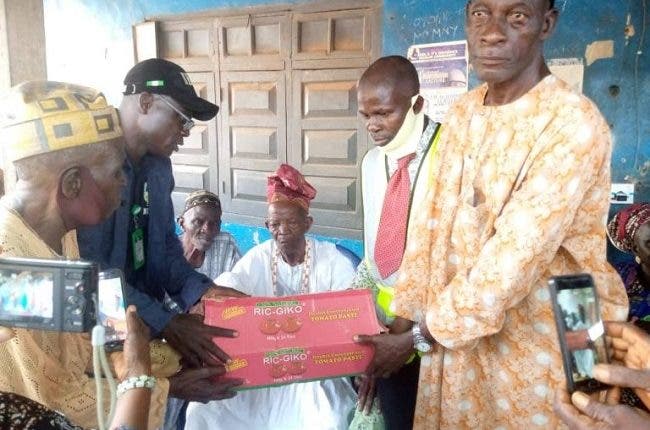
THE Federal Government of Nigeria, through the National Emergency Management Agency (NEMA), has facilitated the distribution of relief packages to 982 victims of the Shasha market crisis.

The ICIR had earlier reported how the traders lost millions to the Yoruba-Fulani clash at the market in February.

The Acting Zonal Coordinator of NEMA South West region, Mr. Akiode Saheed, while handing over the relief materials to both the leaders of the two tribes dominating the market,  Ba’ale of Shasha market, Akinade Ajani and the Seriki Shasha, Alhaji Haruna Maiyesin said the president facilitated the materials.

“We are here with Oyo State Emergency Management Agency (OYSEMA) for the direct distribution of relief assistance as approved by President Mohammadu Buhari upon the request of the Minister for Humanitarian Affairs, Hajia Sadiya Umar Farouq, who has graciously approved these relief materials to be distributed to all affected victims of Shasha market crisis, which occurred on 12th February this year.”

Items distributed included 10kg of rice, beans, garri, 20kg of vegetable oil, sachets of tomato paste, seasoning and salt.

In their remarks, leaders of Yoruba and Hausa communities, the Baale of Shasha and Seriki Shasha, expressed gratitude to President Mohammadu Buhari for reaching out to them in what they described as their ‘trying time’.

They, however, urged both the Federal and Oyo State government to expedite action on the market reconstruction, especially as the rainy season approaches.

The Baale of Shasha, Akinade Ajani, lauded the president for the assistance, just as he solicited more support, noting that the destruction of the market, as a result of the mayhem, greatly affected many families and people’s sources of livelihoods.

“Government should expedite actions on the market reconstruction so that things will not get worse. You all know that the rains are here already and if actions are not expedited on helping us reconstruct the market people’s wares and properties will be further destroyed by the rains.”

Babaloja of Shasha market, Chief Rashidi Popoola also noted that peace has returned in the market, but traders have not been able to erect structures that will prevent rain from destroying their wares.


Six informants arrested by security agencies in Niger

0
AMID high spate of insecurity in Niger State, security agencies have arrested six persons for passing critical information to bandits.
The ICIR was told that  the arrests were made in Shiroro and Munya local government areas of the state.
Sources said a medical doctor, farmers and youths were apprehended on Tuesday and they were in Police custody in Niger State. The sources added that  the Police were investigating the individuals to find the extent of their involvement in the crime.
However, the Police were yet to officially confirm the issue as of the time of filing this report as the Police Public Relations Officer Wasiu Abiodun said he would inform the media should there be any new information.

Niger State is under the siege of bandits.  At least 35 persons were abducted and several others injured by armed bandits at Chiri, Gini and Fuka communities in Shiroro and Munya local government areas of Niger State on Saturday. 

Chairman of the Niger Concern Citizens Muhammad Awaisu Wana said in a radio programme monitored  in Minna that 10 out of 15 wards in Shiroro Local Government Council were currently under the control of bandits, adding that Gwada, Kuta and Sarkin Pawa in Shiroro and Munya LGA had become headquarters for displaced persons affected by the situation.


Wana explained that eight of the wards under bandits’ control were in riverine areas, noting that there were about 80,000 IDPs in the state.
Wana urged Nigeria’s government to come to their aid to enable them return home and start preparing for this year’s farming, stressing that there could be food shortage in the state and country if the banditry continued unabated.

Bandits abduct 35 persons in Niger

0

AT least 35 persons have been abducted and several others injured by armed bandits at Chiri, Gini and Fuka communities in Shiroro and Munya local government areas of Niger State. 

Chairman of the Niger Concern Citizens Muhammad Awaisu Wana said in a radio programme monitored in Minna that 10 out of 15 wards in Shiroro Local Government Council were currently under the control of bandits, adding that Gwada, Kuta and Sarkin Pawa in Shiroro and Munya LGA had become headquarters for displaced persons affected by the situation.

The ICIR understands that bandits invaded the communities in motorcycles on Saturday evening, shooting sporadically and causing the villagers to flee into the forest for safety.

READ ALSO: Six informants arrested by security agencies in Niger

Wana explained that eight of the wards under bandits’ control were in riverine areas, noting that there were about 80,000 IDPs in the state.

Wana urged Nigeria’s government to come to their aid to enable them return home and start preparing for this year’s farming, stressing that there could be food shortage in the state and country if the banditry continued unabated.

The co-Convener of Concerned Shiroro Youths Sani Abubakar Kokki also confirmed the attack in Gini, Fuka and Chiri communities, stressing that the communities were simultaneously attacked by the bandits. He also said that there were people who sustained multiple gunshot injuries amid destruction of houses and food stores.

Last Friday, Deputy Governor of Niger State Ahmed Ketso, during his visit to the Internally Displaced Persons (IDPs) camp at Gwada and Shiroro local government areas,  said that the security challenge in the state was overwhelming.

He noted that the security situation in the state was above the state and they must pray over the situation. He also warned citizens to desist from being informants to the bandits.

Forestry students’ abduction: Bandits demand N5 million per child, says parent

A PARENT of two of the kidnapped students of the Federal College of Forestry Mechanisation, Friday Sani, has said that bandits have demanded the sum of N5 million each as ransom for the abducted students.

Speaking in an interview with Channels TV on Tuesday, he expressed anxiety over the situation, stating that the government has remained unsupportive since the event occurred.

According to Sani, parents of the victims have continued to communicate and negotiate with the bandits despite threats of arrest from the government, as they seemed to have been left to their own devices.

“They have refused to change their position that they will arrest anybody that negotiates with the bandits. We should be arrested when our children are under the comfort of their father’s home,” he said.

When asked if payments were made to effect the release of 10 of the students who were freed weeks ago, he replied in the negative, stating that the circumstance surrounding their release remains a mystery to him.

Sani described an allegation that he had paid some money to the bandits for the release of the 10 students as ridiculous, stating that it was impossible to pay for the release of other kidnapped students. At the same time, two of his daughters remained in captivity.

Suggesting a way forward, the Head of Public Affairs of the National Conscience Party Yunusa Tanko, who also featured on the program, advised the Nigerian government to reach out to both local and international communities for support.

He pointed out the dangers of this approach, however,  saying that mercenaries may have negative effects on the country, adding that vital information would be given out, which may eventually be used against the country.

Recall that gunmen kidnapped 39 students from the Federal College of Forestry Mechanisation in Kaduna over a month ago. Ten of the victims were released in two batches three weeks ago, while twenty-nine remain in captivity.

Flashback: El-Rufai makes 360-degree turn over calls for rescuing kidnapped students

0

IN the build-up to the presidential election in 2015, Nasir El-Rufai, incumbent Kaduna State Governor, took a swipe at former President Goodluck Jonathan, asking him to vacate office over growing security threats in the country.

At the time, over 200 schoolgirls were abducted from their hostel in Chibok, Borno state, an incident that sparked off an outrage locally and internationally.

In an interview El-Rufai granted in 2014, he blamed the ex-president for his failure to rescue the missing girls and asked him “to go home” for being the only president that couldn’t tackle insecurity.

“If one of these girls were Jonathan’s daughter, the story would be different; the only reason why these girls are still in captivity is that they are not the daughters of any important Nigerian, and we know it.

“So if you say we are politicising terrorism, go and rescue the girls, so I don’t have a basis for politicising it…I am in support of any option to rescue the girls because when you have the lives of your citizens at risk, you should not take any option off the table; you should be flexible,” he said.

Fast forward to six years after, under his leadership as Governor of Kaduna State, security remains the biggest challenge as students get kidnapped more frequently.

But his tone on the abduction of students from schools in Kaduna State, where he is the Chief Security Officer, reflects a sharp contrast from the previous statements he made six years ago before he became governor.

In a radio interview, El-Rufai reiterated his government’s policy of not negotiating with bandits but would apply force in dealing with bandits and other violent criminals.

“I mean it, and I will say it again here. Even if my son is kidnapped, I will rather pray for him to make heaven instead because I won’t pay any ransom,” he said.

The corpses of two more students abducted from Greenfield University found at a location close to the university raises the death toll of the abducted students killed by the bandits to five.

The private institution was attacked by gunmen last Tuesday when an unknown number of kidnapped students.

However, Greenfield University’s invasion is the third time bandits are attacking a school in Kaduna this year.

In March, bandits stormed UBE primary school at Rama in Birnin-Gwari LGA, days after a similar attack.

They had also attacked the Federal College Of Forestry Mechanisation in Igabi LGA, abducting 39 students, 10 of whom have regained freedom.

Parents of the 29 students in captivity have continued to stage protests, asking the state government to negotiate with the bandits to secure their children’s release.

They had also threatened to reach out to the bandits after it became clear the state government would not dialogue with the attackers.

Investors flee Nigeria on poor management of exchange rate, inflation, security

INVESTORS are fleeing Africa’s largest economy due to a litany of problems, notably the Central Bank of Nigeria (CBN)’s mismanagement of foreign exchange market, skyrocketing inflation and insecurity.

Like Shoprite, many companies have exited Nigeria in the last five years. On February 19, 2016, South African retailer Truworths packed out of Nigeria, shutting down two remaining stores in Africa’s biggest market. The clothing retailer cited rising costs as a key reason for exiting the market. Canadian-based technology company Dynamics Intelligence announced plans to exit the country in 2019.

Twitter recently set up an office in Ghana, ignoring Nigeria, and Amazon is also establishing an office in South Africa -a big blow for Africa’s most populous country. These firms exited Nigeria for various reasons, but investors say mismanagement of the foreign exchange market, poor management of inflation and insecurity are key issues.

Truworths store at Melrose Arch in Illovo.Picture:Freddy Mavunda © Financial Mail

The CBN has maintained multiple exchange rate market, creating one window for investors and exporters, another window called NAFEX, and another window for religious travellers. Analysts and investors say this weakens investors’ confidence, creating uncertainty in the economy.

The LCCI is made up over 3,000 investors and businesses. The body said multiplicity of the exchange rate market was one big reason scaring investors.

“Lack of cohesion among policymakers sends a negative signal to the investment  community, worsens uncertainty, and further dampens investor
confidence,” President of Lagos Chamber of Commerce and Industry (LCCI) President Toki Mabogunke said in an emailed press statement to The ICIR.

The chamber said it was critically important for policymakers to harmonise the multiple exchange rates into a single market-reflective rate, which was imperative in strengthening investor confidence and engendering macroeconomic stability.

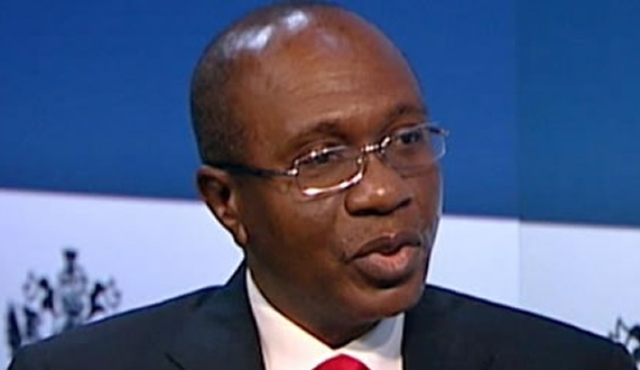
Central Bank Governor, Godwin Emefiele

“Unification of exchange rates would complement recent efforts by the CBN geared at enhancing liquidity at the supply segment of the foreign exchange market,” the LCCI noted, adding that ensuring clarity on the country’s foreign exchange policy direction among participants in the investment environment was even more imperative in attracting private investments into the economy.

Insecurity from terrorism to kidnapping is hurting the Nigerian economy, scaring investors away and leading those in the country to consider exiting  for neighbouring countries like Ghana. Analysts say unless a decisive step is taken to quell the rising insecurity, the Nigerian may, at some point, be an orphan.

“There is a fundamental problem with the governance structure in the country. How come we have the governors as the chief security officers in their respective states, and we get the kind of news we get on daily basis in the country on insecurity. They collect security votes in the country, but look at the current situation in the country. Do you expect any investor to come into our country, giving the terrible issues of terrorism in the country?” President of Association of Public Policy Analysts Pricewill Okorie told the ICIR.

READ ALSOWhy Twitter, other investors prefer Ghana to Nigeria

Experts have stressed that Nigeria, with about $400 economy and nearly 210 million population, should be the most obvious investment destination in Africa. But bandits are overrunning Nigeria, kidnapping school students and officials in Nigeria’s North. The infrastructures of telecoms such as Airtel, MTN and Globacom have been severally destroyed in the North-East,  scaring other investors’ interest. Investors prefer peaceful destinations where their investments are protected, but this has not been the case in Nigeria.

A business expert and associate consultant to the British Department for International Development Celestine Okeke told The ICIR that the government was de-marketing itself with the way it was handling the security situation in the country.

“Bandits are overrunning the country because they think there is no authority to confront them. No business person, both local and foreign, would come into an environment like this,” he noted.

Rising inflation is eroding incomes of consumers, raising cost of living and hurting investors’ profitability. Inflation hit 18.17 per cent in April 2021 – highest in four years. The country has failed to enforce monetary and fiscal policies to steer productivity o curb inflation, while the exchange rate policies have skyrocketed an already worse inflation situation. Investors can no longer find certainty in the Nigerian market,  according to the LCCI, fuelling unemployment to 33.3 per cent in the fourth quarter of 2020.

The Manufacturers Association of Nigeria (MAN)’s Director-General Segun Ajayi-Kadir said the current inflationary condition in Nigeria was adversely affecting the profitability of the manufacturing sector and was partly responsible for its lack of competitiveness.

“The latter is a major contributor to the low-export penetration of goods manufactured in the country into the international market,” he said.