Home Blog Page 1828

Akwa Ibom Assembly probes corruption at Peacock Paints

0

By Ekemini SIMON


THE Akwa Ibom State House of Assembly has assured citizens of the state that it would investigate the allegation of corruption and crisis bedeviling Peacock Paints Limited.

The assurance by the state legislature comes on the heels of the John D. and Catherine T. MacAuthor Foundation and ICIR-supported investigative report carried out by The Mail Newspaper where deep-seated corruption and misappropriation of state government intervention fund in Peacock Paints Limited by the management was exposed.

The Speaker of the Akwa Ibom State House of Assembly, Aniekan Bassey noted that the Akwa Ibom State House of Assembly would not allow the matter to be swept under the carpet. “After resumption from the strike by Parliamentary Staff Association of Nigeria (PASAN), we would act on the report.

“That is what we were elected to do. The committee chairman is in the know. He has indicated interest and he is eager to work on it,” Hon. Bassey said in a phone interview on Monday, April 19, 2021.

In the same vein, the chairman of the Akwa Ibom State House of Assembly’s Committee on Trade and Investment, Hon. Kufreabasi Edidem disclosed in an interview that the House of Assembly has received calls from the public to look into the report of corruption in Peacock Paints Limited.

Edidem, whose committee has oversight powers on the state government investments, said he has kick-started personal investigations into the issue prior to official investigation by the committee at the time the House will resume plenary.

He said: “We will have to undertake preliminary investigations to verify the facts in the report, find out other facts and the position of government. Without this report, we would not have been able to work.

“Before we invite people, we will have to gather adequate facts so that we know what question to ask and who to direct the question to.

“Even though we are yet to resume, as the committee chairman, I have begun asking questions.”

Edidem assured that the public would be kept abreast of developments from the probe by the House.

Zamfara attacks: Police say only 25 were killed

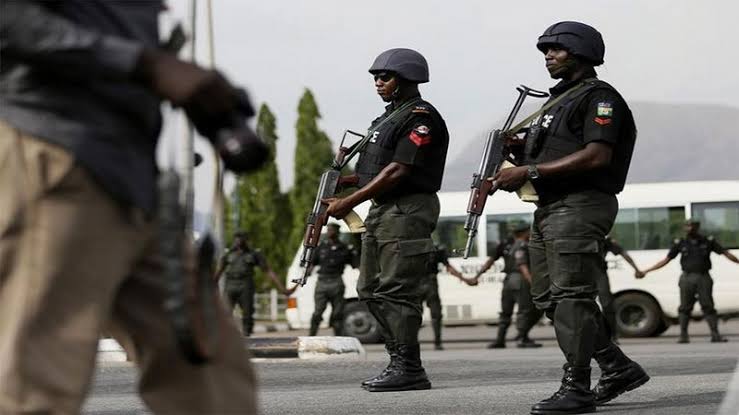
THE Zamfara State Police Command has denied a report that over eighty people were killed during attacks by suspected bandits.

Zamfara Police Spokesman Mohammed Shehu, in a telephone conversation with The ICIR, said the number of deaths recorded from the attack on Wednesday had been inflated.

Shehu stated that the number of people who suspected bandits killed was not more than 25, adding that the security personnel responded swiftly, thereby foiling the activities of the gunmen.

When asked if the villagers who fled their homes have returned to bury the dead, he responded, saying nobody fled, adding that security agents intercepted the attacks, killing several gunmen in the process.

“That number you are saying is outrageous. Nobody fled because the security agents responded promptly and neutralised many bandits,” he said.

The Police PRO also said that over thirty bandits were killed in a village in Maradun Local Government Area of the state.

Shehu further said the number being reported was those inflated by criminals, which he said was to push their propaganda and perpetuate fear through the media.


You may wish to read

National Assembly may call for Buhari’s resignation – Bagos

Zamfara governor swears by Quran, says he has no connection with bandits

279 of 317 abducted Zamfara schoolgirls released


He urged the media personnel to assist the police in fighting this agenda, stating that the media also has a major role in crime management and control.

It would be recalled that gunmen had on Wednesday attacked five villages in Zamfara, which resulted in the deaths of about 83 people, leaving a large number of others injured, according to several reports.

Victims of the attacks were said to be mainly members of the local vigilante group, who died in a bid to protect their people.

Zamfara, in recent years, has seen an outbreak of attacks by bandits, leaving many people dead. The state has been described as the epicentre of banditry in Northern Nigeria, by the former Executive Secretary of the National Health Insurance Scheme Usman Yusuf, in a live webinar organized by The ICIR.

However, these attacks have been condemned by Nigerian President Mohammadu Buhari, who described them as “insane” and warned that the Federal Government has the capacity to crush those promoting insecurity in Nigeria.

In a statement released on Thursday by his aide, Buhari said that the incessant killings would be a thing of the past in no distant time.

“Such wanton disregard for life will be brought to an end sooner than later,” he said.

He further urged all security agencies to intensify all efforts to end banditry and violence against innocent people.

Police arrest, prosecute 18 illegal miners in Zamfara


THE Anti Illegal Mining Squad of the Nigeria Police Force have arrested and prosecuted 18 people who were caught engaging in illegal mining in Zamfara State.

Zamfara State Police Public Relations Officer Shehu Mohammed made this known in a statement on Friday in Gusau.

Mohammed said the anti illegal mining team, led by a Superintendent Police Officer Murtala Bello, was assigned by the force headquarters in Abuja to enforce the presidential order banning illegal mining in the state.

“The recent operations conducted by the anti illegal mining team was at Yan Kaura mining site in Maru local government area where villagers from different parts of the state converged and embarked on illegal mining.

“The assigned squad mobilised and successfully dislodged the violators where 18 suspects were arrested,” Mohammed said.

He added that secret investigation was conducted after which all the suspects were charged to court and they were now in prison.

According to him, numerous exhibits were recovered, including; 504 bags of different chemicals used in refining gold; one Lexus Jeep; one Meter Director; one Professional Digital Table Top Scale, and 14 bags of processing sand suspected to be gold.

He said the squad commenced operations in September 2020, raided several illegal mining sites and arrested illegal miners at different locations in the state.

He further said the sites raided included major illegal mining sites at Kwali, Bukkuyum Local Government Area; Daki Takwas, Gummi Local Government Area; as well as Zugu and Wawan Icce in Anka Local Government Area of Zamfara.

President Muhammadu Buhari had, in March, placed a ‘no fly zone’ and banned all mining activities in Zamfara State.

Zamfara is one of the major northern states ravaged by banditry, terrorism and other illegalities.

There have also been reports of an established nexus between banditry and the illegal miners operating in the state.

The illegal miners have been long accused of informing bandits of the whereabouts of military personnel in the state.

Three kidnapped students from Greenfield University in Kaduna found dead

BANDITS have killed three of the kidnapped students from Greenfield University in Kaduna.

The bandits had kidnapped an unspecified number of students at the institution located at Kasarami village off Kaduna-Abuja Road in Chikun Local Government Area on Tuesday.

The ICIR understands that the bandits later made contact with the parents and demanded N800million ransom for the release of the students.

But in a statement on Friday, state’s Commissioner of Internal Security and Home Affairs Samuel Aruwan said the remains of the students were found close to the university on Friday.

“In an act of mindless evil and sheer wickedness, the armed bandits who kidnapped students of Greenfield University, have shot dead three of the abducted students,” he said.

“The remains of three students were found today (Friday), in Kwanan Bature village, a location close to the university and have been evacuated to a mortuary by the Commissioner, Internal Security and Home Affairs, and Force Commander, Operation Thunder Strike, Lt.Col. MH Abdullahi.”

He noted that “Governor Nasir El-Rufai has condemned the killing of three students as sheer wickedness, inhumanity and an outright desecration of human lives by vile entities. He went on to say that the armed bandits represent the worst of humankind and must be fought at all cost for the violent wickedness they represent.

“Evil, the Governor further said, would not triumph over God-given humanity. He appealed to citizens to come together against the forces of darkness challenging national security and the very existence of the Nigerian State.”

While stating that citizens would be informed of further developments, he added that the governor, on behalf of the state, had sent deep condolences and empathy to the students’ families and the university community, as he prayed for the repose of their souls.

Politicians sponsoring banditry to bring down Buhari’s govt, says Uzodinma

GOVERNOR of Imo State Hope Uzodinma has claimed that politicians are sponsoring banditry in Nigeria to bring down the administration of President Muhammadu Buhari.

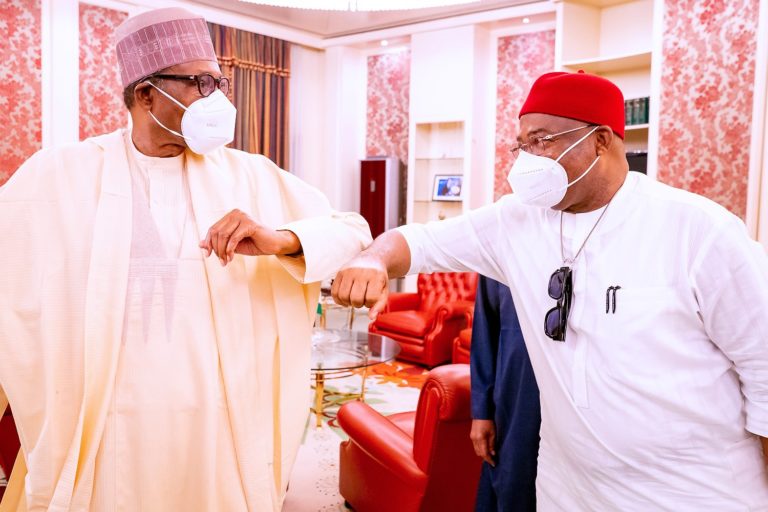
Uzodinma said this on Friday while addressing journalists following a closed-door meeting with Buhari at the Aso Villa.

He also challenged security operatives in the country to make the names of the politicians available to the press.

“What people are doing is to sponsor crisis to the extent that those funding banditry are politicians and I challenge and call on the security agencies to make their names available to the press because what they want to do is to distract a government that is focused,” Uzodinma said.

“This country is blessed by God. From 2015 to date, I thought what the problem would be people saying there is no job creation, that people are not feeding, that salaries are not being paid, that infrastructure is going down, that social interventions are not approved by the government, but these things are available,” the governor said.

However, Uzodinma’s position does not totally reflect the reality of Nigeria and Nigerians.

Although social interventions are being approved and there are traces of infrastructural development across the country, Nigeria’s unemployment is rising and salaries are being owed.

Earlier in March,  the National Bureau of Statistics (NBS) had revealed that one in three Nigerians is now without a job.


READ ALSO:


According to the report, titled ‘Labour Force Statistics, Unemployment and Under Employment – Q4 2020’ 33.3 percent of the current population of Nigeria are unemployed.

Moreover, unemployment has risen by nearly 400 percent since 2015, spiking from 6.75 percent in the third quarter of 2015 to 33.3 percent in the last quarter in 2020.

This shows that poverty is escalating in Africa’s most populous nation with 98 million out of 200 million in multidimensional poverty.

Multidimensional poverty encapsulates deprivations in many dimensions, including lack of education and job, poor quality of work and threat of violence, according to Oxford Poverty and Human Development Initiative.

Nigerians now know Buhari aligns with Pantami’s view on terrorism, says Ezekwesili

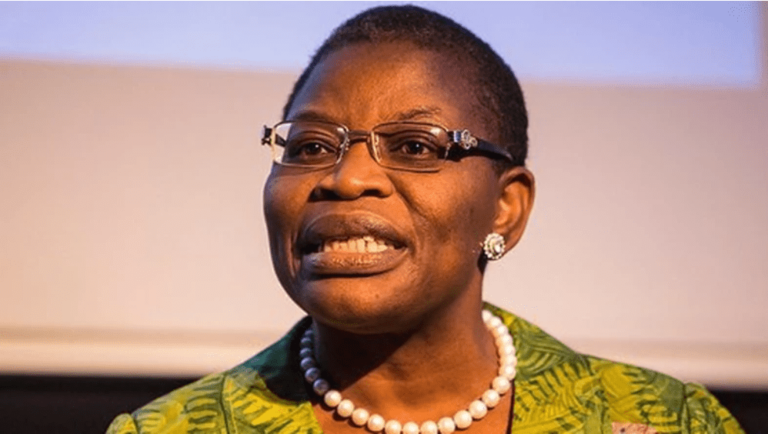
A former Minister of Education Oby Ezekwesili has said that Nigeria’s President Muhammadu Buhari aligns with the extremist views of Communication Minister Isa Ali Pantami.

Ezekwesili said this Friday via a series of tweets while reacting to the Presidency’s defence of Pantami.

The Presidency had, on Thursday evening, defended Pantami’s previous stance on terrorism, saying he was a young man when he made those assertions.

“In that singular act of siding with his Minister of Communication, @NGRPresident  @MBuhari actually conveyed a message on his view of terrorism. Nigerians now know that his views align with that of his Minister,” Ezekwesili said.


You may wish to read

Presidency stands by Pantami despite pro-terrorism statements

Pantami: Presidency, SSS keep mum amid calls for minister’s sack over controversial statements

Killed by SARS: A man of the people


She noted that she did not agree with the position of the Presidency over the views of Pantami on religion because the minister had sworn an oath to public office.

According to the former minister, Buhari had ‘persisted in badly managing’ the diversity of the Nigerian citizens.

An Associate Fellow of Africa Programme with the Chatham House Leena Hoffman said dismissing questions about those views as positions held when Pantami was young and naïve or as an example of cancel culture was premium gaslighting.

She stated that Pantami’s view on establishing overall Jihad was one that had not been properly interrogated, adding that an honest and accountable government would show an appetite to do so transparently.

“Pantami is representative of a hyper-zealous cadre of clerics who proliferated the puritanical Salafi literalist creed of Islam which has reshaped northern Nigeria in deeply volatile ways,” Hoffman said.

She further stated that the Communications Minister was not just a fringe voice in the restructuring, rather he was a forefront charismatic cleric and debater who indoctrinated and suffocated the critical thinking and development of a generation of Muslim youths.

“Northern Nigeria is in the grips of a crisis of moral vigilantist chauvinism because of a steady diet of extreme, puritanical doctrines from the likes of Pantami. Where is the personal accountability for his moral chauvinism and extremist views about non-Muslims,” She noted.

A senior Advocate of Nigeria Mike Ozekhome had insisted that in a ‘saner clime’ Pantami should have resigned or be sacked.

Ozekhome said this in a statement titled ‘The Leopard And Its Unchanging Spots’ and made available to journalists.

He said Pantami had not changed his extreme Islamic views because, on March 22, his Ministry hosted a virtual flag-off ceremony for a capacity development programme which was not covered by prominent television stations rather, a very little-known Islamic TV channel called Al-Afrikiy was contracted to relay an event organised by the Federal Government of Nigeria.

ICPC partners estate surveyors to recover, manage stolen assets

THE Independent Corrupt Practices and Other Related Offences Commission (ICPC) and the Nigerian Institution of Estate Surveyors and Valuers (NIESV) have resolved to partner in the recovery and management of corruptly acquired assets. 

Secretary to the ICPC Musa Usman Abubakar, who received President of the NIESV Emmanuel Okas Wike and his team on behalf of the commission recently, described the partnership as a welcome development.

Abubakar said asset recovery was one of the major components of the fight against corruption, adding that ICPC needed the support of experts such as estate surveyors in the valuation of recovered assets to ensure that the government was not shortchanged in the process of disposing recovered properties.

“That your institution considers this collaboration as your corporate social responsibility is worth commending as corruption should be fought by everyone in the interest of all,” Abubarkar was quoted to have said in a statement sent to The ICIR by ICPC’s Spokesperson Azuka Ogugua on Friday.

In his reaction,  President of NIESV expressed his appreciation to ICPC for seeing the importance of working with other professionals, especially in the area of assets recovery and management.

READ ALSO: FG reforms passport system, sets May deadline to clear backlog

He noted that NIESV had members all over the federation who were poised to assist the work of the commission in line with their professional work ethics and international best practices.

“It is key to us that you consider NIESV as worthy partner. We are therefore, ready to offer our support to the work that you do.”

“We will work with you to ensure that your work in our field is properly carried out for the benefit of all Nigerians and I assure you of the best of our services,” he concluded.

A major high point of the visit was the signing of a Memorandum of Understanding (MoU) between the commission and NIESV by the Secretary to the Commission and the President of NIESV.

SARS Brutality: Murder by torture

0

Twelve years ago, a land tussle sent Chijioke Ugwu into the notorious hands of SARS officials, who tortured him to death.


CHIJIOKE Ugwu, who died aged 62 in July 2009, was an astute businessman who started with a pickup truck. He used the truck to supply wood to construction sites in the southeastern Nigerian city of Enugu. With the money he made from that business, he bought another truck, which he gave out on hire purchase. A native of Akegbe-Ugwu in the Nkanu-West Local Government Area of Enugu State, Mr Ugwu also owned a garri-processing plant that produced at least thirty bags daily.

A family man, he had two wives and a full house. The first wife bore five children, while the second wife produced three. Every Christmas Eve, Mr Ugwu would drive his first wife—Obiageli Ugwu—and their five children to the market to shop for clothes, foodstuff, shoes and any other thing they needed for the Yuletide.  He also made sure that Obiageli’s drinks-and-beverages provision store was always filled with goods, and had begun plans to buy her a car.

Mr Ugwu was popular in his community and loved the tradition of his people. He participated in masquerade festivals and gave money to the masquerades. The Igwe of the community always listened to him because of his reputation as an honest man. Mr Ugwu joined the community’s security team and in his time, incidents of robbery in Akegbe-Ugwu reduced.

On July 17, 2009, Mr Ugwu drove to a friend’s mechanic shop at Gariki in Enugu to repair his truck. There, a friend, Paul Mba, called and asked for his location.

Mr Ugwu disclosed his whereabouts to Mr Mba, and after a few minutes, police officers stormed the place and arrested him. Before then, the police had arrested two other men who Mr Ugwu knew. The men, like Mr Ugwu, were part of the security team of Akegbe-Ugwu. The police officers took Mr Ugwu and the two men to Gariki Police Station.

At the station, Mr Ugwu called his first wife, Mrs Ugwu, and told her what had happened to him. The next day, July 18, Obiageli went to the station but did not see her husband. A police officer told her Mr Ugwu had been transferred to the office of the Special Anti-Robbery Squad (SARS) located at Enugu-Onitsha road, New Market.

At the SARS office, the officers insisted that Mrs Ugwu must pay 1,000 naira before she would be allowed to see her husband. Upon payment, her husband’s cell was unlocked.

Mrs Ugwu recalls how traumatizing the sight of her husband was upon his release: as a result of the beatings he had endured in custody, Mr Ugwu’s body was full of wounds, his legs were broken, and his jeans soaked with blood.

On July 20, Mr Ugwu was taken to an Enugu Magistrates’ court, alongside the two men arrested with him. The court, unfortunately, could not sit because the injuries the men had sustained in custody had left them weak. The judge instructed them to get treatment before appearing in court again.

Later, Mr Ugwu informed his wife that the SARS officers had planned to take him back to the cell, where they were sure to continue torturing him. Fearing the worst, Mrs Ugwu begged the magistrate to send her husband to prison instead of the cell. The magistrate, much to the annoyance of the SARS officers, agreed. Mr Ugwu was taken to an Enugu prison.

The people of Akegbe-Ugwu at that time had a land tussle with Akwuke, a neighbouring community. Mr Ugwu and the two other arrested men were at the forefront of this struggle. Mrs Ugwu believes her husband and the men were targeted arrests. Her first daughter, 25-year-old Nnenna, supports her argument. Nnenna recalls that her father told her that one of the SARS officers had told him to pay five million naira to regain his freedom, as some members of the Akwuke community had ordered his death by paying 500,000 naira to the SARS officers. Nnenna says her father rejected the offer.

On July 21, Mr Ugwu died in the clinic of the Enugu prison. His remains were taken to the University of Nigeria Teaching Hospital (UNTH), Ituku Ozalla, where an autopsy was conducted and a verdict reached: He had died from a lethal injection administered to him in SARS custody.

Mr Ugwu’s family filed a petition against the SARS officers and went to court in March of 2010. In 2011, the court ruled in their favour and demanded that they be compensated with the sum of five million naira. Instead, the family received 1,090,000 naira, which Mrs. Obiageli Ugwu shared with her husband’s second wife in the presence of their lawyer. The family is yet to receive the rest of the compensation.

After Mr. Ugwu was buried in June 2012, the family returned to court twice, demanding the remainder of the money. But they kept getting tossed to and fro, and have grown tired of following up.

Mr Ugwu’s family have struggled financially since his death. His pickup trucks were sold to pay bills. His workers at the garri-processing plant embezzled money and sold some of the machines. His wife’s business collapsed.

His daughter, Nnenna, could no longer pursue her dream of becoming a medical doctor and had to get married in 2017 at the age of 22. Nnenna’s other siblings have dropped out of school, too, and taken up different small-scale businesses.

Nnenna says, “I love and miss my father. Most times, I feel like he is still here.”


This story is part of a multimedia project by Tiger Eye Foundation and media partners across Nigeria, documenting police brutality in Nigeria, and advocating for police reform.

FG reforms passport system, sets May deadline to clear backlog

THE Nigerian Government has announced new electronic measures that will rejig the passport application process and reduce human interaction.

This is meant to promote a system that is seamless, transparent and more efficient.

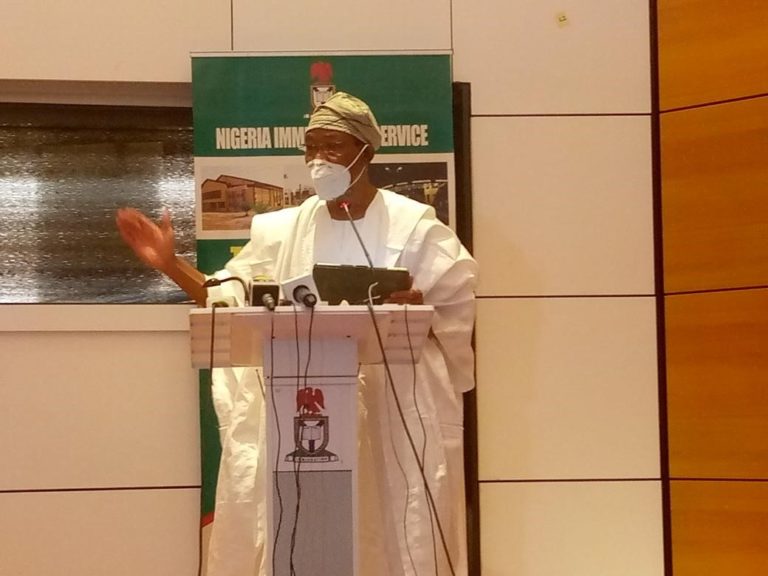
Minister of Interior Rauf Aregbesola, during a media briefing organised by the Nigeria Immigration Service (NIS) in Abuja on Thursday April 22, said through a public-private partnership, government would establish at least one special centre in each local government area, beginning with Abuja, to speed up passport processing.

Aregbesola also declared a zero-tolerance stance to all forms of touting, stressing that no applicant would be made to pay any ‘illegitimate fees.’

He disclosed that both seen and unseen security operatives would be attached to all passport offices to detect and report any form of solicitation, inflation, improper communication, extortion, diversion, hoarding and other corrupt practices.

“Those caught will be dealt with according to the law,” the minister said.

Henceforth, every passport application would have a fixed timeline of six weeks for collection. This is to provide enough time to investigate, verify and validate personal information supplied by the applicants, Aregbesola explained.

“What we are driving at is the peace of mind that comes from assurance of certainty. If there are circumstances that will make the date to change, it will be communicated to the applicant one week before the collection date,” he said.

On his part, Comptroller General of the NIS Muhammed Babandede said he would clear all existing passport application backlogs across all issuing centres before May 2021.

A list of the backlog of passports that were ready but yet to be collected would be published on the NIS website while applicants would be required to go to the state commands to collect them.

Over the years, Nigerians at home and in the diaspora have expressed their frustration at the system that makes application for the Nigerian passport very difficult. Many have spent long hours on the queue, while others have waited for months with little or no communication. There have been reported cases of extortion by officials and others posing as agents.

While the NIS believes these new initiatives will transform the entire passport application process, some Nigerians are of the opinion that the six-week passport collection time should be further shortened in view of the several available means for identity verification such as the National Identity Number (NIN) and the Bank Verification Number (BVN).

The media breifing was attended by the leadership of the NIS and all passport control officers in Nigeria and Immigration attachés around the world.

Killed by SARS: A man of the people

When a beloved bus driver refused to surrender his car keys to a security man, he was shot in his ear and his spinal cord, sparking a four-day battle for his life which he eventually lost.


Daniel Ikechukwu Ugwu, who died in January 2020 at the age of 32, was a native of Imilike Ani, a town in Udenu Local Government Area of Enugu State.

A faithful family man, Mr Ugwu was a loving husband to 27-year-old Onyinyechi Ugwu and a caring father to their six children.

On Children’s Day, he would take his wife and children to Okpara Square, an open space for celebration in the state’s capital Enugu, to have fun. The family would visit popular supermarkets—Shoprite and Spar—and buy goodies while laughing and holding hands.

At about 5 p.m. on January 6, 2020, Mr Ugwu, a driver for the transport company Peace Mass Transit (PMT), arrived at the company’s bus terminal in Yenagoa, the capital of Bayelsa State, having travelled from Onitsha in Anambra State.

While the passengers were alighting from the vehicle and their luggage was being brought out, a policeman attached to Fidelity Bank, Okutukutu in Yenagoa, approached Daniel.

The policeman asked Daniel to hand over his car keys. When he refused to comply, the policeman cocked his gun and shot Daniel, also injuring a passenger in the process.

The policeman tried to run away but was caught by witnesses and beaten up. The police arrived later and rescued their trigger-happy colleague from the mob. They also took Daniel and the injured passenger to the hospital.

Onyinyechi Ugwu, who was seven months pregnant at the time, said she and her husband had spoken in the early hours of that day. She was in her village at Ezza, in Ebonyi State. She had been preparing to return the next day to Enugu, where the family lived. When her husband called that morning, she said he had asked about the children and told her he was about to begin his journey from Onitsha to Yenagoa. She said this was one of the things she loved about him; he told her everything he planned to do, never kept her in the dark.

Mrs Ugwu was distraught when news of her husband’s shooting reached her. The man who called to give her the news also told her that her husband, who had regained consciousness despite getting hit in his left ear and spinal cord, wanted to speak with her. Daniel asked her to come to Yenagoa. He told her he was dying.

Throughout the night, Mrs Ugwu cried while her mother and family members tried to console her.

On January 10, 2020, four days after he was shot, Mr Ugwu died at the University of Nigeria Teaching Hospital (UNTH).

It is now 2021, more than a year after Daniel’s death.

His wife is yet to receive the compensation—2.5 million naira—that Fidelity Bank’s representative promised to pay for the upkeep of her children. When she requested to know the reason for the delay, the representative told her the bank headquarters had yet to approve the money to be released. Mrs Ugwu also says the police in Yenagoa have done nothing to assist her.

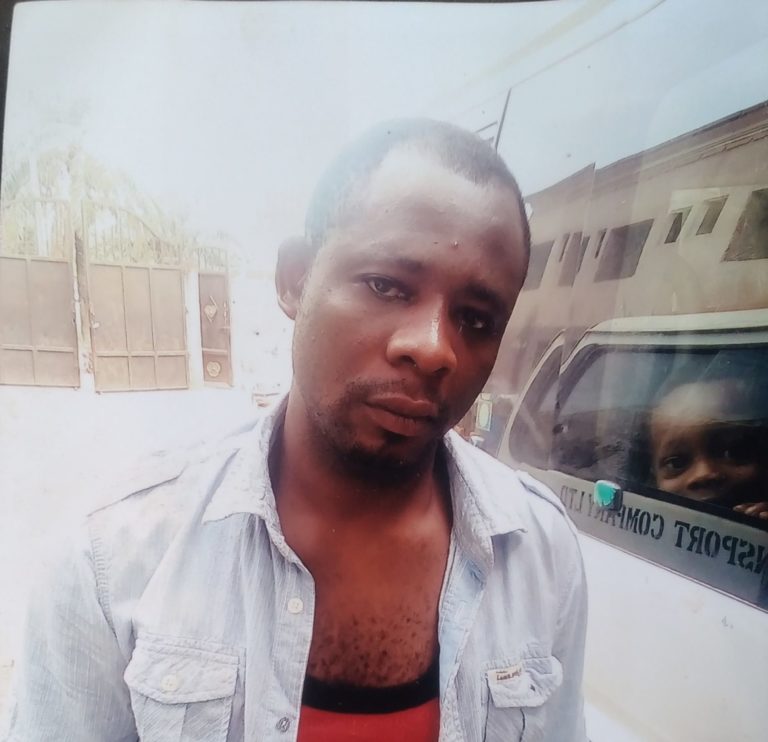
Daniel Ikechukwu

Mrs Ugwu remembers her husband as a “loving, caring, generous and playful man” who never let his wife and children lack anything.

Daniel, his wife says, extended his kind and caring nature to many others; his mother, siblings, co-workers, friends.

She now sells food to take care of her children, but this does not bring in nearly enough. They owe several months of rent and may soon be thrown out. The children no longer go to school. She cannot afford it.

Mrs Ugwu, meanwhile, now has problems with her eyes. Her mental health has deteriorated too. She is barely able to pay attention during conversations, always finding herself absent-minded, worrying.

“My heart is bleeding, seriously,” she says. “It is a lifetime’s worth of pain.”


This story is part of a multimedia project by Tiger Eye Foundation and media partners across Nigeria, documenting police brutality in Nigeria and advocating for police reform.