REVENUE derived from Value Added Tax (VAT) on alcoholic beverages made up a significant portion of about N525.74 billion received by Kano State in federal allocations since 2015.
Checks by The ICIR shows that Kano is among the top 10 states that receive the highest monthly allocation from the Federal Government, part of which is derived from alcohol tax.
This is in spite of the state government’s policy of confiscating and destroying bottles of alcoholic beverages in line with the dictates of the Sharia Law, the Islamic legal code.
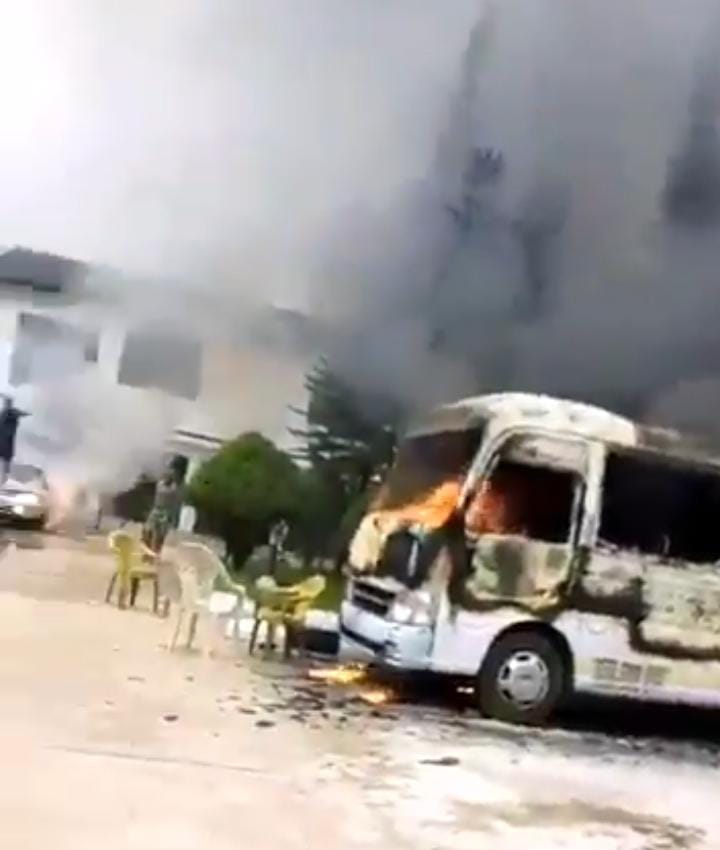
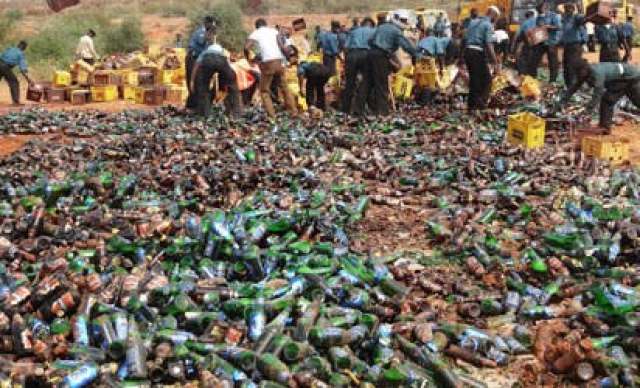
In November 2020, the Kano State Hisbah Board destroyed 1,975,000 bottles of beer worth over N200 million.
The alcoholic drinks were confiscated from traders within the Kano metropolis. The Hisbah police enforce compliance with the Islamic law, Sharia, which forbids the consumption of alcohol.
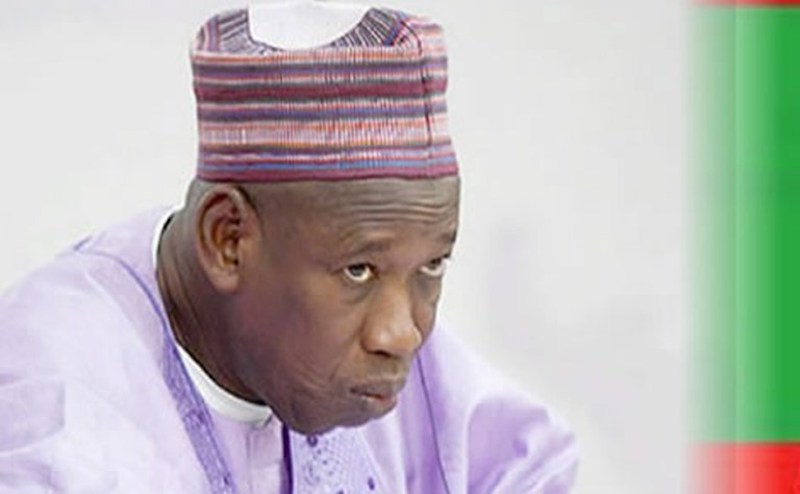
The destruction of the alcoholic drinks was carried out at an elaborate event where Kano State governor, Mr. Abdullahi Ganduje, was represented by his deputy, Mr. Nasiru Gawuna.
“In Kano, we have banned the consumption of beer in all parts of the state,” Ganduje stressed in a speech read on his behalf by Gawuna.
The November 2020 incident was not an isolated incident. Hisbah has been destroying alcoholic drinks in Kano and some other northern states before that event and has continued to do so to date.
About 12 states practise Sharia law in northern Nigeria. They are Kano, Kaduna, Katsina, Kebbi, Sokoto, Borno, Yobe, Jigawa, Bauchi, Gombe, Zamfara and Niger.
You may wish to read
Judiciary: Stark inequalities plague yet another set of Buhari appointments
How Drug Addiction Threatens A Generation Of Northern Women (Part 1)
How Drug Addiction Threatens A Generation Of Northern Women (Part 2)
COVID-19: Weak laws, poverty worsen gender-based violence in Bauchi during lockdown (PART 1)
Hisbah which enforces compliance with Sharia Law in these states had outlawed economic activities involving the production, sale and consumption of alcohol.
The Kano State Law No. 4 of 2004 banned the manufacture and use of ‘intoxicants’, including alcohol, in the state.
But the irony is that Kano and these other states receive revenue from value-added tax (VAT) on alcoholic drinks in their monthly shares from the federal allocation distributed by the Federation Accounts Allocation Committee (FAAC).
Revenue from VAT is a major component of the money shared to the three tiers of government each month by the FAAC.
A breakdown of FAAC allocations to Kano by The ICIR shows that in 2015, the state received a total of N85.46 billion from the federation account. Kano also collected a total of N88.95 billion in 2016, N89.58 billion in 2017, N90.74 billion in 2018, N86.76 billion in 2019 and N84.28 billion in 2020.

Infographics by Isah Abdul-Azeez
The amounts collected by the state include revenue generated from VAT on alcoholic drinks from other states which allow, and support businesses that deal on alcoholic drinks. Kano State and other northern states which forbid alcohol also receive allocations of revenue generated from Company Income Tax paid by companies that produce alcoholic drinks.
The ‘hypocritical’ situation has raised concerns over equity and fairness in the sharing of federal allocations in Nigeria.
Checks by The ICIR also revealed that the development had resulted in a legal suit, which is currently pending before an Abuja Federal High Court.
- Receiving shares of revenue generated from VAT on alcolohic drinks by Kano shows absence of equity, fairness in federal allocations
Director General of the Lagos Chamber of Commerce, Industries, Mines and Agriculture (LACCIMA), Mr. Muda Yusuf, in an interview with The ICIR, said the destruction of alcoholic drinks by Kano and some other northern states when they also receive shares of revenue from VAT on alcolohic drinks raises questions concerning equity and fairness in federal allocations.

Yusuf noted that, to ensure equity and fairness, revenue from VAT should be shared on the basis of derivation.
Speaking with The ICIR, he said, “It (destruction of alcoholic drinks while sharing in revenue generated from VAT on alcolohic drinks) raises issues concerning fairness and equity in the distribution of federal allocations.
“I think the ideal thing should have been that VAT should strictly be a state tax. Even if the Federal Inland Revenue Service (FIRS) should deduct anything it should be maybe 10 percent just for administrative purposes but 90 percent should be based on derivation. That is the only way you can ensure some equity.”
Noting that the issue is one of the problems encountered in the revenue allocation system in a federal structure, Yusuf added, “The VAT collected in each state is a function of the economic activities that takes place in each state and for all the economic activities there are things that the state provides to support those economic activities. Also those economic activities also generate what you call negative externalities. The state has to provide refuse disposal, has to take care of the environment, has to provide healthcare services and others for those people who are performing those economic activities.
“So ideally what is generated from VAT is what the state should use to support itself to provide support for those economic activities. But when you now collect the VAT and now begin to share it for everybody whether they contributed to it or not, it is not fair. So the way out is to make it 90 percent derivation.”
Yusuf also reacted to suggestions that states that destroy alcolohic drinks should be denied shares of revenue generated from VAT on alcolohic drinks.
“It is a very complex thing. How are you going to work it out? And it is not in every part of those states that alcoholic drinks are being destroyed. It is not in all areas of Kano that they don’t consume alcohol, I think they have some designated areas. I think the way out, in order to ensure equity, is to make VAT derivation based,” he told The ICIR.
Yusuf observed that making the sharing of revenue from VAT derivation-based would address the issues of equity and possible reduction of the amount accruing to the federation account from taxes.
“It (destruction of alcoholic drinks) could reduce the amount accruing to the federation account from VAT but what is important is to ensure that there is a lot more equity in the way things are done. For instance on this matter of alcoholic drinks there are some states that are supporting all of that and the VAT from alcohol is collected all over the federation and Kano State government cannot say ‘isolate the one that is from alcohol, we don’t want it’. They collect everything,” Yusuf further observed.
- States that destroy alcolohic drinks should not receive shares of revenue from VAT on alcolohic drinks
Lead Director, Centre for Social Justice (CSJ), Mr. Eze Onyekpere, in an interview with The ICIR, insisted that the destruction of alcoholic drinks was illegal.

Onyekpere said states that engage in the practice should not be receiving shares of revenue generated from VAT on alcolohic drinks, as well as those realised from Company Income Tax paid by companies that produce alcoholic drinks.
“My position on this is that they should not be destroying alcoholic drinks in the first place but if they must destroy alcoholic drinks it makes no sense for them to share from the revenue from not just VAT but also Company Income Tax paid by companies like Nigerian Breweries that produce alcohol.
“Such taxes that are attributable to alcohol should be isolated, calculated and removed from the pool that should be shared with these states that destroy alcoholic drinks. Either they stop what they are doing or they withdraw from sharing in the process.”
Onyekpere, in the same vein, canvassed the arrest and prosecution of persons found to be engaging in the destruction of alcoholic drinks.
- Goods worth billions destroyed by Hisbah in Kano, other northern states
In February this year, the Bauchi State Hisbah Board confiscated 260 crates of alcoholic drinks from hotels and night clubs as part of its effort to enforce the Sharia Islamic code.
The permanent commissioner in charge of Hisbah and Sharia implementation in Bauchi State, Mr. Aminu Balarabe, said a court order would be obtained to destroy the items as the subsisting Sharia law which came into force in the state in 2003 had unequivocally prohibited sales and consumption of alcoholic drinks.
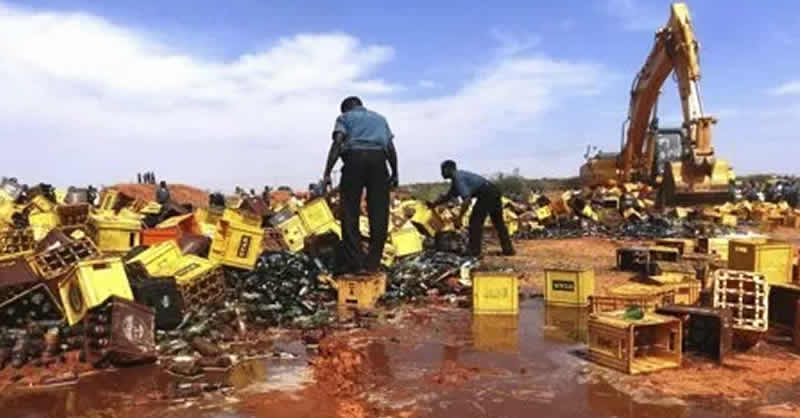
Also in February, the Hisbah Board in Jigawa State destroyed about 3000 confiscated bottles of alcohol in the Kazaure Local Government Area of the state.
Earlier, in September 2019, the Kano State Hisbah Board destroyed over 196,400 bottles of various alcoholic drinks worth over N50 million.
In July 2020, a tricycle loaded with 100 cartons of alcoholic drinks was intercepted in Kano. The drinks were impounded and destroyed.
In a highly publicised incident in December 2018, the Kano State Hisbah Board seized and destroyed more than 30 trailer-loads of beer.
In September 2018, an official of the Kano State government revealed that the state’s Hisbah Board had confiscated and destroyed over 12 million bottles of beer within a period of seven years.
A distributor, Mr. John Simon, in an interview with The PUNCH newspaper in November 2020, said he lost over N35 million worth of goods after the Kano Hisbah Board confiscated and destroyed alcolohic drinks in his stores.
- Court asked to declare destruction of alcolohic drinks as an act of economic sabotage
Meanwhile, an activist, Mr. Sesugh Akume, has gone to court to challenge the continuing destruction of alcoholic drinks by Kano and some other northern states.

The suit numbered FHC/ABJ/CS/275/2021 was filed on March 4, 2021 and has the Attorney General of the Federation (AGF) and the Economic and Financial Crimes Commission (EFCC) as respondents.
A copy of the originating summons, which was obtained by The ICIR’s correspondent, shows that the plaintiff, through his lawyer, Mr. Rodney Adzuanaga, is asking the court to determine whether the production, transportation, sale, consumption and possession of alcolohic beverages was forbidden by the 1999 Constitution of the Federal Republic of Nigeria or any other extant laws. The court is also to determine whether the ‘wilful’ destruction of bottles of alcoholic drinks and wasting the contents was not an act of economic sabotage.
The plaintiff is also asking the court to determine “Whether it is a contradiction destroying alcoholic beverage bottles and wasting the content whilst benefitting from value added tax (VAT) from alcoholic beverages?”
The plaintiff, Akume, asked the court to declare that the production, transportation, sale, consumption and possession of alcoholic drinks was not forbidden in Nigeria and therefore, any subsidiary legislation that criminalises it was unconditional, null and void.
The court was equally asked to declare that the destruction of alcoholic drinks was an act of economic sabotage, and that the “destruction of a source of VAT one enjoys is contradiction and hypocritical.”
Akume, in the same vein, asked the court to order the EFCC to determine and publish the extent of financial loss for each act of destruction of alcoholic beverages, and prosecute those responsible for the acts.
The court was also asked to order that it was not mandatory for the states that destroy alcolohic drinks to retain shares of VAT revenue from alcoholic beverages allocated to them from the federation account.
Stating the grounds upon which the reliefs were sought, Akume noted that “The alcolohic beverage industry is a top money earner for the country, and a means of employment and livelihood for millions, therefore any deliberate destruction and wastage of such products is an act of economic sabotage.”
- Breweries, bottling and beverages sector major source of VAT revenue in Nigeria
Documents filed in the suit indicate that the breweries, bottling and beverages sector has consistently been the 4th biggest source of VAT in Nigeria, after professional services, other manufacturing and commerce, according to data from the National Bureau of Statistics.
Between January and September 2019, the sector contributed N31.8 billion in VAT to the economy. It also contributed N14.33 billion as VAT in the first quarter of 2020.
The money realised as VAT from the breweries, bottling and beverages sector, including those from alcoholic drinks, is shared to all states and local governments in Nigeria.
- States that destroy alcolohic drinks should reject share of federation account derived from VAT on alcolohic beverages
In an affidavit in support of the originating summons, Akume argued, “Whereas the Federal Government allocating and distributing funds accruable to states and local governments is mandatory according to statute, no state or local government is mandated to keep and/or utilise the funds. States that do not appreciate monies sources from VAT derived from alcohol may pass laws in their respective Houses of Assembly (and Legislative Councils for local governments) to refund such amounts to the Federal Government, or donate to others who would appreciate same.”
Checks by The ICIR revealed that the suit will come up for mention and first hearing before Justice Anwuli Chikere of Court 3, Federal High Court Abuja, on May 10, 2021.
- Attorney General should defend constitutional democracy against Islamic theocracy
In an interview with The ICIR, the plaintiff, Akume, noted that the northern states that are destroying alcoholic drinks are operating Sharia Law despite the fact that it was illegal to operate Sharia Law in Nigeria.
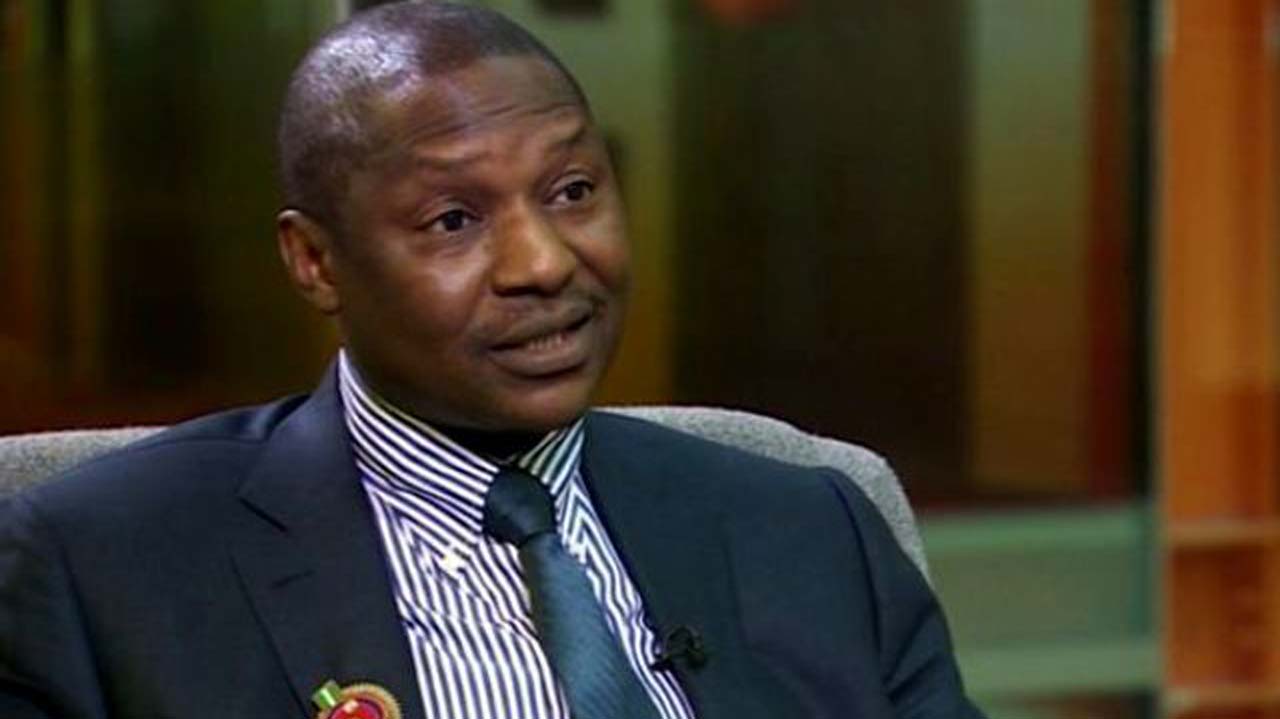
Akume said the Attorney General of the Federation should defend constitutional democracy in Nigeria.
“This suit puts the Attorney General in the position to either argue for a constitutional democracy which Nigeria is, or an Islamic theocracy which is the agenda of the states in the so-called core north,” he told The ICIR.
The activist further accused the states engaging in destruction of alcoholic drinks while at the same time collecting revenue derived from VAT on alcolohic beverages of hypocrisy.
“This suit exposes their hypocrisy. Why are they breaking beer bottles and at the same time enjoying VAT from beer? I want the court to call it hypocrisy. Second, even though the Federal Government has to send VAT to them, they don’t have to accept it. They are not duty-bound to accept it. I want the court to rule thus.”
Efforts to get the reaction of the Kano State government in this report were not successful. Calls to the Chief Press Secretary to the Governor, Abba Anwar, were not answered. A text message sent to him was also not replied as of the time of filing this report. A message sent to him through WhatsApp was also not replied.
Kano State Commissioner for Information Mohammed Garuba also failed to respond when contacted by The ICIR. A message sent to him on WhatsApp indicated that it had been read but it was not replied.
Also, efforts to find out whether the Federation Accounts Allocation Committee (FAAC) had considered stopping states that destroy alcoholic drinks from sharing in revenue derived from VAT on alcolohic beverages did not yield results. Mr. Henshaw Ogubike, spokesman of the Office of the Accountant General of the Federation, which coordinates the FAAC, told The ICIR to send enquiries in a text message. But the text message was not replied.
Available records did not state the total value of alcolohic beverages that have been destroyed by the Kano State Hisbah Board. Also, the Commander General Harun Muhammad Ibn Sina did not provide the information when contacted by The ICIR.