Home Blog Page 1845

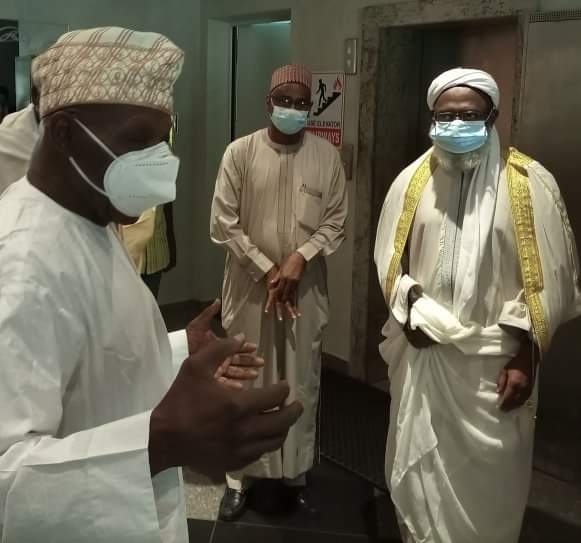
Insecurity: Gumi meets Obasanjo behind closed doors


FORMER President Olusegun Obasanjo, on Sunday, met with popular Islamic cleric Sheik Ahmad Gumi behind closed doors in Abeokuta, Ogun State capital.

Spokesperson to the former president Kehinde Akinyemi confirmed the meeting to TheCable, saying that the former president  met with some stakeholders in the country and not just Gumi.

“It is not just the two of them present; it is stakeholders meeting holding at his residence here in Abeokuta.”

While the subject of the meeting was unknown, The ICIR understands that  it might be connected with unhealthy security situation in the country.

Gumi has been in the fore front of negotiations between the bandits and the Federal Government.

He has  advocated amnesty for bandits, saying that they deserve to be pardoned like civil war instigators.

The cleric has also said that bandits are carrying guns for self-defence.


MTN turns to Flutterwave, Opay, others as banks block 77m subscribers

BARELY 24 hours after Nigeria’s deposit money banks disconnected MTN subscribers from their banking channels, including the Unstructured Supplementary Service Data (USSD) and banking apps, the mobile network operator has switched its customers to alternative electronic payment platforms.

This was disclosed in a statement by MTN Senior Manager for External Relations Funso Aina who stated that their customers could recharge airtime and carry out other online transactions through payment solutions platforms.

“It will interest you to note that for the benefit of our customers who have been greatly inconvenienced by the service suspension, we now have alternative channels of accessing MTN services electronically,” a section of the statement read.


Read Also:

The list of alternative payment solutions platforms to carry out transactions include Flutterwave, Jumia Pay, OPay, Kuda, Momo agent Carbon and BillsnPay.

Customers were advised to recharge airtime by dialling *904# and *606#.  The deadlock between the banks and mobile network provider has left millions of subscribers frustrated, as they are unable to recharge airtime via USSD during the Easter celebrations.

MTN has 77 million subscribers who make up 45 per cent of the total telecommunication market share in Nigeria. It is arguably the largest telecommunications operator in the country.

In March, the Central Bank of Nigeria (CBN) and the Nigerian Communications Commission (NCC) announced the introduction of new USSD service charges, which include paying a flat rate of N6.98 per transaction.

In another development, the telecommunication company reduced the banks’ commission from an average of 3.5 per cent to 2.5 per cent per transaction, prompting the actions of the banks to disconnect MTN subscribers from its service.

Several banks had notified the telco of disconnecting subscribers if they did not revert to the old commission, but when their appeal failed to sail through, they blocked MTN from their banking channels, leaving customers stranded and unable to recharge virtually.

Minister of Communications and Digital Economy Isa Pantami had said the matter would be resolved. “We have reached an advance stage of resolving the issues, for the services to be restored to our citizens,” he said.

What this means for Nigerian fintech companies

This move marks another notable validation of Africa’s growing fintech sector, which is providing solutions to problems by supporting legacy financial infrastructure or the lack of it -which has hampered African economies.

However, most of the fintech companies  in Nigeria are payment gateways, mobile money startups, neo-banks and remittance services.

In 2019, Nigerian fintech companies received over $600 million investments from venture capital funding, compared to $1 billion which came into Africa within the same year. It was the first time Africa’s startups crossed the $1 billion threshold.

According to the Enterprise Development Centre (EDC) of the Pan African University, cash payment accounted for 95.3 per cent of transaction volumes in Nigeria at the end of 2018, while non-cash transactions would reach 17.8 per cent of total transaction volumes in 2023 from a paltry 4.7 per cent at the end of 2018.

With the sudden turn of events between MTN and the banks, more MTN customers are likely to turn to more online payments using the fintech platforms – boosting mobile and internet penetration for the fintech companies.

Local payment apps and gateway like Paga, and Barter -owned by Flutterwave – have also started offering money transfer services, and this is expected to reach an even wider number of rural users.

Opay network currently has over 300,000 agents and 5 million registered app users at its point-of-sale (POS) terminals deployed by its mobile money agents, but merchant network represented one – fifth of offline payments in Nigeria at the end of 2020. These are expected to gain more traction.

Nigeria: Before our glory departs

Matthew Hassan KUKAH


IF a religious leader is afraid to say what is right, what else can his silence mean but that he has taken flight? Hiding behind a wall of silence is like taking flight at the approach of the wolf. – Pope St. Gregory the Great (540–604 AD)

Easter Sunday is here again. But first, let us step back to Friday. Good Friday was a Kairos moment for the beleaguered followers of Jesus, a defining moment that separated truth from falsehood and light from darkness. At Golgotha, Jesus remained silent when the first thief taunted Him, and when bystanders scornfully asked Him to demonstrate His divine powers by coming down from the cross. Everything about Christ – the prophecies of His birth, His life on earth, the miracles He performed, the sermons He preached, His torture and subsequent death – now hung languidly on a wooden cross on the hill of Golgotha. There were two types of persons at Golgotha: observers and waiters. The observers had two characteristics, derision and curiosity. The waiters were characterised by hope, fear, and anxiety. Both sides watched and waited with bated breath. After His ignominious death, everything now depended on the third day. After all, He had said He would rise after three days (Mark 9:31).

Let us pause and look back at the earlier events in the life of Jesus. Let us look briefly at the drama of the three temptations of Jesus by the devil as recorded by St. Matthew. First, the devil has a sense of perfect timing when he approached Jesus. He knows that Jesus has fasted for forty days and nights without food and was hungry (Matthew 4:2). Prove that you are the Son of God: turn these stones into bread, he says (Matthew 4:3). In response, Jesus says: Man will not live on bread alone (Matthew 4:4). Here, Jesus insists that there are higher goals for us to live or die for. The devil had hoped that like the dictators of today, Jesus could seduce the people with the bread of temporal power to gain cheap followership. No, Jesus says, you must set a higher moral goal.

Second, the devil asks Jesus to throw himself down the cliff. After all, he tells Jesus, the Angels of God will hold you (Matthew 4:6). Here, Jesus is called to take a shortcut to fame. Why travel the hard road of suffering, sacrifice, exclusion, and powerlessness? Succumb to the seduction of the dreamer, the charmer, climb the actor’s shoulder. And then what next? Jesus rejects this temptation. Why? Because God demands more than theatrical performances from us.

Third, the devil says he will give Jesus all the kingdoms of the world (money, power, territory) only if He bows and acknowledges him (Matthew 4:8). Wow! No better evidence that the devil is a liar. He knows he has no kingdom and what he has is his kingdom of darkness and lies. It was in this same manner that the devil deceived Eve at the Garden of Eden by mixing a concoction of lies. At the base of this temptation is the seduction of pride and power. God knows that the day you eat it, your eyes will be opened and you will be like God (Genesis 3:5). Think of the many who have sold their souls for ephemeral power, those who have denied Jesus by action so as to ascend the throne of power. By His resistance to the devil, Jesus shows that following His path will require tremendous sacrifice.

It’s now Saturday night. The clock is ticking. Will He or will He not rise as He said? No one knows what to expect. Will Jesus be exposed as a fraud? The Apostles are retired, desolate, forlorn, woebegone, and despondent. Has it all come to nothing? Have they lost everything? Has it all just been an illusion? Was Peter right when he asked what their reward would be, having forgone everything to follow Him? ((Matthew 19:27). Has this been one wild goose chase? Where would they turn to now? The sun gradually sets on Saturday. The night has in its womb, a combination of the derision and curiosity binding the observers and waiters. A cloud of trepidation envelopes everywhere. The Roman authorities have built a concrete wall of military security around the grave. They sealed the stone and placed heavy military guards just in case, as they feared, His followers come and steal the body and pretend that He had risen (Matthew 27: 64).

Sunday morning would seal the fate of everyone on both sides. As it turns out, the world forgot that: He who guards Israel neither slumbers nor sleeps (Psalm 121:4). Before daybreak, a woman, Mary Magdalene, visits the grave to perform a simple ritual. To her shock, she finds an empty tomb! (John 20:1). Slowly, painfully, unbelievably, the words go out: They have taken the body of the Lord away and we do not know where they have put Him (John 20:2). They will soon realise that, indeed, His resurrection is only a fulfilment of what He had promised during His lifetime. The devil has been defeated, and the Lord has the final word. Truth has drowned falsehood. Light has overcome darkness. Good has triumphed over evil. Life has defeated death.

The Roman soldiers who stood guard over the grave were like dead men (Matthew 28:3). However, rather than face punishment, the Roman authorities offered to bribe them and asked them to lie that the Lord’s body had been stolen while they were sleeping! (Matthew 28:13). It is too late: The Lord is risen indeed! World history succumbs to the power of the Creator of heaven and earth. Time and space have merged. History’s calendar is split into two. Henceforth, everything will be marked by whether it happened before or after the resurrection of Jesus Christ! This is what Christians celebrate today. But what is the implication of all this for us in Nigeria today?

Nigeria’s current predicament reminds me of Israel’s situation that led to the death of Eli, the great High Priest of Israel. Israel’s defeat in the hands of the Philistines led to the death of 30,000 soldiers. The two sons of the 98-year-old priest – Hophni and Phinehas – died in the battle. Eli’s two sons had foolishly carried the Ark of the Lord into the battlefield for protection, only for it to become a trophy for the victorious Philistines. The high priest, Eli, collapsed and died after hearing this horrible news. Elsewhere, on hearing about the death of her husband, her father- in-law, and the loss of the Ark, Eli’s daughter-in-law went into premature labour. She was delivered of a baby boy – a call for great celebration in Israel! Strangely, she responded by naming her newborn son “Ichabod,” meaning, The glory has departed!

Taunted by Boko Haram, ravaged by bandits, kidnappers, armed robbers, and other merchants of death across the nation, there is collective fear as to whether Nigeria’s glory is about to depart! Retired military and intelligence officers lament over what has become of their glorious profession, as they watch the humiliation of our military personnel. Traumatised citizens are tortured daily by bandits. The nation has since become a massive killing field, as both government and the governed look on helplessly. A thick and suffocating cloud of desperation, despondency, desolation, gloom, and misery hangs in the hot air. We have no message and have no idea how long this will last. Our people seek solace and protection, but frustration and darkness threaten to drown them. Has their government gone AWOL?

Two weeks ago, I came across a video in which a very frustrated Muslim cleric, addressing a Muslim audience, lamented: “If you killed 200 chickens in the farm of any of the big farmers, you will be dealt with. But today, we are being killed. It is your fault. On the day of elections, you say, it is JihadChristians will take over Nigeria! Ok, the Christians did not take Nigeria. It has been left in the hands of those who sit and see us being killed. If we are killed, the head says, God forbid! He was not elected to say God forbid.” This imaginary jihad won the elections, now where are the jihadists? The lesson here is that politicians will use religion to mobilise for elections, but they cannot use it to govern.

The Catholic Bishops’ Conference of Nigeria weighed in with a strong statement on February 23, titled, “We Must Pull Back from the Brink of Collapse.” Part of the statement read: The very survival of the nation is at stake. The nation is pulling apart. Widespread serious insecurity for long unaddressed has left the sad and dangerous impressions that those who have assumed the duty and authority to secure the nation are either unable, or worse, unwilling, to take up the responsibilities to their office. Patience is running out. Sadly, all of these warnings are still falling on deaf ears.


It may sound strange, but for us Christians, the celebration of the resurrection of Christ is the greatest assurance that all these will pass away. This is not a call for us to simply sit on our hands or believe we can pray our crises away. As pointed out above, the sufferings of Jesus and His Cross provide us with the perfect mirror of our hope. St. Paul reminds us: We are hard pressed on all sides, but not crushed; perplexed, but not in despair; persecuted but not forsaken, struck down but not destroyed. We always carry around in our body the death of Jesus, so that the life of Jesus may also be revealed in our body (2 Corinthians 4:9). These are the hallmarks of our faith. We must remain steadfast.

I appeal to Christians to continue in the spirit of the Gospel, the teachings of our Lord and Saviour, Jesus Christ. St. Paul says: Though He was God, he humbled himself, became man and remained obedient up till death (Philippians. 2:6ff). Following in His steps, we Christians have lived through the life of martyrdom. Jesus taught us how to pray for our enemies (Matthew 5:44). Although His teachings are hard (John 6:60), it was not the guns of a powerful army that brought down the walls of Jericho. The prayers of the priests did (Joshua 6:20). Jesus defied the temptations of coming down from the Cross. He knew there was a higher truth deferred. It was fulfilled on Easter day. No matter the provocation, we must arm ourselves with the weapons of truth, the Word, the Spirit, and love. At the heart of Christianity is the Truth and Love.

Today, many of us erroneously speak about the trial of Jesus by Pilate on Good Friday. In reality, it was Pilate who stood trial, not Jesus. Pilate sat on a throne to judge what he himself was ignorant of – the truth. Chained by ignorance, the powerful often grope around a twilight zone between truth and lies. At the mention of the word “Truth” by Jesus, Pilate was jolted from his chair. In trepidation and apprehension, the mighty man says, Truth, what is that? (John 18:38). Pilate was looking for the Truth but did not recognise it when it stood right before him. In every age, the seduction of raw power tends to blind the Pilates of this world to the truth.

When governments face legitimacy crises, they fall back on serving the sour broth of propaganda, half-truths, and outright lies. They manufacture consent by creating imaginary enemies, setting citizens against one another by deploying religion, ethnicity, region, and other platforms, while appealing to the base emotions of patriotism. We forget the reality that without truth, the throne of power often turns into a cage, and the occupant is turned into a prisoner. In reality, the truth needs neither a judge nor a witness. The truth is its own judge and witness. Without the truth, as the old song says, all else is sinking sand!

Recently, according to the World Happiness Report, we are one of the unhappiest nations in the world. This is unacceptable but understandable. Our clay-footed fight against corruption has not moved the needle of transparency forward. Of course, being the poverty capital of the world comes with its rewards such as banditry, violence, death, sorrow, blood, poverty, misery, and tears. Our cup of sorrow is permanently full; hence the exponential rise in the frustration curve across the country.

Sadly, human life is hemorrhaging so badly in Nigeria, but the greatest tragedy is the death of empathy from those in power. Mysteriously, the government is investing billions of naira in rehabilitating so-called Boko Haram repentant members and their other partners in crime in the belief that they want to turn a new leaf. These criminals have waged war against their country, murdered thousands of citizens, destroyed infrastructure and rendered entire families permanently displaced and dislocated. Why should rehabilitating the perpetrator be more important than bringing succour to the victims?

When kidnapped or killed, victims and their families are left to their wits. They cry alone, bury their loved ones alone. And our government expects us to be patriotic? The victims of violence need empathy, which the dictionary defines as the ability to understand and share the feelings of the other. A critical deficit of empathy on the side of the government makes healing almost impossible for the victims. We have not heard anything about a rehabilitation programme for the thousands of schoolchildren who have been victims of abduction. We seem to assume that their return to their schools is sufficient. Left unaddressed, the traumatic effect of their horrors will haunt them for a long time. Tomorrow’s parents, military generals, top security men and women, governors, senators, and ministers will come from today’s pool of traumatised children. The security quandary is the greatest indictment of this government.

There is a time for everything under the sun (Ecclesiastes 3:1). Perhaps, we can paraphrase this by saying there is a time for war and a time for peace. There is a time for poverty and a time for wealth. There is a time for stealing and a time for returning what has been stolen. There is a time for politics and a time for governance. There is a time for tethering to the brink of chaos and a time for recovering the soul of a nation. There is a time for the collapse of morality and a time for moral recovery. There is a time for leadership and a time for statesmanship. There is a time for losing greatness and a time for achieving greatness. Nigeria must now ask itself: What is left of our glory? Where are the values that held us together?

On our national Coat of Arms, we profess our motto to be: Unity and Faith, Peace and Progress. But let us ask ourselves: Is Nigeria united today? Do citizens still have faith in the country? Where are the signs of peace or progress? Today, before our very eyes, these words have been emptied of their flavour and have lost their resonance and capacity to summon our citizens to patriotism. St. Augustine once said: Remove justice, and what are kingdoms but gangs of criminals on a large scale? He further said that: A gang is a group of men (and women) under the command of a leader, bound by a compact of association, in which the plunder is divided according to an agreed convention. This is the fate of our nation today. Day by day, Nigeria drifts irreversibly into a dark tunnel. Things are falling apart with unnerving rapidity because those who govern have only a pact to protect their interests. Politics is merely its conveyor belt of ambition. Nigeria has a date with destiny. If we do not turn around, The axe is already laid to the roots of the tree (Matthew 3:10).

What I said in my Christmas message -Kukah

With some chance, we might pull through this, but it is getting tougher each passing day. Does anyone remember where we started and how we got here? On May 29, 2015, General Muhammadu Buhari (rtd.), at his swearing-in as President of Nigeria, said: Boko Haram is a typical case of small fires causing large fires. Now, before his watch, the fires are consuming the nation, and in many instances, they indeed start small. The rumblings over the wearing of a hijab in Kwara State suggest that we have not seen the end of individuals sacrificing national cohesion to feed their personal ambitions by starting small fires. Most politicians hardly think through the long-term effects of these pyrrhic victories of using religion. What started as a small fire with the adoption of Sharia in Zamfara in 1999, spread across the northern states. Ordinary people broke into ecstatic joy. Today, what has become of the North? What are the lessons?

In all, Nigeria’s troubles are growing by the day, but our hands must remain stretched out in supplication. Prophet Isaiah’s words should give us hope and consolation. He said: When you pass through the waters, I will be with you; and when you pass through the rivers, they will not sweep over you. When you walk through the fire, you will not be burned; the flames will not set you ablaze (Isaiah 43:2). We shall lift our eyes to the mountain because we know that our help shall come from the Lord (Psalm 121:1). As Christians, we do not trust in God because we cannot revenge. We do not revenge because we trust in God. The Lord will fight for you; you need only be still (Exodus 14:14). Just as the chains of death could not hold Jesus in the grave, so shall we triumph. Break into shouts of joy together, O ruins of Jerusalem; for the Lord has consoled his people, he has redeemed Jerusalem (Isaiah 52:9). Have hope and be cheerful (Romans 12:12). A very happy and peaceful Easter to everyone.

 Kukah is the Catholic Bishop of Sokoto Diocese.

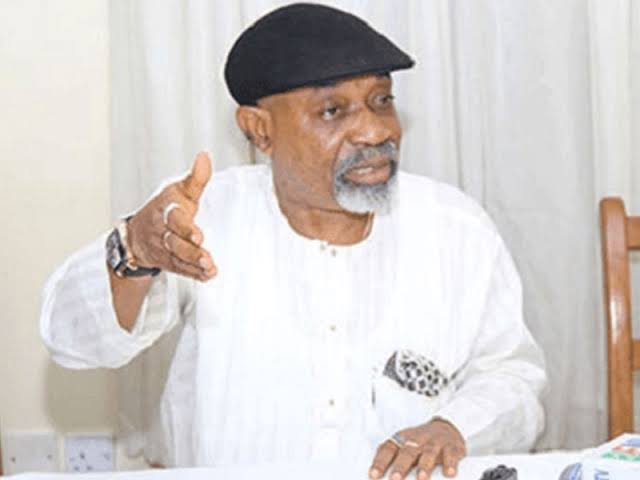
NMA counters Ngige, says Minister goofed over claim doctors aren’t paid abroad


THE Nigerian Medical Association (NMA), on Saturday, said Minister of Labour and Employment Chris Ngige erred in his claim that resident doctors were not paid by government or institutions outside Nigeria.

NMA said, in a statement signed by its president and secretary-general Innocent Ujah and Philips Ekpe respectively, that the claim was a hate speech and capable of bringing down the nation’s health sector.

The doctors said against Ngige’s claim, resident doctors were paid where they worked in the US and UK, as well as other parts of the world.

“The NMA is totally in disagreement with the way and manner some government functionaries carry out their duties, which is completely insensitive to the plight of the people. Accountability is the fulcrum for good governance in all facets and we do not demand anything less from those charged with the responsibility of governing the people,” part of the statement read.

According to NMA, government should improve the welfare of doctors and other health workers, saying it was the most sustainable means of delivering quality health care to the people of the country.

“Perhaps, this will help to reduce the current brain drain being experienced, that is dealing a deadly blow to our health care delivery system, which has made our hospitals to be regarded as mere consulting clinics,” the group added.

Ngige had said, in an interview with Channels Television on Friday April 2, 2021, that resident doctors were only paid in Nigeria, but not in the US, UK and other nations.

But, facts obtained by The ICIR showed the minister was wrong.

The ICIR gathered from several websites that UK pays its trainee doctors. A 2015 BBC’s report appeared most authoritative among others obtained by our reporter while filing this report.

A screenshot of John Hopkins Hospital’s website indicating how resident doctors are paid.

Similarly, resident doctors are paid in the US. The John Hopkins Hospital in the US pays resident doctors, as many website linked with the US show resident doctors in the country are paid.

Ngige had said in 2019 that doctors were free to leave Nigeria, boasting that the country had enough. He received wide bashings for the comment.

Ngige is a medical doctor who retired from the Federal Ministry of Health before becoming governor of Anambra state in 2003.

The ICIR had reported on Tuesday, March 30, 2021, that National Association of Resident Doctors (NARD), one of the groups of medical doctors in the country, would be embarking on strike over failure of the government to pay housemen and meet other demands of the association.

NARD made true its threat on April 1 as it directed its members across all public health facilities in the country to down tools.

The strike has led to partial or complete absence of medical services in most public tertiary institutions in the country.

As all attempts to placate the practitioners yielded no result, the federal government, through Ngige, threatened to invoke ‘no work, no pay’ against the doctors on Friday April 2.

But, the practitioners have vowed the action would continue.


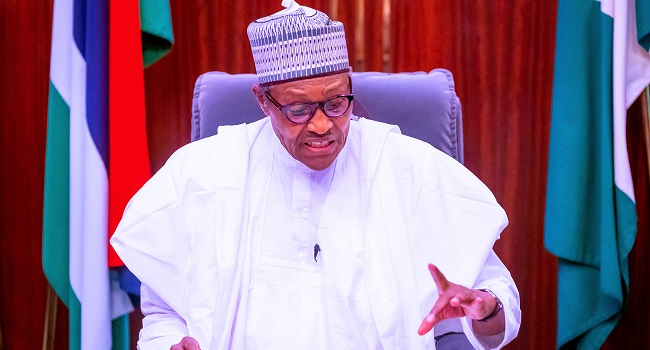
Buhari reacts five days after violent attacks in Ebonyi, Anambra

PRESIDENT Muhammadu Buhari has ‘strongly condemned’  two recent violent attacks in Nigeria, five days after the incidents had taken place.

Buhari, who is in the United Kingdom on a medical trip, ‘condemned’ the attacks in his usual manner via a statement signed by Special Assistant to the President on Media and Publicity Garba Shehu.

The violent attacks, which took place in Ebonyi and Anambra states, took the lives of seven and three persons respectively, including policemen.

In Ebonyi State, three communities in Íshíelu Local Government Area (LGA) – Egedegede, Obegu and Amuzu -were attacked on Monday night by suspected herdsmen, according to the State Police Command.

Reacting to the incidents on Saturday, the president said he had directed law enforcement agencies to fish out the attackers and make them face justice, adding that the perpetrators of the ‘heinous attack’ should not be spared.

In the same statement, Buhari expressed sympathy over the attack on  former Governor of the Central Bank of Nigeria and a member of the Presidential Economic Advisory Council Chukwuma Soludo.

Soludo was attacked by gunmen in Aguata LGA of Anambra State during a political rally in respect to his gubernatorial aspiration in the state.

Buhari reassured Nigerians that ongoing efforts, which had led to the record recovery of illegal weapons and arrests of a large number of arms suppliers, would be intensified.

“I strongly condemn the cowardly terrorist attack on an outstanding Nigerian, Professor Chukwuma Soludo.

“Our prayers are with him and the families of the security operatives who lost their lives trying to defend innocent citizens assembled for a peaceful meeting,” Buhari said.

Although the president did not comment on three policemen that were killed during the attack, he said his administration would ‘continue’ to empower the Police and other armed forces in their fight against terrorism, banditry and kidnapping in the state.

While the Ebonyi attack happened on Monday night, the attack on Soludo occurred on Wednesday.

In recent times, some have argued that the president has not shown Nigerians that he is in charge of the country due to his slow responses and sometimes silence on national issues. Nobel Laurette Wole Soyinka had said in an interview with Arise Tv on February 11 that he was not sure Buhari was in charge of the country as the Commander in Chief.

The Nobel Laurette, while commenting on the farmers-herders crisis in the nation, said being the president was beyond contesting and winning. He stressed that it was about governing the country.

“It’s not possible, in my view, that in a country that has a Head of State, Commander-in-Chief of the Armed Forces that says he is presiding over a nation, and things get to this level. Something is critically wrong in and within the leadership of this nation,” Soyinka said.

Buhari comments on foreign incident, ignores attacks in Nigeria

Although the president has been in London for his ‘routine medical checks,’ he has responded to issues concerning another country while playing blind to fatal attacks in his own country.

On Thursday, Buhari ‘condemned’ the coup attempt in Niger Republic, few days to the swearing-in of a new president.

Buhari condemned the coup attempt through a phone call to the Nigerien president Issoufou Mahamadou, which was eventually posted on the official Twitter handle of the Presidency @NGRPresident after the Anambra and Ebonyi state attacks had occurred before his reaction on Saturday.

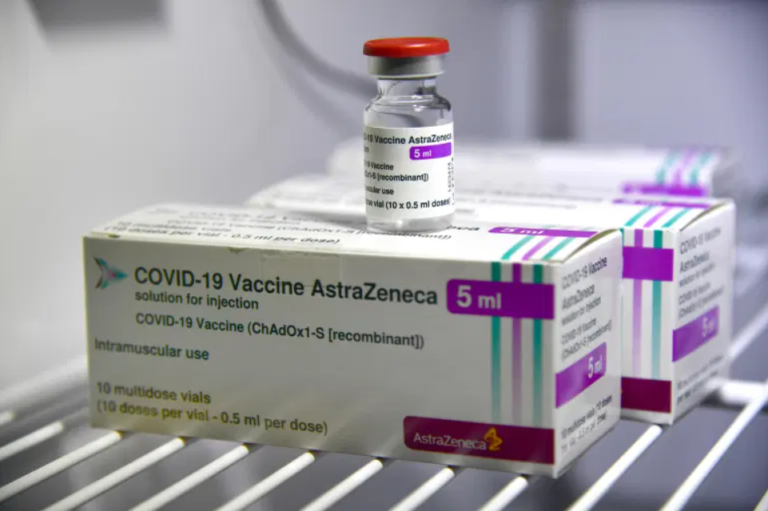
AstraZeneca confirms vaccine now renamed ‘Vaxzevria’

GLOBAL Media Relations Director for AstraZeneca Kim Blomley has confirmed that the company has renamed its COVID-19 vaccine in conjunction with the British University of Oxford.

Blomley, in a conversation with The ICIR on Saturday, stated that the vaccine had been renamed ‘Vaxzevria,’ adding that the name was only for the European Union.

“The product name has changed – but only for the EU as registered with the European Medical Authority,” said Blomley.

Blombley noted that the new name had been planned for many months before its implementation, saying it did not change the vaccine’s policy and supply.

“The use of the brand name does not signify any changes in AstraZeneca’s policy to supply the vaccine at no-profit during the pandemic.”

Blombley said the change to a permanent trade name was customary and did nothing to the product.

“For instance, Pfizer/Biontech’s BNT162b2 is now COMIRNATY in the EU,” Blombley added.

The EMA had stated that the Vaxzevria vaccine was safe in people over 18 years of age, but had reduced its effectiveness from 79 to 76 percent.

The ICIR had reported how Nigeria took the delivery of 3.9 million doses of the vaccine in March.

Germany, France, Thailand, 15 others countries have  suspended the administration of the vaccine over growing concerns of blood clots.  However, many countries now accept its use.

The World Health Organization(WHO) and European regulators have continued to express confidence in its safety.

PROFILE: Yinka Odumakin’s many years of activism, Yoruba advocacy

NATIONAL Publicity Secretary of Afenifere Yinka Odumakin was confirmed  dead on Saturday morning following complications from COVID-19.

A human rights activist, Odumakin was one of the most active image makers of the pan-Yoruba socio-cultural organisation in its 23-year history.

Odumakin was pronounced dead at the Lagos State University Teaching Hospital after health complications.

Before his death, Odumakin had been one of the strong members of the National Democratic Coalition (NADECO) who fought against the military regime of General Sani Abacha that annulled the 1993 presidential election.

The group called on Abacha to step down in favour of late Moshood Abiola, who was the winner of the 1993 presidential election.

Odumakin, who was married to an activist Joe Odumakin, threw his weight behind several agitations in support of the Yoruba citizen.

Before his death, he had been one of the critics of the President Muhammadu Buhari administration, saying that the federal government represented only Fulani interests against those of Yoruba, Igbo, Junkun, Ijaw and other tribes in Nigeria.

Odumakin said this while reacting to the Federal Government’s comment that criticised the position of Rotimi Akeredolu who asked Fulani herders to vacate the state’s forest reserves.

“The Fulani criminals have caused untold hardships in Ondo State and other Yoruba towns and cities in recent times and only an irresponsible government that wants to behave like our Federal Government that cares will continue to fold its arms,” Odumakin said.

Before his death, he had also advocated the establishment of the Western Nigeria Security Network (WNSN) codenamed Operation Amotekun.

According to Odumakin, Operation Amotekun was to “secure lives and property, to aid the police where the police have failed, to fill in the gap.”

Reacting to the death of the human rights activist, President Buhari condoled with his family and friends while describing him as a man of conviction.

Buhari said Odumakin, who was his spokesman in 2011 during his contest for the Nigerian president, was a dutiful person while expressing sorrow over his death.

“The President recalls Odumakin as dutiful, and a person of conviction, expressing sorrow at his demise, when he had a lot more to contribute to society and the nation at large,” a statement from the Presidency read in part.

Insurgency: Nigerian Army punishes journalist for asking questions on arms procurement

THE Nigerian Army has punished a senior journalist Amadin Uyi for asking questions on how it spent allocations on armaments and other logistics for the prosecution of war against insurgency and related security threats facing the nation between 2015 and 2019.

Peeved by Uyi’s ‘irrelevant questions,’ the  Army’s public relations department removed him from a WhatsApp platform where it shares information on its activities with journalists.

Nigeria North-East
Boko Haram Insurgents had unleashed massive terror attacks at various locations in Nigeria, resulting in deaths and destruction and displacements of many people and livestock.

Apart from being the most reliable platform for journalists covering the Army to obtain and confirm information, the platform has the contacts of all spokespersons of the Army divisions and its main spokesperson at the headquarters, Mohammed Yerima, a brigadier-general.

Yerima was appointed the director of information of the Army on February 9, 2021, taking over from Sagir Musa, a brigadier general.

News-Central TV, where Uyi serves as its Abuja bureau chief, however, stands by its reporter and calls on the Army’s leadership to answer the questions raised by the journalist.

In a statement mailed to The ICIR on Friday April 2, 2021, the television station says  Amadin Uyi is an award-winning journalist who has covered the Nigerian military and defence operations for close to a decade. “He has an uncanny knack for investigative reportage and is not known for asking frivolous questions,” his employers add.

As an investigative journalist, Uyi was with the CNN team that broke the news of Chibok school girls kidnap in 2014. He worked with etv South Africa as its Abuja reporter, A24 media based in Kenya and was a content producer for Germany-based Ruptly.


You may wish to read

FG blames failure to prosecute war against Boko Haram on global partners

Days after soldiers’ protest, Army chief pledges to fix fighting equipment, others

Why 386 soldiers resigned from Nigerian Army in Q2 of 2020 -Reps


He was a pioneer member of staff of Nigeria’s first 24 hours based television: NN24 TV; had stints with We FM, Silverbird television and headed Plus TV Africa northern operations for three years.

Uyi’s ‘irrelevant questions’ bothered on recent statements made by chief of Army staff Ibrahim Attahiru, a leutenant general,  at a press conference where he promised to “work towards addressing logistics challenges” for his personnel.

“The senior reporter requested an explanation of this statement, considering that about N2.6 trillion had been spent between 2015 and 2019.

“With such a huge amount expended within the period, #AmadinUyi also questioned the COAS’s remark that directives had been given for ‘more weapons to be procured,’ when the initially disbursed funds could have purchased enough armaments.

“Because the public will want details, Uyi also asked if the army had previously abandoned the damaged and unserviceable equipment in the theatre of war, after the COAS talked about back-loading them and instructing that they be repaired immediately.

Boko Haram kill about 30 travellers, burnt 18 vehciles at Auno, Borno State on February 9, 2020.
Source: Pulse

“Rather than address these concerns to satisfy public curiosity and accountability, the Nigerian Army Public Relations Unit simply took #Amadin Uyi off the platform after challenging him for asking what they described as ‘irrelevant questions,’” News-Central TV states.

While noting that Uyi has since his removal from the platform conducted himself with utmost professionalism, the TV station creates the hash tag #QuestionNoBeFight #JusticeForNCReporter #AmadinUyi #FreedomOfThePress @NewsCentralTV to raise global awareness to the action of the Army.

Shortly after the former chief of Army staff Turkur Buratai alongside his counterparts in the Air Force Sadique Abubakar and Navy Ibok-Ete Ekwe Ibas as well as the chief of defence staff General Gabriel Olonisakin resigned on January 26, 2021, after illegally overstaying in office, the national security adviser Babagana Munguno alleged that billions of naira allocated for arms could not be accounted for under Buratai’s watch.

He later denied the confession, saying he was misquoted.

Buratai, and the other retired military chiefs, who have been confirmed ambassadors by the Senate despite agitations by Nigerians,  also denied mismanaging arms fund.

During his first tenure, President Muhammadu Buhari administration’s much-hyped anti-corruption campaign was largely hinged on $2.1 billion misappropriated arms fund claimed to have been spent on re-election bid of former President Goodluck Jonathan in 2015. No major convictions have been made in the trials involving officials who were fingered in the crime.

Nigeria’s Chief of Defence Staff, Gen. Leo Irabor. Source: The ICIR

In 2017, the Federal Government resolved to release one billion US dollars from the country’s Excess Crude Oil account to fight insurgency in the country, despite allocating the largest chunk of the nation’s yearly budgets to security.

Reports also indicate that soldiers fighting insurgents desert warfronts because they are ill-quipped to face ‘superior’ firepower of the terrorists.

The ICIR had, on March 26, 2021, reported how soldiers in terror battleground protested poor equipment, unpaid salaries in Borno State – the epicenter of terrorists attacks in Nigeria. The report followed a similar one published on July 2, 2018, where mobile policemen in the state protested against unpaid six months allowances.

Nigeria has been faced with insecurity challenges comprising insurgency, banditry, kidnapping, among others, in the past decade, amidst other socio-economic challenges threatening the continued existence of the nation.

Though the nation’s military has recorded victories over the insurgents in recent times, banditry and kidnapping, which are considered internal security issues, have snowballed.


Ngige threatens striking doctors with ‘no work, no pay’

MINISTER of labour and employment Chris Ngige has said that the federal government will not fail to implement the ‘no work, no pay’ policy on the striking National Association of Resident Doctors (NARD) if they fail to resume work.

Ngige stated this on Friday during an interview on Channels Television’s Politics Today.

The minister said he would invite the doctors for a dialogue after the Easter break, just as he threatened to invoke one of the weapons in the labour laws on them if they refused to refuse work.

“By Tuesday, I will invite them back. If they become recalcitrant, there are other things I can do. There are weapons in the labour laws, I will invoke them. There is no work, no pay.

“Their employers have a role also to keep their business afloat, to keep patients alive. They can employ local doctors. We won’t get there, but if we are going to get there, we will use that stick.”

He added that the doctors’ hazard allowance currently pegged at N5,000 would be reviewed in five weeks’ time.

“It is the last NMA President Faduyile that called my attention that the hazard (allowance) was ₦5,000. I raised it with the finance minister and the vice president in the Economic Sustainability Meeting. In fact, to use the words of the vice president, it is criminal, it shouldn’t happen.

“The new hazard allowance will be done in the next five weeks. It is in the Memorandum of Action that we signed. Immediately after the Easter break, I will convene a meeting to look at it holistically,” he added.

Why the doctors are on strike

The Nigerian medical practitioners had, on Thursday, April 1, commenced strike to protest working conditions and salary arrears, just two days after the president had left the country for a medical checkup.

Prior to the commencement of the strike, NARD had warned the government of impending strike if the government failed to address their grievances.

NARD cited unjust delay of salaries of its members, non-implementation of 50 percent hazard allowance for all health workers and failure of the government to pay house officers for three months as reasons for the strike.

NARD had also lamented the rate of brain drain of medical practitioners in the country, blaming it on lack of employment in hospitals, poor remuneration and poor conditions of service.

The ICIR had earlier reported how work pressure forced Nigerian doctors and nurses to relocate abroad while the government looked away


UK medical trip: Omokri, other Nigerians demand Buhari’s return

FORMER presidential aide Reno Omokri and other Nigerians have demanded the return of President Muhammadu Buhari to Nigeria, following his travel to the United Kingdom on a medical trip.

The protesters, who were at Abuja House in London on Friday, asked the president to return to Nigeria and fix its healthcare system, instead of seeking medical aid in another country.

The ICIR had reported that Buhari left the country for a ‘routine medical checkup’ days before doctors in Nigeria, under the aegis of the National Association of Resident Doctors in Nigeria (NARD), embarked on strike over unpaid emoluments and other agitations.

Omokri, who led other protesters, also said the president had sent soldiers to shoot at peaceful protesters in Lekki, Lagos State, on October 20, 2020.

According to Omokri, who was an aide to former President Goodluck Jonathan, since Buhari’s assumption of office in 2015, he had budgeted N10.2 billion for Aso Rock healthcare but had failed to build good hospitals that could treat him and other Nigerians.

“You are not building hospitals for people and you are coming here to come and enjoy the best of the health sector in a country that has law and order,” Omokri said in video footage posted on his Twitter handle.

With the Twitter hashtag #HarassBuhariOutOfLondon, some other Nigerians also joined in the calls for the president to come back to Nigeria and fix the nation’s health system.


You may wish to read

Buhari enjoys best medical care in UK as Nigerian doctors commence strike

Buhari to spend two weeks in UK on medical check-up

Mass metering programme stalls as local manufacturers can’t produce enough


A Twitter user identified as Winifred Mnim, with the handle MHC @iamwinyjoe, said the president had no right to enjoy what he could not provide for the citizens of the country he governed.

“That man has no right to enjoy what he can’t give his citizens!!’ Say no to Medical Tourism! #HarassBuhariOutOfLondon,” the tweet read.

Another user, Godwin Uchenna, with the handle @godwin_ucee, also demanded the president’s return to Nigeria. Uchenna said there was no medical check-up or treatment beyond Nigerian doctors, hence Buhari should return home.

“What Nigerian doctors can not treat or the medical check-up that cannot be done in Nigeria does not exist…#HarassBuhariOutOfLondon Mr President Return Home. Come back and invest in your country,” Uchenna tweeted.


Nigeria has budgeted just 3.7 percent of its 2021 national budget to the health sector.

Out of the N13.58 trillion budget for the year, the government devoted only N514.8 billion to the sector (in both concurrent and capital projects sections of the budget).

Tinubu faults Buhari’s austerity measures, canvasses economic stimulus

The allocation, which has largely revolved around this percentage for many years, is a contravention of the 2001 Abuja Declaration, where heads of governments in Africa agreed to set aside at least 15 percent of their annual budgets to the health sector. Nigeria is a signatory to the agreement.