Home Blog Page 1847

Buhari enjoys best medical care in UK as Nigerian doctors commence strike

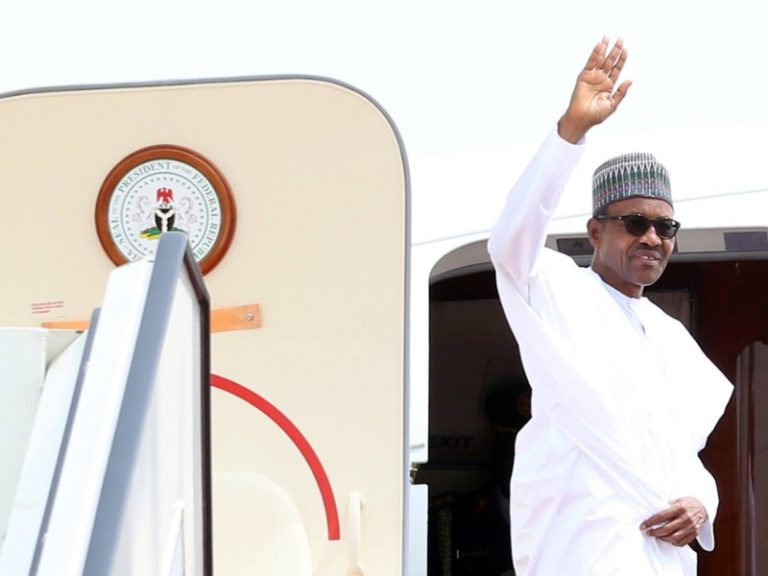
PRESIDENT Muhammadu Buhari jetted out of Nigeria to London on Tuesday, March 30, 2021, for a medical check-up, leaving behind a health sector grounded by a doctors’ strike across the country.

Under the aegis of the National Association of Resident Doctors in Nigeria (NARD), the doctors had, on March 28, 2021, threatened to down tools over unpaid emoluments to house officers, otherwise known as housemen working in tertiary health facilities, among other demands. The strike has commenced in earnest despite government initial pressure on doctors to shelve the plan.

While resident doctors are on strike in Nigeria, President Muhammadu Buhari is in the United Kingdom getting the best of medical care. He has, as usual, abandoned his country’s decrepit health care system for a better and more equipped hospital in the UK, leaving millions of poor people in Africa’s most populous nation without hope of enjoying a relatively good health system.

The ICIR had, on March 14, reported how the rift between the Nigerian Medical and Dental Council of Nigeria (MDCN) and chief medical directors of public tertiary hospitals in the country denied the house officers of their three months’ salaries – from January to March 2021.

Feud arose between the parties over the federal government’s decision to centralise the placement (or engagement) and payment of the housemen, thus obliterating the responsibilities of hospitals’ chief executives. The government had alleged abuse of the process by the hospital’s management.

Only 19 of 42 affected hospitals had paid resident doctors when the doctors issued the threat of a strike.
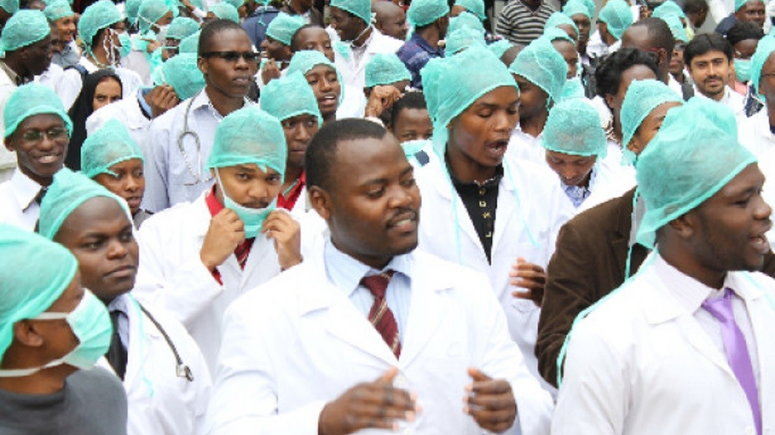
Doctors in Nigeria
Doctors in Nigeria

Among the aggrieved doctors is Okorie Venatus, a houseman who collapsed at the University of Port Harcourt Teaching Hospital (UPTH) in February this year. He spent two weeks at the hospital, receiving treatment.

The ICIR exclusively reported on March 30, 2021, how his family played a huge role in his treatment after he collapsed. The federal government has not paid Venatus since January 1, 2021.

Housemen are medical graduates (male and female) who are training while working in hospitals.


NARD president Uyilawa Okhuaihesuyi told The ICIR on Wednesday morning that the strike would go on as planned. As he promised, the strike has started in earnest.

Buhari’s many medical trips and Nigeria’s weak health system

Between June 6, 2016, and August 19, 2017, Buhari made three medical vacations to London, spending in all 168 days, according to The ICIR’s report published on May 8, 2018.


KEEP READING

Nigerian doctors begin strike April 1 over delayed salaries, others

How rift between 2 medical groups denied doctors 3 months’ salaries

How work pressure forces Nigerian doctors, nurses to relocate abroad


The report showed that Buhari beat the record set by one of his predecessors, late Umar Musa Yar’Adua, who reportedly spent 109 days on medical trips in 32 months.

Buhari travelled to London on June 6, 2016, to treat ‘ear infection,’ causing debate and attack on the presidency. He spent 14 days in the UK during the trip.

In January 2017, the president was in the UK for seven weeks after writing to the National Assembly, informing the government’s legislative arm that his vice, Yemi Osinbajo, would perform his functions. He was away for 51 days.

The president again travelled to the UK’s capital on May 7, 2017, for medical attention. He spent four days on that occasion.

After meeting former President Donald Trump in Washington on April 30, 2018, Buhari headed for London, where his aircraft had a ‘technical stopover.’ He returned on May 2, only to notify the nation, through his senior special assistant on media and publicity Garba

Shehu that he would be jetting out of the country again to seek medical attention in the UK.

A year later, he was on another journey to London for treatment on May 8, 2018, where he spent a record 104 days.

The president’s last medical trip to the UK was on May 8, 2018.

The coronavirus pandemic confined most medical tourists to their home countries in 2020, as nations worldwide, mostly in Europe and the Americas, battled to save millions of their citizens who were at the mercy of the killer virus.


Nigerian health sector bedevilled by many woes.

The emergence of coronavirus exposed Nigeria’s degree of weakness, mostly to the influential Nigerians.

In an unusual admission of failure by public officials, the secretary to the federation government, Boss Mustapha, confessed he never knew the nation’s health system was in a deplorable state.

Nigeria runs a health system in which health services are both run by national and state government. This means that health is on the concurrent list of the nation’s constitution.

But the federal government believes that state governments are not doing enough to provide quality, affordable and accessible health services to the nation’s population.

Director of hospital services in the Federal Ministry of Health  Adebimpe Adebiyi told The ICIR, in an interview seeking the ministry’s position on non-payment of doctors by the government, that state hospitals were not doing enough for resident doctors.

“There has been much pressure on tertiary hospitals in the country and that many people are eager to work there. Where are the state hospitals? In some states, it’s virtually the federal hospitals that are sustaining the health sector there. There’s so much pressure that everybody wants to enter into the federal tertiary hospitals.”

Tomori speaks

A renowned professor of virologist Oyewale Tomori told our reporter that the government needed to invest more in its health care system.

Tomori stated this while reacting to The ICIR’s request for his comment on President Buhari’s latest trip to London while doctors in the country were on the verge of embarking on strike.

He said there was no link between the president travelling abroad for medical attention and a strike embarked upon by medical doctors. But he was quick to note that if the nation’s hospitals were in good shape, the president would not travel abroad.

“It is obvious. If they (hospitals) can take care of him, he would not go out. If the hospital were there, he would have done it (his treatment) at home. The hospital is not there.”

Empty ward in Nigerian hospital during a strike by doctors.
Source: Vanguard newspaper

Asked to state the factors responsible for not making the hospitals available, he said, “years of neglect. They’ve neglected our hospitals in the country for a long time.”

He said he expected the Buhari administration to have fixed the sector six years into his government.

“His government should have done something; if it hasn’t, then there is a problem,” Tomori stated.

Responding to a question on pundits’ argument that other leaders in Africa also travel outside the continent for treatment, Tomori replied: “You should ask if governments of Europe come to Africa for treatment.”

“If he (Buhari) likes, let him travel to Togo, that is his own problem. The point is, leaders from other parts of the world, do they come to Africa? They don’t because they have the facilities in their countries to take care of themselves. Why can’t we also do the same here? He noted.

“Arguing that other African leaders go abroad for treatment doesn’t make sense. If your classmate is failing the exam, would you compare yourself with him and say you want to fail like him?”

Nigeria had budgeted just 3.7 percent of its 2021 national budget to the health sector.

Out of the N13.58 trillion budget for the year, the government devoted only N514.8 billion to the sector (in both concurrent and capital projects sections of the budget).

The allocation, which has largely revolved around this percentage for many years, is a contravention of the 2001 Abuja Declaration, where heads of governments in Africa agreed to set aside at least 15 percent of their annual budgets to the health sector. Nigeria is a signatory to the agreement.
Nigerian military aircraft declared missing in Borno

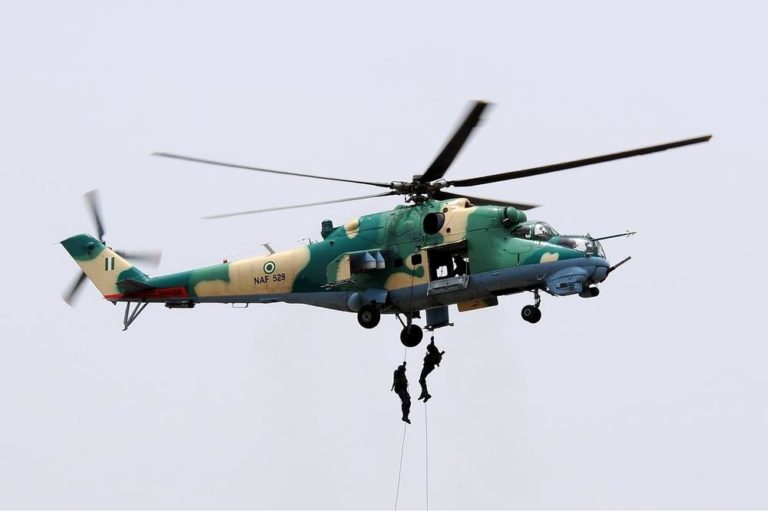
THE Nigerian Air Force has declared missing one of its fighter jets providing support to land troops in the ongoing war against terror in the northeast.

Air force spokesperson Edward Gabkwet disclosed this in a statement issued on Thursday, saying that the aircraft lost contact with the radar in Borno State.

He added that the alpha jet’s whereabouts were unknown, but a search effort was in progress.

“A Nigerian Air Force (NAF) Alpha-Jet has lost contact with radar in Borno State, while on interdiction mission in support of ground troops,” he said in a statement.

“The mission was part of the ongoing counterinsurgency operations in the North East. The loss of radar contact occurred at about 5:08 pm on 31 March 2021.

“Details of the whereabouts of the aircraft or likely cause of contact loss are still sketchy but will be relayed to the general public as soon as they become clear.

“Meanwhile, search and rescue efforts are ongoing.”

The incident came a month after an Air Force aircraft crashed at Abuja Airport with all seven personnel on board dead.

The Nigerian NAF201, a B350 aircraft, had departed Abuja at 1033UTC with seven persons on board, including two crew.

The aircraft reported engine failure and crashed-landed on its final approach to the Abuja Airport runway.

The Air Force personnel who died were en route Niger State to rescue students abducted from Government Science College, Kagara.

Nigerian, 1,279 others bag Americans Best Physicians award

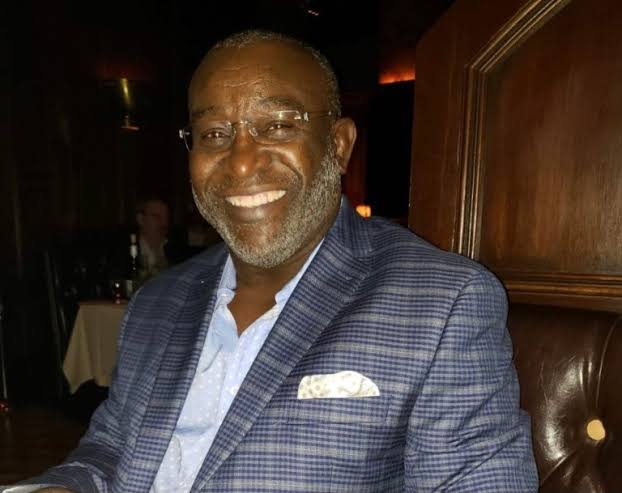
A Nigerian-born medical doctor living in the United States Iyalla Elvis Peterside has been named among recipients of the America’s Best Physicians 2021 award, based on evidence of superior training, experience, continuing education and commitment to excellence. 

Peterside, an attending neonatologist in the Division of Neonatology at Children’s Hospital of Philadelphia, was among 1,280 physicians recognised by the US National Consumer Advisory Board and Todaysbestphysician.com.

He is a professor of Pediatrics and Neonatalogy at the University of Pennsylvania Medical School and has expertise in neonatal apnea, neonatal brain injury, neonatal extracorporeal membrane oxygenation, neonatal surgery, nosocomial infections and ventilation of the neonate.


Read Also:


Until recently, he was medical director at the Neonatal Intensive Care Unit at the University of Pennsylvania Hospital where he worked for over 20 years. He was the president of the Philadelphia Perinatal Society.

Peterside graduated from the University of Ibadan in 1985 and has practised medicine in four continents of Africa, Europe, Asia and North America.

In 2012, a healthcare research and information company Castle Connolly founded in 1991 to help guide consumers to America’s top doctors and top hospitals, named Oluyemi Badero among the top interventional cardiologists in the United States.

Interventional Cardiology is deemed a rarefied specialty in medical practice, and fewer African-Americans and blacks are qualified in that field.

Reports say there are over 4,000 Nigerian doctors, excluding other health workers, practising in the US.

#EndSARS: US casts doubt on reports of killings at Lekki Toll Gate

THE United States has cast doubt on the reports of killings at Lekki Toll Gate during the #ENDSARS protest in October 2020.

This is contained in its 2020 Country Reports on Human Rights Practices released by the Department of States on Wednesday.

The report stated that there was no accurate information on the fatalities of the shooting despite detailed, evidence-based and credible reports by media houses like CNN and Amnesty International, stressing that there were inconsistencies in the army’s parts of the Nigerian government.

“The national police, army, and other security services sometimes used force to disperse protesters and apprehend criminals and suspects. Police forces engaging in crowd-control operations generally attempted to disperse crowds using nonlethal tactics, such as firing tear gas, before escalating their use of force,” the report read.

“On October 20, members of the security forces enforced curfew by firing shots into the air to disperse protesters, who had gathered at the Lekki Toll Gate in Lagos to protest abusive practices by the Nigerian Police Force’s Special Anti-Robbery Squad (SARS)” it noted.

“Accurate information on fatalities resulting from the shooting was not available at year’s end. Amnesty International reported 10 persons died during the event, but the government disputed Amnesty’s report, and no other organisation was able to verify the claim.

“The government reported two deaths connected to the event. One body from the toll gate showed signs of blunt force trauma. A second body from another location in Lagos State had bullet wounds.

READ ALSOINVESTIGATION: Bullets, Blood & Death: Untold Story of what happened at Lekki Toll Gate

“The government acknowledged that soldiers armed with live ammunition were present at the Lekki Toll Gate. At year’s end, the Lagos State Judicial Panel of Inquiry and Restitution continued to hear testimony and investigate the shooting at Lekki Toll Gate.”

Inconsistencies, lies, cover-up

Not only will the report do damage to the ongoing process and efforts by the Lagos panel investigating human rights abuses and police brutality, but it will further give credence to claims of no massacre or massacre without bodies by the Nigerian government.

When the media reported the shooting at Lekki Toll Gate, which happened on October 20, the Nigerian military feigned ignorance and denied the allegation, saying its men were not involved.

In subsequent press releases,  acting deputy director at 81 Division and army public relations officer Osoba Olaniyi admitted that soldiers were deployed to Lekki but were only there to carry a request of the state government to enforce an earlier curfew is imposed.

He, however, denied that the soldiers shot civilians and that there was glaring and convincing evidence to attest to the fact. He maintained that the allegations of shootings were the “handiwork of mischief-makers who will stop at nothing to tarnish the image of the Nigerian Army.”

In a bid to further discredit the media reports on the Lekki incident, coordinator of Defence Media Operations John Enenche, citing some military analysts, told reporters in Abuja that videos of the incident circulating in social media were fake or photoshops.

Soldiers open fire at #EndSARS protesters in Lagos

However, on Saturday, during his appearance before the Lagos State Judicial Panel of Enquiry, commander of the 81 Military Intelligence Brigade Ahmed Taiwo said soldiers deployed to the scene did not shoot the protesters with live bullets but fired blank bullets into the air.

While explaining that the blank bullets used could not have caused any damage to the flesh, Taiwo said if real bullets were indeed fired, one bullet had the potency to kill three persons.

Contrary to claims by the governor of Lagos State Babajide Sanwo-Olu, the incident happened without his knowledge. The army said the state government invited it to help restore normalcy.

Presidency, Transparency International again disagree over state of anti-corruption fight in Nigeria

0

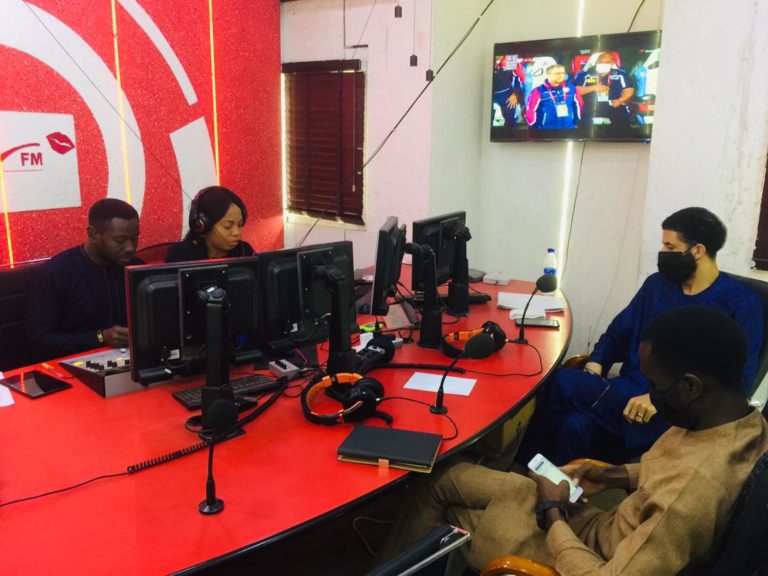
THE Federal government and Transparency International, TI, have continued in their disagreements over the state of the war against corruption in Nigeria as they trade tackles during an anti-corruption radio program in Abuja this Wednesday.

The international anti-corruption watchdog recently faulted Nigeria’s war and again scored her low in the 2020 Transparency International Corruption Perception Index (TI-CPI), describing it as inaccurate and unreal.

Senior Special Assistant to President Muhammadu Buhari On Public Affairs, Ajuri Ngelale and Program Officer Anti-corruption at CISLAC, which houses the Nigerian chapter of TI, Samuel Asimi, disagreed on issues of nepotism, transparency, and rules of engagement in the FG’s fight against corruption.
They both were guests on the popular radio programme, PUBLIC CONSCIENCE, produced by the Progressive Impact Organization for Community Development, PRIMORG, Wednesday in Abuja.

It will be recalled that Nigeria was ranked 149th out of 180 nations surveyed when Transparency International released its 2020 Corruption Perception Index. And similarly, the Civil Society Legislative Advocacy Centre (CISLAC), a subsidiary of Transparency International, accused the Buhari-lead administration of lack of transparency in the recovery of stolen assets.

While dismissing the 2020 CPI rating, Ngelale said that perception is different from reality, noting that prioritising a country’s corruption perception over realities on the ground was a problem.

He acknowledged that Nigeria has more work to do in the war against corruption but has progressed under President Buhari leadership.

Responding to allegations of lack of transparency in the emergency response of the government to COVID-19, nepotism, and favouritism in the appointment and promotion of some public officers, Ngelale had these to say: “I want to deal with facts and not emotions or perceptions, before now Vanguard and Premium Times research show that the Buhari government gave 51 percent appointments to Southerners.

“When President Buhari took over office, it was then the full list implementation of Treasury Single Account was put in place, and we have seen the result of that.

“Look at EFCC, and what they have recovered in a ten-year period from 2009-2019, the EFCC recovered about N1.28 trillion, and it is not including dollars or Euros recoveries, properties and physical assets, only naira recoveries. Out of that N1.28 trillion that was recovered by the EFCC between 2009-2015, which is six years’ period, less than 300 billion was recovered from 2015-2019.

“Right now, over five thousand Nigerians are being paid their salaries directly by the Federal government of Nigeria through the survival funds, N300 billion CBN COVID-19 loan and this administration leveraged on ICT on N-Power.

“I think anybody saying that we have not been transparent is into general misinformation,” Ngelale said.

He decried that Nigerians focus more on the Federal government, whereas many anomalies go on at the state level.

Ngelale also questioned Transparency International’s credibility, alleging that one of the founders of the organization ran for Presidency against Buhari in 2015; hence, it cannot be trusted.

The president’s spokesperson was referring to Dr Oby Ezekwesili, the founding Director of Transparency International.

On his part, Program Officer Anti-corruption at CISLAC, Samuel Asimi, debunked any form of political interference or influence in the ratings churned out by Transparency International every year.

However, he noted that CPI does not measure only corruption at the Federal government level but also the states, adding that CPI ratings did not target trivializing the government’s anti-corruption war efforts.

On the issues of lack of transparency by the Buhari administration, Asimi stated that the Federal Government still does not have a dedicated and known database to track recovered assets, stressing that transparency and accountability will increase if only the government provided a portal where citizens can view stolen assets recovered by the government.

“If there’s a portal that citizens can go straight and get information about recovered monies, the doubt in government processes will reduce drastically.”

Asimi maintained that nepotism was a major problem of the Buhari-led government and remained one reason why Nigeria dropped on the 2020 Corruption Perception Index. Besides nepotism, Inadequate anti-corruption legal frameworks and interference in the operation of law enforcement agencies; Prevalence of bribery and extortion in the Nigerian Police; Security sector corruption; and absence of transparency in the COVID-19 pandemic were some of the main reasons Transparency International rated Nigeria low in 2020.

He called on the Buhari-led government and the National Assembly to enact a legal framework for the management of the recovered stolen assets and ensure that anti-corruption agencies are fully independent and work in synergy.

The Minister of Information and Culture, Alhaji Lai Mohammed, also rejected the 2020 CPI rating of Nigeria and CISLAC’s assessment of the Buhari administration last week, describing it as unfair and unacceptable.

Ezekwesili, panellists at ICIR, ICFJ webinar unveil new approach against fake news

NIGERIA’s former Minister of Education, Dr Mrs Obi Ezekwesili, Wednesday disclosed the need to consider motivating purveyors of factual information through incentives to discourage the spread of fake news.

Ezekwesili made the call during a webinar jointly organised by the International Centre for Investigative Reporting (ICIR) with the International Center for Journalists (ICFJ) Knight Fellowship in Nigeria. The maiden edition held last year with the Minister of Youths and Sports Development, Sunday Dare, as the keynote speaker.

In her keynote address at the conference themed, ‘Public Accountability in Stemming Misinformation,’ she said aside from the incentives, such a system would also reduce the credibility of those notorious for sharing misinformation.

The initiative is to be developed through collaborations with the public and media. The group would determine the trust points and indicators on how the trust should be measured.

“For every solution, we must consider reducing or ensuring people are accountable for fake news; we need to think of incentive and disincentive-based approach. That is an approach that rewards a record of consistent dissemination of facts, truth,” Ezekwesisli noted.

“That system that makes a person a purveyor of accurate information, especially those with strong followers and are sufficient to influence what others may think or do.”

The system would also deduct trust points if unverified news is disseminated by the newsmakers or social media influencers, she said.

According to her, “the erosion of trust points overtime will signify a red flag anytime news comes from such individual or individuals.”

The former World Bank vice president also identified the need to overwhelm ‘the market of news’ with accurate, evidence-based reporting. The continuous publication of factual information, she said, would overshadow false information.

She cautioned against government action that may violate Nigeria’s inalienable right to free speech in the guise of fighting fake news. She urged the media to perform its education function, teaching the public in the simplest, plain language.

Ezekwesili kicked against the proposed social media bill, saying it would only repress the people. She tasked the relevant government institutions to remain alive to their responsibilities as there is an existing law that addresses issues of defamation, libel and the likes.

Earlier, the executive director of The ICIR, Dayo Aiyetan, emphasised the need to hold accountable people who deliberately post fake news.

Citing the example of Femi Fani-Kayode, a former Aviation Minister,  he said the politician had discouraged people from taking the COVID-19 vaccine through unverifiable assertions that it was meant to depopulate Africa. Still, the same minister recently took the COVID-19 vaccine.

The FactCheckHub, he said, has been deliberate in creating explainer videos, training to make everyone a fact-checker.

He also called for collective responsibilities from the government, civil society organisations, stakeholders and the general public to check the spread of misinformation.

“We need to increasingly look at the responsibility of the ordinary man who becomes the weapon in the misinformation warfare. At the end of today, we hope we will have sensitised the public to combat misinformation.

“It is not the job of the government, civil society and the media alone. Everyone must be involved.”

The executive director/ editor-in-chief of Daily Trust newspapers, Naziru Mikail Abubakar, shared similar positions with Aiyetan and Ezekwesili.

He encouraged both the legacy media and digital media to take active participation in combating misinformation. The digital media organisations, he said, have bigger responsibilities to play.

Abubakar advised on the need for journalists’ training, media collaborations, investigative journalism, fact-checking, and self-examination.

Beyond media training initiated by local and international Non-governmental organisations (NGOs), he tasked local media with best practices, stressing the need to set up a dedicated fund for journalists’ capacity building.

He also advised journalists to get the right modern tools

Abubakar called for more investigative reporting and encouraged local fact-checking organisations to increase fact-checking efforts rather than republishing verified claims published by international fact-checking organisations.

“Government officials are making false statements. Some of these are false claims that should be fact-checked. If it is difficult to do individually, media organisations should collaborate to make this possible.”

The Executive Director, Centre for Democracy and Development (CDD), Idayat Hassan, expressed worry about how fake news could undermine democracy.

She observed that social media is a positive tool that enables the people to influence government policies, give voices to the marginalised, but it requires more attention.

According to the CDD director, the automation in disinformation in Nigeria is huge, with 19.5 percent, and the tools used include Nairaland, Facebook, Twitter, WhatsApp and  Opera News.

Hassan advised using audio, picture, video to spread factual information and recommended local languages’ deployment.

“There is a need to construct an informal structure that would resonate with the people.”

Another panellist at the Zoom meeting was the founder of BudgIT, Seun Onigbinde. He attributed the spread of fake news, especially in the digital media, to the urge to always break the news.

Speaking on Digital Advocacy and Public Enlightenment on Social Media, he described fake news as an extension of malicious reporting.

Explaining how people react to information on social media, such as Twitter, Facebook, Linked In, WhatsApp, he characterised the distinctiveness as ‘spirit of the medium’, advising tech giants to shut down trolls on their platforms by designing special algorithms that could discourage fake news, spotlight and delegitimise the purveyors.

ICIR unveils FactCheckHub to combat fake news, disinformation

He said there is a need for more advocacy for the tech giants to play an important role in addressing fake news.

Media house trains campus journalists on investigative reporting

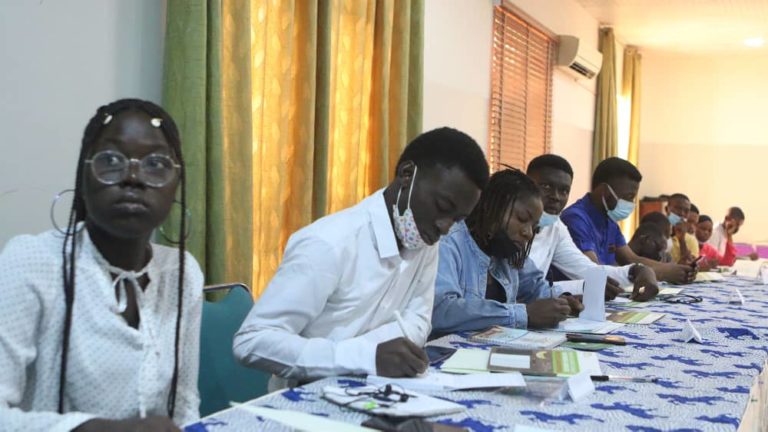
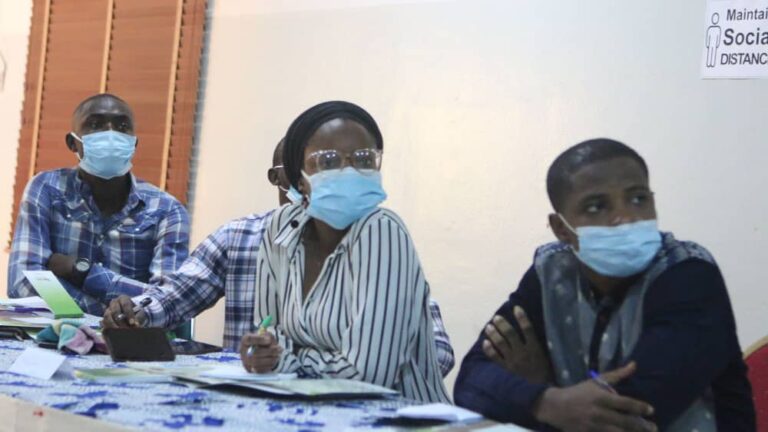
THE Cable Newspaper Journalism Foundation (CNJF) trained campus journalists from the north-central central part of Nigeria on investigative reporting.

The training, implemented under the Campus Civic Media Campaign (CCMC) of the CNJF and supported by the Open Society Initiative for West Africa (OSIWA), held in Abuja on Monday and Tuesday.

CNJF programmes officer Joke Kujenya said the training was designed to teach and mentor journalism talents from Nigerian universities.

The selected institutions were Kwara State University, Malete; University of Ilorin; University of Jos; Federal University of Technology, Minna; Ibrahim Badamasi Babangida University, Lapai; Federal Polytechnic, Bida, and Benue State University.

Participants at the two-day training included: Agbaje Ayomide, Adetayo Opeyemi Emmanuel, Ibraheem Abdullateef, Toyeeb Abdulquadri, Quayyim Adedimeji, Soaga Oluwafunmilayo, and Hamidat Mohammed Raji.

Others were Mariam Adetona, Baliqees Yetunde Salaudeen, Sylvia Okedi, Martins Ayotunde, Abdusshakur Abdurrahman, Umar Yunusa, Afolabi Bamidele Joseph, Awo Jairus, and Johnstone Kpilaakaa.

Editor and an investigative journalist at the International Centre for Investigative Reporting (The ICIR) Ajibola Amzat, while delivering a session on the basics of news writing and investigative journalism, warned young writers to avoid plagiarism and other copyright issues, adding that it was unethical and unacceptable in the profession.

He also advised them to be wary of taking information at face value while working on news stories.

Campus Journalist
Some of the participants

A writer at Bloomberg, Ruth Olurounbi, who took the student on data reporting and fact-checking, said the use of data for investigative stories would aid credibility and understanding.

She, however, cautioned young journalists to avoid mining and sharing false information as they were detrimental to the growth of national and social development.

Speaking about his experience as an investigative journalist and editor at HumAngle, Kunle Adebajo highlighted the procedure for identifying sources and developing story ideas.

He urged them to maximise the benefits of social media and other media platforms on giving leads to many untold stories.

Senior staff writer at TheCable Chinedu Asadu, while taking the session on pitching to news platforms on investigative stories, urged the young journalists to submit stories for grants and brave all the odds to get them done.

Executive director of CNJF Simon Kolawole, represented by Fredrick Nwabufor, deputy editor of TheCable, urged the campus journalists to make maximum use of the knowledge gained and exhibit it in their communities to make a difference in the country.

A participant from the University of His Johnstone Kpilaakaa said the training helped him gain an in-depth understanding of what it would take to practice journalism and use it to ensure accountability.

Also, Hamidat Mohammed-Raji of the University of Ilorin said the training would unleash her potentials as the workshop has equipped her with knowledge of pitching stories for newsrooms.

Again, court adjourns El-Zakazky’s trial

A high court sitting in Kaduna State has, yet again, adjourned the ongoing trial of the embattled leader of the Islamic Movement in Nigeria Ibrahim Elzakzaky and his wife Zeenat to May 25, 2021, for continuation of hearing on the case.

During the sitting on Wednesday, the prosecuting counsel Dari Bayero finally rested his case by presenting his last witness.

He also prayed the court to overrule the no-case submission by the defence counsel and to go on and convict the defendants as provided in the law.

The total number of witnesses called by the prosecution was 15.

Counsel to Elzakzaky Abubakar Marshal, who represented the lead counsel Femi Falana, a Senior Advocate of Nigeria, was expected to open his defence during the next adjourned date.

READ ALSOOur procession was peaceful but police killed 12 of our members—IMN

He, however, told reporters that he would be entering a no-case submission for the defendants, adding that there was no criminal case so far that had been established against the defendants by the Kaduna State government.

Elzakzaky and his wife are standing trial on an eight-count charge bordering on alleged culpable homicide, unlawful assembly and disruption of the public peace, among others.

Among the witnesses who testified against the IMN leader were two Army officers, a retired director of State Security Service(SSS), police officers and a medical doctor.

Court dismisses El-Zakzaky’s no-case application, orders continuation of trial

On Sept. 29, 2020, the IMN leader and his wife pleaded not guilty when the charges were read to them.

Elzakzaky and his wife Zeenat have been in detention since their arrest in December 2015 following a bloody clash between IMN members and soldiers in Zaria, Kaduna State.

How clean energy can drive Nigeria’s quest for gas-fired economy

THE Nigerian government must take a strategic global position on clean energy to have a competitive edge on gas, industry analysts say.

Already, global funding partners and international oil companies with equity stakes in Nigeria’s oil sector are aligning their budgets to clean and renewable energy, which energy analysts say Nigeria must explore to drive gas revolution.

“Nigeria must stimulate strategic demand in the global energy market. This position would enable it achieve and drive its gas revolution. We must define our part and tell the world this the direction we are going. This would enable compete fairly with Russia, Iran, Qatar and other gas-producing nation,” David Ige, a gas expert and energy consultant, told The ICIR.

Nigeria is a gas nation with over 203 trillion of standard cubic feet (tscf) of proven reserves and potentially over 600tcf. However, only one percent of the nation’s annual reserves is being utilised.

Analysts say our strength must come from positioning in the global market where we have a competitive edge in the market.

Industry analysts knowledgeable about the sector say focus on gas-based industries and having a global marketing position on them could be the game changer for Nigeria’s gas revolution. They insist right policies  and fiscal framework are key in unlocking gas investments in Nigeria.

“The Minister as at now should be able to tell industry players these’re areas to explore with saleable incentives. This would enable investors redirect their focus to such areas. ” a gas expert and energy consultant David Ige told The ICIR.

Nigerian government has kicked off the decade of gas. Although it launched a gas policy in 2017, analysts say the country should evolve a step-by-step strategy targeted at achieving the desired goal in 2030. Analysts add that such a strategy will enable proper tracking of targets irrespective of political shift and uncertainties that often characterise the country’s leadership structure.

The global shift to a cleaner source of energy has offered Nigeria an opportunity to properly redefine its gas market.

As part of clean energy drive, natural gas and Blue Hydrogen will be heavily dependent upon to provide significant proportion of global energy mix as guaranteed feedstock to gas-based industries.

Nigeria still has the challenge of infrastructure and fiscal framework to drive investment into the gas sector.

“We must ensure we do not disincentivise the gas regime. Our policies must get our domestic gas investible. We must ensure an end-to-end chain  that everyone must align with, to  drive investment into this sector,” Managing director of Shell Nigeria Exploration and Production Bayo Ojulari said.

Ojulari stressed that a market-driven model of willing buyer-willing-seller would help to stimulate investment into the gas-fired economy.

Nigerian government admitted at the just-concluded gas summit that it had gone in the wrong direction of not exploring its gas resources, focusing majorly on oil resources. However, a global shift to a cleaner energy has alerted Nigeria on the need to ensure proper investment framework in its gas resources.

Nigeria has opportunity to push investment into gas resources but has to wait for the National Assembly currently on recess to pass the Petroleum Industry Bill (PIB) ,which offers investors a fiscal framework.

Analysts are of the view that Nigeria’s decade of gas-fired economy could only happen with a material market anchored on gas-based industry.

Africa has already commenced the African Continental Free Trade Area market of over 1.2 billion people. Energy experts say there are lots of opportunities inherent in intra-African trade on gas resources, but there must be bold and strategic effort to focus on areas of competitive edge such as fertilizer, petrochemical and methanol to drive trade and create wealth.

Global funding shifting from oil to clean energy – Experts

“There must be deliberate effort to work on solving our gas infrastructure challenge to de-bottlenek the gas and power space for investors,” a gas expert Seyi Omotowa said.

Omotowa stressed that linking the gas to power economy by appropriate gas pricing and cost-reflective tariff could create more economic opportunities in the gas value chain for wealth creation.

Lai Mohammed summons CCT PRO after press statement blunders

INFORMATION minister Lai Mohammed, on Wednesday, summoned the head of press at the Code of Conduct Tribunal (CCT) Ibraheem Al-Hassan after he committed grammatical blunders in a statement released to journalists on Tuesday.

Al-Hassan had written and issued the statement by himself on Tuesday, 30 March 2021, to debunk reports that his boss and chairman of the CCT Justice Danladi Umar assaulted a security guard at Banex Plaza, Wuse 2, Abuja.

However, Al-Hassan’s statement contained linguistic, structural, ethical and other blunders not expected of a professional of his calibre.

The statement has since gone viral on social media as Nigerians derided both the writer and the CCT.

Al-Hassan used  ‘video cliff’ in his statement, rather than ‘video clip.’ Also, he preferred using ‘packing lot’ to the correct version, ‘parking lot.’ He also used the phrase ‘had went’ instead of ‘had gone.’


KEEP READING

Grammatical errors, ethnic slurs mar CCT’s press statement on Banex incident

CCT chairman defends assault on security guard in Abuja plaza, says he was rude


“The boy was rode in his approached and threaten,”  one of his sentences read. This should have read: “the boy was rude in his approach and threatened.”

He committed a grammatical gaffe mixed with ethnic slur against the people of the South-East Nigeria by categorising people he did not know their ethnicity as ‘Biafrans.’

 In Al-Hassan’s words, the chairman was “overwhelmed by the mobs, consisting of BIAFRAN boys throwing matches and shape object to his car.” He should have said that his boss was “overwhelmed by the mob, consisting of BIAFRAN boys throwing matches and sharp objects at this car.”

The use of  ‘BIAFRAN boys’ is ethically wrong because it is ethnic profiling. It possesses secessionist undertone and conflicts with Nigeria’s Constitution, which recognises a united Nigerian state.

Al-Hassan’s response

Speaking with The ICIR on Wednesday afternoon, Al-Hassan said he was not at the CCT but had been summoned to the Ministry of Information by the minister “to clear some issues.”

He revealed that his boss instructed him to use ‘Biafran boys’ in the statement, indicating that the people who allegedly swooped on him were of Igbo extraction. The PRO said he later realised his mistake.

CCT Chairman, Justice Abdullahi Umar.
Source: Silverbird TV

“There’s a problem with that statement. In fact, we are about disowning it. We want to retract the content because it was written under intense pressure. I must confess to you, that is why there are many structural imbalances, language structure not being perfect and, again, some of the expressions used. I acted on instruction.”

The ICIR sought to know if he wrote the statement and he answered in the affirmative.

He then went on: “Now as I am speaking with you, I’m in my ministry. My ministry has summoned me for that statement.  My minister, so to say, through my director. So, I should be given some time to get this problem solved.”

Al-Hassan works in the Ministry of Information and Culture but was deployed to work as public relations officer at the CCT. He has worked at the tribunal since 2013.

Speaking in an emotion-laden voice, Al-Hassan told The ICIR that he was under intense pressure when the statement was issued and that he did not take his time to edit it before sending it out to reporters.

“All the grammatical errors and what have you, were not noted. I did not proofread it, I was in the car when I composed it with my android (phone),” he said.

It was after it had gone out that he realised the statement was laced with errors, he stated.

Asked if he nurtured any fear he could be punished by his superiors, he said: “What should I do? I am now in my ministry as I speak with you. That is Ministry of Information.”

According to him, he hadn’t experiencedany problem doing his job for eight years until yesterday when he committed the blunder.

“There are series of issues in that place and I have been able to manage them. There has never been an issue with my statements,” he stated, adding that “as I am speaking with you, I am regretting my action.”

The full statement as issued by Al-Hassan on Tuesday, March 30, 2021

Press Statement from the Code of Conduct Bureau

Our attention was drawn on a report from some online publication with a video cliff suggesting Hon Chairman, Justice Danladi Y. Umar assaulted a Security Guard at Banex Plaza.

To start with, the said plaza has been his usual place of visits for the past 18 years for shopping and repairs of his phones, and in all these periods there have never been any time he had any turmoil with anybody.

Unfortunately, yesterday’s altercations started over a packing lot, which Chairman met vacant and it was directly opposite a shop he want to make a purchase and to fixe his phone, when the young Security guard sighted him, he ordered that Chairman should not pack his car in that particular empty space, but Chairman asked why, the security guard couldn’t convinced chairman, though Chairman didn’t identify himself, because to him is needless and is a place he visited often, but the boy was rode in his approached and threaten to deal with Chairman if he refuse to leave the scene.

Again, if Chairman had went there to cause trouble or intimidate some one, as suggested in the report, he would have gone there in his full official paraphernalia, but he went there alone with his younger brother.

The Police men seen in the video cliff were not the Chairman’s police team, they were policemen operating around the plaza whom at first instance intervened before the arrival of police team from Maitama Police station. As the few policemen in the complex were apparently overwhelmed by the mobs, consisting of BIAFRAN boys throwing matches and shape object to his car, which led to deep cut and dislocation in one of his finger, causing damage to his car, smashing his windscreen.

Did Lai Mohammed say the Igbos are responsible for Nigeria’s underdevelopment?

At a point he attempted to leave the scene, these same miscreants, BIAFRAN boy ordered for the closure of the gate thereby assaulting him before the arrival of police team from Maitama police station.

An incident like this when it happened, sympathy usually goes to the low personalities. Though is unfortunate as I said, it ought not to have happened.”

Ibraheem Al-Hassan,
Head, Press & Public Relations.
CCT HQ.
Abuja.
March, 30th 2021.