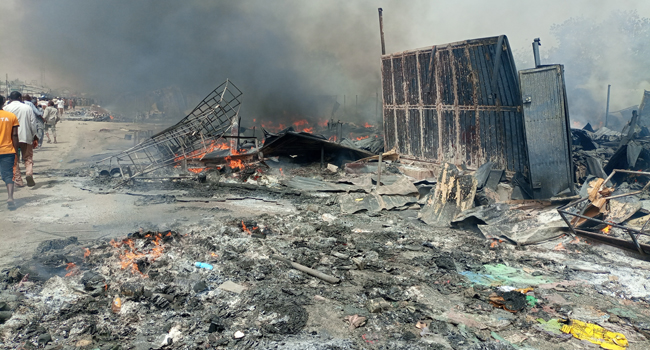
A fire outbreak that occurred on Monday morning at Katsina Central Market has destroyed several goods and property belonging to local traders.
Officials said the fire incident destroyed over 100 shops belonging to local traders in the market.
Katsina State police public relations officer Isah Gambo confirmed the incident to The ICIR during a telephone interview, stating that the fire outbreak started around 8 am before spreading to other parts of the market around 12 noon.
“Yes, there was a fire incident, but it has now been put out by officials of the fire service,” Gambo said.
When asked if there was any loss of life, Gambo said no lives were lost and none of the residents sustained any physical injury, but goods worth millions of naira were destroyed.
Fire incidents are rampant in Katsina State as there have been past records of incidents that claimed lives and left properties destroyed.
In 2020, Katsina State Information commissioner AbdulKarim Sirika said there had been about 906 reports of fire incidents in the state throughout the year.
Sirika said this during a media briefing in Katsina, stating that 50 persons had lost their lives in various fire outbreaks in the state in 2020.
Meanwhile, a fire outbreak was also recorded in Zamfara State on Saturday night, according to state officials. During the incident, about 60 shops and goods belonging to traders were recorded to have been destroyed.
In 2021, there have been several reports of fire incidents in major markets across different states in Nigeria.
In January, there was a fire outbreak that destroyedabout 9,600 shops at the Shehu Shagari Modern Market popularly called New Market in Sokoto, Sokoto State.
Also in Abuja, a fire incident razed shops and valuables at the Kugbo Furniture Market, Asokoro Extension. Fire incidents have also been recorded in markets in Anambra,Lagos states¸among others.
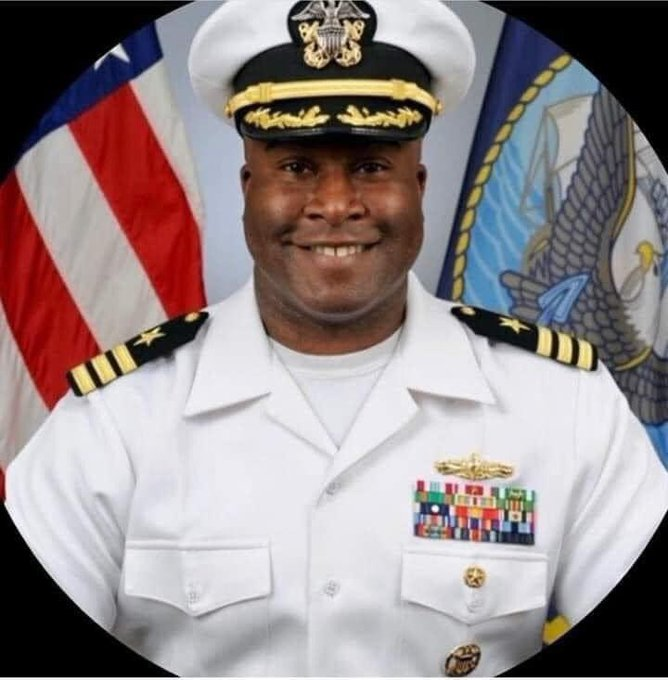
A United States Navy commander KELECHI Ndukwe will on 2nd of April 2021 take command of a U.S. Navy Guided Missile Destroyer, USS HALSEY (DDG-97), making him the first Nigerian-American to attain this feat.
Ndukwe currently serves on the Joint Staff in the Force Structure, Resource, and Assessment Directorate (J8) in charge of developing, maintaining, and improving the models, techniques, and capabilities used by combatant commands to conduct studies and analysis.
He has experience working with warships, including destroyers, cruisers and mine countermeasures, with extensive deployments to the Mediterranean Sea, Horn of Africa, Arabian Gulf, Western Pacific Ocean, and South America.
The U.S. Navy commander is also a qualified surface warfare officer and has served as auxiliaries mechanical engineering officer and represented the Navy on Capitol Hill as a congressional liaison officer in the Navy Office of Legislative Affairs.
He has been recognised with various personal, unit-level, and campaign awards, including the Defense Meritorious Service Medal, the Navy and Marine Corps Commendation Medal, as well as the Navy and Marine Corps Achievement Medal.
Ndukwe holds a bachelor’s degree in Chemical Engineering from Notre Dame and a master’s degree in National Security and Strategy from the U.S. Naval War College.
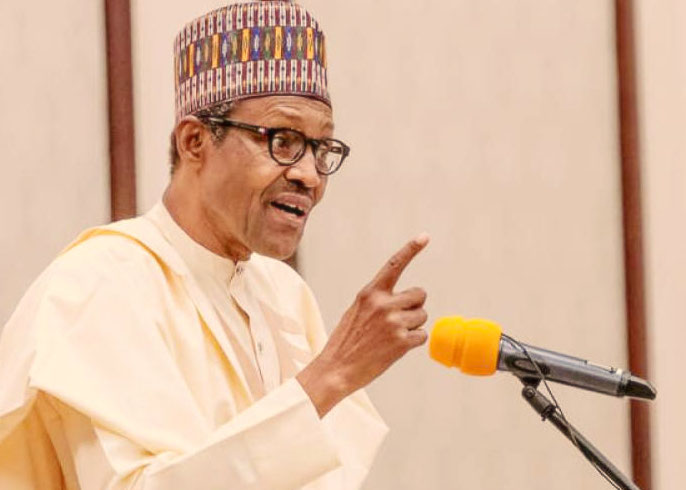
PRESIDENT Muhammadu Buhari has called for an open and transparent investigation into the attempted assassination of Benue State governor Samuel Ortom on Saturday.
Buhari, who described the attack as unacceptable, called on the police to fish out the perpetrators of the attack and bring them to justice.
The president, in a statement signed by presidential spokesperson Garba Shehu, warned that the incident should not be politicised.
“In expressing his sympathies, and that of the government of the federation to Governor Ortom and all Benue indigenes, President Buhari said the unfortunate incident must not be politicized, reiterating that an attack on one Nigerian is an attack on all Nigerians,” he said.
“Let there be open and transparent investigation and whoever is linked to it should be caught and be made to face the law.”
On Saturday, gunmen suspected to be herdsmen had attacked Ortom at Tyo Mu along Makurdi/Gboko Road in Makurdi Local Government Area of the state, where he had gone to inspect his farm.
Ortom, who disclosed that the armed herders, dressed in black, opened fire on him and his security aides, noted that he ran 1.5 kilometers to escape unhurt.
“You know today is Saturday and I usually go to my farm. So, I went to my farm along Gboko Road and on our way back, we started hearing some gunshots and we discovered people who were dressed in black and from experience, we now discovered that these are Fulani militias,” he recalled.
He said that though his security men were able to repel the attackers, he still had to call for reinforcement of Operation Whirl Stroke, police and State Security Service.
The governor claimed that the attack came few days after the leadership of Miyetti Allah Kautal Hore held a meeting in Yola and singled him out as a thorn in their flesh that must be eliminated.
The opposition People’s Democratic Party (PDP) has condemned the attack with a call to bring the perpetrators to book.
The failure of Ogun-Osun River Basin Development Authority to harness water resources for domestic and agricultural use is spiking hunger and business collapse in the Southwest region, GBENGA OGUNDARE reports.
IN their rustic state, Aba Alusekere and Aba Aluwaya — tucked deep inside the agrarian settlements of Iseyin Local Government Area of Oyo State — make for a painful paradox: thirst in the midst of running brooks. It is somewhat difficult even for the villagers to understand. Flanked by two mega-billion water projects and a vast farmland measuring 680 hectares on one side and another 520 hectares on the other, old Ashiru Seriki and his family, for instance, have no water to drink or farm.
This wilderness experience was the last thing Seriki had on his mind when he fantasised about life more than 30 years ago. He and his kinsmen then happily signed away their landed inheritance to the Ogun-Osun River Basin Development Authority (OORBDA) in order to make way for the Middle Ogun Irrigation Project.
The gleeful rural folks took photographs with the OORBDA officials after the signing ceremony at its headquarters in Abeokuta, Ogun State. They then headed back to Iseyin with a long list of expectations: power supply to the villages, large-scale farming all-year-round through the technology of irrigation, and clean drinking water as soon as the project took off.
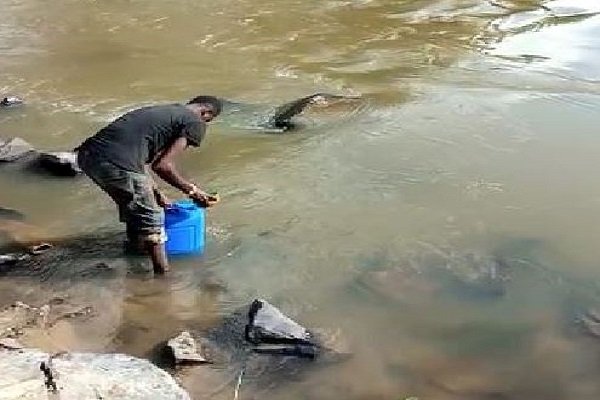
But today, “we don’t have water to drink yet,” Seriki lamented to the reporter. “We mostly resort to self-help by digging shallow holes on the ground every now and then and pray for omi abata (muddy spring) which we scoop and treat with alum to make it drinkable.” That comes with constant bouts of water-borne diseases, he added.
Lamidi Adelabu, another villager, would have worried less if an attack of hunger and harassment from shylock money lenders instigated by poor harvest are not added to the water woes the farmers suffer already. “Since government didn’t give us the irrigation they promised us, we only rely on the coming of the rains to wet our farms,” Adelabu explained, adding: “But since last year up till now, it hardly rains, so we didn’t harvest anything to sell or feed ourselves.”
As the OORBDA and federal lawmakers keep splashing funds on empowering commercial motorcycles riders, installing transformers and building primary schools for rural communities, it has neglected the momentous Ikere Gorge Dam and Middle Ogun irrigation projects which will improve water access and ensure sustainable farming for the inhabitants of Iseyin. So the rural dwellers, farmers and fishers who forfeited their lands have lost their livelihoods too, and they have a lot more to lose as corruption pervades the agency and the elements become more unfriendly.
Extreme weather fluctuations in the sowing seasons are enough auguries of how yields will look like when it is time to reap. There is no data yet confirming food insecurity in Oyo or the Southwest, but large hectares of farms blighted by lack of water and extreme climate, and years of woeful harvests farmers recount, tell it all.
In the pre-rain scorching sun, planted seeds die and dry up in the ridges, thanks to heat and the lack of water to nourish them. The worn-out farmers have an alternative though: to trek several kilometres from their settlements in Aba Alusekere and Aba Aluwaya to a distant Ogun river where they can fetch water in their kegs and travel back to their farms to begin the round of watering.
“It is always a tortuous experience for both the old and the young anytime we dare to go to the river,” Seriki said. “That is why our children will not stay with us on the farm again. They would rather come on weekends only to help us fetch water at the river and then go back to the town where they can at least get water from the well.”
“This is our fatherland where we were born, and we have been here before the water project came to Iseyin. So please help tell the government we need a borehole to access the water supply they promised us,’ Seriki appealed.’
• Bola Olalere sweating it out without water on his Oke Ogun Green Revolution plantation
At his 100-hectare cassava plantation located somewhere on the Ibadan-Iseyin Road, Bola Olalere also recounted the story of his dying dreams—the Oke-Ogun Green Revolution. When he conceived the project a few years ago, Olalere’s concern was to empower the crowd of unemployed youths in the whole of Oke-Ogun using large-scale mechanised farming as a launch pad.
Few years down the line, however, “we only rely on rainwater for now,” a perplexed Olalere explained, “and this comes with a lot of limitation because we do not have control over the rains. Without irrigation, the work is not easy”.
Competing profitably in the agric value chain process has been everything but easy for Akanmu Olasunkanmi too. After losing an entire 80 acres of maize plantation to lack of water and drought in 2020, in addition to labour cost running into N1.5 million, Olasunkanmi could not agree any less with Olalere.
“I didn’t take away a single cob of corn from the 80 acres despite the huge money I invested. You can imagine the frustration and depression if I begin to add the cost of tractors and other labour expenses,” the owner of LASFUN Integrated Farms Ltd at Olodo Village in Egbeda Local Government Area of Ibadan, Oyo State griped.
Like Olalere and his Oke-Ogun Green Revolution project, Olasunkanmi also had a dream of making Ibadan the food basket of the entire Southwest. But reality has forced the disillusioned farmer to abandon this dream.
“Ordinarily, I should have gone ahead to plant pepper and sweet potatoes by now, but where do I get the water to make them yield and not dry up like the maize plantation?”
Water, water everywhere, but not a drop to drink
The irrigation system Olalere, Seriki and Olasunkanmi urgently desire to drive their farming is actually available, except that the Federal Ministry of Water Resources and the OORBDA will not make it work for the poor peasants. Located at Ikere Gorge, some 28km North-East of Iseyin, is the Ikere gorge dam – an earth fill multipurpose dam with a reservoir capacity of 690 million cubic metres and a total land area of 47km capable of generating 6 megawatts of hydroelectricity.
In addition, it could also provide irrigation water for the 3,000 hectares of arable farmland now known as the middle Ogun irrigation project. The irrigation scheme itself is located at the bank of River Ogun, one of the four impounded rivers that make up the Ikere Gorge Dam.
Suppose it is fully operative, the Ikere Gorge Dam could supply 82 million cubic metres raw water through the spill way to Ogun and Lagos states, especially the Iju Water Works, according to a report by the Infrastructure Concession Regulatory Commission (ICRC). The ICRC is a federal government agency mandated to regulate Public-Private Partnership (PPP) endeavours aimed at addressing Nigeria’s physical infrastructure deficit.
The dam could also provide water supply to the disenchanted farmers, the poor rural folks of Iseyin, Okeho, Iganna and the neighbouring towns whose livelihoods largely depend on farming. The potentials are endless and mutually exclusive actually. For instance, with steady release of water from the Ikere Gorge Dam, the irrigation scheme could also provide 17,325 tons of maize, 954 tons of sorghum and 3,630 tons of cassava tubers annually, OYEDEMI OYELEKAN ADEYEMO cited in his research work: Operational Performance of Ikere-Gorge Dam in Iseyin Local Government Area of Oyo State, South-Western Nigeria.
But the snaky pipes wired across the irrigation scheme are rusty and worn out now from lack of use more than three decades after Messrs Niko Engineering Ltd was awarded the contract to build the Middle Ogun Irrigation Project in 1990. Our reporter discovered upon visiting the vast facility that the three massive generating sets installed to power the irrigation scheme are also in disuse.
“Lack of power supply is the reason the irrigation system can’t work,’ Ahmed Madaki, Project Manager of the scheme, explains.
Madaki’s excuse sounds plausible in Nigeria where electricity supply remains a riddle the federal government seems unable to decipher and the pump price of diesel needed to power the three massive generators meant for the irrigation project keeps soaring on escape velocity.
According to Samuel Adewoyin, a project staff at the Middle Ogun Irrigation Project, the generators gulp some six drums of diesel (an equivalent of 205 litres) per hour on a good day.
“If we need to power the irrigation system on a single day, then we will need to put on the generators for 10 hours. That is, six hours in the morning, and four hours at night,’ Adewoyin explained.
Going full throttle at 205 litres of diesel an hour, the irrigation system will invariably require 2,050 litres of diesel in a day to irrigate the 680 hectares of already cultivated farmlands. Both for the managers and the poor farmers who operate on the rented lands, crunching the figures further will do nothing but dispirit any would-be entrepreneur.
For one, pump price of diesel at the moment stands at N220 per litre. So, for an irrigation system that gulps 2,050 litres of diesel in a day, that will be some N451,000 needed in a day, and N13,530,000 in a month. To make the dream of an all year round farming a reality, therefore, the farmers might then have to break the banks to get the N162,360,000 needed to power the generators for twelve months.
“Obviously the farmers can’t finance that and that is why we are hoping the irrigation project will be connected to the national power grid very soon,” Madaki said.
And that is like waiting for Godot. When he visited Iseyin in 2017 to inspect the irrigation project, Suleiman Adamu, the Minister of Water Resources merely gave the usual rhetorics of regrets and promises many public office holders in Nigeria are known for.
“I am very sad about the state of the project. However, in line with the ministry’s roadmap for completing ongoing projects, the project will be resuscitated by the Federal Government through the Public-Private Partnership (PPP). Also, government will get the project connected to the national grid for easy access to power supply,” the minister told reporters.
When a river forgets its course
Three years of budget appropriation have come and gone since Adamu made this promise, but the Middle Ogun Irrigation Project is yet to take off. The OORBDA would rather double down on frivolities like supplying Bajaj motorcycles, transformers, solar panels, and others. Nigerians owe all these to a combination of crooked procurement processes backed by legislative impunity.
The 12 River Basin Development Authorities across the nation have their five functions spelled out in the RBDA Act, Section 4. These functions are tied to the 2007 Public Procurement Act (PPA) whose overall goals, as stated in Sections 4e and 4f of the PPA are to ensure value for money, efficiency, economy, and transparency. The PPA expressly states in Section 18 that a procuring entity shall plan its procurement by (a) preparing the needs assessment and evaluation (b) identifying the goods, works or services required.
But an analysis of BudgITTracka, a budget watchdog in Nigeria, reveals that the RBDAs across the nation are annually featuring projects like building of primary school classrooms (common in the east), supplying and installing transformers and solar systems for many communities, and purchasing motorcycles for the youth. These belong in ministries of education (UBE), power (Rural Electrification Agency), and trade and commerce (SMEDAN). These agencies budget and execute similar projects annually.
It is true Section 4(d) of the RBDA allows the agency, under the ministry of water resources, to plan and execute infrastructure projects like roads, bridges, and others that can facilitate their core mandate of managing water resources for domestic, industrial, and agricultural purposes, and for flood control as in dams and reservoirs. However, it remains unclear how these Bajaj motorcycles, solar street lights, community primary school buildings, and electrification of rural areas, relate to the RBDAs core mandate.
Right in the picture are federal lawmakers
These members of the legislature carry out executive functions under the guise of constituency projects, which they bury in the budget of several agencies willing to “play ball”. This is why many agencies award contracts for projects outside their mandates, a practice that has been condemned by many Nigerians.
The sharp practices in the water sector is enhanced by willing RBDAs the federal lawmakers (sponsors) have used to siphon appropriation. The project sponsors most times also have interests even in the bidders, as confirmed by an exhaustive investigation of constituency projects across the nation carried out by the Independent Corrupt Practice and other related offences Commission (ICPC), and contained in its Constituency Project Tracking Group report released in 2019.
It states in part that “The findings of the 1st Phase of the tracking exercise contained in this report corroborate the perception of average Nigerians that ZIPs have become a conduit for corruption…’
Between 2015 and 2017, in Oyo and Ogun, where studies confirm less than 20 per cent have access to public water utilities, for instance, the OORBDA, in conjunction with nine federal lawmakers (three senators and six members of the house of representatives) appropriated N420 million for empowerment and rural electrification projects unrelated to the RBDA mandate, in violation of the RBDA Act and Public Procurement Act.
The agency claimed to have supplied Bajaj motorcycles every year to farmers in Ogo Oluwa, Surulere LGA (between 2015 – 2016) and youth in Ibadan Southwest/Northwest, Oyo State, at N6 million, N10 million and N19 million respectively. The OORBDA also claimed to have installed two units of 33kva and two units of 11kva transformers in EgbedaOnaAra LGA at N20 million.
It also claimed it installed 100kva transformer at Aladota Agunpopo, Atiba LGA; a 200 kva transformer at Oko Oba, Oyo East LGA; a 200kva transformer at Akosobo, Oyo East; a 300kva transformer at Ajobele, Afijio LGA, and 200kva at Ajiwunmi, Oyo West, all of these at N16.8 million. The agency also installed 80 units of transformers at Oyo Central for N150 million; six units of solar street light in Ibadan Northeast and Ibadan Northwest in Oyo South Senatorial District for N4.2 million; and 2 units of 500kva transformers in various LGAs in Oyo for N9 million.
In Ogun, the pattern also sticks out like a sore thumb. In 2017, across Abeokuta North, Obafemi Owode, Ewekoro, Abeokuta South, and Odeda LGAs, the OORBDA and the senator representing Ogun Central claimed to have installed solar power, transformers, and boreholes in 500 homes in each of the five LGAs. The projects gulped N37 million each, and all the project sites, according to Tracka, cannot be traced.
Combing the streets and highways of Ibadan and Oyo town to ascertain the location of solar-powered street light and transformers turned out to be a chase after shadow experience for the reporter. In fact, majority of the youths interviewed claimed they did not know the lawmakers representing them in Abuja, neither have they received an empowerment of Bajaj motorcycle from any lawmaker.
Some former senators behind these fraudulent projects include: Olanrewaju Tejuoso from Ogun Central who also had oversight function over the OORBDA; Adesoji Akanbi from Oyo South and Monsurat Sumonu from Oyo Central. From the House of Representatives, they include Saheed Akande Fijabi from Egbeda OnaAra in Oyo State, AkintolaTaiwoMichaael from Ibadan North, Abiosun Dada Awoleye from Ibadan North, Adedapo Lam-Adeshina respresenting Ibadan North-East/South-East, AkeemAdeniyi Adeyemi representing Afijio, Oyo West, Oyo East, Atiba West. All these lawmakers either misappropriated the funds for these projects, unrelated as they were, or connived with the OORBDA.
Unfortunately, none of these witnesses or collaborators with the agency has been held to account. Chinelo Ogugua, spokesperson for the ICPC, when contacted by our reporter on the efforts of the Commission to track the massive fraud at the OORBDA, responded through a text message on March 8, saying: “Good afternoon. ICPC does not disclose the status of its investigation pls.”
However, Olufemi Olayemi, Managing Director of the OORBDA is currently standing trial before the House of Representatives Committee on Public Accounts after an initial arrest warrant issued against him by the House Committee on Public Accounts. The committee is investigating the deliberate refusal by non-treasury and partially funded agencies to render their audited accounts from the period 2014 – 2018 to the Auditor-General of the Federation (AuGF).
Wole Oke, Chairman, House Committee on Public Accounts, says the OORBDA Managing Director has failed to provide any proof of submission of OORBDA accounts to the Auditor-General of the federation between 2014 and 2018. An analysis of the AuGF’s report between 2014 and 2018 had nothing on OORBDA. In fact, the report had little on the Federal Ministry of Water Resources itself.
Sacred cows
Sections 3, 4, 15, 58, 60 and 61 of the Public Procurement Act 2007 stipulate severe sanctions for this kind of fraud. Any public official so convicted will serve five years in jail after his dismissal. And if he is not a public office holder, the jail term is 10 years. Neither has an option of fines. In fact, if found guilty, the entire directors of the procuring agency are automatically convicted.
But for now, the lawmakers who helped the OORBDA aggravate food insecurity in the entire Southwest are still shielded from the wrath of law, while the Oke-Ogun farmers and villagers battle the long-term effect of their abuse of office – scant harvest – which aggravates the food insecurity and poverty brewing in the Southwest.
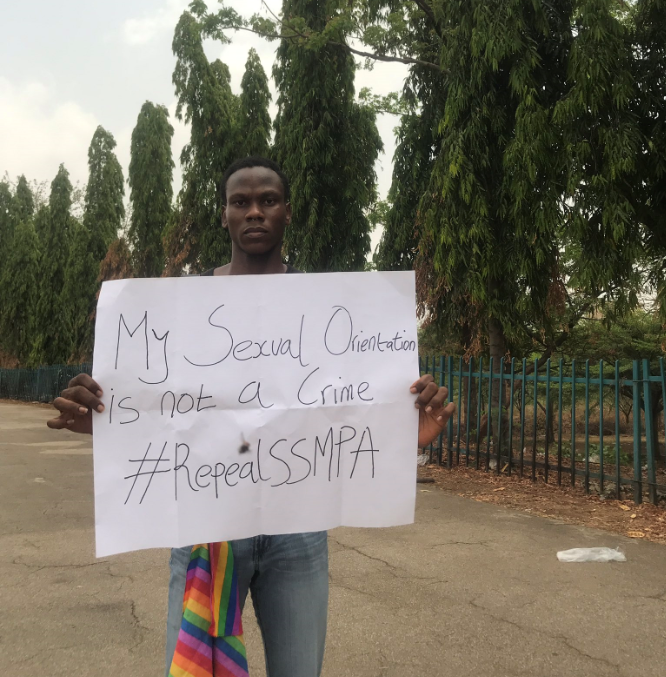
A Nigerian YouTuber Victor Emmanuel has continued his protest against anti-gay law in Nigeria. He is protesting alone at the National Assembly (NASS), embarking on a hunger strike which has now entered the second day.
Emmanuel, who runs the YouTube channel ‘For Fags Sake!,’ began the protest and hunger strike on Saturday, March 20, at NASS over what he termed the continued criminalisation of lesbians, gays, bisexuals, transgenders and queers (LGBTQs) in Nigeria.
He said he would not end the protest until the Same-Sex Marriage (Prohibition) Act (SSMPA) passed in 2014 by the administration of former President Goodluck Jonathan was repealed.
The YouTuber, in a video shared on his official Twitter handle, said he would not leave until his body either gave up or the law be repealed.
Announcing the protest at NASS in a video that has now garnered more hundred thousand views, Emmanuel said, “I am at the National Assembly and I’m here to demand LGBTQ+ freedom and liberation!”
I am at The National Assembly and I’m here to demand LGBTQ+ freedom and liberation!
He also compared the punishment meted out for being gay to the same punishment meted out to rapists.
In an earlier tweet, he had said the Nigerian government should repeal the SSMPA- a law he said criminalised the lives and existence of LGBTQ+ Nigerian citizens.
“Every other day, Nigerians, armed with state-facilitated homophobia, go out of their way to harm, harass, and assault LGBT well-meaning citizens of this country,” he said.
“I am not asking anyone to join me physically in protest, but if you’re queer, an ally, or just a human being who isn’t wicked enough to actually think we deserve 14-years imprisonment for just existing, then I ask you to join me on this journey and send this message to the government: Repeal the SSMPA.”
Former President Goodluck Jonathan had, in 2014, signed the Act criminalising same-sex relationships in Nigeria.
The Act, which contains penalties of up to 14 years in prison and bans gay marriage, same-sex ‘amorous relationships’ and membership of gay rights groups, was passed by the National Assembly in 2013.
The bill was signed despite pressure from Western governments who urged the then administration of Jonathan to respect gay and lesbian rights by not signing it into law.
Human Rights Watch, in a 2015 report on the Same-Sex Marriage (Prohibition) Bill (SSMPA), said the law was discriminatory and contravened basic tenets of the Nigerian Constitution, including respect for dignity and prohibition of torture which went against several regional and international human rights treaties which Nigeria ratified, including the African Charter on Human and Peoples’ Rights (African Charter), the International Covenant on Economic, Social and Cultural Rights (ICESCR), and the International Covenant on Civil and Political Rights.
It also said the law had become a tool being used by some police officers and members of the public to legitimise multiple human rights violations perpetrated against LGBT people.
But a Christian pastor Raphael Nwaenigwe said LGBTQ+ was strange to Nigeria’s culture and beliefs.
“No religion tolerates that in Nigeria,” he said. “Nigeria’s multifarious culture also does not accommodate that. So, even if you legitimise it in Nigeria, there will be resistance at local levels,” he further said.
A civil society organisation YIAGA Africa has called on the Nigerian police and the Independent National Electoral Commission (INEC) to prosecute sponsors and perpetrators of violence that led to the death of three persons during Ekiti State by-election on Saturday.
This is contained in a statement signed by director of programmes Cynthia Mbamalu, and made available to The ICIR on Sunday.
Mbamalu said the electoral commission and the police should immediately investigate and prosecute anyone who participated in the violence.
“The prosecution must include both the sponsors of the violence and the individuals deployed to cause the violence,” the statement read in part.
According to YIagaAfrica, the events that occurred during the election were an assault on Nigerian democracy and sanctity of life.
YIAGA Africa noted that the desperation of political actors to capture power, by all means, remained a threat to electoral democracy.
The organisation stated that it was embarrassing to watch the political class violate the electoral laws with impunity and utmost disregard for the sanctity of life and good conscience.
“No democracy can thrive if politicians circumvent the rule of law, deploy violence and other rigging tactics to win elections at all costs,” YIAGA Africa stated.
However, the organisation commended INEC’s decision to indefinitely suspend the process of the election, adding that no credible election could be conducted under a chaotic atmosphere.
Consequently, YIAGA Africa charged the National Assembly to fasten the electoral amendment process to enable timely and diligent prosecution of electoral offenders, while tackling systemic challenges plaguing the electoral process.
The Ekiti State House of Assembly by-election was suspended on Saturday due to violence perpetrated during the electoral process that led to the death of three persons, with a policewoman and a member of the National Youth Service Corps sustaining gunshot injuries.
The by-election was conducted to fill the vacant seat of the Ekiti East constituency (I) seat following the death of former representative Juwa Adegbuyi, who passed away earlier in February.
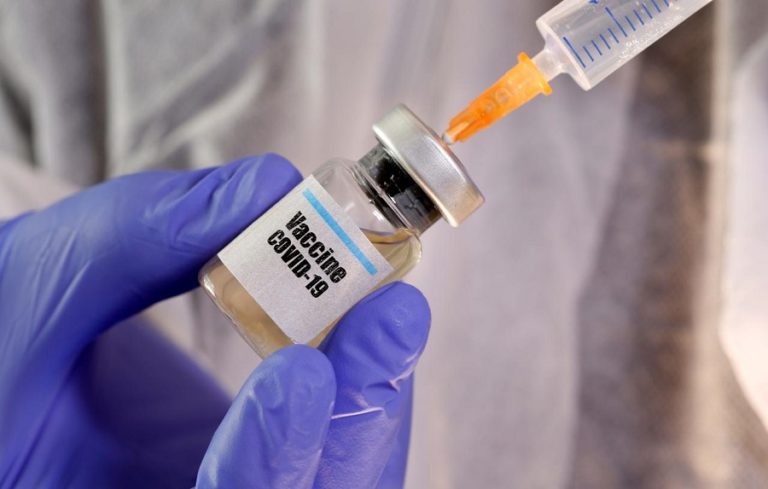
THE United States and other Western countries have fallen behind in the global COVID-19 vaccine diplomacy race, according to multiple reports, including a publication by the World Politics Review. But the governments of China, Russia and India are using vaccines produced in their countries to expand spheres of influence across the world.
“As wealthy Western countries carefully guard their national stockpiles of COVID-19 vaccines, raising concerns about ‘vaccine nationalism’, China and Russia have moved aggressively in the opposite direction – toward vaccine diplomacy. Moscow and Beijing have used their homegrown formulas as powerful diplomatic tools, enabling them to curry favor with poorer nations that have largely been left out of the race to inoculate the world,” the report published on worldpoliticsreview.com on March 18, 2021, said.
In a related report, the New York Times noted that the US administration led by President Joe Biden was under pressure to play catch-up on vaccine diplomacy. The US vaccine policy, which insists that Americans come first, has made the country’s authorities avoid making commitments towards giving away American-made vaccines.
“The United States has fallen far behind China, India and Russia in the race to marshal coronavirus vaccines as an instrument of diplomacy,” the New York Times reported, noting that Biden was facing accusations of ‘vaccine hoarding’ from global health advocates who wanted his administration to channel supplies to needy nations in desperate for access.
While the Biden administration is still planning its strategy to counter China’s growing global influence, the East Asian country is burnishing its image by shipping doses of vaccine to dozens of countries on several continents, including Africa, South America and South East Asia.
Reuters reported that Russia and China were currently engaged in a race to plug the COVID-19 vaccine gap in Africa, hoping to cement their influence in the continent which had received very few doses due to the hoarding of supplies by the US and other Western nations prioritising inoculation of their own citizens.
Russia has offered 300 million doses of its Sputnik V vaccine, with financing, to an African Union (AU) scheme, according to Reuters.
Over the past month, China has been shipping more than one million doses of vaccine each week across Africa, the Middle East and Latin America. China has also provided 10 million vaccine doses to developing nations through the World Health Organisation (WHO)’s COVAX initiative.
The Chinese foreign ministry said the country was working towards providing vaccine to more than 60 countries. As of March 1, 2021, Equatorial Guinea, Zimbabwe and Sierra Leone had received Chinese vaccine. China says it plans to send supplies to an additional 16 countries in Africa.
Also, Russia has supplied its vaccine, Sputnik V, to some European countries, including Hungary and Slovakia. Millions of doses of Sputnik V have been delivered to countries from Laos to Argentina to Serbia, according a report by Euronews.
With the EU struggling to make available European-manufactured vaccines, Russia has also offered to supply 50 million more doses to Europe. On March 9, 2021, the Russian government announced that Sputnik V would be produced in Italy from July at the factories of the Italian-Swiss pharmaceutical company Adienne in Lombardy. Going by projections, 10 million doses will be produced between July 1 and January 1, 2022, in addition to millions being made by firms in South Korea, Brazil and India.
However, most European nations will not purchase Russia’s vaccine as it has not been approved by the European Medicines Agency (EMA).
Licensed to manufacture Covishield, the Indian label for the Oxford-AstraZeneca vaccine that was developed in the United Kingdom, India has become a vaccine diplomacy leader. More than 50 million doses are produced a month at the Serum Institute of India, a company based in Pune, in the western state of Maharashtra, which is the world’s largest manufacturer of vaccines.
With the volume of vaccine produced outpacing India’s home needs, the administration of Prime Minister Narendra Modi has turned to gifting and commercially marketing the surplus vaccines, enabling the country to compete with its rival, China, in strengthening ties and enhancing leverage with other countries.
Under the programme termed Vaccine Maitri, or Vaccine Friendship, the Indian government focuses the initiative first on its neighbours and partners in South Asia and the Indian Ocean region. By March 1, 2021, India had sent 36 million doses of vaccines to countries such as Bangladesh, Myanmar, Bhutan, Nepal, Maldives, Mauritius, Seychelles, Oman, Sri Lanka, Bahrain, Afghanistan and Domincan Republic.
According to the Indian government’s external affairs ministry, out of the 36 million doses, 6 million were given out as aid, while 29.4 million were despatched on a commercial basis.
India has also become a major contributor to COVAX, a global initiative that aims to ensure equitable access of vaccines to poorer nations. In late February 2020, about 600,000 doses of the AstraZeneca vaccine, produced by the Serum Institute of India, were shipped to Ghana, making the African country the first to receive vaccines under the COVAX arrangement. Also, the 3.92 million doses of the Oxford/AstraZeneca vaccine received by Nigeria through the COVAX Facility were manufactured by the Serum Institute of India.
Analysts believe that the US status as a global leader, which has taken a hit due to the restrictive and nationalistic policies former President Donald Trump, would further diminish if the Biden administration does not play a leading role in providing vaccine to poor countries during the COVID-19 pandemic.
Tom Hart, North America executive director of One Campaign, a non-profit organisation dedicated to eradicating global poverty, which was founded by U2 singer Bono, said, “It is time the US leaders ask themselves: when this pandemic is over, do we want to remember America’s leadership helping to distribute lifesaving vaccines or will we leave it to others?”
Meanwhile, in a bid to catch-up on the global vaccine ‘diplomacy race,’ the White House on March 20, 2021, said millions of doses of COVID-19 vaccines currently sitting in US warehouses would be shipped to vaccination sites in Mexico and Canada.
“The donation marks one of the US’ first steps into the dawning – and deeply contentious – world of late-stage pandemic vaccine diplomacy,” a report by theverge.com said.
GOVERNOR Samuel Ortom of Benue State says no amount of intimidation can compel his administration to repeal or reverse the ranching law.
Ortom said this at a press briefing held at the state capital Makurdi on Saturday while narrating his ordeal in the hands of gunmen who planned to assassinate him.
He said that the ranching law of the state would not be repealed for any reason, stressing that no intimidation could force his administration to reverse the decision of Benue people against open grazing.
In the wake of attacks and killings of innocent people by Fulani herders, Benue State House of Assembly, in 2017, passed the ranching law prohibiting open grazing. This has created a number of problems for Ortom, resulting intimidations and more killings in the state.
Ortom disclosed that he was inspecting his farm when armed herders, dressed in black, opened fire on him and his security aides, noting that he ran 1.5 kilometers to escape unhurt,
“You know today is Saturday and I usually go to my farm. So, I went to my farm along Gboko Road and on our way back, we started hearing some gunshots and we discovered people who were dressed in black and from experience, we now discovered that these are Fulani militias,” he recalled.
He said that though his security men were able to repel the attackers, he still had to call for reinforcement of Operation Whirl Stroke, police and State Security Service.
The governor claimed that the attack came few days after the leadership of Miyetti Allah Kautal Hore held a meeting in Yola and singled him out as a thorn in their flesh that must be eliminated.
He said he received intelligence to that effect, stressing that his life was in the hands of God and no ethnic militia had the power to take it without God’s permission.
Ortom noted that the attackers were more than 15 in number, saying that they would fail as many times as they tried.
The governor said he would send a petition to President Muhammadu Buhari and security chiefs against Miyetti Allah Kautal Hore, adding that allowing the leadership of the group to walk freely with security personnel attached to them was not in the best interest of the country.
RIVERS State governor Nyesom Wike says the federal government should be held responsible if his Benue State counterpart Samuel Ortom is assassinated.
He said any assassination of the governor could plunge the country into another civil war.
Wike stated this while reacting to an attempt on Ortom’s life and attack on his convoy by suspected herdsmen on Saturday.
Fifteen gunmen were said to have trailed Ortom to a riverbank in Tyo Mu along Makurdi/Gboko Road in Makurdi Local Government Area of the State, where he had gone to visit his farm.
“If you kill Ortom, then be prepared to bury Nigeria. If anything happens to Governor Ortom, the federal government will be held responsible and they should be prepared that there will be no more Nigeria,” he said.
In a statement signed by Kelvin Ebiri, special assistant to the governor on media, Wike recalled how the former general officer commanding (GOC) 6 division of the Nigerian Army in Port Harcourt Jamil Sarham and the All Progressives Congress (APC) chieftains had planned to assassinate him during the 2019 general election.
He described as disturbing, the growing trend where the lives of incumbent governors were brazenly threatened.
How I escaped gunmen’s attack – Ortom
Narrating his ordeal during a press briefing in Makurdi, Ortom said he ran 1.5 kilometers to escape unhurt.
He said he was inspecting his farm on Saturday when armed herders, dressed in black, opened fire on him and his security aides.
He stated that it took the swift response of his security aides to repel the attack, while he ran a long distance to escape unhurt.
“If not for my security men and God, I would have been dead by now. I ran over 1.5 kilometers to escape while my security men repelled the herdsmen,” he said.
The governor claimed that the attack came few days after the leadership of Miyetti Allah Kautal Hore held a meeting in Yola and singled him out as a thorn in their flesh that must be eliminated.
He said he received intelligence to that effect.
Ortom said his life was in the hands of God and no ethnic militia had the power to take it without God’s permission.
He said as many times as they tried, they would continue to fail.
He stated that the ranching law of the state would not be repealed for any reason, stressing that no intimidation could force his administration to reverse the decision of Benue people against open grazing.
The governor said he would send a petition to President Muhammadu Buhari and security chiefs against Miyetti Allah Kautal Hore, adding that allowing the leadership of the group to walk freely with security personnel attached to them was not in the best interest of the country.
THE Independent National Electoral Commission (INEC) has suspended Ekiti State by-election indefinitely, citing violence and killings that marred the polls.
INEC national commissioner in charge of information and voter education Festus Okoye said this in a statement on Saturday.
He said INEC received a report from the resident electoral commissioner (REC) for Ekiti State that the by-election was disrupted by violent attacks on voters, election officials and security personnel.
According to Okoye, the commission made adequate arrangements for the election, with personnel and materials arriving on time in all the 39 polling units spread across the five wards of the constituency for the 23,670 registered voters to exercise their franchise in a free and fair process.
“However, no sooner had voting commenced than unidentified gunmen unleashed mayhem at some polling units, thereby disrupting the process.
“Unfortunately, some innocent voters were shot dead, while a police officer, some INEC regular and ad hoc staff who sustained gunshot injuries during the melee are receiving medical attention.
“This situation is unacceptable. In its avowed commitment to electoral integrity, the commission has suspended the election indefinitely. To continue with the process will amount to rewarding bad behaviour. The security agencies are aware of this unfortunate situation and have commenced investigation,” Okoye said.
He also expressed the commission’s condolences with the innocent victims of the violence, which he said was an affront on the nation’s democracy.
Kayode Fayemi, state governor, has condemned the violence, calling on the police to fish out the perpetrators.
According to the police, at least two persons, including a policewoman, were killed as a result of the electoral violence that ensued in some of the polling units on Saturday.
The state police command said the violence had been perpertrated by suspected thugs in unit 7 ward 7 in Omuo-Ekiti while eligible voters were performing their constitutional duty.
The bye-election was to fill the vacant seat of Juwa Adegbuyi, a member of the House of Assembly representing Ekiti East constituency 1, who died in February.