Home Blog Page 1856

How Shasha Market traders lost millions in Oyo ethnic clash

The Hausa-Yoruba clash that occurred a few weeks ago leading to the burning down of Shasha market in Ibadan, Oyo State capital, did not only claim lives but also left many traders, who lost goods worth hundreds of millions of naira in the two-day ethnic crisis,  in tears. The ICIR’s NIYI OYEDEJI reports.


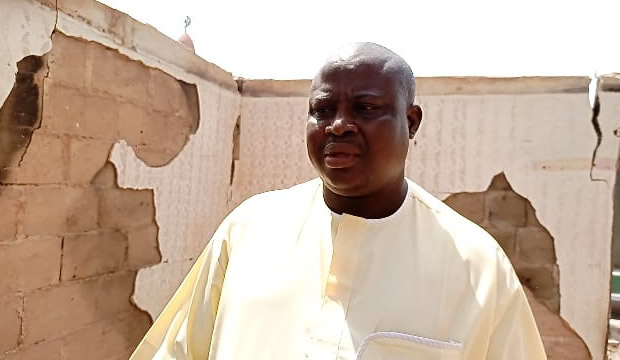
ABAYOMI MUTAHIRU, a popular onion dealer, lost investments of over N20 million to the two – day February mayhem at Shasha market in Ibadan, the Oyo state capital. Just before the carnage, Mutahiru, 52, took delivery of 213 bags of onions as he had done over the past years. But this time around, doom lurked in the air, and he had no inkling.

“The clash occurred the day after I re-stocked my shop. The wood and onions scattered around all over the floor are mine,” a distraught Mutahiru says, pointing to a litter of burnt onions and wood that were left of his investments.

“I lost 213 bags of onions to this incident. They burnt some, stole some, the remnant is what is lying here.”

Before his shop was razed down, a wooden box containing N230, 000 was looted by the mob.

“My children can no longer go to school, my wife now has to stay back home. We have lost everything.”
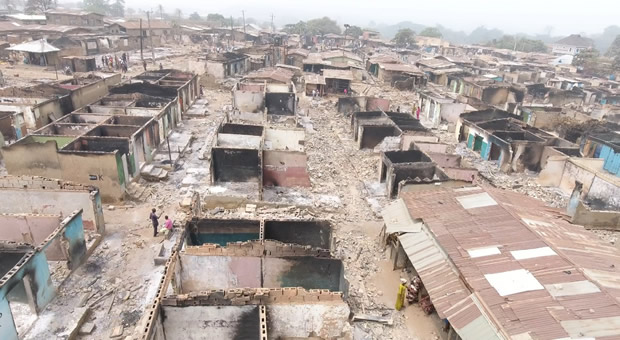
Shasha Market
Abayomi Mutahiru

Age-long hostility fuels crisis

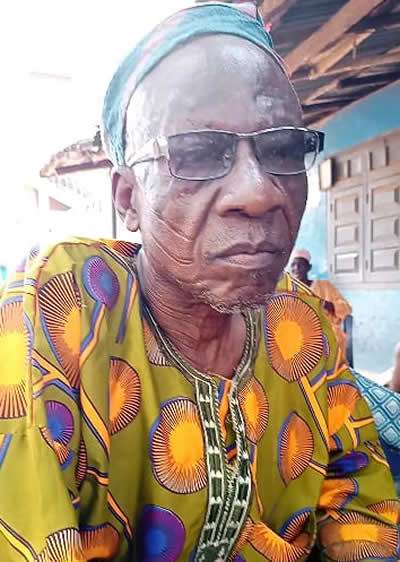
Before the crisis Shasha market had in the past, experienced ethnic-related feuds, often between Hausa and Yoruba communities, but none was as devastating as last one, says Rasheed Popoola, the Babaloja of Shasha (the market leader).

“Whenever there is a clash, we always try to ensure that it doesn’t escalate but sadly, no one could control it this time.”

According to him, the February 11 clash between the hitherto friendly Hausa and Yoruba communities was sparked by an altercation between a pregnant Yoruba woman and a Hausa cart pusher in the market.  The disagreement led to the death of one Sakirudeen Adeola, a cobbler, popularly known as Korex, said to have been hit by the cart pusher.

“Following his death, myself, some friends and the police went to the Hausas to appeal to them. The conversation was ongoing when we noticed a group of angry men approaching us with stones,” Popoola narrates the incident leading to the crisis.

Sighting the angry mob, ‘Babaloja’ and the police fled. “The market place became violent almost immediately,” he adds.

Korex’s untimely death was a trigger for the long-held hostility between the two communities, said Akinade Ajani, the Yoruba traditional head (Ba’ale) of Shasha.
Shasha Market
Rasheed Popoola, the Babaloja of Shasha market

The ICIR gathered that the tension is connected to the leadership tussle between the people of the two tribes.

“It started a long time ago, shortly after the Hausas settled in the area in 1979. This violent outburst is the result of a pending conflict,” says the traditional ruler.

“Though all we cared about was to peacefully coexist and enjoy the proceeds from the market together, but the Hausas have been persistent about their ownership of the major goods sold in the market and thereby want to be the one taking the position of the chairman of Shasha Market Traders Association.”

The ICIR learnt there has been a tradition of appointing a Hausa man as the chairman and a Yoruba man as the vice-chairman since the establishment of the market but trouble started last year when Ba’ale decided to appoint a Yoruba man as the chairman of the association.

Ajani notes that despite efforts by him and Haruna Maiyesin, the Seriki Hausa in Shasha, to mediate in the appointment tussle and midwife a chairman accepted by all, there are eight individuals in the market who would never accept a Yoruba chairmanship of the market.

In his words, “they are the ones causing a crisis in the market.”

The Ba’ale says he doesn’t know their names but alleges that the eight people are Yoruba and Hausa.

“I believe the government needs to fish them out for peace to reign,” he says.

The Seriki Hausa on his part did not   want to speak on the market leadership tussle but alleges that those who triggered the crisis were not residents of the community.

“Anybody creating a problem should be tackled by the government. Those that burnt and killed people are not from here,” Maiyesin insists.

“Both the Hausas and Yorubas who caused the mayhem are not faces we know. On Saturday and Sunday, I had over 5,000 people, including Yoruba and Hausas, in my palace who ran for their lives.”

Traders count losses

Most of the Hausa traders affected by the crisis had to move down to Sabo area, another Hausa community in Ibadan, to seek refuge after losing their goods and properties.

Sixty-five-year-old Uwar Kamil, popularly known as Alhaji Karami, says he is left with nothing following the crisis. He lost N2 million worth of goods and a house that was completely burnt down.

“Three of my shops where I sell empty bags for rice and where pepper and grains can be packaged were completely burnt,” Kamil laments. “My storey building was also totally destroyed. Even what I’m wearing now was sown and given to me yesterday by my children. I left there with my life alone.”
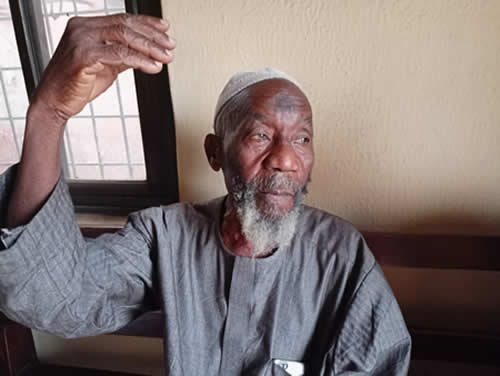
Shasha Market
Alhaji Uwar Kamil

Like Karami, Auwal Musa lost over N3 million worth of goods to the violence, as he just took delivery of goods the day the market was engulfed in violence.

Still trying to recover from the shock, Musa says everything just happened like a miracle and that he is still surprised that such an incident started from a shop and escalated to destruction of goods worth several millions of naira.
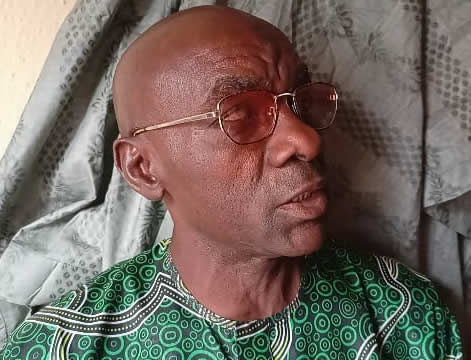
Shasha Market
Auwal Musa

“They just brought my goods and I was offloading it so I did not count them before the fight started but I ordered 300 baskets of pepper and each bag goes for N10,000,” says Musa.

Idayat Rahman, also known as Alatepupo among the locals in the market due to the size of her provision store, says the fight came unexpectedly.

“On Thursday night, I heard stories about a fight between a Yoruba and Hausa man but I didn’t pay much attention to it since the fight happened somewhere distant from my shops,” the 62-year-old businesswoman says.

“Unknowingly, I went to the market the next day to go about my daily business. I was still trying to open one of my shops when a group of Hausa boys ran to me and asked me to run for my life.”

“I hesitated until I caught sight of a group of people throwing bottles and threatening to kill as many Yoruba people as possible. I hurriedly ran into the shop, locked myself in and started praying.”
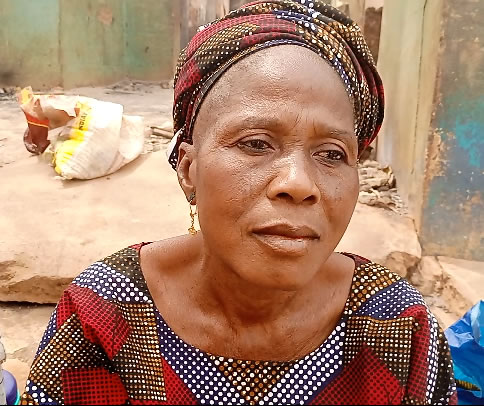
Shasha Market
Idayat Rahman

She said she was terrified and had to call a cab to help move some of her goods away from the shop but was later chased away by the rampaging people, who did not only loot her shop but also set the whole building ablaze.

“I lost goods worth over N10 million. I lost my house, store and shops.  The incident left me empty, I have nothing left. I have two shops around this axis and three stores inside the market. All the five were burnt down completely.”

Afeez Monsurat, a tailor in the market who was also affected by the crisis, had her shop burnt, her machines and customers’ cloths also were not spared.

“I am a tailor; I sew all kinds of clothes. Before the incidents, I had all the machines I needed to work effectively. I had a standard shop but everything is gone now,” a crying Monsurat says.
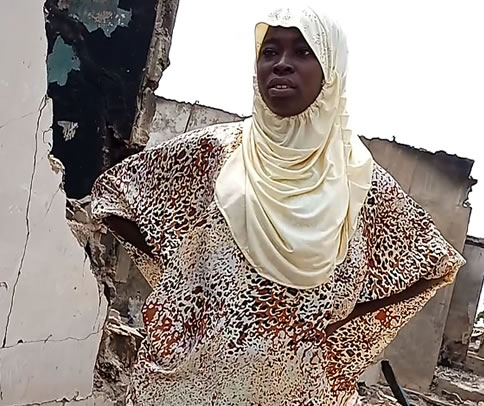
Shasha Market
Afeez Monsurat,

Hopelessness and frustration

After the looting and razing down of shops during the Shasha market crisis, many families are now left to count their losses.

When the dust settled after the free-for-all battle at the market, at least 100 of almost 150 shops in Shasha market were completely razed down, while the rest were vandalised and goods worth several millions were carted away.

Alhaji Adegoke Kolade and his families have lost count of the loss the incident inflicted on them. They not only lost their goods, but also over 20 stalls in the market.

Kolade is famous for having multiple shops in the market, his wife and children who help sell goods in the market also live in a two-storey house built by the 71-year-old man.

Shasha Market
Alhaji Adegoke Kolade

His grief-stricken wife and children could barely speak to The ICIR because they were yet to recover from the shock of their loss.

He says the shops owned by his two wives with over N10 million worth of goods were razed down, adding that his daughter, Abibat, who sells exotic drinks and wines, also had her shop looted and burnt to ashes.

“The shops I rented out to the Hausa people were also looted and razed. I had to bring out a gun to disperse the mob from burning down my two-storey building where I live with my wives and children,” a panic-stricken 71-year-old Kolade says.

The sad tales of the Kolade family is similar to that of Rukayat Opeyemi, whose family also lost 13 shops to the crisis. Her shop and that of her children and grandchildren were also looted and totally burnt down.

Taofeek, Opeyemi’s  grandson, says his grandmother sells dry pepper in eight of the shops. All the pepper she restocked on that fateful day was burnt down with the shops, he laments.

“My own shop where I sell mobile phones and phone accessories was also razed down, we are left with nothing now.”

Over 3,500 basket of pepper were looted, burnt

According to the Food and Agriculture Organization (FAO) statistics, Nigeria is one of the major producers of pepper in the world, accounting for about 50 per cent of African production. The country’s major area of production is northern Nigeria.

The North supplies the bulk of the pepper needs of the southern parts whose production is still a small scale.

The ICIR findings revealed that Shasha market is the second-largest pepper market in Nigeria, coming after the Mile 12 market in Lagos.

According to Illyas Bala, the General Secretary, Shasha Market Traders Association, the market receives no fewer than 40 trucks of pepper from the northern part of the country daily.

He recollects that over 35 trucks of pepper had already been offloaded that Friday morning before the crisis started, adding that a truck contains about 100 baskets of pepper, onions or tomatoes.

“When the crisis started and people ran away for safety, the hoodlums wreaking havoc looted some of these peppers and burnt the rest,” Bala said.
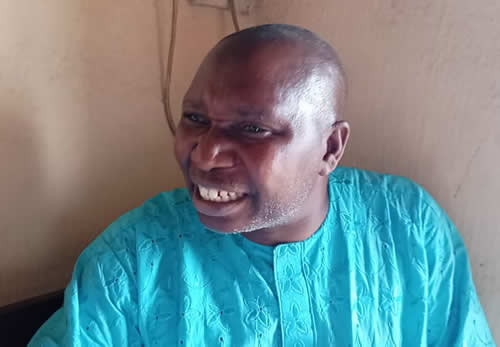
Shasha Market
Illyas Bala, the General Secretary, Shasha Market Traders Association

“It took the intervention of the security agencies in ensuring the trucks were not burnt, which could have been so disastrous.”

According to him, Oyo State Government charges N1, 500 as a tax on every truck of pepper offloaded in the market.

“We usually offload 40 trucks on a daily basis; 20 trucks in the morning and 20 in the afternoon. I would have shown you the receipts of these taxes if they had not burnt everything during the crisis,” says Bala.

Calls for government’s intervention

While some of the traders that spoke with The ICIR appealed to the government to compensation them for their losses, others, particularly Hausa traders, were of the opinion that the government should relocate them to another place for security reasons.

Muhammadu Rabiu Luguhudu, who lost 350 bags of chili pepper and scotch bonnet and his younger brother, Awwalu Kurma Lugubudu to the incident, says the lives of the Hausa traders are not secure in the market.

He maintains that the government should give them another market where they can sell their goods freely.

“My younger brother was killed during the riot. He was my blood brother, his wife just gave birth and the baby is just two weeks old, with four older kids.”

“My late father, Alhaji Garba Luguhudu, was once the chairman of the market and all the shops he left for us have been burnt and vandalised,” Luguhudu laments.
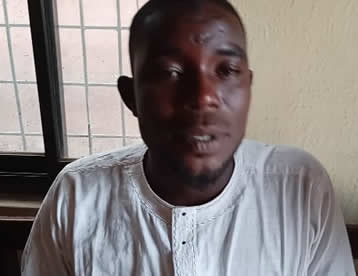
Shasha Market
Muhammadu Rabiu Luguhudu

Alhaji Abubakar Sani, who has four wives and 13 children, also decries the violence, particularly the loss of lives and properties, observing that the Shasha Market was a bush before the Hausa people migrated there in 1979.

“Even if the market is fixed or not, we are not going back there again, that place is not convenient for us.”

On her own part, Aminatu Kolade, a foodstuff seller, who also lost over N10 million worth of goods, says there is a need for the state government to come to their aid, stressing the loss is beyond what they could bear.
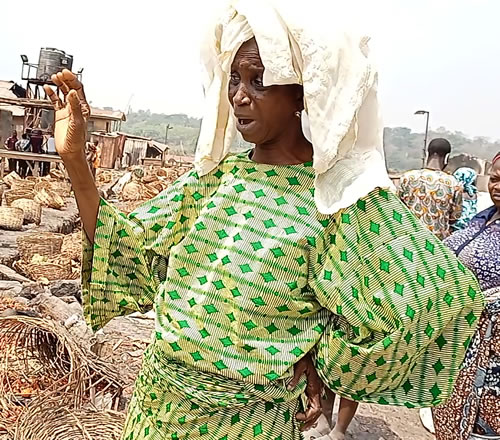
Shasha Market
Alhaja Aminatu Kolade

In his appeal to the government, the Babaloja says there is a need for the government to rebuild the market and also give succour to the traders who have lost their sources of income.

“These traders live on their income from the market but it is pathetic that they have lost everything overnight to a crisis that is avoidable.”

Crisis, loss of properties and lives avoidable ― Experts

Experts have described the crisis as avoidable.

Moses Abolade, the Executive Director, Peace Education and Practice Network (PEPNET) says the crisis was because of what he describes as, “peace education deficit”.

Abolade says the loss of lives and properties occasioned by the crisis could have been avoided if the parties involved had any form of peace education before now.

“In a heterogeneous environment like Shasha, there is need for the government and stakeholders to always ensure the residents and traders are exposed to peace education.”

It is through peace education that people will learn how to tolerate one another for peace to reign, he adds.

Timothy Avele, the managing director, Agent-X Security Ltd, who also acknowledged the fact that the crisis was avoidable, blames it on the laxity of the security agencies in the state.

“The security agencies through actionable intelligence should have known about this crisis and nipped it in the bud before it got out of hand by employing conflict resolution and management techniques.”

Government promises to compensate traders, rebuild market

Speaking with The ICIR, Hon. Olatunde Kehinde, the lawmaker representing Akinyele constituency 11 at the state House of Assembly, explains that the process to provide palliatives for traders who lost their shops during the clash had commenced.

“The governor has instructed the market executives that they should write the name of every individual that lost their shops and goods,” he says.

He adds that owners of buildings burnt during the clash will also be identified and “the governor will kindly do something.”

Similarly, the Nigeria Governors Forum (NGF) has expressed readiness to mobilise support for Governor Seyi Makinde to rebuild the market and to also compensate the traders.

Bagudu, who was in the company of three other northern governors ―Abdullahi Ganduje (Kano), Abubakar Bello (Niger) and Bello Matawalle (Zamfara) to the state for on the spot assessment gave the assurance.

“We are glad that the governor is rendering assistance and we the NGF are going to support him.”

* All photo credits to Niyi Oyedeji
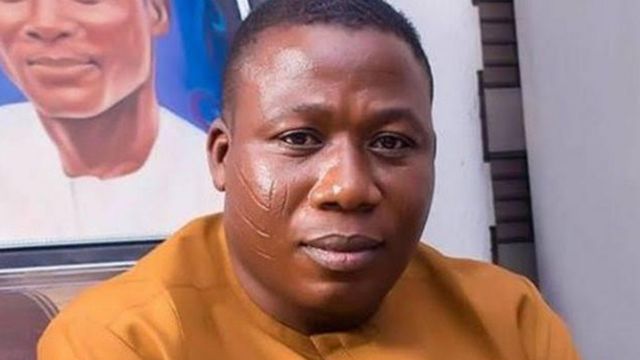
Nigerians react as Sunday Igboho calls for Yoruba secession

SUNDAY Adeyemo, popularly known as Sunday Igboho, a self-acclaimed Yoruba activist, on Thursday evening, declared Yoruba as  a separate nation and demanded the secession of South-West states from Nigeria. Igboho’s declaration sparked divergent reactions from Nigerians on social media. The ICIR chronicles some reactions to Igboho’s declaration.

During his declaration, Igboho said the major resources of Nigeria were in the hands of Northerners, stressing that Yorubas were being killed and their land taken over.

“If the police attack us for that, we are ready for them. We do not want Nigeria again but the Yoruba nation. There is no essence for one Nigeria when the major resources in the country are in the hands of the northerners.

“Enough is enough. There is no going back… We are not scared of anybody. These killer herders are taking over our land and they are killing our people,” Igboho said in a viral video.


Read Also:


Reacting to his declaration, a Twitter user identified as Ada King with the handle, @Real_AdaKing, supported Igboho’s standpoint while saying that freedom was needed from Nigeria.

“Freedom, Freedom, Freedom. That’s what we want from Nigeria. Just so happy today, shout out to Mazi Nnamdi Kanu, The great leader of IPOB for all his efforts and also Sunday Igboho for his fight for Oduduwa Republic. At the end, we all shall be free from Nigeria,” Ada King wrote on Twitter.

Taking the same position, NK£M @Theladyfrances_ said there was no point having a ‘one Nigeria’ if there would not be progress as a country. NKEM stated that the country should do the ‘needful’ or separate.

“I do not see the point of #OneNigeria if we are not going to progress as a country. We either start doing the needful now or we separate. Respect to men like Sunday Igboho and Nnamdi Kanu who took it upon themselves to agitate for the freedom of their people against tyranny,” NKEM said.

Another social media user identified as Noah Nwosu @NoahNwosu75  also spoke in support of Igboho with claims that the differences among Nigerians were stronger than what united them.

Nwosu stated that northern and southern Nigeria did not have anything in common and when the country was separated, the Northerners could practise Shariah Law in a way that suited them.

“Supported of course. Yoruba should get their country. Biafra should get theirs. There is nothing like one in Nigeria. Our differences are stronger than what unites us. The north and south don’t have anything in common. North will be free to practice their shariah as it suits them,” Nwosu claimed.

Against the personality of Igboho, a Twitter user identified as Hayzed @lanreoyeleye said Igboho, popularly known in Ibadan, Oyo State, should not be the one winning the hearts of people for the Oduduwa Republic – another name for the Yoruba nation.

In dissonance to the call for secession, another social media user ADEYEMI @YEMOSKYLALA said the country did not need to separate, rather should be restructured.

“Sunday Igboho should calm down. Who are those pushing him for the Yoruba nation thing? This country does not need division. Rather we should restructure it.

“All this (sic) fools calling for a particular nation out of another nation does (sic) not understand that it take (sic) more than calling,” ADEYEMI said.

My unconstitutional removal as CJN shows Nigeria’s judiciary on life support -Onnoghen

FORMER chief justice of Nigeria (CJN) Walter Samuel Onnoghen has said that his unconstitutional removal in the lead-up to the 2019 general election is a testament that the country’s judiciary is on life support. 

Onnoghen said this during the unveiling of a book “Fundamental Rights (Enforcement Procedure) Rules, 2009,’ written by Ogwu James Onoja (SAN) on Friday.

He said he was removed basically because it was rumoured that he held a meeting with the People’s Democratic Party (PDP) candidate in the 2019 election Atiku Abubakar.


Read Also:


He noted that rule of law was the foundation of democracy, and a country without the rule of law directly practised dictatorship. The jurist urged judges to ensure strict compliance with the rule of law.

Speaking on his removal, he noted that even as a CJN, he was not given an opportunity to be heard during the unfortunate incident.

“I have never met Atiku in my life, but unfortunately as a CJN, I was never given an opportunity to even defend myself. It is only the rule of law that can guarantee the rights and privileges of minority tribes from oppression and domination by majority tribes in a country like ours,” he said.

“Once a serving CJN, who is the head of the judiciary and symbol of that arm of government, can be removed unconstitutionally and without him being given the basic right to defend himself, whether successfully or unsuccessfully, the justice system cannot but be on life support.”

“The ultimate cowardice exhibited is that the National Judicial Commission (NJC) has, two years after, not summoned the courage to release its own findings.”

“It is unfortunate that the ruling party thinks they have the right to be served justice at all costs without recourse to what the law says,”  he said, while encouraging other judges and legal practitioners not be discouraged by the way he was treated.

He further said that the nation would be doomed without rule of law and enforcement of fundamental rights.

“ You can’t shave my head in my absence, it’s against natural justice and common sense,” he added.

This was the first time the former CJN would be speaking publicly since his removal from office in 2019.

The Code of Conduct Tribunal found the former CJN guilty of false declaration of assets and also barred him from holding any public office for 10 years.

EFCC vows to prosecute whistleblowers with false information

THE Economic and Financial Crimes Commission (EFCC) has vowed to prosecute whistleblowers whose intention is to mislead the commission with false pieces of information.

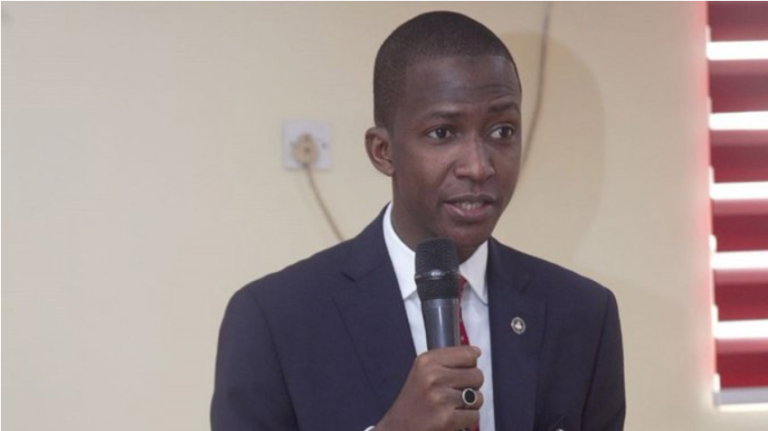
EFCC chairman Abdurasheed Bawa stated this in a statement on Friday.

He said despite due diligence by the EFCC, scarce investigative resources had been wasted by the agency in following up false leads that frequently came to dead end.

He said activities of false whistleblowers detracted from the noble intention of the whistblower policy of the federal government which sought to incentivise information leading to the recovery of stolen wealth.

He noted that the whistleblower policy was not designed as a tool for unscrupulous citizens to send law enforcement agencies on wild goose chase or set them against their perceived enemies.

He reiterated the commission’s preparedness to work with genuine whistleblowers and acknowledged the breakthroughs which the EFCC recorded in its assets recovery drive, using information supplied by whistleblowers.

FG blames failure to prosecute war against Boko Haram on global partners

While advising genuine informants to be cautious and ensure that they came with accurate information before engaging with the agency, Bawa assured that the Directorate of Intelligence, which  was recently created, would henceforth ensure that all information received by the EFCC was subjected to rigorous due diligence before action would be taken.

#ENDSARS: Abuja panel approves N578m as compensation for victims of police brutality

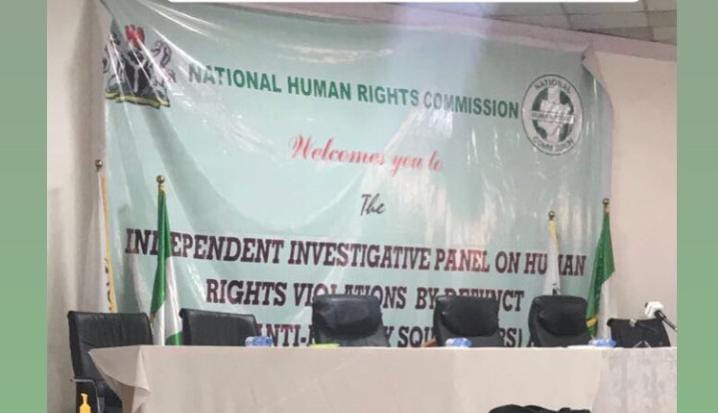
THE independent panel investigating allegations of human rights violations by the disbanded Special Anti-Robbery Squad (SARS)and other units of the Nigeria police has approved compensations worth N578 million to victims of human rights violations.

Sulaiman Galadima,  chairman of the panel, said this on Thursday while presiding over an executive session on petitions relating to the enforcement of judicial decisions/awards for cases that had not been honoured by the Nigerian police force.

During the session, the panel considered 20 out of the 44 petitions with court judgments awarding compensations to victims of human rights violations, but which were yet to be honoured by the police.

Decisions were made on each of the petitions otherwise known as judgment debts.

The petitions on judgment debts totalling about N575.8million were considered ranging from the award of the sum of N200million to N120,000 to victims whose cases bothered on extrajudicial killings, unlawful arrests and detention, cruel, inhuman and degrading treatments and torture, alleged enforced disappearance, confiscation of property, among others.

While the respective cases have been adjourned for final decisions, the panel members agreed that the victims of human rights who got court judgments should be paid.

#ENDSARS: Oyo State sets up N500m compensation fund for victims of injustice

On how the victims would be paid, Hillary Ogbonna, secretary to the panel, said the police would have to make its commitment to respect court orders while part of the money would be paid from the Human Rights Compensation Funds of the National Human Rights Commission.

Ogbonna said the panel had also decided that apart from paying the compensation to the victims, it would also order the police authority to issue apologies to some of the petitioners who had the issuance of apology as part of their court judgements.

EU declares AstraZenenca vaccine safe, effective against COVID-19

Amid fears and other concerns by many countries, the European Union has declared that AstraZeneca vaccine is safe and effective against COVID-19.

Emer Cooke,  executive director of the European Medicines Agency (EMA), told a news conference in Amsterdam, Netherlands, on Thursday evening, that the vaccine was effective.

“This is a safe and effective vaccine… Its benefits in protecting people from Covid-19 with the associated risks of death and hospitalisation outweigh the possible risks,” Cooke said.

Cooke noted that findings by the expert committee on medicines safety of the EMA had shown that the vaccine was not associated with an increase in the overall risk of blood clots.

However, she said the committee was unable to rule out a link between the vaccine and a “small number of cases of rare and unusual but very serious clotting disorders.”

She noted that further investigations were being carried out, but in the meantime, awareness should be raised on the possible risk of the vaccine in the product information.

This is coming a few weeks after some European countries suspended the administration of the AstraZeneca vaccine due to possible links to a blood clot.

According to AstraZeneca, there had been 15 instances of deep vein thrombosis (DVT) and 22 pulmonary embolism events reported among more than 17 million people vaccinated in the European Union and the UK.

Nigeria is unlikely to purchase Covid-19 vaccines except through donor grants

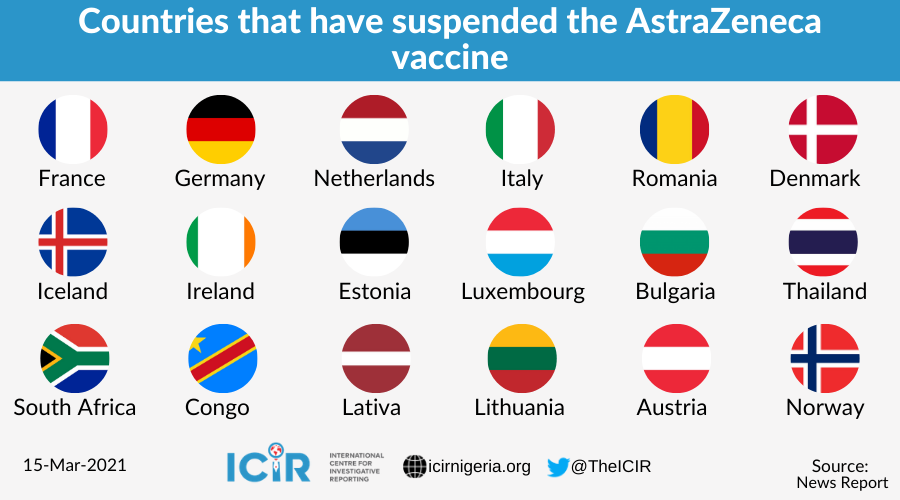
The ICIR reported that about 18 countries across Europe, Africa and Oceania had suspended the use of the AstraZeneca vaccine owing to observed side effects.

List of countries that have suspended the use of Oxford/AstraZeneca vaccine. Infographics by Damilola Ojetunde

Some of the countries that suspended administration of the vaccines included Italy, Iceland, Bulgaria, Thailand, Congo, Estonia, Lithuania, Luxembourg, Romania, and Latvia, Austria, South Africa, Norway, Denmark, Ireland, Netherlands, Germany, and France. Germany and France, among others.

Nigeria drags as Vietnam lifts 45m citizens out of poverty

IN 2018, the World Poverty Clock found that six Nigerians fell into extreme poverty every minute. In contrast, five Vietnamese left the poverty cycle each minute in the same year, according to The ICIR analysis of World Bank data. 

Forty-five million Vietnamese were lifted out of penury between 2002 and 2018, with poverty rates declining sharply from over 70 percent to below 6 percent, the World Bank said.  In 2018, 87 million Nigerians were classified as extremely poor, living on less than $1.90 each day. In fact, Nigeria officially became the world’s poverty capital that year.

There are similarities in both countries, yet differences in policy implementation and economic management and leadership.  Like Nigeria, Vietnam’s agriculture contributes one-thirds to its economy. Agriculture also contributes about one-thirds to Nigeria’s Gross Domestic Product (GDP), though its total contribution in 2020 was 26.21 percent due to supply chain issues necessitated by COVID-19.

The difference is that the Southeast Asian country converts its raw agricultural products into finished products while Africa’s largest economy ships out raw agricultural products.

“Well, if you add value to your products, you earn more foreign exchange and become rich, but if you export products in raw forms, you earn less and maybe remain poor,” Attah Anzaku, co-founder of Agroeknor, an exporter of hibiscus flower, told The ICIR.

From January to November 2020, Vietnam earned $254 billion from the export of non-oil products such as phones, electronics goods, footwear and textiles, while Nigeria earned less than $3 billion from shipping out raw leather, cocoa powder, sesame, cashew and mainly raw agricultural commodities, which would be converted into finished products and re-exported to Nigeria.

Another similarity is that more than half of both countries’ populations are youths – less than 25-year-olds. The youth in both countries have access to the internet; in Vietnam, 45 percent of young people have access to the internet, but Nigeria only has data for the general population -48 percent in 2020. But with the structure of the population, the majority are said to be young people.

How the Vietnam miracle happened

Vietnam’s miracle of lifting over 45 million out of poverty in 16 years did not happen by chance. Experts at the World Bank and Brookings Institute attribute the miracle to three strategies: domestic reforms by reducing the cost of doing business and deregulation; economic liberalisation (open borders); and investment in human and physical capital.

Due to business environment reforms and improvement in electricity (electricity supply has tripled in 10 years)­, the Southeast Asian nation has become a manufacturing hub to several investors, including Samsung, Intel and LG. Most of the firms produce in Vietnam and export to other parts of the world, creating millions of jobs and earning millions of dollars in foreign exchange. In 2019, 1.5 million new jobs were to be created by investors in Vietnam, according to the country’s Ministry of Labour, Invalids and Social Affairs—a year in which unemployment was over 23 percent in Nigeria.

Vietnam’s exports in 2019 increased 8.4 percent to $264.189 billion—88 times Nigeria’s non-oil export earnings in 2018. Vietnam ranked 70th on the 2020 World Bank Doing Business, while Nigeria‘s ranking was 131st. The Asian country runs on hydro, coal, renewable energy and gas, with a total installed capacity of almost 48,000 megawatts. Still, with a double population, Nigeria has 12,500 installed generation capacity and 4,000-5,000 distribution capacity, with hydro the main power source.

“Between 2002 and 2018, GDP per capita in Vietnam increased by 2.7 times, reaching over $2,700 in 2019,” the World Bank said in its 2019 report on Vietnam.

Another strategy employed by Vietnam was access to education. School enrolment in Vietnam was 115 percent in 2019, according to the World Bank, but 10.5 million children in Nigeria, especially in the north, are out of school, according to UNICEF, perpetuating poverty among the populace.

The open borders and trade liberalisation attracted investors to the Southeast Asian nation.  With the country becoming a manufacturing hub, the multiplier effect was felt on economic growth and jobs.

In 2019, when the COVID-19 pandemic was not an issue, Nigeria’s economic growth rate stood at 2.21 percent, lower than the 2.6 percent population growth rate. However,  Vietnam averaged a 7 percent growth rate— 6 percent higher than 1 percent population growth. When economic growth is higher than the population growth rate, the citizens are lifted out of poverty. In the fourth quarter of 2020, Nigeria’s GDP growth stood at 0.11 percent, while population growth was 2.6 percent. This means that many Nigerians lived below the poverty line.

Read also: Nigeria among top 3 countries facing worsening food insecurity, acute hunger

Vietnam is one of the few countries in the world today that is predicted not to see coronavirus-induced recession due to the resilience of its economy in the last 20-30 years, said the World Bank. In fact, the Southeast Asian nation, with an almost 100 million population, is estimated to see up to 5 percent growth even with COVID-19 disruptions.

Nigeria, poverty and Buhari’s failed policies

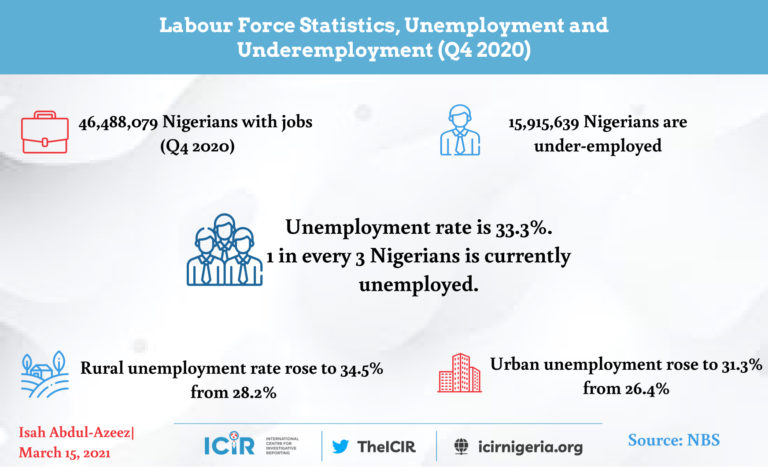
Poverty has persisted in Nigeria due to its warped structure, low growth rate, exchange rate risks, policy flip-flops, and poor governance. Unemployment reached a record 33 percent in the fourth quarter of 2020, with inflation nearly 18 percent in February 2021.

Exchange rate risk has weakened the naira and raised the cost of living sporadically in Africa’s most populous nation. Businesses are left to scramble for a few dollars while the country cannot produce enough local and global markets.  This is attributed to Central Bank of Nigeria (CBN)’s poor FX management policy, which has been demand-driven.

“Poor governance is one of the key drivers of poverty. Poor governance as manifested in corruption entails robbing the public of budgetary resources that could have been channelled into infrastructure and economic development,” said Obadiah Mailafia, economist and former central bank deputy governor, in a BusinessDay article entitled ‘Poverty Capital of the World.’

“Equally important is low economic growth and macroeconomic failure. Economic science has established a strong causal relationship between growth and poverty alleviation. Growth stimulates expansion opportunities for jobs and collective welfare.”

Nigeria has been hard done by falling oil prices since late 2014, which has reduced foreign exchange inflows. But the economy has failed to expand its manufacturing sector to export and earn huge foreign exchange to curb external risks. Crude oil still occupies 70 to 90 percent of FX, with the country managing demand for dollars rather than pushing for supply. In 2019, the share of crude oil exports in total exports stood at 76.5 percent, according to the National Bureau of Statistics (NBS).

Doyin Salami, chairman of the Presidential Economic Advisory Council, said at the 2020 Nigerian Economic Summit that Nigeria must expand supply and not manage demand in the economy.

“Where we are today in Nigeria is a mentality of poverty. We are managing demand, whereas we should be looking at expanding supply. Nigeria must increase the supply side of her economy,” Salami said.

The manufacturing sector in Nigeria is not competitive due to the high cost of power, lack of logistics infrastructure, low local patronage, low supply of finance to the sector and poor competitiveness of the port system.

“The slight improvement, notwithstanding, port-related challenges are still present, particularly delay in clearance of imported raw materials and machinery that are not locally available by manufacturers, including the associated high and unwarranted demurrage which oftentimes slows down manufacturing operations and increases cost of production in the sector,” Chief executives of 400 manufacturing firms in Nigeria, who are members of the Manufacturers Association of Nigeria (MAN), said in the first quarter of 2020. Premier ports in Apapa and Tin Can in Lagos have no scanners, causing delays and disrupting firm operations.

Nigeria has borrowed from major global institutions, with debt stock hitting N33 trillion in December 2020. The PwC experts have asked the country to look at the option of selling dead assets worth up to $900 billion to reflate the economy and haul millions out of poverty. The Lagos Chamber of Commerce and Industry (LCCI) wants the government to embrace equity rather than debt.

“It is not just talking about lifting 100 million people out of poverty when you have no clear-cut plan to do so. Start the process by first removing barriers to business and investment, including incoherent monetary and fiscal policies,” an economist at one of the banks, who pleaded anonymity, said.

President Muhammadu Buhari has failed in his 2015 promise of revivifying the Nigerian economy. The economy went into recession in 2016 due to what former education minister Oby Ezekwesili called ‘opaque and archiaic policies.’  His command and control policies, notably banning 44 items from accessing the foreign exchange market, have scared investors and hurt jobs. He still maintains opaque petrol subsidies despite criticising it in the lead-up to the 2015 presidential election, which he won.  His promise of lifting 100 million out of poverty is seen as unrealisable by many analysts.

Solutions to Poverty 

The Lagos Chamber of Commerce and Industry (LCCI) has asked Nigeria’s government to review the foreign exchange management framework to
expand the market mechanism’s scope in the determination of the exchange rate, and should prioritise the unification of the exchange rates. This is imperative for expediting recovery and bolstering investor confidence,” the chamber said in a recent statement sent to The ICIR, signed by its director-general, Muda Yusuf.

The statement said there was a need for clarity in the government’s policy direction to deepen investor confidence.

“Mobilise efforts in making the business environment more conducive for MSMEs and large corporates by addressing structural bottlenecks and regulatory constraints contributing to the high cost of doing business,” LCCI recommended, stressing the need to prioritise public spending to support critical capital development expenditures in road, railways, power, health, and education.

It urged the government to intensify diversification efforts through efficient utilisation of excess crude oil proceeds to develop the non-oil sector.

It likewise asked the government to p[rivatise idle public assets to help the economy unlock liquidity needed for strong economic growth and improved revenue
mobilization.


Why $1.5 billion to revamp over 50-year old Port Harcourt refinery is a waste

FOLLOWING the Federal Executive Council (FEC) meeting on Wednesday, Timipre Sylva, the Minister of State for Petroleum Resources, announced that the federal government had approved 1.5 billion dollars to rehabilitate the more than 50 years old Port Harcourt refinery in Rivers state. However, records and opinion by petroleum experts and economists have indicated that rehabilitation is a waste of public funds.

During a press briefing, Sylva told journalists in Abuja that the government had approved an Italian contractor, EEPC company, who had won the bid to handle the rehabilitation project stipulated to last 44 months in three phases.

The announcement raised concerns among Nigerians who wondered why the government would spend such amount on reviving the refinery despite being caught up in the web of unemployment, low trade output, infrastructural deficit, huge debt, among others.


Read Also:


According to the Nigerian National Petroleum Corporation (NNPC), Nigerian refineries have continued to gulp public funds and record consistent losses for years. For five years, three refineries in the country recorded losses of 1.6 trillion naira in five years.

Reacting to the government’s announcement, Bongo Adi, an economist and Senior Lecturer, Lagos Business School (LBS), said the government’s plan is a step in a very wrong direction.

Adi said this on Thursday during a telephone interview with The ICIR while answering questions on the rationale behind the dead refinery’s revival.

The economist said it is like the government taking its own vomit by deciding to commit the nation’s finance into what he described as a waste pipe. He added that none of the Nigerian refineries has been able to meet the country’s demands for petroleum products.

“The last audit report by the NNPC showed that Kaduna refinery had not made any dime, yet it costs us billions of naira for staff payment, and that has been ongoing for several years now.

“… I don’t think that a government that has competent people thinking for it would embark on such a wasteful project at this point in our material existence,” Adi stated

He noted that most refineries have become obsolete, and maintaining them or replacing the faulty parts has become increasingly costly from all indications. Hence, they are no longer economically efficient.

Adi further stated that it is unfortunate that the government keeps making one mistake after another and continues to be insensitive to the feelings and issues bothering Nigerians, like the rate of unemployment and lack of infrastructure.

According to Adi, what Nigerians would have expected from the government is to unbundle the petroleum assets and sell them to the private sector who can take them up and revamp them.

Like Adi, former vice-president of Nigeria, Atiku Abubakar had also called for the privatisation of the Nigerian refineries. Responding to reports that the federal government, Atiku said it is an imperative factor to enhance Nigerians’ service delivery and efficiency.

“For decades, I have championed the privatisation of our economy and full deregulation of our oil and gas sector, amongst other sectors, for greater service delivery and efficiency,” Atiku said.

Atiku noted that he was chairman of the committee that sold some of the federal government’s assets that enabled the country to ‘exit the debt trap and secure financial independence during his time as the vice president.

However, the Nigerian government’s position differs as the refinery’s rehabilitation has already been contracted and is set to begin.

ICPC pledges to sustain new ethics, integrity in fight against corruption

THE Independent Corrupt Practices and Other Related Offences Commission (ICPC) says it will sustain the new National Ethics and Integrity Policy, which is geared towards changing many Nigerians’ mindsets and preventing them from engaging in corruption.

The commission launched the new policy to reduce corruption in public and private spheres in Nigeria.

ICPC spokesperson Azuka Ogugua made this known during a radio programme, ‘Public Conscience,’ produced by the Progressive Impact Organization for Community Development (PRIMORG) on Wednesday in Abuja.

Ogugua, while reassuring that the sustainability of the policy was of paramount interest to the commission, disclosed that plans were on the ground to infuse the policy into contract agreements with multinationals, oil and gas, taxation and other sectors.

She stressed that one of the major challenges Nigeria had with corruption was that some of the agreements entered with international partners were porous and could give room for corruption.

“So, we want to incorporate this policy into business agreements, work ethics and everything that people sign into while taking their oath of office. The policies will not just be preached like a sermon or implemented on its own but will be incorporated into our day-to-day lives, a major sustainability plan.

“There will be monitoring and evaluation of the implementation of the policy, sending out annual reports and the four-year review. When we finish doing all these, we will review and see how far we have gone in four years.

“The work plan template we are working on has measurement criteria for the leaders to know if they are meeting up with the policy in their workplace. We have to keep reminding leaders that they approved this policy and they have to live by it,” Ogugua said.

She added that the commission was working with the National Orientation Agency (NOA), Office of the Secretary-General of the Federal, Public Complaints Commission, Human Rights Commission, Consumer Protection Commission, National Assembly, states and local governments, among others.

Similarly, the head of public education and national ethics unit, Okor Odey, stated that the commission’s new National Ethics and Integrity Policy was different from other similar policies that failed in the past because it went beyond slogans and politics.

Odey also maintained that the policy had a sustainability structure to ensure that it would go beyond now.

“if the citizenry buys into the new policy, we will have an attitudinal change. It will not be something that stops with any government. It will continue from one government to another, and then integrity, work ethics, values, proper values become a way of life for every citizen of this country.

“The national values and ethics policy have seven core values and even these seven core values will be taught to people, sold to people and it will become part of our everyday existence,” Odey said.

On his part, the country director of Accountability Lab Nigeria Friday Odeh commended PRIMORG and ICPC in promoting integrity through their programmes.

Odeh, who revealed massive distrust between political leaders and the masses, stressed that top politicians and political leaders should lead Nigeria’s fight against corruption.

“Nigerians have lost trust in the government.  Every Nigerian would tell
you to go back to the government or go back to the leaders to tell them to lead us right.

FRSC dismisses 8 officers, demotes others over bribery, forgery

“I figured out that the second stanza of the national anthem talks about helping our youth the truth to know. So, this is a responsibility of the government, and we need the top-down approach to say that if we say change begins with me, show us that change begins with me.”

Odeh called on all Nigerians to join the campaign to build trust and integrity in the society. “I want to call out to all.
Nigerians to join the campaign to build trust as active citizens, as a responsible leader and even if you work in an accountable institution, please come out and let’s do this together,” he pleaded.

CAN accuses Kwara governor of taking sides in hijab crisis

THE Christian Association of Nigeria (CAN) has accused AbdulRahman AbdulRazaq, governor of Kwara State, of taking sides in the crisis surrounding wearing hijab in schools. 

The Christian association said the governor had been reacting to the crisis as if he was voted into the office primarily to protect his religion.

Joseph Daramola, CAN general secretary, said this in a statement issued in Abuja on Thursday over the crisis between Christians and Muslims in the state.

”If any damage is done to any church or anyone is injured on this matter, the Governor of Kwara State will be held responsible. It is disheartening and unfortunate that a government that was installed democratically will become insensitive to the plight and the yearning of the people,” CAN said.

CAN stated that the governor’s pronouncement on the issue led to attacks on ‘innocent Christians’ who were being targeted and attacked in the state, adding that some mission schools and churches were also vandalised.

”Some innocent Christians are violently abused and attacked under the watch of the Governor who is playing the ostrich,” Daramola said.

Disagreeing with the governor over his directive that female students could wear hijabs to mission schools, CAN said there were public schools belonging to Islamic organisations where those who wanted to wear the hijab could attend without causing the ongoing needless crisis in the state.

However, CAN urged the governor to let peace reign in the state by ordering ‘hoodlums’ to stop attacking mission schools and churches before the situation degenerated into an unprecedented religious crisis.

The association called on the federal government and Adamu Muhammed, inspector general of police (IGP), to intervene in the ongoing violence in Kwara.

The ICIR had reported that violence broke out in Ilorin, Kwara State capital, on Wednesday, a day after the state government ordered the reopening of 10 schools earlier shut over the hijab crisis.