Home Blog Page 1857

Four reasons why Africa and Black communities are lagging behind in the Covax programme

THE coronavirus pandemic has brought a lot of problems – an unprecedented challenge to public health, travel and trade restrictions, food crisis, social and economic disruptions, insecurity, confinement and depression, etc., but the major challenge of the moment is ensuring that no one is left behind in the covax programme, as rich countries buy up every available vaccine, leaving poorer countries stranded.

A week ago, the European Medicines Agency (EMA) approved Johnson & Johnson’s one-dose coronavirus vaccine for use in all adults over 18 after finding that the vaccine met the criteria for efficacy, safety and quality.

EMA has previously recommended COVID-19 vaccines made by Pfizer-BioNTech, Moderna and AstraZeneca, requiring two doses to be taken several weeks apart. All vaccines’ clinical trials must first show they are safe and effective before any vaccine can be authorized or approved for use. However, the agency is yet to approve Russia’s Sputnik V coronavirus vaccine, developed in August 2020, for public use, even though it is said to give around 99 percent protection against covid-19.

Russia was indeed the first country to register a vaccine against the deadly coronavirus that had killed more than 2.6 million people globally since January 9, 2020, when the first death was recorded in Wuhan, China. Since early December, more than two million Russians have been vaccinated with at least the first dose of Sputnik V, according to Health Minister Mikhail Murashko.

Meanwhile, the UK has vaccinated more than 21 million people in its first four out of 10 priority groups with at least one dose of the Pfizer-BioNTech coronavirus vaccine since it began a mass vaccination programme on December 8. The government has rolled out a coverage expansion plan to give at least one jab of the vaccine to everyone in priority groups five to nine by April 15.

In the United States, public coronavirus vaccination began on December 14, and more than 95.7 million doses have been administered according to data obtained by The ICIR from the U.S. Centers for Disease Control and Prevention. Administering an average of 2.1 million shots per day, the country has now vaccinated 18.8 percent of its total population. More than 62.4 million persons have received at least one dose of the vaccine. In contrast, 32.9 million have been fully vaccinated.

Dubai’s Supreme Committee of Crisis and Disaster Management started an extensive vaccination campaign against Covid-19 in late December 2020, giving more priority to the elderly and those with chronic disease. Over 5million people and 58 percent of elderly residents in the UAE have been vaccinated. The government says it aims to vaccinate 50 per cent of the population against infectious disease by March 31, 2021.

Covid-19 Vaccination in Africa

The COVID-19 pandemic has caused great devastation on the African continent, with more than 3.4 million confirmed cases and nearly 87,000 COVID-19 deaths to date. It has also severely impacted the continental economy, education, health programmes and other elements critical to Africa’s Agenda 2063. At the start of 2021, Africa faced a second wave, with far more reported cases and deaths than in the early months of the global pandemic.

However, while richer countries take the lead in covid-19 vaccinations, the difference in coverage is starker by ethnicity, with black populations having the lowest coverage. Many poorer countries, especially in Africa, are yet to access the vaccines. The World Health Organization (WHO) has warned that the crisis cannot end unless everyone can inoculate their populations.

Guinea was the first country in Africa to receive Covid-19 vaccines and rolled out vaccination on December 30, 2020. The country used Russia’s Sputnik V vaccine and had vaccinated 55 people out of its more than 12 million population, mostly government officials, as of late January. Guinea is now battling to keep the Ebola virus which has resurfaced in the country, under control.

On February 16, 2021, South Africa began administering the 80, 000 doses of the J&J vaccines, which were approved by the EMA on Thursday, as part of a study that allowed normal regulatory approvals to be bypassed. The country switched to using J&J shots after a study showed shots developed by AstraZeneca Plc and the University of Oxford had little impact on mild infections caused by a variant of the virus first identified in the country last year.

South Africa later received another 220,000 doses of the J&J vaccine and so far has inoculated more than 100,000 healthcare workers who are the immediate priority group. A further nine million doses are expected from the pharmaceutical company by the end of June and an additional 20 million vaccines from Pfizer before the end of the year.

On the other hand, Ivory Coast has received 504,000 doses of the Oxford-AstraZeneca COVID-19 vaccines, which it began administering on March 1. The country’s health minister, Eugène Aka Aouélé, said the first phase of vaccination targets health personnel, defence and security forces and teaching staff in Abidjan, where 95 percent of the country’s cases have been recorded.

With over 580 lives lost to the Covid-19 pandemic, Ghana began mass vaccination of people in about 43 epicentre-districts in the Greater Accra, Ashanti and Central regions on March 2 after the country received 600,000 AstraZeneca-Oxford vaccines, which is said to provide about 66 percent protection against the virus, as part of an initial tranche of deliveries.

In Nigeria, Africa’s most populous country with an estimated 200 million people, 3.94 million Oxford/AstraZeneca coronavirus jabs arrived on March 2, same day 624,000 of the same vaccine brand arrived Angola and Kenya received 1.02 million doses. In all three countries, priority is given to frontline health workers and government officials to administer the vaccines.


Race towards the Vaccines

With 44 bilateral deals between governments and pharmaceutical companies (dominated by rich countries) signed last year, and at least 12 more already signed this year for the production and distribution of the covid vaccines, there is no doubt a stiff competition of who gets the vaccines first. In an interim report on the global response to the covid-19 pandemic released on Thursday by INET’s Commission on Global Economic Transformation, the institute accused richer countries of hoarding vaccines, thereby denying poorer countries access them.

“We have witnessed unseemly and unfair vaccine grabs by the governments of some of the advanced countries, sometimes (as in the case of Canada) they have ordered vaccine shots for more than ten times their current population and are appropriating for their country 1.5m doses via COVAX as per its technical right,” the report said in part, noting that that the equitable distribution of vaccines is not just a moral imperative, but a strategic and economic imperative.

Similarly, the African Vaccine Delivery Alliance (AVDA) co-chair, Ayoade Alakija, pointed in a recent interview with CNN’s Christiane Amanpour that. In contrast, some countries in Europe and America were vaccinating about three million people in a single day. Many countries in Africa have not received a single dose of the vaccine.

“We’re in a race against time, we’re in a race against the virus and there’s no way that we can win this race unless we have equity unless everybody has a chance to get a vaccine. The issue is the western nations and, in fact, the global north, have bought up every available vaccine,” she stated.

On his part, Tedros Ghebreyesus, Director-General of the World Health Organisation, admitted during the 148th session of the Executive Board in January that “we now face the real danger that even as vaccines bring hope to some, they become another brick in the wall of inequality between the world’s haves and have-nots”.

“It’s right that all governments want to prioritize vaccinating their own health workers and older people first, but it’s not right that younger, healthier adults in rich countries are vaccinated before health workers and older people in poorer countries,” Ghebreyesus added.

While it is encouraging to see more countries in Africa receive doses of the vaccines, it is sad to note that this comes almost three months after some of the wealthiest countries started their vaccination campaigns.

Production Delays

Another reason for the slow coronavirus vaccine rollouts in Africa is the delay in production caused by shortages of some raw materials, the invention of new technologies and equipment, expertise and the need to keep up production of vaccines against polio, measles, meningitis and other diseases that still pose a threat in the midst of the pandemic.

As demand for the vaccines outpaces the supply, the world’s largest vaccine maker, the Serum Institute of India, has pledged to manufacture a billion doses of the AstraZeneca vaccine, but the growing list of countries suspending the use of this brand of vaccine might throw a spanner in the wheel of efforts aimed at increasing production. Bulgaria, Thailand, Denmark, Iceland, Norway and at least 14 other countries have all halted their use of the vaccine over reports of people getting blood clots after receiving a dose.

Manufacturers of Moderna, another approved vaccine, announced in January that they are targeting a minimum of 600 million doses before the end of the year, even as the recently approved Johnson & Johnson aims to supply more than one billion doses globally through the course of 2021.

While halting the AstraZeneca vaccine’s use might be a setback in the race against the virus, manufacturers of Novavax, another vaccine awaiting approval, plans to push out 100 million doses of its Covid-19 vaccine by the end of June as soon as it gets a nod. Health experts say more approvals are required to guarantee faster rollouts.

Vaccine Patency

A patent is a form of competitive advantage that gives its owner the legal right to exclude others from making, using, or selling an invention for a limited period of years (minimum of 20 years) in exchange for publishing an enabling public disclosure of the invention.

However, there are instances, especially in the health context, which allow patent waivers to be granted to promote competition and increase the affordability of drugs while ensuring that the patent owner is compensated for the use of the invention.

Given the coronavirus pandemic’s emergency, activists and drug groups are in a waiver war over COVID-19 shot patents. While South Africa and India, largely backed by dozens of developing countries at the WTO, renewed their bid to waive rules of the World Trade Organisation’s Trade-Related Aspects of Intellectual Property (TRIPS) agreement that could allow generic or other manufacturers to make more vaccines, Western countries, including Britain, Switzerland, EU nations and the United States, which have large domestic pharmaceutical industries are opposed to the waiver.

These Western nations argue that protecting intellectual property rights encouraged to research and innovation and that suspending those rights would not result in a sudden surge of vaccine supply.

Ngozi Okonjo-Iweala, the Director-General of the WTO, has urged vaccine manufacturers to collaborate with bodies such as the World Health Organization and vaccines alliance GAVI, to examine possible options, adding that “we must make sure that in the end, we deliver so that the millions of people who are waiting for us with bated breath know that we are working on concrete solutions”.

“The world has a normal capacity of production of 3.5 billion doses of vaccines, and we now seek to manufacture 10 billion doses. I propose that we ‘walk and chew gum’ by also focusing on the immediate needs of dozens of developing countries that have yet to vaccinate a single person. People are dying in developing countries,” she said in a speech on March 1, after the WTO General Council meeting.

The waiver proposal needs backing by a consensus of the WTO’s 164 members to pass, and the council is expected to meet twice in April to discuss the matter before the next scheduled TRIPS Council meeting on June 8-9.

Vaccine Hesitancy

Vaccine hesitancy refers to those who are undecided, unlikely to accept a vaccine or have declined a COVID-19 vaccine offer. Slow vaccination rates in Africa and black communities have also been attributed to vaccine hesitancy, characterized by uncertainty about the vaccines’ safety and efficacy, and insufficient engagement and sensitization campaigns. There are also access barriers in some cases and mistrust caused by centuries of systemic racism, discrimination and exploitation. America has had a long history of using black bodies for experimentation since the days of slavery.

Among adults with ethnic minority backgrounds in the UK, Black or Black British adults were most likely to report vaccine hesitancy, with 44percent of Black or Black British adults reporting hesitancy compared with 8 percent of white adults.

The above data was last updated on 08/03/2021

President of Tanzania, John Magufuli, said in January that God had eliminated coronavirus in his country and expressed doubt about vaccination which he termed “inappropriate”.

“If the white man was able to come up with vaccinations, then vaccinations for AIDS would have been brought, tuberculosis would be a thing of the past, vaccines for malaria and cancer would have been found,” he was quoted as saying.

In the same vein, Burundi’s health minister, Thaddee Ndikumana, has said that his country was more interested in preventing the virus than in rolling out vaccination plans. “Since more than 95% of patients are recovering, we estimate that the vaccines are not yet necessary,” he said.

There are calls for more effective public health message and sensitization campaigns in Africa and black communities to encourage increased voluntary participation in the ongoing vaccination exercise.


Efforts towards Vaccine Equity

COVAX was launched by the World Health Organization, the European Commission, and France as a global response strategy to the COVID-19 pandemic that seeks to ensure equitable and swift access to the COVID-19 vaccine in 190 countries across the globe, irrespective of their developmental phase or level of income.

This initiative provides a lifeline for low-income countries that are not self-sufficient to purchase the COVID-19 vaccine for their populace and hopes to bridge the inequality gap between richer and poorer countries.

Most of the inoculations received in Africa have come under this programme to supply vaccines to dozens of countries in the first 100 days of 2021 and two billion doses by the end of the year.

To complement COVAX efforts, the African Union has secured 670 million vaccine doses for the continent which will be distributed in 2021 and 2022. The African Export-Import Bank will facilitate payments by providing advance procurement commitment guarantees of up to US$2 billion to the manufacturers on behalf of countries.

As production capacity increases and more vaccines become available, the AU aims to vaccinate at least 60% of Africa’s 1.3 billion population with at least a single dose. At the same time, WHO has earmarked 600 million doses for Africa.

Delayed vaccination of people across the world increases the possibilities of virus mutation. It reduces the ability to control the pandemic even in rich countries that have secured access to the vaccines. Also, an extended fear of infection caused by the vaccines’ inequitable distribution can slow down trade and hurt the world economy, thereby delaying global recovery from the pandemic.
 

Nigeria’s daily oil production rises by 6.3% in February

0

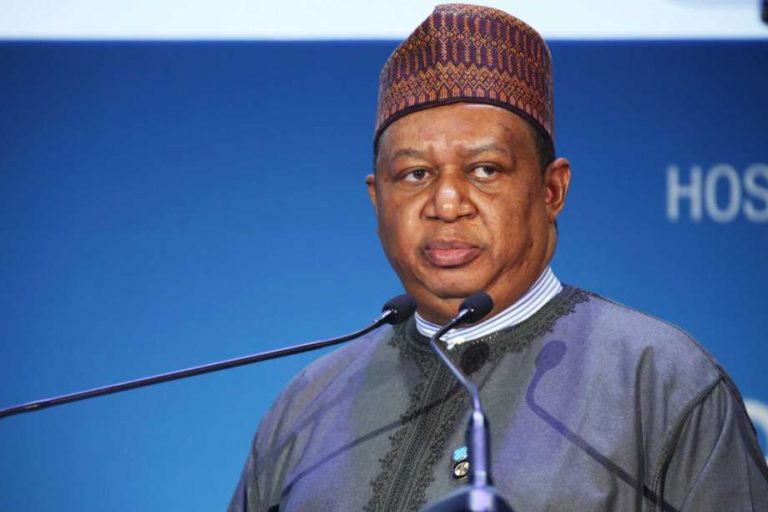
NIGERIA’S crude oil production increased to 1.42 million barrels per day in February, indicating a 6.3 percent rise from the previous month, according to the latest monthly report published by the Organisation of the Petroleum Exporting Countries, OPEC.

The nation’s oil production rose by 63,000 barrels to 1.42 million barrels per day in February based on figures obtained from direct communication – as hinted in the report.

Platts Analytics had predicted that Nigeria’s crude production would grow from 1.4 million barrels in December 2020 to over 1.7 million barrels in April 2021 and then stay at around 1.9 million barrels in the second half of the year.

But OPEC’s secondary sources said Nigeria produced an average of 1.49 million barrels in February, reflecting 161,000 barrels per day increase when compared to 1.33 million barrels in January.

OPEC publishes two figures for its 13 -member nations’ oil production in its ‘Monthly Oil Market Report’ to ensure member countries are not producing oil beyond their agreed target. This is meant to shore up prices in the global oil market.

The first is based on direct communications which are figures obtained from member countries directly while the second is from independent secondary sources estimated by a network of individual spotters who monitor the movement of tankers in and out of the world’s biggest export terminals to estimate production levels.

According to secondary sources, OPEC’s total crude oil production averaged 24.85 million barrels per day in February 2021, down by 0.65 million barrels per day on month-on-month basis.

“Crude oil output increased mainly in Nigeria, Iraq, Iran IR, Venezuela and Libya, while production decreased primarily in Saudi Arabia and Angola,” the report read.

It also noted that as the COVID-19 pandemic had a major impact on the oil market balance, OPEC, together with its non-OPEC partners in the Declaration of Cooperation, took a historic step to help stabilise the oil market.

“This proactive stance turned out to be a very important element in supporting global economic growth, after an estimated drop in oil demand of 9.6 million barrels per day in 2020.

“Oil demand is forecast to recover in 2021, growing by 5.9 million barrels per day. However, this year’s demand growth will not be able to compensate for the major shortfall from 2020, as mobility is forecast to remain impaired throughout 2021,” the statement pointed out.

According to the group, non-OPEC supply was expected to have declined by 2.6 million barrels per day in 2020, while the growth of 0.95 million barrels per day was anticipated for 2021.

OPEC and its allies had initially agreed to cut oil production by a record of 9.7 million barrels per day last year, before easing cuts to 7.7 million and eventually 7.2 million from January.

“However, as the impacts of COVID-19-related developments remain uncertain, continued responsible global policy action from all market participants, including the efforts undertaken by OPEC and the participating non-OPEC producers of the DoC, will continue to be crucial over the coming months to return markets to more stable conditions,” it added.

The group, at its 14th meeting on March 4, extended special thanks to Nigeria for achieving full conformity in January 2021 and compensating its entire overproduced volumes.

The ministers thanked the state minister for petroleum resources Timipre Sylva for his shuttle diplomacy as a special envoy to Congo, Equatorial Guinea, Gabon and South Sudan to discuss matters pertaining to conformity levels with the voluntary oil production adjustments and compensation of over-produced volumes.

OPEC, allies review compliance with oil production cuts to boost crude prices

They agreed to the request by several countries, which had not yet completed their compensation, for an extension of the compensation period until the end of July 2021.

The global oil cartel also approved the continuation of current production levels for April, except that Russia and Kazakhstan would be allowed to increase production by 130,000 and 20,000 barrels per day, respectively.

Hijab controversy: Violence erupts in Kwara as missionary schools reopen

VIOLENCE broke out on Wednesday in Kwara State after the state government ordered the reopening of 10 schools earlier shut over the controversy surrounding the use of Muslim headgear in missionary schools.

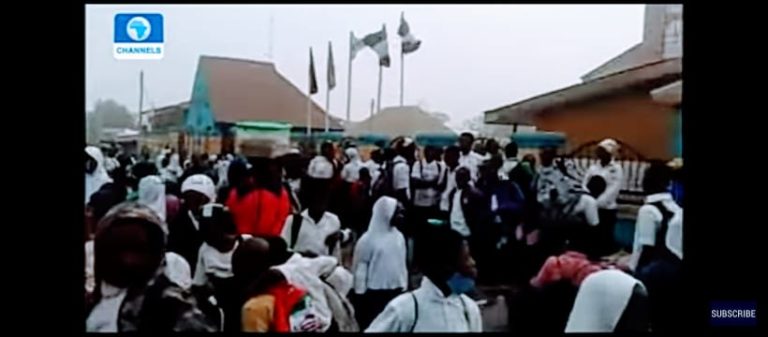
Viral video clips seen by The ICIR showed how residents in Ilorin threw stones and other items at each other after some students were disallowed from entering a missionary school against the order of  Kwara State government.

Late Tuesday evening, permanent secretary of Kwara State Ministry of Education Kemi Adeosun had announced the immediate reopening of the 10 schools which she said was earlier shut to “secure public peace”in the state.

According to Adeosun, the government stood by its decision that Muslim headgear, also known as hijab, could be worn by female students in all schools and in order not to miss too many academic activities, the schools were to be reopened effective Wednesday.

However, on Wednesday, some officials of  Saint Anthony Secondary School stopped some Muslim female students wearing hijab from gaining entrance into the school.

Confirming the incident to The ICIR, Okasanmi Ajayi, police public relations officer of the state command, said  government had decided on Tuesday to lift the suspension on the school and had communicated the reopening to the police.

However, he said that the violence broke out after some students were not allowed to gain access to the school premises before the intervention of the police.

“No one was injured and there was no death. We intervened and we have restored peace into the affected place,” Ajayi told The ICIR in a telephone interview.

For over three weeks, 10 schools in the state have been closed due to the disagreement among school officials, the state government and parents of students in the state.

The schools involved in the crisis are C&S College Sabo Oke; ST. Anthony College, Offa Road; ECWA School, Oja Iya; Surulere Baptist Secondary School; Bishop Smith Secondary School, Agba Dam; CAC Secondary School Asa Dam Road, and St. Barnabas Secondary School Sabo Oke.
Others include St. John School Maraba; St. Williams Secondary School Taiwo Isale, and St. James Secondary School Maraba.

Hijab controversy: 10 schools to remain shut over protest in Kwara

The state government said that its position was that use of hijab by female students should be allowed in all schools, but the missionary schools involved said it would not allow it.

Contradicting the position of the government, the schools argued that there was a pending suit awaiting ruling before the Supreme Court on the ownership of the school and until the case was determined, the management of the school would only abide by its own stipulated laws and not the government’s.

Former JAMB registrar in ICPC net over N900m fraud

THE Independent Practices and Other Related Offences Commission (ICPC) has arrested a former registrar and chief executive officer of the Joint Admission and Matriculation Board (JAMB), Dibu Ojerinde, for allegedly misappropriating N900 million.

According to a statement signed by Azuka C. Ogugua, ICPC spokesperson and made available to The ICIR on Wednesday, Ojerinde was arrested on 15th March in Abuja by operatives of the ICPC.

He allegedly committed multiple frauds while heading JAMB and the National Examination Council (NECO).

The commission has detained him for questioning over allegations of multiple identities, abuse of office, money laundering, tax evasion and making false statements to public officials.

The former JAMB boss is also being questioned for allegedly awarding fraudulent contracts to shell companies that could not be traced.

He is alleged to have awarded contracts for the supply of pencils and erasers at the cost of N450 million each to Double 07 Concept Limited and Pristine Global Concept Limited respectively between 2013 and 2014 while heading JAMB.

There is no evidence to show that the items, which were examination materials, were supplied as the contractors could not be found, ICPC spokesperson said.

Similar contracts were allegedly awarded to Solid Figures Limited, Holywalk Limited and other companies for various sums without any trace of execution.

Ojerinde is being held on a remand warrant and will soon be charged to court upon the conclusion of the investigation. 

In 2020, the ICPC secured an interim forfeiture of properties traced to him  for what the commission called ‘excessive properties.’

The commission said it believed, based on the investigation, that the immovable properties owned by Ojerinde were excessive, having regard to his income and other relevant circumstances.

JAMB blacklists over 22 CBT centres for defrauding 11,823 candidates of N59m

Ojerinde was JAMB chief between 2007 and 2016. After his exit, his successor, Ishaq Oloyede, remitted unspent funds of about N5 billion, leading many to suspect  Ojerinde of corruption, especially as he returned a far less sum in his nine years as JAMB registrar.

Uber drivers in UK granted employment status, to enjoy pensions, other benefits

FOLLOWING a judgement of the Supreme Court in the United Kingdom which granted ‘worker status’ to drivers engaged by Uber, the car-hailing company has announced that its drivers would enjoy pension and national minimum wage.

Chief executive Dara Khosrowshahi acknowledged the announcement, saying it was a significant point reached after a legal battle that lasted five years with the Union members, the BBC said.

UK drivers working for Uber would now be entitled to at least the National Living Wage for over 25s, irrespective of a driver’s age, after accepting a trip request and after expenses.

All drivers would also be paid holiday time based on 12.07 percent of their earnings – paid out on a fortnightly basis.

Apart from these benefits, Uber drivers would automatically be enrolled into a pension plan with contributions from Uber alongside drivers, setting drivers up for life after work.

Uber also stated that it would continue to provide free insurance in cases of sickness or injury, while drivers would still retain the right to choose when to drive.

Uber was founded in 2009 with a view to providing car-hailing services, food delivery, among others. Its car services are in operation in over 70 countries across Europe, Asia and Africa.

Car Hailing service in Nigeria

IN Nigeria, car-hailing service is operated across major cities of the country, dominantly by Uber and Bolt, formerly known as Taxify.

However, drivers with Uber and Bolt are not categorised as employees of the car-hailing services in Nigeria.

In September 2020, some drivers with Uber and Bolt in Abuja, Nigeria’s capital, had protested against the ‘high commission’ rate and lack of welfare from both car services.

When The ICIR contacted Bolt in September 2020 over drivers’ demands for welfare packages from them, the company said the drivers were self-employed.

Uber, Bolt, others have agreed to pay N20 per trip, says Lagos government

“Bolt drivers are independent contractors and not employees, who utilise the Bolt platform to access riders and in principle are self-employed.  As such, there are limitations to the form of support Bolt can offer.

“However, Bolt does provide registered drivers with incentives and various packages in unique situations based on the activities of individual drivers in cities Bolt is operational,” the company said in a response to questions from The ICIR

FG evacuates 166 stranded Nigerians in Libya

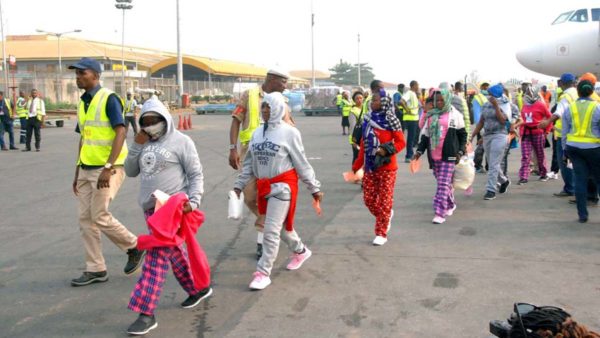
A NEW batch of one hundred and sixty stranded Nigerians arrived the Nnamdi Azikiwe International airport Abuja, from Tripoli, Libya, in the early hours of today, the Ministry of Foreign Affairs has announced.

Their return was facilitated by the ministry in collaboration with the International Organization for Migration (IOM).

The returnees who were aboard a chartered flight comprised of 98 adults and 62 children.

Officials of the Ministry of Foreign Affairs, Nigerians in Diaspora Commission (NIDCOM), the Nigerian Immigration Service (NIS) and the Nigeria Centre for Disease Control (NCDC), were on ground to receive the returnees and ensure all COVID-19 protocols were dutifully observed.

Bolaji Akinremi, director consular and legal department, Ministry of Foreign Affairs, while addressing the returnees, urged them to assist government efforts in creating awareness on the challenges associated with irregular migration by sharing their experiences.

Returnees have been lodged at the FCT Hajj camp to observe the mandatory 14 days isolation, as part of the COVID-19 protocol.

Employment-seeking migration accounts for the biggest share of intraregional mobility as youths travel from one country to another looking for better job opportunities, which in many cases turn out to be a tragic adventure.

In 2015, Nigeria adopted a National Policy on Migration that seeks to provide an appropriate legal framework for monitoring and regulating internal and international migration, as well as the proper collection and dissemination of migration data.

The policy is also expected to addresses issues related to diaspora mobilization, border management, decent treatment of migrants, internally displaced persons and asylum seekers, in order to ensure a more efficient management of migration in Nigeria.

However, what remains to be seen is the implementation of this plan. In addition, NIDCOM is working closely with the ILO and the European Union to raise awareness about the hazards of irregular migration, and come up with strategies to better manage migration in the country.

FACTCHECK: Is Nigeria largest producer of cassava in the world?

KARIMA Babangida, director of Federal Ministry of Agriculture, claimed that Nigeria was the highest producer of cassava.

Babangida, who was represented by Umar Mohamed, regional director of North East, Federal Ministry of Agriculture and Rural Development, made this claim at a workshop on cassava production organised by the ministry.

She said despite the low yield of cassava in the country, which was below 10 tonnes per hectare, Nigeria still maintained its lead as the world’s largest producer of cassava. Her words:

Nigeria is still the world’s leading producer of cassava, compared to others like Thailand.

The Claim

Nigeria is the largest producer of cassava in the world.

The Findings

Findings by the FactCheckHub show that the claim is TRUE.

The FactCheckHub checked the Food and Agriculture Organisation Statistics (FAOSTAT) website for the official data on cassava production across the world.

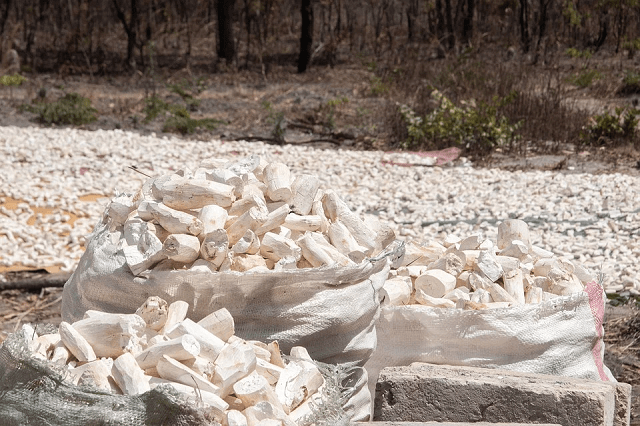
The FAO 2019 data, which was the latest as at the time of publishing this report, put Nigeria on the top of the list of countries with highest cassava production with 59.19 million tonnes. The Ministry of Agriculture and Rural Development in Nigeria also validates this claim.

Cassava data

The Verdict

Data  from the Food and Agriculture Organisation (FAO) on cassava production across the world supports the assertion that Nigeria is the largest producer of cassava in the world. Therefore, the claim is TRUE.

2 students abducted from Ogun university regain freedom

TWO female students of  Olabisi Onabanjo University (OOU), Ago-Iwoye, abducted by suspected gunmen have regained their freedom.

Police authorities in Ogun State confirmed their release in a statement on Tuesday night.

The police public relations officer in the state Abimbola Oyeyemi noted that the students, identified as Adeyemo Precious and Oyefule Abiola, returned unhurt.


Read Also:

He said the victims who spent two nights in the custody of their abductors would be reunited with their families thereafter.

He said no ransom was paid, to the best of his knowledge, but did not confirm the arrest of the students’ abductors.

Precious is said to be a student of the Department of Forestry and Wildlife Management, while Abiola is of the department of Agricultural Economics at OOU.

Police confirm kidnap of 2 university students in Ogun

The ICIR had reported that the students were kidnapped by armed men on Sunday night while returning to their residence located in Olowu area at Ayetoro campus of the institution in Yewa North Local Government Area.

Shortly after they were abducted, Oyeyemi said that the police had launched a manhunt in conjunction with local hunters to rescue the students.

The abductors were said to have contacted the parents of the students and demanded  N50 million for their release.

Lawyer narrates how Cross River DPO, officers beat him up for attempting to bail client

JOSEPH Bassey Arikpo, a lawyer and petitioner at the investigative panel on SARS in Abuja, has narrated how a divisional police officer (DPO) and other officers beat him up for attempting to bail his client, Friday Ogbor.

During the resumed sitting of the panel in Abuja on Tuesday, Arikpo said Solomon Danja, DPO of  Ikom police station under the Cross River State Command, and his officer, severely assaulted him.

He alleged that before the DPO descended on him with punches, he had reminded him of the detainee’s right to personal liberty and dignity of human person, following which the DPO got infuriated and called him a stupid man.


Read Also:


Arikpo explained to the panel that while he was about to leave the DPO’s office, the police officer allegedly rushed towards him and threw punches at him while also reiterating that he (Arikpo) was stupid.

He added that while he was trying to run away, the DPO ordered that the gate of the police station be locked,  while using teargas on him and resuming the punches.

The complainant who said he was a member of the Nigerian Bar Association, Ikom Branch, stated that while he managed to dodge one of the punches from the DPO, he fell down on the floor and that resulted in more police officers coming to beat him mercilessly.

Arikpo stated that after his statement was obtained in recording despite his objection to it, the DPO allegedly came in again with officers wielding batons and horse whips, asking that he be handcuffed to the back, while commencing another round of beating, whipping and name-calling.

After some days of detention in the police station, he informed the panel that he was reluctantly released on 9th of November, 2020, through the intervention of the elders of the NBA, Ikom Branch, after some other counsel had made fruitless efforts to get the police to release him.

The petitioner prayed the panel to dismiss and prosecute the DPO, stating that he was not fit to be an officer of the Nigeria police.

He is also requesting the panel to order that the DPO pay him the sum of N20 millio as compensation for the assault.

In addition, he sought an order of the panel mandating an apology approved by the NBA and published in two (2) national dailies .

Responding to the allegations, James Idachaba, counsel to the police, told the panel that Danja was not present at the panel.

The matter was adjourned till 15th of April, 2021 for the police to ensure the presence of the DPO at the panel.

US prioritises Nigerian visa applicants affected by Trump’s travel restrictions

0

THE United States mission in Nigeria is prioritising immigrant visa applicants in Nigeria who were affected by travel restrictions imposed by former US President Donald Trump.

This development follows the Presidential Proclamation titled ‘Ending Discriminatory Bans on Entry to the United States,’ which was signed by current US President Joe Biden on January 20, 2021.

The US consulate-general in Lagos revealed, in a statement, that it was prioritising visa applicants in Nigeria who were affected by the travel restrictions under Presidential Proclamations 9645 and 9983.

This included establishing contacts with all immigrant visa applicants whose applications were affected and with processing pending cases.

Trump had suspended entry into the United States of certain nationals, based on visa type, from various countries, including Nigerians, with exceptions for students and those with ‘significant contacts’ in the US.

It also noted that media reports claiming “Nigerians denied visas on or after January 20, 2020, can re-apply for free” were inaccurate, adding that the proclamation announcement applied only to certain immigrant visa cases and did not apply to tourist, business, student, or other non-immigrant visas.

“This ended the travel restrictions under Presidential Proclamations 9645 and 9983 that had suspended entry into the United States of certain nationals, based on visa type, from various countries to include Nigeria.

“In Nigeria, this proclamation banned entry for certain immigrant visa categories. The US Consulate -General in Lagos has already contacted all immigrant visa applicants whose applications were affected and is prioritizing the processing of these pending cases,” a section of the statement read.

The mission further disclosed that the consular sections in Abuja and Lagos were gradually restoring routine visa operations in accordance with COVID-19 safety protocol.

It also announced that the validity of non-immigrant visa payments (known as the MRV fee) had been extended till September 30, 2022, to allow all applicants who were unable to schedule visa appointments as a result of the suspension of routine consular operations to have opportunity to schedule and/or attend appointments with the already paid fees.

“Non-immigrant visa applicants who were previously refused and would like to apply again will need to submit a new visa application (DS-160) and pay a new visa application processing fee,” the mission stated.

Extend visa ban to violators of human rights, attacks on rule of law – SERAP urges US, others

In 2019, the US Mission to Nigeria indefinitely suspended interview waivers for renewals, which was known as the ‘Dropbox’ process where visa applications were no longer accepted by DHL in Nigeria.

This ensured that applicants in Nigeria seeking non-immigrant visas to the United States applied online, appearing in-person at the US Embassy in Abuja or US consulate in Lagos to submit their applications for review.