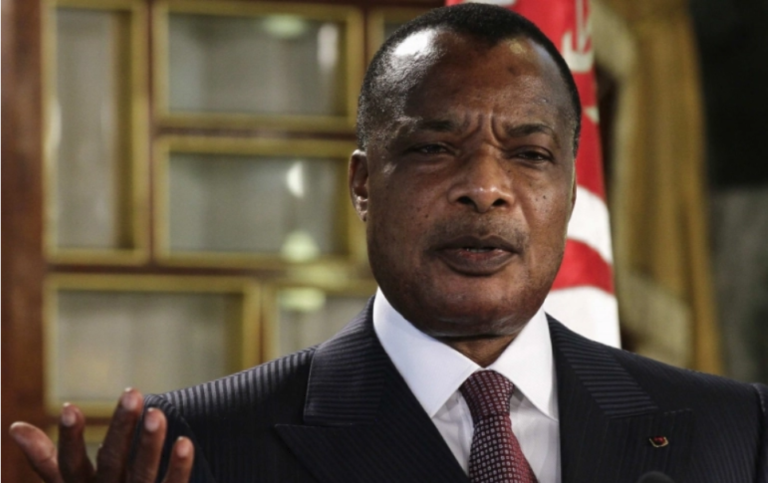
DENIS Sassou Nguesso, president of the Republic of Congo, has declared his intention to seek yet another term in office. He has held that position for 36 years, making him one of the longest-serving presidents in Africa. Elections are scheduled for March 21.
He faces seven challengers, though the main opposition party says it will boycott the event. They faulted the president for the short run-up to the polls.
‘’Can’t the elections be postponed for two or three months to allow time for the competent bodies to organise the pre-election operations?’’, Crepin Gouala, leader of the opposition Alliance pour l’République a la d démocratie (ARD), asked.
For independent candidate, Pandi Ngouari, “this kind of injustice is imposed on us by the same generation as a soccer team that trains for years even though we are aware that the referee is not always fair, but we are forced to go and beat this team on its own field with its own referee.’’
Ruling party members defended the choice of the 77-year-old leader. “We said the choice of Denis Sassou Nguesso is an inevitable choice,” party leader Leonidas Mottom told the French news agency AFP.
“It’s the choice of change in continuity, it’s the choice of stability and the choice of peace,” said Mottom.
Sassou Nguesso’s political history has been marked by controversy. After coming to power in 1979, he headed a single-party regime for 12 years.
Political pluralism was introduced in 1991 and the following year Sassou Nguesso lost his presidential bid. He returned to power in October 1997 after his rebel forces ousted the president at the time, Pascal Lissouba of UPADS, and a two-year civil war ensued.
Presidential elections were held in 2002 that Sessou Nguesso controversially won. He was re-elected in July 2009 in a poll boycotted by the main opposition candidates.
A new constitution, approved by referendum, enabled him to stand again in 2016, and he won by a first-round majority, a result that again was contested by the opposition.
His re-election in 2016 triggered unrest in Brazzaville and armed conflict in the fertile region of Pool that cut off freight trains on the vital rail line between the capital and Pointe-Noire.
President Nguesso’s rivals in 2016, former general Jean-Marie Michel Mokoko and former minister Andre Okombi Salissa, remain in jail today.
They had disputed the election results, were then arrested, put on trial and each handed 20 years in jail on charges of undermining state security.
Concern is growing in the Congo over the nation’s deep economic crisis triggered by the slump in oil prices and worsened by long-standing debt.
E-CIGARETTES are targeted at university and college students in South Africa, according toLekan Ayo-Yusuf, professor of health and executive director of Africa Centre for Tobacco Industry Monitoring and Policy Research (ATIM) at Sefako Makgatho Health Sciences University, while referring to a recent report by health researchers.
Ayo-Yusuf said the research in question found that of the over 240 vape shops in South Africa, 39 percent were within a 10km radius of a university or college campus, while 65.3 percent were within a 20km radius of a university or college campus.
The professor of health noted that although the e-cigarette industry had positioned itself as a cessation aid, the research found out that the products had limited effectiveness.
“While the tobacco and e-cigarette industry likes to position e-cigarettes as cessation aids, the limited effectiveness of these products for long-term quitting, the health harms associated with usage and the industry’s clear and targeted marketing to the youth are facts which are conveniently omitted from their narrative. This series of studies provides very useful information to guide policymakers in South Africa,” Ayo-Yusuf said.
Based on two large population-level surveys, the research being referred to by Ayo-Yusuf, showed a growing prevalence of regular e-cigarette use by South Africans older than 16 years. It noted that 2.71 percent of adults, translating to 1.09 million people, used e-cigarettes during 2018. Most of these e-cigarette users were concurrently regularly smoking cigarettes, the research found.
The research, conducted by the ATIM and the South African Medical Research Council (SAMRC), assessed local e-cigarette use, evaluated the effectiveness of e-cigarettes as cessation aids, and analysed the costs of e-cigarette usage while using geospatial mapping to understand the distribution of vape shops across South Africa and how this might impact youth usage.
The second part of the research concluded that any presumed benefits of e-cigarettes on cessation might be partly attributable to pharmacotherapy and counselling, given the concurrent use patterns among past quit attempters using e-cigarettes.
The study showed that awareness of cessation aids among current smokers was 50.8 percent for smoking cessation programmes; 92.1 percent for nicotine replacement therapy, and 68.2 percent for prescription cessation medication.
Among current combustible smokers who attempted to quit in the past, ‘ever’ e-cigarette users were more likely than ‘never’ e-cigarette users to have used other cessation aids. Furthermore, among current smokers who had ever attempted to quit, past users and over half of current e-cigarette users were more likely than ‘never’ e-cigarette users to have used cessation aids.
For ‘ever’ smokers who had tried to quit, e-cigarette use was associated with a higher likelihood of short-term, but not long-term quitting. The study, in fact, showed a higher likelihood of smoking relapse among ‘ever’ smokers in South Africa who had tried to quit using e-cigarettes
The likelihood of long-term quitting lasting 6-12 months was 80 percent lower among those who used e-cigarettes rarely, 70 percent lower among former e-cigarette users, and 77 percent lower for regular e-cigarette users compared to ‘never’ users.
Despite this evidence of limited effect on cessation, the study also suggested more e-cigarette ‘ever’ as compared to ‘never’ users still believed e-cigarettes could assist smokers completely quit (35.5 percent vs. 20.4 percent) or cut down (51.7percent vs. 26.5percent). This dominant belief among those who had ever tried e-cigarette was likely a result of the manufacturers’ marketing of these products as cessation aids, despite not having scientifically tested them as such in South Africa or similar poor resource settings.
The cost study revealed that, contrary to claims made by e-cigarette manufacturers, using e-cigarettes was more expensive than smoking cigarettes when comparing daily users over a one-year period. Annual cost associated with daily use was 6,693 rand for manufactured cigarettes and up to 19,780.83 rand for e-cigarettes.
The study further stated that implementing excise taxes on e-cigarettes at 75 percent of the cigarette excise tax rate could generate annual revenue of up to 2.20 billion rand for South Africa.
“Untaxed for more than a decade in South Africa, e-cigarettes will only be taxed from this year, at a rate of 75 percent of the tax on tobacco. This will likely reduce initiation by youth and provide additional revenue to cover the health and economic harms they cause while contributing to NHI funding,” said Catherine Egbe of SAMRC.
Ayo-Yusuf recommended pending the signing of the Tobacco Control Bill 2018 into law, saying that advocacy groups and researchers could maintain vigilance in relation to the tobacco industry, to identify and publicise any evasive or deceptive marketing.
He also urged pharmacies to voluntarily remove e-cigarettes from their shelves as a health promotion initiative, suggesting that parents and caregivers could adopt voluntary smoke-free home and car rules prohibiting all forms of tobacco and e-cigarette use.
“Globally, research on these relatively new products is guiding better regulation, and we trust that South Africa will implement the Tobacco Control Bill as a comprehensive, evidence-based policy,” Ayo-Yusuf stated.
FOR centuries, Senegal was called the ‘country of teranga’ or ‘country of hospitality.’ This week, the mask of hospitality was lifted to expose the frustration of thousands of young Senegalese fed up with government corruption and what was called ‘wealth hoarding by the political class.’
Protestors are also demanding the release of political prisoners and reform of the criminal justice system.
“Trop c’est trop! Enough is enough! We won’t move back,” read one online tweet under the hashtag #Free Senegal as demonstrators clashed with police, converting Dakar into a war zone, according to an observer.
“I don’t think things will be calm. People are rising up,” 24-year-old fashion worker Souleymane Diallo told Reuters. The spark for the protest was the arrest of a prominent opposition leader Ousmane Sonko, in what protestors claimed was a trumped up charge.
At least five people have died in the protest which started last Wednesday. It has been called one of the worst outbreaks of political unrest in years but not unexpected in a country lacking opportunities for youth.
Shops, gas stations and banks are closed, and long lines formed for gas and groceries on Sunday.
Independent radio and television stations saw their signals cut while pressure mounted on President Mackey Sall, whose is said to be considering to extend his rule beyond the allotted two-term limit.
Sonko has accused President Sall of trying to remove potential opponents ahead of the 2024 polls. Two other opposition leaders were excluded from the 2019 election after being convicted on charges which they say were politically motivated.
“In an effort to silence the people,” wrote ‘Aisha Fall’ on Twitter, “the Senegalese government has restricted access to social media platforms… Educate yourself about Senegal’s current situation…”
The economic devastation caused by the COVID-19 pandemic, a nightly curfew to contain its spread and a ban on mopeds and motorcycles have only stoked frustrations. But the rape charge has created a gender gap in the protest movement. Some have called Sonko’s accuser a liar and a tool of the government and she is reportedly receiving death threats.
“When a woman speaks out and says that she was raped, we need to listen to her seriously,” said Coumba Touré, of Africans Rising, a pan-African group focused on social justice.
Meanwhile, Amnesty International has raised concerns about opposition leaders facing unfair trials, lengthy detentions and uneven access to lawyers. The opposition Movement to Defend Democracy (M2D) coalition called for three days of nationwide protests beginning on Monday.
“M2D … calls on the Senegalese people to pursue its mobilization and peaceful struggle by using all of its constitutional rights to reject the dictatorship of Macky Sall,” the group said.
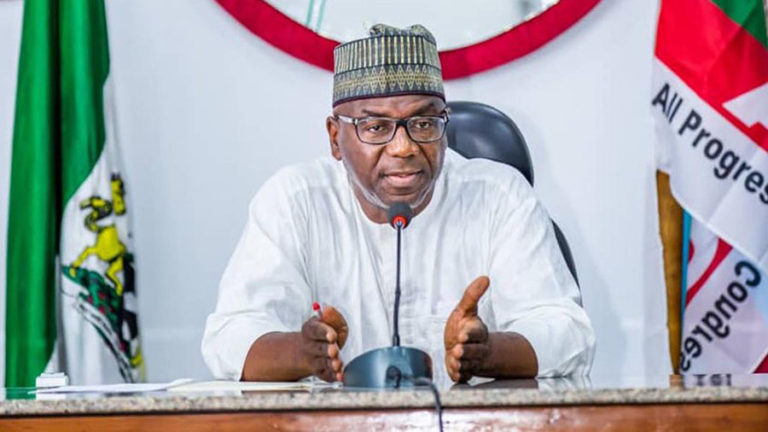
AS the controversy surrounding the use of hijab in missionary schools rages on, Kwara State government has withdrawn the reopening order earlier given to 10 grant-aided secondary institutions in the state.
In a statement signed by Kemi Adeosun, permanent secretary of Kwara State Ministry of Education and Human Capital Development on Monday, the schools were asked to remain shut until a later date, due to security reasons.
“This decision has been taken for safety reasons. The government, therefore, directs school children and teachers in the affected schools to remain at home until the contrary is announced. The government remains committed to fairness, pluralism, and respect for the law and rights of every citizen at all times,” the statement read in part.
The ICIR had reported in February that the state government had closed down schools owing to the controversy surrounding the use of Muslim veil, known as hijab, by Muslim students in Christian missionary schools. The schools involved were: C&S College Sabo Oke; ST. Anthony College, Offa Road; ECWA School, Oja Iya; Surulere Baptist Secondary School; Bishop Smith Secondary School, Agba Dam; CAC Secondary School Asa Dam Road, and St. Barnabas Secondary School Sabo Oke. Others included: St. John School Maraba; St. Williams Secondary School Taiwo Isale, and St. James Secondary School Maraba.
A committee was set up to look into the crisis going on in the school. Weeks after, Kwara State government approved the use of hijab in missionary schools in the state.
However, Christian leaders in the state have insisted that the government’s position over the matter cannot stand.
The Christian leaders from Baptist Conference and Evangelical Church Winning All (ECWA) said, in separate press conferences held in Ilorin, Kwara State, last week, that government’s position was one-sided .
“We want to warn the government that the step it wants to take by approving the use of hijab for all public schools and grant-aided schools will lead to an avalanche of reactions, the end of which no one can predict.
“By this move, the state government is saying the Muslims’ purported rights are superior to that of the Christians,” Victor Dada, president of Kwara Baptist Conference, had said.
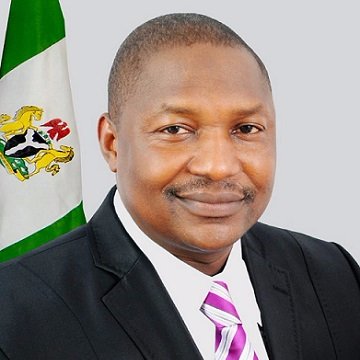
ABUBAKAR Malami, minister of justice and attorney-general of the federation, has said that the federal government is working towards establishing specialised courts and judicial divisions that will focus on sexual and gender-based violence (SGBV).
Malami disclosed this while speaking at a virtual session on ‘Special Event on Gender Dimensions of Criminal Justice Responses to Terrorism’ organised by the UN Office on Drug and Crime (UNODC) as part of events commemorating the 2021 International Women Day holding at Kyoto, Japan, on Monday.
The minister said he had, in 2020, inaugurated the Inter-Ministerial Management Committee on Eradication of Sexual and Gender-Based Violence with the hope that it would be an important tool to address gender-based crimes in Nigeria.
He noted that the Complex Case Group under his office, in collaboration with relevant stakeholders, led in the efforts to bring suspected terrorists to justice.
“We also, in collaboration with the military, police and other security service investigators from the multi-agency Joint Investigation Centre in North-East, worked to include sexual violence-related charges against Boko Haram suspects,’’ Malami said.
“Preventing these crimes and bringing those who commit these acts to justice remain a priority of the government of President Muhammadu Buhari.
“Another emerging area of grave concern is the abduction and kidnapping of teenagers in boarding houses for ransom.
“The perpetrators target this group of people possible to scare them from schooling and this is indeed a sad situation.
“We must work to prevent both male and female perpetrators from carrying out these acts and support those who have been victims,” Malami stated.
According to the AGF, the Nigerian armed forces and law enforcement agencies were working day and night to combat insecurity, terrorism, kidnapping and abduction of people in the country.
He further stated that in partnership with UNODC and the European Union, the federal government had launched the ‘Nigeria Training Module on Gender Dimensions in the Criminal Justice: Response to Terrorism.’
About eight months ago, Julie Okah-Donli, director-general of the National Agency for the Prohibition of Trafficking in Persons (NAPTIP), had disclosed that plans were on to establish a special court to try rapists.
Okah-Donli said this while speaking at a press briefing in Abuja, on July 11, 2020, stating that the agency would meet with the Federal Ministry of Justice on the proposed special rapist court.
The ICIR had reported that some states had established special courts for sexual-related offences in Nigeria. Some of the states include Lagos and Ogun.
MINORITY women in white-majority countries often find it difficult to advance to the top of their careers as they face a subtle, yet damaging form of discrimination, first because they are women and second because they are black.
Despite their best efforts and suitability, women are unable to explore the opportunities right in front of them as research suggests that they are 18 percent less likely to be promoted than their male co-workers and hold below five percent of board of directors and corporate officer positions in most corporations. Women have also been disproportionately affected by the Covid-19 pandemic, representing 54 percent of overall job losses.
The glass ceiling is, therefore, a metaphor for the invisible barrier that prevents people, especially women, from rising to top positions. The barriers are most often unwritten, meaning that those affected are more likely to be restricted from advancing through accepted norms and implicit biases rather than defined corporate policies.
However, women’s equality/empowerment is one of the 17 Sustainable Development Goals (SDG) and by 2030, the world is expected to have achieved some gender equality as set out in the targets under SDG5. The International Women’s Day 2021 is themed ‘Women in leadership: Achieving an equal future in a COVID-19 world’ and focuses on the role women can play in ‘building back better’ and take on more challenging roles in the workplace.
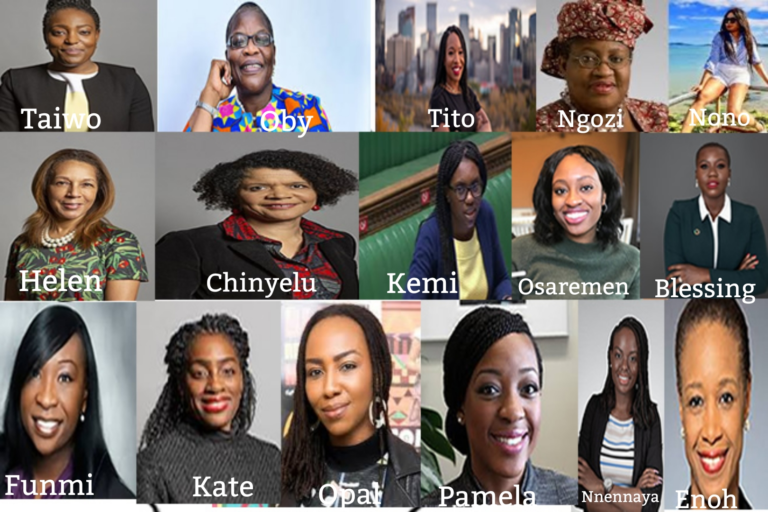
To mark this year’s International Women’s Day celebration, The ICIR, in this report, highlights women of Nigerian decent who are already making significant groundwork all over the world to accelerate a cultural shift in the social perception of women and ensure that they have equal access to economic opportunities, as well as more voice in decision-making.
Okonjo-Iweala
Ngozi Okonjo-Iweala, an economist and international development expert, is the current director-general of the World Trade Organization(WTO), the first woman and the first African to hold the office. She also sits on the boards of Standard Chartered Bank, Twitter, Global Alliance for Vaccines and Immunization, and the African Risk Capacity.
Okonjo-Iweala had previously spent 25 years building her career at the World Bank and scaling the ranks to the number two position of managing director, operations. Back in Nigeria, she served as the first female finance minister and worked in that capacity with two Nigerian presidents between 2003–2006 and 2011–2015, the only woman to achieve that feat.
Ezekwesili
Obiageli Ezekwesili is chartered accountant and works as a public analyst/senior economic advisor at the Africa Economic Development Policy Initiative (AEDPI), a programme that advises African heads of states and relevant ministries on economic and policy reform issues. She was a co-founder of Transparency International, serving as one of the pioneer directors of the global anti-corruption body.
Ezekwesili also served as the vice-president of the World Bank’s Africa division from May 2007 – May 2012 and is also a former federal minister of solid minerals and later headed the Federal Ministry of Education. She was a 2018 nominee for the Nobel Peace Prize for her work in transparency in the extractive sector.
In the U.S., at least three Nigerian women are currently serving in the President Joe Biden’s administration. Enoh T. Ebong was appointed to serve as the acting director of the U.S. Trade and Development Agency, an agency that partners with the U.S. private sector to develop sustainable infrastructure and foster economic growth in emerging economies, while supporting U.S. jobs through the export of the country’s goods and services.
Osaremen Okolo, a former senior health policy advisor at the United States House of Representatives, was appointed as a Covid-19 policy advisor to the president. Similarly, Funmi Olorunnipa Badejo, a former counsel for policy at the White House Counsel’s Office, was appointed as a White House counsel. Badejo was also attorney advisor at the Administrative Conference of the United States during the Obama-Biden administration.
Udochu
At Intel Corporations, California, Nnennaya Udochu, a power integrity engineer, works as an analog engineer, leading platform designs for 2020 Microprocessor Projects and the technical collaterals of the Platform Design Guide. She had previously worked with Cisco and has been an adjunct professor at the University of Portland, Oregon. Udochu also serves on the board for Society of Women Engineers, Columbia River Section, and Engineers Without Borders Portland, Oregon.
Adewoyin
Pamela Adewoyin is the counsel, business & legal affairs at Netflix, where she negotiates and drafts development agreements for a multitude of unscripted series. She also provides legal support and advice to department heads on all corporate, vendor, lease, and sale agreements.
Human rights activist, writer, strategist and community organiser, Opal Tometi, is a co-founder of Black Lives Matter (BLM) and has campaigned for advancing human rights, migrant rights, and racial justice worldwide. She is also former executive director of the United States’ first national immigrant rights organisation for people of African descent, the Black Alliance For Just Immigration (BAJI). Tometi was included in Time magazine’s 100 Most Influential People of 2020 and she was on the list of the BBC’s 100 Women announced in November 2020.
Omakwu
Blessing Omakwu is a deputy director at the Bill & Melinda Gates Foundation, where she leads the Goalkeepers initiative, which is a campaign and community that serves as a catalyst for action on the Sustainable Development Goals. Prior to joining the Gates Foundation, she had worked with and advised a variety of international organisations and government agencies, including the ONE Campaign, the Nigerian Federal House of Representatives and the United Nations Development Program.
A recipient of the 2012 USA National Association of Women Lawyers Outstanding Law Graduate award, Omakwu was also recognised as one of the top 50 emerging global policy leaders by the British Council in 2017.
Onwurah
Similarly, Nigerian women in the UK are breaking through barriers, especially in the political arena. Chinyelu Susan Onwurah, a Labour Party politician, has served as the Member of Parliament (MP) for Newcastle upon Tyne Central since 2010. She was shadow minister for industrial strategy, science and innovation from October 2016 until 9 April 2020, when she was appointed as shadow minister for science, research and digital.
Prior to joining politics, Onwurah had been head of telecoms technology at Ofcom, with a focus on broadband provision. In 2018, Onwurah was added to the Computer Weekly’s ‘Most Influential Women in UK IT’ Hall of Fame alongside Hannah Dee, Sarah Wood and Sherry Coutu and in 2020 was made an Honorary Fellow of the British Science Association.
Grant
Helen Grant, born of an English mother to a Nigerian father, is an orthopedic surgeon by training but veered into politics. She was appointed special envoy of UK Prime Minister, Boris Johnson, on Girls’ Education in January, 2021. Before her appointment, she had become the first black woman of mixed heritage to be elected in 2010 as an MP under the Conservative Party. She also became minister for sports and tourism in 2013, a post she held until after the 2015 general election.
Osamor
Ofunne Kate Osamor is the Labour and Co-operative Member of Parliament for Edmonton since 2015 and has consistently argued for much fuller representation of Black and Ethnic Minority communities in political bodies, causing her to successfully win re-election in 2017 and 2019 general elections. She is a former minister for women and equalities and former shadow secretary of state for International Development. Osamor was appointed to the House of Lords in 2018 and is chair of the All-Party Parliamentary Group (APPG) on Nigeria.
Owatemi
Another Labour Party politician in the UK, Taiwo Owatemi, was first elected as the MP for Coventry North West in the 2019 election, making her one of Coventry’s three female MPs, alongside Zarah Sultana and Colleen Fletcher. She has served in a number of roles in the Young Fabians and as a trained pharmacist has published several articles on health policy.
Badenoch
In February 2020, Olukemi Badenoch was appointed exchequer secretary to the Treasury and Parliamentary Under-Secretary of State (Minister for Equalities) in the Department for International Trade. She has also been a Conservative politician since 2017 when she won the seat of MP for Saffron Walden, becoming the first woman to represent that constituency, and was later appointed minister of children and families by Boris Johnson in 2019.
Okeke
At the Central Bank of Ireland, a young Nigerian woman, Nono Okeke, recently won the Spotlight Award, the bank’s highest award which she dedicated to Okonjo-Iweala for being a source of inspiration to her and many young women.
Daodu
Nigeria’s Tito Daodu is the first black woman to become a pediatric surgeon in Canada and currently works at Alberta’s Children’s Hospital Foundation. Daodu has a passion for global health and promoting justice and equity in medicine. She is actively involved in Global and Public Health Research, focusing on improving surgical outcomes and making surgical care more equitable and accessible in Canada and around the world.
The 2021 International Women’s Day is celebrated today with the hashtag #choosetochallenge and is spotlighting the achievements of women and calling attention to the need to create a more inclusive world with equal opportunities for women of diverse backgrounds.
On Thursday, April 9, 2020, ten days after Nigeria entered partial lockdown due to the COVID-19 pandemic, officers of the Nigeria police, army, correctional service and others had extra-judicially killed 13 while enforcing the curfew – the virus had only claimed six lives then. By May 4, when the government eased the lockdown, about 20 persons had been killed in similar circumstances. For three months, investigative journalist, Kemi Busari, followed the trails of these arbitrary killings which have left many families devastated, with no hope of justice.
WHEN Chibuisi Okameme, a filling station attendant, left home for work on April 5, 2020, three prodding dreams were likely his motivation: the need, in collaboration with his other siblings, to build a house for his ageing mum, the desire to introduce and get wedded to his fiancée soon and the burning aspiration to further his education which had stalled for a long time.
Stanley Azu, the police officer whose trigger ended Chibuisi’s life also had plans for the day. Thwarting Chibuisi’s dreams was probably not one of them.
Chibuisi had left home early and resumed work at Greenmac Energy Limited located at Umuaka Street in Obingwa Local Government, Abia. Due to the lockdown imposed to curtail the spread of COVID-19, the 29-year-old was with only a few of his colleagues. All was going well until around 1 p.m. when some disturbing noise was heard from nearby. It was the distress wail of one of Chibuisi’s customers.
“It happened that the person they (policemen) were hitting was one of our customers,” says Anthony Nnam, one of Chibuisi’s colleagues. “So, when my colleague (Chibuisi) rushed out to go and rescue him, he was telling them to leave him that he is our customer.”
Greenmac Energy Limited
The unnamed customer was said to have defied the lockdown to get some medicines but was stopped on the New Umuahia Road, Aba, on his way back. An altercation soon ensued between him and the officers, then beating began, prompting a cry for help from the victim who was said to be diabetic.
Chibuisi and Nnam were sitting at the car wash section of the filling station when the discomforting noise was heard. Multiple witnesses said Chibuisi, acting as an arbitrator, begged the police officers to stop beating and release the unnamed customer but his interference soon angered officer Azu. The manager of the filling station, Ndubuisi Nwabeke, who witnessed the whole incident said the officer acted entirely unprovoked.
“When he went there, he was begging the policemen to leave him (the customer), unfortunately, one Inspector Stanley Azu by that time was inside the minibus that brought them. So, as Chibuisi was pleading (with) them, that inspector just jumped down from that bus, pointed that gun. The gun was at his shoulder (level) when he jumped down, he brought the gun down, lowered it and shot him (Chibuisi). The boy fell, blood-covered everywhere. Then, the police wanted to run away.”
With the help of a soldier who incidentally was at the filling station at the time, the fleeing officers, attached to Ohuru-Isimiri Police Divisional Headquarters, were tracked down and mandated to provide medication for Chibuisi but it was late already.
He died shortly after being taken to Abia State Teaching Hospital, Aba.
Still on rough road to justice
Chibuisi’s elder brother, Kelechi Okameme, wedded on April 4. He was barely 24 hours into his honeymoon when he received the call announcing Chibuisi’s death.
A few months earlier, both siblings had drawn an estimate and agreed to commence a building project which they intended would benefit their mum.
The aged mum, who had lived in Lohun/Menyi in Bende Local Government of Abia State had a rough life. Just six months after birth, she lost Chibuisi’s twin; then in 2017, she lost another of Chibuisi’s siblings, Nsomma. She was yet to fully recover from the 2017 incident when the news of Chibuisi’s death filtered in.
The 60-year-old Alaoma Okameme could not hold back the hot, anguishing tears which have become an undesirable part of her days since Chibuisi’s death. With a shaky voice, shrieking under the weight of memories of a lost beloved son, Mrs Okameme recounted her darkest moments. She had wanted Chibuisi to attend his brother’s wedding but he couldn’t make it due to the lockdown.
“He asked if all went well about the ceremony and I said yes, all was alright. He asked if I went to church and I told him I couldn’t go because I was tired, I asked him what about you, did you go to church? He said no, that he was at home doing laundry.”
Chibuisi’s mum in tears
That was the last Mrs Okameme heard of her son.
The next morning, she was informed of her son’s death. The interview with her was interrupted intermittently by uncontrollable sobs but despite the pains, she still wants some clemency for the assailant.
“Now, I’m just empty; but I can’t demand the death of his killer because his blood can’t be up on my head but let them do justice and find a way to help me and also release my son’s body for burial. Seeing his grave will serve as a closure for me because as it is now, I still feel he’s in Aba,” she said.
It’s been 10 months since the incident happened but Chibuisi has not been buried yet owing to the lingering court case challenging his death.
Chibuisi
Abia State Public Relations Officer of the Nigeria Police, Geoffery Ogbonna confirmed to PREMIUM TIMES that officer Azu has been dismissed after ‘’some internal trials’’.
“Such cases are being charged to court after investigation. It may interest you to know that before any such cases are charged to court, the police officer involved must be shown the way out of the job. So, as it is, the policeman behind that dastardly act is no longer a police officer. He was tried in an orderly room, then dismissed after which he was arraigned and that case is pending in the court,” he said.
Lawyer to the family, Chibuzo Ekpehe, said the police still await advise from the Department of Public Prosecution (DPP) to continue the case as the magistrate court, where it was formerly charged, has no jurisdiction on murder cases.
How NSCDC officer killed the father of three
Onyedikachi Agbatuwa was not killed during the lockdown. The case of his death wasn’t captured in the pitch leading to this investigation but via statements by residents and perceived impunity after a brief led PREMIUM TIMES to his village, Umuokpo in Obingwa Local Government of Abia State.
His outmoded mud hut, just a few metres away from the dust-oozing Aba-Ikot-Epene Road is still standing just beside the decaying wood-crafted shed which used to serve as a meeting place for Onyedikachi’s customers who dine in bushmeat and local wine popularly called tombo.
The structures are still erect but it’s current occupants now live in harrowing anguish – their patriarch is no more.
Onyedikachi
Sorrow befell the once lively compound around noon of September 3, 2020. It was still raining in this part of Nigeria and due to the murky state of the Aba-Ikot-Epene Road, a truck got stuck, blocking passage.
It was at this period that a Hilux vehicle conveying two Chinese expatriates wanted to pass. The Chinese were escorted by an officer of the Nigeria Security and Civil Defense Corps (NSCDC), identified as Inspector Robinson Otobong, from the Akwa Ibom Command of the corps.
Seeing that the major road was blocked, Inspector Otobong attempted to pass through the Agbatuwa’s compound just a few metres away from the road. The vehicle had already paved the way and passed through the compound before the Agbatuwa’s but Onyedikachi would not allow it pass through his compound.
Onyedikachi’s brother, Ahaturuchi Agbatuwa, neighbour Maduabuchi Onyekaonwu and other residents watched him resist the attempt to pass in his compound but they never saw what was coming. Angered by the confrontation, Inspector Otobong shot Onyedikachi twice. First in his leg, and later in his ribs.
Onyekaonwu pointing to exact spot Onyedikachi was killed
His wife of 10 years, Ihechi Agbatuwa, now heavily pregnant, also watched the movie-like termination of his husband’s life but could not do anything to save him. As of that time, she was one-month pregnant: their expected fourth child.
“I was cooking in my kitchen here when a white vehicle was coming along this way and my children were playing in the compound.,” the 32-year-old said, fighting back tears. “They wanted to pass through the compound, my husband just rushed out and tell them to get back because of the children so that they won’t jam (hit) them. Then, the civil defence (NSCDC) officer just opened his door and came out, shot him in his leg for the first (time).
‘’Then the driver took speed (sped off) and crossed that place. Instead of the man to go when he had shot him the first, he just came back and shot him the last one, that he was dead. Then I started shouting, they came and push me, took my husband’s dead body and drove away.”
Ihechi
Ihechi’s wail soon caught the attention of more villagers who joined in chasing the vehicle. The fleeing assailant was eventually held by soldiers stationed at Wigwe, a border community between Abia and Akwa Ibom states. From here, Onyedikachi’ lifeless body was taken to the hospital but there was nothing medics could do to revive his lifeless body. He was dead already.
No justice yet
Three days after the incident, Abia State Governor, Okezie Ikpeazu, visited the compound to commiserate with the family. Ihechi still holds three of his promises dear: the promise to get justice for the family, build a new structure for them and cater for the children.
However, none of these three is yet to materialize, they said.
Although Destiny, 10, Chisom, 6, and Chikamso, 2, are back to school, Ihechi has been unable to pay their school fees and “feeding has become difficult”, she says.
“They (governor) said that they will build a house and help me train my children, find something so that I will be managing but since then they have done nothing,” she said of the governor’s visit.
Onyebuchi Ememanka, the Chief Press Secretary to Governor Ikpezau directed our enquiries to the immediate past chairman of Obingwa Local Government, Kingsley Nnachi, who facilitated a meeting of the widow and the governor’’.
Mr Nnachi told PREMIUM TIMES that the governor gave Mrs Ihechi money for upkeep, starting up a business and another for her late father’s burial. Additionally, he said that a delegation of the NSCDC who visited Mrs Ihechi gave her ‘some funds’ for the burial of her late husband promising ‘’to incorporate her whenever there is an opening in the corps and that the governor had recently instructed someone to commence the building project’’.
Reacting, Mrs Ihechi admitted to receiving funds from the governor for the burial but denied all other claims.
The Agbatuwa’s residence
Due to financial constraints, the family is unable to procure the services of a lawyer to seek justice. Instead, they wait on the outcome of the case instituted after the police investigation. PREMIUM TIMES could not access court papers but people familiar with the case said the officer was charged with murder and is now remanded.
Mr Ogbonna said the case is still pending in court. “After the incident, the civil defence officer was arrested and handed over to the police for proper investigation and after the investigation, he was arraigned and the case is still in the court.”
The family knows little about the progress of this case but their wish and demands are clear.
“Let the government come and help the family of the wife because (as it is) I don’t have anything to train the children,” Ahaturuchi says in obvious frustration.
“We want them to help me bury my husband and look for something to train these children,” Ihechi says.
Politicians trade blames over death of teenager in Ebonyi
Who killed Chidi? This question has been up in the air since April 4 2020 when 18-year-old Chidi Oji Aro was killed in Nguzu Edda, one of the homelands of Edda people in Afikpo South Local Government, Ebonyi State.
A version of the story has it that he was killed by cultists; another version accused members of COVID-19 Task Force. Others said a soldier killed him but the most popular version is the ‘we don’t know who killed him.’
His mum, Nnenna Oji Aro, is not aware of any concrete explanation why her son was killed even 10 months after the incident.
“I was at home here, I heard many people shouting. I ran to where the incident occurred then all the villagers started crying. He was coming back from church when this incident happened,” a dejected Nnenna told PREMIUM TIMES.
Chidi’s mum
She could not give further details or answer questions on who killed or is suspected to have killed her son.
Most of the residents, Chidi’s other family members inclusive, were unwilling to speak with PREMIUM TIMES on the incident. A few did on the condition their names would not be mentioned said Chidi was only caught in the middle of a ‘political struggle’ between two big wigs in the community.
These residents allege that the local government chairman, Eni Uduma Chima, and the lawmaker representing Afikpo South West at the state assembly, Nkemka Okoro Onuma, were responsible for the death.
They allege that supporters of these politicians, mostly cultists, have been in constant conflict in the area in recent times and one of their disputes, turned bloody. Chidi was caught in the middle.
Chidi’s room before his demise
PREMIUM TIMES reached out to both politicians to give an account of their alleged involvement in the death of the teenager but none responded.
After agreeing to an interview, Mr Chima, failed to answer calls on the agreed date. On his part, Mr Onuma declined comments on the issue during a meeting with this journalist at the state house of assembly.
Who killed Chidi?
However, these politicians, in the heat of events, had given conflicting accounts of their involvement, mostly debunked by residents.
In a report published by The Sun in April, Mr Onuma countered a narrative from Mr Chima that he was holding a party in his house amidst COVID-19 lockdown. It was reported that a team allegedly sent by the chairman was in the area to enforce the state government’s directive against the public gathering.
Nkemka said he never hosted any public gathering, instead, the attack on his home was ‘’deliberate and orchestrated by his political enemy’’.
Nkemka, source…Facebook
“I never hosted any gathering as stated earlier, but as someone representing a people, whenever I am home, there must be people in my native place, at least my relations, that come around. So, I was home sitting in the compound, outdoors in walled premises with the gate open in the company of some few people not more than 10 persons when the enforcers said to be sent by the chairman forced their way into the compound and started a commotion and threatened the people must leave because I flouted the governor’s directive, which wasn’t true.
“After the leader of the team called Mukoro as I was told later had an altercation with someone at my gate, he ran back to Ekoli, possibly to report back to his master, Hon Eni Chima and some hours later, at about 7.30 p.m. they came back reinforced with a team of armed persons who started shooting and trying to force their way into my compound that had been locked then.
“Because my people saw this as an affront, I was told some of the young people took it for the invasion of their town by neighbours and tried to stop them. After all, they were not law enforcement, didn’t wear uniforms and were unidentifiable.
“During this melee, they shot three persons, and one of them died. All these people that were shot are from Nguzu, my town. For the records, these armed persons are not security personnel or operatives of any known law enforcement body. And in all these crises, there was no presence of the police that should ordinarily enforce such directive using professional and civil means”
In his account to The Sun, Mr Chima said Chidi ‘’was killed by a soldier after the lawmaker tried to prevent the COVID-19 Task Force from doing their work’’.
“The anti-coronavirus taskforce people accosted Hon Nkemka about a ceremony that was held in his compound and they were beaten on his orders, and he was afraid and felt they might regroup and come again. So, he needed a crowd to protect him and he mobilised them, but he couldn’t control them and they mounted roadblocks and started attacking motorists going to Ekoli and vandalising their vehicles, even people who are not from Ekoli were also beaten.
“If you ask motorcyclists in Amasiri they will tell you that Amasiri people were also attacked and their motorcycles burnt and that is the reason Amasiri people are presently seizing motorcycles coming from Nguzu to Amasiri.
Chima, source…Ebonyi News Network
“I called the Divisional Police Officer (DPO) at that point but when they arrived, they refused to disperse. They went and reinforced with mobile policemen and soldiers.
“When the security men came back to remove the blockade, they thought it was Ekoli people that were coming to do reprisal and they opened fire and the soldiers returned fire for fire, and killed one person and recovered his gun and others fled with two of them sustaining bullet injuries. And one good thing is that the soldiers who killed the boy are not denying it. They have made statements both to the Army and the Police authorities. Nkemka is just trying to trivialise and politicise it.”
When contacted, Commissioner of Police, Ebonyi State Command, Awosola Awotinde, said the matter has not been brought to his attention.
The lawmaker blamed the death on the task force, the chairman on soldiers but a lot more questions still need to be answered. Who among the task force fired the fatal shot? Did a soldier fire the shot? Under what circumstance was Chidi killed? Has the assailant been brought to the book? Above all, who killed Chidi?
PREMIUM TIMES attempted to find some answers to this from the police.
The spokesperson of the state police command, Loveth Odah, said the issue happened long ago and as such she no longer had details to share.
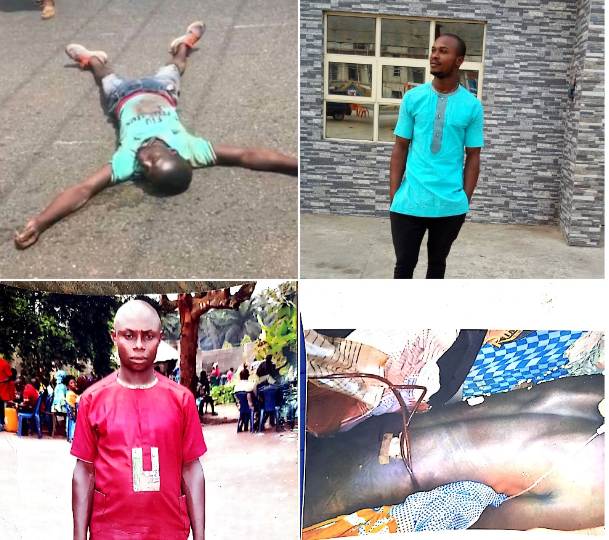
The first task Ebuka Nwoye discharged on April 15, 2020, was to run an errand for his mum. A Samaritan had offered Kosarachukwu Nwoye, some grains of rice as the lockdown and its attendant inability to fend had taken a toll on the family.
Back from the errand, Ebuka joined his friends at a football pitch located at Eze-Ego Street, about 200 metres from the house. The next thing Mama Ebuka, as Kosarachukwu is fondly called, heard was gunshots, then edgy noise followed by information by residents that Ebuka has been shot.
The football pitch
She was at the scene in a flash but there was nothing the poor woman could do to revive her 22-year-old son. He was shot at the back at close range by a policeman identified as Christopher Ozor.
A fresh video of the incident shared with PREMIUM TIMES shows residents wailing with Ebuka’s body lying lifeless on the road.
The policeman who shot Ebuka was well known in the area. Ozor, popularly called Ojukwu, served, then, at Awada Police Station but his daily routine would always take him to the New Tyre Market where he unwinds at a pub, residents say, belongs to his girlfriend. One of his ‘loosening’ escapades was ongoing on April 15 when Ebuka passed in front of the pub.
Ebuka
Residents would not talk about the incident when for fear of being attacked by the police. Two of these residents, who confided in this reporter said they had received threats from unknown people on their phone lines.
A witness who later agreed to speak on the condition that his name is not mentioned said he was returning to his house when he heard gunshots. This witness was one of the first people to come to Ebuka’s aid.
“Those officers were drunk, they went to a bar to drink. Along the line, the owner of the bar pointed to the boy that he was looking for his trouble. From their stories I heard that day, I observed that the woman had a friend that works with SARS (Special Anti-robbery squad). It was that her friend that did the shooting,” the witness said.
No justice
Mama Ebuka still carries around the picture of her son’s killer to serve as the lead for whoever is willing to assist her to get justice. Her pains are visible; so are Ikechukwu and Chinasa’s, brother and sister to Ebuka.
Christopher Ozor
What’s more excruciating to the family is the knowledge that the assailant has not been brought to book. People familiar with Mr Ozor said he was only redeployed from his former Awada station to a new one, 3.3 Police Station.
Public Relations Officer (PRO) of the state police command, Haruna Muhammed, requested some time to ‘consult’ before answering PREMIUM TIMES questions. He couldn’t after a follow up.
The family made many moves to seek justice before finally deciding to bury Ebuka on September 7, 2020. Sensing that nothing was happening on the part of the authorities, the family, through their lawyer on August 28, petitioned the Inspector-General of Police seeking a ‘speedy intervention’. Still, nothing came out of their efforts.
It’s been 10 months since the incident. Mama Ebuka, although craving justice, has lost hope in the current system. “If you help me, I will ‘buy’ another child, I will like that,” she said satirically and broke into tears.
L-R- Kosarachukwu, Ikechukwu and Chinasa
Meanwhile, a journalist, Miriam Godspower, has been following the case since it occurred.
Through her Akwaugo Foundation, she has also offered assistance to the family. She is also frustrated with the system but hopes some succour comes in terms of justice and assistance to the family who struggles to survive.
“It aches the head to hear that incidents like this (where) this person were shot in broad daylight…yet nothing has been done about it. I did a whole lot, yet there was nothing…It is so bad. And you know when justice is delayed, denied, corruption continues, evil continues, the hope of the poor man is dashed.”
Apart from arresting and charging the assailant to court, Miriam wants Nigerians to help Kosarachukwu with cash to start a business, feed the family and educate her children.
‘Ozor shot a second person’
The first few reports on the incident in Nkpor had it that two people were killed by Ozor. The second is Ekene Obieze who miraculously survived. The bullets that hit Obieze ripped apart his stomach, revealing his intestines.
The assailant did not stop there, he reportedly used a knife to cut Obieze at the back, leaving him unconscious. Residents say it is the usual practice of notorious police officers to take ‘every means’ to kill whoever they attacked so that such a person won’t witness against them later.
With multiple surgeries, Obieze was revived but now lives in constant pain from the wounds. His stomach was stitched vertically.
When PREMIUM TIMES visited 10 months after, Obieze was on a trip to a village where he sought herbal medication to mend his excruciating wounds.
“I came for treatment in the village,” he said frustratingly on the phone. “The thing (injury) is ‘hooking’ me, you know it’s a major operation they did for me. There is medicine I’m taking here. Where they ‘chook’ (stabbed) me with a dagger and the place they did the operation is paining me.”
Obieze, a welder, had only married a month before the incident happened.
Now he is physically incapacitated, bedridden, and can barely walk. Apart from bringing Ozor to book, he seeks assistance to access quality healthcare and means of feeding his family.
WHEN Dr. Ngozi Okonjo-Iweala name was finally announced as World Trade Organisation Director-General, congratulatory messages started to flood her timeline on Twitter, especially from Nigerians of all groups. A Twitter account owner then said, if NOI had contested for the Nigerian president, she probably would not have got a winning vote. The young lady stated the obvious. In Nigeria, political leadership position is often the preserve of menfolk, as data of the public office holders have shown.
Though the Federal Government endorsed the Sustainable Development Goals which partly aims at achieving women’s full and effective participation and equal opportunities for leadership at all levels of decision-making in public life, the country is yet to commit to the global agenda.
Currently, there are 43 ministers in President Buhari cabinet, but only seven of them are women despite a reminder of Nigeria’s commitment to affirmative action signed in Beijing in 1995. In his first term, women were six out of 36 ministers. So, for every six men, there is only one woman in Buhari cabinet.
The few women in the current administration are Minister of Finance, Budget and National Planning, Zainab Ahmed; Minister of Women Affairs, Pauline Tallen; Minister of State for Environment, Sharon Ikeazor; Minister of State for Industry, Trade and Investment, Maryam katagum; Minister of Humanitarian Affairs, Disaster Management and Social Development, Sadiya Umar Faruk; Minister of State for Transportation, Gbemisola Saraki and Minister of State for Federal Capital Territory, Ramatu Tijani.
Infographics by Samson Samuel
Among the 109 members in the Senate, only seven are women. The gap is even wider in the House of Representatives. There are 360 lawmakers in the lower chamber, women and men representatives are 12 and 348 respectively. The ratio was the same in 1999 when Nigeria returned to civil rule.
Therefore, only 4 per cent of the lawmakers in the 9th National Assembly are women.
The gender imbalance is reflected just as deeply across the Nigerian political parties.
In 2019, when 91 parties were registered for election only six women were appointed as party chairpersons, while 83 men were party leaders. They were Dr. Sarah Nnadzwa Jubril of Progressive Liberation Party; Chika Ibeneme, Mass Action Joint Alliance; Atuedide Eunice Uche, National Interest Party Segun Sango, Socialist Party of Nigeria; Bilikisu Gambari of Action Congress and Dr. Joy Ada Onyesoh.
Men also dominated other high offices of the various political parties, including those that promised gender equality. For example, 23 women were appointed as National Financial Secretaries, as against 53 men; eight women were National Legal Advisers as against 69 men; nine women were National Secretaries as against 78 men and 25 women were National Treasurers as against 55 men.
In total, 83 per cent of men occupied leadership position across all political parties compared to women who held only 17 per cent.
February last year, INEC delisted 74 political parties leaving only 18 registered parties. Now, the total of women appointed to the party hierarchy is 13, while 71 men occupy the rest of the leadership posts, representing 15 to 85 per cent respectively.
Infographics by Damilola Ojetunde
This is in contrast with the 30 per cent affirmative action endorsed by Nigeria at the Beijing Conference 26 years ago, and the 35 percent minimum threshold of representation for women, recommended 15 years ago by the National Gender Policy (NGP).
Similarly, Nigeria is a signatory to the International Convention on the Elimination of All Forms of Discrimination Against Women, also known as the CEDAW. Nigeria signed the treaty in April 1984 and ratified it the following year.
Despite these written commitments, women still are under-represented in various spheres of national life.
Blessing Obidiegwu, Head of the Gender Division for the Independent National Electoral Commission, attributed these problems to “patriarchy, violence in elections and economic situation.” She made this statement during a training programme organised by UN Women ahead of 2019 election.
Truly, about 80 per cent of all Nigerian states had at least one violent incident related to the election in 2015, according to Council on Foreign Relation which documents data on electoral violence in Nigeria. So, a combination of violence, male domination and unfavourable economic condition partly create an obstacle for women participation in politics.
The huge disparity between the representation of men and women in Nigeria’s public office could only mean a “systemic bias against equity,” said Abiodun Baiyewu, the Country Director at Global Rights Nigeria.
“The structures are stacked against women and their participation from every side. As long as 50 per cent of our population are not active participants in the leadership of our country, then we are clearly not a democratic nation,” she added.
Comparing Nigeria with other African countries, indeed, shows that the country is still far away from destination on its democratic journey. For example, the Rwanda Constitution establishes that women should be granted at least 30 per cent of posts in decision-making bodies and the Senate. While 24 seats out of 80 (30 per cent) are reserved for women in the National Assembly, 20 per cent of district councillor seats are reserved for women. And there are legal sanctions for non-compliance. The women representation in parliament now has gone above 50 per cent.
In South Africa, the Municipal Structures Act specifies that parties should seek to ensure that 50 per cent of candidates at the local level are women, but no penalties are imposed. The African National Congress, the ruling party, has a 30 per cent quota for women and a 50 per cent quota for women on party lists at the local level.
In Tanzania, the Constitution establishes at least 20 per cent of women representation but no more than 30 per cent of special seats for women in parliament. 75 out of 319 seats in parliament were special seats for women, and 25 per cent of seats must be held by women at the local level.
Nigeria’s neighbour, Ghana adopted an affirmative action proposal to reserve 40 per cent of positions in decision-making bodies for women.
The exclusion of women in Nigeria’s public life is a deep concern for someone like Hajia Saudatu Mahdi, MFR, Secretary General Women’s Rights Advancement and Protection Alternative (WRAPA). She railed at tokenism that has come to define women political participation and inclusion in leadership. Notwithstanding, she promised to continue promoting policy and social changes that award equal opportunity at all level for women.
It however remains uncertain whether efforts of gender activists like her could have made women such as Okonjo-Iweala become president of the largest black nation in spite of her credential and competence.
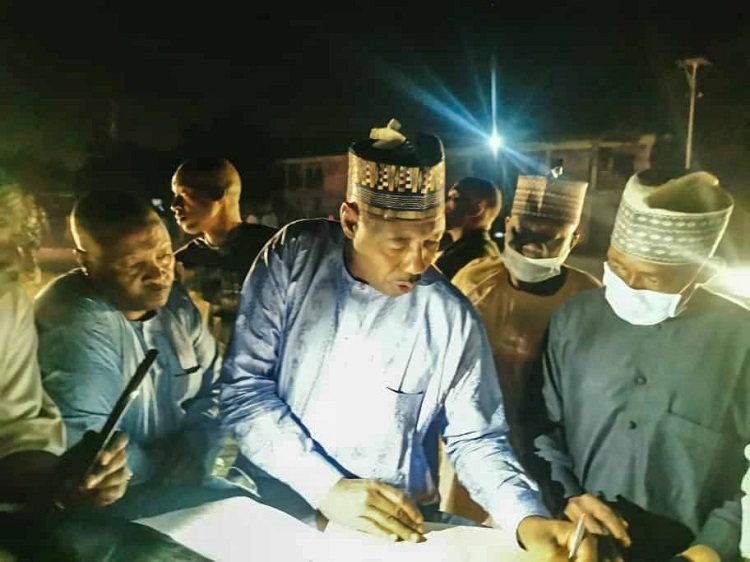
BABAGANA Zulum, Borno State governor, on Sunday morning, discovered fake displaced persons at Mohammed Goni College of Islamic Legal Studies, Maiduguri, one of the camps where Internally Displaced Persons (IDPs) were kept.
From an on-the-spot assessment, he found 650 fake displaced households, but discovered that 450 families were genuine.
The camp houses 1, 000 IDPs from Abadam Local Government Area (LGA) of the state.
To fish-out fake IDPs, @ProfZulum storms camp midnight for headcount
The exercise carried out by Zulum was to check the influx of fake IDPs who would disguise as indigent citizens during the day but vacate the camp at night, only to return the next day.
It was done with support from an official of the National Emergency Management Agency (NEMA), M. T. Abdullahi; commissioner for agriculture and natural resources, Bukar Talba; and commissioner for local government and emirate affairs, Adamu Lawan.
According to a statement from the governor’s social media, “Zulum immediately sealed entrance and supervised a headcount to identify actual IDPs, in order to put a stop to rampant cases of dubious residents pretending to be displaced, who spend day times at IDP camps to share food meant for IDPs, and towards the night, they return to their homes to sleep, with some of benefiting from other means through which the state distributes food to vulnerable non IDPs in communities.”
The Boko Haram attacks, which started over a decade ago, have led to scores of casualties and millions of displaced households.
Borno State accounted for 1.5 million displacements out of 2.6 million cases recorded as of 2019. In Borno State alone, there are 32 official government-run camps for the IDPs, according to the Internal Displacement Monitoring Centre. While 16 are in the local government areas, the other 16 are in the state capital, Maiduguri.
However, the midnight inspection exercise ended at a few minutes past 1 am after the headcount.
In humanitarian system, according to the officials, a household normally consisted of at least six persons who were either related through families or chosen to stay together for the purpose of receiving household aids.
The officials, who were part of the midnight headcount, criticised residents who had taken advantage of the situation for personal gain.
“…the Governor is vehemently opposed to some residents making dubious claims in order to take what is meant for IDPs while also benefiting from other existing welfare activities that target non-IDPs,” the statement read.
Difficulties experienced in the southern part of Nigeria as a result of food blockade by northern traders have forced investors, governments and socio-political groups in the South to consider adopting agricultural practices that will ensure self-sufficiency in food production in their areas, checks by The ICIR have revealed.
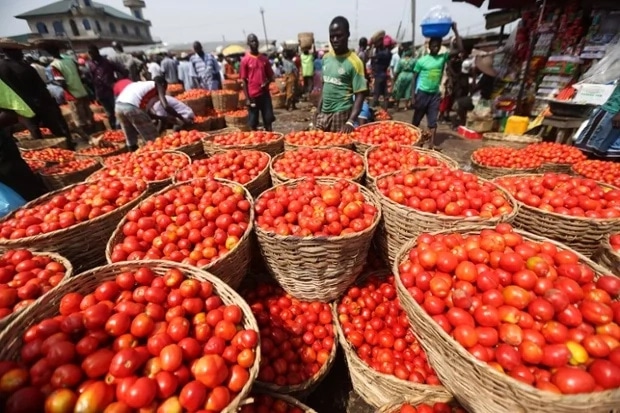
During the blockade embarked on by northern traders under the aegis of the Amalgamated Union of Foodstuffs and Cattle Dealers of Nigeria (AUFCDN), staple food items such as beef and vegetables, including tomatoes and onions, became scarce in the South, leading to an astronomical rise in the cost of foodstuffs.
Tomatoes, which are usually supplied from the North, became scarce and very expensive in the South during the blockade
Tomatoes, which are usually supplied from the North, became scarce and very expensive in the South during the blockade.
The blockade was eventually lifted on March 3, 2021, but checks by The ICIR show that governments and opinion leaders in the South are responding to the development by looking at ways of boosting food production in their areas.
Government officials and representatives of socio-political groups in the southern part of the country, who spoke with The ICIR, noted that the South should not be depending on the North for staple food items.
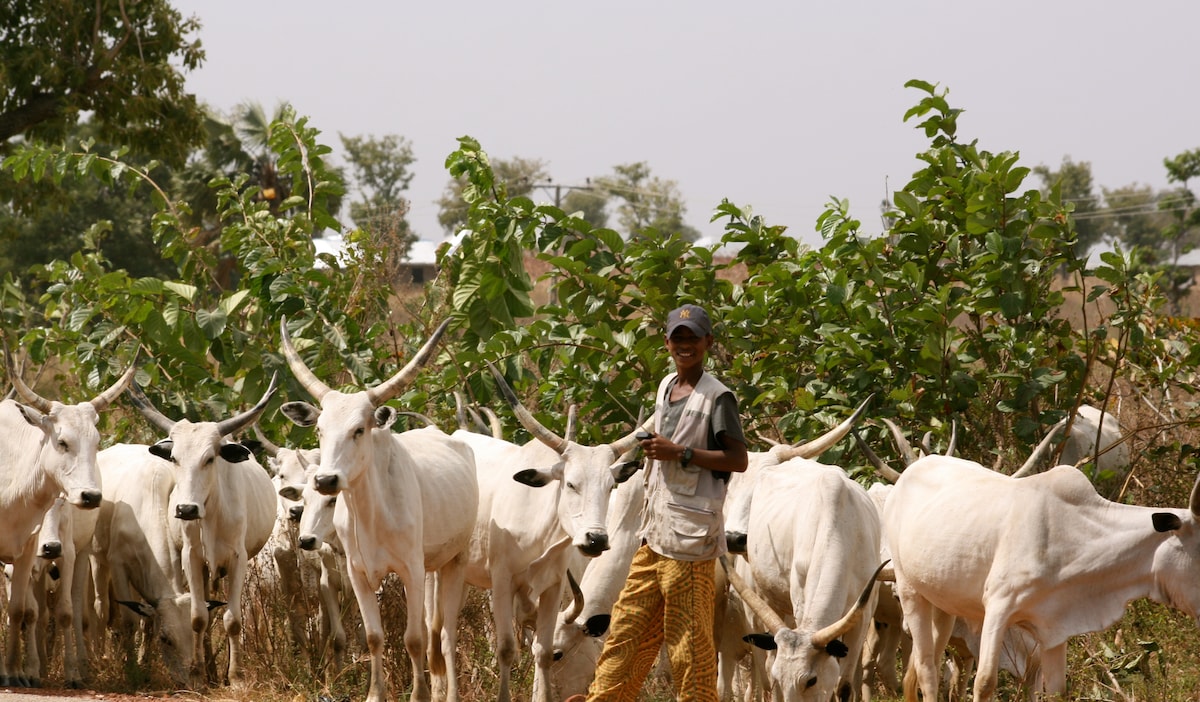
Southerners rely mostly on the North for beef. Beef became scarce and expensive in the southern part of when northern traders stopped moving food supplies to the South
Southerners rely mostly on the North for beef, but the product became scarce and expensive in the southern part of when northern traders stopped moving food supplies to the South
Ohanaeze Ndigbo to work with South-East Governors Forum to boost food production in South-East
Alex Ogbonnia, spokesman of Ohanaeze Ndigbo, the apex socio-political organisation of the Igbo, told The ICIR that the group would meet governors of the South-East states over the need to prioritise food production in the zone.
Ogbonnia told The ICIR that the food blockade “would make the people in the South to sit up because there is hardly any foodstuff that is produced in the North that cannot be produced in the South, including cows, goats, tomatoes and others.”
He said that the food products could be produced in the South, stressing that “this is a reminder to the South that they should begin to look inwards.”
Phone calls, text messages and Whatsapp messages sent to the spokesman of the South-East Governors Forum, Mike Uda, were not answered nor were they replied, but Ogbonnia informed The ICIR that Ohanaeze Ndigbo would partner the state governors to improve food production in the zone.
He said the people of the South-East were getting ready for intensive cultivation of food crops in the coming planting season.
“Very soon, it will be rainy season in the South-East and there will be large-scale cultivation of these food items that were usually brought from the North. We in Ohanaeze will liaise with the governors to look at ways of supporting the farmers to improve food production in the South-East,” the Ohanaeze spokesman said.
South-West commissioners, special advisers for agriculture meet over food security
Already, moves towards ensuring improved food production have commenced in the South-West as the regional development agency, Development Agenda for Western Nigeria (DAWN) Commission, on March 2, 2021, facilitated an interactive session for commissioners and special advisers on agriculture in the zone. The meeting was convened because of the food blockade.
Following enquiries concerning the response of the South-West governments to the food blockade, Seye Oyeleye, director general of DAWN Commission, issued a communique at the end of the meeting and made it available to The ICIR’s correspondent.
The communique stated that the states of the South-West “are fully aware of their responsibilities in ensuring that their people have access to food in abundance and will continue to provide the enabling environment for such to be available in abundance.”
The communique noted that the South-West states had agreed to work together in order to simplify access to land in the region for would-be investors in agriculture. It was also agreed that the South-West states should put some critical dams into active use in order to move farming in the region from rain-dependent to water-dependent. Some states in the zone made commitments to take action on the resolution within three weeks from the interactive meeting.
In the same vein, according to the communique, DAWN Commission was to work with other stakeholders to ensure increased production of agricultural products on which the region had comparative advantage, while the state governments agreed to share ideas on how to attract more youths into agriculture.
Governments of the South-West states also resolved to strengthen the regional security outfit – Amotekun Corps – to effectively deal with threats posed by armed herdsmen, which was identified as one of the major challenges facing agriculture in the region.
Self-sufficiency in food production is a project of the South-South states
The ICIR also sought the response of the South-South Governors Forum to the blockade. Olisa Ifejika, chief press secretary to Delta State Governor Ifeanyi Okowa, who is also chairman of the South-South Governors Forum, told The ICIR that the South-South states were working towards self-sufficiency in food production.
“It is a long-term project at the broad level of the South-South, but for now, it is a project that is being taken up at state levels. We are looking at what states can do,” Ifejika said, adding that the Delta State government “is training youths in agriculture so as to produce enough food for the people.”
Afenifere, PANDEF insist South can produce the food it needs
Leaders of other major socio-political groups in the South, including Afenifere, the umbrella body of the Yoruba, and the Pan Niger Delta Forum (PANDEF), also insisted that the southern part of Nigeria had the capacity to become self-sufficient in food production.
Spaaking with The ICIR, spokesman of Afenifere Yinka Odumakin said, “The South is not lazy, the people of the South have what it takes to produce all the food they need. But it is also the herdsmen from the North that are making it difficult for farmers in the South to produce enough food.”
Spokesman of PANDEF Ken Robinson agreed.
“We have a lot of agrarian land in southern Nigeria and we can grow our food if we focus on it,” he told The ICIR.
Northern traders say North has advantage over South in food production
But, in an interview with The ICIR, Awwal Aliyu, spokesman for the Amalgamated Union of Foodstuffs and Cattle Dealers of Nigeria and leader of the Northern Consensus Movement, stressed that the South would not be able to become self-sufficient in food production because its land would not grow some of the staple food items produced in the North.
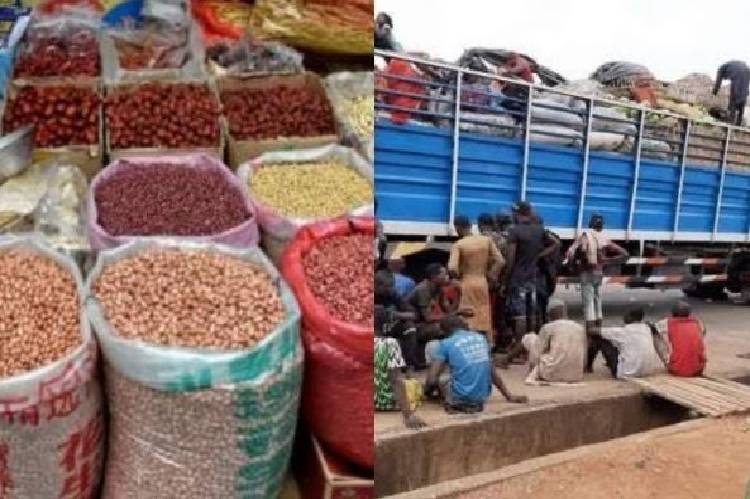
Grains, such as beans, maize, rice and millet, are mostly produced in northern Nigeria
Grains such as beans, maize, rice and millet are mostly produced in northern Nigeria
Aliyu said, “The land in the South is not as fertile as the land in the North. I wish the South well but there are so many things you cannot plant in the South and even if you plant them they will not do well.”
Northern traders will lose market in the South
Pogu Bitrus, leader of the Middle Belt Forum, who distanced the people of the Middle Belt from the blockade, told The ICIR that another consequence of the development was that the northern traders would lose market in the South.
Bitrus said, “This (blockade) will serve to improve trade between the Middle Belt and the South. From now, you will begin to see improved trade between the Middle Belt and the South because people in the Middle Belt who were relying on northern middle men will now begin to trade directly with the South. Whether the North likes it or not that is what is going to happen. The blockade has been lifted at the moment, but supposing it has not been lifted there are several other routes through which foodstuff can be taken to the South from the Middle Belt. Everybody knows the dangers of blocking the movement of goods and services.”
Northern traders say they are selling to other West African countries and not worried about losing market in southern Nigeria
But, reacting to suggestions that, as a result of the blockade, northern foodstuff and livestock traders would lose market in the South, Aliyu said there was no cause for concern.
Speaking with The ICIR, he said, “As for us losing market, our people have started exploiting new business opportunities. Because they do not want to lose their perishable products, they have discovered a route that goes through Sokoto to Burkina Faso to Chad, to Niger Republic and other parts of West Africa. As I speak to you, a lot of lorries are exporting goods to those places so we are losing nothing. So, even if the South-East, South-West and South-South do produce what they can eat, we are not losing market. In fact, it is more profitable for us to export to other countries in West Africa than taking them to southern Nigeria. Our people make more money from other West African countries than taking their goods the South-East, South-West or South-South. However, it is a win-win situation for us.”
Northern traders recorded losses during blockade
Further checks by The ICIR revealed that just as people in the southern part of the country experienced scarcity of foodstuffs and increase in the cost of staple food items, northern traders dealing in perishable food items also recorded losses in income during the blockade.
Ahmed Alaramma, general secretary of the Amalgamated Union of Foodstuffs and Cattle Dealers of Nigeria, told The ICIR that perishable food items that could not be sold got spoilt while the blockade lasted.
He said, “Our members that deal in perishable items incurred losses because those products are perishable. Some of their products got spoilt during the blockade. We recorded shortages due to spoilt goods.
“However, our members who deal in goods like cows and other livestock did not record serious losses because those goods are not perishable. The only shortages they recorded was in terms of daily business activities that could not take place during that period.”
Alaramma said the northern traders agreed to take the losses to protest their grievances over the alleged killings, humiliation, harassment, illegal taxation and extortion suffered by northerners in the South, over which they embarked on the protest.
“It is better that we did not take our goods to the South and have some shortage due to spoilt goods than keep quiet and continue suffering,” he further said.
Alaramma assured that the price of food items would return to pre-blockade levels in the South.
“Prices will come down. The prices of foodstuff have already come down to normal, which was obtainable before the blockade. Tomato, onions, meat and other items are all available now,” he told TheICIR.
Impact of blockade would worsen inflation… Economist
Muda Yusuf, an economist and director-general of the Lagos Chamber of Commerce and Industry (LCCI), told The ICIR that the impact of the food blockade would worsen the already high inflation rate in Nigeria.
Nigeria’s inflation rate rose to 16.47 percent in January 2021, the highest in three years, according to the latest Consumer Price Index (CPI) report released by the National Bureau of Statistics (NBS). The CPI also showed that food inflation had risen to the highest level since July 2008.
Yusuf said, “The blockade will have some inflationary effects. Food inflation is already above 20 percent and we are likely to see a much higher rate of inflation because the food supply chain has been severely disrupted. It will take some time for these things to normalise.”
But another economist, Ayo Teriba, chief executive officer of Economics Associates, observed that the blockade would not have much impact on inflation in the country.
“Three days blockade cannot have any inflationary effect. Inflation is a persistent, sustained increase in prices and has nothing to do with incidents,” Teriba told The ICIR.
Why northern traders stopped moving food to the South
Aliyu, spokesman of the northern traders and leader of the Northern Consensus Movement, told The ICIR that the blockade was a protest against alleged killing of northerners in the South during the #EndSARS protests and later during clashes between the Yoruba and Hausa-Fulani at Sasha in Ibadan. Aliyu claimed that nearly 300 northerners were killed in both incidents. He also claimed that goods and valuables belonging to northerners, including vehicles, were destroyed.
Aliyu said videos of the killings were available on the social media. But when reminded by The ICIR correspondent that some of the videos making the rounds in the social media were fake, Aliyu said the union had records of all the northerners killed during the incidents.
The northern traders also said the blockade was a protest against the extortion of their members in the southern states.
The blockade was lifted on March 3, 2021, after the federal government agreed to pay the 4.7 billion naira compensation demanded by the northern traders for loss of lives and property they allegedly recorded in the South.