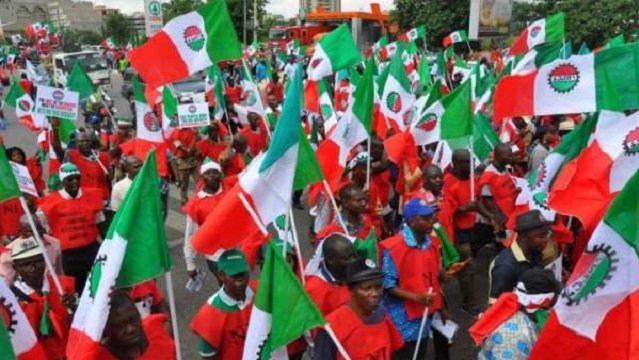
THE Nigeria Labour Congress (NLC)has said that the proposed nationwide protest over issues concerning the implementation of the new minimum wage will take place on Wednesday.
Benson Upah, NLC head of information, told The ICIR on Tuesday that the proposed strike would take place as earlier announced.
“Yes, the strike is still holding here in Abuja from the Unity Fountain to the National Assembly, while others would hold across state assemblies of the 36 states of the federation,” said Upah.
Ayuba Wabba, NLC president, had said last week that the union would stage a nationwide protest over a bill seeking to take the national minimum wage from the exclusive list and allow state governments to fix them for workers.
According to Wabba, the bill, if allowed to be passed into law, would enable authorities in the states to enslave their workers.
Wabba explained that the directive was part of the resolutions reached at an emergency meeting of the national executive council of the NLC.
“The NEC decided that should the need arise, it has empowered the National Administration Council of the NLC to declare and enforce a national strike action, especially if the legislators continue on the ruinous path of moving the National Minimum Wage from the Exclusive Legislative List to the Concurrent Legislative List.”
“The NEC warned that should the current artificial scarcity persist, that the various leadership structures of the NLC should picket petrol stations found to be inflicting pains on Nigerians,” the NLC president added.
Recall that the NLC and the federal government had spent several months ‘negotiating’ the minimum wage before it was eventually agreed that 30,000 naira would be the least pay for workers in Nigeria.
COVID-19 outbreak in 2020 forced Nigerian manufacturers to reduce their investments by 76.11 percent within the year, according to the second half 2020 economic review released to The ICIR by the Manufacturers Association of Nigeria (MAN) on Tuesday.
Manufacturing investment hit a rock-bottom 118.52 billion naira in 2020 as against 496.11 billion naira achieved in 2019. The 118.52 billion is the least amount of investment made by Nigeria’s manufacturers at least since 2014.
“Manufacturing investment declined in the period following the depressing fallouts from COVID-19 that gave no impetus
for new investments in the sector,” MAN, headed by Mansur Ahmed, said in the review.
In 2020, COVID-19 dislocated supply chains worldwide, incapacitating firms, especially manufacturers importing their raw and packaging materials from different parts of the world. The virus forced many manufacturing firms to close down to avoid outbreaks in factories. Brewery firms were not allowed to open for months while many firms which managed to open faced low patronage due to general lockdowns and inter-state movement restrictions.
In Guinness Nigeria’s nine-month to 2020, year-on-year revenue fell by 78.6 percent, majorly due to COVID-19 and lockdowns which lasted for months across states. Nigerian Breweries (NB), the biggest brewer controlling 56 percent market share, reported a revenue decline of 11 percent to 151 billion naira in the first half (H1) of 2020.
The GDP report released by the National Bureau of Statistics (NBS) in the first quarter (Q1) of 2020 (before the pandemic) said that activities in the manufacturing sector recorded a performance of 0.43 percent growth. However, in the second quarter (Q2) of the year, in the heat of the COVID-19 pandemic which disrupted economic activities, the sector contracted by 8.78 percent, indicating struggles faced by manufacturers during the period.
“Lingering foreign exchange crisis was perhaps the most significant challenge for the sector in 2020 as most industry players found it increasingly difficult to access foreign exchange meant for importation of critical factor inputs,” the Lagos Chamber of Commerce and Industry (LCCI) said.
Matthew Ibeabuchi, a manufacturer of chemicals in Enugu, South-East Nigeria, noted that most big investors in manufacturing sector struggled to stay afloat, with others showing caution due to uncertainties in 2020.
“You cannot make big investments when your patronage is low and when you are not sure of raw materials supply,” he said, expressing hope that things would bounce back.
Past investments
Nigerian manufacturers made investments valued at 5.73 trillion naira between 2013 and 2020, MAN said. In 2014 and 2015, manufacturing investments worth 691.77 billion naira and 489.55 billion naira respectively were made by the real sector players. More so, manufacturers made investments valued at 614.55 billion naira and 508.98 billion naira in 2016 and 2017 respectively. Also, total investments of 552.64 billion naira and 496.11 billion naira were made by manufacturers in 2018 and 2019 respectively.
Lagos and Ogun top the chart
A break-down of the 2014-2019 data shows that out of 691.77 billion naira worth of investments made by manufacturers in 2014, Ogun got 514.87 billion while Lagos got 100 billion naira. This means that both states had a share of 88 percent of total investments within the year. On the other hand, 34 other states shared 12 percent of the investment largesse. In 2015, out of 489.45 billion naira total new investments made by manufacturers and agro processors, Lagos got 29.79 billion naira as against Ogun’s 430.56 billion naira. Hence the two states had a share of 94 percent while other 34 states took only six percent share of the investments.
Also, Lagos got 94.83 billion naira value of investments in 2016 while Ogun received 351.13 billion naira out of N614.55 billion total investments.
In other words, Lagos and Ogun contributed 73 percent to the total investments while the rest had a share of 27 percent.
Also, out of a total of 508.98 billion naira investment made in 2017, Lagos received 235.61 billion naira as against Ogun’s 94.32 billion naira, representing 65 percent of the total. Other 34 states contributed 35 percent of total investments. MAN’s data further show that out of 552.64 billion naira investment in 2018, Lagos welcomed 287.16 billion naira whereas Ogun got 186.47 billion naira, indicating that both states contributed 86 percent of the total investments. Other 34 states shared 14 percent.
More so, a total of 496.11 billion naira investments were made in 2019, out of which Lagos got 180.63 billion naira and Ogun, 105.05 billion naira, indicating 58 percent share of the total.
Why Lagos and Ogun?
Analysts say Lagos is attractive to investors due to its proximity to a booming market of over 20 million people and presence of infrastructure such as seaports.
Olusegun Osidipe, director of research and statistics at MAN, said it was easier to check who owned a piece of land on the system in Lagos.
“You know how much to pay on Land Use Charge in Lagos. There is certainty around these things in Lagos ,” he said.
On the other hand, Ogun is leveraging its proximity to the Lagos by making cost of doing business easier.
“There are a few landmarks in Ogun State. Manufacturers and other investors have more room for expansion,” Ambrose Oruche, director of corporate affairs in MAN, said recently.
“Lagos and Ogun states provide access to markets driven by population. In addition, Lagos promises high security which many investors appreciate. Ogun State is also ranked high in the ease of doing business with its business friendly policies and environment,” he said.
“Another important factor is the availability of the ports in Lagos which makes it easier to receive goods, especially when the market is proximate. Long distance between ports and market or consumers will affect competitiveness, quality and quantity of the goods,” Oruche further said.
Manufacturers complain that many other states have poor security network and infrastructure that can aid business success.
We will invest
Despite the flip-flops in 2020, there is likelihood of higher investments in 2021 due to subdued COVID-19 situation and roll-out of vaccines.
In a recent interview, Santosh Pillai, managing director of PZ Wilmar, a palm oil firm, said the firm, which had invested over 150 million dollars in Nigeria, would continue to pump money into the economy.
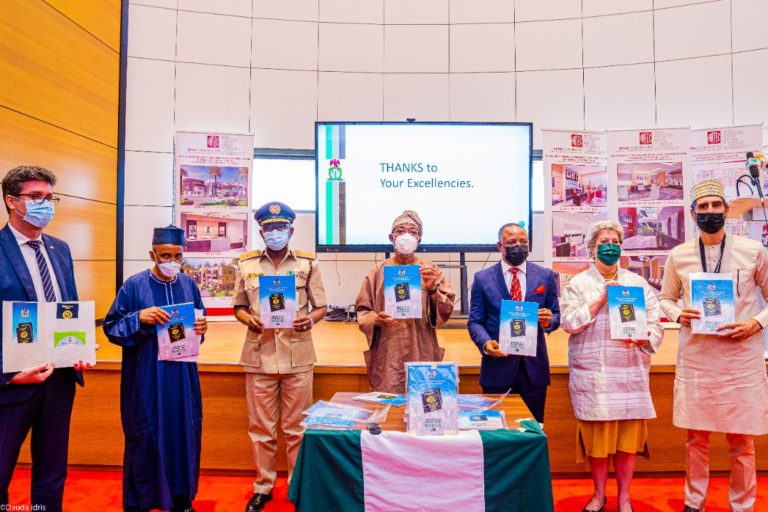
THE Nigerian government, on Tuesday, launched a temporary passport that replaces the paper-type Emergency Travel Certificate for Nigerians in the diaspora.
Rauf Aregbesola, minister of interior, who chaired the launch at the headquarters of the Nigerian Immigration Service (NIS) in Abuja, said the e-document would be issued at Nigerian embassies and high commissions to Nigerians with an urgent need to return home but whose national passports were either lost or expired.
Aregbesola added that the document, which had validity for 30 days, would also address the needs of Nigerians abroad being returned home by their host countries without valid passports.
In his remarks, Muhammed Babandede, comptroller general of Immigration, noted that the introduction of the document was another way of engaging with the diaspora population with a view to addressing their emergency travel needs, stressing that the document could be issued to applicants irrespective of age.
The-four-page electronic passport, which has all the features of the standard passport, is designed for a one-way travel to Nigeria and is expected to be surrendered to the immigration authorities at the port of entry on arrival into the country.
Sunday James, spokesperson for the NIS, confirmed to our correspondent that the new e-passport could only be issued upon proof of citizenship, genuineness of the stated emergency and would invalidate any pre-existing passport.
The event was attended by members of the diplomatic community, including the envoys from the United States, Mary Berth Leonard; her counterpart from the United Kingdom, Naeem Khan; the Canadian High Commissioner, Nicolas Simard; the doyen of the Diplomatic Corp and Cameroon high commissioner to Nigeria, Salaheddine Abbas, and permanent secretary of the Ministry of Foreign Affairs, Gabriel Aduda, among others.
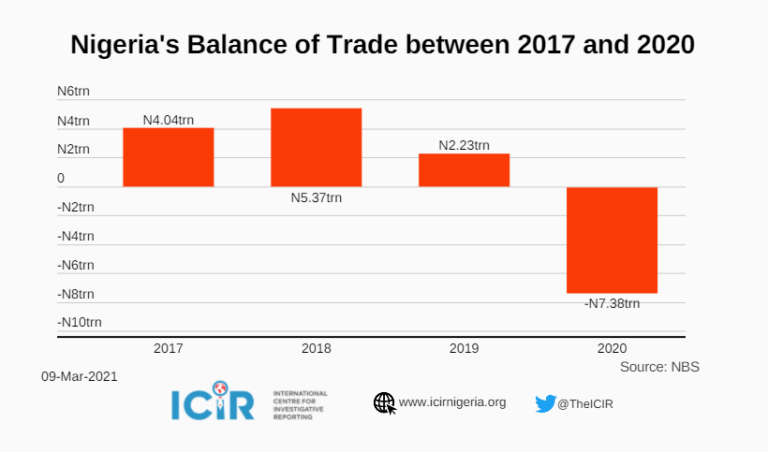
NIGERIA recorded a trade deficit of N7.37 trillion in 2020, according to the fourth quarter (Q4) 2020 Foreign Trade Statistics released by the National Bureau of Statistics (NBS) on Tuesday.
This is the first time Africa’s largest economy has reported a negative trade outcome since 2016.
Nigeria’s export stood at 12.52 trillion naira while imports amounted to 19.9 trillion naira. In other words, Nigeria imported more goods and services than it exported to other countries within the period under review.
According to the NBS report, total trade stood at 32.42 trillion naira in 2020, representing a 10.32 percent, compared with 36.15 trillion naira reported in the previous year.
The report further revealed that between 2016 and 2020, Nigeria’s total trade stood at 23.16 trillion naira, 31.69 trillion naira, 36.15 trillion naira, and 32.42 trillion naira, respectively.
Infographics by Damilola Ojetunde
On quarter-on-quarter basis, the 2.73 trillion naira trade deficit recorded in Q4 2020 represents the fifth consecutive quarterly deficit since the 1.38 trillion naira trade surplus recorded in the third quarter (Q3) of 2019.
The value of total imports increased by 17.3 percent to 19.89 trillion naira in 2020, compared with the 16.96 naira trillion recorded in 2019 and more than twice its value in 2017 (9.56 trillion naira).
In 2020, machinery and transport equipment accounted for 36.6 percent of total imports, while chemicals/related products and mineral fuels constituted 18.2 percent and 15.3 percent respectively.
The report further shows that imports from China accounted for 28.3 percent of the total imports, followed by India (8.5 percent); the United States (7.57 percent); the Netherlands (7.2 percent); and Denmark (5.4 percent).
Total exports dropped by 34.8 percent to 12.52 trillion naira in 2020 from 19.19 trillion naira in 2019.
In Q4 2020, Nigeria majorly exported mineral products, accounting for N2.96 trillion. The second-largest component was vehicles, aircraft and parts, which were valued at 111.3 billion naira. Vegetable products worth 39.9 billion naira were exported within the period.
The top five export destinations in Q4 2020 were India, Spain, South Africa, the Netherlands and the United States, with goods valued at 547.0 billion naira, 313.4 billion naira, 256.7 billion naira, 194.5 billion naira and 170.4 billion naira, respectively, shipped to the countries.
These countries collectively accounted for 46.39 percent of the value of total exports in Q4 2020.
In Q4 2020, the bulk of export transactions were conducted through Apapa port in Lagos, accounting for 93.9 percent of total exports, followed by Port-Harcourt, which recorded 4.6 percent of the total.
In terms of imports, Apapa port also recorded the highest transactions at 42.8 percent, followed by Tin Can Island (also in Lagos) which accounted for 17.4 percent, while Port-Harcourt received 10.35 percent of total imports.
Why trade deficit occurred
Analysts attribute the deficit majorly to COVID-19 pandemic, which prompted lockdowns and restrictions at the local and the international levels, dislocating supply chains and economic activities.
“Activities in the global and domestic economy in year 2020 were shaped by the COVID-19 pandemic and responses of various national governments, monetary
authorities, private sector as well as international agencies in dealing with the health and economic effects of the pandemic,” the Lagos Chamber of Commerce and Industry (LCCI) said in a 2020 economic review signed by Muda Yusuf, director-general.
However, COVID-19 cannot take the whole blame for the deficit. The closure of Nigeria-Benin border was seen by trade experts as a significant factor.
“Major players in the beverages, polypropylene, bags, tobacco, cement, toiletries and cosmetics industries are losing markets they had worked very hard to secure in the West and Central African region. This is a position that Nigeria has hoped to leverage on to secure a strong position in the African Continental Free Trade Area(AfCFTA) which kicks off in January 2021,” Mansur Ahmed, president of the Manufacturers Association of Nigeria (MAN), had said in late November 2020.
In August 2019, the federal government shut down major borders with neighbouring countries, foreclosing the possibility of exporting products through the land borders. The border closure lasted till December 2020.
Lagos-based Cadbury, a confectioner, said in November 2020 that it could not bring Hot Chocolates into Nigeria from its Ghana plant, and was unable to export Tom Tom, Buttermint and cocoa intermediaries to West and Central Africa by land. The confectioner reported a 14.42 percent decline in revenues from year-on-year export sales to 3.3 billion naira in nine months to 2020 due to Covid-19 and closure of the land border.
Also, Guinness Nigeria could not move its drinks to West and Central Africa, leading partly to a nine-month to 2020 revenue crash of 78.6 percent.
Okhai Ehimigbai, export manager at Aarti Steel, said that its export segment was shut down in 2020 owing to the border closure.
Most exporters said they could not export by sea because it was expensive and time-consuming. This reporter learnt that Nestle Nigeria spent over eight weeks on sea at one point while exporting its products to Niger Republic, a move that could have taken three days or fewer.
The situation impacted trade negatively. Nigeria earned 823.06 million dollars (296.3 billion naira) from export to ECOWAS countries and 2.72 billion dollars (978.21 billion naira) from shipping out products to Africa in the first quarter of 2020. In the second quarter of 2020, export to the whole of Africa was estimated at 401.4 billion naira, while goods worth 149.3billion naira were moved from Nigeria to ECOWAS member states, representing 82 percent decline from export in the first quarter. Though this was attributed to Covid-19, manufacturers said the border closure was a critical factor.
Extremely misleading?
Seyi Kolawole, an associate at PwC, said the foreign trade statistics released by the NBS might be ‘extremely misleading.’ He said, even to a layman, Nigeria often imported more than what it exported. “I can understand there was the impact of COVID-19 on trade last year. However, the variation is too extreme,” Kolawole said.
“One of the major items that may have affected the figure is fuel. Unless they say that massive difference is all accounted for by fuel, because that is one of the major commodities we export. Therefore, the oil price crash and the reduction in the volume of oil that was exported might be responsible for that,” Seyi said.
However, he went further to say that more explanation was still needed from the NBS because it did not reflect the real picture of the country’s trade reality.
On the other hand, Muyiwa Adesina, another associate at PwC, said the foreign trade was measured on value and not on quantity or volumes. “So if you look at the value of crude export relative to other exported commodities, that might explain that. Therefore, it means Nigeria suffered a plunge in its oil export for us to have a trade deficit.”
A series of four explosions heard in Equatorial Guinea’s commercial hub, Bata, left a huge plume of smoke hanging over the city.
News reports say 20 have died and there is significant damage. Health workers have been asked to report to the city’s hospitals, says the Spanish news agency EFE.
The TVGE channel broadcast footage of wrecked and burning buildings, with people — including children — being pulled from the rubble and the wounded lying on a hospital floor. A video posted on the social media shows a chaotic scene of distressed people fleeing from the site of the explosions.
The blasts were caused by ‘negligence’ relating to the storage of dynamite at the barracks, President Teodoro Obiang Nguema was reported to have said. The impact of the explosion “caused damage in almost all the houses and buildings in Bata,” he added, and called for international help with aid.
The camp houses elements of the army’s special forces and the paramilitary gendarmerie, a journalist said.
Bata is the largest city in the oil- and gas-rich nation, with around 800,000 of the nation’s 1.4 million population living there — most of them in poverty.
The president’s son, Teodoro Nguema Obiang Mangue, a vice president with responsibility for defense and security, has appeared in television footage at the scene of the blasts inspecting the damage, accompanied by his Israeli bodyguards, the French news service AFP reports.
MARCH 8 marked the United Nations’s International Women’s Day — an occasion meant to be a global celebration. But with more and more women suffering each day, there is little to rejoice in Africa, say many women leaders from the continent.
“International Women’s Day should celebrate the fruits of decades of activism. But on a continent where those who stand accused of sexual abuse often get rewarded rather than punished, what is there to be proud of?” said Cameroonian journalist Mimi Mefo Takambou.
“The theme for the 2021 International Women’s Day celebrations is ‘Women in leadership: Achieving an equal future in a COVID-19 world’ — yet I’m having a hard time fully embracing that idea, given the pain and destruction that COVID-19 has caused, especially to women.”
And who can forget the story of Fezekile Ntsukela Kuzwayo, who accused South Africa’s former president Jacob Zuma of rape, sparking a national debate about rape culture in a country where, according to the ‘Rape Crisis’ advocacy group, 40 percent of women experience rape at least once in their lifetime?
Despite the mounting evidence against Zuma, it was only his account that eventually held up in court, namely that the sex acts had been consensual.
First Lady of the Democratic Republic of Congo Denise Nyakeru Tshisekedi, reflected on the state of progress in preventing violence against women. In the first six months of last year, 26,000 cases of sexual violence were registered, according to the UN, an increase of 28 percent compared to 2019.
“Several actions have been carried out since March 2019,” commented the First Lady. “These include awareness-raising meetings that I organise with young people from different provinces of my country to discuss, by example, on positive masculinity.”
Winnie Byanyima of UNAIDS, observed: “Women leaders have provided a guiding light for the world in responding to the COVID-19 crisis, from heads of government to coordinators of grass-roots social movements. They have reminded the world how crucial it is to have critical numbers of women, in all their diversity, in positions of leadership.”
“But the COVID-19 crisis has seen progress towards equality pushed back. It has widened the gap between women and men in wealth, in income, in access to services, in the burden of unpaid care, in status and in power.”
The pandemic has brought into sharp and painful focus that even before COVID-19 an estimated 34 million girls between the ages of 12 and 14 years had been out of school, one in three women globally reported having experienced physical or sexual violence and women the world over worked longer hours for less or no pay.
“Gender inequality is not only wrong, it is dangerous. It weakens us all. A more equal world will be better able to respond to pandemics and other shocks; it will leave us healthier and safer and more prosperous.”
SHOLA Mos-Shogbamimu, Nigerian political and women’s rights activist, was involved in a heated argument with Piers Morgan, host of the Good Morning Britain show, which aired on ITV on Monday, when she challenged systemic racism and colonialism practised by the British royal family.
The discussion centered on the recent bombshell interview which Harry and Meghan, the Duke and Duchess of Sussex, had with Oprah Winfrey that aired on Sunday night, where they made personal, never-heard-before revelations about their struggles, including Meghan’s suicidal thoughts, which compelled them to step back from life as working royals, leaving the UK in search of a more peaceful life in California.
Morgan accused the couple of trashing the queen and of unacceptably implying that “everybody in the royal family is a white supremacist.” He called it ‘contemptible’ and said it was the “most incendiary charge I’ve seen in my career.”
“This is a two-hour trash-athon of our Royal Family, of the monarchy, of everything the Queen has worked so hard for and it’s all been done as Prince Philip lies in hospital,” Morgan said of the #MeghanHarryOprah interview which aired in the United States on Sunday, March 7, from 8 to 10 p.m. It will air in the UK on ITV on Monday at 9 p.m.
Reacting to some of his comments about Harry and Meghan, Mos-Shogbamimu slammed Morgan, calling him a disappointment and accusing him of constantly using his platform ‘as a wealthy, white-privileged man with power and influence’ to aggravate and escalate sexist and racist attacks, in a bid to express blind love for the Queen.
She reminded him that he could still show his love for the Queen without turning a blind eye to actions by the royal family that were wrong and called out Queen Elizabeth for not using her power to protect her grandson, Harry, and his family from racist media reports.
“You’re more outraged that Harry and Meghan had the audacity to speak their truth. You want to deny that the royal family has any racist undertone or actions against the first biracial (sic) simply because you’re in love with the Queen…The Royal Family as an institution is rooted in colonialism, white supremacy, and racism. The legacy is right there,” the rights activist said.
She queried, “What kind of grandmother, would be so close to her grandson, Harry, but did not use her power and influence as Queen to protect them from the racist media coverage?”
In an earlier #choosetochallenge video message to mark the 2021 International Women’s Day which she posted on YouTube, Mos-Shogbamimu had stressed that speaking up as a woman was important and even more important was speaking up as a black woman.
“We can’t talk about gender equality without talking about racial equality, because within the gender equality are marginalised black and ethnic minority women and we have to ensure that we are constantly intentional about resisting the status quo,” she had said.
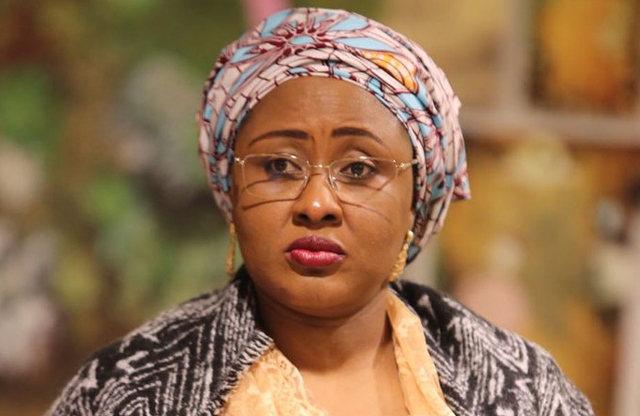
AISHA Buhari, wife of President Muhammadu Buhari, has called for concerted efforts by governments and other stakeholders to bring an end to abductions of schoolgirls and women in Nigeria.
She said this in a statement released on Monday in commemoration of this year’s International Women’s Day, which is celebrated across the world.
The first lady, who complained that girl-child education was being affected by abductions in the country, noted that the plight of women had further been affected by the outbreak of COVID-19.
She called for support for those who had been impacted negatively by the pandemic.
“COVID-19 has had a huge impact on women, disrupted education and careers, lost jobs, brought about descent into poverty, and proliferation of domestic violence. Many have also died or suffered due to lack of access to basic information on the pandemic,” parts of the statement read.
“It is, therefore, important, not just to continue spreading the message of the COVID-19 protocol, but to remember and support those who have been affected negatively by the pandemic in one way or another.
“Away from COVID-19, women and girls in Nigeria have continued to suffer abductions both in the hands of insurgents and bandits.
“As a mother, I share the sorrow and agony of the victims and their families. I am also not unaware of the impact that these abductions could have in reverting many successes we have hitherto achieved, especially in terms of girl-child education and early marriages.
“I call on all stakeholders to continue to exert their different levels of influence and bring these abductions to an end and to assure us that girls are safe anywhere they may find themselves.
“My best wishes to women all over the world for their resilience, hard work and commitment to the progress of humanity. Happy International Women’s Day. “
Since 2014, about 693 school girls have been kidnapped by Boko Haram insurgents and terrorists operating in the name of bandits in the northern part of the country.
The United Nations and civil societies organisations have continued to call on the Nigerian government to protect the girl-child by providing adequate security around schools, most especially in the northern part of Nigeria.
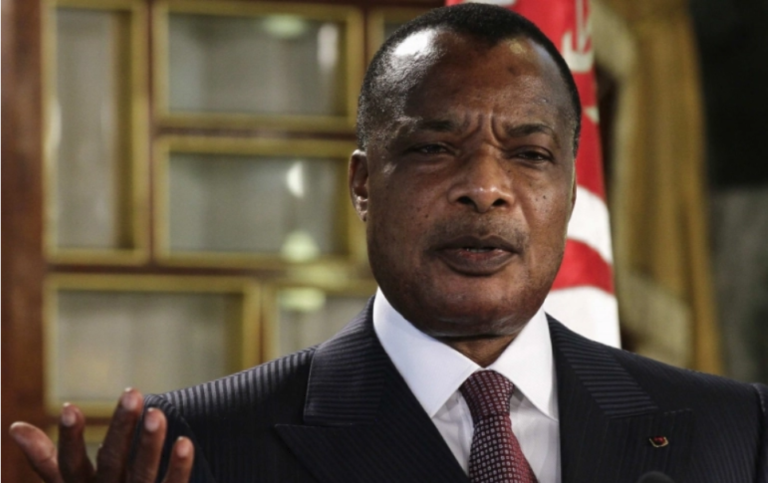
DENIS Sassou Nguesso, president of the Republic of Congo, has declared his intention to seek yet another term in office. He has held that position for 36 years, making him one of the longest-serving presidents in Africa. Elections are scheduled for March 21.
He faces seven challengers, though the main opposition party says it will boycott the event. They faulted the president for the short run-up to the polls.
‘’Can’t the elections be postponed for two or three months to allow time for the competent bodies to organise the pre-election operations?’’, Crepin Gouala, leader of the opposition Alliance pour l’République a la d démocratie (ARD), asked.
For independent candidate, Pandi Ngouari, “this kind of injustice is imposed on us by the same generation as a soccer team that trains for years even though we are aware that the referee is not always fair, but we are forced to go and beat this team on its own field with its own referee.’’
Ruling party members defended the choice of the 77-year-old leader. “We said the choice of Denis Sassou Nguesso is an inevitable choice,” party leader Leonidas Mottom told the French news agency AFP.
“It’s the choice of change in continuity, it’s the choice of stability and the choice of peace,” said Mottom.
Sassou Nguesso’s political history has been marked by controversy. After coming to power in 1979, he headed a single-party regime for 12 years.
Political pluralism was introduced in 1991 and the following year Sassou Nguesso lost his presidential bid. He returned to power in October 1997 after his rebel forces ousted the president at the time, Pascal Lissouba of UPADS, and a two-year civil war ensued.
Presidential elections were held in 2002 that Sessou Nguesso controversially won. He was re-elected in July 2009 in a poll boycotted by the main opposition candidates.
A new constitution, approved by referendum, enabled him to stand again in 2016, and he won by a first-round majority, a result that again was contested by the opposition.
His re-election in 2016 triggered unrest in Brazzaville and armed conflict in the fertile region of Pool that cut off freight trains on the vital rail line between the capital and Pointe-Noire.
President Nguesso’s rivals in 2016, former general Jean-Marie Michel Mokoko and former minister Andre Okombi Salissa, remain in jail today.
They had disputed the election results, were then arrested, put on trial and each handed 20 years in jail on charges of undermining state security.
Concern is growing in the Congo over the nation’s deep economic crisis triggered by the slump in oil prices and worsened by long-standing debt.
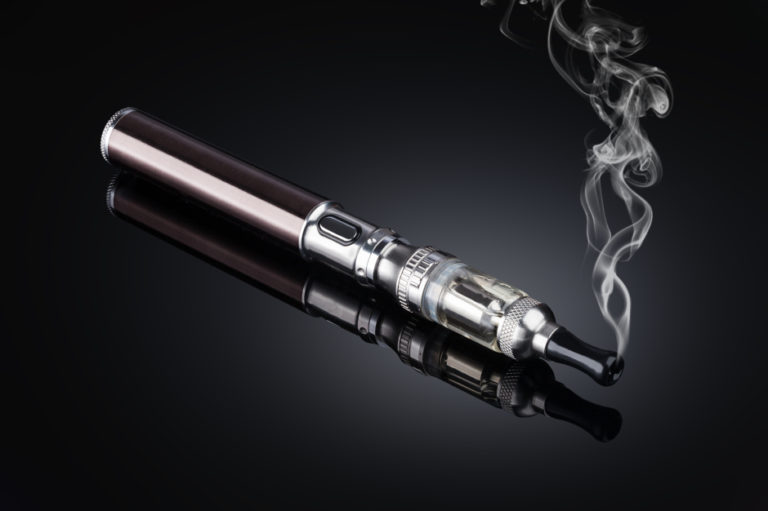
E-CIGARETTES are targeted at university and college students in South Africa, according toLekan Ayo-Yusuf, professor of health and executive director of Africa Centre for Tobacco Industry Monitoring and Policy Research (ATIM) at Sefako Makgatho Health Sciences University, while referring to a recent report by health researchers.
Ayo-Yusuf said the research in question found that of the over 240 vape shops in South Africa, 39 percent were within a 10km radius of a university or college campus, while 65.3 percent were within a 20km radius of a university or college campus.
The professor of health noted that although the e-cigarette industry had positioned itself as a cessation aid, the research found out that the products had limited effectiveness.
“While the tobacco and e-cigarette industry likes to position e-cigarettes as cessation aids, the limited effectiveness of these products for long-term quitting, the health harms associated with usage and the industry’s clear and targeted marketing to the youth are facts which are conveniently omitted from their narrative. This series of studies provides very useful information to guide policymakers in South Africa,” Ayo-Yusuf said.
Based on two large population-level surveys, the research being referred to by Ayo-Yusuf, showed a growing prevalence of regular e-cigarette use by South Africans older than 16 years. It noted that 2.71 percent of adults, translating to 1.09 million people, used e-cigarettes during 2018. Most of these e-cigarette users were concurrently regularly smoking cigarettes, the research found.
The research, conducted by the ATIM and the South African Medical Research Council (SAMRC), assessed local e-cigarette use, evaluated the effectiveness of e-cigarettes as cessation aids, and analysed the costs of e-cigarette usage while using geospatial mapping to understand the distribution of vape shops across South Africa and how this might impact youth usage.
The second part of the research concluded that any presumed benefits of e-cigarettes on cessation might be partly attributable to pharmacotherapy and counselling, given the concurrent use patterns among past quit attempters using e-cigarettes.
The study showed that awareness of cessation aids among current smokers was 50.8 percent for smoking cessation programmes; 92.1 percent for nicotine replacement therapy, and 68.2 percent for prescription cessation medication.
Among current combustible smokers who attempted to quit in the past, ‘ever’ e-cigarette users were more likely than ‘never’ e-cigarette users to have used other cessation aids. Furthermore, among current smokers who had ever attempted to quit, past users and over half of current e-cigarette users were more likely than ‘never’ e-cigarette users to have used cessation aids.
For ‘ever’ smokers who had tried to quit, e-cigarette use was associated with a higher likelihood of short-term, but not long-term quitting. The study, in fact, showed a higher likelihood of smoking relapse among ‘ever’ smokers in South Africa who had tried to quit using e-cigarettes
The likelihood of long-term quitting lasting 6-12 months was 80 percent lower among those who used e-cigarettes rarely, 70 percent lower among former e-cigarette users, and 77 percent lower for regular e-cigarette users compared to ‘never’ users.
Despite this evidence of limited effect on cessation, the study also suggested more e-cigarette ‘ever’ as compared to ‘never’ users still believed e-cigarettes could assist smokers completely quit (35.5 percent vs. 20.4 percent) or cut down (51.7percent vs. 26.5percent). This dominant belief among those who had ever tried e-cigarette was likely a result of the manufacturers’ marketing of these products as cessation aids, despite not having scientifically tested them as such in South Africa or similar poor resource settings.
The cost study revealed that, contrary to claims made by e-cigarette manufacturers, using e-cigarettes was more expensive than smoking cigarettes when comparing daily users over a one-year period. Annual cost associated with daily use was 6,693 rand for manufactured cigarettes and up to 19,780.83 rand for e-cigarettes.
The study further stated that implementing excise taxes on e-cigarettes at 75 percent of the cigarette excise tax rate could generate annual revenue of up to 2.20 billion rand for South Africa.
“Untaxed for more than a decade in South Africa, e-cigarettes will only be taxed from this year, at a rate of 75 percent of the tax on tobacco. This will likely reduce initiation by youth and provide additional revenue to cover the health and economic harms they cause while contributing to NHI funding,” said Catherine Egbe of SAMRC.
Ayo-Yusuf recommended pending the signing of the Tobacco Control Bill 2018 into law, saying that advocacy groups and researchers could maintain vigilance in relation to the tobacco industry, to identify and publicise any evasive or deceptive marketing.
He also urged pharmacies to voluntarily remove e-cigarettes from their shelves as a health promotion initiative, suggesting that parents and caregivers could adopt voluntary smoke-free home and car rules prohibiting all forms of tobacco and e-cigarette use.
“Globally, research on these relatively new products is guiding better regulation, and we trust that South Africa will implement the Tobacco Control Bill as a comprehensive, evidence-based policy,” Ayo-Yusuf stated.