AFTER five years of ignoring calls to jettison the demand management foreign exchange (FX) strategy, the Central Bank of Nigeria (CBN) has finally embraced the supply policy to shore up dollar supply and rejuvenate an ailing economy.
A demand management FX strategy focuses on controlling demand for dollars while a supply policy involves boosting dollar supply through a series of official pronouncements and policies.
The CBN, on March 5th, introduced ‘Naira 4 Dollar Scheme’ for diaspora remittances–a strategy that was targeted at boosting FX supply in a dollar-strapped economy.
In a circular signed by A.S. Jubrin, director of Trade and Exchange Department at the CBN, the apex bank said it would, through commercial banks, pay 5 naira for any one dollar remitted by sender and collected by a designated beneficiary.
“This incentive is to be paid to recipients whether they choose to collect the USD as cash across the counter in a bank or transfer same into their domiciliary account,” the CBN’s circular said.
“In effect, a typical recipient of diaspora remittances will, at the point of collection, receive not only the USD sent from abroad but also the additional N5 per USD received,” the bank noted.
CBN explained that it had discussed the modalities with banks and international money transfer operators (IMTOs), disclosing that the scheme would take effect from Monday, March 8, and end on Saturday, May 8, 2021.
CBN Governor Godwin Emefiele
Why the strategy?
The CBN’s demand management strategy since 2015 has so far failed to shore up dollar supply in the Nigerian economy. The bank had restricted 44 items from milk to tomato concentrate from accessing FX through the official market. It had also restricted open market operations (OMO) for foreign portfolio investors. More so, the multiplicity of FX markets (which still exist) had worsened investor confidence.
As of October 2020, Nigeria’s foreign reserves were on a steep decline, though it was above 35 billion dollars. Worsening current account balance and declining oil prices ensured that manufacturers scrambled for dollars without success. With the economy in a slump, the CBN was forced to project that the reserves would fall further to between 29.9 billion and 34.3 billion dollars. Several analysts knocked the apex bank for continuing an unsuccessful policy.
“Where we are today in Nigeria is a mentality of poverty. We are managing demand, whereas we should be looking at expanding supply. Nigeria must increase the supply side of her economy,” DoyinSalami, professor of economics and chairman of the Presidential Economic Advisory Council, said at the opening day of the 26th edition of the Nigerian Economic Summit (#NES 26) held on November 23, 2020, in Abuja.
With the failures of the CBN becoming apparent, the apex bank, a few days later, announced that it would allow diaspora remittances to be withdrawn in cash in a move to spur liquidity in the FX market and close the gap between the official FX rate and parallel/ black market rates.
This dollar management supply strategy worked as weekly remittances rose 500 percent, from five million to 30 million dollars as of February 2021, according to the CBN governor Godwin Emefiele.
Seeing the success of the policy, the apex bank introduced ‘Naira for Dollar Scheme’ to further boost remittances and save the import-dependent economy from a total collapse. Economists say the policy would prevent routing dollars through informal and unofficial routes, which has been a practice for long.
Implication of the policy
The Nigerian economy went into recession in the third quarter of 2020 as GDP contracted in two consecutive quarters. Growth fell by 3.62 percent in Q3 of 2020 with major sectors in deep slump. COVID-19 was the biggest factor, but major economic policies such as exchange rate management and border management were flagged by analysts. Nigeria exited recession in the fourth quarter of 2020, with 0.11 percent growth which is not enough to bolster prosperity for a population growing at 2.6 percent per annum.
The Nigerian economy is dollar-sensitive, being a monoproduct economy. With the incentive in remittances. there could be increased dollar supply, which would bolster growth. According to the Manufacturers Association of Nigeria (MAN), access to foreign exchange would help industries to have access to raw materials. This, in turn , would boost jobs and economic growth.
The CBN’s short-term policy is far from being naira devaluation, but it is a type of currency modulation targeted at boosting foreign exchange inflows. However, analysts believe that boosting FX supply would also involve unifying the multiple exchange rate window.
“Exchange rate unification is critical,” Jesmin Rahman, IMF mission chief for Nigeria, said at a virtual fireside interview participated by this writer in 2020.
“Improve certainty and regulatory regime to help diversification, and turn a growing population into human capital,” she said.
SINCE the outbreak of COVID-19, also known as coronavirus, in Wuhan, China, in December 2019, there have been bogus and unproven claims by conspiracy theorists appearing on multiple platforms across the internet.
The spread of misinformation about the virus seems to be very well coordinated, with some focusing on videos and audios that are shared online and others spreading their misinformation through posts on Facebook, Twitter, and other social media platforms.
The claims being shared about coronavirus and its vaccines have highlighted the importance of identifying false information about the coronavirus and those who are spreading it.
On the 27th of February 2020, the Federal Ministry of Health, in a statement, confirmed a COVID-19 case in Lagos State, Nigeria.
It was the first case to be reported in Nigeria since the outbreak in China earlier in January.
Since the first reported case, Nigeria has now confirmed 158,042 cases of coronavirus, with 137,025 discharged patients and 1,754 deaths.
Data obtained from The ICIRCOVID-19 Dashboard, which tracks cases of the virus, shows that 116.810 million cases have been reported so far, with 2.594 million deaths across the world since the outbreak started.
Africa has only reported 3.977 million cases and 105,456 deaths.
While Europe has total cases of 34.923 million with 832,251 deaths, Northern America reported 33.978 million cases with 774,292 deaths. South America has 18.434 million cases and 477,985 deaths while Asia has so far reported 25. 443 million cases and 403,255 deaths.
The ICIR takes a look at controversial statements made by some conspiracy theorists concerning the outbreak COVID-19 and vaccines produced to tackle it.
The ICIR and its fact-checking arm, FactCheckHub, have also, on numerous occasions, found some of these claims false and misleading using in-house investigative skills and modern-day tools.
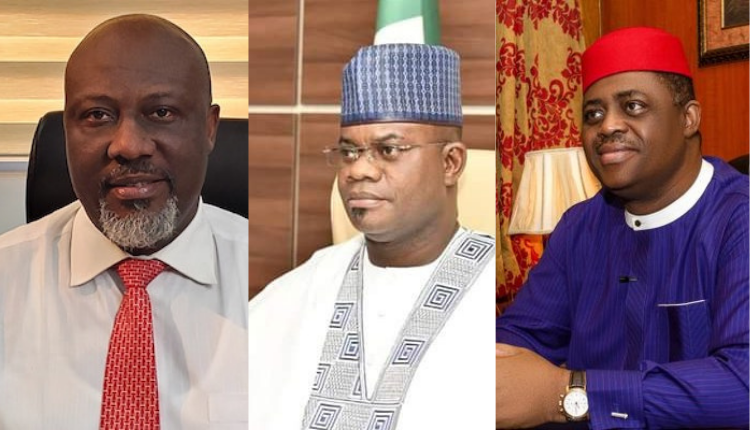
Dino Melaye
Dino Melayeis a Nigerian politician, a former Senator and a member of the 8th Nigerian National Assembly representing Kogi West Senatorial district. He is from Ayetoro Gbede in Ijumu Local Government Area of Kogi State.
On the 16th of December, Melaye, in a viral video that has been shared many times on social media platforms, advised Nigerians and Africans not to accept the use of any COVID-19 vaccines.
“For 100 years now, we could not find a vaccine for cancer. For over 40 years, we are yet to find a vaccine for HIV/AIDS, for over another 100 years research is still going on to find a vaccine for diabetes. How is it possible on earth is it possible that in one year, you find a vaccine for COVID-19?”
“I am calling on African leaders not to allow Africans to be used as guinea pigs by developed nations for their satanic reasons,” he said in the video.
“We say no to the application of any vaccine in Africa. We call on the minister of health of the Federal Republic of Nigeria to immediately discontinue the interaction with those who want to give us vaccine.”
Despite approved vaccines going through guidelines and approval processes by the World Health Organisation (WHO) and the U.S. Center for Disease Control and Prevention (CDC), Melaye had, on numerous occasions on the social media, expressed doubts about the vaccines.
The 47-year-old former Senator said it was impossible to have secured a vaccine for the novel virus given that other diseases like cancer, diabetes and HIV/AIDS still had no vaccines.
He also claimed, without providing evidence, that some people who took that vaccine died within three days.
Countries such as the U.S., Brazil, Russia and the UK have begun administering the vaccines without reporting health incidents.
Melaye had earlier, in a video shared by Instablog, said the vaccines “were killers and the federal government will be held accountable if any vaccine is applied on Nigerians and has negative effects.”
He also stated in April 2020 that 5G technology was evil, a killer that was being used to mobilise flu that had come in the form of coronavirus and would be deployed to kill the human body’s immune system and those with underlying health conditions. These have been found to be untrue.
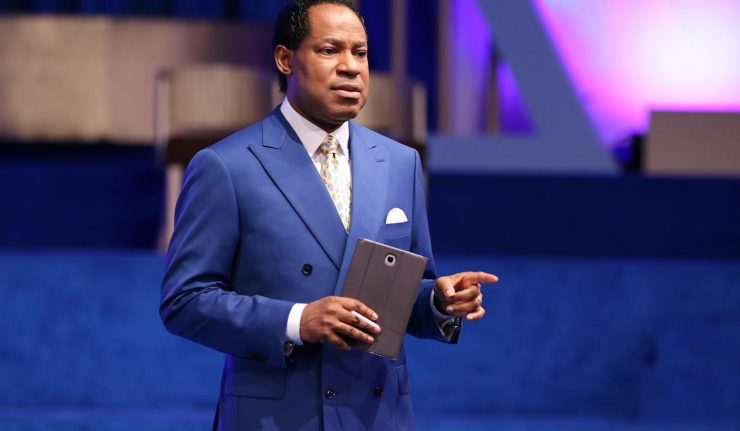
Pastor Chris Oyakhilome
Also, Pastor Chris Oyakhilome, founder of Christ Embassy, also known as LoveWorld Incorporated or Believers’ Loveworld, has also been at the forefront of releasing bogus statements relating to COVID-19 and vaccines.
In April 2020, he had claimed that 5G technology was dangerous to human cells and linked it with the coronavirus outbreak. This has been fact-checked by The ICIR and found to be false.
Pastor Chris Oyakhilome
He also, in a seven-minute video titled ‘The Deep State Has Failed’ published on the Youtube page of Chris Embassy Toronto New York, called the coronavirus outbreak a hoax and said ‘forced vaccine’ for the whole world would not work.
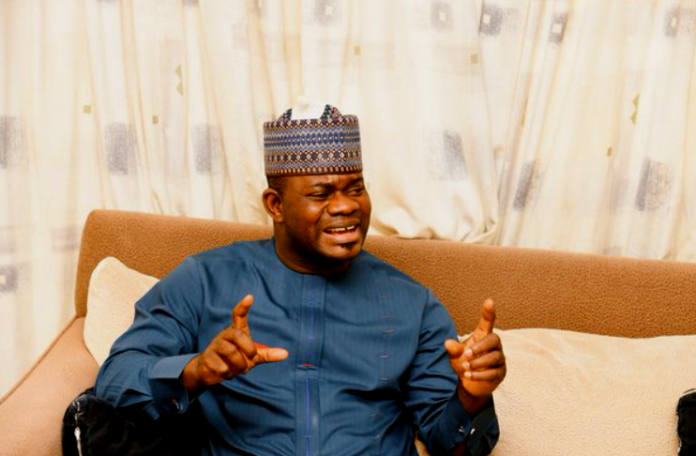
Yahaya Bello
Yahaya Adoza Bello is a Nigerian politician, businessman and the current governor of Kogi State.
Bello has, on numerous occasions, made bogus claims about the coronavirus outbreak and lately discouraged vaccine use in the country.
The governor, in a widely circulating video seen by The ICIR, discouraged supporters present in the gathering from taking vaccines.
The governor, who did not provide any evidence to back up the claim made against COVID-19 vaccine, said: “They want to use the (COVID-19) vaccines to introduce the disease that will kill you and us. God forbid!”
He questioned why COVID-19 vaccines were being produced in less than one year. “There is no vaccine yet for HIV, malaria, cancer and for several diseases that are killing us… We should draw our minds back to what happened in Kano during the polio vaccines that crippled and killed our children. We have learned our lessons.”
“If they say they are taking the vaccines in the public, allow them take their vaccines. Do not say I said you should not take it, but if you want to take it, open your eyes before you take the vaccines,” he said.
Also, Bello, in a Channel’s TV programme last December, questioned the need for Nigeria to procure COVID-19 vaccines.
He also said that no one in Kogi State had tested positive to COVID-19 and that the virus did not exist in the state.
However, the Nigeria Centre for Disease Control (NCDC) has reported five cases of COVID-19 in Kogi, and The ICIR, in an earlier report through Professor Oyewale Tomori, a professor of virology and chairman of Expert Review Committee on COVID-19, refuted the claim of the Kogi State government, stating that he was a danger to the country’s health security.
The Presidential Task Force (PTF) on COVID-19 had also, on the 2nd of February, 2021, warned against travelling to Kogi after classifying the state as ‘high-risk.’
The PTF hinged its decision on the state government’s repeated denial of the existence of the deadly disease and its poor attitude towards report tests and isolation centres.
Also, during the programme, he based his argument on the varying temperatures between Nigeria and other climes, saying that “what is applicable over there may not work in Nigeria”.
“We don’t need to participate in this marketing of COVID-19 vaccine. We should channel the money we want use to buy the vaccines to other things. The Presidential Task Force (PTF) should give the right advice to the president.”
The governor also said “it is better to invest in tackling more deadly diseases that are killing people everyday, not COVID-19 that has 99.9 per cent recovery rate.”
Stella Immanuel
Another notable conspiracy theorist is the United States-based medical doctor Stella Immanuel, who, last year, came up on the social media with claims of discovering the cure for COVID-19.
Immanuel, a medical doctor, in a video that went viral last year, said she had treated over 350 COVID-19 patients, including those with diabetes, high blood pressure (HBP), asthma and the elderly with a combination of hydroxychloroquine, zinc and azithromycin.
“I put them on hydroxychloroquine, zinc and Zithromax and they are all well.”
Immanuel added that she had recorded no casualty, and that she, as well as other medical staff working with her, was administered with the same drug as a preventive measure against contracting the virus.
The ICIR fact-checked her claims and found that the use of hydroxychloroquine, zinc and Zithromax combination as cure for COVID-19 was MISLEADING.
Femi Fani-Kayode
Femi Fani-Kayode, Nigeria’s former aviation minister, who has made claims and retweeted posts from a British conspiracy theorist and author David Icke, is a strong purveyor of unproven claims about coronavirus pandemic and vaccines.
He is a big fan of David Icke, retweeting and sharing claims made on the now-deleted Twitter handle of the conspiracy theorist.
He has also made repeated claims about the Bill and Melinda Gates Foundation’s efforts in tackling the COVID-19 outbreak.
Fani-Kayode had also, on the 1st of May 2020, in a tweet, linked the House of Representative controversial Infectious Diseases Bill to Bill Gates.
Femi Gbajabiamila, speaker of the House of Representatives, had, in May 2020, introduced a bill that sought to replace the Quarantine Act with a Control of Infectious Disease Act.
The bill, which quickly passed first and second reading at the House of Representatives, had 82 clauses which generated controversies among Nigerians.
The contention surrounding the bill was not only regarding its provisions but also the speedy passage it got from the lower chamber.
Fani-Kayode, in a series of tweets on the bill, alleged that the bill was a means to depopulate Africa, sponsored by the Bill and Melinda Gates Foundation.
He said, “I told you that the demons called Bill & Melinda Gates want to kill millions with their evil vaccine. Now a law is secretly being passed in your country that will make it compulsory for you to take a vaccine that will kill you like flies. Am I still just a conspiracy theorist?”
“Only a fool will believe that a man who believes in reducing the world’s population will produce a vaccine that will save the world. Then you say the vaccine is COMPULSORY? If Bill wants to reduce the population of the world let him start with his family and leave Africa alone.
Fani-Kayode had, in an earlier article published on the 1st of April titled ‘COVID-19 And Mark Of The Beast,’ alleged that the virus was a demonic spirit cultivated and manufactured through the introduction and usage of 5G, saying that it was “invoked from the pit of hell.”
He had also on the 29th of March tweeted that coronavirus outbreak was an agenda against former United States President, Donald Trump.
“One of the many objectives of the Illuminati & those that are behind the coronavirus pandemic & the emergence of a New World Order is to get @realDonaldTrump out of power in this year’s pres. election by sparking off a massive recession & crashing the American & world economy,” tweeted Fani-Kayode at the end of March. “They also want as many Americans to die from coronavirus as possible & blame it all on Trump. Despite all their efforts I’ve got news for them: they will fail miserably & @realDonaldTrump will be back in power after the 2020 election.”
The ICIR then sent a message to the former minister to back up his claims, but he did not respond up till the time of filing this report.
Fani-Kayode’s claim that the NCDC Bill was sponsored by the Bill and Melinda Gates Foundation was denied by Paulin Basinga, the foundation’s director of Nigeria Country Office, in a written presentation to the panel. Basinga dismissed the allegation as ‘entirely false’ during a probe launched to investigate the allegation made by the Coalition of United Political Parties that the parliament’s leadership was paid 10m dollars by an international body to foist the bill on the country.
The foundation denied sponsoring the House of Representatives to introduce and pass the Quarantine Act (Repeal and Enactment) Bill 2020 otherwise known as NCDC Bill.
“To be clear, the foundation has not offered any financial incentives to any member of Nigeria’s legislative branch for the passage of legislation nor has it offered any grants to organisations in Nigeria in connection with the same.”
He also, on January 12 this year, shared a 2019 post by Robert O. Young, a US naturopathic practitioner, who surfaced online in Africa with a claim that Microsoft founder, Bill Gates, was planning to depopulate Africa.
Young had, in a 2019 video, suggested that vaccination was a means to depopulate Africa.
Young had said in the clip, “For the purpose of sterilisation and population control, there’s too many people on the planet we need to get rid of. In the words of Bill Gates, at least three billion people need to die.”
The ICIR conducted a fact-check on the viral video on the 28th of January, 2021, and found that Young’s 2019 claim, shared by Fani-Kayode to his more than 900,000 followers on Twitter, was FALSE, as at no time did Bill Gates make the claim about depopulating Africa.
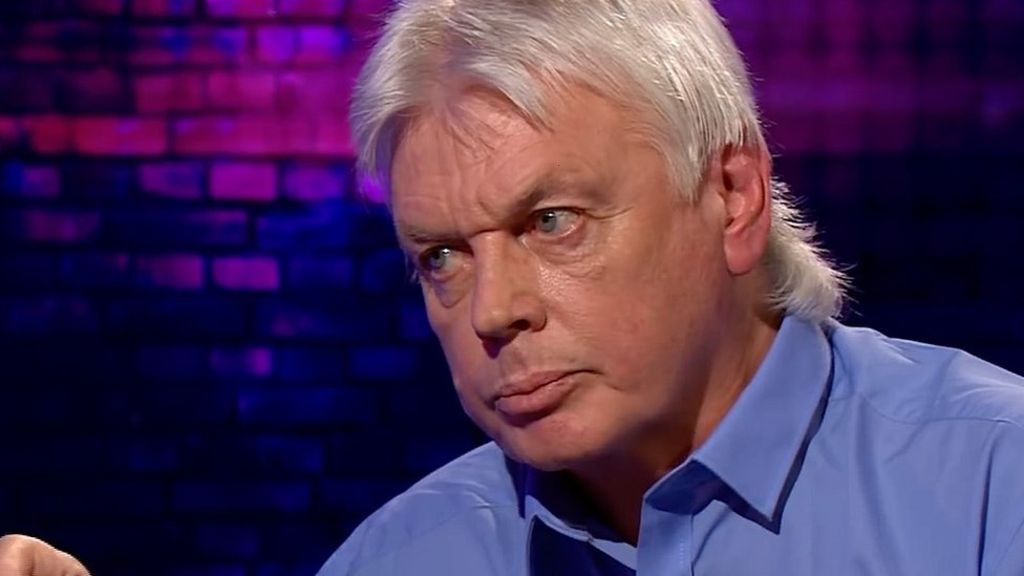
David Icke
According to his Wikipedia profile, David Icke is a former footballer and sports broadcaster.
David Vaughan Icke is a controversial 68-year-old British conspiracy theorist that has been active for over two decades.
Amongst his numerous claims was disputing the explanation provided by the US government regarding the cause of the 9/11 attacks.
After the outbreak of coronavirus, Icke began to make controversial and unproven claims about the virus on several internet platforms.
Icke had, in a May 6, 2020, posted on his website that COVID-19 was a scam.
He had also linked Bill Gates and his wife Melinda, his foundation and Anthony Fauci, an American physician-scientist and immunologist who serves as the director of the United States National Institute of Allergy and Infectious Diseases, with COVID-19 outbreak.
He had in April 2020 claimed in a YouTube video (now deleted) on the London Real channel that there was a link between the coronavirus pandemic and 5G mobile phone network.
The ICIR, in April 2020 fact check, found no link between coronavirus and the fifth-generation technology network.
Icke had also on May 9, 2020, shared on his Twitter handle a link to a 28-minute video titled “Bill Gates’ plan to vaccinate the world.” He uploaded on The Corbett Report Youtube page talks about Bill Gates’ vaccination plan, coronavirus vaccine, and his 2019 10 billion dollars vaccination donation pledge.
Some of the claims posted on his website have been fact-checked here and here and found to be false
He also used his YouTube channel to publish most of his claims, which have now been deleted from the video-sharing platform.
The channel had more than 900,000 subscribers at the time it was removed.
The Google-owned video clip service said it acted after repeatedly warning Icke that he had violated its policies by posting misleading information about the coronavirus pandemic.
David Icke Photo Credit: BBC
Twitter, in November 2020, also indefinitely suspended his account, in what the social media platform said was a sanction for violating its rules regarding coronavirus misinformation.
Facebook has also kicked him off their platform for publishing ‘health misinformation that could cause physical harm.’
PROLONGED conflicts between crop farmers and herders in Nigeria have metamorphosed into a chain of crises that are currently threatening the continued co-existence of over 200 ethnic nationalities making up the country. The ICIR’s Senior Investigative Reporter, in this piece, writes on how three countries in Africa manage their cattle and relationship between herders and crop farmers in their territories, including experts’ advice from the countries on how Nigeria can overcome its current travails.
An unprecedented increase in farmers’ population, driven by a corresponding transformation in farming methods and changing climate, has mainly been responsible for a geometric rise in feuds between crop farmers and herders in Nigeria since the beginning of the century.
The conflicts have led to hundreds of deaths, rustling, and displacements of farmers and herders alike. Innocent people in communities have been at the receiving end of the crisis. The clashes have resulted in ethnic profiling, distrust and division, and they have been compounded by banditry, kidnapping, abduction, terrorism, some of which are offshoots of herders-crop farmers’ conflicts.
These crises recently climaxed into the blockade of food and cattle to the southern part of the country by merchants from the country’s north.
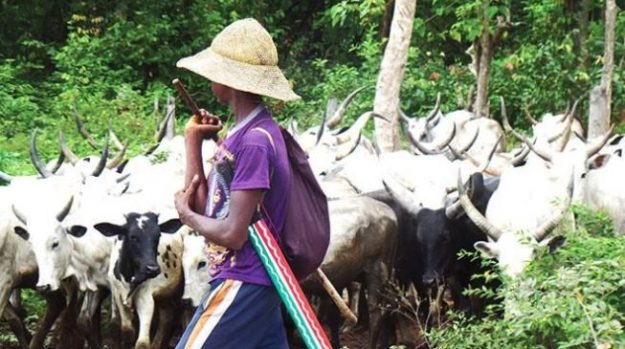
Cattle rearing in Nigeria is done mainly in open fields, farmlands, residential areas, as pastoralists move their livestock wherever they could find grass and water. The practice often results in cattle straying into people’s farms and eating up crops or destroying farms.
What appears as the most ambitious effort by the federal government to address the crisis was the inauguration of National Livestock Transformation Plan in September 2019.
It was designed to make cattle farmers embrace ranching, defined as raising herds of animals on large hectares of land. The government said 100 billion naira would be committed to the initiative, which would run between 2019 and 2028.
With the plan, the federal government would provide 80 percent of the fund, while state governments would make land and remaining 20 percent of the fund available, including other logistics needed for its successful implementation.
The initiative followed similar policies that had been introduced by African countries such as the Ethiopian Livestock Master Plan, Tanzanian Livestock Master Plan and Rwanda Livestock Master Plan.
The programme was inaugurated by the Vice President Yemi Osinbajo at the Gongoshi Grazing Reserve in Mayo-Belwa Local Government Area of Adamawa. It started as a pilot project in seven states namely, Adamawa, Benue, Kaduna, Plateau, Nasarawa, Taraba and Zamfara. Stakeholders in the plan included pastoralists, farmers, private investors and government.
Despite the efforts, crises between crop farmers and herders have worsened in the country.
A similar programme known as RUGA had been designed by the federal government, but it faced stiff opposition from some sections of the country which perceived it as a means of grabbling land for herders at every cost.
The plan suggested that state government and communities allocate a section of their land for pastoralists, so they could rear their animals on the land and live on it. The thinking of the scheme was to keep herders away from people’s farms and other assets that could be destroyed by cattle.
The ICIR reports that though the Fulanis, a major tribe in northern part of Nigeria, are famous for cattle rearing in the country. However, people from other parts of the nation also own significant portions of cattle in the nation.
In Zambia, cattle farmers plant their own crops
Zambia has a unique approach to cattle management. Nkandu Luo, a professor and minister of livestock in Zambia, advised Nigeria to create a ministry of livestock (and fisheries) to end crop farmers and pastoralists’ feuds in the country.
Luo said in a telephone interview with The ICIR that her country had not been experiencing any conflict between crop farmers and herders because apart from her ministry’s constant engagement with the two groups, modern methods of animal farming had been introduced to the farmers.
The minister also said that government always urged crop farmers to have their own cattle, and cattle farmers to plant their own crops.
Prof. Ukandu Luo. Source: Zambiaobserver.com
“I don’t know how your sector is organised, but here in Zambia, we have a particular ministry in charge of agriculture – crop farming– and there is a particular ministry in charge of livestock. For example, I am the minister in charge of livestock and fishery. Then, I have a colleague who is also minister for agriculture. Now, the distinction has made it possible for us to pay attention to details, because, in most countries, the agriculture minister is also responsible for fisheries and livestock.
“When a ministry is too huge, there are things that suffer. What the president here realised was that livestock and fisheries were suffering and he had to separate us. So, we have a distinct ministry for them.”
She added: “My advice is, let the government accord the same equal importance to the ministry of agriculture and that of livestock farming. This is an important precursor to an economic development. It is better to identify them as permanent and separate ministries. The second thing in my recommendation is not to have a line on the crop farming and livestock farming because the two depend on each other. You cannot succeed in livestock if you are not doing crop farming. So, my livestock farmers also do crop farming. And, the other way round, the crop farmers cannot succeed without livestock because some of the products of livestock such as cattle dung, chicken manure also are used in the crop farming. So, there should be seamless line for your policies on both livestock farming and crop farming.”
When told that the majority of herders in Nigeria could not farm because they are pastoralists, she said in Zambia, government recognised the need to transit from an old way of livestock farming to a new way, stressing that cattle grazed openly in her country but were allowed to graze on grazing land only.
According to her, government in Zambia made tanks available in areas where there was no water for livestock so that cows could be comfortable and kept away from people’s farms and homes.
“Zambia realised this a long time ago. Botswana livestock makes good contribution to their GDP. For us here in Zambia, livestock is a very serious agenda,” she stated.
The minister further explained that farmers in Zambia were making money from animal dungs, skins, horns, among others, because the government believed a lot of wealth could be made from livestock farming and was empowering the population with all at its disposal.
Luo had been a minister of health; communication and transport; local government, chiefs and traditional affairs; gender, and higher education in Gambia.
She argued that the creation of livestock ministry in the country enabled her to always send her staff to communities in the country to support farmers in areas they needed assistance, and that she joined them to visit the farmers to ensure that they had shelter for their livestock.
In South Africa, herders and croppers are separated
Similarly, South Africa does not experience farmers-herders clashes, according to Theo de Jager, president of World Farmers Organisation and president of Southern African Agri Initiative.
He blamed the feuds in Nigeria on many things which he said the country and other nations facing similar crises had failed to do.
Theo de Jager. Source: Event.globalandlandscapeforum.org
“I want to say today that these problems, especially in East and West Africa, is partly because we are some 50 years behind on land use management, especially the demarcation of land, respect for property rights or if it is not ownership of property, at least security of 10 years, both for herders and for croppers,” he said.
He noted that land must be commercialised to make them attractive to financial institutions to invest in them.
According to him, the tension between herders and crop farmers in Nigeria was a problem not peculiar only to West Africa but also very common in East Africa, especially in Tanzania, Malawi, northern areas of Mozambique and South Sudan.
He said the reason for such crises was because herders usually had to move their cattle to where the grazing was, and very often, that movement took place through the fields of the farmers.
“As we know in West Africa, as it is in East Africa, very often, it leads to violence and a kind of low intensity warfare between the two. In South Africa, we do not have this similar problem because our land has been divided into farms and many farms do have titles in the communal area. Where we do not have titles,the tribal chiefs manage the land in such a way that the herders and the croppers are separated and that the herders do not need to move their cattle through the fields of the croppers,” he stated.
He urged that government of Africa nations, especially West and East Africa where crop farmers-herders rifts had been common, to adopt property rights or long-term leasing agreement for their land for agricultural purposes as, according to him, agriculture was never a quick back but a long-term investment depending on property rights or long-term lease agreement.
In The Gambia, there are cattle grazing areas
The Gambia has a unique model in cattle management. Ebrima Jallow, president, National Livestock Owners Association of Gambia, said the conflicts between pastoralists and crop farmers in Nigeria had been of great concerns to his country.
In a telephone interview with The ICIR, Jallow said the Nigerian Embassy in The Gambia had contacted him to seek ideas on how to address pastoralists and crop farmers feuds in Nigeria, after it had noted the smooth relationship between crop farmers and herders in his country.
He said in The Gambia, there were cattle grazing areas and every district had its grazing zone.
Asked if there were conflicts between farmers and pastoralists in his country, he said, “Yes, but not much. Usually, due to the sensitisation we carry out with the government and the farmers, people are able to understand how to manage their animals. Again, people try to avoid planting on cattle tracks and cattle grazing areas, and herders too are able to control their animals so they will not disturb farmers.
“When that happens, you will see that there will be no conflict. If the cattle owners do not take care of these animals, leaving them to go eat somebody’s crops is a problem. If the crop farmers also intrude into the animals grazing area, that is a problem. So, here, we embark on a very serious sensitisation, especially at the local communities.”
He said all the six regions in The Gambia reared cattle, but a particular region had more animals than the others.
He said in The Gambia, things were done differently from how they were done in Nigeria, noting that animals would graze around villages during the dry season but not during the rainy season.
President Muhammadu Buhari inspecting his cattle ranch in his home town, Daura, Katsina state. Source: Africanews.com
He explained that the association worked with The Gambia police force to make sure that strayed animals were arrested while their owners would be identified.
“In the Gambia, everywhere, there are animals except the urban area very close to the capital. We invite the agriculture director, the livestock director, regional director and local government. We invite the farmers and we sit down to ensure that everybody knows what they are supposed to do. We all learn from each other. You see the farmers interacting, they are not fighting.”
Jallow challenged governments across Africa to be very focused on governance devoid of clannishness, nepotism and favouritism. “Once you are the head of government, you are in charge of all the people in the state and you should try to make sure that you avoid conflicts there. This is why government of The Gambia is supporting us to go around as one as a farmer group in this country.”
He added: “Conflict is not good in Africa. We said this to your embassy here. What is happening in Nigeria is a concern to us. Farmers and herders need to know what their responsibilities are. The government also needs to know its responsibilities. Killing each other is not what is going to help agriculture in our countries…We are ready to see how our thoughts, our strategy plans and ideas with other African countries that are having difficulties with how to manage their cattle within their own areas will help.”
In The Gambia, which has about 11,000 square metres of land, Jallow said there were nearly 300,000 cattle. He put the country’s population at two million, revealing that agriculture contributed between 30 and 40 percent of the GDP, while livestock made up over 10 percent of agriculture’s contribution to the GDP “because people are more in crops than livestock.”
What reports say
In its report titled ‘Nipping Conflict in the Bud,’ the Food and Agricultural Organisation, (FAO) in partnership with Ministry of Agriculture of Gambia confirmed Jallow’s claim that there had been minimal herders and crop farmers rifts in The Gambia.
“In recent years, there has been an increase in violent conflicts between farmers and herdsmen, often leading to death, displacement, and destruction of property. Such conflicts often start when a herder’s cattle strayed into a farmer’s cropland. Although, The Gambia has not experienced large scale violence between farmers and herdsmen, there have been skirmishes that have often turned violent,” said the report, which was published on 24 January 2021.
Meanwhile, in a report titled ‘Pastoralism and Security in West Africa and the Sahel,’ which was published in April 2019, the United Nations Office in West Africa and the Sahel (UNOWAS) said increased use of firearms in the region had intensified rural conflicts, many of which were caused by herders and crop farmers’ feuds.
“This is particularly the case where farmer-herder conflicts occur on top of other conflicts, where they are compounded by the prevailing insecurity. This has happened in rural areas that have been destabilised by insurgency, war, political or ethnic violence, or banditry. In such situations, state authority is usually weak, dispute resolution mechanisms may have broken down, and weapons are readily available.
“Examples are central and northern Mali, where armed groups have gained access to Libyan weaponry after the overthrow of President Gaddafi in 2011, and in parts of central and northern Nigeria. The proliferation of small arms is a regional issue, which has made traditional conflicts deadlier, fuelling cycles of revenge killings between communities.”
The report noted that pastoralists were both victims and actors in the crises. Hence the feuds are not only with crop farmers, but also occur among herders. That is, herders could fight among themselves, and could have issues with other groups such as miners and fishers whose businesses might clash with herding in the bush. “As pastoralists are mobile, these conflicts can be difficult to contain and spill across borders,” the introductory part of the report stated.
While UNOWAS pointed out that the remaining West Africa and Sahel countries successfully managed the relationship between the two groups, it said Nigeria and Mali could not, as crises continued to rage in both countries.
UNOWAS said in its report that the Fulani group was the largest pastoralists in West Africa and the Sahel, engaging in transhumance – the movement of herders and their livestock from areas of scarcity to available pasture and water. This movement was often driven by climate change, UNOWAS said.
Corpses of over 73 killed in Benue state by suspected herdsmen on New Year day in 2018. Source: Saharareporters
”Local and national politics have a strong influence on the frequency and scale of conflicts involving pastoralists. Where the state tries to accommodate the interests and needs of both farmers and pastoralists, conflict is less likely to occur. If the state shows a strong bias towards one group and fails to be inclusive, or if it neglects all or one section of the rural population, conflicts are more likely to emerge,” it said.
It confirmed that over the last years, Nigeria had had more fatalities in farmer-herder conflicts than the rest of the ECOWAS region combined.
“The proliferation of small arms and light weapons has amplified the number of casualties. Their cumulative death toll currently runs into thousands each year in Nigeria, and curbing widespread impunity remains a challenge.
“Beyond heightened competition for rural resources and space, the situation is aggravated by local politics, frequently along ethno-religious lines. Increased southward movement of pastoralists from northern Nigeria to the southeast and southwest of the country has fuelled new waves of clashes between predominantly Muslim pastoralists and Christian farmers,” the report added.
The most recent official cattle data in Nigeria was from the result of 2011 livestock census that was released in 2016. The National Agricultural Sample Survey showed that the country had an estimated 19.5 million cattle at the time.
In December 2018, Amnesty International reported that 3,600 lives had been lost to herder-crop farmers conflicts in the country. The organisation blamed the conflicts on government’s failure.
Also, the United Nations Sustainable Development Group (UNSDG) said in a report published on its website in December 2020 that more people had been killed in herders- crop farmers feuds in Nigeria than by the Boko Haram insurgency.
Blood, tears and sorrow
The ICIR reported in July 2020 that between 2010 and 2015, Nigeria lost 6,500 citizens, while 62,000 others were displaced from their homelands in 850 recorded violent clashes between herdsmen and crop farmers in the Middle Belt region of the country.
The ICIR had, on February 21, 2021, reported how the Nigerian police invitedfive leaders of Ifon community, Ondo State, over alleged conflict with a herdsman.
Following incessant feuds between farmers and herders in Benue State, Samuel Ortom, Benue State governor, signed the bill seeking the ban on open grazing into law on May 22, 2020. The law angered the herders’ group and led to more attacks months after it was signed.
The state lost over 70 people to a New Year day attack in Logo Local Government Area in 2018. The attack was believed to have been carried out by herdsmen.
Taraba and Benue are states in Nigeria that have been mostly affected by the conflict.
In February 2020, both the South-West and South-East of Nigeria banned open grazing in their regions. The ban followed increasing feuds between pastoralists and crop farmers.
There are arguments in sections of the country that many of the herders causing mayhem are foreigners. In June 2020, the House of Representative urged the Federal Government to blockthe entry of foreign pastoralists into Nigeria.
Fulani settlement set ablaze in Igangan, Ibarapa North Local Government. Source:Naijanews.com
Pastoralists and crop farmers have been at greater losses over the conflicts in recent times. In February 2020, Miyetti Allah Cattle Breeders Association of Nigeria (MACBAN) alleged, through Gidado Siddiki, its South-East chairman, that the group lost four of its members, while over 138 cows belonging to them were missing in clashes between herdsmen and farmers in Anaku and Ifite-Ogwari communities in Ayemelu Local Government Area of Anambra State.
MACBAN had also on June 26, 2018, described the killing of scores of people in Riyom, Barkin Ladi and Jos South local government areas of Plateau State as retaliatory attacks over the killing of 300 cows belonging to its members. Police confirmed 86 dead from the attack.
Governors fight
The ICIR had earlier reported how hostilities arising from herders-farmers crises in Nigeria pitched Rotimi Akeredolu, Ondo State governor, and Bala Mohammed, Bauchi State governor, against each other. Samuel Ortom, Benue State governor, also criticised Mohammed, following the latter’s support for use of AK-47 by herdsmen.
As the challenge lingered, Abdullahi Ganduje, Kano State governor, called for laws banning movement of herders from north to the south.
The rise of Sunday Igboho
Clashes among the farmers and herders brought Sunday Adeyemo, a self-styled freedom fighter, otherwise known as Sunday Igboho, to limelight recently in the South-West of Nigeria.
He swore to evict herdsmen of Fulani extraction from Igangan community in Ibarapa North Local Government Area of Oyo State on January 22, 2021.
Homes and property of the settlers were set ablaze after he left the community, and one person was reportedly killed during the attack.
On Monday February 1, 2021, the activist also stormed some parts of Ogun State, with a view to flushing out killer herders.
Since the death of Funke Olakunrin, daughter of the leader of Afenifere, Yoruba socio-cultural group, tempers have continued to rise against herders’ activities in the region.
Late Olakunrin was approaching Ore Junction area of Ondo State from Akure when she was killed by gunmen on July 12, 2019.
The Nigerian police apprehended her suspected killers in early 2020. They were: Lawal Mazaje, Adamu Adamu, Mohammed Shehu Usman and Auwal Abubakar.
The killing of Ifon monarch, a first-class traditional ruler in the state over a year later, appeared to have further fuelled the fears of unhealthy crop farmer/herder relationship in the state, and by extension, the South-West.
The Nigerian Governors Forum agreed on ranching in February, 2020, but governors in the north are asking for more time to implement it.
As part of efforts to contain proliferation of small arms in the country, President Buhari on March 3, 2021 directed security agencies to shoot anyone found carrying illegal weapon in the country.
AGAINST President Muhammadu Buhari’s call that frontline health workers and strategic leaders take COVID-19 vaccine first, Yahaya Bello, Kogi State governor, has said that he does not need the vaccine.
Bello, in an interview on Channels TV’s ‘Politics Today’ programme on Friday night, said he did not need to take the vaccine because he was 100 percent hale and hearty. He, however, admitted that it was a welcome development for the president to take the vaccine.
“Mr President is the leader of this country. I respect him so high; all of us respect him so much. We love him and he is leading by example. If he needs to take the vaccine and he takes it, it is a welcome development.
“As far as I am concerned, I, as a person, do not need to take vaccine. There is nothing wrong with me, I am hale and hearty. I am 100 per cent healthy. I can show you my medical report. I will not take any vaccine.”
Bello also said that his state was facing other health challenges that were more serious than COVID-19.
“COVID-19 is just a minor aspect of what we are treating or handling in Kogi State. There have been outbreaks of lassa fever and yellow fever and those were handled without making noise about them.
“The last yellow fever outbreak, we vaccinated our people against it, we encouraged them, we educated them and they felt the impact,” he said.
The governor, who also spoke on insecurity in the country, said he was happy with President Buhari’s order to security agencies on getting rid of insurgents across the country.
“I urge every Nigerians to cooperate with the security agencies in ensuring that insurgency is wiped out of the country,“ he said
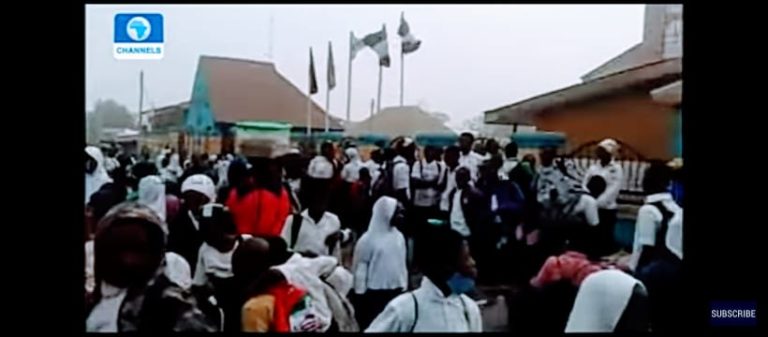
DESPITE government directive, Christian leaders of the Baptist Conference and Evangelical Church Winning All (ECWA) have insisted that they will not allow the use of the Muslim religious veil, otherwise known as hijab, in missionary schools in Kwara State.
The Christian groups made this known in different press conferences to address the directive of the Kwara State government that granted approval for the use of hijab by Muslim students in missionary schools.
Victor Dada, president of Kwara Baptist Conference, while addressing journalists in Ilorin, the state capital, on Thursday, said government acted in contempt of the court.
According to Dada, there was a pending lawsuit before the Supreme Court over the matter which the government ignored.
“We want to warn the government that the step it wants to take by approving the use of Hijab for all public schools and grant-aided schools will lead to an avalanche of reactions, the end of which no one can predict.
“By this move, the state government is saying the Muslims purported rights are superior to that of the Christians,” Dada said.
Dada noted that neither Kwara State government nor the federal government could force the use of hijab in missionary schools.
“We are all bona fide Kwarans and we all have equal rights under the Constitution of the Federal Republic of Nigeria. By this move, Kwara State Government is saying the Muslims purported right is superior to that of the Christians,” Dada added.
Holding a similar position, John Owoeye, chairman, ECWA Ilorin District Church Council, said the government’s position on the matter would “not be tolerated.”
Owoeye said this in a separate press conference held on Friday in Ilorin, stating that it was an infringement on the freedom of religion as guaranteed by the Nigerian Constitution.
“For us, it is an infringement on our freedom of religion as enshrined in the Constitution of Nigeria. Moreover, we are saying that we refuse the enforcement of hijab on our pupils and students by the state government.
“Our schools are church heritage and we shall use every licit means to protect it. We promise to defend our faith and property with the whole of our strength and might,” Owoeye said.
Reacting to the insistence of the Christian groups, Rafiu Ajakaye, chief press secretary to Kwara State governor, told The ICIR that the government was standing on its position about the matter.
“Apart from our earlier position, we do not have any other thing to say about it. All we are calling for is calm,” Ajakaye told The ICIR in a telephone interview.
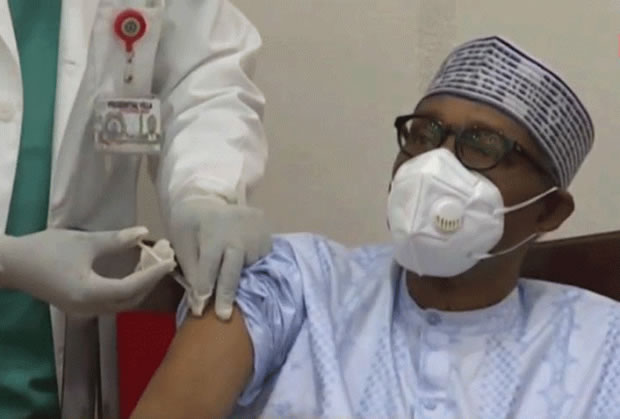
PRESIDENT Muhammadu Buhari and Vice President Yemi Osinbajo were vaccinated against COVID-19 on Saturday morning.
The president, who was vaccinated by his personal physician Suhayb Sanusi, received the shot of the AstraZeneca vaccine at about 11.51 am at a brief ceremony by top government officials at the New Banquet Hall, Presidential Villa, Abuja.
Yemi Osinabjo, Nigeria’s vice president, was also vaccinated by his personal physician Nicholas Audifferen at about 11.57 am.
Vice president Yemi Osinbajo while receiving COVID-19 vaccine
Speaking after the vaccinations, Boss Mustapha, chairman of the Presidential Task Force on COVID-19, said COVID-19 vaccination certificate would soon become a mandatory requirement to travel anywhere in the world.
“Today, Mr President and the Vice-President have equally demonstrated leadership for the Nigerian people to believe in the safety and the efficacy of the vaccines that we have procured.
“Vaccine hesitancy will have to give way to the reality because the truth about it is that very soon, nobody will be able to travel the world unless you produce the certificate that you have been given. I have not confirmed this, but reliably, some countries have started putting restrictions for receiving visitors without a COVID-19 vaccination certificate.
“The word that is going out there on behalf of Mr President is that Nigerians should make themselves available.
“They (vaccines) have been tested, our most respected leadership have received these vaccines this morning, they are safe, they are efficacious and it is for the good and wellbeing of our people.”
Nigeria had, on Tuesday, received 3.9 million doses of AstraZeneca vaccine through the COVAX Facility in partnership with the World Health Organisation (WHO) and the United Nations Children Fund (UNICEF).
The presidency had earlier said that the frontline health workers and strategic leaders would be first administered the vaccine before persons 50 years and above- with priority for people with co-morbidities.
The first shot of the vaccine was given to Cyprian Ngong, a medical doctor at the National Hospital, Abuja, shortly after the country commenced COVID-19 vaccination with frontline health workers in Abuja.
Meanwhile, Faisal Shuaib, executive director of the National Primary Health Care Development Agency (NPHCDA), had earlier said that President Muhammadu Buhari, Vice president Yemi Osinbajo and other ‘strategic leaders’ would receive the vaccine on Saturday to increase public confidence in getting vaccinated.
However, Yahaya Bello, Kogi State governor, reportedly said he would not take the vaccine because he was healthy. According to newspaper reports, Bello said on Channels Television’s ‘Politics Today’ on Friday, that “COVID-19 is not our business in Kogi State. We have more pertinent issues and more pertinent matters that we are attending to in Kogi State.” The Punch quoted Bello as saying that “If the Federal Government is gracious enough and give us COVID-19 vaccines, we will equally sensitise our people. People who wish to come and take can come and take, but I am not going to subject the people of Kogi State to vaccines or vaccination and I will not make them the guinea pigs.”
IN 24,238 deals, investors pumped 29.744 billion naira into the equities market this week as against 20.656 billion naira in 24,687 transactions last week, according to the weekly market report released by the Nigerian Stock Exchange (NSE) on Friday.
The report, which covered transactions between 1st and 5th March 2021, showed that Wema Bank, Axamansard and Zenith Bank’s stocks topped the market this week, contributing 43.19 percent to turnover volumes and 18.71 percent to equity value.
The report further showed that the financial services industry, when measured by volume, led the activity chart with 1.633 billion shares estimated at 10.727 billion naira traded in 13,269 deals. The sector, by implication, contributed 78.06 percent and 36.06 percent to total equity turnover volume and value respectively. The consumer goods industry came behind with 92.009 million shares valued at 4.521 billion naira in 4,168 deals. The oil and gas industry followed with a turnover of 91.340 million shares estimated at 10.527 billion naira in 1,471 deals.
Equity Turnover – Monday to Friday
Date
Deals
Turnover
Volume
Turnover
Value (N)
Traded
Stocks
Advanced
Stocks
Declined
Stocks
Unchanged
Stocks
1-Mar-21
4,673
543,986,690
1,888,199,437
104
12
29
63
2-Mar-21
4,470
222,573,570
5,390,312,418
107
18
26
63
3-Mar-21
4,714
244,342,845
4,128,027,466
107
16
30
61
4-Mar-21
5,486
493,172,597
4,722,499,530
106
13
47
46
5-Mar-21
4,895
587,742,048
13,615,384,435
106
20
27
59
Source: NSE
“The NSE All-Share Index and market capitalisation depreciated by 1.18 percent to close the week
at 39,331.61 and N20.578 trillion respectively,” the NSE’s report said. “Similarly, all other indices finished lower with the exception of NSE Industrial Goods and NSE Sovereign Bond Indices which rose by 1.39 percent and 0.07 percent while the NSE ASeM Index closed flat.”
A total of 14 equities appreciated in price during the week, lower than 20 stocks the previous week. On the other hand, 71 equities depreciated in price, lower than 43 equities the previous week. However, 77 equities were unchanged, yet lower than 99 equities recorded the previous week, according to the NSE market report. Top gainers this week included Morison Industries, Skyway Aviation Handling Company, Unity Bank and Beta Glass, among others. On the other hand, decliners included Champion Breweries, Japaul, Ardova and Oando, among others, the report noted.
Top 10 Price Gainers
Company
Open
Close
Gain (N)
% Change
MORISON INDUSTRIES PLC.
0.55
0.66
0.11
20.00
SKYWAY AVIATION HANDLING COMPANY PLC
3.04
3.33
0.29
9.54
UNITY BANK PLC
0.67
0.73
0.06
8.96
BETA GLASS PLC.
50.00
54.00
4.00
8.00
LASACO ASSURANCE PLC.
1.23
1.30
0.07
5.69
BUA CEMENT PLC
72.00
74.75
2.75
3.82
AFRICA PRUDENTIAL PLC
5.75
5.95
0.20
3.48
UNIVERSITY PRESS PLC.
1.18
1.22
0.04
3.39
LEARN AFRICA PLC
1.05
1.08
0.03
2.86
CAP PLC
19.50
20.00
0.50
2.56
Source: NSE
More so, trading in the shares of Union Diagnostic and Clinical Services Plc were suspended on Friday to prevent trading in the shares of the company beyond the effective date of the Scheme of Arrangement between Union Diagnostic and Cedar Advisory Partners Limited and for determining the shareholders whose names were in the register of members on the effective date.
“The terms of the scheme included the transfer of the all issued and fully paid up ordinary shares of 50 kobo each in Union Diagnostic held by the Scheme Shareholders to Cedar Advisory Partners Limited. The company’s shareholders approved the scheme at a court-ordered meeting held on
25 January 2021,” the report further said.
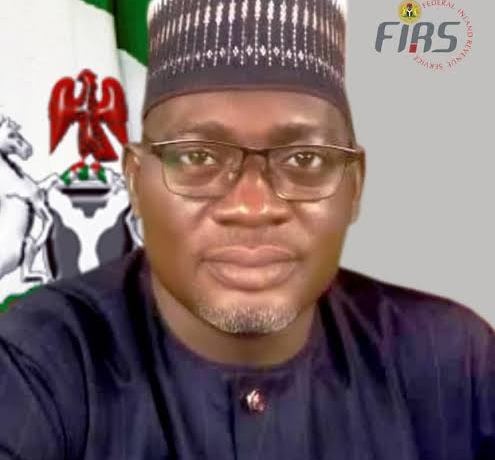
THE Federal Inland Revenue Service (FIRS) has pegged 5.9 trillion naira as its revenue projection for 2021.
Mohammed Nami, FIRS chairman, made this disclosure on Wednesday while defending the agency’s 2021 budget before the House of Representatives Committee on Finance, led by James Falake.
Nami said out of the proposed figure, the non-oil and oil components were expected to generate 4.26 trillion naira and 1.64 trillion naira respectively.
He, however, put the cost of collecting the projected revenue at 289.25 billion naira as against 180.76 billion naira in 2020.
“Out of the proposed expenditure of 289.25 billion naira across the three expenditure heads, the sum of 147.08 billion naira and 94.97 billion naira are to be expended on personnel and overhead costs against 2020 budgeted sum of 97.36 billion naira and 43.64 billion naira respectively,” he said.
“Also, the sum of 47.19 billion naira is estimated to be expended on capital items against the budgeted sum of 27.80 billion naira in 2020. The sum is to cater for on-going and new projects for effective revenue drive.”
Review of the FIRS revenue projections in five years
2020
The agency had, in 2020, projected the revenue that would accrue to the federation at 6.06 trillion naira. The breakdown of the projected revenue revealed that 1.56 trillion naira would be generated from oil revenue and 4.5 trillion naira from non-oil revenue for the year.
The sum of 446 billion naira was expected to be made from stamp duties through the introduction of flagship tax of 1 percent on total contract sum being awarded across the country. It was to be paid by service providers/contractors while the statutory Value Added Tax (VAT) of 7.5 percent would be borne by consumers.
But the agency could only generate 4.6 trillion naira, according to a statement by Abdullahi Ahmad, FIRS director of communications and liaison, in January 2020.
The agency said the near 100 percent feat was exceptional when placed against the backdrop of the economic impact of the coronavirus outbreak; the global decline of crude oil prices; business disruptions and lootings during the #ENDSARS protests; tax waivers granted to ease the impact of the COVID-19 lockdown; tax exemptions granted to small companies in the 2019 Finance Act, and insecurity in some parts of the country.
It said crude oil, which used to contribute over 50 percent in tax returns through the petroleum profits tax in previous years, accounted for only 30.6 percent of the total revenue generated in 2020.
The agency had generated a total sum of about 5 trillion naira in 2019, which fell short of its projected revenue collection of about 8.8 trillion naira, thus posting a shortfall of about 3.8 trillion naira for the year.
2018
The FIRS broke Nigeria’s tax collection history with a total collection of 5.32 trillion naira at the end of 2018.
It was the agency’s highest revenue prior to 2019. A closer figure was recorded in 2012 at 5.07 trillion naira, but with persistent target shortfalls since 2015.
Tunde Fowler, the then executive chairman of the agency, had said the oil component generated 2.467 trillion naira (46.38 percent), while the non-oil component was 2.852 trillion naira (53.62 percent).
2017
The agency announced that it collected a total sum of 4.03tn naira in the 2017 fiscal year.
The collection represented 82.38 percent of the government’s target of 4.89tn naira for that year.
The revenue of 4.03 trillion naira was, however, N730bn more than the 2016 total collection figure of 3.3 trillion naira.
An analysis of the collection performance indicated that taxes from non-oil sources accounted for 63 percent, while oil taxes accounted for 37 percent of the total collection.
Stamp duty recorded the most increase in performance with 94 percent during the 2017 fiscal period.
2016
The agency proposed a revenue target of 4.957 trillion naira for 2016.
The projection was expected to largely depend on the non-oil sector of the economy, with value-added tax expected to have accounted for 2 trillion naira, representing 40.35 percent of the total target.
While corporate income tax was expected to account for 1.877 trillion naira, representing 37.87 percent of the target.
However, the agency was able to collect 3.303 trillion naira, owing to the crash in the global price of crude oil. Oil prices dropped to less than 50 dollars a barrel for over nine months. The value of stocks on the Nigerian Stock Exchange (NSE) fell and purchasing power was slim. Nigeria economy also fell into a recession.
THE military authorities have arrested a soldier and his girlfriend who supply uniforms and ammunition to bandits in Zamfara State.
Bashir Muhammad Maru, Zamfara State deputy chief of staff, disclosed this during a press briefing at the State Government House, Gusau, on Friday.
“Another issue of topical importance is the recent arrest by the military of an Army officer and his girlfriend who are engaged in assisting bandits with military uniforms and ammunition in active connivance with other saboteurs.
“This arrest was only made possible through community-driven intelligence,” Maru said.
He noted that the state government was awaiting the military’s action regarding the arrest, stressing that the incident confirmed the state government’s position that there were bad eggs in the military.
Maru further stated that until the system was cleared of the bad eggs, it would be difficult to defeat banditry in the Zamfara State.
During the recent abduction of about 300 schoolgirls in the Janzebe area of the state, some victims had said that the bandits were dressed in military uniforms.
Also, during the abduction of some persons and school children in Niger State, eyewitnesses had also said that the criminals, who took the victims into the bush, came in military uniforms.
Earlier in January, Bello Matawalle, Zamfara governor , had also accused some traditional rulers in the state of aiding banditry through illegal activities.
Mohammed Yerima, spokesperson of the Nigerian Army, was contacted by The ICIR to confirm the arrest and mention the name of the officer. However, he said it was a defence operation and he was awaiting instruction to comment or make a statement on it.
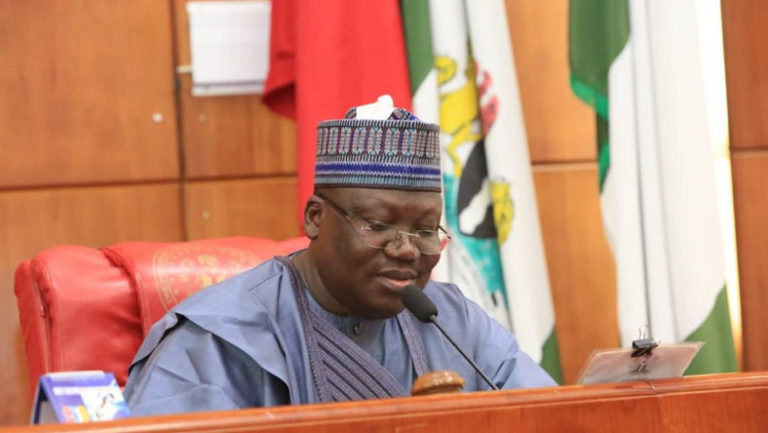
AHMED Lawan, Nigerian’s Senate president, has blamed the activities of drug dealers and barons for worsening insecurity in the country.
He stated this when he hosted Buba Marwa, chairman of the National Drug Law Enforcement Agency (NDLEA), in Abuja, on Thursday.
According to him, drug barons provided funds and ammunition to insurgent groups such as Boko Haram, bandits, kidnappers and other groups terrorising the country.
While calling for collaborative efforts among all security agencies to enhance border security, Lawan decried the rate of drug abuses among youths.
“Drug peddlers pass their drugs through Nigeria – cannabis, heroin and possibly even cocaine. We believe that this has to stop because the proceeds of such activities fund terrorism and banditry. You wonder how the bandits have RPGs and these massive arms that they have. Definitely, these are some ammunition provided by some barons, not the bandits themselves,” he said.
“So, we need to ensure that this transit role that Nigerians plays is addressed properly. And here we have to approach this through multi-sectoral efforts – the Customs, Immigration Service, our security agencies, and, in fact, the Federal Airports Authority of Nigeria (FAAN), and our seaports.
“Of course, this is not going to be easy, but we have to be steadfast and we should do whatever is possible with the limited resources we have to make things better. We also believe that the drug addiction level in Nigeria is so bad that we are losing our youths to drug addiction.”
He noted that terrorists, insurgents, bandits and almost all the criminals often took drugs to enhance their courage while undertaking their illicit activities, stressing that there was a need “for us to step up our work on preventing our youths from taking the drugs, and that requires a lot of multi-dimensional efforts because some may be due to lack of employment, some illiteracy, and poverty generally.”
“These are some of the root causes. Somebody, out of frustration, is recruited to join. And, therefore, this is also something that the National Assembly has been trying hard to ensure that the economy of Nigeria provides for everyone – that we have an all-inclusive economy bringing up those who are down. And I believe that this is one way that we have to continue to deal with this scourge.
“I also believe that we have to go on advocacy to our schools and institutions, and why not, even include in our curricula the issue of drugs, so that right from primary school up to secondary school level, our students should be able to understand the dangers of taking drugs.
“I believe that this is one incentive to criminality like you have just pointed out. So, it is a huge responsibility placed on your shoulders, but you are not going to walk it alone, we are going to walk it with you. I want to urge you that you get across to other agencies of government – like the Immigration Service, Customs, Airports Authority and SSS. And the decay that you might have found is probably because the agency has not been able to have a better structure that will enable it to fight drug trafficking and even addiction of the 21st century,” Lawan said.
He promised that the National Assembly would give the NDLEA the necessary support to ensure that it properly discharged its duties and mandate to the people.
He also called for a complete overhaul of the NDLEA in a bid to empower it to rise to the occasion of clamping down on the criminal activities of drug traffickers operating in the country.
“The National Assembly members are almost on daily interaction with our constituents and we know the very debilitating impact of drug abuse in our various communities. You have rightly said that almost every community in this country suffers from drug addiction. So, we are very mindful of what is happening.
“I believe that this agency needs restructuring. Now that you have taken over, we should go the whole haul to restructure the agency, not piecemeal touches, because we need to get it right. My personal opinion is that NDLEA should be in the league of EFCC, ICPC, and therefore, the kind of support that those two agencies I mentioned receive, you should receive something like that, in addition to many other things that you should be supported with.
“So, the National Assembly will definitely work with you. We will partner with you, and will ensure that we do our best to give you the kind of support that will enable you properly to discharge your mandate.”