Home Blog Page 1868

How FIRS plans to meet N5.9trn revenue projection in 2021

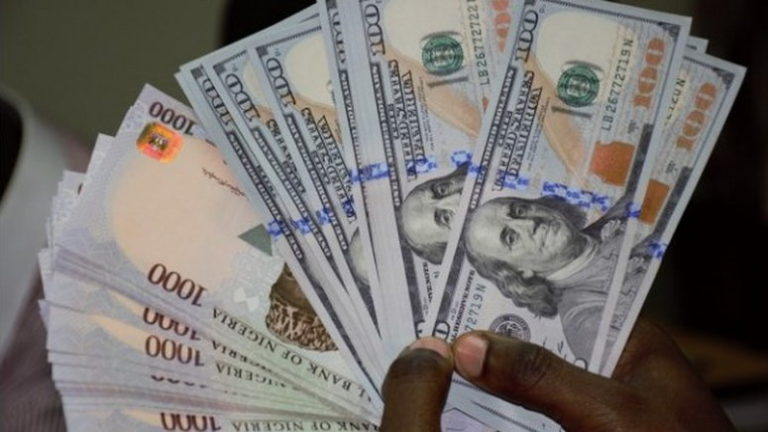
THE Federal Inland Revenue Service (FIRS) has pegged 5.9 trillion naira as its revenue projection for 2021.

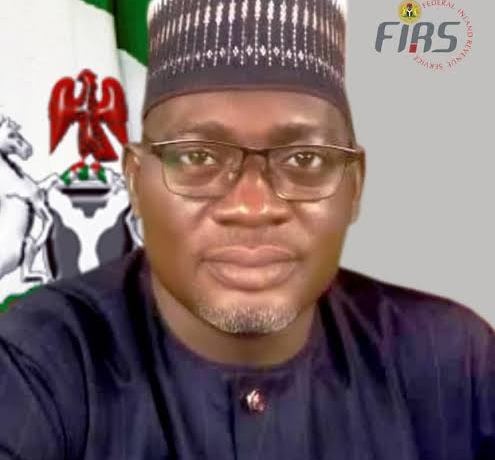
Mohammed Nami, FIRS chairman, made this disclosure on Wednesday while defending the agency’s 2021 budget before the House of Representatives Committee on Finance, led by James Falake.

Nami said out of the proposed figure, the non-oil and oil components were expected to generate 4.26 trillion naira and 1.64 trillion naira respectively.

He, however, put the cost of collecting the projected revenue at 289.25 billion naira as against 180.76 billion naira in 2020.

“Out of the proposed expenditure of 289.25 billion naira across the three expenditure heads, the sum of 147.08 billion naira and 94.97 billion naira are to be expended on personnel and overhead costs against 2020 budgeted sum of 97.36 billion naira and 43.64 billion naira respectively,” he said.

“Also, the sum of 47.19 billion naira is estimated to be expended on capital items against the budgeted sum of 27.80 billion naira in 2020. The sum is to cater for on-going and new projects for effective revenue drive.”

Review of the FIRS revenue projections in five years

2020

The agency had, in 2020, projected the revenue that would accrue to the federation at 6.06 trillion naira. The breakdown of the projected revenue revealed that 1.56 trillion naira would be generated from oil revenue and 4.5 trillion naira from non-oil revenue for the year.

Read AlsoStop mounting pressure on agencies to meet revenue targets, LCCI urges FG

The sum of 446 billion naira was expected to be made from stamp duties through the introduction of flagship tax of 1 percent on total contract sum being awarded across the country. It was to be paid by service providers/contractors while the statutory Value Added Tax (VAT) of 7.5 percent would be borne by consumers.

But the agency could only generate 4.6 trillion naira, according to a statement by Abdullahi Ahmad, FIRS director of communications and liaison, in January 2020.

The agency said the near 100 percent feat was exceptional when placed against the backdrop of the economic impact of the coronavirus outbreak; the global decline of crude oil prices; business disruptions and lootings during the #ENDSARS protests; tax waivers granted to ease the impact of the COVID-19 lockdown; tax exemptions granted to small companies in the 2019 Finance Act, and insecurity in some parts of the country.

It said crude oil, which used to contribute over 50 percent in tax returns through the petroleum profits tax in previous years, accounted for only 30.6 percent of the total revenue generated in 2020.

FIRS-YEARLY-REVENUE-PROJECTIONS-AND-GENERATIONS-FROM-2016-2020.

2019

The agency had generated a total sum of about 5 trillion naira  in 2019, which fell short of its projected revenue collection of about 8.8 trillion naira, thus posting a shortfall of about 3.8 trillion naira for the year.

2018

The FIRS broke Nigeria’s tax collection history with a total collection of 5.32 trillion naira at the end of 2018.

It was the agency’s  highest revenue prior to 2019. A closer figure was recorded in 2012 at 5.07 trillion naira, but with persistent target shortfalls since 2015.

Ex-FIRS boss Fowler, Buratai make list of politically exposed Nigerians who own properties in Dubai

Tunde Fowler, the then executive chairman of the agency, had said the oil component generated 2.467 trillion naira (46.38 percent), while the non-oil component was 2.852 trillion naira (53.62 percent).

2017

The agency announced that it collected a total sum of 4.03tn naira in the 2017 fiscal year.

The collection represented 82.38 percent of the government’s target of 4.89tn naira  for that year.

The revenue of 4.03 trillion naira  was, however, N730bn more than the 2016 total collection figure of 3.3 trillion naira.

An analysis of the collection performance indicated that taxes from non-oil sources accounted for 63 percent, while oil taxes accounted for 37 percent of the total collection.

Stamp duty recorded the most increase in performance with 94 percent during the 2017 fiscal period.

2016

The agency proposed a revenue target of 4.957 trillion naira for 2016.

The projection was expected to largely depend on the non-oil sector of the economy, with value-added tax expected to have accounted for 2 trillion naira, representing 40.35 percent of the total target.

While corporate income tax was expected to account for 1.877 trillion naira, representing 37.87 percent of the target.

However, the agency was able to collect  3.303 trillion naira, owing to the crash in the global price of crude oil. Oil prices dropped to less than 50 dollars a barrel for over nine months. The value of stocks on the Nigerian Stock Exchange (NSE) fell and purchasing power was slim. Nigeria economy also fell into a recession.
Military arrest soldier who supplies uniforms, ammunition to bandits

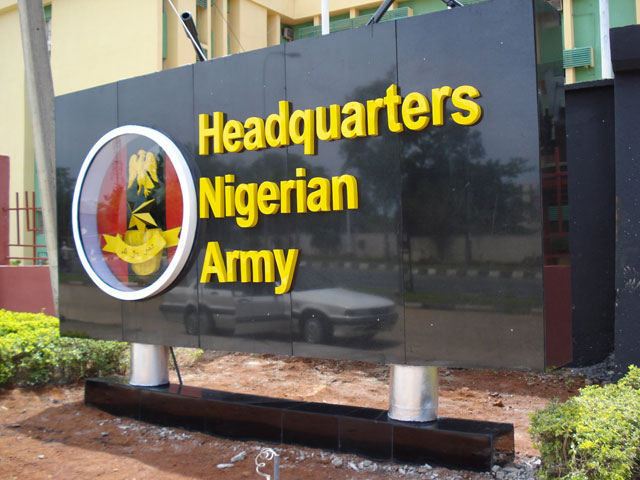
THE military authorities have arrested a soldier and his girlfriend who supply uniforms and ammunition to bandits in Zamfara State.

Bashir Muhammad Maru, Zamfara State deputy chief of staff, disclosed this during a press briefing at the State Government House, Gusau, on Friday.

“Another issue of topical importance is the recent arrest by the military of an Army officer and his girlfriend who are engaged in assisting bandits with military uniforms and ammunition in active connivance with other saboteurs.

“This arrest was only made possible through community-driven intelligence,” Maru said.


Read Also:


He noted that the state government was awaiting the military’s action regarding the arrest, stressing that the incident confirmed the state government’s position that there were bad eggs in the military.

Maru further stated that until the system was cleared of the bad eggs, it would be difficult to defeat banditry in the Zamfara State.

During the recent abduction of about 300 schoolgirls in the Janzebe area of the state, some victims had said that the bandits were dressed in military uniforms.

Also, during the abduction of some persons and school children in Niger State, eyewitnesses had also said that the criminals, who took the victims into the bush, came in military uniforms.

Earlier in January, Bello Matawalle,  Zamfara governor , had also accused some traditional rulers in the state of aiding banditry through illegal activities.

Mohammed Yerima, spokesperson of the Nigerian Army, was contacted by The ICIR to confirm the arrest and mention the name of the officer. However, he said it was a defence operation and he was awaiting instruction to comment or make a statement on it.

Senate president blames ‘drug barons’ for worsening insecurity in Nigeria

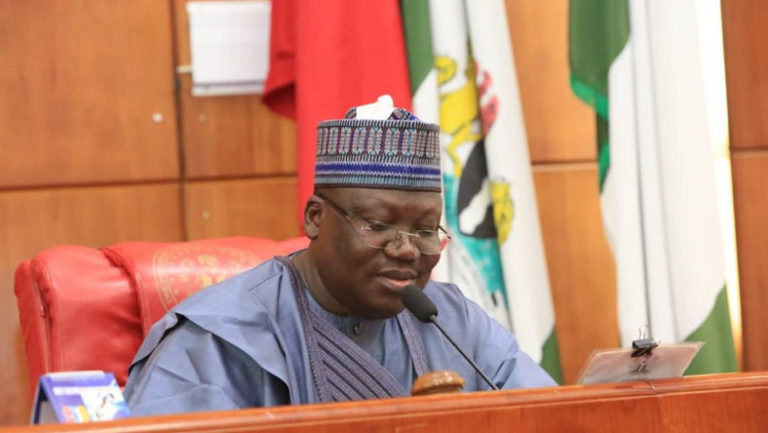
AHMED Lawan, Nigerian’s Senate president, has blamed the activities of drug dealers and barons for worsening insecurity in the country.

He stated this when he hosted Buba Marwa, chairman of the National Drug Law Enforcement Agency (NDLEA), in Abuja, on Thursday.

According to him, drug barons provided funds and ammunition to insurgent groups such as Boko Haram, bandits, kidnappers and other groups terrorising the country.

While calling for collaborative efforts among all security agencies to enhance border security, Lawan decried the rate of drug abuses among youths.

“Drug peddlers pass their drugs through Nigeria – cannabis, heroin and possibly even cocaine. We believe that this has to stop because the proceeds of such activities fund terrorism and banditry. You wonder how the bandits have RPGs and these massive arms that they have. Definitely, these are some ammunition provided by some barons, not the bandits themselves,” he said.

“So, we need to ensure that this transit role that Nigerians plays is addressed properly. And here we have to approach this through multi-sectoral efforts – the Customs, Immigration Service, our security agencies, and, in fact, the Federal Airports Authority of Nigeria (FAAN), and our seaports.

“Of course, this is not going to be easy, but we have to be steadfast and we should do whatever is possible with the limited resources we have to make things better. We also believe that the drug addiction level in Nigeria is so bad that we are losing our youths to drug addiction.”

He noted that terrorists, insurgents,  bandits and almost all the criminals often took drugs to enhance their courage while undertaking their illicit activities, stressing that there was a need “for us to step up our work on preventing our youths from taking the drugs, and that requires a lot of multi-dimensional efforts because some may be due to lack of employment, some illiteracy, and poverty generally.”

“These are some of the root causes. Somebody, out of frustration, is recruited to join. And, therefore, this is also something that the National Assembly has been trying hard to ensure that the economy of Nigeria provides for everyone – that we have an all-inclusive economy bringing up those who are down. And I believe that this is one way that we have to continue to deal with this scourge.

Read AlsoInsecurity: Nigerians becoming more endangered under Buhari, says Northern Elders Forum

“I also believe that we have to go on advocacy to our schools and institutions, and why not, even include in our curricula the issue of drugs, so that right from primary school up to secondary school level, our students should be able to understand the dangers of taking drugs.

“I believe that this is one incentive to criminality like you have just pointed out. So, it is a huge responsibility placed on your shoulders, but you are not going to walk it alone, we are going to walk it with you. I want to urge you that you get across to other agencies of government – like the Immigration Service, Customs, Airports Authority and SSS.  And the decay that you might have found is probably because the agency has not been able to have a better structure that will enable it to fight drug trafficking and even addiction of the 21st century,” Lawan said.

He promised that the National Assembly would give the NDLEA the necessary support to ensure that it properly discharged its duties and mandate to the people.

He also called for a complete overhaul of the NDLEA in a bid to empower it to rise to the occasion of clamping down on the criminal activities of drug traffickers operating in the country.

“The National Assembly members are almost on daily interaction with our constituents and we know the very debilitating impact of drug abuse in our various communities. You have rightly said that almost every community in this country suffers from drug addiction. So, we are very mindful of what is happening.

FG blames failure to prosecute war against Boko Haram on global partners

“I believe that this agency needs restructuring. Now that you have taken over, we should go the whole haul to restructure the agency, not piecemeal touches, because we need to get it right. My personal opinion is that NDLEA should be in the league of EFCC, ICPC, and therefore, the kind of support that those two agencies I mentioned receive, you should receive something like that, in addition to many other things that you should be supported with.

“So, the National Assembly will definitely work with you. We will partner with you, and will ensure that we do our best to give you the kind of support that will enable you properly to discharge your mandate.”

Mother of 3 stabbed to death in Ekiti

MOTUNRAYO Olajide, a 45 -year-old mother of three, has been stabbed to death inside her home located on 2nd Avenue, Aseye Street, Nova, Adebayo area of Ado-Ekiti.

Sunday Abutu,  Ekiti police public relations officer, who confirmed this, said the police were still awaiting the result of the autopsy to carry out investigations.

Abutu said the woman was stabbed in the neck with a sharp object, which pierced her skin and created a deep cut that led to her bleeding to death.

Neighbours confirmed that the woman died in a pool of her blood.

The source said the incident was uncovered when the deceased’s 11-year-old daughter returned from school and met her mother’s lifeless body drenched in blood, raising the alarm to other neighbours.

Read AlsoPolice appeal for calm as gunmen kidnap expatriate in Ekiti

“The people who committed the offence seized the opportunity that the woman was always at home to strike and kill her.

“It was the daughter who returned from school around 5.30 pm and raised the alarm, and when we rushed there, we saw her in the pool of blood with a deep cut in her neck.

“It was the landlords  of the area that quickly ran to the police station to report the matter.”

“The remains of the woman have been deposited in the morgue, while investigations continue,” Abutu said.

“We are awaiting the outcome of the autopsy that would be performed by experts and that will guide us in determining the true cause of the woman’s death.

INVESTIGATION: Behind the N123 Million abandoned Gateway Monument projects in Delta State

“We appeal to residents and neighbours of the deceased who have relevant information that can help our investigation to feel free to provide such,” the police spokesperson further said.

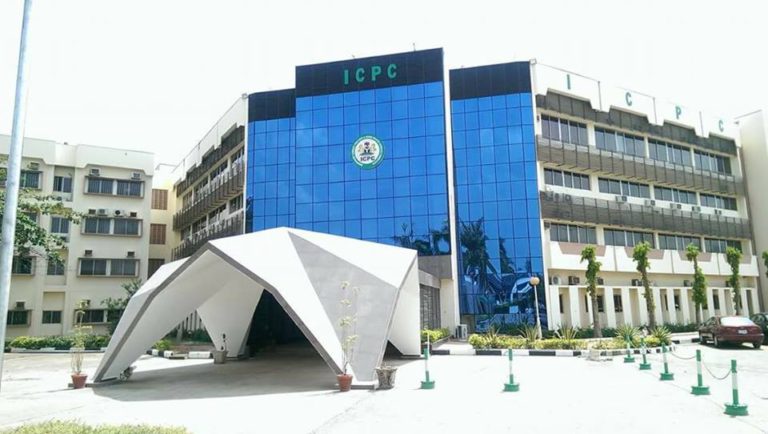
Nigeria loses $10bn to illicit financial flows – ICPC chairman

BOLAJI OWASANOYE, chairman of the Independent Corrupt Practices and Other Related Offences Commission (ICPC), has revealed that Nigeria accounts for 20 percent (about 10 billion dollars) of an estimated 50 billion dollars that Africa loses to illicit financial flows (IFFs).

Owasanoye, a professor and Senior Advocate of Nigeria (SAN), made the disclosure in his welcome remark at a physical and virtual Zoom meeting to review the report of IFFs in relation to tax.

According to the ICPC chairman, “The African Union Illicit Financial Flow Report estimated that Africa is losing nearly $50 billion through profit shifting by multinational corporations and about 20 percent of this figure is from Nigeria alone.”

The ICPC boss explained that taxes played “very strategic role in the nation’s political economy.”

Against this backdrop, he underscored the importance of the meeting, noting that it would afford participants the opportunity to openly discuss on how to effectively use the instrumentality of taxation to curb IFFs through “risk-based approach to monitoring and audit; due process in tax collection; structured tax amnesty framework especially that which is skewed in public interest; data privacy; timely resolution of audits and payment of tax refunds; and intelligence sharing among revenue-generating; regulatory; and law enforcement agencies.”

The ICPC boss also stated that for the contemporary tax man to remain relevant, he must build his capacity in areas of technology management, solution architects and an astute relationship manager.

He, therefore, pointed out that the objective of the meeting was to improve on the awareness on IFFs, especially in the areas of taxation.

In his contribution to the discourse, Muhammad Nani, executive chairman of Federal Inland Revenue Service (FIRS), expressed concerns that IFFs posed a serious threat to the Nigerian economy as the act often robbed the nation of resources needed for development.

Nani declared that tackling IFFs would expand the country’s tax base and improve revenue generation which was required for development.

He consequently pushed for policy reforms that would make it difficult for ‘capital flights’ to occur so that the country would be placed on the path of growth.

Other discussants at the event, who spoke with one accord, identified weak regulatory framework, opacity of financial system and lack of capacity, amongst others, as some of the factors fuelling IFFs.

The discussants again unanimously emphasised the need for capacity building of relevant stakeholders as one of the ways to stamp out illicit flows.

They, therefore, commended ICPC for leveraging its corruption prevention mandate to open a new vista in IFFs discourse in Nigeria.

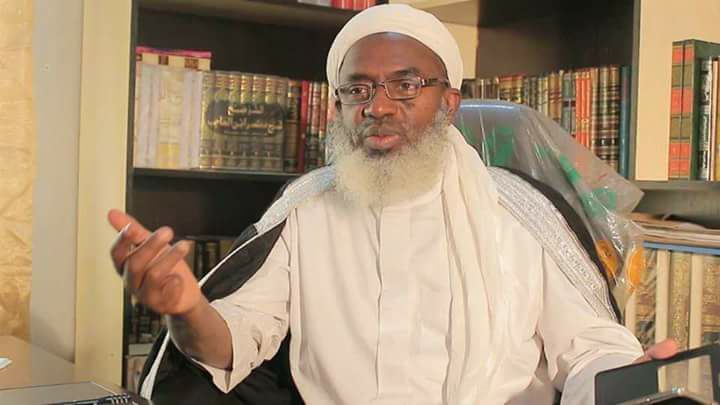
Bandits, like civil war instigators, deserve to be pardoned, says Gumi

ABUBAKAR Gumi, an Islamic scholar, says the federal government should pardon bandits terrorising the northern part of the country because instigators of civil war were pardoned in the past.

Gumi said this on Thursday in Kaduna while responding to a statement credited to the Christian Association of Nigeria (CAN) that bandits should not be forgiven.

The Islamic scholar, who is also a self-acclaimed negotiator between the government and bandits, reiterated his stand that government should grant amnesty to them.

“If the country could pardon coup plotters who committed treasonable offences in the era of military administration, the bandits can as well enjoy similar forgiveness even better under democratic rule.

Read AlsoInsecurity: Crucial actors left out in Nigeria’s South-West deal with herders

“These people in the bush, who have taken arms, they are criminals. I wonder who is not a criminal. Since Nigeria forgave coup plotters, forgave those that killed, even those that instigated civil war, civil war that millions of people died from, I see no reason why we cannot accept their repentance,” Gumi said.

He disclosed that the bandits told him that they were ready to drop their arms if there was an assurance that legal actions would not be taken against them by the government.

Gumi said he found,  during his visit to  Niger State, that the bandits were victims of profiling, who had been arrested and punished for looking like herdsmen.

Against Gumi’s ‘recommendation,’ President Muhammadu Buhari said his administration would continue to deal with insurgents, bandits, kidnappers and other criminals constituting threats to innocent citizens across the country.

Sheikh Gumi: Deodorising evil in search for peace

Buhari, who was represented by Ibrahim Gambari, chief of staff, said this last Thursday, during a joint security meeting of Northern State Governors’ Forum and traditional rulers.

“Criminals are criminals and should be dealt with accordingly, without resorting to ethnic profiling. I have already tasked the new service chiefs to devise new strategies that will end this ugly situation where the lives of our people continue to be threatened by hoodlums and criminals,” he said.

Criminals in the northern part of the country have been responsible for abducting and kidnapping about 400 schoolchildren in Niger and Zamfara states in 2021.

Apart from the abductions, they have also been responsible for various violent activities that have unsettled many communities in the northern part of the country.

AfCFTA: NIDCOM to strengthen partnership with African countries

THE Nigerians in Diaspora Commission (NIDCOM) says it is working to strengthen partnership with other African countries in the face of the African Continental Free Trade Area (AfCFTA).

Abike Dabiri-Erewa, chairman and chief executive officer, NIDCOM, said this while delivering a keynote address at BusinessDay virtual ‘Diaspora Today’ event held on Thursday.

“The Commission intends to focus a lot more on Africa South-South cooperation. We have a huge population even in Africa and with the AfCFTA coming on board, it is an area to focus on,” she said.

Read Also: Caught between legality and diplomacy: Pathetic story of Nigerian traders in Ghana

She noted that Nigerians were excelling everywhere in the world, adding that “70 percent of black doctors in America are Nigerians. I don’t think any country has the number and impact of the Nigerian diaspora anywhere in the world.”

The proposed South-South cooperation is expected to promote knowledge and expertise exchanges through programmes, projects and initiatives that have helped solve specific problems in the region.

10 key facts on African free trade which started on January 1

It will also encourage countries and partners to publish their successful policies, initiatives and activities that have led to the achievement of their development goals.

The AfCFTA is a free trade treaty that is intended to galvanise borderless trade among 54 of the 55 African nations. It was initiated in 2018, but commenced fully on 1st January, 2021. 

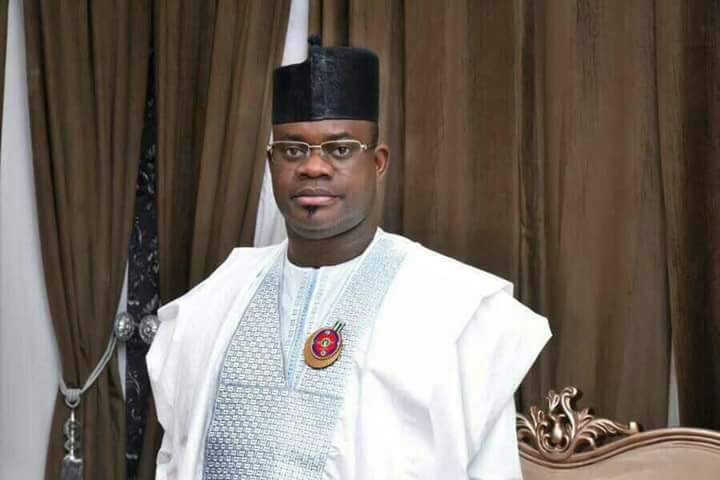
Fraud allegation: Investigate Yahaya Bello now, PDP tells EFCC

THE People’s Democratic Party (PDP) has called on the Economic and Financial Crimes Commission (EFCC) to investigate allegations of fraud against Yahaya Bello, Kogi State Governor.

This is contained in a statement signed by Kola Ologbodiyan, the PDP National Secretary, seen by The ICIR on Thursday.

Anti-Corruption Network, a group in Kogi,  has revealed that the governor is involved in money laundering worth billions of naira.

According to the PDP, the allegations against the governor explains why the people of Kogi state have been impoverished.


Read Also:


PDP also called on Bello to “speak out on allegations of putrid deals including allegedly using certain officials of the Kogi State government as well as private individuals and firms to siphon, launder and cart away billions of naira meant for the development of Kogi State”.

The opposition party challenged Bello to speak to the alleged money laundering of billions of naira in several tranches through the award of contracts to “non-legal persons as well as “inactive companies with no transaction descriptions and due Process certification.

“Also, Gov Yahaya Bello should answer to allegations by the Anti-Corruption Network that he siphoned billions of naira through the award of contracts, without due process, to Southbridge Integrated Services Limited to the tune of N624 million, in addition to five other companies which allegedly got between N22 million N129 million, respectively.

“It is indeed disheartening that such funds were monies meant for infrastructural development, provision of healthcare, education facilities, road construction, payment of salaries and pension and other benefits, which have been deprived the people since the inception of the Bello administration,” the statement read in part.

As enshrined in the 1999 Constitution (as amended), the party further noted that the immunity clause does not prohibit the investigation of a sitting governor or the prosecution of his aides, officials or cronies who were used to steal public funds.

Reacting to the statement, Wilson Uwujaren, spokesperson for the EFCC, told The ICIR that the commission would do its job.

“Nobody told us before we investigate the ones that we have been investigating… so we would do our job,” Uwujaren told The ICIR.

Uzodimma: The governor as a quisling

THE idea of democracy is straightforward. “Democracy is government of the people for the people and by the people,” said Abraham Lincoln, the 16th president of the United States, a definition that borrows heavily from its meaning in Greek – “rule by the (simple) people.”

Lincoln simply amplified the essence of the concept, and his definition presupposes that in a democracy, the interest of the people is preeminent. It superintends over every other interest, including the interests of government officials. But the idea in an ideal democratic setting is for the interest of the people to resonate with the leaders since the ultimate goal is the promotion of the common good.

For this to happen, there must be a constitution, which, among other things, guarantees basic personal and political rights, fair and free elections, and independent courts of law.

In a democracy, the inalienable right of the people to choose, in a free and fair election, those that will allocate their collective values, is sacrosanct and inviolable because the fidelity of a leader to the common good is predicated on the fact that he owes his office to the sovereign will of the people expressed through the ballot box.

But when leaders in a so-called democracy access power not by the sovereign will of the people but through the back door, they are alienated from the people they claim to lead. Their allegiance is to those powerful external forces who brought them to power. Such leaders inevitably become quislings – traitors to the common good.

That is the wretched fate of Imo State today.

When Imolites went to the polls on March 9, 2019 to elect a governor, they voted massively for the candidate of the Peoples Democratic Party (PDP), Hon. Emeka Ihedioha; not Hope Uzodimma, the man now sitting pretty in Douglas House.

Read Also: Why former Imo State governor, Okorocha, was arrested

The Independent National Electoral Commission (INEC) dutifully returned Ihedioha winner and on May 29, 2019, he took the oath of office.

But the sovereign will of the people was whimsically upended on January 14, 2020 when the Supreme Court illogically declared Uzodimma, the man who came a distant fourth, winner of the election in which the same Supreme Court had ruled barely two weeks earlier that he was not even a candidate.

While throwing out the petition of the governorship candidate of the Action Alliance (AA), Uche Nwosu, on December 20, 2019, the apex court ruled that he was not qualified to vie for the election because he doubled as both the candidate of the APC and AA.

In a lead judgment read by Justice Amina Augie, the apex court held that by virtue of double candidature, Nwosu, ab-intio, was not qualified to vie for the office.

In an April 29, 2020 article titled “Hope Uzodimma’s 100 days of hopelessness,” I predicted that the consequences of the Supreme Court’s shenanigan will be dire for the state. “What the country’s apex court did by imposing Hope Uzodimma on a people who rejected him at the polls is to create a hopeless situation for the state. The consequences are better imagined.”

You need to get this background to appreciate what is happening in Imo.

Today, the state is in a sorry state. There is little or no governance. Most workers are not paid their salaries as and when due. Those who are lucky to get paid at all take a cut without any explanation. Beyond all that, Imo is in a state of war, literally and metaphorically.

In the last 13 months since the Supreme Court torpedoed the electoral will of the people and imposed Uzodimma on them as governor, the stories have been horrifying, more so in the last two weeks.

On the invitation of Uzodimma, military fighter jets took to the skies on Thursday, February 18 reminiscent of the civil war years and rained bombs on towns and villages, killing and maiming innocent, law-abiding citizens in the name of hunting for operatives of the Eastern Security Network (ESN), the so-called military wing of the Indigenous Peoples of Biafra (IPOB) led by Nnamdi Kanu.

Suddenly, 51 years after the fratricidal war, Alaigbo has once again become a theatre of war, with videos showing old men, women and children running out of their homes, some of them half-naked and terribly frightened as military jets hovered above because Uzodimma wanted to please those who made him governor.

The only crime the IPOB activists committed was their audacity to resist Fulani bandits occupying the forests in the South East and committing unspeakable atrocities. Yet, no one is waging war against the bandits.

Last week, Uzodimma boasted that “our government decided to invite military to flush out IPOB and their so called ESN,” insisting that his administration will not hearken to the pleas of those calling for the withdrawal of the soldiers.

Nigerian Army contradicts Imo govt, describes Orlu shooting as fake news

He has made all manner of allegations against Igbo youths, accusing them of murdering “four Moslems doing their business in Orlu,” and killing “several policemen and innocent citizens in the area,” without any shred of evidence.

Of course, he has been hailed by those who gave him the power he did not merit. Yet, the same people hailing him as an action governor for decimating his own people are negotiating for not only unconditional amnesty for the Fulani bandits up North but insisting they be paid compensation by the Nigerian state.

Fulani bandits wreaking havoc across the country, we are told by the Northern elite, are not criminals. They are militants – and even freedom fighters – who have the right to carry AK47 riffles, not to protect themselves but to kill Nigerians, if need be, because the herdsmen are aggrieved.

Despite the carnage in the North, none of the governors hailing Uzodimma as a patriot has called for the military to flush out the bandits from their states even when they know where they are in the forests. Instead, they are negotiating and paying them millions of naira as ransom.

This week, Uzodimma went to Aso Rock to brief President Muhammadu Buhari on how well the military operation in Orlu was going.

“I came here (Presidential Villa), pleaded with Mr. President for his support and he sent additional support by sending in police and the military also came in. And that is where we are.

“It was on my invitation that the military came. And I did that because I know the situation was beyond the local arrangement, we needed help. And the help was given to us,” he told journalists after a close-door meeting with Buhari.

That is what quislings do – they collaborate with an enemy occupying force. Uzodimma could invite the military to decimate his own people because he does not owe any allegiance to them. He owes allegiance to those who made him governor.

He knows his power base. It is not Imo State. If he became governor without the people’s vote, why should he care a hoot about them?

While the battle is still raging in Orlu, a new theatre erupted in Owerri between Uzodimma and one of his co-conspirators, Senator Rochas Okorocha, former governor of the state. Discerning political observers know it is a war foretold – natural consequence of a shenanigan taken too far.

In his dissenting judgment when Ihedioha asked the Supreme Court to set aside its January 14, 2020 ruling, Justice Centus Nweze – who was not part of the original seven-member panel that nullified Ihedioha’s election – said most profoundly: “The decision of the Supreme Court in the instant matter will continue to haunt our (Nigeria’s) electoral jurisprudence for a long time to come.”

He was right. But it is not only the electoral jurisprudence the judgment is haunting. It is haunting Imo State terribly. It is also bound to haunt those who orchestrated the injustice. That is called nemesis, which explains the deadly tango between Uzodimma, Okorocha and Ifeanyi Araraume.

Okorocha’s humiliation over the weekend in a state he thought he had conquered is a well-deserved comeuppance. Same for Araraume who was denied the APC senatorial ticket in Okigwe. That is what happens when bootleggers sit back to share the spoils of their political philandering.

Interestingly, Okorocha’s son-in-law, Nwosu, has gone back to the Supreme Court to request a declaration that Uzodimma was not the APC candidate in the 2019 election. He is also praying the apex court to declare Ihedioha winner and mandate the INEC to once again issue him with the certificate of returns.

I wish the Supreme Court justices will appreciate the fact that Imo, a constituent part of Nigeria, will not know peace as long as Uzodimma continues to usurp a position he does not merit. And Nigeria will be worse for it.

Nigeria’s weekly diaspora remittances peak at $30m

THE Central Bank of Nigeria (CBN) says its recent initiatives to boost foreign exchange (FX) in the country are already yielding positive results, as weekly diaspora remittances to Nigeria surged by 500 percent to 30 million dollars, from 5 million dollars.

Godwin Emefiele, CBN governor, disclosed this in Abuja during the recent CBN/Bankers Committee’s initiative for economic growth hosted by the Vanguard.

He said measures put in place by the bank to increase the flow of diaspora remittances into the country using formal channels had helped to reduce the diversion of forex by recalcitrant International Money Transfer Operators (IMTOs), who had thrived from forex arbitrage arrangements, rather than on improving transactions volumes to Nigeria.

“In December 2020, we instructed all international money transfer operators to provide remitters with the option of sending foreign exchange to beneficiaries in Nigeria. Indeed, we have already seen remittances improve from a weekly average of about $5m before this policy, to over $30m per week,” Emefiele noted.

Explainer: Why weekly dollar inflows into Nigeria rose by 500 percent

“It is therefore imperative that we do all we can in 2021 to ensure that we build on the positive momentum and strengthen our efforts at stimulating growth. This will be a year of massive economic recovery and Nigeria must not be left out,” he added.

Speaking on the response by monetary and fiscal authorities to the impact of COVID-19 on key economic variables, the governor explained that measures were put in place to prevent the economy from going into a tailspin.

READ ALSOCBN’s diaspora remittance policy and how Nigerians are reacting

He said the first objective of the bank was to restore stability to the economy by providing assistance to individuals, small and medium enterprises (SMEs) and businesses that had been severely affected by the pandemic, as well as by the lockdown measures.

The event themed ‘How to Overcome the Pitfalls of Recession: Bankers Perspectives on an Enduring National Growth Path’ had both in-venue attendees from the financial sector, as well as virtual participants such as state governors and other dignitaries.