Home Blog Page 1874

Ghana receives AstraZeneca COVID-19 vaccine through COVAX

0

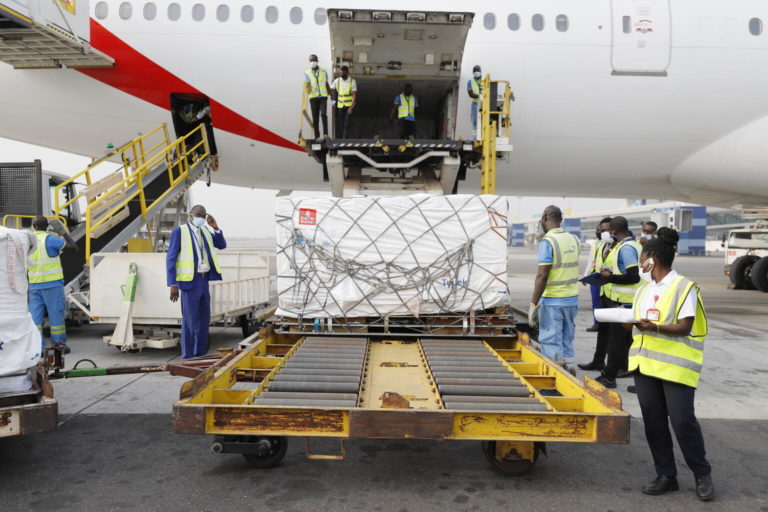
THE Republic of Ghana has received the Oxford-AstraZeneca COVID-19 vaccine from COVAX.

Pascal Soriot, chief executive officer at AstraZeneca, revealed this in a statemen on Wednesday.

He said the delivery marks a major step forward in changing the course of the pandemic globally noting that his company was committed to making “our vaccine available to as many countries as possible and at no profit during the pandemic because no-one is safe until everyone is safe. This delivery is the first of many shipments of the AstraZeneca vaccine expected over the coming weeks and months via COVAX that will take us closer to ensuring broad and equitable access.”

Also, a statement by the World Health Organisation (WHO) confirmed in a series of tweets that the country received 600,000 doses of the vaccine.


COVAX, which is co-led by the World Health Organisation (WHO) and GAVI Alliance, was launched in 2020 to mobilise resources for innovative and equitable access to COVID-19 diagnostics, treatments and vaccines.

Read AlsoNigeria to take delivery of 3.92m doses of AstraZeneca vaccine Tuesday

In a distribution forecast, earlier in the month, a total of 336 million doses were announced to be donated to over 120 countries.

Reacting to the news, Tedros Ghebreyesus, the director-general of WHO, described the development as a first step and a day to celebrate.

The Oxford-AstraZeneca vaccine was approved for use in Nigeria by the National Agency for Food and Drug Administration and Control (NAFDAC) last Thursday.

According to the agency, the evaluation of the vaccine showed that it is effective against the UK variant of the virus-B117- which has been found in Nigeria.

The Nigerian government had said it was expecting 58 million doses of COVID-19 vaccines from COVAX and the African Union AVATT platform.

Osagie Ehanire, minister of health, said COVAX will provide Nigeria with 16 million vaccine doses in the first half of 2020 while African Vaccine Acquisition Task Team (AVATT) will supply over 42 million doses.

Nigeria is unlikely to purchase Covid-19 vaccines except through donor grants

He said the country may receive the doses in 10 days’ time.
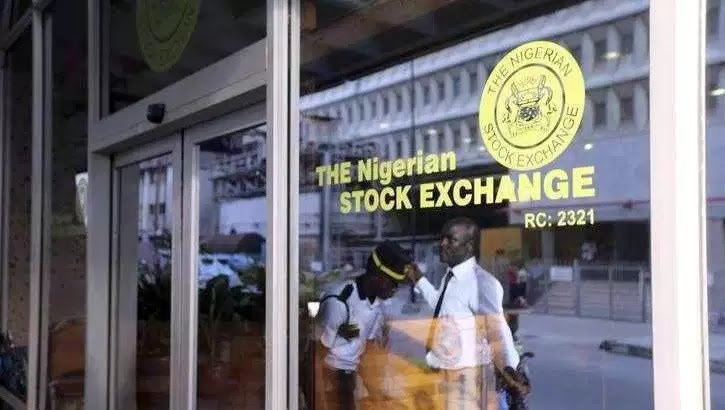
Oando, ABC Transport, Japaul lead top gainers on Wednesday

0

OANDO, ABC Transport, Japaul Gold and Royalex led top gainers in the equities market on Wednesday, with the four gaining an average of 9.33 percent by the close of market.

Oando led the chart, gaining 10 percent, as its share price rose from 3.1 naira to 3.41 naira, according to information shared by the Nigerian Stock Exchange (NSE). The multinational energy company is followed by ABC Transport, whose share price moved from 0.32 naira to 0.35 naira, representing a 9.38 percent gain. Similarly, the share price of Japaul Gold rose 9.23 percent to 0.71 naira, from 0.65 naira reported at the beginning of the market day. Also, Royalex’s share price rose from 0.23 naira to 0.25 naira, indicating 8.70 percent rise in share price.

Read AlsoInvestors pump in N30bn as Wema, Axamansard, Zenith top equities market

On the other hand, LASACO and CHI Plc led the losing chart as their share prices declined by 9.49 percent and 8.33 percent respectively. Oando’s share price moved south to 1.24 naira, from 1.37 naira reported at the start of the market on Wednesday.

NSE: Airtel, Dangote, MRS emerge top gainers on Monday

A total of 5,470 deals were done on Wednesday in deals valued at 7.080 billion naira. Equity capitalisation stood at 21.043 trillion, while the All Share Index moved from 40,164.86 points on Tuesday to 40,221.30 points, representing 0.14 percent increase.

Last week, a total turnover of 1.541 billion shares worth 18.235 billion naira in 22,752 deals was traded by investors on the NSE floor.

Trading in the top three equities such as First Bank Holding Plc, Guaranty Trust Bank Plc and Zenith Bank Plc (measured by volume) accounted for 553.512 million shares valued at 8.931 billion naira in 5,132 deals, contributing 35.92 percent and 48.98 percent to the total equity turnover volume and value respectively.


Senate confirms Bawa as first non-police EFCC chair

0

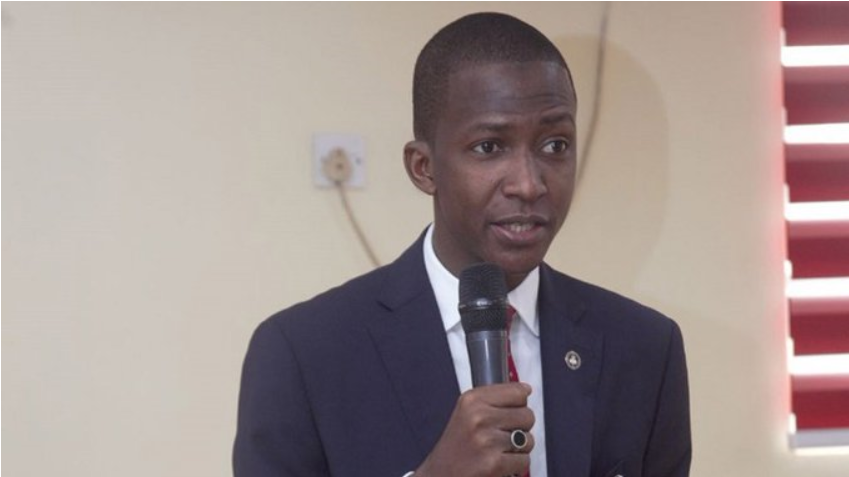
THE Nigerian Senate has confirmed the appointment of 40-year-old Abdulrasheed Bawa as the substantial chairman of the Economic Financial Crimes Commission (EFCC).

Ahmad Lawan, Senate president, made the confirmation on Wednesday after Bawa’s screening.

With his confirmation, Bawa becomes the first chair of the commission who did not serve as an officer of the Nigeria Police Force.

Buhari had, in a letter to the Senate, nominated Bawa as the substantial chairman of the EFCC following the suspension of Ibrahim Magu, former acting chair of the commission.

READ ALSOMagu’s lawyer shocked at nomination of new EFCC chairman

A statement on Bawa’s nomination read that the 40-year-old was “a trained EFCC investigator with vast experience in the investigation and prosecution of advance fee fraud cases, official corruption, bank fraud, money laundering, and other economic crimes.”

Abdulrasheed Bawa
Abdulrasheed Bawa

According to the president, Bawa had undergone several specialised trainings in different parts of the world and was one of the pioneer EFCC Cadet Officers in 2005.

However, there was an allegation of corruption levelled on Bawa during his stint as the head of the Port Harcourt zonal office of the EFCC.

A report published in 2020 said that Bawa was under probe for alleged theft of confiscated proceeds of ill-gotten loot in Port-Harcourt.

After his nomination as the head of the commission in 2021, the EFCC in a statement signed by its spokesperson, Wilson Uwujaren, described the report as ‘illogical.’

“The Commission wishes to state categorically that, Mr Bawa was never arrested or detained over the sale of any assets. As Zonal Head of the Port Harcourt Office of the Commission in 2019, Bawa’s responsibilities did not include the sale of assets as the Commission has a full-fledged Directorate of Assets Forfeiture and Recovery Management, which remit such matters reside,” the statement read in part.

Following his confirmation, Bawa will take over from Mohammed Umar, who has been acting in the commission chairman’s capacity as directed by Buhari.

Cryptocurrencies, other virtual assets are risky for Nigeria – ICPC boss

0

BOLAJI Owasanoye, chairman of the Independent Corrupt Practices and Other Related Offences Commission (ICPC), says virtual assets and cryptocurrencies are risky for Nigeria.

A statement signed by Azuka Ogugua, ICPC spokesperson, quoted Owasanoye as saying this during his presentation to the Senate Committee on Banking, Insurance and Other Financial Institutions on the Central Bank of Nigeria’s decision to stop financial institutions from transacting cryptocurrencies.

“Virtual and cryptocurrencies pose serious legal and law enforcement risks for Nigeria. The current national identification number registration and linking with SIM cards is a pointer to the fact that insurgents, terrorists, kidnappers, bandits, and drug merchants have used the anonymity of unregistered SIM cards to commit their crimes with relative ease,” said Owasanoye.

He noted that anonymity in cryptocurrencies could be used as leverage for terrorism financing and other crimes.

Owasanoye stated that one of the commission’s current investigation on money laundering involving several hundreds of millions of naira had been difficult for the ICPC because the perpetrator used an ICT-aided transfer scheme to cover the tracks of the laundered fund.

The pros, cons of Nigeria’s cryptocurrency ban

Owasonaye further stated that the wallet of the user of the cryptocurrency system only stored information or encrypted links in the blockchain where transaction confirmation could be found,  revealing that over 3.5 billion dollar worth of bitcoin was associated with criminality in 2020.

“This figure includes BTC addresses controlled by dark markets, ransomware actors, hackers, and fraudsters. The bitcoin will ultimately need to be laundered by these criminals, meaning it will make its way into an exchange where it can be converted to fiat currency and transferred to a bank,” the ICPC chairman said.

He stated that the risks involved in the use of virtual assets and cryptocurrencies could pose a threat to finance of government, and could lead to risk of theft and abuse as a medium of payment for hackers and ransomware. He further noted that it could lead to scams, use of crypto assets for Ponzi schemes, tax evasion, and corruption-linked illicit financial flows.

READ ALSO: Cryptocurrency has made naira valueless, claims Sani Musa

However, he noted that if the CBN would ban the use of crypto in Nigeria, there was a need for legal guidance so as to provide a legal force for such directives.

The ICIR had reported the pros and cons associated with the ban earlier placed on the use of cryptocurrencies in Nigeria by the CBN on February 5th, a directive that sparked public outrage on social media.

Like the ICPC boss, the CBN also claimed that crypto could be used to fund terrorism, a crisis that had hit the country before the prevalence of crypto-based transactions. But financial experts have largely disagreed with the government’s position.

10 deaths, 47 injuries reported in Boko Haram Maiduguri attack – Official

0

NO fewer than 10 persons have been confirmed dead from multiple attacks launched by Boko Haram insurgents on Maiduguri, Borno State capital, on Tuesday.

Babagana Zulum, Borno State governor, said in a statement shortly after visits to hospitals in the state on Wednesday morning to assess the level of fatalities.

He said about 47 people sustained various degrees of injuries from the attacks.

The insurgents were said to have launched bombs that landed in crowded residential areas of Maiduguri on Tuesday evening.

Daily Trust had reported that nine boys, who were playing football, were among the casualties.

READ ALSONAF apologises for sharing old pictures depicting victory against Boko Haram

Zulum, who said a similar incident occurred a year ago, described the attack as a new trend that must be stopped.

The governor added that there was a need to deploy appropriate technology in tackling the problem.

“Indeed it is a very sad moment for the people and government of Borno State. About 60 persons were affected, among them, 10 have died. It was as a result of long-distance shots fired by the insurgents. I believe this is a new trend we have to raise up and stop. We experienced a similar incident exactly one year ago,” he said.

“The solution is to deploy an appropriate form of technology, which we will have to work on. I share the pains of all those affected, but we are not just visiting hospitals, we do so much behind the scene in our combined responses to the Boko Haram insurgency, and we will keep making these and more efforts.”

Lagos shuts down 16 substandard pharmacies, patent medicine stores

0

THE Lagos State government has shut down 16 illegal, substandard and unregistered pharmacies and patent medicine stores at Ajegunle and Alaba Suru axis of Ajeromi Ifelodun Local Government Area of the state.

According to Akin Abayomi, state’s commissioner for health, the exercise was carried out by the Taskforce on Counterfeit, Fake Drugs and Unwholesome Processed Foods in the state.

Abayomi said the sealing of the affected pharmacies and patent medicine stores was in accordance with the provisions of Section C34 of the Counterfeit, Fake Drugs and Unwholesome Processed Foods Miscellaneous Provision Act of 1999.

He explained that the affected pharmacies and patent medicine shops were sealed for offences bordering on operations without licenses; engaging unqualified persons to man and dispense drugs to unsuspecting citizens; operating beyond scope through the sale of ethical products, as well as displaying and storing drugs in unconducive environments, thereby compromising the potency of the drugs while rendering them ineffective.

The commissioner, however, stressed that only licensed patent medicine vendors were authorised to sell drug products in their original and approved pack sizes as produced by the manufacturing companies, noting that the law prohibited wholesaling of drugs by patent medicine vendors and retailing of drugs by wholesalers.

READ ALSOEFCC arraigns ex-Lagos Scholarship Board boss for allegedly diverting N127m

While noting that the recent operation of the taskforce was coming on the heels of the war being waged against fake drugs and illegal drug shops, Abayomi warned that the activities of the task force would not only be sustained but intensified until operators in the sector adhered strictly to the provisions of the law on the running of pharmacies and patent medicine shops, in order to safeguard the health of the citizenry.

He stressed that the state government remained committed to halting the ugly trend of having unqualified personnel deal with drugs and would continue to insist that the environment for the dispensation of medical care be suitable for the promotion and maintenance of good health.

Speaking in the same vein, Mosunmola Beckley, director of pharmaceutical services in Lagos State Ministry of Health, said that the state government would not relent in its efforts to stop the inherent dangers associated with the activities of unlicensed pharmaceutical outlets and drug shops.

She added that the task force had been re-energised to intensify the on-going war against fake, expired and substandard drugs being peddled by unlicensed and illegal drug stores.

“This closure is thus part of the government’s renewed efforts to sanitise the drug distribution system and curb proliferation of fake drugs in the state,” she said.

Beckley disclosed that an investigative meeting would be held with owners of the sealed premises to make further inquiries on the status of the sealed premises and notify them of the procedures and appropriate conditions to be met for reopening in line with government regulations.

The enforcement exercise was carried out in collaboration with the National Agency for Food Drug Administration and Control (NAFDAC), Pharmacists’ Council of Nigeria (PCN), Pharmaceutical Society of Nigeria (PSN), Federal Taskforce on Fake Drugs and the police officers from Environmental and Special Offences Unit (Task Force) of Lagos Police Command.

Head of OSIWA in Nigeria launches book, foundation for late daughter

0

UDO JUDE Ilo, head of Nigeria Office for the Open Society Initiative for West Africa (OSIWA), has launched his latest book and a foundation in honour of his late daughter, Natasha Ilo, who died five years ago.

The book is known as ‘Kasie’ while the foundation is named ‘Natasha Ilo (NIO) Foundation.’

Speaking at the event that took place at the Shehu Musa Yar’Adua Centre, Abuja, on Tuesday, Ilo said the foundation and book were borne out of his promise to immortalise his late daughter, Natasha, who died at the age of three.

“I made a promise to my late daughter when we were laying her to rest. I said, “Sweetheart, the world will never forget you.”

He added that the NIO Foundation was created with the mission to help children have access to healthcare, education and also to prevent Sexual and Gender-Based Violence (SGBV).

Former President Goodluck Jonathan, who unveiled the logo of the foundation, said he was excited to be at the event, just as he commended the Ilo family for the gesture of giving back to the community via the foundation.

Jonathan also urged the people to always try to touch lives with whatever God had given to them.

Yemi Osinbajo, Nigeria’s vice president, who graced the event virtually, expressed pleasure at how the Ilo family turned around the grief of losing their daughter.

“I recall having to speak to Jude after the tragic loss and I was at a complete loss of words. I just could not wonder how Jude or Nkem could cope.

“But five years later, they have both done something truly remarkable; they convert the terrible grief to a civic calling. By setting this foundation, they have said that adversity must not be drowned in self-pity.”

In his own speech, Kole Shettima, director of the MacArthur Foundation’s Africa Office, who lauded the initiative by the Ilo family, emphasised the need for people to always come up with a framework that could bring about positive change to the society.

Chika Oduah, Nigerian-American journalist, who read the review of the book, appreciated Ilo for turning his grief into purpose, describing the book as a thoughtful, honest and courageous read.

#ENDSARS: Lagos judicial panel summons IGP over alleged seizure of 25 acres of land

0

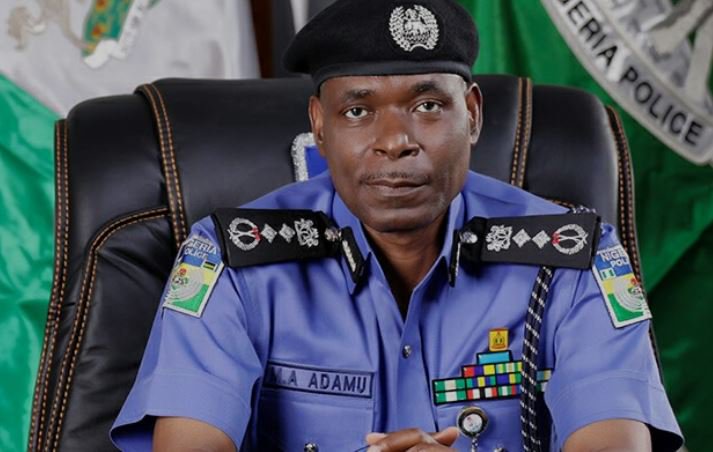
THE Lagos State Judicial Panel of Inquiry and Restitution for Victims of SARS -Related Abuses has issued a summon on Adamu Muhammed, inspector-general of police, over an alleged seizure of 25 acres of land.

The panel, chaired by Doris Okuwobi, issued the summon on Tuesday following the request of a petitioner who said his farmland was seized by the police in 2013.

Adewale Adewuyi, the petitioner who was represented by his legal counsel, Debo Adeleke, said the police took over his farmland located at Age-Mowo near Badagry on December 17, 2013, and destroyed it.

Adeleke noted that the destruction of the petitioner’s farmland led to the deterioration of his health, adding that he now travelled on a stretcher and could no longer afford to feed himself after the incident.

After taking over the petitioner’s farmland, the lawyer said the police failed to comply with an order of the Lagos Federal High Court in 2017 that directed them to release the farmland and pay damages for physical assault.

READ ALSO: Falana to sue police over arrest of #ENDSARS protesters at Lekki Toll Gate

The counsel demanded that the IGP be summoned before the panel so as to direct the state commissioner of police to release the farmland to the petitioner.

“That order is needed, although I am not supposed to say this in a fact-finding panel. We need to summon the IGP so that he can tell the commissioner of police to release this land to us,” Adeleke said.

“They are not using the land, it is just there. Everybody fears the Lagos State Judicial Panel on Restitution. We will be grateful if my lord will issue the order, ” Adeleke stated.

Consequently, Cyril Ejiofor, counsel representing the Nigeria Police, in the case, requested that two weeks be given to get the issue resolved.

Responding to the plea of both counsels, Okuwobi ordered that all parties mentioned in the petition, including the IGP, be served the summons. Okuwibi further adjourned the petition till march 30. 

Recall that the panel was set up in October 2020 to investigate cases of police brutality, especially by officers of the defunct Special Anti Robbery Squad (SARS), who have been accused across many Nigerian states of brutalising and killing innocent citizens.

Oyo reopens Shasha market

0

THE Oyo State government has ordered the reopening of Shasha market, Ibadan.

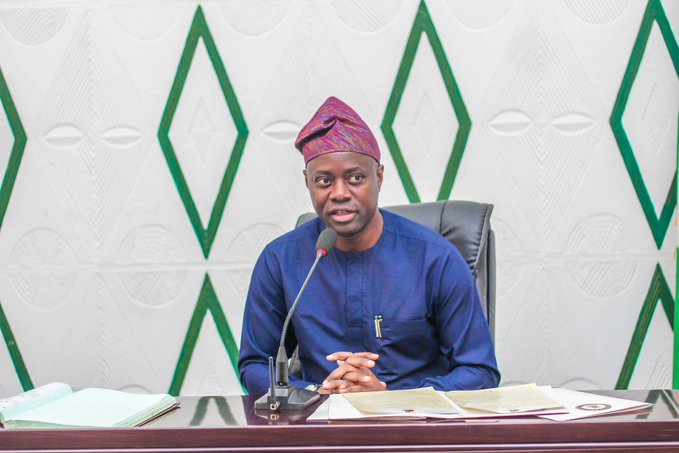
Seyi Makinde, Oyo governor, had directed that the market be shut down and imposed a curfew on its surrounding areas following the violence between Yorubas and Hausas that resulted in the loss of lives and properties in the market two weeks ago.

But during a meeting in Ibadan on Tuesday, the governor ordered that the market be reopened for the traders due to the economic situation.

He also said the state is considering palliative measures for some of the affected traders.

“Considering the economic situation and the peculiarities we have with us, I have heard what you said, and we will immediately reopen the Sasa market. They will bring bulldozer to the market today,” he said.

“When my brother governors visited Seriki Sasa palace, while we were working around, I realised that both the people I saw at Seriki’s place and those I met at Baale’s place were not happy because they have been deprived of doing their job,” he said.

“If you look at Oyo state, even when the COVID-19 was at its peak, I decided not to shut our market places because I know and also explained to the leadership of the country at the national level that in our state, we have people that the proceeds from what they get today will determine if they will eat tomorrow or not.

READ ALSOOld Edo video resurfaces online amidst Hausa, Yoruba clash in Oyo State

“Since peace more or less returned to the market and the community, we have given the go-ahead that the market should be reopened.

“I have also given instructions for some palliative works to be done. I have instructed that solar light be installed in the market so that any time of the day or night, we will see what is going on in the market.

“The situation in our environment, economic activities are really very germane and basic. We have people out there, what they will make today, is what will determine whether they will eat tomorrow or not. And when you shut the place down, and people get hungry and again angry, then you precipitate another set of issues. So closing the market for an extended period of time, is actually not sustainable.”

While ordering that the market annexe of Shasha, established in Iroko during the crisis, be shut, the governor instructed relevant agencies to renovate the market and fix solar lights around the community to enhance security in the area.

“The Iroko market will remain shut. From what we heard, the promoters of that market were actually part of the people causing confusion and causing problems at Shasha market,” he said.

“We will take a long-term view of Iroko market, but in the meantime, it remains shut.”

On the curfew placed on the market, the governor said once he gets the go-ahead from the commissioner of police that peace has returned to the community, the curfew would be lifted.

Despite agitations by Nigerians, Senate confirms ex-service chiefs as ambassadors

0

THE Senate has confirmed former service chiefs as non-career ambassadors despite several agitations by Nigerians.

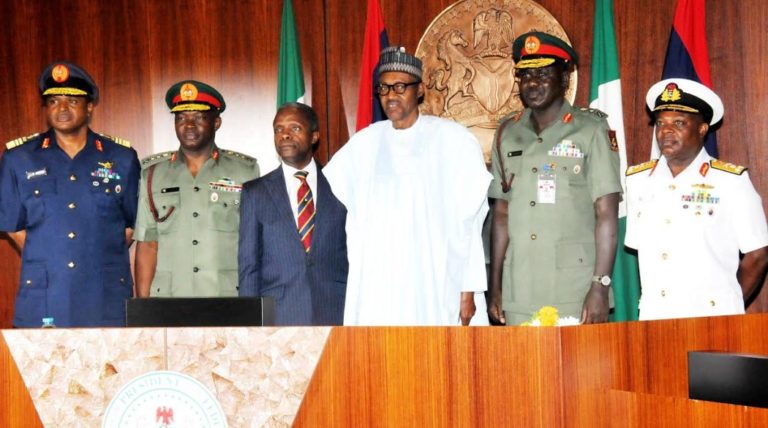
During Tuesday plenary, Ahmad Lawan,  Senate president, confirmed Sadique Abubakar, Muhammad S. Usman, Ibok-Ete Ibas and Tukur Y. Buratai as non-career ambassadors for Nigeria following their nominations by President Muhammadu Buhari.

Their confirmations followed a report by the Senate Committee on Foreign Affairs chaired by Adamu Bulkachuwa, senator representing Bauch North in the Senate.

Before the confirmation, Enyinnaya Abaribe,  Senate minority leader, had questioned the rationale for the consideration of the former service chiefs as non-career ambassadors.

“I wanted the committee chairman to tell us what informed their decision to dismiss the petition against the non-career ambassador-designates,” Abaribe said.

Countering the position of Abaribe, Lawan said although the Senate had called for the removal of the former service chiefs before their resignation, they could still be considered for other positions.

According to Lawan, the Senate’s call for their removal as service chief did not ‘cross over to their nomination.’

“On that call, the nominations cannot be nullified because we said they should be changed,” Lawan stated.

After their nominations, a civil society organisation had written to the National Assembly to reject them as non-career ambassadors.

In a petition signed by Nwazuruahu Shield on behalf of the Leadership and Accountability Initiative, the group said the nomination was insensitive to the “millions of citizens whose lives and livelihoods have been permanently ruptured by the failures of the nominees while in office.”

Chidi Odinkalu, a professor of law and former chairman of the National Human Rights Commission (NHRC), had also said that the nomination of the former service chiefs as ambassadors would not hinder their prosecution by the International Criminal Court (ICC).

“Briefly, this isn’t exactly good news for the former service chiefs. To begin with, to enjoy Sovereign Immunity (that’s what it’s called) in international law), they have to be accredited to another sovereign as Nigeria’s ambassadors. Carrying a diplomatic passport isn’t enough,” Odinkalu said in a series of tweets.