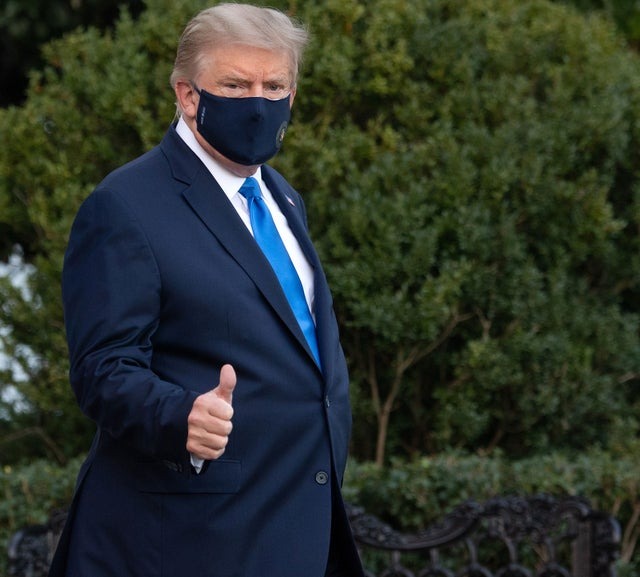
DONALD Trump, former United States president, has been acquitted of inciting Capitol Hill insurrection on January 6.
Trump was freed by the Senate after a charge bordering on incitement of insurrection was brought against him by the House of Representatives.
This is the second time in 14 months the former US president would be acquitted by the Senate.
Trump was acquitted after 43 Republican Senators voted against 57 members on Saturday to free him of any wrongdoing.
That fell short of the two-thirds Democrats needed to convict Trump, who is the only US president to be impeached twice while in office.
Notably, however, seven Republican Senators voted to convict the former president, the largest number of conviction votes from Senators in president’s own party in US history.
This was Trump’s second impeachment trial. His first impeachment trial, which took place in December 2019, was based on his pressuring Ukraine to investigate now President Joe Biden. While he was impeached by the House of Representatives, he was acquitted by the then Republican-dominated Senate. The same drama has also played out in the second impeachment, where the Senate refused to validate the House of Representatives’ impeachment.
The second trial’s outcome was not a surprise as the bar to convict Trump would have required a significant bipartisan vote at a time when the US is extremely partisan – more deeply polarised politically than it has been in decades.
“This trial wasn’t about choosing country over party, even not that this was about choosing country over Donald Trump and 43 Republican members chose Trump. They chose Trump,” Senate majority leader Chuck Schumer said following the vote.
Trump, for his part, released a statement calling the trial “yet another phase of the greatest witch hunt in the history of our country.”
“No president has ever gone through anything like it,” Trump added.
Democrats had hoped that Republicans, who experienced the riot first-hand and were deliberating at the scene of the crime, would put politics aside and vote for conviction.
While the vote reflects the deep divisions between Republicans and Democrats, it also magnifies the deep divisions within the GOP–between pro-Trump lawmakers and those that feel he should be held accountable.
MORE than 80 percent of private universities in Nigeria only exist on paper and do not qualify to be classified as higher institutions, according to the Academic Staff Union of Universities (ASUU).
ASUU stated this in an exclusive interview with The ICIR, where it bemoaned the standards of teaching and learning in private universities.
Biodun Ogunyemi, president of the union, who spoke with The ICIR, said establishment of more private universities would continue to widen the divide between the rich and the poor in the country. He noted that children of the rich would always get admission into higher institutions, while those of the poor would remain at home.
Biodun Ogunyemi, ASUU president. Source: TVC
Ogunyemi explained that granting approvals for more private universities would spell doom for public universities in the nation.
According to him, many of the private universities did not have manpower and facilities to run the programmes for which they were accredited by the NUC, which was why they always engaged human and non-human resources in public universities, thus ‘overstretching’ the public schools.
“How many of these private universities are worth being called universities? Many of them just exist physically. Content wise, they do not have what it takes to be universities. You find that they do not have their own complement of academic staff as most of the time, they liaise with the existing public universities. You find out that over 70 percent of their lecturers are drawn from the existing universities as adjunct, part time, visitors.
“To that extent, they are overstretching facilities and academic human resources in the existing universities. So, if you like, you can call them parasites. You know, those private universities are usually established by people with great influence and they present beautiful papers and beautiful proposals, but when it comes to the actualisation of their proposals, they fall flat.
“Has anybody stopped to ask the question about patronage for these universities? As we speak now, the existing private universities do not have more than five percent of undergraduates and students. So, the remaining over 90 percent of the students attend public universities. Why do students not go to private universities? We have them all over the place,” Ogunyemi stated.
He added that in countries where private universities thrived, there were opportunities for students to access scholarships, to get support from government and from philanthropists.
“But, in Nigeria, even some of the private universities established by missionaries, those who contribute to the establishment of the universities, cannot take their children there because of the exorbitant tuitions they are charging. Private universities are mostly for the children of the rich and as long as we continue to proliferate them, we are widening the education gap between the children of the rich and the poor,” he said.
Lecturer harps on standards
In his view, Oba Abdulkadir L’aaro, a senior lecturer at the Department of Mass Communication, University of Ilorin, said private universities would continue to increase because of diversity of people in the country.
He explained that issuance of licences for that purpose was a process that had begun and might never stop.
Proprietors of such schools had “seen the merrier side of it, they want to make profit out of it,” he noted.
He pointed out that some established the institutions to pursue some interests such as community or religion.
“What is important is that we should keep our eyes on standards because the fear is that when public come into something that should ordinarily be for public good, the tendency is to bastardise the system. You can see what has happened to private primary and secondary schools. Now, we have more private schools around the neighbourhood and everybody is using all forms of gimmicks to continue to make profit out of it,” he said.
He charged NUC not to let down the guard, which he said was important in terms of personnel, material equipment and infrastructures.
He opined that in terms of regulation, the regulatory agency should ensure that private universities ran only programmes they had the resources to offer, as according to him, even public universities would not run all programmes at a go.
He said that had been the concern of ASUU over the years and standards in public universities should not be lowered in their private counterparts.
NUC disagrees with ASUU, says Nigeria needs over 1,000 more universities
However, Ibrahim Yakasai, director, corporate communications, National Universities Commission (NUC), said the nation would need over a 1,000 more universities.
According to him, over three-quarters of students qualified to secure admission into tertiary institutions in the nation were denied access because of inadequate space.
He also said the commission would continue to issue licences to as many persons as possible who met the conditions set by the NUC to set up private universities.
Yakasai said unlike public university, there was no federal character in the issuance of licences for interested Nigerians to run private universities. He said northern part of the country was just awakening from its ‘sleep’ over the need to run private universities, while their southern counterpart had gone far.
“Private universities are open to all Nigerians. If we have applicants from those states that have many private universities already who are able to satisfy our conditions, we will give them. Private universities are not public universities; there is no federal character in private universities.
“If there is federal character, we would have stopped giving them. The north was not ready for a long time, but it is just waking up. That will not hinder the progress of other states of this country that are ready. If applicants from Ogun come today and satisfy our conditions, we will give them.”
SOUTH-WEST has more private universities than 3 northern regions combined
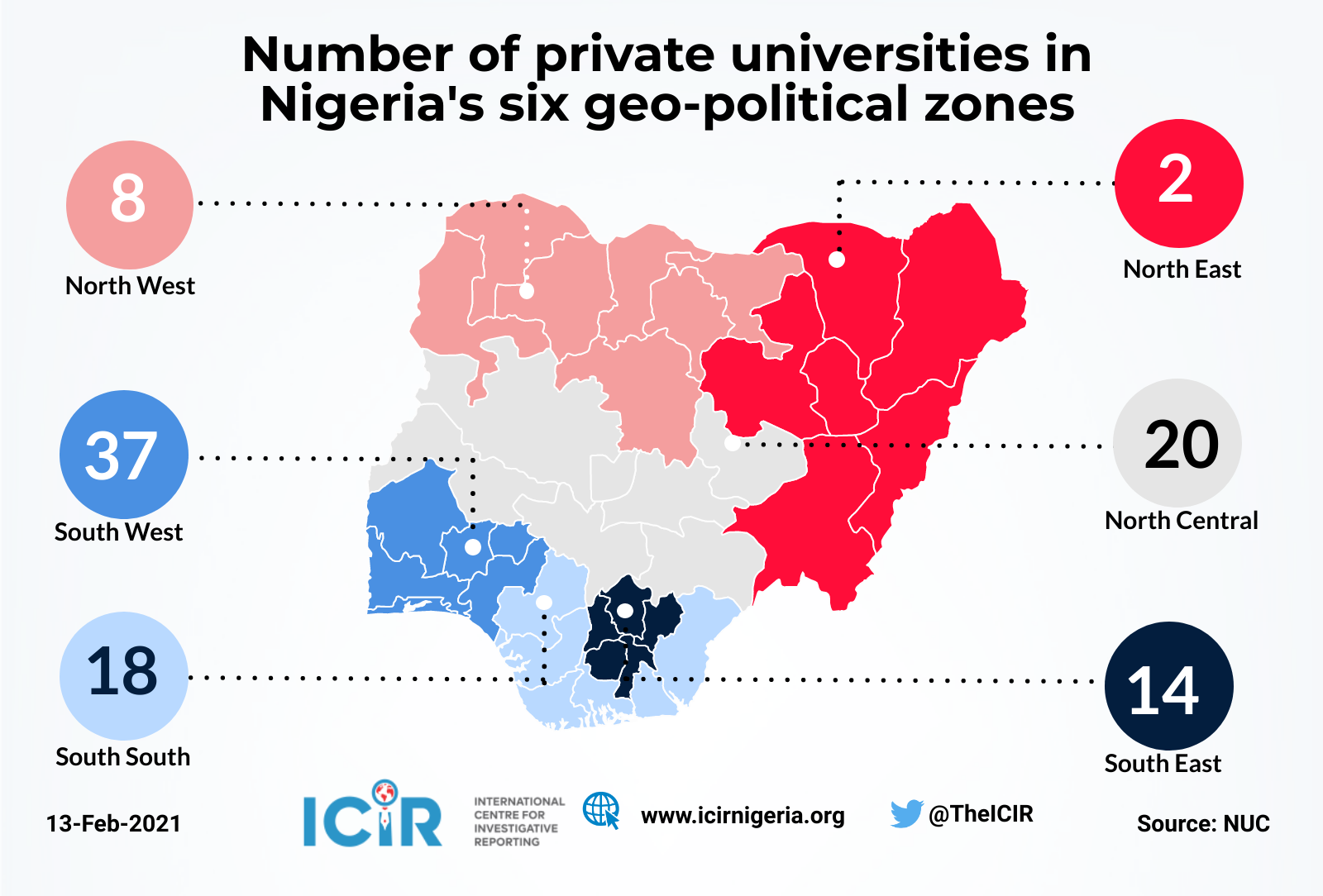
The ICIR findings have shown that South-West has 37 out of 99 private universities in Nigeria (37 percent) while North-East, North-West and North-Central regions have 30 altogether (30 percent).
Details of the institutions, posted on the website of the NUC, also show that the North-East region hosts only two of the 99 private universities (two percent). There are also no private universities in eight states in Nigeria.
The ICIR findings further show that none of the privately-owned schools is in Bayelsa, Sokoto, Kebbi, Gombe, Zamfara, Borno, Yobe and Bauchi states.
Eight of the universities are located in Osun State. There are seven in each of Kwara and Oyo, as Lagos State and the Federal Capital Territory host six of the schools.
While four apiece are in Kano and Enugu, Edo and Delta have five each.
Imo, Anambra, Abia, Rivers, Akwa-Ibom and Ondo have three each, while two of the universities are located in each of Kaduna, Plateau, Nasarawa and Cross River.
Adamawa, Taraba, Katsina, Jigawa, Benue, Niger, Kogi, Ebonyi and Ekiti states have one apiece.
Further analysis of the schools per geo-political zone shows that there are eight of the universities in the North-West; North-Central region has 20; South-East has 14; and South-South parades 18.
The ICIR also found that South-West has more private universities than both South-East and South-South. The two regions have 32 in total (32 percent).
Nigeria’s 36 states are grouped into six geo-political zones, with each zone having six adjoining states, except the South-East and North-West with five and seven respectively.
The country’s North-East has witnessed horrendous attacks from insurgents in the last decade, resulting in death and displacements of millions of people. The terrorists’ activities have also left in their trail, colossal destruction of infrastructures and low local and foreign investments.
Madonna University, Elele, Rivers State; Babcock University, Ilisan Remo; and Igbinedion University, Okada, Edo State were the first three private universities to be approved by government in Nigeria. They were approved on April 20, 1999, while they got their licences from NUC on May 10, same year.
The South-West region of the country then went on to dominate other regions in the number of the schools located in them, years later. As of 2014, the region accommodated 44 percent of all private universities in the country, but the percentage has shrunk to 37, with the approval of additional 20 private universities by the federal government, through the Federal Executive Council on February 3, 2021. Unlike the past, the South-West got only one of the schools.
President Muhammadu Buhari
The new universities are: Topfaith University, Mkpatak, Akwa Ibom State; Thomas Adewumi University, Oko-Irese, Kwara State; Maranathan University, Mgbidi, Imo State; Ave Maria University, Piyanko, Nasarawa State; Al-Istiqama University, Sumaila, Kano State, and Mudiame University, Irrua, Edo State.
Others are: Havilla University, Nde-Ikom, Cross River State; Claretian University of Nigeria, Nekede, Imo State; NOK University, Kachia, Kaduna State; Karl-Kumm University, Vom, Plateau State; James Hope University, Lagos, Lagos State; Maryam Abacha American University of Nigeria, Kano, Kano State.
The list also includes Capital City University, Kano, Kano State; Ahman Pategi University, Pategi, Kwara State; the University of Offa, Offa, Kwara State; Mewar University, Masaka, Nasarawa State; Edusoko University, Bida, Niger State; Philomath University, Kuje, Abuja; Khadija University, Majia, Jigawa State, and Anan University, Kwall, Plateau State.
The schools will run with NUC’s provisional license for three years, during which the commission would monitor and evaluate them.
The schools are already listed on the NUC’s website, even as they wait to receive their licences from the regulatory body.
At the time FEC made the approval for the new schools, Nigeria had 44 federal, 48 state-run and 79 private universities, making a total of 191 universities in the nation.
Approval for the new universities came a day after President Buhari approved the establishment of Federal Polytechnic, Ayede, Ogo-Oluwa, Oyo State.
The president approved 2 billion naira for the school’s take-off. The fund, he said, should be procured through the Tertiary Education Trust Fund (TETFUND), according to a post on verified Twitter page of Bashir Ahmed, personal assistant to the president on new media.
Meanwhile, certain Nigerians believe that many students and graduates from the nation’s universities are intellectually deficient, despite increasing access for people to acquire knowledge at the tertiary level of education in the country.
Most recent among them is Adamu Adamu, current minister of education. In December 2020, while commissioning some educational projects in Yola, Adamawa State, the minister had accused many students and graduates in the country of lacking the competence to read and write well.
While private universities charge exorbitant fees and run largely run hitch-free academic calendar, tuitions in public universities are less, but the institutions are faced with multi-faceted challenges, ranging from poor infrastructure and funding; inadequate remuneration for staff; overcrowding by students; incessant strike by employees; gross corruption; poor budgetary allocation for research; inefficient administration; cultism, among others.
The nine-month-old strike recently suspended by the Academic Staff Union of Nigerian universities (ASUU) was the most recent of crises facing the nation’s public universities. Activities in public universities across the country were still paralyzed at the time of filing this report, following the strike embarked upon by the Senior Staff Association of Nigerian Universities (SSANU) and the Non-Academic Staff of Nigerian Universities (NASU).
NIGERIAN-BORN Patience Bentu is a graduate of Theatre Arts from the University of Jos, North-Central Nigeria. She has two master’s degrees, one in Drama and Theatre Education from the prestigious Warwick University and the other in International Development from the Swansea University in Wales. Once a victim of racial discrimination as an international student studying in the UK, she shares her journey into the world of social work and tells how she is lending her voice to the demand for racial equality for people of ethnic minority living in Wales, in this exclusive interview with The ICIR.
Can we have some insight into who you are as a person and your migration journey to the UK?
Well, very simply put, Patience Bentu is an everyday woman, an everyday citizen of the world, an everyday Nigerian, just an everyday regular human being, really. I am the community engagement officer and policy lead for Race Council Cymru (RCC). The story of my migration to the UK started not too long ago, as short as eight years ago in 2012 when I came over to the UK to do a PHD in Politics and International Development. That is a story for another day because it did not end up in a PHD. It rather ended up in an MPhil (Master of Philosophy), but I have to point out that the experience was actually the beginning of my journey into the work that I am doing now with racism and Black Lives Matter. So, I will put that aside. In 2012, I came to the UK with my son. I came to do that degree, and the intention was not to live in the UK but to gain my degree and go back to Nigeria where, at that time, I thought the degree would be of better use to me. Unfortunately, as things turned out, I ended up staying in the UK not because of myself, but because my son had fully settled here when I thought it was time to go back to Nigeria. And I felt it would be great injustice to him to just pull him out of an already settled-in private life, to go and start from ground zero again in Nigeria. This is how we have stayed on.
How easy was it for you to adjust to the transition?
Well, it was not difficult for me at all because I was not a stranger to the United Kingdom. It has been a back and forth journey really and I did my master’s here many years ago. So it was not difficult. It was new moving to Wales because prior to coming to live here in 2012, I had only been to Wales once in my life and that first visit was what informed my decision to come here. So, yes, settling down in Swansea was new to us, but settling in the UK generally or finding our way around was not difficult at all.
What about finding a job?
Okay, I have to take you on the journey of my work life, which is quite a tedious and lumpy one. It started with the regular student jobs. Of course, when you’re studying, you’re only allowed to work 20 hours a week, with no recourse to public funds. So, a lot of us students, and I think this is the story of many international students in the United Kingdom, because you are only allowed to work for 20 hours, there is only so much a job that you can do and so much that you can earn in a month. So, work for me through my student years was between care work, working as a support worker for disability department in the university and ending up as a teaching assistant in my department. After that, it was volunteering, which I was also doing whilst a student. I was volunteering with the organisation that I work with now, which is Race Council Cymru, and it is that volunteering that has now evolved into a full-time job.
In your opinion, would you say that there is racial discrimination in the UK and where did your passion to lend your voice to the demand for racial equality stem from?
There has always been racism in the UK. Racism in the UK is as old as it has been in the United States and other parts of the world. It is as old as the days of slavery. It has never gone away, it has taken different dimensions and evolved in different ways, but it has never gone away. Why the discussions are rife at the moment and the campaigns was on the back of, first of all, the Covid-19 pandemic. However, going to the other strand in your question, it was my own lived experience. I told you there is a story behind my coming out here to study and what actually transpired which, for a very long time, I refused to accept. I lived in denial and I refused to accept it as a racial discrimination, only because there is this thing about, specifically, black people – the minute you call out racial discrimination, they say, “Oh they have come again, it is not what you think it is. It is this, it is that.” But the truth of it was, in all that happened to me, there was every colouration of racial discrimination, both overt and covert. I promised myself at the time, not even knowing at the time that I was going to end up working full-time with Race Council, that I would not let what happened to me happen to any other international student of ethnic minority background. So, I will do whatever it takes, in whatever capacity, to ensure that my experience does not happen to anybody else.
Can you share with us some of your lived experiences as it relates to racial discrimination?
I would love to give you the story, but it is going to take the next one week. If we start talking about that, we will be here forever talking about it. Secondly, it is part of what is to become in not too long from now in my book. So, I do not want to give it away before my audience actually get to read it. But the short of it all is that, at the end of the day, it was predicated on what I perceived to be racial discrimination. I think the book would say a lot about it and also give the readers the opportunity to decide if they think it was racial discrimination or not.
Are you in touch with other Nigerians living in Wales and how much assistance has your organization given to them?
We are partnering with the Nigerians in Wales Association, of which, incidentally, I double as the director. We are in formal partnership with Race Council and so Nigerians are very much engaged in the work of Race Council Cymru. Nigerians are not left out of anything that has to do with racial equality and protecting the interest of ethnic minority groups in Wales. From my working relationship with Nigerians in the Wales and the little interactions that I have had with Nigerians in other parts of the UK, I think the challenges are pretty much the same with those of people of other races – we want jobs, we want better quality jobs, better paying jobs. We do not want to be seeing Nigerians only doing low-paid jobs. Often times, you find that these are Nigerians who have attained very high degrees and who have lots of skills in different areas and then they end up in very low paid jobs.
Tell us about the emergence of the Black Lives Matter Wales Campaign.
When we went into lockdown, and I am talking in the context of Wales now, it was not too long before the community groups that we support started contacting us and talking about the challenges that they were facing, both due to Covid-19 for our ethnic minority frontline workers and also the socio-economic challenges. So, there were those who had lost their jobs at the time, those whose working hours had been reduced, those who were in unsuitable accommodation and so on and so forth. There was a great socio-economic disproportionate effect that Covid-19 had on ethnic minority groups in Wales. Then on top of that, while we were still trying to work out what the disproportionate effects were and how to tackle them, George Floyd was killed in America and that sparked off the global Black Lives Matter campaign.
Do you think the Black Lives Matter Wales campaign will be sustained or will it soon dissipate?
We see a very bright future for Black Lives Matter Wales and here is the reason. The discussion around Black Lives Matter and, by extension, the importance of the lives of ethnic minority people in Wales have been going on for so many years- about 400 years- and nothing has changed. Now the feedback we are getting from the communities that we support is that they are tired of talking, they want to see action. They want to see change happen. To be honest with you, in the eight years that I have been involved in community work, I have never seen determination greater than I see now and this is why I say that it is not going to go away until that change happens. We needed the change like 100 years ago and it is in every sector of society. So it is not just about police targeting black people; it is in housing, transport, employment, and just everywhere. So, these young people that make up the Black Lives Matter Wales are determined that they are going to keep going, which is why they came up with a manifesto. They have got all these things they are asking the Welsh government to do and we are very lucky that we live in a part of the UK where the government is very determined as well.
The Welsh government has shown a lot of determination towards improving the lives of ethnic minority people and towards promoting the prescriptions of the Equality Act 2010. On the back of the pandemic and the Black Lives Matter campaigns, the Welsh government set up an advisory committee to look into the disproportionate effects of the pandemic on ethnic minorities and on the back of the work of that advisory committee, they have been able to set up another group that is working on a Race Equality Action Plan. So that is the first step towards ensuring that racism. if not completely stamped out, is reduced to the barest minimum while improving the lives of ethnic minority people. So there is a group that is working on a Race Equality Action Plan. They are working in a bottom-top model and consulting with the community groups and feeding a lot of the comments, perspectives and lived experiences of the communities, back into coming up with this Action Plan and there is no stopping until it actually happens.
We see that the U.S. under the new administration is showing strong commitment to racial inclusiveness in government. Do you perceive a similar thing being replicated in the UK?
It is very sad that it is slow in the United Kingdom because it is really a two-way traffic. If we do not push for it, it will not happen. I mean, it is as simple as our basic everyday lives. For everything that you want in life, you have got to go for it. Success does not come, you go for it. So we need to push for it. It really saddens me to see, for instance, when I look at the political arena in the UK, I look at the Parliament and we have got a couple of Ghanaians there. We did manage to have one member of Parliament of Nigerian origin who in the end was recalled. Now, we have not got anybody. So, it is a very slow progress, but there is an increasing number of ethnic minority people getting into the British Parliament. It is my dream to see more Nigerians in Parliament in the United Kingdom. I mean, I am a Nigerian and I want to see more Nigerians in the Assemblies of Scotland and Wales and Northern Ireland, but we have got to push for it. We have got to work together and look at the reasons and interrogate those reasons and hold the people in certain positions accountable.
What, in your view, is the road to true equality?
I can only think of one way and that is, there should be political will for change to happen. If the political will is not there, nothing is going to happen and that political will to make change happen has got to come from every government in every country where there is racial inequality; where there is racism. The onus is on the government to make that change. If the government does not move, the people will not move.
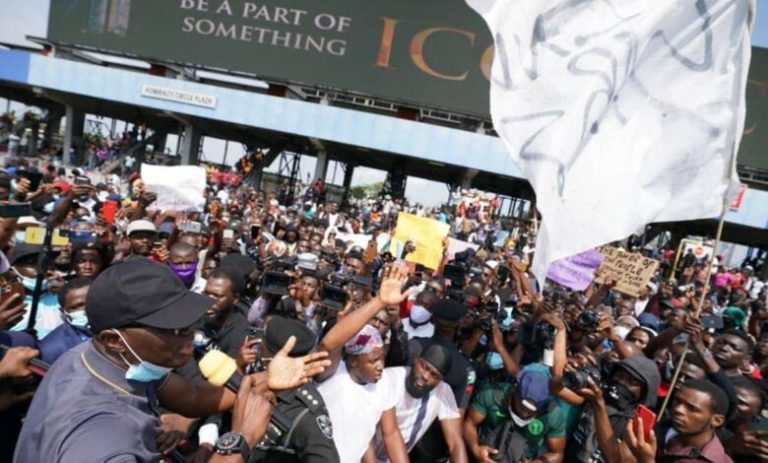
SOME #OccupyLekkiTollGate protesters were arrested by officers of the Lagos State Police Command on Saturday, including comedian Debo Adebayo, popularly known as Mr Macaroni.
The comedian had joined other protesters at the tollgate to express discontent with the decision of the Lagos State Judicial Panel of Inquiry to allow the Lekki Concession Company (LCC) to reopen the Lekki toll gate.
Adebayo streamed a live video of his arrest at the Lekki tollgate axis in Lagos, with some people overheard in the video telling him, “we don’t want you here.”
“I’m being arrested. I’m being arrested o Nigerians you can see,” he said in one of the video clips.
Different reactions from Nigerians on Twitter have trailed the arrest of Adebayo alongside other protesters by the police at the toll gate.
The Doris Okwubi-led panel at its sitting last Saturday had ruled in favour of the LCC to repossess the toll plaza for repairs and insurance claims.
Five members out of the nine-man panel affirmed the ruling while four others, including Ebun-Olu Adegboruwa, a senior advocate of Nigeria (SAN) and the youth representatives, opposing it.
Some activists have been calling for a protest against the Lagos judicial panel’s decision investigating police brutality to grant the LCC permission to resume business at the toll gate.
The tollgate was closed after soldiers allegedly shot at #EndSARS protesters who converged there on October 20, 2020.
Hakeem Odumosu, Lagos State commissioner of police, had warned against the protest, vowing to deal with anyone involved in such demonstration.
“The Lagos State, its people and the Nigerian nation at large are still groaning (in pains) for the aftermath of the last #EndSARS violence that left many lives and properties lost. Therefore, it is not reasonable to allow the same to repeat itself in the state,” he said.
Different online reactions on Twitter have trailed Mr Macaroni’s arrest, alongside other protesters by the police at the toll gate.
Mr Macaroni arrogantly disobeyed Lagos state Police order not to protest. Man should be ready to suffer the consequences of his insubordination.
If anything happens to me, let it be known that all I did was leave my house to #Lekkitollgate to ensure the safety of my brother Mr macaroni who was put in a Black Maria for no crime 💔
Mr Macaroni is more valuable to Nigeria's democracy than the bandits in government. The Nigerian Police should immediately release all the arrested #Lekkitollgate protesters now. #EndSARS
It’s like they’ve been wanting to arrest mr macaroni way before now. Because he was the first person they arrested before any other person at the toll gate
Some men will use this whole #OccupyLekkiTollGate and #DefendLagos as an opportunity to disappear on 13th February and return home 4 days later after Valentine is over.
Pls this is a secret. Don’t tell the ladies about this. Thank you.
SANI Musa, a Nigerian Senator representing Niger East, claims that cryptocurrency has made naira almost useless or valueless.
He said this during a Senate Plenary on Thursday. where he argued that cryptocurrency technology was ‘so strong’ and he saw no regulation the Senate would propose to stop it in Nigeria.
“Cryptocurrency has become a worldwide transaction of which you cannot even identify who owns what. The technology is so strong that I don’t see the kind of regulation that we can do. Bitcoin has made our currency almost useless or valueless,” he claimed.
“If we have an economy that is very weak and we cannot regulate cryptocurrency in Nigeria, then I don’t know how our economy would be in the next seven years,” said Musa.
After deliberation for and against cryptocurrency by the Senators, the Senate resolved to mandate the Committee on Banking, Insurance and other Financial Institutions; Committee on ICT and Cybercrimes; including the Committee on Capital Market, to invite the CBN governor for a briefing on the opportunities and threats of cryptocurrency on the nation’s economy and security and report back findings within two weeks.
The Central Bank of Nigeria (CBN) had, on February 5th , sent a circular to financial institutions, instructing them to immediately close the accounts of persons or entities transacting in or operating cryptocurrency exchanges. The apex bank said breaches to the directive would attract severe sanctions on the banks.
While Musa’s submission was met with critical responses, The ICIR recalls the Niger East Senator had also sponsored the Anti-Social Media Bill.
The bill entitled ‘Protection from Internet Falsehoods and Manipulation And Other Related Matters Bill,’ otherwise known as Anti-Social Media bill, was presented before the Nigerian Ninth Assembly in 2019 to ‘regulate the social media.’
The bill, which passed the second reading of the Nigerian Senate, sought to regulate information on the internet by the Nigerian government.
Although the bill faced criticisms from many Nigerians, civil society organisations, rights activists and the opposition party, it was put to a public hearing.
Examining Musa’s Claim
There is yet no strong evidence that cryptocurrencies affect the value of money because they are not legal tenders, so are not officially accepted by many countries for transactions. But some economists disagree, stating that cryptos are serious threats to traditional currencies.
Ruchir Sharma, chief global strategist at Morgan Stanley investment management, one of the biggest American investment firms, said that cryptos were big threats to the US dollar. He argued that lack of trust in traditional finance would drive down the value of dollar, forcing people to embrace digital currencies.
He explained, in a Financial Times article in December 2020, that traditional currencies were not the only stores of value and mediums of exchange worthy of people’s trust, arguing that tech-savvy people would continue to seek alternatives to traditional currencies.
However, classical economics argues that the value of money is determined by interest rate, inflation, gross domestic product (GDP) growth and current account balance. More so, the strength of a country’s currency is determined by the exchange rate. A weak exchange rate regime reduces the value of money, but a strong regime produces an opposite effect.
The exchange rate is influenced by a country’s local manufacturing industry and its export sector. A country like Nigeria with a weak manufacturing sector exports little and earns little foreign exchange that cannot withstand demand. But another country like China with a strong manufacturing sector exports much and earns enough foreign exchange for its economy. In the case of Nigeria, demand for foreign exchange exceeds supply, thus weakening the naira. But in the case of China, supply exceeds demand, thereby strengthening Yen.
“We need to start taking the export sector seriously in order to reduce imbalances in the economy caused by scarcity of foreign exchange and strengthen the naira,” Ede Dafinone, an economist and accountant, who also heads the Manufacturers Association of Nigeria Export Group (MANEG), said.
“Exporters need to be supported. Government needs to speed up the Export Expansion Grant (EEG) implementation,” he further said.
Nigeria is not exporting enough and crude remains its major export component. In 2018, Nigeria’s total non-oil export earnings from more than 25 commodities amounted to 3.3 billion dollars, according to the National Bureau of Statistics (NBS). But Bangladesh, once one of the poorest countries on earth, earned 10 times that amount (33 billion dollars) from exporting only one product—textile.
In the last quarter of 2019, the value of total exports stood at 4.8 trillion naira. Crude oil component amounted to 3.6 trillion naira or 76.08 percent of total exports during the period while non-crude oil export accounted for 1.14 trillion naira, or 23.92 percent of the total, according to the NBS. For 2019, the share of crude oil exports stood at 76.5 percent, according to the NBS.In the second quarter of 2020, crude oil and minerals accounted for 84.35 percent of total export, amounting to N1.87 trillion.
The Manufacturers Association of Nigeria(MAN) said in one of its press releases that the sector remained a critical part of the economy in terms of foreign exchange earnings, job creation and economic growth.
ALABI Oladimeji, convener of #DefendLagos, has announced that the group has shelved plans to organise a counter-protest against the #OccupyLekkiTollGate demonstration scheduled for today in Lagos.
He disclosed this in a video on his Facebook page, stating that the suspension of the protest was based on assurances the group received from the federal and state governments that no protest would be allowed to hold.
“No protest from #DefendLagos on Saturday. We are simultaneously respecting the state and federal governments.
“I am proud to announce that for the main (sic) time, we will be pending this protest due to the law of the Federal and state governments. We are law-abiding and good citizens, definitely, we should not be the ones seen disobeying any law,” he said.
The ICIR had reported that both #OccupyLekkiTollGate and #DefendLagos camps had planned to hold separate protests in Lagos State on Saturday, which was prompted by the controversial ruling of the Lagos Judicial Panel of Inquiry to reopen the Lekki toll gate.
The Lekki toll gate has been shut by the panel since last October 20, 2020, when armed soldiers opened fire on unarmed protesters, allegedly killing some protesters and injuring others.
Oladimeji said the #DefendLagos group would organise another protest if the security operatives allowed the #OccupyLekkiTollgate protesters to hold their planned protest.
“We are not going to hold any protest again on Saturday, but if Lagos and FG fail us, we will come out huge and protest on Monday,” he said.
He explained that though depressing, the plan to protest was never for personal benefits but to ensure that no destruction occurred in Lagos State.
“It is depressing news for me because we have invested personal resources to produce banners, posters among others on this. But this is not an avenue for us to make money like those in the OccupyLagos,” he claimed.
The #DefendLagos campaigner also urged the government to arrest anyone that contravened the directives stopping protests in the state.
The federal government and the police had earlier warned youths who planned to protest at the Lekki tollgate on Saturday to have a rethink and desist from the demonstrations.
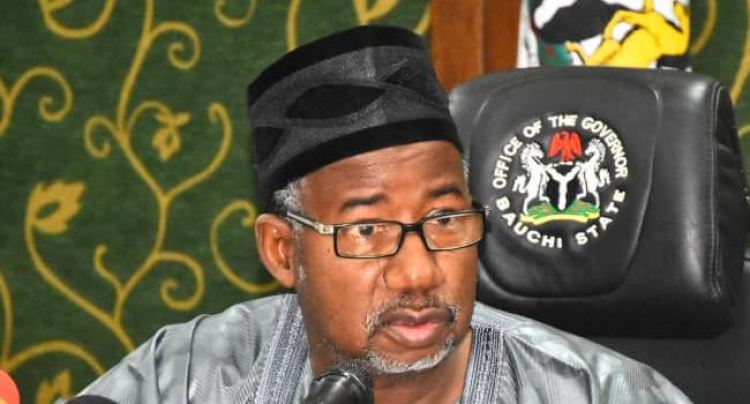
BALA Mohammed, Bauchi State governor, has come under criticism over his comments justifying and supporting armed Fulani herdsmen in the country.
Mohammed, who spoke at the closing ceremony of the 2021 Press Week of the Correspondents’ Chapel of the Nigeria Union of Journalists (NUJ), Bauchi State Council, on Thursday, said that Fulani herdsmen had no choice than ply their trade with AK-47 rifles.
“The Fulani man is practising the tradition of trans-human, pastoralism. He has been exposed to the battery of the forests, the animals, and now, the cattle rustlers, who carry guns, kill him and take away his commonwealth – that is his cows. He had no option than to carry Ak-47 because the society and the government are not protecting him,” he said.
“It is not his fault, it is the fault of the government and the people. You don’t criminalise all of them because in every tribe there are criminals. You should be very sensitive. We have to be careful,” Governor Mohammed said.
He also condemned South-West and South-East governors, including Governor Samuel Ortom of Benue State, over the manner in which they were handling farmer-herder clashes.
He faulted the quit notice given to Fulani herders in some southern states, particularly Ondo, pointing out that the “southern governors are wrong.”
“On the herders-farmers clashes, you have seen what our colleagues in the South-West are doing and some of them in South-East. Some of us told them with all modesty and humility – you are wrong.
“But the person that is most wrong is the Governor of Benue State, my brother and my colleague, Governor Ortom. He started all these. If you don’t accommodate other tribes, we are also accommodating your tribes in Bauchi and other places.
“We have so many Tiv people working and farming in Alkaleri, farming in Tafawa Balewa, and farming in Bogoro Local Government Area of Bauchi. Has anyone asked them to go? We have not, because it is their constitutional right to be there.
“We have Yoruba people in Bauchi for over 150 years, even before the birth of Nigeria. Nobody has told them to go. Some of them have risen to become permanent secretaries in Gombe, Bauchi, and Borno,” Governor Mohammed added.
Bala Mohammed is openly defending Fulani herdsmen who carry AK-47. I didn’t hear him condemn killings. He is speaking the minds of a lot of influential decision makers. That exactly is where the problem is and why it doesn’t took like they are ready for a solution any time soon.
Rich men who live in the cities buy cows and gives to herdsmen and also equip them with AK-47 to protect the cows.
Herdsman uses the gun to secure grazing fields for thecows, for his own petty criminal activity and makes the guns available when it is time to push "agenda."
Imagine the Governor of Bauchi justifying why herdsmen carry Ak47. And you expect these guys to protect you from herdsmen? I know for a fact that only the President can license a private individual to bear arms like AK47. Who licensed herdsmen to carry AK47?#BuhariTormentor
The reality is herdsmen act like they r above the law n they definitely r as they carry out their vices with impunity.If a police stop u as an ordinary 🇳🇬 with a pistol in ur bag.They r likely to shot u to death b4 asking abt d gun.Yet,d herdsmen carry AK47 like a walking stick.
THE Nigeria Bar Association (NBA) has charged President Muhammadu Buhari and the Police Service Commission (PSC) to court over the extension of the tenure of Mohammed Adamu, inspector-general of police (IGP).
This was disclosed in a statement signed by Olumide Akpata, chairman of NBA, on Friday, who explained that the case had been filed before the Lagos Division of the Federal High Court in Suit No. FHC/L/CS/214/2021.
“In fidelity to the motto of the Nigerian Bar Association (NBA) which is Promoting the Rule of Law, on Thursday, 11 February 2021, the NBA-Public Interest Litigation Committee (NBA-PILC). on behalf of the NBA, commenced legal action at the Lagos Division of the Federal High Court in Suit No. FHC/L/CS/214/2021 (the ‘Suit against the President, Federal Republic of Nigeria, the Police Service Commission, and Mr Mohammed Abubakar Adamu,” Akpata wrote.
He pointed out that the NBA wanted to understand the constitutionality of the president’s extension of the IGP’s tenure for three months despite attaining 35 years in the Nigeria Police Force.
The NBA noted that its position was that as of February 1st, Adamu had ceased to be a member of the police force according to the constitutional provision.
Akpata further noted that the president’s extension of Adamu’s tenure by three months, in the NBA’s respectful view, was unconstitutional.
“In the grand scheme of things, the NBAis wary that the more government officials casually violate the law, the harder it would become to expect citizens to be compliant Citizens take their cues from their leaders, and public office holders who flout the laws of the country that they are meant to uphold will discover sooner or later that their examples will be followed by those that they purport to govern,” the statement further read in part.
The lawyers’ association noted that ‘acts of impunity’ by those in high public offices posed threats to the survival of Nigeria.
The ICIR had reported that Buhari extended the tenure of the IGP for three months against the provision of the Police Act signed by the president in 2020.
According to the Police Act 2020, Part 111 Section 7 (6) , only a single tenure of four years was provisioned for persons appointed as the IGP subject to the provisions of clause 18 (8), which stipulates that every police officer shall, on recruitment or appointment, serve in the Nigeria Police Force for a period of 35 years or until he attains the age of 60 years, whichever is earlier.
The ICIR has also reported several times the Nigerian President had violated constitutional provisions and agencies’ Acts in the appointment of public officials since his assumption of office in 2015.
Buhari recently extended the tenure of service and defence chiefs before they finally ‘resigned’ a few weeks ago.
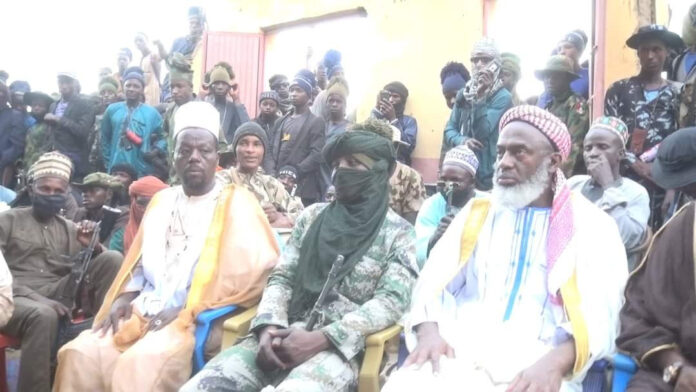
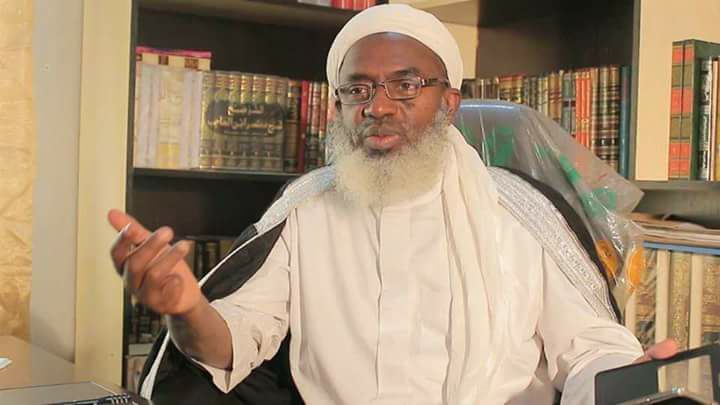
Islamic cleric Sheikh Ahmad Gumi is a man with a lot of clout in his neck of the woods. A retired army officer and a medical doctor who decided to be a full-time Islamic preacher, his people put much stock in whatever he says and does.
So, when he embarked on a self-assigned mission of talking to his Fulani kinsmen holding sway in the North West’s ungoverned spaces out of banditry, Nigerians paid attention. So far, he has been to Kaduna, Zamfara and Sokoto States.
Last week, Gumi came out from the forests of Shinkafi, Sububu, Pakai, and Maradun in Zamfara State where he engaged with outlaws who have declared war against the State.
He has since riveted Nigerians with tales of a people who have an axe to grind with their fellow citizens and the government.
He told us the bandits unfurled a catalogue of grievances, threatening there will be no peace until their demands are met by the Nigerian State they claimed abandoned them.
Gumi thinks they have a point, concluding that they are victims of unconscionable state actors’ base conduct. He also came to another conclusion.
Judging from what he saw in the forests, he said, the Nigerian State has no chance of defeating the bandits militarily and, therefore, has no choice but to negotiate for peace on their terms.
Most of these people holding Nigerians to ransom, Gumi added, are stark illiterates with no education whatsoever. Still, he thinks, nevertheless, that since they took up arms because of injustice allegedly done to them, then, “if they should be called upon and talked to, they could be persuaded to embrace peace.”
“They were victims of violence, so they took arms to protect themselves. Wherever they are as cattle herders, they face farmers’ problems; we saw what happened in Oyo, how their homes and cattle were burnt. These people live in huts while those killing them and destroying their homes live a better life,” Gumi said.
He canvassed for amnesty for those who want to lay down their arms as was done for the militants in the Niger Delta – and schools and skills acquisition centres should be built for them.
“Let there be peace; you all have a legitimate concern and grievances, and I believe that since the Niger Delta armed militants were integrated by the Federal Government and are even in the business of pipelines protection, the Federal Government should immediately look into how something like that will be done to the Fulani to provide them with reasonable means of livelihood including jobs, working capitals, entrepreneurship training, building clinic and schooling,” the Islamic cleric told the bandits in their lair.
And to the rest of Nigerians, he said, “We cannot abandon them. I have a picture of some little girls that are drinking water from the same stream with animals. They have no social amenities; no hospitals and we are here talking.”
Sheik Ahmad Gumi
Gumi admitted in an interview with Daily Trust that those he met in Zamfara forests were Fulani herders.
Expectedly, Zamfara State Governor Bello Matawalle is happy and so is the Federal Government that has publicly endorsed the cleric’s efforts.
“When you want to resolve an issue like this, you use lots of back channels,” Minister of Information and Culture Lai Mohammed said. “Again, it is not unusual for a respected cleric to have the confidence of (approaching) outlaws or bandits …. So, it is not unusual for him to act as a bridge between government and the outlaws in an attempt to find a solution.”
Surprisingly, Kaduna State Governor Nasir el-Rufai, who has hitherto been an advocate of Gumi’s appeasement rhetoric of negotiating and paying ransom to bandits, disagrees. This time, rather than amnesty and compensation for them, he calls for their elimination.
Speaking in an interview with the Hausa Service of the British Broadcasting Corporation (BBC) on Monday, el-Rufai declared that any bandit arrested in Kaduna State would be killed, insisting that “the state is at war with bandits.”
He added: “Anybody that thinks a Fulani herdsman that is engaged in kidnapping for ransom and is earning millions of naira would go back to his former life of getting N100,000 after selling a cow in a year, must be deceiving himself.”
El-Rufai may well be right.
Before going into the forests to meet the Fulani bandits, Gumi was told by the chairman of Shinkafi local government that they had paid over N200 million ransom to the bandits.
If a local government has paid that much, imagine how much the bandits are making from the state government and the entire region. And to imagine that there are little or no consequences. No bandit will give up such a lucrative business on a platter of Gumi’s ridiculous platitudes.
His ad-hominem fallacy which has become the battle cry of other Fulani ideologues – such as Prof Usman Yusuf, former Executive Secretary of the National Health Insurance Scheme (NHIS); and Adamu Garba, the CEO of IPI Solutions Nigeria Ltd, and a former presidential aspirant under the All Progressives Congress (APC), in the 2019 elections – is disingenuous and dangerous.
To contend as Gumi and his co-travellers are doing that the Fulani bandits are angry because they have been grossly offended, and their livelihoods taken away, is to play fast and loose with the facts.
Who offended the Fulani in Nigeria? In this raging war of attrition across the country, Fulani bandits are the villains and not victims. Gumi cited what happened in Oyo State as an example of how badly the rest treats his country’s people. But he is economical with the truth. The fact that he disingenuously sidestepped is that the Ibarapa crisis was a reaction by a people who have been humiliated for so long in their own land.
Granting amnesty to Fulani bandits is tantamount to rewarding criminality. Acts of crime should be punished and not compensated. Why should people be paid after killing others and destroying their homes?
In the last one week since after Gumi came back from the Zamfara forests, bandits have killed well over 43 Nigerians and wounded many others in Kaduna State alone.
Last Saturday, 23 were killed in an attack on Ungwan Gajere, Kutemeshi ward, Dankyawai, Janbala, Kishisho, Gwagwada-Kasaya, Agwa and Bugai communities in Birnin Gwari, Giwa, Chikun, Igabi and Kauru local government areas.
That attack was launched barely 72 hours after gunmen killed 19 persons in Birnin-Gwari and Kajuru local government areas.
So, what did the victims do to deserve death? And what kind of peace is Gumi talking about here? How can reward and compensation for banditry engender peace? Can there be peace without justice and equity?
Who compensates the victims who have been driven away from their ancestral homes and live in IDP camps all over the country? Who compensates the women that have been made widows and children who have been orphaned?
Most of these herders causing problems for the country are said not to be Nigerian citizens. Even President Muhammadu Buhari has acknowledged that. But even if they are Nigerians, is their claim that they have been abandoned by the Nigerian State enough to levy war against the country, kidnapping, raping, killing and maiming fellow citizens? Does the Nigerian State care for any of her citizens? Gumi talked about little girls drinking water from the same stream with animals, does he know where little girls of Igbo extraction get their drinking water from? Has he bothered to find out where little Ijaw girls get their drinking water? Is the Nigerian State not failing millions of Nigerian youths who graduate every year from the university without jobs? Should they then take up arms and levy war against fellow citizens, who are also collateral damages of a failing state?
To draw a moral equivalency between Fulani bandits and Niger Delta militants or Indigenous Peoples of Biafra (IPOB) activists as Gumi and his ilk are trying to do is a fallacy unbecoming. It is as foolhardy as “comparing apples and oranges.”
The Fulani don’t own every inch of the Nigerian soil as some of them claim. If the goal of this violence is to cow other Nigerians into submission, it will fail.
Why? Because no ethnic nationality has the capacity to impose its will on the rest of the country. If this madness persists, particularly “now that the war is on our doorstep,” as Nobel Laureate, Professor Wole Soyinka, said this week, there will be mobilisation. That is exactly what Sunday Igbogho is doing in the South West.
Nobody wants to be a slave in his own country. That is as intolerable and unacceptable to Soyinka as it is to anyone else.
Whatever will make a man like Soyinka declare that: “Whatever it takes, I stand ready to contribute in any way and I have made my governor understand this, we are here not just to live but to live in dignity. Right now, our dignity is being rubbished,” is a serious matter.
Incidentally, many Nigerians have come to that inescapable conclusion.
If I were Gumi, rather than being an ideological prop to bandits, my message to the Fulani herdsmen would have been: Please don’t provoke a war you have no chance whatsoever of winning.
INVESTIGATIONS by The ICIR have shown that desperation by applicants seeking to obtain the National Identity Number (NIN) was a major factor in the extortion’s case trailing the NIN enrolment exercise. And some rogue enrolment officers of the National Identity Management Commission (NIMC) are capitalising on the situation to enrich themselves.
But the investigations also revealed that some applicants go out of their way to offer ‘bribes’ to enrolment officers to ‘quicken’ the process in their favour.
NIMC had commenced enrolment and issuance of the NIN in 2012, about nine years ago. But many Nigerians did not bother to acquire the NIN until the federal government, in September 2018, approved its mandatory use from January 1, 2019. As a result, the NIN became a mandatory requirement for access to vital government services such as international passport and drivers license issuance. The NIN also became necessary for pension, health insurance, payment of taxes and participation in the Unified Tertiary Matriculation Examination (UTME). Following the development, crowds started converging at NIMC offices, and other registration centres across the country as Nigerians suddenly felt an urgent need for the NIN. The desperation and urgency heightened when the federal government in December 2020 ordered integrating the NIN and subscriber identity module (SIM) cards of all active mobile telephone lines in the country.
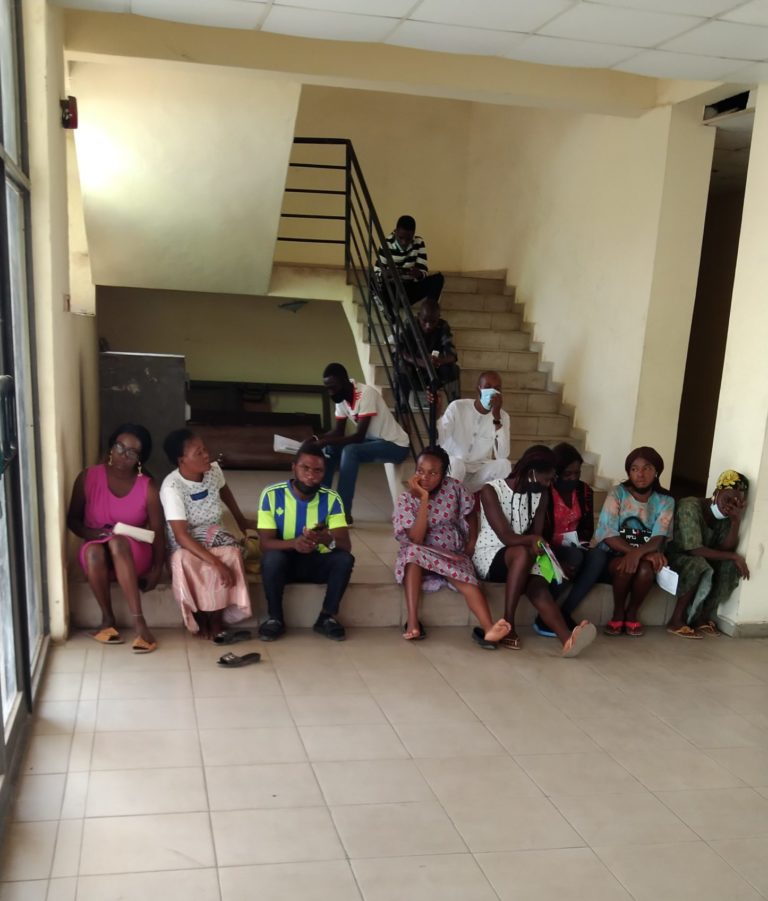
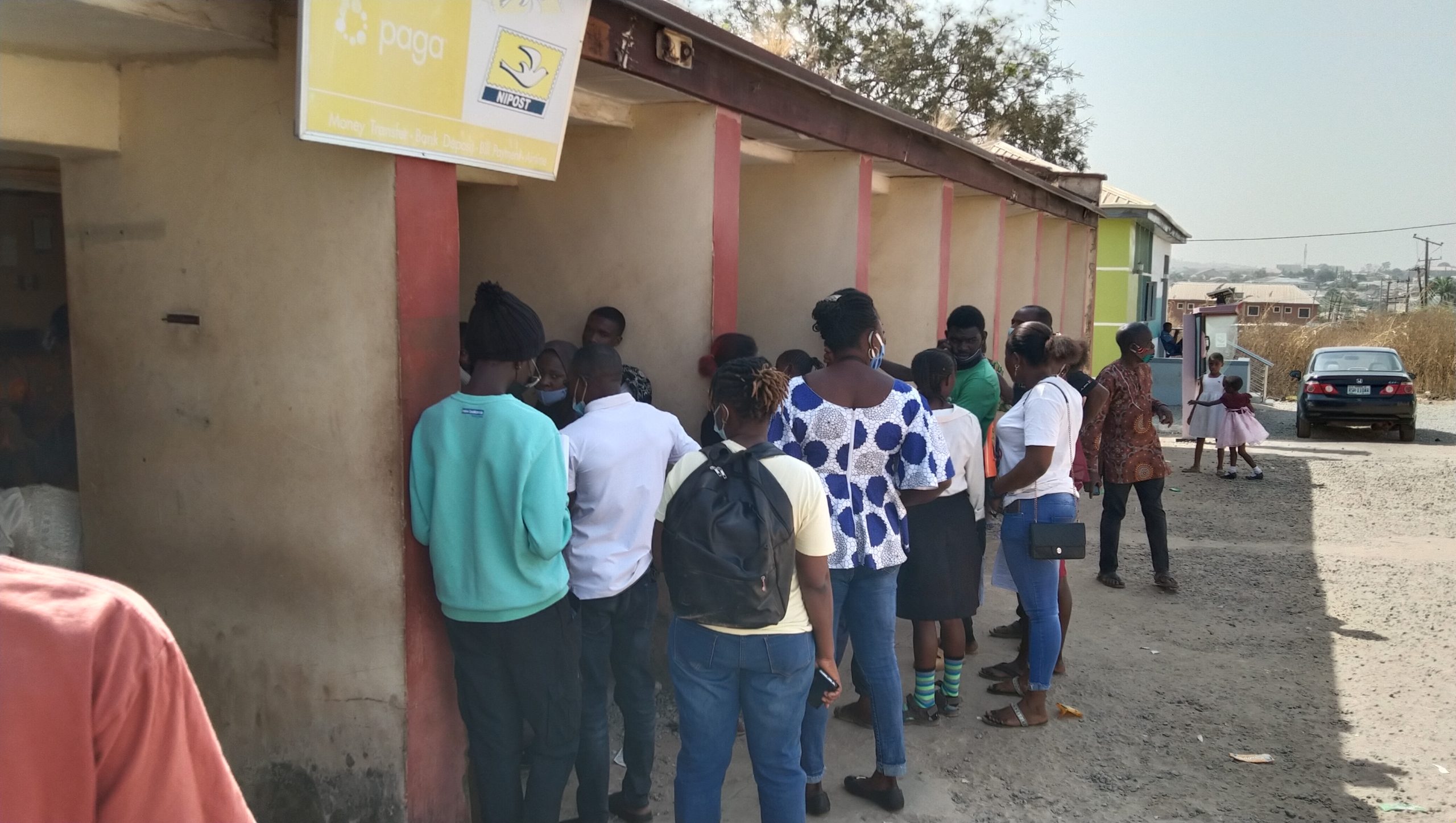
Applicants at an enrolment centre in Kubwa, Abuja
Huge crowds gathered at various registration centres, including NIMC offices, in violation of COVID-19 protocols as panicky mobile telephone subscribers who feared that their lines would be blocked made frantic efforts to obtain the NIN.
The situation led to a sharp rise in reports of extortion in the NIN enrolment exercise.
However, NIN applicants and NIMC workers traded blames over which party was responsible for the extortion.
Applicants who spoke with The ICIR said some NIMC enrolment officers demand monetary gratification before attending to persons who want to obtain the NIN.
But NIMC workers, on their part, say ‘desperate’ applicants, who are in urgent need of the NIN, are the ones who go out of their way to influence the enrolment officers by offering cash.
The ICIR reporter visited several enrolment centres in the Federal Capital Territory, Abuja, particularly those located at the Nigerian Postal Service (NIPOST) office in Kubwa; Public Service Institute (PSI), along Kubwa Expressway; and the Federal Secretariat, in the Central Area.
Enrolment at NIMC headquarters in Abuja was stopped, while 20 centres reactivated within the FCT, from January 18, 2021. The development was largely informed by the large crowd gathered at the commission’s headquarters, in violation of COVID-19 guidelines.
Checks by The ICIR revealed that reports of extortion, which had marred the NIN enrolment in the past, leading to the dismissal of some NIMC officials in 2019, and suspension of another set of workers in January 2020, have continued to dog the exercise even with the introduction of new centres which was meant to make the process easier for both applicants and the enrolment officers.
NIMC says NIN enrolment is free but enrolment forms are for sale at some centres
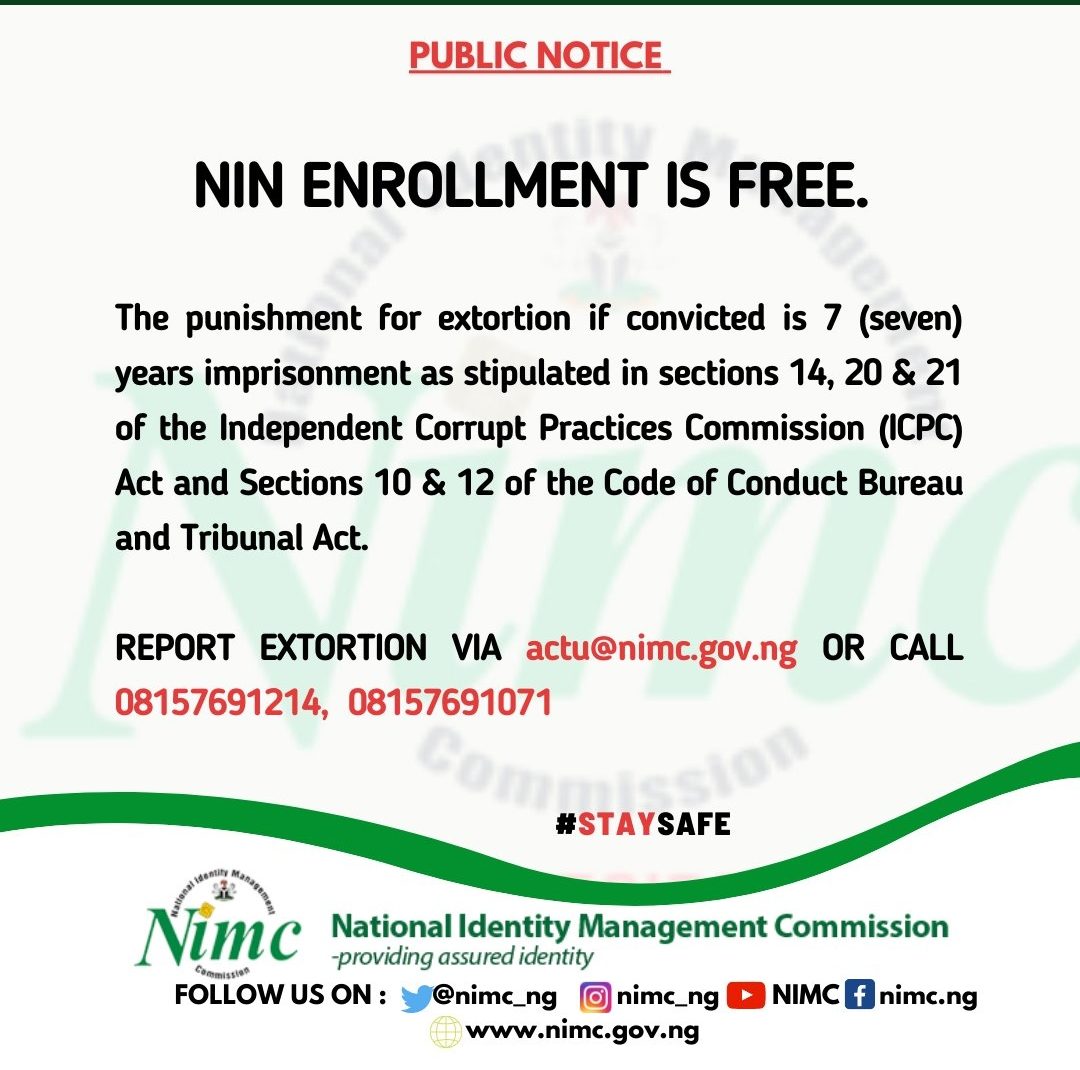
NMC had, in a notice published on Twitter on December 31, 2020, emphasised that ‘NIN enrolment is free’. The statement urged applicants to report extortion cases, stressing that punishment for the offence is seven years imprisonment upon conviction.
Reports of extortion had forced NIMC to stress that enrolment is free
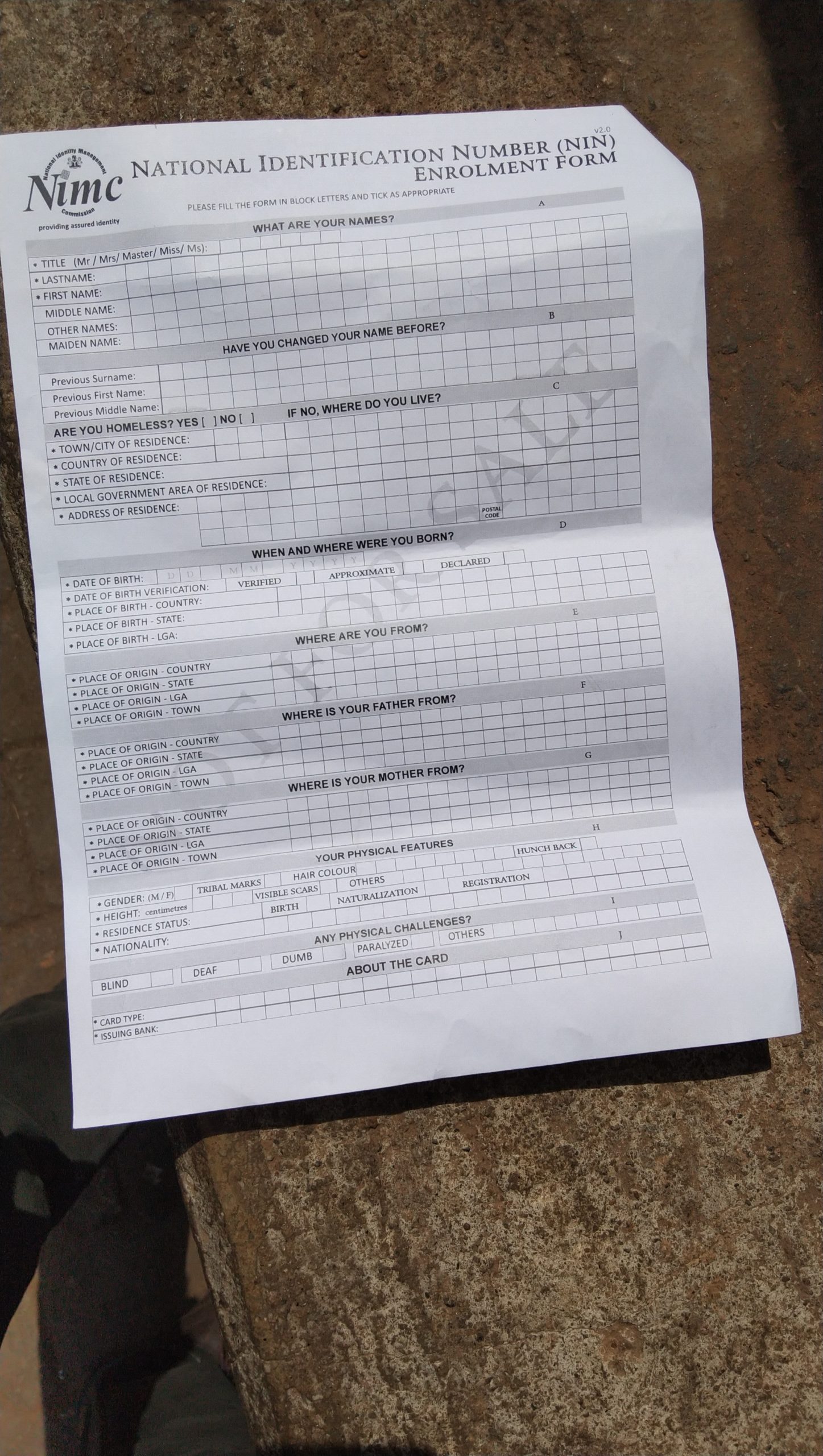
However, The ICIR noticed that the NIN enrolment form is being sold to applicants at some of the enrolment centres.
NIN enrolment form is for sale at some centres
At the enrolment centre located in the Public Service Institute (PSI), a federal government agency along the Kubwa expressway, the forms would only be made available to an applicant after payment of N50 or N100.
Applicants who asked for the enrolment forms were referred to a woman, who clutched a large envelope which contained the materials. When our correspondent visited the centre, the woman was sitting among a group of tired, weary-looking applicants who were making efforts to enrol for the NIN. Although the woman refused to disclose her identity, our correspondent learnt that she was not a staff of NIMC, and had no official responsibility in the enrolment exercise.
The middle-aged woman, who appeared to be an ‘agent’ of some NIMC enrolment officers, collected the sum of N100 before releasing a copy of the correspondent’s enrolment form.
A lawyer, who introduced himself as Isaac, also paid N100 for a copy of the form.
“I am a lawyer but can you imagine that I had to pay to obtain the form just because I have an urgent need of the NIN for some official matters?” Isaac complained when our correspondent wondered why, as a lawyer, he did not insist that the form was not for sale.
“Whether N50 or N100 the amount might appear to be small but think of the number of people coming every day to collect forms and you see that some people are making good money illegally from all these. But that is not my concern at the moment,” Isaac added.
Some other applicants, who spoke with our correspondent, shared the same view. But it was also obvious that the clear and present need was to obtain the NIN, and as soon as possible for all of them.
Applicants advised to ‘discuss’ with enrolment officers, and do ‘something’, to quicken process
NIMC recently adopted a booking system for the exercise, whereby applicants are assigned a date when they are to come to finalise their enrolment. However, the date is not sacrosanct – some applicants told The ICIR that they reported on the given date only to be assigned a further date. Also, The ICIR learnt that, in some cases, applicants are enrolled without going through the booking procedure.
At the Public Service Institute enrolment centre, on February 11, 2021, an enrolment officer informed applicants, who were yet to be assigned a date for their enrolment, that they should wait until April 5, 2021, which was given as the next available date as all other days before then had been fully booked.
The ICIR correspondent observed as the group of applicants appealed to the enrolment officers for more prompt attention. At that point, the woman who was selling the enrolment forms advised some of the applicants to ‘discuss’ with the enrolment officers. She suggested that they could receive urgent attention if they do ‘something’.
“Calm down, when they (enrolment officers) comes out again, you can discuss with them. If you do something they can help you,” the woman selling enrolment forms told the applicants.
It was the same situation at the enrolment centre at Federal Secretariat, Abuja, where our correspondent saw several applicants engaged in frantic efforts to enrol for the NIN.
Our correspondent gathered that, on an unusual arrangement, the security personnel stationed at the centre could ensure a speedy enrolment for applicants who are willing to cooperate.
Desperate applicants seek ways to influence enrolment officers
At the Federal Secretariat enrolment centre, on February 11, 2021, a woman, who identified herself as Sarah, told our correspondent that she was waiting for an opportunity to ‘discuss business’ with any of the enrolment officers so that she can have her NIN enrolment ‘immediately’.
Sarah, who said she works with a private firm, explained that she was earlier booked for enrollment on a previous date but could not register for the NIN on the assigned day. She disclosed that she has been coming to the enrolment centre all through the week without making any headway in her quest to obtain the NIN.
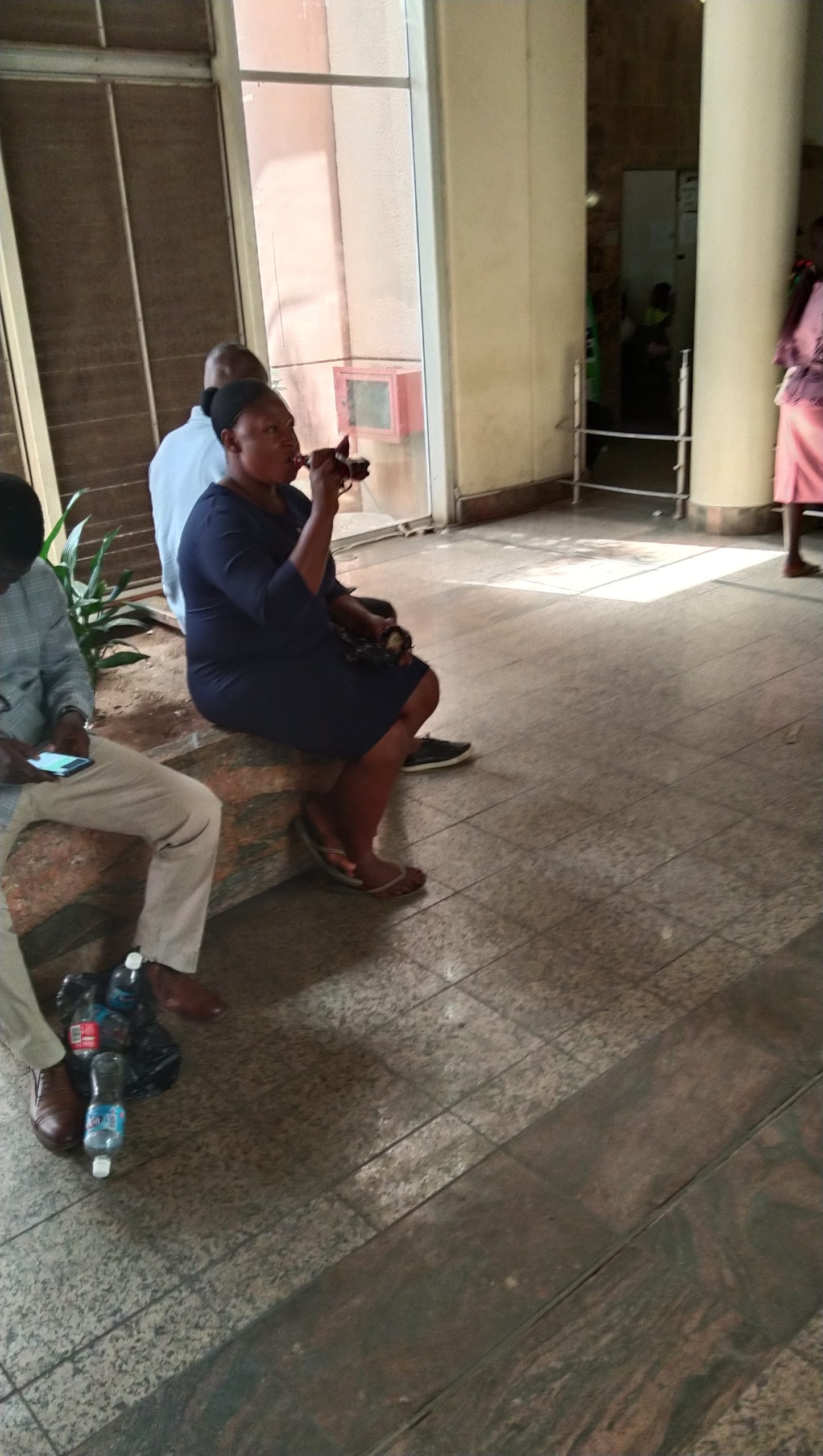
“I got here today before 7:00 am, I have been coming everyday for the past one week,” Sarah told The ICIR‘s correspondent around 2:00 pm. The woman, who was apparently very hungry, was having a soft drink bottle with some snacks. She explained that she had not had any food since that morning.
“I am ready to pay money to ensure that I do my enrolment today,” Sarah said, with a determined expression on her face. When she realised that she was speaking with a journalist after our correspondent requested a formal interview, Sarah became evasive. Still, she admitted that she had been made to understand that enrolment officers could give her urgent attention if she offers money.
Sarah, taking a snack while waiting for enrolment
But when asked if she and other applicants who go out of their way to offer cash for the enrolment are not the ones corrupting the process, Sarah was quick to claim that NIMC workers intentionally make things difficult for applicants to make money from them.
NIMC workers union leader exonerates colleagues, says going by dictionary definition, there is no extortion
Lucky Asekokhai, leader of the NIMC staff union, told The ICIR that his colleagues were not to blame for cases of extortion being recorded in the enrolment exercise.
Asekokhai not only insisted there was nothing like extortion going on, but he also suggested that applicants are the ones offering cash inducement to enrolment officers.
“Somebody will come and tell you I want to enrol, and there is no electricity and no fuel to power the generator and the person that wants to enrol need the NIN urgently. If the staff tell the applicant, there is no fuel and says he wants to buy fuel, the enrolment officer will not say no. Still, by the time that applicant gets the NIN, he will go out there and tell everybody that he paid for it and that is how you will now hear people accusing NIMC staff of extortion,” the union leader observed.
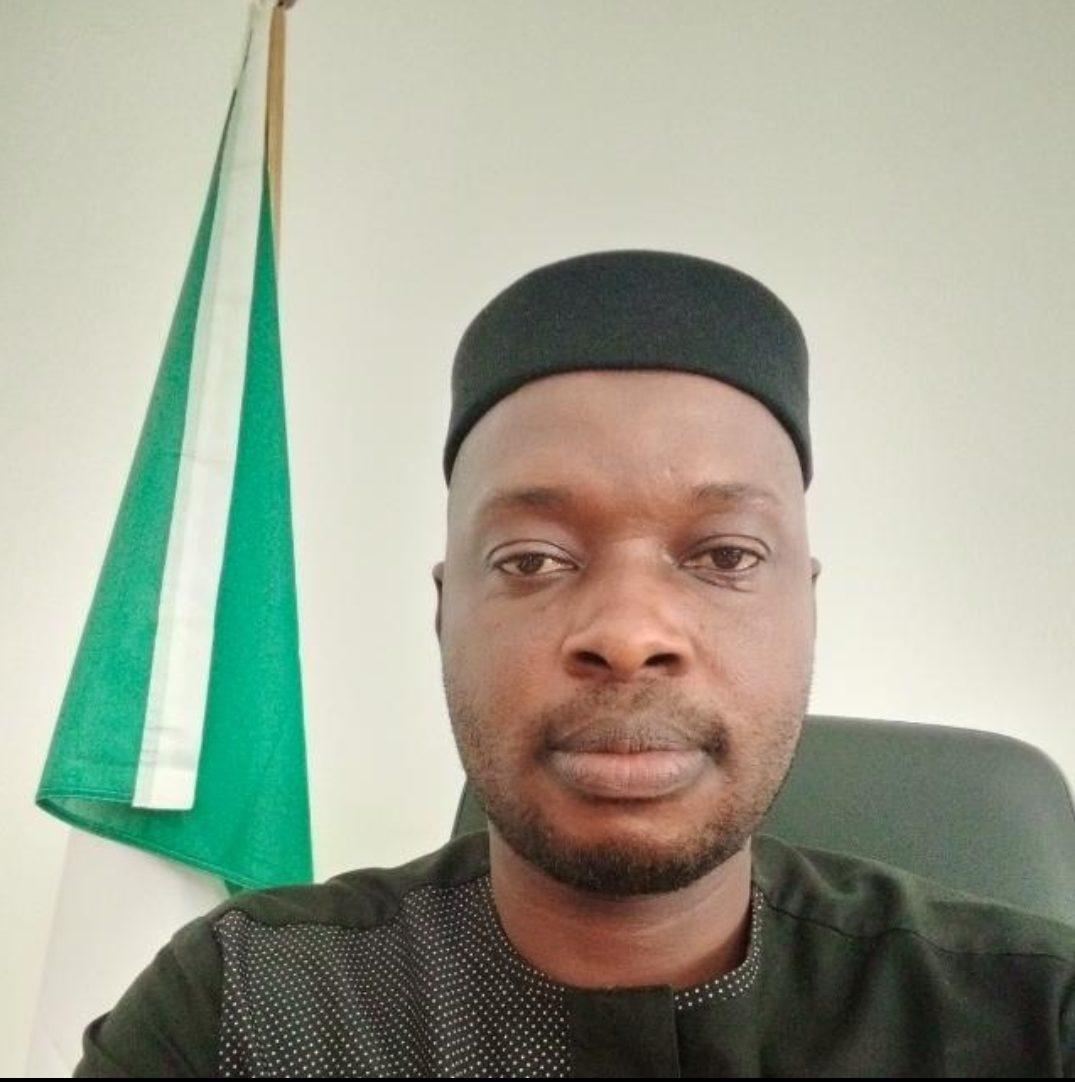
Lucky Asekhohai, NIMC workers union leader
Noting that applicants are not being compelled to bring money for the NIN enrolment, Asekokhai added, “I am still not seeing any extortion – when I use my dictionary to define extortion, it means the money you collected from somebody with force. That is the dictionary definition, including the Oxford dictionary and Webster dictionary. But when you come to the enrolment centres, what is happening is different. If there is no electricity, NIMC is not the one that produces electricity. Now you come to enrol, and you need the NIN urgently to link with your SIM, how do we go about it? Won’t we look for fuel? By the time we buy fuel and say ‘use this one to support the fuel’, will you call it extortion? To me, it is not extortion. I keep telling people it is not by force, anybody telling you to bring money report the person. In fact, in December, we sacked three people who collected money from applicants. They were sacked.
“The people that are extorting money are not NIMC staff. In Kano, a group of people came together, and they were collecting money from applicants and giving out fake NIN. When the information got to us, we made investigations, and those people were arrested, but anybody who does not know the difference between those people and us will say NIMC staff were extorting.”
“NIMC staff are not extorting. The people that are offering money are not being compelled to bring money and secondly, they need the service urgently; that is why you hear about money. To avoid these stories, I have educated my people that anybody that comes and there is no electricity you tell the person to go home. We are not AEDC that generates power but whenever you come, and there is the electricity. I can tell you that the NIMC staff are not extorting. Those that are extorting are not NIMC staff, they are miscreants,” Asekokhai insisted.
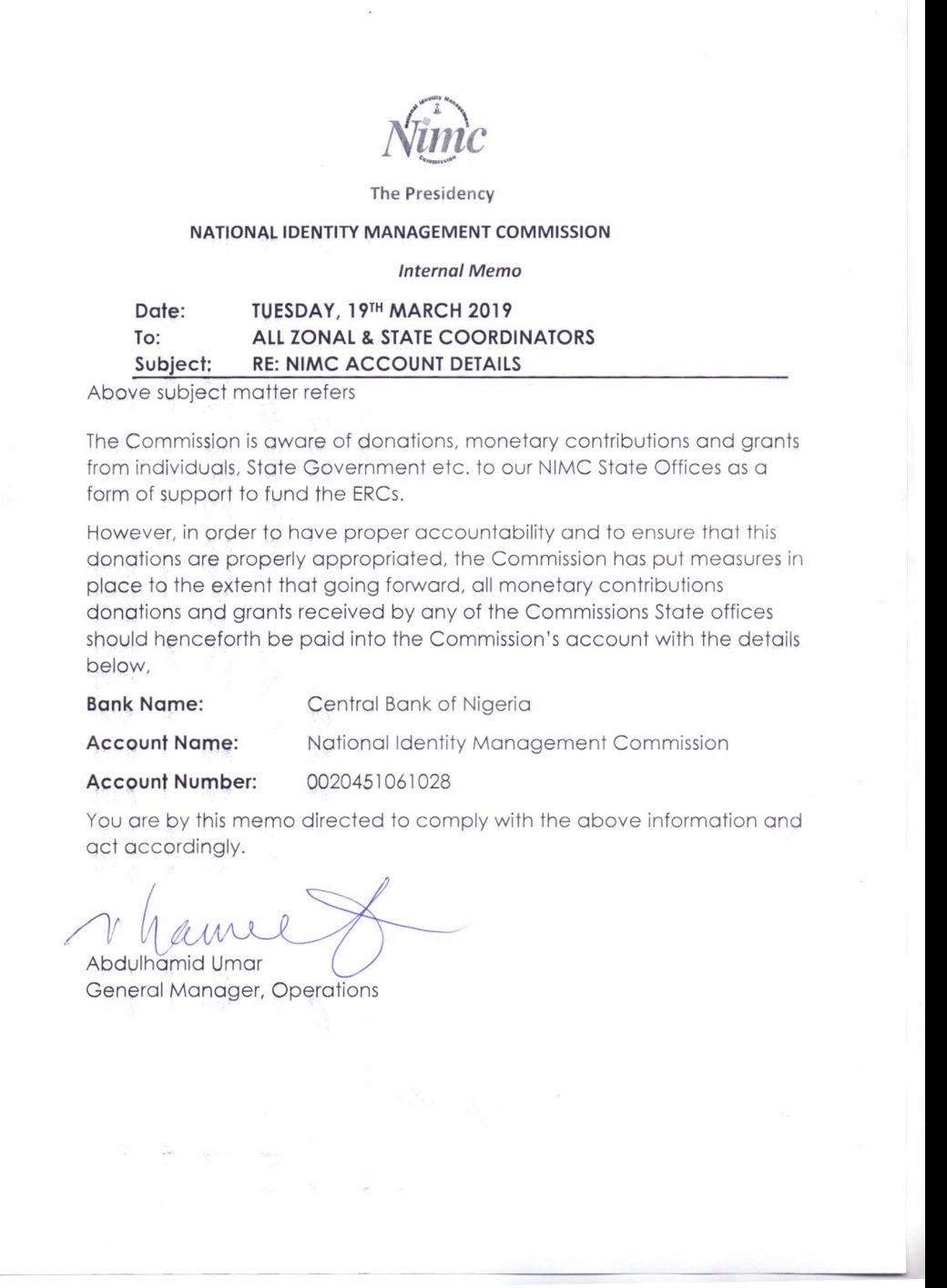
* NIMC management opened account to receive money donated by individuals, organisations, states and local governments to support NIN enrolment
The ICIR investigation also revealed that, officially, funding of the enrolment exercise is supported by donations, monetary contributions and grants from individuals and public institutions, including states and local governments.
The NIMC management, in an internal memo dated March 19, 2019, provided an account number for the collection of the money. According to the internal memo, the CBN account – National Identity Management Commission, 0020451061028, signed by Abdulhamid Umar, general manager, operations, is where all monetary support for the enrollment should be paid into.
Internal memo on NIMC account for donations
So far, about 46 million Nigerians have enrolled for the NIN. But many more Nigerians are still struggling to register for the NIN before April 6, 2021, the new deadline given by the federal government for the NIN-SIM integration.