Home Blog Page 191

FCT Police confirm 4 dead, 1 injured in Mabushi tout-induced accident

0

THE Federal Capital Territory (FCT) Police Command has confirmed the death of four persons in a fatal motor accident at the Mabushi Bridge in Abuja.

The tragedy occurred on Wednesday, September 3.

According to the FCT police spokesperson, Josephine Adeh, preliminary investigations revealed that a grey Toyota Highlander, with registration number ABJ 206 EC, was forcefully taken over by three unidentified suspects near Berger Junction, Utako.

The vehicle, driven by one Emeka Ehekweme with his wife on board, reportedly lost control during a struggle for the steering wheel, veered off, and hit a parked Mazda that eventually somersaulted into a bridge pillar.

Ehekweme, his wife, and two of the suspected assailants were confirmed dead on arrival at the National Hospital, Abuja. A third suspect is said to be receiving treatment.

“The driver of the Mazda, identified as Suleman Mohammed, sustained no life-threatening injuries,” the police said.

The police have launched an investigation into the circumstances surrounding the incident and assured the public of a thorough probe.

“The Command commiserates with the families of the deceased and assures the public of a thorough investigation to ascertain the facts of the matter. Further developments will be communicated in due course,” Adeh.

The ICIR reports that car park touts, known locally as ‘agberos’ have been a menace to Nigeria’s capital and other cities.

All calls on the tiers of government to ban their activities have fallen on deaf ears. Many believe that the agberos are instrumental to politicians during elections. They are also easy tools during mobilisation for counter protests against good governance.

The touts pounce on any motorist that picks or drops passengers at car parks, regardless of whether the ‘passengers’ are relations to the driver or not.

Because of the poor transport system in major cities in Nigeria, commuters find it difficult to board vehicles at many car parks. Fares are exorbitant and it could take vehicles much time to leave the parks.

Commuters who could not endure delays and seek motorists who would accept less fares easily look for drivers to take them to their destinations. In most cases, these motorists drive private vehicles.

Did the Senate pass a 2025 Cybercrime Act?

0

A claim that a 2025 Cybercrime Act has been passed into law has surfaced on the internet. The claim has been circulating on Facebook and also on WhatsApp status, as retrieved by our fact-checker.

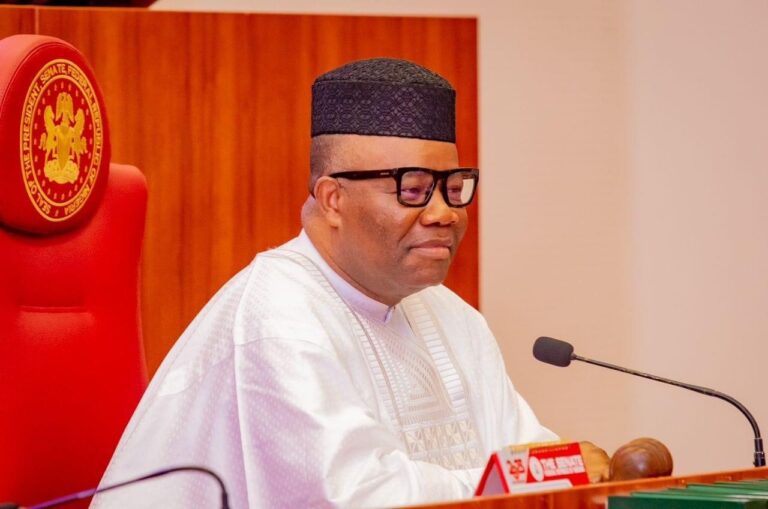
The claim noted that the act was signed into law by the Senate president, Godswill Akpabio, and warned that citizens should abide.

The post read:

“BREAKING: The new Cybercrimes Act 2025 has officially been passed into law by the National Assembly under Senate President Godswill Akpabio.
This means every provision in the Cybercrimes (Prohibition, Prevention, etc.) Act is now fully binding and enforceable across Nigeria.
If you’re an online user, content creator, or admin of any digital platform (WhatsApp, Facebook, Telegram, etc.), you must know what this law says — because ignorance will not be an excuse.” 
According to the purported act, key offences under the Cybercrimes Act include unauthorised access, like accessing someone else’s phone, laptop, or account without permission, which is punishable by up to 5 years in prison, among others.

The Nigerian Cybercrime Act (2015) is one of the main law against online crimes like fraud, hacking, identity theft, cyberstalking, and child pornography. It protects critical information systems, requires service providers to keep user data, and prescribes fines or jail terms for offenders. While it helps fight “yahoo-yahoo” scams and cyber threats, critics say parts of it restrict free expression and are sometimes used against journalists and activists.

Due to the sensitive nature of the claim, The FactCheckHub verified its accuracy.

CLAIM

The 2025 Cybercrimes ACT has been passed into Law

THE FINDINGS

Findings by The FactCheckHub show that the claim is FALSE!
Screenshot of the claim; Insert FALSE verdict

The FactChekHub gathered that the Nigerian Senate has been on its annual recess since late July 2025 and is not expected to resume until September 23, 2025.

This means no new Cybercrimes Act 2025 could have been passed during that time.

In addition, the passage of a bill by the National Assembly alone does not make it law in Nigeria; the President must also sign it before it takes effect.

In one of our fact-checks, we explained that for a bill to be passed into an act, it has to pass through several stages.

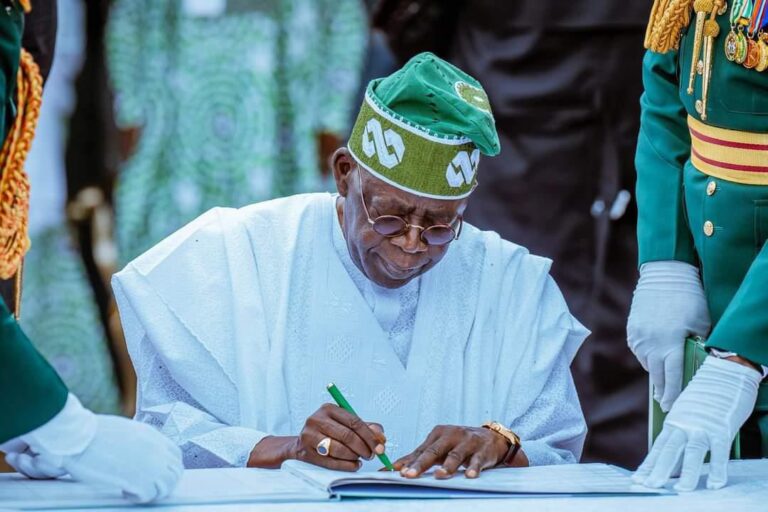
The most recent amendment to the law was the Cybercrime (Prohibition, Prevention, etc.) (Amendment) Act 2024, which President Bola Tinubu signed on February 28, 2024. Although talks about a potential review started in May 2025, no new Act has been passed since then.

Lastly, no local media outlets reported the news as such would be reported by credible media outlets across the country.

THE VERDICT

The claim that the 2025 Cybercrimes Act has been passed into Law is false; the Senate, concerned with making such laws, is currently on recess and will resume in September.

This report is republished from the FactCheckHub.

US Government releases $32.5 million to support displaced Nigerians

0

THE United States (US) Government has released $32.5 million to the United Nations World Food Programme (WFP) to support internally-displaced persons (IDPs) in Nigeria.

IN a statement released by the US Embassy on Wednesday 3 September, the WFP will deliver food and nutrition assistance to hundreds of thousands of people displaced by conflict in Nigeria.

The embassy said the funding would support 764,205 beneficiaries across the conflict-affected Northeast and Northwest regions of the country.

The intervention aims to ease food insecurity in communities severely impacted by violence and displacement.

As part of the support, 41,569 pregnant and breastfeeding women and girls, as well as 43,235 children, will receive complementary nutrition top-ups through electronic food vouchers.

The initiative is designed to improve dietary diversity and prevent malnutrition among vulnerable groups.

The embassy noted that the US contribution came at a critical time when millions of Nigerians faced acute food shortages due to conflict, displacement, and rising costs of living.

It pledged to continue working with humanitarian partners and government authorities to expand life-saving food assistance and build resilience in affected communities.

This intervention comes weeks after the World Food Programme warned it would suspend aid for 1.3 million people in the North-East due to a critical funding shortfall.

The ICIR reported that the agency’s food stocks had run out in July, forcing the closure of over 150 nutrition clinics in Borno and Yobe states and leaving hundreds of thousands of children without support.

The suspension highlighted the worsening food crisis in conflict-affected areas, where years of insurgency have displaced millions and left families dependent on humanitarian aid to survive.

Tinubu orders mandatory health Insurance across MDAs

0

PRESIDENT Bola Tinubu has ordered the compulsory implementation of health insurance across all Ministries, Departments, and Agencies (MDAs) in line with the National Health Insurance Authority (NHIA) Act of 2022.

A statement on Wednesday, September 3, by his Special Adviser on Information and Strategy, Bayo Onanuga, said the directive was part of efforts to expand coverage and cut down on Nigerians’ out-of-pocket medical expenses.

The president, through a directive issued to the Secretary to the Government of the Federation, noted that all civil servants must be enrolled in the NHIA health insurance plan.

He also said that contractors and service providers dealing with the government must show proof of valid NHIA-issued health insurance certificates before they could qualify for procurement processes.

“First, all MDAs must enroll their employees in the National Health Insurance Authority (NHIA) health insurance plan. Where desired, MDAs may take up supplementary private insurance coverage in accordance with the NHIA Act.

“All entities participating in public procurement must present a valid NHIA-issued Health Insurance Certificate as part of their eligibility documentation.

“This certificate confirms compliance with the mandatory health insurance requirement and serves as a condition precedent for continuing any procurement-related engagement,” the statement read.

Many Nigerians face the challenge of paying more for drugs and medical care. Some of the reasons are ballooning inflation and exit of pharmaceutical companies from the country because of skyrocketing costs of doing business. 

For instance, in 2023, a major pharmaceutical firm, GlaxoSmithKline(GSK), producer of prescribable medicine such as Augmentin and Amoxil, disclosed its strategic plan to stop the commercialisation of its prescription medicine and vaccines in Nigeria and transition to a third-party distribution model for its pharmaceutical products, citing foreign exchange concerns.

Meanwhile, while pushing for stricter implementation, Tinubu also called for constructive engagement with the private sector to ensure businesses are not unfairly burdened by the mandatory health coverage requirement.

The Presidency explained that the measure was intended to widen health insurance coverage, protect workers, and promote accountability, noting that universal access to healthcare remained a central goal of the NHIA Act.

Out-of-pocket expenditure remains the dominant mode of healthcare financing in Nigeria, accounting for more than 70 percent of total health spending. It is among the highest in the world. 

This system leaves millions of Nigerians unable to afford basic services, forcing many into debt or reliance on traditional medicine and unregulated drug vendors.

Signed into law in 2022, the NHIA Act makes health insurance compulsory for all Nigerians and places responsibility on the NHIA to deliver universal health coverage. However, nearly three years on, enrollment levels remain worryingly low. 

According to the Minister of Health and Social Welfare, Muhammad Pate, less than 10 per cent of the Nigerian population enrolled in health insurance.

The low coverage, according to reports, could be attributed to most Nigerians working in the informal sector and are not on payroll systems, making regular deductions for premiums nearly impossible.

Reports also cited distrust in government programmes, poor awareness, and skepticism fueled by corruption and service failures on the low coverage.

FG overhauls school curriculum, as History returns to classrooms 

0

THE Federal Government has announced a major overhaul of Nigeria’s national curriculum, reducing the number of subjects across all levels of basic and secondary education.

The development, according to a statement by the Ministry of Education on Wednesday, September 3, is designed to reduce the academic burden on students while focusing on skills-based learning, digital literacy, and entrepreneurship.

It noted that the reform followed extensive consultations with the Nigerian Educational Research and Development Council (NERDC), West African Examination Council (WAEC), National Examination Council (NECO), National Board for Technical Education (NBTE), National Business and Technical Examinations Board (NABTEB), and other stakeholders.

Alausa said the changes, set to take effect in the 2025/26 academic session, would allow children to learn in a more functional way without being overburdened. 

Teachers, he added, would benefit from a simpler structure, while government resources would be redirected to building a stronger, skill-driven education system.

Under the revised structure, pupils in Primary 1–3 will now take nine to 10 subjects, down from 13 to 15, while Primary 4–6 pupils will study 10 to 12 subjects, instead of the previous 15 to 17. Junior Secondary School (JSS 1–3) students will offer 12 to 14 subjects, a reduction from 15 to 18. 

At the Senior Secondary School (SSS) level, students will be expected to select eight to nine subjects, compared to the earlier 15 to 20, while technical schools will now focus on nine to 11 subjects, against the previous 18 or more, according to the statement.

The curriculum also introduces Humanities, Sciences, Business, one core trade subject, and compulsory general courses. 

The government has also reintroduced Nigerian History as a compulsory subject from Primary 1 to JSS 3, while a new subject, Citizenship and Heritage Studies, merges History, Civic Education, and Social Studies at the senior secondary level.

The ministry added that trade subjects for non-technical schools had been streamlined to six practical areas, which include Solar PV Installation and Maintenance, Fashion Design and Garment Making.

Others are Livestock Farming, Beauty and Cosmetology, Computer Hardware and GSM Repairs, and Horticulture and Crop Production.

“In addition, National Business and Technical Examinations Board (NABTEB) will now administer 28 revamped trade subjects for technical colleges. WAEC and NECO subjects have also been aligned to reflect the revised structure, focusing on core areas and relevant trades,” the statement added.

“The curriculum overhaul is a testament to the Federal Government’s commitment to revitalising the education sector, enhancing the quality of instruction, and ensuring that Nigerian students are equipped with the knowledge and skills required to thrive in the global economy,” it added.

The ministry assured parents, teachers, and students that it would provide the necessary support for a smooth transition to the revised curriculum.

Police spokesperson Adejobi redeployed to Delta State  

0

THE Nigeria Police Force (NPF) Public Relations Officer, Olumuyiwa Adejobi, has been redeployed to the Delta State Police Command as Deputy Commissioner in charge of Operations.

The Nigeria Police Force has yet to officially comment on the reasons for his redeployment, but Channels Television reported that his transfer was a strategic posting.

The ICIR also reached out to Adejobi via phone calls, SMS, and WhatsApp messages, but he neither picked up nor responded as of press time.

Adejobi, who only recently rose from Assistant Commissioner of Police (ACP) to DCP, has been the voice and image of the Nigeria Police Force since February 2022. 

He was appointed in acting capacity after the exit of Frank Mba and was later confirmed by former Inspector General of Police, Usman Alkali Baba (Rtd).

His redeployment came on the heels of several human rights abuse allegations against him. 

In February this year, a legal and human rights firm, Deji Adeyanju & Partners, petitioned the United States Embassy to impose a visa ban on him over allegations of rights abuses and suppression of free speech.

The petition accused Adejobi of using his position to justify police brutality and intimidate critics, citing cases where citizens were detained after making online remarks critical of the government or security agencies. 

According to Adeyanju, a TikToker, Destiny Ekhorutomwem, was arrested for cyberbullying under Adejobi’s directive and allegedly subjected to harsh bail conditions before collapsing in custody. Other cases involved the arrest of a nurse, Olamide Thomas, and the detention of Charles Uche Ihedioha for social media posts.

Adejobi’s public remarks have also attracted controversy in the past. 

The petitioner noted that in March 2023, he tweeted that ‘hurling insults at police officers carrying out their legal duty is criminal,’ a statement critics said encouraged authoritarian policing. 

Similarly, in February 2024, as kidnapping cases surged nationwide, he dismissed many reports as ‘staged’ or ‘fake’, drawing backlash from families of victims and human rights advocates.

“Most of the kidnapping cases we read online are not real. They are either staged and faked. We analyse security situations based on empirical facts and figures.

“These are different concepts or crimes that we need to understand, and the psychology of the perpetrators. No sentiment, but realities. Open your mind to discussions and explanations of experts and security operatives for better understanding,” he posted.

Adejobi had served as Police Public Relations Officer in Ogun State; Zone 2 Headquarters, Lagos; and Lagos State Command.

Fresh boat accident kills 29 in Niger State

0

ABOUT 29 people lost their lives in a boat accident that occurred in the Malale area of Borgu Local Government, Niger State, on Tuesday, September 2.

The incident reportedly happened in the Gausawa community at about 11:30 am.

According to reports, the boat was carrying over 90 passengers, including women and children. It was coming from Tugan Sule in Shagunu ward and was heading to Dugga for a condolence visit when tragedy struck.

Confirming the incident, the Director General of the Niger State Emergency Management Agency (NSEMA), Abdullahi Baba Arah, said the mishap was a result of overloading and a collision with a tree stump.

Baba Arah said 50 people were rescued alive, while two people were still missing.

“Search and rescue operations are ongoing for possible recovery of missing persons,he stated.

He added that the deceased victims have since been buried.

The ICIR reports that this is the second boat accident in Niger State in 2025. The first one occurred in July and was due to a tree stump.

Boat mishaps are frequent on Nigeria’s waterways, often caused by a lack of life jackets, overcrowding and poorly maintained vessels, particularly during the rainy season when rivers and lakes overflow their banks.

On Friday, August 29, the National Inland Waterways Authority (NIWA) confirmed a boat mishap at the Jaranja River in the Shagari Local Government Area of Sokoto State.

The incident, the third within a month in the state, claimed two lives, while nine injured victims were rescued in the tragedy.

The accident occurred barely a week after four people died in a boat mishap at Kojiyo village in Goronyo Local Government Area of the state.

In the accident, which occurred on August 17, 41 passengers were rescued and five declared missing.

Recall that another incident occurred at Faji Community in Sabon Birni Local Government Area of the state on August 22.

In December 2024, the head of operations for NEMA in Kogi State, Justin Uwazuruonye, confirmed that 54 bodies were recovered from a boat accident involving about 200 traders in the state.

Uwazuruonye pointed out that the lack of a passenger manifest made it challenging to ascertain the exact number of people on board.

Similarly, in August 2024, at least 16 farmers lost their lives in Sokoto State after a wooden canoe conveying them across a river to their rice fields capsized.

Also on July 29, 2025, six young girls drowned in north-western Jigawa State when the boat transporting them home from farm work overturned midstream.

Just two days earlier, on July 27, another tragedy struck in central Niger State, where at least 13 people were killed in a separate boat accident.

ICIR trains SPARK 2.2 fellows

0

THE International Centre for Investigative Reporting (ICIR) has concluded a two-day virtual training for journalists selected to participate in its Strengthening Public Accountability for Results and Knowledge (SPARK 2.2) investigative reporting fellowship.

The training, held from September 2 to 3, 2025, brought together journalists from seven states – Anambra, Oyo, Ogun, Niger, Kano, Jigawa, and Nasarawa – where the SPARK project is currently being implemented.

Declaring the workshop open, ICIR’s Executive Director, Dayo Aiyetan, underscored the Centre’s commitment to deepening accountability reporting in Nigeria, noting that investigative journalism remained critical in highlighting governance and development challenges.

Aiyetan thanked the International Budget Partnership (IBP) for supporting the project, noting that while this phase runs for four months, The ICIR’s partnership with IBP was continuous.

He noted that the programme was not just about investigating and exposing corruption but also examining the systemic issues and shortcomings that often led to journalists’ findings on the field.

“Like agricultural inputs not getting to women famers. Is it state government’s policy or federal government’s policy? For example, issues like transportation issues that make thing hard for small holder women farmers or cultural barriers inhibiting women farmers. We need to look at those systemic issues leading to negative outcomes that we find,” he said.

He added that the issues were not only about how policies affect women but also agelong imbalances in some government policies which make it hard for women to access government’s support.

Also speaking at the training, The ICIR Senior Programmes Officer, Chukwudi Iwuoha, said the initiative sought to equip reporters with the skills to investigate and highlight governance lapses affecting women and children in marginalised communities.

He explained that the fellowship would concentrate on two areas in each focus states.

On healthcare, Iwuoha said journalists were expected to assess the implementation of the Basic Health Care Provision Fund and the Midwives Service Scheme, while exposing systemic, political, and infrastructural barriers limiting service delivery in rural areas.

In agriculture, he noted that the project would examine the struggles of smallholder women farmers, including poor access to credit, inputs and extension services, as well as cultural and gender-related obstacles.

“Journalists will undertake fieldwork to document real-life experiences, generate data, and tell compelling stories that not only expose problems but also highlight solutions,” Owuaha stated.

According to him, expected outcomes of the fellowship include increased public awareness of systemic failures, promotion of best practices, stronger accountability in policy implementation, and amplified voices of women and marginalised groups.

Participants at the training were taken through practical sessions covering key aspects of investigative journalism.

Day one featured sessions on the fundamentals of investigative reporting, fact-checking, gender-sensitive reporting, multimedia storytelling, and working with documents.

Facilitators included The ICIR Editor, Victoria Bamas, Programme Director at Daily Trust Foundation, Theophilus Abbah, and IBP representatives, with sessions designed to equip fellows with technical skills to strengthen the quality and impact of their reports.

Day two of the workshop built on what was done on the first day, focusing on sourcing information, advanced multimedia techniques, interviewing methods, and critical conversations around journalists’ safety and professional ethics.

The training ended with a charge to participants to apply the skills gained in producing data-driven, people-centred stories that not only expose systemic barriers but also drive accountability in governance.

The SPARK 2.2 fellowship, supported by the International Budget Partnership, is part of ICIR’s long-term efforts to build a network of investigative journalists dedicated to addressing pressing governance challenges in Nigeria.

The initiative, which began with SPARK 1 and later advanced to SPARK 2, is now in its second phase of implementation under SPARK 2.2, expanding its focus and deepening its impact on governance and accountability reporting in Nigeria.

Under the maternal healthcare component, participating journalists will investigate systemic barriers limiting access to services, as well as gaps in the implementation of the Basic Health Care Provision Fund (BHCPF) despite continued government investment.

In agriculture, the fellowship will examine the struggles of smallholder women farmers (SHWFs), including limited access to credit and farming inputs, income constraints, and gender-based challenges that affect their productivity and economic empowerment.

The project will adopt a systems-level, gender-sensitive approach to uncover the root causes of these challenges and produce data-driven reports that drive accountability.

Amid ICPC probe, National Library denies allegations of wrongdoing

0

THE National Library of Nigeria (NLN) has dismissed allegations of procurement fraud, employment racketeering, and victimisation of staff raised in a petition confirmed by the Independent Corrupt Practices and Other Related Offences Commission (ICPC).

Despite ongoing investigations by the ICPC, a statement by Orvell Dio, Assistant Director of Information and Public Relations, described the allegations as a smear campaign orchestrated by disgruntled individuals seeking to discredit the National Librarian, Chinwe Veronica Anunobi.

The response followed The ICIR report, which revealed that the ICPC is probing the agency after petitions from staff unions accused its leadership of contract inflation, abuse of procurement rules, and the sale of employment slots. 

The report also detailed alleged staff victimisation, diversion of public funds, and phantom projects. It also noted how insiders said corruption and mismanagement have become entrenched, leaving staff disillusioned and afraid to speak out. 

Central to the allegations was the procurement of two JAC Frison 4×4 pickup vehicles for N62.6 million in 2022, with the petitioners claiming the vehicles were bought from a supplier not listed in the BPP waiver and at an inflated cost, with a forged invoice allegedly inserted into the procurement file.

The petitioners indicated that this amount was inflated by N14 million when compared against independent market rates for identical vehicles. In the document attached to the petition, the union got an invoice for the two vehicles from the same vendor to be N48.3million, including VAT. Each car was sold for N22,500,000 and VAT of 7.5 per cent on the two vehicles for N3.3 million.

Responding to this, the library insisted that three companies, Elizade Nigeria Ltd, Lanre Shittu Motors, and Globe Motors, were approved by the BPP, and all were invited to bid. 

It said Elizade’s quotation for JAC pickups was cheaper than Lanre Shittu’s Hilux, prompting the agency to purchase the two vehicles instead of one while staying within its ₦63.5 million budget.

The petitioners had stated that while the contract was awarded at N62,649,710, the actual market cost for the two vehicles from the same vendors, including 7.5 per cent VAT, was N48.3 million, a difference of N14.35 million.

But Dio initially said the cost of the project was estimated to include all the statutory deductions which, according to him, amount to about 13 per cent of the total contract sum.

However, going by the document attached to the petition, after statutory deductions of about 13 per cent (N8.14 million) by the Office of the Accountant-General, the contractor would have received approximately N54.51 million. This still leaves a gap of N6.21 million between the petitioners claimed cost and the net amount paid to the supplier.

The petition further accused the leadership of the library of job racketeering, with employment slots allegedly sold for as much as N2 million, often to individuals from the South-East, contrary to federal character rules. 

This, The ICIR noted, was dismissed in the report. 

It has, however, further maintained that appointments were screened and approved by the Federal Character Commission, adding that no job slots were sold on its behalf.

On payments into staff personal accounts, the library claimed the funds paid to a senior staff, I.O. Kalu, was a ‘non-personal advance’ noting that the funds were duly retired after the campaign. 

Dio had initially justified the payment, saying the reason for making payments into staff accounts was that some projects are best executed by in-house staff and do not need to be outsourced to contractors.

The agency also denied claims of phantom projects, stressing that over 6,200 materials have already been digitised and uploaded to its public repository, while its library software is a subscription-based version, not free software as alleged.

This was again contrary to what insiders said, as they claimed that the digitisation of weak and rare materials was done by staff of the library.

Despite widespread claims by petitioners and insiders who spoke to The ICIR, the Library insisted that no staff member was being victimised.

Recall that The ICIR reported that the ICPC confirmed four victims of this alleged harassment, noting that it has communicated the cases to the Ministry of Education for possible protection of the whistleblowers.

How local governments can foster grassroots development in Nigeria

THE Local Governments are the closest tier of governance to the grassroots in Nigeria. They provide communities with the opportunity to influence how they are governed, ensuring that local needs are addressed through direct representation.

This closeness fosters inclusiveness in governance, enabling citizens to participate in decision-making and building stronger, more responsive institutions at the local level.

Local governments were created as the third tier of government, specifically to bring development nearer to the people. Yet, despite their importance, many Nigerians remain unaware of the roles and responsibilities of their LGAs.

This lack of awareness often shifts attention disproportionately to state governors and the federal government, creating unnecessary pressure on higher tiers of administration.

The ICIR highlights the constitutional duties of local government councils and their leaders, shedding light on why they matter so much to grassroots development.

Structure of local government in Nigeria

Nigeria has 774 LGAs spread across its states. Each LGA is governed by a council, headed by a chairman who serves as the chief executive, supported by elected councillors.

Each LGA is further divided into wards, with councillors representing these subdivisions. Together, they form the legislative arm of the local council, making laws and regulations at the grassroots level.

In essence, LGAs stand as the third tier of government, directly beneath the states and the federal government.

What the constitution says

The 1999 Constitution, in Section 7 (Chapter I, Part II), provides the legal framework for the establishment, structure, composition, finance, and functions of local governments.

It guarantees a system of democratically elected councils and mandates each state to pass laws defining the operation of LGAs within its boundaries.

The constitution also clearly demarcates local government areas, taking into account traditional affiliations and community interests.

Beyond governance, LGAs are required to contribute to the economic planning and development of their states. To achieve this, each state is expected to establish an Economic Planning Board, providing a platform for LGAs to feed into broader state development initiatives.

Importantly, the constitution affirms the rights of citizens: anyone qualified to vote in State Assembly elections is also entitled to vote and contest in LGA elections, reinforcing democratic participation at the grassroots.

Funding 

The constitution’s Fourth Schedule obliges both the National Assembly and State Houses of Assembly to make statutory allocations of public revenue to local governments. This provision ensures that councils have adequate financial resources to perform their duties effectively.

Functions of LG councils

The Fourth Schedule outlines the duties of LGAs, dividing them into exclusive (primary) and concurrent (shared) functions.

Exclusive functions

LGAs are directly responsible for:

  • Recommending contributions to state economic planning.
  • Collecting local rates and radio/television licence fees.
  • Establishing and maintaining cemeteries, burial grounds, and homes for the destitute or infirm.
  • Licensing non-mechanised transport (such as bicycles, wheelbarrows, carts, and canoes).
  • Establishing, maintaining, and regulating markets, motor parks, slaughterhouses, and public conveniences.
  • Constructing and maintaining local roads, streetlights, drains, parks, gardens, and open spaces.
  • Naming roads and numbering houses.
  • Providing sewage and refuse disposal services, as well as other public health functions.
  • Registering births, deaths, and marriages.
  • Assessing privately owned houses and tenements for levying rates, in line with state law.
In addition, LGAs regulate:
  • Outdoor advertising and hoardings,
  • Movement and keeping of pets,
  • Shops and kiosks,
  • Restaurants, bakeries, and food premises,
  • Laundries,
  • Licensing and regulation of liquor sales.

Concurrent functions

LGAs share certain duties with state governments, including provision and maintenance of primary, adult, and vocational education; development of agriculture and natural resources (excluding minerals); provision and maintenance of health services, and any other functions assigned by state legislation.

Role of a local government chairman

As the chief executive of the council, the local government chairman leads the executive arm, oversees resources, and implements policies that impact daily life at the grassroots.

In short, the chairman is pivotal to the effectiveness of local governance and community development.

 LG autonomy

On Thursday, July 11, 2024, the Supreme Court delivered a landmark ruling affirming the financial autonomy of Nigeria’s 774 local governments.

The federal government had challenged the long-standing practice of state governors controlling council funds.

In its judgement, read by Justice Emmanuel Agim, the apex court declared it unconstitutional for states to withhold or manage allocations meant for LGAs. It ordered that all council funds be paid directly into their respective accounts.

The ruling marked a turning point in the push for stronger local government autonomy — a demand that has grown louder over the years as state interference has been blamed for the underperformance of LGAs nationwide.

With the Supreme Court judgement, LGAs in Nigeria are now expected to receive more funds, as their allocations will come directly from the Federation Account rather than through state governments, which have long been accused of diverting the bulk of the money and leaving councils with only a fraction.

Why local governments matter

When Nigerians talk about governance, the spotlight always falls on Abuja or state capitals. Yet the government tier that affects citizens most directly is the one nearest to them — the local councils. Understanding the responsibilities of LGAs is critical because they hold the key to grassroots development.

Properly functioning councils can address community-specific issues such as waste management, roads, education, and healthcare, directly improving the quality of life.

Sadly, councils are too often overlooked. The next time you encounter a broken streetlight, an overflowing refuse dump, or a blocked drainage channel, remember that is your local council’s job.

The way forward

If adequately empowered and held accountable, LGAs could transform communities and accelerate Nigeria’s development.

Recognising their constitutional role is the first step towards restoring confidence in grassroots governance and driving meaningful development across Nigeria.