Home Blog Page 191

ChatGPT to introduce parental control features after teenager’s death

0

OPENAI, the maker of ChatGPT, has announced it would introduce new parental control features on its artificial intelligence chatbot after facing a lawsuit from a United States (US) couple who alleged the system encouraged their 16-year-old son to take his own life.

The teenager, Adam Raine, reportedly killed himself after months of conversations with the chatbot.

According to the BBC, the parents of the teenager, Matthew and Maria Raine, filed the case in California last week, claiming that ChatGPT validated their son Adam’s suicidal thoughts and provided him with instructions that ultimately led to his death in April.

In response, OpenAI said it was strengthening protections for teenagers and would roll out parental control features within the next month.

Under the new system, parents will be able to link their accounts with their children’s accounts, manage features such as chat history and memory, and receive notifications if the chatbot detects their child is in “acute distress.”

The company stated that experts in youth development, mental health, and human-computer interaction were helping design the safeguards.

According to OpenAI, the feature will be guided by professional input to support trust between parents and teens.

OpenAI acknowledged that its system had not always behaved as intended in sensitive situations but stressed that it continued to improve how its models recognise and respond to signs of emotional or mental distress.

The company also revealed plans to redirect some sensitive conversations to more advanced “reasoning models,” which it said applied safety guidelines more consistently.

The lawsuit has placed a spotlight on the safety of young users of AI platforms. ChatGPT requires users to be at least 13 years old, with parental consent needed for those under 18.

The case comes amid growing global pressure on technology companies to improve online safety.

OpenAI said it remained committed to building “an evidence-based vision for how AI can support people’s well-being and help them thrive.”

The ICIR reports that ChatGPT, released in November last year, is capable of writing logical essays and solving mathematical puzzles, as well as producing computer code.

But this new artificial intelligence tool has been opposed by many academic institutions around the world for ethical reasons, like plagiarism and misinformation.

For instance, the Sciences Po school in Paris, one of the most prestigious universities in France, has banned the use of ChatGPT for oral or written assignments.

It said anyone found to have used the chatbot for an assignment would face “sanctions which can go as far as expulsion from the establishment, or even from higher learning.”

Officials in New York and other jurisdictions have also forbidden its use in schools, according to several reports.

Why PoS merchants support geo-tagging but fear disruption from CBN’s 60-day deadline

PONIT-OF-SALE (PoS) merchants are currently kicking against the 60-day geo-tagging directive from the Central Bank of Nigeria, noting that it’s going to disrupt business operations for over 4.2 million agency banking operators across the country.

The apex bank has officially introduced the PoS system also known as agency banking in 2013, to achieve financial inclusion and develop a cashless economy.

However, having observed recurrent incidences of fraudulent businesses transactions in PoS operations, the CBN, on August 25, issued a directive for all PoS terminals to be geo-tagged within 60 days, effective August 26, 2025, with a deadline of October 20, 2025.

Geo-tagging is the process of adding geographic identification metadata, such as latitude and longitude, to digital content like photos, videos, websites, and SMS messages. This embedded location data allows content to be displayed on a map and correlated with other location-based information, enabling users to find items by location, track assets, or simply share their whereabouts.

The apex bank directive in geo-tagging states that all existing and new PoS devices must have native geolocation features and double-frequency GPS receivers.

According to CBN, devices must be registered with payment terminal service aggregators (PTSAs) and linked to their exact physical locations.

The policy stated that location data must be captured and included in the message payload for each transactions.

But the Acting Chairman of the Association of Mobile Money Bankers Association of Nigeria (AMMBAN), Obioha Oti, told The ICIR that the 60-days ultimatum for such policy directive has negative consequences on PoS merchants who serves as the last hope in areas not covered by commercial banking services.

The Acting President of Association of Mobile Money Bank Agents of Nigeria,AMMBAN,Obioha Oti

“PoS merchants supports CBN’s geo-tagging to monitor fraudulent financial transactions, however, a matching order of a 60 day implementation is a problem.

“The geo-tagging is something that cannot just happen in a twinkle of an eye. We suggest to the CBN to embrace phase implementation of the policy to avoid disruption of over 4.2 million agency bankers,” he further said.

Oti expressed worry  that the 60-day ultimatum could disrupt businesses for majority of operators many of whom are still finding their feet in the business, with low market share.

Citing an example with the harrowing experiences of small scale businesses in the recent naira redesign policy, he noted that PoS operation serves the remotest part of the country where commercial banks are non-existent.

“Even if the CBN decides to load more cash on various ATM points, it would not be able to cover the most rural areas, as ATMs are mostly located within urban and developed cities.

He also stressed the importance of stakeholders engagement for a successful implementation of the policy which he said, would facilitate broader financial inclusion and fraud tracking.

He further citied instances where over 40 per cent of PoS operators are not using Android, and will need to update their devices with necessary software instalments to meet the geo-tagging targets.

He noted that the government may need to thinker with the policy to accommodate businesses in transport value chain whose operations require movement from one location to the others beyond required 10 metres radius.

“Transport company use PoS as a means of reviewing payments from one location to the other in most intra-states businesses. Enforcement could be difficult in this case. We also have roaming PoS agents who work on specific markers days in in rural communities who might be affected. Such persons need to be given special concessions to avoid business disruption,” Otti added.

Incidences abound where PoS operators are used for fraudulent purposes.

The ICIR spoke with Maryann Ayoola, a POS operator in Abuja, who confirmed that occasional encounters with fraudulent customers seemed to outweigh the benefits of the agency banking business.

“Some of them will come and make transfers and most times they are in a haste. They usually download an app that will show you the transfer is successful on their phones. When you tell them to wait so you can get an alert, they start pleading with you to trust them.

“Believing that the transaction was successful from their phone, we end up giving them the money,” she said.

She told The ICIR that she had experienced this repeatedly, and expressed belief that the the geo-tagging could help in tracking fraudulent transactions in the agency banking business.

10,000 Nigerians killed in North within 2 years under Tinubu – Atiku

FORMER Vice President Atiku Abubakar has accused President Bola Tinubu of neglecting the North-Central region, following persistent attacks and killings in parts of Kwara, Niger, Plateau, and Benue States.

In a statement released on his official Facebook page on Tuesday, September 2, Abubakar said the resurgence of violence in the region was evidence that the Federal Government had “abandoned the North-Central to bloodshed.”

He said the North, with 19 of Nigeria’s 36 states and the Federal Capital Territory (FCT), Abuja, had lost 10,000 citizens under Tinubu’s watch in two years that he assumed office.

Abubakar argued that Benue State, battling perennial croppers-herders conflict, recorded more than a half of the deaths.

According to him, Kwara, once considered relatively safe, has become a hotspot for banditry and kidnappings, while Niger State has recorded cases of militants attacking military bases, killing soldiers, and massacring worshippers in mosques.

He added that Plateau and Benue States continued to witness frequent mass burials as a result of recurring violence.

“At the end of May this year, just two years into Tinubu’s rule, over 10,000 lives had been lost in Northern states, with Benue accounting for more than half,” he alleged.

He added, “Since then, mass killings continue weekly, while the government pretends nothing is wrong. This is a monumental failure in the basic duty of securing lives and property.”

While The ICIR has yet to verify Abubakar’s claim, this organisation reported on June 20, this year, that over 18,000 people died from insecurity-related causes in Nigeria under the Tinubu’s watch.

Within the period, the Defence Headquarters (DHQ) said Nigerian armed forces eliminated 6,260 terrorists and arrested 14,138 terrorists across the country.

Speaking further, Abubakar accused the ruling All Progressives Congress (APC) of focusing on political intimidation rather than addressing insecurity.

The presidential candidate of the People’s Democratic Party (PDP) in the 2023 election that brought Tinubu into power, also alleged that meetings of opposition political groups in Kaduna, Kebbi, and Ogun States had been disrupted by “thugs, infiltrators, and hired hooligans,” with security agencies failing to intervene.

“The silence of the APC leadership is proof of complicity,” he stated, stressing that “Violence is a vicious circle that will eventually consume those who use it. Any politician who needs violence to win is desperate, unpopular, and dangerous to democracy.”

Abubakar urged the Nigeria Police to remain neutral. He said their loyalty should be to the public and the Constitution, not to any political party.

“You are funded by taxpayers, not by the APC. Your duty is to remain neutral, fair, and constitutional. Anything less is betrayal of public trust,” he said.

The ICIR reports that there have been deep-rooted and complex drivers of violence in the North-Central region over the years.

The ICIR reported that cropper-herder clashes remained a dominant factor, often triggered by disputes over land use. The report highlighted how environmental pressures and forced migration by herders have worsened these conflicts, with weak justice systems and political manipulation fueling cycles of reprisal attacks.

Beyond these structural issues, the human toll of insecurity has been staggering. The ICIR reported that in just the first quarter of 2024, more than 2,300 people were killed nationwide, averaging 26 deaths daily. Of these, 515 deaths occurred in the six North-Central states alone.

The crisis predated the Tinubu’s government. Earlier in 2022, within just seven months, the North-Central region recorded 494 violent incidents, leaving 1,748 people dead and nearly 1,000 kidnapped. Benue, in particular, has borne a disproportionate share of these casualties.

Obasanjo, Abdulsalami, Jonathan, push for accessible, affordable healthcare through innovation

0

FORMER Presidents Olusegun Obasanjo and Goodluck Jonathan, including former Head of State Abdulsalami Abubakar, on Tuesday, September 2, urged the Nigerian government to back a health initiative – Care365 Health Hub product.

Care365 Health Hub product is a new digital product aimed at providing accessible and affordable healthcare solutions for Nigerians.

The launch, held in Abuja under the theme “Enhancing Universal Health Coverage in Nigeria through Innovation and Technology”, brought together policymakers, regulators, and private sector actors to deliberate on fresh approaches to Nigeria’s troubled health sector.

Delivering his address as chairman of the occasion, Obasanjo described the Care365 Health Hub as “a social justice tool, a game changer, and health security,” insisting that healthcare must no longer be a privilege for the few.

“Millions of Nigerians still walk miles to reach a health facility. Many die from preventable conditions,” he said, adding, “This product is not just a technological tool, it is a social justice, a game changer, a health security and moral declaration that no matter who you are, where you live, or how much you earn, you deserve care.

Obasanjo further commended the simplicity and practicality of the innovation, which he said encapsulated a smart kiosk designed as a miniature hospital, equipped with artificial intelligence, telemedicine connectivity, and trained community health workers. 

According to him, the system will enable patients in remote and rural areas to access professional advice, diagnosis, and affordable treatment from trained community health workers.

He urged the federal and state governments to integrate the platform into the country’s primary healthcare system.

The Coordinating Minister of Health and Social Welfare, Muhammad Ali Pate, who commissioned the product, noted that the hub represented a practical solution to the country’s persistent challenges.

He described the initiative as timely, and much-needed, stressing that it aligned with the President Bola Tinubu administration’s four-pillar health reform agenda.

He listed the four pillars as stronger governance, improved health outcomes, unlocking the healthcare value chain, and ensuring health security.

“This hub represents a very practical solution to one of our most persistent challenges, ensuring that quality health services are available and affordable to all Nigerians, especially those in underserved and poor communities,” Pate said. 

“It is an opportunity for our healthcare system to improve, and it fits squarely within the context of what this administration is trying to do. The transformation of our healthcare system is underway,” he added.

Pate stressed the importance of digital technology in driving reform.

“The cross-cutting enabler of all of these pillars is digital transformation, allowing us to organise, use technology to reform.”

Similarly, Jonathan linked the initiative to the global digital revolution and stressed the importance of young Nigerians driving solutions.

“What I want to say is that this gives us the opportunity to work with Nigerian young men and women who are good in technology, to come up with different products like this to move our country forward,” he said.

Nigeria’s former military leader, Abubakar, also lent his voice, calling the initiative timely, given Nigeria’s persistent struggle with quality healthcare delivery.

He emphasised that innovations like Care365 would enable more Nigerians to receive quality care.

On his part, the Care365 Executive Director, Ngozi Odumuko, a doctor, noted that the product was the first of its kind in Nigeria, built to connect local and international providers into a single ecosystem of care.

“The reason for this mission is to make accessible healthcare, affordable healthcare, and quality healthcare available to the citizens of Nigeria,” he said. 

“Through this, we developed a system that connects to applications. You’re able to download this on your phone and connect to doctors in America, Europe, Asia, and Nigeria to discuss your healthcare needs.”

According to him, the mobile kiosk is able to check people’s vitals and conduct tests connected directly to the application, which allows doctors to assess and carry out clinical examinations. 

The event also featured panel discussions, comprising regulators such as the National Agency for Food and Drug Administration and Control (NAFDAC) and the National Primary Health Care Development Agency (NPHCDA), insurers, and private sector stakeholders, who emphasised the need for innovation and technology to complement government efforts in achieving universal health coverage.

‘Japa’: International students with expired visas to face deportation from UK

0

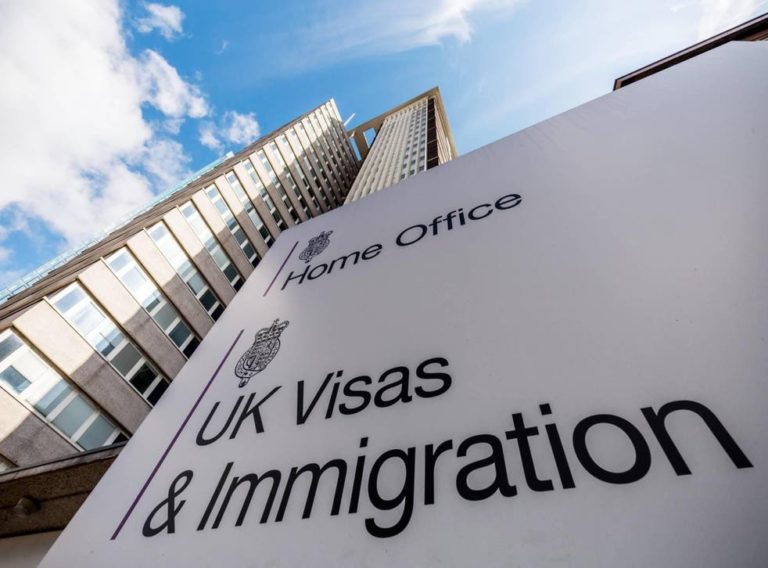
THE United Kingdom (UK) government has contacted tens of thousands of international students directly through text and email, warning them they would face deportation if they overstay their visas.

The UK’s Home Office launched the new campaign following what it described as an ‘alarming’ rise in international students who enter the UK legally on student visas but go on to seek asylum after their visas expire.

Home Secretary Yvette Cooper told the BBC that some international students were seeking asylum “even when things haven’t changed in their home country.”

Home Office data reveals that roughly 13 per cent of about 14,800 cases of asylum applications in the UK since January were made by individuals who had entered the UK on a study visa.

Pakistan accounted for the largest share of these applications, with 5,700 cases, followed by students from India, Bangladesh, and Nigeria.

In Nigeria, many students, professionals and other citizens attempt to leave the country for greener pastures, including the UK, in what is known as ‘japa’ in local parlance.

According to the UK Home Office, while asylum applications from student visa holders have declined compared to last year, the figure remains nearly six times higher than in 2020.

In recent months, the Home Office has increasingly focused on curbing the use of study visas as a pathway to asylum claims.

The ICIR reported in May, that the department revealed plans to introduce new and tighter visa access for citizens of Nigeria, Pakistan, and Sri Lanka, citing concerns over high rates of visa overstays and a surge in asylum applications from these countries.

Starting this September, the plans will introduce tougher requirements on visa refusal and course completion rates that universities must meet to retain their ability to sponsor future visas.

The Home Office announced in March that 43 failed asylum seekers and foreign offenders were returned on a charter flight to Nigeria and Ghana.

The ICIR reported that data from 2024 revealed a sharp rise in UK visa rejections for Nigerians, with the rejection rate increasing from one in 31 applications in 2022 to one in eight by late 2023.

Recall that the UK government announced a rise in visa fees for students, tourists, and other travelers in March.

The student visa fee was increased from £363 to £490, reflecting a 35 per cent rise.

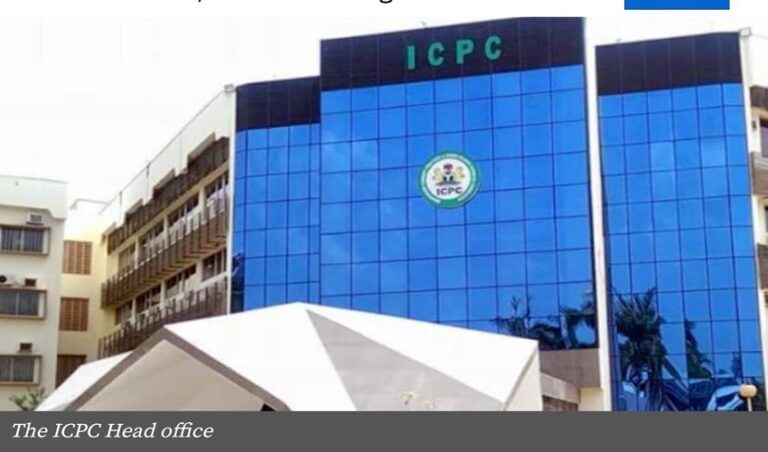
ICPC moves to challenge court ruling shielding Kano top official from N6.5bn corruption probe

0

THE Independent Corrupt Practices and Other Related Offences Commission (ICPC) has vowed to challenge a Kano High Court judgment that restrained it from further investigating Abdullahi Rogo, the Director General of Protocol at the Kano State Government House, who is facing a multi-billion-naira corruption probe.

The ruling, delivered by a justice, Musa Ahmad on August 18, 2025, declared that ICPC’s invitation to Rogo amounted to a breach of his fundamental rights and barred the commission from taking further action against him. The court also awarded him N2 million in costs.

The ICPC, however, insists that the decision undermines its statutory powers and shields a powerful official from accountability. The agency said it would file an appeal immediately after obtaining the Certified True Copy (CTC) of the ruling.

Rogo has secured a judgment restraining the ICPC from inviting him for further questioning.  Findings show that Rogo is under investigation by both the ICPC and its sister agency-the Economic and Financial Crimes Commission (EFCC) for allegedly siphoning ₦6.5 billion through fictitious contracts that were never awarded or executed.

According to ICPC investigators, Rogo allegedly diverted the amount belonging to the Kano State government through bureau de change (BDC) operators, Shell companies and personal accounts.

Already, the commission has reportedly recovered more than ₦1 billion out of the  funds that were allegedly funnelled through suspicious companies, bureau de change operators, and personal accounts.

Findings indicate that on July 2, 2025, the Federal High Court in Kano issued a final forfeiture order, granting the Federal Government control of a portion of the suspected loot traced to the governor’s aide.

Earlier in April the ICPC had approached the court by ex parte motion, seeking forfeiture of N142 million “reasonably suspected to have been acquired illegally.”

Governor Abba Yusuf of Kano State in a tete-a-tete with his embattled Protocol Director. PC: PREMIUM TIMES

On May 7, the judge granted interim forfeiture of the funds and directed that a notice be published in a national newspaper, inviting anyone with interest to show cause within a month why the money should not be permanently forfeited.

With no claimant emerging, the court ordered a final forfeiture of the N142 million, ruling that it represented proceeds of corruption connected to Rogo, The ICIR gathered.

It was also gathered that the forfeited sum is only a fraction of the transactions traced to the embattled protocol director.

The commission insists that its invitation was based on the powers provided in the ICPC enabling Act. Section 6(a) of the ICPC Act, 2000, states: “It shall be the duty of the commission where reasonable grounds exist for suspecting that any person has conspired to commit or has attempted to commit an offence under this Act or any other law prohbiting corruption, to receive and investigate any report of the conspiracy to commit, attempt to commit or the commission of such offence, and in appropriate cases, to prosecute the offenders.”

Following a petition by a whistleblower, the anti-corruption agency commenced investigation  against Rogo, for allegedly siphoning ₦1,170,000,000 (one billion, one hundred and seventy million naira) from the account of the Kano State Government.

During its investigation into petitions marked ICPC/P/NW/21/2024 and ICPC/P/NC/564/2024, the ICPC invited the protocol director to appear before its operatives to respond to the allegations.

However, instead of honouring the invitation, Rogo, through his lawyers, approached the Kano High Court in Bichi and filed an application to enforce his fundamental human rights.

The allegations

The ICIR reports that Rogo, Director General of Protocol at the Kano State Government House, is under investigation by the ICPC for allegedly siphoning state funds through multiple companies and personal accounts.

Investigators allege that over ₦1.17 billion was funnelled through A.Y. Maikifi Petroleum and Ammas Oil and Gas Limited into bureau de change operators, who then converted the money to U.S. dollars for Rogo. About ₦1.1 billion has since been recovered.

Rogo is also accused of laundering over ₦3 billion through a company account, with ₦142 million forfeited by court order. In addition, his Zenith Bank accounts reportedly handled billions in suspicious inflows, exceeding legal limits for public officials.

Sources within the anti-graft agencies disclosed that he initially made a confessional statement before later seeking refuge in the courts.

Meanwhile, some bureau de change operators have reportedly implicated Rogo in the multi-billion-naira corruption scandal.

The operators, in statements to EFCC and ICPC, reportedly described how they moved huge sums of public funds at Rogo’s request.

Legal fireworks

After being invited by the ICPC for questioning, Rogo, filed a suit at the Bichi Division of the Kano State High Court on February 20, 2025, seeking to enforce his fundamental rights.

He asked the court to restrain both the ICPC and EFCC from arresting, intimidating, or prosecuting him, arguing that such actions violated his rights to dignity, liberty, and freedom of movement.

Counter affidavit

In a counter affidavit, the ICPC denied any rights violations, stressing that Rogo was merely invited to respond to allegations of fraud, conspiracy, and money laundering, matters within its statutory mandate.

The agency argued that constitutional rights to liberty do not preclude lawful arrest or questioning where crimes are suspected, urging the court to dismiss the application as an attempt to obstruct its investigation.

“The transaction leading to the invitation of the applicant (Rogo) borders on the allegation of fraud, conspiracy and money laundering, among others and therefore within its statutory mandate,” the ICPC stated.

Controversial judgment

Although the application was argued on May 29, 2025,  The ICIR gathered that the judgment which was initially slated for July 28, was not ready. It was later fixed for August 18, within the annual vacation.

On August 18 2025, Ahmad of the Kano High Court ruled in favour of Rogo. He declared the ICPC’s invitation as a breach of Rogo’s fundamental rights and restrained the commission from further investigating activities as it relates to the applicant.

Although, he acknowledged that his rights had not yet been violated, the judge held that there was a likelihood of breach, given the overlapping invitations and threats of arrest.

The court declared ICPC’s invitation unlawful, and awarded him N2 million in costs against the anti-graft agencies.

The ICPC has vowed to appeal the judgment, accusing the court of shielding a powerful official from accountability.

Reacting to the judgment, the spokesperson for the ICPC, Demola Bakare, said it would head for appeal, insisting that it has the statutory mandate under the enabling law to carry out such investigation.

“We heard of the ruling and are awaiting a Certified True Copy (CTC). I can assure you that we are acting within our statutory mandate and shall proceed to file our appeal as soon as we get the CTC of the ruling,” Bakare said.

More than 1,000 killed as landslide wipes out village in Sudan

0

A LANDSLIDE in Sudan’s mountainous Jebel Marra area of Darfur has wiped out an entire village, killing more than 1,000 people and leaving just one survivor.

In a statement on Tuesday, September 2, the leader of the Sudan Liberation Movement/Army (SLM/A), Abdelwahid Mohamed Nour, disclosed that the landslide hit Tarseen village on August 31 following a week of heavy rainfall.

“Tarseen, famed for its citrus production, has now been completely levelled to the ground.

“Initial information indicates the death of all village residents, estimated to be more than one thousand individuals, with only one survivor,” Mohamed said.

The SLM/A further called on the United Nations and international aid agencies to help recover the bodies of the victims, which include several children.

The Sovereign Council in Khartoum mourned in a statement stating that “all possible capabilities” have been mobilised to support the affected area.

The SLM/A has stayed neutral in Sudan’s civil war between the National Army and the paramilitary Rapid Support Forces (RSF) who are battling for control of al-Fashir, the nearby capital of North Darfur state now under RSF siege and devastated by famine.

The Reuters news agency reported that residents of al-Fashir and surrounding communities have fled to Jebel Marra in search of safety, but food, shelter, and medical supplies remain scarce, leaving hundreds of thousands exposed to the rains.

Meanwhile in Tawila, where most have gathered, a cholera outbreak is spreading.

The ICIR reports that the disaster comes amid Sudan’s war now in its third year, which has pushed the country deeper into one of the world’s worst humanitarian crises, with famine already declared in parts of Darfur.

More than half of Sudan’s population is experiencing crisis-level hunger, while millions have been displaced from their homes, leaving them highly vulnerable to the country’s devastating annual floods.

Public-interest lawsuit: How does it work in Nigeria, who gets the money?

0

ON August 10, 2025, Comfort Emmanson’s journey from Cross River to Lagos aboard an Ibom Air flight turned into a national scandal. After she allegedly refused to switch off her mobile phone, the confrontation intensified and ended with her being forcibly removed from the aircraft, an incident caught on video and widely shared online.

The Nigerian Bar Association (NBA) and several Nigerians condemned the airline’s actions as “reckless” and a breach of her dignity, vowing to provide Emmanson with pro bono legal representation.

A Lagos-based public-interest lawyer, Ayodele Ademiluyi, filed a N500 billion suit some days later at the Federal High Court against the Federal Government, the NCAA and others, framing it as a challenge to “aviation impunity.” However, Emmanson herself denied any affiliation with the lawsuit or that she had filed such a claim. 

What are public interest lawsuits?

A human and civil rights lawyer Ofen-Imu Gabriel Uzuanje, said that public interest lawsuit is a legal action initiated in a court of law for the primary interest of the public, whether pecuniary, social, customary, political or otherwise.

“In Nigeria, public interest litigation is a tool used to address issues that affect the public at large, such as environmental degradation, human rights violations, and corruption. The primary aim is to ensure that the rights of the public are protected and that justice is served in matters that affect the designated segment of society. 

“It empowers citizens and organisations to hold the government and other entities accountable for actions that harm the public interest. It is an avenue for judicial activism and one that helps to develop legal jurisprudence,” he said.

Referencing the case of Adesanya v. President of the FRN & ANOR (1981) LPELR-147(SC), Uzuanje explained that the case was the basis of the principle of locus standi (right to sue) which is a critical aspect of public interest litigation. 

“The Court held that a general public interest is not a litigable interest that can ground locus standi, emphasising the need for a plaintiff/claimant to demonstrate a special or sufficient interest in the matter. Only those who were directly affected by a legal issue could bring a case to court.”

According to the lawyer, locus standi is a traditional and basic requirement in litigation. 

“To establish standing, a claimant or plaintiff must demonstrate a “sufficient, direct, and personal interest” in the matter, often by showing they have suffered special damage over and above that suffered by the general public. Under this view, someone without a direct, personal injury would be considered a “meddlesome interloper” or “busy body,” he added.

He also maintained that Nigeria, like many other legal systems, have moved toward a more liberal and expansive approach to public interest litigation. 

“This allows public-spirited individuals, non-governmental organisations (NGOs), or associations, to bring actions on behalf of others, or for the public interest. Public interest is a matter of public policy, shaped by factors such as socio, economic, political, customary and societal interest amongst others,” he explained.

Referring to the case of Fawehinmi v. Akilu [1987] 4 NWLR (PART67) 797, he added that, “This is particularly important in cases where the affected parties are marginalised or lack the resources to pursue legal action”, Uzuanje added.

The Fundamental Rights Enforcement Procedure, Rules (FREP) 2009, brings in a statutory flavour to this liberalised requirement (amongst others) for locus standi in human rights cases. The FREP allows the following to bring human rights applications: Anyone acting in their own interest; anyone acting on behalf of another person; anyone acting in the interest of a group or class of persons; anyone acting in the public interest; an association acting in the interest of its members or others.

Interpretation of locus standi in recent years

The case of Adesanya v. President of the FRN & ANOR (1981) LPELR-147(SC), stated the traditional position while the Fawehinmi v. Akilu [1987] 4 NWLR (PART67) 797, brought in the liberal position, that a person or organisation can sue on behalf of others even though they have no direct standing.

In Centre for Oil Pollution Watching v. NNPC [2018] LPELR 50830- SC, 98 – 112 PARAS F – F case, the Supreme Court held that any person acting genuinely in the public interest can maintain an environmental-related lawsuit without necessarily proving a personal injury. 

In the case of FOI enforcement on recovered assets (SERAP v. CCB & FG, FHC Lagos, 2020), the Federal High Court ordered authorities to disclose and widely publish details of recovered stolen assets and their spending since 1999, vindicating the public’s right to know. Monetary damages weren’t the point; the public gained information and oversight power.

Similarly, the Twitter ban ruled unlawful (ECOWAS Court, 14 July 2022) in a suit led by SERAP and others, the regional court held Nigeria’s seven-month Twitter suspension violated freedom of expression, ordering non-repetition and aligning state policy with rights another non-monetary, society-wide win flowing from public-interest litigation.

The case of Okafor & ORS v. Nwora & ANOR [2022] LPELR-58681(CA), where the Court held that an action under the Fundamental Rights (Enforcement Procedure) Rules, 2009, cannot be defeated on the grounds of lack of locus standi.

The case of AG of the Federation v. AG of Abia State & ORS (2024) LPELR-62576(SC), the Supreme Court discussed the locus standi of the Attorney-General in public interest litigation, highlighting the role of the Attorney-General in safeguarding public interest. The beneficiaries of such judgments are the citizens whose rights are protected by the enforcement of public laws. 

In Adedeji & ORS V. CBN & ANOR (2022) LPELR-57809(SC), the Court held that judgments in suits filed in a representative capacity ensures to all parties whether named or not, thereby benefiting all members of the represented group. 

In Ekpoke & ANOR V. USILO & ORS (1978) LPELR-1097(SC), the Supreme Court expanded the doctrine of Estoppel to hold that it ensure that judgments in public interest suits are binding on parties who were not directly involved in the litigation but are affected by the outcome.

“As we speak today, one Ayodele Ademiluyi Esquire has recently filed a suit out of the “KWAM1” incident, to challenge the Federal Government on the issue of air passenger treatments and rights. 

“This would be another opportunity for the courts to further develop the law. Hereunder are a few of several cases that have upheld this position in recent times,” Uzuanje said.

Ibom Air case

The ICIR reported that the suit number FHC/L/CS/1632/25, targets the FG, NCAA, FAAN, Ibom Air, ValueJet, and others, was based on what Ademiluyi described as a “blatant breach of the rule of law” and “unequal treatment” by aviation authorities. It addressed two separate but controversial incidents involving an Ibom Air passenger, Emmanson, and Fuji musician, King Wasiu Ayinde Marshal (Kwam 1). 

Uzuanje explained that the suit alleged impunity and double standard, while Emmanson faced immediate arrest, arraignment, and a travel ban, while KWAM 1, allegedly received preferential treatment. 

“In the KWAM 2 CASE, the main actor was arrested and instantly detained. There were issues of wrongful handling of this case. The outcry of the media (particularly social media) turned the tide. It was at this point that the Federal Government took a position on the issue. 

“The KWAM2 CASE was what woke the Federal Government up to action. And now, the question is, were the actions taken in line with the laws? These, I humbly think, are the reasons for the Ayodele’s suit on public interest grounds for the safety of air passengers, and proper regulation and enforcement of the aviation laws for the good of all,” he said.

Who benefits from awards in public interest lawsuits?

He explained that the suit was not at the instance of Emmanson and for her.

“Should the case fail, she has nothing to lose, and should it succeed, she might receive compensation,” he said.

The human rights lawyer said that the proceeds of the judgment are in  two folds.

 “First is the cost of litigation and the compensatory award/claims. The cost which involves the legal fees, expenses, logistics and cost in general will be for  the lawyer and the process of prosecuting the suit.

“On the other hand,  the compensatory awards/claims for the victims and affected groups. This may be in peculiar terms or declaratory relief and material awards,” he said.

Public, systemic benefits

“its main beneficiaries are those who are considered the average Nigerian. It is a vital instrument for promoting justice, accountability, and social change in Nigeria. It empowers citizens to actively participate in the democratic and legal process, making room to hold authorities accountable, thereby strengthening the rule of law and democratic governance,” he explained.

The human rights lawyer noted that the suit is supported by the Constitution of the Federal Republic of Nigeria, 1999, in Sections 174(3) and 211(3), which emphasise the Attorney-General’s duty to consider public interest in legal proceedings. 

“This is the reason Ademiluyi can file the N500 billion suit,” he added.

The ICIR reports that the court rulings of Ademiluyi’s  case can drive institutional changes, aviation procedure reviews, and regulatory oversight.

As a high-profile case, it will also raise awareness, embolden citizens to demand better governance.


Nigerians, FG react as Finnish court jails Simon Ekpa 6 years for terrorism

0

THE Federal Government has described the sentencing of pro-Biafra agitator Simon Ekpa as a victory against terrorism in Nigeria.

On Monday, the Päijät-Häme District Court in Finland handed Ekpa a six-year prison term after finding him guilty of inciting terrorist acts and associating with a terrorist group.

The court established that Ekpa leveraged his vast social media following to incite violence and destabilisation across Nigeria’s South-East region between August 2021 and November 2024.

In his reaction in a statement posted on X, the Minister of Information and National Orientation, Mohammed Idris, welcomed the ruling, calling it amajor victory in the war against terrorin the country.

“A major victory for the Nigerian people in the collective fight against terror,he posted.

Also in a statement issued on Monday in Abuja, Mohammed described the ruling as a notable development in the global effort to address terrorism and political violence.

He said the verdict brought justice to many Nigerians affected by the violent acts encouraged and supported by Ekpa and his associates.

He added that it also strengthened the relationship between Nigeria and Finland.

“For years, Ekpa’s inflammatory messages and support for violent activities have led to loss of lives, displacement, destruction of property, and fear in several communities. These actions directly threatened Nigeria’s peace and stability,he stated.

The minister argued that the decision by the Finnish judiciary affirmed Nigeria’s position and sent a clear message that people who promoted violence would face consequences, regardless of where they operated.from.

He added that the President Bola Tinubu administration would continue to protect Nigeria’s sovereignty and the safety of its citizens.

The Federal Government also urged those influenced by Ekpa’s actions to reject violence and pursue peaceful engagement.

The government expressed appreciation to the Office of the National Security Adviser (NSA), the Armed Forces, security and intelligence agencies, the Ministry of Justice, and the Nigeria Police for their service to the nation.

It said their work, along with the resilience of Nigerians, remained essential to the country’s stability.

Also speaking on Ekpa’s sentence in Finland, a former senator, Shehu Sani, reflected on his own release from Aba Prison in Abia State in 1998 after serving four years of a 15-year sentence for treason.

He remarked that while Ekpa might not endure the same harsh conditions, such as surviving on garri for every meal, the psychological weight of losing his freedom remained a profound form of suffering.

“When I heard Simon Ekpa bagged six years in prison in Finland, I remembered when I was released from Aba Prison, Abia state in 1998 after serving four of my 15 years sentence for treason. I believe Ekpa will not eat garri breakfast, lunch and dinner like us, even though the loss of freedom is an unquantifiable mental torture,he posted.

Also reacting to the ruling, a prominent member of the All Progressives Congress (APC) and die-hard Tinubu supporter, Joe Igbokwe, alleged that the most notable part of the judgment was that Ekpa would be sent back to Nigeria after completing his six-year prison term in Finland to face terrorism charges.

He added that the South-East had endured heavy losses over the past decade and noted that the identities of those involved would astonish the world.

Igbokwe also expressed a personal desire to confront those who attacked and burnt his home –  the City of David in Nnewi, Enugu State, on October 3, 2021, under the pretence of pursuing the Biafra struggle.

“The most Interesting part of the judgment is that Simon Ekpa will be deported after serving six years in a Finnish prison to face terrorism charges in Nigeria.

“The pains of what we lost in the SE in 10 years will go round. The findings and those involved will shock the world. My own prayer is to see face to face and know the people that invaded the City Of David Nnewi on October 3 2021 and set it on fire all in the name of the non existing Biafraud nonsense,he posted on Facebook.

Ekpa, a self-proclaimed disciple of the detained leader of the Indigenous People of Biafra (IPOB), Nnamdi Kanu, has spearheaded the controversial sit-at-home protests in the South-East.

The campaign’s violent enforcement has left several civilians and security officers dead.

After Kanu was extradited from Kenya in June 2021, Ekpa briefly took over as the main broadcaster on Radio Biafra. His stint was short-lived, as IPOB removed him for defying the station’s code of conduct.

The fallout deepened internal rifts and prompted him to create a splinter group.

The ICIR reported that a court in Finland  sentenced him to six years in prison for terrorism-related and other offences.

The Court on Monday, September 1, convicted the 40-year-old former municipal politician from Lahti on multiple charges, including participation in the activities of a terrorist organisation, provocation to commit crimes for terrorist purposes, aggravated tax fraud, and violations of the Lawyers Act.

According to the judgment, between August 2021 and November 2024, Ekpa attempted to promote the independence of theBiafra regionin southeastern Nigeria through illegal means.

Ekpa was accused of using social media to gain a politically significant position and taking advantage of the confusion within a key separatist movement in Nigeria to play a significant role in the group.

The court also found that Ekpa played a crucial role in founding and developing the separatist movement into a more organised structure, working alongside others.

During the trial, it was argued that armed groups were established under the movement, which the court classified as terrorist organisations.

Ekpa, however, denied all the charges against him.

The trial spanned 12 sittings between May 30 and June 25, 2025. It ended with a unanimous verdict by a three-judge panel.

Wike vows to demolish Abuja shanties

0

THE Minister of the Federal Capital Territory (FCT), Nyesom Wike, has vowed to evict residents living in Abuja shanties, describing them as illegal structures that serve as hideouts for criminals. 

Wike issued the warning on Monday, September 1, during a live media chat. He said people behind insecurity, kidnappings, and ‘one-chance’ mostly lived in shanties.

“When you say shanties, are shanties legal? You see, we cannot joke with the security. You have complained about insecurity, kidnapping, and ‘one-chance’. These are people who occupy all these shanties.

“In fact, sometimes, they take over the corridors where the road is supposed to pass. And when you want to do the road, they say, ‘compensate’. Compensate who? It is not correct. Mind you, criminals don’t stay where you will locate them. Criminals stay in these locations where you cannot locate them,” he stated. 

The minister argued that any government unable to guarantee the safety of its citizens had no justification to remain in power, noting that poverty was not an excuse to allow criminals continue to increase and terrorize citizens.

He said it was not possible for the Federal Government to build houses for every Nigerian.

“You see, we have to be careful about this poverty thing and no poverty thing. We cannot say because of poverty, we should allow you to kill people, to rob people, to kidnap people.

“We’re going to make sure that all illegal occupants of anywhere will be thrown out. It’s unfortunate. There’s nothing we can do about it because security is paramount.

He added that shanties defaced the city. He used the platform to inform Nigerians and Abuja residents that he was not intimidated by whatever anyone said. 

In December 2024 Wike said the structures being demolished by the Federal Capital Development Authority (FCDA) were properties illegally built on government lands, noting that he would not be swayed by blackmail.

The ICIR reported in August that the FCTA announced plans to pull down all illegal settlements, particularly shanties in Area 1, Durumi which it said had become an operational base for criminals, especially kidnappers, drug peddlers, and one-chance operators.