Home Blog Page 1920

Senate confirms Yakubu’s appointment as INEC Chairman

THE Nigerian Senate has confirmed the appointment of Mahmood Yakubu, as Chairman of the Independent National Electoral Commission (INEC) for the second term of five years.

The Senate made the confirmation during plenary on Tuesday after the Senate Committee on INEC had sent a report to the

Kabiru Gaya, chairman of Senate committee on INEC said Yakubu is suitable for the position because no petition or incriminatory report has been found against him.

“The nominee displayed (a) high level of intelligence. He is not affiliated to any political party and has never participated in any political campaign. The nominee also meets all the requirements for this position,” said Gaya.

Muhammadu Buhari, the Nigerian President had in October reappointed Yakubu for a second term in office that would see him oversee the 2023 general elections in Nigeria.

Buhari had sent a letter to Ahmad Lawan, President of the Senate, seeking the confirmation of the INEC boss for a second tenure.

“I am pleased to present for confirmation by the Senate, the nomination of Professor Mahmood Yakubu for appointment as Chairman, Independent National Electoral Commission (INEC) for a second and final term,” Buhari’s letter read in part.

Seeking approval of the for such appointment is in accordance with the provision of Section 154 (1) of the Constitution of the Federal Republic of Nigeria, 1999 (as amended).

Yakubu was first appointed INEC chairman in November 2015. He succeeded Attahiru Jega, who supervised the 2015 general election.

He also supervised the 2019 general election as well as off-cycle elections in Kogi, Edo and Ondo states.

UNAIDS seeks protection for drug users, gays, sexual workers, women, girls, others

THE Joint United Nations Programme on HIV/AIDS, (UNAIDS) has called for protection of women and girls as well as an end to criminalization and marginalization of gays, transgender people, sex workers and people who use drugs, as part of measures to end social injustices that put people at risk of contracting HIV.

In a statement to commemorate 2020 World AIDS Day, Executive Director of the agency, Winnie Byanyima disclosed that 1.7 million people across the globe were infected with the disease in 2019 because they could not access essential services.

Another 12 million people already infected with HIV, she stated, were waiting to get treatment.

She said the disease “is threatening” the progress that the world had already made in health and development over the past 20 years, including the gains made against HIV.

Linking HIV with global COVID-19 response, Byanyima noted that the world could no longer make the same mistakes it made in the fight against HIV, when millions in developing countries died waiting for treatment.

She said like all epidemics, COVID-19 pandemic “is widening the inequalities that already existed. Gender inequality, racial inequality, social and economic inequalities; we are becoming a more unequal world.”

She lauded all people who work within communities to combat HIV, adding that they also invest their energies in combating coronavirus pandemic.

The UN Chief however appealed to scientists and firms that have succeeded in developing proven vaccines against COVID-19 to share their expertise with the rest of the world to allow for large-scale production, thereby saving lives.

“As the first COVID-19 vaccine candidates have proven effective and safe, there is hope that more will follow, but there are serious threats to ensuring equitable access. We are calling on companies to openly share their technology and know-how and to wave their intellectual property rights so that the world can produce the successful vaccines at the huge scale and speed required to protect everyone and so that we can get the global economy back on track.

“Our goal of ending the AIDS epidemic was already off track before COVID-19. We must put people first to get the AIDS response back on track. We must end the social injustices that put people at risk of contracting HIV. And we must fight for the right to health. There is no excuse for governments to not invest fully for universal access to health. Barriers such as up-front user fees that lock people out of health must come down,” she stated.

She warned that as the world approaches the end of 2020, “the world is in a dangerous place and the months ahead will not be easy. Only global solidarity and shared responsibility will help us beat the coronavirus, end the AIDS epidemic and guarantee the right to health for all.”

Meanwhile, the World Health Organisation (WHO) has WHO called for global solidarity to sustain HIV services.

In its 2020 HIV commemoration message, the agency called on global leaders and citizens to rally for “global solidarity” to maintain essential HIV services during COVID 19 and beyond – and to ensure continued provision of HIV services for children, adolescents and populations most at risk for the disease.

The Organisation also urged countries to provide health workers with greater protection and support so they could continue their work safely during the pandemic.

WHO said in many countries in sub-Saharan Africa, testing for COVID-19 had heavily relied on the laboratory systems built and developed by HIV and TB programmes.

“Devices have been shared across programs as well as infrastructure, sample transport systems, and highly skilled staff,” it said.

The organisation explained that researchers are investigating whether people with HIV have an increased risk of poor outcomes with COVID-19, stressing that preliminary evidence of a moderate increased vulnerability of people with HIV makes it even more urgent that people with HIV have access to antiretrovirals (ARVs) and treatments for co-morbidities – such as treatment for non-communicable diseases (NCDs), chronic obstructive pulmonary disease (COPD), diabetes and tuberculosis.

WHO blamed COVID-19 for slow progress made towards global targets for diagnosis and treatment of HIV.

Boko Haram says it killed 78 farmers in Zabarmari because they arrested, handed member to Nigerian Army

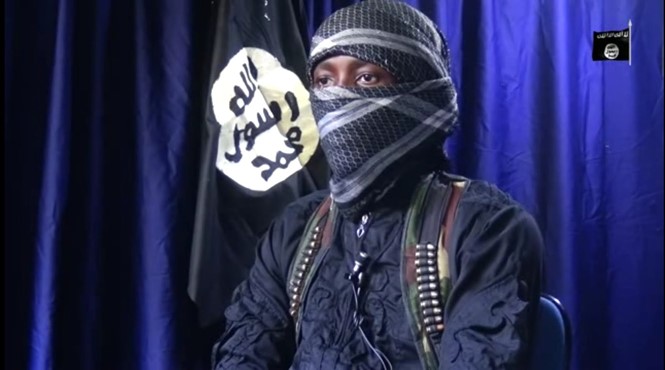
THE Abubakar Shekau’s faction of Boko Haram insurgents says the militants killed 78 farmers in  Kwashebe Zabarmari axis of Jere Local Government Area of Borno State because the farmers arrested and handed one of its brothers to the Nigerian Army.

This is contained in a three-minute and thirty-seven-second video released by the insurgents to claim responsibility for the killings on Tuesday.

The group also warned that those arresting their members and giving out intelligence on their activities to the military will face the same fate if they did not desist from doing so.

“You think you can nab our brother and hand him to soldiers and live in peace,” a veiled man asked in the video.

“You think Allah will forget what you have done to our brother.”

“The third message is on those who notoriously nab our brethren and hand them to the military or give them a clue on us, you should know that, unless you repent, what happened to your people is awaiting you.”

The ICIR  had reported on Saturday how about 43 rice farmers were brutally murdered on Saturday.

A BBC report says the deceased were attacked, tied and beheaded by the Boko Haram insurgents while they were harvesting rice on their farms.

However, the United Nations’ humanitarian coordinator in Nigeria, Edward Kallon, said in a statement on Sunday that the numbers of people that were killed were 110. He also added that many others were wounded with several women being kidnapped by the insurgents.

While describing that the incident was the most “violent direct attack against innocent civilians this year, he called that the perpetrators be brought to book.

President Muhammadu Buhari, in a statement issued by Garba Shehu, his senior special assistant on Media and Publicity on Sunday, described the incident as senseless and insane.

He said the government has given all the needed support to the armed forces “to take all necessary steps to protect the country’s population and its territory.

Subsequently, the government has blamed international partners for the reason it is yet to successfully prosecute the war against Boko Haram insurgency in the northeastern region.

Lai Mohammed, the Minister of Information, Culture and Tourism, stated this to newsmen on Monday in Makurdi

Mohammed said the Buhari administration has made an attempt to acquire a better platform to prosecute the war but it has been denied this support for some unknown reasons.

While stressing that there is a need for more global support to tackle terrorism, he stated that without adequate weapons, the nation will remain at the mercy of terrorists.

MRA condemns blocking of three websites associated with #EndSARS protests in Nigeria

0

MEDIA Rights Agenda, MRA has on Tuesday condemned the apparent blocking of three websites associated with #EndSARS protests in Nigeria.

The websites, www.feministcoalition2020.com, www.endsars.com, and www.radioisiaq.com, became inaccessible from Nigeria over the past few days but have remained accessible from other countries, a clear indication that they are being blocked only in Nigeria.

In a statement by  Chioma Nwaodike, Head of MRA’s Legal Department, issued by Idowu Adewale Communication Officer in Lagos, described the action as a brazen and unjustifiable violation of the right to freedom of expression of the operators of the websites and other Nigerians who get information from the platforms.

Chioma contended that the blocking of the websites was illegal and a clear violation of the norms and standards established under international human rights law for the application of any limitation on the right to freedom of expression, particularly as the blocking of websites is not authorized by any law in Nigeria, no legitimate basis for such blocking has been established while the wholesale blocking of the websites cannot be a proportionate response to any offensive content that any of them may have published.

She noted that as a State Party to the International Covenant on Civil and Political Rights (ICCPR), Nigeria is bound by Article 19 of the instrument which requires that any restriction on the right to freedom of expression must be prescribed by law, pursue a legitimate aim, as well as necessary and proportional.

She accused the Nigerian Government of going down a frightening path by adopting such a highhanded measure of maintaining an information blackout in a supposedly democratic country in an effort to prevent citizens and other members of the public from receiving or having access to information that is critical of the government or that portrays the government in negative light, saying that is a usual feature of governments that are leaning towards extreme dictatorship.

Nwaodike argued that even if the operators of the websites have committed any offence, by blocking the websites without reference to the courts or the due process of law, the Nigerian government has constituted itself into an accuser, judge and executioner in violation of the rights to freedom of expression and fair hearing, guaranteed by the Nigerian Constitution as well as regional and international human rights instruments to which Nigeria is a party.

She said if the Government believes that any person or organization has committed an offense under any law in Nigeria, the proper thing for it to do is to bring the person or organization before a court of competent jurisdiction and not to resort to taking the laws into its own hands in total disregard for the constitutional rights of its citizens and the rule of law.

However, she charged the Nigerian Government to uphold its international commitments as a State Party to the Universal Declaration of Human Rights (UDHR) and the ICCPR and urged it to commit itself to following due process of the law.


Youth is an Identity, not an Ideology 

0

By Ayodele AKINKUOTU 


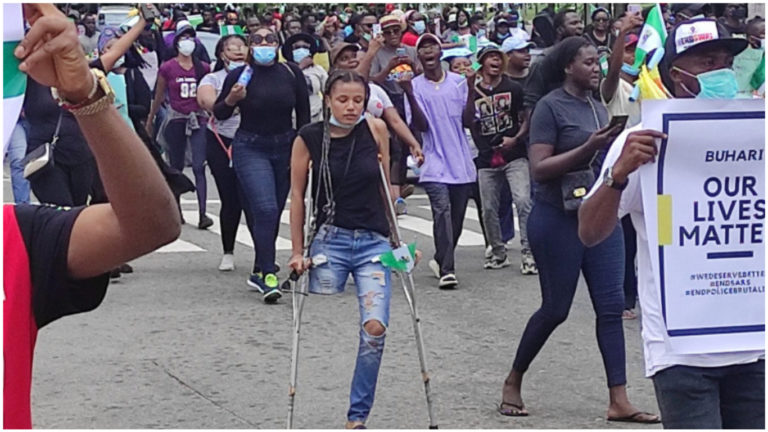
MANY decades hence, memories of the youths’ October protests, tagged #EndSARS, and the rage that came on its heels would continue to haunt Nigerian leaders. Not only for its smooth handling and coordination by the organisers but by the massive looting and destruction of properties that followed when the government mishandled its containment.

It has been insinuated that some agents of government were complicit in the violence unleashed on the peaceful protesters. Thus, one of the first lessons for the youths who are trying to reclaim Nigeria from those at the helm of affairs at present is that their mission is not a tea party. Those who have been running and ruining the country are not about ducking under their wives’ beds because some youths are angry.

While many of our leaders are shivering and foaming in the mouth at the development, not a few patriots are heaving sighs of relief as to the dawn of a new era.  For, while police brutality and extrajudicial killings were the issues that ignited the protests, it quickly evolved into a larger agenda. An end to chronic unemployment, poor funding of education and health sectors, obscene salaries and allowances of political office holders, poverty in the midst of plenty, rampant inequality and mindless corruption. Many concerned Nigerians have cried themselves hoarse highlighting these salient issues in the past.

In private conversations with some of my professional colleagues in the last few years on the Nigerian Question, the wonder has been how did Nigeria journey its way back into the wilderness, the political jungle we are in today.

At the dawn of civil rule in 1999, there was hope writ large on the political landscape. The 15-year period, 1984-1999, was a nightmare for millions of Nigerians. And understandably for many journalists, it was no less so.

Last May 29 made it exactly 21 years into democratic rule when Nigerians retired the military to their barracks. Alas, many thought that with their exit, the years of the locusts had ended. How wrong we were.

A new army of invaders took over the helm of affairs from the locusts who had laid the socio-economic and political landscape bare. And the patriots who might have made a difference were side-lined. Since 1999, the nation has been blessed (or is it cursed) with politicians at all levels of government who are nothing but parasites. Those who claim to serve Nigerians have behaved like a neo-colonial army who have nothing to lose. What with their greed and arrogance.

They have behaved like vultures, perching in their multitude on the commonwealth recklessly gorging themselves, giving free rein to their insatiable appetite. The political class’s total indifference to the suffering of millions of Nigerians is at the heart of the youths’ October revolt.

As the young men and women ruminate over the goodwill harvested from the protests, they must realise that going forward is not going to be a tea party. The rapacious and clueless politicians exploiting the nation are too well entrenched with their tentacles sunk deep into the nation’s treasuries. Thus, so used to filthy lucre, which comes to them with little or no sweat, they are not about to loosen their vice grip.

So, going forward, how do the youths “move Naija” into a new dawn? Although the streets of the cities and towns that bore the brunt of the youth rage in October are now free of protesters, the disquiet is not over. The genuine protesters are saying government has not done anything about their five-point demand. They include the release of all those arrested in the course of the protest; justice and compensation for the victims and families of police brutality; setting up an independent body to investigate all cases of police misconduct; carrying out a psychological evaluation and retraining of all disbanded Special Anti-Robbery Squad operatives before redeployment; and above all better conditions of service for men and women of the police force.

And the Youth Rights Campaign, YRC, served notice at a recent press conference that because of this perceived lethargy on the part of government in addressing the issues urgently, the youths might be heading back to the streets shortly. The members are saying the struggle to reclaim Nigeria has become a do-or-die affair.

Considering the losses in both lives and properties to the rage in October, not many Nigerians would be amused. The Lagos State police command has asked the youths not to embark on fresh protests. Even an attempt by the #EndSARS promoters to meet and discuss the issues and lessons of the protests at the Africa Shrine in Lagos was aborted by the police. The authorities are riding on the wave of the public’s incredulity at the massive loss of lives and properties that ended the protests on a tragic note. In a society where transparency is anathema, various figures have been bandied as to the number of people killed in not only the “Lekki Massacre” but at several flash-points.

Many of the wounded, with bullets still lodged in their bodies, are believed to have been left to their fate. A Premium Times report said some of them were hurriedly discharged from the private hospitals treating them because of intimidation by the Lagos State government. The bank accounts of some of the youths regarded as the promoters have been frozen by the federal government. As the epicentre of the protests, the authorities in Lagos State are still trying to come to grip with the massive damage to both public and private properties, estimated to be worth over a trillion Naira.  The state has set up a Lagos Rebuilding Trust Fund.

Therefore, against the backdrop of the tragic note on which the protests ended, what next for the #EndSARS Movement? Although the Movement comprises many groups, opinions would surely be divided on what the next steps should be. For, youth is an identity and not an ideology. Many ageing Nigerian leaders of today came into the public limelight as youths. And not a few of the political office holders who emerged in the last few years are youth. And they are all equal in the eye of the storm for running the country aground. Alarmed by the fact that many youths holding public office have not made much difference, many are asking what guarantees there are that those protesting now would do better. Of course, this kind of scepticism is healthy.

Therefore, the ideas as to what to do to reclaim Nigeria will be as many as the different groups involved in the movement. That has its advantages as well as disadvantages. The youths must let these ideas contend. That is not going to be easy. It is an avenue those who don’t want them to succeed in their bid to salvage the nation will use to divide them. Right now, what should be of immediate concern to the youths should be a review of their well organised and coordinated October protests.

In spite of the fact that there is no mistaking the yellow card sent by the youths to the political class, those who have been running the affairs of this country for decades are not simply going to beckon to them to come and take over the reins of government on a platter of gold. As long as democracy remains a political game, the youths must get ready to take power through the ballot box.

Luckily, the Not Too Young to Run law has lowered the age at which Nigerians can contest for political office. The time is ripe to take full advantage of that law. They should not make the mistake a group of prominent Nigerians made in 2018 when frustrated by the mis-governance of the ruling elite of both the All Progressive Congress and Peoples Democratic Party, they rallied to plant a Third Force to counter the duo. The discerning knew immediately that the efforts would not yield much fruit. For, the spirited efforts came too late with barely a year to the general elections. There emerged over 60 political parties. And there were a plethora of presidential candidates, many of whom would not win a chairmanship position in a well contested local government election.

Thus, if the youths must recapture their country from the vice grip of those who have been running its affairs in the past 20 years, they must realise that all politics is local. Thus a mass movement that would embrace the grassroots in all the nooks and crannies of the country must have a taproot at the wards and local government levels. The first step is a mass mobilisation of youths of voting age to register to vote in 2023. Two, they should move to initiate a political platform to unify their vision into a realistic manifesto. The YRC is talking about a socialist state, “in which the commanding heights of the economy should be placed under the control of workers and not for individuals to make a profit at the expense of society”.  This statement looks like a rehash from popular communist manifestoes of the 1960s and ‘70s. Against the backdrop of the prebendalism prevalent in our politics and the winner-take-all mentality of the political class, there is no doubt that what form of government to practice is one area that will task the youths in the months ahead. Thus, there will be some groups like the YRC canvassing socialism while others would be arguing for capitalism. Such arguments are healthy though. For it is not possible for all of us to lie down with our heads pointing in the same direction. A word of caution for the socialists though; contemporary history shows us that socialist states have a penchant for curtailing individual freedoms. Two, many workers in Nigeria, especially civil servants, have privatised their individual “fiefdoms”. So, they will be in the vanguard of those resisting socialism. That is because already, a good number of civil servants have perfected ways to earn extra incomes from the jobs they have been employed to perform. So, they have, like political office holders, already attached conduit pipes to the so-called “commanding heights of the economy”. And the harvests are flowing directly into their individual silos.

Ayodele Akinkuotu, former Editor – in – Chief of TELL, writes from Lagos



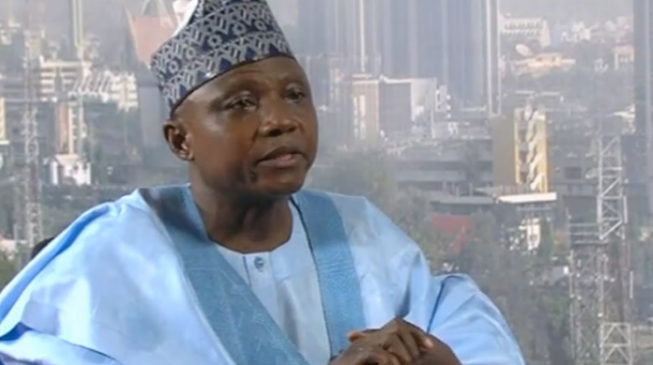
Insecurity: Call to sack service chiefs is out of place -Garba Shehu

GARBA Shehu, the senior special assistant on media and publicity to the President Muhammadu Buhari,  has described repeated and renewed calls to sack the nation’s service chiefs as out of place.

Garba, who stated this during an interview on Arise Television stated that it is the prerogative of the president to appoint or sack any of the country’s service chiefs.

While stating that he was not aware that the tenure of the service chiefs are subjected to any law or regulation Garba added that the president can keep the service chiefs as long as he is satisfied with their performance.

“I am not aware that the tenure of service chiefs is subjected to any law or regulation that is clearly stated. They serve at the pleasure of the president and (if) the president is satisfied with their performance, he keeps them. The buck stops on his table —with due respect to the feelings of Nigerians,” he said.

“The clamour for the sack is out of place considering that the president is not subject to the opinion of the opposition political party which has clamoured for this all the time. It is entirely his own determination; he decides who he keeps as his service chiefs and for how long.”

Garba’s statement is coming 24-hours he told the BBC on Monday that the 110 farmers murdered by Boko Haram on Saturday evening in Zabarmari, a community in Jere Local Government Area of Borno state did not get military clearance before proceeding to their farms.

Clarifying the criticism that followed the statement, Garba explained he only said during the interview that the military had not certified those areas as being free of landmines and terrorists.

“My suggestion in the earlier news report is that the military had not certified those areas as being free of landmines and terrorists’ intrusions. Whether there are processes for getting licences or commissions, it is not for me, the military is in a better position to describe those processes,” he said.

Nigerians and various socio-political associations have seen the need for the president to create room for fresh ideas in the fight against terrorism and ravaging insecurity in the country by sacking his service chiefs who he appointed in 2015.

In July, the Nigeria Senate asked President Buhari to ask the service chiefs to step aside in a resolution moved by Ali Ndume who was ambushed by suspected bandits in Katsina State, leading to the death of 16 soldiers and 28 others, wounded.

But in a swift response, Femi Adesina, Special Adviser, Media and Publicity, then said the presidency noted  the “resolution and the president as Commander-in-Chief of the Armed Forces, will do what is in the best interest of the country at all times.”

Adesina reminded the senate how it is only in the prerogative of the president to appoint and sack his service chiefs.

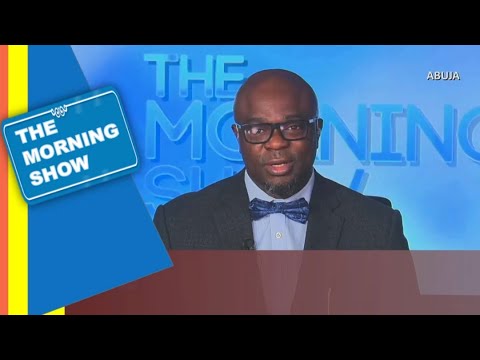
Presidency’s comment on “clearance for farmer’ lacks intelligence, empathy says Ndu Nwokolo

NDU Nwokolo, the team lead of Nextier SPD, a consultancy firm on Human Security, has said that the Presidency’s comment on the killing of Borno Farmers lacks intelligence and empathy.

Nwokolo said this on Tuesday when he featured on Arise TV to discuss the rate of insecurity in the Northeastern part of Nigeria.

“I think that statement is without tact, lacks empathy and lacks intelligence, you don’t say that, and I like the question that was posed to him by the anchor of the programme which is; these are illiterate farmers, do they need clearance, it’s very obvious that our problem is of strategy implementation and programming,” said Nwokolo.

During an interview on Monday, Shehu had said that the slain Borno farmers were not issued a clearance before they resumed activities in the area where they were killed.

Nwokolo stated that for over a month, the governor of Borno State, Babangana Zulum has been telling the residents to go back to the farm or die of hunger.

He said that if the governor’s comment is related to that of Garba Shehu, the spokesperson to the Nigerian President it is contradictory adding that the contradiction implies that there is no synergy between the military and the state government.

He further questioned that does it mean that there is no security architecture for the farmers knowing fully well that this is their harvest period.

Nwokolo noted that on the implication of killing of 43 farmers in Borno State, there is a possibility that there would be food scarcity because fear has been instilled in other farmers in the state.

He stated that the farmers are likely to desert their farms and go to Internally Displaced Person (IDP) camps in the state.

On claims that the farmers were attacked with such ferocity because they had refused to pay levies to Boko Haram terrorists, Nwokolo said it is likely because it is happening.

“It’s equally happening all over the country, it’s happening in Zamfara state, in Niger State, in Sokoto, Katsina, Farmers are suffering. You can’t go to a farm now without someone coming to take levies from you. The other day, I have my researchers in, Zamfara state, telling me that they (Boko Haram) actually wrote to farmers asking them to pay some sort of levy before they can go back to harvest their products,” Nwokolo said.

N2.5bn Fraud: Appeal court dismisses no case submission filed by by suspended NBC boss

THE Court of Appeal, sitting in Abuja, on Monday dismissed an appeal filed by Ishaq Moddibbo Kawu, the suspended Director-General of the National Broadcasting Commission (NBC), challenging the decision of the Federal High Court, to dismiss the no-case submission he filed at the lower court.

This is contained in a statement emailed to The ICIR by  Azuka C. Ogugua spokesperson for the Independent Corrupt Practices and Other Related Offences Commission (ICPC) on Monday.

According to the statement, Kawu, alongside Lucky Omoluwa (late Chairman of Pinnacle Communications Ltd) and Dipo Onifade, Chief Operating Officer of the same company, are currently facing criminal prosecution before Justice Folashade Ogunbanjo-Giwa, by the ICPC for allegedly paying the sum of N2.5 billion seed grant for the Digital Switch-Over (DSO) project to Pinnacle Communications Limited.


READ ALSO:

The ICPC had in a 12-count charge, arraigned them for abuse of office, money laundering, and misleading a public officer with the intent to defraud the Federal Government, in contravention of Sections 26 (1) (c) and punishable under Section 19 of the Corrupt Practices and Other Related Offences Act, 2000.

However, Kawu, through his counsel, A. U. Mustapha (SAN) filed a no-case submission in December 2019 at the close of the prosecution’s case, praying the court to discharge and acquaint him of the charge brought against him by ICPC.

Justice Ogunbanjo-Giwa while delivering her ruling in February 2020, held that ICPC had established a prima facie against Kawu, Onifade and Pinnacle Communications Limited, and ruled that they have a case to answer.

The suspended NBC boss and his co-accused then approached the appellate court to upturn the judgment of the Federal High Court.

The Court of Appeal, Abuja, in its ruling, dismissed the no-case submission filed by Kawu and his co-accused and held that they had an explanation to give when he elected to facilitate the payment of N2.5 billion to a private company against the provisions of Section 13 of the government white paper guiding the operation of the Digital Switch-Over programme.

ICIR journalist shortlisted for 2020 DAME award

NIYI OYEDEJI, a journalist with the International Centre for Investigative Reporting (ICIR), has been shortlisted for the education reporting category of the 29th Diamond Awards for Media Excellence (DAME).

Niyi was shortlisted for his special report in 2019 on Osun’s out-of-school children: Tales of poverty, pains, struggle.

The story highlighted the struggles and pain of out of school children in the state.

On Monday, DAME shortlisted Niyi alongside with other two journalists in the education reporting category.


READ ALSO:

According to DAME, the presentation of awards will take place at the Lagos Oriental Hotel, Lekki where all the necessary COVID-19 protocols will be observed.

Diamond Awards for Media Excellence (DAME) is an annual scheme designed to encourage media responsibility.

DAME’s first outing was on March 20, 1992.


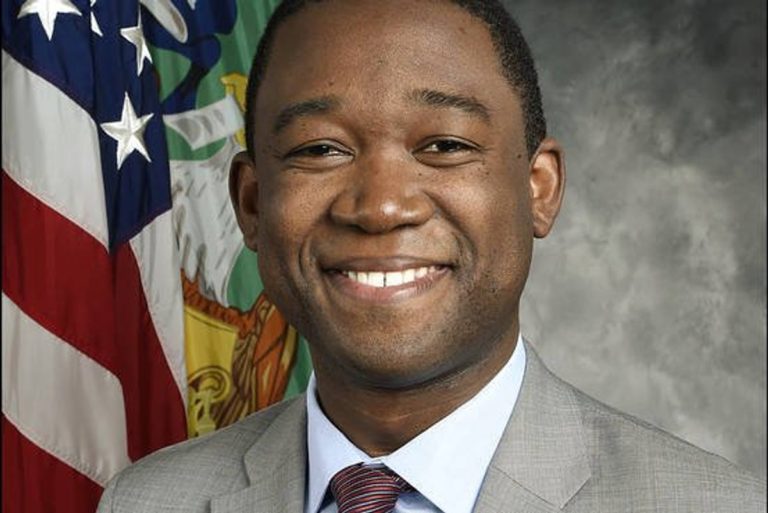
Biden turns to Nigerian – American Adewale Adeyemo, to build global economic co-operation

0

ADEWALE Adeyemo, 39, a Nigerian – American diplomat who served under former US president Barack Obama is set for a second coming to the White House after Joe Biden, US president-elect tipped him to serve as deputy treasury secretary in his cabinet.

In August 2016, Adeyemo thought the defining point of his political career had climaxed as he assisted former US president Barack Obama to prepare for his final G-20 meeting in Laos and China while they both prepared to exit the public office.

“As you all know, this will be the President’s 10th and final G20 meeting. And I think in order to understand what we’re going to accomplish at this G20, it’s important to go back to the President’s first G20 meeting, which occurred in April of 2009,” Adeyemo said at a White House press briefing.

On that quiet Monday evening, Adeyemo did not anticipate fate would grant him the chance to become the first black man in US history to become Deputy Treasury Secretary until the outgoing US President Donald Trump lost the 2020 US presidential elections.

His family had emigrated from Nigeria to the US in the ’80s when he was a teenager, to pursue the famous “American dream”, before obtaining a Bachelor’s of Arts degree from the University of California at Berkeley.

He also earned a specialised law degree from Yale Law School, apart from a private law practice which spans a few years Adeyemo’s life has always revolved around politics.

Popularly known as “Wally”, he had spent most of his career convening companies, governments, and organisations until he got his first stint with the Obama government in 2009 after serving at the United States Department of the Treasury.

Adeyemo served as senior international economic adviser to former US president Barack Obama responsible for coordinating the policymaking process related to international finance, trade and environmental issues.

He served as Obama’s representative to the G7 and G20 summits and was also chief negotiator for the Trans-Pacific Partnership’s provisions on macroeconomic policy.

Adeyemo was appointed the first chief of staff at the Consumer Financial Protection Bureau (CFPB) where he helped to protect US consumers from unfair, or abusive consumer financial practices.

However, Adeyemo’s recent appointment is not unconnected to his political stance on multilateralism and globalisation which would play a key role in helping President Biden to unbundle the policies against globilisation by outgoing US President Donald Trump.

In an opinion article pubished on the Guardian in April 2017, Adeyemo clearly spoke against the wave of populism sweeping across the world which he claimed was a threat to globalisation with protectionist and nationalist stances.

“Globalisation and the international rules-based order that underpins it are under siege…While protectionism makes for good political soundbites, history is littered with examples of the failure of these policies.

“Protectionism and a retreat from international cooperation is clearly not the answer, but policy makers minimize the underlying mistrust of globalization and multilateralism at their peril,” he said.

Biden administration is expected to take a multilateral approach to foreign policy, easing tensions and increasing engagement with allies especially with trade.

Adeyemo will be instrumental in ensuring the effectiveness of the US global engagement with its allies

Trump’s government had an uninterested stance on US foreign private investment to Africa as US foreign direct investment in Africa decreased from $50.4 billion in 2017 to $43.2 billion in 2019 which Biden is set to increase.

After leaving the White House in 2016, Adeyemo signed on as a senior adviser at BlackRock, the global investment firm with assets management worth $6.52 trillion and also had a brief stint with the Center for Strategic and International Studies.

Adeyemo, a Hyde Park resident, joined the Obama Foundation in August 2019 as its first president with a salary pegged at $600,000, according to the foundation’s tax records.

Where he increased its leadership development and civic engagement initiatives, from the Community Leadership Corps, My Brother’s Keeper Alliance and the Girls Opportunity Alliance.

As President Biden hopes to extend a hand of friendship to US allies across the world that have been disgruntled by President Trump’s policies, he turns to Nigerian born – American Adeyemo to smoothen the rough edges.

Jacob Lew, former treasury Secretary who described Adeyemo as skilled technocrat that would maintain the US interests spoke highly of him when he was the treasury’s lead negotiator on the currency agreement that was part of the Pacific trade deal.

“He has developed a network of international relationships in economic offices around the world to promote US interests effectively,” he said.