DESPITE domestication of violence against Persons Prohibition (VAPP ACT), signed in 2019 by President Muhammadu Buhari, cases of Sexual and Gender-based Violence, SGBV are on the increase as those saddled with the responsibility of checking the scourge do nothing to stop and protect those affected. The ICIR reports the travail of survivors of SGBV during the COVID-19 lockdown.
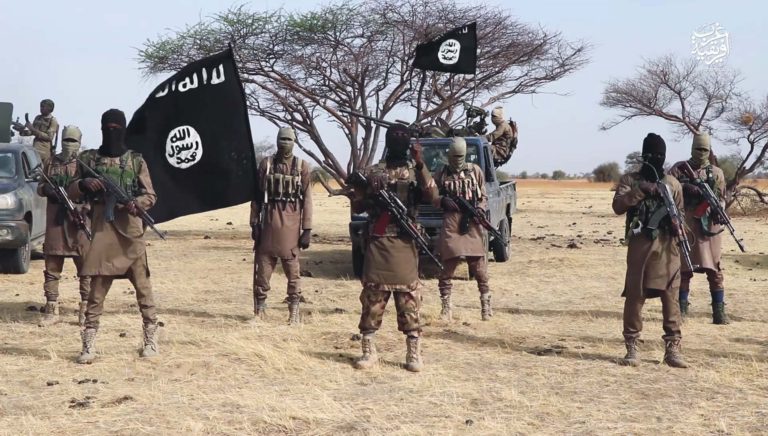
THE Nigerian Army and Police Force have remained silent over reported killings of about 40 farmers in Kwashebe Zamarmari axis of Jere Local Government Area, Borno State.
A BBC report says the deceaseds were attacked, tied and beheaded by the Boko Haram insurgents while they were busy harvesting rice on their farms.
The incident which occured Saturday morning had also generated reactions among many Nigerians who expressed grief over the attack.
“I’m stuttered,” Jamilu Haruna tweeted on social media. “God, what is this?” @Crispy_vick, another social media user reacted.
“These madness needs to stop honestly… North was a nice place to visit before but I can’t even go to Jos.,” @NsukkaBoi also tweeted.
However, no official statement has been released by both the Army and the Police.
Sagir Musa, Spokesperson of the Army was contacted by The ICIR but he did not respond to a text message sent to his line.
Repeated calls to Edet Okon, Police Spokesperson in Borno State was not responded to. Text message sent to his line to clarify the information and ascertain the exact casualty figure, if the incident actually occurred was not replied to.
The incident is one of several attacks carried out by the insurgents since about 10 years of its assault on residents in the North-East.
Scores of casualties have been recorded over the years with over 2 million people displaced. While some have taken refuge in the Internally Displaced Persons (IDP) camp, others are still missing. The UN says the violence has also led to the displacement of about 1.4 million children in the country and beyond.
Though, the federal government claimed to have technically defeated the insurgents, killings are recorded on regular basis including ambush of security personnel.
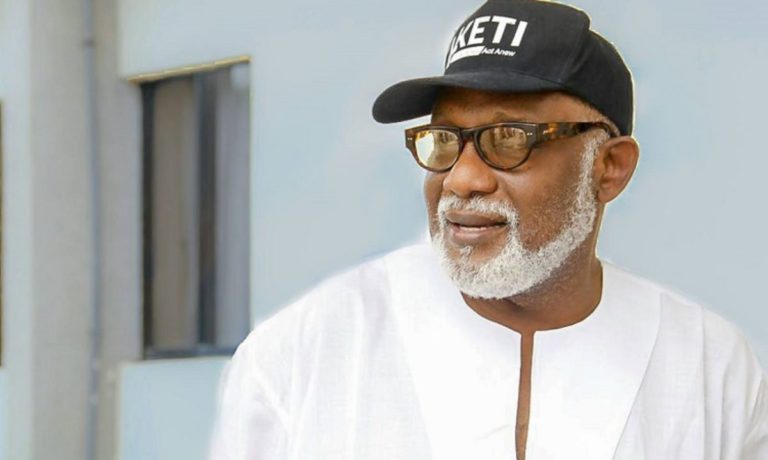
SADE Ale, wife of the Ondo state governor’s chief of staff, Olugbenga Ale, has regained freedom after spending two days in the hands of kidnappers.
Sade was kidnapped on her way from Lagos on Thursday night by some suspected gunmen at Owena area, near Akure.
The details on how she regained her freedom is still sketchy as there are reports that she was freed by the men of the Ondo State Security Network, also known as Amotekun in conjunction with local hunters and vigilantes in the area she was kidnapped.
Adetunji Adeleye, commandant of the Amotekun Corps, who confirmed the release to newsmen said it was too early to disclose how she was rescued.
However, Tee-Leo Ikoro, the state Police Public Relations Officer (PPRO), who also confirmed the release declined to make further comments on her release.
He said the rescue was carried out by operatives of the police command.
“She has been rescued,” he said.
“That is the most important thing. I can’t tell you anything more than that.”
Ondo state has in recent times been a hotbed of criminal activities.
On Thursday, Oba Israel Adeusi, the Olufon of Ifon in Ose Local Government Area (LGA) of Ondo State was killed by suspected gunmen.
The royal father was killed at Elegbeka, a community along the Ifon-Benin highway, while returning from the monthly meeting of the state council of Obas in Akure.
His vehicle was said to have been rained with bullets while the driver was trying to escape from the gunmen. He was rushed to the Federal Medical Centre in Owo, where he died as a result of gunshots he sustained during the attack.
The same day, a commercial bank was robbed at Ode Irele, in Irele Local Government Area, with two reportedly killed and several others injured.
The state government has vowed to bring the perpetrators of these dastardly acts to book.
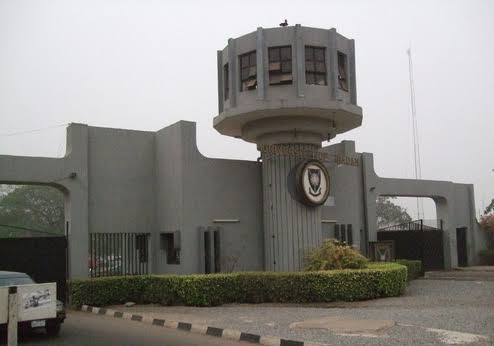
THE federal government has directed the Senate of the University of Ibadan to immediately convene a special meeting to select one of its members to act as acting Vice Chancellor of the institution.
Government said the person the senate would consider must not be a contestant for the position.
Also,the government directed the university’s governing council to suspend its meeting scheduled to hold by 10am Monday to discuss issues on appointment of a new vice chancellor. Rather, it directed that the meeting be shifted to afternoon of same day.
The Minister of Education, Mallam Adamu Adamu, in a letter to the university through the National Universities Commission, NUC, faulted the proposed meeting of the governing council slated for 10am on Monday.
According to the minister, whose letter to the university through its Pro-chancellor,was signed by Dr. Suleiman Ramon-Yusuf, Deputy Executive Secretary (Academics) “since the tenure of the outgoing vice chancellor expires on Monday, it would be inappropriate for the governing council to convene meeting as early as 10am same day to discuss and consider his possible successor.
” The fact that the tenure of the incumbent Vice Chancellor expires on Monday 30th November, 2020, it is pertinent for the Governing Council to meet in the afternoon of Monday 30 November, 2020, to consider and approve the appointment of the Senate nominee as acting Vice Chancellor”.
GROUPS of Niger Delta militants under the umbrella body of Continuous Emancipation of Niger Delta (CEND) have warned foreign embassies in Nigeria to evacuate their citizens from the country as they will not be spared once they commence attack on oil facilities.
The group warned the attacks would commence soon, except the Federal Government satisfy demands made by the South-South governors during the governors’ recent meeting with federal government delegation led by Ibrahim Gambari, the chief of staff to the president.
Some of the demands include true federalism, restructuring, resource control among others. There are also concerns over purchase of Zamfara Gold by the Central Bank of Nigeria (CBN), a situation the South-South leaders widely criticised.
The agitators further tasked the federal government to pay the 13 per cent oil derivation benefits directly to the oil and gas producing communities.
“We are prepared to carry out our threats to the letter without any iota of fear as we have the capacity to bring the oil and gas facilities in the Niger Delta to rubbles if our demands are not met.
“In the coming days, there will be series of attacks on major oil and gas installations in the Niger Delta simultaneously because they are well prepared to push the pawn to the other side of the board without fear and harassment from security agencies and the federal government,” the demands read in a letter to the Punch.
“We want to warn all foreign nationals that this is the time to leave the Niger Delta region, as the attacks which will be total in the coming days, will not spare them. All foreign embassies should as a matter of urgency evacuate their citizens.”
The group which claimed responsibility for the recent attack on crude oil facilities in Ikarama community, Yenagoa of Bayelsa State wants oil companies to relocate their headquarters to the region.
They called for the restructuring of the Niger Delta Development Commission (NDDC) and the Presidential Amnesty Programme in order to realise its primary mandate.
The militants also criticised alleged long-term neglect of the region citing the East-West road as an instance. They claimed the highway which connects the six states of the Niger Delta had been in a deplorable state. According to them, the road would have been fixed if crude oil was being transported through the highway.
The agitators, however, said all field commanders had been briefed not to show mercy on any oil and gas installations, no matter its location until the federal government meets their demands.
“If we do not act now, our children will ask us questions that we will not have answers to, our communities will go into extinction because of underdevelopment, environment degradation, and pollution.”
Several reports in recent years had detailed kidnap cases orchestrated by the militants until they reach a consensus with the government, especially through the amnesty programme.
In October 2009, about six oil workers including two foreigners were kidnapped by the Niger Delta militants.
The following month, eight more oil workers were abducted by the militants. In 2009 alone, about 100 foreign oil workers were reportedly kidnapped by the Niger Delta militants.
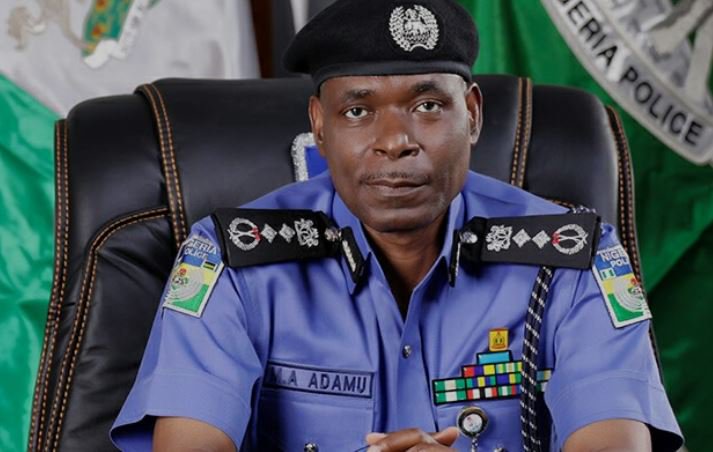
Muhammad Adamu, the Inspector-General of Police, has said that the force would never allow the type of the recent ENDSARS protests in the country again.
Adamu said this on Friday while responding to questions during a meeting with command commissioners of police in Abuja on Friday.
“We will never allow this type of #EndSARS protests again, it was violent. Peaceful protest is allowed in our constitution. When these rallies started peacefully, we provided security for them,” said Adamu.
The IGP added that the protest was being held peacefully and until it turned violent and the protesters attacked the people (police) that were protecting them.
“We were moving with them to make sure they were not molested by any group of people and it was going on well until it turned violent.
“When it turned violent, they then attacked the people that were even giving them protection. So, we shall never allow any violent protest in this country again. When you talk of peaceful protests, yes, it is allowed but violent protests, never,” the IGP stated.
He stated that many of the masterminds of the violence that rocked the #EndSARS protests had been arrested including inmates who escaped from Edo Correctional Centre while calling for the assistance of Nigerians to apprehend other escaped inmates.
“We have made a lot of arrests of those people that escaped from prisons. Some were even arrested in Kano and Kaduna. When they escaped, some of them went back to their business of robbery.
“And the cultists, when they escaped, they went back to the business of cultism, especially in Edo. We’ve been able to arrest a significant number of them and we are still after those that are outside.
“We call on Nigerians, any information you have about an escapee from any of the correctional centres, please inform us or any other security agencies, so that we can get them back to prison,” he stated.
However, in contrast to the IGP’s claim that the ENDSARS protesters were being protected before it turned violent, protesters in most parts of the state were not protected by the police.
In Abuja, while the protesters were calling for the disbandment of the dreaded police unit, Special Anti-Robbery Squad (SARS), police fired water cannons and teargas at the peaceful protesters.
Also in Oyo state, rather than the protection that the IGP claimed was given to the protesters, Jimoh Isiaq was shot and killed by a stray bullet from police as they tried to disperse protestants in Ogbomosho.
In what has now been tagged a Black Tuesday or Lekki massacre, investigations, video evidence and pictures have shown that peaceful protesters were massacred at the Lekki toll gate in Lagos state on October 20.
Following the killings, injuries perpetrated by men of the Nigerian Police, hoodlums used the opportunity to hijack the ENDSARS protests.
Most especially in Lagos state and Abuja, innocent individuals allegedly sponsored by agents of the government attacked peaceful protester.
At the Lekki toll gate, public and private properties were destroyed by hoodlums including attacks on police stations.
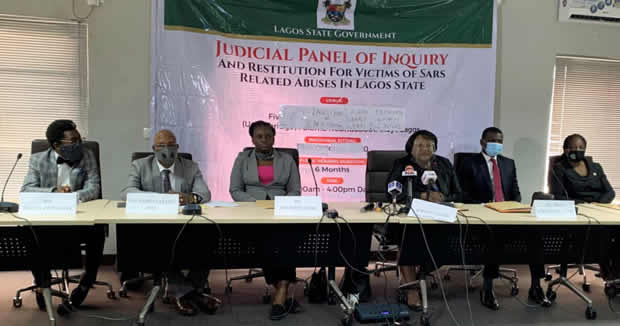
ON Friday during the resumed sitting of the Lagos State Judicial Panel of Inquiry, while giving evidence, a petitioner, Nkemakolam Felicia Okpara, 27, said about five police officers beat her until she peed on herself.
Okpara said while she was returning home from a job interview, she met some peaceful protesters on the road and decided to join them.
Shortly after she joined, Okpara said she heard gunshots as protesters and other people in the environment ran for their lives.
The petitioner noted that she was recording the incident before a police officer challenged her and told her to stop recording the event.
For refusing to follow the police’s order, Okpara said she was dragged inside a police station and beaten by two police officers.
She added that when her phone fell off her hand while she was being beaten, one of the police officers smashed it with his leg.
“There is a lady among them, she was so particular about my phone, she kept hitting me until I had to let go because there was no one to call to come to my aid,” she stated.
“While the beating was going on, I lost control of my body and my phone fell on the ground and one of them used his leg to smash it because he believed I was recording with it and I was going to put it on the internet,” Okpara said.
According to her, some others joined the beating and assaulting her until she lost control of her body and peed on herself.
“While we were still at that gate, some were coming out, they joined the beating. Dragged me inside, that was where I lost control of my body, I peed on myself. I managed to get a hold of the phone because I knew that was the only thing I had,” Okpara said in moist eyes.
After narrating her ordeal, Okpara submitted photographs of injuries sustained from the police beating as well as a medical report.
Doris Okuwobi, the Chairman of the Panel admitted the documents as evidence before the panel.
DESPITE joining the Open Government Partnership (OGP) on June 23, 2016, with a commitment to make government more transparent, accountable and responsive to citizens, evidence has shown that, contrary to the spirit of the OGP initiative, the Federal Government is making it more difficult for Nigerians to access information concerning its activities.
The OGP is a multilateral initiative that was launched in 2011 to provide a platform for domestic reformers – in the form of civil society organisations, the private sector and individuals – to partner with the public sector to make governments more responsive, accountable and transparent to the citizens.
While signing on to the OGP initiative, President Muhammadu Buhari had declared the Federal Government’s commitment to increase transparency in governance, stamp out corruption and improve service delivery.
The Federal Government also made commitments to: establish a public central register of company beneficial ownership information; ensure transparency of the ownership and control of all companies involved in property purchase and public contracting; full implementation of the principles of Open Contracting Data Standard, focusing on major projects like building of health centres and the improvement of health services; enhance company disclosure on the payments to governments for the sale of oil, gas and minerals, complementing ongoing work through EITI (Extractive Industries Transparency Initiative); and strengthening asset recovery legislation.
However, investigations by The ICIR shows that, rather than governance becoming more transparent and accountable, in line with the commitments made by President Buhari when the country joined the OGP, government business in Nigeria is becoming increasingly opaque, with the Federal Government and its agencies seemingly wilfully witholding relevant public information from the citizens.
A major indicator of the non-transparent nature of the Federal Government is the abysmally low level of compliance with the Freedom of Information Act by the government and its agencies.
The Freedom of Information law is a major pillar of the OGP initiative. According to the Open Government Partnership, the website of the Open Government Partnership, “Access to information means access to justice. Citizens armed with information can claim what is rightfully theirs. For this reason, OGP members are required to have laws guaranteeing the right to information.”
The Freedom of Information (FOI) Act, 2011, was meant to make public records and information more freely available, provide for public access to public records and information, protect public records and information to the extent consistent with the public interest and the protection of personal privacy, protect serving public officers from adverse consequences of disclosing certain kinds of official information without authorisation and establish procedures for the achievement of those purposes.
The FOI Act established the rights of citizens to apply for information or records in the possession of a public institution or private bodies providing public services, performing public functions or utilising public funds. Such information is to be made available to the applicant within seven days of the receipt of the application. The law also guarantees the citizens’ right to receive information that public institutions are obliged to proactively disclose.
The law equally empowered individuals to take legal action in court to compel public institutions to comply with provisions of the Act, including discharging their proactive disclosure obligations. The FOI Act also stipulated the category on information that may not be disclosed by public institutions, even upon application by applicants.
Section 29 of the FOI Act makes it compulsory for every public institution to submit to the Attorney General of the Federation, an annual report on all FOI requests they received, on or before February 1 of each year.
Access to public information is also a key aspect of the Open Contract Reporting (OCR) Project, which is meant to promote accountability and transparency in public procurement processes.
But, all available records show that the ministries, departments and agencies (MDAs) of the Federal Government are largely not complying with the FOI Act. Most FOI requests are simply ignored outright – in such instances, the applicants do not receive any feedback whatsoever to indicate that the application has been received, or is being considered, or has been approved or denied. In most instances, MDAs only respond to FOI applications just to inform applicants that the request has been denied.
Statistics of FOI requests filed between 2018 and 2020
Between 2018 and August 2020, The ICIR has filed about 310 FOI requests to different Federal Government agencies. Out of the 310 FOI requests, 64 (20.65 percent) received a response; 13 (4.19 percent) were referred to another agency; 187 (60.32 percent) are still pending as there was no response of any form from the concerned agencies, and 46 (14.84 percent) were denied by the agencies.
Also, between August and October 2020, The ICIR has filed 11 different FOI requests to some Federal Government agencies but none of the applications received even an acknowledgment, let alone a response.
The FOI requests were sent to the Niger Delta Development Commission (NDDC), National Primary Health Care Development Agency (NPHCDA), Ecological Fund Office (EFO), Association of Local Governments of Nigeria (ALGON), Federal Road Safety Corps (FRSC), Federal Ministry of Finance, Budget and National Planning and the Federal Ministry of Works and Housing.
In the FOI requests, The ICIR asked for details of procurement contracts approved by the agencies.
Specifically, on August 18, The ICIR requested that the NPHCDA should provide details of capital releases on the construction of primary health care centres (PHCs) in the FCT between 2016 and 2020.
More than two months since the FOI request was filed, The ICIR is yet to get a letter acknowledging the receipt of the request or the actual response to the request.
Again, on September 10, The ICIR filed another FOI request to the NPHCDA seeking details of contractors who got a contract for the renovation of existing primary health centres and construction of new ones in Anambra State. Out of the several requests sent to the NPHCDA, this particular request was only responded to on November 11, a month after the application was made.
Section 4 of the FOI Act provides that public institutions shall within seven days of receiving applications make the information available to the applicant. Despite a reminder sent to the NPHCDA on September 21, The ICIR is yet to get any response on the earlier application for details of contracts for construction of PHCs in the FCT between 2016 and 2020.
In the same vein, on October 2 and October 5, The ICIR requested from the NDDC details of approved contracts and benefiting contractors for road construction/rehabilitation projects in Edo and Abia states. The NDDC is yet to respond.
On October 7, an FOI request was also sent to the Ecological Funds Office (EFO), requesting details of its funded projects in the South-East between 2015 and 2020. More than a month after the application was filed, the request is still pending as the EFO has not responded.
Another FOI request was submitted to the NPHCDA on October 14 seeking details of primary healthcare projects in Kunchi and Lamba local government areas of Kano State. The NPHCDA has also failed to respond to the request.
On October 28, The ICIR sent another FOI request to the Association of Local Governments of Nigeria, (ALGON), seeking details of primary healthcare projects in Kunchi Local Government Area of Kano State. The ICIR equally sent requests to the FRSC, Federal Ministry of Finance, Budget and National Planning, and the Federal Ministry of Works and Housing, seeking different procurement-related information, on the same date.
Only the FRSC has sent an acknowledgment copy confirming the receipt of the request, while others have not made any response as of the time filling this report. However, a month after it acknowledged receipt of the request, the FRSC has not made the information available to The ICIR.
Open Government Partnership has not made government more transparent, accountable in Nigeria
Executive Director of Media Rights Agenda in Nigeria, Edetaen Ojo, was part of the team that drafted the FOI law, and equally served as the civil society co-chair of the National Steering Committee of the OGP. In an interview with The ICIR as part of this report, Ojo noted that, contrary to expectations, so far, the adoption of the Open Government Partnership initiative by the Federal Government had not made governance more transparent and accountable in Nigeria.
”While the Open Government Partnership has the potential to make governance more transparent, accountable and responsive to the needs of citizens, it has not achieved any of these,” he said, noting that there does not appear to be a commitment on the part of all concerned to ensure that governance becomes more transparent, accountable and responsive to the needs of citizens.
Ojo also stated that the implementation of the FOI Act in Nigeria has been extremely disappointing. He blamed the poor implementation of the law on the President Muhammadu Buhari-led administration’s unwillingness to do away with the ‘culture of secrecy’ in government.
Speaking further, Ojo said, “It is particularly so because we have an administration that came to power on the basis that it will eliminate corruption in the country. We know that corruption thrives in an atmosphere of secrecy. In effect, the fight against corruption cannot be won where the government is unable to overcome the challenge of secrecy. But it is clear that the government has no commitment whatsoever to dismantling the culture of secrecy in governance that has engulfed it and enabled corruption to thrive. The major feature of freedom of information laws is their capacity to create openness in government, ensure transparency and accountability on the part of public institutions. Yet, our public institutions continue to disregard their duties and obligations under the FOI Act with impunity, thereby undermining any change.”
He pointed out that there is no single instance where any public institution has been sanctioned or even reprimanded for failure to meet their obligations under the FOI Act or to disclose information to members of the public.
“Indeed, the situation with the FOI Act has thrust on us one of the saddest examples of a public officer misconducting himself. Section 29(6) of the FOI Act provides that: “The Attorney General shall in his oversight responsibility under this Act ensure that all institutions to which this Act applies comply with the provisions of the Act”. Yet, in many instances, we have a situation where public institutions fail to comply with the provisions of the Act and when citizens go to court to compel them to comply, the Attorney-General of the Federation, the person who has oversight responsibility under the Act, the person who ought to ensure that all public institutions comply with the provisions of the Act, sends lawyers to court to defend the public institutions that are willfully violating the provisions of the Act. It is a tragedy. On any index by which you want to assess the implementation of the Act, it is simply scandalous,” Ojo observed.
Although section 29(1) of the FOI Act requires all public institutions to submit annual reports to the Attorney-General of the Federation every year, nine years since the law came into force, there has not been any year where up to 10 percent of public institutions submitted reports.
Yet, despite mamandatory provisions of Section 29(6), which stipulated that the Attorney-General of the Federation shall, in his oversight responsibility, ensure that all government agencies comply with the Act, the AGF does absolutely nothing to ensure that the public institutions complied with this requirement.
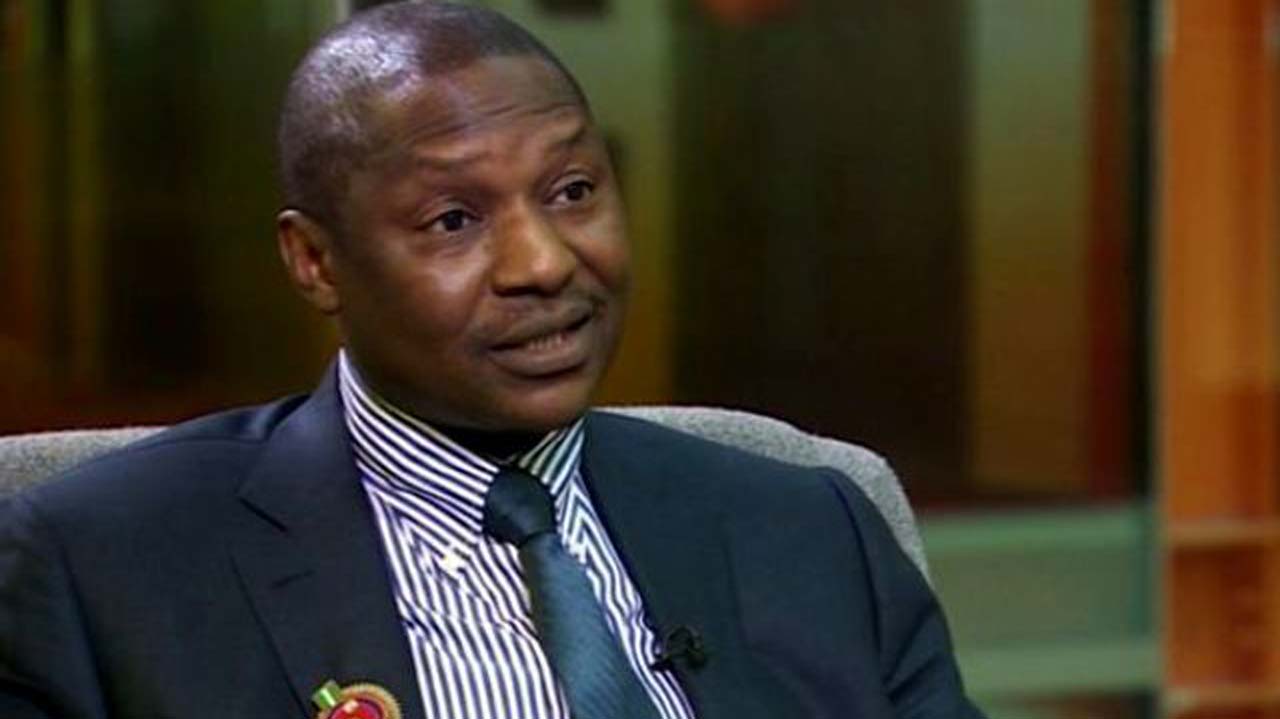
ABUBAKAR Malami, Attorney General and Minister of Justice
Indeed, annual National Freedom of Information Compliance Ranking reports – co-produced by The ICIR, Basic Rights Watch, R2K (Right to Know), Media Rights Agenda, Public and Private Development Centre and BudgIT – indicates that majority of the MDAs do not care about the FOI Act.
The National FOI Compliance Ranking assesses MDAs by a number of parameters, including proactive disclosure of information, level of disclosure, timeliness (responsiveness), FOI training, FOI desk officer and submission of FOI annual report.
The 2020 National FOI Compliance Ranking assessed 213 MDAs.
One hundred and sixty-one (161) out of the 213 MDAs recorded ‘NO’ on all parameters – No Proactive Disclosure, No Response, No Disclosure, No FOI Training, No FOI Annual Report and No Details on FOI Desk Officers – meaning that they did not bother complying with the FOI Act.
The remaining 52 MDAs who registered points on some of the parameters recorded low marks – only the Bureau of Public Service Reforms (BPSR) and the Nigerian Investment Promotion Council (NIPC) got up to 50 points, as they came first and second with 58.75 points and 54 points, respectively.
Ojo told The ICIR that inaction on the part of relevant government officials, particularly the Attorney General of the Federation, was responsible for the high level of non-compliance with the FOI law.
”Nobody in the government says or does anything, thereby signaling all public institutions that they are free to continue to disregard the provisions of the Act and operate in secrecy,” he said.
While most FOI requests do not receive any response from the concerned MDAs, majority of responses, when they are given, are just to notify applicants that the request was denied. The ICIR‘s experience has shown that MDAs reject FOI requests for wrong reasons which do not conform with provisions of the law.
Ojo said the MDAs are able to get away with the practice because they are not being sanctioned for doing so.
Although Section 7(5) of the FOI Act makes it an offence for any public officer or institution to wrongfully deny an applicant access to information and prescribes a fine of N500,000 on conviction, no public officer or institution has ever been punished under this provision because the Attorney-General of the Federation, whose duty it is to prosecute defaulters, has never prosecuted any public officer or institution for wrongful denial of access to information.
The prevailing situation means that there is no instrument to compel the MDAs to disclose information to applicants.
However, Ojo said the MDAs would have no choice than to comply with the law if the President and the Attorney General of the Federation compel them to make necessary information available to applicants.
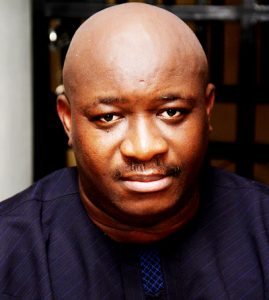
Edetaen Ojo
“If the President were to signal today to all public institutions that he would no longer condone non-compliance with the provisions of the FOI Act and indeed, if he were to go further and sanction one or a few heads of public institutions that are violating the provisions of the Act, all the others would sit up and begin to comply. But of course, the President is clearly not interested and does not even appear to be paying any attention to the issue. The Attorney-General of the Federation whom the law has given the responsibility to ensure compliance by all public institutions is also not interested and has not made any meaningful effort to get public institutions to implement the Law and comply with its provisions,” Ojo said.
A major challenge with the implementation of the FOI Act is that the law does not provide for any sanctions for non-compliance.
Team Lead, Programs and Administration, OGP National Secretariat, Chidimma Ilechukwu, told The ICIR that efforts are being made to introduce sanctions for non-compliance in a planned amendment of the FOI Act.
Ilechukwu however stressed that the OGP National Secretariat was only a coordinating organ, and was not responsible for implementation of the FOI law.
She explained that the First National Action Plan, 2017 – 2019, developed by the secretariat around commitments to asset recovery, open budgeting and access to information which President Buhari made when signing onto the OGP, focused on developing the capacity of the MDAs to implement the FOI Act. The Second National Action Plan, 2019 – 2022, will continue to focus on providing training for the MDAs and also engaging civil society organisations on advocacy.
”Nigeria joined the OGP for the purpose of transparency and accountability. I can’t speak for the MDAs but there is this culture of secrecy that is already embedded in civil servants. Our own role in the OGP National Secretariat is to keep pushing that the MDAs do the right thing but we are not an implementation agency. Nigeria can do better, we need to get to the stage of proactive disclosure of information,” Ilechukwu added.
Despite records which show that MDAs have largely failed to comply with the FOI Act, Mr Ochibor Joseph Gowon, Head of the FOI Unit in the Federal Ministry of Justice, which coordinates the implementation of the law, told The ICIR that agencies of the Federal Government have been responsive to applications for information from members of the public.
“From reports we get from MDAs, we have more responses than non-responses to requests for access to information,” Gowon said.
He suggested that misgivings over the implementation of the FOI stemmed from lack of understanding of the nature of the public service by the media and the NGOs. “The press and the NGOs should understand the structure of the civil service – you should understand the body language of the people you are dealing with but most of the time you find that most of the NGOs are confrontational. I wouldn’t want to say that the FOI Act is nascent but it is a process that we are getting into. The British law that we got the FOI Act from took five years for implementation to commence but in our case we commenced implementation immediately and those teething challenges are what we are addressing today,” Gowon said.
Further defending the MDAs, Gowon stressed that implementation of the FOI Act includes denying requests. “If I deny all the requests that come to me I am implementing the Act but let it be that the requests were denied for the right reasons,” he said.
Rather than blame the MDAs for non-compliance with the FOI Act, Gowon blamed the media and the civil society for what he described as ‘low level of engagement’ with the FOI Act. “I feel that the challenge here is that the level of engagement has not been much within the private sector. We don’t get as much requests as expected and I think it is because of lack of awareness concerning the law on the part of the citizens,” he said.
Ojo, however, faulted Gowon’s claim that there was a low level of engagement with the FOI Act on the part of the media and the civil society. According to him, it is impossible to determine the extent to which members of the public are making use of the FOI Act because the Office of the Attorney General of the Federation, which should ordinarily be the source of data for the assessment, does not have the records.
“With less than 10 percent of public institutions submitting their reports to the office annually, the Attorney General of the Federation has no way of knowing what is happening in the over 90 percent of the public institutions that are not submitting any report,” Ojo said, adding that a situation where citizens make requests for information and they are wrongfully denied access to the information without consequence would not be encouraging for anyone who might ordinarily want to ask for information.
Ojo stressed that the ministry of justice cannot say that citizens are not making enough use of the FOI Act when it is doing nothing to assist those who are actually trying to use it but are being frustrated.
However, Gowon said the ministry of justice was working with relevant committees of the House of Representatives to consider ways of tying compliance with the FOI Act to approval of MDAs’ budgetary allocations, as a way of improving compliance.
Checks by The ICIR revealed that a ‘naming and shaming’ approach which was adopted by the ministry to encourage compliance in the past did not produce any positive result.
Records in the Federal Ministry of Justice show that 90 out of over 500 MDAs submitted annual reports on FOI Act compliance in 2019. The number (90) is the highest so far in any year since the law came into effect in the country in 2011.
Beyond FG’s lack of political will, implementation of FOI Act undermined by structural, funding, capacity challenges in MDAS
However, beyond the lack of political will by the Federal Government to compel compliance with the law, and the prevailing culture of ‘secrecy’ among civil servants concerning information, The ICIR also discovered that ‘structural challenges’ have contributed to the poor implementation of the FOI Act in the country.
Investigations by The ICIR revealed that only a few MDAs currently have FOI units – the exact figure is vague but only 13 agencies have set up FOI portals.
The FOI unit of the Federal Ministry of Justice, which coordinates the implementation, is ‘struggling’ to set up FOI units in the MDAs, according to sources.
Another major challenge discovered in the course of investigations by The ICIR is that most of the MDAs do not have any budget for implementation of the FOI Act. In the absence of a budget line, in most of the MDAs, the FOI programme is funded with ‘handouts’ from the CEO’s office.
The ICIR further learnt that a memo was submitted to the Federal Executive Council, seeking to authorise the Head of Service of the Federation to direct all MDAs to set up FOI units. The memo was first submitted in December 2019 and resubmitted in March 2020. But no action has been taken on the matter, an indication that there is a lack of political will on the part of the Federal Government to drive the implementation of the FOI Act in the country.
Investigations by The ICIR also revealed that lack of proper record keeping in agencies of the Federal Government is also helping to undermine the implementation of the FOI Act. Civil servants in some FOI units in the MDAs, who spoke to our correspondent in confidence, noted that in most instances, records in government agencies are not kept in such a way that information could be easily made available in seven days as stipulated by the law.
“The best that can be done in most cases is to respond to the applicant within seven days to say we have received the application and that will be all,” a civil servant in one of the FOI units, who pleaded anonymity, told The ICIR.
Ojo noted that the opaque nature of the activities of the Federal Government and the states encourage corruption to thrive in the country, in spite of the President Buhari administration’s anti-corruption campaign.
Ojo told The ICIR, “I believe that the activities of the Federal Government and most of the state governments are becoming increasingly opaque. It is hard to understand why the Federal Government will want its activities to be shrouded in secrecy, unless it really want to encourage rampant corruption in the public sector. But regardless of what its intentions are, the consequence of its attitude is that corruption continues to thrive in many public institutions.”
He observed that series of financial misappropriation that are continually revealed in audit reports by the Office of the Auditor-General of the Federation shows that the opaque nature of government activities was enabling corruption in the public service. Ojo said, “If you need proof of this, just pick up any of the audit reports by the Auditor-General of the Federation for any of the years since this administration has been in power and you will find mind-boggling acts of sheer brigandage and nobody is held accountable.”
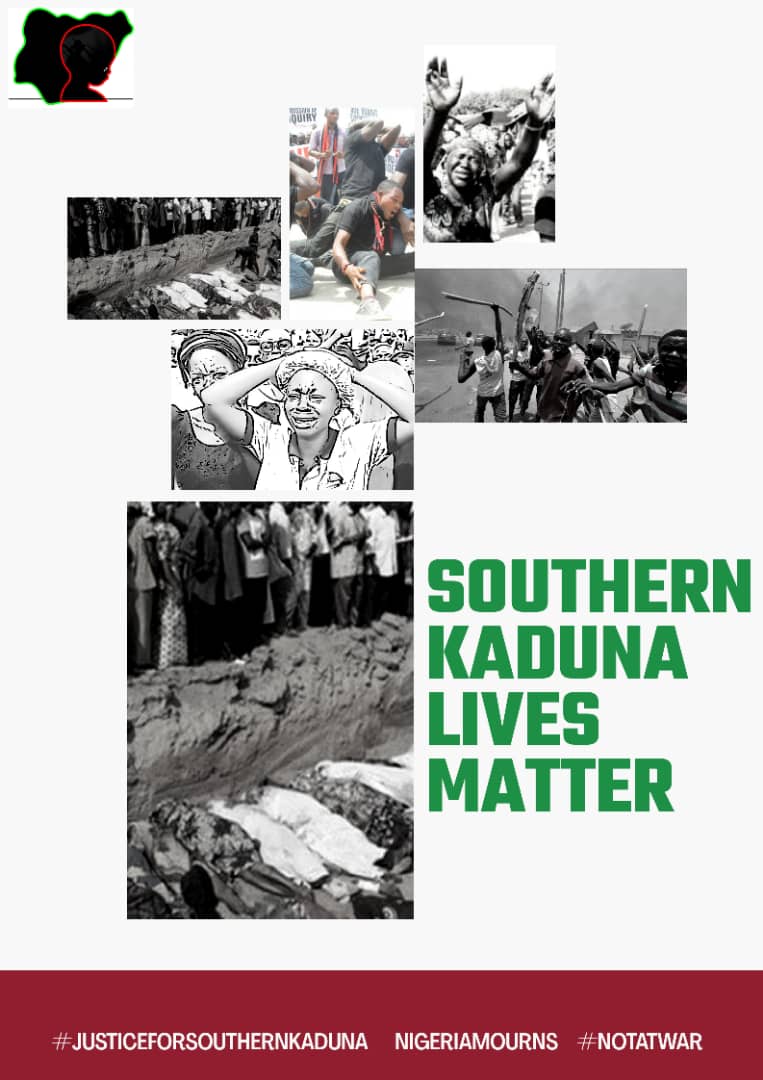
A Legal Advocacy group, the House of Justice in partnership with two other civil society organisations, the Resilient Aid and Dialogue Initiative (RADI) and Kunak Foundation are seeking donations from individuals as well as organisations towards providing support for victims of violence in Southern Kaduna.
This was disclosed in a statement jointly signed by Gloria Mabeiam-Ballason, Chief Executive Officer of House of Justice, Alheri Bawa Magaji, Co-founder of Resilient Aid & Dialogue Initiative (RADi), and Bavoshiya Gloria Nyan, the CEO of Kunak Foundation, and made available to The ICIR.
According to the statement, the initiative is a replacement for the House of Justice’s annual summit and banquet.
“We have had to substitute that event for the more urgent and pertinent task of reinforcing the value of human life in Nigeria. Our first call is Southern Kaduna, an area that has perpetually been in the news for mind-boggling destruction of lives, property, cultural heritage, and dignity,” the statement read.
The groups added that the long-term effects of the violence in the region have left many hungry, homeless, without means of livelihood, and traumatised.
“It is in the light of this that House of Justice leads the Southern Kaduna Resilience Fund (SKARF) Project as an effort to join in rebuilding the communities, restore livelihoods and education for the children of the affected areas,” the groups said.
They stated that from 1st December 2020 to 30 November 2021, the House of Justice and its 6,477 partners across 25 countries will raise N100 million naira ($250,000) to support the rebuilding of homes, livelihood, and education in Southern Kaduna.
House of Justice noted that it is committing to 5-year education support from January 2021 to December 2025 as its corporate social responsibility while also counting on individuals and organisations for donations.
“We recognise that the amount and commitment are modest, we do not underestimate the generosity of the human spirit and the fact that it is only in extending our humanity to others that anyone truly lives. It is on that note that we invite you to join with us to replace tears and suffering with dignity and hope.
“We kindly request for donations that will go into rebuilding houses in the communities and for the support of means of livelihood and education,” the statement further read in part.
The groups called on President Muhammadu Buhari to rise to his statutory responsibility as enshrined in sections 14 and 17 of the 1999 Constitution of the Federal Republic of Nigeria to provide security and welfare and to ensure that government actions are humane and anchored on the ideals of freedom, equality and justice not just in Southern Kaduna but in all parts of the Federal Republic of Nigeria.
The organisations also called on volunteer counsellors, psychologists, trauma assistants, and teachers who can work in camps and the affected communities to support the initiative.
The Southern Kaduna axis of Kaduna state has witnessed several occurrences of violence resulting from inter-communal clashes and bandits attack.
From June 10 to August 21, survivors, community leaders, and rights groups said a total of 136 persons have been murdered in unprovoked attacks.
Also, Amnesty International in its August 24, 2020 report said at least 366 people have been killed between January and July 2020 in Southern Kaduna.
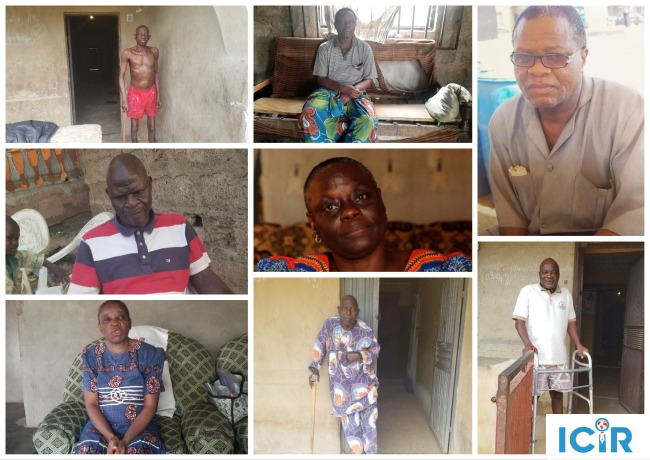
IF only Pa Amiola Sunday, a 64-year-old retired primary school headmaster, had foreseen the indignity waiting for him at the end of his career, he probably would have rejected the offer of employment given to him on the 1st of September 1981 by Oyo State Universal Basic Education Board.
When The ICIR visited him at his rented single-room apartment around Fateema area of Ikire (Irewole local government), he was seen seated on a bug-infested tattered mattress, looking through his window as if expecting a message.
But he was sightless.
Pa Amiola Sunday, a retired headmaster, standing in front of his house located around Fatima area of Ikire. Photo Credit: Samad Uthman/The ICIR
Pa Amiola Sunday became blind after years of inability to pay medical bills to treat his defective eyes.
He would later expend his savings on the payment of medical bills, and when that was not enough, he sold his six-room bungalow built around the Osun State University, Ikire Campus, and six motorcycles in order to offset his medical bills.
But all this was inadequate to save him from deteriorating health.
In fact, he was ejected from Government Specialist hospital, Ibadan, Oyo state, where he is currently owing N5,000.
Yet, his failed sight is just one out of other medical challenges he battles.
In May 2017, Amiola’s wife left home one fateful afternoon without returning. Two years later, his four children also left the house without any note of their whereabouts.
“People now donate food items for me. As you can see, someone just came to give me gaari. I can spend four to five days without eating. Our pastor comes to give me money. Our landlady also does give me money. This is the 4th year I have not paid for rent. They are no more collecting rent from me when they see my present condition with the notion that I repay whenever we are paid our entitlement. I can’t see,” Amiola told this reporter.
Before the Covid-19 lockdown, Pa Amiola had resorted to begging for alms on the roads with a 9-year old boy taking him around the town of Ikire. Most times, he goes to schools to beg from students and visits churches and mosques on worship days.
Pa Amiola Sunday in his room. Photo Credit: Samad Uthman/ The ICIR
According to him, his situation may not have become worse if the then government of the state led by Rauf Aregbesola paid his seven months modulated salary arrears, gratuity and monthly pension.
For four years, the old man and many other retirees have been left stranded without payment, a total violation of section 210 of the Nigerian Constitution subsection 2, which states that any benefit to which a person is entitled shall not be withheld or altered to his disadvantage.
Pa Amiola’s case is just one of many of Contributory Pension Scheme (CPS) beneficiaries in the state who now wallow in abject poverty after long years of service.
On the 1st of July 2015, Rauf Aregbesola, the immediate past governor of Osun State and the current Minister of Interior, introduced a new system of salary structure to the state due to the economy crisis caused by the global fall in the price of oil.
The salary structure popularly called “half salary” in the state was described in a post on the state’s website as the payment of “full salary to Workers in Grade Levels (GL) 1-7 and at least half or more to those on levels from 8 and above”.
The system which was sustained in the state till the 1st of July 2018 had wrecked most retired civil servants in the state.
Contributory Pension Scheme (CPS) is housed in the Pension Reform Act 2004 which repealed the 1993 Nigerian social Insurance Trust Fund Act.
CPS was enacted in 2004 partly as a result of the failure of the past scheme to address the pension needs of Nigerians and partly as a result of the quest by Stakeholders to evolve a scheme that can cater to both public and private sector employees.
Olagunsoye Oyinlola, Osun State former Governor, gave assent to the establishment of the CPS for employees in the public service of Osun State and for other connected purposes on August 3, 2009. The law is the state’s domesticated version of the Pension Reform Act 2004 at the federal level and is referred to as Osun State Contributory Pension Law 2008.
Under the scheme, both employer and the employee in the private and public sector contributes 7.5 percent each of their monthly emolument, while in the military sector, the employee contributes 2.5 percent and the employer 12.5 percent.
The Act obliged the employer to deduct and remit contributions to the Pension Fund Custodian (PFC) not later than seven days after deduction, while the PFC must notify the Pension Fund Administrators within twenty-four hours of the receipt of such contributions.
According to the Act, an employee is to open a Retirement Savings Account (RSA), into which the contributions are to be paid, with a Pension Fund Administrator (PFA) licenced by the National Pension Commission. The PFA is to manage and invest the fund in the RSA, from where a contributor will draw benefits on retirement. Upon retirement, a certain percentage will be paid as Bond (lump sum) and the remaining will be collected monthly based on the agreement between the PFA and the employee.
The Bond varies based on length of service, age and salary level before retirement.
But this law is good only on paper as the state often defaults in contributing to the Retirement Savings Account (RSA).
Section 8 sub-section 4 of the Osun State Contributory Pension Law 2008 stated that: A certificate of clearance shall be issued by the employer within 21 days of the employee’s retirement or dismissal from service, The ICIR investigation showed that many of these old retirees did not receive any certificate since four years.
Lawrence’s sight is resting in peace before his soul
Amzat Lawrence Olatoyin, a pensioner who has been denied entitlement years after retirement. Now, he has lost his sight. PhotoCredit: Samad Uthman/ The ICIR
The wife and Children of Amzat Lawrence Olatoyin in Ikire community in Osun State, while speaking with this reporter, were unable to hold their sadness over the present state of their father and husband due to the inadequate fund to take care of his eye problem.
Now, the retired teacher who spent 35 years in service is yet to be paid several months of modulated salary arrears, gratuity and monthly pension allowance since 2016.
Lawrence has finally lost his sight.
According to his wife, the family has spent so much to restore the eyes with the hope that the state government will pay back per the Contributory Pension Scheme (CPS) act which compels the payment of gratuity three months after retirement. With this, the family can not afford the price of drugs Lawrence uses on the eyes.
The wife who is a trader expressed with eyes full of tears and frustration that her petty retail shop where she sells provision has been shattered by her husband’s sickness after she has used-up all her profits and savings to cater for the family.
This has also rendered their last-child of four out of school due to their inability to pay for his schooling fees again as feeding turned difficult for the family.
“I am a trader, when it got to a point, my business crashed. There is no money from my business again to finance my husband. Our last born is no more going to school. The older ones who are graduates are jobless. Feeding has not been easy” Mrs. Lawrence recounted with tears on her face.
(L-R) Amzat Lawrence Oluwatoyin and his wife standing beside her tray full of bread. Behind her is the petty business surviving the family after her husband lost his sight. Photo Credit: Samad Uthman/ The ICIR
According to her, sometime in 2018, Lawrence was taken to a hospital in Ago-Iwoye in Ondo state for medical care. After running some tests on him, the hospital referred him to the University Teaching Hospital (Ibadan) where he was asked to pay #250,000/$650.11 (based on the prevailing dollar rate) for his medical care. He was not able to pay. Rather, he paid for some drugs prescribed by the hospital’s ophthalmologist.
Striped by death, left to wander
Mistura Adetoro, the wife of the late Mudashir Adetoro Ahmed sitting beside the grave of her husband while speaking with The ICIR. Photo credit: Samad Uthman
Mudashir Adetoro Ahmed was stripped and gripped by the cold arms of death on September 21 2018, the same week slated for his retirement after spending hundreds of thousands of naira in taking care of himself against a liver problem.
He had spent 35 years in the teaching service just like others.
According to late Mudashir’s wife, Mistura Adetoro, her husband’s protracted unpaid arrears made the living standard of the family depreciated to a level whereby all they had vanished as they now borrow to feed and pay the children’s school fees
The mother of five explained that she lost her surviving business to the course of her husband’s illness where she spent all her savings.
Mistura now does menial jobs to take care of the family.
Adetoro Babatunde Teslim, the first child of the late Mudashir Adetoro Ahmed. Photo Credit: Samad Uthman/ The ICIR
“This is where we buried him on September 21 2018” the deceased’s first-child, Adetoro Babatunde Teslim, said while pointing to his father’s tomb as he narrated how he rushed from Ogbomosho where he is planning to defend his final year thesis at the Ladoke Akintola University of Technology to Ikire while he was told his father has been cheated of the battle with a liver problem.
He lamented how it has been difficult for him and his mother to raise his other siblings’ needs.
Knocked by modulated salary, grounded by stroke
Oyatumbi Jacob Adekanmi, a retired headmaster at Ede-Dimeji community primary school (Ede-South). The left part of his body is now paralysed. Photo Credit: Samad Uthman/ The ICIR
After exiting the state teaching service as a headmaster at the Ede-Dimeji community primary school (Ede-South), the left part of Oyatumbi Jacob Adekanmi’s body has been paralysed and grounded by stroke due to unavailability of funds to take care of his health.
During this reporter’s visit to his house in Oke-Iresi Ede, Ede South, the 65-year-old Jacob can not work without artificial support- crutches- and moving out of his vicinity has turned a great deal for him and his two wives after spending over N500,000 on regaining himself from the shackles of health complications.
While the farm he inherited has been sold, he was forced to bite the bullet by selling his only means of transportation, his motorcycle, for a little amount of money amidst heavy debts he has incurred in the name of “Government will pay soon”.
According to him, his 2 children in the federal polytechnic, Ede, has dropped out after he can no longer see them through in their academic sojourn financially.
“My wives are working in private schools. They have been sacked. My children working in private primary schools are the ones giving the little amount they have been using to keep up. It was a gem that helped me reconnect my light some days ago. They didn’t give us our half salary arrears”, the old Jacob lost control over the tears welling up from his eyes while narrating his ordeal since he left service in 2017.
According to Jacob, the Osun state government owes him 21 months salary arrears.
However, while Jacob suffers from stroke alone, Omotosho Moshood Tiamiyu, a retired teacher in Ede south local government has a compounded health problem. Aside from stroke, he is bedridden with blinded sight and high blood pressure.
Aside stroke, the retired teacher, Omotosho Moshood Tiamiyu, he is also bedridden with blinded sight and high blood pressure. photo credit: Samad Uthman/ The ICIR
Early 2015, Moshood took a loan in a commercial bank worth over a million naira with the assurance that his salary is enough to shield him through the repayment set to be monthly.
But, on the 1st of July 2015, Rauf Aregbesola’s introduction of modulated salary scheme ruptured Moshood’s plan which renders him incapacitated to fulfil his monthly repayment obligation.
While the interest of the loan keeps compounding, Moshood continued to collect half of his salary till 1st of July 2018.
This three-year payment of ‘half-salary’ created a gap in his life and illness took over his health.
According to Moshood’s wife, the thought of where to source for the loan repayment took a toll on him as he was diagnosed with High Blood Pressure. With this, Moshood resorted to consulting local herbalists for a cure since he can not afford the price in the hospital, still, none could save him from a stroke while his sight has left him.
The family of Moshood now depends on his wife’s singular milling machine and donations from friends and relatives before they can put something to mouth.
His children have all been stopped from school.
“We had to stop my children from school. One of our children works in a shop where they wash keg and get #10,000 per month. My children are adopted. People now help to take care of my children after working for them”, he said with a shaky voice full of thoughts.
Moshood’s health is worsened due to his exposure to cold and harsh weather because he lives in a house without a ceiling which makes him and his family vulnerable.
The government of the state currently owes him 8-month salary arrears.
Mrs Adeola now waits for donation to feed
Bolaji Adeola Badamosi, is now blind after being denied of her salary arrears, entitlement and monthly pension. Photo Credit: Samad Uthman/ The ICIR
“I am among the contributory pension fund beneficiaries. We keep money without receiving anything. We have not been paid for the last 4 years. As you can see I am now blind. All the drugs I used are imported when I was in service”.
These are the exact statements from Bolaji Adeola Badamosi while speaking with this reporter in her residence at Shakashaka area of Ejigbo, Ejigbo local government area of Osun state.
Mrs Bolaji Adeola a level 14 teacher who retired from the classroom in 2016, is hit by chronic Glaucoma which took over her sight after she is no more financially buoyant to get drugs to keep up.
She was paid half salary from January to August 2016. According to her, “I was to be paid #106,000 monthly but it was razed down to half. Until August 2020, I have not been paid anything”.
While recounting her survival during the lockdown, she recalled how “people came in to donate foods to me” when she was at the brink of survival.
“People from my church and other groups I belong to will just enter to give me beans, corn, ripe mango during its season, that’s how we did it during the time” she added.
Service on the wheelchair for years, yet, no entitlement
Adeshakin Ajike Olabisi. Photo Credit: Samad Uthman/ The ICIR
The experience is also the same with Adeshakin Ajike Olabisi. She had since November 26, 1991, had a ghastly motor accident which took her legs off the road.
Since then, till July 31st 2016 when she left teaching at the elementary primary school, Ilare in Ile-Ife, Ife-central local government, Ajike pushed herself on the wheelchair to classes and ‘never missed’ a day from school. This does not brush the fact that she is the ‘father and mother’ of her children.
While Ajike tried to maintain a standard for her children’s academic, it has always been daunting and tough for her to pay her children school fees since the start of modulated salary structure in the state, pay for her check-up in the hospital, maintain herself and payback loans she took from banks and individuals.
“When my children wanted to go to school, I nearly wept, I went from one hand to the other. Even I am on debt now, the debt I used to pay the school fees of my children”
“ It has affected many things. I used to go to the hospital for a check-up. And I will pay. They will tell me to buy many things. Even this wheelchair is costly. There’s one slipper I use to wear that will not make my leg swollen. Now that I have not been paid, I am unable to buy all those things”
“Aside from pension and gratuity, the Osun state government owes me 30-month arrears of half salary”
The story of Johnson and his complicated urinary system
Ayodeji Johnson retired as a school principal at St Peter’s Middle school. Photo Credit: Samad Uthman/ The ICIR
Ayodeji Johnson retired as a school principal at St Peter’s Middle school, Olode, Ife, Ife south local government in 2018. His wrestles with various health issues started in 2019 after surviving a ghastly motor accident.
In the end, Johnson can not sit without support, even on the chair. He cannot walk without the help of a crutch and he can not urinate without urinary catheters. It has been difficult for him to survive because he attends clinics regularly where he buys drugs.
According to Johnson, the Osun state government currently owes him about 2million naira, accrual for 30 months half salary after he confirmed to this reporter that he has not been paid a dime since he exited the service.
“What bothers me most is the non-payment of our gratuity and pension in which I can rely on for survival” Johnson lamented with dismay.
Johnson disclosed that he has spent close to 1.8million naira on his ill health while her wife’s business has suffered the hit.
“The non-payment of pension and gratuity has affected the family generally. The children that are in school, I can not meet their financial obligation again. Those that have finished university, no employment. Nothing to feed them. My wife’s business is now at a standstill. Because she has to go here and there to get things for me for my survival”
The tales of Ajanaku and oke of Ilesa
Late Ajanaku Omolayo
Obituary of Donald Olutayo Oke and his wife, Bolanle Olayinka Oke as seen infront of their deserted house in Ilesha. Photo credit: Samad Uthman/ The ICIR
The stories of Ajanaku Omolayo and Donald Olutayo Oke in Ilesa are pathetic and saddening as the duo lost the battle to the death after protracted illnesses. The duo were pensioners and left without receiving any of their arrears and entitlements from the Osun state government after several futile attempts.
While Ajanaku died of a stroke, Olutayo was confirmed by family and friends to be grounded for years and later died of protracted diabetes.
While at the late Ajanaku’s house, his wife- Ajanaku Victoria Iretiola, dressed in all-white with a head-tie signifying a compulsory tradition of 90-day-sit-at-home by Yoruba wives after the death of their husband, explained how her husband has been sick some months before his retirement.
Ajanaku Victoria Iretiola sitting beside the grave of his late husband, Ajanaku Omolayo. photo credit: Samad Uthman/ The ICIR
“We took him to Wesley, We spent up to 1 million naira. The stroke started before his death. It was last year we took him to the hospital. Since then, I have been the only one taking care of the three children”
A friend close to the late Ajanaku told The ICIR that the late friend has been nursing the illness since the early days of September 2015.
“He was taken to Wesley Guild hospital when it (the sickness) bounced back. All these were during the time of half salary. So, he was unable to take care of himself as expected. He was promoted 5 years before his retirement without remuneration for it”, a friend, who is also among the unpaid pensioners told The ICIR.
The Widow, Ajanaku’s wife, still has a loan to refund at Guaranty Trust Bank at the moment of filing this report.
In the case of the late Oke, he died barely 24-hours after the demise of his wife- Bolanle Olayinka Oke- who worked as a teacher in one of the public schools in Ilesa and had been taking full responsibility of his care and children since his retirement in 2016.
The over-thought of survival by the late Oke after the demise of his wife, according to friends who are also pensioners, quickened the mysterious death of the retired late teacher.
The leadership of Ilesa Zone of CPS pensioners confirmed to the ICIR that the late Oke has not received a dime out of his “half-salary” arrears, gratuity and monthly pension allowance till his death
The ICIR understands that the late Oke was a sexagenarian, he was buried together with his late wife the same day on the 23rd of July 2020 in their Ilesa home.
The ICIR was unable to speak with their children as they had all fled away from the house due to the mysteriousness of their parent’s death.
How Osun failed woefully in the remittance of its share of the CPS
As contained in Osun State Contributory Pension Law 2008 section 14 subsection 14-1, the contribution for any employee to which this law applies shall be made in the following circumstances relating to his monthly emolument: a minimum of 7.5% by the employer (state government) and a minimum of 7.5% by the employee.
The ICIR queried the level of compliance with the CPS by the Osun state in the first and second quarter reports published by Pension Commission(PENCOM) on June 7 and September 4, 2019, respectively.
The separate reports revealed that Osun state government has been remitting pension contributions inconsistently, resulting in a backlog of pension contributions.
The ICIR’s check on the second-quarter report also revealed that 24 states including Cross River, Enugu, Abia, Ebonyi, Taraba, Bauchi, Borno, Adamawa, Ogun, Niger, Imo, Sokoto, Kogi, Bayelsa, Nasarawa, Oyo, Katsina, Akwa Ibom, Benue, Kwara, Plateau and Taraba have not been remitting Pension contributions to the PFAs.
Only Lagos, Edo, Kaduna and Federal Capital Territory (FCT) had an up-to-date remittance in the report released in August.
The Pencom report also showed that only four out of the remaining 12 states that are remitting pension contributions, had been remitting the pension of their workers ‘regularly’.
So, why has Osun failed in CPS remittance?
An analysis by SB Morgen on the BudgIT report on the Federal Account Allocation Committee (FAAC) has shown that for every ₦100 shared to the Osun State government as revenue allocation from the federation account, ₦91 is deducted to service the debt.
SB Morgen documented that in the BudgiT report, out of the ₦6.44 billion Osun received as revenue from FAAC in January through March, ₦5.87 billion of the amount went to servicing its debt.
Associating with The ICIR’s investigation, the leading geopolitical intelligence platform also said that the development is coming to fore even as the state has been grappling with years of backlogs of unpaid salaries (and pension) owing to the failure of the government to judiciously harness the revenue potential of huge human and capital resources.
“The state may even be on the brink of seeking life support, analysts have said. Osun also has the highest deduction done ever on any of the 36 states as a percentage of federal allocations, showing how terrible the fiscal situation of the state is at present” SB Morgen wrote.
A 91 per cent federal allocation deducted in servicing the states debt profile would leave the state with only about 9 per cent of the revenue to be used as expenditure on health, education and other financial obligations (including payment of modulated salary arrears, gratuity, pensions) for its over 4.6 million people, according to BusinessDay estimate.
The ICIR checked through the Debt Management Office online archive and it understands that as at 31st March 2020, Osun state’s domestic debt stands at N137,309,082,945.63. Its multilateral debt, as at 31st of December 2019 stands at $83,246,086.29 while her bilateral debt is $12,245,989.00. All together, Osun’s total external debt is $95,492,075.29 which is N36,916,281,386.36, calculated based on the prevailing dollar to naira rate. All together, Osun is in N174.2 billion naira debt.
With the above, a Nairametric report showed that Osun State has a debt to revenue ratio of 781.71%, while it had net revenue of N22.84 billion and had gone beyond the limit set by the Debt Management Office (DMO) by 731.71%.
This projects the heavy debt and its servicing Osun is drowning in at the expense of her sustainability and administration.
Infrastructure over worker’s entitlement
Rauf Aregbesola, the former Governor of Osun State and the present minister of Interior. photo credit: NewsWire
On July 15th, during the preliminary days of this investigation, The ICIR sought the comment of Semiu Okanlawon, the erstwhile spokesperson of Aregbesola, on the non-payment of salary, unpaid arrears and many other entitlements of workers and pensioners in the state before leaving the office.
Semiu directed this reporter to seek the comment of the present administration as the government is continuous.
A month after, this reporter placed another call on Semiu’s phone for responses on some unanswered questions by the present government of Osun state.
For three weeks, Semiu continued to give this reporter different schedules of when he would be free to speak. He failed to do so many times.
However, on Friday, August 21, Semiu asked The ICIR reporter to send him the questions on Whatsapp. The reporter did and till 26th of August when Semiu responded that “ How do you want to place Aregbesola’s comment in your story? There was a handover note. And so, all inquiries should be directed to any officer assigned to that in the state”.
“Aregbesola stopped being Governor of Osun since 2018 November. Whatever workers and pensioners are saying now, I am sure there are officials of the present administration saddled with the task of giving accurate explanations” Semiu said in an SMS sent to The ICIR.
However, The ICIR browsed through many media documentations where Aregbesola has responded to questions of him placing infrastructure of the state over worker’s entitlements.
While responding to the senate during the ministerial screening, Aregbesola said “he gave huge investment in the infrastructure” as an excuse for the poor treatment of Osun workers.
In the same screening, while responding to a question from Bashir Gasau (PDP-Zamfara) on why he paid modulated salaries during his tenure, Mr Aregbesola said “this was because we invested heavily in infrastructure.”
He added that the state “under his leadership fell victim of economic recession in 2014, but was able to manage the situation with an initial payment of half salaries depending on grade levels”
However, an investigation published and funded by The ICIR in 2015 revealed that the construction of Osogbo to Ila –Odo road for which a sum N17.5 billion was borrowed from the Bank of Infrastructure; a market project at Dagbolu, a suburb of Osogbo, for which N6 billion has been expended and the proposed MKO Abiola airport at Ido-Osun, and rehabilitation of Gbongon Sekona Akoda road are shrouded in thick bush and abandonment.
As of August 2020, the above-listed multi-billion naira projects were not yet completed and are some out of many uncompleted projects littered across the state initiated by Rauf Aregbesola.
Aregbeshola’s shady accountability
The ICIR scoured through online media reports and understands that Rauf Aregbesola, during the period of economic hardship in the state, President Muhammadu Buhari led Federal Government extended several bailout funds to the state.
With this, “Ogbeni” still defaulted in payment of salaries, pension allowances, gratuity, modulated salary arrears, remittance of CPS, amongst others.
In 2015, Osun State got N34.9 billion out of N338 billion disbursed to states owing workers and pensioners as a relief for payment of salaries and owed arrears by President Buhari.
In 2017, Osun State received N6.3 billion as the second tranche of Paris Club refund in July following President Buhari’s approval of the release of more funds from the London-Paris Club refund to state governors across the country.
Many protests, many letters, situation remain the same
After their exit from the Osun State civil service in 2015, the pensioners have countlessly staged protests with a barrage of letters addressed to the governor, royal fathers in the state, current and immediate past state house of assembly speakers, amongst others.
On August 8th 2018, in a letter addressed to the former speaker of the state house of assembly, Najeem Salam, the pensioners appealed for the payment of 2015, 2016 and 2017 entitlements.
In a four pages letter addressed to the governor, Gboyega Oyetola the pensioners made a “passionate appeal and demand of statutory entitlements of pensions and gratuity to retired teachers and civil servants of Osun state spanning years 2016, 2017, 2018 and 2019”
On August 4th 2020, the joint forum of contributory pensioners in the state wrote another communique to Festus Olowogboyega Oyebade, the state’s head of service where they rejected a proposal by the government to pay 25 per cent of their Retirement Savings Account (RSA). The pensioners also requested for unconditional payment of their modulated salary arrears for Al-Amin30 months. Without further delay, provision for a substantial amount of 2 billion naira bond certificate monthly, amongst other requests.
The coming of Oyetola and the intervention
When Gboyega Oyetola became the governor in 2018, the retirees continued with their agitation.
In July 2019, Oyetola presented bond certificates worth over N1.01 billion to retirees under the Contributory Pension Scheme. The governor explained that 84 of them were retired primary school teachers, while 105 others were former local government workers.
He added that the bond certificates distributed to the pensioners were worth N1.01 billion and promised “to always give priority to the welfare of the senior citizens in the state.”
The bond certificates allow the retirees to collect money from designated banks.
On February 5, 2020, the media reported that Oyetola approved the release of the sum of N500 million for the payment of entitlement to retired workers enrolled under the Contributory Pension Scheme (CPS) of which names of the beneficiary retirees were picked on merit.
On 14th of February, 2020, Oyetola was also reported to have presented a total sum of N1.2 billion naira bonds to all categories of retirees in the State. The governor was quoted to have certificates for the payment of terminal benefits of some retired workers under the Contributory Pension Scheme.
On July 31, 2020, Oyetola, approved the sum of N500 million again for payments of entitlements to retirees on Contributory Pensions Scheme in the State.
On October 6, Oyetola approved the release of Five Hundred and Eight Million Naira of the to pay the pensions of retired civil servants while an additional sum of One Hundred and Fifty Million Naira was approved to pay retirees under the contributory pensions scheme based on merit.
On November 3, Oyetola also approved the release of Five Hundred and Eight Million Naira to pay the pensions of retired civil servants while an additional sum of One Hundred and Fifty Million Naira was approved to pay retirees under the contributory pensions scheme based on merit and Five Hundred and Forty-Nine Million, Two hundred and Seventy-Six Thousand for Primary School Teachers and Local Government Retirees. He added that additional Fifty Million Naira was approved for the part payment of the gratuities of retired officers under the old pensions scheme.
However, all these efforts appear inadequate as many pensioners in the state told The ICIR that they have not smelt the government’s ‘hand’ in their bank account since they have left service.
We do not have what it takes in terms of resources to clear such debts- Oyetola
Gboyega Oyetola, the governor of Osun state has said through his spokesperson, Ismail Omipidan that the state has no resources to clear the humongous amount of salary arrears and backlogs owed by the state to the pensioners.
He also noted that the Oyetola’s administration has been able to sustain “regular and prompt payment of salaries, pensions and gratuities, including doing some capital projects through creative and prudent management of resources by our principal”.
The ICIR reminded Omipidan of the key position held by Oyetola during the Aregbesola’s government, to which he responded: “the buck stops at the desk of the governor.” Omipidan also denied that over 4000 pensioners have not been paid since 2016.
“It is not true. For State, we have paid up to March 2017, while for LG, we have cleared 2015 and we have paid up to March 2016 as well. Since we came in about two years a.go, we have been paying pensions and gratuity regularly, including contributory pension.
But he could not explain how the state chooses who to be paid as funds released so far by this administration read ‘based on merit’.
We have a committee on the pension matter – NLC
Jacob Adekomi, the Osun State Chairman of National Labour Congress (NLC) told The ICIR in a phone interview that the Oyetola government has set up a 7-man committee two months ago to look into possible ways the backlogs can be paid.
The committee includes the Head of the service, the permanent secretary finance, the commissioner for Finance, myself, The National Union of Teachers(NUT) chairman, the Trade Union Congress (TUC) chairman, and the permanent secretary pension bureau.
He said the state government has ordered an automated payment of 200million per month to the Contributory Pension Scheme beneficiaries.
“Last month, 200million was released, this month again, we are expecting. The governor has given the commissioner for finance a blanket order that every month, without seeking approval, 200 million naira should be released.”
He said the government has been paying between 100 million and 150 million in the Pension Scheme since July last year, but The ICIR could not confirm that claim.
PFAs failed to avail The ICIR with Osun pension information
Based on the provision of Section 2(3) and (4) of the Freedom of Information Act 2011 which require all “information relating to the receipt or expenditure of public or other funds of the institution to be widely disseminated and made readily available…”, The ICIR sent an email on the 20th of August to three of the Pension Fund Administrators (PFAs) administering the fund of the pensioners in Osun state, inquiring about their organisation’s effort and role in the unpaid pension allowances.
Pal Pension, First guaranty Pension LTD and OAK pensions were all contacted.
In her response five days later, Al-Amin Shekoni, Company Secretary/Legal Adviser of OAK Pensions Limited told The ICIR that the request for information cannot be treated at the moment.
“Please be informed that your request cannot be acceded to at this point. Our PFA like all other PFAs are strategizing towards the impending Transfer Window Opening later this year and until this phase passes, whatever information passed now cannot be reliable. It is in view of that and more we may not be able to accede to your request as earlier stated,” the legal adviser had written in a response email sent to The ICIR.
Mahmud Sulaimon, North Central Regional Manager of Pal Pension told this reporter to reach out to the Communication and Strategy department in Pencom to obtain any information regarding Osun state pension administration.
First Guaranty in an email told The ICIR that the organisation “would need to look into the possibility of this and revert” on the 24th of August. Till date, First Guaranty is yet to revert.