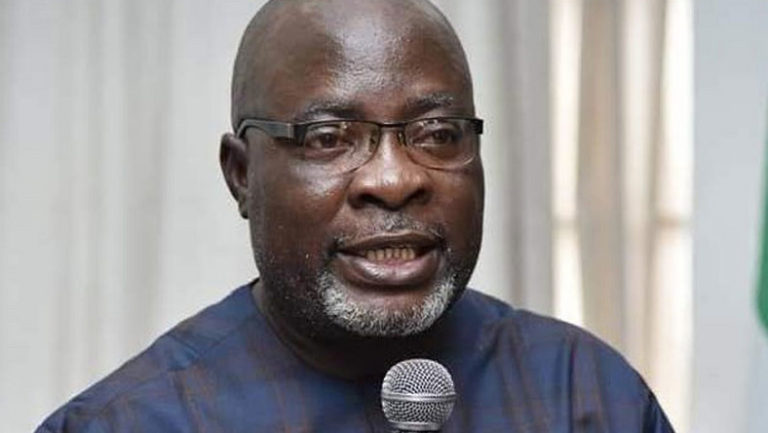
THE People’s Democratic Party (PDP) on Tuesday tasked President Muhammadu Buhari to adopt the 2014 National Conference report to satisfy popular demands of Nigerians calling for the restructuring of the country.
The document, the party says reflects concerns of most Nigerians across different divides, thus should be adopted and presented to the National Assembly (NASS) for consideration.
“Our party stands at the forefront of efforts for genuine restructuring, but we hold that the authentic materials for a genuine restructuring are contained in the 2014 National Conference report, wherein, Nigerians, across all the divides, collectively provided a roadmap out of our constitutional quagmire,” Kola Ologbondiyan said in a statement.
He accused the Progressive Congress (APC) of frustrating the restructuring demands of the people, stressing that the document is capable of addressing some of the constitutional problems confronting the country.
Ologbondiyan stressed that other alternative measures or contrary documents proposed as a substitute to the confab report might not ‘genuinely restructure’ the nation.
According to the PDP spokesperson, the APC had commenced plans to present an alternative report produced by its committee setup on restructuring. The contrary report, he alleged, was to replace the 2014 national conference report.
“Nigerians are also alerted of a fresh ploy by some ambitious APC leaders to blackmail the legislature and create an impression of commitment to restructuring, just to beguile the people and soften the ground for their personal political and particularly, presidential ambitions ahead of the 2023 elections.
“It is therefore unacceptable that the 2014 National Conference report, which embodies the desires and hopes of over 200 million Nigerians, has been shelved by President Buhari since his predecessor in office, President Jonathan personally handed it over to him in 2015 for implementation in line with the wishes and aspirations of the people,” it reads in part.
“Our party, therefore, charges President Buhari to bring out the 2014 National Conference Report, dust it up and present it as an executive bill to the NASS to guide the desired amendment to the 1999 Constitution (as amended) with regard to restructuring,” the statement added.
Many Nigerians have recently called on the President to consider restructuring the nation to reflect the true demands of the people.
Though the APC claimed to have commenced gradual consideration of the confab report, last month, Bolaji Akinyemi, a former Minister of External Affairs expressed concerns about why the president is believed to be reluctant in implementing the report.
The gesture, it is assumed would offer a new dimension of socioeconomic growth, improve the electoral system, enable devaluation of power, and reduce authorities of the federal government regarding items in the exclusive list.
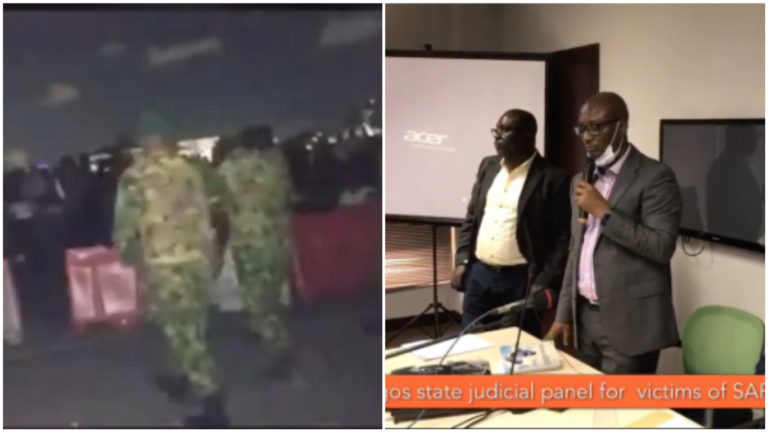
NIGERIANS have criticized the testimony of Lekki Concession Company (LCC) during the Lagos State judicial panel of inquiry when the company’s managing director, Abayomi Omamuwasan, disclosed that the closed-circuit television camera (CCTV) at the Lekki toll gate did not capture the shootings of #EndSARS protesters on October 20.
Omamuwasan who appeared before the panel on Tuesday, said the surveillance camera fixed at the Lekki Toll Gate plaza, where peaceful protesters were gunned down by officers of the Nigerian Army, stopped working at 8 pm, adding that the network was interfered with, causing the disruption.
“The surveillance camera didn’t capture the shooting. It stopped recording around 8 pm, when it was tampered with and stopped,” Omamuwasan told the panel.
The MD further told the panel that the LCC did not activate the audio recording of the camera because it is used for traffic and not security.
Omamuwasan’s response has met criticism on the streets of social media, with many commenters expressing disappointment that the footage promised to be made available by the Lagos State Government (LASG) is practically non-existent.
“These people take us for fools. LCC says the surveillance cameras stopped recording at 8 pm on October 20, 2020. Just about the time, the shootings at the toll gate began. If you ever doubted the intention to hide the truth, here it is in living colour,” a Twitter user identified as I_Am_Ilemona shared on his page.
Japheth Omojuwa, author and Chevening scholar also posted about it on Twitter, saying: “If LCC actually claimed that their camera didn’t capture the Lekki shooting that even the governor himself already admitted to, just close the judicial panel already. If you are telling a bad joke, better to keep it short, to save everyone’s time!.”
The CCTV at Lekki Toll gate has been a topic of discussion since the Lekki Shootings. At first, a picture of suspected personnel removing the camera from the toll plaza just a few hours before the gunfire started on October 20, was captured and circulated on social media.
But in defending the viral photo of the yet-to-be-identified man uninstalling the cameras, Jide Sanwo-Olu, governor of Lagos State said the uninstalled cameras were not surveillance but laser cameras for vehicles.
“Nobody ordered the removal of cameras at the Lekki tollgate. The MD of LCC said because of the curfew, they made the decision to take out installations. The cameras you saw are not security or motion cameras, they are laser cameras for vehicles,” the governor said.
However, several clips of the happenings of that day at Lekki toll gate have been widely shared on social media.
Bertram Hill, an open-source intelligence journalist with BBC, shared a video of military men shooting at protesters, disclosing the coordinates and exact location of where the clip was captured.
“Here’s the clearest view I’ve seen thus far of some of the gunfire at Lekki Tollgate. In this footage, men in camo uniform fire their weapons at 6.435886, 3.447423, 15m from the East side of the toll gate. Some of the #EndPoliceBrutalityinNigera protestors had sat down,” his tweet read.
Meanwhile, Amnesty International, a human rights advocacy group said it has received ‘credible but disturbing evidence’ that security forces of the government killed peaceful protesters at Lekki toll gate area of Lagos on October 20.
“The Nigerian authorities must end their attempts to cover up the Lekki toll gate massacre,” Amnesty International said.
The group recently released a new timeline investigating the atrocity.
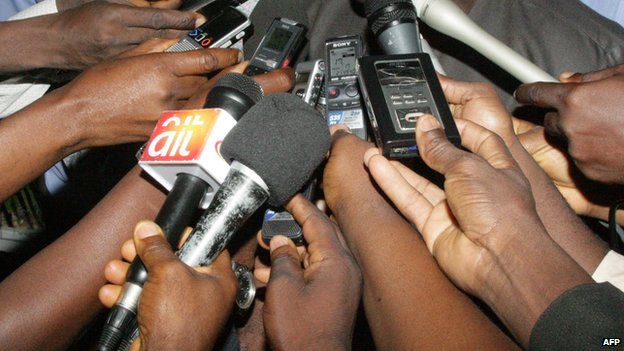
MEMBERS of the Correspondence Chapel, Borno State chapter, the Nigeria Union of Journalists (NUJ) on Tuesday have accused Babashaik Haruna, Governor Babagana Zulum’s media aide of frustrating their reporting activities, thus undermining press freedom in the state.
Haruna Dauda Biu, the Chairman Correspondents’ Chapel said the governor’s media assistant was denying the media of performing its constitutional mandate as enshrined in Section 22 of the 1999 Constitution (Amended).
Speaking on behalf of the group in Maiduguri, the state capital, Biu alleged the media both local and international could no longer cover the governor’s activities.
According to him, the press was denied invitations or duly informed of important public engagement of the governor.
“It is disheartening to observe that in recent times there seems to be a deliberate attempt by the officer to prevent members of the Correspondents’ chapel who represent various national and international media outfits from doing their jobs,” he stated in a statement.
Biu further described the media aide’s attitude as unprofessional stressing that the accused was recently appointed as a senior special assistant on media.
He said the governor could only be made more accountable when the media is allowed to cover and report his activities for effective checks and balances.
“This singular act negates the provision of section 22 of the 1999 constitution of the Federal Republic of Nigeria as amended which empowers the press to function freely without any form of hindrance.
“To this end, therefore, the Chapel will no longer condone any attempt by Mr Baba Shiekh Haruna or those he delegates to undermine press freedom in Borno state.”
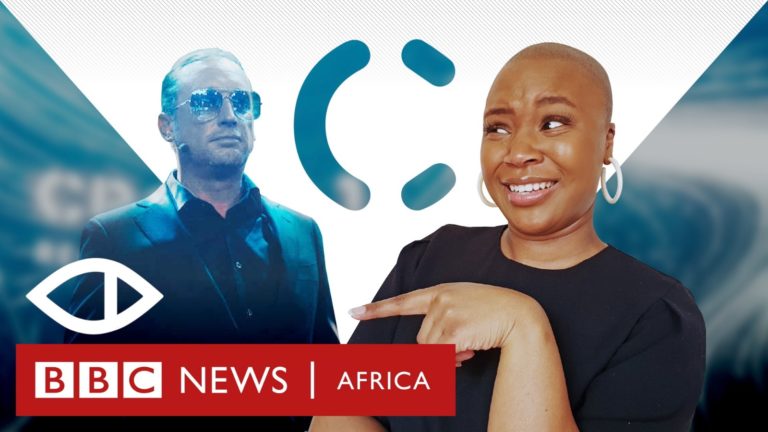
AN undercover investigation by the British Broadcasting Commission, Africa Eye has revealed how a global pyramid scam run from Europe is using smartphones to cheat ordinary people across Africa, Asia, and Latin America.
The BBC in a statement shared with The ICIR said, Crowd1, which describes itself as “the fastest-growing crowd marketing company in the world”, peddles a range of bogus products and false promises to cover an old-fashioned pyramid scheme based on recruitment.
The six-month investigation by BBC Africa Eye reveals that the scheme appears to have made a fortune for a handful of European scammers, many of them Swedish.
It said using nothing but a smartphone, Crowd1 claims, you can become a millionaire by promoting and selling a series of exciting digital products to your network.
These claims according to them, have persuaded thousands—perhaps millions—of people across Africa to hand over the 99 Euros that buys an entry-level membership to Crowd1.
The BBC has found that the recruitment of new members is heavily incentivized by Crowd1.
It said, “In its online webinars and events, members are encouraged to sign up their families, their Facebook friends, and the people they know from church. Successful recruiters earn a commission for bringing in new members, and—as with a classic pyramid scheme—for any additional people brought into Crowd1 by those recruited.”
The most important of Crowd1’s products it further said is an “educational package” you have to get if you want to become a full member—is effectively worthless
The scheme appears to have made a fortune for a handful of European scammers, many of them Swedish, but it has left behind a trail of debt and poverty in countries including South Africa, Kenya and Nigeria.
The BBC documentary includes devastating testimony from a woman in South Africa who spent her entire life savings on Crowd1 in the belief that she was buying “shares” in a business that would pay out a “salary.”
“My heart is broken,” she told the BBC, “because I wasted all my money that I could have used to buy a house. Now I am living in a shack, with no money. I don’t have an income or a business. I’m just in disbelief and I am ashamed.”
Africa Eye also spoke to Samtos, a young man in Lagos, Nigeria, who says that, when the Covid19 lockdown hit Nigeria, he was concerned about how to earn an income and was “sweet-talked” into joining Crowd1 by a friend. Samtos told the BBC that the scammers are in Europe “enjoying everything they are gathering from poor people.”
Crowd1 in reaction told the BBC that it is not a scam or a pyramid scheme and does not break any South African law. They said it is a legitimate network-marketing company that offers products to its members and enables them to earn money by marketing those products. Crowd1 does not make money from recruitment, they insist, but only from these sales. Crowd1 stressed that all its products are genuine.
BBC Africa Eye’s documentary “Unmasking the Pyramid Kings” can be seen in full here.
ON Tuesday, the Senate questioned Lai Mohammed, the Minister of Information, over a project funded by the Ministry of Finance for execution by the Ministry of Information in the 2020 fiscal year.
The project designated as ERPG 10145116 was listed as “completion of NTA Gashua sub-station,” but the project was classified as “ongoing” which was contradictory.
A sum of N250 million has been fully released to the ministry for the project and was expected to have been completed
The Minister led top officials of the ministry to the Senate to defend their 2021 budget estimates.
Abdullahi Sankara, Chairman of the Senate Committee on Information, said that the minister has a lot of explanations to make over the project.
He said that it was a 100 percent release of funds without any work commensurate to the full releases done on-site.
In response, the minister explained that the project was a constituency project inserted in his ministry’s 2020 budget.
Ezennwa Onyewuchi, Senator representing Imo East Senatorial district, during the budget Defence by Mohammed said that N19 million was expended from the N43 million meant for international travels but the period coincided with the COVID-19 lockdown.
“Let me take you on this 2020 overhead. You have here on local travels and transport appropriated is N30 million you expended N23 million on local transport you received N96 million as appropriated as released and you expended N90million. On International travels and transport, you had N43million and you expended N19million.”
The Minister in his response said the international travels were undertaken before the COVID-19 lockdown.
“You will notice that N43 million was budgeted but less than 40 percent was spent precisely because of the COVID-19 and before then remember that we had travelled to attend several international summits starting UNWTO conference, UNESCO in Spain and in the UK.
“We also did advocacy in the UK at the same time. These were all before the lockdown,” he said.
However, checks made by The ICIR into the 2021 budget of the Ministry of Information on the website of the Budget Office revealed several approved projects to be executed by the ministry within the 2020 fiscal year.
There were 32 projects listed by the ministry as ongoing projects but it was not stated the exact amount released so far and the level of completion.
Among some of the approved projects includes a project titled “facilitation of ministerial media appearances for 36 ministers, influencers and analysts on radio, television, social and print media” which was to cost ₦107,280,468.
Other projects approved by the ministry are Federal Government wall calendars and diaries for 2020 costing ₦121,878,900, special enlightenment campaign on Government policies and programmes to cost ₦105,505,798 amongst others.
The lawmakers raised eyebrows at Mohammed’s explanation on the completion of the NTA Gashua sub-station and other suspicious items on its budget, as they took turns to query the minister over the project, insisting that it was not a constituency project.
Abayomi Fasina, the Deputy Vice-Chancellor of the Federal University of Oye-Ekiti (FUOYE) says he has been cleared of the corruption allegations levied against him by the Academic Staff Union of Universities (ASUU) Akure zonal branch.
Fasina said this in a telephone conversation with The ICIR on Tuesday concerning allegations of corruption and fake professorship levied against him by the ASUU Akure Zonal office.
“Those allegations have been investigated a long time ago and I have been cleared. It has been cleared,” said Fasina.
He added that the management of FUOYE has also responded to the allegations and confirmed the allegations are untrue.
“The University has replied, the ASUU faction in FUOYE has also replied, I don’t have any issues with them and those allegations are lies, I don’t know what they want, there are documents to show for it,” he stated.
He however refrained from making a further comment because there is a lawsuit over the matter, saying he is not supposed to make public comments.
The Management of the university in a statement sent to The ICIR by Fasina signed by Yinka Ademuyiwa, the FUOYE Deputy Director of Corporate Services said it has cut ties with the ASUU zonal office.
According to Ademuyiwa, ASUU said ‘it is irritated by the allegations’ adding that it has disowned the ASUU Akure Zone and severed all relationship and commitment with them.
The ASUU zonal office also lacks the legitimacy to speak on the matter because ‘a bulk of its lecturers’ has pulled out of the ASUU membership, he added.
THE ICIR had reported that the ASUU Akure Zonal office accused Fasina of receiving salaries consecutively from FUOYE and the Ekiti State University.
“The Man, Fasina, by all available information of his arrant misdemeanour, should have been arrested and prosecuted over one year ago,” said ASUU.
Akure Zonal Office of ASUU also said Fasina and the current vice-chancellor, Professor Kayode Soremekun have continued to run the university like a private establishment and Professor Soremekun is ‘imposing’ his deputy as the next VC.
NDUKWE Ekwekwe, another petitioner at the ongoing Lagos panel of inquiry has narrated how officers of the disbanded Special Anti Robbery Squad (SARS) tortured him, threw him from a two-story building, and had his spinal cord broken in the process.
The ICIR had on October 27, reported the ordeal of Okoli Agwu Abunike, the first petitioner at the panel of inquiry.
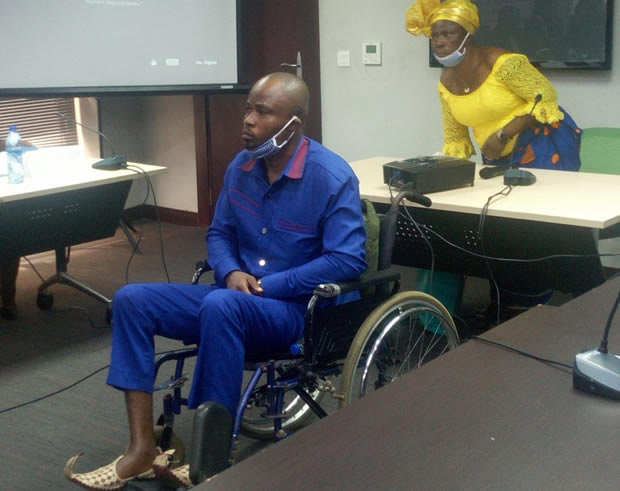
Ndukwe Ekwekwe, who appeared at the panel on Tuesday on a wheelchair, recounted how he was stripped naked and severely tortured by SARS officers in 2016.
Ekwekwe said he was a trader at the Alaba-Rago market before the SARS operatives led by Inspector Haruna invaded his shops to arrest him without telling him is offense.
““I was at my shop at Alaba-Rago Market on that fateful day in February 2018 for the day’s sales when some police officers from the Special Anti Robbery Squad (SARS) came to me fully armed. I asked them what they wanted and they said they wanted to arrest me. Why? They didn’t say anything.”
He stated that they forced their way into his shop, scattered his goods, and shooting gun and tear gas into the air to disperse other traders that came to his rescue before they eventually dragged, handcuffed and whisked him to the Lagos Police Command, Ikeja.
“They forced their way into my shop, scattered all my wares but they didn’t find anything. This time, other traders had come around and they demanded to see their ID cards but they fired their guns and teargas into the air and they all left.
“After they ransacked all my shop, I was dragged outside, handcuffed and taken to the Lagos Police Command, Ikeja,” Ekwekwe narrated.
Ekwekwe further narrated that he was thoroughly beaten at the police command before they told him they had an intelligence report with an order from the Inspector General of Police to effect his arrest.
“At Ikeja, I took out my phone to call my mother but as soon as I was sighted by one of the officers, he hit my hand and head with a gun butt and I was dragged out of the van into the torture room where I was stripped naked and tortured and treated like a criminal without telling me what I had done wrong.
“I was persistent to know what I had done wrong and they told me they had an order from the Inspector General of Police to effect my arrest. They said they had an intelligence report on me. After I was thoroughly beaten, another team came around and began another round of beating. They later asked if I should be killed and the man I later know as Inspector Haruna said not yet.”
He said he was later dragged back to his shop the following day where goods at his three shops, running into N18m were sold by the SARS officers before he was thrown from a two-storey building to the ground and had his spinal cord broken in the process.
“The following day around 8 pm, I was taken back to my shop with my hands and legs chained. They broke into the shops, brought out my wares and sold everything to traders and passersby. I lost all the wares in my three shops worth N18m.
“While they were doing this, I started shouting to attract the attention of passersby and few of the traders around. When they discovered that I was agitated, the commander ordered one of his boys to keep me busy and he pushed me from a two-storey building to the ground.
That was how my spinal cord was broken. I fell to the ground unconscious. My mother told me that I was dumped at the police college.”
Ekwekwe said he was later taken to the Lagos University Teaching Hospital (LUTH), where he was operated on.
“I was taken to Igbobi Orthopedic Hospital but I was rejected and was later taken to Lagos University Teaching Hospital, LUTH where I was operated upon.”
The chairman of the judicial panel of inquiry, Doris Okuwobi, however, admitted the X-ray from the police college hospital in Ikeja, hospital bill, list of phone numbers of SARS officers involved, picture of the petitioner with a bandage on his head as exhibits.
The judicial panel has adjourned further hearing on the matter till November 13.
NO fewer than nine Nigerian Americans are on the ballot for Tuesday’s general elections in the United States, the News Agency of Nigeria (NAN) reports.
Running mostly on the platform of the Democratic Party, the candidates are bidding for different offices at the federal, state and local levels.
NAN reports that besides the presidential election, governorship polls are holding in 11 states and two territories, in addition to other state and local elections.
Congressional elections are also holding on Tuesday with all the 435 seats in the U.S. House of Representatives, and 35 of the 100 seats in the Senate up for grabs.
At the federal level, Oye Owolewa, whose father is from Kwara and mother from Oyo, is aiming for a ‘shadow’ (non-voting) seat in the House of Representatives.
Mr Owolewa, a Ph.D holder in Pharmacy from the Northeastern University, Boston, is seeking to represent the District of Columbia (DC) under the Democratic Party.
If elected, the 30-year-old, whose agenda includes fighting income inequality in the U.S., would be the first Nigerian congressman in the country’s history.
Mr Faparusi holds a doctorate in Medicine from the University of Ibadan, a Ph.D. in Health from Johns Hopkins University, and Juris Doctorate from the Widener University School of Law, Delaware.
This is not his first shot at the U.S. Congress. In 2014 and 2016, he vied for the Republican Party’s ticket to the House of Representatives, but lost in both occasions
Mr Faparusi’s priorities include being a positive voice for all Nigerians in the U.S. Senate, and inspiring Americans of African or Nigerian descent to seek public office in the country.
In Missouri, a Republican-controlled state, Yinka Faleti from Lagos is the Democratic Party flagbearer in the election for the office of Secretary of State.
According to Wikipedia, Mr Faleti was in the U.S. Army as an active-duty officer from 1998 to 2004. He served in Kuwait, first under Operation Desert Spring and later as part of Operation Enduring Freedom.
The 44-year-old father of four holds a Bachelor’s degree from the United States Military Academy, West Point, and a Juris Doctorate from the Washington University School of Law.
His goals as a Secretary of State include protection of the “right to vote for Missouri families”, and ensuring elected officials hear the people’s voice.
Also at the state level, Paul Akinjo from Ondo is running for election to the California State Assembly under the Democratic Party to represent District 12.
Akinjo once served as Vice Mayor of Lathrop, California, and in the U.S. Army Reserve from 1982 to 1989. His priorities include housing, immigration and transportation.
In Delaware, a small Mid-Atlantic U.S. state, Adewunmi Kuforiji is aspiring to represent District 34 in the state House of Representatives.
Mr Kuforiji, originally from Ibadan, Oyo, secured the Democratic Party’s ticket on September 15 after defeating his challenger, Robert Haynes, at the primary. He holds a Bachelor in Accounting and a Masters in Business Administration from the Delaware State University.
In the 2018 mid-term elections, he vied for the same position but lost to the incumbent, Lyndon Yearick, of the Republican Party, whom he is facing on Tuesday.
Also at the state level, Esther Agbaje is seeking to represent District 59B in the Minnesota House of Representatives on the platform of the Minnesota Democratic–Farmer–Labor Party (DFLP), an affiliate of the U.S. Democratic Party.
The 35-year-old daughter of an Episcopal priest and a librarian, both Nigerian immigrants, defeated longtime state Representative Raymond Dehn in the party’s primary in August.
She is one of four progressive greenhorns who defeated established Democratic legislators in the primary.
Ms Agbaje has a law degree from Harvard University, a Master’s from the University of Pennsylvania, and has served in the U.S. Department of State, among others.
As a millennial, a “generation that has suffered numerous setbacks”, she seeks to bring a fresh perspective and new ideas to government.
On the ballot at the local government level are April Ademiluyi, Ngozi Akubuike and Benjamin Osemenam.
Ademiluyi, 39, is running on the Democratic Party’s ticket for Judge of the Seventh Circuit Court in Prince George’s County, Maryland.
For her part, Ms Akubuike, a legal practitioner, is an independent candidate for judge of the Minnesota 2nd District Court Position 8.
Ms Akubuike studied law in Nigeria, then worked in the banking sector before moving to the U.S. where she graduated from the Mitchell Hamline School of Law.
She has served in several capacities, including legal manager for the state of Minnesota.
Mr Osemenam, who moved to the U.S. in 1982, is contesting for a seat in the Brooklyn Park City Council of Minnesota to represent East District.
An engineer with the Minnesota Department of Transportation, he is vying on the platform of National Party.
He is a former president of the Association of Nigerian Engineers in Minnesota.
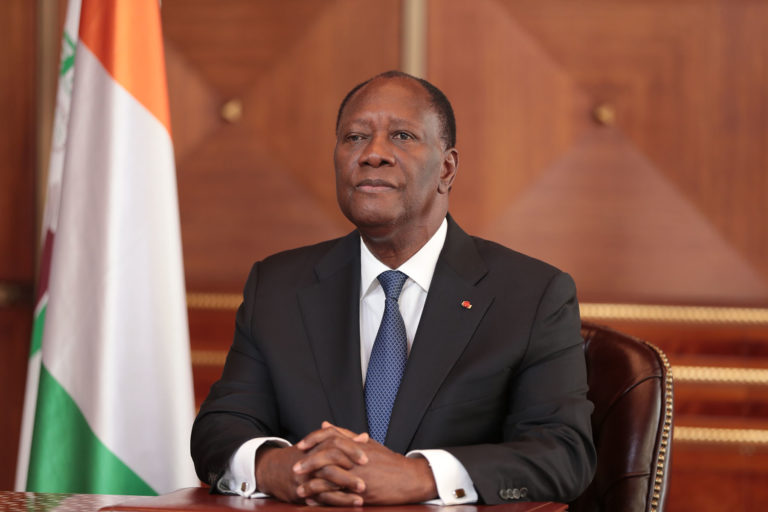
THE re-election of Ivory Coast President Alassane Ouattara for a third term bid and his maintenance as head of state is likely to lead to a civil war, opposition parties and political groups in the country have stated in a communiqué released on Monday.
On Tuesday, 78-year-old Ouattara who has served as president of Côte d’Ivoire since 2010, was declared the winner of the controversial election marred by violence, after garnering 94.27 percent of the vote in the first round at a participation rate of 53.90 percent.
But his re-election has been rejected by major opposition political parties, who withdrew their participation from the election and promoted civil disobedience.
Pascal Affi N’Guessan, former Prime Minister and spokesperson for the political parties and groups of the opposition, stated in a press release that majority of Ivorians followed the civil disobedience slogan launched on September 20 and boycotted the election.
He added that the electoral body only succeeded in getting eight percent of the electorate to vote – a reality he explained has outlawed and called to question the victory of Ouattara, who only started seeking a third term in August, following the death Amadou Gon Coulibaly, the initial presidential candidate of Rally of the Republicans (RDR), a liberal party in Ivory Coast.
N’Guessan submits that at least 90 percent of Ivorians reject the ‘the illegal and unconstitutional candidacy of Ouattara’, whose third term in office is unconstitutional as the law permits a cycle of two five-year terms for presidents.
The opposition political groups have also called for a National Transitional Council, to be chaired by Henri Konan Bedie, President of the PDCI-RDA and of the CDRP platform, who it says will prepare ‘the framework for the organization of the fair, transparent and inclusive presidential election; convene the national meeting for national reconciliation with a view to the return to a definitive peace in Côte d’Ivoire.’
The group has also called for the set up of a transitional government but the Ivorian Popular Front (FPI) party argued that it was too early to form one in the current environment, saying a civil disobedience movement is enough to force Ouattara to negotiate in a legal manner.
In addition, maintenance of Ouattara in office could lead to instability despite his efforts in bringing infrastructure projects and economic growth in the country, known to be the world’s top cocoa producer – a development that has earned him commendation among supporters, the group said.
Many fear that post-election violence is looming. Already, no fewer than 30 persons have been killed in pre-election clashes, according to local authorities, with concern that a repeat of 2010 and 2011, a period that recorded the deaths of some 3,000 people from months of post-election violence could re-occur.
As Nigeria transits into a cashless society, the evolution also creates opportunities for internet fraudsters to take advantage of unsuspecting citizens. Abdulrasheed HAMMAD reports about how Nigerians are getting fleeced of their hard-earned money by internet crooks.
Victims of internet fraud recount experience
A victim of online fraud, Eziri Tina, an indigene of Delta state, narrated how she met one Orave Olufu, a member of a scam syndicate on Facebook. Orave describes herself as a cloth seller on Facebook and Tina asked to be introduced to her supplier. She was later introduced to Efe Mercy Morrison, the alleged fraudster who lies to her victims on Facebook that she imports clothes from China.
After a long negotiation, Morrison showed her victims the pictures of the goods that would be supplied to her and requested payment in the sum of N57, 500. Immediately, Tina transferred the money into a Keystone Bank account – 6030589177 bearing the name: Efe Mercy. A few minutes later she was blocked.
When she reported the scam to Keystone bank, they asked for the account details of the swindler. She also reported the fraud to her bank and the staff who attended to her promised they would do their best to recover her money.
This happened on 21 July and as of the time of filing this report, Tina is yet to recover her money.
Busola Saa’dudeen is another victim of an online scam. She narrated how her friend on Facebook, Olaitan Adebesin introduced an investment program to her.
According to Saa’dudeen, she was constantly persuaded by her friend to invest and receive double the amounts invested within two days.
“Two days after I sent the sum of N10,000 to them, which is the day I was supposed to be credited the double amount as promised. I talked to the person and she told me they have a problem with their network. Not long after that, they stopped responding to all my messages,” she lamented. The Trucllaer showed her name as Victoria Investment.
It was later she discovered that her friend’s Facebook account had been hacked. When asked why she didn’t inform the police, she told The ICIR that her friend informed her that the police would not do anything to it, rather they would fleece her.
The stories of Tina and Saa’dudeen illustrate the travail of victims of online scam in Nigeria, and the frustration they experience in the quest to seek redress.
Online scam in Nigeria is now rampant as more youths engage in swindling others as a means of survival.
The Federal Bureau of Investigation (FBI) in the US recently indicted 80 suspects, 77 of them Nigerians – in what it describes as the “largest case of online fraud in US history.”
Also, last year, Nigeria’s Economic and Financial Crimes Commission (EFCC) along with the Federal Bureau of Investigations (FBI) arrested 281 individuals for cyber-enabled financial fraud, among who 167 were Nigerians.
The estimated annual financial loss in Nigeria due to cybercrime was N250 billion ($649 million) in 2017 and N288 billion ($800 million) in 2018, yet 95 percent of cybercrimes go unreported
Another victim, Oladipupo Success narrated how her friend’s WhatsApp number was hacked and used to defraud her. They are in the same WhatsApp group for Christian fellowship. The victim, a 200-Level student of Anatomy at the University of Ilorin, didn’t know her friend physically, but she knows she is a member of her church.
According to her, the WhatsApp contact of a friend named Blessing was hacked and they used the contact to send an advertisement on Helping Hand Investment and after she joined their WhatsApp group, she received their call instantly.
“He said I should send my account details that he is going to send the account details of the account that I will be sending the money to. He promised me that after five minutes, I will be getting the alert, ‘just like that’,”
The victim sent a sum of N5,000 four different times to Ijaleye Seun’s account number: 2144066629/UBA. But she didn’t approach the bank because she is ashamed to let other people know that she was duped.
Shehu Majindadi Al-Korowy also recalled how his elder brother’s Facebook account was hacked without his knowledge. He was asked to pay into JAMALIFE INVESTMENT ACCOUNT bearing the following details Nwaogu Ifeanyichukwu/4893001493/Eco Bank. The WhatsApp contact used is 07026836144 registered in Williams Davidson’s name.
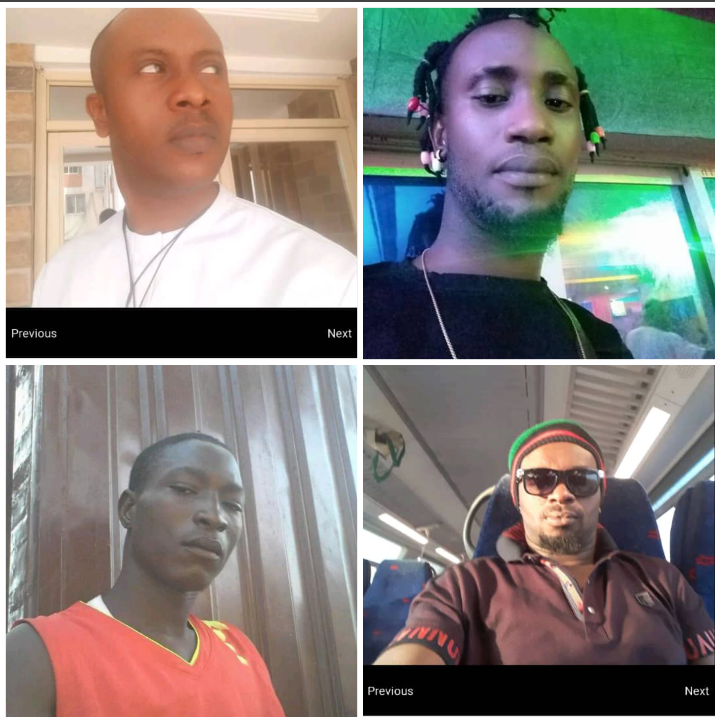
Faces of some the Online scammers
He sent the sum of N10,000 to them and they used another prank to collect the sum of N16,000 from him. After he sent the N26K, his Facebook account was hacked and they blocked him.
He lodged a complaint at Kwara state police headquarters on the 7th June 2020, and the police promised to recover his money back upon the payment of N6,000.
He later contacted the swindler through another phone number, negotiating another deal, and they sent two different account details. The first belongs to Daniel Agbeaku: 3153720098, Access Bank while the second belongs to Muhammad Hawa: 3153720098, First Bank.
As at the time of filing this report, the police have not recovered the money.
Sofiullahi Balogun, also recollected how his WhatsApp account was hacked by scammers and his identity used to defraud one of his friends of N20,000.
He wrote a formal complaint to the Economic Financial Crime Commission (EFCC), and the police, but they are yet to apprehend the scammer.
Verified list of SCAM Sites gathered by the Central Intelligence Agency
The petition, which was written on the 12th of November accused Olele Kingsly the owner of the First Bank account (3143821125) into which the alleged sum was paid.
In a related development, Aminat Lawal also narrated her experience to The ICIR about how a suspected internet fraud hacked one of his brother’s Facebook accounts and used it to dupe a victim.
The suspect’s account detail is Oyakhiko Sunday Messi, 3049252622, Polaris Bank.
Verified list of SCAM Sites gathered by the Central Intelligence Agency
A Personal Experience with Scammers
To get a first-hand experience, the reporter decided to create a new Facebook account with the name Rasak Arigbabuwo, and changed Whatsapp name to reflect the same identity.
The reporter’s first observation is that almost everyone on his new friend list uses hacked Facebook accounts. And once they succeed they proceed to use the phone lines for their fraud activities. Some of them parade as CEOs of investment clubs, claiming to pay double the amount invested within an hour.
Others pretend as herbalists while some parade as millionaires interested in doing online giveaways. But the goal is the same: To defraud their quarry.
One of the scammers introduced Good Life investment to the reporter through WhatsApp group. Later, one Eniola asked the reporter to send his bank detail, phone number, the amount to be invested, and mode of payment.
He told the reporter that she has registered the details sent to her and the reporter should go and make payment to GTB account number 0114278244 belonging to Apuede Eunice, though she introduced herself as Eniola.
However, when asked her what is the assurance that she would not block the reporter after making the payment, she did not reply, rather she urged the reporter to promptly deposit the money into the account.
During the course of this investigation, one woman chatted with the reporter privately, introducing Binomo Investment Trade. She promised that the reporter would never regret investing money and sent the account detail of the purported Binomo Manager— Mr. Fredrick Issac Osasere/3146296407/ First Bank.
The reporter conversed with another swindler on Facebook, telling him about his interest in online investment, he called immediately even before the reporter gave him his phone number. He gave a GTB account number—0572161403 belonging to Tambori Clement.
A certain Mr. Isreal persuaded the reporter to invest in Nigeria Social Insurance Trust Fund.
After collecting details for the registration, he implored the reporter to make the payment to this account detail:John Oisamaye David/3152875805/First Bank so that he would get double the amount.
Professional hacker’s opinion
While speaking with Abdulgafar Taoheed, an expert in White Hat Hacker, he revealed that the act of receiving fake alert is called ‘revoked’ and it’s very easy for these scammers to use the application to convince people that the investment is real.
He admonished Facebook users to change their passwords at a 3-month interval. This will help in securing their accounts from time to time.
“If you press any weird link, they will have access to all your phone details and social media accounts and they can easily hack any of your social media accounts,” he warned.
He also advised social media users to do the two steps verification code in their social media account to protect it from being hacked.
The legal perspective
Section 5-16 under part III of CYBERCRIMES (PROHIBITION, PREVENTION ACT, 2015, provided the punishment for the perpetrators of online scams.
Section 6(1) states that: “Any person, who without authorization, intentionally accesses in whole or in part, a computer system or network for fraudulent purposes and obtain data that are vital to national security, commits an offense and shall be liable on conviction to imprisonment for a term of not more than 5 years or to a fine of not more than N5,000,000.00 or to both fine and imprisonment.”
Police reacts
All efforts to reach the Police PRO, Frank MBA, and his deputy, Adeniran Aremu, proved abortive as several messages on Whatsapp and calls were ignored.
But in an interview with the Public Relations Officer of Kwara state, DSP Okasannmi Ajayi explained to The ICIR that the first step the police force is taking to curb the menace of online scam is by sensitising the people about the dangers involved.
“We will sensitise people to be conscious of the links they click and the kind of text messages they react to and should also be enlightened to be very cautious of information they post out on social media either on their private or public spaces.
“Secondly, any complaint of any cybercrime that we receive, we will make an effort to investigate it. The one that has to do with the bank, we will get the account details and we will investigate the BVN of such a scammer and we will notify the bank to inform the police anytime these scammers are making any attempt to withdraw the money at the bank, they will be arrested, ” he disclosed.
He warned that people should be cautious online when dealing with unknown people. The Police work with banks to unravel these crimes and the cooperation has been good.
When the reporter inquired about why people are usually reluctant to report an online scam to the police, he replied that they have their own reason for not coming and if they decided not to come and complain that they have been swindled, there is nothing the police can do about it. He also pointed out that the police are willing and available to investigate any case reported to them.
“As far as we are concerned, the police are ready to investigate any case reported, if they don’t report to us, there is nothing we can do about it, ” he said.
He, however, admonished the people to mind the information they post on social media about their financial status and should also be careful while receiving any bank messages.
He insisted that the police do not ask for money from anybody before receiving a complaint or carry out an investigation on cybercrime, a claim contrary to Shehu Majindadi Al-Korowy’s allegation who paid N6,000 to a police officer when lodging his complaint at police headquarters in Ilorin.
Bank reacts
While speaking with one of the officials of Union Bank, Ilorin Branch (Name Withheld), he clarified that victims of online scams could always get their money back if the money is passed through account details.
“Even if they transfer the money from the account, their account is not closed and it’s possible to track those scammers through their BVN. His BVN can also be blacklisted.”
One of the staff at First Bank, Ilorin Branch (Name Withheld), said it is advisable for victims of the online scams to report at their bank. The bank can help in investigating the matter in order to refund the money to the victim.