THE World Health Organization (WHO) has declared that Nigeria is among three countries with worsening cases of cholera outbreak, warning that one billion people globally are currently at risk.
“In July 2025, the African Region reported 20,053 new cholera cases across 14 countries, marking a seven per cent increase compared with June.
“In this period, the highest number of cases were reported from the Democratic Republic of the Congo (8,308), South Sudan (6,740) and Nigeria (2,638),” WHO said.
It reported there were 577 cholera-related deaths, a 62 per cent increase compared with the previous month.
Nigeria was also among the three countries that topped the highest number of deaths.
The country reported 48 deaths, while the Democratic Republic of the Congo topped the list with 400, followed by South Sudan with 66.
In the African region, the WHO said from January 1 to July 27, 2025, 164,804 cholera cases were reported across 21 countries.
South Sudan reported the highest number of cases with 70,516, followed by the Democratic Republic of Congo, 42,760, and Angola, 27,666.
“In the same period, a total of 3,510 deaths were reported from 18 countries with the highest numbers recorded in the Democratic Republic of the Congo (1,212), South Sudan (1,173) and Angola (773),” the UN agency said.
It warned that globally, cholera outbreaks were worsening across 31 countries amid a surging fatality rate.
“Given the scale, severity, and interconnected nature of these outbreaks, the risk of further spread within and between countries is considered very high,” WHO explained in a post on Friday, August 29.
It attributed the deteriorating outlook to be “driven by conflict and poverty”, with rural and flood-affected areas especially vulnerable to the disease.
The ICIRreported in March how over 25 million people in Nigeria’s commercial cities face increasing overwhelming challenges of poor sanitation, heightening cholera outbreaks and compromising public health safety of residents.
Cholera is an acute intestinal infection that spreads through food and water contaminated with bacteria, often from faeces, according to the WHO.
The agency reported further that between January 1 and August 17, 409,222 cholera cases and 4,738 deaths were recorded globally.
Cholera is gaining ground in several countries that had not reported substantial case numbers in years, like the Republic of Congo and Chad.
Also, there has been a global increase in cholera cases and their geographical spread since 2021.
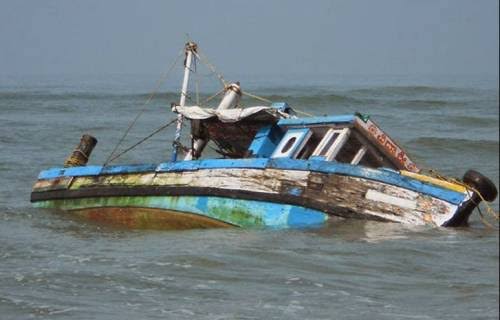
THE National Inland Waterways Authority (NIWA) has confirmed a fresh fatal boat mishap at the Jaranja River in the Shagari Local Government Area of Sokoto State.
The latest accident was the third within a month in the state.
Area Manager of NIWA in the state, Bala Bello, told the News Agency of Nigeria (NAN) on Friday, August 29, in Sokoto that two people died, while nine injured victims were rescued in the latest tragedy.
Bello, who said the incident occurred Friday afternoon, attributed it to carelessness, overloading and safety rules violation.
He explained that a rescue team, comprising officials from NIWA, the National Emergency Management Agency (NEMA), the State Emergency Management Agency, and the Red Cross Society, had been mobilised to the scene.
He added that the team confirmed the casualty figures while search and rescue operations were ongoing to locate the missing persons.
Bello restated that NIWA had been engaging riverine communities on safety measures, guidelines, theuse of life jackets and other safety kits on water.
The NEMA’s Head of Rescue and Rehabilitation, Tukur Abubakar, who was also at the scene, confirmed that local divers had recovered one body while another, a female passenger, remained missing.
The latest tragedy comes barely a week after four people died in a boat mishap at Kojiyo village in Goronyo Local Government Area of the state.
In the accident, which occurred on August 17, 41 passengers were rescued and five declared missing.
The NEMA later disclosed that the death toll rose after the recovery of an additional body during its multi-agency operation, which also involved community divers.
Recall that another incident occurred at Faji Community in Sabon Birni Local Government Area of the state on August 22.
Boat mishaps are frequent on Nigeria’s waterways, often caused by overcrowding and poorly maintained vessels, particularly during the rainy season when rivers and lakes overflow their banks.
In December 2024, the head of operations for NEMA in Kogi State, Justin Uwazuruonye, confirmed that 54 bodies were recovered from a boat accident involving about 200 traders in the state.
Uwazuruonye pointed out that the lack of a passenger manifest made it challenging to ascertain the exact number of people on board.
Similarly, in August 2024, at least 16 farmers lost their lives in Sokoto State after a wooden canoe conveying them across a river to their rice fields capsized.
Also on July 29, 2025, six young girls drowned in north-western Jigawa State when the boat transporting them home from farm work overturned midstream.
Just two days earlier, on July 27, another tragedy struck in central Niger State, where at least 13 people were killed in a separate boat accident.
FAROUK Adamu is a founding member of the ruling All Progressives Congress (APC) and a former minority leader of the House of Representatives from Jigawa State. In this exclusive interview with The ICIR, Adamu speaks on the pains of fuel subsidy removal by the President Bola Tinubu government, as well as other national issues. Excerpts:
ICIR: As a renowned politician in the country and one of the founding members of the ruling party, the APC, what’s your assessment of this government in the last two years?
Adamu: Well, it has been challenging, but with a lot of progress. No matter what anybody says, if you remember back in the days when we were campaigning in 2023, all the major presidential candidates promised to remove oil subsidy. So, probably our biggest crime to the Nigerian public is the removal of the subsidy, which any of the candidates would have done anyway.
So, I think that’s really the beginning of the major challenge of this government within the last two years. I think as a government, we should be commended for that, but at the same time, we should also be knocked for that.
We should be knocked in such a way for back in the days when Jonathan was in government, myself, late President Muhammadu Buhari; all of us were on the streets all over the country demonstrating against the increase of oil prices that time, and we did everything to make sure Jonathan chicken out.
When Buhari came, I think the prices of petroleum products went up about three times, and then Tinubu removed the subsidy. But Buhari also would have done that. There are two things that Buhari did. He was to remove the fuel subsidy, but for the elections that were going to come he was advised not to do that, because it was going to bring chaos.
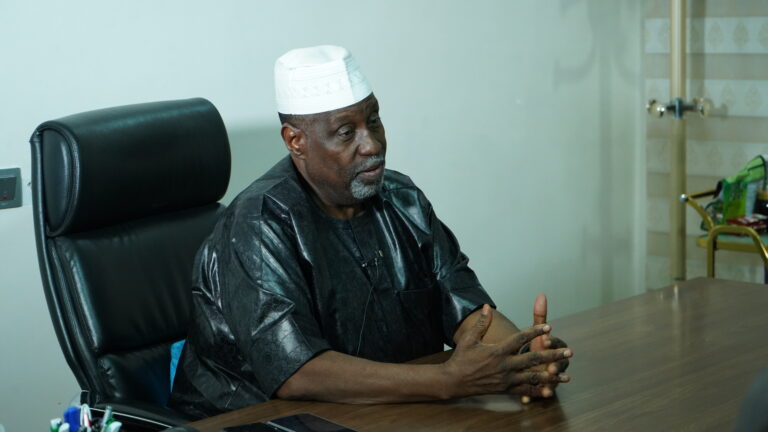
Farouk Adamu, a chieftain of the APC during an exclusive interview with The ICIR
So really, that was the beginning of our problem as a government, but unfortunately, also for Nigerians, nobody is remembering that there is a state and local government that should provide answers to their allocations. Everybody tends to look at the federal government.
But there are also certain things that when you’re in opposition or when you’re not in government, you don’t know. So there are certain things we did when Jonathan was in government. Sadly, it was due to ignorance of all of us.
ICIR: Have there been any attempts to assess the reforms of the president, mostly on fuel subsidy removal and its impact on the people with N70,000 minimum wage hardly able to buy a bag of rice?
Adamu: All the intentions are good, and the president is not an island. So, in most of these decisions, the president is just the executor. There are economists, there are people who do this arithmetic, who say what happens if this happens. So, the president is just the head who, if convinced, will go ahead and do it.
So, yes, we never expected the hardship to be this much. The president is not an economist; he is a politician. You know, they keep telling us that, it will be better. And we believe so. And no government will intentionally hurt its people. That is the beauty of democracy. All the things we are doing now, if Nigerians feel we are not doing the right things, through civility, democracy, we could be challenged. And we could even be removed.
ICIR: The federal government is asking Nigerians to tighten their belts, but we see at the federal level what some people regard as profligacy. For instance, the FG recently splashed money on football players. In a country that is borrowing people are questioning, if the government is serious about the austerity measures while asking us to tighten our belts.
Adamu: Well, first of all, we are paying the loans we are taking. About the money splashed on the players and their officials, you see, we are at the lowest level in this country.
The only thing that unites us is sports. So, the government, in the wisdom of our leaders, says, Look, let’s do something that unites this country because sports unites the country.
Here we are with one of the former Nigerian ladies in London, Kemi Badenock. I mean, look at how she portrays this country. Look at the composition of the Falcons team, comprising Okonkwo, Ajibade, and others, who believe in this country, who are flying the flag of this country. So, I don’t think any amount is too much to unite this country. But this thing is subjective.
ICIR: The UN agency on food, drugs announced that it was withdrawing aid and welfare packages to IDPs and so on. You are from the north, where there is such a massive problem with the IDPs and we can’t take care of them. Does that not call for priority on the government?
Adamu: No, whether we can’t take care of them, I don’t think so. But unfortunately, there are pilferages here and there. The government is trying its best. You know, these IDPs spring up like daily; I mean, you can’t envisage. So, sometimes you could probably get overwhelmed. I guess the government is overwhelmed. But still, back to whether it’s a waste, honestly, I believe it was done in good faith. It was done to unite this country. But it’s subject to debate as well.
ICIR: We can also see the sharp contrast with how people struggle to even buy basic things like food. If you go to the market, you see the price fluctuations and the pains. Is there a possibility that we can see a review of this, looking at two years later?
Adamu: Nothing is cast in stone. Certainly, there will be a review. I believe the government is taking notes. Recently, the government decided to import rice which was banned in this country at one time.
Now, they lifted the ban, and the price is coming down. It’s like a palliative done by the government to make sure things are coming down. But some are not coming down. But then, it’s part of the review that the government decided to lift the ban on the importation of rice.
But then, you spoke about the float of the Naira. Back in the days, somebody close to the government could just go to the central bank and collect dollars to go and exchange them at the black market rate. Now, this government said, Look, no more favours.
ICIR: Considering the growing opposition coalition against the present administration, do you think the position of the APC is being threatened ahead of the 2017 general election?
Adamu: You see, we respect them, we don’t ignore them; they are all respectable Nigerians. You can’t ignore Peter Obi, Atiku El-Rufai, or Amaechi, all of them, but the question is, all these people I mentioned were part of our gang in 2013, when we came together to bring down Jonathan. All of them. So, what is it about? Which means we, the elite of this country, are simply very selfish. Once you don’t get what you want, you just leave.
Faruk Adamu Aliyu
ICIR: There are concerns about President Tinubu’s poster across the country when we had barely two years into this administration. Are you not worried that this is rather too early?
Adamu: I totally agree. Honestly, it’s a digression, and it’s not good for the polity, but then the president honestly has no hand in all these processes you see. These are busybodies, people who are trying to show they are around the government.
But I call on INEC now to try to demonstrate that they are independent. Let them wield the big stick against the APC and all other parties. But then we, as a government, do you expect us to just sit down and wait and allow these people to just be all over the place, and while we keep quiet? Yes, but we are trying to do both, doing governance and politics as well. When they stop, we stop. If they don’t, we continue. They are doing only one thing, just opposition, but we are combining both governance and politics.
ICIR: It appears we are already tilting towards a one-party system. Everybody is joining the APC…?
Adamu: No, we don’t want one party at all. Nobody is being coerced to join. And we don’t go out of our way to ask people to come. Listen to what those joining the APC are saying. I remember the governor of Akwa Ibom, he said he wanted to join mainstream politics. He doesn’t want to be in opposition.
Governor Sheriff also said the same thing. So, they want to join the ruling party; they are doing it on their own. And some governors will not join. We are not asking everybody to join the APC. In fact, we don’t want everybody to join APC. But in this democracy, can you tell somebody, don’t come? No. We want the numbers. One of your colleagues said that we don’t have the numbers.
ICIR: Do you think there is a conspiracy being plotted to destabilise the ADC?
Adamu: There is nothing like a conspiracy. But there is sand being put in their Garri. What I’m saying is politics. Now, we keep looking at loopholes in their association or the party.
And we hit at that. Let them also look at loopholes in our party and do that. Look, this is politics.
Whether you say it in the open or you don’t I am now telling one of the APC stakeholders that we will keep putting sand inside their Garri. Simple.
ICIR: Are you worried about these concerns that have been expressed about the likelihood of a different VP being selected instead of Shettima ahead of the 2027 election, and how true are those concerns?
Adamu: You see, you are just asking questions and answering yourselves. When I told you we are putting sand inside their garri, they are also putting sand inside our garri because this is also part of it. Look, what is it about the vice president and the president? The president had never, ever, shown or said anything against his vice. And politicians will always be politicians.
When the president nominated Shettima, he did not consult anyone. The last I knew, he consulted Buhari. He went to Daura.
ICIR: There are now concerns about more appointments from the South than there have been from the North. What is your take?
Adamu: You see, that is Nigeria for you. If you can remember, when Buhari was in government, there were ten ministers from the north-west part of this country. Not a single minister of state.
From the north-west, where Buhari came from, some people will still agitate, and there will always be complaints. So, I think Nigerians should just concentrate on who delivers.
ICIR: Looking at late President Buhari’s legacy of large fellowship from the north, do you think after his demise, the APC might have lost fellowship from the north?
Adamu: You see, those 12 million votes or whatever votes, they are living beings. They are human beings and nurtured under the tutelage of Buhari.
So, it’s an opportunity. Now, who will harness that opportunity? Those who are in APC will continue to be in APC. So, those votes are there..
ICIR: Aren’t the political parties thinking of coming up with a new breed of politicians, more of younger people, with new ideas, and so on, instead of gerontocrats?
Adamu: The younger ones also need to show themselves up. Because in politics if you just wait for the older ones to give you, we will not give you. You come and fight for it.
Absolutely, yes. So if you want, come and take it from the older ones. But as a party, yes. We are also expecting to see who takes over from Tinubu when he leaves in 2031.
ICIR: So related to this issue, recently, Rufai’s son, Bashir El-Rufai, said, for this country to get better, the older people need to need to die…?
Adamu: Well, it’s subjective, because, you see, in 1999, Bukola Saraki, how old was he? Donald Duke too; I mean, all of them. So, when you talk about that, Nigeria has given opportunities to the younger ones.
It’s not the first time. So, whether we die or whatever, unfortunately for him, including his father, then all of us will die together. And I’m sure he will not wish his father dead.
ICIR: Many people are worried about the repression of the media and the use of the Cybercrime Act and dissenting voices. How do you look at that in terms of our democracy and freedom of expression and speech?
Adamu: That’s one of the things I was telling you, that when you’re in government, there are certain things you know that you didn’t know while you were out of office. Some of the noise you journalists make about that we came out, nobody harassed us, is not true. We were tear-gassed with Buhari when we were coming out.
So, the then government tear-gassed us. That time, we were hounded and so on. I was detained in a police station several times. I was a member of the House of Representatives. And I was driven from my village in Jigawa to another town, on an allegation that we were planning a coup against the government, and so on. As a government, there are certain things you see, you do, and then when you’re out of it, some you regret, and then some you do out of necessity of the office. So, honestly, nobody is being hounded, but of course, the security agencies, you don’t expect the president to call the IG, do this demonstration, and go and tackle them
ICIR: What are your political ambitions ahead of 2027? Are you eyeing any political office?
FARUK: I honestly want to become a kingmaker. I’m the APC leader in my state now, and my governor is doing his first term. I contested primaries with him in 2023 and lost. So we rally around him, behind him, to win, and Tinubu, so we’ll continue with the governor and the president. I have no political ambition.
ICIR: With rising insecurity affecting food security, what are your concern?
Adamu: It’s really worrisome. You see, when Jonathan was around, part of the thing that even brought down his government was this insecurity. And when Buhari came, some local governments were not under the state control. I mean, the government succeeded in doing a lot in the Northeast. Unfortunately, it moved to the Northwest. When Jonathan was around, there was nothing like banditry in the Northwest. But I think there was a tactical mistake where some of the terrorists from the Northeast, you know, see, moved to the Northwest.
So now, it is a thing of the past, but whether we are not there yet. There’s so much the government could do, but there’s also so much people would do.
Insecurity is not government business alone. You know the ward head should inform the DSS at the local level, any new faces, but they don’t.
ICIR: Are you positive that the North will support and back President Tinubu in 2027?
Adamu: I am 100 per cent. Look, you know when you say North, some people are agitated. Some people are angry Northerners. But are northerners the only hungry or angry ones? People are angry everywhere. Are you telling me everybody in the Southwest supports Tinubu? Not everybody supported Tinubu, but then there are a lot of us who believe in our party, whether it’s Tinubu or not; we’ll do everything possible. I don’t even want us to look at it from north and south. For me, it’s about my country and my party. My country is Nigeria, my party is APC, and my president is Tinubu. So those who believe in this will continue.
ICIR: What are your thoughts about non-performing ministers and a possible cabinet reshuffle in this government?
Adamu: I’ll borrow a word from the president of Uganda. I can’t remember; they had over 100 ministers. He was asked why this large company. He said, Well, there is a minister from every tribe. He said, If that is what will bring peace to this country, so be it. I will do that. So, in this country, too, there are a lot of interests. It’s part of the reasons why the President expanded his cabinet to take care of such interests, which you cannot ignore.
ICIR: Regarding the continued closure of the land border that’s affecting modern communities like Kano even Jigawa states, which rely heavily on informal trade between Chad and Cameroon, what are the economic implications of this closure to the north?
Adamu: No, I don’t think the borders are closed anymore, but the borders were closed by Buhari because of the ‘eat what you grow’ policy. And you remember that time there was a boom in rice production in this country. I am a farmer. I’m a large-scale farmer; one of the largest in this country, in my family, you know, and when you leave those borders porous, nobody will buy your product, because the cost of production here is higher than the cost of production in other countries.
LAGOS State Government said it recorded 8,692 cases of domestic and sexual violence between August 2024 and July 2025.
The state’s Attorney General and Commissioner for Justice, Lawal Pedro, a senior advocate, disclosed this on Friday, August 29.
Speaking at an event at Alausa, Ikeja, the state capital, to mark Domestic and Sexual Violence Awareness month, commemorated yearly every September, Pedro said domestic violence accounted for 3,685 cases, making it the most reported issue during the period.
The commissioner, who was represented by the State Solicitor-General and Permanent Secretary in the Ministry of Justice, Hameed Oyenuga, also noted that the youngest survivor in the year under review was 18 months old, while the oldest was 79 years old, which he said highlighted the fact that abuse cut across age groups.
He, however, stressed that the state government’s goal was to achieve a zero-tolerance policy toward sexual and gender-based violence.
Pedro stated that the state secured over 140 convictions and issued six restraining orders within the period.
According to him, the breakdown of the figures shows 243 cases of defilement, 244 cases of child abuse and physical assault, 99 cases of rape, 48 cases of sexual harassment, and 25 cases of sexual assault by penetration.
He added that there were 726 family-related disputes, 41 cases of cyber harassment, and 32 cases of threats to life.
The commissioner explained further that 3,090 children exposed to domestic violence received counselling, with their ages ranging from 18 months to 79 years.
He noted that 146 survivors received free legal representation. All survivors of sexual assault accessed free medical care, and 30 people were accommodated by the government.
Pedro said the state government offered rehabilitation services to victims, noting that 1,487 survivors and 249 offenders received therapy, while 13 people with disabilities were given specialised assistance.
On a local government basis, Pedro said Alimosho, Eti-Osa, Ikorodu, Kosofe, and Oshodi-Isolo recorded the highest number of adult-related cases, while Ikorodu, Kosofe, Badagry, Alimosho, and Oshodi-Isolo topped the list for child-related cases.
In 2023, The ICIR reported that the Lagos State Government launched a programme to address underlying causes of domestic violence.
Since its launch, the programme has supported sexual and domestic violence victims. It has also enabled the government to obtain more information on domestic and sexual violence in the state, while offended are apprehended and made to face the law.
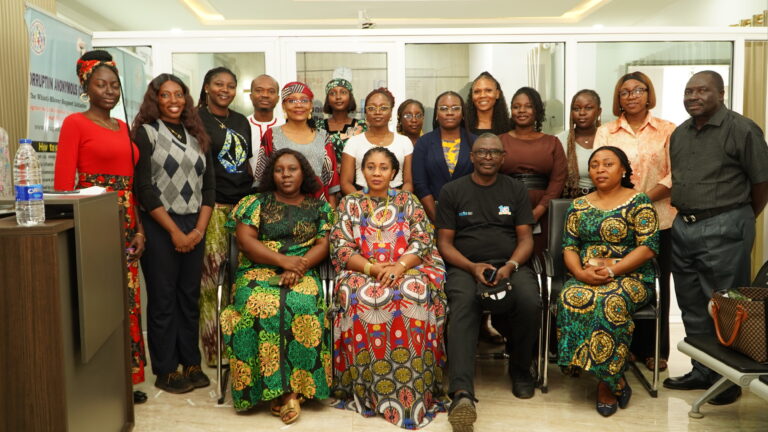
THE International Center for Investigative Reporting (ICIR) on Friday, August 29, trained Student Ambassadors and Project Support Lecturers from Bingham University on empowering female students to confront sexual harassment in Nigerian universities.
The training is supported by development Research and Projects Centre (dRPC), through its NGO Support Initiative (NSI)
In his welcome remarks, the Executive Director of ICIR, Dayo Aiyetan, expressed gratitude to Bingham University for embracing the initiative, noting that some institutions had subtly turned it down.
The ICIR Senior Programmes Officer, Chukwudi Iwuoha, said the training aimed at building a safe, accountable campus environment for students through individual empowerment and systemic transformation.
“We are training 10 ambassadors per university, and today we have trained 10 ambassadors. The trained student ambassadors are expected to raise awareness, educate peers, support victims, and promote reporting of sexual harassment.
“They will advocate for policy reforms, collaborate with project support lecturers, and maintain professionalism while engaging. They will serve as trusted leaders driving cultural and institutional change on their campuses,” Iwuoha said.
The consultant and project mentor of dRPC, Nkiru Duru, said the project was dRPC’s little way to help fight against sexual harassment in tertiary institutions.
He said over the years, the menace of sexual harassment had eaten deep into the society.
“I am very impressed with the students. You know, I can see the zeal they already have, the student ambassadors. And I’m happy they have that zeal and they are open to learning. And the lecturers, who are supporting their projects, are also willing to help to guide the students more,” she said.
While urging the student ambassadors to use the skills and knowledge they acquired from the training to empower their colleagues from other universities (since it’s not possible for the project to reach all the universities in Nigeria), Duru said people should know that sexual harrassment was no more business as usual.
The ICIR Editor, Victoria Bamas, who was the trainer and facilitator, expressed delight that the students’ ambassadors already had an understanding of sexual harassment and the willingness to take their ambassadorial role more seriously.
“Now that they have this better knowledge, they are more likely to create their awareness, because they now understand boundaries. They are now more likely to help their school and their classmates create safe spaces,” Bamas said.
One of the student ambassadors, Miranda Hassan Danjuma, expressed enthusiasm with creating a safe and welcoming space for fellow students, adding that the training was rewarding and filled with valuable learning opportunities.
“I feel like it’s a safe place where my voice can be heard and something can actually be done about it. And, moving forward to letting them have more knowledge about this in order to create impact in society, not just in the university but allaround Nigeria and the world at large,” she said.
THE Nigeria Union of Journalists (NUJ), Federal Capital Territory (FCT) Council, has condemned the alleged harassment, intimidation, and verbal abuse of its member, Ladi Bala, a transport reporter with the Nigerian Television Authority (NTA), by the Managing Director of the Nigerian Railway Corporation (NRC), Kayode Opeifa.
The incident reportedly occurred on August 27, 2025, while Bala, who was a former president of the Nigerian Association of Women Journalists, was covering the aftermath of a train derailment along the Abuja-Kaduna rail line.
Recall that The ICIR reported how the Abuja-Kaduna train derailed at about 11 a.m. on Tuesday, August 26, triggering fear among passengers and their relations.
The incident occurred along the Kaduna corridor shortly after the train departed Abuja en route to Kaduna.
A statement by the NUJ stated that Opeifa disrupted Bala’s live reporting, verbally assaulted her with demeaning language, and ordered security personnel to remove her from the scene.
The statement, signed by FCT branch Secretary, Jide Oyekunle, further alleged that Opeifa threatened to report her to security agencies, the Presidency, and NTA management with the intent of having her dismissed.
“On August 27, 2025, while performing her professional and legal duties covering the aftermath of the train derailment along the Abuja-Kaduna rail line, Comrade Bala was subjected to unprovoked assault by the MD using words like ‘you are stupid, your management is stupid, foolish woman, look at you, you are not even properly dressed, useless.” Who is watching NTA,“ and so on.
“Opeifa, who aggressively questioned her presence, disrupted her live reporting in the process and allegedly threatened her with physical removal, and eventually ordered security personnel to bundle her away from the scene,” the statement read.
The NUJ also accused the NRC boss of threatening and insulting its chairman, Grace Ike, who attempted to mediate in the matter.
The union described Opeifa’s conduct as a blatant violation of the fundamental rights and dignity of journalists, especially women in the profession, and a grave threat to press freedom.
It said his actions contravened Sections 22 and 39 of the 1999 Constitution, which guarantee freedom of expression and press freedom.
“It is an affront on democracy and rule of law and such acts of intimidation and violence undermine the fundamental role of journalism in promoting transparency, accountability, and public enlightenment.
“The inane attitude of Mr. Opeifa is another clear indication of growing hostility against the media in Nigeria and intolerant posture of government officials to accountability and public scrutiny. Such conduct is unacceptable and contrary to the values of democracy and human rights,” the statement added.
The NUJ FCT Council demanded an immediate and unreserved public apology from Opeifa and called on the NRC to take decisive steps to prevent a recurrence of similar incidents.
The union’s outrage comes as concerns over press freedom deepen in Nigeria.
Just early this month, Niger State Governor Mohammed Umar Bago ordered the sealing of a private radio station, accusing it of incitement and unethical broadcasts, while also calling for its licence to be revoked.
The ICIRreported that the governor issued the order during an expanded All Progressive Congress (APC) caucus meeting at the Government House in Minna.
He instructed security forces to seal off the station, recommended the revocation of its broadcasting licence, and ordered that its owner, Shuaibu Badeggi, be profiled.
In Nigeria, concerns over press freedom have escalated in recent years. Journalists have faced arrests, physical assaults, and threats while carrying out their constitutional duty, particularly on issues involving security agencies, corruption, and human rights violations.
Laws such as the Cybercrimes Act have been wrongly used to clamp down on dissenting voices, including journalists.
The 2024 data by Reporters Without Borders (RSF) placed Nigeria as one of West Africa’s most dangerous and difficult countries for journalists.
COVERING Climate Now Academy is offering journalists worldwide a free, live online training programme designed to strengthen reporting skills on the climate crisis.
The training will run from September to December 2025 and will bring together a global cohort of journalists to explore pressing climate issues – from science and solutions to justice, health, diplomacy, and misinformation.
According to the academy, sessions will be interactive and practical, equipping participants with the tools needed to cover the climate emergency across different beats.
The programme will feature both mandatory and optional sessions, including an opening session (mandatory), tropical cyclones, climate science 101, diplomacy, climate across beats, and climate solutions.
Others include disinformation and greenwashing, attribution science, climate justice, climate and health, social media strategies for climate journalists, and the green transition.
The organisers said the benefits range from a deeper understanding of climate science, its links to justice, and solutions and tools to apply climate reporting angles to any journalistic beat, among others.
Applicants are encouraged to apply before September 8, 2025.
NIGERIA’s excess crude account (ECA) balance stood at $535,823.39 as of August this year, the Accountant-General of the Federation Shamseldeen Ogunjimi, has said.
He disclosed this during the 151st National Economic Council (NEC) meeting, chaired by Vice-President Kashim Shettima, on Thursday, August 28, in Abuja.
He said, “Excess Crude Account is $535,823.39; the Stabilisation Account is N78,453,757,583.19; and the Natural Resources Account is N106,727,969,527.59.”
The ECA balance rose slightly by $62,068.82 relative to $473,754.57 as of April this year.
In an earlier report, The ICIR spotlighted that the ECA balance which stood at $473,754 as of January 17, 2023, remained at the same figure as of December 2023.
Ogunjimi, who was represented by the Minister of Finance and Coordinating Minister of the Economy, Wale Edun, at the meeting, gave a further update on vital account balances.
He said the stabilisation account stood at N78,453,757,583.19 and the natural resources account at N106,727,969,527.59.
The ICIR reports that the ECA was established in 2004 by former President Olusegun Obasanjo to save excess oil revenues above the budget benchmark.
Its overriding objective is to insulate the country from economic shocks that may arise from volatility in crude oil prices in the international market.
Crude oil price relatively been selling below the $75 per barrel benchmark Nigeria set in its 2025 budget.
It has averaged $64.45 per barrel in May this year.
In February 2021, Nigeria’s ECA balance stood at $72.4 million but dropped to $473,754.57 in March 2023.
The Group Chief Executive Officer (GCEO) of the Nigerian National Petroleum Company Limited (NNPCL), Bayo Ojulari, on Thursday, August 28, said the maintenance of three refineries managed by the organisation gulped between $300 and $500 million when he took over the leadership of the NNPCL.
He also claimed there were threats to his life and those of the company’s management staff following the reforms he initiated.
“A lot of money has been spent on these refineries, but translating that into profitability has been difficult because of years of neglect. When I resumed, we found that we were losing between $300 million and $500 million monthly. We had to stop operations and look for a sustainable solution,” he said.
Ojulari said his only ‘offence’ was introducing reforms in the oil and gas sector in line with the mandate given to him by President Bola Ahmed Tinubu to revive the nation’s moribund refineries.
Addressing a delegation of the Petroleum and Natural Gas Senior Staff Association of Nigeria (PENGASSAN),led by its President, Festus Osifo, at the company’s headquarters in Abuja, Ojulari alleged that some powerful interests were opposed to his reforms.
He disclosed that the company was considering adopting an NLNG-style partnership model with “a professional refinery company” to ensure the sustainability and profitability of Nigeria’s refineries.
Ojulari explained that after technical and commercial reviews of the refineries, it was clear that running them without professional partnerships would continue to drain resources.
He stressed that the reforms had unsettled vested interests, triggering coordinated attacks against him and his management team, including petitions the Economic and Financial Crimes Commission (EFCC).
“We are under attack. It is real. There are formidable plans to take me out of this seat But we are determined to stay focused and deliver on the mandate given to us by President Tinubu,”Ojulari said.
The GCEO, however, assured staff that their jobs would not be threatened by the reforms, noting that new opportunities and training would emerge as the refineries are modernised.
On the fuel supply situation, he said there had been no major shortages because of strategic partnerships, including NNPCL’s equity stake in the Dangote Refinery.
He projected that within the next two to three years, at one or two of the nation’s refineries would be fully operational to meet growing demand in sub-saharan Africa.
Earlier, PENGASSAN president, Osifo, commended Ojulari’s leadership, noting improvement in production and pipeline stability since he assumed office.
He pledged the union’s support to ensure stability in the oil and gas sector.
The ICIR reports that NNPCL has been in the spotlight overtime as a result of inefficiencies in running the sector.
Citing complications, Ojulari recently disclosed the possible sale of the refineries on the sidelines of the Organisation of Petroleum Exporting Countries (OPEC) International Seminar in Vienna, Austria.
Ojulari, who spoke with Bloomberg on Thursday, June 10, said the NNPCL was reassessing its refinery strategies and aiming to finalise the review by year-end.
“So, refineries, we made quite a lot of investment over the last several years and brought in a lot of technologies. We’ve been challenged,” he said.
THE Independent Corrupt Practices and Other Related Offences Commission (ICPC) is currently probing the National Librarian and Chief Executive Officer of the National Library of Nigeria (NLN), Chinwe Anunobi, over allegations bordering on procurement fraud, employment racketeering, and abuse of office, The ICIR can authoritatively report.
The development follows a 2023 petition filed with the commission, prompting an initial investigation that was concluded in 2024. The petition submitted by the in-house union of workers, obtained by The ICIR, accuses the agency’s leadership of systemic corruption, including the inflation of contracts, diversion of public funds, breach of procurement laws, and sale of employment slots.
Titled, “Acts of Corruption, Contract Inflation, and Violation of Public Procurement Act 2007”, it was also submitted to the Minister of Education. It outlined how millions of naira were allegedly funnelled through irregular transactions, including the use of staff personal accounts and contracts awarded without due process.
The ICPC spokesperson, Demola Bakare, confirmed that after the matter was reviewed by the commission’s legal department for possible prosecution, it was returned for reinvestigation in 2025.
The renewed probe followed months of tension within the NLN, where insiders said corruption and mismanagement have become entrenched, leaving staff disillusioned and afraid to speak out.
Some who voiced out were said to be witch-hunted by the management of the National Library and subjected to unfair treatment in the agency.
The ICPC confirmed four victims of this alleged harassment, noting that it has communicated the cases to the Ministry of Education for possible protection of the whistleblowers.
However, for some of the staffers, the probe has dragged for too long and has placed them in a very tight spot, allegations denied by the agency’s spokesperson.
Procurement breaches, inflated contracts
While the ICPC has not yet disclosed details of the investigations and the initial outcomes, The ICIR gathered that central to the allegations against the National Librarian is the procurement of two JAC Frison 4×4 pickup vehicles at a cost of N62.6 million.
According to the petition, the National Library relied on a Certificate of No Objection issued by the Bureau of Public Procurement (BPP) in February 2022 for an entirely different set of vehicles and suppliers.
Notice of contract award to Elizade
Despite the BPP approving selective tendering for companies such as Lanre Shittu Motors, and Globe Motors, the vehicles eventually purchased were from a different brand and supplier not covered by the waiver.
“There was no advertisement for this purchase,” the petition states, adding, “No other company was invited to bid except Elizade AutoLand, from whom the vehicles were eventually procured. Worse still, the vehicles bought were completely different from the specifications approved in the BPP certificate.”
According to Nigeria’s Public Procurement Act, 2007, all government ministries, departments, and agencies (MDAs) must adopt competitive bidding for procurement above ₦2.5 million (goods) or ₦5 million (work).
The union also alleged that a forged proforma invoice bearing the name of Lanre Shittu Motors was inserted into the procurement file to simulate a competitive process.
The petitioners indicated that this amount was inflated by N14 million when compared against independent market rates for identical vehicles. In the document attached to the petition, the union got an invoice for the two vehicles from the same vendor to be N48.3million, including VAT. Each car was sold for N22,500,000 and VAT of 7.5 per cent on the two vehicles for N3.3 million.
The ICIR gathered that the invoice for the vehicle was obtained by the union just a few days after the contract was awarded. The petition noted that the contract was awarded on February 18, while the invoice was dated February 20.
When The ICIR reached out to the agency on these allegations, the spokesperson Orviel Dio, said the cost of the project was estimated to include all the statutory deductions which, according to him, amount to about 13 per cent of the total contract sum.
In practical terms, ‘13 per cent statutory deductions’, are often referred to a bundled average for supply contracts, which combines WHT, stamp duty, and some other levies (sometimes rounded up).
While the contract was awarded at ₦62,649,710, the petitioners alleged that the actual market cost for the two vehicles from the same vendors, including 7.5 per cent VAT, was N48.3 million, a difference of ₦14.35 million.
However, after statutory deductions of about 13 per cent (₦8.14 million) by the Office of the Accountant-General, the contractor would have received approximately ₦54.51 million. This still leaves a gap of ₦6.21 million between the petitioners’ claimed cost and the net amount paid to the supplier.
Speaking on the selection process and the BPP waiver, Dio maintained that the agency had provided ‘justifiable reasons’ for seeking selective bidding, which led the BPP to grant the waiver. However, he failed to clearly explain why Elizade AutoLand, a supplier allegedly not listed in the waiver, was eventually awarded the contract.
Under Nigeria’s Public Procurement Act, 2007, the BPP may grant a waiver for selective or restricted tendering in cases where goods or services are only available from a limited number of suppliers, where time is of the essence due to emergency, or where previous procurement processes have failed to produce a suitable contractor.
The ICIR gathered that even with such a waiver, procurement rules still require strict adherence to the list of approved suppliers and specifications outlined in the exemption.
Meanwhile, a similar pattern characterised other procurements listed in the petition, including 2022 digitising process.
Employment racketeering
Beyond the financial impropriety, there are strong allegations that the National Library flouted federal character principles during employment processes.
Sources noted that slots were routinely sold for as much as ₦2 million, with intermediaries allegedly linked to Anunobi overseeing the transactions.
“One of the aggrieved instituted a case at Zone 4 Division of Nigeria Police in Kubwa, which led to the arrest of the Special Adviser to the National Librarian, right in the office along with other staff and they were held in custody for days,” the union’s petition read, noting that no disciplinary action has been taken against the accused till date.
The petition also accused the National Library of violating federal character principles, claiming that most of the vacancies in the recent recruitment exercise were filled by individuals from the South-East.
The Library’s spokesperson dismissed allegations of favouritism in its recent recruitment exercises in 2023\2024, explaining that the Civil Service Commission had granted the institution a waiver to hire based on pressing manpower needs. He noted that the recruitments may have been perceived as biased because certain branches with significantly lower staff strength were given priority in filling vacancies.
According to him, this approach was aimed at balancing personnel distribution across the library’s network rather than favouring specific individuals.
Payment into staff personal accounts
Other alleged financial irregularities highlighted by the petitioners involve funnelling of substantial public funds directly into staff personal bank accounts.
The petition showed how ₦33,692,982.25 were paid to a staff personal account, in violation of Nigeria’s Public Sector Financial Regulation Act.
The money which was paid in four segments ranges from N15 million to N918,000 for projects which sources claimed were not accounted for.
Payment vouchers for August 2022 seen by The ICIR confirm that funds were funnelled into the personal account of Kalu O.I, a director of virtual library service development, for projects related to readership promotion.
Readership promotion refers to a set of activities and programmes designed to encourage and improve the culture of reading among Nigerians annually. It is typically spearheaded by the National Library of Nigeria and sometimes in collaboration with schools, media, NGOs, and government agencies.
For instance, on August 22, 2022, a payment voucher was issued for the sum of ₦11,285,000 paid into Kalu’s account for ‘Head of Branches kick-off/preparation for the conduct of the 2022 readership promotion campaign (RPC).
One of the vouchers showing money deposited to staff account
Also on the same date, Kalu received ₦15,570,000 into her account for what the voucher described as ‘printing of materials and banners for the forthcoming readership promotion campaign.’
Another voucher showing money deposited to staff account
The ICIR reports that this practice contravenes paragraph 713 of the Federal Government’s Financial Regulations (2009), which expressly prohibits the payment of public funds into private bank accounts.
Section 713 states: “An officer who pays public money into a private account is deemed to have done so with fraudulent intention.”
The section further states that, “Personal money shall in no circumstances be paid into a government bank account, nor shall any public money be paid into a private bank account.”
Dio, while justifying the payment, said the reason for making payments into staff accounts was that some projects are best executed by in-house staff and do not need to be outsourced to contractors.
According to him, the payment for that particular project was intended to be distributed to other branch heads to purchase books and other materials for the readership promotion campaign.
Phantom projects, missing millions
Also, the petitions alleged that over ₦67.9 million released for the 2022 digitisation of weak and rare materials were spent without any tangible outcome.
The petition claimed that the only traceable result related to digitisation was work carried out by staff using a Robot Scanner procured under a former administration.
Despite the large sum, the petitioners stated there is no evidence of significant progress in digitisation, while departments such as Accounts and Human Resources still operate manually.
“Fictitious waivers, with very weak justifications are usually secured, with the assistance of BPP staff in execution of projects that does not qualify as Specialized Projects.
“Interestingly, the only result associated with digitisation, as captured in the waiver, was carried out by staff using the Robot Scanner, purchased by the previous-administration. Also, the Library Automation software (KOHA) in use till date, is a free version, installed and running before her assumption of office (Open Source and not proprietary),” the petition said.
In another instance, the petition noted that ₦9.8 million was allocated for the 2023 Authors and Publishers Sensitisation programme.
However, Dio said the Library, while contracting out the digitisation project asked the contractors to teach staff on how to carry on with digitisation of weak and rare materials.
“Some materials were already over 60 years old as of last year, acquired over time. These materials are weak and need to be digitised. They were too bulky to handle all at once, and the situation became so challenging that we had to contract the work out.
“And in contracting out, because we don’t have the skills and tools, the condition is that you must use our staff, the condition was that the contractors must work with our staff so that we could learn from them, as we cannot keep outsourcing this task,” he said
Victimisation of whistle-blowers, dissent
Findings by The ICIR alshows that the management of the National Library of Nigeria, under Chinwe Anunobi, has subjected several staff members who raised concerns about irregularities to intimidation, victimisation, and punitive transfers.
Sources within the institution, who spoke on condition of anonymity for fear of victimisation, disclosed that whistle-blowers, particularly those who challenged procurement irregularities or raised red flags over recruitment practices, were either redeployed to inconsequential departments.
“The CEO being investigated has remained in position, while being investigated by the ICPC and has continued with acts of victimisation against ‘supposed’ enemies of her administration.
“Continuous covering of tracks, through redeployment of loyal officers to sensitive positions, including procurement and audit divisions. Massive attack on all staff suspected to have any connection with the petition, through punitive postings and assignment of derogatory duties to union leaders,” a follow-up letter to the Ministry of Education reads.
The ICIR, confirmed that some staff were actually redeployed to other states while a few to other departments. When asked the reasons for their sudden redeployment or repositioning, it was gathered that the staff were believed to be dissent to the administration.
For instance, Abubakar Hussaini, a director was moved from Virtual Library Services Department to another department, Collection Development and Technical Service, at the headquarters.
Also, one Abdulazeez Kikeloma, also a deputy director was posted out of the headquarters to head a branch in Kwara state.
Both Hussaini and Kikeloma were redeployed after they testified against the National Librarian during investigations by the Ministry of Education. Before then they had also challenged the Librarian for not having knowledge about the projects supposedly executed under their departments.
In a similar case, Ekpe Samuel Patience was posted out of the store unit, having said to have rejected the attempt to issue a store receipts voucher to confirm that for items supplied to the story.
According to sources, she challenged the Librarian that the books were not supplied but was met with redeployment.
In the case of Patience, the spokesperson Orviel Dio, said she was a deputy director who should be placed in a high esteem rather than being in the store giving out ‘papers’ to staff.
According to him, that job should be left for her junior, and that she was moved to another unit where her expertise was more needed.







![[EXCLUSIVE]: National Librarian, Anunobi faces probe over procurement, recruitment fraud](https://www.icirnigeria.org/wp-content/uploads/2025/08/ceo1-e1756384921177.png "[EXCLUSIVE]: National Librarian, Anunobi faces probe over procurement, recruitment fraud")


