THE National Broadcasting Commission (NBC) says it would impose sanctions on Channels Television, African Independent Television, AIT, and Arise TV for gross violation of the broadcast code, which involves majorly the use of unverifiable online video footages of the #ENDSARS protest on social media.
Professor Armstrong Idachaba, NBC acting Director-General who disclosed this on Monday at a press conference held in Abuja said a fine of N3 million would be imposed on each of the television stations.
Idachaba warned that this would be the last warning before a heavier sanction would be introduced, adding that a second violation would be met with a heavier punishment.
He also announced that DAAR Communications, owners of AIT would be fined separately for using an unverifiable news item on the fire incident at the National Christian Centre.
Idachaba noted the retraction by the station but said that there must be consequences.
The fine is based on the revamped NBC Code. The NBC described as unprofessional, the conduct of the stations to provide their platforms for the promotion of what it labelled as unverifiable videos that could encourage or incite people to crime and lead to public disorder.
Since the military action against #ENDSARS protesters at the Lekki Toll Gate last week Tuesday series of vedios and pictures have appeared on the social media depicting victims of the shootings.
Many of the videos and pictures have turned out to be unverified, misleading and in most cases untrue.
In the wake of the #ENDSARS protest, the official Twitter account of the NBC was compromised by a group of Internet hacktivists called Anonymous who also joined the #EndSARS protest.
The group which is known for hacking repressive government’s websites also attacked the Nigeria Police Force website as it joined the call for the reformation of the police.
Amnesty International in a report confirmed that the Army and Police killed at least 12 peaceful #ENDSARS protesters in Lekki and Alausa, another area of Lagos where the protests were being held. The army has denied the involvement of their men in the shooting
The #ENDSARS protest, which began on a peaceful note has since gone violence after hired thugs started attacking protesters, several states have also had a taste of wanton destruction, looting of public and private properties.
Meanwhile, the Socio-economic Rights and Accountability Project (SERAP) has asked NBC to rescind the fine within 48 hours or face legal action.
“We condemn the illegal fines of N9m reportedly imposed by the National Broadcasting Commission on Channels TV, AIT and Arise TV [N3m each] over their coverage of the #EndSARS protests. We’ll sue the NBC if the unconstitutional fines are not rescinded within 48 hours,” SERAP tweeted.
It said the action by NBC was yet another example of Nigerian authorities’ push to silence independent media and voices.
“The NBC should drop the fines and uphold the Nigerian constitution and international obligations to respect and protect freedom of expression and media freedom.”
SERAP said the defines were detrimental to freedom of expression and the media, and access to information in Nigeria, and the NBC must withdraw the decision. Media freedom and media plurality are a central part of the effective exercise of freedom of expression and access to information.
That ASUU and federal government meeting ended in an altercation, and ASUU chairman, Prof Biodun Ogunyemi, was slapped.
VERDICT
The claim that ASUU president was slapped during a meeting with the federal government is FALSE.
Full text
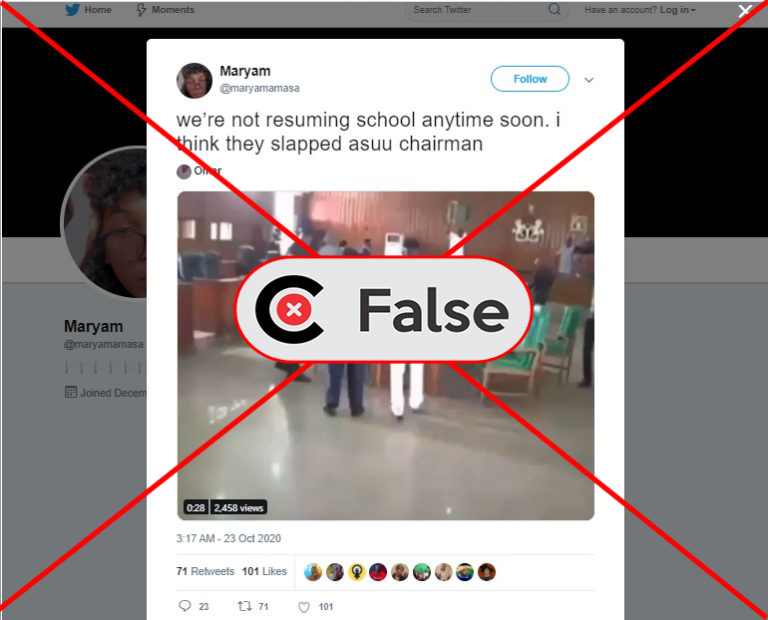
On 23rd October 2020, a Twitter user @maryamamasa posted a twenty-seven-seconds video clip of a rowdy session, claiming that it was an altercation between the leadership of the Academic Staff Union of Universities (ASUU) and delegates of the federal government during a meeting to end the ongoing industrial action by the union.
The video which was uploaded at exactly 11:17 am has gathered 460 likes, 276 retweets and viewed by 9,928 users
She said: “We are not resuming school anytime soon. I think they slapped ASUU chairman, just received a dirty slap.”
After some hours, @maryamamasa deleted the video but The ICIR archived the tweet (here)
Another user @fadeldey4u who also shared the video at exactly 2:02 pm that same day has gathered 11,600 views before 11:04 pm on Friday and captioned it as thus: “Forget school this year fam, ASUU”
On March 9, 2020, university lecturers in Nigeria declared a two-week warning strike to protest against what it termed “forceful” enrolment into the Integrated Payroll and Personnel Information System (IPPIS), a payroll software mandated for all public officials.
After the expiration of the warning strike, the union declared an indefinite strike to further press home their demands. This was despite the closure of schools by the federal government to contain the spread of the coronavirus pandemic.
In a turn of event, the leadership of the union met with the federal government to discuss the proposals tabled by the federal government in a bid to end the industrial strike which has been a major challenge why students in federal universities have not returned to school after the government eased the coronavirus lockdown.
The meeting which was held on October 21, 2020, however, ended in a deadlock after the union rejected the offer by the FG team to pay the salary of the lecturers and the 30b earned allowance, using IPPIS pending the roll-out of the union’s preferred payment platform, University Transparency and Accountability Solution (UTAS)
To verify the clip, The ICIR conducted an analysis of the video by subjecting its keyframes to multiple reverse image search using Google and TinEye.
One of the results led to a youtube video uploaded three years by Sahara Reporter with a caption detailing rancour in the Edo State House of Assembly
“Members of the Edo State House of Assembly in Free-For-All fight to replace the speaker,” the caption read.
The video which was uploaded on August 17, 2017, has so far been viewed 1,955 times.
Further checks led The ICIR to another video uploaded by one Kemi Ariyo on Youtube. The five-minute video which was uploaded on August 15, 2017, also gathered 18,409 views.
“Fight in Edo State House of Assembly after the speaker, Dr Justin Okonoboh was impeached. Kabir Adjoto replaced him,” he also captioned.
On August 14, 2017, the plenary session on the floor of the Edo State Assembly got tense when the speaker of the House, Dr Justin Okonoboh, was impeached, following an impeachment notice signed by 16, out of the 24-member assembly.
His deputy, Mrs Elizabeth Ativie, and the former Majority Leader, Mr Foly Ogedengbe, were also suspended for three months.
The house became rowdy when Mr Sylvanus Eruaga, member representing Etsako West II, was said to have asked Okonoboh to vacate the seat, a call that led to a fight among some of the lawmakers in the chambers.
After the brawl, a former principal officer of the House, Mr Kabiru Adjoto, representing Akoko Edo I, was elected as the new Speaker.
However, according to PUNCH, the last meeting held between the Federal Government and the union was on Wednesday 21st of October 2020 and it ended in a deadlock following the disagreement over the payment platform that would be used in disbursing the salary arrears and the N30bn Earned Allowances of the university lecturers.
Responding to the claim, ASUU president, Prof Biodun Ogunyemi, in a text sent to The ICIR discarded the viral video, stating he has never been slapped in any meeting with the government
“That is not true. ASUU President was not slapped at any point in our discussion with the government,” he stated.
CONCLUSION
The claim that ASUU president was slapped during a meeting with the federal government is FALSE. The video was from 2017 during a rowdy session in the Edo State House of Assembly which led to bickering between parties.
This report was originally published by FactCheckHub
AS protesters took over the streets calling for the disbandment of Nigeria’s notorious police unit, Special Anti-Robbery Squad, SARS, many Nigerian youths turn to Twitter as a tool of choice to transmit and amplify their message to the world in pursuit of global attention.
On October 6, a video that later went viral emerged on Twitter, showing a young man shot in front of Wetland Hotel in Ughelli area of Delta State by the policemen suspected to be members of SARS while they fled the scene.
Hours later, the video generated a social media campaign amongst Twitter followers who tweeted their experiences with SARS operatives using the hashtag #ENDSARS. Nigerian youths on the social media platform shared their personal experiences and videos of abuses by SARS operatives.
The online grievances gathered momentum and moved to the streets as young people started converging in major cities across the country demanding that the Federal Government put an end to the deployment of SARS operatives.
Some of the first protests were led by entertainers like Debo Macaroni, a skit comedian in Lagos alongside Folarin Falana also known as “Falz” a singer and other opinion leaders who encouraged Nigerians to protest police brutality regardless of who was leading the charge.
Officially the protest has no leaders because people who appear to be co-ordinating action on social media do not want to be identified as leaders.
However, the protest, championed by celebrities and social media influencers in the country, has spread to other countries as Nigerians in the diaspora have also shown solidarity.
So far, no fewer than 10 people have been killed in the protests, according to Amnesty International, while hundreds have been arrested as police cracked down on protesters.
The protest garnered global attention in early October after celebrities and global icons like Kanye West, John Boyega amongst others started showing support for the protest on Twitter.
The hashtag has been tweeted over 2.4 million times as of October 9 and became the number one trending topic in several countries as Nigerians and foreigners continue to show their support on social media.
Twitter’s pivotal role in the #ENDSARS protest has helped to organise protesters, transmit their message to the world and make demands on the government.
The latent power of a hashtag
Using the #ENDSARS, protesters have been able to pull together everything from water, food and banners to arranging bail for protesters who were arrested by the police using Twitter to mobilise support.
According to a survey in November 2019, Nigeria has 36.9 million Twitter users which represent about 20 percent of Nigeria’s population which is driven by the high rate of smartphone use.
The rallying cry of the protesters which is #ENDSARS is not new as the brutalities of SARS operatives dates back to several years, however, the hashtag gave the protesters demand for justice widespread public recognition.
The #EndSARS campaign has attracted support from Black Lives Matter activists in the US and Twitter’s Dorsey, also created an emoji of a clenched fist in the colours of the Nigerian flag to allow people to support the campaign.
Jack Dorsey, Chief Executive Officer (CEO) of Twitter called for #ENDSARS donations and tweeted his support by tweeting links to websites where people can donate to support the protest.
The #ENDSARS discussion on Twitter from his post peaked at over 83,000 tweets engagements from his post on #ENDSARS which escalated the hashtag on Twitter.
A major factor behind the massive attention of the #ENDSARS could be attributed to the protesters’ attempt to shame brands and media houses by tagging their Twitter handles in tweets and inquiring from them why they weren’t covering the protests.
The tweets below were directed at some media houses that were perceived to be reluctant in covering the protests.
Media houses have collected money to push a "dialogue with the govt" agenda. Tune in to channels TV, TVC and co from tomorrow and it will be all about "dialogue."
It is no coincidence that Tinubu, Ahmad Lawal,your favourite celebrities and co are parroting the agenda already.
Tweeters were actively involved in stacking tweets calling on local media houses by engaging in cut and paste of the text of such tweets and tweeting it on their own accounts.
This action caused the media houses to increase their publicity and the retweets of the tweets by tweeters led to more visibility of the #ENDSARS hashtag.
Foreign media firms were not left out as CNN, BBC, Sky News amongst others were tagged by tweeters to pick up stories on the #ENDSARS protest across the country.
Hey @SkyNews and @Channel4News, are you seriously going to ignore the number one trending issue in the UK 🇬🇧 today? Are you? RT until they pick up the story. #EndSARS#EndSarsProtests ✊🏾✊🏾
Another strategy the #ENDSARS protesters used was to bombard celebrities Twitter accounts by tagging them to respond to their cause.
Horrible to hear what’s been going on in Nigeria. Let's make this a trending topic everywhere ▶️ #EndSARS – My thoughts go out to everyone who has been affected. 🇳🇬💚 #EndPoliceBrutality
On October 16, there were about 3.3 million tweets with 744,000 retweets of Twitter posts containing the #ENDSARS hashtag.
The protests have continued despite the Federal Government’s agreement to disband the dreaded SARS unit which was replaced with the Special Weapons and Tactics (SWAT) unit.
Osai Ojigho, Amnesty International’s director in Nigeria said the setup of SWAT does not meet the demands of accountability expected from the police in the face of abuses by SARS.
“The announcement falls short of demands for accountability and justice for abuses committed by the unit and police in general.
“The police authorities must state strongly the concrete steps they will take to ensure all officers alleged to have committed human rights violations are investigated and brought to justice,” she said.
However, the protests have also evolved into calls for wider reforms with protesters now also using the hashtags #EndBadGovernance, #BetterNigeria and #FixNigeriaNow to build support on social media.
A 2015 study on Twitter hashtag ethnography at the University of Massachusetts by Yarimar Bonilla and Jonathan Rosa examined the internet’s central role in amplifying protests and inequality in society.
The study notes that Social media participation has become a key site from which people contest mainstream media silences and the long history of state-sanctioned violence against the citizens.
The #ENDASARS protest on social media is a confirmation of the conclusion reached by the study.
THE Adamawa State Government has imposed a dusk to dawn curfew on the state after hoodlums looted COVID-19 palliative warehouses in the state.
The looting in Adamawa is coming barely 24 hours after hoodlums stormed warehouses in Osun, Oyo, Lagos, Kwara, and some other states and carted away COVID-19 palliative items.
Governor of the State, Ahmadu Umaru Fintiri announced the curfew during a statewide broadcast on Sunday.
”I have declared and imposed indefinite dawn to dusk curfew throughout the State beginning from 3 o’clock Sunday the 25th of October 2020,” Fintiri said.
The governor said all forms of movement were prohibited except as authorised by the government.
“As a responsible government, we shall do everything within our powers to protect the lives of every citizen and will not brook any lawlessness within our boundaries,” he said.
The governor said that the decision became imperative following the activities of “some misguided elements” who have broken into warehouses owned by the state government and carted away COVID-19 palliatives.
”While this government respects the rights of the citizens to seek redress, it is not blind to the fact that there is a civilized and responsible way of channeling genuine grievances.”
The governor, however, charged every citizen of the state to remain calm, just as he promised to protect the lives of all and sundry.
“As a responsible government, we shall do everything within our powers to protect the lives of every citizen and will not brook any lawlessness within our boundaries.”
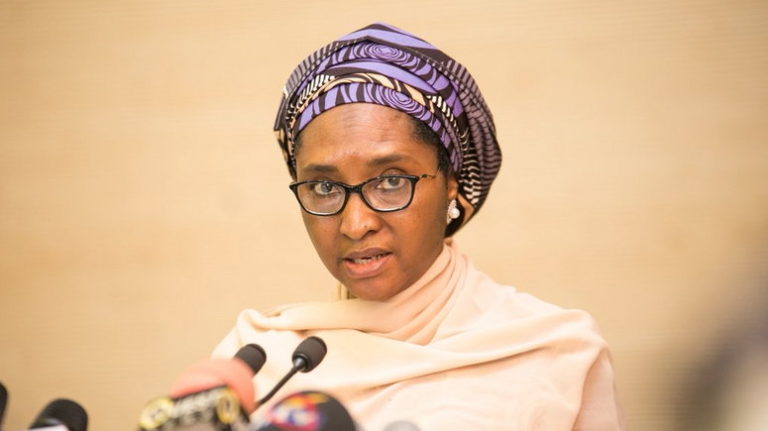
ZAINAB Ahmed, the Minister of Finance, Budget and National Planning has said that the Federal Government has created a N25 billion youth fund as part of efforts to address the dissatisfaction of the ENDSARS protesters and to also support the entrepreneurial-minded youth in the country.
The minister disclosed this at a stakeholders’ meeting with Hadiza Balarabe, the Deputy Governor of Kaduna State in Kaduna on Saturday.
Ahmed said the meeting was in line with President Muhammadu Buhari’s directive that ministers and governors should dialogue with stakeholders and the youths, in order to address their agitations.
The minister said although the project would kick off with N25 billion but would be increased to N75 billion within a period of three years.
Speaking also, Hadiza Balarabe, Deputy Governor of Kaduna State said the meeting set up to address the security challenges caused by the #ENDSARS protests.
She commended the residents particularly, the youths for promoting peace and eschewing violence across the country.
It would be recalled that there have been reports of widespread violence in different parts of the country within the last one week, as hoodlums hide under the guise of #ENDSARs protests to loot and raze both private and public assets in some states across the country.
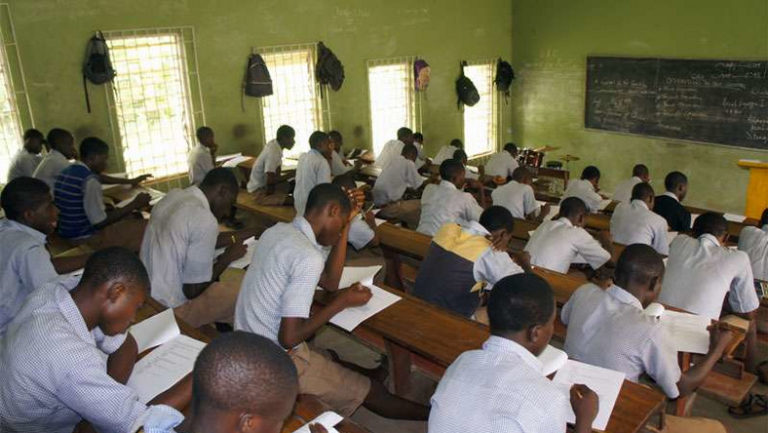
THE Governing Board of the National Examinations Council (NECO) has announced the indefinite suspension of the ongoing Senior Secondary School Certificate Examination (SSSCE).
Azeez Sani, NECO’s Head, Information and Public Relations Division stated in a press release made available to The ICIR on Sunday that the decision was made at a special meeting of the Council held to review the on-going 2020 SSCE (Internal) nationwide.
According to him, the decision to suspend the examination indefinitely followed the current security challenges, occasioned by the ENDSARS protests, which have disrupted the smooth conduct of examinations in some parts of the country,
He stated that the examination body had in a press release, dated October 21, 2020, informed the general public of rescheduling some papers of the 2020 on-going SSCE but had to indefinitely postpone the examination due to current security challenges in some parts of the country.
Sani explained that the imposed curfew and closed down of schools in some states have made it difficult for the Council to move examination materials across the country
According to him, the NECO Governing Board assured that it would continue with the conduct of the examination in all states as soon as normalcy returns to the country.
“While regretting any inconveniences this postponement may cause our esteemed stakeholders, the Council has however taken this decision in order to maintain the integrity and security of its examination procedures for seamless conduct of the Council’s examination,” Sani said.
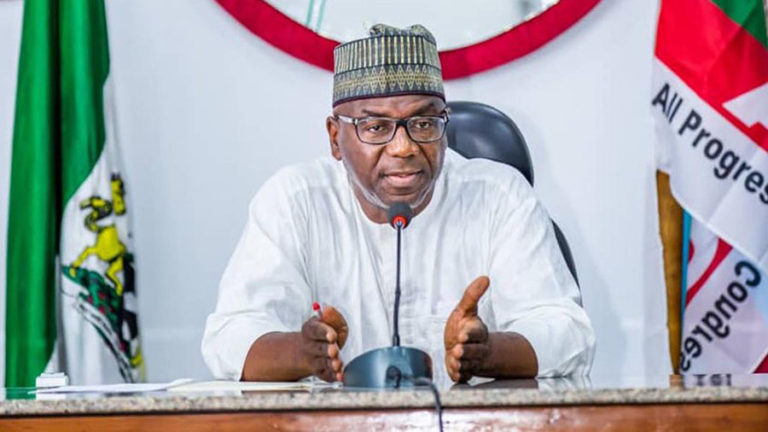
ABDULRAHMAN AbdulRazaq, the Governor of Kwara State has announced a N500 million relief fund to assist business owners whose stores were looted by hoodlums across Ilorin, the state capital on Friday.
This was made known by Rafiu Ajakaye, Chief Press Secretary to the Governor after AbdulRazaq visited various shops and scenes that were looted by the hoodlums.
At Kwara Mall and Agro Mall Saturday evening, the Governor lamented that the incident may bring businesses to their knees, and cause massive loss of jobs and a surge in the poverty rate.
“We are therefore not going to leave the business owners like that. We are setting up a N500 million fund for those that were affected to access,” Ajakaye quoted the Governor as said.
“The application form is live and active on the State Government’s website and can now be filled by interested parties. We are going to get them back as soon as possible.”
Reacting to the claim that the State Government hoarded COVID-19 palliatives, the Governor said the items were not owned by the State Government.
He explained that the foodstuffs stolen at the Cargo Terminal were donated to specific vulnerable households and were being distributed across the state for the private sector-led CACOVID Foundation.
The Governor added that the ones carted away from Agro-Mall were relief materials donated to specific victims of the recent rainstorms and floods in eight local government areas of the state by the Federal Government.
He said that the National Emergency Management Agency (NEMA) had already distributed the materials to at least four local governments while consignments for the remaining council areas were due for dispatch when the hoodlums struck.
“What happened was barefaced stealing and some people are playing politics with it. This is not the time to play politics,” AbdulRazaq said.
“It is a time for all hands to be on deck. It is not just Kwara they wanted to burn down. They wanted to burn the whole country down. I urge all of us to stand up and resist that.”
“We engaged the #EndSARS youth in Kwara and it worked out for us. They were not violent. They had a five-point agenda which the federal government has agreed to and has started implementing.”
According to him, the State Government has also set up a judicial panel of inquiry to look into the allegation of Police abuse, adding that he had also visited Police barracks to see how the government can improve the welfare of the Police in the state.
“While the hoodlums were looting (on Friday), I was holding a meeting with executives and members of the National Association of Kwara State Students and National Association of Nigeria Students, Kwara axis. It shows students and youths were not part of the looting. Those involved were just hoodlums and thieves.”
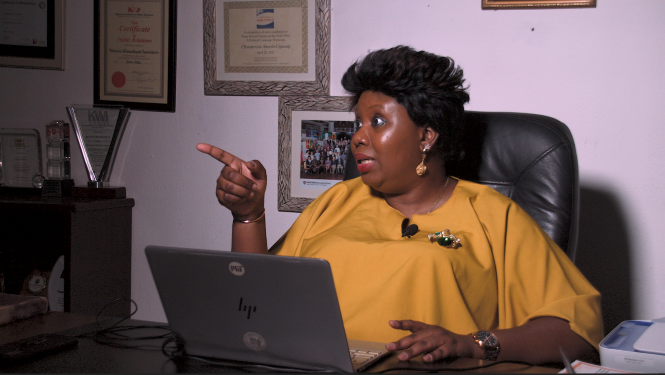
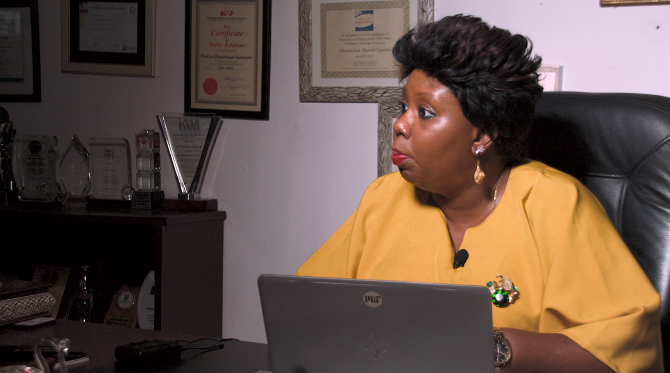
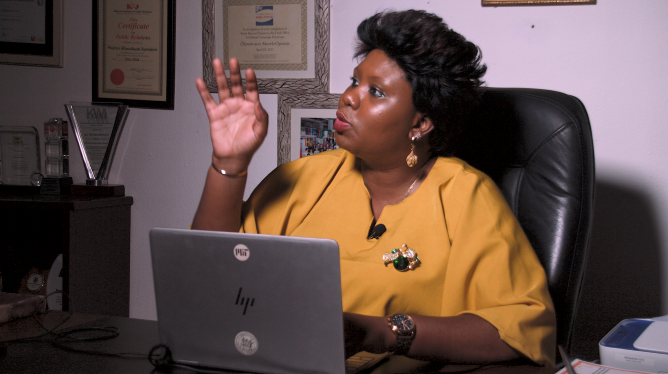
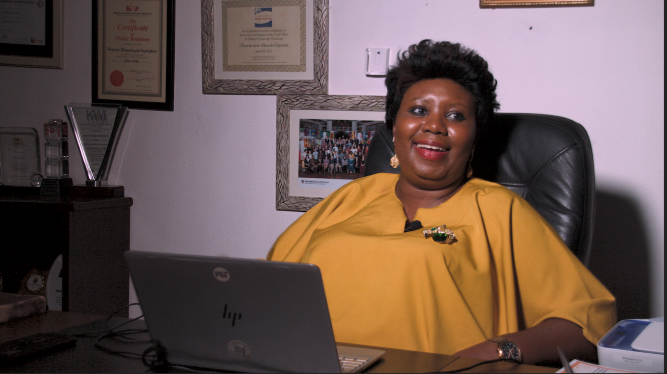
AT 36, Toyosi Akerele-Ogunsiji has achieved what takes most people a lifetime to accomplish. In 2016, Forbes, the respected American business magazine, named her as one of the 20 most powerful young women in Africa. Even earlier, in 2011, former American First lady, Michelle Obama, described her one of the young people who inspire her.
A woman of many parts, she is social entrepreneur, businesswoman, writer, publisher, activist and social mobiliser that dreams constantly of changing her society. In March, she was named the chairperson of the Victim Support Fund’s COVID 19 task Force, a rapid response vehicle in response to the outbreak of the pandemic.
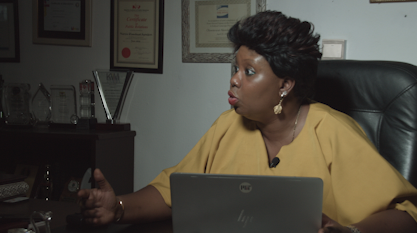
In September, the graduate of the Harvard University Kennedy School of Government, sat down with the team from The ICIR comprising Dayo Aiyetan, Executive Director; Ajibola Amzat, Editor; Aanu Ogundipe, Head of Videography and Samad Uthman, an intern, to speak about her life, including her work, leading VSF’s humanitarian effort across Nigeria.
EXCERPTS
What exactly is the Victim Support Fund all about?
On June 30 2014, the President of Nigeria at that time (Goodluck Jonathan) set up the Presidential Committee on the Victim Support Fund, VSF, as a rapid response private sector-led humanitarian institution to provide psycho social support, economic empowerment, education, rehabilitation and resettlement for victims of insurgency terrorism across the north east of Nigeria. President Jonathan appointed General T.Y. Danjuma as our chairman and Mr. Fola Adeola as vice chairman. Later, Alhaji Tijani Tumsa became the vice chairman of VSF.
In the last six years, the VSF has done incredible work in the Northeast. In fact, I make bold to say that apart from the United Nations and a couple of other international agencies, the VSF is, perhaps, the most prominent humanitarian organisation working in the Northeast.
If you travel from Maiduguri to Bama, Gwoza to Dalori in Borno or you travel in Adamawa, Yobe and other states in that region, you will see VSF boards… schools built and equipped by VSF, health centres and hospitals donated by VSF. These are not things I was told but things I have seen in these locations.
I remember in 2016, I was seven months pregnant and I went to Michika, Madagali to lay the foundation for the local government building and the police station destroyed by Boko Haram. So, we have done mostly humanitarian work in the Northeast.
But this year, the Covid-19 pandemic broke out… and on March 30 this year General Danjuma called an emergency meeting and expressed worry about the outbreak of the pandemic and observed that while a lot of attention was been placed on urban areas, he did not think the same attention would get to displaced persons in IDP camps and people in poor households across the country. He wanted VSF to intervene. We asked him if he wanted us to focus on the Northeast and he said no because though Boko Haram is in the Northeast, Corona Virus was across the whole of Nigeria and our intervention had to be focused so that the ordinary citizen across the country is not left behind.
The moment the team was inaugurated, the first thing we did was research. Research and development are crucial in initiatives that have to do with resource allocation and distribution, especially to vulnerable persons many of who are not educated, who are extremely mobile, without skills to even provide the information we need. Many of our beneficiaries don’t speak English, for example. Our research team tried to determine who were the most vulnerable people, what would we need and so on in the middle of the pandemic. We started with a needs assessment to guide how we allocated resources to ensure that we met the needs of the people who required help the most.
So, what did you find out were the most essential needs of the people?
We found that food was the biggest challenge for Nigerians – pre Covid-19, during Covid-19 and post Covid-19, and it remains so.
How much did you have for this Covid-19 intervention and where did you start?
We had a budget of N1 billion, and we started from Abuja, which got 20 per cent of that budget. We broke the essentials into food, medicals and PPEs. For food, we said we would do rice, beans, maize, salt and 4 litres of vegetable oil – all put in a 50 kg bag.
For medicine, we broke it down into primary and secondary care. Under primary care, we gave our medicine for pain and headache – basic analgesics, anti-malarial and multivitamins. Under the secondary care, we focused on anti diabetes and anti hypertension medicine. We also donated hygiene and sanitation materials.
One of the things we discovered was a low awareness among persons within our target area, which is low strata of society. I went into Maikoyi IDP camp in Adamawa State and we had to be preaching to them about social distancing. We realised that most of the messaging being done was in English because they targeted people in urban areas. We were the first organization in Nigeria to do CORONA Virus education in Hausa, Fulani, Fulfude, Yoruba, Igbo, Pidgin, Tiv, Jukun, Idoma etc.
We also found a lot of the messaging fragments. We are asking people to social distance, not factoring in the fact that in many communities; nine persons live in a room or in IDP camps where social distancing is impossible. We were asking people to wash their hands and run water for 20 seconds in communities where running water is a luxury. We forget that only 40 per cent of our population has access to running water. So what we did was to invest greatly in risk communication management cos we knew that people in urban areas would take precaution but the people in the rural areas …If Corona Virus breaks out in an IDP camp … if one person contracts COVID 19 in an IDP cam, you know that the next morning, 500 people would have it and you are going to have mass mortality. As we donated sanitation materials to the state governments, we engaged them strategically … we wanted them to build boreholes in the IDP camps so people can wash their hands.
So, apart from the Northeast, where else did VSF work during the pandemic and how did you determine where to go?
Well, we paid attention to the competence, capacity and the character of the governors and administrators in the state. We also focused on states that were really poor where the impact of the VSF intervention would be visible. So, you may ask why did we come to Lagos? Don’t forget that we had decided that the VSF task force was going to be in alignment with the federal government’s response strategy. And the federal government had declared a lockdown in Abuja, Lagos and Ogun states. We understood that for the lockdown to be effective, people needed to eat.
Institutional support is a very crucial component of the VSF Covid-19 intervention. We thought that while we were paying attention to the plight of citizens, we also needed to focus on supporting credible public institutions to empower them to respond efficiently and effectively to the pandemic.
We engaged the NCDC, which is saddled with disease control in Nigeria, to find out what its immediate, urgent needs were. They had requested tele – surveillance and some teleconferencing equipment basically to be able to facilitate meetings and make sure that from Abuja, the NCDC is able to coordinate the entire healthcare system and speed up Covid-19 response system from the 36 states of Nigeria remotely from Abuja. It was such a joy for us. This was on the 4th of June Monday when we did our official hand over to the director general of NCDC along with some of the directors and members of the executive leadership of the agency. Now, they are already using it.
Toyosi Akerele-Ogunsiji
If you go to the NCDC Twitter handle, you’d see the equipment in all of their pictures and their pages, and we commented on the fact that we are very glad to have made the partnership happen.
We’re also supporting the Federal Ministry of Health with technical support specifically in the area of the covid-19 ministerial advisory committee that the minister had set up to continue providing advice and guidance to people from different sectors. We are doing this because Information is very important.
We are also providing them other supports such as laptops, printers, safety boots, face mask and setting up molecular laboratories in four to five states. I also wanted to mention that we give out several safety boots, suits, and face masks.
In fact, in Benin and Delta we gave out about 50,000 face mask each, 30,000 bottles of 250 mils hand sanitizers. In Enugu and Ebonyi we gave out 30,000 face masks and 30,000 hand sanitizers.
How do you determine which state to go?
We focused our priority on constituency in the Northeast of Nigeria where we have the predominant populations in IDPs and victims of terrorism. That’s a magnet. So, we immediately went to respond to the IDPs. We began from Borno, then from Borno to Adamawa, from Adamawa to Yobe, Yobe to Taraba. Then, we came to Ogun State and then Lagos. Ogun state suffers a very delicate challenge because of the proximity to Lagos. Ogun is the only state in the whole of the Southwest that borders by four different states.
So, with migration they could contribute to they spread of coronavirus. We provided food, medical items and PPEs. The items were received by the Deputy Governor of Ogun state, Noimot Salako – Oyedele, along with the first lady, the wife of the governor Mrs Bamidele Abiodun.
In Lagos State the items were received by the Commissioner for Agriculture. Mr. Abisola Olusanya and the Permanent Secretary for the Ministry of Agriculture. Dr. Olayiwole Olosoro .
In Borno State we were received by the governor of the state himself and the executive Council and the person received the items from us was the Deputy Governor, Alhaji Umar Usman Kadafur
In Yobe state we were received by the executive secretary of the state’s management agency. In Taraba state was received by the governor of Taraba, the commissioner of health and several other people and the items were received by the SSG executive state government of Taraba state. In Adamawa state were received by the State Emergency Management agency chairman and executive secretary.
In Abuja, we were received by Mr. Idris who heads the FCT Emergency Management agency. From there we moved on to Edo state and we were received by Governor Godwin Obaseki himself. All the food items were handed over to the honorable Commissioner for Health and the First Lady of Edo state, Mrs Betty Obaseki. in Edo state we visited a very unique location Ohobua the IDP camp in Ohobua and there were about 3,000 people there, many of them came from Borno.
About 12 of the children that we supported to pay school fees were refugees from Borno state who had fled and resettled in Ohobua IDP Camp in Benue state.
In all the states, we paid attention to a few key things. First, we asked what existing measure the governors already taking to respond to the pandemic? Are these responsible state governments? Do they already recognize the Importance of being in an emergency situation and taking concrete action to responding to the pandemic? Number two: What do the people actually need? Number three: Does this state need augmentation and consolidation of processes they have already put in place so that we can have something to build upon?
The other thing was also to pay attention to state like Ekiti where they already had one death at the time. We went on the 29th or the 30th of May. They already had one death and they had about 20 cases already and we know that Ekiti State is already on number 35 on the federal allocation chart. We already know that it is a 70 percent peasant farming economy, so they had really minimal resources.
I already told you the justification of the Northeast, I told you about Ogun, told you about Lagos. Ebonyi State has the highest number of cases in the Southeast, Edo has the highest number of cases in the South-South as well.
Toyosi Akerele-Ogunsiji
How many states all together?
We have done 12 so far. We’re going to be doing about 19.
What mechanism did you put in place to ensure that the people got the assistance given? Did you just hand over the material to them?
No. In the Northeast we handed over the material to the government but going forward from Lagos to Ogun to Ekiti to Edo to Delta to Ebonyi to Enugu, we realize that it would help the accountability and transparency and monitoring process of the intervention if we partnered with stakeholders, including NGOs, all the existing structures within the states. We worked closely with NGOs, which were verified beforehand. We sign legal agreements with them, telling them to tell us the specific local government where they were going to be supplying and distributing our food items and medicals, we handed the medical equipment directly to the Ministries of Health. We made sure that we partnered with local NGOs because the end closer to the ground. They also work within communities. We also want checks and balances. The state government checks the NGOs, the NGOs checks the government.
What has helped us the most in this intervention is the fact that we are not just talking about one thing, we are breaking it into granular details. So where is the N1 billion? Where did it come from, what was it used for? To whom did it go? Who are the beneficiaries? If you asked me to provide you the data of the people that collected our food items in each local government, say those who collected our food items in Badagri I’ll tell you. If you also ask the people who got a food items in Borno, I have the numbers.
However, we understand there is a trust deficit in Nigeria and the citizens are right to not trust the people that are in positions of privilege because people have seen situations where they give, and they don’t get. So, they don’t trust resources in the hands of people because of their experiences with mismanagement. So when we do the official handover to a governor, we mention that the items donated are worth worth so so so millions and specify that they include five thousand bags of 10 kg bags of rice, five thousand bags of 10 kg bags of beans and 50,000 pieces of face masks. The reason we do that is because citizens are watching; it is all over the media. If the government doesn’t distribute them, the citizens have the information to hold the government accountable and say that “but the chairperson said that this is what we got, why are you lying?”
The second reason why we also make sure that we do that is so that citizens can go and do the mathematics and say if facemask fifty thousand, hand sanitizer is so so amount, rice, beans, garri, vegetable, oil and this, does it amount to the amount we said we spent on each state?
Those are the loopholes that we needed to plug and make sure that there’s no misappropriation. So, if we say we gave the state food items and medicals and PPEs worth 20 million, does it amount to the market price? Is it competitive? Can we publicly defend it? That nothing was manipulated at the back end in terms of the procurement during the allocation of these resources. These are some of the issues that we paid attention to. We were very conscious that this is an intervention that is supposed to be targeting poor and vulnerable people.
How do you collect your reports?
I could even share some with you if it will help your reports. All our NGOs sign legal agreements with us at the beginning when we select them. If you go to my Facebook page, you will see that I always write: If you have any NGO, and you can partner with us, please send me an inbox.
We partnered with so many NGOs. They sign legal agreements with us. We provide them some little financial support for the rental of trucks to come and pick the food from the warehouse to keep it in a particular place. We give them a timeline and all the items must be distributed within a specific number of days. So, I don’t want to come to your office in two weeks and see the food items there. They were given to you to donate. They were meant to be given to the poor. People can’t be suffering on the street and you are hoarding the food in your office.
So, we paid them to rent and fuel buses, buy airtime and those little expenses they may have, and there are no excuses such as “we collected the food, but we couldn’t move it around.
The Center reports the names of the beneficiaries they gave the food, their phone numbers, their address what they do and local government area. We also focus on specific local governments. There’s no category of society to whom we didn’t pay attention.
Do you have testimonials of the impact of your work?
Yes videos. We can share some with you a lot of them several we have videos of people crying. We have the video of a woman rolling on the floor rolling after we gave her a 50 kg bag of food. We didn’t just make donations and we were conscious of the dignity of our beneficiaries.
We checked the bagging of the food items to make sure that it matched specifications of the DSF.
Tell us some of these other stories, we saw you traveling all over the place
In Warri, we visited the Palace of the Olu of Warri and he said something instructive. He said that this is the first time anybody, apart from people who are indigenes of Warri and people who do oil and gas business who go there to do the formality of donations, that anybody has come into the Warri Community to donate anything. He noted that Warri was the place where everybody comes to take, nobody thinks of coming to give anything. The food items we gave to Warri was received by the palace chiefs of the Olu of Warri. We gave it to the people that know their people and they will not steal from them.
What about the Northeast, because we still have sorry stories from the Northeast
We have covered every state in the Northeast. But what we must factor in is that there is no single organization that provide everything for all the IDPs in Nigeria and this is where private sector collaboration and the sincerity of the people that are entrusted with the resources come to play.
Toyosi Akerele-Ogunsiji
One billion is a drop in the ocean but it is something which why it is important to manage it well. That is the reason why the VSF takes data gathering, monitoring and evaluation serious because a lot of people also see this Insurgency as opportunities for them to enrich themselves. So many of the women victims and so on depended on farming and so in what ways did you economically empower them in terms of variety in line of the Agricultural support?
VSF has empowered more than 150,000 farmers with farm inputs such as pesticide, fertilizer and so on. Borno State government has done a lot. But if you go to Borno and tell them that apart from the UN and international agencies which single organisation has done the most work with supporting local farmers in the Northeast, they would tell you it is VictimSupport Fund.
What exactly have you done in the area of agriculture?
We have given farmers fertilizers, pesticides, tractors, even seedlings. We do rain-fed agriculture farming. We do the dry season farming. We give them money to buy seedlings. Sometimes we buy for them as well. I mean we’ve given irrigation supports they need to make sure there’s water to help you. We even do livestock empowerment support. So, we give a household one male goat and three female goats. We give it to the women because the men will sell it. Yes, so we give it to the women. And once we give it to the women, they would raise the cubs and then, you know they call sell the big ones.
Still on IDPs in the Northeast, particularly with COVID 19, what kind of assistance did you provide? Did it include psychosocial support?
Before I talk about psychosocial support, let me talk about the fact that women are the hardest hit by the Boko Haram insurgency.
Why do you say so?
A lot of them got killed. What Boko Haram tends to do is go to the committees and finish the man to take away their wives and they daughters, So, some of them became widows overnight. A lot of women got raped; a lot of girls got married off as little children. So, women are the hardest-hit victims of the crisis in the Northeast.
One of the things that we did is that we partnered with teaching hospitals across the Northeast to provide prenatal and postnatal care for a lot of women because many of them got raped and got pregnant and didn’t have anywhere to go. So, we get them hygiene kits in bags, some tutorials, toilet tissue paper. We did trauma counseling. A lot of them who couldn’t sleep at night, many were having nightmares. People were going to sleep on the rocks at night and coming down into the town into the community in the daytime. There were communities where Boko Harem people would come into their communities, eat with them, stay with them, marry their wives and go back.
And the people were powerless.
How did you navigate around the country in spite of the security challenges?
We have so much that we owe the Nigerian Airforce.
What kind of intervention in the area of education is the VSF making?
When you talk about education in Nigeria, there is a high-level focus on infrastructure. An infrastructure is not education. The instructional content that you give anybody is what makes that person, it is what determines the outcomes that you set out to achieve. What do I mean? Put two children under a mango tree? With breeze blowing their brains, teach them Mathematics and English, constantly, consistently, give them the right content and put them in the class to write WAEC. They will write it and pass. The infrastructure is important, but it’s not as important as the content. However, Nigeria politicians believe that you need to build schools for you to show that you are working in education. So, you build schools, you don’t furnish it. So, the kids are sitting on the floor. So, you build schools, you don’t train the teachers or teachers, you don’t provide extracurricular opportunities for children so that they can learn through alternative means, no technology, no computer laboratory. There’s no way you can you can build an educated population like that.
In the VSF, we don’t just build schools, we put furniture in the schools, and we train the teachers. We buy school bags for the children. We partner with Macmillan that produces textbooks buy books for the children in millions – exercise books, pencils, biros.
If we do not raise better (educated) children, we won’t stop building prisons. But you cannot deprive children and young people of education. And then when they go and engage in criminal activities, you shoot them down with guns that are bought with taxpayers’ money. If you gave them education in the first place, then their mindset would be in a particular direction. You cannot give anybody education and skill and the person would choose terrorism and crime as a viable alternative. Of course, there are very, very few exceptions to the rules.
How involved is the Chairman of the VSF in its operations?
Extremely involved, for an 83-year-old military general. He is one of the most brilliant people I’ve ever met. One of the things that fascinates me the most about him is how meticulous and calculated he is. I like the fact that he doesn’t talk very much. That’s what I have learned a lot from him working closely within the past few months, the fact that you must focus on the results without bickering about it so much.
But what we also need is in Nigeria is a situation where people give you an assignment and they provide the support for you that legitimizes that assignment. When you have challenges, your principal provides you the support that demonstrates the legitimacy of your position and the decisions you are making. You will be encouraged, even in the face of those adversities to keep it going, to go on to achieve specific outcomes because you don’t want to disappoint someone who believes in you so much. We need leaders like that. General T.Y. Danjuma is like every other human being, not imperfect, but as a young person working with somebody of that generation, which is like two or three generations before me, there’s a lot of lessons that we can learn from him.
But he also belongs to the old generation that young people like you blame for our problems.
I’m one of the people that criticize old people in this country a lot. But I also think that our media and our academia have done a great disservice to Nigeria. There’s no sense of history in this country. So, for example, generation after generation Z, 25 downwards don’t know anything happened in Nigeria, pre 1999 or pre 1990.
So when they see certain things on Twitter, they are wondering what this is about or that they don’t know anything about the Civil War. And we haven’t done a great job with giving these young people a sense of history because the people without history will be lost. People have to know where they’re coming from so we know how to right our wrongs. So, when we talk about Boko Haram insurgency, it is symptomatic of a failed system. Boko Haram, did not rise overnight? You can’t compare the level of education and privilege in other parts of the country to the North. But the northern leaders are also responsible for that.
You are involved in so many things – VSF, business, youth and women empowerment, activism, even publishing. Where does the energy to combine all these come from. Won’t you burn out?
Well, it is not easy. I burned out in 2015 and I just said, you know what, I need a break from this country. And I went to school, I came back and I said, I’m going to take it completely leap from youth development. I’m not also very young again. I’m 37. So I cannot be the one doing everything. My priorities are slightly different now. In Nigeria if you protest on the streets. It does not have any result, you will be arrested I have two little children, I could take those risk 10 years ago during occupy Nigeria, maybe not 10 years but during occupy Nigeria. In Nigeria, if you write articles nobody’s reading. If you are on the TV and you are granting interviews, nobody is reading it, those strategies do for me oh.
Toyosi Akerele-Ogunsiji
And so I don’t have the energy, I don’t want continue to dissipate energy, and see very little results because half of the friends I had 10 years ago have all gone to Canada. My account officer has gone to Canada. Most of my husband’s friends have traveled abroad.
And, of course, I don’t take drugs. I take my multivitamins, I do not joke with them. I eat well, I exercise, I read, you know, everybody has their own fetish. I’m very obsessed with finding new knowledge. I’m obsessed with breaking new ground and I don’t measure my existence by being comfortable in my own skin. So somebody else’s accomplishment is not the standard for me. I simply leave my life at my own pace, but I’m not the first woman to be able to juggle all these things. There are many successful women who juggle a lot of things. For example, Okonjo-Iweala. She has a husband and children and look at her international profile and work.
What role does your husband play in your hectic life?
You need a clear head to make a difference. You need a home to go to where somebody is willing to listen to your idea and laugh at your crazy jokes. I’m going to be traveling to the Northeast in the middle of a pandemic, Boko Haram territory … we have two little children 4 and 2. My husband could have said, sorry, if you go don’t come back. But my husband said these are things that give you joy, so go but be careful. So you need a man who’s secure and grounded in his own substance. About my husband, I always say he is 10 times smarter than I am. And it’s true. If you read through our chats, you know, my husband teaches me a lot. Maybe because he’s much older than I am. As a woman who wants to be the type of person that I want to be, you must be teachable.
How did you meet him?
In church, through his mom. I met my mother – in l- aw before my husband, so my husband didn’t need to take me to momma said I was one. She thought I was a nice, small, smart young girl and I used to visit her at home, so one of the occasions my husband came visiting and that’s how we became friends. He’s a very intelligent man and I’m very happy he is my husband. But there is a perception that successful women intimidate men and so do not find husbands easily
Intimidate weak men. Nobody can intimidate my husband. When I’m on TV you have to remind them because again, you see for women like us, maybe what we need to also do well is to make our spouses comfortable, because the work I do puts me in the eye of the public. It means I have a lot of male colleagues, male friends, male bosses. Yes, my principal knows that I respect and love my husband. The last time I went to visit General Danjuma, my husband called and the General said, pick it, let me talk to him, and he thanked my husband for releasing me. He said “thank you for borrowing her to us at this time”. You see, no man wants to be the appendage of any woman. I as a woman don’t want to be an appendage. Our marriage is a marriage of equal opportunities.
Nobody is better than the other but I recognize that my husband is the head of our home. I’m not contesting my husband’s position and my style of feminism is not to query the position of men or to compete with men. It is to understand my power as a woman and stay in my lane.
So you are a feminist?
In many ways, my husband knows that. I’m very passionate about women and girls but I draw a line between my passion and my career, my family and my home. In my house, my husband is the head of our home. Our marriage is a place of equal opportunities, but we understand that we have a leader here and I’m not contesting my husband’s position.
So what does feminism means to you?
Feminism means you uphold a certain type of values that protect, that support, that recognise the presence of women as legitimate members of society. A culture that does not say that women are second-class citizens to men. I am not a second-class citizen to any man or woman. I’m assertive as they come and I cannot be cheated. I cannot be put in a box everybody who has encountered me knows that, but I also do not allow so many of those things to stand in the way of reason
So I cannot have a male boss and be contesting vigorously with him because I’m trying to show him that I’m a feminist. That is not what I mean.
Feminism and respect go together. Feminism and reason go together. Feminism and basic common sense go together. So for example during the pandemic, if I have to come to work my husband and I split roles. When I am not traveling, we split responsibilities taking care of the kids. He will go to work three days a week and I will come for two days to work.
I’m an entrepreneur. My husband works for a company so he had to go to work. But he also negotiated his work in a way that is easier for him to stay at home with his family. These are things that I want young women to learn – being respectful to your husband doesn’t make you subservient.
Looking back 10 years ago, what are those lessons in life that you have learnt as a young that you can share with young girls today?
Do not run faster than your shadow. One of the things that I like to tell young people is that it is okay to be different. A lot of young people do not know that. The very early years of my career as a fresh graduate from university, I was already working in the largest indigenous oil company in Nigeria. I resigned my job to go and start Rise Networks. On the way you make mistakes, you face challenges but you’ll definitely make it good. Don’t measure your existence by the standards of other people. Our journeys are different.
You speak with so much passion about making change. Have to using the pedestal of politics to do that.
Good question. I used to say that I would run for office, for the president of Nigeria but that was until recently when I started rethinking it… because of things I have seen and experienced.
Have you given up on Nigeria?
I haven’t given up on Nigeria. I just think that the Nigerian system favors only a type of people. I’m done with the politics of Nigeria. I’m interested in governance, but I’m done with politics.
You can’t get into governance without politics.
I agree. There are two ways to get into governance – by elected position on or by selective position, by appointment. I would settle for the latter right now so that I have an opportunity to demonstrate competence. I want to learn about the system and decide whether I want to go further in the system. But the composition of Nigeria today … Nigeria is a country with multi-level complexities. It’s not something that I’m willing to confront yet. We don’t celebrate our heroes. The peoples who do great work for this country are rarely remembered. This is a country where thieves get chieftaincy titles and former governors who stole money get doctorate degrees. It is a country without consequences for wrongdoing.
Toyosi Akerele-Ogunsiji
I don’t know if I have the strength and emotional balance to superintend over such a system and continue to maintain my sanity.
What is your ultimate goal in life? Where would you get to and you would be satisfied that you have succeeded in life?
I want to be able to metamorphose into an inventor. I want to build something and endow it to the world. I don’t want to be forgotten. I want to create things. I want to be able to put something together, for example, to check breast cancer in women so that we can reduce the number of women that die from it because we found out early
The world belongs to people that solve problems, not the people that talk about it. And so I don’t want to be forgotten. One of the ways that you can really change the world is to build things that solve people’s problems that change their lives. So we won’t forget Christopher Columbus. We won’t forget the three women that wrote the mathematical frameworks that send the first American to the Moon.
We won’t forget many of the inventors who gave us electricity. So that’s how I want to be remembered.
Finally, if you were Nigerian president, which area(s) would you focus on and deal with?
A significant component of the budget of this country will go to education… education and human capital development, security, research and development. If we fix those things we’re good.
What makes America a great country? CNN Forbes, Fortune, Ford. You say that Ford is building cars; a 31-year-old Nigerian boy just built Norde. Go to Twitter and look for it. He is a 31 years old Yoruba boy. Innoson Motors is Nigerian. You say Nigerians need to build cars; Jelani Aliyu designed the best version of Chevrolet? He is from Sokoto.
We’ve moved on to a time in the world where the wealth of nations is calibrated by the human capital.
What you perform is what you become. For us to be a great nation our people must be educated. Look, people always say Nigeria is a rich country. Nigeria is not a rich country because we have oil, oil is just one resource.
Countries are not rich because of what they have; countries are rich because of their technical know-how.
What is America known for – the best education, best inventions and all of that? What is China known for – production and vocational skills building. What is Japan known for? Building the best cars engineering around, you know the manufacturing engineering
What are we Nigerians? What are we known for? What is our stock in trade?
So, one thing that I know is that, if we fix our education, if we fix our human capital, if we invest in security architecture and if we focus on research and development across sectors: agriculture, oil and gas, energy, deep technology, renewable energy …those are the things that make a nation thrive.
A POST which states that in 1959, 69 African-American boys, aged 13 to 17 were padlocked in their dormitory for the night at the Negro Boys Industrial School in Wrightsville, Arkansas and a fire started which led to the death of 21 of them has garnered a lot of reactions on social media.
Arkansas is a state in South Central region of the United States of America.
The post which was published on Facebook here on February 13, 2020 has 58,000 reactions, 25,000 comments and 169,000 shares.
THE CLAIM:
That in 1959, 21 boys died from a dormitory fire that affected 69 African-American boys in a Negro Boys Industrial School in Wrightsville, Arkansas.
THE FINDINGS:
Checks by the FactCheckHub shows that the post is TRUE.
It has been the subject of several media reports in the 1950s when it happened and even after the millennium.
In 2008, Arkansas Times did a report which takes a look at the event and also spoke to the mother and brother of one of the victims.
The Arkansas Times also published a video interview with one of the survivors.
The FactCheckHub traced the image used to illustrate the Facebook post to a report by KATV.
The reporter told the FactCheckHub that “the image is just a generic class photo of the boys. It’s unclear if the victims that died are in the photo.”
The investigative report titled ‘Tragedy in Wrightsville: What really happened in 1959’ followed Frank Lawrence who it says dedicated majority of his life to trying to solve the tragedy.
“It was a carefully calculated murder that involved 21 boys but was designed to kill 69 that were housed inside of this dormitory,” said Lawrence.
The event is also the subject of Grif Stockley’s book ‘Black boys burning’.
“Most of the boys that were killed had run back to a corner of the building. If you look at the diagram, you can see that although there were a couple of doors, in fact we know there was no one there to unlock the doors,” Stockley told KATV.
A description of the book on the University Press of Mississippi states that Black Boys Burning “presents a focused explanation of how systemic poverty perpetuated by white supremacy sealed the fate of those students. A careful telling of the history of the school and fire, the book provides readers a fresh understanding of the broad implications of white supremacy.
Grif Stockley’s research adds to an evolving understanding of the Jim Crow South, Arkansas’ history, the lawyers who capitalized on this tragedy, and the African-American victims.”
In April 2019, the Arkansas Department of Correction remembered the “Wrightsville 21” by dedicating a memorial site to the 21 lives lost in the fire.
A few months later, the tragedy was the subject of a Fact-Check.
The post surfaced on the Nigeria cyber space in 2020 when a news platform which has a branch in the country republished the content of the Facebook post.
THE VERDICT:
The claim in the post is TRUE. A fire started in a dormitory housing 69 African-American boys which led to the death of 21 of them.
This report was originally published by FactCheckHub
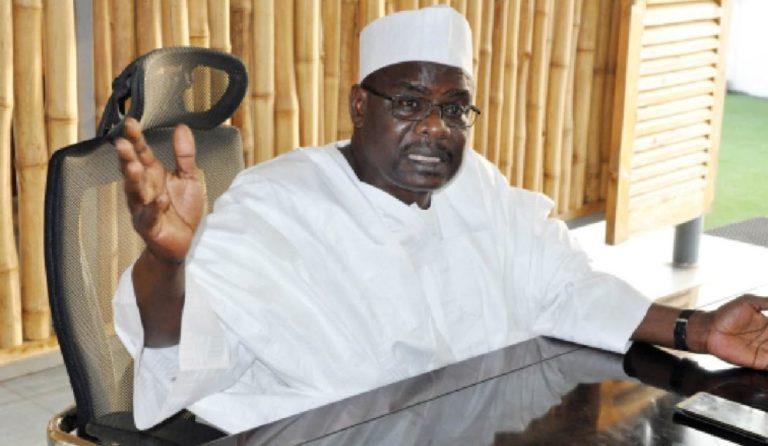
ALI Ndume, senator representing Borno South in the Nigerian Senate, has faulted calls by Nigerians demanding for a slash in the jumbo pay that members of the National Assembly receive as salary.
Ndume said during Channels Television’s Hard Copy on Friday evening, that the legislators’ pay on the country’s economy, has no impact.
“It has no effect on the economy,” he said, adding that, the lawmakers only got N128 billion allocation out of N13 trillion 2021 budget.
“For me, call out the National Assembly, cancel the NASS. That means you have a N128 billion reduction but does that make any difference? Because this thing (calls for the reduction of National Assembly members’ pay) is getting too much for people like me that have come out to serve; not because I came out to be rich,” Ndume.
While arguing that no legislator has ever garnered wealth because he was at the National Assembly, he admitted that the problem with the country is the cost of governance across all arms of government.
“No legislature, go and check the record, has come out and become a rich man because he was one time a legislator. Go and check,” Ndume argued.
“I joined politics in 2003. Go and ask people, my lifestyle has not really changed. The cost of governance is the problem. The cost of governance at all levels including the National Assembly. But you cannot be talking about the expensive nature of governance, isolating only the National Assembly.”
He noted that apart from salaries, the budgetary allocation for members of the National Assembly caters to overhead cost and the payment of staff.
“The office is run by money,” he insisted.
There have been several calls by Nigerians that the take-home by members of the National Assembly should be slashed to reduce the cost of governance in the country.
There are also general beliefs that members of the National Assembly receive the highest salaries and allowances compared to other nations of the world.