Home Blog Page 1963

Nigeria can no longer be dumping ground for e-waste – Minister

THE Federal Ministry of Environment on Wednesday kicked against the influx of electronic wastes and other used electrical appliances into the country.

Sharon Ikeazor, Minister of State for Environment during an event to commemorate the International E-Waste Day (IEWD), Abuja frowned at the several reported cases of dumping of electronic wastes into the country.

Ikeazor said besides the environmental implications of these wastes, they also pose a serious danger to healthy living.

Nigeria, she noted has received large volumes of Used Electrical Equipment (UEEE) under the guise of ‘bridging the digital divide,’ noting that a large chunk of it has been discovered to be e-waste.

“This unsound waste is a fall-out from the rapid transformation in the Information Communication and Technology (ICT) sector,” Ikeazor said.

“In 2018 alone, about 50 million tons of e-waste was generated globally, with only 35 per cent officially reported as collected and recycled.”

According to her, e-waste contains several toxic and Chlorofluorocarbons (CFCs), or Hydrochlorocarbons (HCFCs), which if not well managed could harm the environment and human health.

However, the minister disclosed that the government is fulfilling its global commitment through the establishment of the National Environmental Standards and Regulations Enforcement Agency (NESREA) and promulgation of necessary regulations.

The country, she said also got support from the Global Environment Facility (GEF) funded project on ‘Circular Economy Approaches for the Electronics Sector in Nigeria Project’.

“This project supports the collection and treatment of 300 tons of e-waste under the implementation framework of the United Nations Environment Programme (UNEP), with NESREA as the executing agency for the project,” the Minister added.

The international e-waste day movement commenced in 2018 and is celebrated annually on October 14.

IEWD stimulates awareness on the effect of e-waste to promote political will, attention, and public action.

Retired Army General loses N8.1bn suit against Lagos Govt, others

0

THE Federal High Court sitting in Abuja on Wednesday dismissed the N8.1 billion lawsuit filed by Abdulrauf Tijani, a retired Major General against the Lagos State Government and six others over the alleged unlawful seizure of his parcel of land.

At the hearing, Justice Inyang Ekwo who presided over the matter held that the suit was not only wrongly filed, but was also defective in nature and content and was a gross abuse of the process of the court.

Justice Ekwo said the fundamental rights enforcement suit, marked: FHC/ABJ/CS/690/2020 violated the provision of Section 63 of the Federal High Court Act, having been instituted against a serving judge of the court, who was discharging his judicial obligations.

He stated that the immunity granted a serving judge in the course of judicial functions, was not ambiguous and when a judge errs in the course of his duties, the appropriate venue to seek remedy was not a law court.

The other respondents in the suit include the Nigerian Bar Association (NBA), Justice Ayokunle O. Faji of the Federal High Court, Lagos, former Lagos State Attorney General, Abdulraheem Ade Ipaye, a Senior Advocate of Nigeria (SAN), Kasheem Adeniji, and Governor of Lagos State.

The applicant, though not a lawyer, conducted the case by himself.

Tijani had filed a suit challenging the unlawful seizure of his property by the Lagos State Government,  in alleged connivance with a former Accountant General of Lagos State.

He took the case file to a Lagos State High Court before it was subsequently filed in Abuja.

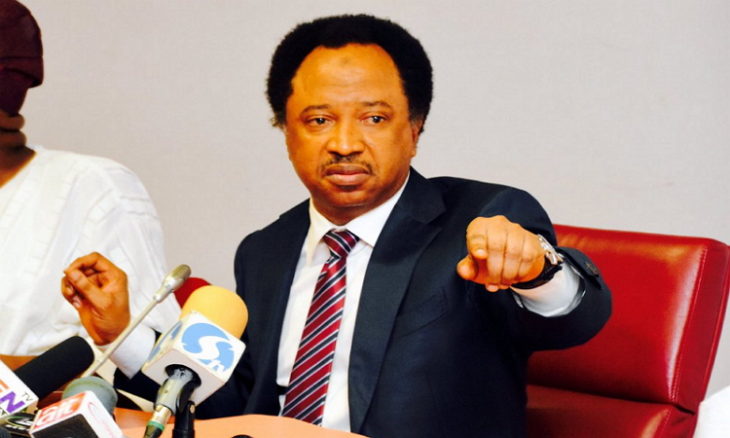
#EndSARS: Thugs cannot stop the wheel of conviction, Shehu Sani reacts to attacks on protesters

SHEHU Sani, a former senator who represented  Kaduna Central Senatorial District at the National Assembly has condemned the reported attacks on #ENDSARS protesters in Abuja on Wednesday by some thugs.

“The attacks on #EndPoliceBrutality & #EndSARS protesters by sponsored thugs in Abuja stand condemned,” he said.

ENDSARS protesters who despite the dissolution of the brutal police unit took their protest to the Berger roundabout, Abuja, the nation’s capital came under attack from some thugs believed to have been hired to disrupt the protest.

Video clips of the attacks showing sticks wielding thugs breaking windshields of vehicles at the popular roundabout circulated on the social media.

Some of the thugs wielding cutlasses also attacked the protesters.

Reacting to the attacks on the protesters,  Sani said that it was unfortunate for anyone to use poor youths to unleash violence on their contemporaries who are struggling for a better society.

“It’s unfortunate that poor & oppressed youths are hired to unleash violence against their contemporaries struggling for a better society. A thug can’t stop the wheel of conviction,” he said.

There has been a surge and series of protests across major cities of the country demanding an end to police brutality and also police reforms.

Mohammed Adamu, the Inspector General of Police (IGP) had announced the disbandment of the dreaded unit.

President Muhammadu Buhari had also issued a directive, calling for a reform of the police force.

However, the protests have continued, with the protesters issuing a five-point demand which include release of all persons arrested and justice for victims of police brutality.

Other demands are “setting up an independent body to oversee the investigation and prosecution of all reports of police misconduct (within 10 days), psychological evaluation of all disbanded SARS officers before they can be redeployed, and increase in police salary so that they can be adequately compensated for protecting lives and property of citizens.”

Abuja residents, motorists panic over hawking of sharp cutlasses in traffic

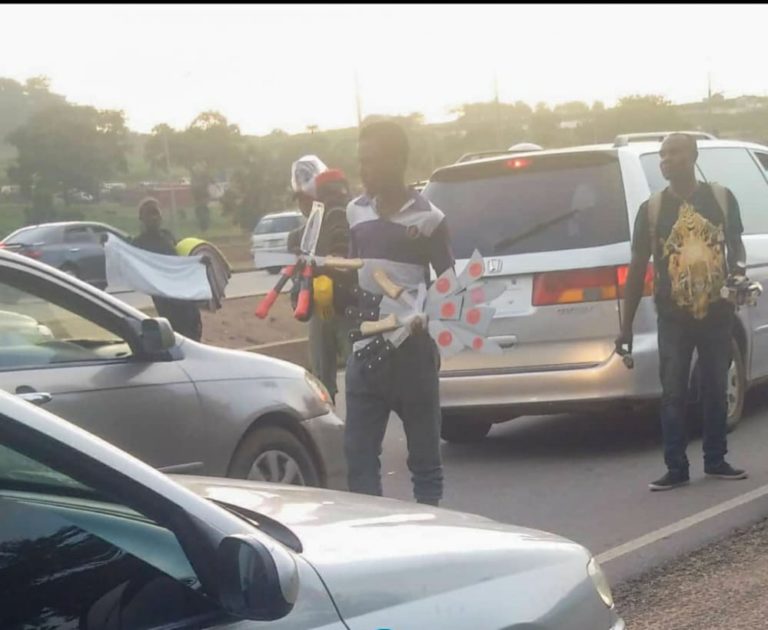
THE indiscriminate sale of sharp cutlasses‎ in traffic at some bus stops and junctions in parts of Abuja, the Federal Capital Territory, is causing panic among residents, motorists and passengers. 

The ICIR discovered that the presence of menacing-looking hawkers clutching handfuls of sharp cutlasses is fast becoming a common sight during peak traffic hours at some bus stops in the FCT.  The development is more prevalent at junctions in the outskirts of the FCT, particularly along the Kubwa expressway. 

Traffic usually builds up on the expressway in the evenings, especially on weekdays when workers, who have closed from work, are returning to their homes. Usually, hawkers take advantage of the heavy traffic ‎to sell various items at bus stops and junctions, as the delayed movement of vehicles at such points give motorists and passengers enough time to take a closer look at the wares that are on display.

Over the years, all manner of goods and products have been sold in traffic by street hawkers but a recent, bizarre development in the FCT is the hawking of sharp machetes in traffic.

A Young man hawking cutlasses along Kubwa expressway

The uneasy feel associated with the development is heightened by the fact that, in most cases, the hawkers selling the cutlasses are able-bodied young men.

Some residents, motorists, and passengers who voiced their concerns at the development said they usually feel frightened and unsafe at the sight of the cutlass-wielding youths who hawk the implements.

A civil servant, Emeka Onyekwere, who voiced his concerns in an encounter with our correspondent at the Phase 4 Junction on the Kubwa expressway, wondered whether the FCT authorities and the security agencies are aware of the development.

“I was afraid the first time I saw youths wielding cutlasses in the traffic, I ‎thought they were bandits or hoodlums who were attacking unarmed motorists and passengers. It was quite shocking because I never expected that cutlasses would be openly hawked in traffic. I wonder if the (FCT) authorities and the security agencies are aware of this,” Onyekwere said. 

Although the Abuja Environmental Protection Board (AEPB) has been clamping down on street trading, the agency’s activities have been concentrated mostly in the FCT metropolis, where its operatives are usually seen pursuing street hawkers in a bid to arrest them and seize their wares. 

The AEPB is not very active in the satellite towns

Mike Muonye, also a civil servant, noted that inadequate attention on satellite towns by the FCT authorities was responsible for the indiscriminate activities of street hawkers, which has now led to the open sale of sharp cutlasses in traffic. 

But Muonye further observed that the sale of cutlasses in traffic was a security risk as the situation could easily be capitalised on by terrorists and other unsavoury elements to unleash terror in the FCT. 

“Whenever I see these boys with their cutlasses, the first thought that comes to my mind is ‘I might come under attack’ and as a result of that, I feel uncomfortable and unsafe. If I have my way I will not pass through this junction (Phase 4 Junction, Kubwa expressway) but this is my route and I don’t have any choice,” Muonye said.

He added, “On some days there are many of them (cutlass-hawkers) moving among ‎the traffic displaying the cutlasses. Imagine how easy it will be if, for any reason, people feel the need to disguise as matchette hawkers and then suddenly start attacking motorists and passengers. As far as I am concerned these people (hawkers) are armed, they are heavily armed and they operate unchallenged in the traffic. It is not right.”

While stressing that he does not oppose street hawking, having made some purchases in traffic on various occasions, Silas Okunbor, a businessman, observed that it is not every item that should be sold in traffic. 

According to him, the type of cutlasses being hawked in traffic in parts of the FCT ‎could as well be classified as weapons. 

“Those are the type of cutlasses people buy for security reasons. They are not for cutting meat or yam or such purposes. Even the hawkers selling them will try to convince you to buy by telling you that you need to have such cutlasses in your home in order to protect yourself. So they are clearly weapons, not just ordinary household utensils,” Okunbor said. 

Indeed, one of the hawkers, who identified himself as Abdullahi, while trying to convince our correspondent to purchase a cutlass, noted that it would come in handy ‎if there was a need to defend the household in the event of an attack. 

“You need one in the house,” Abdullahi said, adding that the cutlass has very strong and sharp steel. 

A closer examination shows that the cutlasses could indeed pass for swords, and ‎appears to be specially made for combat.

A closer look at the cutlasses

“You can also use it to cut grass and kill snake around the house,” Abdullahi added when asked if the machetes are only meant for ‘self-defence’. 

However, he admitted that some motorists and passengers whom he approached with the weird wares complained about the cutlasses. 

“People usually complain about the cutlasses. Sometimes when I approach a vehicle to display the cutlasses to people inside the car they will tell me not to come closer. I notice that some people are scared when they see the cutlasses but I don’t know why they will be afraid. We are just selling goods just like other hawkers here,” Abdullahi said. ‎

But, despite misgivings over the menacing-looking cutlasses, Abdullahi explained that he and his colleagues are making quick sales in the traffic. 

In regular markets and shops, the cutlasses sell between N2000 and N1800, but in traffic, hawkers are willing to collect N1200 for an item, depending on how the prospective buyer negotiates the price. 

According to Abdullahi, on a normal day, he sells ‎up to five cutlasses, or even more. And he is not the only one hawking the goods in the traffic. 

“Many people don’t have cutlasses at home but when they see it being sold in traffic, they remember that they need them in the house. That is why we are selling cutlasses in the traffic,” he explained. 

Motorists and passengers who are alarmed at the sight of cutlass-wielding youths in the traffic are not the only ones that are worried over the indiscriminate, uncontrolled sale of the materials. Interestingly, some other traffic hawkers, and roadside traders at bus stops, are also uncomfortable with the public parade of the ‘arms’.

A fruit-seller at the Phase 4 Junction on the Kubwa expressway, who simply identified herself as ‎Mrs. Justina, said the presence of the cutlass-hawkers is a major cause for concern for other traders.

Justina explained that the hawking of machetes in the traffic at the junction was a relatively recent development. 

“It was not so long ago that they started coming with the cutlasses to this junction. At first, some of us complained and told them to leave and at that time they were being very careful because people said the police will be brought to arrest them. But nothing like that happened and they are now operating freely,” Justina said. 

While the other traders have learnt to mind their own business, Justina noted that they are still afraid of the cutlass-hawkers. On a particular occasion, according to her, one of them inflicted machete cuts on another hawker over an argument. “Whenever you have a misunderstanding with them, they will threaten you with the machete,” she added. ‎

As further observed by Justina, “nearly all the young men ‎that are hawking the cutlasses are from a particular part of the country, a fact which, according to her, makes the development even more worrisome. 

Be that as it may, although the Federal Capital Territory Administration, through the Abuja Environmental Protection Board, had been clamping down on street hawking, particularly in Abuja metropolis, nothing has been done to address concerns arising from the growing presence of cutlass-hawkers at traffic-heavy bus stops and junctions in satellite areas. 

At the Phase 4 Junction on the Kubwa expressway on Tuesday evening, our correspondent saw a number of youths ‎moving among the traffic, clutching handfuls of sharp cutlasses that are being displayed to motorists and passengers. Even for those who are used to the development, a youth stopping by the windows of a vehicle that is moving slowly in a traffic hold-up is quite an alarming, and scary phenomenon.  

Voicing the secret fears of many, James Ekeani, a banker who always encounters the cutlass-hawkers on his way home from work‎ most evenings, said, “What if they decide to attack people with these cutlasses? There will be no escape because people are stuck inside vehicles and they will just slaughter anybody they wish to attack. Cutlasses should not be hawked in traffic. It is not right.”‎

‎It remains to be seen whether the FCT authorities will take urgent action over the development but the management of the Abuja Environmental Protection Board said it was not aware of the development.

The spokesperson of AEPB, Janet Audu Peni, insisted that the agency does not tolerate street hawking, no matter the item involved. “We don’t permit hawking in the FCT and we have a mobile court that prosecutes anybody that is caught engaging in hawking,” she said.

The AEPB spokesperson added that the agency requires the support of members of the public. “When people notice things like this they should alert us because we don’t tolerate hawking,” she added.

However, Peni said AEPB enforcement officers would be deployed to the concerned locations to dislodge the cutlass-hawkers.

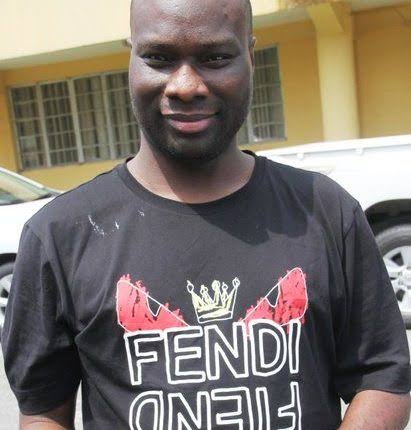
EFCC wants Court to dismiss Mompha’s no-case submission in N32.9b fraud trial

THE Economic and Financial Crimes Commission (EFCC), has asked the Federal High Court sitting in Ikoyi, Lagos State to dismiss the no-case submission filed by Ismail Mustapha, alias Mompha, a suspected internet fraudster, who is standing trial over an alleged N32.9 billion fraud.

Wilson Uwujaren, the EFCC spokesperson stated in a statement on Wednesday that Mompha was re-arraigned on Wednesday, March 4, 2020, alongside his company, Ismalob Ventures, on an amended 22-count charge of fraud.

According to the statement,  Gbenga Oyewole, counsel to Mompha filed a no-case submission at the resumed hearing after the prosecution had closed its case at the last sitting.

Oyewole, in urging the court to uphold his client’s no-case submission, said the prosecution had failed to link his client to any offence on all the counts of the charge.

In contrary to Oyewole’s argument, S. I. Sulaiman, the EFCC counsel told the court to dismiss Mompha’s no-case submission application.

Sulaiman said the prosecution had been able to link the defendant to the alleged offences based on the evidence adduced and exhibits tendered through the 10 prosecution witnesses, who had testified in the matter.

After hearing the plea of the parties in the case, Mohammed Liman, the sitting judge on the case, adjourned the matter to November 18, 2020, for ruling on the defendant’s no-case submission.

Mompha was rearrested by the EFCC on August 18, two weeks after a Federal High Court, Ikoyi had granted his bail application.

The suspect was rearrested at the EFCC office when he went to retrieve his belonging from the Commission as ordered by the court.

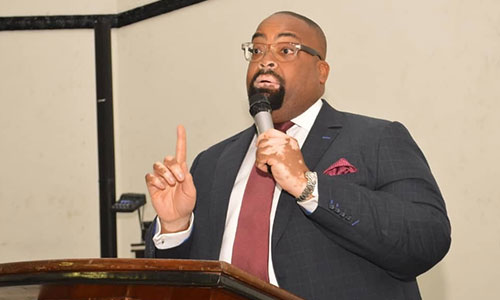
#SARSMustEnd Protests: NBA condemns use of live ammunition on protesters by police

THE Nigerian Bar Association (NBA), has condemned the use of live ammunition by Policemen against protesters in the ongoing protests against police brutality in the country.

Olumide Akpata, President of the NBA, while speaking during a press conference on Tuesday in Abuja, said under no circumstances should the use of live ammunition on protesters be tolerated. 

“Under no circumstances should the use of live ammunition against peaceful and lawful protesters be tolerated,” Akpata said.

“Those found culpable must be apprehended and made examples of in the wake of the protests that have resurrected the consciousness of the Nigerian society and indeed the international community to these very important and systemic issues.”

The NBA president who said the protest is a result of decades of institutional failure added that reposting men of the disbanded dreaded SARS without institutional and operational reforms will only scratch the surface and not address the perennial issues affecting the police.

“The protests have again brought to fore perennial issues affecting the Nigerian Police, our security agencies, their interface with the citizenry and the fundamental issues affecting our security system that can no longer be put off,” he said.

“In the wake of the protests that have resurrected the consciousness of the Nigerian society and indeed the international community to these very important and systemic issues, the NBA is convinced that disbandment of SARS (or any other unit by whatever name called), re-posting or transferring officers of any disbanded unit and other knee-jerk reactions will only scratch the surface and not offer long-lasting solutions to the endemic issues bedevilling the Nigerian Police as currently constituted.”

Speaking further, Akpata called on both the Federal Government and State Governments to protect the rights of citizens participating in peaceful protests across the country.

In doing this, the NBA leader wants security agencies to be warned against “assaulting, attacking, abusing or otherwise harassing or otherwise using force against citizens who seek to have their voices heard through the peaceful protests.”

FG considers adoption of ASUU’s proposed payment platform

0

THE Federal Government has expressed willingness to adopt University Transparency and Accounting Solution (UTAS), the preferred payment system by the Academic Staff Union of Universities (ASUU).

The  Federal Government after a new round of dialogue with ASUU resolved to adopt the UTAS payment platform, saying it will first of all subject it to integrity test.

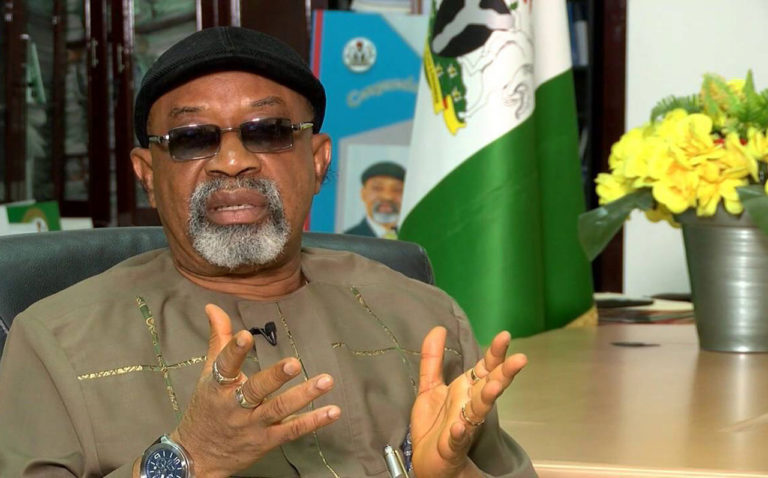
Chris Ngige,  the Minister of Labour and Employment, said at the end of the meeting held at the instance of Ahmad Lawan, Senate President in Abuja, said government’s acceptance of the UTAS would be dependent upon the passing of a series of integrity test to which it would be subjected.

“UTAS would have to undergo an integrity test. A demonstration of it would be done on Wednesday at the Office of the Accountant-General of the Federation. Other relevant Agencies of Government like the National Information Technology Development Agency (NITDA) and Office of the National Security Adviser (NSA) would also assess it. It is a stage-by-stage process,” Ngige said.

He stated that the government was not against UTAS, as it would always appreciate and be willing to adopt local content.

The Minister described the meeting as fruitful and frank but noted that the dialogue was still on-going.

“We are continuing next week. After the test on Wednesday, we will reconvene in the Ministry of Labour and Employment on Thursday. We will then convene again next Tuesday or Wednesday for a final decision,” he said.

Earlier, Ngige had stated that the Ministry of Labour and Employment had over the months resolved seven out of nine issues tabled by ASUU.

Regarding the matter of UTAS, ASUU’s homegrown payment system, the Minister noted that an earlier understanding with ASUU was for it to be submitted for assessment by stakeholders.

Declaring the dialogue open, Ahmad Lawan, the Senate President, called for a speedy resolution of the impasse, as students staying away from school for too long posed enormous danger to the society.

He called for understanding and accommodation on both sides, as the danger inherent in the situation went beyond education.

“It borders on security as well, with the attendant adverse effect on the society”, he said.

Also at the meeting were Principal Officers of the Senate, Minister of Education, Adamu Adamu; Accountant General of the Federation, Ahmed Idris, representing Minister of Finance, Zainab Ahmed, and the leadership of ASUU, led by its  President, Professor Biodun Ogunyemi.

#EndSARS: Why I ordered suspension of Flutterwave’s payment platform- Tunde Lemo

TUNDE Lemo, a former deputy governor of Central Bank of Nigeria (CBN) and chairman of Flutterwave, a payment technology company says he ordered the suspension of the fintech firm’s payment platform, to prevent illicit financial flow.

The Fintech firm has provided a platform to gather donations to provide medical and legal aid, food and drinks for #EndSARS protesters across the country.

But there were reports on social media Tuesday that the CBN has placed a ban on the platform as a measure to clip the wings of the protesters.

While reacting to this development, Lemo was quoted in a report by This Day that he gave the order that the platform be shut down to check the activities of fraudsters.

“I was the one that instructed them to shut down their system yesterday when the bad guys were moving money through them,” Lemo explained, This Day reports.

In support of the #EndSARS protest, the staff of Flutterwave announced on October 9, that they had started an internal fund generation, raising up to N2 million to support injured protestors.

Flutterwave and Feminist Coalition, a pro-#EndSARS women group have been at the fore front of raising funds for victims of the ENDSARS protests.

On Tuesday, the Feminist Coalition via its Twitter page announced that its account had come under attack, disclosing that the bank account linked to the donation fund had been deactivated and the donation link severed.

For demanding an end to police brutality we are now under attack! Our bank account has been deactivated and so has the Flutterwave donation link. Our members’ lives are also being threatened! #SARSMustEnd,” the tweet read. 

The suspected move by the government to cut off the essential lifeline of the protestors has met even more resistance. Nigerian youths on social media have criticised what they believed to be an attack on Flutterwave and expressed their solidarity with the payment platform.

Japheth Omojuwa, a Nigerian youth and Chevening scholar in a series of tweets expressed his displeasure with the alleged ban against Flutterwave.

“If they shutdown Flutterwave, we have a valid claim to submit names to the UK, US, Swiss etc embassies to ban everyone involved because that’d be a direct affront on human rights. Not worse than election rigging,” one of his tweets read.

However, in a more recent tweet, he stated that the donation link would be reset, noting that the government was not attacking Flutterwave.

“I have now been informed that the government isn’t shutting Flutterwave down. So we are clear on that. No one is shutting Flutterwave down. They will reset the donation link and get things going again. We are good,” he tweeted.

Nigerians have since last week across the country been on a  protest against police brutality demanding the complete abolition of the Special Anti-Robbery Squad (SARS).

Since the beginning of the protest, several cases of brutality have been recorded, including the deaths of a number of youths who have allegedly been gunned down by police officers.

On Tuesday, the Nigerian Security Operatives during the EndSARS protest held in Abuja, assaulted, and seized the camera belonging to the Arise news crew covering the protest.

The ICIR reported that the television station’s crew members were trying to get the reactions of protesters at the National Assembly, Abuja when they were attacked by the security operatives who wore the Nigerian military uniform.

Why disbanding the notorious anti-robbery squad won’t stop bad policing in Nigeria

0

By Lanre Ikuteyijo, Obafemi Awolowo University

A WAVE of protests has spread through Nigeria as citizens call for the disbandment of the Special Anti-Robbery Squad, a unit of the Nigeria police. This followed footage that went viral of the squad beating a man to death. Protesters took to the streets, and started a social media campaign using the hashtag #ENDSARS. On Sunday, October 11, 2020, the Inspector General of Police, Mohammed Adamu, announced the unit would be dissolved, though protests continued as there was little clarity on what the next steps would be.

Nigeria has had several special tactical police squads. Like the Special Anti-Robbery Squad, they too have been accused of gross human rights violations. These included the Mobile Police Force, derogatorily referred to as “Kill and Go” in the era of military rule in Nigeria. Following the advent of civilian rule in the country (particularly post-1999), no unit of the Nigerian Police has come under criticism as severe as that levelled against the Special Anti-Robbery Squad. Lanre Ikuteyijo explains the unit’s origin, mandate, achievements and governance structure. And why disbanding it falls short of what needs to be done to end bad policing in Nigeria.


Why was the squad formed? What was its mandate?

The squad was established nearly three decades ago as a special unit of the Nigerian Police dedicated to the fight against highly violent crimes such as kidnapping and armed robbery.

There are various versions about the origins of Special Anti-Robbery Squad. One is that it was pioneered by a retired Commissioner of Police, Simeon Danladi Midenda in 1992. But the Nigeria Police had, in fact, had an anti-robbery unit prior to the establishment of the squad.

At the time of its establishment, Special Anti-Robbery Squad was given the authority to operate covertly with operatives in mufti and in unmarked vehicles. Their operations were initially akin to undercover police agents who operated to complement the efforts of the conventional police in tackling violent crimes. But, over time, their identity and activities became more conspicuous, and disturbing. It soon became clear that they were using high-handed treatment of suspects. In recent years evidence has emerged that they have used extra-judicial methods to clamp down on suspected perpetrators of internet fraud otherwise known as Yahoo boys.

Over the past seven years, the Special Anti-Robbery Squad has become notorious for extra judicial killings, unlawful arrests and extortion, among other illegal activities. These have led to several bans and sanctions from the police authorities.

And on Sunday, the Inspector General of Police announced the unit’s dissolution.

Has it been credited with any achievements?

Yes. Firstly, their crime fighting lead to some abatement in criminal activities.

Also, the squad initially had a better reputation than the conventional police, which was associated with bribery and corruption.

In addition, the introduction of Special Anti-Robbery Squad brought some legitimacy to the police as citizens had more trust in their ability to stem the tide of crime.

Finally, operatives from the squad were involved in several successful joint missions involving personnel from other police tactical units.

Why the special units?

Globally, special tactical units are often established to carry out certain mandates in law enforcement. These can involve highly violent crimes such as terrorism, banditry, religious insurrections, armed robbery and kidnapping.

In Nigeria, the establishment of special units within the police force followed rising incidents of violent crimes. The situation was considered to be beyond the capability of the conventional police. Tactical units have included the Intelligence Response Team, Special Tactical Squad, Counter Terrorism Unit, Force Intelligence Unit, and the Special Anti-Robbery Squad. Members of the special units were often specially trained and given specific mandates.

Given that police are underfunded in Nigeria, most policemen were often eager to serve in the tactical units.

It is important to note that most of the breakthrough operations by the Nigeria Police Force have been facilitated by some of these tactical units. The Intelligence Response Unit is reputed to have apprehended some high-profile criminals. These have included the arrests of notorious kidnap ringleaders like Chukwudi Onwuamadike (aka Evans) and Bala Hamisu (aka Wadume).

What about governance? Can structures be strengthened?

As an institution, the Nigeria Police Force is subjected to both internal and external monitoring mechanisms. The Ministry of Police Affairs, Police Service Commission and the Nigerian Police Council serve as external monitors.

Internally, police activities are monitored by the human rights desks and the X-Squad which is an internal anti-graft unit of the police. Special Anti-Robbery Squad, and other tactical units, are integral parts of the Nigeria Police Force and are under the command of the Inspector General of Police.

The same governance structures surrounding the Nigeria Police Force are therefore applicable to the squad.

But both the internal and external oversight mechanisms have proven to be grossly inadequate given the incessant violations of human rights and overbearing nature of the Nigeria Police Force.

Will disbanding the unit solve the problem?

The dissolution of the squad will send a warning signal to other tactical squads. But the Special Anti-Robbery Squad is just a microcosm of the bigger problem – bad policing in Nigeria. Its dissolution will barely scratch the surface.

The dissolution is only part of the solution as operatives from the squad were and will always be members of the National Police Force. They will simply be redeployed to other units. If the proper identification and “deradicalisation” of erring operatives doesn’t happen, then the exercise will only amount to recycling.

Steps must be taken to immediately provide an alternative unit that is well recruited, trained, and retrained with the more professional policing skills. Also, the petitions against former operatives of the squad should be followed up to ensure that culpable people are brought to book.

Lastly, the new tactical unit – and by extension the entire police force – should be more transparent and they should be accountable for their operations.

In addition, the following measures could be taken to address the perennial crises of law enforcement as far as the squad and other tactical units of the police are concerned:

  • Promotion of human rights as the core responsibility of the tactical squads and the police. This will lead to improved work ethos of operatives of the tactical units.
  • Promotion of accountability and transparency of these tactical units.
  • Funding and training of personnel in line with the core values of policing
    professionalism.
  • Inculcate the principles and philosophies of community policing.
  • Implementation of the provisions of the Police Act 2020, especially innovations that emphasise the respect for human rights including rules for documentation of arrests, detention, morbidity and death of suspects. These and other innovations were aimed at bridging the gaps in previous laws.The Conversation

Lanre Ikuteyijo, , Obafemi Awolowo University

This article is republished from The Conversation under a Creative Commons license. Read the original article.

Lauretta Onochie: What constitution says about appointing INEC National Commissioner

0

NIGERIANS were stunned Tuesday afternoon when Ahmad Lawan, the President of the Senate read the names of four Nigerians recommended by President Muhammadu Buhari for confirmation as National Commissioners at the Independent National Electoral Commission (INEC).

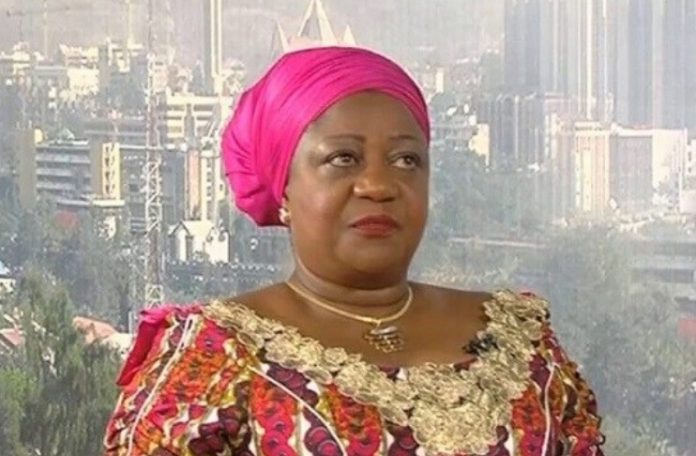
Of the four Nigerians nominated by the President, only Lauretta Onochie, who was nominated to represent Delta State has generated furore among Nigerians.

Onochie is President Buhari’s Personal Assistant on Social Media – her appointment has come under public scrutiny since Lawan announced her name. While many who condemned her inclusion in the list argued that she is a card-carrying member of the ruling All Progressives Congress (APC), others said she has always been partisan in her social media posts and as such not qualify for the position in the INEC.

The main opposition party, Peoples Democratic Party (PDP) and rights activists who have also condemned Onochie’s appointment by the President, argued also that her political leaning makes her nomination by the President contravenes the Act establishing INEC and the 1999 Constitution.

What the Constitution says

In appointing the members of the INEC, the 1999 Constitution requires the President to consult with the Council of State pursuant to section 154 (3) of the constitution.

In addition, Paragraph B of Part 1 of the Third Schedule of the constitution provides that “The Council of State shall have the power to advise the president in the exercise of his powers with respect to (iv) the Independent National Electoral Commission including the appointment of the members of the commission.

The constitution adds that pursuant to section 154 (1) of the constitution, the appointment of the members of the Independent National Electoral Commission shall be subject to confirmation by the Senate.

Paragraph 14 of Part 1 of the Third Schedule of the constitution as amended by Section 30, Act No 1 of 2010, clearly stated that a member of the Independent National Electoral Commission “shall be non-partisan”.

Opposition party reacts

The Peoples Democratic Party (PDP) has described Onochie’s appointment as a highly provocative assault on the nation’s constitution and democratic process.

The party in a statement by Kola Ologbondiyan, its National Publicity Secretary, said her appointment by the President is an attempt to plant unscrupulous elements in INEC in order to corrupt and further desecrate the sanctity of the Commission.

It added that Onochie’s appointment is to undermine the country’s electoral system and destabilize its democratic process ahead of the 2023 general elections.

“Indeed, her nomination dresses up Mr. President as having more than an interest in legacy building and portrays him as one who has a personal candidature interest in the 2023 election. The only way to prove otherwise is to quickly withdraw Onochie’s nomination before the Senate.

“Moreover, being a card-carrying member of the APC as records shows (from Ward 5 Onicha Olona, Aniocha North Local Government Area of Delta State), Onochie’s nomination is in clear violation of paragraph 14 of the 3rd schedule of the 1999 Constitution (as amended), which forbids a person involved in partisan politics to hold office as a member of INEC.

“It is therefore surprising that having sworn to the constitution of the Federal Republic of Nigeria, Mr. President is taking actions that are antithetical to the very constitution and democratic governance.

“These actions are deliberate attempts by President Buhari to inflame social tensions, undermine our constitution and desecrate the sanctity of our electoral process, rather than finding solutions to the myriads of problems pervading our country,” the PDP said.

It vowed to deploy every legitimate means possible in a democracy to stop the approval of her nomination as an INEC national commissioner.

Similarly, Femi Falana, Senior Advocate of Nigeria (SAN) and human rights activist, in a statement on Tuesday said the partisanship of Onochie has disqualified her from occupying such a position in INEC.

“As an unrepentant member of the ruling party, Mrs. Loretta Onochie, has consistently attacked members of other political parties. To that extent, she is partisan and therefore not qualified to be a member of the Independent National Electoral Commission,” Falana said.