Home Blog Page 1985

Nigeria puts up Hawker 4000 presidential jet for sale, as market value drops by 82.4 per cent after nine years

0

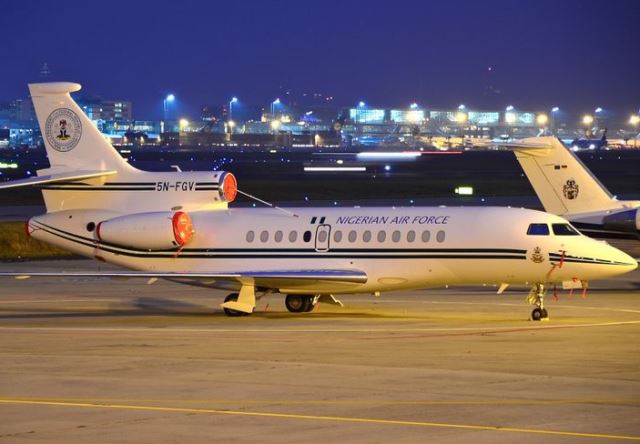
NIGERIA has announced the sale of a jet in its presidential fleet, Hawker 4000 aircraft with registration number, 5N-FGX/: RC 066.

The business-sized jet which was bought at $22.91 million is currently estimated at $4.03 million, according to a global aviation resource.

The advert which was published in several national dailies revealed that the aircraft has a range of 3,190-nautical miles and had flown for 1,768 hours was entered into the service in 2011. It also has a capacity for nine passengers and three crew members.

“Please note that all bids must be submitted within one week of this publication. A background check is required as a pre-qualification for the bid. Prospective bidders who want to inspect the aircraft will be granted access within one week from this advertisement,” the advert read.

It said the aircraft could be inspected at the Presidential Air Fleet’s hangar located at the Nnamdi Azikiwe International Airport, Abuja as prospective buyers were directed to submit a refundable bank draft for $50,000 to the committee with the bid.

Interested buyers were requested to submit their closed bid to the Chairman, Committee for Sale of Aircraft, Office of the National Security Adviser, care of Special Services Office, Office of the Secretary to the Government of the Federation.

Findings by The ICIR show that 73 units of Hawker 4000 aircraft were manufactured by Hawker Beechcraft Corporation between 2001 and 2013 until they ceased production and they were sold for $22.91 million each as of 2012.

However, Hawker 4000 aircraft currently sells for 17.62 per cent of its original price which is $4.03 million and the price is expected to fall further according to jet sales websites.

This indicates that the current market value, when compared to its initial listing price, had fallen by 82.41 per cent.

The drop in the value of Hawker 4000 aircraft is attributed to bankruptcy faced by Hawker Beechcraft Corporation as it ceased further production which had led to an inability to complete subsequent upgrades and enhancement programme on the Hawker 4000.

In 2016, President Muhammadu Buhari had put up for sale two presidential aircraft, a Falcon 7X executive jet and Hawker 4000 arguing that aircraft in the Presidential Air Fleet should be reduced to cut down on waste.

It was also announced that some aircraft in the fleet would be handed over to the Nigeria Air Force for its operations. It could not be confirmed if this had been done.

According to the Presidency, the PAF has 10 aircraft and they include Boeing Business Jet (Boeing 737-800 or Air Force One), one Gulfstream 550, one Gulfstream V (Gulfstream 500), two Falcons 7X, one Hawker Sidley 4000, two AgustaWestland AW 139 helicopters and two AgustaWestland AW 101 helicopters.

Reports said each of the two Falcon 7X jets was purchased in 2010 for $51.1 million, while the Gulfstream 550 costs $53.3 million.

TETFund urges FG to increase research, development funding to $1bn for tertiary institutions

0

THE Tertiary Education Trust Fund (TETFund) has urged the Federal Government to increase its annual funding for research and development to one billion dollars.

Suleiman Bogoro, the Executive Secretary of TETFund made this call during the inauguration of TETFund’s Research and Development (R&D) Standing Committee on Thursday in Abuja.

“To galvanize our vision towards making R&D the ace and game-changer in our national development agenda, the need for an appropriate law to support the establishment of a National R&D Foundation (NRDF) cannot be overstated,” said Bogoro.

“We need a robust institutional framework and arrangement for the NRDF. I am recommending a minimum annual budgetary threshold of one billion dollars as the funding portfolio for this Foundation.”

He stated that the increase became necessary when the benefits of the R&D were considered within the socio-economic challenges in Nigeria.

“When we consider the inevitable benefits of R&D and the socio-economic challenges in Nigeria, this amount begins to look like a drop of water in the ocean-population of 200 million people in 2020 and projected to become double in 10 years for now,” Bagoro added.

The Executive Secretary commended Nigeria President, Muhammadu Buhari for the recent increase of the research grant from N5 billion to N7.5 billion, stating that the massive investment in research would bring about the desired development in the country.

Inaugurating the Committee, Minister of Education, Adamu Adamu, represented by Chukuemeka Nwajuiba, the Minister of State for Education, charged members of the committee to put their best to the national assignment.

“Nigeria voted us into power predicated on our being able to transform our national aspirations and make them a national achievement,” Adamu said.

“It is in recognition of this direction that the Executive Secretary, TETFund, presented his vision of a research-driven nation and how to finance that ambition through the Board of Trustees (BOT).”

He stressed that Nigeria’s future depends on the work of the committee describing as a national calling that requires almost all the members,”

Aminu Suleiman, the Chairman, House Committee on Tertiary Education and Services, also represented by Ikenna Elezieanya said the work of the committee would open the windows of opportunities to tackle various developmental challenges confronting the country.

However, Suleiman lamented the way Nigeria has shown less concern to research, saying that many developed countries invested in research and development and thus helped to improve on their economy.

“Research is the gateway to innovation. It is sad that while countries like the USA, Korea and the like have been investing in research and development, we seem to show less concern,” Suleiman stated.

Buhari says CAMA will help fight corruption, no, it contains dangerous provisions- Falana, Odinkalu

0

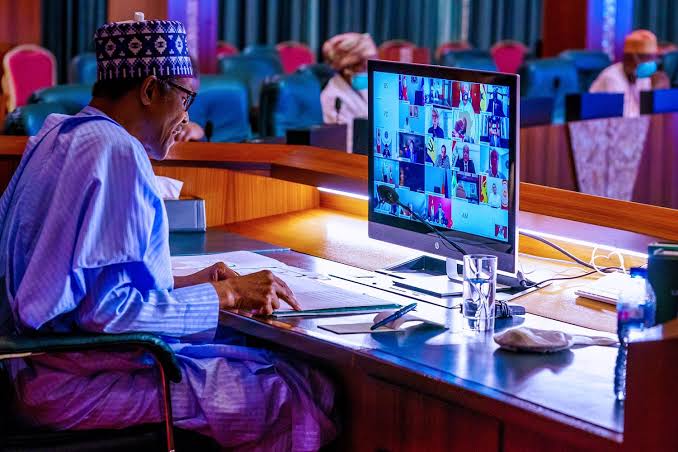
PRESIDENT Muhammadu Buhari Thursday explained that the recently passed Companies and Allied Matters Act, 2020 (CAMA) would enhance transparency and corporate accountability in the fight against corruption.

 Buhari spoke in a video message presented at the Open Government Partnership (OGP) 2020 Virtual Leaders’ Summit on the sidelines of the 75th Session of the United Nations General Assembly (UNGA75) in New York, United States.

”Since the inception of our Administration in 2015, the Government has been committed to changing international and domestic perceptions regarding Nigeria’s commitment to fight corruption and foster good governance,” he said.

”We focused on the task of dealing head-on with this destructive monster, which led to us joining the Open Government Partnership and making reform commitments such as to establish a public central register of beneficial owners of corporate entities.

He said the Government has since made significant progress in implementing tougher anti-corruption measures, including the recent assent to the Companies and Allied Matters Act, 2020.

”The Act provides a legal framework for the implementation of Beneficial Ownership Information Disclosure in Nigeria,” the president said.

”Being an OGP member-country has helped Nigeria learn from other countries tackling similar challenges, and to build a coalition to support these reforms across the private sector and civil society. It has also aided our journey towards building citizens’ trust in government.”

 He told the Summit that it had become clear that governments cannot solve all the challenges of the pandemic alone, stressing it was only through open governance and working with citizens that nations can succeed.

”We face a significant contraction in the global economy in 2020; the world is facing the unprecedented twin challenges of managing the health and economic impacts of the pandemic,” Buhari said.

”In these times, citizens worldwide are seeking more information, engagement, and support from their governments,” he added.

The Nigerian leader pledged that his administration would continue to use its OGP membership to ensure that open government approaches strengthen the pandemic management, adding that the Nigerian government would sustain consultations and engagements with citizens through Civil Society Organisations and the organised private sector on COVID-19 response and recovery plan.

According to the President, ”these consultations are in line with the effort of our administration to encourage public participation in government policies and programs.

”Our recovery package includes support to businesses, to vulnerable communities, and expansion of public works. Our aim is to make all these efforts more effective by making them open. ”

President Buhari recounted that soon after joining this partnership, Nigeria had the privilege of being elected to the OGP Global Steering Committee.

As a leader in the OGP Steering Committee, President Buhari acknowledged that Nigeria has learnt from both government and non-government counterparts on international best practices.

”I am also glad that Nigeria’s pioneering sub-national Open Government Partnership Model has become one of the leading examples driving the expansion of the Open Government Partnership Local Programme.

”Nigeria will also champion the tenets of the Open Government Partnership through our leadership role in regional institutions.” 

He said the government aimed to expand the partnership on the African continent by continuing to play a leading role in the International Steering Committee.

”As we look forward to celebrating 10 years of the existence of the Open Government Partnership next year, it is my earnest wish that all countries in the world will adopt Open Government principles and help democracy live up to the expectations of citizens having a voice at and beyond the ballot box, ” he said.

Meanwhile, Femi Falana, human rights lawyer, and Chidi Odinkalu, former Chairman of National Human Rights Commission (NHRC) have said that CAMA contains dangerous provisions that would allow for gross violation of fundamental human rights.

According to The PUNCH, Falana and Odinkalu argued that the new law gave too much power to the Registrar General of the Corporate Affairs Commission (CAC), which can easily be used to arbitrarily clamp down on civil society organisations.

They spoke at a virtual town-hall meeting, with the theme, “CAMA 2020: Regulation or Repression?” co-organised by European Union-ACT, Open Society Initiative for West Africa, Working Group on Civil Society Regulatory Environment, Socio-Economic Rights and Accountability Project, and the CAC.

Falana, in his remarks, faulted Section 389 of the law that empowers the CAC to suspend the Board of Trustees of an organisation in crisis and appoint an interim committee to manage its affairs.

Describing the section as a violation of the rights to freedom of association, he argued that the CAC should allow organisations to manage their internal crisis in line with their constitutions.

“The organisation has been registered with its constitution; the Registrar General of the CAC has no power to throw away the constitution incorporated with the organisation,” he said,

“Once you have registered the constitution of an organisation and it has provided for Board of Trustees, it has provided for accountability mechanisms, you must respect such provisions of the organisation’s constitution that has been registered.

He noted that it would be dangerous to allow the law to be operational before all its “dangerous provisions” are pointed out.

According to Falana, another offensive provision of the law is Section 842, empowering the CAC to take over the funds in the bank accounts of an organisation in crisis.

The SAN said it was tantamount to “obtaining money by false pretence.”

Falana also condemned Section 831 of the law, which, he said, empowers the RG of the CAC to forcefully merge two organisations.

Furthermore, he described as most offensive, Section 851 of the law, which empowers the CAC to set up an Administrative Proceedings Committee, headed by the RG of CAC, to resolve internal disputes in an organisation.

“The Administrative Proceedings Committee will be headed by the Registrar General of the CAC; so, he is going to be the accuser, the prosecutor and also the judge to decide who is wrong or right. He is also going to be empowered to impose penalties on any organisation who fails to file returns. These powers are draconian,” Falana said.

In his remarks, Odinkalu described Part F of CAMA 2020 as a “mish-mash” of borrowed laws from the United Kingdom, hastily copied without the safeguards in the English law.

Also speaking, the Country Director of Amnesty International in Nigeria, Osai Ojigho, said NGOs were already adequately regulated, stressing that the intervention by the CAC was needless.

But the representative of CAC RG, Nidiya, maintained that there was no room for abuse because the Board of Trustees of an organisation will only be suspended after a Board of Inquiry set up by the CAC would have looked into their crisis and made recommendations to the CAC.

“Our own thinking is that at the Board of Inquiry level, all issues of human rights would have been taken care of because the Board of Inquiry will not just arrive at a decision without giving the parties the right of fair hearing,”Nidiya said.

Top Boko Haram commander, his four wives surrender

0

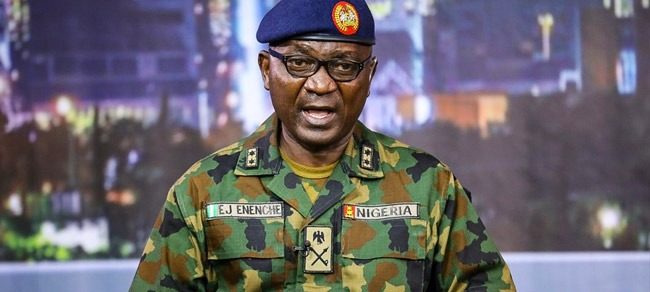
THE Nigerian Army says a top Boko Haram Commander alongside with his four wives have surrendered to its troops of Operation Lafiya Dole.

John Enenche, Coordinator Defence Media Operations, Defence Headquarters, disclosed this to newsmen during a press conference in Abuja on Thursday.

He did not supply additional information about the terrorist and his wives but however, said the success was recorded as a result of actionable intelligence by the troops.

Enenche, a Major General added that the troops killed seven bandits and rescued eight kidnapped victims from bandits at Fankama and Sabon Layi area of Faskari Local Government Area of Katsina State by the troops.

“In the North-east, within the period under review, troops of operation Lafiya Dole conducted a series of air and ground operations on terrorist enclaves at different locations in Borno, Yobe, Taraba and Adamawa State,” he said.

“Notably, a high profile Boko Haram terrorist commander surrendered with four of his wives to our troops.”

He also disclosed in a statement that troops of Army Super Camp have destroyed several identified terrorists’ camps and hideouts around the Lake Chad Basin in Kukawa Local Government Area of Borno State.

Enenche who said the operation was part of efforts by the military to ride the North East of terrorism added that several top Boko Haram/ISWAP terrorist commanders were killed during the successful operation.

“The successful operation led to the destruction of several identified terrorists’ camps and hideouts located at Tunbun Gini, Tunbun Nbororo, Tunbun Kayoma, Tunbun Kaza, Tunbun Fulani at the fringes of Lake Chad in Kukawa Local Government Area of Borno State.”

“Several top BHT/ISWAP terrorists commanders were killed during the successful operation including Abu Usman, Alhaji Shettima, Modu Mainok, Bukar Gana, Abu Summayya, Amir Taam and Amir Kuraish among others,” he said.

While encouraging residents of the region to avail of military useful information about the hideout of terrorists in the region, Enenche stated that the Armed Forces of Nigeria, operating in concert with other security agencies and stakeholders, will sustain its efforts to rid the North East of all terrorists and other criminal elements.

Stakeholders blame govt’s complicity on corruption at Federal University, Lokoja

0

The actions and inactions of the Federal Government, anti-graft agencies, and involvement of citizens have been identified as the main factors abetting corruption, abuse of office, and violation of procurement processes by the authorities at Federal University, Lokoja, Kogi State.

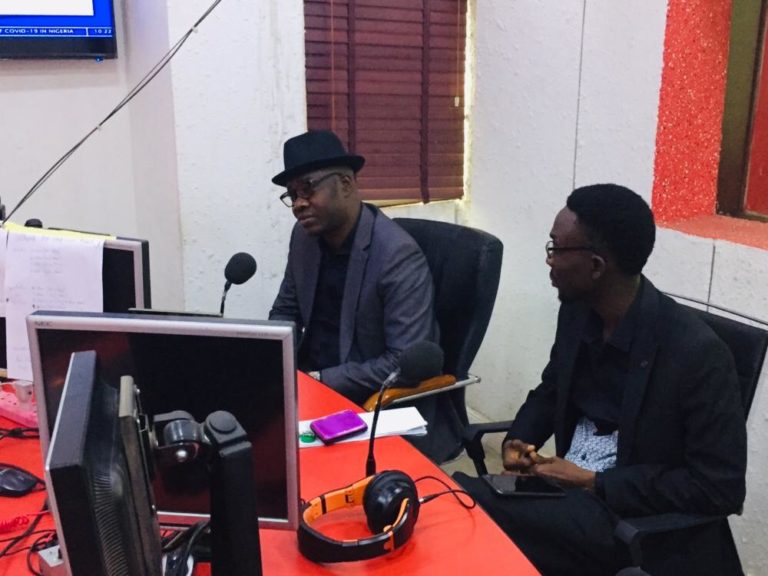
Jide Ojo, a Public Affairs Analyst, and Yekeen Akinwale, a Senior Investigative Journalist with the International Centre for Investigative Reporting (ICIR), said this during a radio program, Public Conscience produced by the Progressive Impact Organization for Community Development (PRIMORG).

The Auditor General of the Federation and The ICIR had in their reports indicted the institution of an array of financial misappropriation and fraud under the watch of Prof. Angela Freeman Miri, the current Vice-Chancellor of the University.

It will also be recalled that the 2017 Auditor-General Annual Report stated that the university authorities failed to remit N61.9 million, being the 25 percent of Internally Generated Revenue (IGR) for 2015 and 2016 into the Federal Government’s Consolidated Revenue Fund account.

Reacting to the corruption report, the duo of Jide Ojo and Yekeen Akinwale noted that the report indicting the school and the Vice-Chancellor has been in the public space with the Federal Government, anti-graft agencies, the governing council of the university, and other stakeholders doing nothing to report the act or bring perpetrators to book.

Jide Ojo faulted the federal government, and members of the National Assembly for not taking action after hundreds of ministries, agencies, and department were fingered in massive misappropriation of fund in the Auditor General’s report of 2014 to 2017, stressing that it was part of the Senate and House of Representative Committees on Public accounts responsibility to play oversight function on MDAs.

On why the government is reluctant to go after officials fingered in corruption at the Federal University, Lokoja, he said: “there is lack of political will because if petitions are written to different agencies and there are still no actions taken, it then shows that we are not serious about fighting corruption.

“Where is the university council in all of this? There are checks and balances within the system and if the university council is inaugurated and is in place, the council should have reacted to the report. Maybe what the anti-corruption agencies are looking for is a direct petition to them.”

He also wondered why the students’ union association failed to mount pressure on the school authorities to act. Saying: “the road to the school is not good and you have N61 million misappropriated. The universities in Nigeria are where characters are molded. We must reform our universities.”

Earlier, Yekeen Akinwale revealed that one of the most outstanding aspects of their investigation was the payment of public funds into the Vice-Chancellor’s private account for renting of her official residence upon her appointment in March 2016.

“The payment was a violation of the Procurement Act because the money ought to have been paid into a designated committee account that ought to have executed the project on behalf of the university not directly into her account and it did not end there,” Akinwale said.

“When the money was paid, the Vice-Chancellor also did some transfer from that amount into the account that belongs to her son and another fellow who is neither a staff of the university nor relation.”

The syndicated radio program is produced weekly by PRIMORG with the support from the MACARTHUR FOUNDATION.


After Buhari hoax, Humanitarian Minister, Sadiya reportedly married to Chief of Air Staff, Abubakar

0

SADIYA Umar Farouq, Nigeria’s Minister of Humanitarian Affairs, Disaster Management and Social Development has reportedly married Sadique Abubakar, the Chief of Air Staff.

Daily Trust which reported the marriage between the Minister and the Chief of Air Staff quoted multiple sources as confirming that the tying of nuptial knots by the duo took place in Abuja, the nation’s capital.

“Multiple sources confirmed to Daily Trust last night that the wedding Fatiha took place on Friday, September 18, 2020, at the Maitama Juma’a Mosque in Abuja,” the report read.

“It is true that the Chief of Air Staff and the Humanitarian Affairs Minister have gotten married,” one of the sources said.

“Very few people were invited to attend the wedding Fatiha because the couple and those close to them didn’t want to publicise the issue,” he said.

The newspaper added that the newly married couple have been lovers for a long time.

“They have been in a relationship for a while and what happened on Friday has put to rest all the speculations about her relationship with President Muhammadu Buhari,” he said.

In October 2019, Sadiya was rumoured to have married Nigerian President, Muhammadu Buhari in a ‘secret marriage’ at a time when there were reports of disagreement between the president and his first lady, Aisha Buhari.

The first lady had on many occasions expressed displeasure over the president’s style of leadership alleging that he was being controlled by ‘the cabals’.

However, the Presidency refuted claims of the said marriage between the president and the minister stating that it was a ‘rumour’.

Femi Adesina, the President’s Special Adviser on Media and Publicity, said the “rumour was a deceptive manoeuvre by those who fabricated the news’.

How Nigerians reacted to $1.9b Kano-Niger Republic rail line project approved by Buhari

0

THE APPROVAL on Wednesday by the Federal Executive (FEC) presided over by President Muhammadu Buhari of a $1.9 billion rail project from Kano to the Niger Republic has come under public scrutiny as Nigerians have questioned the rationale behind the project.

The proposed rail line project will link Kano-Dutse-Katsina-Jibia and Maradi in the Niger Republic.

Rotimi Amaechi, the Minister of Transportation told journalists at the end of the FEC meeting on Wednesday, that the rail line when completed is expected to aid the transportation of crude oil.

However, reacting on social media, some Nigerians said the President’s decision was based on ethnicism, to others, the project was a misplaced priority and other Nigerians applauded the approval.

One of those who criticised the rail project wondered the justification for such arguing that there is no serious commerce between Nigeria and the Niger Republic.

“The Federal Government of Nigeria is spending $1.9billion of petroleum money to build a rail line from Kano to the Niger Republic, linking villages along the way.

“Tell me – where is the prudence & profit in this project? Is there serious commerce between Nigeria & Niger,” asked one Nigerian who identified as Lugard Tare-Out.

He further argued that the railway line is a waste of $1.9 billion, saying that there are more basic needs that could be addressed with the fund.

Another Nigerian, Olushola Olufolabi argued that a rail line connecting Nigeria and the Benin Republic or Ghana would have been a better decision rather than the Niger Republic.

“Won’t a rail line to link Cotonou, Benin be better? It should even get to Ghana. Why take a loan to pave the way leading to an unproductive destination, what’s our economic activities with Niger that will pay back the debt? Does the National Assembly vet and approve these loans at all,” said Olufolabi.

Ovwile Darlington, also arguing against the President’s approval remarked that the project is ‘leading to Nothing’.

“The $1.9bn rail line between Kano and the Niger Republic is a project leading to nothing much because I see no serious trading/commerce btw those two locations. Why can’t Buhari invest in states and regions like Lagos, Niger Delta generating those funds he’s about to waste,” he stated.

For some, the Nigerian states with the highest Gross Domestic Product (GDP) are not connected by rail yet while the government is about to connect states with low GDP.

While they argued on the premises of the economic value of the project, some other Nigerians felt the project is based on the ethnic association of the President and the Northern region where he hails from.

Paul Smith Obasi said the President’s motive was only to develop his ‘ancestral people with the Nigerian wealth’.

“The Kano Niger Rail shows clearly that this president is trying to prosper his ancestral people with Nigerian wealth, no wonder the banditry activity in his home town Katsina is unchecked, and the audacity activities of Fulani cattlemen are yet to meet the weight of our laws, sad,” Obasi said.

For Donnel Chime’ Alison, the project is an ‘ethnic-Fulani agenda’ as she expressed displeasure ove the president’s approval.

“This is quite disgusting. Of what economic benefit is this venture? How can connecting Kano and the Niger Republic be of economic relevance than linking Porthacourt and Lagos via rail line?

“There seems to be no shame on ‘Buhari’s ethno-Fulani agenda’. Water Resources Bill is still a headache, Alison said.

A social media user who identified as Uncle Fred Odo said ‘there’s a cargo rail line already in place linking Apapa Port to Kano. Now if this project is complete it will make Nigeria become an export & import hub for Niger Republic which will boost trade and commerce’.

Another user Ahmad Labiru, who praised the project said ‘What if we diversify the economy so that we don’t rely solely on Lagos? Nigeria wants to be the import-export hub of Niger which to me is a very good thing.

“Just visit Magama border and see the economic potential of the deal. The rail will link all the states with Kano and Niger’.

FEC approves $1.9b rail line project from Kano to Niger Republic

0

THE Federal Executive Council (FEC) on Wednesday approved the sum of $1,959,744,723.71 for the construction of a rail line that will link Nigeria to Niger Republic.

FEC gave the approval during its weekly meeting presided over by President Muhammadu Buhari in Abuja.

Rotimi Amaechi, the Minister of Transportation, told State House correspondents at the end of the meeting that the sum approved for the development of the proposed rail line linking Kano-Dutse-Katsina-Jibia and to Maradi in Niger Republic is inclusive of Value Added Tax.

 He added that apart from that, the Council also approved the award of a contract worth N3.049 billion for the design, manufacture, supply, testing, and commissioning of one railway crane for the purposes of clearing rail tracks in situations of accidents.

Court faults Buhari over FCT judges appointment, says he breached constitution

0

THE Federal High Court sitting in Abuja on Wednesday faulted the decision by President Muhammadu Buhari to transmit the names of 11 lawyers nominated for appointment as judges of the High Court of the Federal Capital Territory (FCT) to the Senate for screening and confirmation.

Delivering the judgment, Justice Inyang Ekwo who presided over the case said President Buhari acted in contravention of the provision of Section 256(2) of the Constitution when he sent the recommended names he received from the National Judicial Council (NJC) to the Senate.

Oladimeji Ekengba, an Abuja-based legal practitioner had, on July 15, approached the court in an ex parte motion marked: FHC/ABJ/CS/733/2020 and filed the suit over what he called an alleged breach of the Nigerian Constitution in the appointment of judges of the FCT High Court.

He had asked the court to restrain the Senate from screening, confirming, or swearing in the names of the persons as judges of the FCT High Court pending the hearing and determination of the substantive suit.

In his judgment, Justice Ekwo said that President Buhari acted in contravention of the provision of Section 256(2) of the Constitution.

“It is whether the first defendant (the President of the Federal Republic of Nigeria) acted in compliance with the provision of Section 256(2) of the 1999 Constitution (as amended) to have sent the names of the 11 persons recommended for appointment as judges of the High Court of the Federal Capital Territory, Abuja to the Senate for confirmation,” he said.

The judge stated that the instance where the President could forward NJC’s recommendation to the Senate was in respect of a High Court judge’s appointment.

“Looking at the provision of Section 256(2) of the 1999 Constitution (as amended), I find that there is no power or authority, expressed or implied, given to the first defendant (the President of the Federal Republic of Nigeria) to send names of persons recommended to him for appointment as judges to the Senate for screening.

“All that the first defendant needed to do was to send the names of the appointees to the seventh defendant (the NJC),” he said.

Justice Ekwo granted two of the plaintiff’s reliefs, which include a declaration that, by the provision of Section 256(2) of the Constitution, the President “cannot abdicate his duties and responsibilities to the Senate for the appointment of persons as judges of the High Court of the Federal Capital Territory.”

He stated that the names of the individuals nominated by the NJC for appointment as judges of the High Court of the FCT cannot be subjected to the screening and confirmation and that the forwarding of the names to the Senate was contrary to and in breach of Section 256(2) of the Constitution.

“As can be seen, this judgement affects only the act of forwarding the names of the appointees to the Senate, which was done in contravention of the provision of Section 256(2) of the 1999 Constitution (as amended). It does not affect the swearing-in of the appointees,” the judge held.

Nigerian Mission in Switzerland did not call police to arrest Nigerians – NIDCOM

0

NIGERIA in Diaspora Commission, (NIDCOM) says the country’s embassy in Switzerland did not invite the Police authority to arrest Nigerians seeking passports as a video had suggested.

Abdur-Rahman Balogun, the Head of the Commission’s Media and Public Relations Unit in Abuja disclosed this in a statement issued on Wednesday.

Balogun explained that the Nigerian Embassy in Switzerland was only adhering to the COVD-19 protocol as stipulated by the Swiss Government on the day of the incident.

Explaining the incident, he said “in line with COVID-19 protocols, the Embassy in Bern, Switzerland is only allowed to attend to 10 applicants, however, the Mission worked out a program that made it possible to attend to a maximum of 20 daily, spacing out the appointments.”

“But on this day, 64 Nigerians besieged the Nigerian Mission in Bern. It turned out that only 10 of them were on the scheduled appointment. So 54 of them had no appointment for that day.”

He further stated that apart from adhering to the COVID-19 protocols, 54 of the Nigerians at the Embassy had failed to make the necessary payment before coming to the Embassy.

“That apart, they had not made the mandatory online payment and a majority of the applicants came from Italy and Spain without any appointment whatsoever,” Balogun said.

He added that while  Baba Madugu, the Nigerian Ambassador to Switzerland, was addressing the affected applicants to respect the COVID-19  rules in place and also follow due process, they barged in through the front door and overcrowded a hall that was meant to receive only 10 people at a time.

“The mission did not call the police as erroneously stated in the video, but invited the Embassy Protection Unit to bring calm and decorum back to the hall,” he maintained.

He noted that the COVID-19 pandemic which has necessitated the introduction of strict protocols in these unusual times is difficult for everyone and every country.

Balogun said the authorities invited the Embassy Protection Unit to bring calm and decorum back to the hall.

“The men of the Embassy protection unit addressed them, and those on appointment as well as those who had made their online payments were attended to while others were advised to follow the due process, with an assurance that everyone will be attended to as long as the rules were followed.”

The Commission appealed to Nigerians abroad to be good ambassadors of the country wherever they are and obey laws put in place reiterating that the Nigerian Mission in Bern is still attending to Nigerians who follow the process, pay online and book their appointments as stipulated.

It said that  Nigerian Mission in Bern is still attending to Nigerians who follow the process, pay online and book their appointments as stipulated.

A video has gone viral of some Nigerians in Switzerland at the country’s Embassy claiming that the authorities ordered police to arrest them when they came for passport applications.