Home Blog Page 200

Kidnappings, attacks: Is Abuja, Nigeria’s capital city under siege?

0

ABUJA, Nigeria’s capital, has witnessed disturbing cases of crime over recent months. The city is grappling with a wave of assaults, kidnappings, cult clashes, and daring robberies, threatening safety and leaving residents in fear.

The Federal Capital Territory (FCT) Police command and other security agencies have been working to combat crime, but incidents like one-chance robbery and kidnapping continue to make headlines, highlighting the challenges in maintaining security in the city.

Cultists on the rampage

On the evening of July 24, a joint task force of police, vigilantes, and hunters confronted suspected cultists in Bakassi Yimitu Village located Apo Wari in the Abuja Municipal Area Council (AMAC).

The ensuing exchange of gunfire was fierce, injuring a police officer and a vigilante, but ended with 19 of the cultists arrested.

Police foil robbery attempt in Abuja, kill one, injure others
FCT Police Commissioner Adewale Ajao

Less than 24 hours later, the suspected gang members struck back. In the early hours of July 25, they stormed the usually quiet Apo-Waru axis police outstation in a daring rescue attempt, vandalising three patrol vehicles and six privately owned cars before being repelled.

On March 18, 2025, Lugbe’s Tudun Wada community became a battleground for three rival cult groups as six young men, including a politician’s son, were killed.

Kidnappings

Although cases of kidnapping that dominated the last part of 2024 have gone down, the police have recently foiled multiple kidnapping operations, arresting suspects and rescuing victims.

On March 6, 2025, the police successfully rescued six individuals abducted by armed hoodlums in Rubochi, Kuje Area Council, following a fast response by security operatives.

The attackers, armed and operating in the area, stormed a farm and abducted six workers, forcing them into the nearby bush.

Upon receiving the report, security operatives swiftly mobilised, blocked the possible escape routes, and successfully rescued all victims unharmed.

The rescued victims were identified as: Joseph Musa, Joseph David, Timothy Paul, Ayuba Naroka, Moses Zubairu, and Miracle Shandon.

In a similar development, security forces, comprising the Police and the military, rescued a kidnapped naval officer and two civilians abducted by gunmen in Mpape, Abuja, on Friday, March 21.

School caregiver, toddler murdered 

In another incident, tragedy shook the Dawaki community on July 23 when a caregiver, Chinyere Anaene, 55, of Clear Hope Foundation Academy, disappeared with a toddler in her care.

That evening, the kidnappers demanded ₦250 million, but not long after, the police arrested David Moses, a school security guard, for the murder of Anaene and a 14-month-old toddler, Nanenter Asher Yese, at a private school in Dawaki, Abuja.

Investigations revealed that Moses and his accomplice, Sunday Irimiya, masterminded the crime. The duo killed the victims, dumped their bodies in a canal, and made a false ransom demand.

Moses was arrested after being injured and fleeing the scene, and he led investigators to the victims’ bodies.

Robbery in Mpape, Katampe

The residents of Mpape and Katampe 2 communities hardly needed reminders of Abuja’s insecurity. For months, stretching back from May through July 2024, they endured what locals describe as asiege— daily armed robberies, street phone snatching, and midnight home invasions.

Victims recount doors kicked in at odd hours, electronics swept away, and entire households robbed before dawn.

Earlier in the year 2025, Mpape made headlines when armed men on April 6 attacked the F.J.K Hotel, robbing a driver attached to the Zamfara State governor’s convoy.

Katampe 2, Mpape FCT under siege from armed robbers

They made off with his phone and cash. A quick intervention by the police led to the arrest of six suspects within hours.

Unending ‘one-chance’ robbery incidents

The ICIR reported that one-chance robberies remain a persistent menace in Abuja, with criminals posing as commercial drivers to lure, rob, and sometimes kill unsuspecting passengers.

The issue has refused to disappear from Abuja despite the efforts of the authorities. Many residents of the FCT have been victims of these criminal groups, who operate using dangerous weapons, including knives, cutlasses, and guns.

They operate with point-of-sale (POS) machines, which they use to empty their victims’ accounts. While some of their victims have been unlucky to escape death, others lost their valuables and sustained injuries.

For instance, The ICIR reported that the family of Freda Arnong, a young lady killed by a ‘one chance’ criminal group in Abuja, demanded justice for the deceased from the Nigerian government.

Family of 'one chance' victim demands justice, safe transport system in FCT
The late Freda Arnong

The deceased’s sister, Arnong Titus Ememobong, narrated the tragic death of her sister on Facebook on Monday, July 8, 2025. She called for the implementation of a driver and vehicle authentication transport system in the FCT to curb the menace in the city.

“On July 1, 2025, my sister, Freda Arnong, closed from her house fellowship near the CBN Institute, Maitama, Abuja. She lived on Pope John Paul Street and, like any normal evening, boarded a taxi around 7:00 pm along the Transcorp Hilton road — unaware that it was a ‘one chance’ vehicle,” she said.

According to Ememobong, the moment Freda boarded the vehicle, she was blindfolded and viciously beaten. “They demanded access to her phone and ordered her to open her bank app.”

She said Freda was not a technology enthusiast — she preferred handling her banking in person. She had also misplaced her ATM card two weeks earlier and had not replaced it.

“They drove her around the city for hours, brutalising her, until they finally threw her out of their vehicle around 11:00 pm near the Moshood Abiola Stadium,” she said.

Ememobong noted that Freda was rescued by a local vigilante who rushed her to the National Hospital, Abuja, but despite every effort, she passed away at 3:00 am on July 7, 2025.

Freda’s death occurred less than two years after another young lady, Greatness Olorunfemi, was killed by one chance robbers in the city.

The ICIR reported late last year that the FCT police command launched a clampdown on the group. The Police also recently busted a one chance robbery gang and arrested five members of the syndicate.

Police spokesperson Josephine Adeh said a victim was rescued, while a member of the gang was neutralised.

The ICIR also reported in February that an angry mob killed two suspected one-chance robbers along the Umaru Musa Yar’Adua Expressway in Abuja after they allegedly robbed and pushed a female victim out of their moving vehicle.

In the early hours of March 27, 2025, gunfire echoed through Royal Court Estate in Jahi II.

Police officers engaged two armed robbery suspects in a shootout, recovering three stolen vehicles, laptops, gaming consoles, and other electronics. The wounded suspects were taken into custody.

Two suspects, Rabiu Jubril and Ibrahim Isa, both residents of Tipper Garage, Jahi, had attacked the estate with arms and tried to cart away vehicles before operatives of the FCT Police command came to the scene.

Police clash with Shiites

Most recently, on June 25, 2025, security forces clashed with members of the Islamic Movement of Nigeria at Banex Plaza, Wuse II. Armed with catapults, petrol bombs, and firearms, the group injured three officers, one fatally. Nineteen suspects were arrested during the fracas.

Authorities point to a decline in crime

When The ICIR contacted the spokesperson to the FCT Minister, Nyesome Wike, Lere Olayinka, he referred to two reports suggesting the crime rate had reduced in the FCT.

The first report by TC News dated July 23, 2025, indicated that the FCT Police command arrested 78 suspects in Abuja during a large-scale operation targeting notorious crime spots. The raids focused on areas known for robberies, drug activities, and cult violence. Recovered items included suspected Indian hemp and other incriminating materials.

FCTA takes over nearly two-thirds of UniAbuja's permanent site
Minister of FCT, Nyesom Wike

In another report by Abuja Digest dated January 1, 2025, the police in the FCT reported a 15.1 per cent drop-in crime rate in 2024, attributing the decrease to strategies like community policing, targeted operations, and intelligence-led policing. During this period, 1,077 suspects were arrested out of 1,426 reported cases.

The command recorded notable achievements, including the rescue of 68 kidnap victims and the recovery of ₦409,992,000 from armed robbers.

Analysts weigh in on the matter

Proffering solutions to insecurity in the FCT, a security analyst, Niyi Fatile, calld for collaboration between law enforcement, government, and residents in tackling security issues in Abuja.

Fatile also suggested measures to reduce insecurity in the nation’s capital, calling on the government to deploy more security personnel around the city and install CCTV cameras in strategic locations.

Fatile urged residents of the FCT to work closely with law enforcement agencies to provide intelligence and support in the fight against crime.

He suggested that the government implement policies to address poverty and unemployment, which, he said if not addressed, can drive individuals to engage in criminal activities.
NNPC profit declines to N185 billion in July despite improved oil production

0

THE Nigerian National Petroleum Company (NNPC) Limited has posted a decline in profit after tax to N185 billion for July, despite an improvement in crude oil production.

It disclosed this in its ‘NNPC Limited Monthly Report Summary- July 2025‘ released on Thursday night, August 21.

This is the second consecutive month the state-owned oil company has reported a decline in its profit after tax.

In May, it recorded a N1.054 trillion profit after tax, but it dropped to N905 billion in June.

A look at the latest report, showed NNPC highlighted key figures, including crude oil and condensate production, natural gas output, revenue, strategic initiatives, and, of course, profit after tax.

It generated N4.406 trillion in revenue, which is a significant drop from the N4.57 trillion it reported in June and down from N6.008 trillion in May.

Crude oil and condensate production stood at 1.70 million barrels per day (bpd), slightly up from June’s figure of 1.68 million bpd. Of this figure, crude oil accounted for 1.40 million bpd.

In the same vein, natural gas production was 7.72 billion standard cubic feet per day (scf/d) in July, up from 7.581 billion scf/d in June and 6.615 billion scf/d in February, indicating a steady rebound in output.

Gas sales climbed to 4.978 bscf/d in July, increasing from 4.74 bscf/d in June and 4.70 bscf/d in May as well as 3.545 bscf/d in February, the lowest this year so far.

The NNPC,  however, noted that all production, sales and financial figures were provisional and subject to reconciliation with relevant stakeholders.

The ICIR had reported that Nigeria’s crude oil output hit above the Organisation of the Petroleum Exporting Countries’ (OPEC) 1.5 million daily production quota for the second consecutive time in July.

But the inability to meet its crude oil benchmark target of 2.06 million bpd amid oil prices below its $75 per barrel budgetary benchmark is causing a strain on oil revenue.

The NNPC further revealed that it made a statutory payment of N7.965 trillion to the federation account within the first six months of the year, up from the N6.96 trillion it remitted from January to May.

“Sustain crude oil and condensate production, improve uptime of production facilities, and continue stakeholders’ collaboration and operational efficiency.

“As part of our commitment to environmental sustainability and climate change mitigation, planting of 200,000 trees has commenced in Katsina State. The official flag off is scheduled for August 2025,” NNPC added.

What Nigeria’s $41billion foreign reserve rise means for economy

NIGERIA’s gross foreign reserves increased to $41.05 billion as of August 20, the highest in about four years, demonstrating strong stability that is expected to positively influence the naira’s strengthening.

This is the highest level gross foreign reserves, also known as external reserves, have recorded since December 3, 2021, when it stood at $41.09 billion, The ICIR can report.

According to Investopedia, foreign reserves as foreign currency-denominated assets held by a nation’s central bank to stabilise its currency, manage the money supply, and provide backup funds during economic crises.

These assets include foreign currencies, bonds, treasury bills, and government securities, often held in the U.S. dollar or Euro, which are considered stable and widely accepted for international trade.

An analysis of data from the Central Bank of Nigeria (CBN) shows gross external reserves have risen from $40.88 billion at the beginning of the year to the current figure of $41.05 billion as of August 20.

It has risen from $35.09 billion as of May 30, 3023, since President Bola Tinubu came into office on May 29, 2023.

A cursory look at the CBN data further revealed that gross external reserves have been highest at $64.85 billion as of August 8, 2008, since the last two decades, precisely since April 3, 2006.

However, how the improved external reserves are affecting the country’s economy, amid concerns of increasing government borrowings, high debt-to-revenue ratio, declining foreign direct investment (FDI), among others, remains a critical worry for most Nigerians.

In this report, The ICIR looks at what the rising foreign exchange reserve means for the Nigerian economy and why the government needs to have a framework that improves fiscal policies that support a better enabling business environment.

What’s driving foreign reserves

The notable improvement in gross external reserves has been attributed to crude oil production and stability in the foreign exchange market arising from CBN’s ongoing policy reforms.

According to the CBN Monetary Policy Committee (MPC), other factors include expected reduction in import demand pressures arising from the full deregulation of the downstream oil sector, reduced petroleum products importation regime, increased inflows, and other subsisting measures deployed by the apex bank.

The committee had projected that the level of external reserves would further increase due to reduced external debt service and the resumption of the naira-for-crude agreement.

CBN had also noted there has been a reduction in debt service from 97 per cent to 68 per cent, with a commitment to further reduce the debt-to-revenue ratio and free up resources for critical investments.

The CBN Governor, Olayemi Cardoso, has repeatedly stressed the need to sustain growth in the external reserves.

At the end of the monetary policy committee meeting, on July 22, Cardoso said the country was witnessing “sustained stability in the foreign exchange market.”

He hinted there had been increased capital inflows, improved crude oil production, rising non-oil exports, and reduced imports.

How the rise will impact the economy

Nigeria, under the previous administration, paid for several government operations through ways and means, putting a huge fiscal loophole in the economy, with its impact felt on rising inflation and violation of the Fiscal Responsibility Act.

Consequently, President Tinubu’s administrative tenure made fuel subsidy removal and the foreign exchange unification a major policy direction that saw fuel prices rise to over 200 per cent, and prices of goods rose astronomically, with cost of energy prices and food inflation influencing such rise.

To further stabilise the economy amid several avoidable economic shocks, the CBN came up with some key reforms focused on banking recapitalisation, inflation targeting framework, interest rate adjustments, unification of exchange rates, Nigerian foreign exchange code, and international money transfer operations to facilitate remittance inflow into the economy.

These reforms, analysts believe, are on the right trajectory; however, they want the government to build on the foreign reserve appreciation to grow the economy, most especially by lessening production costs and downward adjustments of the exchange rate.

“Considering where we are coming from, the economy is stabilising, and we must acknowledge the reforms of the government on that. But there’s still lots of work to be done. Most of the complaints we have about the economy are about the cost of production and the cost of transportation. This is what is pushing higher prices of commodities,” a development economist, Muda Yusuf, told The ICIR.

He stressed the need for the government to priortise fiscal policies that support the supply side of the economy, which would see possible downward adjustments of import duties and lessening production costs to support manufacturing and trade.

“We need to look at our trade and import procedures. We must ask ourselves whether the import duty we impose on goods helps in trade facilitation or drags down businesses. For instance, if you are paying almost 25 per cent to import a vehicle, how many people in the middle-class would own a vehicle conveniently from such payable duty? he queried.

Speaking with The ICIR, the head of Financial Institutions Rating at Agusto & Co, Ayokunle Olubunmi, said the rising external reserves are a testament to the various initiatives adopted to reform the Nigerian foreign exchange market by the CBN.

He noted that the elevated treasury yields and the special open market operations (OMO) targeted at the foreign portfolio investments (FPIs) also supported the external reserves.

“The rising reserves will further support the exchange rate stability, given that some foreign investors assess the potential strength of the currency with the size of the external reserves. It also strengthens the ability of the CBN to meet FX demand.

“In addition, speculative FX activities will be further moderated based on the rising reserves,” Olubunmi added.

The CBN governor had earlier expressed that the country is seeing improving growth in its economy.

“The key thing is that we as regulators will continue to play our part to ensure that the system and the players and the actors continue to do what we are doing, creating resilience, creating buffer, and, of course, playing by the rules, because that is so important for those who are looking to invest that they can believe and they trust in you.”

In his personal statement from the May 2025 MPC meeting, Cardoso had said gross external reserves at $40.11 billion as of July 18, could provide about 9.5 months of import cover.

Four dead, 41 rescued in Sokoto boat accident – NEMA

0

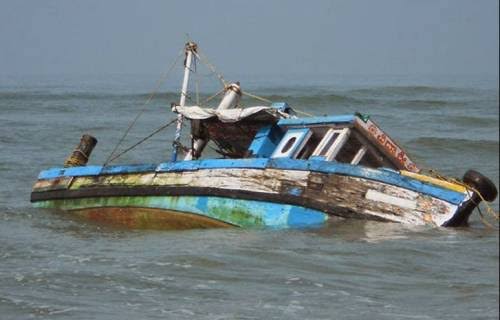
THE National Emergency Management Agency (NEMA) has confirmed that four people lost their lives while 41 others were rescued in the recent boat accident in Goronyo, Sokoto State.

In a statement issued on Friday by the agency’s Head of Press Unit, Manzo Ezekiel, NEMA disclosed that the death toll rose following the recovery of an additional body earlier in the day.

The agency said the recovered victim was laid to rest immediately after a funeral prayer was conducted in accordance with Islamic rites.

“As part of the rescue operations carried out on Thursday, 21st August 2025, the response team visited four villages – Takuske, Kwakwazu, Bari and Gamiha – where many of the passengers of the ill-fated boat were believed to have lived.

“These visits enabled officials to verify the number of persons still missing and to commiserate with bereaved families. It was during these visits that it was confirmed 16 persons had survived the mishap,” the statement read.

Following these developments, NEMA announced that the multi-agency search and rescue mission had now been formally concluded.

The operation was jointly executed by NEMA, the Sokoto State Emergency Management Agency (SEMA), the National Inland Waterways Authority (NIWA), the Goronyo Local Government Authority, and local community divers.

The Director-General of NEMA, Zubaida Umar, lauded the dedication of the rescue team and the collaborative efforts of all stakeholders, which, she said, ensured the success of the operation.

The tragic accident occurred on Sunday, August 17, 2025, near Kojiyo village in the Goronyo Dam area of the state.

Boat mishaps are frequent on Nigeria’s waterways, often caused by overcrowding and poorly maintained vessels, particularly during the rainy season when rivers and lakes overflow their banks.

In December 2024, the head of operations for NEMA in Kogi State, Justin Uwazuruonye, confirmed that 54 bodies were recovered from a boat accident involving about 200 traders in the state.

Uwazuruonye pointed out that the lack of a passenger manifest made it challenging to ascertain the exact number of people on board.

Similarly, in August 2024, at least 16 farmers lost their lives in Sokoto State after a wooden canoe conveying them across a river to their rice fields capsized.

Also on July 29, 2025, six young girls drowned in north-western Jigawa State when the boat transporting them home from farm work overturned midstream.

Just two days earlier, on July 27, another tragedy struck in central Niger State, where at least 13 people were killed in a separate boat accident.

Taribo West accuses NFF of failing football heroes

0

FORMER Super Eagles defender, Taribo West, has condemned the Nigeria Football Federation and the Lagos State Government for allegedly abandoning Nigerian ex-players, especially the family of late goalkeeper Peter Rufai.

Speaking during Rufai’s burial, in an interview video posted by News Central on Friday, August 22, the ex-Super Eagles star said the treatment of Nigerian football legends after their passing reflected a culture of neglect that had persisted for decades.

Recall that the news of Rufa’i death was confirmed in a post on Thursday, July 3, by the Nigeria Football Federation (NFF) via its official X handle.

He died after a prolonged illness.

Rufai, popularly known as Dodo Mayana, was part of the glorious 1994 Super Eagles team that won the Africa Cup of Nations (AFCON).

Rufai made 65 appearances for the national team and was part of the golden generation that lifted Nigeria’s second AFCON title in Tunisia in 1994.

He was also part of the team that represented the country at the 1994 and 1998 FIFA World Cup tournaments in the USA and France, respectively.

Addressing reporters during Rufai’s burial, Taribo said the institutions responsible for sports and welfare left Rufai’s relatives to struggle alone with burial costs.

“It’s disheartening that you have Lagos State, you have the Nigerian Football Association. They drop the bulk on the family. I felt in my spirit that there is nothing to put your life for. That’s why I say I have to shift back so that I will not implode. It’s grieving.

“My mother passed on. I never shed tears. My father passed on in my hands. I never shed tears. When Rufai passed on, I had goose pimples on my body. And every individual I’m speaking to, there were tears rolling down my cheeks. What kind of nation is this?” he said.

He described the situation as part of a long-standing pattern where former Nigerian footballers’s welfare were neglected.

He cited previous cases involving the families of Stephen Keshi, Rashidi Yekini, and Thompson Oliha.

“I will never advise even my son to put his feet for this country. Send me out! Do we have a Football Federation or do we have a Football Association in this Lagos State? That this hero, this soldier, this football evangelist, has to be treated this way in his family.

“Could you imagine that the family would be crying just to solicit in within our groups to ask for money? That is madness.
,”he added.

ICIR reports shortlisted for Sanlam Group Awards

0

TWO ICIR stories have been shortlisted for the 2024 Sanlam Group Awards for Excellence in Financial Journalism in the Business and Environment category.

One of the shortlisted stories was authored by former ICIR investigative reporter, Sinafi Omanga. It is titled, “Environmental crisis hits Benue communities amid Dangote Cement’s profit surge.

He also co-authored the second report with the former ICIR’s Head of Investigation, Gbenga Adanikin. The report is titled, NIGER COUP: With N3,000, smugglers in Nigeria’s Illela border enjoy free pass despite closure.

Both stories exposed how Dangote Cement’s profit boom worsened environmental crises in Benue communities, and how corruption among border officials in Nigeria and Niger paved the way for illicit trading on the border linking both nations.

The reports highlight corporate and government failures that deepen suffering in vulnerable communities and make public workers revel in sleaze. 

Omanga explained that the stories were driven by a commitment to hold both business owners and the government accountable for the impact of their actions on the environment and communities, which often carry the heaviest burden of poor accountability.

“The real danger lies in failing to tell these stories, no matter who is involved, whether top government officials or multinational companies.

“I am truly excited to be considered for this award and grateful to the organisers for creating a platform that celebrates good journalism across Africa.I also appreciate The ICIR for the editorial guidance and funding support that enabled me to tell these important stories” Omanga added.

The ICIR editor, Victoria Bamas, said, “It is always encouraging when stories The ICIR supported are shortlisted for awards. 

“For us, it is a double celebration: on one hand, the communities benefit from the impact of our work; on the other, the recognition affirms the hard work and commitment of our reporters and editors” Bamas said.

She emphasised that The ICIR remained committed to strengthening the capacity of both its in-house and external journalists to tell impactful stories that shape policies, resonate with communities, and reach people at the grassroots, driven by its mission to promote good governance through rigorous, objective reporting while upholding a tradition of journalistic excellence.

“Good journalism is resource consuming, hence why we call on the public to support us” she added.

In a statement released on August 14, Sanlam announced that since its establishment in 1974, the awards had recognised exceptional financial journalists across print, online, radio, and television who are based in Africa, work with African news organisations, and publish or broadcast their work on the continent.

“The work of the finalists represents the best financial journalism in Africa, reporting on the continent’s challenges and progress in business, trade and economics ESG in relation to business and the environment, and ESG in relation to business and social impact,” the statement read in part.

It explained that the Sanlam and Santam awards attracted 237 entries from 17 countries across the African continent, the most in the competition’s 50-year history.

Eighty-seven entries were from South Africa while 150 entries were submitted from other countries, including Egypt, Nigeria, Morocco, Kenya, Ghana, and Uganda.

“As we celebrate the fiftieth year of these awards, the independent panel of judges were impressed by the overall quality of the work that journalists across Africa are producing. This is most pleasing at a moment when there is greater international attention on Africa as global summits such as the G20 are set to take place on the continent for the first time,” Nixon Kariithi, a professor and chair of the independent judging panel, said.

Omanga, along with four other shortlisted journalists in the same category, has been invited to attend the award’s jubilee anniversary on Thursday, October 2, 2025, in Johannesburg, South Africa, where the winner will be unveiled.

The ICIR reports that Sanlam is the largest pan-African financial services group headquartered in South Africa, focused on emerging markets economies, covering 31 countries in Africa, Asia and the UK. The company is present in eight of the top 10 largest economies in Africa. 

Assaulted Anambra ‘corper’ recounts ordeal

0

THE National Youth Service Corps (NYSC) member, Jennifer Elohor, has narrated how suspected operatives of the Anambra State Vigilante Group broke into her residence, assaulted her, and forcefully abducted her along with her colleagues.

Speaking in an interview with media personality Aprokoking, Elohor recounted that the incident took place on July 13 at about 5 p.m. when the operatives started banging the door to the lodge where she and other corps members were residing.  

“At first, we thought it was our neighbours’ door because it’s a three-storey building with several flats. But the knock became louder and more aggressive, so I decided to check. Before I could reach the door, it was kicked open,” Elohor said.

The ICIR reported that videos that surfaced on Tuesday, August 19, showed armed men in plain clothes storming the corps members’ lodge in Oba community, Anambra State, where they were seen beating and harassing Elohor.

The State Government, through Governor Charles Soludo’s Special Adviser on Community Security, Ken Emeakayi, confirmed that the men seen in the video were members of Operation ‘Udo Ga-Achi,’ also known as the Agunechemba Vigilante Group. He condemned the assault.

Elohor in her latest statement explained that a masked man, armed with a gun and without any form of identification or uniform, stormed into their room, ransacked it, confiscated corps members phones and laptops, and the incident turned violent.

“At first, I thought it was an armed robber until he ordered all of us to come outside. I tried to explain that we were corps members and even suggested showing our NYSC identity cards. My colleagues also presented theirs, but the men ignored us.

“They pushed us downstairs, almost shoving me down the staircase. They kept asking what gave me the right, as a woman, to challenge them. It was when we got outside that we saw their vehicle and discovered they were from the Anambra Vigilante Group,” she said.

She added that when they asked to contact their lodge proprietor or NYSC officials to inform them of their whereabouts, the vigilante members grew even more violent.

“They beat me, tore my clothes, and even hit one of my colleagues with an iron rod for pleading on my behalf. They forced me into their vehicle, pressing my neck, slapping me, and threatening to smash our phones if we contacted anyone,” she said.

The ICIR reported that the Anambra State Government announced on Wednesday that the operatives responsible for the assault have been dismissed.

However, on Thursday, members of the Labour Party Caucus in the National Assembly dismissed the state government’s reported dismissal of the operatives as a mere afterthought, questioning why it took the administration several weeks to act when the incident allegedly occurred last month.

In a joint statement, the lawmakers condemned the incident as a “heinous, cruel, and criminal act that grossly violated the laws of the land”, urging the Anambra State Government to take swift action to safeguard the peace and security of residents and visitors by ensuring the “rogue agents” are held accountable.

“We can wager a bet that, but for public outcry over the matter, the Governor Chukwuma Soludo administration would have, as in several other incidents, simply swept the dastardly act under the carpet,” the statement read. 

The lawmakers noted that the impunity and lawlessness of the Agunechemba are well documented and must be curbed before it escalates any further.

“The recourse to jungle tactics, one of which led to the brazen assault on the Corp member, was inhuman and barbaric and is hereby condemned in its entirety.

“The Caucus as a responsible and law abiding forum do not support criminality, but is seriously amazed that vigilante services in Anambra State are beginning to take over the functions of the Economic and Financial Crimes Commission and the Police, such that they now have the effrontery to burst into female Corpers Lodge to brutalise and strip ladies naked, all under the guise of fighting crime.

Appeal Court reaffirms N1.07 billion judgment for Kogi ex-deputy governor, says ruling final

0

THE Court of Appeal has barred the Kogi State Government from taking its salary dispute with former Deputy Governor Simon Achuba to the Supreme Court.

The apex court declared that its decision remained final under the Nigerian Constitution.

According to a Premium Times report, a three-member panel of justices comprising Hamma Barka, Okon Abang, and Oyejoju Oyewumi, in a ruling on Tuesday, dismissed an application filed by the state Governor Usman Ododo and the state’s Attorney-General, Muizudeen Abdullahi, which sought to halt the execution of earlier judgments delivered in favour of Achuba.

The state government, represented by Adebayo Adedeji, a senior advocate, along with Precious Andrew, E.C. Onyekwere, and A. Ibe, faced opposition from Achuba’s counsel, Samuel Ogola.

Delivering the lead ruling, the judge, Abang, cited Section 243(4) of the Constitution, which, according to him, confers final authority on the Court of Appeal in labour and employment disputes.

“When the law says the decision of this court is final, there is nothing the applicants can do. It is as clear as daylight,” he ruled, describing the appeal as reckless, baseless, and an act of executive lawlessness.

Achuba, who served as deputy governor under the state’s immediate past governor Yahaya Bello, was controversially impeached in 2019 after a fallout with the former governor.

He subsequently dragged the state government before the National Industrial Court (NICN), demanding unpaid salaries, allowances, and entitlements.

In November 2020, the NICN ruled in his favour, awarding him N180 million in benefits, with an order that the sum be paid within 30 days or attract a 30 per cent monthly interest.

The state appealed, but on April 29, 2024, the Court of Appeal upheld Achuba’s claims, directing that he be paid salaries and statutory allocations listed in the 2017 and 2018 budgets, excluding security votes.

The matter escalated further in April 2025 when the Court of Appeal reassessed his entitlements, pegging them at over N1.07 billion, alongside an additional N2 million in costs.

The state government, however, rejected the figure. Its lawyer, O. Adegboyega, maintained that the NICN originally awarded only N180 million, which the state claimed to have settled.

“The state is committed to due process and the rule of law,” he argued, adding that “it is important to clarify how the figure jumped from N180 million to over N1 billion, since the trial court never awarded that sum.”

The state government further insisted that only the Supreme Court could resolve what it described as a “judicial inconsistency.”

In its latest ruling, the appellate court dismissed that position, stressing that its word on NICN-related disputes was final.

Abang cautioned that treating court orders with disregard undermined citizens’ confidence in the judiciary.

He warned that if the government disregarded court orders, citizens’ confidence in the judiciary would be severely undermined, potentially leading to anarchy instead of the rule of law.

The court sanctioned Adedeji, the lead counsel for the applicants, for failing to properly advise his clients.

Abang noted that as a senior lawyer, he had a professional duty to prevent the filing of frivolous appeals.

The court consequently ordered the senior lawyer to personally pay N3 million in costs to Achuba before his clients could pursue any further legal steps.

Fuel sells highest in Jigawa, Lagos, Sokoto – NBS

0

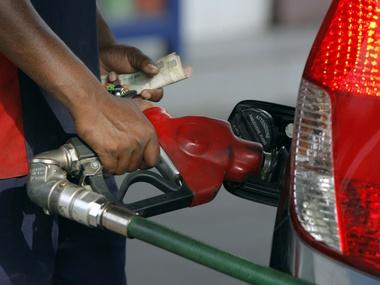
THE price of a litre of petrol, also known as fuel, was highest in Jigawa, Lagos and Sokoto states in July, according to the latest report by the National Bureau of Statistics (NBS).

The report, ‘Premium Motor Spirit (Petrol) Price Watch,’ released on Thursday, August 21, showed fuel price averaged N1,024.99/litre in July from N1,037.66 in June.

It sold the highest in Jigawa state at an average retail price of N1107.52 per litre in July.

In Lagos, it sold at N1100.29, despite the state warehousing most of the oil depots in the country, the major seaport and the Dangote Refinery.

Analysts believe a litre of fuel would have been cheaper in Lagos since logistics costs would have reduced; however, the NBS report proved the contrary.

In Sokoto state, far northwest of the country, fuel averaged N1100.00 per litre in the review month.

On the flip side, Zamfara, Yobe, and Kogi states had the lowest average retail prices for fuel per litre at N884.63, N950.60, and N986.67, respectively.

This demonstrates the continued volatility in fuel prices across the country, despite recent efforts to stabilise the downstream petroleum sector, NBS stated.

On a year-on-year basis, the average price of fuel per litre rose sharply from N770.54 in July 2024 to N1024.99 in July 2025, representing a N254.45 increase.

The report added that the North-West zone had the highest average retail price of N1035.85, while the North East zone had the lowest price of N1017.65.

The ICIR can report that the average price of a litre of fuel surged from N770.54 in July 2024 to N1024.99 in July 2025 despite the decline in the average price of crude in the international market from $85.15 per barrel in July 2024 to $71.04 per barrel in July 2025.

The lingering war between Ukraine and Russia and the unquenched tension in the Middle East have continued to cause a steep decline in crude oil prices in the International market.

This was expected to have reflected in a downward slope of the average price of fuel but the NBS report indicated otherwise.

In this report, The ICIR analysed that crude oil prices in the international market determine the up or down movement in the price of a litre of refined petroleum products, bearing in mind that Nigeria has liberalised its downstream oil sector.

Meanwhile, since President Bola Tinubu came into office on May 29, 2023, the price of a litre of fuel has risen from about N190 per litre to over N1000 per litre.

His removal of fuel subsidy spiked inflation pressure, caused the prices of all goods and services to skyrocket and has left Nigerians in an untold hardship.

ICFP offers fellowship for journalists, content creators passionate about SRHR

THE International Conference on Family Planning (ICFP) is offering fellowship opportunities for journalists, bloggers, influencers and content creators passionate about sexual and reproductive health and rights (SRHR).

According to the ICFP, selected applicants will receive travel and accommodation to Bogotá, Colombia, complimentary ICFP 2025 Delegate Memberships (including conference attendance) and access to exclusive media briefings, interviews and networking.

Applicants must have experience covering SRHR or related issues, and proficiency in English, French or Spanish to apply.

The ICFP 2025 conference will be held in Bogotá, Colombia, from November 1 to 6, 2025.

Application requirements include a completed application form, a description of how ICFP 2025 will strengthen applicant SRHR reporting and two samples of recent SRHR-related work.

The ICFP 2025 is expected to convene global leaders, policymakers, advocates, researchers, and community voices to discuss innovative strategies and solutions in family planning.

The fellowship also aims to strengthen global storytelling on SRHR by equipping fellows with tools, resources, and international exposure that can amplify their work long after the conference.

The deadline for the application is on Friday, 5 September 2025.

Interested applicants can apply here