Home Blog Page 2054

She was our shining star – CAS Abubakar mourns Tolulope Arotile

SADIQUE Abubakar, Nigeria’s Chief of Air Staff (CAS) on Wednesday paid tribute to late Tolulope Arotile, Nigeria’s first female combat helicopter pilot, who died in Kaduna on Tuesday in a road traffic accident.

Abubakar in a series of tweets described Arotile as a disciplined, intelligent and courageous officer whose loss is irreparable for the force.

The CAS submitted that the late 23-year-old officer was a shining star.

I was heartbroken when I received the sad news of the death of Flying Officer Tolulope Arotile yesterday in Kaduna,”his tweet read.

“Tolulope, who was winged in October 2019, as the first female NAF combat helicopter pilot, was one of our shining young stars,” he added.

According to the CAS, Arotile added value where she served as Squadron Pilot in Operation GAMA AIKI in Minna, Niger State, adding that she was eager to contribute to the fight against banditry and terrorism in the country.

I recall meeting her at the Minna Airport, while on operational visit, after one of such missions & seeing her eagerness to contribute towards the restoration of lasting peace to the affected areas. Her death is a huge loss to NAF family and indeed the entire Nation,” he said.

Arotile who was commissioned into the NAF in September 2017 as a member of Nigerian Defence Academy (NDA), died eight months after she was commissioned as Nigeria’s first female combat helicopter pilot.

The late young officer hailed from Kogi State.

Meanwhile, Yahaya Bello, Governor of Kogi State has shared his condolences over the death of Arotile.

Bello in his tribute signed by Onogwu Muhammed, his Chief Press Secretary, described Arotile’s death as a national tragedy, classifying her as a top notch military aviator who exuded professionalism and patriotism in service.

“We are devastated by the tragic death of this young promising lady who took bravery to the next level, demystified prejudicial stereotype and flew her parents, state and nation high in honour and professionalism.

“On behalf of the state, I commiserate with the family of late ‪Flying Officer Arotile‬ over this irreparable loss and I pray that the Almighty God grants her soul eternal rest, she will be sorely missed,” the statement read in part.

Women farmers helpless as COVID-19 deepens poverty in Nasarawa

By Vincent A. YUSUF


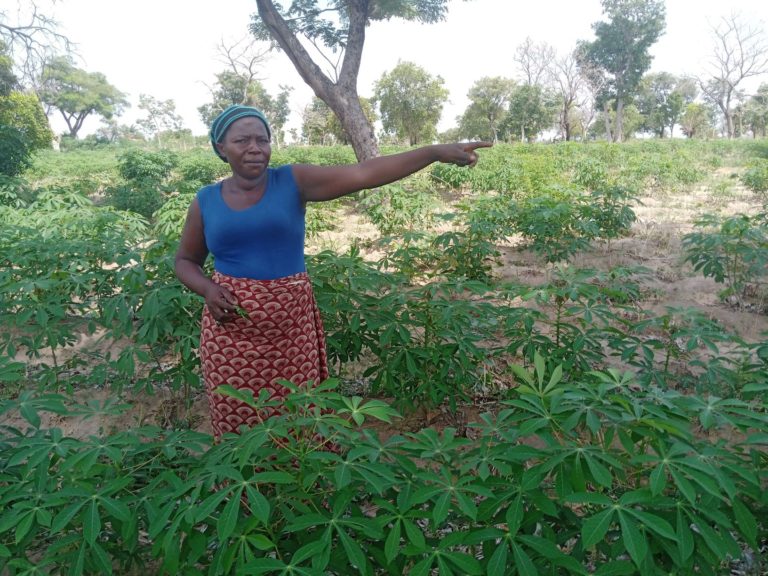
MRS Jumai Yohana, 52, stood in front of the camera in the middle of her melon farm at Ikposoge village in Obi LGA of Nasarawa state as she responded to this reporter’s questions in Hausa.

“My dream from childhood was to marry a farmer and I’m happy I did. Farming is in my blood, I was brought up in it,” she said while expressing her passion for farming.

The grandmother of two who has trained all her children in school with the income generated from the farm is now battling health challenges because she lost her crops and livestock worth millions of naira to a communal crisis.

Her mood changed as this reporter asked how she has fared as a farmer after the crisis. Her response tells the tale of how smallholder women farmers are not only marginalized in farm support services but neglected by the government, despite efforts to mainstream gender policy, which seeks to increase women and youth participation in agriculture.

“Please don’t remind me about those loses, I could start crying. It’s part of the issues responsible for my sickness. The rice, sorghum, yams, melon and many goats I lost were so huge,” she said staring at their destroyed apartments about 30 metres away from the farms.

Although Mrs Jumai has lost all her livestock and crops to the farmers-herders crisis a few years ago, she managed to start life again as a farmer, but the journey is more difficult because of the challenges of access to inputs especially in a period like this.

Jumai Yohana in her farm at Ikposoge, Obi LGA

She told this reporter that she struggles to buy certified seeds from the Nasarawa Agriculture Development Project (NADP), adding that lack of access to funds affects her ability to actively expand the farms.

“Sometimes we hear about government distribution of fertiliser, but if we go there, no one will give us. I have tried several times to also get a loan even after paying some money without any success. I’m not going to try again since one will not get it” she said.

COVID-19 is further worsening the situation: It has collapsed the market for melon she stored to make little more money to aid her farming activities and the challenges are enormous.

Like Jumai, many smallholder women farmers in other rural communities in Nasarawa State are in precarious footings as the measures taken to combat COVID-19 including restriction of movement and curfews continue to affect them adversely.

Despite the Central Bank of Nigeria (CBN) creation of N50 billion targeted credit facility for poorer households and SMEs and the provision of N1 trillion in loans to boost local manufacturing and production across critical sectors including agriculture, many of them said they did not benefit anything.

This reporter who went to some local government areas in the state also found women in dire situations because of the lockdown measures to control the spread of COVID-19 pandemic and the absence of the farm inputs support for the 2019/2020 wet season to enable them remain in agricultural production.

Their condition is further complicated by the shutdown of the rural economy due to closure of markets, restriction of movement across the state and the interstate lockdown, which grounds their small-scale agribusiness activities.

With access to certified seeds, fertilizer, mechanization and federal government palliatives becoming a major challenge, they expressed concern over likely poor harvest and how it might negatively affect their incomes since many of them are the breadwinners of their families.

Displaced, weakened by crisis

Like Mrs Jumai,  Mrs Suzan Godwin who coordinates Small Scale Women Farmers Organization in Nigeria (SWOFON) in Nasarawa State has a similar tale of sorrow where her 17, 000 yams and other crops in the farm were destroyed during crises, forcing her to move the family and farming activities to Andere at the outskirts of Lafia, along Doma-Lafia road.

The one-hectare land she currently cultivates in Andere is no longer fertile and needs a lot of fertiliser to support the groundnut and maize planted, but getting that input is a huge challenge for her and other women around.

“Since I joined SWOFON in 2012, we have never benefited from any assistance from the government. We were hoping something will happen this year when about 14,000 women across the state filled and submitted a form requesting government assistance in the area of fertiliser, improved seeds, a small machine like hand tillers. But the coming of this COVID-19 has taken the attention of government and they have forgotten that COVID-Hungry is worse” she said.

Suzan said she did not benefit from any of the Federal Government’s palliatives such as the food distribution to households and N50 billion to finance key sectors as well as the Conditional Cash Transfer, particularly, the additional one million households( from 2.6  million to 3.6 million ) ordered by the President Buhari to be included in the National Social Register.

“See, all these problems are because of lack of good seed, if not so, this groundnut would have germinated better than this and look at now, there is no fertiliser, this place [farm] is no more fertile.  If one is having all these supports from the government, at least one can expand the farm,” she said sadly while walking around the farm.

Her house in Tudun Adabu village today lays desolate as funds to rebuild the deserted house is now a huge challenge.

At Aridi Usman, a village located about 25 killometres from Lafia the Nasarawa State capital, Mrs Vines Adigizi, one of the many smallholder women farmers in the agrarian community is suffering the same fate.

The 37-year old widow, who is battling to meet the needs of her three children (all boys) and an aged mother, cultivates Cassava, yam, groundnut, rice, millet and beans.

Like the other women, Mrs Adigizi said she only heard of inputs supply by government and never benefited. She is not even aware of any palliative by the federal government targeting smallholder farmers like her.

“The major problem I face is lack of fertiliser, good seeds, absence of small farm machines like hand tillers that we women can even control and inadequate rainfall, that is why the groundnut and maize you see are looking somehow,” she stated while walking the reporter through her farm.

Now COVID-19 has made it even more difficult for her because the small grains trading business is down in the state as buyers no longer come due to restriction of movement.

Besides crop production, she has little investment in piggery, few broilers and one calf she raises to sell during the yuletide season to support her income.

‘Flood brought our lives to square one’

For Hanatu Umar, 45, mother of ten in Keana LGA, life has never been the same again since her rice farm was ravaged by flood last year. Before the flood disasters that changed her fortunes she used to harvest eight tonnes of rice. With that she comfortably pays her children school fees and that of the three orphans under her care.

This wet season she cultivated maize and melon and again, the farm is flooded leaving her in confusion.

“Seriously we don’t get any help from the government. Last year when the flood destroyed our farms, the government promised assistance. We went to workshops, held several meetings but eight months now, nothing has happened. At a point, we felt help was underway but nothing at the end. Currently, I must confess to you, we are suffering. We are running here and there trying to see where we can borrow money to go back to the farm.”

Since that flood disaster, she is struggling to repay the Anchor Borrowers’ loan she took to cultivate the rice, and despite the CBN three months moratorium, she said she was been told to pay with three bags of rice, which she bought from the market.

Also in Keana, I spoke to Hauwa Jibrin, 37, who has been cultivating sesame, soybeans and melon but the resources and input to expand are very difficult come by.

“We are just working for the grains merchants who are buying so cheap from us but we buy inputs at very high prices. We don’t have access to mechanization so the cost of labour is increasing by the day and if you add that to the cost of fertiliser, we have very little left to save.

What the women want

At the Galle area of Nasarawa-Eggon LGA,  Mrs Caroline Abimiku expressed the hope every smallholder farmer wants to see happen.

Mrs Caroline Abimiku in her yam farm

The retired 55-year-old farmer who cultivates yam and maize wants to see more aggressive support to particularly stallholder women farmers across the country especially in a period like this, adding that “all these palliatives they are talking about did not reach us.”

Mrs Abimiku also wants to see support in the areas of small farm equipment which the women can easily operate to reduce the cost of labour which she said was taken so much from them adding that “we don’t have the energy to do everything; we have to pay people to work for us.”

On access to land, she said: “Women find it very difficult to get access to land, a man has to stand in for you and when they see you’re getting something significant, they will take it back from you.” This is something she believes government can help in changing the perception.

We’ve committed resources to women in agric state govt

In Lafia, the Nasarawa State Commissioner of Agriculture and Water Resources, Professor Otaki Alanana told this reporter that the state government was “committed irrevocably to agriculture.”

“Both men and women are involved in agriculture but because of interest both the federal and the state governments have shown for women involved in agriculture, the federal government, as well as the state, has really committed a little of its resources to women in agriculture,” Professor Alanana said.

He stated that the state was working along with the Federal Government through several donor agencies’ programmes like the International Fund for Agricultural Development (IFAD) Value Chain Development Programme, which specifically helps women to produce and process cassava and rice.

The Commissioner also said the state government in collaboration with the Japan International Cooperation Agency (JICA) has provided support in the area of rice mills where women take their produce for milling in addition to the Smallholder Agricultural Empowerment Programme mainly for training women in horticulture for dry season production in Lafia.

According to him, the state government has also established relationship with the CBN to advance loan to women under the Rice Farmers Association of Nigeria (RIFAN) for rice production adding that they have sent the forms to all the ministries for those interested to apply but the condition was that such benefiting women must be in service to guarantee the loan.

For Palliative, the commissioner said that the state government has received palliative in terms of food items–rice, tins of tomatoes, livestock feeds from the federal government in terms of food items.

On inputs, he told this reporter that the state government procured and distributed fertiliser to each of the 13 local government areas on May 9 to be sold to the farmers directly at the price of N5, 000.

This report was made possible with support from the International Budget Partnership (IBP).

FACT-CHECK: Did WHO share viral message on ‘7 biggest brain-damaging habits’?

A  MESSAGE with the headline “7 biggest brain-damaging habits”, attributed to the World Health Organisation (WHO), has been trending on social media.

This message has gone viral on WhatsApp and other social media like Pinterest.

A variation of the message on other social platforms was however not attributed to WHO.

FACT-CHECK: Viral video on rice distribution shared by Dino Melaye was shot in 2019

CLAIM

That  the WHO shared nuggets on “7 biggest brain damaging habits”. The habits listed include; “missing breakfast”, “sleeping late”, “high sugar consumption”, “more sleeping specially at morning”, “eating meal while watching TV or computer”, “wearing cap/scarf or socks while sleeping” and “habit of blocking/stopping urine.”

The Viral Claim

Findings

A preliminary check showed that the claim is filled with typographical and grammatical errors.

It reads, (sic) “Don’t Just ReadForward to whom you careAs I care for U” with the word ‘you’ represented as an abbreviation “u” and spaces between some words omitted.

Therefore, it is unlikely that the WHO would issue a public information message in this pattern.

The claim was subjected to internet search and further findings revealed that a similar claim appeared on the internet in 2017.

It had similar content except for the quoted caption and graphics. While the claim under verification was attributed to the WHO, the latter was referenced to another organisation.

As part of the verification process, the WHO Nigeria office also debunked the claim that the message originated from its office.

Charity Warigon, Head of Communications, WHO Nigeria, told The ICIR  via a phone call that, “Certainly, it doesn’t sound WHO at all.”

She asked for the viral claim to be forwarded to her through the WhatsApp platform. This was done, and in her response, she labelled it as fake.

“This is FAKE,” Warigon stated.

VERDICT

Based on the above findings,  WHO did not send out the circulated message. Therefore, the attribution to WHO is FALSE.

Fahim Saleh, founder of Gokada, Lagos motorcycling startup murdered in US

FAHIM Saleh, Chief Executive Officer, CEO, of Gokada, a motorcycle-hailing company in Lagos, was found dead in his New York apartment as his body was dismembered, according to the New York Daily News.

The 33-year-old Bangladeshi -American tech entrepreneur was found dead in his $2.25 million Manhattan condo.

His arms and legs below the knees were removed, and body parts were put in plastic bags on the property.

The police found an electric saw near his headless body.

Since the ban on the operation of motorcycle taxis by the Lagos State Government in January, the company has been faced with massive layoffs and financial setbacks.

Officers of the New York Police Department, NYPD, made the discovery in a building on E. Houston St. at Suffolk St. on the Lower Eastside about 3:30 pm, after his sister visited his house on Tuesday because she had not seen her brother all day put a call across to 911.

However, NYPD spokesperson Carlos Nieves confirmed that though, his body was decapitated they were not removed from the scene.

“We have a torso, a head that’s been removed, arms, and legs. Everything is still on the scene. We don’t have a motive,” he said.

The report hinted that elevator surveillance camera might have captured the victim’s last moments, as it shows the victim stepping into the elevator followed by a second man, dressed in a suit, wearing gloves, a hat and a mask over his face.

Saleh got his first break after creating a prank-calling website he called PrankDial whose revenue was estimated at $2 million in 2012 before setting up a venture capital firm, Adventure Capital, which invests in startup companies in developing nations.

He described himself as a self-made entrepreneur from a young age who loved gadgets and video games in a series of his posts on Medium.

The website developer turned venture capitalist described by Daily Mail UK as the “Elon Musk of the developing world” will be remembered fondly for bringing tech companies into nations like Nigeria and Indonesia.

Nigeria’s first female combat helicopter pilot dies eight months after commissioning

THE Nigerian Air force (NAF) on Wednesday announced the death Tolulope Arotile, Nigeria’s first female combat helicopter pilot, who died in a road accident at the NAF Base Kaduna.

The NAF confirmed in a tributary tweet that the 23-year-old pioneer combat helicopter pilot died on Tuesday, as a result of head injuries sustained during a road traffic accident.

“It is with great sorrow that the Nigerian Air Force (NAF) regretfully announces the unfortunate demise of Flying Officer Tolulope Arotile, who died today, 14 July 2020, as a result of head injuries sustained from a road traffic accident at NAF Base Kaduna,” the statement read.

Arotile who was commissioned into the NAF in September 2017 as a member of Nigerian Defence Academy (NDA), died eight months after she was commissioned as Nigeria’s first female combat helicopter pilot.

She graduated as the best flight student from her set in 2017.

According to NAF, the late combat pilot helicopter pilot contributed significantly to the war against banditry in North Central and other criminal elements by flying several combat missions under Operation GAMA AIKI in Minna, Niger State.

Arotile had just ended a programme at the Starlite International Training Academy, South Africa.

Police lose seven officers to motor accident, 11 others injured

THE Police Headquarters on Tuesday confirmed that seven of its officers deployed to fight bandits in Katsina State died in a ghastly motor accident on Sunday, July 12.

According to a statement released by the police on Twitter, 11 officers also sustained serious injuries in the accident.

The police officers were attached to the Special Forces Unit of the Nigeria Police Force.

In the tweeted statement, the police disclosed that the  incident, which involved an 18-seater Toyota Hummer Bus conveying 18 personnel of the Unit, occurred at Jaji town along Kaduna-Zaria road.

It revealed that the deceased were part of an additional deployment made recently by the Force to boost the ongoing fight against bandits in Birnin-Gwari, Katsina State.

Mohammad Adamu, the Inspector General of Police (IGP), who described the incident as a huge loss to the Force, noted that it was one of the unfortunate sacrifices, officers often encounter in the line of duty.

He described the deceased as “Heroes of Peace”.

Adamu in the statement further stated that a team of Police Medical Personnel has been dispatched to Kaduna State where 11 officers that survived the accident are receiving medical attention.

Three of the deceased officers have been buried according to Islamic rites while the bodies of the other four officers have been deposited in a Morgue, the police said.

Meanwhile, the IGP has directed the Police Accounts and Budget Department to ensure the immediate payment of the burial expenses, benefits and other entitlements to the families of the deceased officers.

Reps commence investigation into alleged resignation of 356 soldiers over ‘loss of interest’ in war against terrorism

THE Nigerian House of Representatives has adopted a motion to investigate the alleged resignation of 365 soldiers from the Nigerian Army.

More than  37,500 persons have been killed since insurgency started in 2009 in the Nigerian North East while an estimated 2.5 people have been displaced, according to Global Conflict Tracker.

Premium Times reported that the motion to investigate the alleged resignation of the 365 soldiers  followed a unanimous adoption of a motion of Matters of Urgent Public Importance moved by Mohammed Monguno, the Chief Whip of the House and member representing Monguno/Marte/Nganzai Federal Constituency in Borno State,  during the plenary on Tuesday.

Highlighting issues that have ravaged the Nigerian Army,  Monguno said a Lance Corporal identified as Martin Idakpeni in a viral video had criticized Tukur Buratai, the Chief of Army Staff, over attacks and killings of Nigerians and soldiers fighting the insurgency.

Munguno said on various occasions, Nigerian soldiers have disobeyed orders from superior officers in protest of poor welfare arrangements and alleged embezzlement of allowances by their superiors.

He added that there had been cases of mutiny resulting in sporadic shooting and attempted lynching of senior officers by junior officers.

The lawmaker also cited the case of Olusegun Adeniyi, a Commander of Operation Lafiya Dole, who was removed for exposing lack of good military equipment.

“Recently, Major-General Olusegun Adeniyi, commander of operation Lahya Dole, Nigeria‘s Counter-Terrorism headquarters, was removed for exposing inferior military wares and poor equipment of troops while briefing the chief of army staff from combat zone after successfully repelling an attack from Boko Haram insurgents,” Munguno said.

“Concerned that not too long ago, the General Officer Commanding 7 division of the Nigeria Army in Maimalari, Major General Victor Ezegwu, escaped being lynched by rampaging soldiers for leaving them with neither food nor water while fighting in the northeastern part of the country for two days.”

He further stated that over 300 soldiers serving in the insurgency ridden North East left the service of the Nigerian Army over the loss of interest.

“On July 3, 2020, 356 soldiers which are a battalion, serving in the North East and other theatres of operations wrote to the Chief of Army Staff asking for voluntary retirement from the force and citing loss of interest as reasons for their retirement,” he said.

He criticized the Chief of Army Staff that rather than addressing the issue, the resignation was approved which could result in a security threat.

Femi Gbajabiamila, the Speaker of the Federal Assembly directed the House Committee on Army to investigate the allegations and report to the House in one week.

In a document with reference number AHQ DOAA/G1/300/92, signed by Brig-Gen T.E. Gagariga, on behalf of the Chief of Army Staff, the approval of the resignation of the 365 soldiers was approved with notice to discharge the officers listed.

While 24 of them resigned to take traditional titles, the others cited ‘loss of interest’ as reasons for resignation.

In the document, the listed soldiers were asked to be released on terminal leave with effect from December 2, 2020.

“The soldiers are to proceed on terminal leave while WEF 3 Dec 2020, while their disengagement takes effect from 3 Jan 2021in accordance with the administrative Policy and procedures No 27 paragraphs 3 & 4,” the document read.

However, the Nigerian Army had debunked a publication by Premium Times on the resignation of the soldiers over the loss of interest with the argument that it was an attempt to discredit the Nigerian Army.

“Malicious intent to discredit the efforts of the Nigerian Army as exemplified by the contradiction inherent in the publications below,” the Nigerian Army wrote on Twitter.

COVID-19: Watch what your child eats, avoid trans fats

Childhood obesity is a growing global threat that seems to be worsening with the COVID-19 pandemic lockdown. With children at home and indulging in foods like noodles, fries, cakes and pizza among others, there is growing concern about, how much trans-unsaturated fatty acids also called trans-fatty acids (TFA) or trans fat, they are ingesting in these foods and what it may mean for their health. – Adie Vanessa Offiong writes.

WHEN COVID-19 came knocking and schools were shut down, an expectant mother of one, Carol Yahaya was worried about how she would cope with home-schooling her daughter. She also worried about the domestic chores that would multiply, for her.

“I was happy that I would spend more time with her but did not at all fancy the home-schooling part of the lockdown,” she said.

Carol also did not foresee that “the likelihood of my six-year-old becoming obese during the pandemic, would be a source of concern for me.”

Yahaya who now operates her fabric selling business from home, due to the pandemic, said she did not immediately take note of how her daughter’s dietary needs would change as a result of the lockdown.

On school days, her family followed a planned timetable which included healthy meals that her daughter also took to school for lunch.

But being at home these last four months has meant eating more, including junk food.

Carol said, “Before the lockdown, we used two cartons of noodles monthly. Now, I am buying three. She also wants treats of pastry, pizza, or chicken and fries,” which Carol only realised she was now doing almost weekly while responding to questions for this story.

“My children can watch television for Africa,” said Taiwo Ayoola, adding that, “the watching is accompanied by food.”

He said, “My five-year-old, Junior, worries me the most. He has gone up one dress size since the lockdown and I believe it is largely due to his indulgence in noodles and chicken and chips.”

Junior told his father that eating popcorn while watching television, should go hand in hand.

Ayoola is worried that, Junior who could conveniently pass for a six and maybe even a seven-year-old, is already overweight and may be bordering on being obese.

With social distancing being a fundamental rule to preventing the contraction and spread of the coronavirus, it has been impossible for children to indulge in outdoor activities as they usually would.

While Carol is worried about her six-year-old becoming obese, she is oblivious of the harm she is exposing her unborn infant to, with her new COVID-19 dietary style which now prominently feature pizza, chicken, fries and other such foods.

These foods which Carol, her daughter, and Ayoola’s children are consuming more of contain trans fat.

Temitope Alale, a member of the Institute for Dietetics in Nigeria, explained that it is a type of unsaturated fatty acids or trans fatty acids that occurs naturally in meat and dairy milk, and is healthy when appropriately consumed.

However, there is a second type of trans fat which is formed artificially/industrially when manufacturers turn liquid oils into a solid fat through a process called hydrogenation. Common parlance used to describe such oils in Nigeria is that ‘the oil is sleeping.’

Alale, a member of the Association of Nigerian Dieticians emphasised that “Trans fat is considered the worst fat you can eat, they are dangerous and everywhere. They are the most commonly used fats in processed and ready-made foods,” as are sold by fast-food chains and contained in products like noodles because they are a cheaper alternative.

The dietician notes that “Since they are popular, avoiding them is not easy.”

A study by the European Journal of Clinical Nutrition has linked a high trans-fat diet with overweight children and also said, “Mothers who consume a diet high in trans fats may be doubling the risk that their infants will have high levels of body fat.”

The research shows that the detrimental health effects of trans fats may be passed from mothers like Carol, to their infants, “with data showing that mothers consuming over 4.5g of trans- fats per day were over five times more likely to have a body fat greater than 30 per cent, and their infants were over two times more likely to have body fat over 24 per cent.”

“Trans fats are attractive for the food industry due to their extended shelf life and flavour stability and have displaced natural solid fats and liquid oils in many areas of food processing,” as are found in the foods Ayoola and Carol’s children are indulging in, during the COVID-19 lockdown.

The foods that Carol and Ayoola mentioned, as well as white bread, are, the main sources of industrial TFA were fast food, according to a cohort study on Dietary Intake of Trans Fatty Acids in Children Aged 4–5, published by the National Center for Biotechnology Information journal.

Although it was a study conducted on children in Spain, its findings are not far from trends in Nigeria.

A National Bureau of Statistics Survey on Nigeria reveals that Bayelsa State has the highest under-five child overweight prevalence rate of 2.9 per cent, while Nasarawa and Taraba states each have 2.4 per cent.

Abuja-based Public Health specialist Kasarachi Omitiran explained that the consumption of trans fat is linked to the early onset of obesity, obesity has also been implicated in a lot of non-communicable diseases (NCDs). She said these include such as hypertension, cardiovascular diseases, diabetes, “which have been shown to reduce the quality of life of individuals.

“Due to its chronic nature and our poor health-seeking behaviour, accessing health care for NCDs can pose a problem in Low and Middle-Income Countries (LMICs) where a greater proportion of individuals live below the poverty line and have to pay out of pocket to access health care.”

Speaking on the kind of threat it poses to children, she said it causes increased weight gain and obesity. “These are the immediate outcomes and could have a lot of consequences on the different dimensions of childhood development,” she said.

The National Agency for Food and Drugs Administration and Control in Section 8 of its  draft 2019 Fats & Oils regulations on ‘Labelling of Trans Fats,’ prohibits, “The manufacturing and importation of any oils and fats, including emulsions with fat as the continuous phase, either alone or as part of processed foods, which are intended for human consumption or assumed to be intended for human consumption, in the retail trade, catering businesses, restaurants, institutions, bakeries, etc, of which the content of trans fat exceeds 2 grams per 100 grams of oil or fat.”

In its efforts to sensitise the public about how detrimental trans fat can be to the health, the Global Health Advocacy Incubator (GHAI) in collaboration with NAFDAC, developed public service announcements sensitisation tools.

The food and drug regulator is also working with the Network for HealthEquity & Development (NHED) to get the percentage trans fat in some selected foods and has also been involved in the training of journalists organised by the Corporate Accountability and Public Participation Africa (CAPPA) on reporting trans fat.

According to the WHO, 41 million children under the age of five were overweight or obese in 2016, and over 340 million children and adolescents aged 5-19 were overweight or obese in 2016.

The health agency said industrially produced TFA has no known health benefits. WHO also estimates that 500, 000 people die from trans fat-related cardiovascular diseases, yearly and is calling for the total elimination of TFA use all over the world.

In its plan to eliminate industrially-produced trans-fatty acids from the global food supply, the UN health agency urges governments to use the REPLACE action package to eliminate industrially-produced trans-fatty acids from the food supply.”

According to the package, eliminating TFA is one of the priority targets identified in the draft 13th General Programme of Work, which will guide the work of the World Health Organization (WHO) in 2019-2023.

The WHO Director-General, Dr. Tedros Adhanom Ghebreyesus, said, “Implementing the six strategic actions in the REPLACE package will help achieve the elimination of trans fat, and represent a major victory in the global fight against cardiovascular disease.”

Alale, therefore, cautions expectant mothers like Carol stating that they should be worried about their consumption of trans fat because, they are associated with heart disease and after digestion, they become part of the cellular membrane.

On the ways to check the situation, Omitiran said there is a need for intensified health education, awareness creation interventions, to inform the populace on the harmful effects of TFAs.

She said there should also be ways of identifying and making public foods that contain TFAs, ensuring food policies that ensure transparency in labelling foods.

She suggested that there be public health campaigns to encourage a deliberate increase in fruits and vegetable intake, decreased intake of commercially baked products, deep-fried fast foods, packaged snack foods, etc.

Children should be encouraged to participate in safe physical indoor activities in order to help keep fit and encourage the metabolism of TFA in the body, lowering their levels.

Peace Emezue, a certified personal trainer of the American Council on Exercise, encourages parents to creatively engage their children in fun foods and activities, especially those in the age where they easily get bored.

Emezue’s journey to staying trans-fat-free and avoiding unhealthy eating started seven years ago, weighing 137 kilograms, when she took ill and her doctor said, ‘You will go to bed one day and not wake up. Your heart is over laboured.’

“I was such a sweet tooth and would indulge in all sorts of junk food until it became a matter of life and death. I was fortunate to get the wake-up call at the time I did, but I know many have not and want to advise the public to take this very seriously.

“You can do without trans fat if you make it a lifestyle to eat healthily,” she said.

For Emezue, the onus is on parents to ensure their children are not overweight or obese. They must be willing and committed to seeing that their children stay healthy.

Parents should also consider their children’s diet by placing them on portion-controlled meals and making meals fun and interesting. This is so that, the children will be willing to eat. “If they eat well it will be easy to physically engage them in fitness activities. A healthy diet and physical activity will help keep them safe and avoid obesity while they await school to open.”

She suggests that parents who can afford it can explore online videos of fitness trainers with exercises and workout sessions that families can do together.

Emezue also advises that “parents should get their involved in age-appropriate house chores like cutting the lawn, doing the dishes, cleaning the house creating spaces for them to run around, where possible.”

“Another idea is organising a dance party which could very easily be organised within the home and include every family member. The goal is to exercise the body whether or not the child is a good dancer. Just get them moving and in a way that they don’t get bored easily.”

Like Emezue, Omitiran stresses that it is necessary for Carol, Ayoola, and other parents with children currently on lockdown, “to pay attention and be deliberate about what we feed our children. It’s important to ensure they eat the right foods in the right proportions and also have adequate physical exercise.”

Alale pointed out that the likes of Carol and Ayoola can limit their children’s intake of trans fat.

Parents should read food labels and avoid foods with partially hydrogenated oil while using healthy cooking fats in moderation. She said parents should encourage their children to eat more whole foods like fruits, vegetables, whole grain, skimmed milk, beans, nuts, fish, lean meat and poultry.

Alale also advises that the consumption of processed foods such as cakes, cookies, meat pies, biscuits and burgers should be cut down, and fried foods be avoided.


COVID-19 threatens $6.2b investment gap in Africa’s education ― Save the Children

AS countries across the world continue to grapple with the effect of COVID-19 pandemic, the Save the Children warns that the pandemic could cause an additional gap of at least 6.2 billion dollars in investments in education in Sub-Saharan region over the next 18 months.

The group, in a statement signed by Mercy Gichuhi, its Nigerian Country Director and made available to The ICIR stated that the deep budget cuts to education combined with rising poverty caused by the COVID-19 pandemic could force millions of children out of school forever, noting that girls are most likely going to be much affected than their male counterparts.

“Before the outbreak, 258 million children and adolescents were already out of school, a Vulnerability Index report  shows that in 12 countries, nine of which are in Africa, children are at extremely high risk of not returning to school after the lockdowns lift,” Gichuhi said.

Save the Children, however, called on governments and donors to respond to this global education emergency by urgently investing in education as schools begin to reopen after months of lockdown.

It also stated that the problem of African countries, particularly Nigeria that is already having over 10 million out of school children has been compounded by the coronavirus pandemic, adding that children are most likely going to be recruited into labour, abuse, violence etc.

“Even before the COVID-19 crisis, Nigeria is estimated to have over 10 million out of school children, one of the highest rates in the world. The impact of school closures extends beyond disruption to education – they also carry other risks to children,” she said.

“Children who are out of school are at greater risk of being recruited into labor, abuse, violence and exploitation, and for girls, they are more likely to never return to school when lessons re-commence.”

Gichuhi added that as pressures mount on low-income families, children may need to work to bolster family incomes, while girls would face a disproportionately larger burden for caring for family members who contract the virus and taking care of younger children.

“Therefore, there is a tendency that the situation could add millions more into the existing caseload of out of school children in Nigeria.”

On his part, Eric Hazard, Save the Children’s Pan African Advocacy and Campaign Director commended African governments for the works done in ensuring children can continue their education, saying “we all cannot allow the pandemic to tamper the future of the children.”

“Save the Children commends all the work governments have done so far to ensure children can continue their education in these uncertain times. Many African countries have come up with innovative ways to continue children’s education including interactive radios, TV and distance learning programmes, but more than half of these activities were solely online,” Hazard said.

“If we allow this education crisis to unfold, the impact on children’s futures will be long lasting. The promise the world has made to ensure all children have access to a quality education by 2030, will be set back by years.”

Governments, Hazard noted need to help schools who are preparing to re-open, to ensure that children can return safely and make up for lost learning time.

“We have to protect a whole generation from losing out on their education. We must take action now.”

Save the Children, however, called for increased funding of education, saying $35 billion should be made available by the World Bank to salvage the situation.


Court remands Living Faith Deaconess who brutalised 14-year old girl with hot knife


JUSTICE Bashir Yusuf Shittu of the Kaduna Magistrate Court has asked that Yemi Awolola, a deaconess with the Living Faith Church popularly known as Winner’s Chapel who was on Saturday arrested for allegedly brutalising a 14-year-old girl in her custody be remanded at Kaduna State Correctional Service.

Awolola on Tuesday pleaded guilty to torturing Princess with hot knife and other device when arraigned before the Court.

The ICIR had reported how Awolola, a staff of Kaduna office of the Nigeria National Petroleum Corporation (NNPC) and her children tortured 14-year-old Princess Micheal, who she had taken from an Internally Displaced Persons (IDPs) camp with the promise to send her to school.

On Tuesday, Awolola and two of her children who are alleged to be complicit in the suit were arraigned before Justice Bashir Yusuf Shittu of the Kaduna Magistrate Court.

After the charges were read out to the defendants, the mother, Awolola pleaded guilty to the charges.

However, Justice Shittu said he ‘lacked jurisdiction’ to convict the defendants on the allegations as levied against them by the Kaduna State Government.

He granted bail of N700,000 to Awolola’s two children but denied bail to the deaconess.

Shittu ordered that Awolola be remanded at the custody of the Kaduna State Correctional Service pending the further hearing of the matter.

The Judge adjourned the case until August 27 for further hearing.

Kaduna State Human Services and Social Development (KDHSSD) had revealed how the woman and her children used hot knife to burn Princess’ body while also using a lighter to burn her genital and inserting same into her body.

Following this abuse, the girl was taken to a hospital in Barnawa, Kaduna for medical treatment.

Living with Awolola’s family, Princess had faced numerous physical abuses by the family including making her sleep in the restroom.

“For the 15 months of Princess’s stay with Mrs. Yemi, she has been consistently abused and battered. She is made to sleep in the restroom & oftentimes is forced to drink pepper which Mrs. Yemi rubs on Princess’s body,” the KDHSSD wrote.

The Kaduna State Government had assured that the woman would be charged with Child labour and Violence against Children.

In a tweet response, the Group Managing Director of the Nigerian National Petroleum Corporation (NNPC), Mele Kyari assured the public that necessary action would be taken on the woman said to be a staff of the agency.

“NNPC will surely follow through and take necessary action. We look forward to be availed with the outcome of the investigations,” Kyari responded.