Home Blog Page 2053

African governments may face lawsuits over maternal deaths during COVID-19 – Rights groups

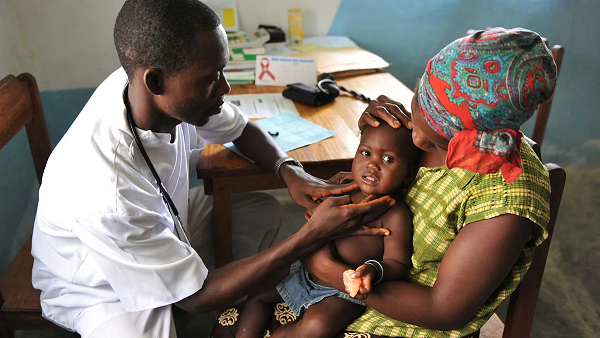
WOMEN in at least 45 countries were subjected to traumatic childbirth incidents during the COVID-19 pandemic in violation of the recommendations of the World Health Organisation, WHO and national laws.

OpenDemocracy, a global media organisation in the UK, revealed this in a study after compiling a dataset of over 100 women across various countries who gave birth in unsanitary and unsafe places while walking to the hospital.

Documenting the experiences of women across five continents namely Europe, Oceania, North/South America and Africa, the group says it’s finding may prompt human rights lawyers to hold their governments to account.

Women’s Link Worldwide and 12 partners in Kenya have taken the initiative as they sued the Kenyan Government for forced COVID-19 restrictions which led to maternal deaths and injuries, contravening the African Union’s Maputo Protocol and its national laws.

Nelly Weraga, a lawyer with Women’s Link Worldwide said if government’s COVID-19 measures failed to guarantee women’s rights they could be sued.

“You can be sure, cases are going to be filed,” she said

According to the study, six countries in Africa were identified where women died or resorted to unsafe home births while the COVID-19 transport restrictions were in place, preventing them from accessing medical care.

In Kenya, Nigeria and Uganda, women died after failing to access medical care due to transport restrictions or because health workers refused to treat them.

It also emphasised that transport restrictions stopped women from access to medical care in Ethiopia, Sierra Leone and Zimbabwe.

Health experts predict that thousands of women in poorer countries will die from COVID-19 restrictions and the pandemic’s impacts on health systems which might slow the progress rate on meeting the United Nations, UN, development goals.

In Uganda, the study stated that at least three women died because of transport restrictions that prevented them from reaching the hospital in time.

Health centres in some parts of the country, due to fewer resources and Personal Protective Equipment (PPE) shortages, turned away pregnant women because health workers were afraid of catching coronavirus.

WHO global guideline stipulates that pregnant women “have the right to quality care before, during and after childbirth”.

It also states that women should have a companion of their choice during delivery and receive respectful treatment and clear communication from maternity staff, appropriate pain relief, and support to hold their baby skin-to-skin and to breastfeed, even if they are COVID-19 positive

Jesca Sabiiti, Uganda’s maternal and child health commissioner said the pandemic is “likely to delay” the attainment of UN development goals to dramatically reduce the number of maternal deaths.

She said that her country’s transport restrictions had exemptions for people in medical emergencies “but this was not well understood by both the population and the police who were arresting people.”

In May, experts warned in The Lancet, a Science Journal, that up to 56,700 more maternal deaths are likely to occur in poorer countries over a six-month period due to COVID-19 restrictions and disruptions to health services.

Melissa Upretti, a human rights lawyer and member of a UN working group on discrimination against women described openDemocracy’s findings “shocking and disturbing”.

“Discrimination is from a legal standpoint. We do have a very strong case to make… that governments are violating their own laws and policies,” she said.
Speaker Gbajabiamila compares rape cases in Nigeria to pandemic

FEMI Gbajabiamila, Speaker of the House of Representatives on Wednesday likened incidents of rape and Sexual Based Violence (SBV) in the country to the Coronavirus Disease (COVID-19) pandemic,  saying rape deserves equal attention as the disease.

The Speaker demanded an offensive attack against the scourge, stressing that rape incidents and associated crime were becoming ‘mind-boggling.’

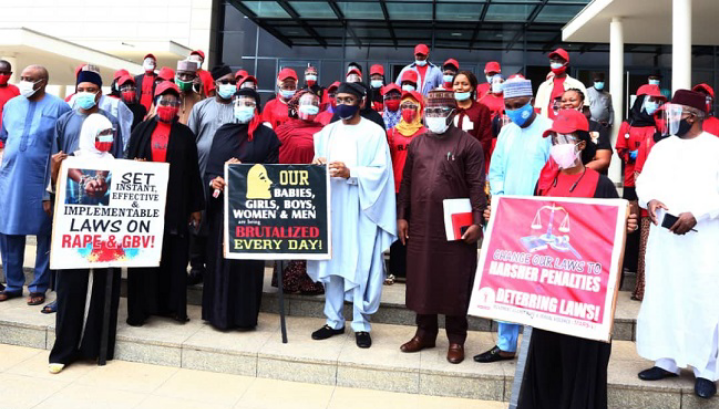
“The statistics are very alarming…you hear figures in terms of rape and gender-based violence that are mind-boggling…I consider the issue of rape as a pandemic. In my estimation, it’s a pandemic,” Gbajabiamila reacted during his meeting with the Movement Against Rape and Sexual Violence (MARS-V) led by Aisha Ummi el-Rufai, Wife of the Kaduna State Governor.

He told the delegation who visited him at the National Assembly that though 95 per cent of rape victims are women, the menace deserves deliberate and collective action.

“The issue of rape should be treated the way Corona is treated. How do we treat a pandemic? There has to be a frontal onslaught,” he said stressing the role of the media, religious leaders and policymakers to increase on awareness creation against the criminal act.

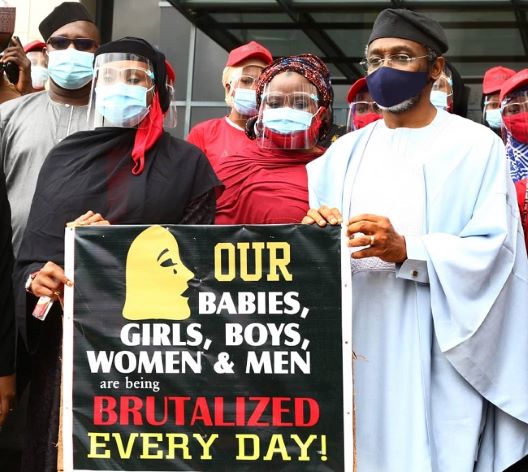
Speaker, House of Representatives, Rep. Femi Gbajabiamila with the Wife of the Kaduna State Governor, Aisha Ummi El-Rufai who led the Movement Against Rape & Sexual Violence ( MARS-V) group on a courtesy visit to the Speaker over rising rape cases in the Country. Photo Source: NASS

He said rape issues should be at the front burner emphasising on the whole lots of works to be done from diverse perspectives.

The lawmaker, who admitted on the weak regulatory framework enacted to curtail the incidents described rape happenings as ‘sickening’, thus deserve stiffer punishments to prevent abusers from committing the act.

“In a pandemic, you look for a cure. No sane man would have sexual intercourse with a 3-month old baby. The idea alone is sickening,” Gbajabiamila said.

In her remarks, el-Rufai analysed how rape victims were often killed after being abused, even at religious houses.

She said the situation was becoming worrisome, hence the visit to the national assembly to seek legislative support. While rolling out figures, el-Rufai said within five months there were 717 reported rape cases in the country and 7,170 incidents of rape that were unreported.

“Our women are raped to death and butchered even in churches and mosques where God is worshipped,” she said clamouring for proper law and more stringent punishment to prosecute those found guilty of rape offences.

The Violence Against Persons (Prohibition) Act was enacted in 2015 to check the scourge of rape in the country but several reports have shown the ineffectiveness of the law, thus demanded more severe punishment.

Though, the VAPP Act recommends life imprisonment for people found guilty of rape, a maximum of 14 years imprisonment was listed for an accused who is less than 14 years of age.

In other cases, those found liable could be sentenced to 12 years maximum jail term without an option of fine.

Based on Section 2 of the VAPP Act, the court is empowered to award the right compensation to the victim as it deems necessary.

A recent report commissioned by The ICIR also revealed how Bauchi State, for instance, was considering to adopt the Sharia Law to deter rape cases in the state.

Reports have also shown how the Police allegedly frustrate rape cases in the country – a situation the Amnesty International described as woeful, blaming the Federal Government for the inadequacies.

Despite concerns about VAPP,  only 23 States are yet to domesticate  the Act.

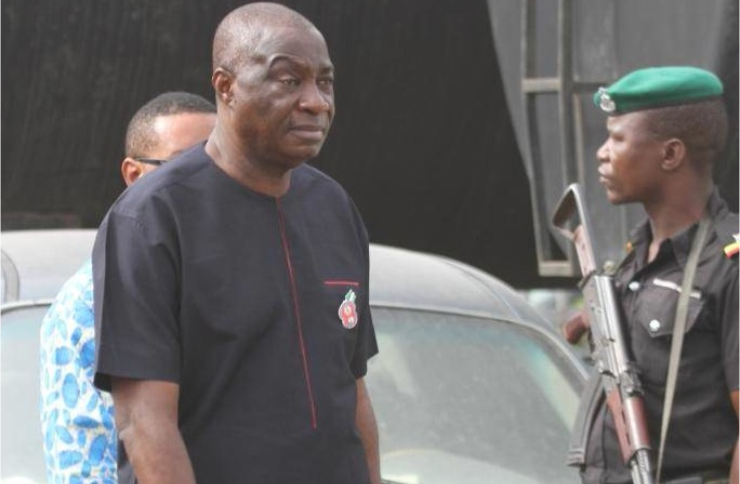
NIMASA Fraud: Agaba bags seven years in jail

A FEDERAL High Court sitting in Ikoyi, Lagos State has sentenced former executive director of the Nigerian Maritime Administration and Safety Agency (NIMASA), Ezekiel Bala Agaba to seven years imprisonment over N1.7 billion fraud.

Agaba was found guilty of seven charges levied against him by the Economic Financial Crimes Commission (EFCC), according to a statement signed by the EFCC spokesperson, Dele Oyewale.

EFCC wrote that the Commission prosecuted Agaba following a 2015 intelligence report of fraud in NIMASA and subsequent investigations that unearthed several suspicious transactions to the tune of N1,699,808,666.60, traced to him.

The charges bordered on criminal breach of trust and embezzlement of the fund through offshore accounts contrary to Section 15(2) of the Money Laundering Prohibition Act, 2011 as amended and punishable under Section 15(3) of the same Act.

Agaba through his counsel pleaded not guilty to the charges as charged by the EFCC.

However, the prosecution counsel, Rotimi Oyedepo, in the course of the trial, argued that funds released by the Presidency through the Office of the National Security Adviser, for the International Ship and Port Facility Security, ISPS code activities in 2014, of which Agaba was its committee Chairman, was diverted by him through three companies.

EFCC listed the companies as Seabulk Offshore Operator Ltd, Ace Prothesis Ltd, Southern Offshore Limited, Extreme Vertex Nigeria Ltd and Aroward Consulting Ltd.

“These companies were basically used to receive the funds and in most cases transfer the funds as directed by the defendant to various companies and individuals either for the purchase of United States Dollars or landed property or stock, “Oyedepo told the court.

Oyedepo invited 12 witnesses and tendered several documentary evidence, which was admitted by the court as exhibits.

Delivering judgement on Wednesday, Justice Buba held that the prosecution proved its case against beyond every reasonable doubt and sentenced the defendant to seven years imprisonment on each count, which is to run concurrently.

N10m fine against erring banks, other implications of CBN’s new GSI policy

THE Central Bank of Nigeria (CBN) on Monday released new operational guidelines on Global Standing Instruction (GSI), a new policy aimed at enhancing a loan repayment culture, which applies to all financial institutions in the country.

The new policy which will in effect reduce non-performing loans in the Nigerian banking system is to be implemented by banks across the country from August 1.

As its main objective, the GSI policy guarantees creditor banks recovery of past due obligations (loans) from a defaulting borrower through a direct set-off from deposits/investments held in the borrower’s qualifying bank accounts with participating financial institutions.

For loan defaulting customers, this means that a creditor bank can now access their other bank accounts connected through Bank Verification Number (BVN) and claim payment.

However, the policy permits creditor banks to recover only principal and accrued interest of the loans, excluding any penal charges.

In executing the GSI policy, every borrower must effect the GSI mandate and ensure that terms are understood.

It also requires borrowers to link qualifying accounts to their BVN and in a case where a borrower defaults on this requirement, their BVN is to be placed on a watchlist.

For creditor banks, they have a duty to educate borrowers on the GSI policy as well as enshrine it in loan applications.

Implications/penalties of the GSI policy

The CBN in its guidelines also drew out a number of violations and applicable sanctions for creditor banks and Participating Financial Institutions (PFI).

According to the new policy, where a creditor bank activates a GSI mandate in error, it is liable to pay a fine of N500,000.00 per incident.

It also states that if a creditor bank includes penal charge in the GSI Trigger Amount, if successful, the erring bank shall refund the full penal charge amount to the borrower with interest.

The bank shall also pay a fine of N100,000 or equivalent of the penal charge amount.

Where a PFI fails to grant the GSI permission to debit an eligible account, the policy demands that the erring PFI pays a flat fine of N100,000 regardless of the GSI Trigger Amount.

Additionally, the erring PFI shall pay a fine equivalent of the balance in the account shielded from the GSI’s Debit Request.

The policy also empowers a customer to seek the service of an arbitrator should in case there’s a wrongful activation of GSI on their accounts.

If the arbitrator rules against the bank in favour of the customer, the bank is to pay a fine of N10 million or 10 per cent of the disputed sum, whichever is greater.

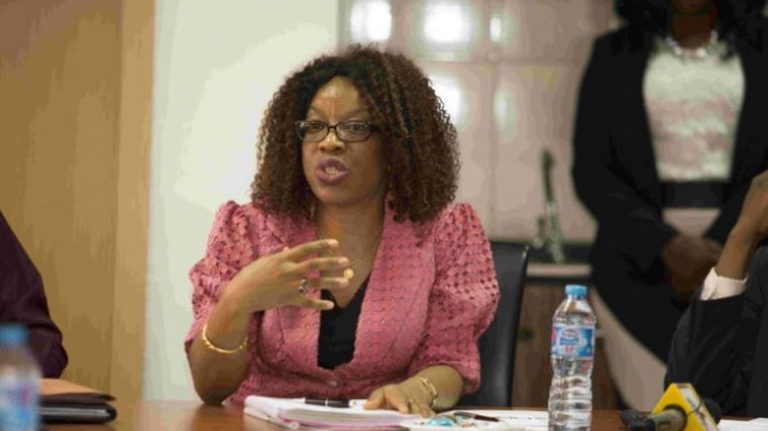
Reps report indicts Marilyn Amobi, outgoing NBET boss of financial misconducts, procurement breach

A report by the House of Representatives Committee on Power has indicted Marilyn Amobi, the outgoing Managing Director of Nigerian Bulk Electricity Trading Company (NBET) of financial misconduct and procurement breaches

The report titled, “Review of Petitions received by the House Committee on Power in January 2020,” highlighted the various infractions committed by the outgoing NBET boss and recommendations by the Committee.

Magaji Aliyu, Chairman of the Committee, in his submission to the Speaker of the H0use of Representatives, Femi Gbajabiamila, said  copies of the report have been sent to every member of NBET’s Board of Directors.

He disclosed that the focus of the investigation was on NBET projects carried out between 2018 and 2019, based on allegations in the petitions received by the committee.

Amobi was appointed substantive Managing Director of NBET in July 2016 and has been enmeshed in various corruption scandals in the past few years.

The report noted that she was invited by the Chairman Senate Committee on Power, over a foreign trip to Washington DC for five days to participate in meeting on investments in the power sector between October 14 to 19, 2019.

She was reimbursed  to the tune of N3.9 million and also collected $600 per day for nine days which totalled $5,400.

The monies were claimed for the trip as cost of the business return ticket to Washington DC and payment of per diem which was initiated in a memo by one Nene Oiza Isa.

However, the investigations by the House Committee revealed that Amobi proceeded on a trip to Washington DC on 10, October 2019 and departed for London on 13, October 2019, based on travel ticket details issued by Travel Gallery Limited via email before she returned to Nigeria on 18, October 2019.

Despite, failing to complete her official stay in the US, she collected an excess of $3,000 and also overpaid herself on a flight ticket to the tune of N1.7 million but the invoice document with invoice number 004770 obtained from her travel agent showed that her total expenses was N2.2 million.

The report revealed that in August 2019, Amobi authorised the approval for payment of N1.7 million as monthly allowances to  four Department of Security Services (DSS) officers and nine police officers as routine payment without the approval of NBET’s board of directors.

The House Committee also denounced the payment memo approved for the police officers which was initiated by one Itohan Ehiede, on 19, August 2019 as well as the monthly payment of N100,000 to a unit Commander, Achir Orkuma Shagari,  who was not part of the immediate security team at NBET’s premises.

It noted that the monthly payment of allowances for the security personnel violates the provisions of the approved NBET Human Resources policy that stipulates that, “inward seconded remain an employee of the donor organisation and remains subject to their terms and conditions”.

Under Amobi’s watch, NBET spent N100.5 million between October and September 2019 on the purchase of Toyota Fortuner for N30 million, Toyota Camry at N29.9 million and three Toyota Corolla at a unit rate N13.5 million each which amounts to N40.6 million, the report revealed.

The Committee stated the action breached the Ministerial Tenders Board, (MTB) which is under the purview of the Federal Executive Council (FEC) approving threshold for the procurement of goods in the excess of N100 million breaching the Bureau of Public Procurement (BPP).

Amobi was also indicted for usurping FEC’s authority by approving N30 million under the Parastatals Tenders Board (PTB) and concealing it from the MTB to bypass FEC’s approval in procuring the vehicles.

It also noted that the user department’s request and report of the maintenance challenges of existing vehicles was not attached.

In December 2019, the report noted that Amobi had approved the procurement of Information Technology, IT, related items at N93 million from different vendors for its office use but some of the items were already included in its N650 million spending in 2018 when NBET staff moved to a two floors office space.

The lawmakers report also indicted Amobi for spending N112 million in engaging lawyers to institute libel against media houses when most of the issues were related to her person and not the electricity firm, NBET between October and December 2019 without the approval of the Attorney General of the Federation.

Cited in the report, specifically, was Orchid Chambers which was contracted to review NBET’s contract templates at the sum of N15 million, but there was no evidence of a copy of the existing template or refined copies attached to a particular contract document.

Amobi engaged the services of “Messrs Dikko and Mahmud to defend NBET in a lawsuit instituted by an aggrieved staff but wrote two letters dated 18 April and 23, May 2019, to the Attorney General of the Federation on the same case with a different amount of N12 million and N15 million respectively,” a section of the report reads.

In February 2019, she was alleged to have paid at least N2 billion to two power generating companies and made controversial payments to law firms and other consultants in disregard for the Public Service Financial Regulations and extant laws.

Nigeria’s main anti-graft agencies, Economic and Financial Crimes Commission (EFCC) and Independent and Corrupt Practices Commission (ICPC) including the auditor-general had found Amobi culpable of maladministration.

Sale Mamman, the Minister for Power, in December 2019 had suspended Amobi in a bid to reshuffle the Federal Ministry of Power and its sister agencies but she was eventually reinstated by President Muhammadu Buhari.

In June, the Federal Government officially announced her tenure as the Managing Director of NBET won’t be renewed before temporarily replacing her with Nnaemeka Eweluka, the company’s General Counsel and Secretary.

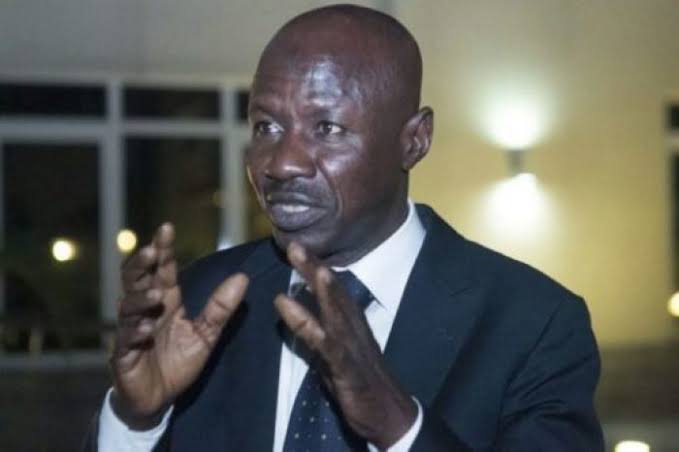
IGP declines Magu’s bail request, says presidential panel behind his detention

MOHAMMED Adamu, the Inspector General of Police (IGP) has declined a bail request by Ibrahim Magu, suspended chairman of Economic and Financial Crimes Commission (EFCC), who was arrested on July 6 on allegations of corruption.

Magu who has been facing the special investigation panel headed by Justice Ayo Salami, former President of Court of Appeal has been in detention for nine days.

His arrest and detention followed corruption allegations levelled against him by Abubakar Malami, Attorney General of the Federation (AGF) and Minister of Justice in  a memo to President Mohammadu Buhari.

He had through Tosin Ojaomo, his lawyer, written to the Inspector General of Police, requesting for bail.

But in a response to the letter, the IGP explained that Magu was not being detained by the police but by the panel investigating the activities of the EFCC and therefore could not grant him bail.

“Your letter 00C/TOL/89A/07/2020 of 10th July, 2020 on the above underlined subject refers.

“The Inspector General of Police directs that your attention be drawn to the fact that the Nigeria Police Force is not investigating C.P. Ibrahim Magu (your client) and he is accordingly, not being detained by the police but by the presidential panel that is investigating the activities of the Economic and Financial Crimes Commission (EFCC),” the IGP’s letter read.

“The Inspector General of Police therefore advises that you consider re-directing your request to the Chairman of the presidential panel for appropriate attention.”

The letter, dated July 14, 2020 was addressed to Magu’s lawyer with reference number: CB:7000/IGP.SEC/ABJ/VOL.489/171.

It was signed by DCP Owohunwa, Principal Staff Officer for the Inspector General of Police.

Magu had in a letter written by Ojaomo, with the reference number 00C/TOL/89A/07/2020, requested for bail and release from the detention facility of the police where he has been kept since he was picked up.

The embattled former EFCC chief requested that he be granted bail on self recognizance, assuring that he would provide a surety that would guarantee his attendance whenever called upon.


How NAF pilot Tolulope Arotile died in rash car accident

THE Nigerian Air Force says Tolulope Arotile, Nigeria’s first female combat helicopter pilot who died on Tuesday in Kaduna was knocked down by her former classmate while reversing a car.

Ibikunle Daramola,  Director of Public Relations and Information for the Nigerian Air Force revealed in a statement on Wednesday that the ex-classmate, whose identity is yet to be released, was reportedly reversing the car when it hit Arotile and caused her to hit her head on the tarmac.

“Flying Officer Arotile died on July 14, 2020 at the age of 24, when she was inadvertently hit by the reversing vehicle of an excited former Air Force Secondary School classmate while trying to greet her,” the NAF spokesperson said.

She died moments later while receiving treatment at the hospital.

Meanwhile, prominent Nigerians have paid tributes to the late pilot.

The presidency in a statement issued on Wednesday by Garba Shehu, Presidential Spokesperson described Arotile’s service and stay on earth as having impacted greatly on the nation, adding that her efforts to ensure peace and security in the country would forever be remembered.

“President Muhammadu Buhari received with deep pain the passing of Flying Officer, Tolulope Arotile, condoling with the family on loss of such a promising officer, whose short stay on earth impacted greatly on the nation, especially in peace and security,”  Shehu said in the statement.

“The President salutes Arotile’s bravery in the field to protect the country from onslaught of bandits and terrorists, assuring that her memory will be indelible, and her efforts remembered.”

Femi Gbajabiamila, Speaker of the House of Representatives, also expressed shock over the passing of the young officer.

In a tributary tweet shared on his Twitter page, the Speaker extended his condolences to the family of the deceased, adding that the nation has lost a great talent.

I received with great shock the death of our country’s first female combat pilot, Tolulope Arotile, I saw her months ago display her talent to the admiration of many of us at a @NigAirForce event. Indeed we have lost a great talent! My condolences to the Arotile family and N.A.F,” Gbajabiamila’s post read.

Yahaya Bello, Governor of Kogi State has shared his condolences over the death of Arotile.

Bello in his tribute signed by Onogwu Muhammed, his Chief Press Secretary, described Arotile’s death as a national tragedy, classifying her as a top notch military aviator who exuded professionalism and patriotism in service.

“We are devastated by the tragic death of this young promising lady who took bravery to the next level, demystified prejudicial stereotype and flew her parents, state and nation high in honour and professionalism,” the statement read in part.

According to NAF, the late combat pilot helicopter pilot contributed significantly to the war against banditry in North Central and other criminal elements by flying several combat missions under Operation GAMA AIKI in Minna, Niger State.

The late young officer hailed from Kogi State.


Magu’s ‘Pastor’ declines comment on Dubai property

EMMANUEL Omale, General Overseer of Divine Hand of God Prophetic Ministries International, Abuja, who was named in the money laundering investigation against Ibrahim Magu, the suspended acting Chairman of the Economic and Financial Crimes Commission (EFCC) has refused to comment on the allegation.

The Abuja based-cleric in a telephone conversation with The ICIR refused to speak on the allegation of buying a property in Dubai worth N573million on behalf of Magu.

“I cannot say anything on the allegation,” Omale told The ICIR.

The cleric further asked this reporter to speak with his lawyer on the allegation but declined to release his phone number when asked.

“I cannot give you my lawyer’s contact, go and find it out yourself, “ Omale responded.

It would be recalled that the  Newsa Agency of Nigeria (NAN) had on Saturday published a story citing a report issued by a Presidential panel set up to investigate the EFCC between 2015 and 2020.

The report which had been submitted to President Muhammadu Buhari accused Magu of being unable to account for the interest generated from cash recoveries of over N500 billion.

In the report, Magu was accused of buying a property in Dubai through the Omale.

Meanwhile, Gordy Uche, the pastor’s lawyer, has threatened to file a suit against the NAN for writing a report that he helped Magu, acquire a property in Dubai, the United Arab Emirates (UAE).

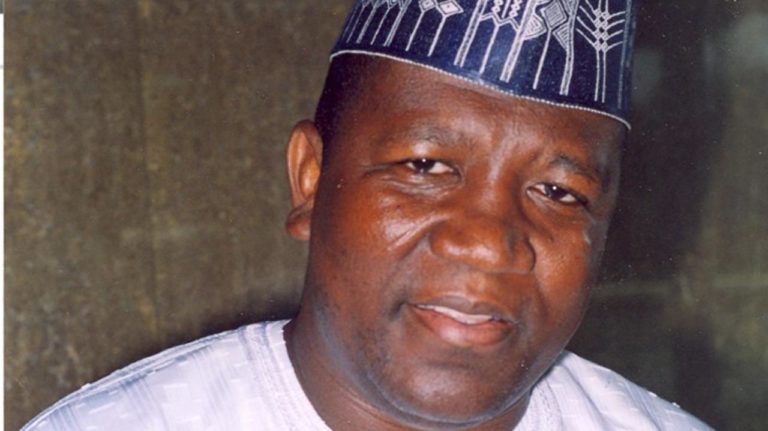
FAAN: Former Zamfara Governor, Yari violates airport COVID-19 guideline, says he is a VIP

THE Federal Airports Authority of Nigeria (FAAN) has condemned the former Governor of Zamfara State, Abdul-Aziz Yari for refusing to obey airport COVID-19 guidelines on grounds that he is a Very Important Person (VIP).

The Airport authority made this known via a series of tweets on its official Twitter handle on Wednesday.

According to FAAN, Yari ‘blatantly violated’ public health procedures on travel at the Malam Aminu Kano International Airport, Kano on Saturday July11, 2020.

“He refused to adhere to the protocols and procedures put in place by the Federal Government through the Presidential Task Force (PTF) on COVID19 by forcefully pushing away an officer of the Environment Department when he insisted that his luggage must be disinfected,” FAAN wrote.

FAAN added that while he refused to allow his luggage to be disinfected, he said the officer should have known that he is a VIP.

The Airport authority noted that the former governor’s action was ‘irresponsible’ as it endangered the lives of the public most especially other airport users.

“This irresponsible act endangers all other airport users, it is unacceptable, and as such it has been duly escalated,” the tweet read.

FAAN further said this should serve as a caution to ‘VIPS’ and other airport users to comply with the Presidential Task Force directive on COVID-19.

“FAAN hereby cautions all airport users, especially our esteemed VIPs, to please respect the Presidential directive by observing the Public Health travel protocols put in place to protect all air travellers against infection and the spread of the COVID-19 pandemic,” the FAAN further stated.

Earlier in 2017, Yari had said God sends strange diseases with no cure to torment the people for turning their back on Him.

The former governor made this comment while addressing questions from State House Correspondents at the Presidential Villa Abuja after a private meeting with President Muhammdu Buhari on Tuesday 4, April.

He said the outbreak of Type C Cerebrospinal Meningitis in the country was a direct punishment from God to the people of Nigeria for their various sinful acts.

“People have turned away from God and he has promised that ‘if you do anyhow, you see anyhow’ that is just the cause of this outbreak as far as I am concerned.

“There is no way fornication will be so rampant and God will not send a disease that cannot be cured,” Yari had said.

Boko Haram: 40 soldiers allegedly killed in 10 days along Maiduguri- Damboa Highway 

NOT less than 40 soldiers were reportedly killed during two separate attacks that occurred between the Army and the Boko Haram insurgents in Kumala village along Maiduguri – Damboa Highway, Borno State, The ICIR learnt on Wednesday. 

The first incident allegedly took place on June 27, when a team of soldiers escorting a convoy of travellers were attacked by the insurgents, after handling over the passengers to another military detachment at an exchange point in Kumala village, near Bulabulin along the Damboa highway to Maiduguri.

12 soldiers were said to have died during the June 27 attack.  A similar report put the casualty figure of the military to at least nine soldiers and two Civilian Joint Task Force (CJTF). It claimed 20 insurgents were killed during the incident.

On Tuesday, July 7, 10 days after the first attack, a team of soldiers from the 25 Task Force Battalion and Sector 2 Special Forces on patrol were allegedly ambushed at the same Kumala village by Boko Haram fighters.

The incident also led to the death of 28 soldiers.

These imply that 40 soldiers, according to our sources reportedly lost their lives in the separate attacks within a space of 10 days.

A military source who witnessed the first attack said Kumala village has been a central location where soldiers do passengers transfer after escorting civilians arriving from Maiduguri, and those from Damboa to proceed on their respective destinations.

“We escorted travellers going to Damboa from Maiduguri while the soldiers in Damboa escorted travellers coming to Maiduguri,” the source stated.

“Usually, we would stop at the exchange point in Kumala village near Bulabulin, where we would hand over the travellers from Maiduguri to the soldiers from Damboa and then receive from them the travellers from Damboa to bring them to Maiduguri.”

The source further explained that as the convoy of travellers headed back to Maiduguri escorted by soldiers, military surveillance saw three Hilux vehicles approaching the team and were shooting.

He said the second military detachment which was the returning party had believed it was their counterparts from Damboa.

The shootings, he noted, were similar to the military pattern as it was a tradition for the armies to shoot while driving through dangerous terrain.

This, he said was to discourage any unforeseen attacks, stressing that the soldiers never realised the attackers were insurgent until they got closer.

His words: “We thought it was the soldiers from Damboa with whom we exchanged travellers earlier. So, we called them to find out if it was them and if there was a problem but they said it was not them and that they were still on their way to Damboa.”

“Still, the soldiers thought the approaching vehicles were soldiers because it is a military strategy to shoot while driving through a dangerous path to deter any potential attack. By the time they realised it was Boko Haram, it was already late because they were already within range.”

He added that aside from Boko Haram fighters on the patrol van, there were other members of the insurgent who were hidden in a nearby bush.

The source said the soldiers were overpowered, stressing that few of them managed to escape to Dalwa village, a settlement 30 kilometres from Maiduguri but after reinforcement had arrived, the survivors realised 12 soldiers had gone missing.

Nine corpses of the soldiers were initially discovered, and three others found a day after the headcounts.

“We found nine corpses initially and thought the remaining three soldiers had escaped and would return later,” a soldier who was part of the search team told our reporter. “We returned the following day after the soldiers did not return and we found their corpses in the bush.”

Meanwhile, for almost five years, the Maiduguri-Damboa highway has been one of the most dangerous roads in the northeast region.

Several reports have shown how travellers are usually escorted along the highway by the military because of the Boko Haram ambush.

The ICIR contacted the Spokesperson for the Nigerian Army, Sagir Musa to confirm the incident but he has not responded as of the time of filing this report

Damboa is 89 kilometres south to Maiduguri. It is one of the locations mostly hit by the Boko Haram. In 2014, a BBC report detailed how half of Damboa including the market was reportedly burnt down by the insurgents.

On June 8, the Jihadists reportedly attacked a military base in Auno village and killed six soldiers.

In March, the insurgents again attacked Damboa community where they duelled with the army for over an hour.

Though the military has recorded some wins against the insurgents in the unending battle, they have also recorded significant casualties.

In July last year, a colonel and five soldiers were also killed through an ambush in Jakana, close to Maiduguri, the Borno State Capital.

The ICIR reported the Mass Atrocities Report released by the Global Rights in 2019 which detailed some of the killings in the country with reference to Borno State which had the highest casualty figure.