THE African Development Bank (AFDB) has placed a 21-month settlement ban on two Chinese and Danish Companies, Sieyuan Electric and Burmeister & Wain over fraudulent practices.
The development bank made this known through two separate statements signed by Amba Mpoke-Bigg of its Communication and External Relations Department on June 8 and 16 respectively.
The AfDB revealed that an investigation by its Integrity and Anti-Corruption office revealed that in 2015, Sieyuan Electric and and its subsidiary, Jiangsu Rugao had falsified documents to illegally outscore other bidders in the bank’s financed project in Rwanda.
Sieyuan Electric and subsidiary again falsified documents in response to an enquiry by the Anti-Corruption wing of AfDB.
In the settlement agreement, the China based company and its subsidiary are excluded from AfDB’s project for 12 and 21 months respectively.
The bank also announced a 21 months debarment of Danish based Burmeister & Wain Scandinavian Contractor for colluding with some members of the Mauritian administration to gain undue advantage over competitors in the bank’s Saint Louis power plant in Mauritius.
“Evidence supports a finding that Burmeister & Wain, on a balance of probabilities, financially rewarded members of the Mauritian administration and others, through the intermediary of third parties, for providing access to confidential tender-related information,” AfDB wrote.
It noted that the information allowed the company gain access to technical specifications of the tenders as required for the project.
“Burmeister & Wain further concealed the arrangements it had entered into with the third parties, in breach of the rules governing the tenders,” the statement further read.
Following the debarment agreement between AfDB and the contractors, a cross- debarment shall be made which would bound the two companies from bidding for projects from any other developmental bank.
The two companies have been cross debarred by the Asian Development Bank, the European Bank for Reconstruction and Development, the Inter-American Development Bank and the World Bank Group.
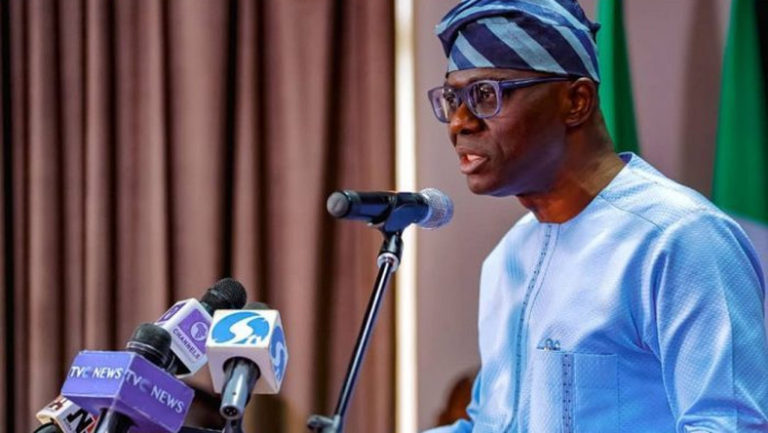
BABAJIDE Sanwo-Olu, Governor of Lagos State, has suspended the reopening of mosques, churches, event centres and gatherings in the state till further notice.
The governor announced the suspension during a press briefing held at the Government House on Tuesday.
“I am here to inform you that we will not be proceeding with the reopening of places of worship as stated earlier for 19th and 21st. We are suspending it till further notice” the governor said.
Sanwoolu added that the state government’s review “indicates that attempt of opening we needed that attempt to reopen.”
“We wish to state that all social events, event centres, social clubs all still remain closed. And for emphasis, all of them still remain closed, they have not been opened,” he said.
According to Gboyega Akosile, the Chief Press Secretary to the governor, the suspension of the opening of the places of worship and social gatherings was as a result of advice from health officials
The governor had in a press briefing on June announced its intention to reopen religious centres on June 21.
According to him, mosques were to reopen from June 19 while churches were to begin services from June 21 and were to open only on Friday and Sunday.
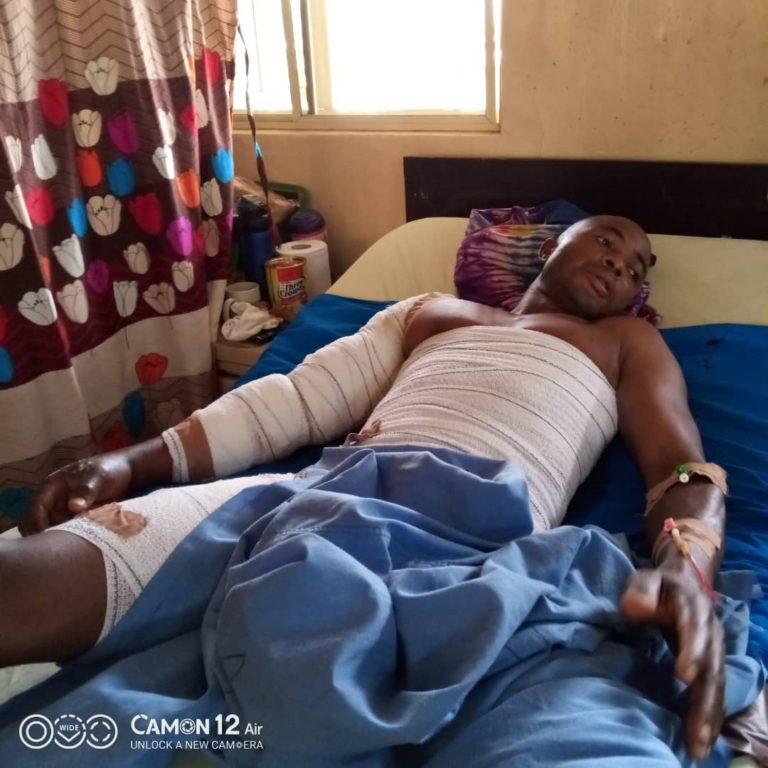
A PAINTER, Adeyemi Olarewaju, who was almost electrocuted by transformer near a branch of the United Bank for Africa in Ado Ekiti has received a cash gift of N1 million to cover his hospital bill six months after the accident.
Olranwaju told The ICIR that the management of UBA had just left his house leaving him with a cheque of N1m to go for onward treatment.
“I will be going back to the hospital tomorrow,” he said.
Speaking to The ICIR, he said his problem started on December 18, 2019, when he left home at the request of a former manager of the bank to help repaint the perimeter fence of the bank in Ado Ekiti.
But little did he know that he would have an accident in the bank that will leave a permanent scar on his body.
His story which attracted an outcry on Twitter was posted on social media by @YemieFASH on Monday, 15th June. The Twitter account holder called attention to the plight of the man whom he said has been abandoned by the UBA.
This reporter later reached out to the victim who confirmed the story. He said trouble started last year when his friend asked him to come and paint the perimeter fence of the bank. And as he was trying to paint an area of the fence that is close to a transformer, he felt a huge shock ran through his body and was nearly electrocuted. He said it took the intervention of people around to rescue him before he was immediately rushed to the Ekiti State Teaching Hospital (EKSTUH) for treatment.
“I didn’t know what happened but I know that it was while I was trying to cover an area very close to a transformer owned by the bank that I got electrocuted. It took the efforts of one of the security men at the bank to pull me out of the transformer’s house and was immediately rushed to teaching hospital.”
The incident which has led to the amputation of one of his hands and left him paralysed kept him for nearly three months at EKSTUH. He was later discharged because he could no longer afford the cost of his treatment. He said the bank left him to pay after it had paid for his initial hospital bills.
“My friend, the manager who invited me for the job, gave me N50,000 for my hospital bill. It was about three days later that I learned my friend has been retired as the manager of the bank. He called me to introduce me to the new manager and explained my predicament to her. The new manager gave me money in tranches of about N150,000 for another hospital bill and an additional N20,000 which I learnt was contributed by staff of the bank to celebrate the festive season with my family.
“It was later, I was told by the hospital that I will need additional money to undergo a surgery. I have exhausted all my savings and have since been reaching out to the bank for help. The manager outrightly turned down an appeal by my father for additional funds, saying the bank has done all it could do for me financially and it has nothing else to offer,” he stated.
However, he told this reporter that the management of UBA had just left his house leaving him with a cheque of N1m to go for onward treatment.
He expressed gratitude to those who shared his story which later got the attention of the UBA management.
NIGERIAN musical star, Azeez Fashola popularly known as Naira Marley, on Tuesday slammed the management of Executive Jet Services Limited over a comment by the Chief Executive Officer of the company, Sam Iwuajoku, that the musician and his crew were a bunch of “useless” people.
Marley who came under criticism after he performed in a concert Friday night in Abuja in violation of the lockdown guidelines, said he and his followers would no longer patronise the airline for calling them “useless” people.
“Do you know that over 20,000 Marlians travel with executive jet a month. We won’t be using your useless airline again for calling us useless,” Marley wrote on Twitter.
He also thanked God for saving their lives, claiming that the aircraft nearly crash.
“Thank God we didn’t crash on that flight sha because we nearly did. BTW We didn’t book the flight ourselves.”
Marley further called out the CEO of the airline saying “Mr executive jet calling us useless is not only defamation but oppressive. The statement by the CEO is arrogant and silly. #NobodyIsUseless”
His comment came after the management of the airline apologised to the Federal Government for conveying the artiste and his team to Abuja amidst the interstate travel ban due to the COVID-19 pandemic.
In the letter, the company’s CEO said he thought it was Babatunde Fashola, the Minister of Works and Housing that was the passenger not knowing that “it was a bunch of useless people”.
The Federal Government had on Tuesday announced an indefinite suspension of the airline for the role it played in the concert controversy while the Federal Capital Territory Administration (FCTA) sealed off Jabi Lake Mall, where the concert held for two weeks.
But in his first reaction to the incident, Naira Marley who tweeted that the management of the airline requested their names while onboard clarified that his brother’s name is Moshood Babatunde Fashola while his own name is Azeez Adeshina Fashola.
Meanwhile, Musa Bello, FCT Minister in a statement on Tuesday said that the FCT Administration which has a responsibility to protect the lives of the citizenry is determined to prosecute all those involved in orchestrating the concert to the full extent of the law.
He said the administration views the actions of the organisers and attendees at this concert as reckless, wicked, insensitive, and utter disrespect and disregard both for the law and the wellbeing and welfare of fellow citizens.
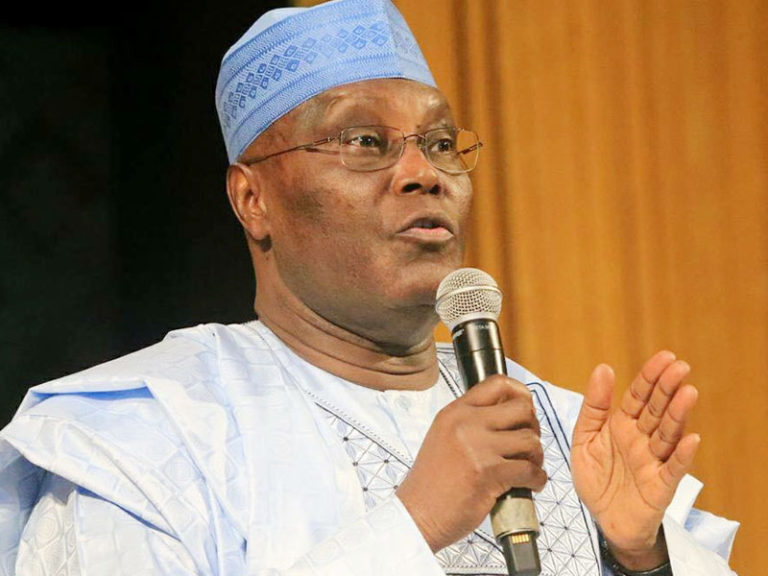
ATIKU Abubakar, former Vice President and one-time presidential candidate of the People’s Democratic Party (PDP) has expressed concern over the rising debt of Nigeria.
“We are not just robbing Peter to pay Paul, but robbing our children to pay for our greed,” Abubakar said of a recent statement that the country’s debt to revenue ratio is now 99 percent.
In a series of tweets shared on Tuesday, the former Vice President cited figures presented in the Medium Term Expenditure Framework and Fiscal Strategy from the Federal Ministry of Finance, Budget, and National Planning, which show that while Nigeria spent a total sum of ₦943.12 billion in debt servicing in the first quarter of 2020, the Federal Government’s retained revenue for the same period was only ₦950.56 billion.
According to him such debt to revenue ratio shows that the country is in a crisis saying that the nation’s 2020 first quarter financial report Medium Term Expenditure Framework and Fiscal Strategy is shocking .
“Nothing has shocked me in my entire life in public service as the revelation from Nigeria’s First Quarter 2020 financial reports in the Medium Term Expenditure Framework and Fiscal Strategy from the Federal Ministry of Finance, Budget, and National Planning, which shows, alarmingly, that whereas Nigeria spent a total sum of ₦943.12 billion in debt servicing, the Federal Government’s retained revenue for the same period was only ₦950.56 billio,” he said.
“This means that Nigeria’s debt to revenue ratio is now 99%.”
“No one should be deceived. This is a crisis! Debt servicing does not equate to debt repayment. The reality is that Nigeria is paying only the minimum payment to cover our interest charges. The principal remains untouched and is possibly growing,” he said further.
Atiku Abubakar also condemned the current cost of governance, describing it as unnecessary while urging the Federal Government to cut down the cost and channel the revenue to other vital areas of need in the country.
He advised against the maintenance of the presidential air fleet and ‘renovation of buildings – referring to the National Assembly Complex, just as he also condemned the limousine fleet for top government officials, overseas travels and treatments, and the ₦4.6 billion Presidential Villa maintenance budget, stating that all are wasteful projects.
“As a matter of utmost urgency and importance, I call on the Federal Government to take immediate steps to drastically reduce its expenditure, especially on wasteful projects.
“We cannot be on the verge of economic ruin, while still maintaining a Presidential Air Fleet that has more planes than the Presidential fleets of those from whom we take these loans,” his tweet read in part.
In the 2020 revised budget, President Muhammadu Buhari approved N27.7 billion for the renovation of the National Assembly Complex, a N9.3 billion deduction, representing a 25 percent reduction from its initial budgeted amount of N37 billion.
Meanwhile in a Quartz Africa report,Marco Hernandez, World Bank’s lead economist for Nigeria said that Nigeria’s problem isn’t debt, but more about servicing debt.
THE Joint Admission and Matriculation Board (JAMB) has announced 160 and above as the cut-off mark for admission into universities across the country for the 2020/2021 academic session.
Ishaq Oloyede, JAMB Registrar who disclosed on Tuesday this as part of the outcome of the 2020 policy meeting on admissions to tertiary institutions which was held virtually said polytechnics cut-off marks is pegged at 120 and above while Colleges of Education’s cut-off mark is 100 and above.
While cautioning management of universities not to charge above N2000 for admission screening, Oloyede further disclosed that 612, 557 candidates were offered admission in 2019.
He said about 510,957 admission spaces were unused by tertiary institutions in 2019, adding that only 1,157,977 candidates had the required five credits with English and Mathematics that sat for the Unified Tertiary Matriculation Examination (UTME) last year.
“Out of 1,157,977 candidates who sat for UTME in 2019, about 612,557 were admitted,” Oloyede said.
Oloyede noted that candidates waiting for their results will only be considered when they are uploaded on its website.
Speaking at the meeting, Adamu Adamu, Minister of Education, directed JAMB and tertiary institutions to proceed with the conduct of 2020/2021 admissions.
Admission processes are expected to commence in August based on the guidelines released by JAMB.
Represented by Emeka Nwajiuba, the Minister of State for Education, Adamu urged JAMB and tertiary institutions to consider candidates with previous years Senior School Certificate Examination and other qualifying results, to proceed with the admission process.
He said government will make arrangement that will accommodate applicants who will be taking the examination when the opportunity to do so is worked out.
“As major stakeholders, we must jointly come up with reactions that would realign our programmes to these new realities,” Adamu said.
“While these reactions are being fine-tuned to check their capacities and capabilities to withstand the new reality, JAMB and tertiary institutions could take advantage of the current situation and consider candidates with previous years Senior School Certificate Examination and other qualifying results, to proceed on with the admission process.”
“Whatever arrangement that the country comes up with in the long run, will surely accommodate those who will be taking the examination when the opportunity to do so is worked out.”
GODWIN Obaseki, Governor of Edo State has resigned his membership of the All Progressive Congress (APC).
“I have officially resigned my membership of the All Progressives Congress (@OfficialAPCNg) after meeting with the CoS to@MBuhari. We shall continue the battle to protect the interest of Edo people and sustain good governance in the state,” Obaseki wrote on Twitter on Tuesday.
Obaseki who has been in a running battle with Adams Oshiomhole, National Chairman of APC, which has culminated into his disqualification from contesting the party’s governorship primary in Edo State also told State House correspondents Tuesday morning after a meeting with Ibrahim Gambari, Chief of Staff (CoS) to President Muhammadu Buhari.
Contrary to the reasons given by the APC screening committee that disqualified him based on ‘multiple discrepancies in his academic certificates,’ Obaseki dismissed the ground for his disqualification.
The Governor had tweeted on Sunday that he would disclose his next move after meeting with President Buhari and consulting with his supporters.
He is yet to announce his next move, but there are speculations that Obaseki may join the main opposition party, the Peoples Democratic Party (PDP).
Since his disqualification, Obaseki has been in talks with the leadership of the PDP with the view to actualise his second term bid by securing the party’s governorship ticket.
The ICIR reported on Friday how the embattled governor was screened out by a seven-man panel screening committee of APC led by Professor Jonathan Ayuba, in Abuja after sighting multiple inconsistencies in Obaseki’s submitted academic certificates.
A Coronavirus vaccine being developed in the UK by the Oxford University in collaboration with Drugmaker AstraZeneca will provide protection against the disease “for about a year”, AstraZeneca revealed, adding that it is currently carrying out trials.
Commenting on the likely protection the Oxford vaccine will provide, Pascal Soriot, AstraZeneca’s chief executive told broadcasters on Belgian radio on Tuesday “We think that it will protect for about a year.”
According to Skynews, AstraZeneca joined forces with the UK government to support a COVID-19 vaccine developed by the University of Oxford.
The reports revealed that human trials of the vaccine are underway, with the firm already having reached agreements to supply around two billion doses across the world.
Pascal Soriot, also revealed that a phase one trial of the vaccine in Britain was due to end soon, while a phase three trial has already begun.
A phase three trial is usually the final phase in the clinical development of a vaccine and sees the vaccine given to thousands of people to be tested for efficacy and safety.
He added: “If all goes well, we will have the results of the clinical trials in August/September. We are manufacturing in parallel.”
Accessing healthcare on a normal day is difficult for many pregnant women in Nigeria. COVID-19 has made it a tougher battle for them to stay healthy and alive, even as they struggle to keep their babies safe. And their difficulties worsen during the pandemic. With poverty, lack of adequate information and failed system, many women in resource-poor settings resort to self-help. Yet, many are at the mercy of Nigeria’s rogue security agents. Freelance journalist, Adie Vanessa OFFIONG, reports.
FOR Helen Agbo, 33, four children were already a lot to care for. Finding out she was pregnant, despite being on the contraceptive, was a rude shock.
Broke, but in good health, Helen, who lived in Karimo, one of Abuja’s urban poor settlements, decided she would seek alternative prenatal care – an inexpensive option. This meant drinking agbo [local cocoction of herbs and roots] and ‘eating well.’
Regardless, she registered for antenatal at seven months because time was getting close for her delivery. This would be her saving grace when she began to bleed soon after.
At the Noble Hope Clinic & Maternity where she went for a test, the scan revealed she was carrying twins.
“I wanted to have an abortion because I knew it would be difficult to take care of them. I don’t work and my husband has been jobless since the beginning of the pandemic when the bicycle he used for selling ice-cream was stolen,” she said.
But learning that one of her babies was a boy, she changed her plan because she had only one son at the time.
Then the lockdown began on March 30, and she became extremely worried because her expected delivery date was near and she still was broke.
In Oba-Ile, Ondo State, Nigeria’s southwest, Opeyemi Babajide, another pregnant woman currently bears the same concern.
In January her husband lost his marketing job with a Chinese company after receiving his last salary – ₦10, 000. The following month, she received a ₦3, 000 parting stipend from the NGO she had worked with.
Balanced diet vs a food crisis
Since then, staying healthy has become an issue of grave concern for her especially, and the family.
“My diet as a pregnant woman and caring for my three-year-old son, are what worry me the most. I can’t eat the kind of food that I should be eating during pregnancy,” she said.
With daily meals mostly consisting of rice, or garri made into eba or soaked, the family tries to balance their diet with vegetables and peppers from their backyard.
Helen, who ‘eats well,’ said her meals are predominantly carbohydrates – garri, tuwo from rice or maize – with vegetable or okra soup, but rarely with fish or beef. Eggs and dairy products are luxury menus, especially during COVID-19, she added.
Poor diet is a common experience of low-income households during the lockdown.
According to the International Food Policy Research Institute (IFPRI) in an April publication, poor households in Low and Middle-Income Countries, like Nigeria, would have dramatic income effects due to “widespread unemployment resulting from COVID-19 mitigation measures.”
Also reflecting both women’s current situation, the publication noted, “The poor will respond by purchasing the cheapest calories they can find to feed their families.” Findings from earlier research by IFPRI, revealed that “in poor countries calories from nutrient-rich, non-staple foods like eggs, fruits, and vegetables are often as much as 10 times more expensive than calories from rice, maize, wheat, or cassava.” This, the research noted, happened during Indonesia’s 1998 financial crisis, “when real wages fell by 33 per cent between August 1997 and August 1998 due to rising unemployment and a food price crisis.
“Strikingly, even as rice prices skyrocketed by almost 200 per cent, rice consumption continued to rise during this period.”
In Abuja’s Deidei Market, between late February and early March, a 50kg bag of rice sold for ₦14, 000 to ₦15, 000. As of June 3, it was selling at ₦27, 500. In the same period, garri went from ₦10, 000 to ₦16, 000 for 70kg in Madalla Market.
A not so pleasant surprise
Labour came for Helen on April 2. With only ₦2,000, with which she was to buy charcoal for her sister, the decision was that she would have the babies aided by her husband.
She said, “we trekked to a farm. I went with a razor blade, wrapper and some baby clothes and hoped that I would deliver in the bush, while ‘exercising.’”
When this failed, she trekked back home aided by a stick and intermittent rests. She ended up at the Maternity Home when the pain became unbearable.
At 10 am on April 3, the Agbos welcomed Sarah, and then Samuel at 4 pm. Amidst the joy of the children’s torturous but safe arrival, Helen received the shocking news that there was a third baby.
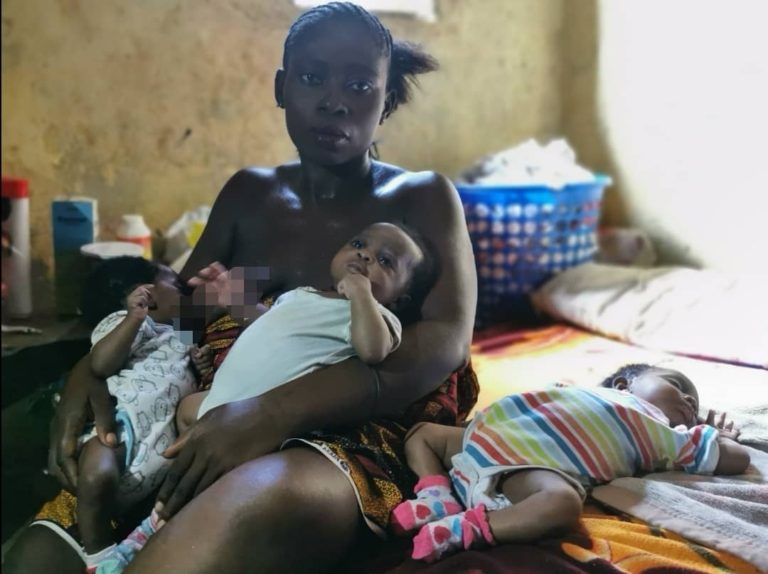
L-R Samuel, Samson and Sarah are Helen’s triplets born on April 3 and 4 PHOTO-Adie Vanessa Offiong
“The doctors and nurses waited and waited for this baby but nothing was happening and at some point, I thought the doctor was mistaken,” Helen said.
At 8 am on April 4, a 4.5kg Samson was born through Caesarean Session with a ₦250, 000 bill, dangling over Helen’s head. This bill has now been cleared by a Good Samaritan.
For Opeyemi the narrative is slightly different
She is yet to tell her husband she is carrying twins. She is ‘afraid’ of how he would react and how they will manage when the babies come. Terrified of giving birth at home due to lack of money, she is worried about maternal death and even neonatal death, which she has experienced before.
Since the lockdown, she has not attended any antenatal session, even though she is now in her third trimester.
“I am scared of contracting the virus but money for transportation and finding a safe public means to the clinic, are more the reasons I have not gone.
“If they had phone consultation and I could afford it, I would have preferred it,” she said.
Telemedicine to the rescue?
Virtual healthcare solutions have now become an indispensable option due to the pandemic.
To ensure that pregnant women have unlimited access to healthcare during this period and as alternatives to physical hospital visits, there have been arguments advocating the switch to telemedicine and other remote consultations via various online and messaging platforms.
Institutions like the American College of Obstetricians and Gynaecologists have long endorsed its use for patients in rural areas. Telemedicine advocates believe that this could reduce the typical 14 required antenatal visits by half.
The Society of Maternal Foetal Medicine while speaking on telemedicine and pregnancy care, recommend that it is safe to reduce “routine” ultrasounds, due to the pandemic, without putting the pregnancy and health of the mother in jeopardy. They state that women carrying multiple babies or babies with possible birth defects may require more traditional checks. Clinical Assistant Professor, Hector Chapa opines that, “Pregnant women are able to do some at-home monitoring, such as for high blood pressure, diabetes and contractions, and telemedicine can even be used by pregnancy consultants, such as endocrinologists and genetic counsellors.”
While these may seem appealing and convenient, for the like of Opeyemi, their circumstances do not give room for them to access such.
Opeyemi and her husband have taken to subsistence farming in their backyard to get some of the nutritious food they need PHOTO-Martin-Mary Falana
An expert like Dr Toyin Adeyalo-Ogunadare, also cautions that for pregnant women, it may not be advisable to have phone consultations, except they want to.
During a phone interview with our reporter, she said “this is because you can’t hear the foetal heartbeat via phone. When they come for antenatal, these are one of the things checked.”
Adeyalo-Ogunadare who is the Special Assistant to the Ondo State Special Adviser of Health said the state has ensured “regular antenatal clinics an immunisation exercises” since the start of the pandemic.
“Also, pregnant women resident in the state can access healthcare through our Abiyamo Maternal and Health Insurance Scheme, even if they have lost income due to COVID-19. This covers them and children under age five. With functional healthcare centres in every ward, you really may not need public transport to get to the nearest facility.”
Opeyemi and her three-year-old son PHOTO-Martin-Mary Falana
COVID-19, maternal deaths and being at the mercy of uniforms
Researchers at Johns Hopkins University envisage that, “between 42,000 and 192,000 more children worldwide, as well as between 2,000 and 9,450 more mothers, could die each month due to COVID-19’s indirect impacts on health and food access.”
These projections are based on statistical modelling and factoring in elements like vaccine availability, antenatal care and health coverage. According to UNICEF, in a May 13, 2020 publication, about 6,800 more Nigerian maternal deaths could also occur in just six months. It also said, “new mothers and newborns will be greeted by harsh realities, including global containment measures such as lockdowns and curfews; health centres overwhelmed with response efforts; supply and equipment shortages; and a lack of sufficient skilled birth attendants as health workers, including midwives, are redeployed to treat COVID-19 patients.” Women like Helen and Opeyemi, in poorest households, bear the brunt of these deaths.
In May 2020, a Lagos woman rescued by personnel of Nigeria’s Federal Road Safety Commission, while driving to the hospital amid labour pains, narrowly escaped being added to the maternal mortality statistics.
Also in May, another woman who had gone to the Asokoro General Hospital to give birth, could not be attended to because the hospital had been converted to an isolation centre for COVID-19. After some rigmarole, she ended up at Lona City Care, Karu where she was delivered of her baby by Dr. John Agbo, a family medicine expert.
Agbo who has worked in a government hospital explained that, “Patients are usually classified in government hospitals as very high risk and are also called ‘doctor-patients.’ They are those who have had Caesarean Section before and would need surgery again. These patients are referred to other hospitals. Then the rest are told to look for hospitals where they can give birth,” as was the case of this woman who came to him.
She and her husband had lost their jobs during the pandemic and did not have the financial power to decide on their fate. They first went to a maternity home where all she was given was a bed. A neighbour who had given birth at Lona, took her there where she was immediately attended to and delivered of her baby at about 3AM. This was possible because Agbo had relocated to the hospital since the lockdown, for such eventualities.
However, in Ogun State, Waidat Adedeji who was in labour and being conveyed by a commercial motorcyclist to give birth, was not so lucky. She was reportedly killed by a policeman at a checkpoint during the lockdown, because the cyclist refused to give a ₦100 bribe.
Waidat Adedeji died because of ₦100 bribe the police demanded Credit-Premium Times
Alternatives and measures to be taken
Temitope Alale a member of the Institute for Dietetics in Nigeria and of the Association of Nigerian Dieticians, said, it is unhealthy for a pregnant woman and her growing foetus, to consume these too frequently.
She said, “Although vegetable is good, pregnant women need to eat a wide range of foods that provide nutrients to support their health and wellbeing as well as the growth and development of their babies.”
With the pandemic threatening the food security of many households, Alale suggests that Opeyemi, Helen and other mothers in their situation, can substitute food items.
“For example instead of meat which sells from ₦300 and above, she can use crayfish and locust bean which cost far less and she will get the necessary nutrients needed for that same amount of money.”
Alale also encourages the women to grow vegetables like tomatoes, okro, waterleaf, spinach, ugwu and bitter leaf around their homes, to avoid buying them.
In 2016, the Katsina State Government distributed 720 high breed goats worth N104 million to women under its Women Empowerment Scheme. Two hundred and forty women selected from the State’s 34 local governments received two female goats and one male goat. This might be an initiative worth replicating across the country, to alleviate the challenges of women like Helen and Opeyemi during this pandemic.
Dr Anthony Ajayi is a postdoctoral fellow in Population Dynamics and Sexual and Reproductive Health Unit at African Population and Health Research Center, Kenya. He shared his thoughts on what Nigeria could do to ensure safe motherhood during the pandemic.
Ajayi said, often to the neglect of other health priorities such as maternal health, resources are diverted to halt the spread of the virus.
“The lock-down is the most aggressive of all the interventions against COVID-19, that could have unintended consequences on maternal health if measures are not put in place to accommodate pregnant women.”
He advised that “access to maternal health care services must be made a priority during the lock-down and efforts should be geared towards providing free transportation services for all pregnant women to ensure no woman is unable to access services due to lack of transportation.”
This is in addition to the provision of free maternal health care for all pregnant women, “given that COVID-19 has devastated the earning opportunities of most families, with little palliative measures from the government,” he said.
Giving a recommendation on what government should do regarding maternal health and COVID-19, he added:
“The number of women and children who have died undocumented is more than the number of people who have died of COVID-19, said, Dr Agbo. He said if the government had made available resources in cash and kind in public hospitals for pregnant women, it would have helped. He added that this would, however, only be effective in an organised and structured environment.
He also advocates discounted healthcare costs for resource-poor pregnant women, “in order to reduce the complications of delivery.
“When I was in Kaduna State, there was a time we had free treatment for women and children. What they did was to give the hospitals a little overhead and supplies of consumables they needed.
Within that time, maternal mortality reduced drastically in Kaduna State about 10 years ago. Although there is a UNICEF Joint statement on nutrition in the context of the COVID-19 pandemic in Asia and the Pacific, Nigeria could benefit from its recommendations.
UNICEF advises health services to continue providing essential nutrition services for pregnant and breastfeeding mothers, newborns and sick children.
“They should also provide appropriate support for mothers to breastfeed, including those with COVID-19, and communicate accurate information on maternal, infant and young child nutrition,” it said. Nigeria is one of the countries with the expected highest numbers of births in the nine months since the pandemic declaration with 6.4 million new babies. Others are India (20.1 million), China (13.5 million), Pakistan (5 million) and Indonesia (4 million). With most of them already having high neonatal mortality rates prior to the pandemic, there is a worry that these levels may increase with COVID-19.
Stating that it is hard to imagine how the pandemic has recast motherhood, Henrietta Fore, UNICEF Executive Director, said, “Millions of mothers all over the world embarked on a journey of parenthood in the world as it was. They now must prepare to bring a life into the world as it has become – a world where expecting mothers are afraid to go to health centres for fear of getting infected, or missing out on emergency care due to strained health services and lockdowns.”
This report was facilitated by the Wole Soyinka Centre for Investigative Journalism (WSCIJ) under its COVID-19 Reality Check project.
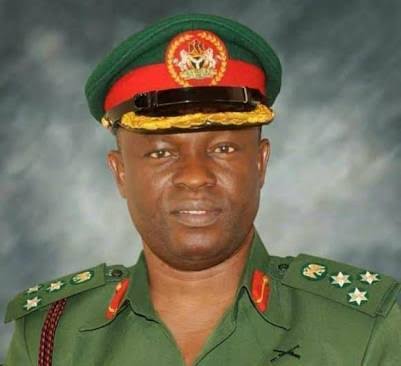
THE Nigerian Army has found Hakeem Otiki, a Major-General and former General Office Commander (GOC) of 8 Division, Nigerian Army Sokoto, guilty of N100 million fraud.
The General Court Martial (GCM) set up by the Nigeria Army to investigate alleged embezzlement of funds belonging to the Nigerian Army while Otiki served as GOC of 8 Division, recommends him for demotion from the rank of Major General to Brigadier General and dismissal with dishonour.
The decision of the the GCM headed by headed by Lamidi Adeosun, a Lieutenant-General is subject to review and final approval of the Army Council.
Global Sentinel reports that Adeosun read the profile Otiki who had served in the Nigerian Army for 34 years.
“Many will be praying to have such an unblemished career and record of military service in the country like the accused senior army officer”, Adeosun was quoted as said before pronouncing the sentence.
He said that having confirmed that Otiki is a first time offender in his 34 years of “previously unblemished career in the army and to the Nigeria armed forces”, the court president said it would “not fail in dispensing justice. We would do the very best with the humanness and kindness that the law allows.”
The President of the General Court Martial then went ahead and delivered the sentencing of Otiki and ruled as follows:
Count Five: Two years loss of seniority on rank of Major General. Subject to confirmation by the Army Council.
Count Four: Severe reprimand. Subject to confirmation by the Army Council.
CountThree: Reduction of rank to Brigadier General with two years seniority on the rank. Subject to confirmation by the Army Council.
Count Two: Dismissal, disgrace and dishonour. Subject to confirmation by the Army Council.
Count One: Dismissal, disgrace and dishonour. Subject to confirmation by the Army Council.
Orders
All monies recovered by the Special Investigation Bureau (SIB) of the Nigerian Army totaling N135,382 million and $6, 600 dollars from the convicted senior officer should be returned to the Nigeria Army coffers.
The N150million stolen by the accused senior officer which remained unaccounted for in Count Two should be returned to the coffers of the Nigerian Army.
The prosecution counsel, Major AA Onumo had earlier thanked the court martial for doing justice to the case after the conviction of the army general.
According to Global Sentinel, Otiki had been on trial following the abscondment of five soldiers attached to his office with the sum of N100 million but which had erroneously been reported in the media as N400 million.
The five soldiers, who absconded with the money were allegedly instructed to deliver it to a senior officer in Kaduna for the purchase of furniture meant for the 8 Division of the Nigerian Army in Sokoto.
The fleeing soldiers, who have since been declared wanted are: Corporal Gabriel Oluwaniyi, Corporal Mohammed Aminu, Corporal Haruna, Oluji Joshua and Hayatudeen. One of them Lance Corporal Isah later returned the sum of N15 million as well as $6,600 to army authorities voluntarily and he was detained.
Lt. General Lamidi Adeosun who is also the Army Chief of Policy and Plans led the nine month trial.
Others on the jury of the court martial include Major General A Tarfa, Major General FO Agbugor, Major General FA Nadu, Major General N Mohammed, Major General CT Olukotu, Major General C C Okonkwo. He also named Major A Mohammed was the judge advocate; and Captain A Ibrahim the Liason Officer.
It could be recalled that on January 23, a Federal High Court sitting in Abuja had ordered the interim forfeiture of the sum of $376, 120 allegedly seized from Otiki, to the Federal Government of Nigeria.