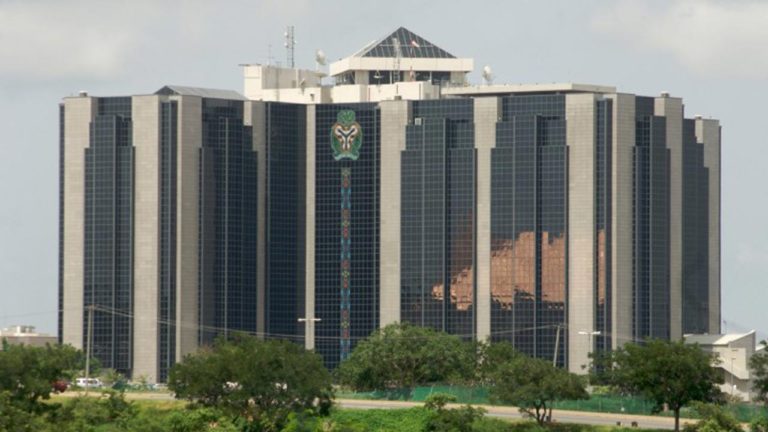
THE Central Bank of Nigeria (CBN) through NIRSAL Microfinance Bank has identified 3,256 individuals and businesses to benefit from the N50 billion Targeted Credit Facility (TCF).
TCF is a stimulus package to support households and Micro, Small and Medium Enterprises (MSMEs) affected by the COVID-19 pandemic which they can access at a maximum amount of N25 million each as earlier announced by the CBN.
Abubakar Kure, the Managing Director of NIRSAL MFB, who launched the disbursement on Thursday in Abuja, said 3,256 individuals and businesses would benefit from the first phase of the disbursement.
NIRSAL MFB, which is the sole coordinator of the process said it has received over 80,000 requests since on 14th April.
The NIRSAL MFB boss did not disclose the value of the credit allocated under the first tranche but said the bank was passionate about disbursing the fund only to individuals and businesses terribly affected by the pandemic.
NIRSAL MFB has said that the fund would afford beneficiaries the chance to continue productive activities when the economy gradually reopens after the lockdown.
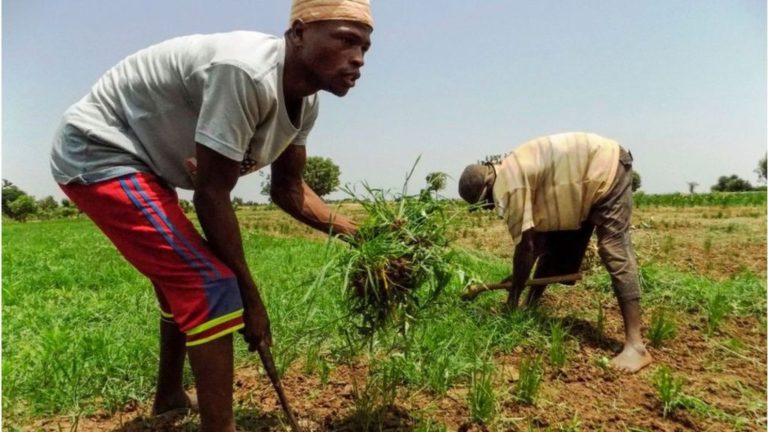
Sectors covered in the guideline include agricultural value chain, health (pharmaceuticals and medical supplies), airline services, hospitality (accommodation and food services), trading, manufacturing/value addition and other income-generating endeavours as prescribed by the CBN.
The apex bank said the aim of the fund is to cushion the effect of the pandemic to provide cash flow owing to the lockdown and the restrictions in movement of people.
The Coronavirus Disease (COVID-19) pandemic has led to unprecedented disruptions to global supply chains, sharp drop in global crude oil prices, turmoil in global stock and financial markets, massive cancellation of sporting and entertainment event.
The lockdown of large swaths movements of persons in many countries, and intercontinental travel bans/restrictions across critical air routes across the world.
NIRSAL MFB said these outcomes have had severe consequences on households’ livelihoods and business activities, resulting in a drop in global demand, declined consumer confidence and slowdown in production.
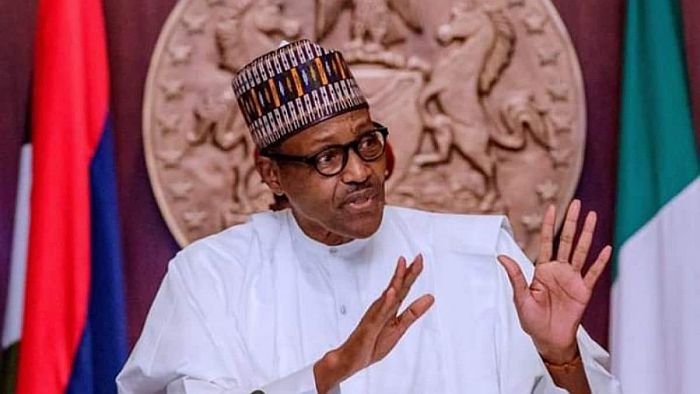
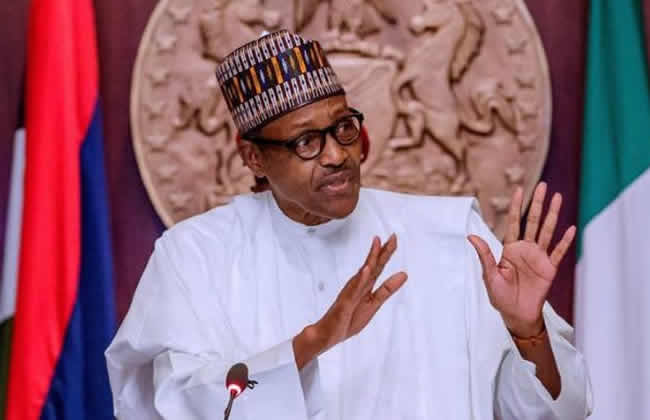
ASO Rock has not been able to answer the question about who leaked the speech of President Muhammadu Buhari, a few minutes to his official national broadcast on Monday evening, 26th April.
Though Femi Adesina, Special Adviser on Media and Pulicity to President Buhari, confirmed that the speech earlier circulated to the press was not the final draft, he did not identify the official who shared the copy riddled with errors.
Notable among the errors was the date agreed to commence gradual ease of the lockdown.
While President Buhari’s original speech announced 4th May as the effective day to relax the lockdown in Lagos, Ogun, and the Federal Capital Territory (FCT), the leaked speech stated 2nd May.
Many Nigerians have expressed concern over the leak of the President important message to Nigerians, which was glitched by several inaccuracies.
Lekan Otufodunrin, former Editor at The Nation Newspaper (Online) his piece published on 27th April, titled, Who leaked Buhari’s broadcast speech? noted that the two speeches created some confusion for the president’s audience.
“The date for the commencement of the relaxed restriction of movement is 4th May, not 2nd as in the first copy. So, there was initial confusion about which date was right since some people didn’t bother to listen to the broadcast having read the first copy.
“The first copy had no fixed time for the lockdown in Kano, but in his address, the President announced two weeks.”
The ICIR contacted media aides to the president to know where the leaked copy emanated from.
Adesina, Special Adviser on Media and Publicity to the president did not respond to text message sent to him.
Garba Shehu, Senior Special Assitant on Media and Publicity who was also contacted by this reporter did not respond to questions sent to him via SMS
The ICIR also reached out to Tolu Ogunlesi, Special Assistant to the President on Digital and New Media, but as of the time of writing this report, there was no response from him.
Direct Message sent to Bashir Ahmad, Personal Assistant on New Media to the President via his verified social media handle was not also replied.
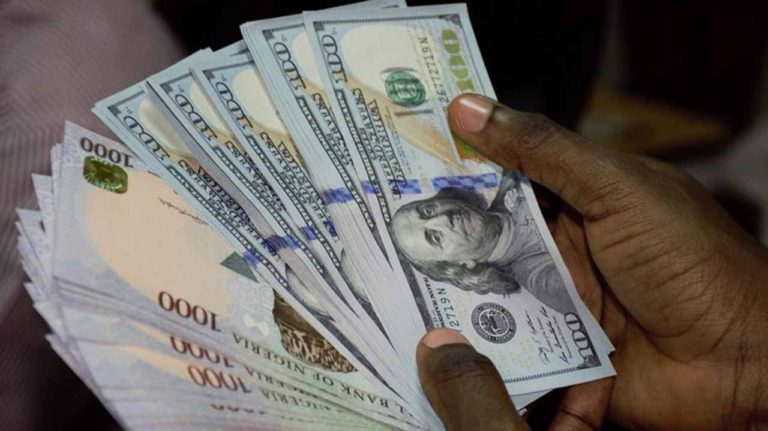
The Nigerian foreign reserves has dropped from $38.53 billion to $33.44 billion in nearly four months, Central Bank of Nigeria (CBN) latest report has shown.
This represents $5.09 billion drop in foreign reserves for the period, the report revealed.
Recall the CBN showed that the reserves has been on a consistent fall since the middle of 2019, causing it to drop from $45.14 billion on 8th July to $44.65 billion on 8th August.
Further dropped of $1.26 billion between 2nd October 2019 and 31st October 2019 was recorded, falling from $41.76 billion to $40.50 billion in between the periods.
According to CBN figures, the reserves dropped from $39.8 billion on 11th November 2019 to $39.24 billion on 13th December 2019.
Godswill Emefiele, CBN Governor, said at the last Monetary Policy Committee meeting that the “Weakened revenue status of the Nigerian government emerged from the deep slump in oil prices at the global market.”
“The major downside risks to this outlook, however, include the continued spread of COVID-19; further decline in crude oil prices and the reduction in accretion to external reserves.”
The Apex bank governor said, “the headwinds would, however, be partly mitigated by the timely and effective response of the monetary and fiscal authorities in containing the spread of the COVID-19 pandemic, the recalibration and adjustment of the 2020 federal budget to the revised thresholds.”
The Organisation of the Petroleum Exporting Countries (OPEC) this month pledged to cut output by an unprecedented 9.7 million barrels per day in May and June.
Bussiness standard report has shown that oil futures marked their third straight week of losses last week, with Brent ending 24 per cent down. Prices have now fallen for eight of the past nine weeks.
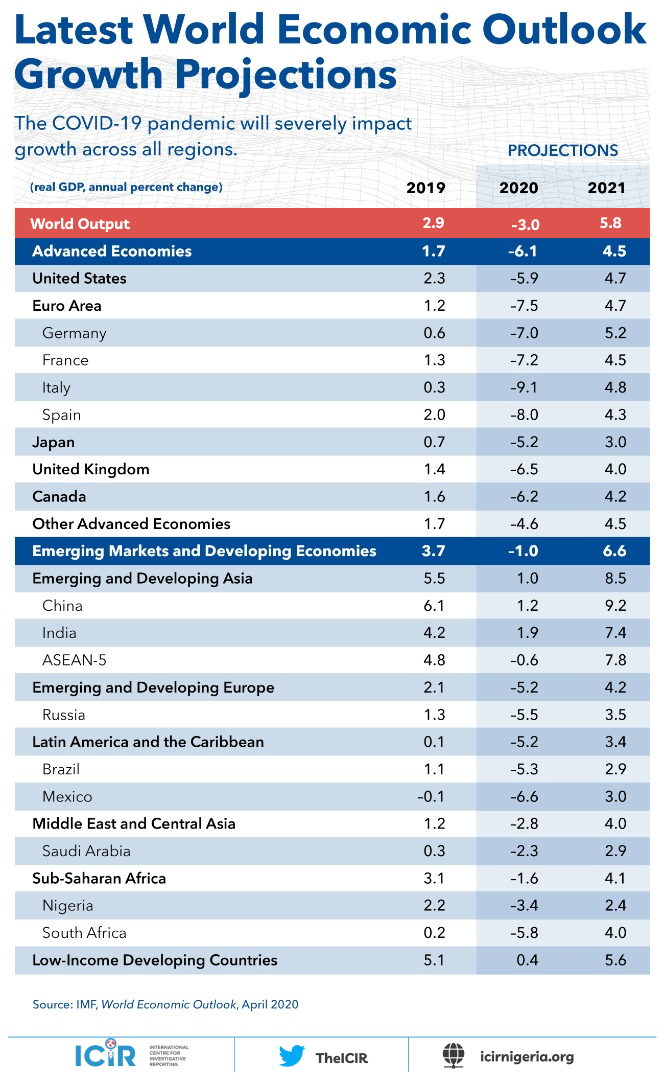
AFRICA’s two biggest economies, Nigeria and South Africa have both had stagnant real Gross Domestic Product (GDP) per capita terms since 2014, the International Monetary Fund (IMF) has reported.
By this measure, their populations have gotten a lot poorer since then, the IMF report revealed.
In economics, GDP measures the total quality of goods and services produced and sold in an economy.
Current figures show that Nigeria and South Africa expected at –3.4 per cent and –5.8 per cent respectively, following the dramatic decline in oil prices since the beginning of the year, near-term prospects for oil-exporting countries have deteriorated significantly.
According to the World Bank, the oil price collapse in 2014-2016, combined with negative production shocks, Nigeria’s GDP growth rate dropped to 2.7 per cent in 2015.
In 2016 during its first recession in 25 years, the economy contracted by 1.6 per cent.
Since 2015, Nigeria’s economic growth remains muted, growth averaged 1.9 per cent in 2018 and remained stable at 2 per cent in the first half of 2019.
Domestic demand remains constrained by stagnating private consumption in the context of high inflation 11 per cent in the first half of 2019.
On the production side, growth in 2019 was primarily driven by services, particularly telecoms.
Agricultural growth remains below potential due to continued insurgency in the Northeast and ongoing farmer-herdsmen conflicts.
Albert Adeniji an economist at Wellworth Investments who spoke to The ICIR said: “Since GDP focuses on total production rather than actual distribution of output, it does not capture the effects of inequality and this inequality is where both big economies are affected, not significant to the world but its a menace, an example is bad leadership.”
Emmanuel Azubuike a financial analyst at Cornerstone Investments said, “Even smaller economies are growing annually, but Nigeria and South Africa need to really sit back and work on how their economy would grow and improve citizen’s lives, xenophobia and insurgency is a barrier for productivity for this big nations.”
GDP of South Africa fell by 0.4 per cent in the fourth quarter of 2019 compared to the previous quarter. This rate is two-tenths of one per cent less than in the previous quarter when changed -0.2 per cent.
The year-on-year change in GDP was -0.6 per cent, seven-tenths of one per cent less than the 0.1 per cent recorded in the third quarter of 2019.
The GDP figure in the fourth quarter of 2019 was $71,005 million, South Africa is number 29 in the ranking of quarterly GDP of the 50 countries published.
ON Thursday, President Muhammadu Buhari approved the Oronsaye report by the presidential committee on restructuring of federal government parastatals, commissions and agencies initially submitted during the Goodluck Jonathan administration.
The 800-paged report submitted by the committee recommended the abolition of 38 federal agencies, the merger of 52, and the reversion of 14 agencies to departments in relevant ministries.
Bashir Ahmaad, Personal Assistant on New Media to President Buhari in a Twitter post revealed this stating the Presidency had adopted the committee’s report.
Amongst the recommendations approved by President Buhari was the discontinuation of funding to professional bodies/councils and also the downsizing of boards.
Currently, the number of federal agencies in the country is estimated to be close to 1,000.
President @MBuhari has approved the implementation of a 800-paged report submitted by the presidential committee on restructuring and rationalization of the FG’s parastatals, commissions and agencies, committee was inaugurated by GEJ in 2011 and submitted their report in 2012.
The Committee which was inaugurated on August 18, 2011, had submitted its report on April 16, 2012.
A tweet sent by the reporter to Bashir to ascertain if the entire recommendations of the committee were adopted by the President as at the time of filing this report was yet to be replied.
Stephen Oronsaye, former head of civil service, had headed a committee set up by former President Goodluck Jonathan to identify the lapses in the civil service.
The seven-man committee had stated the “rationalization of agencies, parastatals and commissions would have human dimensions and cost implications” before suggesting that the government should focus on empowering the Ministries Departments and Agencies, MDA, “to do more for less”.
At the time when the report was submitted, there were 541 government parastatals, commissions and agencies including statutory and non-statutory in the country and the report prescribed a reduction in the number of statutory agencies from 263 to 161.
NIGERIAN Investment Promotion Commission (NIPC) reports a drop of $7.89billion investment for Q1 2020, which stands currently at $4.81billion compared to $12.7billion recorded in the corresponding period of 2019.
The figure represents about 62 per cent less in investment value compared to Q1 2019.
The Commission tracked a total of 19 projects across 14 states plus the Federal Capital Territory.
Kaduna State received the largest share of the investment of $2.61billion in transportation, mining and quarrying, and manufacturing.
According to the report, $56million worth of investment in agriculture was announced for Nasarawa State, while Lagos State got five investments announcement with a total worth of $29million. The investments are in manufacturing, information and communication, and electricity.
The report showed that the destination of eight investments was unknown, and this represents about 44 per cent of the investments tracked during this period.
On sector basis, the top four were transportation 42 per cent, information and communication 33 per cent, mining and quarrying 21 per cent and agriculture 4 per cent.
The United States of America was the most active source of investments during the period with 42 per cent of the announcements.
South Africa accounted for 33 per cent, domestic investors accounted for 16 per cent and the United Kingdom announced 8 per cent of the investments tracked.
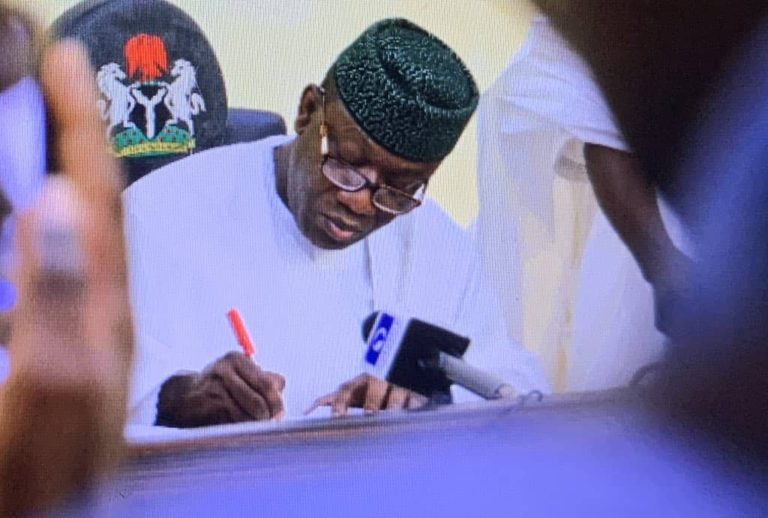
THE Governor of Ekiti state, Kayode Fayemi has appointed Femi Adeoye, a father who rejected and forced his son into isolation after traveling to Lagos, as an ambassador of Coronavirus (COVID-19) in the state.
Adeoye was seen in a viral video refusing his son entrance into his house for traveling across states despite lockdown order.
Fayemi, who received Adeoye in the statehouse, commended him for his exemplary act of courage and principle.
Following his visit, Fayemi through a letter of commendation said the state is proud of Adeoye’s conduct.
“I am pleased to let you know that the state is very proud of your conduct which elevated the collective wellbeing of the state above your undeniable love for your son,” the letter read.
Fayemi noted that his selflessness and self-discipline is an act that the state and nation need to progress.
“You represent the kind of self-discipline, selflessness, and sense of collective responsibility that our state and nation need desperately to progress,” he further stated.
Appointing Adeoye as COVID-19 ambassador in Ekiti state, Fayemi said the state government would be delighted to have him propagating the message of the State COVID-19 taskforce.
He noted that the state would in future recognise his valour as an example of the rebirth of Ekiti’s values orientation.
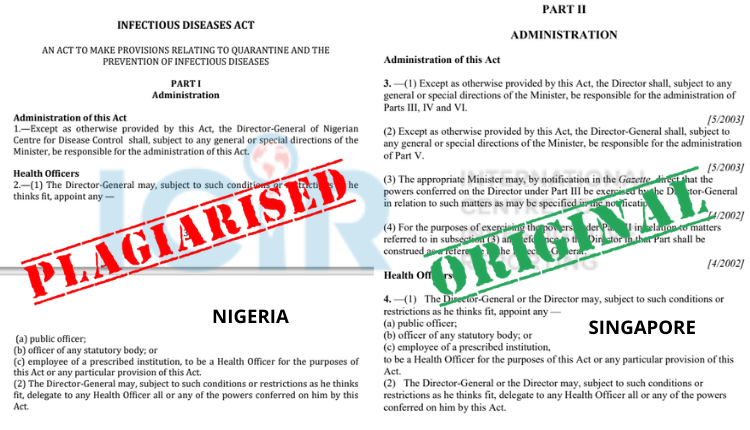
A DRAFT legislation titled Infectious Disease Act, sponsored by Speaker of the House, Femi Gbajabiamila and submitted on the floor of the House of Representatives on April 28 for consideration has been found to be over 90 percent plagiarised from Singapore’s Infectious Disease Act of 1977.
The proposed legislation which aims at helping the Nigerian government coordinate responses to infectious disease outbreaks such as Lassa Fever and Coronavirus infection is a 43-page draft document copied in its entirety from Singapore – a country with a legacy of authoritarian rule.
At the time the Infectious Disease Act was enacted, Singapore was a one-party state. Though Nigeria operates a democratic system of government, copying a law of an authoritarian state such as Singapore is a contradiction of its republican status.
Abdul Mahmud, barrister and managing counsel of Ephesis Lex Law Firm deplores the idea of copying the law of another sovereignty verbatim.
It is offensive to steal laws properly passed by other parliaments of the world and lawmakers who subscribe to such act can be accused of plagiarism, he told The ICIR in an interview.
“There’s a fundamental problem of poverty of thinking and creativity which allows our legislators to go borrowing and stealing laws from other countries,” he said.
Plagiarism
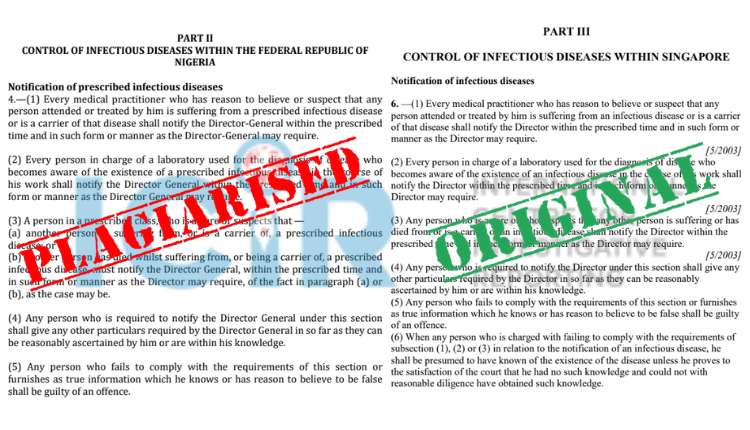
Asides from the title of the draft legislation: Infectious Disease Act which was copied verbatim, parts one to five of the Nigerian Act containing 63 sections were all lifted from the Singaporean law word-for-word. The exception was the use of ‘Director’ which is replaced with ‘Director-General’ and mentioned over 100 times throughout the document.
For instance, in part one, under the subtitle: Administration, the proposed Nigerian draft bill reads: “Except as otherwise provided by this Act, the Director-General of Nigerian Centre for Disease Control shall, subject to any general or special directions of the Minister, be responsible for the administration of this Act.”
In the Singaporean version, it reads: “Except as otherwise provided by this Act, the Director shall, subject to any general or special directions of the Minister, be responsible for the administration of Parts III, IV and VI.”
In part two of the Nigerian bill which stands as part three in the Singaporean legislation, Section four (1) reads: “Every medical practitioner who has reason to believe or suspect that any person attended or treated by him is suffering from a prescribed infectious disease or is a carrier of that disease shall notify the Director-General within the prescribed time and in such form or manner as the Director-General may require.”
In the original document section, section six reads: “Every medical practitioner who has reason to believe or suspect that any person attended or treated by him is suffering from an infectious disease or is a carrier of that disease shall notify the Director within the prescribed time and in such form or manner as the Director may require.”
This reproduction is noticed in the entire document.
Nigeria vs Singapore Infectious Diseases Bill CREDIT: ICIR
Closer look at Nigeria’s versus Singapore’s Infectious Disease Act
At first glance, the similar wordings of both documents raises the questions of how infectious diseases and outbreaks affect Nigeria, its citizens and economy compared to the current realities in Singapore.
Nigeria, with an estimated population of 200 million, a Gross Domestic Product (GDP) per capita of $2,028 as of 2018 and plagued with political instability and corruption has halved its population living in extreme poverty, according to World Bank.
In an Infectious disease pandemic period, Nigeria’s most common challenges are ill-equipped and underfunded health care system, a weak economy, and struggling citizens.
On the other hand, Singapore, a sovereign city-state with a population of over 5.6 million and a GDP per capita of $64,581 as of 2018, is ranked 9th in the United Nations Human Development Index out of 187 countries – Nigeria ranks 158 out of 189 countries.
Singapore ranked ‘world’s healthiest country’ by Bloomberg and 6th in the World Health Organization(WHO)’s ranking of the world’s health systems in the year 2000, the Southeast Asian country’s major challenge in a disease pandemic is the ability to manage spread and flatten curve – the same challenge faced by other western nations with top-notch health care systems.
Nigeria is still struggling to increase the testing capacity of COVID-19 and provide adequate health care for patients.
Infectious Disease Act Versus the Nigerian Constitution
Infectious Disease Act Bill draft CREDIT: The ICIR
A close read of the document shows how the new bill conflicts with rights and privileges granted in the 1999 Nigerian Constitution as amended.
For instance, part of Section 15 of the Act states that: “A person who leaves or attempts to leave or is suspected of having left an isolation area in contravention of an order under subsection (3) may be arrested without warrant by any police officer, or by any Health Officer authorised in writing in that behalf by the Director-General.”
The law invariably empowers the Nigerian law enforcement agents who are notorious for disregarding human rights, to arrest people based on suspected intent (as covered in ‘attempts to leave’) or suspicion (suspected of having left an isolation area) and to do so without a warrant from any higher-level authority.
Recall that as at when Nigeria recorded 407 cases of COVID-19, while the virus had killed 12 people, security officers had killed 18 people as they enforce the lockdown order by President Muhammadu Buhari.
The National Human Rights Commission (NHRC) has also reported that it has received more than 100 complaints of human rights violations perpetrated by security officials across 24 of Nigeria’s 36 states – including Lagos, Ogun and Abuja.
Enforcement and consequences
In granting powers of arrest, Section 58 of the bill proposes that: “Any police officer or any health officer authorised in writing in that behalf by the Director-General, may arrest without warrant any person committing or who he has reason to believe has committed any offence under section 11(1), 20(2), 22(4), or 55(8).”
By implication, the law aims to empower security officials and health officers to rely on their judgment to detain citizens on the basis of their belief of someone having committed an offense.
David Hundeyin, a Nigerian journalist, said this provision rests the burden of proof on Nigerians, and is a direct contravention of the 1999 Constitution.
In what appears to be a recipe for abuse of power, the bill in Section 71, proposes that: “No liability shall lie personally against the Director-General, any Health Officer, any Port Health Officer, any police officer or any authorised person who, acting in good faith and with reasonable care, does or omits to do anything in the execution or purported execution of this Act,” thereby granting power without checks or accountability.
A worrying precedent
Though the Infectious Disease bill leaves cause for worry if passed into law, the document in its present form is a mere duplication of the original taken from another jurisdiction, an act which has become characteristic of the 9th Assembly.
On November 5, 2019, a bill titled ‘Protection from Internet Falsehood and Manipulations Bill 2019′ aka social media bill, aimed at criminalising the use of social media in peddling false or malicious information was introduced on the floor of the senate.
Just like the Infectious Disease bill, the social media bill, sponsored by Mohammed Sani Musa, a senator representing Niger East, was plagiarised from a Singaporean law.
THE Lagos state government on Wednesday has released guidelines for easing the lockdown in the metropolis without compromising the public health and the economy.
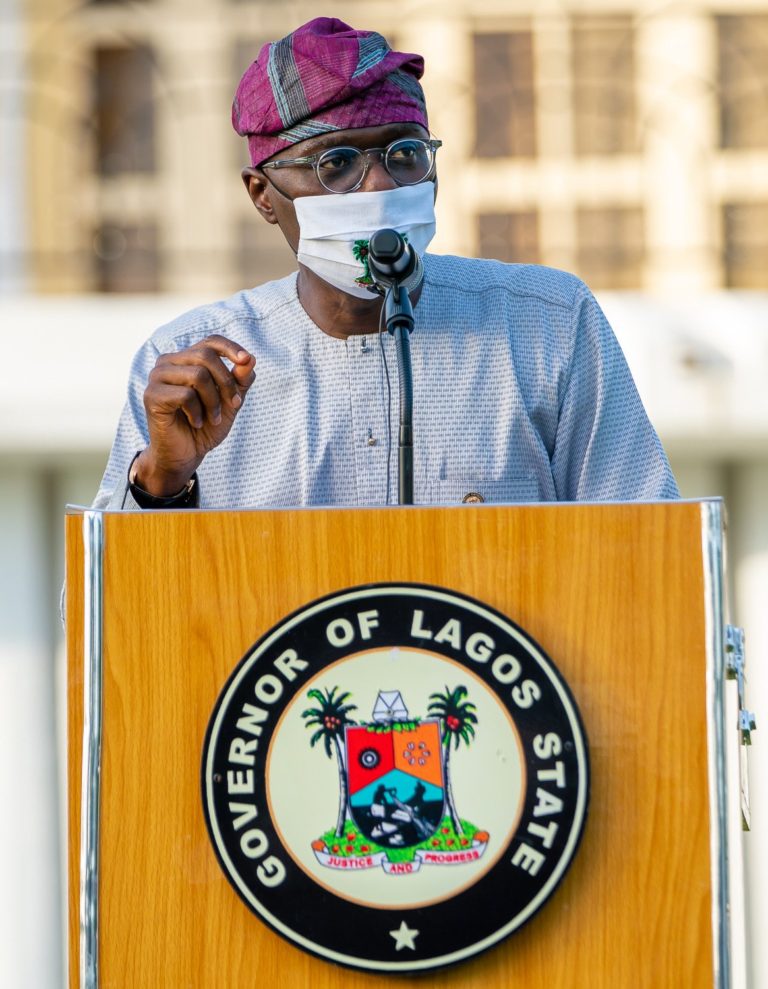
The state Governor Babajide Sanwo-Olu has tweeted that corporate firms, banks, malls and local markets are allowed to reopen within the hours of 9am to 3pm under an enforced framework called “Controlled Easing Phase” and to operate at a capacity of 60 percent of their staff on the premises and 40 percent working from home.
” We understand the roles banks and financial institutions play in the economy, so we encourage them to reopen their branches observing the work hours of 9am to 3pm while also strictly observing social distancing, regular cleaning and sterilisation of the ATMs,” Sanwo-Olu said.
He also added that eateries and restaurants will be open between 9am and 3pm but only for take-out and delivery services. In-dining services are not allowed. All food handlers and staff must go through exhaustive health checks, temperature checks and a high level of hygiene must be maintained.
The statement further revealed that public service workers from grades 1-12 will continue to work from home while grades 13 and above will be on a flexible roster managed by the Head of Service
Primary, secondary and tertiary institutions will remain closed. Students are expected to continue learning on alternative media and online channels.
The governor also added that 49 patients were discharged from the state’s isolation facilities after they tested negative twice to COVID-19 bringing the total number of discharged patients in Lagos to 143.
Recall that on Monday President Muhammadu Buhari in a televised address to the nation had said the lockdown which has lasted for almost five weeks was to be lifted in phases in Lagos, Ogun and the FCT starting on May 4.
Some measures listed by the President includes allowing selected businesses to operate from 9am to 6pm with an 8pm to 6am curfew following after close of work.
Buhari also stated that guidelines for the ease of the lockdown will be communicated to citizens after due consultations with the presidential taskforce.
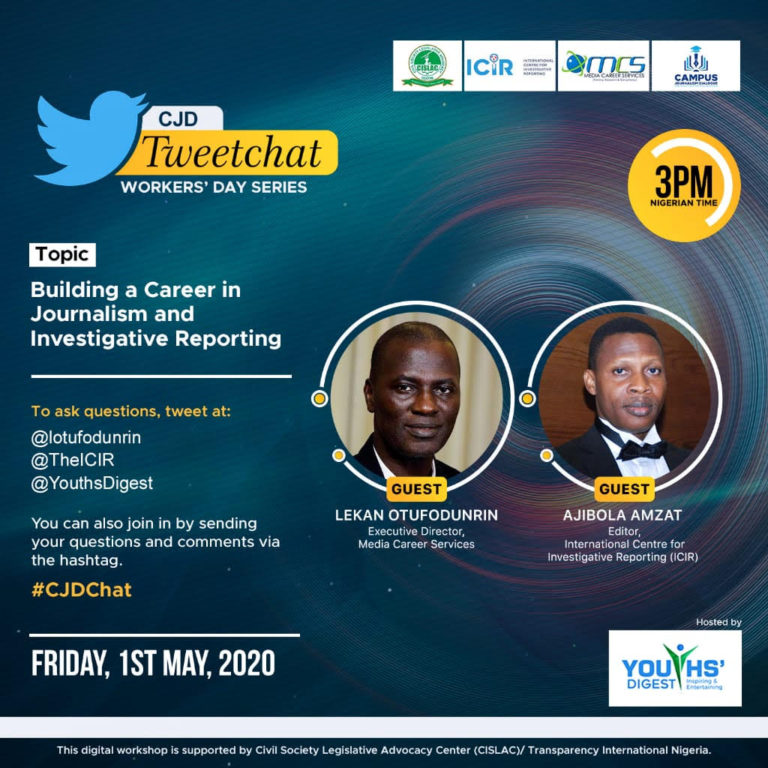
The Campus Journalism Dialogue (CJD) is set to host two celebrated Nigerian journalists, Lekan Otufodunrin and Ajibola Amzat, for a Tweet Chat on Friday, in commemoration of 2020 Worker’s Day.
The CJD Twitter Chat which is focused on building a career in journalism and investigative reporting amongst young journalists is a flagship webinar series hosted by the Youths Digest, with support from the Civil Society Legislative Advocacy Centre (CISLAC).
In a statement on Wednesday by Gidado Shuaib, Youth Digest editor, the event which is scheduled to start by 3pm on Friday is aimed at engaging campus journalists on the occasion of this year’s May Day celebrations.
Shuaib disclosed that Otufodunrin, a former online editor of The Nation newspaper and now the Executive Director of Media Career Services, will speak on ‘Tips for Building a Successful Career in Journalism’.
He added that Amzat Ajibola, editor of the International Centre for Investigative Reporting (ICIR), will engage journalists on ‘Investigating the COVID-19 Pandemic: A Guide for Inspiring Young Journalists’.
“Campus journalists, who intend to participate are advised to send in their questions and also tweet @lotufodunrin @TheICIR and @YouthsDigest.
“Questions and comments can also be forwarded via #CJDChat hashtag,” a statement from the Youths Digest read in part.
Recall that a few weeks ago, the platform had organised series of online media training and seminars for campus journalists across the country.
The seminars, which were adjudged insightful, were facilitated by prominent journalists, Digital security experts and media professionals.