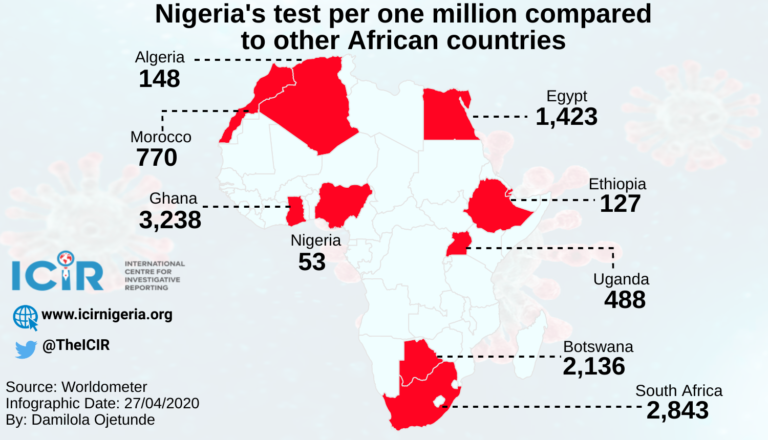
NIGERIA ranks 31st on the African continent for the coronavirus disease (COVID-19) tests per one million population out of 55 countries affected by the disease.
As of April 27, data from the National Centre for Disease Control (NCDC) shows that 11,426 persons have been tested of COVID-19 in Nigeria; this is representing 0.006 percent of the about 200 million population in the country, coming behind 30 countries on the continent.
While testing remains critical, public health officials across the world, including the World Health Organisation (WHO) have linked the importance of testing of the pandemic to quick identification of cases, quick treatment for those people, immediate isolation to prevent spread, and identification of persons who came into contact with infected people so they too can be quickly treated, two months after the first case was confirmed, Nigeria is not still testing enough.
“We have a simple message for all countries: test, test, test. Test every suspected case. If they test positive, isolate them and find out who they have been in close contact with up to 2 days before they developed symptoms, and test those people too,” he said.
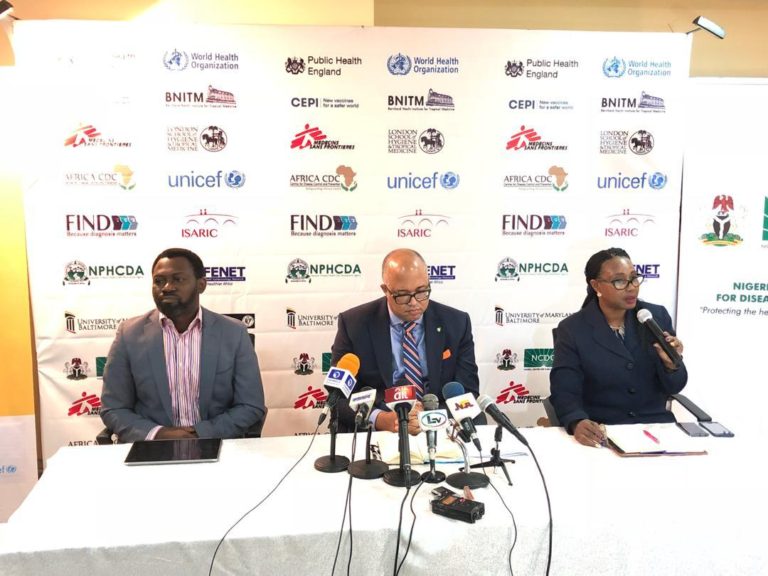
The NCDC has 15 molecular laboratories activated with the capacity to test for COVID-19, nine of which were created in the last one month.
Analysis of COVID-19 testing data from Worldometer across Africa reveals that Nigeria is not among the first 20 countries in Africa that have tested the highest percentage of their population.
Interestingly, Djibouti tops the chart in Africa. Djibouti with 1,023 confirmed cases of COVID-19 has tested 11,884 per million population while that of Nigeria is only 53 tests per million population.
Other countries on the continent with higher tests per million are Mauritius-11,358, Mayotte-9,164, Ghana-3238, South Africa-2,843, Botswana-2,136, Tunisia-1,761, Cabo Verde-1,423, and Egypt-879.
There are also countries such as Morocco-770, Guinea-Bissau-762, Togo-719, Eswatini-615, Equatorial Guinea-609, Rwanda-537, Uganda-488, Zimbabwe-430, Kenya-335, Namibia-277, Gabon-257, etc.
It is interesting to know that of the 30 countries ahead of Nigeria, only Egypt and Algeria recorded its index case before Nigeria. Index cases were confirmed and reported in Egypt and Algeria on February 14 and 25 respectively. Nigeria’s index case was confirmed on February 27. Every other country recorded its index cases in March.
ORLANDO, “the modern tailor” as he calls himself, violated the Osun state government directive when he opened his shop to sew a cloth for a customer he described as ‘promising’.
Orlando, who has his shop located in front of his home in Sabo, one of the noisy areas in Ile-Ife – was very observant while making the cloth, just in case a law enforcement agent shows up.
He spotted this reporter from afar and became quite uneasy when this reporter got close to his shop. But after a few minutes of friendly banter, he revealed how he has been coping and how he is hoping he survives the 14-day lockdown imposed by the Osun state government.
“Everything is hard. They told us to stock up but is it not someone that has money that will stock up. The foodstuffs I have at home are almost finished and customers are not coming to pick up completed cloths,” Mr. Orlando lamented.
Mr. Orlando planned to deliver the cloth he was making to the ‘promising’ owner the next day even if he hasn’t been told to.
Osun state government announced a total lockdown that will span for 14 days on the 29th of March in order to fight the novel Coronavirus, an action that is currently being observed in three other southwestern states. However, since the lockdown began on Tuesday, April 1st – there hasn’t been any known result-oriented activity by the state government to mitigate the effect of the lockdown.
Residents in Ile-Ife, where this reporter focused on, have been battling with both avoidable and unavoidable results of the lockdown.
Citizens are gradually flouting the rules in order to survive. People are already running out of foodstuffs and the ones that still have are disposing of them as a result of improper storage caused by irregular electricity.
Crowd in Sabo market on Day-3 of the first round of lockdown. Photo credit: Peter Oyebanji
Aunty Abi, a fashion designer, showed me the Ewedu soup she just thrashed minutes before my arrival.
“There is no light. The boiled pepper I put in the fridge has spoilt already. I have refried my fried fish just so they’ll not go spoilt. We can’t cope with this. We need help, even if it’s a token and regular electricity supply.”
Residents in Ile-Ife usually pray against rainfall on a normal day due to the lack of power supply it causes. When the weather got cloudy, one resident jokingly said, “this rain please don’t fall because we don’t know when the wire will dry this time.” Effect of heavy rainfall in Ile-Ife could be very damaging this time if the wire doesn’t dry off quickly.
From a resident, this reporter gathered that apart from current coping strategies, people have taken steps before the lockdown commenced. The resident told the story of how her neighbour sent one of her children to her friend’s place in Ondo state in order to lessen the effect of the lockdown. This reporter learnt that there are people who had taken similar steps before the commencement of the lockdown.
Like Mr. Orlando, there are quite a number of residents whose businesses are home-based. These residents consider themselves lucky as they get to violate the rules subtly. Mr. Fidelis told this reporter he stays indoor from morning till evening and comes out to open his shop. “The reason I’m outside is that my shop is in front of my house. Some people don’t have the luck of having their workplace in their home,” Mr. Fidelis said while pointing at his shop where he deals in motor spare parts.
Unlike Mr. Fidelis, another resident whom this reporter spotted, live far away from his shop. A customer walked in when the resident was narrating what it was like to cope in this lockdown. Although the resident followed other instructions given by the National Centre For Diseases Control – he violated the lockdown order, which is widely considered as the most effective of all. “This is the second customer I’ll be answering today. That’s something,” the resident said.
Disbelief mixed With hunger
“Starting from next week, we are all coming out. Let the Police stations get filled,” those were the words of Aunty Abi who is not even close to being among the poorest in the city based on her own admittance and this reporter’s observation. Aunty Abi believes the novel Coronavirus is a disease that only affects the rich and therefore doesn’t call for a lockdown… especially if there are no resources to aid the poor.
Sabo junction, Ile-Ife. Photo credit: Peter Oyebanji
The crowd in Sabo junction and sabo market in the evening of day 3 didn’t give an inkling of a lockdown. The market, although far from normal, was packed. A resident who sells plumbing equipment told this reporter that it will be almost impossible to enforce a total lockdown.
“This country is already a tough place to live in on a normal day. How does the government expect a lockdown to be effective without the provision of necessary amenities?” The resident asked.
“A hungry man is an angry man. What is the difference between Coronavirus and hunger? If the government wants people to stay at home, they should provide resources.” Mr. Fidelis told this reporter.
What is the government doing?
The Osun state government announced a welfare committee consisting of some of the elite members of the state hours before the lockdown commenced. In the statement released by the government, it was stated that the main aim of the committee is to mitigate the impact of the lockdown on residents.
The government provided contacts of the committee and pleaded for help from citizens of the state and other well-meaning Nigerians. “As the efforts to contain the spread of COVID-19 continues with intense devotion, it has become inevitable to put in place Relief and Humanitarian Banks across the state. The state appreciates its supportive friends, donors and partners, who have contributed to the project, including those who have pleaded to remain anonymous.”
“Osun has limited means yet unlimited needs to fulfill at this critical time and is, therefore, calling on its sons and daughters and also well-meaning Nigerians to assist it in the provision of social relief to our people, and those who have been and will be impacted by the precautionary measures to curb the spread of the rampaging virus.”
However, the effects of steps taken by the government are yet to be witnessed in Ile-Ife. This reporter didn’t meet or hear of anyone who has received palliatives from the government. Electricity is erratic as before the lockdown began.
Meanwhile, the governor of the state, Gboyega Oyetola, recently signed the emergency prevention regulations into law – a law that is aimed at enforcing the lockdown. But many residents disregard this order with reckless abandon.
Should the state consider an alternative?
Political analysts, scholars and civil groups have argued that Africa can’t withstand a total lockdown like the one in Osun and therefore a structured lockdown should be tried.
Nelson Oppong, a professor of African Studies at the University of Edinburgh, said via a tweet that “Africa’s Coronavirus response needs a much better fix. The informalised structure of the economy, interdependent networks of everyday life, communal living spaces, and the appetite for military brutality do not offer a good architecture for the lockdown measures in place now.”
Coalition in Defence of Nigerian Democracy and Constitution (CDNDC), in a press statement published on Premium Times, said Africa and other third world countries should only implement measures that fit their realities.
“The Haves cannot ask the Have-nots to stay at home without food; therefore, Nigeria, Africa and other third world nations must quickly review their total lockdown measures, in line with their socioeconomic realities to avert the rage and war of the poor. You cannot tell a hungry father to watch his hungry family dying in their room just like that and do nothing, and for no fault of theirs, and because of a virus that has not locked down their hands and legs.”
“We are appealing to the leadership in Nigeria and other African countries to immediately fashion out the best possible strategies to implement a structured lockdown, which can include structured working/marketing hours and days, with massive sanitisation/fumigation of these markets, clustered businesses, the streets, while insisting the people comply reasonably with the social distancing and handwashing measures.”
The federal government has reviewed the lockdown measure that was enforced in Lagos, Ogun and FCT on the 31st of March. The relaxed lockdown allows Market to open between 10am to 2pm every 48 hours. Oyo state has also enforced something that looks like a structured lockdown.
Osun state currently has 20 cases of the novel Coronavirus, third highest in the country. As the state battles the virus with every means possible, it appears the citizens will do everything possible to survive – including violating a lockdown.
THE Nigerian Centre for Disease Control (NCDC) has again warned Nigerians not to consume any mixture promoted as Coronavirus (COVID-19) vaccine.
The Centre in a text message made this warning to the general public on Tuesday morning.
NCDC said that hitherto, there has not been an approved drug or vaccine that could proffer cure to COVID-19.
The text message further read that substances claiming to be COVID-19 vaccine are capable of causing harm to anyone who makes use of them.
The full-text message read: “Please don’t consume any mixtures claiming to be COVID-19 vaccine. There is no approved drug or vaccine for COVID-19, these substances can cause harm”.
As at the time of filing this report, there have been 3,076,185 reported cases of COVID-19 worldwide with 211,941 deaths and 925,503 recovered cases.
Visualized representation of COVID-19 cases worldwide as at Tuesday 28, April 2020. Credit: The ICIR data team
Cheque instruments will be allowed to pass-through the clearing system with effect from Tuesday, 28 April 2020, the apex bank has said.
In collaboration with relevant stakeholders, the CBN has reviewed the need for cheque clearing to accommodate users of cheques as one of the payment instruments in Nigeria.
The measure has been put in place despite the lockdown in some states and Federal Capital Territory, FCT.
The CBN has directed Deposit Money Banks in Nigeria to inform their customers of this directives,
Recall that the apex bank had earlier suspended the clearing of cheque instruments in the Nigerian clearing system with effect from March 31, due to the lockdown mandated by the Federal Government in Lagos, Ogun and the FCT.
THE abductors of Ekiti State commissioner for Agriculture, Folorunso Olabode have allegedly demanded for a N30 million ransom.
According to report by The PUNCH, a relative of the abducted commissioner told journalists in Ado – Ekiti that a ransom of N30 million naira has been demanded by the kidnappers.
The relative who spoke under anonymity urged the state government to secure the release of Olabode which has had his community in worries.
“We are begging the state Governor, Dr Kayode Fayemi, and all the security apparatuses of government to do all within their powers to rescue him alive,” he said.
Olabode and another occupant in his car were kidnapped by unidentified gunmen along Isan-Iludun Road in Ekiti State on Sunday evening.
During the kidnap, a councilor of Ilejemeje Local Government Legislative Council, who was driving the car, was shot to death by the gunmen.
However, the commissioner of police in Ekiti State, Amba Asuquo told The ICIR that the police command is not aware of such demand.
“I am not aware of any demand as I speak to you but we are doing our best to ensure that he is safely returned to his family,” he told The ICIR reporter.
When asked about the report, the Ekiti state commissioner for information and values orientation, Muyiwa Olumilua, said there has not been an official communication about it but that is the ‘rumour’ going around.
“ Well, that is the rumour we heard too but there as not been an official communication about it but the governor of the state has given a marching order to the commissioner of police to secure his release, unharmed,” Olumilua said.
THE Lagos State Commissioner for Housing, Moruf Akinderu-Fatai has disclosed the state government’s plans to provide 100,000 livable and affordable homes in the next three years, through increased partnership with private investors and utilisation of innovative building technology.
The news which was published on the state’s official website was disclosed by Akinderu-Fatai during the maiden edition of a Webinar organised to showcase Lagos First Green and Eco-friendly Estate in Idale, Badagry.
A joint venture between the state government and Echostone Nigeria, described the project “as the first of its kind” in Nigeria and promised that Lagos would not rest on its oars in ensuring that the challenge of housing deficit is reduced.
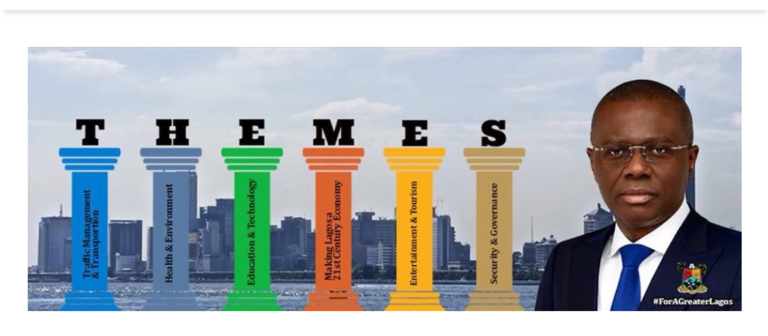
His words: “In our journey towards the Greater Lagos of our dreams, one of the envisaged milestones of success in the T.H.E.M.E.S agenda, is the provision of affordable and decent homes for the ever-increasing population of the State.”
“We are responding to this challenge through the completion of on-going housing schemes, increased collaboration with private investors as well as strategising on innovative technology to increase the speed of completion,” Fatai added.
“As a proof of our commitment, 492 allottees were recently given keys to their homes at Alhaji Lateef Kayode Jakande Gardens in Igando, Alimosho Local Government.”
Already, 360 home units are also nearly completed for habitation at Igbogbo (11b) in Ikorodu local government area. Before the end of the year, our housing schemes at Sangotedo (744 homes), Odo Onosa /Ayandelu (660 units), and Egan Igando to mention a few will soon be made available. This is in addition to the already completed and ready for delivery Peridot Parkland Estate, Idale in Badagry, consisting of 252 housing units”.
Expressing his satisfaction with the quality of houses built at Idale by Echostone Nigeria, the permanent secretary, Ministry of Housing, Wasiu Akewusola, said that more housing schemes will soon be developed by the state with the technology introduced by the firm.
Akewusola said that the partnering firm employed an innovative technology that is fast, safe and energy-saving, adding that “ Lagos State intends to continue to set the benchmark in quality and affordability in housing projects”.
Sammy Adigun, the Director of Echostone Nigeria. who also moderated the virtual conference disclosed that, apart from the benefits accruing to the environment through optimisation of energy consumption, the project also showcases an innovative technology which speeds up housing delivery, utilises lesser energy and generates minimal waste from site activities.
Adigun said, “other eco-friendly attributes include reflective roofing, roofing overhang, positioning of windows to optimise natural light and ventilation so as to reduce the use of electric fans, air-conditioners and light”.
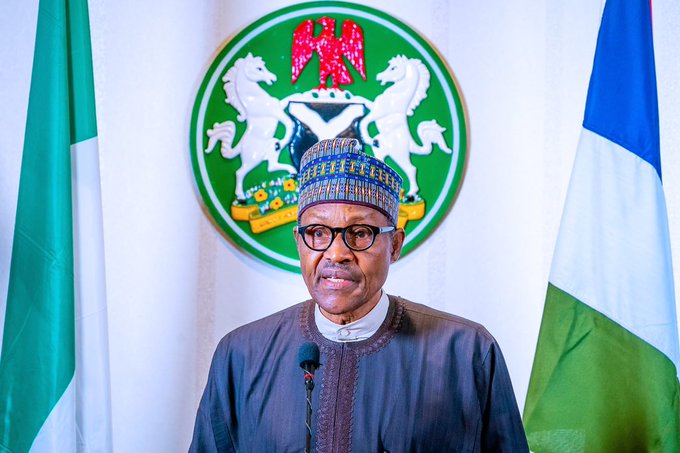
PRESIDENT Muhammadu Buhari has announced a one week extension of the lockdown directive in Lagos, Ogun and the Federal Capital Territory (FCT), effective from today April 27 until Monday, April 4.
The decision, he said, would kick-start a gradual relaxation of the lockdown order at the epicentres of the Coronavirus disease (COVID-19).
Buhari, who spoke during a national broadcast on Monday evening, disclosed that the new instructions were based on the recommendations of the Presidential Task Force on COVID-19, stressing that efforts were being made to ensure that business activities are restored back to normal.
“Based on the above and in line with the recommendations of the Presidential Task Force on COVID-19, the various Federal Government committees that have reviewed socio-economic matters and the Nigeria Governors Forum, I have approved for a phased and gradual easing of lockdown measures in FCT, Lagos and Ogun states effective from Saturday, 4th May, 2020 at 9.00 am,” he said.
“However, this will be followed strictly with aggressive reinforcement of testing and contact tracing measures while allowing the restoration of some economic and business activities in certain sectors.”
The three most affected states have, however, been under lockdown for a month shortly after the nation recorded his first case of COVID-19 in February.
Since the first case was reported, a total of 1,273 confirmed cases have been recorded in the country, with 40 deaths while 239 persons have been discharged.
The President, who disclosed that the Nigeria Centre for Disease Control (NCDC), in partnership with other relevant officials and development partners, is working to intervene in the health crisis in Kano State, also announced a two-week lockdown in the state.
According to him, the use of face masks would be enforced while the social distancing guideline remains.
He said the NCDC has also accredited 15 laboratories across the country with an aggregate capacity to undertake 2,500 tests per day nationwide.
“For the avoidance of doubt, the lockdown in the FCT, Lagos and Ogun states shall remain in place until these new ones come into effect on Saturday, 4th May 2020.”
However, Buhari said other additional information regarding sector-specific details, timing guidelines for business operations and government activities would be made public by the presidential task force.
He added that state governors are at liberty to amend the spelled out guidelines to suit their peculiar need.
Highlights of the new nationwide measures are as below:
Selected businesses and offices can open from 9 am to 6 pm;
There will be an overnight curfew from 8 pm to 6 am. This means all movements will be prohibited during this period except essential services;
There will be a ban on non-essential inter-state passenger travels until further notice;
There will be partial and controlled interstate movement of goods and services will be allowed to allow for the movement of goods and services from producers to consumers; and
We will strictly ensure the mandatory use of face masks or coverings in public in addition to maintaining physical distancing and personal hygiene. Furthermore, the restrictions on social and religious gathers shall remain in place. State Governments, corporate organisations and philanthropists are encouraged to support the production of cloth masks for citizens.
WOMEN farmers in Nigeria are calling on the federal government to include them among beneficiaries of the Coronavirus Disease (COVID-19) palliatives through the provision of grants, improved seeds and credit supports.
The farmers under the umbrella body of the Small Scale Women Farmers Organisation in Nigeria (SWOFON) said the support becomes vital to prevent looming food crises, particularly post-COVID-19 pandemic.
Mary Afan, National President of SWOFON, made the call during a virtual media briefing on Monday.
She said food items in the nation’s grain reserves are being depleted due to the decision of the federal government to open-up the silos to provide food supports to Nigerians during the compulsory lockdown, particularly in Lagos, Ogun and the Federal Capital Territory (FCT).
Afan observed that local farmers are also experiencing gluts in their farm produce due to the movement restriction, thus the need to commence a buy-off scheme to off-take the produce from them.
“As a result of the COVID-19 lockdown and lack of access to markets, farmers are experiencing massive post-harvest losses on fruits, vegetables, fresh products, and other perishables,” Afan said.
“Smallholder women farmers are unable to move their products from their farms to the market or from their rural communities to semi-urban and urban markets. They are also losing income from staple food like maize, rice, wheat, potatoes, cassava, soybeans, yams, sorghum, and plantain, etc. Those engaged in livestock farming, especially poultry, are faced with a lack of access to poultry feeds they usually buy. Fisheries and aquaculture farmers are also affected by the closure or low patronage of hotels and skeletal operations of restaurants.”
According to her, prior to COVID-19, smallholder women farmers were struggling with difficult access to credits, essential inputs, improved seeds, and seedlings, including organic and non-organic fertilisers.
However, the spread of COVID-19, she noted, has exacerbated the situation as the farmers no longer have access to farm inputs at all.
“Being a planting season for farmers, it is pertinent to say that the food crisis is already looming in Nigeria,” she added.
The federal government’s intervention, she noted, would therefore prevent post-harvest losses and restore farmers’ confidence.
“We call on the federal government to announce clear policy interventions during this pandemic to ensure that there is sustained local food production and supply. This also presents an opportunity for us as a nation to become self-reliant in food production and completely wean ourselves from excessive food imports,” Afan added.
Here are the farmers’ demands: “Special community local produce buying and transportation should be arranged to buy produce from smallholder women farmers to ensure the food supply is maintained.
“Smallholder farmers especially women should be exempted from the movement restrictions while observing precautionary measures so that they can go to their farms for work and transport their produce to the market.
“Agricultural extension agents should be exempted from the movement restrictions, so they can provide extension services support to the farmers while maintaining physical distancing and other precautionary measures.
“Special palliatives targeted at smallholder farmers especially women should be designed to provide for the needs of farmers as they are amongst the poor and vulnerable.”
On April 13, President Muhammadu Buhari directed the Federal Ministry of Agriculture and Rural Development (FMARD) to work with the Presidential Task Force on COVID-19 among other relevant stakeholders to ensure the pandemic does not affect 2020 farming season.
On April 26, the Minister of Agriculture and Rural Development, Muhammad Nanono inaugurated a joint technical task team on emergency response to the COVID-19 pandemic.
At the meeting, he met with the committee chairman, Assistant Inspector General of Police, (Operations), Austin Agbonlahor, who promised to ensure free movement of food, livestock, and agricultural inputs nationwide, in order to avoid food shortages.
In her remarks at the briefing, Ene Obi, Actionaid Country Director, identified a need for an insurance cover for the women farmers.
Describing ActionAid as an organisation working to eradicate poverty, promote social justice and gender equality, she promised to ensure issues affecting women farmers are always placed before the policymakers.
“We have deemed it fit to draw the attention of Government to the continual loss of income and livelihoods in the agricultural sector especially for smallholder women farmers, arising from the continued lockdown and restriction of movement.”
THE Nigerian Police have taken stringent measures against officers caught on video for professional misconduct in Osun and Edo states.
In updates shared on NPF’s social media platforms, it was announced that officers Ikuesan Taiwo and Abass Ibrahim caught on video assaulting a woman in Odo Ori Market, Iwo Osun State have been dismissed from the Force.
In the same vein, Ozimende Aidonojie and Salubi Stephen, two officers captured on tape fighting by the roadside in Edo State, were also dismissed following investigations.
Ikuesan, a police inspector, and Abass, a corporal attacked and assaulted a lady identified as Tola Azeez on a weekend during the state-wide lockdown in Osun.
The victim was caught while trying to buy drugs for her relatives at a pharmacy in Odo Ori Market in Iwo by the two officers.
The incident which was captured on video went viral and was immediately condemned by the Police, with the Inspector General of Police (IGP), Mohammed Adamu describing the officers’ actions as unwarranted, unnecessary and unjustifiable.
“Following the IGP condemnation and directives, that the Commissioner of Police immediately arrest and bring the officers to book,” the statement shared on Facebook by the NPF read in part.
On the part of Ozimende and Salubi, both officers came under criticisms after they were caught on video fighting each other by the road side.
The two officers who served under the Edo State Police Command were said to have been arrested and dismissed.
“Cpl Ozimende Aidonojie and PC Salubi Stephen captured in the viral video fighting shamelessly in Edo State, have been tried and found guilty. They have been dismissed from the Force,” the post by the Force Public Relations Department shared on Facebook and Twitter, read.
The disciplinary measures taken against the officers have been welcomed by some Nigerians on social media, with many believing it is a new dawn in the Force.
As the world fights the Coronavirus disease (COVID-19 pandemic, governments; including that of Nigeria have implemented lockdown orders in an attempt to curb the spread of the virus.
In enforcing the lockdown, several reports of police officers imploring draconian measures on citizens have birthed concerns and led initiatives set to tackle any human rights violations.
Just recently, the National Human Rights Commission (NHRC) partnered with Civil Society Organisations (CSOs) to develop an online platform where Nigerians can report any case of human rights violations and abuse by security agents.
This came up following the plethora of abuses perpetrated by security officials in enforcing the lockdown order.
The ICIR earlier reported how some Lagos Task Force officials were captured on tape destroying goods and wares of small business owners for disregarding the lockdown order.
More worrying as of April 16, when Nigeria’s COVID-19 death toll was 12, reports reveal that security forces enforcing the lockdown in parts of Nigeria had killed more people than the virus itself.
According to the NHRC, there is a record of over 100 complaints of human rights violations by security operatives.
It added that between March 30 (when the lockdown began) and April 16, law enforcers killed 18 people extrajudicially, BBC reports.
While the police is yet to respond or debunk the report, it, however, released a statement cautioning officers against trampling on the rights of citizens.
A CIVIL Society Organisation, SayNoCampaign has accused the Federal Capital Territory Administration (FCTA) of selective distribution of Coronavirus Disease (COVID-19) palliatives to residents, particularly in Gwagwalada Area Council.
The group alleged that a selection pass was issued to selected members of the community, thus depriving the less privileged and physically challenged persons of benefitting from the intervention.
“Issue of concern was the suspicious innovation in the distribution exercise, introduced by the Gwagwalada area council, where it issues a certain ‘selection pass’ that automatically qualifies the holder to receive a share of the palliative items when tendered. While the purpose of this novel idea is unclear, community members did accuse the leadership of the area councils, distribution officials and traditional leaders of hoarding the limited ‘selection pass’ and rewarding their loyalists with them while deliberately shutting out majority of the community members who for no faults of theirs did not get the said pass,” Ezenwa Nwagwu, Co-convener of the Non-Governmental Organisation (NGO), said in a statement released at the weekend in Abuja.
“In fact, we gathered that the pass was shared at night between the hours of 8 and 9:00 pm, on Saturday, a day before the end of the distribution exercise in Gwagwalada. Priority was not given to the vulnerable or less privileged as intended.”
He noted that aside from the discriminatory and opaque method adopted, beneficiaries also defied the COVID-19 social distancing guideline.
Nwagwu had raised questions on why the area council failed to map out a more transparent and fair strategy of distribution.
“Why couldn’t the area council stick to its house to house distribution as exemplified during the flag off a day ago? Why aren’t efforts made to properly identify the most vulnerable and make the delivery to them?” he stated.
However, he expressed concerns that with the strategy employed, the purpose of the palliatives might be defeated if the majority of those who truly needed the palliative were left out.
According to him, some persons had allegedly collected over 10 ‘selection pass’ and shared with their friends and relatives who might not need them.
“We are also demanding that the remaining area councils adhere to the beneficiary lists earlier compiled and if the list is exhausted during distribution, the scope can be expanded, by this we will ensure no vulnerable member of the community is exempted from benefiting from the packages,” he stated.
Nwagwu further advised the appropriate authorities of the two remaining area councils to imbibe the principle of transparency, accountability, and fairness, to meet the expectations of their community members.
He promised to continue with the project monitoring assessment at the Abuja Municipal Area Council (AMAC) and Bwari to ensure better distribution exercise.
Ramatu Aliyu, the Minister of State for FCT, while reacting to some of the concerns on Channels Television Sunrise Daily, Monday said four local governments have been served with palliatives.
She explained that each of the wards has representatives at the six council areas and the distribution is being coordinated with inputs from the traditional rulers as well as the council chairmen.
Aliyu, however, disclosed that FCT is targeting five persons per household in the FCT.
“So far, the distribution has been okay. The targeted people are getting served. The old, young, vulnerable, widows, and families that have been decided by their own representatives and groups cleared to be beneficiaries of the goods.”
“They have their standards and also must recognise their people ranging from traditional rulers to recognise indigenes, also, the NGOs to recognise the non-indigenes, religious groups such as representatives of the Christian Association of Nigeria.”
“We are targeting 25,000 bags of rice and 25,000 bags condiments,” she added.
On 13th April, President Muhammadu Buhari directed the inclusion of an extra 1 million beneficiaries to the social safety net. With the inclusion, the total number of expected beneficiaries increased to 3.6 million.