THE International Monetary Fund (IMF) has listed Nigeria as one of the countries to be severely hit by the impact of COVID-19 pandemic.
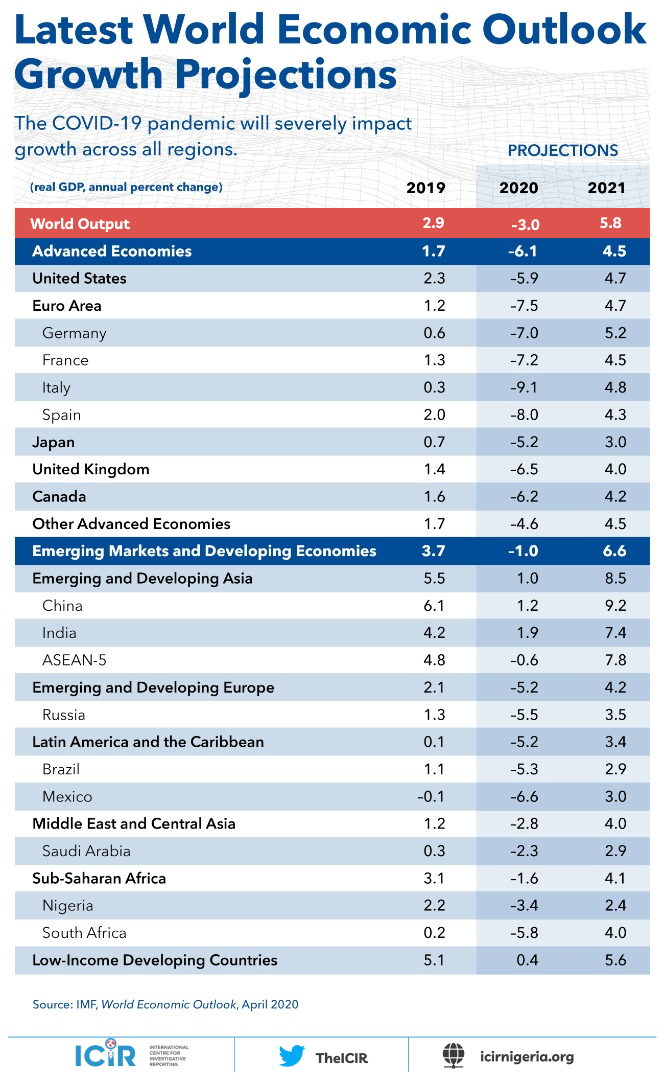
The Fund predicts the annual percentage decline in Gross Domestic Product (GDP) of -3.4 per cent.
According to the April World Economic Outlook, the IMF project global growth in 2020 to fall to -3 per cent, this is a downgrade of 6.3 percentage points from January 2020, a major revision over a very short period.
For the first time since the great depression both advanced economies and emerging market and developing economies are in recession.
According to the IMF, for this year growth in advanced economies is projected at -6.1 per cent while emerging market and developing economies with normal growth levels well above advanced economies are also projected to have negative growth rates of -1.0 per cent in 2020, and -2.2 per cent if you exclude China.
Income per capita is projected to shrink for over 170 countries, both advanced economies and emerging market and developing economies are expected to partially recover in 2021, the report showed.
The IMF said it is developing its one trillion-dollar lending capacity to support vulnerable countries, through rapid-disbursing emergency financing and debt service relief to the poorest member countries.
“We are calling on official bilateral creditors to do the same”.
The coronavirus pandemic has resulted in huge human loss.
As countries implement necessary quarantines and social distancing practices to contain the pandemic, the world has been put in a Great Lockdown, the IMF said.
The magnitude and speed of collapse in the activity that has followed is unlike anything experienced in the lifetimes of many nations.
The ICIR has reported that the Central Bank of Nigeria (CBN) announced six initial policy measures to contain the impacts of COVID-19 on the Nigerian economy.
The IMF has adviced that policymakers must also plan for the recovery, as containment measures come off, policies should shift swiftly to supporting demand, incentivizing firm hiring, and repairing balance sheets in the private and public sector to aid the recovery.
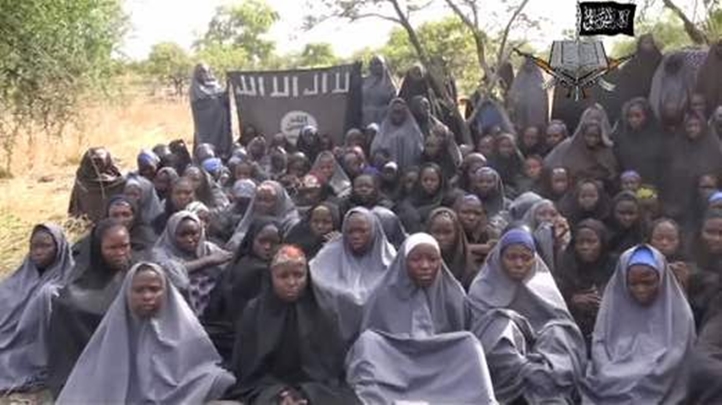
THE Bring Back Our Girls Movement said Presidency copied and pasted the press statement from 2019 to commemorate six years since the abduction of 276 schoolgirls from Government Girls’ Secondary School Chibok, Borno State in 2014.
The group made this known through a press statement signed by Florence Ozor, Gapani Yanga and Nifemi Onifade on behalf of the movement.
“It is most sad and disheartening that the administration copied the statement from last year verbatim and pasted with minor updates like the date to deceive the public,” the group said.
According to the group, President Muhammadu Buhari has forgotten the remaining 112 Chibok school girls, Leah Sharibu who has been in Boko Haram captivity.
Bring back our girls further noted that the war against insurgency in Nigeria has become a ‘decade-long devastation that appears to have no end in sight,’ adding that the government is ignorant of its failure to ensure peace and security of Nigerian citizens.
“The Government remains culpable to its failure to ensure the safety and well-being of its Citizens which ought to be its main priority,” the group noted.
Bring back our girls further noted that the federal government has continued to ignore a number of suggestions that has been made and submitted over the abduction of Chibok girls and other missing persons.
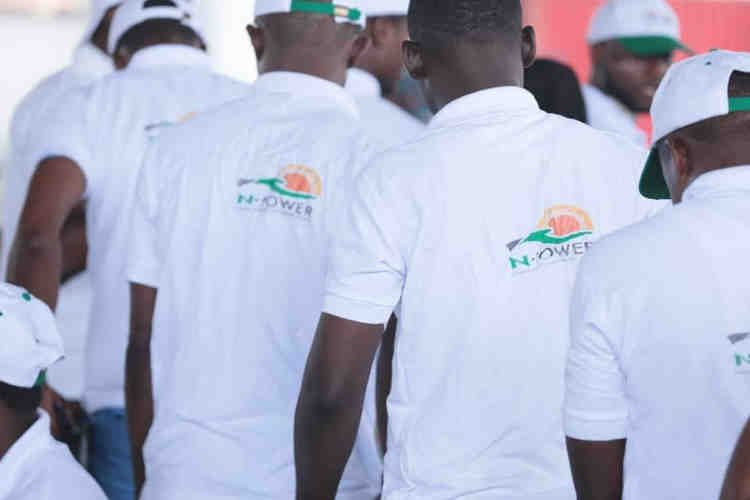
THE Federal Government on Tuesday says it is ready to offset from today, the outstanding monthly entitlements of 500, 000 beneficiaries of the N-Power programme spread nationwide.
Salisu Na’inna Dambatta disclosed in a statement issued on behalf of the Ministry of Humanitarian Affairs, Disaster Management and Social Development that the payments would be done through bank account of the beneficiaries.
He said the minister, Sadiya Umar Farouq, has already signed the payment mandate and followed every due process in line with the required directive.
“Those responsible for processing the payment must do it in conformity with the necessary rules and regulations to ensure accountability,” Farouq stated.
“Now that the rules were followed strictly and the process concluded, I was given the assurance that they will start receiving credit alerts from their banks today, Tuesday, April 14, 2020.”
The N-Power Project is part of the National Social Intervention Programme (NSIP) developed by the current administration to address unemployment in the country.
It is spread across the nation with different categories such as N-teach, N-agriculture etc.
The payment is coming 24 hours after President Muhammadu Buhari directed the inclusion of extra 1 million households to the social register.
“The Ministry of Humanitarian Affairs, Disaster Management and Social Development will along with relevant partners drive the overhauling process to ensure that the expected benefits of the NSIPs are realised in full,” the minister said.
She further promised to ensure transparency, effectiveness, accountability and the judicious application of public resources in running the programmes.
It can be recalled that the N-Power Programme is a job creation and skills empowerment programme of the Federal Government, which is designed to help young Nigerians acquire and develop life-long skills to become practical solution providers in their communities, enabling them to become innovative players in the domestic and global markets.
The N-Power programme was designed for young Nigerians between the ages of 18 and 35.
“Enrolled participants will be weaned off the programme after every 24 months to be replaced by another batch of youths drawn from across the country. Each participant is paid N30, 000 monthly allowance.”
THE European Union (EU) has donated a grant of N21 billion, about €50 million, to Nigeria to aid the fight against coronavirus in the country.
The Special Adviser to President Muhammadu Buhari on Media and Publicity, Femi Adesina, shared the news in a tweet, where he disclosed that the president received the EU delegation at the Council Chambers, State House, in Abuja on Tuesday.
The EU delegation led by Ketil Karlsen said the fund is so far, the largest single contribution to the fight against Coronavirus in Nigeria and the largest support that EU is providing anywhere outside Europe.
This is coming shortly after the president of the EU Commission, Ursula von der Leyen, announced that the EU plans to secure up to €15 billion to help partners worldwide to combat the coronavirus.
Leyen stressed that it is necessary to wage a global war against Coronavirus pandemic.
In response, President Buhari expressed appreciation for the EU’s contribution, stating that the donation would go a long way in stopping the spread of the virus in the country, as well as rejiggering the nation’s fragile healthcare system.
He said the fund which is channeled through the (UN) One COVID-19 Basket Fund is the result of collaboration between the EU, its member states and financial institutions such as the European Investment Bank and the European Bank for Reconstruction and Development.
The fund would help cushion the effect of the COVID-19 pandemic in Nigeria, the president added.
“Indeed, this brotherly support will save millions of lives. Nigeria, Africa and many beneficiary countries across the world will remain grateful for generations to come.’’
President Buhari on behalf of the Nigerian government and the people expressed condolences to EU-member countries and the families of those who lost their loved ones as a result of COVID-19 pandemic.
‘‘Our thoughts and prayers are with the families, friends and communities impacted. We are confident from history that the resilience of Europe and our global collective will enable us to emerge stronger from this tragedy.
‘‘Although the EU is facing significant challenges due to this pandemic, I am indeed touched and grateful that the European Union still has the vision and foresight to remember its friends, partners and allies across the world,’’ he said.
Currently, Nigeria has recorded 343 confirmed cases of COVID-19 and almost a dozen deaths from complications arising from Covid-19.
Meanwhile, Italy, a member of the EU has recorded over 159,000 coronavirus cases and over 20,000 deaths, with its health system completely overwhelmed and the virus still ravaging the country.
To support Italy and other country-members facing tougher situation than African countries, Leyen, in a short address said the EU has provided support by sending doctors and equipments to the affected nations.
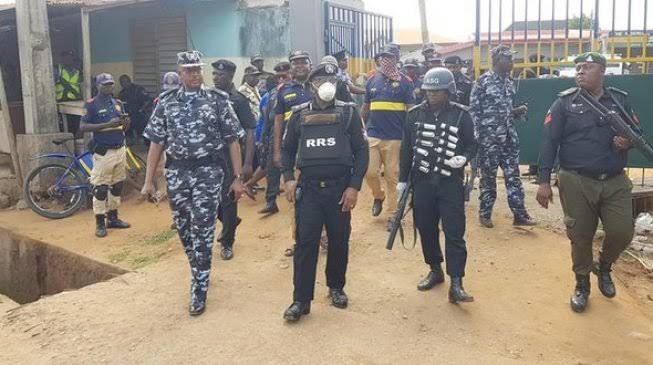
Lagos, Ogun residents are no doubt celebrating this Easter season with caution and trepidation. At any time of the day since the lock down became effective, fear has continued to rule the hearts of many people — it is not that of the unknown — It is a veritable fear of armed robbers, hoodlums and miscreants who strike and operate in raw dare-devilry.
While the wave of armed robbery appears to be sweeping through these two states — Ogun and Lagos respectively — in an alarming manner and with terrific frequency. Many news outlets in screaming headlines, report daily incidences of these nefarious activities perpetrated by armed robbers. Similarly, social media has been abuzz with series of distressing updates about the threats of these men. Sadly, lives and property are at the mercy of these hoodlums.
For days now, It has become sort of a dark dawn for residents of Ifo, Sango, Agbado, neighbouring communities in Ogun State, and even extensively down to some major spots in Lagos.
Many people have lamented about the rising criminal activities occasioned by the lockdown in the state. When these armed men came calling, the men of the underworld came prepared; over hundred of them.
It is quite surprising that metres away from these crime scenes are countless of road blocks and police surveillances, yet these robbers are having a smooth operation.
One would begin to wonder about SARS’ critical role in curbing armed robbery and kidnapping as well as maintenance of law and order.
It raises the question on whether the police have lived up to expectation in discharging their primary responsibility of protecting lives and property.
A situation where innocent residents are attacked by “armed robbers”, and the police fail to stop such nefarious acts, leaves one terrified.
Many residents who indeed are very worried about the recent upsurge in cases of armed robberies, especially those who have been victims of these men, have taken up the position of ‘Amotekun’, in keeping their territory safe.
Even those who are operating under the directives of provision of essential services, have complained and lamented bitterly.
Lagos for example is gradually returning to the old bad jungle days, maybe due to the lockdown. These miscreants who are always living under the bridges or some dark sports, break windscreen to get access to their victims. They waylay passersby to steal their belongings in broad day light.
While it is understandable that the lockdown birthed this sort of insecurity, it is therefore unacceptable that our security agencies have allowed these cases to escalate beyond what it can handle, many residents have used this an opportunity to take up arms and other dangerous items as a means of protection.
It is quite saddening that some of our leaders and politicians have continued to be insensitive to the needs of the society that they are supposed to serve.
The social and cultural order in Nigeria is constantly sending negative ‘stimuli’ that encourage armed robbery as one of the many ‘anomalie’ in the society.
With the current spate of insecurity arising from these criminal elements, everything must be done by “everyone” to ensure that armed robbery attacks and other criminal activities are reduced to the barest minimum.
The security agencies must devise a strategy to ensure that our streets are safe, as they reflect the state of safety or the absence of it in the country.
If these armed robbers and hoodlums are so elusive, like a will-o-the wisp, security agents must devise some equally strategic plans of tackling the menace of these sepulchral objects before they overrun our states.
The International Monetary Fund (IMF) has released a 25 countries list that will receive debt service relief.
They are Afghanistan, Benin, Burkina Faso, Central African Republic, Chad, Comoros, Congo, D.R., The Gambia, Guinea, Guinea-Bissau, Haiti, Liberia, Madagascar, Malawi, Mali, Mozambique, Nepal, Niger, Rwanda, São Tomé and Príncipe, Sierra Leone, Solomon Islands, Tajikistan, Togo, and Yemen.
Ms Kristalina Georgieva, Managing Director of the International Monetary Fund (IMF) in a statement, disclosed that the Executive Board of IMF has approved immediate debt service relief to 25 of the IMF’s member countries under the IMF’s revamped Catastrophe Containment and Relief Trust (CCRT) as part of the Fund’s response to help address the impact of the COVID-19 pandemic.
“This provides grants to our poorest and most vulnerable members to cover their IMF debt obligations for an initial phase over the next six months and will help them channel more of their scarce financial resources towards vital emergency medical and other relief efforts.
“The CCRT can currently provide about US$500 million in grant-based debt service relief, including the recent US$185 million pledge by the United Kingdom and US$100 million provided by Japan as immediately available resources”, she said.
In economics, a Special Drawing Right (SDR) is essentially an artificial currency instrument used by the IMF and is built from a basket of important national currencies.
SDRs are allocated by the IMF to its member countries and are backed by the full faith and credit of the member countries’ governments.
Others, including China and the Netherlands, are also stepping forward with important contributions.
The IMF boss urged other donors to help replenish the trust’s resources and boost further ability to provide additional debt service relief for a full two years to the poorest member countries.
Nigeria’s relationship with the IMF
According to the Central Bank of Nigeria (CBN), Nigeria joined the IMF after her independence in order to participate and benefit from the purposes of the Fund.
In their inter-relationships, the IMF focuses mainly on Nigeria’s macroeconomic policies.
These are policies that have to do with public sector budgets, the management of interest rates, money, and credit and exchange rate; and financial sector policies, particularly, the regulation of banks and other financial institutions (as agreed by the BIS-Bessel Agreements).
The Fund also pays attention to structural policies that affect the macroeconomic performance of Nigeria.
Recall that Nigeria’s former finance minister, Ngozi Okonjo Iweala, was on Friday named a member of the External Advisory Group constituted by the Managing Director of the IMF, Kristalina Georgieva.
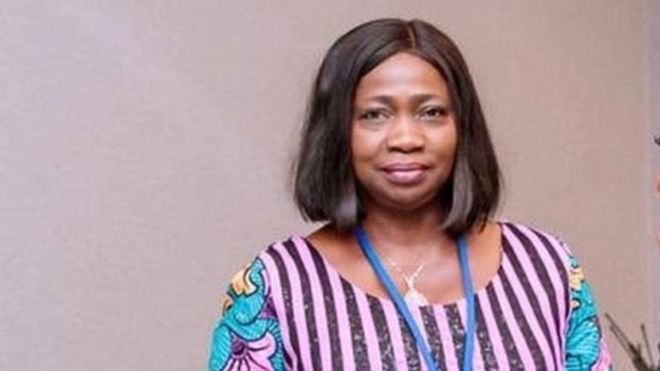
CHAIRMAN, Nigerians in Diaspora Commission (NIDCOM), Abike Dabiri-Erewa on Tuesday disclosed that ticket fare to evacuate Nigerians from the United Kingdom would be subsidised.
She disclosed this in a tweet in reaction to repeated concerns from Nigerians both home and abroad, particularly in the UK.
Some of the aggrieved persons had wondered why the Federal Government could not be responsible for the fare, stressing that intervention by Air Peace during the South Africa Xenophobic attacks could best be described as evacuation rather than the recent claim by the government.
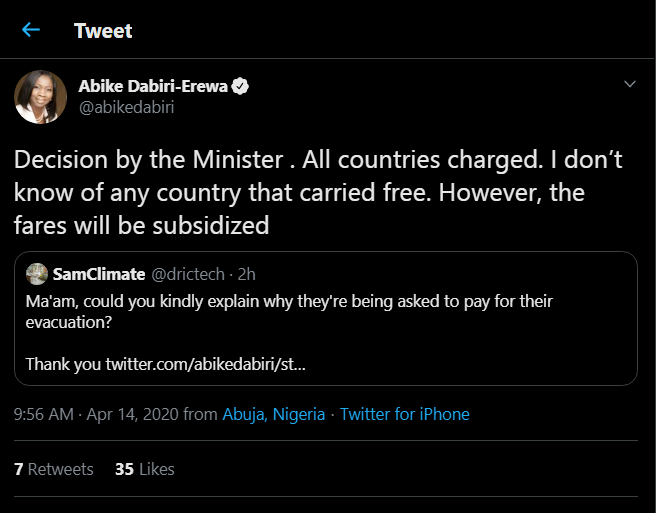
Abike Dabiri Erewa response to subsidizing fares on 14th April, 2020 via her verified twitter handle
But Dabiri insisted that the decision to subsidise the fares was not hers but a cabinet member. She argued that all countries charged their citizens abroad before any evacuation process.
“Decision by the Minister. All countries charged. I don’t know of any country that carried free. However, the fares will be subsidized,” she stated.
Dabiri-Erewa had on 3 April, announced the conditions that interested Nigerians abroad must satisfy before being eligible to be evacuated back home. These include that they must be COVID-19 negative and should be willing to stay under quarantine for 14 days after return.
They would as well shoulder the flight costs involved.
Nigerians won’t pay N160,000 for COVID-19 test – NIDCOM
It could be recalled that The ICIR earlier reported on how Nigerians in the UK were advised to patronise a private laboratory in order to have their COVID-19 tests and were subsequently charged £350 pounds until the firm backed out after alleged extortion.
The report also revealed how the UK government made the test free for all persons irrespective of status, either living in the UK illegally or otherwise.
However, Abdur-Rahaman Balogun, NIDCOM Head of Media and Public Relations debunked the claims.
In addition to his response to The ICIR, he maintained in a statement issued yesterday, April 13 that Nigerian nationals were at liberty to patronise either private or public laboratories for the test.
“…so it is totally wrong to assume that the Nigerian government has ordered citizens in the UK to pay N160,000 for COVID-19 test as precondition or evacuation.”
The COVID-19 pandemic since it broke out in Wuhan China has killed 10 persons in Nigeria, and 91 patients have been discharged from 343 confirmed cases.
A few Nigerians in the UK have also died as a result of the global pandemic.
Globally, 113,675 deaths have been recorded among 1,812,734 confirmed cases of Coronavirus infection in 213 countries.
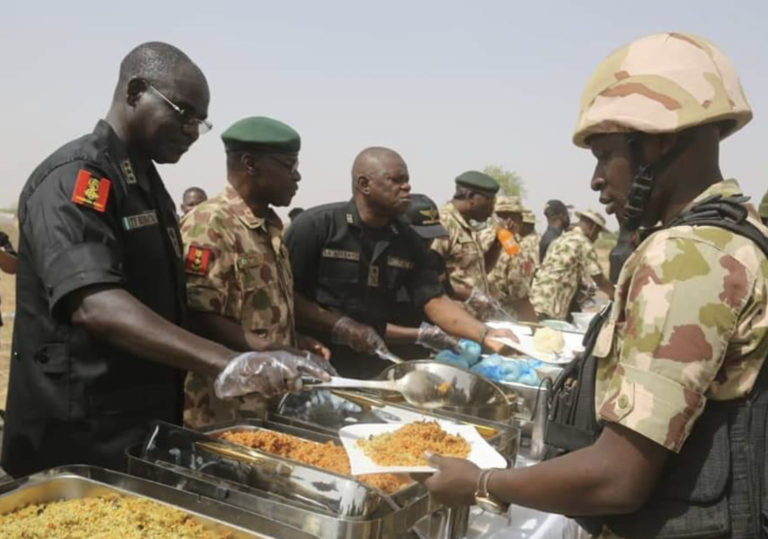
THE Chief of Army Staff (COAS), Tukur Buratai, was captured defying the social distancing rule on Monday, April 13, while serving food to his troops at an Easter luncheon held at Camp Ngamdu in Kaga Local Government Area of Borno State.
This is coming after the COAS announced his relocation to Borno State to intensify the fight against Boko Haram, promising that he will remain in the state till identifiable results are achieved.
However, while Buratai plans to tackle insurgency in the Northeast, his recent actions and that of other commanders may have exposed his troops to the deadly coronavirus infection.
In recent photos shared on the Nigerian Army official Twitter page, Buratai, accompanied by EO Udoh, the chief of training and operations Army; Corps Commander Engineers JS Malu; Theatre Commander Theatre Command OPLD F Yahaya; Commander Sector 2 LA Araba; Brigade Commanders and Commanding Officers, were seen serving the troops food with no face masks on.
The Army leadership could be seen flouting the social distancing rule effected as a measure to curb the spread of coronavirus, which has infected over 300 Nigerians and killed almost a dozen people in the country.
In similar vein, the Governor of Bauchi State, Bala Mohammed, also defied the social distancing protocol few hours after he recovered from COVID-19.
The governor was captured while attending Jumma’at prayers at Bauchi Central Mosque on Friday, April 10.
Mohammed tested positive to the virus and took ill for 16 days after which he recovered and almost immediately joined scores of worshippers in the mosque to pray.
Globally, the growing casualties of the COVID-19 pandemic has forced governments to enforce lockdown orders, travel bans and restrictions to curtail the spread of the virus that has infected over 1.8 million people and killed over 100,000 persons.
With no known cure or vaccine, countries including Nigeria have focused on a containment strategy which requires physical/social distancing in order to prevent further spread of the virus.
To enforce the lockdown in Nigeria, the government has directed the military, police and paramilitary to ensure people adhere to the rules.
The Nigeria Centre for Disease Control (NCDC) has also repeatedly announced that staying home and observing social distancing is the best form of prevention.
The African Centre for Media and Information Literacy (AFRICMIL) has called on Dr. Marilyn Amobi, MD/CEO of the Nigerian Bulk Electricity Trading (NBET) Plc, to comply with the judgment of the National Industrial Court in Abuja which ordered the immediate payment of the salaries, emoluments and accruable benefits of a whistleblower, Sambo Abdullahi, which she has withheld since December 2017.
Abdullahi, head of internal audit in NBET, is being punished for uncovering sundry acts of corruption at NBET.
In the last three years, AFRICMIL has been in the forefront of the campaign for protection of whistle blowers.
In a statement signed by its coordinator, Dr Chido Onumah, the organization reminded the NBET boss that the 30-day window given by Justice Oyejoju Oyewumi of the National Industrial Court for her to comply with the judgment expired on April 10, 2020.
According to Onumah, “Dr. Amobi should do the needful and not treat the judgment of a court of competent jurisdiction with contempt as she treated the directive of the former Minister of Power, Works and Housing, Babatunde Fashola, SAN.”
Onumah said at least on two separate occasions in 2018, Fashola had, following the report of a Ministerial Committee which investigated the crisis in NBET, directed Dr. Amobi to pay Abdullahi his salaries and allowances and treat him like other staff in NBET, but Dr. Amobi defied the Minister by flatly ignoring the directives.
The statement said Abdullahi had suffered enough, having gone without salary for more than two years. “Nobody, more so a whistleblower, deserves this kind of treatment. It is important to point out that Abdullahi has since been vindicated by the ICPC, EFCC, BPE and the office of the Auditor General of the Federation, all of which indicted Dr. Amobi. Government, therefore, has a duty to protect the whistleblower and ensure that he does not continue to be victimized for doing what is right,” Onumah said.
Abdullahi went to court in December 2018 when all efforts to resolve the crisis by the erstwhile Ministry of Power, Works and Housing under Babatunde Fashola, SAN, and the Office of the Secretary to the Government of the Federation proved abortive.
On March 11, 2020, Justice Oyewumi held that the stoppage of his salary, allowance, and other entitlements such as annual leave, was wrongful. She ordered the payment of all the salaries and the allowances within 30 days, failure of which will attract 21% annual interest.
PRESIDENT Muhammadu Buhari has extended the lockdown imposed on Lagos and Ogun states as well as Federal Capital Territory (FCT), Abuja to contain the spread of Covid-19 by another 14 days with effect from 11:59 pm Monday April 13.
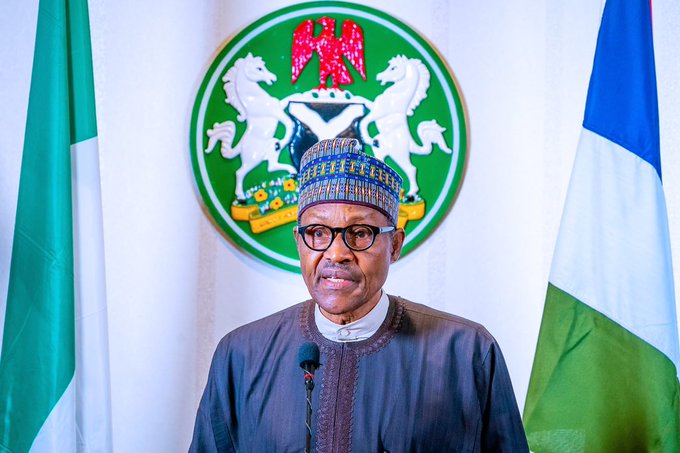
The president announced the extension of the lockdown down in a nationwide broadcast on Monday evening, saying “This is a difficult decision to take, but I am convinced that this is the right decision. The evidence is clear.”
This follows the expiration of the first 14-day lock down imposed on Lagos and Ogun states including FCT on March 29 when Nigeria had recorded only 131 confirmed cases of Covid-19.
In announcing the extension, president Buhari noted that the cessation of movement, physical distancing measures and the prohibition of mass gatherings remain the most efficient and effective way of reducing the transmission of the virus.
Countries with extended lockdown due to COVID-19
“By sustaining these measures, combined with extensive testing and contact tracing, we can take control and limit the spread of the disease,” he said.
He added that the government’s approach to the virus “remains in two steps,” which according to him was first to protect the lives of Nigerians and residents living here and second, to preserve the livelihoods of workers and business owners.
“With this in mind and having carefully considered the briefings and Report from the Presidential Task Force and the various options offered, it has become necessary to extend the current restriction of movement in Lagos and Ogun States as well as the FCT for another 14 days, effective from 11:59 pm on Monday, 13th of April, 2020. I am therefore once again asking you all to work with Government in this fight.”
While citing the examples of the Mosques in Makkah and Madina that have been closed due to the Covid-19 pandemic, president Buhari also noted that the Pope celebrated Mass on an empty St. Peter’s Square.
“The famous Notre Dame cathedral in Paris held Easter Mass with less than 10 people. India, Italy and France are in complete lockdown. Other countries are in the process of following suit. We can not be lax,” he said.
Speaking on the lock down, he added that the previously issued guidelines on exempted services shall remain.
According to the president during his broadcast on March 30, the lock down order did not apply to hospitals and all related medical establishments as well as organizations in health care related manufacturing and distribution.
He added that commercial establishments such as; food processing, distribution and retail companies;
petroleum distribution and retail entities, power generation, transmission and distribution companies; and private security companies are also exempted.
While noting that though these establishments are exempted, their access would be restricted and monitored.
Despite cries and hues that the first 14-day lock down has put a lot of people into hardship, President Buhari explained that ” the repercussions of any premature end to the lockdown action are unimaginable.
“We must not lose the gains achieved thus far. We must not allow a rapid increase in community transmission. We must endure a little longer.”
He said the government made this very difficult decision knowing that it would affect livelihoods of many Nigerians.
He added that such sacrifices were needed to limit the spread of Covid-19 in the coutry, and necessary to save lives.
“Our objective was, and still remains, to contain the spread of the Coronavirus and to provide space, time and resources for an aggressive and collective action.”
He expressed satisfaction with the level of compliance to the Covid-19 guidelines issued, which according to him has been generally good across the country.
The president commended what he described as the massive support from traditional rulers, the Christian Association of Nigeria (CAN) and the Nigerian Supreme Council for Islamic Affairs (NSCIA) during this pandemic.
He also acknowledged the support and contributions received from public spirited individuals, the business community and our international partners and friends.
“I must also thank the media houses, celebrities and other public figures for the great work they are doing in sensitizing our citizens on hygienic practices, social distancing and issues associated with social gatherings,” he said.
Buhari said due to the overwhelming support and cooperation received, the country was able to achieve a lot during the 14-day of initial lock down.
He stated that the government implemented comprehensive public health measures that intensified case identification, testing, isolation and contact tracing capabilities.
“To date, we have identified 92 per cent of all identified contacts while doubling the number of testing laboratories in the country and raising our testing capacity to 1,500 tests per day.
” We also trained over 7,000 healthcare workers on infection prevention and control while deploying NCDC teams to 19 states of the federation,” he said.
He further stated that Lagos and Abuja today have the capacity to admit some 1,000 patients each across several treatment centres.
The president recognised the incredible work being done by healthcare workers and volunteers across the country especially in front-line areas of Lagos and Ogun states as well as the Federal Capital Territory.
“You are our heroes and as a nation, we will forever remain grateful for your sacrifice during this very difficult time. More measures to motivate our health care workers are being introduced which we will announce in the coming weeks,”he said.
Though the president said Nigeria as a nation, was on the right track to win the fight against COVID-19, he expressed concerns about the increase in number of confirmed cases and deaths being reported across the world and in Nigeria specifically.
“On 30th March 2020, when we started our lock down in conforming with medical and scientific advice, the total number of confirmed cases across the world was over 780,000.
“Yesterday, the number of confirmed Covid-19 cases globally was over one million, eight hundred and fifty thousand. This figure is more than double in two weeks!
” In the last fourteen days alone, over 70,000 people have died due to this disease.
“In the same period, we have seen the health system of even the most developed nations being overwhelmed by this virus.”
While recalling that Nigeria had 131 confirmed cases of Covid-19 in 12 States on March 30 and two fatalities, he lamented that as of morning of Monday April 13 Nigeria had 323 confirmed cases in 20 States.
“Unfortunately we now have ten fatalities. Lagos State remains the center and accounts for 54% of the confirmed cases in Nigeria. When combined with the FCT, the two locations represent over 71% of the confirmed cases in Nigeria.”
Meanwhile. several other governments have also extended lockdown periods in their countries. They are South Africa, Rwanda, Italy, Spain, India, France, Germany, Belgium and Saudi Arabia.