Home Blog Page 2127

Group cautions FG, States against politicising Conditional Cash Transfer meant for the poor

AN anti-corruption civil society organisation, Human and Environmental Development Agenda, (HEDA Resource Centre) has warned the Federal and State governments to stop politicising the conditional cash transfers meant for vulnerable people in the country.

HEDA in a press statement signed by the chairman of the group, Olanrewaju Suraju asked the governments to stop confusing the three-year old Conditional Cash Transfer (CCT) with relief package designed to alleviate people confronted with fresh conditions of poverty brought by the COVID-19 lockdown.

According to Suraju, the Minister of Humanitarian Affairs and Disaster Management, Sadiya Umar Farouq, is confusing the Conditional Cash Transfer programme launched in 2016 with the palliative measures aimed at reducing the economic hardship associated with the COVID-19 spread and governments’ lockdown directives.

Suraju said: “The minister is suspected to have deliberately acted in this manner to blur the line of accountability, disguising the conditional cash transfer as payment under the COVID-19 intervention and relief package. The payment presently is only made to about 900,000 households and not over 2 millions as claimed by the ministers.

“The least we owe Nigerians is not to play politics with the misery of millions of people. The fact is that the CCT began in 2016. It should not be confused with any measure of any Government to tackle the hunger and poverty occasioned by the lockdown. They are two different distinct programmes. One cannot substitute for the other,” Suraju noted.

The group slammed state governors who according to them launched the CCT as if it is a palliative initiated by them, adding that such action shows that many of them do not have an indigenous way to respond to the economic hardships caused by coronavirus.

HEDA also charged the governments to include democratic and legislative measures in dealing with COVID-19 fallouts, adding that a due process should be followed in the disbursement of local and international donations the FG and States are receiving in the fight against the coronavirus.

Prayer, unity, key to ending COVID-19 pandemic, says FCT Minister

PRAYERS and unity are essential if Nigeria must end the current COVID-19 pandemic, the Minister of the Federal Capital Territory,  Muhammad Bello has said.
The Minister, noted this while urging Christians in the territory to use the occasion of the celebration of Easter to pray fervently for the end of the COVID 19 pandemic which has so far claimed thousands of lives across the world.
In a press statement signed by the Chief Press Secretary to the Minister, Anthony Ogunleye, Bello said ” history has shown that when people turn to God in true supplication, in times of distress, the Almighty indeed answers prayers”.
According to him, Easter, as one of the holiest celebrations for Christians provided a great opportunity to pray to God to heal the sick and prevent a further spread of the disease across the Territory.
He equally encouraged residents to use the Easter celebrations to imbibe the spirit of unity which the FCT symbolises.
“I urge you to use this season to reflect on the significance of the FCT as the Center of Unity of our country. This is the season to show true neighborliness and reach out to the needy and the less privileged who have been impacted negatively by COVID 19,” the Minister said in the statement.
He disclosed that “the disease is such that it does not discriminate between the haves and the haves-not and is no respecter of age or religious beliefs. We must, therefore, come together as communities to fight it together.”
While advising residents to follow all the health protocols of constant hand-washing, the Minister also called on them to constantly use of alcohol-based sanitizer, and observing social distancing.
“The best way to beat this disease is not to contract it. This is one time where prevention is most certainly better than cure. You must, therefore, be disciplined and maintain personal hygiene by observing to the letter, prevention protocols of constant hand washing, use of alcohol-based sanitizers and observance of social distancing,” he added.
He also charged residents to observe the stay-at-home directives of the government, saying that it was the one way to curtail the spread of the virus and allow for contact tracing by the health authorities.
Nigeria has witnessed over 300 cases as at the time of this report.

Despite lockdown, no-movement order, transport companies still embark on night journeys

“ALL citizens in these areas (Lagos, Ogun, and Abuja), are to stay in their homes. Travel to or from other states should be postponed. All businesses and offices within these locations should be fully closed during this period.”

The above statement is that of President Muhammadu Buhari during his lockdown speech two weeks ago.

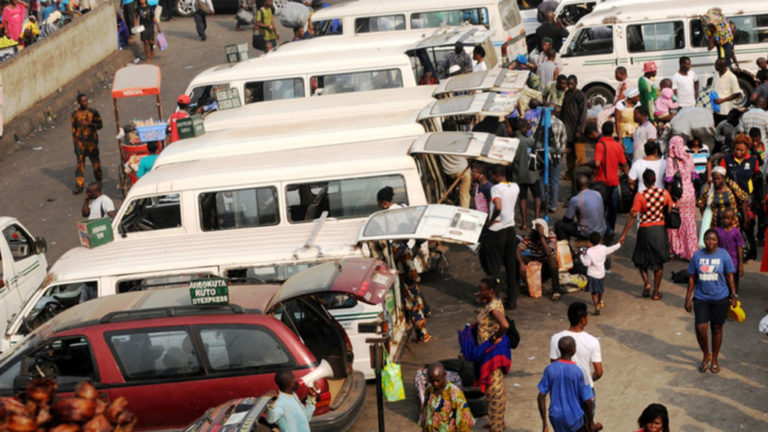
Despite stating clearly that there will be no movement, Rule of Law and Accountability Advocacy Centre (RULAAC), in a press statement issued by the Executive Director Okechukwu Nwanguma, said some commercial transport companies are defying the lockdown and no-movement-order and continuing to embark on interstate night journeys.

Okechukwu said, “Police officers on the road across States who ought to enforce the lockdown and prevent such outlawed dangerous movements which is a veritable means of further spread of this virus across states receive a bribe from the defaulting commercial drivers and allow them to pass.

“Many recently reported index cases in states like Anambra and Kano were reported to be people who traveled from Lagos, currently the most hit state in Nigeria.

“An example is a Libra Motors bus carrying passengers which departed from Cele terminal in Lagos on the night of Friday, April 10 and arrived Owerri the next day- Saturday. Each passenger was charged fifteen thousand Naira.

“The driver simply stretched out his hands and handed the police officers money at each checkpoint and was allowed to continue.

“These intransigent Nigerians, including the transport companies’ management and their passengers are sabotaging the efforts of the state and federal governments to contain the further spread of the virus. The transport companies choose to make brisk money and expose other law-abiding Nigerian citizens and residents to the risk of infection and wider spread of the ravaging disease. Police officers, who ought to enforce the no-movement order instead also exploit the opportunity to make their own money.

“The management of the transport companies, their drivers and passengers should be identified and isolated for necessary checks.”

He urged that the Police authorities should identify the police officers involved and ensure that they are dealt with appropriately, ensure strict monitoring of transport companies’ parks and terminals, especially at night to prevent this ominous act of lawlessness.

Petrol retailers in Abuja are complying with official petrol price, Remaco Petroleum Limited is an exception

0

AT the entrance of A.A Rano filling station, Nyanya, at the outskirts of Abuja, Ene (who didn’t disclose her surname) a fuel attendant was attending to customers, and cracking jokes as she beckoned on other customers to buy from her.

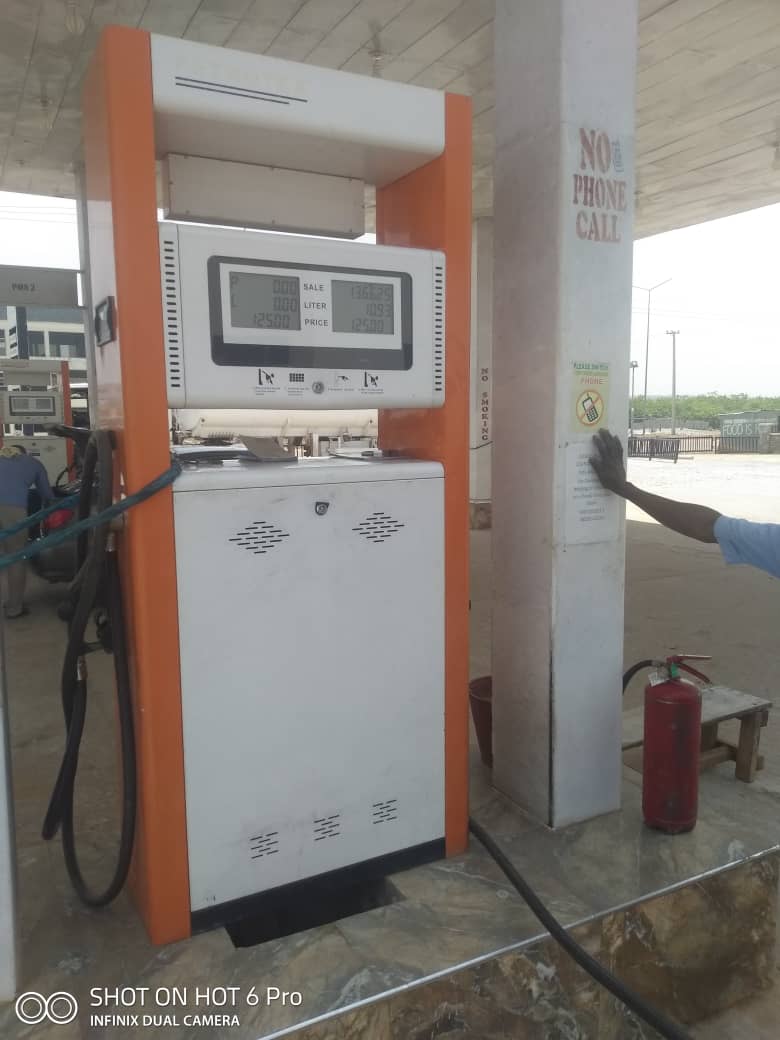
When The ICIR reporter approached her to confirm how much a litre of petrol was sold, she pointed at the digital fuel dispenser displaying in front of her which revealed that the price was pegged at N125 against the government’s official pump price of N123.50k per litre of Premium Motor Spirit, PMS, also known as petrol.

“It’s not my filling station I sell based on the instructions given to me by my manager if I’m told to sell at a particular price why should I question it when he’s the person paying my salary,” she said.

On April 1, the Petroleum Products Pricing and Regulatory Agency, PPRA, through its Executive Secretary, Abdulkadir Saidu, announced that all retail petrol outlets should start selling at the new pump price of N123.50k per litre of petrol.

“In line with government approval of a new price regime effective 19th March 2020 in which there was a provision for the establishment of a price band within which oil marketing companies (OMCs) are expected to sell at the retail stations,” the statement read.

Oil retailers were to choose between two price bands of N123.50k and N125 at which they were supposed to sell to their customers.

The reduction is based on the reduced landing cost of petrol into Nigeria which is caused by the global decline of crude oil prices.

Investigations by The ICIR revealed that several petrol marketers in Abuja are complying with the directive of the PPPRA by selling at the former pump price of N125 per litre of petrol which is within the price range.

Some of the areas within Abuja that were visited by The ICIR include Lugbe, Nyanya, Gwarimpa, Wuse, and Bwari but the marketers have not adjusted their pump price to the new price of N123.50k.

Ahmedu Okopi, commercial motorcyclist plying Mararaba – Nyanya axis who spoke to The ICIR reporter said he didn’t understand the drop in the pump price because the current price of N125 was fair.

“I don’t know about the N123.50k per litre of petrol because filling stations are still selling at N125 per litre but for Okada riders like us who buy petrol in small quantity there is no difference. For instance, if I buy two litres at N123.50k which is about N246 when coins are not in circulation they will still charge me N250 which is the same thing as at N125,” he said.

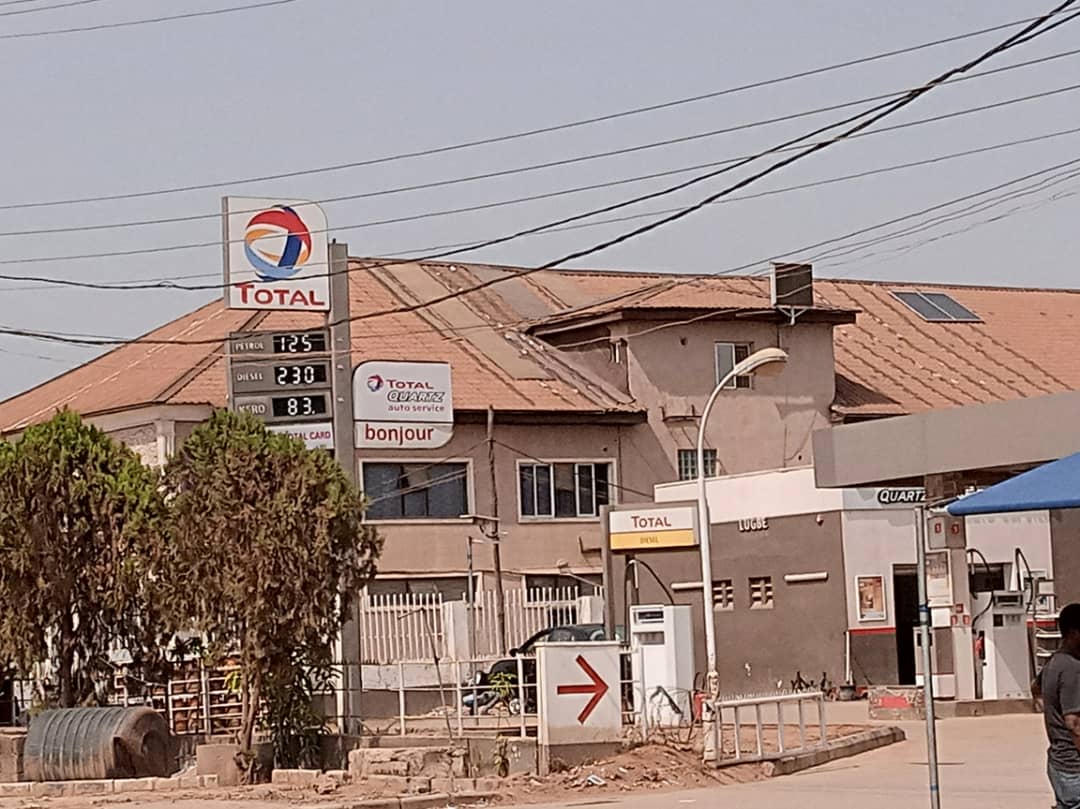
Total filling station, Corner shop, Lugbe. Source: The ICIR

At BGT International Limited, a petrol station in Gwarimpa which was formerly owned by Nigeria National Petroleum Corporation, NNPC, a litre of petrol was sold for N125, an attendant who spoke to The ICIR said the marketers were yet to implement the reduction in price by the Federal Government.

Also Total petrol station, Gwarimpa were yet to adjust to the current price of N123.50k per litre as they continued to maintain the former price of N125 per litre.

Along, Airport Road at NIPCO Filling Station, the manager who identified himself as Aliyu stated that without a directive from the headquarters to adjust the prices on both the board and dispensing machine they will continue to sell at the new rate.

Conoil, Kuduru, Bwari Area Council, Abuja

“Even if you place a knife on my neck, there is nothing in can do because I can’t operate it except they give order from the main office,” Aliyu said.

Other oil marketers in Lugbe still retaining the old pump price of N125 include Total filling station located at Corner-shop, Danmarana filling station at Kapwa, NNPC filling station and Nazeed Glorious Limited.

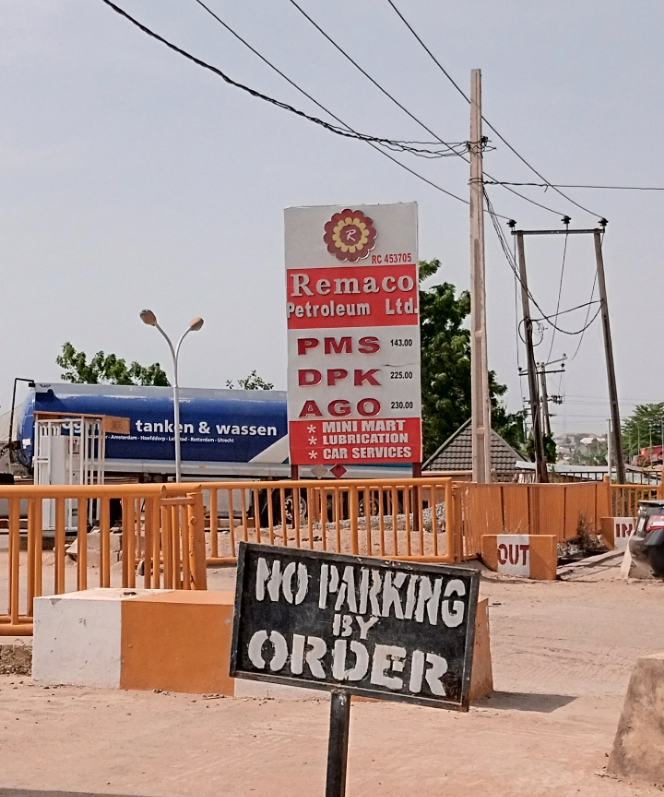
However, Remaco Petroleum Limited in Lugbe was the only exception as it was still selling at N143 per litre which was in contravention of the recent directive of the PPPRA.

Oando Filling Station, close to Berger Bridge and Total Filling Station in Wuse Zone 5, are also selling at N125 per litre of petrol. The ICIR sought to know from the PPPRA why the oil marketers were not selling at the lower band price ceiling of N123.50k.

Kimchi Apollo, spokesperson of the PPPRA who spoke to The ICIR in a phone interview said the price band was to grant the oil marketers leverage for inconveniences incurred from the purchase of old stock of petroleum products.

“If an oil marketer is selling at N125 it’s still within the price band we put in place for them, it’s their choice so that they can cover for any inconvenience the change in price will have for oil marketers with old stock,” he said.

Mele Kyari, Group Managing Director, GMD, of NNPC in an interview declared that the era of fuel subsidy in Nigeria had gone forever.

According to him, the NNPC was not responsible for petroleum products pricing but Nigeria was currently transiting into a market situation where the forces of demand and supply would determine the cost of petrol.


COVID-19: South Africa, US, India, others extend lock down as infection continues to mount

0

AS the Covid-19 pandemic continues to ravage countries of the world, a number of world leaders are already extending lock down imposed in their countries to contain the spread of the disease.

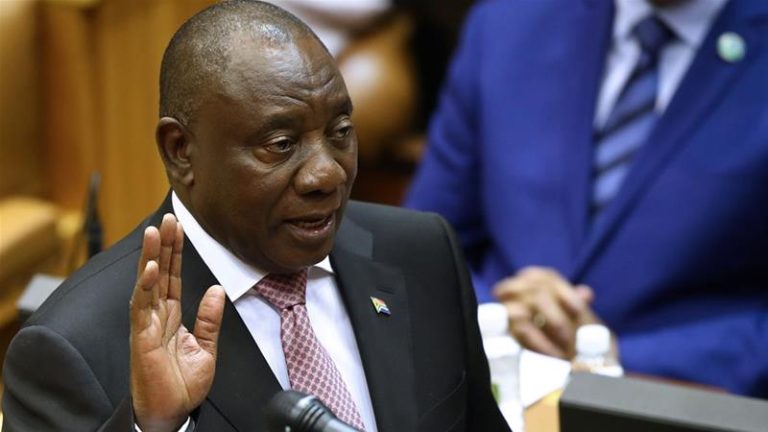
Cyril Ramaphosa, South African President announced a two-week extension of the lock down in the country.

“There is sufficient evidence to show the lock down is indeed working,” with the rate of new infections slowing, Ramaphosa said Thursday in a televised address. “Unless we take these difficult measures now, unless we hold this course a little longer, the coronavirus pandemic will engulf, and ultimately consume, our country.”


READ ALSO:

The government initially imposed a 21-day lockdown on March 27, which is being enforced by the police and military and only allows people to leave their homes to buy food, collect welfare grants and seek medical care — unless they provide essential services.

South Africa has confirmed 1,934 Covid-19 infections —the most in Africa—since the first case was detected on March 5. There were 89 new infections reported on Thursday, with cases confirmed in all nine provinces.

“The struggle against the coronavirus is far from over,” Ramaphosa said. “If we end the lock down too soon and too abruptly, we risk a massive and uncontrollable upsurge in the disease.”

Rwanda has also extended a strict lock down imposed to help curb the coronavirus pandemic in the country. The measure was announced on March 21.

The lock down was to end this weekend but was extended by the cabinet on Wednesday after the number of confirmed cases climbed from 17 to 82 in two weeks, the BBC said.

Italy and Spain are preparing for several more weeks under lock down as volatile coronavirus infection rates prevent Europe’s governments from easing curbs on public life.

Giuseppe Conte, Italian Prime Minister, whose country has reported the most virus-linked deaths worldwide, is leaning toward an extension to early May, though a small number of businesses may be allowed to reopen. Spain prolonged a state of emergency until April 25 while the UK is also likely to extend restrictions.

Angela Merkel, German chancellor, on Thursday also extended the lock down in 16 states to April 19 as the initial lock down was to be lifted this weekend.

In India,  it appears the government is set to extend its 21-day lock down for all 1.3 billion citizens for two more weeks, carrying it to the end of April.

During a meeting with top officials, the Prime Minister Modi, said the lock down had helped blunt the outbreak but that “constant vigilance is paramount,” according to a statement from his office.

Belgium went on lock down on March 17, following the government’s orders to limit contact. But on March 22, the lock down was extended to April 19; residents are only allowed essential visits to the supermarkets, pharmacies and banks in cases of emergency.

While on Friday, Turkey ordered a two-day curfew extension for 31 provinces, Denmark may reopen kindergartens and schools starting next week if cases of the infection drops.

Similarly, Saudi Arabia’s King Salman ordered the extension of curfew until further notice because of the spread of the coronavirus, the Saudi Press Agency reported.

The Saudi king previously ordered a curfew that took effect on March 23, from 7 p.m. to 6 a.m. local time for 21 days, according to Reuters, which cited state media. Saudi Arabia placed capital city Riyadh and other big cities under a 24-hour curfew and locked down much of the population.

The United States, now under a major disaster declaration for the coronavirus pandemic after its death toll reached the highest in the world on Saturday with over 20,000 death having half of the fatalities in New York alone.

All 50 states as well as the U.S. Virgin islands, the Northern Mariana Islands, Washington, D.C., Guam and Puerto Rico have received a federal disaster declaration.

President Donald Trump approved a disaster declaration for Wyoming on Saturday, which comes 22 days after the first disaster declaration in New York, the epicentre of the virus.

Nigeria on March 30 implemented a sweeping lock down for three major states, Lagos, Ogun and Abuja in a bid to slow the spread of coronavirus in the country.

Buhari may also extend Nigeria’s lock down

There are strong indications that President, Muhammadu Buhari may extend the lock down order in Lagos, Ogun and the Federal Capital Territory (FCT),Abuja as at the last tally released on Saturday by the Nigeria Centre for Disease Control (NCDC), Covid-19 has infected 318.

The Chairman of the Presidential Task Force and Secretary to the Government of the Federation, Boss Mustapha, spoke at Friday’s edition of the committee’s daily media briefing where he said the president reserves the right to extend the lock down.

“The decision on whether to extend the lock down or not is exclusively the decision or responsibility of the President. Ours (the PTF) is to provide him with first-hand information that would inform that decision. Therefore, I cannot speculate on that now,” Boss said.

“However, looking at what is happening in other climes, you would be able to deduce what might likely happen, but I am not in a position to speculate on that,” he added.

However, 70 people have been discharged while 10 deaths have been recorded so far.

Coronavirus: Food insecurity is another looming disease facing the entire population, Group warns FG

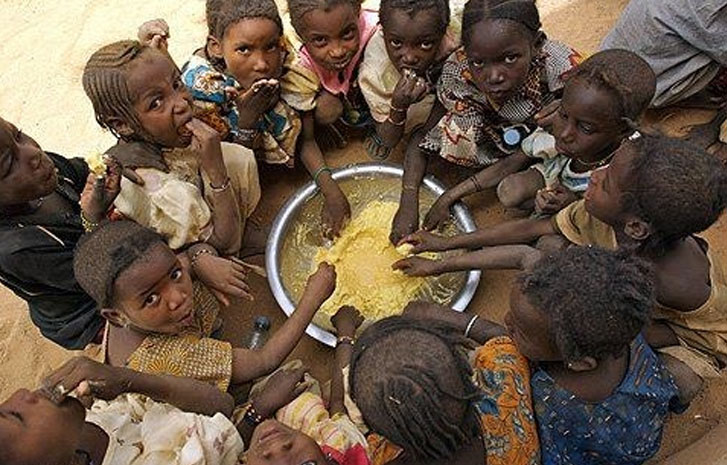
THE National Association of Nigerian Traders (NANTS) and West African Institute for Trade and Agricultural Development (WAITAD) have called on the Federal Government to look into the food security implications that are gradually manifesting due to the effect of coronavirus, describing it as a looming disease facing the entire population.

The associations in a joint statement released and sighted by The ICIR noted that the COVID-19 pandemic has commanded extreme measures and restrictions in different parts of the world including Nigeria.

The statement was signed by Ken Ukaoha, the Secretariat President of the association.

However, Ukoha pointed out that the dwindling oil price has shown the unsustainability of Nigeria’s sole revenue and as such, it enjoined the Federal Government to effect measures that will activate diversification of the economy now.


READ ALSO:

He advised that while the government was focused on fighting the Covid-19 pandemic and investing time, money and energy into battling the deadly virus, it should consider empowering youths and more Nigerians to grow the agricultural sector, to curtail the imploding food insecurity that is being birthed by the lock down directive.

“We note with serious concern that while funding and governance attention have been deposited at the feet of the health sector, and perhaps rightly so, under the present emergency situation; however, food security and the livelihoods of the population which is another looming disease facing the entire population (and perhaps potentially deadlier in propensity) appears not being contemplated for urgency of strategic planning by the government at all levels.

“NANTS and WAITAD therefore appeal to the government to urgently awaken Nigerian economic managers including the President’s Economic Advisory Council to begin immediate considerations and thinking outside the box preparatory to addressing post Covid-19 economic environment, particularly vis-à-vis the future of food security before it comes too late,” the statement read in part.

In suggesting means of effecting a solution, the group called on the Nigerian military to end the raging and long drawn battle and finally decimate and completely erase insurgency, banditry, kidnapping and all other nagging security detractors in the country, describing it as a three-hydra demon that is frustrating the formation of the agricultural sector in the country.

It submitted that it is time the government provide means to support farmers and their national organisations to improve cultivation and harvest.

The group also urged the government to focus on ways of rejigging the economy by producing an economic blueprint that seeks to address the short, medium and long term economic development plan and the unfortunate realities currently facing the nation courtesy of Covid-19 and other related trade, revenue and macroeconomic shortfalls.

Meanwhile, The World Health Organization (WHO) has said that some African countries could see a peak in coronavirus cases in the coming weeks, calling that testing should be urgently increased in the region.

As at the time of filing this report, Nigeria, has recorded 318 cases, with 10 deaths.

Stop forceful COVID-19 tests, inhumane actions against our nationals, African envoys in China demand in protest letter

THE African Group of Ambassadors in Beijing are calling for an immediate halt to what it described as forceful testing, quarantine among other inhumane treatments meted at African nationals who are resident in China.

The group particularly made reference to viral videos in Guangdong Province, which showed how Africans were discriminated against, forced out of their homes, hotels and denied access to basic amenities.

In a protest letter shared with Moussa Faki Mahamat, the Human Rights Council, Chairperson, African Union Commission, and other relevant bodies, the ambassadors reminded the Chinese authorities of outstanding relationship with the African nations, especially as to helping China secure permanent seat at the United Nations Security Council, aside collaborative effort on the recent Covid-19 disease, yet the human rights violation.

As a result, Mahamat met with Mr. Liu Yuxi, the Chinese Ambassador to the AU to express his concern and need to urgently address the situation.

“We would also want to bring to your attention the possible backlash in our home countries of this obvious human rights violation,” the African envoys’ letter read.

“It is therefore worrisome, following this excellent cooperation and mutual friendship that, the African Group of Ambassadors observes with consternation, the discrimination and stigmatization of Africans whereby they are made to forcefully, and in a very crude manner to undergo epidemic investigation and Nucleic Acid Test, fourteen (14) days quarantine even if they had not travelled outside their jurisdictions, not come into contact with infected persons, not had close contact or showing any symptoms of the COVID-19.”

It could be recalled that Femi Gbajabiamila, Speaker of the House of Representatives had summoned the Chinese Ambassador in Nigeria over the same viral video which revealed seizure of Nigerian passports from the Nigerian citizens among other concerns.

During the meeting, the Chinese envoy in Nigeria claimed to be ignorant of the development but promised to contact the home office to verify the allegation.

However, the group of African envoys in China urged the Chinese government to apply similar treatment it would accord to its citizens to Africans in the Chinese territory.

“The Group of African Ambassadors in Beijing immediately demands the cessation of forceful testing, quarantine and other inhuman treatments meted out to Africans in Guangdong Province in particular and the whole of China and also demands that Africans are treated the same as Chinese and other nationals in the fight against COVID-19.”

Other notable concerns expressed by the African ambassadors include:

  • African nationals ejected including Togolese, Nigerians, and Benenois from their hotels in the middle of the night only because they are Africans;
  • A group of African students studying in Sun-Yat Sen University in Guangzhou were made to undergo the Nucleic Acid Test, in spite of the fact that they had no travel history within the stated period.
  • Selective testing of African students while their non-African colleagues are left out.
  • There were cases of African men married to Chinese ladies and they were demanded to take the COVID-19 test and their Chinese families left out. In some cases the men were pulled out of their families and quarantined in hotels alone.
  • Forced evictions of Africans from their various apartments and thrown into the streets even those with infant children.
  • Seizure of passports of African nationals in violation of international practices and conventions
  • Persistent harassment and humiliation of African nationals by subjecting them to unwarranted medical examinations after testing negative for the COVID-19, and forced into quarantine, irrespective of their negative status;
  • Threats of revocation of visas, arrest, detention and deportation of African legal migrants for no cogent reason which infringes on their human rights.

“From the foregoing the impression is being created as though the spread of the virus is caused by Africans contrary to the fact that, in China and indeed globally, Africans are the least exposed to Covid-19 or is there any other reason for which Africans are being targeted other than Covid- 19 that we are unaware of?” it stated.

However, the coalition renewed commitment with the Ministry of Foreign Affairs of the People’s Republic of China and the International Department of the Communist Party of China.

Environmentalist seeks probe into cause of dead fishes on Bayelsa shoreline

0

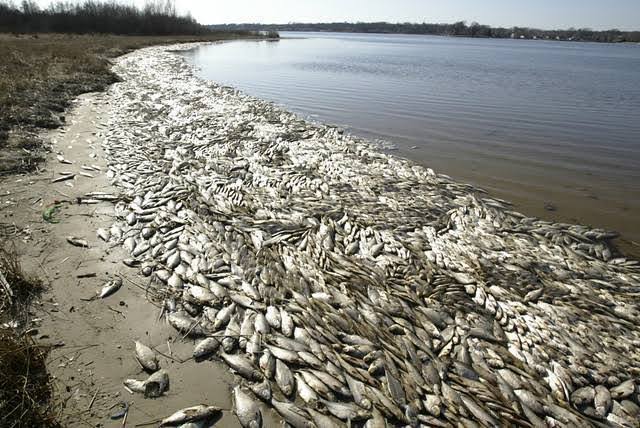
A RENOWN Environmentalist Rev Nnimmo Bassey has urged governments and oil industry regulators to investigate the cause of dead fishes littering the Atlantic coastline in Delta and Bayelsa.

Bassey who made the call in a reaction to reports of massive death of fish by coastline residents noted that the development portends danger capable of wiping off fish species and depletion of the biodiversity of the Niger Delta.

Bassey who holds a National Honours Award of Member of the Order of the Federal Republic (MFR) for Environmental Activism spoke in Yenagoa on Saturday.

He observed that the littering of the coastline for more than three weeks may be an indication of increased toxicity of the coastline adding that consuming the dead fishes may pose a public health danger.


READ ALSO:

“We have been listening to hear exactly what triggered the death of so much fish that washed onshore.

“By this time NOSDRA should have made a definitive statement especially since there are oil platforms not too far off that coast.

“ While we wait to hear from those who should know, this is a serious health issue.

“Ministries of Health and Environment at the state and national level should be concerned about the health impact on the communities and the wider region of people, who consume the obviously poisoned fish.

“Some stories we hear are that some toxic wastes may have been dumped into the sea by oil company operators.

“If that is found to be true, such a company should be held responsible for endangering the health of the people and for ecological damage and destruction of the people’s livelihood.

“This matter should not be swept under the carpet or locked away because we are focusing attention on the coronavirus pandemic.

“The dead fish are smoking guns of a serious crime,” Bassey said.

Residents along Foropa, Sangana axis of the Atlantic coastline in Bayelsa had reported sighting dead fishes littering the shoreline, since the middle of March.

Some of the residents said the occurrence was noticed since March 15 and had yet to abate fueling fears of pollution of the country’s territorial waters by toxic substances.

A forum of Community Development Committees (CDC), hosts to Chevron oilfields in Bayelsa had appealed to the federal and state government to check the impact of suspected toxic pollution across the Atlantic coastline.

They said that the pollution was a threat to the predominantly fishing settlement and caused hardship to the host communities.

The forum led by its Chairman Chief Captain Patrick Ekubo and Secretary Mr. Biraladei Brisibe Wuka, said the call became imperative as the oil firms operating in the area had shown no concern.

Wuka said the strange increased toxicity of the Atlantic ocean is causing concerns for their health.

They urged the oil industry regulators to trace the source of the pollution while calling on NOSDRA to immediately constitute a Joint Investigation Team to ascertain the cause of the toxic pollution that has endangered their lives.

The communities, Koluama, Ekeni, Ezetu, Foropa Fishtown and Sangana in Brass and Southern Ijaw LGAs of Bayelsa urged NOSDRA to wrap up the probe within 21 days or risk a total shutdown of oil facilities in the area.

However, Chevron Nigeria Limited (CNL) which operates oilfield near the communities in a response to requests for reaction said that there were no leaks from its facilities in the area.

Mr. Esimaje Brikinn, General Manager – Policy, Government and Public Affairs, Chevron Nigeria Limited denied any links with the alleged pollution with the operations of its oil firm.

“CNL and Star Deep confirm that there has not been any chemical release from any of our facilities,” Chevron stated.

Mr. Idris Musa, Director-General, National Oil Spills Detection and Response Agency (NOSDRA) said the spill agency will commence an investigation as soon as the lockdown for the COVID-19 is lifted.

Five years after, less than half of poor Nigerian households benefit from FG’s cash transfer

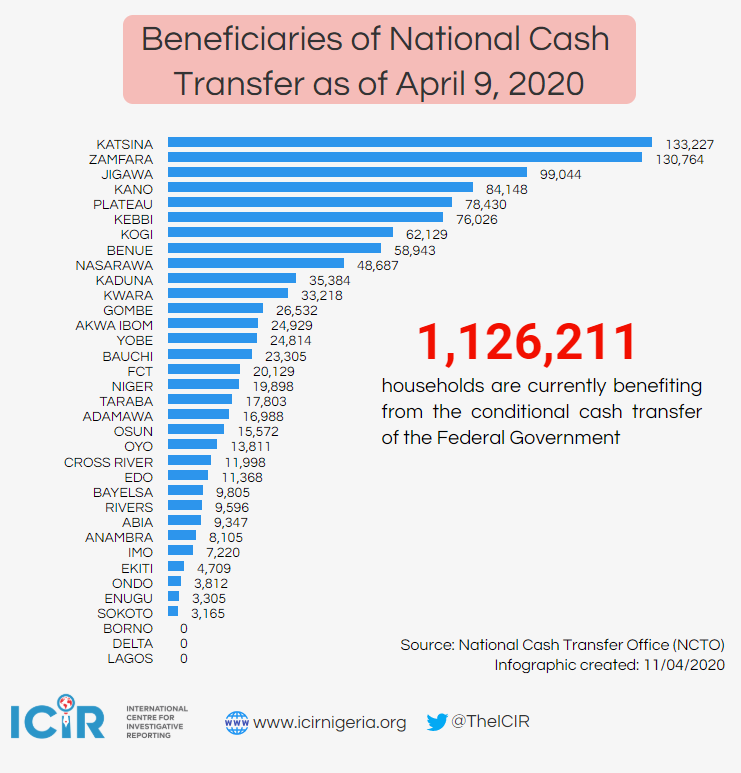
THE National Cash Transfer Office (NCTO) has confirmed to The ICIR  that about 1,126,211 poor and vulnerable households are currently benefiting from the Federal Government’s conditional cash transfer.

This is less than half of the total number of households captured in the national social register.

Henry Ayede, spokesperson of the NCTO confirmed this to our reporter in a phone chat with him.

The program started 2015 with 14 states and has expanded to accommodate more states five years on.

The Federal Government allocated N500 billion in the 2016 budget for the implementation of its social welfare agenda. The government also budgeted the same amount for social programmes in the 2017 budget.

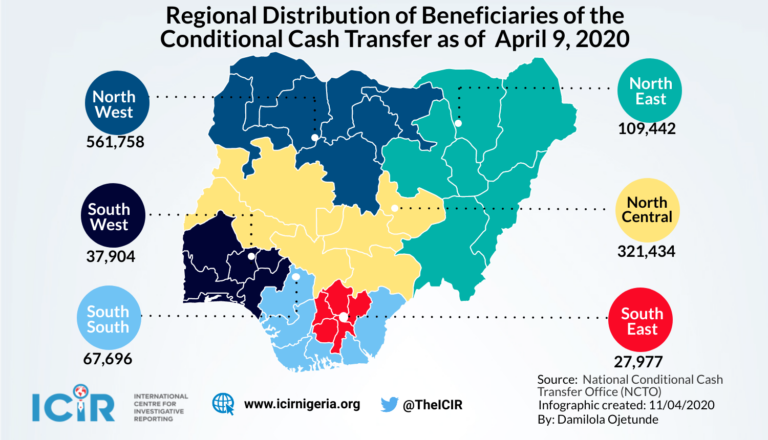
Data of the beneficiaries exclusively obtained by The ICIR revealed that of the 35 states and the Federal Capital Territory, North West region tops with the highest number of households benefiting from the cash transfer with a number of 561,758 households. Ogun State is yet to benefit from the program.

Others are North Central- 321,434, North East- 109,442, South South- 67,696, South West- 37,904, and South East- 27,977 households.

Top five states with the highest number of beneficiaries are Katsina- 133,227, Zamfara- 130,764, Jigawa- 99,044, Kano- 84,148, and Plateau- 78,430.

State distribution of beneficiaries of cash transfer

The ICIR in 2018 investigated how the poor Nigerians were deprived of the federal government’s cash transfer.

The report also revealed that as of May 2018, exactly 503,005 poor and vulnerable households were captured in the social register in 20 states while only 297,973 received the financial assistance. As it stands now, the figure of the poor and vulnerable households on the social register has grown to 2,644,495 representing about 425.7 percent increase, while the beneficiaries of the CCT have grown by 278 percent.

Following criticisms from the public on how the Federal Government was able to compile the list of the most vulnerable Nigerians who get the N20,000 cash transfer to cushion the economic effect of the coronavirus disease, President Muhammadu Buhari had directed that N20,000 be paid to each vulnerable household through the social investment scheme to cushion the economic impact of the lock down arising from the outbreak of Covid-19 pandemic.

Ayede confirmed to The ICIR that beneficiaries of the conditional cash transfer are drawn from the National Social Register (NSR) based on the clearly defined criteria, noting that not all individuals and households in the register would benefit from the cash transfer.

The NSR is a pool of vulnerable and poor households captured by the National Social Safety-Nets Coordinating Office (NASSCO) through community-based targeting.

The NASSCO had on Friday, April 10, released the number of all households and individuals on the register, showing that 2.64 million and 11 million households and individuals respectively have been captured on the register from 35 states and the FCT excluding Ogun State.

It is to be noted that not all current households are beneficiaries of the conditional cash transfer.

In another phone interview with Joe Abuku, spokesperson of NASSCO to ascertain the data obtained by The ICIR, he said, “plus or minus, the figure of those benefiting from the CCT will be around 1.1 million”

However, in a report by the Guardian newspaper, Iorwa Apera, National Coordinator of the NASSCO was quoted to have said the cash transfer is paying one million poor and vulnerable households.

“At the moment, the cash transfer is paying one million poor and vulnerable households. We plan to rapidly increase this number to two million in the next payment round in May,” Apera disclosed.

Has ex-Police Inspector Olalekan Ogunyemi charged with killing Kolade Johnson been released?

A RECENT post shared on Twitter by a lady identified as ije12002, claiming that ex-Police Inspector Olalekan Ogunyemi charged with killing Kolade Johnson has been released, is raising dust in the Twittersphere, as many commentators question the value of justice in Nigeria.

In the post, the Twitter user announced that Ogunyemi has been released from prison and currently marked his 50th birthday in style.

“Late Kolade Johnson’s Killer Olalekan Ogunyemi aka Omo Eko Regains Freedom, Marks 50th Birthday, while the families of late Kolade Johnson are still mourning. Here are some of the outfits he rocked on his 50th birthday few days ago,” the post read.

The post has garnered over 2,000 retweets and over 800 likes. But the claim is false

The ICIR reached out to ije12002 but all messages sent to via Twitter direct message was left unanswered.

At the time of filing this report, messages sent to the Head of Nigeria Police Force Complaint Response Unit, Markus Ishaku Basiran, were yet to be responded to.

But, according to Citizen Gavel, a civic tech organization aimed at improving the pace of justice delivery, that has been monitoring the case, Ogunyemi has been in prison since the case was last heard and adjourned on March 19.

It was gathered that the court is to reseat on April 16, to determine the fate of Ogunyemi, who remains in Ikoyi prison and has not been given a bail option.

45-year-old Ogunyemi served in the Anti-Cultism Unit of the Lagos State Police Command before he was discharged from his duties.

He was remanded in prison after being charged for the murder of 36-year-old Kolade Johnson at Onipetesi Estate, Idi-Mangoro, Lagos, on March 31 2019.

During a court sitting in April 2019, the prosecutor, Kehinde Olatunde, told the court that Ogunyemi used his AK-47 rifle to shoot dead Johnson, while the deceased was watching a football match.