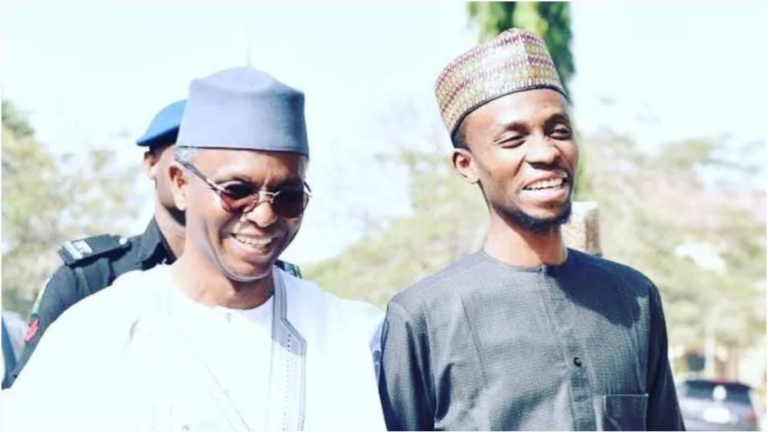
BELLO El-Rufai one of the sons of Kaduna State governor, Nasir El-Rufai has threatened to have a Premium Times’ journalist arrested after a report of him on rape comment.
Premium Times had earlier today published a report titled “Outrage as El-Rufai’s son threatens to gang rape Twitter user’s mother.”
During an argument on Twitter, a user by the handle name @Thanos_zer had blasted the present government, describing President Muhammadu Buhari’s alleged ineptitude as mind blowing.
He described Bello in his tweet as “Daddy boy, saying, “I don’t shield anyone who’s inept. I can’t say the same about you. You’re Daddy’s boy and of course, nobody attacks the finger that feeds them. Buhari’s ineptitude is mind blowing. Yes I said and you’re not going to make me disappear.”
“Tell your mother I’m passing her to my friends tonight,” El-Rufai said to his detractor in a private message after an argument on politics, before adding an ethnic diatribe: “No Igbo sounds please!”
This sparks outrage from many Nigerians on social media against El-Rufai, as anti-rape activists demanded a thorough investigation for probable violation of the Cybercrime Act.
Reacting to the post by Bello, former Minister of Education, Dr. Oby Ezekwesili took to her twitter handle, demanding that the Governor’s son retract the comment and apologise.
She wrote, “@B_ELRUFAI Did I just see horrific tweets from your handle threatening gang-rape? What was that?
Why the ethnic vitriol toward Igbos? What’s that, Bello? Too tragic.
“You need to not just immediately apologize for those vile tweets but get into an Anger Management program quickly.”
A Twitter user said, “Bello El-Rufai is clearly from a home where bad behaviour has been overlooked and enabled by parents who should have known better. He should have been reprimanded and trained in his earlier years . Today, he is a spoilt child with no decorum threatening to rape someone’s mother.”
Reacting to her son’s post on Twitter, Hadiza El-Rufai said, “All you people talking about @B_ELRUFAI Don’t @ me. Sow the wind, reap the whirlwind. All is fair in love and war.
“My belief: Respect everyone, but take no shit from anyone. I didn’t see any threats of rape. I would never condone that.”
This response doesn’t go well with the North Normal Nigeria movement group on sexual violence and hereby issued a statement to question her competence as Chair of Kaduna state sexual assault task force.
“This calls to question her competence to chair a panel seeking to fight sexual assault as the meanings and language of rape and violence is lost on her.
“Consequently we call for her immediate resignation as chair of the Kaduna state sexual assault task force, and a public apology. We also call on all people of good conscience to join us in condemning this behaviour,” the group said in the statement.
Shortly after the release by #NorthNormal movement, Hadiza issued an apology through her Twitter handle saying she’d never condone sexual abuse in any shape or form.
“I can see how my tweet may have come across, and I apologise to those who were offended by it. I say, once again, that I’d never condone sexual abuse in any shape or form,” she tweeted.
Meanwhile, Bello has refused to apologise, despite the fact that Nigerians are calling for his apology, he however threatened a Premium Times journalist, Samuel Ogundipe through his Twitter handle for his rape criticism report.
Bello wrote on Twitter, “Oh @SamuelOgundipe, our hired PDP columnist, you in particular were the last piece of the puzzle. I assure you that my lawyers will get to you to prove the usage/threat of rape. The onus is on you. I eagerly anticipate the #FreeSamuel hashtag. Thanks for completing the jigsaw.
THREE candidate vaccines for coronavirus, officially tagged COVID-19, have reached clinical evaluation stage, while 67 other vaccines are being developed globally, the World Health Organisation (WHO) has disclosed.
In a document titled : ‘Draft landscape of COVID-19 candidate vaccines’ published on the WHO website, a list of 70 vaccines were presented, with three being considered top as they are being tested in the human trials.
The top three vaccines in clinical trial stage as stated in the document include; an experimental vaccine developed by Hong Kong-listed CanSino Biologics Inc. and the Beijing Institute of Biotechnology, which is already in phase two, using the Non Replicating Viral Vector trial method.
The other two, which are being tested in humans (DNA), are developed differently by Moderna Inc. and Inovio Pharmaceuticals Inc, which are both United States drugmakers, Bloomberg reports.
While the news of vaccines being developed bring hope, the WHO, however issued a disclaimer, informing the public that the document remains only a source of information and that the organisation withdraws itself from any form of warranties regarding the accuracy, completeness, fitness of any of the products listed in the seven-page document, containing the list of 70 vaccines being developed globally.
Since its first outbreak in Wuhan, China, coronavirus has infected over 1.8 million people globally and killed over 116,000 persons, according to Worldometer.
In Nigeria, the Nigeria Centre for Disease Control (NCDC), has recorded 323 cases in different parts of the country and registered 10 death from coronavirus complications.
The COVID-19 pandemic which has spread to over 200 countries worldwide has forced governments to issue travel bans, border closures and effect lockdowns and movement restrictions in their nations – all in attempt to curb the spread of the deadly virus.
With the containment strategy implemented in most countries proving less effective daily, experts are racing to find a cure.
In the meantime, the world economy has grinded to a halt, and the WHO has announced that some African countries might hit peak of the virus, if testing capacity is not increased and care taken to curtail the spread of the virus.
LAFENWA market in Abeokuta, the Ogun state capital is usually rowdy and noisy whenever the residents stormed the market to purchase food and other essential materials during the one day break of the lockdown.
Nigerian President, Muhammadu Buhari had ordered a total lockdown in Abuja, Lagos and Ogun States following an advice from the Nigeria Centre for Disease Control (NCDC) and the Federal Ministry of Health that a ‘total lockdown be placed on the two states and the FCT.
Following Buhari’s directive, Ogun State governor, Dapo Abiodun said the state would need five days to prepare for the lockdown, shifting the lockdown to Saturday, April 4th.
The governor declared further that the state would observe a constant relaxation of the lockdown to enable residents of the state shop for essentials most especially food materials.
But, the relaxation of the lockdown as directed by Abiodun could be exposing residents to a higher risk of contracting coronavirus, The ICIR has observed.
The ICIR reporter’s visit to places shows that the residents are exposed to getting infected with Coronavirus.
Residents are seen traversing the length and breadth of the market: shopping for goods, calling prospective customers, hawking goods and haggling prices.
Oblivious of the importance of the importance of social distancing, use of face masks and other preventive measures as advised by the NCDC, the market men and women and their customers go about their business without worry.
The ICIR interviewed Opelope Olubiyi who sells fufu opposite the Lafenwa market. She said the government should not have allowed the relaxation because they are being exposed to contracting the disease.
Opelope Olubiyi, a market woman during an interview with The ICIR Photo Credit: Lukman Abolade
“They should have allowed us stay indoors for 14 days without relaxation, after the 14 days, we can now go out,” she said.
Speaking to another market woman, Suleiman Balikis, who sells food items in Lafenwa market, she also expressed concerns over the constant relaxation of the lockdown.
According to her, the government is toying with their lives. She said her husband did not want to allow her come to the market until she promised to keep distance from her customers.
“I dont allow people come close to me, I just stay inside my shop while they wait outside for me to pass their goods to them, anyone that cannot wait can go to another shop,” Balikis said.
When asked if the market is usually as full as this, Balikis said the market was only that full during new year, Christmas or Salah festivals.
The ICIR visited Lafenwa, Itoku, Panseke, Olomore and Omida markets in Abeokuta and the situation was not different. People were out enmass to either buy or sell without preventive measures.
Itoku Market in Abeokuta as residents go about their business during the relaxation hours of lockdown in Ogun State. Photo Credit: Lukman Abolade
Similarly, ATM stalls visited by The ICIR reporter also showed defiance to social distancing and other use of protective measures as many people were seen on queue to use the machine, standing close to each other while trying not to spend more than the stipulated seven hours as approved by the state government.
People on queue while trying to make withdrawals from the ATM machine. Photo Credit: Lukman Abolade
Supermaket and grocery stores in the city also had people on queue trying to shop for essentials during their seven hours free movement.
Residents on queue at a grocery store in Abeokuta. Photo credit: Lukman Abolade
Alt
Unlike the market women, Emmanuel Fasasi, father of four children and a Motorcycle (Okada) rider, said he is pleased with the relaxation.
He said it is an avenue for the residents of the state to quickly do what they cannot do during the lockdown.
“Bros, you see for me, I am happy, i am an Okada rider, I have no other job, if I sit at home for 14 days do you think my children won’t die of hunger,” he questioned The ICIR reporter.
Emmanuel Fasasi, a motorcycle rider speaking to The ICIR reporter on relaxation of lockdown
He said with the seven hours break, he has time to earn and give money to his wife to cook and keep the rest of the money for emergency purpose.
“During that time, I earn as much as N1500, I give Mama Dayo N1000 to cook soup and I keep the remaining N500 for emergency, you know how children can be sometimes,” he added.
When asked if he has benefitted from the relief package by the state government, Fasasi said, to him, ‘that is a radio package’.
“Some might be benefiting from it but for me, my family and people of Ago-Oko, I can tell you that we only hear it on radio,” he added.
Akinmosu Adedayo, (not real name) a sociology lecturer in Moshood Abiola Polytechnic, Abeokuta said the relaxation is “a policy of ignorance”.
According to Adedayo, the government does not have good knowledge of the disease hence the constant relaxation.
“How can you keep people at home for a day and half, later gather them together in hundreds and then tell them to go back home and say you are preventing coronavirus,” he questioned.
” I wonder the type of government we have in the country, you leave them to roam about for that long but you placed a ban on Mosques and churches that does short service for their congregations,” he added.
The lecturer faulted the directive and advised the state governor to rethink and do the right thing before there is a large outbreak of the disease in the state.
Abeokuta residents again gather today to exercise the relaxation of lockdown.
A POLICEMAN in the Okota axis of the Oshodi/Isolo Local Government Area of Lagos State has been arrested over collecting bribe from a motorist.
In a statement issued by the state Public Relations Officer Bala Elkana, the inspector identified as Taloju Martin is attached to Ago Police Station as Station Officer (SO).
In a video shared on Twitter by Ruggedman, a Nigerian entertainer, the incident happened on Friday, April 10 at Ago Palace Road Okota.
The inspector was seen counting N1000 notes said to be 40 pieces, a ‘ransom’ paid by an unidentified motorist to free his vehicle.
The motorist had allegedly violated the lockdown order of the government to curb the community transmission of coronavirus in Lagos.
The motorist, whose car was seized by the police, was told to pay N50,000 but he pleaded to pay N40,000.
But unknown to Martins, the motorist recorded the transaction.
Reacting to the incident, the state Commissioner of Police, CP Hakeem Odumosu psc has ordered the Deputy Commissioner of Police in Charge of Criminal Investigation to carry out an in depth investigation into the activities of Ago Police Station as a whole.
The complainant has been identified, and the money extorted is recovered and handed over to the driver by the Commissioner of Police.
Meanwhile, the Inspector arrested has been handed over to Provost Marshall for orderly room trials.
HORDES of customers besiege Yusuf Mohammed’s store because they are not allowed in through the main gate, which is opened only when customers, about two or three already inside the store, go out.
Abubakar whose job is to open and lock the gate to customers does not listen to customers’ pleas to allow them in until those inside leave.
Yusuf Mohammed Enterprises, a popular store in Bwari town, a suburb of Abuja, the nation’s capital is a preferred destination for residents and retailers.
It’s the ninth day of the 14-day lock down imposed by President Muhammadu Buhari on Abuja, Lagos and Ogun states where cases of COVID-19 are higher and many are running out of food and other household essentials.
The customers are those in desperate moves to get daily needs in the face of the lock down order—others are retailers who try to restock their shops as more and more people are demanding for daily needs due to the lockdown order.
Customers waiting in front Mohammed’s shop Photo Credit: YEKEEN Akinwale
With no hand gloves and without a face mask, Abubakar carries out the boss’ instruction of not allowing many people inside the supermarket at once.
That’s Mohammed’s own way of observing the social distancing guideline against the spread of Covid-19. Though, he did not provide hand sanitiser for his customers, yet he prevents too many of them in his store nevertheless.
Among those patronising the store, as well as workers there, only a few—one out of 10 wears a facemask—a lot are not worried about the possibility of contracting the deadly virus.
Items at Yusuf Mohammed Venture are cheaper compared to prices offered in the open market, especially now that traders have taken advantage of the pandemic to increase prices of goods. This is the real reason the store has been witnessing a surge in the number of customers.
According to the Centre for Disease Control and Prevention (CDC), limiting face-to-face contact with others is the best way to reduce the spread of coronavirus disease (COVID-19).
The centre defines social distancing as keeping space between yourself and other people outside of your home.
To practice social or physical distancing, it says, stay at least 6 feet (2 meters) from other people, do not gather in groups and stay out of crowded places and avoid mass gatherings.
These are however, not observed in many places visited by our reporter including Newspapers’ vendor stand and ATM galleries where people gather in groups and form crowds.
Pushed out by hunger—residents, okada riders ignore lockdown, social distancing
Okada riders who defy the lockdown order and the social distancing rule at Bwari town. Photo Credit: YEKEEN Akinwale
Yahaya Abdulqadir is a taxi driver but the lockdown order has compelled him to stay at home, with his Nissan taxi parked. But he comes out everyday to use his motorcycle for commercial purposes.
“Since we cannot drive around town, I have decided to use my bike to run around Bwari because I have to feed my family,” he says.
President Buhari announced the lockdown in Abuja, Lagos and Ogun states, in response to the public criticisms that he had been silent in the face of growing cases of Covid-19 in the country.
“All citizens in these areas are to stay in their homes. Travel to or from other states should be postponed. All businesses and offices within these locations should be fully closed during this period, Buhari said in a nationwide address on Sunday, March 30.
Despite this, many have found it difficult to observe the order especially peasants who earn their living daily.
“How can we stay at home when we cannot go out to find our daily bread,” Abdulqadir queries.
And like him, there are over hundreds of commercial motorcyclists within and around the town ferrying residents to and fro the market and other destinations.
While some of them wear a face mask and hand gloves, others are without any protective gear, and appeared unconcerned.
Francis Steven, a commercial motorcyclist said he earns his living daily from riding his ‘okada’. “By staying at home, it means no food for me and my family, so I can’t stay at home,” he says.
On the possibility of contracting the virus, Steven who does not wear a facemask or hand gloves believes God will protect him because he wants to provide for his family.
People who come to the Bwari main market say they cannot continue to stay at home while there is no food to feed on or to feed their family members with.
Markets in Abuja are allowed during the lock down to operate between 10 am and 2pm everyday by the FCT Administration which once announced that markets are only going to open three days in the week but later rescinded the decision.
A middle-aged woman who sells tubers of yam along SCC road in the market says the government had no plan for the ordinary Nigerians when it was announcing the lock down order.
“If they say make we sit down for us, wetin dem go give us to chop, abi my children no go eat,? asks the woman who says she has four children.
The president had said in his nationwide broadcast that food sellers and stores selling essential items such as groceries and medicine are exempted from the lockdown order.
He also announced that the government would provide palliatives to cushion the effect of the order on the poor and the vulnerable.
Shylock traders take advantage of Covid-19
Market women at the Bwari market: Many of them are taking advantage of the lock down to increase prices of food items. Photo Credit: YEKEEN Akinwale
Residents feel more frustrated by the lockdown order as Shylock traders take undue advantage of the situation to increase prices of commodities. From staple food items such as garri, local rice and even maize and millet, prices have gone up with more than 50 percent.
For instance, a measure of garri that was sold for N140 before the outbreak of the pandemic is now N300.
Madam Esther, a seller of the commodity in the Bwari market attributed the price increase to the lockdown order because according to her, it has become difficult to transport to where she buys garri.
“We no fit go to the market again, na okada we dey take now and dem dey charge us plenty of money to carry us,” she explains in Pidgin English.
In the market, a crate of fresh eggs now goes for N1000 as against N750 that it was before while a measure of local rice that was between N350 and N400 now sells for N600.
Kayode Oyelade, a resident who bought a crate of fresh eggs at N1000 per crate lamented the increase.
“This is going out of hand and I don’t understand why people are taking advantage of the situation,” Oyelade said.
Government’s palliatives are not getting to many vulnerable
Government’s conditional transfer: Only a few Nigerians are benefiting from it
As the Covid-19 pandemic forces many to stay at home and offices closed, Yemi Osinbajo, Nigerian Vice President, said the government was thinking of ways to provide succour for the period they are unable to work.
“Many of our citizens are daily wage workers and the President has expressed concerns about this. We are now thinking of ways to provide succour for the period they are unable to work,” Osinbajo said.
“There are many concerns associated with the lock down. We are concerned about how the economy will remain stable, how jobs can be protected and ways to create new jobs where possible. We believe that together, Nigeria will prevail.”
Shortly after the presidential broadcast, the Federal Government commenced the disbursement of the Conditional Cash Transfer (CCT) payments of four months to the beneficiaries in the Federal Capital Territory.
The disbursement kicked off in Kwali Area Council of the Territory.
Sadiya-Umar Farouq, Minister of Humanitarian Affairs, Disaster Management and Social Development, said the payment in advance was as a result of presidential directive to help ease the untold hardship the lockdown would cause to the vulnerable.
Each beneficiary was given N20,000 making N5,000 per month. The N20,000 covered month of March to June.
There are however, fears that the palliatives are not reaching the targets.
In Abuja, Ramatu Tijjani Aliyu, Minister of State for FCT, said last week that the administration was set to commence the distribution of palliative materials to the less privileged as part of measures to cushion the effect of the sit-at-home presidential order.
She made this disclosure during an inspection tour of storage facilities at the Kubwa NYSC Orientation Camp and maintained that the palliatives were targeted at the vulnerable residents and the physically challenged in rural communities.
Aliyu, also revealed that security measures have been put in place to safeguard the palliative materials, stressing that security personnel will be increased in addition to the establishment of a police post in the vicinity.
But many residents say they had not received any palliative from the government.
Okechukwu Nwanguma, Executive Director of Rule of Law and Accountability Advocacy Centre (RULAAC) in a press statement said that the Federal Government’s Social Intervention Policy known as conditional cash transfer is yet to address mass poverty, deprivation and hunger.
“The billions which the government announced that it has released and made available for conditional cash transfer to the poor and vulnerable in communities are not reaching the targets. There are still cries of woe and anguish in most communities,”Nwanguma said.
“We have seen videos of caricature of the ‘social intervention’, of food items shared to some communities. In one video, we saw a street in Lagos of over 30 families who said they were given two loaves of bread and a few cups of rice and garri and few condiments (tomato paste sachets) to share.
“And we see members of the community lamenting and asking how a whole street of over 30 families could be given such quantity of food items not enough to serve one family for two days to share!”
Indiscipline, ignorance fueling breaking of social distancing, lock down
Many still carry on with their activities unrestricted.
Security operatives daily disperse traders and buyers from the Bwari market, but indiscipline and ignorance, besides hunger, drive why more and more are violating the lockdown and social distancing order.
Residents still mill around stores, beer parlours and other relaxation joints in the Area Council without giving recourse to observing the social distancing guideline and the lock down order. .
To those in this category, Covid-19 is not seen as a life-threatening disease despite daily increase in the number of confirmed cases in the country. They also do not believe that social distancing has any way of preventing the spread of the disease.
At a drinking and fish grilling joint in Bwari, Uche Odogwu, a spare part dealer, says he does not believe there is any Covid-19, insisting that it’s just political warfare between world powers.
“Wetin be coronavirus? He queries, adding “No be the war between America and China dem they extend to us here.”
Odogwu said since he has not seen anyone who is infected with the virus or killed by it, he does not even believe it exists.
Nigeria had just 111 confirmed cases of Covid-19 when the president announced the 14-day lock down, now, it has recorded over 300 cases and 10 deaths.
Nwanguma corroborates this when he said some Nigerians believe that the lockdown is a deception by the government to achieve ulterior motives.
“Those who promote this narrative are mainly the apocalyptic pentecostal ‘Men of God’ who push arguments linking Covid-19 to G5 mobile technology which they argue is a part of the biblically ordained designs of the Anti-Christ,” he said.
According to him, there are some Nigerians who are simply lawless or lack discipline and just defy the lock down order.
“Just like when passengers are asked to switch off their phones prior to flight take off and you still find some people- seemingly ladies and gentlemen- fiddling with their phones.”
“To illustrate, a relative of mine called me yesterday to complain that he was arrested by the police somewhere in Lagos when he drove out to buy pap for his baby.
“I asked him whether he knew about the lock down order and whether there was nowhere around his neighbourhood he could walk down to buy the pap. He said ‘but other vehicles are on the road’. I told him that he has broken the law as much as those other people. Everybody may not be arrested at once.
“He wanted me to talk to the Police officers who arrested him and ordered him to drive to their station. I asked him what he wanted me to tell them,” he said.
AN anti-corruption civil society organisation, Human and Environmental Development Agenda, (HEDA Resource Centre) has warned the Federal and State governments to stop politicising the conditional cash transfers meant for vulnerable people in the country.
HEDA in a press statement signed by the chairman of the group, Olanrewaju Suraju asked the governments to stop confusing the three-year old Conditional Cash Transfer (CCT) with relief package designed to alleviate people confronted with fresh conditions of poverty brought by the COVID-19 lockdown.
According to Suraju, the Minister of Humanitarian Affairs and Disaster Management, Sadiya Umar Farouq, is confusing the Conditional Cash Transfer programme launched in 2016 with the palliative measures aimed at reducing the economic hardship associated with the COVID-19 spread and governments’ lockdown directives.
Suraju said: “The minister is suspected to have deliberately acted in this manner to blur the line of accountability, disguising the conditional cash transfer as payment under the COVID-19 intervention and relief package. The payment presently is only made to about 900,000 households and not over 2 millions as claimed by the ministers.
“The least we owe Nigerians is not to play politics with the misery of millions of people. The fact is that the CCT began in 2016. It should not be confused with any measure of any Government to tackle the hunger and poverty occasioned by the lockdown. They are two different distinct programmes. One cannot substitute for the other,” Suraju noted.
The group slammed state governors who according to them launched the CCT as if it is a palliative initiated by them, adding that such action shows that many of them do not have an indigenous way to respond to the economic hardships caused by coronavirus.
HEDA also charged the governments to include democratic and legislative measures in dealing with COVID-19 fallouts, adding that a due process should be followed in the disbursement of local and international donations the FG and States are receiving in the fight against the coronavirus.
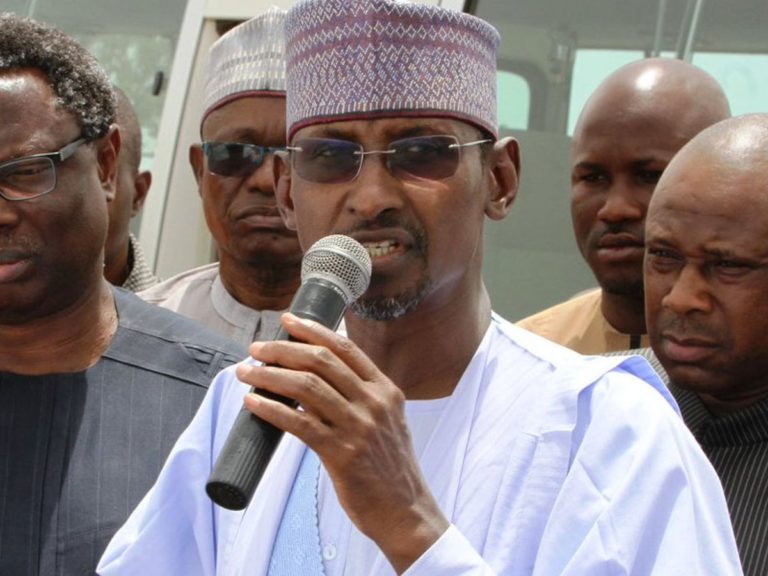
PRAYERS and unity are essential if Nigeria must end the current COVID-19 pandemic, the Minister of the Federal Capital Territory, Muhammad Bello has said.
The Minister, noted this while urging Christians in the territory to use the occasion of the celebration of Easter to pray fervently for the end of the COVID 19 pandemic which has so far claimed thousands of lives across the world.
In a press statement signed by the Chief Press Secretary to the Minister, Anthony Ogunleye, Bello said ” history has shown that when people turn to God in true supplication, in times of distress, the Almighty indeed answers prayers”.
According to him, Easter, as one of the holiest celebrations for Christians provided a great opportunity to pray to God to heal the sick and prevent a further spread of the disease across the Territory.
He equally encouraged residents to use the Easter celebrations to imbibe the spirit of unity which the FCT symbolises.
“I urge you to use this season to reflect on the significance of the FCT as the Center of Unity of our country. This is the season to show true neighborliness and reach out to the needy and the less privileged who have been impacted negatively by COVID 19,” the Minister said in the statement.
He disclosed that “the disease is such that it does not discriminate between the haves and the haves-not and is no respecter of age or religious beliefs. We must, therefore, come together as communities to fight it together.”
While advising residents to follow all the health protocols of constant hand-washing, the Minister also called on them to constantly use of alcohol-based sanitizer, and observing social distancing.
“The best way to beat this disease is not to contract it. This is one time where prevention is most certainly better than cure. You must, therefore, be disciplined and maintain personal hygiene by observing to the letter, prevention protocols of constant hand washing, use of alcohol-based sanitizers and observance of social distancing,” he added.
He also charged residents to observe the stay-at-home directives of the government, saying that it was the one way to curtail the spread of the virus and allow for contact tracing by the health authorities.
Nigeria has witnessed over 300 cases as at the time of this report.
“ALL citizens in these areas (Lagos, Ogun, and Abuja), are to stay in their homes. Travel to or from other states should be postponed. All businesses and offices within these locations should be fully closed during this period.”
The above statement is that of President Muhammadu Buhari during his lockdown speech two weeks ago.
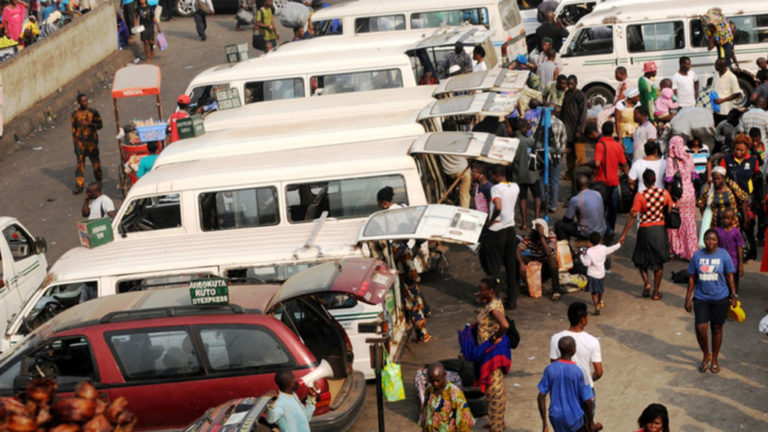
Despite stating clearly that there will be no movement, Rule of Law and Accountability Advocacy Centre (RULAAC), in a press statement issued by the Executive Director Okechukwu Nwanguma, said some commercial transport companies are defying the lockdown and no-movement-order and continuing to embark on interstate night journeys.
Okechukwu said, “Police officers on the road across States who ought to enforce the lockdown and prevent such outlawed dangerous movements which is a veritable means of further spread of this virus across states receive a bribe from the defaulting commercial drivers and allow them to pass.
“Many recently reported index cases in states like Anambra and Kano were reported to be people who traveled from Lagos, currently the most hit state in Nigeria.
“An example is a Libra Motors bus carrying passengers which departed from Cele terminal in Lagos on the night of Friday, April 10 and arrived Owerri the next day- Saturday. Each passenger was charged fifteen thousand Naira.
“The driver simply stretched out his hands and handed the police officers money at each checkpoint and was allowed to continue.
“These intransigent Nigerians, including the transport companies’ management and their passengers are sabotaging the efforts of the state and federal governments to contain the further spread of the virus. The transport companies choose to make brisk money and expose other law-abiding Nigerian citizens and residents to the risk of infection and wider spread of the ravaging disease. Police officers, who ought to enforce the no-movement order instead also exploit the opportunity to make their own money.
“The management of the transport companies, their drivers and passengers should be identified and isolated for necessary checks.”
He urged that the Police authorities should identify the police officers involved and ensure that they are dealt with appropriately, ensure strict monitoring of transport companies’ parks and terminals, especially at night to prevent this ominous act of lawlessness.
AT the entrance of A.A Rano filling station, Nyanya, at the outskirts of Abuja, Ene (who didn’t disclose her surname) a fuel attendant was attending to customers, and cracking jokes as she beckoned on other customers to buy from her.
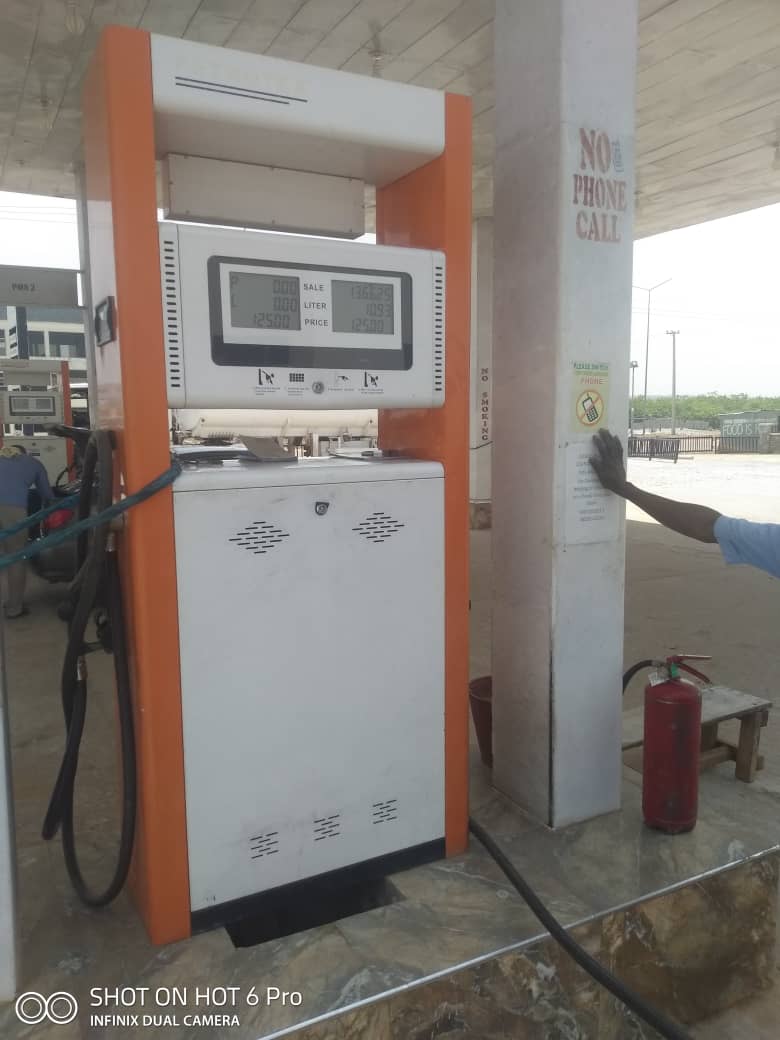
When The ICIR reporter approached her to confirm how much a litre of petrol was sold, she pointed at the digital fuel dispenser displaying in front of her which revealed that the price was pegged at N125 against the government’s official pump price of N123.50k per litre of Premium Motor Spirit, PMS, also known as petrol.
“It’s not my filling station I sell based on the instructions given to me by my manager if I’m told to sell at a particular price why should I question it when he’s the person paying my salary,” she said.
On April 1, the Petroleum Products Pricing and Regulatory Agency, PPRA, through its Executive Secretary, Abdulkadir Saidu, announced that all retail petrol outlets should start selling at the new pump price of N123.50k per litre of petrol.
“In line with government approval of a new price regime effective 19th March 2020 in which there was a provision for the establishment of a price band within which oil marketing companies (OMCs) are expected to sell at the retail stations,” the statement read.
Oil retailers were to choose between two price bands of N123.50k and N125 at which they were supposed to sell to their customers.
The reduction is based on the reduced landing cost of petrol into Nigeria which is caused by the global decline of crude oil prices.
Nazeed Glorious Limited, Lugbe, also selling at N125. Source: The ICIR
BGT international Limited, Gwarimpa also sells for N125. Source
Total Filling Station Wuse Zone 5. Source: The ICIR
Investigations by The ICIR revealed that several petrol marketers in Abuja are complying with the directive of the PPPRA by selling at the former pump price of N125 per litre of petrol which is within the price range.
Some of the areas within Abuja that were visited by The ICIR include Lugbe, Nyanya, Gwarimpa, Wuse, and Bwari but the marketers have not adjusted their pump price to the new price of N123.50k.
Ahmedu Okopi, commercial motorcyclist plying Mararaba – Nyanya axis who spoke to The ICIR reporter said he didn’t understand the drop in the pump price because the current price of N125 was fair.
“I don’t know about the N123.50k per litre of petrol because filling stations are still selling at N125 per litre but for Okada riders like us who buy petrol in small quantity there is no difference. For instance, if I buy two litres at N123.50k which is about N246 when coins are not in circulation they will still charge me N250 which is the same thing as at N125,” he said.
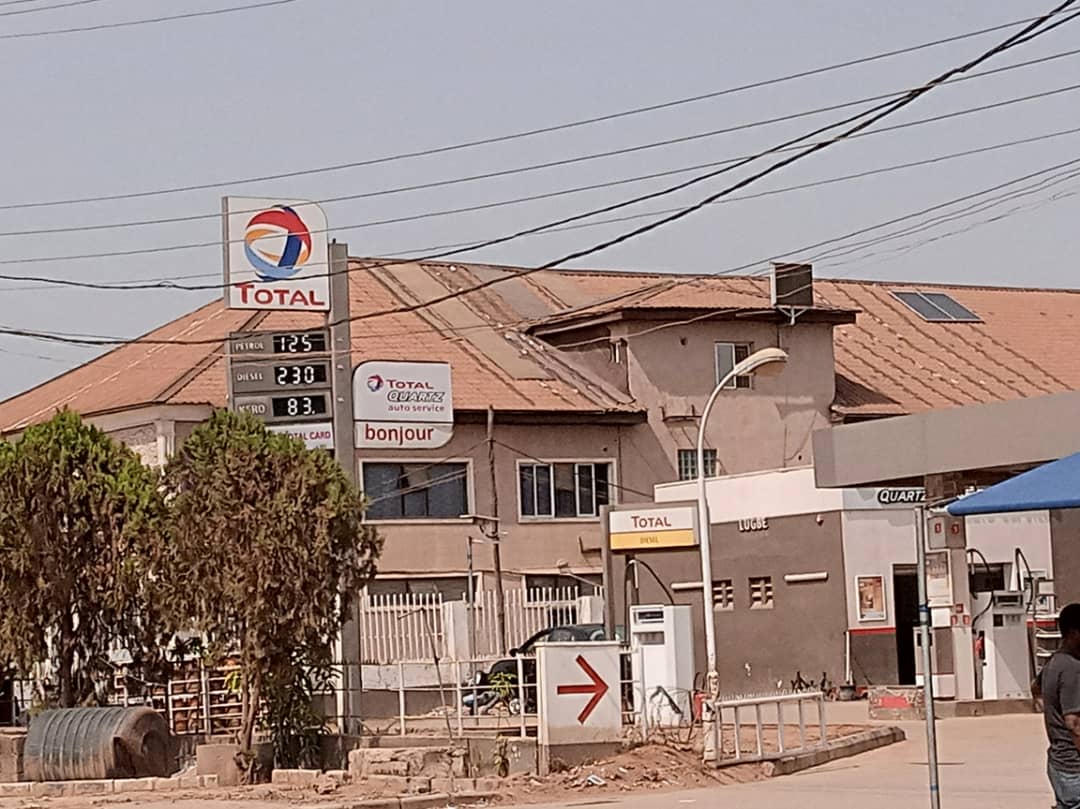
Total filling station, Corner shop, Lugbe. Source: The ICIR
At BGT International Limited, a petrol station in Gwarimpa which was formerly owned by Nigeria National Petroleum Corporation, NNPC, a litre of petrol was sold for N125, an attendant who spoke to The ICIR said the marketers were yet to implement the reduction in price by the Federal Government.
Also Total petrol station, Gwarimpa were yet to adjust to the current price of N123.50k per litre as they continued to maintain the former price of N125 per litre.
Along, Airport Road at NIPCO Filling Station, the manager who identified himself as Aliyu stated that without a directive from the headquarters to adjust the prices on both the board and dispensing machine they will continue to sell at the new rate.
Conoil, Kuduru, Bwari Area Council, Abuja
“Even if you place a knife on my neck, there is nothing in can do because I can’t operate it except they give order from the main office,” Aliyu said.
Other oil marketers in Lugbe still retaining the old pump price of N125 include Total filling station located at Corner-shop, Danmarana filling station at Kapwa, NNPC filling station and Nazeed Glorious Limited.
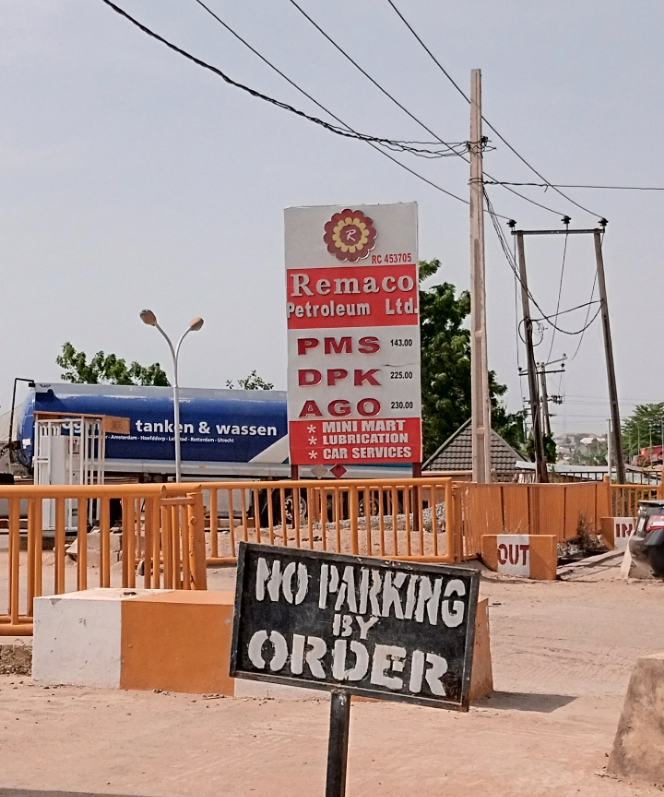
However, Remaco Petroleum Limited in Lugbe was the only exception as it was still selling at N143 per litre which was in contravention of the recent directive of the PPPRA.
Oando Filling Station, close to Berger Bridge and Total Filling Station in Wuse Zone 5, are also selling at N125 per litre of petrol. The ICIR sought to know from the PPPRA why the oil marketers were not selling at the lower band price ceiling of N123.50k.
Kimchi Apollo, spokesperson of the PPPRA who spoke to The ICIR in a phone interview said the price band was to grant the oil marketers leverage for inconveniences incurred from the purchase of old stock of petroleum products.
“If an oil marketer is selling at N125 it’s still within the price band we put in place for them, it’s their choice so that they can cover for any inconvenience the change in price will have for oil marketers with old stock,” he said.
Mele Kyari, Group Managing Director, GMD, of NNPC in an interview declared that the era of fuel subsidy in Nigeria had gone forever.
According to him, the NNPC was not responsible for petroleum products pricing but Nigeria was currently transiting into a market situation where the forces of demand and supply would determine the cost of petrol.
AS the Covid-19 pandemic continues to ravage countries of the world, a number of world leaders are already extending lock down imposed in their countries to contain the spread of the disease.
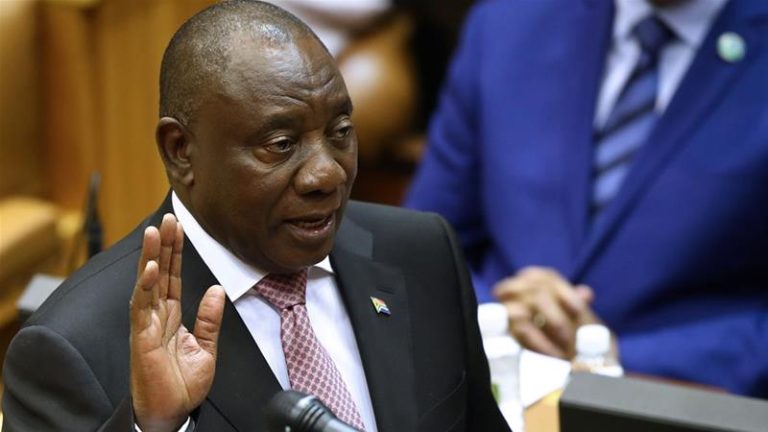
Cyril Ramaphosa, South African President announced a two-week extension of the lock down in the country.
“There is sufficient evidence to show the lock down is indeed working,” with the rate of new infections slowing, Ramaphosa said Thursday in a televised address. “Unless we take these difficult measures now, unless we hold this course a little longer, the coronavirus pandemic will engulf, and ultimately consume, our country.”
The government initially imposed a 21-day lockdown on March 27, which is being enforced by the police and military and only allows people to leave their homes to buy food, collect welfare grants and seek medical care — unless they provide essential services.
South Africa has confirmed 1,934 Covid-19 infections —the most in Africa—since the first case was detected on March 5. There were 89 new infections reported on Thursday, with cases confirmed in all nine provinces.
“The struggle against the coronavirus is far from over,” Ramaphosa said. “If we end the lock down too soon and too abruptly, we risk a massive and uncontrollable upsurge in the disease.”
Rwanda has also extended a strict lock down imposed to help curb the coronavirus pandemic in the country. The measure was announced on March 21.
The lock down was to end this weekend but was extended by the cabinet on Wednesday after the number of confirmed cases climbed from 17 to 82 in two weeks, the BBC said.
Italy and Spain are preparing for several more weeks under lock down as volatile coronavirus infection rates prevent Europe’s governments from easing curbs on public life.
Giuseppe Conte, Italian Prime Minister, whose country has reported the most virus-linked deaths worldwide, is leaning toward an extension to early May, though a small number of businesses may be allowed to reopen. Spain prolonged a state of emergency until April 25 while the UK is also likely to extend restrictions.
Angela Merkel, German chancellor, on Thursday also extended the lock down in 16 states to April 19 as the initial lock down was to be lifted this weekend.
In India, it appears the government is set to extend its 21-day lock down for all 1.3 billion citizens for two more weeks, carrying it to the end of April.
During a meeting with top officials, the Prime Minister Modi, said the lock down had helped blunt the outbreak but that “constant vigilance is paramount,” according to a statement from his office.
Belgium went on lock down on March 17, following the government’s orders to limit contact. But on March 22, the lock down was extended to April 19; residents are only allowed essential visits to the supermarkets, pharmacies and banks in cases of emergency.
While on Friday, Turkey ordered a two-day curfew extension for 31 provinces, Denmark may reopen kindergartens and schools starting next week if cases of the infection drops.
Similarly, Saudi Arabia’s King Salman ordered the extension of curfew until further notice because of the spread of the coronavirus, the Saudi Press Agency reported.
The Saudi king previously ordered a curfew that took effect on March 23, from 7 p.m. to 6 a.m. local time for 21 days, according to Reuters, which cited state media. Saudi Arabia placed capital city Riyadh and other big cities under a 24-hour curfew and locked down much of the population.
The United States, now under a major disaster declaration for the coronavirus pandemic after its death toll reached the highest in the world on Saturday with over 20,000 death having half of the fatalities in New York alone.
All 50 states as well as the U.S. Virgin islands, the Northern Mariana Islands, Washington, D.C., Guam and Puerto Rico have received a federal disaster declaration.
President Donald Trump approved a disaster declaration for Wyoming on Saturday, which comes 22 days after the first disaster declaration in New York, the epicentre of the virus.
Nigeria on March 30 implemented a sweeping lock down for three major states, Lagos, Ogun and Abuja in a bid to slow the spread of coronavirus in the country.
Buhari may also extend Nigeria’s lock down
There are strong indications that President, Muhammadu Buhari may extend the lock down order in Lagos, Ogun and the Federal Capital Territory (FCT),Abuja as at the last tally released on Saturday by the Nigeria Centre for Disease Control (NCDC), Covid-19 has infected 318.
The Chairman of the Presidential Task Force and Secretary to the Government of the Federation, Boss Mustapha, spoke at Friday’s edition of the committee’s daily media briefing where he said the president reserves the right to extend the lock down.
“The decision on whether to extend the lock down or not is exclusively the decision or responsibility of the President. Ours (the PTF) is to provide him with first-hand information that would inform that decision. Therefore, I cannot speculate on that now,” Boss said.
“However, looking at what is happening in other climes, you would be able to deduce what might likely happen, but I am not in a position to speculate on that,” he added.
However, 70 people have been discharged while 10 deaths have been recorded so far.