Home Blog Page 2129

Eight men, five women—Diaspora Commission releases list of Nigerians in Diaspora who died of Covid-19

THE Nigerians in Diaspora Commission (NIDCOM) on Thursday released names and pictures of 13 Nigerians who have died of the Covid-19 in United Kingdom and United States of America (USA).

Abike Dabiri-Erewa, Chairman of NIDCOM who released a video showing the victims and where they based before their demise, prayed for the souls of the departed.

“May the souls of our brothers and sisters in Diaspora , who lost their lives to Covid 19, RIP. May the Lord heal the world,” Dabiri-Erewa wrote on Twitter.

According to the 55second video clip, eight persons died in the UK while five others died in the US.

They comprise eight males and five females, including a medical doctor, Senior Advocate of Nigeria, and a clergyman among others.

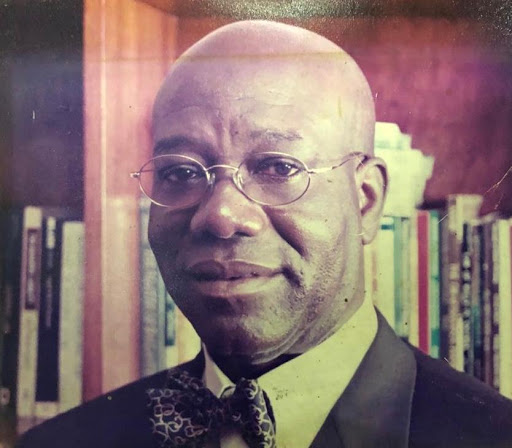
Among them were Kole Abayomi, Senior Advocate of Nigeria (SAN), a former Director General of the Nigeria Law School died in a London Hospital after contracting coronavirus at the age of 80.

Also, Alfa Saadu, 68, a medical doctor of 40 years practice died on Tuesday March 31 at the Whittington Hospital in north London. Others were Bassey Offiong, a 25-year-old Nigerian student,  in Western Michigan University, Detroit, United States. He was a Chemical Engineering student and died few days to his graduation after contracting the virus.

Laila Abubakar Ali of Kano descent, was the first Nigerian to died of Covid-19 in US. She died on March 25, while receiving treatment at the Lincoln Hospital in the Bronx, New York.


Easter celebration: Social restriction order still in force — IG warns

MOHAMMED Adamu, the Inspector General of Police (IGP)  has warned Nigerians ahead of the 2020 Easter celebration that the social restriction order is still in force.

Adamu made this known in a press release issued on Thursday by the Police Public Relations department.

While felicitating with the Nigerian Christian community, the IGP called on religious leaders across the country to continue to cooperate with relevant government agencies and use their leadership positions to encourage worshipers to observe prayers and worship programs in the confines of their homes.

He noted that the call has become necessary in order to curtail the community spread of the Covid-19 pandemic which has immensely challenged humanity across all spheres of life.

“For the first time in the annals of our history, circumstances have compelled us to impose restrictions on social gatherings, which inevitably is also affecting religious programs of all faiths,” he expressed deep concerns.

He therefore enjoined Nigerians to see the restrictions in the light of the symbolism of Easter which connotes sacrifice, tolerance, perseverance, love and ultimate triumph.


Coronavirus pandemic could push half a billion more people into poverty —Oxfam warns

OXFAM, aid charity focused on alleviation of global poverty, has called on world leaders to contain the economic fallout caused by coronavirus pandemic, warning that the grave effect could push half a billion people into poverty.

The charity organisation in a statement called on world leaders to agree on an ‘Economic Rescue Package for All’ which is targeted at helping poor countries and poor communities afloat.

Oxfam’s raised its concerns ahead of key meetings of the World Bank, International Monetary Fund (IMF) and G20 Finance Ministers’ next week.

According to a new report, Dignity Not Destitution released by Oxfam; six and eight per cent of the global population could be forced into poverty as governments shut down entire economies to manage the spread of the virus.

In addition, findings made by researchers at King’s College London and the Australian National University and published by the United Nations University World Institute for Development Economics  highlighted that the coronavirus pandemic could leave half of the global population in poverty.

It could also set back the fight against poverty by three decades in some regions such as sub-Saharan Africa and the Middle East and North Africa, the analysis showed.

In proffering a solution, Oxfam submitted that an ‘Emergency Rescue Package for All’ would enable poor countries to provide cash grants to those who have lost their income and to bail out vulnerable small businesses.

The rescue package, it noted, could be augmented by the immediate cancellation of US$1 trillion worth of developing country debt payments in 2020.

It called on world leaders to provide US$1 trillion in new international reserves, known as Special Drawing Rights, submitting that it would increase the funds available to countries.

“The devastating economic fallout of the pandemic is being felt across the globe. But for poor people in poor countries who are already struggling to survive there are almost no safety nets to stop them falling into poverty.

“G20 Finance Ministers, the IMF and World Bank must give developing countries an immediate cash injection to help them bail out poor and vulnerable communities. They must cancel all developing country debt payments for 2020 and encourage other creditors to do the same, and issue at least US$1 trillion of Special Drawing Rights,” Jose Maria Vera, Oxfam International Interim Executive Director said.

“Governments must learn the lessons of the 2008 financial crisis where bailouts for banks and corporations were paid for by ordinary people as jobs were lost, wages flatlined and essential services such as healthcare cut to the bone. Economic stimulus packages must support ordinary workers and small businesses, and bail outs for big corporations must be conditional on action to build fairer, more sustainable economies,” added Vera.

Buhari grants amnesty to 2,600 inmates

PRESIDENT Muhammadu Buhari has granted amnesty to 2,600 inmates across the Nigerian Correctional Service (NCS).

Rauf Aregbesola, the Interior Minister disclosed this on Thursday during a World Press Conference held in Abuja.

But those to be considered must satisfy certain considerations which include old age from 60 years above, those with life-threatening ailments, convicts on three years jail term but only have less than six months to go among others.

“Presidency has graciously approved this request among others. That is why we are here. In our granting of amnesty, graciously, we have looked into and several options were considered but most certainly, and accordingly affected are: old age, If you are 60 years and above; those suffering from ill-health that might likely lead to death; convicts serving three years and above and have less than six months to serve; inmates with mental health defect; inmates government had fined with a fine not exceeding N50, 000 and have no pending case,” Aregbesola said.

The Minister was also emphatic that those to be pardoned would be state offenders.

It could be recalled that The ICIR had earlier reported on the need for prison decongestion amidst the COVID-19 pandemic.

The report detailed the vulnerability of inmates as to contracting contagious disease such as the new Coronavirus.

“Using these criteria, we shall be pardoning 2,600 inmates spread across the correctional centres qualified to benefit from the amnesty.

“Let it be clear, these numbers I have given are not federal offenders but state offenders. We must mention these people to let Nigerians know that after doing an assessment of people in the correctional centres and using the criteria I have enumerated, these are those who are qualified to be granted amnesty by the various national authorities in the states.”

Since the COVID-19 virus broke out in China, it has spread across the globe with Nigeria recording 276 confirmed cases, six deaths while 44 persons have been discharged.

More than 1,438,993 confirmed cases have been reported globally, 85, 586 deaths in 214 countries.

FG proposes 20 percent cut on capital projects in 2020 budget

THE Federal Government has proposed a 20 per cent cut in the 2020 budget on capital projects across ministries, departments and agencies in the sum of N312.82 billion.

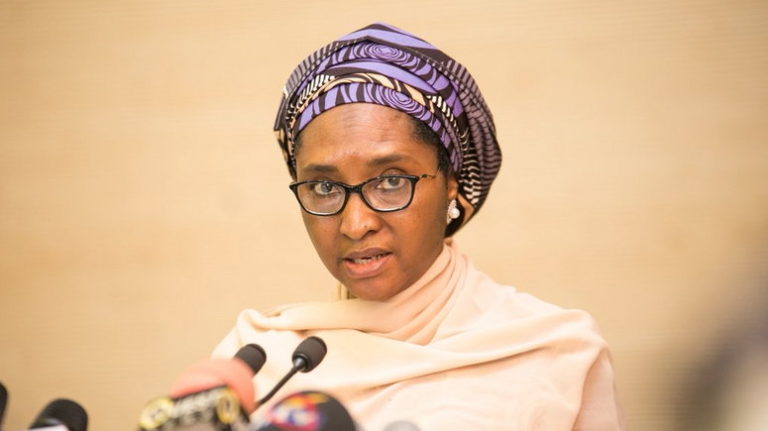
Zainab Ahmed, Minister of Finance, Budget and National Planning,  has presented before the National Assembly on Wednesday the proposal titled “2020 Capital Revised Adjustment”.

Recall that President Muhamadu Buhari had earlier set up a committee in March to be headed by the finance minister to review the crude oil budget benchmark.

Other members of the committee are Godwin Emefiele, Central Bank of Nigeria governor, Mele Kyari Group Managing Director NNPC and Clement Agba minister for state Budget and National Planning.

The ICIR earlier reported also in March the plans by the Federal Government to review the 2020 budget as oil prices and revenue shrink further due to the negative impact of the coronavirus.

The budget review became necessary following reduced revenue and crash in oil prices as a result of the Covid-19 pandemic, the minister showed in her document.

Other proposed changes to the budget include a reduction of the budget oil production volume from 2.18 million barrels per day to 1.70 million barrels.

The budget benchmark has also been reduced from $57 per barrel to $30.

You don’t need social distancing once you put on a mask — Gov Ben Ayade says

BEN Ayade, Governor of Cross River State, has said there is no need to observe social distancing in preventing coronavirus, once citizens wear face masks in public. 

Ayade made this submission while addressing some residents of Calabar, the state capital on Tuesday, at the Peregrino Lodge (Governor’s official residence).

“I’m a professor of science and I know how this virus moves; I know its etiology, I know it transmissibility, I know its antigenicity; because I do, I know that once you put on this mask, you have already been protected.

“You don’t need social distancing when you are properly protected because your mucal glands that secretes the mucus and the musins already forms a network of coats to attack the virus,” Ayade announced to a cheering audience.

https://www.facebook.com/TheICIR/videos/149996986414328/

Ayade has a Master’s degree in Microbiology and a Ph.D in Environmental Microbiology, both from the University of Ibadan.

With his new finding, Ayade, selected commissioners and other appointees in the state as enforcers of the new order – which permits all residents to freely move around as long as they wear face masks.

The governor also gifted 50 branded COVID-19 vehicles to the task-force officials – to aid movement around the state and support enforcement of his new order.

In accordance with the new order, residents caught driving without a mask on would have their vehicles impounded and would have to pay N300,000, a CrossRiverWatch reporter told The ICIR. 

Ayade’s preaching against social distancing is in contrast to the official recommendation of the Nigeria Centre for Disease Control (NCDC) and the World Health Organisation (WHO).

The NCDC, which is the government agency leading Nigeria’s fight against coronavirus has repeatedly announced that social distancing is the most effective method of preventing coronavirus.

On a larger scale, the WHO has, as part of its public health advisory, recommended all persons to practice social distancing to avoid getting infected with coronavirus.

All around the world, countries are effecting lock-downs, travel restrictions to aid the growing need for social distancing in this pandemic period, given that no known cure or vaccine for the virus is available.

As at the time of filing this report, coronavirus has infected  over 1.5 million globally and killed over 88,000 persons, according to Worldometer.

Of the 17 states with confirmed cases of the virus in Nigeria, Cross River is yet to record a single case.

Lock down: DISCOs accede to provide two-month free electricity nationwide

THE Electricity Distribution Companies (DISCOS) has assented to a proposition by the Federal Government to offer Nigerians two- month electricity without charges as Nigerians combat the impacts of lock down imposed due to the Covid-19 outbreak.

The distribution companies made this known through a press statement by the Association of Nigerian Electricity Distributors (ANED) on Wednesday evening.

According to the statement signed by Sunday Oduntan, Executive Director (Research & Advocacy) of ANED and spokesman for all the DISCOS, the companies said they align with the Federal Government’s effort to mitigate the hardship of Nigerians during this period.

“In fulfilment our commitments to the nation, we hereby align ourselves with the efforts of the National Assembly and the Federal Executive to mitigate the hardships that are currently being borne by our customers and other citizens all over the country,” the statement read.

Commending the legislators, Executive arm and the Nigerian Electricity Regulatory Commission (NERC) for the development, ANED said all distribution companies were committed to ensuring good power supply during this period and after.

“We commend the Federal Legislators, the Executive arm and The Nigerian Electricity Regulatory Commission (NERC) for their initiative and we are committed to working with them to ensure more efficient power supply within this difficult period, as the nation battles with the ravages of COVID-19,” the statement further read.

The association noted that the while details of implementation would be conveyed to Nigerians soon, its members were committed to improving service delivery to their customers.

Meanwhile, some Nigerians have taken to social media to express their concerns over poor electricity supply during the lock down.

Oluwaseun, a social media user, wrote on Twitter, that his residence in Lagos has had less than 10 hours of electricity supply in the past week.

“We are in Lagos. And we have come to terms with how terrible the electricity situation is. Less than 10 hours of light in the last week,” Oluwaseun wrote.


No N1 billion spent on SMS to Nigerians says NCDC

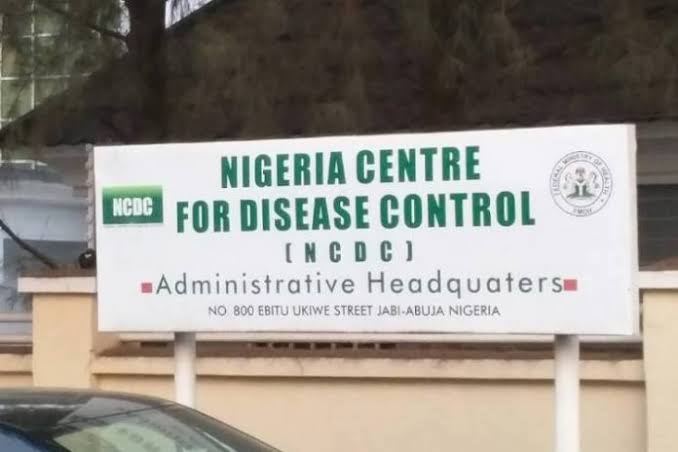
THE Nigeria Centre for Disease Control (NCDC) has dispelled reports that the commission has spent N1 billion on sending text messages to Nigerians as part of measures to contain the spread of Covid-19.

The NCDC via a tweet on its official Twitter handle, posted Thursday morning maintained that such reports were not true.

The Centre, while quoting an headline that said it has spent N1 billion to educate Nigerians on Covid-19, refuted the claim as fake news.

It said while the text messages were a key component in educating citizens of the country about the pandemic, it has not spent such amount.

The NCDC further explained that the text messages have been ‘largely provided as ‘in-kind support’ by some telecommunications companies in the country.

Listing the telecommunications companies, NCDC mentioned Airtel Nigeria, MTN, Nigeria and Global Communications (GLO) as companies supporting the agency with the text messages.

For the past weeks, some Nigerians have received messages by the NCDC orientating them on what to do, who to call and restriction orders in some Nigerian states.

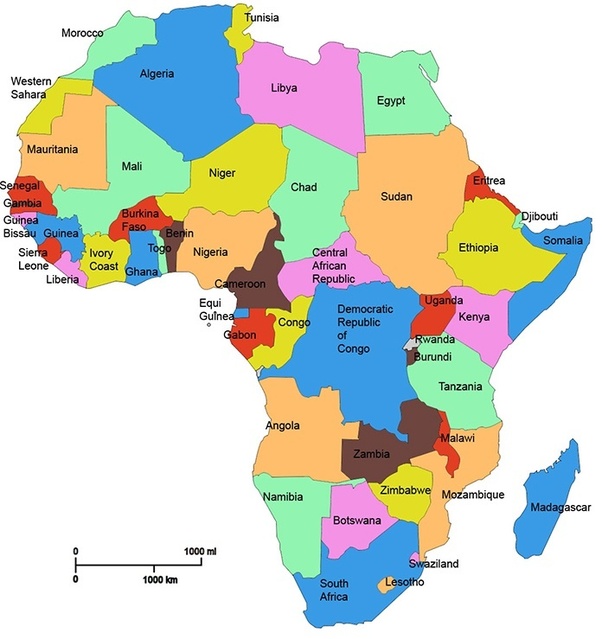
Lesotho, Comoros and Sao Tome and Principe—three African countries yet to record covid-19 case

OUT of the 54 countries on the continent of Africa, three countries— Lesotho, Comoros and Sao Tome and Principe—are the only three that are yet to record Covid-19 case.

“With South Sudan the latest country on the continent to confirm a case on Sunday, there remain just three African countries – Lesotho, Comoros and Sao Tome and Principe – who have yet to report a case of COVID-19,” Amanuel Mamo, Director, Advocacy and Campaigns, Save the Children International, Nigeria said in a statement.

According to Save the Children, the continent of Africa has recorded its 10, 000 case of COVID-19 as of Tuesday, warning that some of the most vulnerable children and their families across Africa who depend on the informal economy for their livelihoods are and would increasingly be impacted by measures designed to stop the spread of Covid-19.


READ ALSO:

Mamo said significant efforts were being made by African governments to respond to this growing pandemic.

“Governments in the region are focusing on limiting the spread of the Covid-19 with increased restrictions, however, these measures disproportionately impact the poorest households, who depend on the informal economy for their already fragile livelihoods.”

Mamo however, noted that the number of cases in Africa have been increasing exponentially since  March 13 with the total caseload on the continent doubling from just over 5000 to 10,000 in the space of a week.

He pointed out that, across the continent, unlike in many parts of the world, social security coverage in Africa was extremely limited or non-existent and largely confined to workers in the formal economy and their families.

Quoting the International Labour Organisation (ILO), Mamo said only 17.8 per cent of Africans receive at least one social protection cash benefit, and only about 10 per cent of the economically active population is covered by social security schemes.

“Children and their families across Africa have already been struggling through a decade of climate shocks and regular food crisis, which have driven numbers of hunger crises across the continent,” he said.

“Save the Children is warning that as markets close and movement is restricted, many households will have less income to meet their basic needs, including food and fuel for cooking. The lack of income will have particularly dire consequences for the poorest households, who may be forced to choose between paying rent and feeding their children.”

He added that families dependent on casual work  were particularly vulnerable, as they could not earn an income through working from home or self-isolating.

Many of these families, Mamo explained would need to rely on their savings to get by, and be forced to deplete whatever food, fuel and water stocks they have.

Also, Save the Children’s Campaign and Advocacy Director for Africa, Eric Hazard, said: “We’re extremely concerned that mounting financial pressures on families will increase food insecurity in communities already struggling to know where their next meal is coming from , which in turn will have a devastating impact on children.

“We know through experience that when families lose their incomes and have no social safety net, children become vulnerable to abuse and exploitation. As COVID-19 starts to impact on the economy, the loss of parental income and closure of schools may force many children to beg for food, take hazardous jobs to support their families, or families to split up in search of food, leaving children, especially girls alone, unprotected and exposed to violence, abuse, exploitation and at risk of child marriage.

“Local and donor governments and institutions need to act together and commit to stopping the pandemic in Africa and tackle the negative effects of restrictive measures on vulnerable populations’ livelihoods, and in doing so, sustain food security and access to health services, by integrating the needs of the most vulnerable in their response to the COVID-19.”

To protect a generation of children from the devastating effects of the Covid-19 outbreak, Save the Children has launched the largest appeal in its 100-year-history, aiming to raise $100 million to urgently keep children and their families safe during the global COVID-19 outbreak, the most serious threat to global health and security in modern times.

The appeal will support its Agenda for Action – a five point plan for a coordinated community, national and global action on five fronts to avert a catastrophe that could affect the lives of millions of children.

Globally, Save the Children works with half a million community health workers in 44 countries to deliver vital health services – the agency aims to support them in recognising symptoms and preventing COVID-19 – and aims to train another 100,000 in the coming six months.

It will work with local communities to deliver training and protective equipment so that prevention measures can be ramped up, and cases can be identified early, referred for treatment and where possible, isolated.

Swine flu, Hong Kong Flu, three other pandemics that shook the world

FOR the first time in world history, a disease called COVID – 19 which has proved difficult to contain, confining millions of people to their homes and grounding the global economy emerged from Wuhan, China in December 2019.

For centuries, several diseases have defined human history and changed the world’s perception about invisible pathogen capable of bringing human beings down to earth.

The ICIR chronicles the notable global pandemics that have hit the world from the swine flu outbreak to the current COVID – 19 which has claimed the lives of millions of people and also provided opportunities for understanding how to keep the future pandemics at bay.

The Spanish Flu (1918 – 1919)

One of the world’s most deadly pandemic described by doctors as the”greatest medical holocaust in history”.

The flu is believed to have started in crowded army training camps during World War I, but there is no universal agreement where the virus originated. It spread worldwide during 1918-1919.

The disease was caused by an H1N1 virus with genes of avian origin, the Spanish flu pandemic resulted in a high mortality rate for young adults, while children and people with weaker immune systems had low mortality rates.

Without a vaccine to protect against influenza infection at the time and treat secondary bacterial infections associated with the Spanish flu, control efforts worldwide were limited to non-pharmaceutical interventions such as isolation, quarantine, good personal hygiene, use of disinfectants, and limitations of public gatherings, which were applied unevenly.

It was estimated that about 500 million people which is one-third of the world’s population then were infected with this virus. The number of deaths was estimated to be at least 50 million worldwide with about 675,000 occurring in the United States.

The contagious flu which was caused by A/H3N2 influenza virus which is a subtype of viruses that can infect birds and humans by mutating into several strains. It is associated with mild or severe symptoms such as high fever, runny nose, sore throat, muscle and joint pain, headache, coughing, and fatigue.

The first outbreak was recorded in Hong Kong in 1968, infecting and 500,000 Hong Kong residents before spreading to different parts of the world. The virus was highly contagious, a factor that facilitated its rapid global dissemination.

The outbreak was the third influenza pandemic to occur in the 20th century, however, the H3N2 virus continues to circulate worldwide as a seasonal influenza A virus.

Over 1 million lives across the world were lost to influenza while 100,000 deaths recorded in the United States. The Hong Kong flu registered a high death rate for adults who were above 65 years, according to the Pandemic Severity Index the disease had a low case fatality ratio because of its low death rate.

It was first reported in Guangdong, China in 2002, when doctors noticed that patients admitted had a highly contagious germ, unaware that they were also at risk of a lethal infection.

SARS is a viral respiratory disease caused by a coronavirus called SARS-associated coronavirus, SARS-CoV – 1, but since 2004 there have not been any known cases of SARS reported anywhere in the world until COVID – 12.

Coronaviruses are viruses that circulate among animals with some of them also known to infect humans, SARS-CoV-1 is transmitted to humans from civet cats.

The disease had spread to several parts of Asia, Europe and North America, despite being contagious killed 774 people worldwide.

Its symptoms include common cold to more severe fever, chills, muscle aches, headache, dry cough and shortness of breath.

The SARS pandemic was eventually brought under control in July 2003, following a policy of isolating people suspected of having the condition and screening all passengers travelling by air from affected countries for signs of the infection.

There’s currently no cure for SARS, but research to find a vaccine is still ongoing.

In 2009, the World Health Organisation, WHO, officially declared the “swine flu” a pandemic after it was first identified in Mexico in April 2009. The flu became known as swine flu because of it’s similarity to flu viruses that affect pigs.

The scientific name for swine flu is A/H1N1 and shortened to “H1N1”. Statistics by the WHO reveals that the virus had killed more than 18,000 people after it appeared in April 2009 hinting that the total mortality including unconfirmed deaths from the H1N1 strain was higher.

Studies carried out at the U.S. Centers for Disease Control and Prevention published in May 2009 showed that children had no immunity to the new strain but adults, older than 60, had some degree of immunity.

In June 2010, Fiona Godlee, editor-in-chief of the British Medical Journal, BMJ, published an editorial criticising WHO for calling the swine flu a “pandemic” too soon and also alleged that some of the experts advising WHO on the pandemic had financial ties with drug companies which were producing antivirals and vaccines for the flu after an investigative report.

On 12, April 2010, Keiji Fukuda, the WHO’s top influenza expert, said that the system leading to the declaration of a pandemic led to confusion about H1N1 circulating around the world and he expressed concern that there was a failure to communicate in regard to uncertainties about the new virus, which turned out to be not as deadly as feared.

WHO Director-General Margaret Chan at the time said she appointed 29 flu experts from outside the organisation to conduct a review of WHO’s handling of the H1N1 flu pandemic for balance and fairness.

COVID – 19 (2019-)

SARS-CoV-2 is a new strain of coronavirus that has not been previously identified in humans until the first case was recorded in Wuhan, China in December 2019. Coronavirus are viruses that circulate among animals with some of them also known to infect humans

The strain of coronavirus SARS-CoV-2 was given to the novel 2019 coronavirus, while the name for the resulting disease associated with the virus is COVID – 19.

As of 30 March 2020, the COVID-19 outbreak had caused over 700, 000 cases globally since the first case, more than 30, 000 people are known to have died.

Infected persons might have the virus between 1 to 14 days before developing symptoms. The most common symptom of COVID-19 includes fever, fatigue, and dry cough.

Supply shortages affected trade globally due to panic buying, increased usage of goods to fight the pandemic, disruption to factories and logistics due to complete shut down of activities in different countries in a bid to contain the virus.

As of February 28, stock markets worldwide saw their largest single-week declines since the 2008 financial crisis as global stock markets crashed in March 2020, with a freefall of several of the world’s major indices.

As the pandemic spreads, global conferences and events across technology, fashion, and sports are being cancelled or postponed. While the monetary impact on the travel and trade industry is yet to be estimated, it is likely to be in the billions.

You can also read: The History of Influenza Pandemics By The Numbers.