Home Blog Page 2139

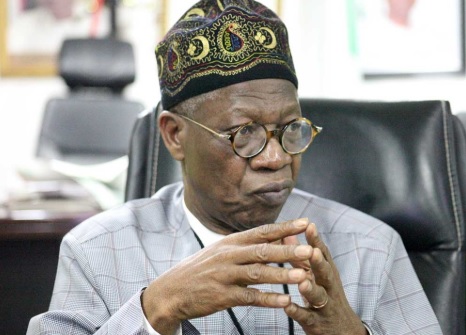
Lockdown: Your ID Card is your pass, minister tells journalists

FOLLOWING the 14-day lock down announced by President Muhammadu Buhari in Lagos, Abuja and Ogun State, the Federal Government has clarified that journalists in the these affected places are free to go about their daily official work using their Identity Cards as their Pass.

“All working journalists and other media staff in Lagos and Ogun states as well as the Federal Capital Territory (FCT) have been advised to use their valid Identity Cards to access their places of work and assignment venues during the 14-day lockdown directed by the President in the two states and the FCT,” a statement issued on Monday by the office of Minister of Information and Culture, Lai Mohammed said.

Mohammed, said the clarification becames necessary in view of the inadequate time to properly accredit working journalists in the affected states and the FCT during the period.

He said members of the media were expected to continue to provide essential services during the lockdown, in order to keep Nigerians well updated on the COVID-19 pandemic.

President Buhari had in his nationwide broadcast on Sunday said that workers in telecommunication companies, broadcasters, print and electronic media staff who can prove they are unable to work from home are also exempted from the 14-day lock down.

I thought I was going to die, COVID-19 patient shares experience at Lagos isolation centre

“I WAS  on drugs daily. Sometimes, I‘d take eight tablets in the morning, 13 tablets in the afternoon, 10 at night. My system threw everything out! Water, food, soap and all disgusted me. But I’d look at the wall and force myself to stay hydrated — drank ORS. I fought to live! I fought!!!

The above statement is that of Oluwaseun Ayodeji, who tested positive for coronavirus, narrated her experience inside the isolation centre in Lagos State after she was discharged and was given a clean bill of health on Monday, March 30.

The experience was made known through her Twitter handle shortly after she was discharged earlier today, saying she contracted the disease during a post-Commonwealth event in the United Kingdom.

In a series of tweets, Oluwaseun shared various photographs of what she went through in the Infectious Disease Hospital, Yaba.

She wrote, “Life finds ways of throwing lemon at me. I’ve struggled with coming forward, but I want to inspire hope. I returned to Nigeria from the UK post-Commonwealth event and fell ill. As a responsible person, I self-isolated. Days after, I tested positive for Covid-19.

“Before returning, I had planned several interviews, I was scheduled to start a fantastic consultancy job & was also expecting to sign a contract worth millions. I lost them all. I had to self-isolate and also inform people I came in close contact with to get tested.

“My friend and I kept calling the Nigeria Centre for Disease Control (NCDC), to get tested.  What if we didn’t persist? No info on my test result. At 12am, an ambulance was at my house. I woke from sleep and was crying. I got to isolation centre, but no one was there to receive me. I waited in the ambulance for two hours.

“The nurses eventually came out and treated me like a plague. I sat in the ambulance feeling rejected. No questions about how I felt. So many questions about my travel history. Same information I had provided to NCDC and Lagos State Government during profiling.

“After two hours, I was taken to my space. I felt lonely, bored and disconnected from the outside world. Few days after, another patient came in. We bonded. Days later, patients trooped in. Are people observing self-isolation and social distancing? I was so scared for Nigeria.”

Oluwaseun went further to talked about how tough and unbearable situation of things turned out to be in the isolation centre.

“The next days were tough. No appetite. The nausea, vomit and stooling was unbearable. I’m a blood type A and  Covid-19 dealt with me. I’ll share daily symptoms and recovery process in a video tomorrow. I thought I was going to die and contemplated a succession plan for @StandtoEndRape.

“Days after, the doctors shared a good news that I tested negative. I shared this news with family and friends! My blood sample was taken and I also tried to donate my plasmapheresis to help others. I hoped to be discharged. I waited to be discharged, but for two days, nothing happened.

“I was unsure of what was going on. Why haven’t I been discharged? Should I be in the same ward? Could I get reinfected? I was worried but remained calm. On the third day, doctors said, ‘well, we worked with the info we had of you testing negative, but one result came back positive.’

“You’ll stay a few more days. You know we take nose, mouth and sputum samples. Am I still positive flushed face? I asked. No, you’re negative, the doctor replied. The doctor apologised for the delay. I was anxious to go home but remained calm. I wanted to be free from this pain.

“I continued the medication and asked to be in a separate ward. Sadly, I remained in the same ward as all others rooms were full. My ward had people who were positive. What if I get re-infected? For them, I was a beacon of hope and they needed me gone to register the progress.

“My family and friends were becoming anxious. People in my ward who earlier celebrated the news of my result suddenly lost hope. Why are you still here?

“You shouldn’t be here with us. You should be separated from us now…” People in my ward muttered. I tried to calm them.

“Today, I am proud to inform you that I murdered Covid-19 and have tested negative twice. I have been discharged,” Oluwaseun wrote on her Twitter handle.

She expressed appreciation for the efforts made by the Lagos state government, the health team and as well as the  nurses in the Infectious Disease Hospital, Yaba.


Oyo governor tests positive to Coronavirus, self isolates

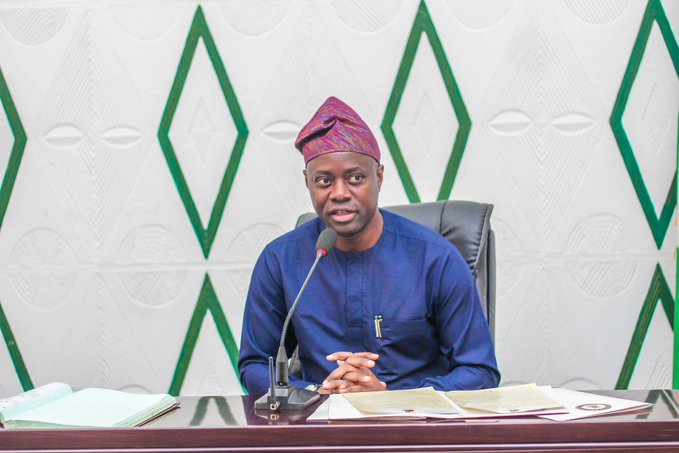
THE Oyo State governor Seyi Makinde has tested positive to Covid-19, The ICIR has learnt.

The governor in a series of tweets says he is asymptomatic and will continue to self isolate.

This comes a few days after the Makinde ordered a dusk-to-dawn curfew in the state after 84 new suspected cases of COVID -19 were discovered.

The state already has seven confirmed cases of the disease, with the National Centre for Disease Control, NCDC, confirming four cases on Saturday.

“I have designated Prof Temitope Alonge, former Chief Medical Director of the University College, Ibadan, as the Head of COVID-19 Task Force, while I recover fully. Please continue to comply with all the directives from the COVID-19 Task Force. Stay home, stay safe,” Makinde tweeted.

It will be recalled that the governor had placed a ban on all inter-states transportation, shut markets and restricted gatherings to not more than 10 persons.

With the confirmation of Makinde, Oyo now has a total of eight confirmed cases of Covid-19.

COVID19: The legality and limits of the President’s emergency powers

Victoria Ibezim-Ohaeri


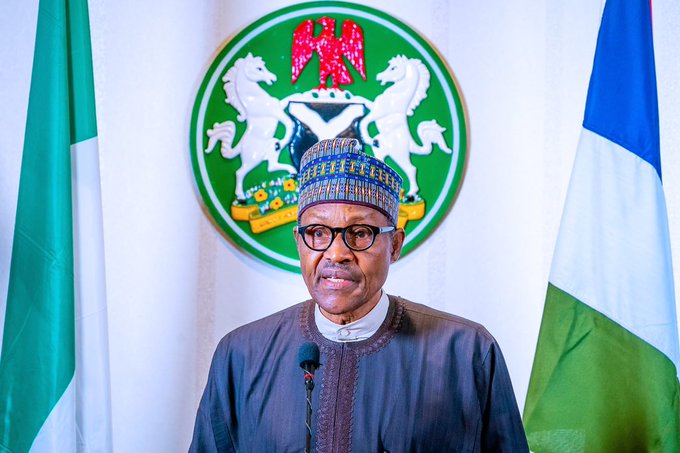
YESTERDAY, Sunday, March 29, 2020, President Muhammadu Buhari addressed Nigerians on the COVID-19 pandemic, detailing some of the stringent measures and restrictions the Nigerian government would implement to contain the further spread of the coronavirus. Among other things, he ordered the cessation of all movements in Lagos, Ogun and the FCT for an initial period of 14 days with effect from 11 pm on Monday, 30th March 2020.  The affected states recorded the majority of confirmed cases of COVID-19 in Nigeria.

The above presidential fiat restricting civil liberties has generated a flurry of legal debate regarding the legality of the president’s orders. While some lawyers have argued that in the absence of a law enabling restrictions to civic freedoms, the legality of the COVID-19 containment measures is questionable.

For instance, learned Agbakoba SAN argued that it is illegal to seek to impose sanctions or restrict citizens’ movement, without a legal framework. Agbakoba recommended that the National Assembly should as a matter of urgency, pass a Coronavirus Act 2020. Legal minds sympathetic to this view urged the President to issue regulations pursuant to the Quarantine Act of 1926 for the safety and protection of Nigerians. On the other hand, however, legal scholars like Adegboruwa SAN contend that rather than resorting to presidential fiats, the President should invoke his powers under the Constitution to declare any state of emergency, which must be approved by the National Assembly.

Two issues arise from this debate: first, whether a new law is required to legitimize the litany of COVID-19 containment measures that restrict civil liberties. Secondly, whether existing law sufficiently covers the field, granting necessary executive powers to the President to act and respond to a health emergency like COVID-19. Section 45 of the 1999 Nigerian Constitution provides a prism for determining these two questions. 

Section 45 of the 1999 Nigerian Constitution provides:

(1) Nothing in sections 37, 38, 39, 40 and 41 of this Constitution shall invalidate any law that is reasonably justifiable in a democratic society

(a) in the interest of defence, public safety, public order, public morality or public health; or

(b) for the purpose of protecting the rights and freedom or other persons

(2) An act of the National Assembly shall not be invalidated by reason only that it provides for the taking, during periods of emergency, of measures that derogate from the provisions of section 33 or 35 of this Constitution; but no such measures shall be taken in pursuance of any such act during any period of emergency save to the extent that those measures are reasonably justifiable for the purpose of dealing with the situation that exists during that period of emergency:

Provided that nothing in this section shall authorise any derogation from the provisions of section 33 of this Constitution, except in respect of death resulting from acts of war or authorise any derogation from the provisions of section 36(8) of this Constitution.

(3) In this section, a ” period of emergency” means any period during which there is in force a Proclamation of a state of emergency declared by the President in exercise of the powers conferred on him under section 305 of this Constitution.

The material sections of Section 45 have been underlined for emphasis. To understand the full import of Section 45, it must be read together with Section 305 of the 1999 Constitution. Section 305 (d) and (e) in particular empower the President to declare a state of emergency when there is a clear and present danger of an actual breakdown of public order and public safety in the Federation or any part thereof requiring extraordinary measures to avert such danger; and when there is an occurrence or imminent danger, or the occurrence of any disaster or natural calamity, affecting the community or a section of the community in the Federation;

Does COVID-19 pandemic come within the definition of Section 305 (d)’s clear and present danger of an actual breakdown of public order and public safety in the Federation or any part thereof, requiring extraordinary measures to avert such danger? The answer is in the affirmative. Why? During a during a March 11 press briefing, the World Health Organization declared the COVID-19 outbreak as a pandemic. The virus has spread so rapidly across the world, bringing countries with well-performing healthcare systems to their knees. As of March 29, 2020, Spain’s death toll from the coronavirus pandemic jumped to 5,690 with 832 patients dying within 24 hours. Likewise, over 104,000 cases have been confirmed in the United States, with deaths surpassing 1,700. Nigeria’s considerably low-infection rates witnessed in the early days of the pandemic dramatically turned around with over 97 confirmed cases and one fatality recorded as of March 29, 2020. In light of the above, COVID-19 certainly pandemic fits within the definition of a public emergency which threatens the life of the nation entitling the Nigerian State to invoke derogation measures.

So, does the President require any new law to act in light of the provisions of Section 45 and Section 305 of the Constitution? The power granted to the Nigerian president under these sections are broad and expansive. By virtue of these provisions, the president is already empowered to take extraordinary measures to avert any danger that threatens public safety in the Federation or any part thereof. The phrase, extraordinary measures, extend and legitimize state powers to initiate a variety of actions that are not imposed in normal times, without recourse to a new law. Arguably, the combination Sections 45 and 305 further serve to restrain any urge (by the executive or legislature) to push for repressive legislation that stifle democratic freedoms and shrink the civic space in times of emergency

Declaring a state of emergency is the only constitutionally-approved requirement needed to confer legitimacy on the derogation of civic rights. In other words, the derogation from civic rights and freedoms is only allowable during a period of emergency. (See Section 45 (2) of the 1999 Constitution). And therefore, declaring a state of emergency in the Federation or any part thereof,  and transmitting copies of the gazette containing the proclamation including the details of the emergency to the President of the Senate and the Speaker of the House of Representatives, confers the necessary legitimacy on any containment measures taken during the period. To this extent, no new law will be required for the President to act. And by extension, existing law sufficiently covers the field, and granting necessary executive powers to the President to act and respond to a health emergency of this nature. 

As clearly seen from the letters of the law, President Buhari’s order for a total cessation of movement, except for essential supplies, in Lagos, Ogun and the FCT do not seem to align with the constitutional requirements laid down in Section 45 and 305. President Buhari did not declare any state of emergency, but went ahead to order the immediate implementation of measures that curtail rights and freedoms, putting a big question mark on the legality of governmental actions.

Nothing demonstrates the tensions between fundamental human rights and containment measures during health emergencies more than the blanket directive for the cessation of movement. Declaring a state of emergency affords strong legal protections to citizens’ fundamental rights in two major way ways. First, the emergency period is only in force for a specific period of time. It is not indefinite. The derogation is not permanent. The maximum period allowed by the constitution is six (6) months. (S.305(6(C)). By limiting the period of emergency, it precludes overreach from the executive arm of government. It also means that the president lacks the power to derogate from civil liberties in perpetuity, thereby, limiting any disposition or potential descent into autocratic rule. #

The second way the declaration of a period of emergency protects citizens’ rights is by insisting that any measures taken during this period are reasonably justifiable for the purpose of dealing with the situation that exists during that period of emergency. (Section 45 (2)). This requirement is sacrosanct. It proceeds upon the premise that derogations cannot just be ordered for the sake of it, but rather, must be reasonably justifiable. In its General Comment 2936 –  on the subject of state of emergency – containing authoritative interpretation of the components of Article 4 (a counterpart provision of Section 45 of Nigerian Constitution), the United Nations Committee on the International Covenant on Civil and Political Rights (ICCPR) laid down  a number of requirements and procedures stipulating how valid derogations may or may not be undertaken. According to the Committee, any State invoking Article 4 of the ICCPR to justify derogation from constitutionally-protected guarantees must comply with rigorous due process provisions relating to proportionality, notification of derogation measures, exclusion of the non-derogable provisions, non-discrimination, temporariness of exceptional measures and consistency of those measures with the state’s existing obligations under international human rights law. 

Nigeria ratified the ICCPR in 1993, and as such, is bound by the Committee’s recommendations. Recognizing the propensity of state agents to overreach statutory authority is a continuing concern across the globe, what the above interpretation means is that COVID-19 measures initiated by the Nigerian government must be time-specific, proportionate to the threats posed by the pandemic, reasonable, non-discriminatory, and respect the non-derogable provisions, especially the right to life. In fact, Nigeria is not excused from its international human rights obligations during periods of heath emergencies like the COVID-19 pandemic. 

In conclusion, the COVID-19 pandemic is the first of its kind, and particularly the first to test Nigeria’s legal framework in very provocative dimensions. There is also a lot of confusion regarding the appropriate procedure to take and what constitute reasonable limits on emergency powers. That probably explains why President Buhari has been slow in making any public pronouncements regarding the pandemic. Now that he has done so, it needs to be emphasized that any decision taken at this time must align with the dictates of the law. Accordingly, the president needs to take steps to exercise his powers under Section 45 and 305 of the Constitution as required by law. Standing on that high moral and legal ground, the President can then deploy his presidential powers to rein in the excesses of various state governors in the name of containing Corona virus pandemic in their states. 

SPACES FOR CHANGE has observed that the disease-containment approaches adopted across the country especially by state governors, reinforces fears of deliberate governmental clampdowns on civic freedoms using COVID-19 as an excuse. Closure of state waterways, air and land borders, fall within the realm of federal question jurisdiction. Various state governors are invoking the doctrine of necessity, exercising powers ungranted by the constitution in the name of containing the spread of corona virus. Something needs to be done to stem the tide of surging executive recklessness at the state levels. Urgently too. 

Victoria Ibezim-Ohaeri is the executive director of Spaces for Change (www.spacesforchange.org)

Covid-19: PDP slams Buhari, says address empty, offers no new solution

THE People’s Democratic Party (PDP) has slammed President Muhammadu Buhari over his nation-wide broadcast aired on Sunday evening in the wake of the novel coronavirus outbreak.

President Muhammadu Buhari in the broadcast highlighted the measures taken in retrospect and reeled out total lockdown of the nation’s commercial city, Lagos and Abuja, together with other essential proactive steps

In a press statement signed by the party’s national publicity secretary, obtained by TheICIR, Kola Ologbodiyan, PDP said it is rather unfortunate that Nigerians after clamouring for the presidential address, had to wait this long for an address that is empty and failed to respond to anxiety and demands of the impact of the scourge on the nation.

“The People’s Democratic Party (PDP) laments that President Muhammadu Buhari’s long-awaited address on the COVID-19 pandemic came empty and failed to address the salient demands of the impact of the scourge on our nation”

The party also claimed that Muhammadu Buhari’s address did not offer new solutions aside from the conventional methodologies available before.

“The party notes that outside the social distancing and isolation, which Nigerians had already imposed on themselves, Mr. President had no new solutions to offer our  nation.”

PDP also expressed regret over Buhari’s order over the cessation of all movements in Lagos, Abuja and Ogun State for an initial period of 14 days with effect from 11 pm on Monday,  March 30, saying the address did not touch real necessities of Nigerians who reside in the affected states.

“It is unfortunate that Mr. President failed to respond to demands on hope for medications, direct social palliatives, cut in taxes as well as reduction in the pump price of petroleum and crude oil in the international market”

The opposition party asked the president to retool his policy framework and implement “strategy to properly address the fears as well as the needs of Nigerians including health safety measures and real remedies that meet the anxieties of our nation at this critical time”

Nigeria at the time of filing this report has recorded over one hundred confirmed cases of the coronavirus and one death.


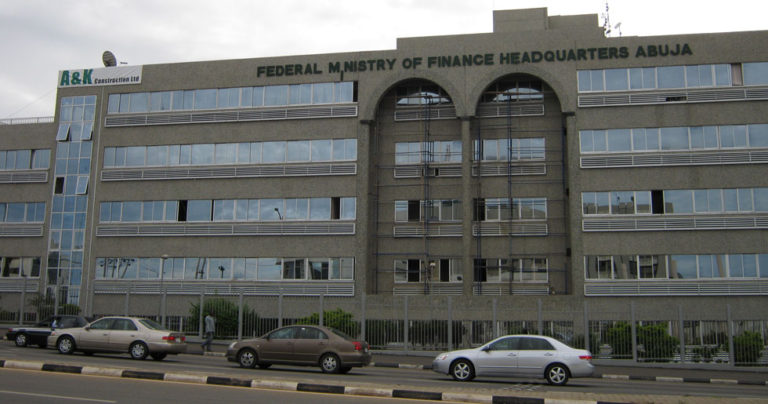
Ministry of finance disowns fake letter listing donations of Nigerians for the fight against COVID-19

THE ministry of finance has disowned a letter listing the donations made by some Nigerians for the fight against COVID-19 terming it as FAKE and SCAM.

The ministry through a letter signed by Yunusa Tanko Abdullahi, Special Adviser to the Minister of Finance, Budget and National Planning made this known in a public notice.

Public Notice by the Ministry of Finance, Budget and National Planning

The ministry discredited the solicitation asking Nigerians to donate to fight COVID-19, saying the news is fake.

The Ministry said it has not requested any donations from the public or received any, warning the general public that it would not be liable for any financial transaction which may have transpired between people and scammers who have created emails or social media accounts in the name of the ministry or that of the principal officers of the ministry.

The ministry, therefore, advised all members of the public to desist from transacting businesses with imposters as doing so would be at their own risk.

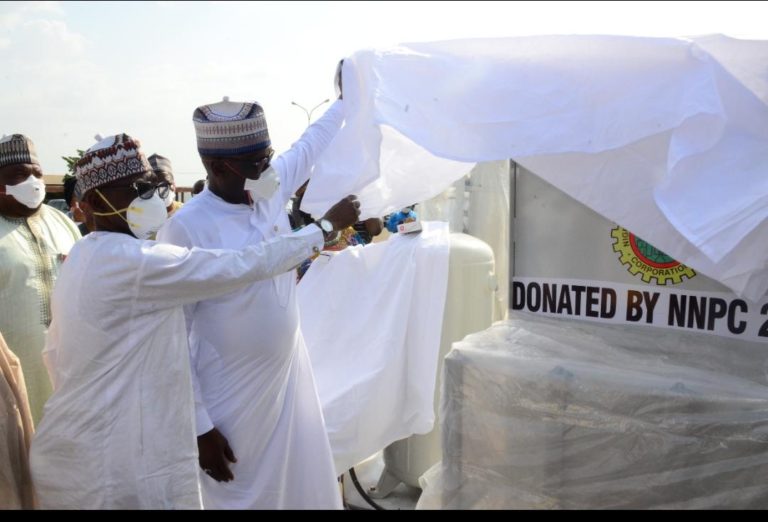
Covid-19: NNPC donates medical equipment to Abuja hospital

THE Nigerian National Petroleum Corporation (NNPC) has donated medical equipment to the University of Abuja teaching hospital over the spread of the coronavirus in the federal capital territory.

In a statement signed by the group general manager, group public affairs division of the NNPC, Dr. Kennie Obateru,  he said: “handing over of the medical equipment is part of the concerted effort to contain the coronavirus pandemic in the country”.

“Government cannot do this alone. Health systems, the world over are getting overwhelmed. Countries with stronger health systems are struggling to contain the pandemic. In light of this, the Oil and Gas Industry is collaborating to strengthen Nigeria’s response to the pandemic. These efforts, coordinated by the Honorable Minister of State for Petroleum Resources, Chief Timipre Sylva, will support government agencies in providing urgently needed resources both human and materials required to curb this pandemic,” Mallam Mele Kyari stated

Kyari handed over an oxygen generating plant, one brand new ambulance vehicles, one big ventilator, and a small ventilator to the hospital.

Other donated medical equipment include patient monitor, hospital beds, bedside cupboards, overtop tables, air conditioners, fully automated 5-part hematology analyser and semi-automated chemistry analyser.

The board also added an alert blood culture analyser, uninterrupted power supply (UPS) device, pro-excess Samsung printer, binocular microscope, tabletop centrifuge, and pipettes, were all donated and handed over to the University of Abuja Teaching hospital.

Kyari commended the Honourable Minister of Health and the entire Ministry, the NCDC, the Public Health Department (PHD) of FCT, University of Abuja Teaching Hospital and the entire medical community in the Country for their efforts in combating the virus, stressing that the NNPC remained grateful for their dedication in safeguarding the lives of Nigerians.

“It is obvious that to fight this menace, we all have to collaborate to ensure that Nigeria defeats this virus,” Mallam Kyari appealed.

On his part, the Medical Director of NNPC Medical Services Limited, Dr. Mohammed Zango, said the corporation as a responsible organization, was making the donation to meet the urgent medical needs of the isolation centre in Abuja and to make the centre more effective in delivering its mandate.

Out of the one hundred and eleven cases of coronavirus infection confirmed so far in Nigeria, the federal capital territory, Abuja ranks second with over twenty persons tested positive.

The University of Abuja Teaching hospital isolation center is one of few working isolation centers in the country.

Lawyers kick against Buhari’s 14-day lockdown order over covid-19 spread

LAWYERS  in the country have kicked against President Muhammadu Buhari’s decision to restrict movements in Lagos, the Federal Capital Territory (FCT) and Ogun state for an initial period of 14 days with effect from 11 pm on Monday,  March 30 as part of measures to contain the spread of coronavirus.

The ICIR had earlier reported how the President announced in a nationwide broadcast on Sunday evening the steps his administration has been taken to ensure safety of citizens across the country as the novel virus spreads to more states of the federation.

He explained that the step was based on the advice of the Federal Ministry of Health and the Nigerian Centre for Disease Control (NCDC).

Nigeria is amongst hundreds of country that has been affected by the Coronavirus pandemic first discovered in Wuhan, China.

Coronavirus is a disease that causes respiratory illness (like the flu) with symptoms such as a cough, fever, and in more severe cases, difficulty breathing. 

Nigeria reported the first confirmed case of coronavirus in sub-Saharan Africa on the 27th of February.

The case involved an Italian citizen who entered the country on 24 February on a Turkish Airlines flight from Milan via Istanbul.

There are now 111 confirmed cases in Nigeria, with one reported death.

In Africa, more than 4,600 confirmed cases of coronavirus across the continent.

The virus has proliferated around the globe over the past week, emerging in every continent except Antarctica, with 737,532 confirmed cases and 34,997 deaths, prompting many governments and businesses to try to stop people traveling or gathering in crowded places.

President Buhari said Ogun State was included due to its close proximity to Lagos and the high traffic between the two States.

While the President said his action was based on the advice of the Federal Ministry of Health and the NCDC, some Nigerian lawyers in reaction to the President’s order described it as illegal.

A Senior Advocate of Nigeria (SAN), Ebun-olu Adegboruwa in reaction said Nigeria being a democratic nation should function under the provisions of the constitution.

He said, “It is illegal for the President to take over the affairs of any State of the Federation without the express consent of the people of that State through their elected representatives.”

“The President has not invoked his powers under the Constitution to declare any state of emergency, which must be approved by the National Assembly”.

“It is only the Governor of the State through the House of Assembly of the State that can make any declaration concerning the people of that State. Little wonder that the President could not cite any law that he relied upon for his declaration,” 

“I support every measure taken to contain the Coronavirus pandemic but such must be in accordance with the law. If we allow this to stay, then tomorrow the President may just impose a total restriction on all States of the Federation for whatever reason,” he noted.

Inibehe Effiong, a constitutional and human right lawyer in a statement shared on his Twitter handle said the President has not acted within the constitution and that the action will be challenged in court.

Effiong, according to the constitution said Buhari could have asked the Senate President and Speaker of the National Assembly to convene the National Assembly to approve a state of emergency. 

His statement read in part, “After a deep reflection on President Buhari’s decision to lock down ALL movements in Lagos, Ogun and Abuja by presidential fiat for fourteen (14) days, I have resolved to challenge this unconstitutional action in court.”

“No responsible, democratic and civilised country will throw its Constitution and laws into the dustbin in an effort to tackle a pandemic like COVID-19 the way President Buhari has done. Freedom of movement is a fundamental right guaranteed by Section 41 of the Constitution.

“While it is conceded that this right is not absolute, Section 45 of the Constitution is clear to the effect that freedom of movement can only be taken away in the manner allowed by a law that is reasonably justifiable in a democratic society. Buhari has not relied on any law.”

“No law has been passed by the National Assembly to empower Buhari to lockdown Nigeria or any part thereof on account of coronavirus. Buhari hasn’t issued regulations as required under the Quarantine Act. The President has not declared a state of emergency in Lagos, Ogun or Abuja.”

“If Buhari is convinced that extraordinary measures are needed to contain coronavirus, the proper action would have been for him to issue an instrument published in the Official Gazette of the Government and make a proclamation of a state of emergency in Lagos, Ogun and Abuja.”

“By Section 305 (6) (b) of the Constitution, such proclamation shall cease to have effect if it is not approved by a resolution of the National Assembly within two days where the National Assembly is in session or within ten days where the National Assembly is not in session.

Buhari could have asked the Senate President and Speaker of the National Assembly to convene the National Assembly to approve a state of emergency. He could have simply issued regulations pursuant to the Quarantine Act. But he opted for his usual dictatorial ways of doing things.”

All serious countries declared emergency, passed or invoked laws to tackle COVID-19.

Also, Charles Omole, a UK based Nigerian Lawyer in reaction to the President order on his official Twitter handle said the President has not followed the law or constitution. 

“Regulations under the Quarantine Act or S305 of the constitution (which must then be gazetted within 10 days after NASS approval) has not been issued. All the elements are in his speech. He just needs to use the right tool.”

Buhari’s restriction order on Abuja, Lagos, Ogun is illegal, says Adegboruwa

A SENIOR Advocate of Nigeria (SAN), Ebun-olu Adegboruwa has slammed Nigeria President, Muhammadu Buhari over restriction order on Abuja, Lagos and Ogun States as illegal.

“We are running a constitutional democracy and it is illegal for the President to take over the affairs of any State of the Federation without the express consent of the people of that State through their elected representatives,” he said.

Adegboruwa said the president lacks the power to solely declare any state of emergency without approval from the National Assembly.

According to him, “the President has not invoked his powers under the Constitution to declare any state of emergency, which must be approved by the National Assembly”.

He maintained that Nigeria being a democratic nation should function under the provisions of the constitution.

“It is only the Governor of the State through the House of Assembly of the State that can make any declaration concerning the people of that State. Little wonder that the President could not cite any law that he relied upon for his declaration,” he noted.

Adegboruwa added that as much as he supports initiatives to curtail the spread of coronavirus in Nigeria, steps by the government must be in accordance with the Nigerian Law.

“I support every measure taken to contain the Coronavirus pandemic but such must be in accordance with law. If we allow this to stay, then tomorrow the President may just impose total restriction on all States of the Federation for whatever reason,” he noted.

Speaking on the pursuant effects of the ban, Adegboruwa urged the government to address the financial consequences of the lockdown most especially on small scale businesses and vulnerable members of the affected states.

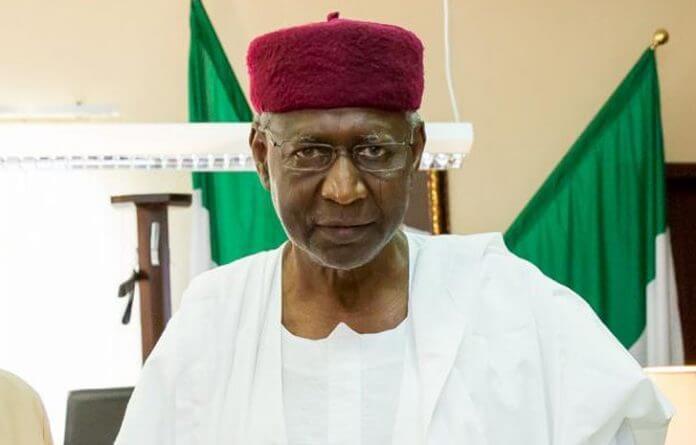
I will be back to the office soon- Abba Kyari tells Nigerians

DAYS after contracting the deadly novel coronavirus, Abba Kyari, the chief of staff to President Muhammadu Buhari, has assured Nigerians that he will soon resume to his duty post.

The ICIR earlier reported how the chief of staff to the president tested positive to the deadly virus.

He reportedly contracted the disease after his recent visit to Germany on an official assignment

As at the time of filling this report, Abba kyari is expecd to have been transferred to Lagos for additional tests and observations.

In a statement signed by Kyari himself, the CoS noted that he has made his “own care arrangements to avoid further burdening the public health system, which faces so many pressures.”

Kyari said he has not experienced the common symptoms of the deadly virus, despite being positive.

This condition allows him to work from home, he said, and promising to resume work in a few days.

“I have not experienced high fever or other symptoms associated with this new virus, and have been working from home. I hope to be back at my desk very soon.”

He also praised the health workers fighting to end the pandemic in Nigeria.

“I want to thank all our fantastic, talented and brave healthcare professionals, working across the country in such a difficult time; all the good Samaritans looking out for the most vulnerable in our communities; the key workers that will keep our country going through this; friends and family and often strangers, who have sent me such warm wishes and displayed such generosity of spirit.”

Since the announcement that Kyari tested positive to the coronavirus, reports have circulated widely in the Nigerian media  that the chief of staff has been flown abroad to receive medical attention at Wellington hospital in London, United Kingdom, despite the presidential directive on the close of the international and domestic airports.

This report has been debunked by the presidency.

Notwithstanding, the illness of  Kyari has created tension among Nigerians who believe other occupants of Aso Villa might have contracted the disease that has killed several thousands across the world.