Home Blog Page 2140

COVID-19: Human Rights and civic space in Nigeria

Victoria IBEZIM-OHAERI 


LOCKDOWN, social distancing, contact-tracing, self-isolation, quarantine, testing, face-masks, sanitizers: these are the buzzwords of the moment, triggered by the massive spread of Corona virus, popularly known as the COVIDu-19 pandemic. With the virus spreading rapidly and ravaging the world, causing thousands of deaths and incalculable social and economic losses, countries of the world are rolling out measures each passing day to both control the spread of the virus and mitigate the impact on affected populations. 

Nigeria’s considerably low-infection rates witnessed in the early days of the pandemic dramatically turned around with over 80 confirmed cases and one fatality across 10 states recorded as of March 29, 2020. Not only that, 4,370 people of interest suspected of COVID-19 infection are being traced. The sharp rise in the disease toll saw the Nigerian government imposing restrictions and mitigating measures to contain disease spread, with implications on the fundamental human rights of citizens and the civic space in general.  The emergency doctrine in Section 45 of Nigerian 1999 Constitution has often been cited to justify the plethora of restrictive measures rolled out to combat the pandemic.                                  

At SPACES FOR CHANGE | S4C, a policy research and advocacy non-profit organization, we have been tracking and documenting a host of COVID-19 disease control measures at the federal and state levels that have enormous potential for abuse, and shrink the civic space. Having extensively analyzed the Nigerian government’s COVID-19 containment measures within the context of the country’s human rights obligations, the following observations need to be emphasized:


  • Nothing demonstrates the tensions between rights and containment measures during health emergencies more than the blanket recommendation for the public to avoid mass gatherings and close contacts with people. Any State invoking Section 45 of Nigerian Constitution to justify derogation from constitutionally-protected guarantees must comply with rigorous due process provisions relating to proportionality, notification of derogation measures, exclusion of the non-derogable provisions, non-discrimination, temporariness of exceptional measures and consistency of those measures with the state’s existing obligations under international human rights law.


  1. Certainly, the COVID-19 pandemic fits within the definition of “a public emergency which threatens the life of the nation” entitling the Nigerian State to invoke derogation measures. The federal government has yet to declare a state of emergency, but have gone ahead to implement measures that curtail rights and freedoms, putting a big question mark on the legality of governmental actions. Declaring a state of emergency connotes that the rights-derogating measures are temporary and limited to the extent strictly required by the exigencies of the situation.


  1. As of March 26, 2020, Nigeria has reportedly conducted a total of 178 COVID-19 tests compared to South Africa’s 15,500 tests over the same period. Low testing figures, compounded by the lack of adequate databases for contact details, has forced the government to trace suspected patients primarily through public appeals. Low response to public appeals is probably prompting the proposal to use the police and the military to enhance contact-tracing. The use of coercive action should be discouraged because of the potential to instil fear and anxiety, including social stigma.


  1. While global borders remain shut, high-profile infected persons cannot travel abroad as they used to, and have to fall back on the health facilities abandoned for decades to rot and under-perform. While massive healthcare reforms are anticipated in the long term, the risk of preferential treatment for high-profile infectees looms large. Substantiated media reports reveal cases of alleged preferential treatment for foreign nationals and high-profile patients. These treatment patterns fuel fears that COVID-19 response measures may perpetuate inequalities in access to health care in critical times like this. Urgent steps must be taken to restore public confidence in the health systems by ensuring all persons—irrespective of their social and economic background, identity, sex, religion, ethnic group, sexual identity—have equal access to healthcare.


  1. The disease-containment approaches adopted across the country especially by state governors, reinforces fears of deliberate governmental clampdowns on civic freedoms using COVID-19 as an excuse. Closure of state waterways, air and land borders, fall within the realm of federal question jurisdiction. As the above make clear, various state governors are invoking the doctrine of necessity, exercising powers ungranted by the constitution in the name of containing the spread of corona virus. The right to move about freely throughout Nigeria and to reside in any part of Nigeria is a constitutionally protected right. (Section 41). Interstate state border closures not only breach the right to free movement, but could also hamper the rapid response initiatives to contain virus spread, including the delivery of essential food supplies, medical, humanitarian and surveillance services. Train services stopped, flights suspended and land borders shut will hinder medical personnel from reaching hard-to-reach localities in great need. 


  1. There is ample evidence that the pandemic may trigger states to enact a wave of restrictive legislations that shrink the civic space. The Lagos State Emergency Coronavirus Pandemic Bill 2020, sponsored by Speaker Mudashiru Obasa, scaled the first, second and third readings and eventual passage at lightning speed. There was little or no opportunity to engage the public or the broad spectrum of stakeholders that may be affected by the proposed law.


  1. Tracing contacts or having contacts surrender themselves for isolation is meaningless where the state lacks the manpower or capacity to conduct testing on a very large scale. The plans by the Lagos State Government to set up more isolation centers across the state as well as 3 testing centers with the capacity to test 100 people per day, is forward looking. The federal government’s release of N10 billion grant to Lagos State and another N5 billion to the Nigeria Centre for Disease Control (NCDC) for tackling the raging pandemic, is also a bold step in the right direction. It is hoped that these grants, including private donations from numerous stakeholders, would be judiciously applied towards the procurement of the critical medical supplies, ventilators including the technical, human and infrastructural resources needed to conduct large-scale testing, isolation care and treatment. 


  1. On 24 March, 2020, the Nigerian Presidency barred certain media houses from covering its activities. The actions were reportedly taken to contain the spread of COVID-19. The ban which will last for a yet-to-be specified period, will limit the ability of journalists to accurately cover and report presidential initiatives to defeat COVID-19. The ban represents a threat to press freedom, prompting stakeholders to warn that the pandemic should not be a ‘time for unnecessary pettiness, victimisation … (and adoption of measures) completely at variance with national interest.’


  1. Documentation of arrests and detentions of citizens on a digital database (closingspaces.org) revealed over 279 cases of many citizens being targeted and punished by state actors for various flimsy or no reason at all. COVID-19 should not be used as an excuse to perpetuate these documented injustices. We reiterate that whatever measures taken by the Nigerian government to contain COVID-19 disease spread should be temporary and limited to the extent strictly required by the exigencies of the situation.


For the full analysis of the COVID-19 containment measures in Nigeria, please see here. 

Victoria Ibezim-Ohaeri is the Executive Director of SPACES FOR CHANGE (WWW.SPACESFORCHANGE.ORG)
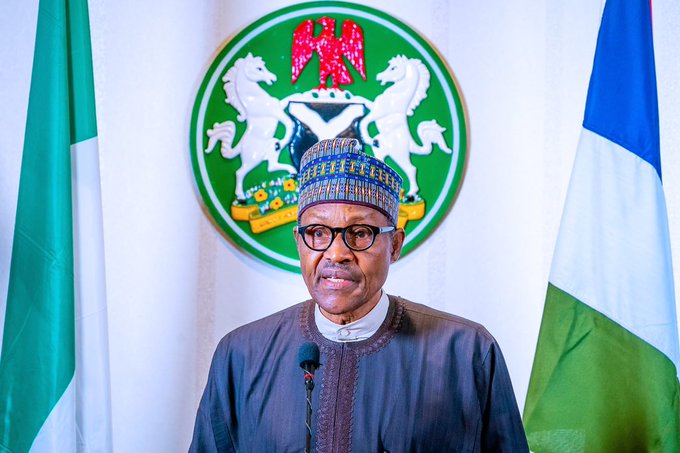
 

COVID-19: Buhari orders lock down in Abuja, Lagos and Ogun for 14 days

PRESIDENT Muhammadu Buhari has ordered the cessation of all movements in Lagos, the Federal Capital Territory (FCT) and Ogun State for an initial period of 14 days with effect from 11pm on Monday,  March 30, 2020 as part of measures to contain the spread of coronavirus.

The president announced this in a nationwide broadcast Sunday evening on the steps his administration has been taken to ensure safety of citizens across the country as the novel virus spreads to more states of the federation.

He explained that the step was based on the advice of the Federal Ministry of Health and the Nigeria Centre for Disease Control (NCDC)

President Buhari said Ogun State was included due  to its close proximity to Lagos and the high traffic between the two States.

” All citizens in these areas are to stay in their homes. Travel to or from other states should be postponed. All businesses and offices within these locations should be fully closed during this period,” he said.

“The Governors of Lagos and Ogun States as well as the Minister of the FCT have been notified. Furthermore, heads of security and intelligence agencies have also been briefed.”

He stated that government agencies would use “this containment period to identify, trace and isolate all individuals that have come into contact with confirmed cases.”

“We will ensure the treatment of confirmed cases while restricting further spread to others states.”

He said: ” As we are all aware, Lagos and Abuja have the majority of confirmed cases in Nigeria. Our focus therefore remains to urgently and drastically contain these cases, and to support other states and regions in the best way we can.”

“This is why we provided an initial intervention of fifteen billion Naira (N15b) to support the national response as we fight to contain and control the spread.”

Buhari however, noted that the order did not apply to hospitals and all related medical establishments as well as organizations in health care related manufacturing and distribution.

He added that commercial establishments such as; food processing, distribution and retail companies;
petroleum distribution and retail entities, power generation, transmission and distribution companies; and private security companies are also exempted.

While noting that though these establishments are exempted, their access would be restricted and monitored.

The president further stated that workers in telecommunication companies, broadcasters, print and electronic media staff who can prove they are unable to work from home are also exempted.

“All seaports in Lagos shall remain operational in accordance with the guidelines I issued earlier. Vehicles and drivers conveying essential cargoes from these Ports to other parts of the country will be screened thoroughly before departure by the Ports Health Authority,” he said.

“Furthermore, all vehicles conveying food and other essential humanitarian items into these locations from other parts of the country will also be screened thoroughly before they are allowed to enter these restricted areas.”

“Accordingly, the Hon. Minister of Health is hereby directed to redeploy all Port Health Authority employees previously stationed in the Lagos and Abuja Airports to key roads that serve as entry and exit points to these restricted zones.”

He stressed that movements of all passenger aircraft, both commercial and private jets, are suspended while special permits would be issued on a needs basis.

“We are fully aware that such measures will cause much hardship and inconvenience to many citizens. But this is a matter of life and death, if we look at the dreadful daily toll of deaths in Italy, France and Spain,”the president said.

In order to reduce hardship that the restrictions would bring on the people, president Buhari said government would relief materials to ease their pains in the coming weeks.

“For residents of satellite and commuter towns and communities around Lagos and Abuja whose livelihoods will surely be affected by some of these restrictive measures, we shall deploy relief materials to ease their pains in the coming weeks.”

He disclosed that the government has also created a Presidential Task Force (PTF) to develop a workable National Response Strategy that is being reviewed on a daily basis as the requirements change.

This strategy, the president said, takes international best practices but adopts them to suit our unique local circumstances.

“Our goal is to ensure all States have the right support and manpower to respond immediately. So far, in Lagos and Abuja, we have recruited hundreds of ad-hoc staff to man our call centers and support our tracing and testing efforts,” he said.

Buhari said he has also requested, through the Nigeria Governors Forum, for all state governments to nominate doctors and urses who will be trained by the NCDC and Lagos State Government on tactical and operational response to the virus in case it spreads to other states.

The training, according to him, would also include medical representatives from our armed forces, paramilitary and security and intelligence agencies.

Soldiers attack The Punch driver, stop newspaper circulation to S’South states

0

“He used a knife, which he brought from his uniform, to destroy the driver’s side’s tyre. The soldier was trying to get a stick probably to smash the windscreen of the car but decided to use a knife when he could not get a stick. I ran away when I noticed that he had brought out a knife.”

The above statement is that of Sunkanmi Olusola, driver of The Punch Newspapers delivery vehicle when a group of soldiers on Sunday morning attacked the circulation vehicle on its way to distribute one of its titles to states in the South-South region.

The Punch reports that one of the vehicle’s front tyres was torn beyond repair with a knife by one of the soldiers manning Mbiama, a border town between Rivers State and Bayelsa.

It was gathered that a soldier tried getting a stick to smash the windscreen of the Passat Golf 3 car but later resorted to using a knife to destroy the tyre.

Sunkanmi said the incident happened about 4.10 am, as the soldiers stopped The PUNCH and The Nation Newspapers from moving beyond Mbiama.

“When I got to Mbiama, some soldiers staying there did not allow us (The PUNCH and The Nation) to pass. I made an attempt to appeal to the soldiers to allow us to continue our journey, but one of them became very angry and attacked the company’s car.

“The tyre was destroyed beyond repair. It is a new tyre that we bought a few days ago – not up to a week. I had to replace it with the car’s spare tyre. The crisis started three days ago; security officials at Mbiama would not allow us to pass and distribute papers.

“They also stopped ThisDay truck carrying newsprint from coming into the state. Yesterday (Saturday), the policemen on duty at the same spot allowed my colleague to pass but today, the soldiers at the same location refused to allow us to pass.”

Efforts made by the spokesman of the Sixth Division of the Nigerian Army, Port Harcourt, Major Charles Ekeocha, to make the soldiers allow the drivers to circulate their newspapers reportedly  proved futile.

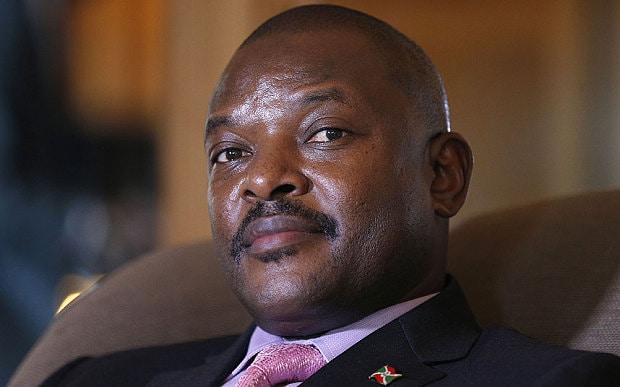
Of eight African nations yet to record any case of COVID-19, Burundi might be hiding skeleton in its cupboard

SINCE the outbreak of the Coronavirus pandemic which originated in Wuhan, China, in December 2019 that has rapidly spread across the globe and claimed the lives of over 24,903 persons worldwide, almost every country has recorded cases, but there remains eight countries on the African continent that has no single case recorded yet.

As at Saturday 28, Sao Tome and Principe, Comoros, Lesotho, Burundi, Sierra Leone, Malawi, Botswana, Swaziland are Coronavirus free.

However, according to reports obtained from a reliable source in Burundi by The ICIR, the Burundian government is accused of stifling reports of suspected cases in the country by stringently monitoring and controlling news reports about the virus in the country.

“One major private hospital that notified the government of suspected cases in its province is being persecuted for doing that. The Burundian government would rather maintain a façade than let the world in on the truth for whatever reasons, I do not know,” said the source.

In a letter made available to this reporter, evidence suggests that Burundi might soon be dealing with a health emergency that its already poor health system cannot manage as major hospitals report suspected cases of COVID-19.

“Mr Minister, speaking present, we have the honour to transmit this correspondence to you in order to solicit Reagents, for the screening of COVID-19 at Kira Hospital.

“In fact, Minister, for the past three weeks or so we have received very suspicious cases of COVID-19. In addition, no more than yesterday (March 26, 2020), three new truly suspicious cases.

“It is in this context that Kira Hospital, as an actor in the health sector at BURUNDI, equipped with a PCR machine and qualified personnel, introduced this urgent demand for COVID-19 desiring reagents,” read the letter in part.Credit: Anonymous source- Burundi

Although the airport has shut down operations, The ICIR source said the news of government persecuting Dr Christophe Sahabo, the Director of Kira Hospital for reporting suspected cases have caused an atmosphere of panic among the citizens who doubt the preparedness of their government in the instance of an outbreak.

“The Health Minister claims they are prepared in an eventuality of an outbreak, unfortunately, evidence shows that this is not true.”

The ICIR could not get a comment from the Kira Hospital SA Swiss Clinic or its management at the time of publishing this report.

African nations have been accused of hiding the real figures of Coronavirus cases with over 550,000 confirmed cases recorded worldwide, experts nonetheless say that the continent might eventually record fewer cases within its regions if strict adherence to preventive measures by the World Health Organisation to curb the spread of the virus is kept.

Burundi is an East African landlocked country bordered by Rwanda to the north, Tanzania to east and southeast, and the Democratic Republic of the Congo to the west.

All the countries that border the east African state have recorded cases of Coronavirus.


Osun to shut down borders, impose total lock down

WITH the latest confirmation of COVID-19 case in Osun state by the Nigerian Center for Disease Control (NCDC), the state government has announced the plan to shut down the border to curb the spread of the virus.

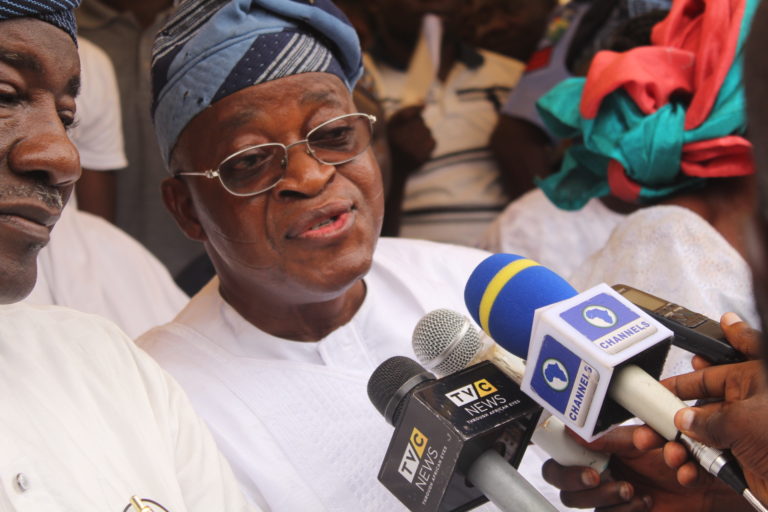
According to the state governor, Gboyega Oyetola, during a press briefing in Osogbo, the capital, on Sunday, the state’s border will be shut with effect from tonight, Sunday, March 29

“Following a review of our current situation, we have in addition to the subsisting measures taken in the past one week, decided to shut down all our land boundaries, effective from midnight, Sunday, March 29, 2020.”

The governor also announced that there will be a total lock down of the state for two weeks in the first instance.

The lock down is expected to start on Tuesday’s midnight March 31st, 2020.

This may be further extended as the governor advised the citizens of the state to stock up provisions in their households.

“In addition, a total lock down of the state will come into effect from midnight, Tuesday, March 31, 2020.

“We believe this is the way to go, if we must contain the spread of this virus. To this end, we urge citizens and residents to take advantage of the hours between now and Tuesday to stock up provisions that will last two weeks in the first instance”

The lock down is expected to affect movements within the state as well as inter-state travel.

In a tweet posted through the official handle of the Nigerian Centre for Disease Control (NCDC), a case was confirmed in Osun at exactly 10: 40pm on Saturday.

With this, Osun has recorded two confirmed cases of coronavirus.

According Worldometer, there are over 598,000 people infected globally, with over 27,000 death recorded so far.

See detail of COVID -19 cases in Nigeria on ThE ICIR website.


FACT-CHECK: Nnamdi Kanu claimed Nigeria has only 3 testing centres for COVID-19 but he was wrong

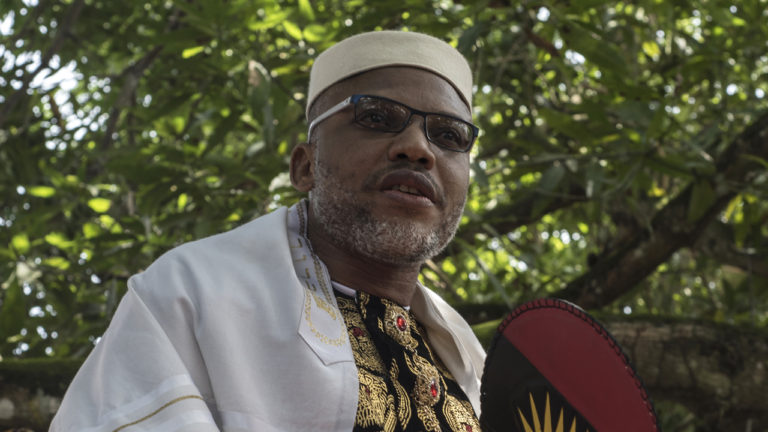
ON Saturday, 28 March, Mazi Nnamdi Kanu, Leader of the Indigenous People of Biafra (IPOB) claimed that Nigeria current battles the COVID-19 pandemic with only three testing centres located in Abuja, the Federal Capital Territory (FCT), Lagos and Edo States, despite its estimated population of about 200 million people.

COVID-19 is a strain of coronavirus that has spread across the globe since the outbreak in Wuhan, China, infecting over 512,700 people and leading to more than 23, 494 deaths globally.

In Nigeria, 97 cases have so far been confirmed by the Nigeria Centre for Disease Control (NCDC), as of Friday, 27 March, 2020. Only one death has been recorded while three persons have recovered from the disease and have been discharged.

Further, break down of the cases show 59 cases in Lagos, 16 in FCT, three (3) in Ogun, seven (7) in Oyo, Two (2) in Enugu, two (2) in Edo, two (2) in Bauchi, One (1) in Ekiti, One (1) in Osun, One (1) in Rivers, One (1) in Kaduna and One (1) in Benue state.

But Kanu questioned why only three centres would be serving such a huge population, attributing such failure to his assertion that Nigeria should not be recognised as a federation.

He insists that Biafra, the nation he wants carved out of Nigeria,  would have done better.

“COVID19 has confirmed that Nigeria is not a federation. It’s instead a very sick unitary state that should die, Kanu stated in his tweet.

“How can a ‘nation’ of 200M fight this VIRUS with ONLY 3 testing centres in Abuja, Lagos & Edo? Answer me, #JubrilAlSudani. #Biafra would’ve done much better.”

Infographics

Findings

Kanu currently has more than 73,000 followers on Twitter.

He is influential within the country and also recognised in few nations abroad. He also runs a radio station known as radiobiafra for the actualisation of the IPOB’s dream. As a result, he has scores of followers.

Within eight hours of the tweet, it had garnered over 2,700 likes on Twitter, 1,200 retweets and more than 309 comments.

But contrary to his claim, Nigeria actually has six testing centres for the COVID-19 disease.

The COVID-19 laboratories in Nigeria are as follows: two in Lagos – the Nigerian Institute of Medical Research, Lagos University Teaching Hospital (LUTH); the one in Osun State at the Redeemers University, Ede; one in FCT at the NCDC, another in Irrua Specialist Hospital, Irrua, Edo State and the last at the Virology Laboratory, University College Hospital, Ibadan, Oyo State.

Map showing distribution of the testing centres Illustration Credit: NCDC

The Oyo State lab was only established days ago and the NCDC also revealed plans to setup an additional laboratory in Abakaliki, Ebonyi State.

The Minister of Health, Dr. Osagie Ehanire also listed the centres during one of his briefings on the COVID-19 virus in Abuja, at the ministry’s’ headquarters.

“The WHO was quick to help us with training immediately we acquired the first reagents, and testing at that time was done in Abuja, Gaduwa, the reference laboratory. Since then, we have been able to do the testing in five laboratories,” Ehanire said at the briefing held 20 March, 2020.

“….And we have an offer of a Polymerase Chain Reaction (PCR) machine by one of the middle-east countries that promised us one which we will be placed in Kano where there is a gap. The five machines at the moment that can do this test are two in Lagos (Nigerian Institute of Medical Research, Lagos University Teaching Hospital).

“In Abuja, there is in Gaduwa the NCDC. Then there are two research centres, one is in Ede, Osun state the other one is in Iruwa in Edo State.”

Aside, the Minister stressed plans by the ministry to extend additional testing centres to Abakaliki, Kano and Maiduguri if the government is able to secure more reagents and then train more officials.

“We shall train more persons to do this test in Abakaliki because the machine is there but we don’t have the reagents, and I think Kano and Maiduguri, once we are able to get more reagents.

Verdict

Though, the current six testing centres are obviously inadequate, considering the nation’s estimated population of about 200 million, based on the available verifiable evidence, the Nigerian government actually has more than three testing centres, contrary to Kalu’s claim.

Therefore, Kalu’s claim is false and misleading.

As Covid-19 makes landfall in Nigeria

0

By Chidi Anselm Odinkalu 

When it fully makes landfall in Nigeria, the Severe Acute Respiratory Syndrome Coronavirus-2 (SARS-CoV-2) Pandemic (COVID-19) will discover a country already at the mercy of pandemic-level hunger and chronic violence. The combination of virus, violence and hunger would ordinarily be a complex emergency. With President Muhammadu Buhari now evidently enfeebled, the virus arrives in a season of leadership vacuum, converting a severe public health challenge into crisis of sustaining social cohesion and political stability. 

Public health and political power have always had a mutually dissonant relationshipWhen Brigadier-General Sani Abacha informed the world on 31 December 1983 of the decision by Major-General Muhammadu Buhari to sack the elected civilian administration of Shehu Shagari in 1983, he offered an unusual reason: “Health services are in shambles as our hospitals are reduced to mere consulting clinics without drugs, water and equipment. Our educational system is deteriorating at an alarming rate.” Nearly 37 years later, the landfall of COVID-19 in Nigeria presents Muhammadu Buhari with an opportunity to advertise his achievements.  

The score-card is doleful. Buhari’s usurper, Ibrahim Babangida, used hospitals in Germany to treat Radiculopathy. His successor, Sani Abacha, died mysteriously in office, his remains quickly buried without an autopsy. The predecessor of the man whom Buhari sacked in 1983, Olusegun Obasanjo, who returned as civilian president in 1999, tragically lost his First Lady in 2005 reportedly on a plastic surgeons operating table in Spain. Obasanjo’s successor, Umaru Yar’Adua, spent most of his term in office shuttling between hospitals in foreign lands. As elected president, Buhari has spent nearly as much time with doctors in foreign hospitals as he has in Nigeria. All this while, lesser Nigerian mortals have had to make do without the health system he promised in 1983. 

As the virus arrives, it will find a country with no pretty options, with no capability for diagnosis, treatment or data-led preparation, little interest in informed modelling and a leadership vacuum like no other. 

Let us begin with the diagnostic challenge. Nigeria cannot test its way out of the COVID-19 crisis. The country has only 5 test centres – two in Lagos, one in Osun, one in Edo and another in Abuja. There is no test centre in any of the 19 states of northern Nigeria or in the five states of south-east Nigeria. It is not surprising that the positive cases so far revealed closely track sites of testing. Of 97 positive results, 72 or 74.22% so far are in southwest Nigeria, which hosts three of the five test centres, with 59 or 60.8% in Lagos alone (which has two test centres). Abuja, the Federal Capital reports another 16 positive results or 16.49%. The nearby states of Bauchi, Benue and Kaduna altogether report another four positives. From the rest of the country, there are three confirmed cases altogether from Edo and Rivers States in the south-south, and two, both from Enugu in the south-east. The five test centres are presently operating at capacity and there is no money to ramp up testing. The country has fewer than 30,000 test kits. Importing test kits will require standardisation for a country without the luxury of time and in a market now dominated by duds.  

The result is that many who need to be tested can’t. Therefore, data deficits hamper planning. The daily updates from the Nigeria Centre for Disease Control (NCDC) can hardly be regarded as a credible measure of the spread of the virus in Nigeria. 

The treatment and management options are not good. In 2018, Nigeria’s Federal Ministers of Labour and Health respectively encouraged the county’s doctors to emigrate or to go into tailoring and farming. Today, when they are needed, the country doesn’t know how many medical professionals it has. In total, meanwhile, Nigeria has only about 350 intensive care units (ICUs). There is no hope in hell of being able to make up for a fraction of any shortfalls in anticipation of this crisis.  

With no credible diagnostic or treatment options, the response of the country has been characterised by panic. It began with the Governor of Rivers State in the Atlantic littoral announcing that he had “closed” all inter-state as well as maritime borders into the state. His example was immediately followed by many governors, including Abia, Delta, Enugu, Kogi and Kano. In Kano and Delta, the Governors announced that they were taking over the airports located in their territories so they could shut them. Inter-state borders in Nigeria’s federal system are federal, as are airports, maritime boundaries and the human assets required to police or secure all theseState Governors have no powers over them. It is misguided for Governors, anyway, to respond to a pandemic in such silos. 

The fact that this is happening is evidence of the biggest problem that Nigeria confronts in this crisis – leadership vacuum. As the virus beats its path to Nigeria, President Buhari has been somnolent. An alert President would have called a halt to the overreach of the governors. Presidential spokesman, Femi Adesina, claims this reflects the fact that it’s not the man’s style to speak to Nigerians. It is difficult to dignify this piece of hubristic nonsense from a man who claims to have once been the President of the Nigerian Guild of Editors. The more likely explanation is that President Buhari is enfeebled by more natural causes and increasingly lacks the cognitive bandwidth to provide the leadership this crisis requires. The President’s Chief of Staff, Abba Kyari, the regime’s Svengali, has himself become Nigeria’s equivalent of South Korea’s Patient 31, spreading the virus with the unusual generosity of a man who saw himself as too powerful for the rules of infection control. A Presidential Task Force headed the Secretary to the Government of the Federation (SGF) has been compromised by exposure to Mr. Kyari, unable to work in a government not configured for remote business. Put forward by the politicians as their institutional shield, the NCDC is caught in a brutal political turf-battle and must play safe by focusing on its limited role even as it struggles for modest elbow-room to function. 

COVID-19 is more than a complex emergency for Nigeria. It could be disaster on a hitherto unknown scaleIn a country in which citizens don’t have access to many social safety nets, edicts of social distancing and lockdowns have limited shelf-life. Hunger will force citizens to defy them and dare the virus with potentially catastrophic outcomes. Coercive enforcement could lead down the path of social unrest, which the country can ill-afford in a time of enfeebled national leadership.  

Lagos State, by all measures the epicentre in the country, shows that leadership can make a difference to outcomes in the contest with this virus. But state level leadership and the professionalism of the NCDC can only be optimised if there is political leadership by the Federal Government. This will not come from a committee of appointees under the SGF. With President Buhari unable to provide it at this time, Vice-President, Yemi Osinbajo must step out of the shadows and complement the waning authority of the President with his considerable cognitivbandwidth. Capable leadership will make it possible to catalyse regional action by the states, mobilising civic, business and faith communities in a manner that will prepare to minimise damage after the virus makes landfall. Absent that, the toll of the virus in Nigeria could be crippling. 


Odinkalu, a lawyer, is Co-convenor of the Nigeria COVID-19 Alliance & writes in his personal capacity. 


COVID-19: Recession may be inevitable if the pandemic continues for six months- Minister of Finance

MINISTER of finance, budget and national planning, Mrs Zainab Ahmed has said that the country can still close on a positive note for the year if the pandemic continues for an average of three months, but if it continues for six months and above then the country may go into recession.

She made this comment on a Channels TV program on Saturday.

As of February, the inflation rate went up to 12.2 per cent from 12.1 per cent in January, according to the National Bureau of Statistics (NBS)

The Central Bank of Nigeria (CBN) recently adjusted the exchange rate of the Naira at N380 to the dollar.

The CBN governor, Godwin Emefiele  said the new exchange rate at the Investors and Exporters (I&E) foreign exchange window was only an adjustment of the rate and not a devaluation.

Recall, the federal government approved a 10 billion Naira grant (about $27 million) to fight the spread of coronavirus, or COVID-19, in the country.

President Muhammadu Buhari said the money would be released to Lagos State, which has the highest number of coronavirus cases in the country.

And also the private sector led by Femi Otedola, Abdulsamad Rabiu, Herbert Wigwe, Segun Agbaje and Aliko Dangote contributed 1 billion Naira (about $2.7 million) each to support the government in curtailing COVID-19 in Nigeria.

According to the world bank, without significant structural policy reforms, Nigeria’s medium-term growth is projected to remain stable around 2 per cent.

Given that the economy is expected to grow more slowly than the population, living standards are expected to worsen.

Growth is constrained by a weak macroeconomic framework with high persistent inflation, multiple exchange rate windows and forex restrictions, distortionary activities by the CBN, and a lack of revenue-driven fiscal consolidation results.

The world bank showed that rising public debt and increasingly complex policy interventions by the CBN constrain private sector credit growth.

External balances are fragile to hot money movements, and fiscal buffers are exhausted, making Nigeria’s economy vulnerable to external risks, the world bank noted

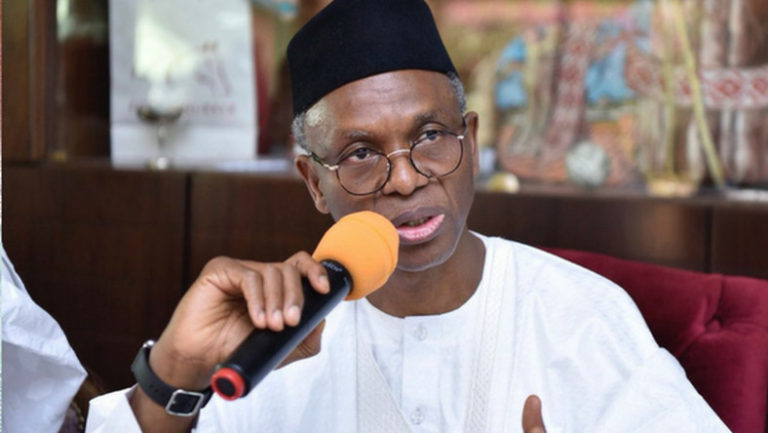
COVID-19: I regret to say my test is positive, El rufai says as he goes into self isolation

THE Kaduna State Governor, Mallam Nasir El -Rufai has announced that he tested positive for coronavirus.

Announcing on social media, El Rufai said earlier this week, he had submitted his sample to test for the deadly virus which has claimed the lives of over 30,000 people globally.

The governor said although he has not shown any symptoms of the virus but the test results says that he has contacted the virus.

“The result came in and I regret to say that it is positive,” El rufai said.

He added that in compliance to the Nigeria Centre for Disease Control (NCDC) he has gone into self isolation.

He urged indigines and residents of the state to remain calm and adhere to guidelines as advised by the NCDC.

The deputy governor is in charge of the task force to ensure residents of the state stay safe from the disease.

With his announcement, El – Rufai becomes the second Nigerian State Governor to test positive for the virus after governor of Bauchi state, Bala Mohammed.

Four weeks after first coronavirus case, Nigeria performs poorly in conducting tests

AT a press briefing on March 16 in Geneva, Director-General of the World Health Organisation, WHO, Tedros Ghebreyesus, disclosed that without early testing of suspected cases of the coronavirus the chain of infection will not be broken.

“ The backbone of every country’s public health response to this outbreak is testing, isolation, and contact tracing.

“If they test positive, isolate them & find out who they have been in close contact with up to 2 days before they developed symptoms and test those people too,” he said.

Since the first index case was recorded in Nigeria, less than 100 cases of coronavirus infections have been documented as at March 25.

The country boasts of five testing centres spread across four states namely Abuja, Edo, Lagos, and Osun.

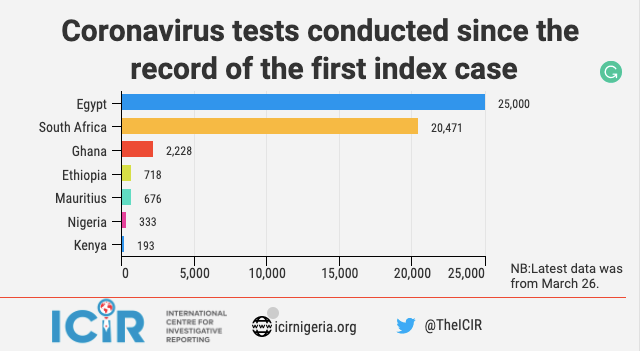
Data from Nigeria’s Centre for Disease Control, NCDC, shows that 333 people had been tested as of March 24.

The NCDC’s approach in managing the coronavirus spread is restricting tests to people who show severe symptoms of the disease or have come in contact with confirmed cases.

For a population of over 200 million people, the number of people tested for coronavirus in Nigeria pales into insignificance when compared to other African countries with testing facilities at the same operating capacity as Nigeria.

Data obtained from South Africa’s National Institute for Communicable Diseases, NICD, shows that the country has carried out over 20,471 tests as at March 26 which is more than 50 times compared to tests conducted in Nigeria whose first index case was recorded a week before South Africa.

According to records from WHO, only 36 of 54 countries in Africa have the capacity to test for the coronavirus, but an increase in cases of the virus could overwhelm these laboratories.

Hala Zayed, Egypt’s Health Minister in a press conference to review how coronavirus infections have spread in the country and the government’s response said an estimated 25,000 people had been subjected to tests in Egypt as at March 26.

The ongoing tests will continue alongside the closure of airports nationwide, which has now been extended through April 15.

Egypt’s Health Ministry offers testing for citizens for 1,050 Egyptian Pounds, an equivalent of $66 which could take 3 or 4 days. Quick test results that could be available in hours costs as high as 2,500 pounds, approximately $158.

Ghana Health Services, GHS, confirmed on its website as of March 26, it had conducted 2,228 tests among which 138 cases were affirmed positive based on the results since its first index case was recorded on March 12.

Since 12 March when Ethiopia’s first case was discovered, 718 laboratory tests have been conducted according to the health ministry.

Kenya has tested a total of 193 cases in three laboratories since the announcement of its first COVID -19 case on March 13, while Mauritius has conducted 676 tests of which 36 have been positive according to the information  published on the country’s  Ministry of Health and Wellness website as at March 24. 

Mauritius short term target is to carry out tests on 4,000 citizens which will then be extended to 100 000 people.

However, records on the rate of coronavirus testing carried out in most African countries are not publicly accessible but the numbers of those available are low when compared with other European or Asian countries.

South Korea leads the pack for countries having tested more people for the coronavirus than any other country, which has led to reduced cases, having conducted over 300,000 tests which are more than 40 times that of the United States.

Kang Kyung-Wha, South Korea’s foreign minister in an interview said early testing was key behind the low fatality rate in South Korea.

“Testing is central because that leads to early detection, it minimizes further spread and it quickly treats those found with the virus,” he said.

Will Jack Ma’s test kits solve the testing challenge

Founder of Chinese e-commerce giant Alibaba, Jack Ma, donated 100,000 face masks, 1,000 protective gowns and 20,000 test kits which are expected to be distributed to frontline health workers and hospital laboratories across the country was received into Nigeria earlier this week.

However, reports suggest that up to 80 per cent of the 150,000 portable, quick coronavirus test kits from China delivered to the Czech Republic earlier this month were faulty.

The test kits which can provide a result between 10 to 15 minutes are usually less accurate compared to other tests because of the high error rate, as the country continues to rely on conventional laboratory tests, of which they can perform about 900 tests daily.

In Spain, which has witnessed more than 56,000 infections and over 4,000 deaths from coronavirus which had purchased the rapid test kits from the Chinese firm, Bioeasy announced that the kits correctly identified 30 per cent of coronavirus cases according to a report.

It is unclear if Jack Ma’s gift from China to Nigeria will be tested to ascertain if it is prone to errors but reports hint that Nigeria’s testing capacity for coronavirus could increase by 32 per cent when put to use.

Rosanna Peeling, chair of diagnostics research at the London School of Hygiene and Tropical Medicine said the key to depleting the cases of coronavirus is tied to quicker and cheaper tests.

“There is no shortage of lab tests in Africa, but what we want is the faster, cheaper test to quickly confirm if there is an outbreak and contain it,  before it gets bigger. Africa still has that luxury, unlike Europe and North America,” she said.