Home Blog Page 2141

Four weeks after first coronavirus case, Nigeria performs poorly in conducting tests

AT a press briefing on March 16 in Geneva, Director-General of the World Health Organisation, WHO, Tedros Ghebreyesus, disclosed that without early testing of suspected cases of the coronavirus the chain of infection will not be broken.

“ The backbone of every country’s public health response to this outbreak is testing, isolation, and contact tracing.

“If they test positive, isolate them & find out who they have been in close contact with up to 2 days before they developed symptoms and test those people too,” he said.

Since the first index case was recorded in Nigeria, less than 100 cases of coronavirus infections have been documented as at March 25.

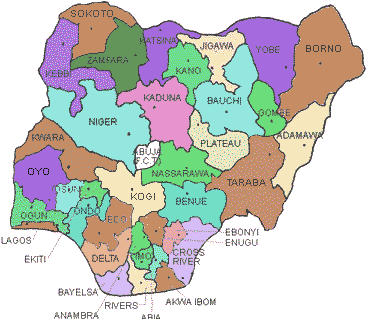
The country boasts of five testing centres spread across four states namely Abuja, Edo, Lagos, and Osun.

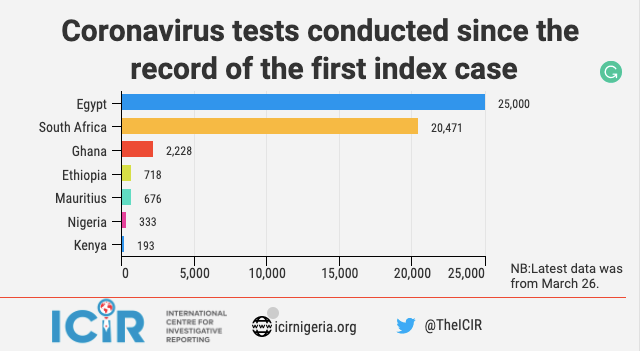
Data from Nigeria’s Centre for Disease Control, NCDC, shows that 333 people had been tested as of March 24.

The NCDC’s approach in managing the coronavirus spread is restricting tests to people who show severe symptoms of the disease or have come in contact with confirmed cases.

For a population of over 200 million people, the number of people tested for coronavirus in Nigeria pales into insignificance when compared to other African countries with testing facilities at the same operating capacity as Nigeria.

Data obtained from South Africa’s National Institute for Communicable Diseases, NICD, shows that the country has carried out over 20,471 tests as at March 26 which is more than 50 times compared to tests conducted in Nigeria whose first index case was recorded a week before South Africa.

According to records from WHO, only 36 of 54 countries in Africa have the capacity to test for the coronavirus, but an increase in cases of the virus could overwhelm these laboratories.

Hala Zayed, Egypt’s Health Minister in a press conference to review how coronavirus infections have spread in the country and the government’s response said an estimated 25,000 people had been subjected to tests in Egypt as at March 26.

The ongoing tests will continue alongside the closure of airports nationwide, which has now been extended through April 15.

Egypt’s Health Ministry offers testing for citizens for 1,050 Egyptian Pounds, an equivalent of $66 which could take 3 or 4 days. Quick test results that could be available in hours costs as high as 2,500 pounds, approximately $158.

Ghana Health Services, GHS, confirmed on its website as of March 26, it had conducted 2,228 tests among which 138 cases were affirmed positive based on the results since its first index case was recorded on March 12.

Since 12 March when Ethiopia’s first case was discovered, 718 laboratory tests have been conducted according to the health ministry.

Kenya has tested a total of 193 cases in three laboratories since the announcement of its first COVID -19 case on March 13, while Mauritius has conducted 676 tests of which 36 have been positive according to the information  published on the country’s  Ministry of Health and Wellness website as at March 24. 

Mauritius short term target is to carry out tests on 4,000 citizens which will then be extended to 100 000 people.

However, records on the rate of coronavirus testing carried out in most African countries are not publicly accessible but the numbers of those available are low when compared with other European or Asian countries.

South Korea leads the pack for countries having tested more people for the coronavirus than any other country, which has led to reduced cases, having conducted over 300,000 tests which are more than 40 times that of the United States.

Kang Kyung-Wha, South Korea’s foreign minister in an interview said early testing was key behind the low fatality rate in South Korea.

“Testing is central because that leads to early detection, it minimizes further spread and it quickly treats those found with the virus,” he said.

Will Jack Ma’s test kits solve the testing challenge

Founder of Chinese e-commerce giant Alibaba, Jack Ma, donated 100,000 face masks, 1,000 protective gowns and 20,000 test kits which are expected to be distributed to frontline health workers and hospital laboratories across the country was received into Nigeria earlier this week.

However, reports suggest that up to 80 per cent of the 150,000 portable, quick coronavirus test kits from China delivered to the Czech Republic earlier this month were faulty.

The test kits which can provide a result between 10 to 15 minutes are usually less accurate compared to other tests because of the high error rate, as the country continues to rely on conventional laboratory tests, of which they can perform about 900 tests daily.

In Spain, which has witnessed more than 56,000 infections and over 4,000 deaths from coronavirus which had purchased the rapid test kits from the Chinese firm, Bioeasy announced that the kits correctly identified 30 per cent of coronavirus cases according to a report.

It is unclear if Jack Ma’s gift from China to Nigeria will be tested to ascertain if it is prone to errors but reports hint that Nigeria’s testing capacity for coronavirus could increase by 32 per cent when put to use.

Rosanna Peeling, chair of diagnostics research at the London School of Hygiene and Tropical Medicine said the key to depleting the cases of coronavirus is tied to quicker and cheaper tests.

“There is no shortage of lab tests in Africa, but what we want is the faster, cheaper test to quickly confirm if there is an outbreak and contain it,  before it gets bigger. Africa still has that luxury, unlike Europe and North America,” she said.

Akure explosion caused by bomb blast, not asteroids – Akeredolu

CONTRARY to popular belief that the midnight explosion along Owo-Akure highway, Akure, the Ondo State capital, was caused by asteroids, Governor Rotimi Akeredolu has attributed the incident to a bomb blast.

Reacting to previous stories, he said that a vehicle conveying explosives to a secure storage facility in an unidentified state developed mechanical faults and that before that could be fixed, the explosives it was conveying caught fire, leading to a massive explosion.

According to the governor, the security operatives accompanying the convoy in which the affected vehicle was traveling noticed smoke coming out of it and before they could put out the resulting fire, the truck exploded.

He said that the vehicle was still buried in the rumble and that there might be more undetonated explosives in it.

“I have been briefed by the security chiefs that in the early hours of Saturday, 28 March, a vehicle in a convoy transporting explosives to a storage facility in a neighbouring state developed a fault while in transit along the Akure Owo Road about 2km from the Akure Airport,” said Akeredolu.

“Security personnel and other individuals transporting the ordinances noticed smoke from the vehicle. After several attempts to extinguish the resulting fire failed, the vehicle and its consignment ignited causing a massive explosion that was felt in Akure and its environs.”

“Presently, efforts are being made to ascertain if there are casualties. Following my visit to the scene, I have directed that the area be cordoned off to allow the explosive ordinance department/bomb squad to extricate the vehicle buried underground because it is unclear if there are still explosives that are yet to be detonated. Everything is under control and I will be updating the public on any new developments.”

He, however, sought the opportunity to enlighten the public about precautionary measures on the COVID-19 disease.

He advised residents to stay calm, safe and to take responsibility in the fight against the virus.

Meanwhile, Funsho Esan, the state Commissioner for Environment earlier told The ICIR there were no casualties recorded in the explosion.

He said the incident occurred at about midnight and it affected public structures and residential houses.

“The government is still investigating the matter. In an hour from now, we will come out with the actual cause and I don’t want to give fake news also,” saID Esan, in a phone interview on Saturday morning.

“There are speculations. It’s not too far from where I stay but nobody can say what actually caused it.”

The commissioner said the scene of the blast was a short distance from his residence, “about five kilometers,” but no one could clearly identify what went wrong.

However, he promised to make an inquiry and get back to the reporter.

“I won’t want to give wrong information. We are still trying to ascertain the cause.”

The ICIR further asked if any officials from the environment ministry had been deployed to visit the scene of the incident scene, he merely responded ‘they must have visited.’

“They must have visited but I’m yet to be there. One is trying to be careful because it was very massive… It shook the entire place.”

“It happened around 12 midnight along airport road on the way to Owo, after Akure. But nobody died. No one lives around there.”

Oyo discovers 84 suspected cases of Covid-19, imposes curfew

GOVERNOR Seyi Makinde of Oyo State has ordered a dusk-to-dawn curfew in the state after 84 new suspected cases of COVID 19 were discovered. The state already has three confirmed cases of the disease, with the National Centre for Disease Control, NCDC, confirming two cases on Friday.

A suspected case, according to the NCDC, is “any person (including severely ill patients) presenting with fever, cough or difficulty in breathing” and “who within 14 days before the onset of illness had any of the following exposures:

  1. History of travel to and more than 24 hours transit through any high risk country with widespread community transmission os SARS-Cov, or
  2. Close contact with a confirmed case of COVID-19 or
  3. Exposure to a healthcare facility where COVID-19 case(s) have been reported”

Makinde in a series of tweets early on Saturday morning said 84 persons of interest have been identified, and contact tracing and collection of samples have commenced.

The governor also banned all inter-states transportation, shut markets and restricted gatherings to not more than 10 persons, with effect from Sunday night.

He tweeted, “The COVID-19 confirmation test for two suspected cases has come back positive. The isolation process has been initiated. 84 Persons of Interest have been identified, and contact tracing and collection of samples have commenced.

“The state’s diagnostic centre set up in collaboration with the University College Hospital is now ready. The @NCDCgov certification is still pending but the Director-General of NCDC has made a pre-statement about the molecular laboratory in Oyo State.

“The index case remains stable and is still under observation in the isolation unit at Agbami Chest Centre, Jericho. The number of confirmed cases in Oyo State is now three.

“As a result of this, I have directed that the following additional measures be put in place: a dusk-to-dawn curfew (7pm to 6am); no gatherings of more than 10 people should be held anywhere in Oyo State.

“From Sunday night, March 29, 2020, all markets will be closed except those selling perishable food items.

“Also, inter-state transportation into and out of the state will be suspended except vehicles carrying food items, medical, pharmaceutical and petroleum products. This takes effect from Sunday night, March 29, 2020. All measures will be reviewed on a weekly basis.”

The ICIR contacted Taiwo Adisa, Chief Press Secretary of the governor, who confirmed the development, saying that the 84 suspected cases were discovered through contact tracing of the three confirmed cases and that those the state has been able to track are being closely watch.

“We have taken samples and they are going through the normal  process. By the time the process is completed, the state or Nigeria Centre for Disease Control (NCDC) will announce,” he said.

It would be recalled that the Oyo State government received a lot of criticism for allowing a rally by the ruling Peoples Democratic Party, PDP, to hold in Ibadan on March 18, even as the country grappled with the Corona Virus pandemic.

Makinde later apologised to the people of the state, saying that the rally should not have been allowed to hold.

“I have received your complaints about the rally that was held yesterday, and I feel obligated to state in clear terms that we acted based on the information we had at that time. In retrospect, it should not have happened and I take responsibility for that lapse in judgement.

“We do not currently have any confirmed case of coronavirus in Oyo State; (yet,) we still all need to be more proactive.”

The state has recored three cases since the rally was held.

Explosion rocks Akure, destroying several buildings

SEVERAL buildings, including a boarding school, have been destroyed by an explosion in the suburbs of Akure, the Ondo State capital late on Friday night.

According to some residents of the town, the destruction was caused by a loud explosion which they heard shortly before midnight on Friday.

A resident who spoke to our reporter on Saturday morning said that she heard a loud expression which shook her house in Alagbaka area of the Ondo State capital and that she learnt that the explosion occurred along Owo Road, in the outskirts of the town.

As at the time of filing this report, there has not been an identifiable cause of the explosion which has destroyed properties close to the area of explosion.

While reacting to the explosion governor of Ondo State, Rotimi Akeredolu, said he has been briefed by security agencies about the incident and that he would visit the site to ascertain the damages.

“I’ve been briefed by security agencies in the state concerning the loud blast that was heard in Akure. I will be at the scene to assess on the advise of heads of our security agencies,” he said.

He urged residents of the state to remain calm as appropriate agencies work to ascertain the damages caused by the explosion.

“I ask that all citizens remain calm as we ascertain details of the incidence,” he added.

Pictures from the explosion;

With 11 new Coronavirus cases, Nigeria now has 81

Nigeria has recoded 11 new cases of the Corona virus, with Enugu State having its first two cases, bringing the number of confirmed cases in the country to 81. While Lagos State has the highest number of eight new cases, Edo State also recorded one.

The new figures were confirmed by the Nigeria Centre for Disease Control (NCDC) in its latest update shared on Twitter. The NCDC announced that the number of cases in Lagos, the largest city in Africa by population, has risen to 52.

The Federal Capital Territory (FCT) has also recorded 14 cases, making it the state with the second highest number of confirmed cases in the country.

Ogun State, which had its first case announced on March 9, has now recorded a total of three cases.

Oyo State also has three cases of COVID-19, while Bauchi and Edo states each have two cases.

Ekiti, Osun and Rivers states each have only an index case as the virus spreads to more states in Nigeria.

As the country works to curb the spread of the virus, which has in one week risen over than a 1,000 percent, state governments are imposing and restricting movements and gathering to curtail it.

In Lagos, the governor, Babajide Sanwo-Olu, announced that a lockdown be effected, with markets, stores and court sittings shut down until further notice.

In his most recent statement shared on Twitter, President Muhammadu Buhari implored Nigerians to adhere to public health guidelines and instructions issued by the federal and state health authorities, regarding personal hygiene and social distancing.

Globally, COVID-19, has infected over 598,000 people and killed over 27,000 persons according to Worldometer.

There is still no known cure or vaccine for the deadly virus and the world has now recorded yet another deadly pandemic threatening humanity.

It is unknown how far COVID-19 will spread but experts doubt it will be as devastating as the Spanish flu of 1917-1918, which killed an estimated 50 million people, infected one-third of the global population and was “the deadliest pandemic flu virus in human history,” according to the U.S. Center for Disease Control and Prevention.

Revisiting a national political debate

Edwin MADUNAGU 


ONE of the first definitive steps taken by General Ibrahim Babangida on displacing General Muhammadu Buhari in a “palace coup” and coming to power in Nigeria in August 1985 was to set up, four months later, a 17-member committee (two women and 15 men) to organize, conduct, collate and then report on a general national political debate.

He called the committee the Political Bureau. The political debate was to be on the character, content and form of a future political dispensation expected to be the legal successor to both the Second Republic (1979-1983) and the military dictatorship that overthrew it at the close of 1983.

Although the Babangida military dictatorship was neither revolutionary nor Leftist it tried to maintain an ambiguous relationship with a number of known Leftists and liberal democrats. We may recall that a decade earlier, in 1975, General Murtala Mohammed did something similar. It was one of the Leftist friends of the Babangida dictatorship, a veteran, that informed a closed meeting of the Left more than three years later (April 1989), that he recommended me for membership of the Political Bureau. This shocking information resolved a three-year riddle for me!

My membership of the Political Bureau was turbulent, but productive and lasted for 12 months of the 15 months (January 1986-March 1987) the Bureau was in existence. This was essentially because I saw my involvement as class struggle. Apart from the general issues in democracy, the particular issues the Political Bureau engage included state and religion; state creation; and the roles in governance of “special groups”, including, in particular, traditional rulers, women and Labour.

The reader may recall or easily confirm that at the time of the national political debate Nigeria was a federation of 19 constituent states and a federal capital territory, Abuja. The territory then called Sokoto State (let us call it Old Sokoto State) was made up of the present Sokoto State and the present Kebbi and Zamfara States. It was from this Old Sokoto State that the Political Bureau received one of the most interesting memoranda on one of the most controversial issues in Nigeria’s “democracy” at the time: the place and role of Nigeria’s traditional rulers and traditional rulership. The memorandum was signed by “Thirty-six Concerned Citizens of Sokoto State”. The authors, through four of their representatives – all middle-aged and articulate – submitted the document to the Secretariat of the Political Bureau in Lagos. Thereafter they brought me a personal copy.

The memorandum of “Thirty-six Concerned Citizens of Sokoto State” was written in form of a protest. But it satisfied all the conditions the Bureau required in a memorandum. The opening paragraph explains the anger of the authors: “We, the signatories of this letter, have, after being keen participants and observers of the activities of your Bureau in Sokoto State, decided to write you on our dissatisfaction with some people who have started to meddle in what the masses of the people have to say concerning how they should like this nation to be – socially, politically and economically – in the next political dispensation.”

Going from the general to the particular and from the introductory to the substantive, the protest memorandum of “Thirty-six Concerned Citizens of Sokoto State” said: “Those of them who went on calling some people names because they called for the scrapping or democratization of the traditional institution in Nigeria should know that Nigerians have come of age, that they know what is good for them. They should also know that the democratization of the institution will not disallow them from seeking election if at all they have the credentials that the masses of the people cherish. If it becomes inevitable for the traditional institution to prevail, let it be according to the wishes of the people, not on lineage basis”. Finally, they threw a challenge: “If anybody thinks that it is a tiny clique that is spearheading the call for the dissolution or democratization of traditional rulership institution in Nigeria, let there be a referendum to see who will be vindicated.”

I did not regard this memorandum simply as one of the thousands of opinions received across the country on the issue of traditional rulers and their place in Nigeria’s republican democracy. I considered it a dominant “representative memorandum” – by which I mean that it expressed the position of an overwhelming proportion of the contributions the Political Bureau received on this particular subject. And the Bureau was faithful to this glaring fact. In its report at the end of the national political debate, the Political Bureau articulated five different positions from its summary and analysis of public contributions to the question. These were: “the abolition of the traditional institution; the cooptation of the institution to participate in government; the democratization of the system to conform with the process of modern government; the maintenance of the status-quo; and the determination of their relevance and future by the people”.

From this summary the Political Bureau made the following two middle – ground recommendations: “Government should provide a legal definition for this group of leaders (traditional rulers) and keep a register of such leaders throughout the country; and the role of these category of leaders should be restricted to the local government areas within the communities where they have relevance. Even here, however, they should not be granted legislative, executive, or judicial functions”.

Two formulations therefore emerged. The first was the five-point summary of the different positions submitted by Nigerians; and the second was the “recommendations” of the Political Bureau based on its internal debate on the summary of the popular debate. Although the recommendations were partly a reflection of the composition of the Bureau itself, the latter’s “degree of freedom” in this matter was limited since the Bureau was faithful in its summary of contributions. That “faithfulness”, I declare, was a product of class struggle within and outside the Bureau.

I declare that the Nigerian Left, struggling within and outside the Political Bureau, played a critical role both in the debate and in the process leading to the report whose highest point was the recommendation of socialism as successor social system for Nigeria. I also declare that, in particular, the Nigerian Left recorded a clear victory not only on the issue of traditional rulers and traditional rulership, but also on state and religion, state creation, the role of Labour, the role of Women, and state support for the Weak and Vulnerable, etc.

On the issue of state creation, for instance, the Bureau unanimously recommended the creation of only two additional states: the present Akwa Ibom and Katsina States – to bring the number of states at the time to 21. You may recall that this was done. I declare that the Nigerian Left can claim this as its victory. And there are several such achievements in the history of Leftist popular struggles in Nigeria. The Nigerian Left must learn to claim and write its victories. Beyond that, it should learn to build on such victories. That is the road of development as a respected, authoritative and independent political force.

Nothing I have said in this piece should be construed as support for any faction of Nigeria’s ruling class in any of the current internal struggles of the class. There is simply no basis for such support. That is, however, not to say that at certain conjunctures our position may not uphold a position held by a faction of the ruling class. But our premises will always indicate that we are different and that our destination is different.

All that I am saying here is that the Nigerian Left has a history of struggle which, together with a People’s Manifesto, should constitute the foundations of its popular-democratic interventions. We should be intervening in political developments as serious and legitimate contestants for power or hegemony in Nigeria.

Madunagu, mathematician and journalist, writes from Calabar, Cross River State. 

COVID-19: FCT gets N500m UBA donation to fight scourge

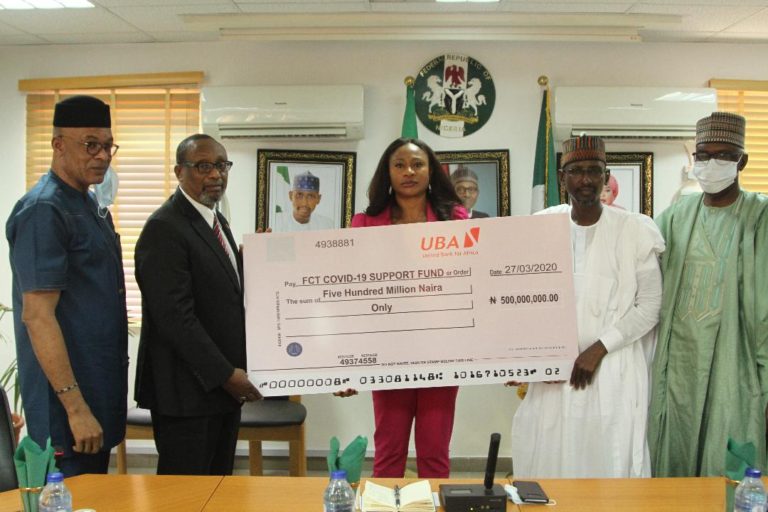
THE Federal Capital Territory Administration (FCTA) on Friday received a N500million donation from the United Bank for Africa (UBA) to fight the COVID- 19 pandemic in the nation’s capital, Abuja.

A statement by Anthony Ogunleye, Chief Press Secretary to the FCT Minister disclosed that the cheque of N500million was  received by the the FCT Minister,  Muhammad  Bello from the Vice Chairman of UBA, Joe Keshi, who led a delegation of the bank on a solidarity visit to FCTA.

According to Ogunleye, the FCT Minister said the donation was the first hefty sum received by the FCT Administration since the onset of COVID- 19.

Bello who commended UBA for such a generous donation, said the money would serve as a major boost in the efforts by the Administration to nip the spread of the virus in the bud in the FCT.

He assured that FCTA was working hand in hand with the Nigeria Centre for Disease Control (NCDC) to ensure that the centre gets the necessary working tools.

The Minister said plans were already in motion to grade the road leading to the NCDC testing office in Gaduwa for ease of access, adding that the donation would go a long way to ensure that the job is done as soon as possible.

Bello who described the Chairman of UBA, Tony Elumelu as a great philanthropist, said he was not surprised that the Financial Institution was the first to make such a donation to the FCT to help fight the pandemic.

Earlier, the Vice Chairman, Keshi said the donation was a part of the Bank’s Corporate Social Responsibility (CSR) and a show of support to FCTA in the face of the COVID- 19 pandemic.

Keshi expressed concern over the likelihood of a spread in densely populated areas of the country and called on well-meaning Nigerians to join hands to fight the disease.

He said N200million of the sum was being set aside for the NCDC, explaining that the donation was to strengthen the testing capacity of the Centre.

Poems written in the time of Corona

0
  • By Obemata

X

farther away from home,
nearer home,
the news gallops
like the speed of light
and arrives
at the continents’
shut doors –
the world is hiding.
between the keyholes,
eyes press up
against time,
spying;
bodies want to love,
but cannot.
who’ll seek freedom
for the world
through the doors’
keyholes?

XI

it is another day,
let’s wave hands,
not at each other
but at the wind constantly changing course
and bearing sad news,
the streams flowing differently,
weeping for the earth and the sky
adorned in sackcloths.
the streams aren’t tired of weeping,
nor is the wind tired of changing course.
tears well up,
while the wind changes,
changes and changes course,
and roams endlessly
like a vagrant.
let’s not forget the earth,
though innocence is a recent memory.
there’s no hope of morning,
only the testaments of night,
sackcloths that spread
and gather in eyes,
where light should have been.
this day is different.
the wind’s footsteps fall
where tears drench the earth.
let’s wave hands
not at each other
but at the lone egret migrating to another future.
let’s not count the white spots
on our nails
as we used to do as children –
counting is useless.
rather, let the eyes of our hands
follow the egret’s flight
to the future,
safer than this present.

XII

why seek my hand
in handshake
when you can wave
through the window?
the times have changed.
i have forgotten how to shake hands,
or exchange hugs.
silence befriends me behind closed door
and preserves the memory of love unrequited,
while my isolation lasts.
behind this door,
these will be my memories of the times tomorrow:
fear that has taken hold of my country;
corona advancing each day,
and searching for those it missed;
children who have lost their fathers,
mothers and uncles,
weeping with the ocean’s eyes;
the hearts that seek love
they cannot now give or receive.
for now, the day is a mirror-image of silence,
loneliness, where fear grows
and name my fears
and i wave, wave and wave through the window
at the world,
transfixed like the statue.
of all the hands of the world,
you seek mine.

XIII

who wails? who is wailing?
who can’t be consoled?

my mother country.

from tears
life will be reborn.

About the Poet:

Obemata, a lawyer and poet, is the author of the book of poems, Triptych. His works are represented in several online poetry journals and anthologies, including the recently released “Wreaths for a Wayfarer: An Anthology in Honour of Pius Adesanmi (Uchechukwu Umezurike & Nduka Otiono, Edited). His second book of poems, ‘Book of Soliloquies’, is forthcoming.

Covid-19: Obasanjo donates former residence for Isolation Centre

0

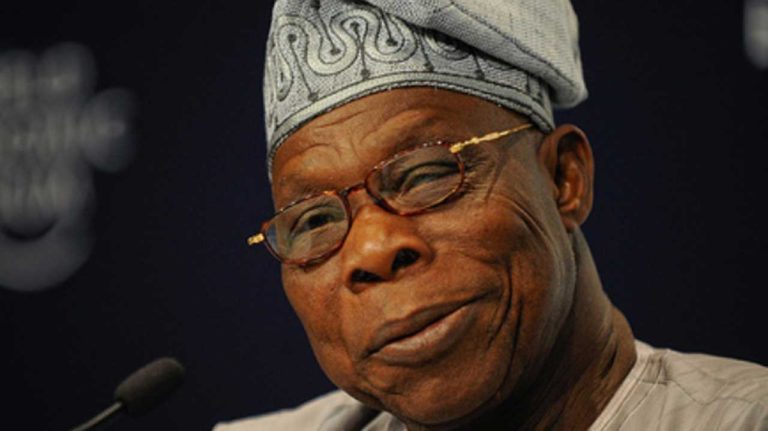
FORMER President Olusegun Obasanjo on Friday announced that his former residence at the Presidential Hilltop, Abeokuta, Ogun state should be converted to Isolation Centre for the treatment of victims of the novel Coronavirus.

In a press release shared with The ICIR by Kehinde Akinyemi, the Special Assistant to the former president, he said the building has been handed over to the Ogun state government for immediate takeover.

The former President was concerned about the pandemic and decided to assist, the statement reads.

“I think those who can in one way or another assist in this situation should do so.”

The facility which is located off the Presidential Boulevard, Oke Sari, Abeokuta has 32 rooms with a standby generator.

Prominent Nigerians who have also donated to support the fight against COVID -19 include the former vice president, Atiku Abubakar; founder and chairman of Dangote Group, Aliko Dangote;  founder of BUA Group, Abdulsamad Rabiu;  founder of Zenon Petroleum and Gas Ltd, Femi Otedola, UBA Group, Access, GTB, and Zenith Banks among others.

Lawmakers refute claims on car purchase, say “reps not distributing cars’’

0

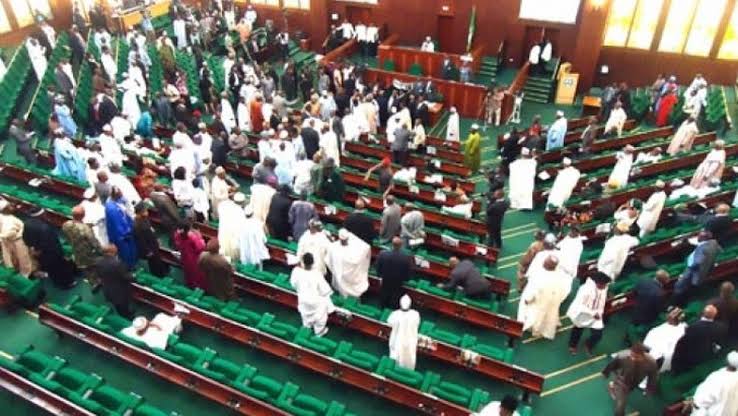
THE leadership of the House of Representatives has on Friday denied claims by some media houses on the purchase and distribution of 400 official cars for its members.

This was disclosed in a press statement released by the House on its official Twitter page, adding that the National Assembly had already approved funds for NCDC, Lagos state and health workers.

The green chamber stated that, “It has come to the attention of the House that a newspaper report on Friday, March 27, 2020, had insinuated that the Green Chamber is distributing official vehicles for the 360 members of the House at this critical moment that the country is battling to contain Covid-19 pandemic.’’

The story the House added was rather unfortunate at a time that Nigeria and Nigerians are striving hard to address the pandemic that has forced the Federal Government, and even the various states’ governments, to take drastic measures.

The green chamber added that not only has the national assembly been closed since Tuesday the 24th of March in the wake of the pandemic, but also that most lawmakers were back to their constituencies.

‘’As a House, we are not unmindful of the mood of the nation, we are committed to ensuring the country stands united in these trying times.

‘’It is out of that commitment that the House on Tuesday, March 24, 2020, introduced and passed the Emergency Economic Stimulus Bill, 2020. It is on record that the leadership of the National Assembly on Wednesday, March 25, 2020, about 24 hours after adjournment, engaged some top government officials in the Executive arm and approved the release of N6.5BN for the National Centre for Disease Control (NCDC), N10BN for Lagos state, as part of efforts to address the issue of Covid-19 pandemic,’’ the statement read.

The lawmakers assured Nigerians that despite adjourning for two weeks to curb the spread of the virus, the House had expressed its readiness to reconvene at any time to consider measures aimed at addressing the situation, including a review of the 2020 Appropriation Act if need be.

The House further reinstated its commitment, as lawmakers, to join hands with the Executive arm to take measures aimed at containing the pandemic and providing succour to Nigerians because of the economic shock necessitated by COVID-19 all over the world.

The green chamber, therefore, urges Nigerians to disregard the newspaper report on the vehicles’ distribution, as mischief taken too far.

The statement added that the lawmakers went on the break only three days ago and not three weeks ago as earlier reported in the media.

‘’We only shut down three days ago and not three weeks ago as falsely and mischievously reported. The paper chose to ignore all the House did within this time, a special session on addressing the high numbers of schoolchildren, intervening in the strike action by FCT health workers,’’ the statement concluded.