Home Blog Page 225

MRA, IPC appeal ruling on suit seeking Umahi’s probe over alleged attack on journalists

0

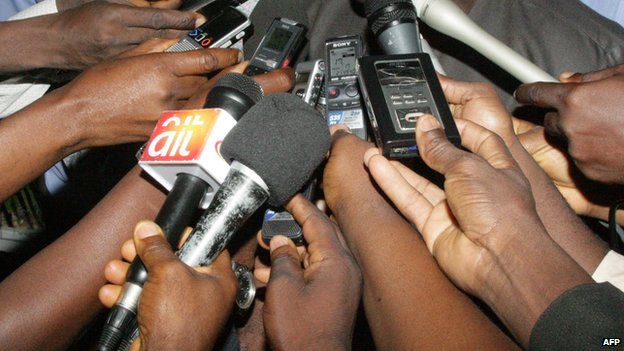
MEDIA Rights Agenda (MRA) and the International Press Centre (IPC) have filed an appeal against a Federal High Court judgment dismissing their suit to compel the Code of Conduct Bureau (CCB) to investigate former Ebonyi State Governor David Umahi over alleged attacks on journalists.

In a statement dated July 25, 2025, and signed by MRA Communications Officer, Idowu Adewale, the right groups expressed dissatisfaction with the judgment delivered by the judge, Obiora Atuegwu Egwuatu, which held that the organisations failed to prove that their petition was delivered to the CCB.

“We are dissatisfied with the judgment and believe that the court failed to properly consider the evidence presented by us, including the email sent to the CCB through its official email address and the courier evidence,” the organisations said.

They maintained that as institutions dedicated to media rights and freedom of expression, they reserved the right to advocate for the public interest.

Besides, they argued that the court erred in law by ruling that they did not have locus standi to bring the action on behalf of journalists.

The MRA and IPC are seeking an order of mandamus compelling the CCB to investigate their complaint against Umahi, who is currently the Minister of Works, for allegedly ordering the arrest of a journalist and banning two others for life from entering any government facility in Ebonyi State during his tenure as governor.

“We believe that the CCB has a duty to investigate the allegations made by us and that the court’s dismissal of our suit undermined the merit of the substantive issues at hand,” the organisations argued.

The group expressed confidence that the Court of Appeal would set aside the Federal High Court’s decision and compel the CCB to carry out its constitutional duties.

The appeal has yet to be assigned a hearing date.

WFP halts food aid in Nigeria’s North-East

0

THE United Nations World Food Programme (WFP) has announced it would suspend emergency food and nutrition support for 1.3 million people in North-East Nigeria by the end of July due to a critical funding shortfall.

The WFP Nigeria Country Director, David Stevenson, said the agency urgently needed $130 million to sustain operations through 2025, warning that nearly 31 million Nigerians faced acute hunger,  the highest number on record.

“This is no longer just a humanitarian crisis, it’s a growing threat to regional stability,” Stevenson said.

He warned that without aid, families could face extreme hunger, be forced to migrate, or risk recruitment by extremist groups.

The WFP’s food stocks have already been exhausted, with the final supplies distributed earlier in July, Stevenson stated, adding that over 150 nutrition clinics in Borno and Yobe states would also shut down, ending support for more than 300,000 children under two.

In the first half of 2025, WFP reached 1.3 million people and had planned to support an additional 720,000 in the coming months.

However, without immediate funding, these efforts have been halted.

The suspension comes amid rising violence and displacement, with 2.3 million people across the Lake Chad Basin already forced to flee their homes.

The ICIR reports that North-East Nigeria has endured over a decade of violent conflict, primarily driven by insurgent groups such as Boko Haram and ISWAP.

This unrest has devastated livelihoods, forced mass displacement, and severely limited access to farmland and local markets, worsening hunger across the region.

Years of conflict have disrupted food systems, led to the closure of health facilities, and pushed communities into poverty. Many rely entirely on humanitarian assistance to survive.

A 2024 Cadre Harmonisé report shows that large parts of the region are facing severe food shortages, where families are skipping meals, selling off belongings to survive, or going days without eating.

In the hardest-hit areas, people are at high risk of malnutrition or even starvation, especially children and pregnant women. These conditions are classified as crisis or emergency levels, IPC Phases three and four, under international food security standards.

Security conditions have also made humanitarian access increasingly difficult. Aid workers face attacks, ambushes, and movement restrictions, particularly in remote rural areas.

Insecurity continues to limit both food delivery and agricultural recovery, compounding the crisis and placing millions at risk of extreme hunger.

Suspected cultists attack Abuja police station, injure officers, destroy vehicles

0

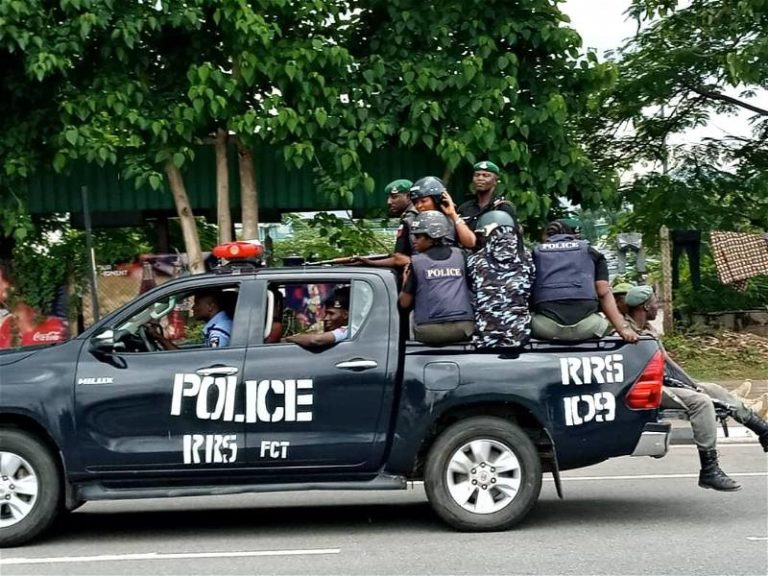
THE Federal Capital Territory (FCT) Police Command has arrested 19 suspected cultists during a shootout with cultists. 

However, the police said one of its officers and a vigilante sustained injuries during the gunfire.

The suspects attacked a police outstation in the city, in a bid to free their detained members.

They also destroyed part of the building, operational vehicles and cars belonging to private individuals at the station.

According to a statement by the FCT Police Command spokesperson, Josephine Adeh, on Friday, July 25, the faceoff was in response to repeated complaints from residents of Bakassi Yimitu Village in the Apo-Waru axis of the FCT over suspected cult activities.

Following the complaints, a joint task force comprising local vigilantes and hunters, led by the police, conducted a crime prevention patrol in the area on Wednesday, July 24.

Adeh said that during the operation, the team encountered a gathering suspected to be that of the reported cultists who had been terrorising the area.

She added that upon sighting security personnel, the suspected cultists opened fire on the police, which led to a gun duel and resulted in the arrest and detention of 19 suspects at Waru Police Outstation.

“While others escaped with various degrees of bodily injuries, sadly, one police officer and a local vigilante sustained serious injuries and were rushed to the hospital for medical attention,” Adeh stated.

She said shortly after, the escaped assailants regrouped, mobilised, and launched an attack on the Waru Police Outstation in an attempt to free their detained accomplice.

In the process, the invaders vandalised parts of the facility, which includes three patrol Hilux vehicles and six privately owned cars within the premises.

The command said the miscreants were successfully repelled.

Fresh Plateau attack claims 14 lives, including women, children

NO fewer than 14 people, including women and children, have been killed in a fresh attack in Bokkos Local Government Area of Plateau State.

According to Daily Trust, the victims, who were inside a bus, were ambushed by gunmen along Chirang Road in Mangor District on the evening of Thursday, July 24, while returning from the weekly market in Bokkos town.

Efforts to reach the state police command proved abortive, as the command’s spokesperson, Alabo Alfred, was unreachable, and a text message sent to his line had yet to be responded to.

Meanwhile, the Bokkos Cultural Development Forum (BCDF), in a statement by its chairman, Farmasum Fuddang, condemned the killing and expressed frustration over continued violence despite ongoing peace efforts.

“The victims were returning from the weekly market in Bokkos town when their vehicle was ambushed. Victims included women and little babies. This violence occurs despite various so-called peace and reconciliation efforts, “ the chairman said.     

Fuddang accused herders of the killings and claimed they attacked his people as part of plans to take over land in the area.     

However, the Gan Allah Fulani Development Association (GAFDAN), representing the herding community in Bokkos, has reportedly distanced itself from any involvement in the attack. 

The chairman of the association, Saleh Adamu, said, “The allegation has no basis because there is no evidence that the attack was carried out by the Fulani. And no herder was arrested at the scene to prove it was carried out by the Fulani. This allegation is the first of its kind here.

“When an incident occurs, security forces do investigate before identifying the perpetrators. We condemn the attack in its totality, as the killing of innocent people is not in any way justified by any offence. We condemn the killings,” Daily Trust reported him to have said.

The ICIR reports that the attack is part of a recurring pattern of violence in Plateau State. 

In a related development, TVC News on Friday reported that the remains of 27 victims from last Tuesday’s assault on Riyom community had been moved from the hospital morgue to the village for a mass burial.

The victims, mostly farmers, were killed in an attack by gunmen in Bindi-Jebbu of the Tahoss community in Riyom local government area on Tuesday, July 15.

According to reports, the attack also left many people injured, with several rushed to hospitals, including the Jos University Teaching Hospital and Plateau Hospital.

A similar ambush in June

The latest attacks follow another deadly ambush just a month ago in Mangu Local Government Area, where a group of wedding travellers from Kaduna State was attacked by a suspected mob in Mangun community.       

The attack, carried out by a suspected mob in the Mangun community, Mangu Local Government Area (LGA), led to the death of 13 travellers while many others were injured. 

The victims were on their way to the Kwa community in the Qua’an Pan LGA of the state.

At least 32 victims, including children, were descended upon while heading for the wedding venue from the Basawa community in Kaduna’s Sabon Gari LGA.

The incident sparked widespread outrage across the country, with many demanding justice for the victims.

OAU disowns viral ‘indecent dressing’ circular

0

THE management of the Obafemi Awolowo University (OAU) has distanced itself from the widely circulated memo on social media outlining a strict dress code for students.

The university spokesperson, Abiodun Olanrewaju, speaking with The ICIR on Friday, July 25, labelled the purported dress code as fake and not originating from the university. 

The alleged circular had triggered significant backlash and outrage among students and online commentators.

The controversial memo, which quickly gained traction on various platforms, particularly X, was first disseminated by an account which bears the university name but the university has now distanced itself from the account. 

The memo detailed prohibitions on “indecent dressing,” including restrictions on ripped jeans, leggings, spaghetti tops, and certain hairstyles.

It threatened sanctions of a semester or rustication for non-compliance. 

For instance, the memo threatened a semester ‘rustication’ for backless clothes, tattered jeans, sagging, heavy makeups, and crop\jump tops, among others.

It also suggested two semester ‘rustication’ for students on coloured hairstyles and hair braiding for male students among others.

This purported directive ignited a wave of criticisms, with many students and Nigerians expressing dismay over what they perceived as an infringement on their rights and a diversion from core academic concerns.

Speaking on the matter, the Public Relations Officer (PRO) of the university denied the claims, stating that, “OAU has not released anything to that effect.

“What you saw going viral, it’s not from us. Definitely, we are going to issue a dress code, but it’s still a work in progress. So, those who released that one probably are trying to be of the university.”

The PRO urged the public to disregard the circular, confirming that neither the registrar nor himself had any knowledge of its issuance. 

For the time being, I would like people to disregard it in its entirety — that particular circular. The registrar doesn’t know anything about it. I don’t know anything about it either,” he affirmed, adding “If such a directive were to come out, it would be duly signed by either myself or the university registrar.

While dismissing the circular, the PRO did confirm the university’s intention to introduce an official dress code in the near future. 

But definitely, we are coming up with our own dress code, because we really don’t want our students to just dress anyhow — so that it does not undermine the moral sanctity of the university environment. But for now, that one is not from us.”

Police rescue 11 children, bust interstate child trafficking syndicate in Anambra

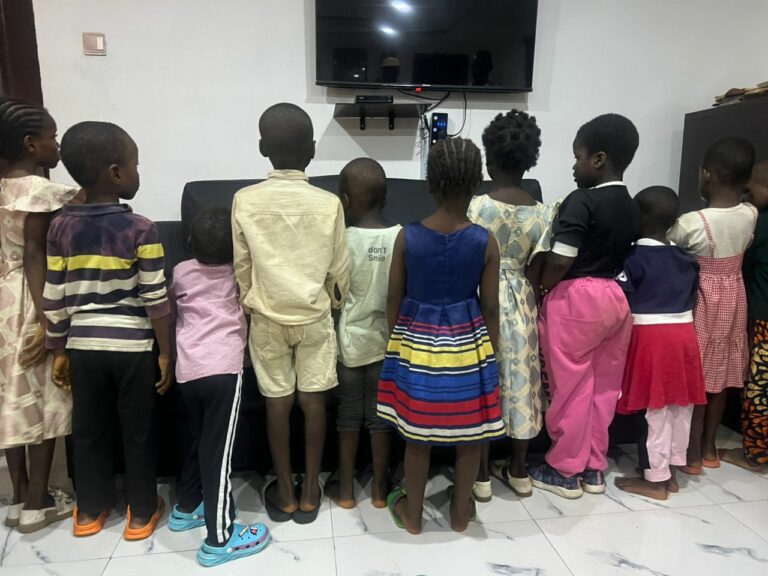
THE Anambra State Police Command said it had rescued 11 children and uncovered an interstate child-stealing, abduction, and trafficking syndicate operating in Uruagu, Nnewi North Local Government Area. 

In a statement issued on Friday, July 25, the command spokesperson, Tochukwu Ikenga, said the operation carried out on July 15 by the State Criminal Investigation Department, Awka, in collaboration with its counterparts in Adamawa led to the arrest of one suspect.

“The police operatives attached to the Anambra State Criminal Investigation Department, Awka, on July 15, 2025, complemented the efforts of the officers of Adamawa State Police Command on investigation activities to record a breakthrough in busting an interstate child stealing/abduction and trafficking syndicate”, he said.

Ikenga stated that investigations revealed the children were abducted, stolen, and trafficked from Adamawa State.

“The intelligence-driven operation led to the arrest of one female suspect, Uche Okoye, aged 43 years, and the rescue of eleven children (five boys and six girls), ranging in age from three to six years, in Uruagu, Nnewi, Anambra State”, he added.

He further disclosed that the children were unlawfully sold to unsuspecting individuals seeking to adopt, with boys priced at N1.5 million and girls at N800,000 each.

“Preliminary investigation revealed that the children were abducted/stolen and transported from Adamawa and illegally given to unsuspecting members of the public seeking adoption for N1.5 million for the boys and N800,000 only for the girls, respectively.

“The suspect is believed to be a major link in the abduction of children and the trafficking network operating between states”, he added.

Ikenga said that the Commissioner of Police, Anambra State, Ikioye Orutugu, commended the operatives involved in the operation, urging individuals and couples seeking to adopt children to conduct proper background checks, follow legal procedures, and avoid engaging in criminal activities under the guise of adoption.

NERC queries Band A tariff reduction by Enugu Regulatory Commission

THE Nigerian Electricity Regulatory Commission (NERC) has said that the Enugu Electricity Regulatory Commission (EERC) has no regulatory power to fix the electricity price when the power is generated and transmitted from the national grid.

NERC, an independent regulatory body with authority for regulating the electric power industry in Nigeria, clarified this in a statement released late on Thursday, July 24.

The body stressed that even though the 2023 Electricity Act gave states the power to regulate electricity in their domain, the power does not supersede that made by the National Assembly to regulate electricity in the federation.

“States do not have jurisdiction over the national grid and over electric power stations established under federal laws/operating under licences issued by the Commission; they must holistically incorporate the wholesale costs of grid supply to their States without any qualification or deviation in their design of tariffs for end-use customers in order not to distort the dynamics of the market or be prepared to make a policy intervention by way a subsidy for any deviation in the tariff structure that distorts the wholesale generation, transmission and legacy financing costs in NESI,” NERC stated.

On Sunday, July 20, the EERC announced a new electricity tariff order for the MainPower Electricity Distribution Limited (MEDL), successor to the Enugu Electricity Distribution Company (EEDC).

The new tariff expected to have taken effect from August 1, saw a reduction for Band A rate from N209 per kilowatt-hour (kWh) to N160/kWh.

It described the revised tariff as “cost-reflective” and expected to account for the federal government’s ongoing subsidy on power generation, to ensure consumers benefit from the government’s financial support.

In its statement, NERC addressed stakeholders’ concerns over the tariff order the EERC issued to its licensee, MEDL.

It said the Nigerian Electricity Supply Industry (NESI) stakeholders have expressed concern about the consequences of the reduction of tariffs for Band A customers in MEDL’s network area to NGN160.4 per kWh and the freezing of tariffs of customers in the other bands on the wholesale generation and transmission costs along with the financing costs for legacy obligations in NESI.

“It is pertinent to state that the NGN160.4 per kWh was arrived at largely by reducing the current average Generation Tariff of NGN112.60 per kWh to NGN45.75, with an assumption of a subsidy component, a difference of N66.85 per kWh.

“It added that Section 34(1) of the EA [Electricity Act] places a statutory obligation on the Commission to “create, promote and preserve efficient electricity industry and market structures, and ensure the optimal utilization of resources for the provision of electricity and we are also aware that EERC as a sub-national electricity regulator also has a similar statutory obligation in their enabling law, and neither NERC nor EERC as responsible regulatory institutions would take decisions that expose the national grid and wholesale electricity market to a financial crisis in contravention of express powers granted to them by the Constitution,” the NERC maintained.

The commission added that it is currently engaging EERC on their tariff order as it relates to any perceived area of misinterpretation/misunderstanding on wholesale generation and transmission costs on their import of power from the national grid and grants further assurances of its unwavering statutory commitment that the electricity market will be made whole in terms of cost recovery in compliance with the laws of the Federal Republic of Nigeria.

In June 2023, President Bola Tinubu signed the Electricity Act 2023 into law, repealing the Electric Power Sector Reform Act, 2005, The ICIR reported.

The Act empowers states to regulate electricity generation, transmission, and distribution activities.

Since the decentralisation of the power sector, over 16 states have begun to pass their electricity laws and set up state regulatory commissions.

Living and late Presidents who shaped Nigeria since 1960

NIGERIA stood still on Tuesday, July 15, when the body of the late former President, Muhammadu Buhari, was laid to rest in his hometown of Daura, Kastina State.

The body was laid to rest at exactly 5.15 pm after a short prayer by Muslim clerics at his house in Daura.

He was buried at his favourite garden relaxation spot – the exact place where he always rested on a chair.

Buhari died at the age of 82 in a London hospital on Sunday, July 13.

Tributes, criticisms trail Buhari's death
Former President Muhammadu Buhari

The former leader, who served as Nigeria’s military Head of State from December 1983 to August 1985 and as a two-term civilian president from May 2015 to May 2023, died after a protracted illness.

The burial witnessed by Tinubu, Shettima, the Speaker of the House of Representatives, Tajudeen Abbas, and other dignitaries, had a 21-gun salute by the military.

Buhari served as Nigeria’s military Head of State from December 1983 to August 1985 and as a two-term civilian president from May 2015 to May 2023.

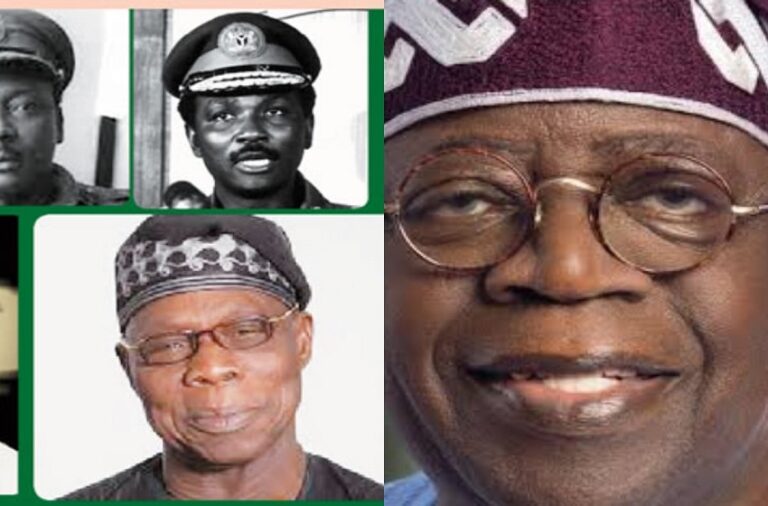
Below is a list of Nigerian presidents since independence in 1960, living or dead:

Alive

The current President is Bola Ahmed Tinubu. He was born in 1952 and assumed office on May 29, 2023. He is a member of the All Progressives Congress (APC).

One-party state not good for Nigeria - Tinubu
President Bola Tinubu

Goodluck Ebele Jonathan was born in 1957. He served as President from May 2010 to May 2015. He was a member of the People’s Democratic Party (PDP) when he led the country.

Olusegun Obasanjo, a former general and ex-military Head of State became a civilian President and served for two terms between 1999 and 2007. He was a member of the People’s Democratic Party (PDP).

Abdulsalami Abubakar is a retired general. He was born in 1942. He led the military regime as Head of State from June 1998 to May 1999.

Ibrahim Badamosi Babangida (IBB) was born in 1941. He was the military Head of State from August 1985 to August 1993.

Life and time of Ibrahim Badamasi Babangida
General Ibrahim Babangida

Yakubu Gowon, a retired general, was born in 1934, and was a military Head of State from August 1966 to July 1975.

Deceased

Muhammadu Buhari from Katsina State. He was born in 1942. He served as civilian president from May 2015 to May 2023 and previously as a military Head of State from December 1983 to August 1985. He passed away in July 2025.

Umaru Musa Yar’Adua, also from Katsina, was born in 1951. Yar’Adua served as President from May 2007 until his death on May 5, 2010, after a prolonged illness.

Umaru Musa Yar'Adua
Umaru Musa Yar’Adua

Sani Abacha from Kano State was born in 1943 and was a military Head of State from November 1993 until his death on June 8, 1998.

Ernest Shonekan led the Interim National Government (ING) after the crisis that engulfed the annulment of the June 12, 1993, election. He was born in 1936. He served as interim President from August 1993 to November 1993. He passed away in 2022.

Murtala Muhammed from Kano State was born in 1938 and was a military head of state from July 1975. He was assassinated on February 13, 1976.

Shehu Shagari served as President from October 1979 to December 1983. He was born in 1925 and passed away on December 28, 2018, in Abuja, at the age of ninety-three.

Former President Shehu Shagari

Johnson Aguiyi-Ironsi was a military Head of state. He was born in 1924. He was Head of State from January 1966 until his assassination in July 1966.

Nnamdi Azikiwe, born in 1904, was the first President of Nigeria. He served from October 1963 to January 1966. He passed away on May 11, 1996

SEC admits granting approval on Otudeko’s controversial share sale

THE Securities and Exchange Commission (SEC) has admitted granting approval to the controversial sale of Oba Otudeko’s shares at First HoldCo Plc.

It admitted to this in a statement on Thursday, July 24 by its head of external relations, Efe Ebelo.

According to the apex regulator in the Nigerian capital market, it granted a “no objection” to the transaction.

A no objection signifies that the SEC has reviewed a proposed transaction and has no objections to it proceeding, provided all other regulatory requirements are met.

“The Securities and Exchange Commission (SEC) Nigeria wishes to clarify its position regarding the recent First Holdco Transaction.

“In line with extant laws and SEC regulations, the Commission granted a “no objection” to the transaction after due consideration and in full compliance with applicable requirements,” it stated.

SEC clarification came a week after the investing public, including shareholders, raised concerns over the undisclosed details surrounding the transaction.

The ICIR reported that on July 16,  Otudeko, through a firm linked to him, Barbican Capital Limited, sold all his stake, approximately 20 per cent of FirstHoldCo shares.

The transaction generated a lot of concerns as the SEC or the Nigerian Exchange Limited (NGX) did not release any official disclosure of the transaction.

Following media attacks on the transaction, on July 19, FirstHoldco, the parent company of First Bank of Nigeria Limited, disclosed that Otudeko offloaded 6,314,116,229 units of shares at N31.00 per share, amounting to N195.74 billion but without revealing the buyer or giving full details of the transaction.

In a report on July 19, The ICIR spotlighted that the sale of Otudeko’s shares raised corporate governance issues.

A similar incident occurred in July 2023, after Oba Otudeko staged a comeback and acquired about 4.77 billion units of First Bank’s shares valued at N87.8 billion to retain his stake as the most substantial shareholder, The ICIR had reported.

At the time, this sparked a concern that the CBN had quickly tweaked its corporate governance rule.

The rule is to protect shareholders’ rights and it came into effect from August 1, 2023.

The new corporate governance guidelines states in section 20 (b) that “CBN’s prior approval and No Objection shall be sought and obtained before any acquisition of shares of a bank (including through the capital market), that would result in equity holding of five per cent (5%) and above, by any investor.

(c) “Where the CBN has an objection on any acquisition as stated in Section 20.2.b above, notice of the objection shall be communicated to the bank, and the bank shall notify such investor(s) within forty-eight (48) hours.

Many shareholders who spoke with The ICIR on Otudeko’s shares offload alluded to the corporate governance rule and blamed CBN and SEC for not adhering to their guidelines.

In its statement on Thursday, the SEC said there was no subsequent request for additional information from the CBN following the conclusion of the transaction.

“It is important to note that the Commission’s correspondence with the operators involved was not a query. Rather, it was an automated compliance mechanism designed to promote transparency and ensure proper conclusion of large transactions within the market,” it added.

After 22 years, Nigeria Airways retirees get pension approval

THE Federal Government said it has approval for the payment of pensions of retirees of the Defunct Nigeria Airways workers.

The approval comes after the aviation workers had waited for almost 22 years.

In a statement on its X handle on Tuesday, July 22, the National Orientation Agency (NOA) shared insights that the Ministry of Aviation had confirmed disbursement to begin soon.

“The Federal Government has approved the long-awaited pensions for retired aviation workers, bringing long-overdue relief to thousands who served in the sector. This decision follows years of advocacy by unions pushing for justice for retirees, especially from defunct national carriers.

“The Ministry of Aviation confirmed that the payments will be processed soon, with a commitment to transparency,” NOA said.

The ICIR reported that Nigeria Airways, fully owned by the Federal Government, operated from 1958 until it ceased operations in 2003 due to mismanagement, corruption, and mounting debts.

Upon its closure, over 6,000 of its former workers were reportedly denied pensions and gratuities that had been demanded for decades.

Aviation Unions, particularly those from the defunct national carrier, have over the years sustained advocacy demanding justice for the retired workers.

Commenting, a former secretary-general of the National Union of Air Transport Employees (NUATE), Olayinka Abioye, said the approval was long-awaited, given the untold hardship, trauma and mental anguish the former Nigeria Airways workers have faced for years.

“I am proud to be part of the team that made this possible through the grace of Almighty God and the unrelenting efforts of the Honourable Minister of Aviation and Aerospace Development.
As you may wish to know, many of these workers have passed on to untimely transition, and many are still on either wheelchairs or sick beds.

“Our prayer is for God to heal those who are sick and bedridden so that they can enjoy again the fruits of their labours,” he told The ICIR.

Abioye, however, appealed that the disbursement be made as quickly as possible in order not to endanger those who have been expecting the payment with eagerness, after due diligence by the federal government and the payment team.

In 2018, aviation unions, including the National Union of Air Transport Employees (NUATE), the Air Transport Senior Staff Services Association of Nigeria (ATSSSAN), and the National Association of Aircraft Pilots and Engineers (NAAPE) threatened a shut down Nigerian airspace over the government’s failure to release N45 billion in entitlements owed to the retirees.

The unions condemned the delayed payments and warned the then Minister of Aviation, Hadi Sirika, that they would not stand by while retirees continued to die without receiving their benefits.

In January 2025, the National Assembly Joint Committee on Aviation threatened to block the Ministry of Aviation’s budget unless adequate provisions were made for the payment of outstanding entitlements to former Nigeria Airways workers.