Home Blog Page 227

PDP shrinks further as another batch of senators defect to APC

THE opposition Peoples Democratic Party (PDP) suffered another major setback on Wednesday, July 23, as two senators from Akwa Ibom State formally defected to the ruling All Progressives Congress (APC).

The move further tipped the balance of power in favour of President Bola Tinubu’s party ahead of the 2027 general elections.

The defectors, Sampson Ekong (Akwa Ibom South) and Aniekan Bassey (Akwa Ibom North-East), announced their departure from the PDP in letters read during Senate plenary by the Senate President Godswill Akpabio.

Their defection comes barely two months after all three PDP senators from Kebbi State, Adamu Aliero (Kebbi Central), Yahaya Abdullahi (Kebbi North), and Garba Maidoki (Kebbi South), also dumped the opposition party for the ruling APC.

That defection was preceded by a visit to President Bola Tinubu, alongside Kebbi State Governor Nasir Idris and APC former National Chairman Abdullahi Ganduje, highlighting the strategic nature of the political maneuver.

The PDP has also been losing its grip on other states, including Delta, where party structures reportedly collapsed into the APC with support from Governor Sheriff Oborevwori and his predecessor Ifeanyi Okowa.

A similar trend has played out in Cross River, where several top PDP figures have joined the APC in recent months.

Beyond the National Assembly, the move also added to the wave of high-profile exits from the opposition party, coming just days after former Vice President Atiku Abubakar resigned his membership of the PDP, citing irreconcilable differences and a loss of confidence in the party’s current trajectory.

Atiku, who was the PDP’s presidential candidate in the 2023 general election, announced his resignation via a letter addressed to the party’s leadership in his Jada 1 ward in Adamawa State.

He described the decision as ‘heartbreaking’ but necessary, accusing the party of straying from its founding principles.

The recent defections also followed the formation of a new political coalition in March 2025 by Atiku, Labour Party’s Peter Obi, and former governors Rotimi Amaechi and Nasir El-Rufai, aimed at challenging the APC’s dominance in the 2027 elections. 

The coalition recently adopted the African Democratic Congress (ADC) as its platform, with many believing that Abubakar will emerge as the flagbearer.

The ICIR reports that Abubakar is seeking the presidency for the seventh time.

He had dumped the PDP for the APC in 2014 ahead of the 2015 election, in his bid to contest against the then-incumbent President Goodluck Jonathan.

He lost the APC primary to the late former President Muhammadu Buhari.

Kano loses 143 under-five children to poor welfare yearly – UNICEF

THE United Nations Children’s Fund (UNICEF) has said Kano State lost 143 under-five children annually to poor welfare.

UNICEF Chief of Field Office, Rahama Rihood Farah, made the remark while highlighting that children in the state faced severe deprivations, including widespread poverty, malnutrition, low school attendance, and inadequate immunisation coverage.

“In Kano State, we have nearly 6.5 million children, and about 143 children under five years of age die every year before reaching their fifth birthday. That’s an under-five mortality rate of 143 per 1,000 live births,” he said.

Farah revealed that nearly 2.9 million children in the state were not fully immunised, with 60 per cent lacking access to essential vaccines, leaving them vulnerable to life-threatening yet preventable diseases.

He further disclosed that four million children in the state were affected by multidimensional poverty, while over three million lived in monetary poverty.

“Alarmingly, 35 per cent of children of school age — about 2.3 million are not attending school,” he said.

While acknowledging the state government’s efforts to improve child welfare, Farah criticised the social sector’s funding.

While calling on stakeholders to urgently prioritise children’s needs in Kano State development plans, he warned that the future of the state depended on the investments made in its youngest generation.

“If we don’t have human capital that is trained, healthy and technically equipped, how do we expect to contribute meaningfully to future economic development?” he asked.

Farah also described the malnutrition crisis in Kano as deeply concerning, revealing that 4.7 million children aged six to 23 months did not receive the minimum acceptable diet, resulting in over three million children being stunted across the state.

“Chronic malnutrition is a serious long-term issue. Even when these children get to school, many of them cannot learn effectively due to poor early development,” he said.

Media reports indicate that as of 2024, UNICEF said 69.2 per cent of children in the state were classified as being multi-dimensionally poor.

This alarming statistic highlights the depth of child poverty in Kano State, where most children face multiple deprivations affecting their well-being, including limited access to education, healthcare, nutrition, and adequate shelter.

Natasha attempt to resume on Tuesday, mere skit, content creation – Senate spokesperson

0

THE Senate has described the attempt by Senator Natasha Akpoti-Uduaghan, representing Kogi Central, to resume her legislative duties as a mere skit and content creation.

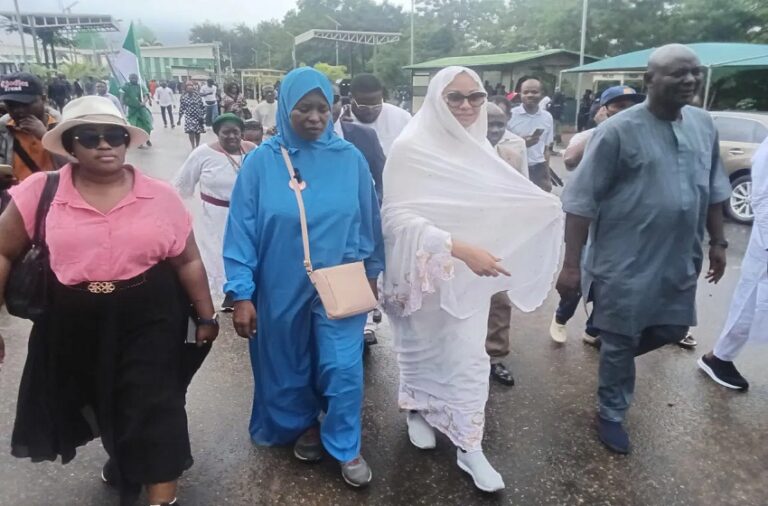
The ICIR reported earlier that there was tension on Tuesday when Akpoti-Uduaghan stormed the National Assembly to resume her legislative duties amidst tight security around the complex.

The suspended lawmaker, who was denied access to the National Assembly, relied on a recent judgment delivered by Binta Nyako of the Federal High Court, Abuja, to resume Senate proceedings on Tuesday, July 22, 2025.

She was ushered into the premises by her supporters, who converged at the entrance as heavy security was beefed up around the complex.

Stern-looking and gun-wielding operatives mounted the road leading to the National Assembly and initially blocked the female senator who drove into the complex in the company of rights activist Aisha Yesufu, and others who chanted solidarity songs and claimed she was their senator who must continue to represent them at the Senate.

Upon arrival, Akpoti-Uduaghan made her way into the National Assembly. She alighted from her vehicle and proceeded into the Senate Building on foot, accompanied by some of her supporters.

The lawmaker, who is serving a six-month suspension, had promised to resume sitting after a court verdict condemning her suspension.

Reacting to the incident on Channels TV ‘Politics Today’ on Tuesday, July 22, the spokesperson of the Senate, Yemi Adaramodu, said the upper chamber had said all it has to say about the senator.

“We are legislators; we are lawmakers. We are not spectators to be watching skit-making and content creation. So, initially, I said that all this episode, all this saga was about content creation.

“And then the content has been created and is now maybe degenerating into a season film. We are not interested. We are not actors. We are lawmakers, and we are not interested in all these kinds of things,” Adaramodu stated.

He explained that when a litigant receives a judgment from the court, they don’t enforce it themselves. Instead, court bailiffs serve the orders to the relevant parties.

He added that if those parties fail to comply, then they can be held in contempt of court. He emphasised that the action of Akpoti-Uduaghan was just a form of content creation or a skit, rather than a serious legal analysis.

He added that according to section 60 of the National Constitutionand the rules book of the Senate, the upper chamber has done what it’s supposed to do on the matter.

On when the senator will be allowed to resume, Adaromodu said, “Well, as far as the senate is concerned, we have said that until and when the court moves and gives a definitive order, that looks like what you have done is unconstitutional. 

It is a personal vendetta – Akpoti-Uduaghan

Speaking after she was denied access to the Senate by security agents on Tuesday, Akpoti-Uduaghan said the action of the Senate against her is a personal vendetta that Senate President Natasha Apabio has unleashed on her.

“It is totally wrong because you can’t have your senatorial district and deprive the Kogi central of representation. There is just no reason why this gate should not be open,” she stated.

According to her, the Senate will be going on break from tomorrow, Wednesday, July 23, but she promised to resume her duties as soon as the Senate resumes.

The ICIR reported that the Senate had asked Akpoti-Uduaghan to stay away from its proceedings, saying the suspended lawmaker could not resume yet.

In a statement on Sunday, Senate spokesperson Adaramodu insisted that there was no subsisting court order mandating the Senate to recall the lawmaker before the expiration of her suspension.

Akpoti-Uduaghan was suspended in March 2025 for violating Senate rules after a seat arrangement brawl with Senate President Godswill Akpabio, whom she later accused of sexual misconduct. Akpabio denied the allegation.

Cases on the sexual harassment allegation are currently pending in courts.


US warns citizens to reconsider visiting Nigeria, cites insecurity, poor healthcare, others

0

THE United States (US) government has warned its citizens against visiting Nigeria over the increasing rates of kidnapping, terrorism, armed gangs, and poor healthcare, among others.

The US disclosed this in a fresh travel advisory to its citizens.

The ICIR reports that the warning is coming from the US for the second time in one month.

It issued the advisory as part of its security review to help travellers assess risks when visiting Africa, highlighting certain countries as high-risk areas.

The advisory highlights 12 high-risk African countries, namely Nigeria, Somalia, Libya, Burkina Faso, South Sudan, DRC, Uganda, Burundi, Mauritania, Guinea-Bissau, Niger, and Chad.

The US ranks countries into four risk levels, with Level 4 (“Do Not Travel”) being the highest risk and Level 3 (“Reconsider Travel”) indicating serious risk.

In a statement by the US Mission in Nigeria, posted on its website, the US cautioned its citizens to reconsider any planned trip to Nigeria, stating that all locations carry a “significant security risk.”

The US advised its citizens to completely avoid 18 states in Nigeria due to high risk, while travel to other states should be made with caution.

The US advised its citizens to avoid specific Nigerian states due to various security concerns, including terrorism, kidnapping, and crime, in states such as Borno, Yobe, Kogi, Adamawa, Bauchi Gombe, Kaduna, and others.

Speaking about insecurity in Nigeria, the US said, “Violent crime is common in the country. This includes armed robbery, assault, carjacking, kidnapping, hostage-taking, roadside banditry, and rape.

“Kidnappings for ransom happen often. They primarily target dual national citizens visiting Nigeria and U.S. citizens perceived as wealthy. Kidnapping gangs have also stopped victims on interstate roads.”

It added that “Civil unrest and armed gangs are active in parts of Southern Nigeria. This is especially true in the Niger Delta and Southeast regions. Armed crime and gangs are common in the area. Crimes include kidnapping and assaults on Nigerian security services. Violence can flare up between communities of farmers and herders in rural areas.”

The US advised its citizens to bring sufficient medication, update vaccinations (including yellow fever, meningitis, and hepatitis), take malaria prophylaxis, and be aware of issues like counterfeit pharmaceuticals, unreliable blood supply, and poor emergency services in Nigeria.

The ICIR reported on Tuesday that a group raised alarm over the strategic resurgence of the Islamic State West Africa Province (ISWAP) across Nigeria and the Lake Chad Basin.

The report was authored by a senior researcher at Good Governance Africa-Nigeria, Malik Samuel, and titled “Unseen Advances, Quiet Offensives: ISWAP’s Strategic Resurgence and the Limits of Nigeria’s Military Response”.

While the report noted that JAS, otherwise known as Boko Haram, was responsible for the highest number of attacks, it said ISWAP overran at least 16 military bases in Nigeria within the first six months of 2025.

The military bases overrun by the ISWAP in Borno and Yobe states, according to the book, were Mallam Fatori, Pulka, Goniri, Rita, Buratai, Bulabulin, Wajiroko, Sabon Gari, Kumshe (overrun twice), Limankara, Buni Gari, Marte, Rann, Wulgo, Kanama, and Gajibo.


Report shows ISWAP’s resurgence worsening as experts urge rethink of Nigeria’s counter-terrorism strategy

A NEW report by Good Governance Africa (GGA) has raised the alarm over the strategic resurgence of the Islamic State West Africa Province (ISWAP) across Nigeria and the Lake Chad Basin.

The report was authored by a senior researcher at Good Governance Africa-Nigeria, Malik Samuel, and titled “Unseen Advances, Quiet Offensives: ISWAP’s Strategic Resurgence and the Limits of Nigeria’s Military Response”.

Presenting the report in Abuja on Tuesday, July 22, Samuel revealed that both the Jama’atu Ahlis Sunna Lidda’awati wal-Jihad (JAS) and ISWAP had conducted over 300 attacks in the North-East region since the beginning of 2025.

While he noted that JAS, otherwise known as Boko Haram, was responsible for the highest number of attacks, he said ISWAP overran at least 16 military bases in Nigeria within the first six months of 2025.

The military bases overrun by the ISWAP in Borno and Yobe states, according to the book, were: Mallam Fatori, Pulka, Goniri, Rita, Buratai, Bulabulin, Wajiroko, Sabon Gari, Kumshe (overrun twice), Limankara, Buni Gari, Marte, Rann, Wulgo, Kanama, and Gajibo.

The author highlighted what he termed “Evidence of Resurgence,” noting that ISWAP, increasingly recognised as ISIS’s most active affiliate, launched a sinister “Camp Holocaust” in the Lake Chad Basin as early as February this year.

This, he said, signalled a more aggressive and confident posture from the terrorist group.

The report stressed that ISWAP had demonstrated significant territorial expansion and re-organisation, including the strategic capture of the infamous Sambisa Forest—a major stronghold—and a comprehensive restructuring of its command and control structure.

According to the report, the re-organisation has facilitated an alarming extension of their operational reach, now reportedly stretching into Cameroon, Niger, and, concerningly, into Nigeria’s North-West and North-Central regions.

It attributed the group’s renewed strength to external support from the global Islamic State network, while also highlighting the involvement of foreign fighters and ISIS instructors, the deployment of drones, and the use of suicide vehicle-borne improvised explosive devices (SVBIEDs).

This external support, the book explained, was compounded by “state weaknesses” within Nigeria, including soldiers ‘fatigue, poor logistics, and weak intel among security forces.

It added that ‘gaps from Niger’s Multinational Joint Task Force (MNJTF) withdrawal’ created operational vacuums, while persistent “socio-economic grievances” such as poverty, and unemployment continue to provide fertile ground for recruitment.

Experts express dismay

Meanwhile, following the report’s presentation, a panel of security experts, consisting of the Special Adviser to the Chief of Defence Staff of Nigeria, Aliyu Gebi, and Policy-oriented researcher and international development practitioner, Mustapha Alhassan, expressed deep concerns over the findings. 

The panellists faulted the Federal Government’s continued reliance on some military approaches while neglecting the underlying structural and socio-political issues that fuel insurgency.

Gebi emphasised the need for political will, stating that “If there is political will, the insurgency can end next week.” 

He acknowledged that while the military had repeatedly degraded insurgents, the nature of the threat had evolved into organised crime, aided by poor coordination with affected neighbouring countries.

“As long as we ensure their recruitment, as long as we don’t stop artisanal miners from giving them gold, the attacks will continue,” Gebi said. 

He also warned that the political environment itself had become complicit in the crisis. 

“There are actors who need violence to remain in office, and there are actors who need violence to get to office,” he added.

Speaking on ISWAP’s territorial expansion and resurgence in Nigeria’s North-East, Mustapha Alhassan raised concerns that while politicians were already focusing on the 2027 elections, insurgents were quietly infiltrating vulnerable communities and expanding their recruitment base.

He criticised the government’s largely reactive response to attacks, rather than anticipating or pre-empting terrorists’ actions. 

Alhassan further stressed how ISWAP continued to exploit poverty, unemployment, ungoverned spaces, and weaponise the state’s failures for its gain.

Both experts called for a complete rethinking of Nigeria’s security that transcends military operations and centres on intelligence-led policing, economic revitalisation of conflict zones, and regional diplomatic relations with countries like Niger and Chad to recommit to joint security frameworks.

GGA executive director urges smarter, people-centred approach

On his part, the Executive Director of Good Governance Africa (GGA-Nigeria), Ola Bello, in his welcome address, stressed the urgency of rethinking Nigeria’s counter-insurgency strategy beyond the limits of conventional warfare.

Represented by GGA senior researcher, Adejumo Kabir, Bello described ISWAP as not just a surviving terrorist faction, but the “Islamic State’s most formidable affiliate”, responsible for more than a third of ISIS’s global attacks.

“Our analysis confirms that ISWAP alone accounts for over a third of ISIS global attacks and nearly 30 per cent of its global casualty figures in the first half of 2025,” he said.

He, however, called for an intelligence-driven approach that disrupts insurgent financing and logistics, strengthens community resilience, and puts local populations at the centre of national security planning.

In June, The ICIR reported how Boko Haram commanders were staging a brutal comeback in the North-East.

Again, CBN holds interest rates at 27.5% despite drops in inflation

THE Central Bank of Nigeria (CBN) has for the third consecutive time kept the benchmark interest rate unchanged at 27.5 per cent despite a moderation in headline inflation.

The CBN governor, Olayemi Cardoso, announced this at the end of a two-day Monetary Policy Committee (MPC) meeting in Abuja on Tuesday, July 22.

According to Cardoso, the 12-member committee unanimously decided to maintain the benchmark interest rate at 27.5 per cent and all other parameters.

The committee retained the asymmetric corridor around the MPR at + 500/-100 basis points, cash reserve ratio (CRR) of deposit money banks at 50 per cent, merchant banks at 16 per cent, and liquidity ratio at 30 per cent.

The bimonthly MPC meeting is used by the CBN to review recent financial development and economic output.

Cardoso said that the committee’s decision to retain all parameters was based on the need to sustain the momentum of disinflation and sufficiently maintain price pressure.

“Maintaining the current policy stance will continue to address the existing and emerging inflationary pressure.

“The MPC will continue to undertake rigorous assessment of economic conditions, price development and outlook to inform future policy decisions,” he said.

The CBN governor said that in its consideration, the committee acknowledged the decline in headline inflation in June, the third consecutive month of deceleration.

He explained that the committee also considered that the ease in inflation in June was largely driven by the moderation in energy prices and stability in the foreign exchange market.

“Despite these positive developments, members observed the uptick in month-on-month headline inflation, suggesting the persistence of underlying price pressures.

“The continued global uncertainties associated with tariff wars and geopolitical tensions could further exacerbate supply chain destruction and exert pressures on the prices of imported items,” Cardoso added.

The ICIR reported that the committee retained the benchmark interest rate in February as well as in May.

A benchmark interest rate is the official rate that guides financial institutions on the proper cost of funds and lending businesses, including micro, small, and medium enterprises.

Some analysts had expected a cut in the benchmark interest rate following the trend in domestic and global inflation rates.

A renowned economist, Bismarck Rewane, had anticipated a likely 25 basis points cut.

His assumption was based on the increasing rate of global inflation relative to the declining inflation rate in Nigeria, which he said was an obvious sign for the CBN to cut interest rates.

NNPCL’s revenue drops to N4.57trn despite increased output

0

THE Nigerian National Petroleum Company Limited (NNPCL) declared N4.57 trillion revenue in June, representing a 23.9 per cent drop from the N6 trillion it reported in May.

It disclosed this in its latest monthly report summary, released on Monday, July 21.

The report showed that profit after tax also declined by 14 per cent to N905 trillion from N1.05 trillion in May.

Despite increased crude oil and condensate production to 1.68 million barrels per day (bpd) from 1.63 million bpd in May, its revenue fell below last month’s record.

A breakdown of the report showed that production peaked at 1.73 million bpd as crude oil output recovered slightly at 1.42 million bpd, while condensate volumes declined to 0.26 million bpd.

A cursory look at the report revealed that crude oil and condensate sales decreased to 21.68 million barrels in June from 24.77 million barrels in May, which likely resulted in the drop in revenue.

The ICIR reports that the prices of crude oil have continued to fluctuate in the international market, which analysts believe are not unconnected with the geopolitical tensions, including the ongoing Russia-Ukraine conflict and unrest in the Middle East, shaping several key economic factors.

On Tuesday, July 22, oil prices declined amid rising concerns that the escalating trade conflict between major crude consumers, the United States (US) and the European Union, could hinder demand growth by stifling economic activity and negatively impacting investor sentiment.

As of 1:00 West Africa Time (WTI) on Tuesday, the Brent crude futures have dropped by 0.98 per cent to $68.53 a barrel, while the US West Texas Intermediate (WTI) crude has dropped by 1.07 per cent to $66.48 a barrel.

A further look at the NNPCL report showed that gas production rose slightly to 7.581 billion standard cubic feet per day, up from 7.352 billion in the previous month, with gas sales rising to 4.742 billion mmscfd (million standard cubic feet per day) in June.

“Ongoing industry-wide collaborations are increasingly improving synergies to achieve production improvement and cost optimisation,” the NNPC stated.

Giving the status of the Port Harcourt, Warri, and Kaduna refineries, which it plans to sell off, the NNPCL said a review of the planned sale was still in progress.

Nigeria maintains 4th largest economy in Africa despite rebased GDP

NIGERIA has retained the fourth-largest economy in Africa, despite the rebasing of the country’s gross domestic product (GDP).

On Monday, July 21, the National Bureau of Statistics (NBS) released the long-awaited rebased GDP report.

The data showed that Nigeria’s nominal GDP increased to N372.82 trillion.

A conversion of N372.82 to dollars using the Central Bank of Nigeria (CBN) exchange rate of N1,536.50/$1 as of December 31, 2024, amounts to $242.64 billion.

Check by The ICIR showed that before the rebased exercise, Nigeria’s nominal GDP amounted to $187.75 billion, and the country ranked the fourth-largest economy in Africa in 2024.

With the nominal GDP at $242.64 billion, the country still retains its fourth position, coming behind South Africa with $400,26 billion nominal GDP, Egypt with $389,05 billion, and Algeria with $263,61 billion.

Although the value of Nigeria’s economy increased compared to earlier figures, it still falls behind South Africa, Egypt, and Algeria.

“The rebased estimates with the new base year of 2019 indicate that the nominal GDP for Nigeria is much larger than previously estimated. In 2019, the rebased nominal GDP at market prices stood at N205.09 trillion, N213.64 trillion in 2020, N243.30 trillion in 2021, N274.23 trillion in 2022, N314.02 trillion in 2023, and N372.82 trillion in 2024,” NBS said.

It stated that the revision represented a 41.7 per cent increase in nominal estimates as against a 59.7 per cent revision in the 2010 rebasing exercise.

The ICIR reported that in real terms, the Nigerian GDP grew by 3.13 per cent year-on-year in the first quarter of this year from 2.27 per cent growth in the same period of 2024.

A GDP refers to the total value of all goods produced in a country in a year. In real terms, it is adjusted for inflation, while it is not in nominal terms.

The rebasing of the GDP to a 2019 base year from the previous 2010, according to the NBS, was to reflect the latest trends, including digital, informal, creative industries, and fintech into the general economic activities.

A further look at the latest data showed that real GDP growth in 2020 stood at -6.96 per cent, and increased to 0.95 per cent in 2021.

Higher growth rates were recorded in 2022 and 2023, at 4.32 per cent and 3.04 per cent, while 2024 recorded a real GDP growth rate of 3.38 per cent.

“Crop production at 17.58 per cent ranked highest among the top five economic activities using the 2019 base year. This was followed by trade (17.42 per cent), real estate (10.78 per cent), telecommunications (6.78 per cent), and crude petroleum and natural gas (5.85 per cent).

“Real estate ranked third, displacing crude oil and natural gas to the fifth position due to improved coverage of informal economic activities during the exercise,” NBS stated.

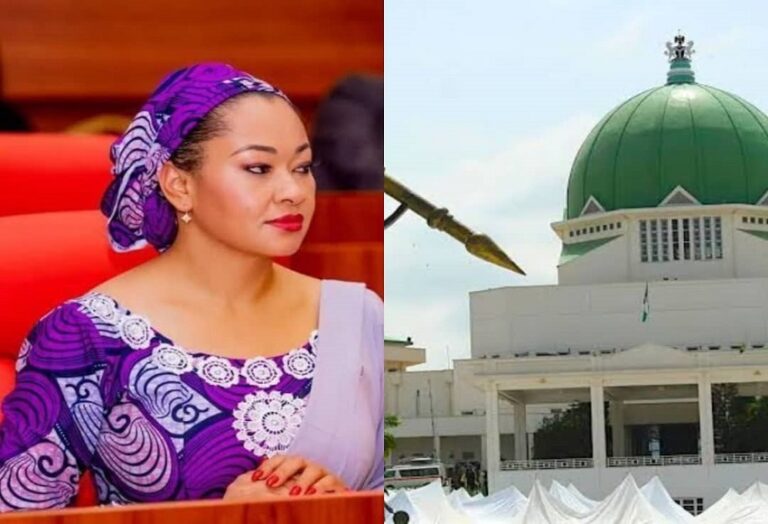
Tension as Natasha storms National Assembly

0

THE senator representing Kogi Central, Natasha Akpoti-Uduaghan, has stormed the National Assembly to resume her legislative duties amidst tight security around the complex.

She was ushered into the premises by her supporters, who converged at the entrance as heavy security was beefed up around the complex.

Stern-looking and gun-wielding operatives mounted the road leading to the National Assembly and initially blocked the female senator who drove into the complex in the company of rights activist Aisha Yesufu,  Mama P, and others who chanted solidarity songs and claimed she was their senator who must continue to represent them at the Senate.

Upon arrival, Akpoti-Uduaghan made her way into the National Assembly. She alighted from her vehicle and proceeded into the Senate Building on foot, accompanied by some of her supporters.

The lawmaker, who is serving a six-month suspension, had promised to resume sitting after a court verdict condemning her suspension.

The Senate had asked Akpoti-Uduaghan to stay away from its proceedings, saying the suspended lawmaker could not resume yet.

In a statement on Sunday, Senate spokesperson, Yemi Adaramodu, insisted that there was no subsisting court order mandating the Senate to recall the lawmaker before the expiration of her suspension.

Akpoti-Uduaghan was suspended in March 2025 for violating Senate rules after a seat arrangement brawl with Senate President Godswill Akpabio, whom she later accused of sexual misconduct. Akpabio denied the allegation.

Cases on the sexual harassment allegation are currently pending in courts.

The suspended lawmaker, who relied on a recent judgment delivered by Binta Nyako of the Federal High Court, Abuja, vowed to resume Senate proceedings on Tuesday, July 22, 2025.

More details will follow this report.

No Nigerian police officer should earn less than N500,000 monthly – Sowore

0

HUMAN rights activist and former presidential candidate, Omoyele Sowore, has called for a sweeping reform of Nigeria’s policing system, insisting that no police officer in the country should earn less than ₦500,000 monthly.

Speaking during an interview on Channels Television’s “Morning Brief” on Wednesday, Sowore linked poor police welfare to the nation’s deepening security challenges, arguing that improved salaries and working conditions for officers would lead to significant reductions in crime and insurgency.

“Our position is that no policeman should be paid less than ₦500,000 per month,” Sowore stated, adding that “Before you ask if that is fiscally sustainable, you must consider the cost of not properly equipping or paying a policeman.”

According to him, the current underfunding of the Nigerian Police Force has rendered it ineffective, forcing the country to increasingly rely on military interventions in civil matters.

He criticised the government’s focus on military spending, citing the high cost of military equipment such as Apache helicopters, which he said could instead be used to strengthen internal policing systems.

“You know how much an Apache helicopter costs? That’s the same money that can be used to improve police welfare and capability. But instead, we spend to bomb parts of our country,” Sowore said.

He argued that investing in policing would yield long-term economic and security benefits, including a 70 per cent reduction in terrorism, 80 per cent drop in kidnappings, and a near elimination of general crime.

“You cannot leave the police in this condition and expect them to protect you. The real question is, how are we sustaining insecurity?”

Sowore’s proposal has ignited debate on social media and within political circles. While many Nigerians welcomed the idea as a potential solution to police corruption and low morale, critics questioned the feasibility of such a pay structure amid the country’s strained budget.

Despite the concerns, Sowore insisted that investing in the welfare of security personnel is a national imperative.

“You sustain insecurity when you fail to sustain the people who are meant to protect you,” he reasoned.

His comments come at a time when public discourse on security spending has intensified, following ongoing protests by retired police officers over pension issues and increasing concerns about rising crime across the country.