FORMER Benue State Governor Samuel Ortom has stated that the directive issued by President Bola Ahmed Tinubu regarding the security crisis in the state had yet to be implemented.
Recall that President Tinubu had, during his visit to the state on June 18, directed Governor Alia Hyacinth to form a committee of former governors and traditional rulers to work together to tackle insecurity in the state.
The president was in the state to commiserate with the people and proffer solutions to ending the protracted carnage that had turned the state into a killing field.
In an interview on Channels TV’s “Politics Today” on Monday, July 20, Ortom said no meeting has been convened since the president’s visit.
“We are still waiting for the governor’s calls to go there, because Benue State belongs to us, and there is no way we can allow (the killings) this to continue to happen,” Ortom stated.
He decried the frequent killings in the state and said the Yelewata attack, which drew Tinubu’s attention, affected part of his local government.
According to him, his paternal grandmother hails from Yelewata.
“So, it is as good as home. It is my place, and we are waiting for the governor, if he calls us, we’ll go there,” he added.
Ortom spoke about his efforts to stem insecurity in the North-Central state while in office.
He said he did everything possible to work with traditional rulers, security agencies, and local communities to curb attacks.
He stressed his strong stance against policies like Ruga and cattle colonies under the late former President Muhammadu Buhari administration.
He said each time they brought up the idea, he stood against it.
“It’s unfortunate they didn’t listen because I gave statistics on what is obtainable in other countries. There is no way cattle rearing and farmers can cohabit. There will be a crisis,” he stated.
Ortom posited that some of the violence in Benue were caused by foreign elements.
He claimed that some of the attackers were from Chad, Niger, Senegal, Mali, and Libya.
He commended Tinubu’s response to the Yelewata killings, saying the previous government failed to address the crisis.
The ICIRreported that during the visit, Tinubu told the people of Benue State to learn how to accommodate anyone seeking to live and conduct business in the state.
He said this was important for peace to reign in the troubled state.
The ICIR reports that killings in the state have spanned several years, and more than 200 residents reportedly died in the onslaughts in June.
While some blame cropper-herders’ conflict on the carnage, others label the assailants as foreign terrorists.
Hundreds of residents were killed under Ortom in the state as his efforts to contain the menace failed to yield desired results.
He introduced a law that prohibited open grazing and also set up the Benue State Community Volunteer Guards (BSCVG)
THREE years after Doctors Without Borders – Médecins Sans Frontières – (MSF) ended its lead treatment programme in Zamfara State, resurgent outbreaks of heavy metal poisoning have left children battling for their lives, amid a poor healthcare system and failure to stop illegal gold mining – the root cause.
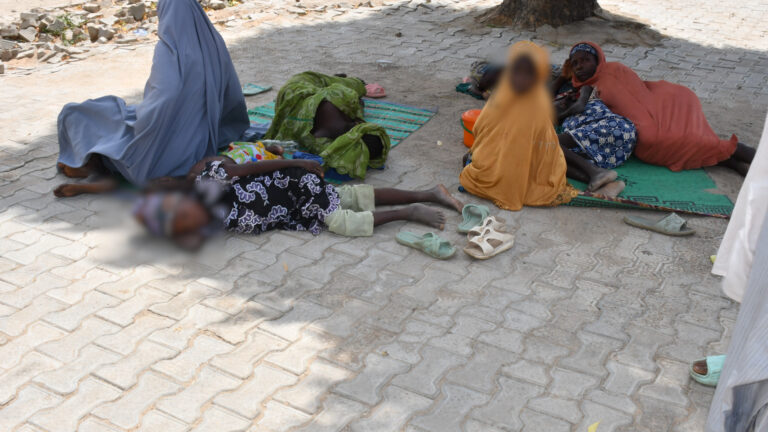
Hafsat Rabiu sat on a mat under a neem tree. Beside her, lay her two young daughters: Safiya, 6, and Nasiba, 4. Too weak to speak, both groaned as their mother fanned them with the helm of her wrapper. Safiya woke up, gazing with her bloodshot eyes.
On the scorching afternoon of May 14, several caregivers at the Zamfara State Infectious Disease Centre, Gusau, tended sick children who had been diagnosed with heavy metal poisoning, the same condition that Rabiu’s children were battling with.
Heavy metal poisoning occurs when toxic heavy metals, such as lead, mercury, arsenic, or cadmium, accumulate in the body and cause harm.
Before arriving at the facility on May 8, the 41-year-old mother said they had spent a few weeks at the Shagari Hospital, in Gusau, the state capital. The transfer of all heavy metal poisoning cases to the centre was said to be on the directive of the state government, with a pledge to offer free treatment.
However, the government’s supposed intervention turned out to be a despairing experience for Rabiu. In an interview, she lamented how her daughters had not received any medication or food from the government.
Hafsat Rabiu and her daughters PC: Sinafi Omanga/The ICIR
“I want to take them home,” she said, adding “At least there, I can give them something to eat.”
While Rabiu prepared to leave due to lack of access to treatment, motorcycles carrying children with acute ascites continued to arrive at the centre. Ascites is a medical term for a sudden buildup of fluid in the abdominal cavity, a symptom of heavy metal poisoning.
At the time of visit on May 14, Safiya and Nasiba were among children lying at the Zamfara Infectious Disease Centre, gasping for breath, their fragile bodies too weak to sit or stand without someone holding them up, as a result of heavy metal poisoning.
Since 2010, when the federal government announced the discovery of lead poisoning in Zamfara, the epidemic remains the worst lead contamination in recorded history, resulting in the death of more than 600 children, and hundreds more left with brain damage and physical disabilities,a report by the Guardian UK, suggests.
However, illegal gold mining; the root cause of the epidemic, has continued unabated, resulting in a widespread resurgence of heavy metal poisoning, despite remediation projects by the Federal and Zamfara State Governments, in conjunction with international environmental and health organisations.
For victims, especially children battling for their lives as a result of heavy metal poisoning resurgence, the situation has been worsened by the government’s inability to provide efficient treatment, after Médecins Sans Frontières (MSF), or Doctors Without Borders ended its more than a decade lead poisoning treatment programme in 2022. Doctors without Borders is a medical humanitarian organisation that provide medical assistance to people affected by conflict, epidemics, disasters, or exclusion from healthcare, the organisation website says.
In the wake of the recent multiple heavy metal poisoning cases, the Zamfara government reopened the Infectious Disease Centre in early May, said Ahmad Muhammad Gusau, the state’s Epidemiologist and Head of Public Health Emergency Operations Centre (PHEOC).
The facility which was built in 2020 to manage COVID-19 and other infectious disease. It was reopened in response to the fresh outbreak of the heavy metal poisoning, a staff member told The ICIR.
However, patients in urgent need of care are met with shortages of health workers and medications. For Hajara, a grandmother, the reality hit hard when she arrived with her seven-year-old grandson, on the evening of May 13. They live in Geba area of Gusau.
“When we noticed that his stomach was swollen (ascites), we rushed to Shagari Hospital in Gusau but we were transferred to this facility.
“We got here yesterday but they told us that the drugs he needed were not available. We don’t have enough money to continue staying here, and even feeding is difficult,” she said.
Hajara carries her grandson at the Zamfara Infectious Disease Centre PC: Sinafi Omanga/The ICIR
The ICIR observed only three health workers attending to over 60 patients. Multiple caregivers reported that the patients’ conditions had worsened due to inadequate medication and lack of food.
One of the staff members who sought anonymity because of fear of victimisation, said, “For the past four days, I have not had rest, and the drugs are not enough.”
The staff added that despite the government’s pledge to cover treatment costs, several parents and caregivers were left with no option but to buy the prescribed medication out of pocket. The staffer also said that several discharged patients had not fully recovered.
In random interviews, many families said they exhausted their resources and could no longer afford to stay at the Infectious Disease Centre, even if it meant leaving without proper care.
Zamfara government dismisses questions regarding poor care for patients
When The ICIR asked the government to respond to claims that it had failed to provide adequate personnel, medications, or food for patients as promised, Gusau, the Head of PHEOC, dismissed the claim during an inspection visit to the facility.
He was delegated by Nafisa Muhammad Maradun, the state’s Commissioner for Health, to respond to questions after The ICIR submitted a letter requesting an interview.
“No, that’s not true. In fact, there are no such people,” he said, referring to reports of patients lacking access to treatment.
Ahmad Muhammad, Head of Public Health Emergency Operations Centre (PHEOC) in Zamfara State. PC: Sinafi Omanga/The ICIR
Gusau added that he had supplied drugs for treatment as instructed by the Commissioner.
“We have nurses in the facility, we have doctors, and the Commissioner is planning to ensure that there are staff that will be stationed on call duty,” he said.
Responding to complaints of hunger by patients and caregivers, Gusau said, “Maybe it depends on the time you met them, whether they had taken their breakfast or not.”
The ICIR findings suggest that, despite Gusau’s assurances and the government’s pledge to cover medical bills, many caregivers and parents reported having to provide food and, in several cases, purchase medication out of pocket. Some caregivers, who spoke on condition of anonymity, cited fear of possible repercussions for declining recorded interviews.
In a phone interview, a deputy director at the Zamfara Environmental Protection and Enforcement Agency, Sagir Ali, said nutritional and social support was crucial for patients’ full recovery.
“Many patients come from already vulnerable communities and need more than basic treatment,” he said.
Zamfara government fails to provide relevant data
Despite promising to share data on the treatment of heavy metal poisoning at the Zamfara State Infectious Disease Centre, Gusau did not provide relevant information in follow up calls and an email.
The email specifically asked to know: the number of children the state government has successfully treated and discharged, figure of patients, if any have died as a result of the recent outbreak, how much the government spent so far, and the nature of the treatment being provided.
The email explained that Doctors without Borders (MSF) previously employed a lengthy chelation therapy to remove toxins from the children’s system.
Chelation therapy is a medical treatment that uses chelating agents to remove heavy metals and other toxins from the body. These agents bind to the metals, forming a complex that’s excreted in urine or feces.
One of the wards at Zamfara Infectious Disease Centre, Gusau PC: Sinafi Omanga
“Has a similar approach (chelation treatment) been adopted? What are the challenges faced in providing the supposed free treatments? Which organisation has the state government partnered with to address the ongoing multiple heavy metal poisoning since MSF ended its treatment programme?” These questions were not responded to by Gusau.
Why children are vulnerable
In a briefing paper published in 2012, MSF said everyone living in areas of unsafe gold mining and ore processing is susceptible to lead toxicity, but “children under 5 are especially vulnerable.”
A seven-year-old girl suffering from lead poisoning PC: Sinafi Omanga/The ICIR
It said, “Children are closer to the ground than adults, and often crawl, getting dust on their hands, which then ends up being ingested as they eat with those dusty hands, or simply put their hands in their mouths. Young children absorb higher percentages of ingested lead: around 40-50 per cent compared to 10 per cent in adults.”
The paper posits that ongoing development of vital organs in young children, are more vulnerable to damage.
MSF’s decade-long struggle to save children
The resurgence of heavy metal poisoning in the state comes three years after MSF concluded its lead poisoning treatment programme in Zamfara State. In February 2022, the organisation published a report that documented its achievements on the lead poisoning treatment programme and announced that it was handing over the project to the state government and local authorities.
The report says between May 2010 and December 2021, the organisation screened 8,480 children under five for lead poisoning. Of this figure, more than 80 per cent of them were enrolled in a medical lead programme, including 3,549 children who received lengthy chelation treatment .
However, following the recent outbreaks that have left scores of children hospitalised at the Zamfara State Infectious Disease Centre, MSF has not made any public statement regarding the situation.
In response to an email The ICIR sent to MSF’s communication team, the Country Representative, Simba Tirima said, “MSF handed over the operations in 2022 and is not currently monitoring the situation.”
MSF’s Nigeria Country Representative, Simba Tirima PC: MSF website
Tirima did not provide information on how much MSF spent on the lead poisoning treatment programme, or how much it cost to successfully treat a child of lead poisoning using the chelation therapy, as requested.
The project report which documents MSF’s achievements on the treatment programme did not disclose how much the organisation received as donation for the project and how much was spent.
Meanwhile, recent updates on MSF website indicate a shift in the organisation’s focus toward addressing severe nutritional challenges across northwest Nigeria. In Zamfara alone, MSF reported treating approximately 65,000 children for malnutrition in 2024.
Recontamination of Zamfara communities after remediation efforts
When the federal government announced the discovery of the lead poisoning in Zamfara, the solid lead concentrations in the affected areas exceeded 100,000 parts per million (ppm), far above the internationally accepted standard of 400 ppm for residential areas, according to a report by Pure Earth, a global non-profit organisation that protects the environment from the harms of toxic pollution.
The report notes that the processing of lead-rich ore to obtain gold by artisanal miners notably in Anka and Bukkuyum LGAs of Zamfara State resulted in extensive dispersal of lead dust, causing widespread ingestion and inhalation of lead particles by residents, especially children.
“Never before has there been a lead poisoning epidemic of this magnitude anywhere in the world. People were dying everyday. On-going exposure and blood lead absorption were higher than any previously recorded in the international literature,” Pure Earth says.
A Google Earth’s satellite imagery showing mining communities in Anka LGA of Zamfara state from 2011-2024 PC: Sinafi Omanga/The ICIR
As part remediation efforts, the report notes that contaminated soil was removed to secure landfills and replaced with clean soil after the Zamfara and the Nigerian governments formally requested the assistance from WHO, CDC, MSF and the Blacksmith Institute to address the problem.
“In total, seven villages were remediated, including 282 residential compounds. 107 exterior areas and 23 processing ponds, allowing for MSF to provide chelation treatment. The project also removed highly contaminated material from seven ponds that were used to make bricks for compound repairs.”
In a telephone interview, the deputy director at the Zamfara Environmental Protection and Enforcement Agency, Sagir said recent findings by the agency revealed that lead poisoning has worsened in the state, due to “enforcement gaps.”
Unlike in the past, when lead poisoning was confined to mining communities such as Anka, Maru, and Bukkuyum LGAs, Ali said the agency has now found the spread of the contamination to areas with no mining activity.
“Surveillance data shows cases in nearly all LGAs, whether or not mining is happening there. Recontamination is a real issue. Despite earlier cleanup efforts, villagers resumed illegal mining in remediated areas.
“Some are villagers driven by poverty; others are outsiders. In some cases, insecurity and banditry are involved, making the situation more complex,” Sagir said.
Double jeopardy, health and security crisis
At the time of handover in 2022, MSF project report says: “Children are no longer dying of lead poisoning,” but the organisation was still concerned that “challenges remain.”
Shedding light on the situation, it says, “Artisanal mining is a poverty-driven activity that will persist as long as gold mining is profitable,” adding that another area with high lead concentration was discovered in Abare, a community in Anka LGA.
Unfortunately, carrying out environmental remediation in Zamfara state has become more challenging than before largely due to armed violence, kidnapping and banditry in mining communities, said Ali.
In March 2025, a few weeks before The ICIR’s visit, gunmen killed six operatives of the Zamfara State Community Protection Guards and four local vigilantes in Anka LGA, the epicentre of lead poisoning in the state.
Also, a 2020 report by International Crisis Group says more than 8,000 people have been killed – with over 200,000 internally displaced and about 60,000 fleeing into the Niger Republic between 2010 to 2020.
Ali said these criminal activities have worsened environmental contamination, and invariably the resurgence of multiple heavy metal poisoning in the state.
“To be honest, without proper security backing, many areas are inaccessible, even to us. I wouldn’t go to some of these communities without government protection,” he added.
Meanwhile, in the 2012 briefing paper, MSF warned that chelation treatment alone was ineffective without environmental remediation, as “the child continues to live in a contaminated environment and ingest lead.”
Illegal mining activities persist despite FG’s ban
Following the resurgence of multiple heavy metal poisoning Zamfara, particularly in Bugundu LGA, the federal government recently suspended all mining activities in the state. A statement by Dele Alake, Minister of Solid Minerals Development said the suspension would remain until new standard operating procedures were released.
Since 2010, the federal government has placed a series of bans to curtail illegal mining activities, however, the menace has continued. Speaking on the recent outbreaks, Alake blamed traditional and local authorities for allowing illegal miners to operate in their areas.
Minister of Solid Minerals Development Dele Alake (L) and Emir Hassan Attahiru (R) Collage by: Sinafi Omanga/The ICIR
Responding to the Minister’s allegation, the Emir of Bugundu, Hassan Attahiru said addressing illegal mining activities must start from tackling insecurity challenges. He spoke with The ICIR in an exclusive interview at his residence in Gusau.
“The bottom line is that much of the mining activity is happening in areas that are inaccessible, even to the government. Without improving the security structure, managing this issue will be extremely difficult,” he said.
Food consumers at risk
Ibuwumi Nwachukwu, a professor of Soil Science at Michael Okpara University of Agriculture, Umudike, said the failure of the government and local authorities to end illegal mining has a far-reaching consequence on agricultural output and health of food consumers across the country.
“It’s not localised; that is what we call diffuse contamination. The danger is that, even though I’m far from that place and not directly exposed to the contaminants in the soil, I’m still at risk.
“All the food produced in those areas gets transported across the country, and anyone can buy it in the market,” said Nwachukwu, a member of Soil Science Society in Nigeria, America, and Britain.
In addition to suspending illegal mining activities, Nwachukwu urged the government to ensure remediation of lead-contaminated areas.
“There is no quick solution, but the government must stop the unregulated mining activities.”
While Sagir, the deputy director at the Zamfara Environmental Protection and Enforcement Agency sees remediation as a necessary step, he expressed worry about the capacity of the state government to carry it out.
“The process is very expensive and complex. It involves many stages, from site characterisation to full cleanup. But if there is a proper government and international support, especially from security agencies, it’s possible,” he said.
“It is difficult to remove lead from the environment. All the contaminated soil must be removed from the villages and replaced with clean soil. This process is expensive, and some regions in Zamfara are still waiting for the contaminated soil in their villages to be removed,” explains a report titledLead Poisoning Investigation in Northern Nigeria by the U.S. Center for Disease Control and Prevention (CDC).
Rising cases, incomplete recovery
Moments after The ICIR’s conversation with Hafsat Rabiu, the mother of two sick daughters at the Zamfara Infectious Disease Centre, an almsgiver offered her and another caregiver ₦1,000 note each. She accepted it with a faint smile and said, “thank you,” before turning her attention back to her children.
Rabiu and her children live in Rijiya, a non-mining community in Gusau, the state capital, yet affected by the recent outbreak of heavy metal poisoning.
The Zamfara Infectious Disease Centre, Gusau PC: Sinafi Omanga/The ICIR
At the time of filing this report, the number of patients at the facility had risen . The staffer, whom The ICIR granted anonymity confirmed some discharges, but noted that majority of the patients left without full recovery, including the Rabiu sisters.
When The ICIR inquired whether the Zamfara State government planned to reestablish partnerships with organisations like MSF as it had during previous lead poisoning crises, Gusau, the state’s Epidemiologist and Head of PHEOC, responded, “For now, all I can say is that I have been instructed by the Commissioner to treat these patients.”
Meanwhile, MSF’s 2012 Briefing Paper warned that “neither MSF nor the Nigerian authorities possess sufficient expertise to manage the crisis without assistance and advice.”
CHEVRON Nigeria Limited has been called upon to immediately stop an ongoing oil leak and contain the spill that occurred on April 12 at its Berthing Operational Platform (BOP) located in shallow waters offshore Ilaje Local Government Area of Ondo State.
The call was made in an open letter jointly signed by Corporate Accountability and Public Participation Africa (CAPPA), Environmental Rights Action/Friends of the Earth Nigeria (ERA/FoEN), and Community leaders including representatives of the Abereke communities (including Taiwo Aiyedatiwa, General Secretary), local fishing cooperatives, individual residents of Ilaje, and grassroots environmental groups.
In a statement sent to The ICIR by CAPPA on Monday night, the concerned group raised the alarm over widespread environmental degradation, warning that it poses severe threats to local livelihoods, especially among fishing and farming communities.
According to them, affected areas have experienced extensive water pollution, the destruction of marine ecosystems, and long-term damage to economic activities in the region, accusing Chevron of consistently failing to uphold environmental standards or respect the rights of its host communities.
“This egregious environmental disaster demands immediate action. We call on Chevron Nigeria Limited to take full responsibility for the clean-up, restoration, and compensation for the devastation caused to our ecosystem.
“For decades, Chevron’s operations have left behind a trail of oil spills, gas flaring, and ecosystem degradation. Despite countless outcries, the company has consistently failed to uphold environmental and human rights standards in its host communities, who continue to suffer the devastating impacts of its operations,” the statement read.
It maintained that Chevron’s recent oil spill has not only caused ecological damage but has also deepened existing gender inequalities, increasing the economic vulnerability and social marginalisation of women and children who play key roles in local fishing economies, family farms, and household sustenance.
The group noted the spill has become a recurring issue and was beyond the control of local authorities, having catastrophic impacts on the environment, health, and economic well-being of the communities.
“The local waters are polluted, forests and marine life are destroyed, and the once-flourishing fishing and farming communities now struggle to survive.
“The long-term consequences of this spill will be devastating if not addressed promptly and effectively,” they urged.
They condemned Chevron’s actions as “a pattern of environmental negligence and corporate irresponsibility rife with human rights violations” and reaffirmed their solidarity with the people of Ilaje, describing the situation as “a violation of their right to a clean, safe, and sustainable environment.”
The group demanded that Chevron Nigeria immediately stop the oil leak and contain the spill to prevent further environmental damage, conduct a thorough clean-up of the affected area, assess and mitigate the environmental and health impacts, and provide timely and adequate compensation.
“We will not stand by as our environment and livelihoods are ravaged by reckless, profit-driven actions. We demand that Chevron Nigeria Limited prioritise the well-being of Ilaje communities, take immediate action to address this crisis, and uphold its corporate responsibility to ensure a safe and healthy environment for all,” the concerned group added.
The ICIR had, in an investigative piece, documented how the people of Ilaje communities battle for survival amidst constant oil spillage and sea surge.
NIGERIA’s Gross Domestic Product (GDP) grew by 3.13 per cent year-on-year in real terms in the first quarter of this year from 2.27 per cent growth in the same period of 2024.
The National Bureau of Statistics (NBS) indicated this in its latest GDP report released on Monday, July 21.
In nominal terms, GDP rose to N94.05 trillion from N79.51 trillion, representing a year-on-year increase of 18.30 per cent.
Sectors performance
The services sector continued to dominate economic output, growing by 4.33 per cent and contributing 57.50 per cent to real GDP.
Industry sector followed with a growth of 3.42 per cent from 2.35 per cent, while the agriculture sector, which still employs a large portion of the labour force, remained sluggish, growing marginally by 0.07 per cent from the negative 1.79 per cent contraction in the same period of last year.
The NBS had earlier revealed plans to rebase the GDP to a 2019 base year from the previous 2010 to reflect the latest trends in economic activities, The ICIRreported.
According to the NBS, the rebasing was necessary to ensure that the national accounts reflect a more accurate and current picture of the structure of the economy.
The long-awaited rebased GDP came after 11 years as the exercise was last conducted in 2014.
In a statement on Monday, the Statistician-General of the Federation, Adeniran Adeyemi, said, “As we are all aware, economies are dynamic. They change continually with innovation and new technologies, which alter the production and consumption patterns of individuals, households, firms, and government.
“Given these changes, it is only right that the parameters used to estimate the size, structure, and movements in the economy are updated periodically, ensuring an accurate and realistic picture of the economy.”
He noted that statistical offices worldwide undertake the process of rebasing GDP every five years as a global practice, depending on resource availability and the technical capacity of the statistical office.
MUHAMMED Babangida has confirmed his acceptance of the position of Chairman of the Bank of Agriculture (BOA), dismissing earlier claims, including a widely circulated letter, suggesting he had declined the appointment.
In a press statement, on Monday,July 21, Babangida expressed gratitude to President Bola Tinubu for entrusting him with the strategic role, describing the appointment as an honour and privilege.
“We wish to clarify that Muhammed gratefully accepts the appointment as Chairman of the Bank of Agriculture, as announced by the Federal Government, and extends his sincere appreciation to President Tinubu for the trust and confidence bestowed upon him,” the statement read in part.
This clarification came amid the emergence of a letter, purportedly signed by Babangida, in which he had expressed reluctance to take up the role due to “a convergence of personal and professional considerations.”
Dated July 21, 2025, the letter cited Babangida’s inability to commit fully to the demands of the office.
However, Monday’s statement described the letter and associated reports as “false and malicious,” insisting that the claims were an attempt to mislead the public and tarnish the image of the Tinubu administration.
“We also want to assure the public that those spreading these falsehoods will be thoroughly investigated and brought to justice. We remain committed to transparency, accountability, and fostering unity within our nation,” the letter said.
Babangida urged Nigerians to verify information from credible sources before sharing, emphasising the need for media responsibility and civic vigilance.
On Friday, July 18, Tinubu appointed Babangida as the chairman of the BOA.
His appointment was one of many offers approved by Tinubu, aimed at strengthening leadership of strategic national institutions.
Babangida, 53, earned a degree in Business Administration and a Master’s in Public Relations and Business Communication from the European University in Switzerland.
In 2002, he furthered his education by completing an Executive Programme on Corporate Governance at Harvard Business School.
THE Niger Delta Power Holding Company Plc (NDPHC) said it is seeking regulatory approval to free and commercialise about 200 megawatts (MW) of its 2,000 MW stranded electricity by year’s end.
Its managing director, Jennifer Adighije, hinted at the organisation’s plans during her visit to the Nigerian Independent System Operator (NISO) in Abuja, according to a statement on Monday, July 21,
She said the plan would be executed by signing new power purchase agreements (PPAs) with eligible off-takers and traders.
She noted that the agreements, which are currently awaiting regulatory approval, are part of a broader strategy to unlock stranded capacity, improve liquidity, and ensure the commercial sustainability of the government-owned generation company.
“I’m sure you know that for us to activate those transactions, we will need to get the approval of the regulator, which is already ongoing.
“So before the end of the year, we should be able to commercialise about 200MW of our stranded electricity, which is awaiting approvals before the Nigerian Electricity Regulatory Commission (NERC) as we speak,” Adighije said.
The ICIR can report that stranded energy refers to the excess electricity generated by power plants that is not used or sold.
The NDPHC boss asserted that the recent improvement in plant availability has positioned the power holding company to ramp up supply and meet off-taker demands once the regulatory green light is received.
She believes the revival of key assets, including the Omotosho and Alaoji power plants, will enhance generation capacity.
“We’re also improving our mechanical availability, and we can significantly improve on the commercialisation of our stranded electricity.
“The Electricity Act (EA) has also empowered us now to go into successful bilaterals with bankable customers, off-takers and traders and I can tell you that we have already signed some PPAs with some traders and some off-takers, which are before the regulator for approval,” Adighije said.
She maintained that NISO’s support for improved dispatch levels is critical, especially given the company’s lack of a formal PPA with the Nigeria Bulk Electricity Trading (NBET) Plc.
Adighije pointed out that without stable offtake arrangements, much of the NDPHC’s available capacity would remain underutilised.
At the core of developing and maintaining power generation, transmission, and distribution infrastructure to improve Nigeria’s electricity supply is the NDPHC.
It acts as a catalyst in bridging the power infrastructure gap while playing a key role in the Nigerian Electricity Supply Industry (NESI).
A recent report by The ICIR spotlighted that Nigeria continues to struggle to deliver consistent electricity to its teeming population, despite having an installed electricity generation capacity of approximately 13,500 MW.
In recent times, the country’s national grid continues to be plagued by dilapidated infrastructure among other systemic inefficiencies.
In 2024 alone, the national grid suffered frequent collapses, averaging at least one major outage per month, disrupting lives and businesses across the nation.
HUMAN rights activist Omoyele Sowore, on Monday, July 21, led a protest of retired police officers in Abuja to demand better welfare for personnel of the Nigeria Police Force (NPF).
The Nigerian Union of Retired Police Officers, who had vowed to picket the National Assembly complex, stormed the complex despite the rainfall in the nation’s capital and thereafter moved to the Force Headquarters with a demand for their immediate removal from the contributory pension scheme.
They described the pension scheme as ‘discriminatory’.
The demonstrators, mostly elderly, stood in the rain, holding placards and chanting anti-government songs.
Security personnel were on the ground to prevent the hijacking of the demonstration and disruption of public order.
In the past months, retired police officers have been demanding full exemption of the Nigeria Police Force (NPF) from the contributory pension scheme (CPS)
Some of the retired officers had debated that their low monthly pension could not meet their immediate needs.
Sowore, the presidential candidate of the African Action Congress (AAC) in the 2023 elections, has been promoting the protest with the hashtag #Policeprotest on his X handle.
The ICIR reported on Sunday that theInspector-General of Police (IGP) Kayode Egbetokun directed commissioners of police to ensure adequate protection for the protesters.
Egbetokun gave the order, in a statement by the Force Public Relations Officer, Olumuyiwa Adejobi, on Sunday, July 20.
THE Kano State Judicial Service Commission (JSC) has approved the demotion of a court registrar, Adamu Salisu, for forgery and falsification of affidavits of service.
According to the commission, the decision was part of the key decisions reached at the JSC’s 84th meeting held on Friday, July 18.
The commission disclosed in a statement by its spokesperson, Baba Jibo-Ibrahim.
Salisu was demoted from Grade Level 13 to Grade Level 12 and removed from his position as registrar in charge of High Court No. 13.
He was also warned against engaging in any further unethical conduct or influencing others to commit similar acts. The commission vowed to unleash stricter sanctions on him, including criminal prosecution.
The JSC said the measures were taken in line with its mandate to uphold integrity and discipline within the judicial arm of government.
“Salisu forged the signature of a bailiff and unlawfully signed documents as a Commissioner for Oaths. He admitted guilt and was found liable for gross misconduct,” part of the warning stated.
Similarly, a clerical assistant, Yusuf Ayuba, attached to High Court No. 8, Miller Road, was investigated by the Judiciary Public Complaints Committee and was found to have absented himself from his duty post without justification for four months.
The commission demoted him from Grade Level 5 to Grade Level 4 as punishment for gross misconduct.
The sanctions on Salisu and Ayuba were intended to serve as a deterrent to other staff and curb absenteeism within the judiciary staff, the commission noted.
“The commission reiterates its non-tolerance policy on misconduct and reaffirms its commitment to enforcing discipline, accountability, and professional ethics across all cadres of the judiciary.”
The issue of falsification has been rampant in the Nigerian judiciary in recent times.
For instance, in June, the National Judicial Council approved the compulsory retirement of 11 judges over age falsification.
Lagos State, with an estimated population of 20 million, is Africa’s largest metropolis. Home to Nigeria’s commercial capital, it is a magnet for internal migration, drawing in a mix of the country’s ethnic groups. Nigeria is estimated to have between 150 and 500 distinct ethnic groups, many of which are represented in Lagos.
The original inhabitants of Lagos were Yoruba. As the colonial capital, the city experienced early migration from the Igbo group from the south-east. The Hausa-Fulani, from the north, are another important group to have been drawn to Lagos. More recent migration to the city has also been caused by insecurity in the north of Nigeria.
The social interactions between people from diverse backgrounds have been studied extensively as dynamics of exclusion are often pervasive in developed and developing societies alike. In multi-ethnic societies in Africa where there has been violent conflict, the question of peaceful coexistence is all the more important.
In Nigeria, past ethno-religious violence has led to massive casualties. The 1960s Biafra war and lethal riots in Kaduna and Jos in recent decades stand out. Lesser tensions are also present in Lagos state around competition for jobs and access to political power.
Intergroup tensions in Lagos may give rise to concerns about the risk of more serious threats.
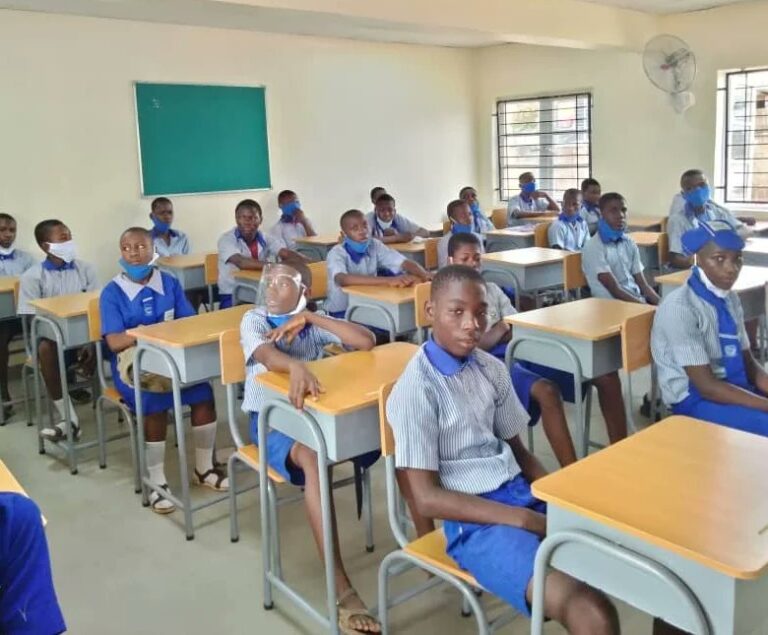
But do we see this in adolescents, who haven’t yet started competing with each other for jobs and resources? In schools, young people generally have equal status, common goals, intergroup cooperation, and potential for friendship. Could new generations overcome the adversarial past?
We have decades of research between us straddling group behaviour and identity formation, peace and conflict dynamics, and ethnicity and religion in sub-Saharan Africa. For our research we aimed to gain a picture of intergroup dynamics among Lagos adolescents.
We concluded from surveying young people that higher diversity levels encourage more friendships and cross-group political discussions, which lead to positive relations between ethnic groups. But waiting for this to happen naturally may not be the best approach. It may leave smaller minority groups exposed to discrimination in the meantime. Policy interventions may encourage a quicker development of positive relations.
Survey of Lagos adolescents
Nigeria has a large youth population. Half of the people who live in Lagos state are younger than 25. That could have an important impact on future developments in the city, including intergroup relations.
In 2019, we surveyed final year secondary school students in 36 schools across the state to find out how they viewed other societal groups and which factors affected their views. Most previous research on intergroup relations has focused on adults.
We aimed to obtain a sample of Lagos adolescents who experienced diversity in their daily lives. To achieve this, we drew from both urban and rural districts. Our final sample contained 70 % Yoruba, 16 % Igbo, 2 % Hausa-Fulani, and 12 % other minority group adolescents.
We found that:
adolescents who reported more cross-group friendships had more positive attitudes, including higher trust, towards other groups
those exposed to political discussions in diverse contexts were more likely to hold positive attitudes towards other ethnic and religious groups
when youths experienced more diversity in their schools and neighbourhoods they were less likely to stereotype members of groups
they were also less likely to report a preference for their own group when it comes to teachers, future bosses, marriage partners and electoral candidates.
In contrast, youths exposed to political discussions in ethnic enclaves held negative views.
Diversity and contact
We used statistical analyses to investigate intergroup relations among our youth sample. We first asked whether there was a relationship between exposure to other groups and attitudes towards them. While urban areas, especially megacities like Lagos, are often characterised by diversity, many ethnic enclaves or homogeneous neighbourhoods exist.
We found that higher exposure to diversity had mixed effects. It was associated with less stereotyping and in-group preference, but also related to lower trust in others in general.
Mixed effects are not surprising, as scholars have long held that exposure to diversity does not really tell us how people actually relate to one another: what matters more is positive contact between individuals from different groups. Contact has been robustly associated with more positive intergroup attitudes in predominantly western-focused studies. In Africa-focused studies results have been mixed, with some finding positive and others no real impact of contact.
Our findings provide evidence for positive contact theory as adolescents with more cross-group friendships held more positive attitudes towards other groups and also had higher trust. This demonstrates actual positive contact is more important than mere exposure to diversity.
We also found that exposure to political narratives mattered. Youths who were exposed to political discussions in diverse contexts were more likely to hold positive attitudes towards other ethnic and religious groups.
Policy implications
Intergroup attitudes are formed at an early age. Once developed, prejudice or tolerance have a tendency to “stick” over time. Questions on the development of positive attitudes are in need of urgent attention in Africa because of the continent’s youthful populations and many African countries’ experiences with ethnic and religious conflict.
This brings us to the question of whether tolerance of others can be fast-tracked, especially at an early age, and when youth can be targeted through school interventions. Evidence from other (western) studies suggests that multicultural education, in which pupils are exposed to different cultures in the curriculum, cross-group class discussions on political themes, and cross-group school projects, may encourage positive intergroup relations.
These types of policies come with an important warning though. As we have seen during our field work, many schools, especially public schools, face large class sizes due to resource constraints and teacher training is minimal. Corporal punishment is still implemented. Group work and deliberation are difficult to manage with large numbers and a lack of training, and teachers also risk bringing their own prejudices to the classroom.
So it’s important to design interventions carefully and more research is needed to do this effectively in African contexts.
THE Inspector-General of Police, Kayode Egbetokun, has directed commissioners of police to ensure adequate protection for retired officers who are set to demonstrate their grievances over the contributory pension scheme (CPS).
Egbetokun gave the order, according to the Force Public Relations Officer, Olumuyiwa Adejobi, in a statement on Sunday, July 20.
The ICIR reports that over the past few years, retired police officers have been demanding full exemption from the CPS for the NPF.
In his directive, Egbetokun said those who still want to go ahead with the protest within the Federal Capital Territory (FCT) and any other state would be adequately protected to prevent hijack of the protest.
“Accordingly, the Inspector-General of Police has directed all Commissioners of Police to ensure the peaceful conduct of the protest within their jurisdictions, especially in the FCT and other states where formal notice has been received. “Adequate security coverage must also be provided to our retired colleagues who have chosen to publicly express their grievances to prevent any hijack by miscreants, political actors, or non-retired agitators,” the statement read.
He charged all officers to note that the protest, described as “the mother of all peaceful protests”, must not only be peaceful but must be exemplary. “We must show, by conduct and command, that the Nigeria Police Force is both professional and humane,” Egbetokun said.