Home Blog Page 231

Clampdown on CrossRiverWatch threatens accountability reporting in Cross River

By Ogar MONDAY

IN the dim light of early morning on August 22, 2019, armed men stormed Agba Jalingo’s Lagos residence. His wife and daughter barely had time to react before the shouting began. The founder and publisher of CrossRiverWatch was taken away by security operatives, leaving his family stunned and terrified.

“I knew the risks when I started. But I never imagined the intensity of the attacks that would follow—or how deeply it would shake my family, my staff, even my own resolve,” Jalingo said.

Since its founding in 2012, CrossRiverWatch has worked to scrutinise official claims, investigate allegations of corruption, and amplify grassroots voices—earning both praise from the public and pushback from authorities.

For Jalingo and his team, the consequences of challenging power have included arrests, legal pressure, financial instability, and ongoing surveillance.

For Jalingo and his team, the consequences of challenging power have included arrests, legal pressure, financial instability, and ongoing surveillance.

What’s happening in Cross River State is not isolated. Nigeria’s ranking on the World Press Freedom Index has declined in recent years, with watchdog organisations warning of a growing trend of using state institutions to suppress independent journalism.

However, CrossRiverWatch experiences in Cross River have drawn particular attention for their intensity.


The making af a target


The August 2019 arrest was not Jalingo’s first encounter with authorities, but it was his most public. The trigger? A report questioning the status of N500 million reportedly approved for the establishment of the Cross River State Microfinance Bank.

The state government claimed the report was defamatory. Security operatives treated the matter as a national security concern.

Following his arrest, the Association of Cross River Online Journalists (ACROJ) described the situation as evidence that the state had “taken a huge leap backwards in terms of the protection of journalists.”

The Association criticised the police, who had arrested Jalingo, and driven him by road to Calabar, stating that the very institution meant to “protect and uphold the integrity of our Constitution and the rights of journalists has instead taken the opposite role.

The association criticized the police for arresting Jalingo and transferring him by road to Calabar, stating that the agency responsible for protecting rights was instead undermining them.

“This poses a great concern that must not be overlooked,” ACROJ stated.

Jalingo was charged with terrorism, treasonable felony, and attempting to overthrow the Cross River State government, then led by Governor Ben Ayade. He spent 179 days in detention, much of it in the Afokang Medium Security Custodial Centre in Calabar.

Thirty months later, Ijeoma Ojukwu, a judge of the Federal High Court in Calabar, citing Section 355 of the Administration of Criminal Justice Act, dismissed the case and acquitted Jalingo on all four counts.

“Their intention was to scare me, push me until I break,” Jalingo said.

But it was not the last time he would face detention.

A new arrest

On August 19, 2022, officers from the FCT Police Command again arrived at Jalingo’s Lagos home. According to his account, his wife and daughter were held for hours before he was arrested and moved to Abuja. The arrest according to CrossRiverWatch followed a petition from Alami Ayade, sister-in-law to former Governor Ayade, who alleged defamation after a published a story implying she had received assistance during her bar examinations.

Jalingo was detained at Kuje Medium Security Custodial Centre for one week before being granted bail. Joyce Abdulmalik, a judge, later dismissed the charges. The police have since filed an appeal.

Not just Jalingo

Other CrossRiverWatch staff have also faced harassment.

Jonathan Ugbal, the site’s Managing Editor, was covering the #EndHunger protest in Calabar on August 1, 2023, when he says armed police operatives targeted him.

“They asked for ‘the guy doing the livestream,’ and I was the one in the green shirt,” Ugbal said.
“When I identified myself, they kicked and beat me. They demanded my phone. When I refused, they tied my hands and dragged me to the State CID.”

He says he was stripped, beaten again, and thrown into a cell. He was only released after intervention from the Commissioner of Police.

It wasn’t the first time. In August 2019, shortly before Jalingo’s arrest, Ugbal, CrossRiverWatch’s then-Managing Editor Jeremiah Archibong, and The Nation newspaper correspondent Nicholas Kalu were detained while covering a protest. While Kalu was released the same day, Ugbal and Archibong spent two nights in detention before securing bail. They were charged with unlawful assembly and breach of public peace, but were later acquitted by a magistrate in 2020.

“The prosecutor woefully and helplessly failed to establish a prima facie case,” ruled Chief Magistrate Rita Marshall, now a High Court judge.

“It was a needless and long trial,” Ugbal said. “It cost me an admission to the London School of Journalism and left me thoroughly traumatised.

When journalism becomes a crime

The repeated arrests have had a chilling effect on the newsroom. After Jalingo’s 2019 detention, CrossRiverWatch had to shut its office for nearly seven months.

“Five staff members left us due to fear and intimidation,” Ugbal said.
“They just didn’t want to deal with the constant troubles, and I understand.”

Finding new office space proved difficult. 
“Our lawyer would negotiate rent, but once they heard the space was for CrossRiverWatch, they backed out. Always with an excuse: It was clear what was happening.”

There was also a sharp drop in financial support. During Governor Liyel Imoke’s administration, the state government maintained a small retainership with CrossRiverWatch, enough to cover essential operations. That support reportedly ended after the publication of the microfinance bank article.

“That retainership was only paid about four times, and then stopped suddenly.

“We had advertisers and donors pull away. People were careful not to be seen associating with us, they didn’t want to be labeled enemies of the government,” said Ugbai.

Timeline of ordeals

April 10, 2011: Jonathan Ugbal and Smart Agbor were arrested after Jalingo shared a photo of then-Attorney General Joe Oshie Abang asleep during a budget signing. They were later released.

August 5, 2019: Ugbal, Archibong, and Kalu were arrested during a protest. Ugbal and Archibong were detained for two days before being charged. Kalu was released same day.

December 2, 2019: Patrick Obia and another journalist was briefly detained during Jalingo’s trial as ordered by the judge. The Judge ordered that from January 2020, phones were no longer allowed and journalists needed to be vetted

June 12, 2021: Jalingo and other activists were arrested and reportedly assaulted during a protest in Rabana, Calabar.

August 19, 2022: Jalingo was arrested again, this time based on a defamation petition from Alami Ayade.

August 19, 2022: An unmarked vehicle reportedly followed two CrossRiverWatch reporters. The occupants of the vehicle brandished a weapon. Police denied involvement.

February 22, 2023: Ugbal was attacked while covering a protest by youths from the Ikot Abasi Obori community in Calabar Municipality.

August 1, 2023: Ugbal was detained again during the #EndHunger protest.

Living under watch

Beyond legal and financial threats, the psychological toll has been severe.

“We joke about it, but it’s real,” said Ugbal.
“Sometimes, when you’re out reporting, you check your rearview mirror more than your notes. You plan your exit before you park. You avoid routines. It’s mentally draining.”

Staff members report being followed, receiving anonymous threats, and, at times, being discreetly warned by sympathetic insiders to avoid certain topics or areas.

“The pressure is not abstract; it’s targeted. It feels personal,” said an editor with a local news outlet in Calabar, speaking anonymously.

“The kind of work CrossRiverWatch does embarrasses powerful people. They don’t want that kind of scrutiny, so they use it to send a message—one meant to scare the rest of us into silence,” the source added.

National groups have taken notice. The Coalition for Whistleblowers Protection and Press Freedom (CWPPF) described the harassment, particularly in Cross River, as a violation of press freedoms.

“It is the responsibility of government and all stakeholders to enforce protections that ensure journalists can do their work without fear. Anything less is a betrayal of democratic values and a disservice to the journalism profession,” CWPPF said in statement.

Still, CrossRiverWatch persists. While their physical office remains closed, the team continues to publish remotely, with official correspondence now routed through their lawyer.

“Running a newsroom shouldn’t feel like operating a resistance cell,” Ugbal said. “But that’s what it’s come to. Still, we continue.”

This report republished from CrossRiverWatch was produced by CrossRiverWatch in collaboration with the Centre for Journalism Innovation and Development ((CJID)), under its Strategic Lawsuits Against Public Participation (SLAPPs) project, documenting issues related to press freedom in Nigeria.

GTCO share becomes first bank stock to cross N100 mark

GUARANTY Trust Holding Company Plc (GTCO) share price crosses the N100 on Wednesday, July 16 to become the first bank on the Nigerian stock market to hit the mark.

The share broke through the N100 threshold to close at N101 after trading as high as N103.

The bank’s achievement followed its recent dual listing of 2.29 billion ordinary shares on the London Stock Exchange on July 9 and a subsequent listing of 2.28 billion shares on the Nigerian Exchange Limited (NGX) the following day.

Analysts believe that the GTCO stock rally is further buoyed by positive market reaction around its cross-border listing and strong first-quarter earnings.

Opening trading on the NGX floor at N57 this year, its share has gained N44 as of the close of trading on Wednesday.

Speaking during a post-listing media chat in London, the Group Chief Executive Officer of GTCO, Segun Agbaje, reportedly said, “I think we still have a long way to go in terms of finding the right valuations, and if you look at the valuations of most companies in Nigeria, they’re trading below book or just above book.

“So, for discerning people, Nigeria is actually a pretty cheap place to shop at the moment in terms of what you can buy. You have companies that are doing over 30 per cent ROE [return on equity], trading at book or below book value.”

Meanwhile, the Nigerian stock market reported a significant performance on Wednesday as the market capitalisation increased by N1.44 trillion, to close at N81.58 trillion.

The N1.44 trillion gained signals continued investors’ optimism and sustained confidence in the market.

It also reflects deepening market liquidity and heightened investor interest
interest, as positive sentiment continued to dominate in the stock market.

Despite the overall positive tone, profit-taking persisted as 41 companies’ shares appreciated against 44 companies’ shares that declined during the day’s trading.

Banking stocks remained upbeat gaining 7.02 per cent to close at 1,589.55 basis points.

Consumer goods, industrial goods, and commodities indices also appreciated while insurance and oil and gas indices closed in the red.

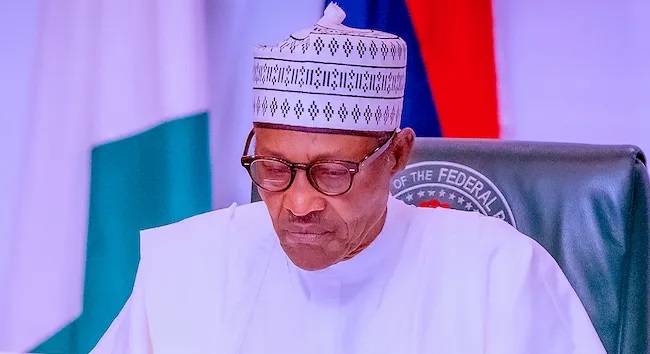
A look at false claims that defined Buhari’s presidency

0

FORMER President of the Federal Republic of Nigeria, Muhammadu Buhari, has passed away at the age of 82.

The announcement was made on the afternoon of Sunday, July 13, 2025, in a statement released by his family and signed by Garba Shehu, who served as the presidential spokesperson during Buhari’s administration.

According to the statement, the former president died in a private clinic in London, United Kingdom, where he had reportedly been receiving medical treatment in recent weeks. Although the cause of death has not been officially disclosed, sources close to the family confirmed that he had faced health challenges leading up to his passing.

Following the announcement, tributes began pouring in from across Nigeria and around the world, as political leaders, citizens, and international observers reflected on Buhari’s long-standing role in shaping the nation’s political history, from his military rule in the 1980s to his two-term civilian presidency from 2015 to 2023.

While his leadership attracted both commendation and criticism, Buhari’s presidency was also marked by persistent controversies, particularly regarding the accuracy of public information disseminated during his tenure.

During Buhari’s eight-year administration, The FactCheckHub highlighted numerous instances where the late president and his media team, including the Minister of Information, Lai Mohammed, were found to have made false or misleading claims on critical issues such as security, the economy, and governance.

From exaggerated progress reports to conflicting statements on national security, unemployment, poverty rates, and the handling of insurgency, fact-checkers repeatedly flagged discrepancies in the administration’s narrative versus verifiable data.

As the nation reflects on his legacy, this analysis unpacks the many instances where President Buhari  or his team misrepresented facts, contributing to a broader culture of disinformation at the highest levels of government.

Old budget quoted in 2019 independence day speech 

In his 59th Independence Day address, he cited outdated capital project releases of N1.74 trillion for 2018, while figures from the Accountant-General’s office showed N2.06 trillion.

He also misrepresented the contribution of the oil sector to GDP at the start of his tenure, claiming it was 8 per cent.

In contrast, data from the National Bureau of Statistics (NBS) placed it at around 9.8–10.45 per cent. Additionally, his Democracy Day projection of 2.7 per cent GDP growth conflicted with estimates from the CBN, IMF, and other financial institutions.

Disability rights bill

At a 2019 presidential town hall event, The Candidates, Buhari and his vice, Yemi Osinbajo, wrongly claimed that the long-awaited Disability Rights Bill had not yet been transmitted to the presidency for assent. Contrary to their statements, records showed the bill was sent to the presidency on December 18, 2018, after the National Assembly made corrections.

Disability rights advocates and the bill’s sponsor in the House of Representatives expressed disappointment over the administration’s misinformation. Irene Patrick-Ogbogu, of the Disability Rights Advocacy Centre, confirmed the bill was no longer with the National Assembly and urged the presidency to improve its internal communication processes. The bill’s sponsor, Idagbo Ochiglegor, suggested Buhari’s lack of response may be due to how bills are grouped and processed in batches.

The misstatement sparked criticism from disability groups, some of which had conditioned their support for Buhari’s re-election on the bill’s signing. Despite requests for clarity, the presidency declined immediate comment.

False claim on Boko Haram-held councils in the North East

In his Democracy Day address on June 12, 2020, Buhari claimed that all local government areas previously taken over by Boko Haram in Borno, Yobe, and Adamawa had been fully reclaimed and reoccupied by their indigenous residents. However, a fact-check by The ICIR found this assertion to be false.

Contrary to the president’s claim, military and independent sources, including the then Army Chief, Tukur Buratai, confirmed that the fight against Boko Haram was ongoing. Media reports also documented continuous attacks, occupation of remote villages, and recent mass killings in several LGAs in Borno, such as Gubio, Damboa, Konduga, and Guzamala. Dozens of civilians and soldiers were reported dead or missing within days of Buhari’s speech.

Displacement figures from the UNHCR revealed that millions remained uprooted across the Lake Chad region, and many communities were still living in IDP camps. Even Governor Babagana Zulum of Borno and the National Assembly leadership acknowledged the continued threat of insurgency and urged for more military support.

Ultimately, Buhari’s statement did not align with the security realities in the region at the time and was rated false based on verifiable evidence.

Claim on recovered currency notes

In his national broadcast on February 16, 2023, Buhari defended the Central Bank of Nigeria’s (CBN) naira redesign and currency swap policy amid widespread cash shortages. He claimed the policy was legally grounded and highlighted figures on currency circulation and recovery since the policy’s introduction. A fact-check by The FactCheckHub found that while one of his claims was accurate, others were exaggerated or false.

For instance, Buhari claimed that N2.1 trillion had been retrieved from outside the banking system. This was mostly false, as CBN data showed only N1.9 trillion had been recovered as of late January 2023.  He also stated that currency in circulation was N1.4 trillion when his administration began in 2015. This was false; official CBN data pegged the figure at N1.66 trillion in May 2015.

Buhari claimed currency in circulation rose to N3.23 trillion by October 2022. This was found to be mostly true, though CBN records showed a slightly higher figure of N3.29 trillion.

False claim of his administration’s performance

Buhari claimed that his administration outperformed past governments in security, economic growth, and anti-corruption efforts.

However, findings based on data from credible institutions such as the Central Bank of Nigeria, National Bureau of Statistics, Transparency International, and conflict trackers like ACLED contradict this.

On security, Buhari’s government recorded over 41,900 conflict-related deaths and 12,120 violent incidents between 2015 and 2022.

Though Nigeria dropped on the Global Terrorism Index. Economically, the country entered two recessions, recorded an average GDP growth of just 1.1 per cent, saw inflation spike from 9 per cent to 17.7 per cent, and experienced significant increases in unemployment, poverty, and food prices. The naira depreciated steeply, while the national debt more than tripled.

On anti-corruption, while initiatives like the TSA and BVN had some impact, Buhari’s administration faced accusations of selective prosecution and weakening accountability. Transparency International’s Corruption Perception Index ranking for Nigeria fell from 136th in 2015 to 154th in 2021.

False claims about party primaries being peaceful

In his 2022 Democracy Day broadcast,  Buhari claimed that the 2023 party primaries were peaceful and issue-based. However, findings by The FactCheckHub show this claim is mostly false.

While some of the primary elections were calm, violence, ballot theft, and disruptions were recorded across at least nine states. Incidents included killings in Lagos and Cross River, ballot snatching in Ondo, teargassing of journalists in Oyo, and attacks on electoral officers in Ekiti.

Violent disruptions also occurred in Abia, Bayelsa, Nasarawa, and Kaduna, especially within the APC and PDP. These incidents contradict the president’s portrayal of a peaceful and orderly process.

This report is republioshed from the FactCheckHub.

UI faces backlash over suspension of student activists as group demands reinstatement

0

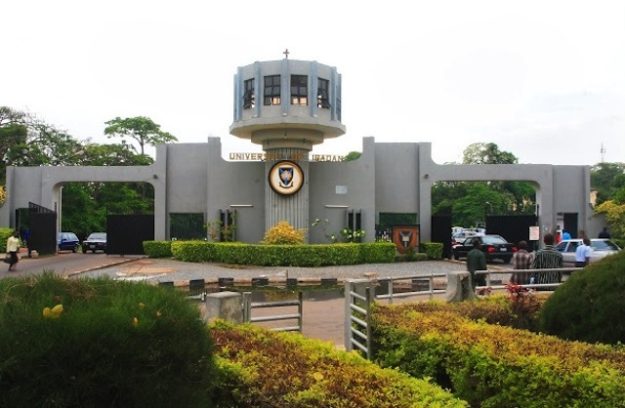
The Corporate Accountability and Public Participation Africa (CAPPA) has condemned the University of Ibadan (UI) for suspending student activists, Ayodele Aduwo, a 400-level History undergraduate, and Mide Gbadegesin, a 700-level postgraduate student of African Studies.

The civil society organisation described the development as “shameful victimisation” and a dangerous crackdown on student voices protesting rising tuition fees.

The condemnation followed the suspension of the two students, who were handed four-semester suspensions by the university’s Central Students Disciplinary Committee (SDC) on July 14, 2025, for protesting the astronomical school fees hike.

The two students were said to have held placards that read “No To Fee Hike” during the inauguration of the Students’ Union executives in 2024.

In a statement on Wednesday by its Media and Communications Officer, Robert Egbe, CAPPA said the punishment was the culmination of a year-long campaign of harassment, arrests, and intimidation against students who dared to speak up.

“These young people, despite their stellar academic records and contributions to the improvement of their academic environment, have been repeatedly arrested, assaulted, and vilified by the university management and security operatives acting on explicit orders.

“Only a few months ago, Ms. Nice Linus demonstrated her credibility when she was elected by majority votes as a legislator on the UI Student Representative Council. Rather than respecting the democratic choice of her peers, university officials revoked her mandate and forcibly removed her from the venue, citing a pending disciplinary case as justification,” the statement read in part.

The group also condemned the treatment of another student, Nice Linus, who was elected to the Student Representative Council but was barred from assuming office due to a pending disciplinary case. 

Backstory

In 2024, Aduwo and Gbadegesin, along with Linus, participated in a peaceful protest during the inauguration of the Students’ Union executives, holding placards that read “No to Fee Hike.” 

According to a report by the FIJ, video footage showed that the protest was non-violent, but the university reported the act to security operatives as a cult-related disturbance.

Consequently, the students were reportedly arrested by members of Operation Burst, who later admitted to being misled by the university authorities. 

In a subsequent development, FIJ reported that the university further facilitated the arrest of Aduwo by the Criminal Investigation Department at Iyaganku, Ibadan, for allegedly defying its directive for students to vacate the campus.

Earlier in 2024, The ICIR reported that the University of Ibadan management shut down the institution for three weeks and directed all students to leave campus following a protest against what students described as an astronomical hike in school fees.

Before the increment, many students were paying between N20,000 and N30,000, but following the hike, tuition fees reportedly surged to N200,000 and above.

During the protest, the students waved different placards with inscriptions such as “We Say No Tuition Hikes,” “Management Is Insensitive To Our Plights,” and “Our Parents Cannot Afford The New Hikes,” while they blocked roads leading to the school.

According to a circular dated August 30, 2024, the institution’s registrar, G. O. Saliu, directed the students to vacate the school premises by 2 pm, stating that the school would be shut for three weeks.

The decision to shut down the institution was taken at the meeting of the university’s management with the leadership of the students’ union on Friday, August 30, 2024.

Meanwhile, CAPPA said the university’s actions to suspend the students violated students’ rights to freedom of expression and thought as guaranteed by Sections 38 and 39 of Nigeria’s Constitution.

“Universities are meant to be sanctuaries of free inquiry and rigorous debate. They are spaces where new ideas should bloom and where students are trained to question, to challenge, and to imagine a better society,” CAPPA stated.

Nigeria inflation drops to 22.22% in June – NBS

NIGERIA’s headline inflation moderated to 22.22 per cent in June, from 22.97 per cent in May, marking the third consecutive month of decline.

The National Bureau of Statistics (NBS) reported this in its latest monthly Consumer Price Index data released on Wednesday, July 16.

Its report showed that on a year-on-year basis, the headline inflation was 11.97 per cent lower than the 34.19 per cent recorded in June 2024.

However, food inflation rose to 21.97 per cent in June from 21.14 per cent in the previous month.

On a year-on-year basis, food inflation was 18.93 percentage points lower than the 40.87 per cent rate recorded in June 2024.

“The increase can be attributed to the rate of increase in the average prices of green peas (Dried), pepper (fresh), shrimps (white dried), crayfish, meat (fresh), tomatoes (fresh), plantain flour, ground pepper, ” NBS said.

Significantly, the decline in the annual headline and food inflation figures was technically due to the change in the base year, NBS noted.

The ICIR reports that the rebasing of the CPI saw inflation drop from 34.80 per cent in December 2024 to 24.48 per cent in January.

While the rebased CPI is to reflect the current inflationary pressure and consumption pattern of people living in the country; however, the drop in inflation does not mean a decline in the general price level of goods and services.

Food prices and other items are increasing and skyrocketing daily.

In a recent report on commodity prices, The ICIR spotlighted that the costs of food items and other commodities continued to pose a challenge for many Nigerians as prices are increasingly high in the markets.

It has further worsened hardship in the country as high food prices are seen affecting the purchasing power of most Nigerians.

The rising costs of food items raise concerns amid the sharp drop in the inflation rate by the NBS.

The disconnect is highly suspicious and distorted, The ICIR reported the concern of the Chief Executive Officer (CEO) of CFG Advisory, Tilewa Adebajo.

He also pointed out that the delay in the NBS releasing the gross domestic product (GDP) questions the exactness of the inflation data, since it wasn’t benchmarked against the actual current growth of the country’s economy.

The statistics office was supposed to have released its rebased GDP report to enable analysts to make sense of rebased CPI, but has yet to do so.

Rights group urges FG to implement ECOWAS ruling on blasphemy laws

0

MEDIA Rights Agenda (MRA) has called on the Federal Government to implement the April 9, 2025, judgment of the Economic Community of West African States (ECOWAS) Court of Justice, which declared aspects of Kano State’s blasphemy laws a violation of Nigeria’s international human rights obligations.

A statement by the MRA’s Acting Head of Legal Department, Monday Arunsi, on Wednesday, July 16, said Nigeria must not choose which of its international obligations to respect.

“The judgment of the ECOWAS Court is binding, and the Federal Government has a legal and moral duty to comply with it,” MRA stated.

The ECOWAS Court had ruled that the blasphemy provisions in the Kano State Penal Code and similar laws violated key human rights, particularly the right to freedom of expression.

The court ordered the government to ensure the repeal or amendment of these provisions.

According to the MRA, the failure of the government to comply with the judgment would undermine the rule of law, weaken the regional human rights system, and tarnish Nigeria’s reputation as a democracy committed to fundamental rights.

It urged the Federal Government to demonstrate leadership by engaging with the Kano State Government and other states with similar laws to ensure a comprehensive review and reform of such legislation.

“We believe that respect for the rule of law and the decisions of competent international courts is fundamental to the protection of human rights, the promotion of justice, and the preservation of Nigeria’s standing in the international community,” the organisation said.

It noted that the court’s decision reinforced longstanding concerns by human rights advocates in Nigeria and internationally that certain provisions of the Sharia Penal Code of Kano State and similar laws in many other states, particularly those criminalising blasphemy and prescribing harsh punishments such as the death penalty, were inconsistent with international human rights standards.

The organisation also called on the National Assembly, National Human Rights Commission, and other relevant institutions to play their part in ensuring Nigeria’s legal framework aligns with its international human rights commitments.

Again, Atiku dumps PDP

0

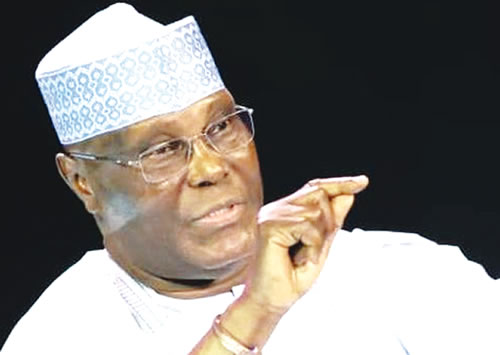
FORMER Vice President Atiku Abubakar has again resigned from the Peoples Democratic Party (PDP).

Abubakar, who was the presidential candidate of the PDP in the 2023 general election, tendered his resignation letter dated July 14 to the chairman of the PDP in Jada 1 ward, Jada Local Government Area of Adamawa State.

The copy of the letter was shared on X by his Special Assistant on Media, Paul Ibe, on Wednesday, July 16.

According to the letter, the resignation is with immediate effect.

“Serving two full terms as Vice President of Nigeria and being a presidential candidate twice has been one of the most significant chapters of my life.

“As a founding father of this esteemed party, it is indeed heartbreaking for me to make this decision.

“However, I find it necessary to part ways due to the current trajectory the party has taken, which I believe diverges from the foundational principles we stood for. It is with a heavy heart that I resign, recognising the irreconcilable differences that have emerged,” the former VP wrote.

He used the opportunity to wish the PDP and its leadership the best in the future.

Recall that as part of its strategies to dislodge the ruling All Progressives Congress (APC) in the 2027 elections, leading opposition figures, including Abubakar, Labour Party presidential candidate in the 2023 poll, Peter Obi, former Rivers State governor Rotimi Amaechi, and former Kaduna State governor Nasir El-Rufai, launched a coalition in Abuja on March 20.

After months of speculation over which platform the coalition would pursue its agenda, the opposition figures finally picked the African Democratic Congress (ADC) as the key party that will challenge President Bola Tinubu’s APC in the 2027 elections.

Abubakar is widely believed to be seeking the presidency for the seventh time on the platform.

He had dumped the PDP for the APC in 2014 ahead of the 2015 election, in his bid to contest against the then-incumbent President Goodluck Jonathan. He lost the APC primary to the late former President Muhammadu Buhari.

The ICIR in this report detailed how he has serially sought the presidency and lost.

Akpabio appeals court ruling ordering Natasha’s recall

SENATE President Godswill Akpabio has filed an appeal at the Court of Appeal, contesting the decision of the Federal High Court in Abuja that ordered the reinstatement of Natasha Akpoti-Uduaghan, a suspended senator representing Kogi Central at the Senate.

In the notice of appeal, Akpabio’s legal team is seeking to overturn the July 4 ruling delivered by a judge, Binta Nyako, arguing that the case pertained to the internal affairs of the National Assembly and was therefore beyond the jurisdiction of the courts, as outlined in Section 251 of the 1999 Constitution.

The ICIR reported that Nyako ordered the Senate to recall Akpoti-Uduaghan, who was suspended on March 6.     

The judge described as extreme the six-month suspension imposed on the lawmaker by the Senate.

The ICIR reported that the Senate suspended the female lawmaker for six months after she rejected the seat allocated to her in the chamber by Akpabio.              

Shortly after the ruling, the Senate spokesperson, Yemi Adaramodu, said that the Red Chamber would not reinstate her immediately, as he outlined conditions for her reinstatement.  

Meanwhile, Akpoti-Uduaghan vowed to resume at the Senate on Tuesday, July 8, but she failed to do so.

In his latest 11-ground appeal, the Senate President criticised the lower court for dismissing his preliminary objection and issuing orders that interfere with parliamentary procedures safeguarded by law.

He contended that matters concerning suspensions, statements made during plenary, and Senate resolutions were protected under the Legislative Houses (Powers and Privileges) Act and were therefore beyond the scope of judicial intervention. 

Akpabio further argued that the suit was premature, noting that it failed to exhaust the Senate’s internal dispute resolution mechanisms, that is, the Committee on Ethics, Privileges, and Public Petitions, as stipulated in the Senate Standing Orders, 2023 (as amended).

He also criticised the trial court for allegedly violating his right to a fair hearing by introducing issues that were not raised or argued by any of the parties, including the question of whether Akpoti-Uduaghan’s suspension was excessive.

He said that the judge erred by recommending her recall without granting both parties the opportunity to present arguments on the matter.

He also accused the court of procedural irregularities for merging the interlocutory reliefs sought by Akpoti-Uduaghan with her substantive claims, despite the overlap between them.

He further argued that her suit ought to have been dismissed for non-compliance with Section 21 of the Legislative Houses Act, which mandates a three-month notice to be served on the Clerk of the National Assembly before commencing legal proceedings.

Among other reliefs, Akpabio urged the Court of Appeal to uphold the appeal and nullify the Federal High Court’s judgment. 

He sought the dismissal of Akpoti-Uduaghan’s suit for lack of jurisdiction, the striking out of what he describes as duplicated reliefs in her applications, and the rejection of the trial court’s “advisory opinions” to the Senate, particularly those concerning rule amendments or the recall of a suspended member.

He also asked the court to invoke Section 15 of the Court of Appeal Act to resolve his preliminary objection and dismiss the entire case.

The ICIR reported that Akpabio removed the Akpoti-Uduaghan, as chairperson of the Committee on Diaspora and Non-Governmental Organisations, and replaced her with Aniekan Bassey, from Akwa Ibom North-East.

He announced the changes during the plenary on Thursday, July 10.

He also hinted at imminent minor shake-ups involving vice chairmen of various committees.

UNICAL over-admits students, VC says, as fate of Dentist students hangs in the balance

0

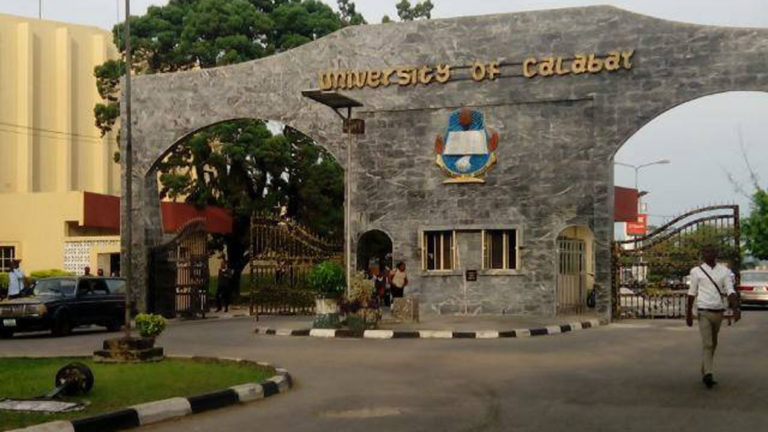
THE Vice Chancellor of the University of Calabar (UNICAL), Professor Florence Obi, has admitted that the institution over-admitted students into its Dentistry programme in violation of the Medical and Dental Council of Nigeria (MDCN)’s approved quota.

The ICIR reported that this decision has now left hundreds of students in academic and professional limbo.

Speaking on Channels Television’s ‘The Morning Brief,’ Obi described the situation as ‘depressing’ and said efforts were underway to resolve it, including an appeal to the Minister of Education for immediate intervention.

She confirmed that the university enrolled 60 students, far above the MDCN’s approved limit of 10 for the level 6 graduating students.

“I became Vice Chancellor on November 1, 2020, and I inherited a lot of challenges in the system. One of them is the over-admission of students into Dentistry along with other programmes – Engineering, Pharmacy, Music, Fine Art were some of the students that had a lot of challenges when I came onboard.

“They were actually protesting and asking that their fate was hanging. But gradually, I was able to solve the problems of these students. And I thought I had actually put in so much in solving the problem of Dentistry.”

Findings by The ICIR had shown that over 300 students faced the risk of expulsion or forced transfer after the university was found to have over-admitted students for Dentistry. 

The report noted that some of the affected students were already in their sixth year and sat for exams before they were informed that they were having challenges with MDCN’s approval.

Sources within the university confirmed to The ICIR that Obi agreed with the implications of the action during a closed-door meeting with faculty officials and parents, revealing that first-year students had been wrongly admitted despite an MDCN directive suspending admissions until existing accreditation issues were resolved.

She, however, claimed during her appearance on Channels TV on Wednesday morning, that the university had not admitted new students into the programme in the last three years.

She further noted that resolving the issue with the final year students and the level 4 and 5, depended largely on the intervention of the Federal Ministry of Education to grant the university clearance to hire additional academic staff required by the MDCN.

Obi added that the school was exploring partnerships with other departments and institutions to see how some of the affected students might be accommodated.

“I am going to my minister to appeal to him to intervene because if we have some staff which is the critical issue, if we have staff and we know that the minister has given us the permission to employ, the sooner we employ them and get the Dental clearance that MDCN has asked us to do, we will be able to invite them in the next one or two months and part of these problems will be resolved.”

Addressing growing concerns over the mental health of the affected students, the VC urged them to remain calm.

Internal sanctions underway, VC says

Speaking further on the escalating situation, the vice chancellor stated that internal investigations had commenced into how the over-admission occurred.

She also vowed disciplinary actions against officials, including the dean, the admission officer and the provost, found culpable of the over-admission.

“We are going to invoke the university’s internal mechanism to handle that, and we have to query some people. Definitely, there will be consequences.”

Crisis triggers protests among students, Nigerians

The ICIR reported that the situation has sparked nationwide outrage, with the hashtag #SaveDentalStudentsofUNICAL trending on social media platforms. 

Many Nigerians, including alumni of the institution, have condemned the university’s actions as reckless and inhumane.

The Nigerian Association of Dental Students (NADS), in a statement, described the crisis as a result of “administrative failure” and called for an immediate halt to the forced transfer plan. 

The group also decried reports that some students were advised by officials to “go and learn a trade” after spending seven to eight years in school.

Turkish Envoy raises the alarm over emergence of another terror group in Nigeria

0

THE Turkish government has alerted Nigeria about the presence of a terror group, Fethullah Terrorist Organisation (FETÖ), in the country.

The organisation is led by Fethullah Gülen, a Turkish cleric who has been accused of masterminding the 2016 coup attempt against President Recep Tayyip Erdogan of Turkey.

The Turkish government, through its ambassador-designate to Nigeria, Mehmet Poroy, warned that members of FETO existed in Nigeria and also operated in other countries worldwide.

Poroy, who was speaking Tuesday night in Abuja at a dinner organised by the Turkish Embassy to mark the country’s Democracy and National Unity Day, said the terrorist group had been using schools and health facilities as a cover for its activities in Nigeria.

The News Agency of Nigeria (NAN) reports that the annual ceremony commemorates the failed 2016 coup in Turkey, blamed on FETO terrorists.

The Turkish government said the coup was successfully suppressed by the collective resistance of its patriotic forces and citizens, who opposed the mutiny against the government of President Tayyip Erdoğan.

According to Poroy, the continuous arrest and arrest of Gülen movement members worldwide underscores the national security threat they pose to any country where they are present.

“Unfortunately, the FETO terrorist organisation still maintains its activities in Nigeria, particularly in the fields of education and healthcare.

“We consistently inform our Nigerian friends about the nature and dangers of this organisation, and urge them to remain vigilant and cautious,Poroy added.

He explained that through international cooperation, Turkey had disrupted numerous FETO cells and networks in allied countries globally.

The ambassador-designate stated that many institutions, particularly schools, that were part of FETO’s international network had been taken over by Turkish institutions.

He emphasised that the group’s international networks had not been fully dismantled globally.

He added that FETO continued to operate secretly in several countries, including Nigeria, under the guise of humanitarian aid, education, healthcare, and interfaith dialogue.

“You must not forget that behind this humanitarian appearance lies an organisation that seeks to infiltrate the political and bureaucratic institutions of host countries,Poroy warned.

According to NAN, the Gülen movement, also known as Hizmet (meaningService’ in Turkish), is described as a transnational organisation focused on religion, education, and social activities.

Its founder, Fethullah Gülen, a Turkish Islamic scholar, died as a Turkish offender in October 2024 at the age of 83 in Pennsylvania, United States.

The Turkish government accuses Fethullah Gülen of orchestrating the 2016 coup attempt, which resulted in 251 deaths, and has designated the Gülen movement as a terrorist organisation.

Nine years after the coup attempt, Turkey remains committed to its global crackdown on the movement, which it claimed continued to operate globally, despite the group’s denial of being a terrorist organisation.

Turkey, in recent years, has launched a large-scale global operation against the movement, seizing or freezing billions of dollars’ worth of assets and institutions.

Several countries and organisations, including the Organisation of Islamic Cooperation and the Gulf Cooperation Council, have designated the group as a terrorist institution.

The ICIR reports that Nigeria already has homegrown terrorists, including Boko Haram, which has unleashed attacks for over a decade.

The ICIR reported that no fewer than 6,549 Nigerians have been killed and 3,804 others abducted in incidents of mass atrocities across Nigeria since May 2024, according to data released by the Civil Society Leaders (CSL) on Wednesday, May 28.

The data was released at a media briefing by the Executive Director of Global Rights, Abiodun Baiyewu, in commemoration of its 8th National Day of Mourning for victims of mass atrocities.

Baiyewu, who explained that the data was curated from terrorists and bandits’ atrocities across the country, said that the CSL was making a patriotic call for justice amid the deafening silence of Nigerian leaders.

The group raised alarm about the emerging terror groups such as Lakurawa and Mahmuda, stating that they operated openly, extorting residents, imposing taxes, and demanding ransom in exchange for peace.

In seven separate demands, the group challenged the Nigerian government to track and disrupt ransom and extortion networks and hold the enablers and funders of terror accountable.