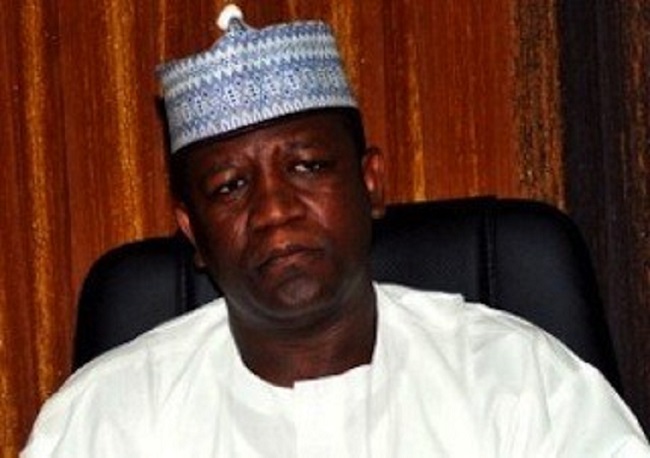
JUSTICE Taiwo Taiwo of the Federal High Court on Friday, ordered the temporary forfeiture of the immediate-past governor of Zamfara State, Abdulaziz Yari’s bank account and two other firms linked to him.
The order was a sequel to an ex-parte application filed by the Independent Corrupt Practices and other related offences Commission (ICPC).
The companies are; Kayatawa Nigeria Limited and B.T. Oil and Gas Nigeria Limited.
The application filed followed an intelligent report that Yari and two companies were involved in some unlawful activity against the interest of the Zamfara State government and the federal government.
The commission’s lawyer, Osuobeni Akponimisingha who filed the application, alleged Yari and the companies received a large sum of money through their account with two commercial banks.
Apparently, the application stated, the money belonged to the Zamfara government.
ICPC noted that as of the time of filing the application, the funds left in the various account remained N24,289,910 and $669,248 respectively.
Consequently, Justice Taiwo fixed September 11 for the respondents and other parties interested in the proceeds of the accounts to appear in court.
They were to come to give reasons why the funds shouldn’t be permanently forfeited to the federal government.
Earlier, Yari was faced with cases of alleged corruption by the Economic and Financial Crime Commission (EFCC) who reportedly discovered 21 exotic cars at his house.
The operatives had searched his house in his absence, as the former governor was out of the country.
THE National Information Technology Development Agency (NITDA) and the Tertiary Education Trust Fund (TETFUND) have signed a Memorandum of Understanding (MoU) to deploy emerging technologies and ensure digital inclusion in tertiary institutions across the country.
The MoU, which process started four years ago between the two institutions, was signed on Friday in Abuja.
News Agency of Nigeria (NAN) reports that the MoU focuses on Information Technology (IT) Infrastructure Deployment; Human Capacity Development; Deployment of Emerging Technologies and Digitisation of Services in tertiary schools.
Other areas are Project Management; IT Academy Deployment; ICT Policy Development and Emerging Technologies and Deepening of Research and Development with ICT in tertiary institutions.
The Director-General of NITDA, Isa Pantami, said that the document was strategic as no institution of government could develop in isolation.
“Although most tertiary institutions are already using ICT in their activities, there is a need to upgrade to include emerging technologies to be at par with the global trend.
“So many schools in Nigeria do not have old records of their activities and when past students misplace results or certificates, they only engage in swearing court affidavits.
“However, with Blockchain technology, Artificial Intelligence and other forms of modern-day technology, schools can digitise their activities which will save cost, energy and ensure efficiency.
“Our universities are becoming highly populated, but with IT, we can make easier the learning process which will de-congest the classrooms,” Pantami said.
He said that if the two institutions remained committed to the provisions of the MoU, the intervention would go a long way to ensure the consolidation of IT in tertiary schools.
Pantami also encouraged TETFUND to set up a committee in collaboration with NITDA to facilitate the implementation process of the MoU.
Suleiman Bogoro, the Executive Secretary of TETFUND, on his part, said that quite a number of emerging technology solutions were very creative, innovative and enhanced learning.
According to Bogoro, such emerging technologies are needed for a knowledge-based economy and reduce issues of plagiarism in tertiary school programmes.
He added that the MoU would be for the benefit of the students and lecturers because ICT was required for every process of learning.
The secretary commended NITDA for providing ICT facilities in many tertiary schools across the country.
POLICEMEN have captured a teenager who staged his own abduction, along with four older friends, in order to obtain ransom from his dad for the celebration of his secondary school graduation ceremony.
The group demanded a sum of N500,000 from the father for the release of his son.
The Plateau State command police spokesperson, Terna Matthias said the staged kidnapping was “expertly done,” according to BBC. He said investigations were ongoing to reveal the circumstances of why a 15-year-old boy could do that.
The boy’s father had sold his car, three days before the staged kidnap. He sold it to raise money for his family’s upkeep. But the boy target was to secure the cash for the graduation ceremony.
Matthias said the money was kept in the father’s account. If it had been kept at home, he said the boy’s initial plan was to go away with the cash.
So the boy’s friends who aged between 18 and 22 acted as the kidnappers, contacted his father, and demanded N500,000.
“They warned him the son had been taken far away from Jos and he should not report to security agencies. The father reported only after the threat became very serious,” said the state Police spokesman.
After the father made the report, the police tracked down the phone number used to make the ransom calls to an apartment in Jos city. The security officers stormed the building and arrested the suspects.
“The father felt very terrible at the discovery. His son had not asked him for money for the party beforehand,” Matthias said.
The business of kidnapping has become more rampant in Nigeria. Kidnapping for ransom is now one of the security challenges the country is facing, together with bandits killing and Boko haram insurgencies.
Some abductees lose their lives as their families and relatives fail to pay ransoms.
Though the issue of insecurity spreads across the 36 states and the Federal Capital Territory, it is very dominant in the Northern region, especially Zamfara, Kaduna, Katsina and Borno states.
The major highway linking Abuja to the city of Kaduna is a major kidnapping spot in the country. The Nigerian Army had launched Operation Puff Adder on April 5 to fight the incessant attack along the road. And within two months of operation, the security agency said it had arrested 2,175 kidnapping suspects.
The Army said some of the kidnappers dressed in military camouflage and mounted an illegal roadblock on the road.
Kidnapping by Nigerians has extended abroad as four Nigeran youths were arrested in Ghana over alleged kidnap of two Canadian volunteers in June.
According to a journal published on the Researchgate in May, kidnapping is a situation driven by the deteriorating social condition in the country. It noted that transforming the governance system, restoring peaceful co-existence and building economic prosperity would guarantee national security, human security and sustainable livelihood in Nigeria.
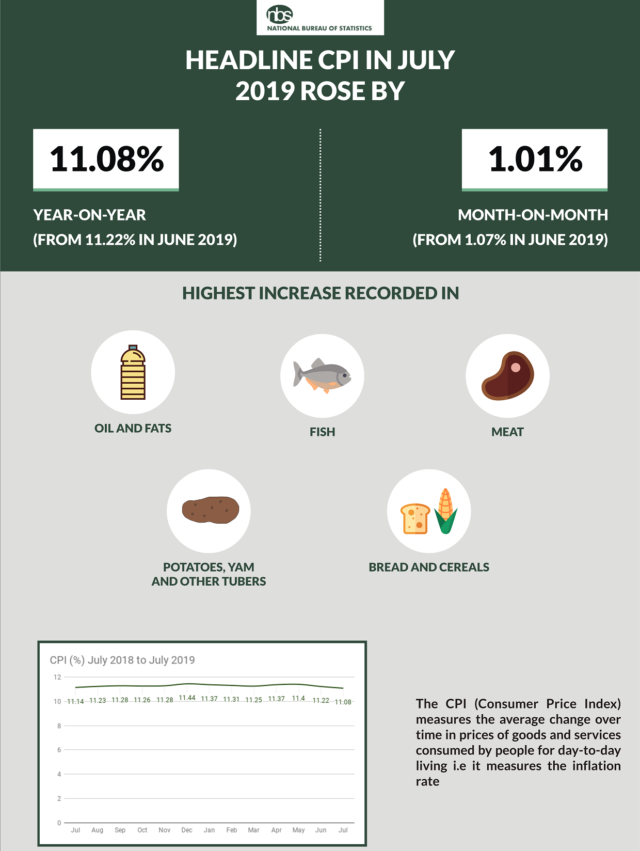
THE stat released by the Nigeria Bureau of Statistics on Friday shows that the consumer price index, (CPI) which measures inflation came down to 11.08 per cent year-on-year in July 2019 at a 0.14 per cent point, lower than 11.22 per cent rate recorded in June of the same year.
Based on data derived every month from 10,534 informants spread across the country who provide the NBS with price data on 740 goods in the market of goods and services regularly priced the CPI is computed monthly.
Increases were recorded in all Classification of Individual Consumption according to Purpose (COICOP) divisions that yielded the Headline index.
The COICOP which analyse individual consumption expenditures incurred by households, non-profit institutions serving households and general government showed that on a month-on-month basis, the Headline index increased by 1.01 per cent in July at a 0.06 per cent rate lower than the 1.07 per cent rate recorded in June.
Source: NBS Infographics
Whereas urban inflation rate increased by 11.43 per cent (year-on-year) in July, down by 0.18 from 11.61 per cent recorded in June 2019, the rural inflation rate increased by 10.64 per cent in July down by 0.23 per cent from 10.87 per cent in June.
On a month-on-month basis, the urban index rose by 1.07 per cent in July, down by 0.03 from 1.10 per cent recorded in June 2019, while the rural index also rose by 0.96 per cent in July 2019, down by 0.09 from the rate 1.05 per cent recorded in June.
Corresponding twelve-month year-on-year average percentage change for the urban index is at 11.64 per cent in July less than 11.65 per cent reported in June, and, corresponding rural inflation rate in July is at 10.97 per cent compared to 10.99 per cent recorded in June, showing an increase 0.02 per cent.
The percentage change in the average composite CPI for the twelve months period ending July 2019 over the average of the CPI for the previous twelve months period was 11.29 per cent.
Experts, however, stipulate reduction in the prices of food items in anticipation of the harvest season. This is expected to tip the market scales leading to a favourable economic outcome for the Naira.
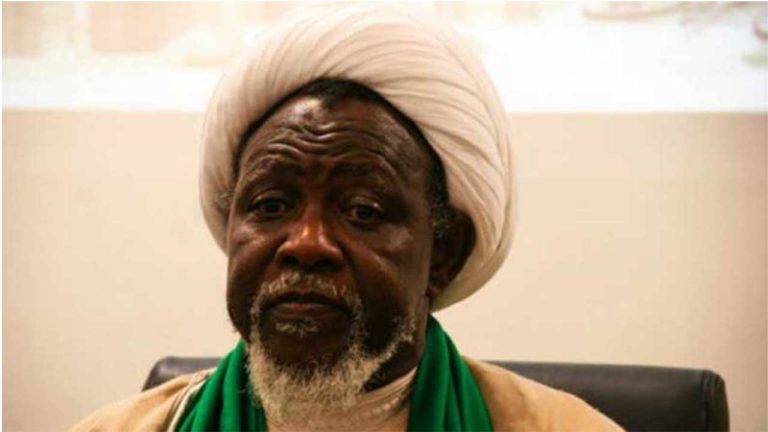
THE embattled leader of the Islamic Movement of Nigeria (IMN), Sheikh Ibrahim El-Zakzaky and his wife Zeenat has arrived the Nnamdi Azikwe International Airport (NAIA), Abuja.
They arrived at about 12 noon aboard the Ethiopian airline.
The cleric who came in via the international terminal of the airport with other government officials was, however, held up by the security operatives and driven away shortly after arrival by the Department of States Security (DSS).
The accused persons earlier resolved to return to the country from India on claims that the Federal Government had frustrated their efforts to get medical doctors of their choice to attend to them.
El-Zakzaky and his wife were released on a temporary basis to seek medical treatment in India following the request of the defence counsel, Femi Falana, a human rights lawyer
Spokesperson of the Islamic sect, Ibrahim Musa also confirmed his arrest by the DSS operatives after his return to the country.
He earlier disclosed on Thursday the planned return of El-Zakzaky from the Madena Hospital back to the country.
“Following lack of a breakthrough in the impasse that ensued in the treatment of Sheikh Ibraheem Zakzaky in New Delhi, it is now confirmed that the Sheikh is on his way back to Abuja, Nigeria. He is scheduled to leave 17hrs Nigerian time,” says Musa.
“In a video message sent by the Sheikh himself, he said that they were given two alternatives; either to commence the treatment on their own terms i.e the government’s terms or they will be sent back. And that it has been announced to them that they will be sent back and he is praying to Allah that may it be the best option for him and for everybody.
“It is clear to us that the Nigerian government interference and the scuttling of the whole process rather than supervision as ordered by the court is the direct course of the impasse.”
The 23 Industrial Development Centres (IDCs) spread across Nigeria are derelict and abandoned despite the Federal Government’s plan to use the facilities to boost small-scale local business in the country. YEKEEN Akinwale who visited centres in Lagos, Port Harcourt, Abuja and Kano brings the concluding part of the report about the dilapidated condition of the multi-million naira infrastructure. Edited by Ajibola AMZAT
Lagos Centre— empty, underutilised
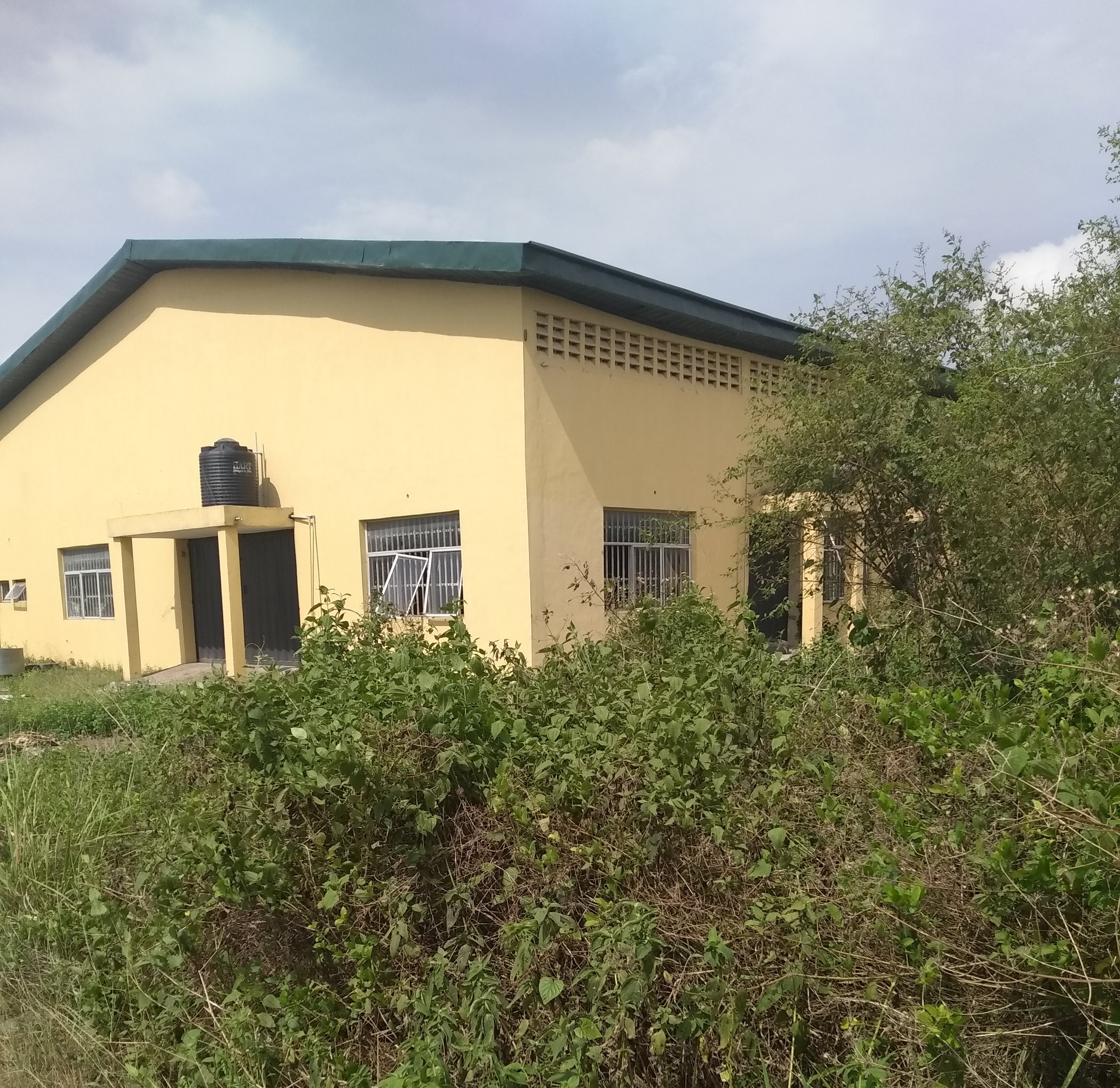
Renovated 4-in-1 workshop at Lagos IDC, but empty and overtaken by weeds. Photo Credit: YEKEEN Akinwale
Lagos IDC is not better than that of Port Harcourt—there are only three entrepreneurs operating there— one produces custard powder, another produces food seasoning and the third one cuts and supplies polythene bags, The ICIR observed.
Though the facility has the capacity to accommodate more than 20 operators, no new allocations have been given to SMEs applicants who had written down their names seeking space to start businesses.
Ogbeh, an elderly man who secures the centre and also doubles as its gateman keeps a ragtag record of intending allotees.
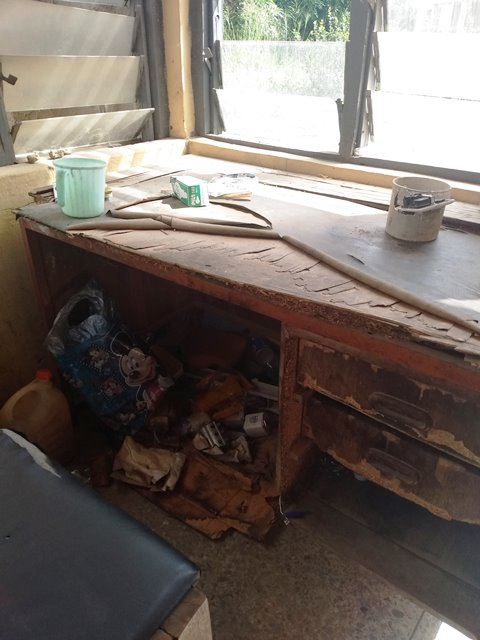
He operates from a ramshackle office with broken table and chair—dust covered the broken furniture.
The decrepit office where Ogbeh operates from as the security house at Lagos IDC. Photo Credit: YEKEEN Akinwale
Besides keeping eyes on the centre, Ogbeh also operates a vegetable garden and farm on the unused part of the centre.
Bringing out an old notebook containing some names and phone contacts, he said, “this is the list of people who came to drop their names and phone numbers for space.”
There are two other female workers at the centre—a coordinator—who heads the centre was not around.
There were no signs the centre was working. While the two women informed this journalist that application for allocation of space had closed, they warned against giving money to anyone who parades him or herself as an agent of the centre.
One of them who later identified herself as the “accountant” of the centre lamented that some unscrupulous individuals have been attempting to swindle unsuspecting members of the public.
“See, don’t give anybody money for allocation because it is done from Abuja. We have closed accepting application for space,” she said. “We are waiting for Abuja.”
According to her, about 40 people have applied for space allocation after former occupants were asked to vacate the centre some years ago.
With no signpost and definite address, locating Lagos IDC by a visitor is a near-impossible task. Like other centres in Port Harcourt, Kano and indeed, Abuja, only a handful of residents know about it.
But the new yellow paint on the fence gave an impression of a centre that is still in operation.
Tucked somewhere in Raoni Estate, Ibese road, Ikorodu, Lagos State, commercial motorcycle riders who are reputed to know the nooks and crannies of Lagos could not locate the centre. On Google map, the centre appears on Ibese road, but there is no landmark to identify it.
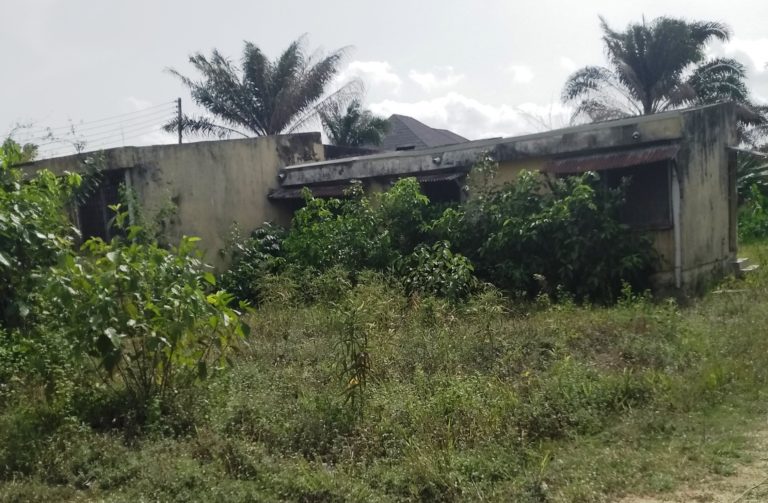
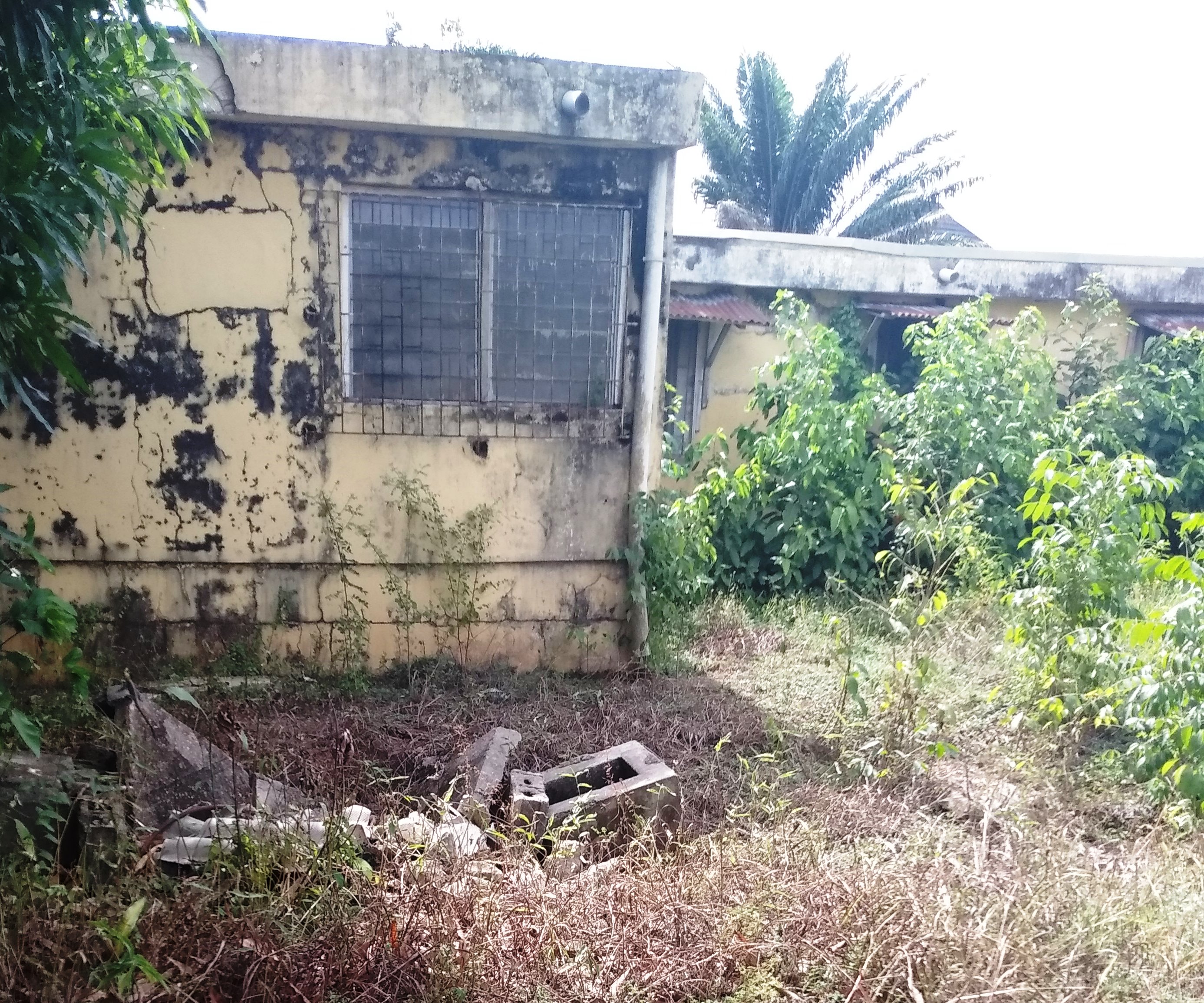
Abandoned building at the Lagos IDC. Photo Credit: YEKEEN Akinwale
A resident who seems to know about the centre directed the reporter and said the structure is old and dilapidated.
“I was posted there in 2016 by the Lagos State government under its youth empowerment scheme for an internship,” said the young man who declined to give his name.
“But I didn’t stay there because what I wanted was a job and not an internship,” adds the middle-aged man who works at an event centre at the area.
According to him, the centre has a number of old and abandoned buildings when he last visited the place.
Right inside, however, except for chapping and tweeting of birds, the centre was as quiet as a graveyard.
To the left-hand side of the centre stands a recently painted story building designated 4-in-1 workshop. There are no tools or machines in its large hall, but a signpost at its entrance reads “Rehabilitation of 4-in-1 Workshop. Far aloof from the workshop stands another recently renovated residential apartments. The renovations were awarded to two different companies: Headway World Standard Services Limited and Fiserv International Limited.
Further findings by The ICIR revealed that the two companies belong to the same persons. A company search conducted at the Corporate Affairs Commission (CAC) showed the ownership of the companies as the same individuals. This amounts to contract splitting and a violation of the Procurement Act.
Officials at SMEDAN headquarters declined to supply the contract sum and the procurement documents for the two contracts.
Other chalets at the Centre were under lock and key albeit dilapidated. The facility is currently underutilised, overgrown by weeds with painted but not used structures, new transformer supplied by SMEDAN.
Abuja—space racketeers call the shot
The 4-in-1 workshop at the Abuja IDC is under lock and key. Photo Credit: YEKEEN Akinwale
Management of SEMDAN insists that occupants of Abuja Industrial Development Centre are using the facility for free.
“All the people in Abuja IDC here are staying there free of charge,” says Mohammed, SMEDAN’s spokesperson. “Some of them have been there since the IDC was created. They are still there using the facility.”
But this is in spite of allegations of space racketeering involving officials of the agency. For instance, a budding entrepreneur, Jane Adugbo (not real name) told The ICIR of her futile attempts to get a space for her grain nuts business.
She applied for space at the agency’s headquarters in Abuja but was told that there was no space.
“All I want is a place to start up and do my things and take-off from there.”
Since 2018 that she has been making efforts to secure a space allocation, bureaucratic bottleneck and racketeers have frustrated her dreams.
“I first visited the SMEDAN head office in Garki in June 2018 to enquire about the centre,” she recalled. “I met officials of the Engineering Department who confided in me that there was space at the centre but only the DG could give approval, after which they would be directed to allocate.”
She said a senior officer in the department confided in her that the Director-General gave approval to a business owner not long, “So go and try your luck too,” the official advised her.
As instructed, Adugbo wrote to the Director-General of SMEDAN seeking space at the centre.
“The DG gave an instruction on my letter to the Engineering Department which is saddled with space allocation,” she said.
But that was the last she heard about her letter.
“I later got to know during follow up that the centre coordinator insists there is no space at the centre, even though there are locked up and uncompleted structures at the centre,” a frustrated Adugbo laments.
“It is frustrating that the government keeps mouthing support for entrepreneurs but does not take it a step further by ensuring that the right thing is done.
“The vice president recently launched a one-stop-shop for MSMEs in Abuja but that shop cannot address the major need of entrepreneurs – factory space – because the one provided by the government has been hijacked by a wicked cabal that calls the shots and allows one business monopolize the use of the centre.”
She alleged that officials of SMEDAN who are the custodians of the IDC take money from entrepreneurs to allocate them spaces. “Those who cannot afford to pay are told there are no spaces,” she said.
Mohammed, however, rose in defence of the agency. He argued that the agency was not aware of any underhand dealings going on at the centre. “We are not aware of any underhand dealings going on at Abuja IDC,” he said.
According to him, the occupants of the centre were left there to operate since they provided the structures they operate in.
Sample of some of the works produced by the occupants of the Abuja IDC. Photo Credit: YEKEEN Akinwale
“We didn’t drive them. Some of them constructed the structures they are using, since we don’t have money for rehabilitation, they are the ones that brought electricity. The industrial generators supplied to the centre are not working,” he disclosed.
On allegation against some officials demanding money for space to be allocated, Mohammed said, “Nobody has ever complained to us that some people asked them for money.”
“Before you can even get land there, you have to come to the office here. It’s the Director-General that has the final say on allocation of space.”
Investigations by The ICIR, however, revealed that government officials who manage the place, headed by a coordinator, have turned themselves into a cell that determines who gets what as far as space allocation is concerned. They operate through syndicates.
It was found out these occupants who were allocated space for free but no longer produce have sub-let their spaces to other businesses for amounts ranging between N250, 000 and N400, 000 per annum. This is done with the connivance of the centre officials.
A local snacks supplier confided in The ICIR that she paid money to an allottee to allow her use the facility to get certification from regulatory bodies, after which she left at the expiration of her ‘tenancy.’
During a recent visit to the centre, it was evident that the facility lacks the basic facilities required for an industrial centre.
No water, electricity, or support equipment. Even those who get space allocations are expected to construct semi-permanent structures with their own funds.
As a result of the deplorable state of the centre, including the administrative block, the civil servants there do not bother to go to work. Several times this journalist visited; only a security man was on hand to attend to clients.
Again, the SMEDAN spokesman said those officials at the centre are those from the Ministry and a very few staff of the agency.
“As we said, we inherited these IDCs from Ministry of Industry, Trade and Investment, those staffers are from the Ministry and very few of our staffers too are there to show that we own the IDCs,” he said.
“Some of them still attend to people who go there for information.”
He said only one person was allocated space since SMEDAN took over the IDC and the beneficiary has since stopped going to the centre.
Asked if there is a possibility of a new applicant getting an allocation, he said, “The problem is like what I said about Lagos.
“ Why we are not giving them space now; suppose we give them space now and in the next one or two months, after he has installed his machines, and we now say they should pack out because of the conversion to industrial clusters.”
“I want you to understand that these IDCs were not under the purview of SMEDAN before. They were under the purview of Federal Ministry of Industry, Trade and Investment. Most of the people that occupy those places were allocated spaces by the Ministry. SMEDAN has never allocated space. We are even trying to drive those that are there now and organise the centres into clusters.”
This investigation was supported by the International Centre for Investigative Reporting (ICIR) and the Ford Foundation.
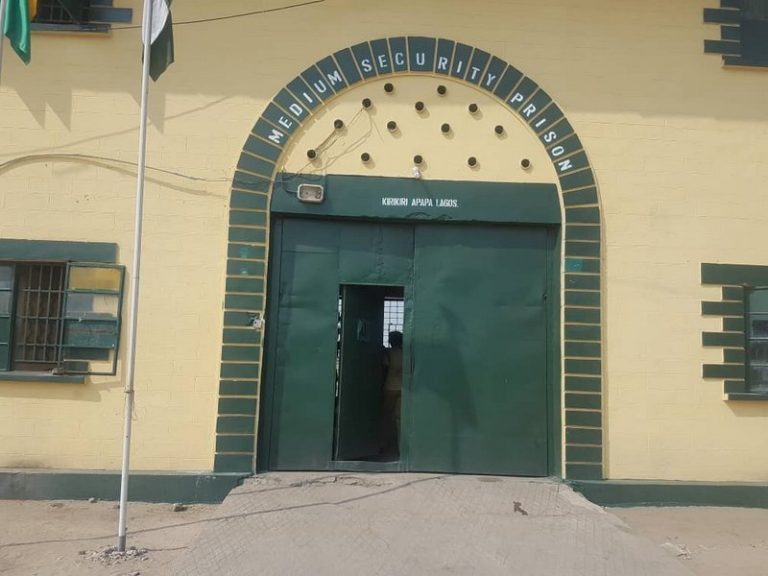
THE Senior Special Assistant to the President on National Assembly Matters, Ita Enang, says the Nigerian Correctional Service Act would empower the rejection of addition inmates, whereby the prison is filled to capacity.
This assertion follows President Muhammadu Buhari’s approval of the bill to change the name of the Nigerian Prisons Service, now referred to as Nigerian Correctional Service.
Enang said the Act guaranteed that persons with an expeditious trial or awaiting trial, probably due to the laxity of the magistrate or overcrowding of the magistrate court, can be transferred to correctional facilities.
The Nigeria Prisons Service, in a report, as of July 22, estimated inmates population by convicts and awaiting trial persons to be 73, 995 inmates: Males, 72,504 and females, 1,489.
While the total number of those awaiting trial amounted to 50, 427, the total of convicted inmates were 23,568.
Enang says the Nigerian Correctional Service bill beyond the change of name, was enacted to also ensure inmates and workers were in the good human condition.
He said such human conditions thrive within the carrying capacity of the prisons, even as the question of overcrowding has been resolved by the Act.
“In the event that the prison has exceeded its maximum capacity, the State Comptroller shall notify the Chief Judge of the State or the State Criminal Justice Committee
“Upon receipt of the notification the Chief Judge or the State Criminal Justice Committee shall within a period not exceeding one month take necessary steps to rectify the overcrowding,” the bill said.
He said inmates would have the platform to learn various desirable skills, of which parts of the proceeds generated from the practised skills would be given to the inmate and part, to the correctional facility.
Enang said alleged corrupt practices in terms of ration will be eliminated, as service retains a percentage of what they generate in addition to budgetary provision to work with.
Giving a background of the bill, Enang said The Nigeria Prisons Service bill was passed by the 8th senate, which ceased to exist in June.
“This bill was transmitted to him on July 20th and was assented to on August 14th, so Mr President signed within the 30 days period.
The time doesn’t begin to run from the dates the bills were passed. It is 30 days from the date when the bill was transmitted to him,” he said.
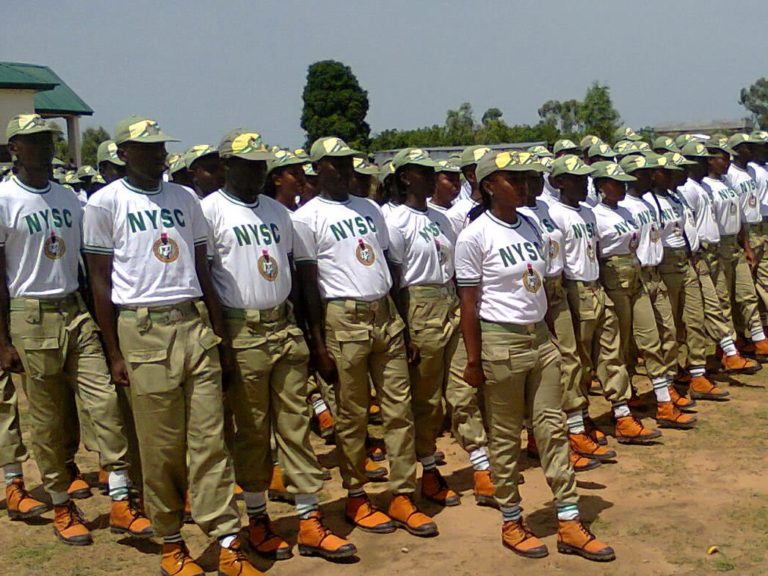
THE National Youth Service Corps (NYSC) has said more than 4.6 million graduates have participated in the scheme since inception in 1973.
The director-general of the scheme, Shuaibu Ibrahim, said this on Thursday in Abuja while giving the scheme’s scorecard.
Ibrahim said the scheme has achieved so much in fostering unity and contributing to national development over the years.
He said the educational development of the country has also been positively impacted by the presence of corps members as teachers in schools.
“Since inception, 4,664,804 Nigerians have participated in the NYSC scheme. The scheme has done a lot to foster unity and integration through the policy of posting of corps members to other states than their state of origin,” he said.
“Educational development of the country has been positively impacted through the posting of corps members to schools.
“The level of literacy has also been improved among the populace through the activities of the corps Mass Literary Group which has the mandate of reducing illiteracy, especially among adult non-formal level to the barest minimum,’’ he said.
Ibrahim said the NYSC has also contributed to strengthening healthcare delivery through posting of corps members to public hospitals as paramedics.
He added that over one million corps members have also benefited from the scheme’s Skills Acquisition and Entrepreneurship Development (SAED).
“The SAED was established in 2012 with the mandate to drive the scheme’s collaboration with various stakeholders toward addressing the problem of graduate youth unemployment.
“The scheme is collaborating with national and international organisations toward providing material, technical and financial support for the programme.
“So far, 1,132,409 corps members have been sensitised and over 70,000 have undergone various forms of skills training,” he said.
Ibrahim said that the NYSC was determined to strengthen the relationship with the media to maintain its positive visibility.
Adenike Adeyemi, NYSC’s Director of Press and Public Relations, said that the NYSC had become a household name due to its relationship with the media.
“As an organisation that values its critical stakeholders, we have continued to enlist the support of our media partners to showcase the scheme’s efforts and contribution towards advancing our dear country to a greater height,” she said.
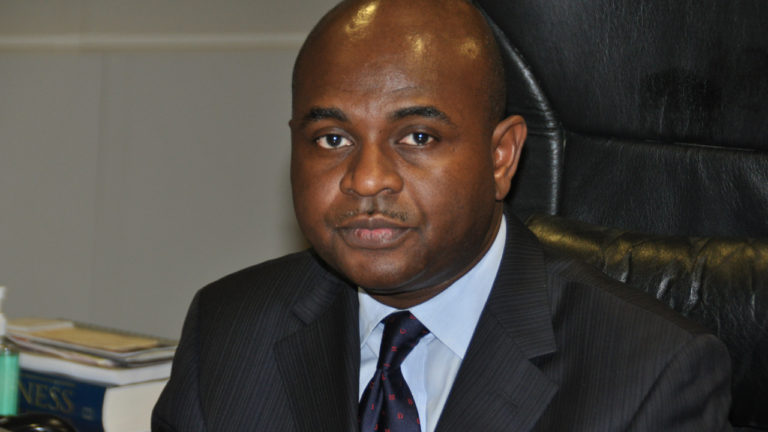
FORMER Central Bank of Nigeria deputy president, Professor Kingsley Moghalu who contested against President Mohammadu Buhari in the 2019 presidential election has criticised the ban on forex for the importation of food into the country by the president.
On Wednesday during an interview, Moghalu said that the apex bank does not require the formal and explicit approval of the president in order to carry out its duties.
“That is another way of saying that the president himself or any political authority outside the bank should not be giving the bank direct instructions.”
The professor’s assertion came on the wake of President Buhari’s order to the Apex bank on Tuesday in Daura, Katsina State, where he hosted the All Progressives Congress (APC) governors to Eid-el-Kabir lunch.
The president said the foreign reserve will be conserved and utilized strictly for diversification of the economy, and not for encouraging more dependence on foreign food import bills considering the “steady improvement” in agricultural production and attainment of “full food security” in Nigeria.
But Moghalu, who cited Article 1 of the CBN Act (2007), –In order to facilitate the achievement of its mandate under this Act and the Banks and Other Financial Institutions Act, and in line with the objective of promoting stability and continuity in economic management, the Bank shall be an independent body in the discharge of its functions.
He maintained that “the issue here is not whether or not CBN should allow access to forex for food imports. It is about whether such an economic policy of a central bank should be imposed by a political authority.”
Nigeria’s entire economy appears to have been sub-contracted to our central bank, including industrial and trade policy. In the process the economy has fared poorly and the Bank has lost its independence. This is sad!
However, he noted that the President can exercise his powers by approving on three key areas of the financial institution.
“This is a fundamental principle of central banking around the world over the last four decades. There are only three instances in the operations of the Central Bank where the Central Bank requires the direct approval of the president.
“First is the approval of the annual account of the Central Bank. The president must approve it. Second is the approval of currency designs.”
“For the Central Bank to issue the coin of the realm as we say (naira notes), the president has to approve those designs and proposals.
“Thirdly, any external investment by the Central Bank itself as an institution has to be approved by the president. Outside of these three specific instances, the Central Bank does not require the approval of the president in order to perform its job.”
SHEIKH Ibrahim El-Zakzaky, leader of the Islamic Movement of Nigeria (IMN) and his wife, Zeenat are expected to return to Nigeria tonight from a medical trip they took to India.
Spokesperson of the Islamic sect, Ibrahim Musa disclosed this on Thursday stressing that El-Zakzaky was leaving the Madena Hospital back to the country.
“Following lack of a breakthrough in the impasse that ensued in the treatment of Sheikh Ibraheem Zakzaky in New Delhi, it is now confirmed that the Sheikh is on his way back to Abuja, Nigeria. He is scheduled to leave 17hrs Nigerian time,” says Musa.
“In a video message sent by the Sheikh himself, he said that they were given two alternatives; either to commence the treatment on their own terms i.e the government terms or they will be sent back. And that it has been announced to them that they will be sent back and he is praying to Allah that may it be the best option for him and for everybody.
“It is clear to us that the Nigerian government’s interference and the scuttling of the whole process rather than supervision as ordered by the court is the direct course of the impasse.”
The leader of the Islamic group had earlier decried poor treatment meted out to them while at the Indian hospital.
In a report, a top member of the sect, Yahaya Soje also identified threats from the security operatives.
“The security officials refused to allow the doctors he requested to treat him and his wife. As I am speaking with you now they are preparing to return to Nigeria this night.”
The couple left the Nnamdi Azikwe International Airport (NAIA), Abuja to arrive in India last Tuesday with their relatives, security operatives and government officials.
On Monday, 186 doctors from seven countries petitioned President Muhammadu Buhari, expressing their concerns over the poor health condition of the Islamic cleric and why he should get urgent medical treatment. They claimed the clergy is suffering from severe medical problems including lead deposit in his system.
Few of the other ailments include glaucoma, symptoms of Ischemic heart disease, which could lead to Myocardial infarction, severe cervical spondylosis which has resulted in nerve root compression and causing insomnia.
The Kaduna State Magistrate Court on 5th August granted El-Zakzaky temporary approval to seek medical treatment in India after several attempts by his counsel, Femi Falana, a Senior Advocate of Nigeria (SAN) and his followers demanding his release.